JAMES BALDWIN

James Baldwin’s “The Fire Next Time” gives advice that resonates with the troubles of the world today.

Books of Interest
 Website: chetyarbrough.blog

The Fire Next Time

By: James Baldwin

Narrated By: Jessie Martin

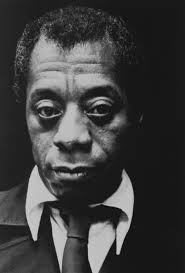
James Baldwin (Author, 1924-1987, African American writer and civil rights activist.)

“The Fire Next Time” consists of two brief essays by James Baldwin that are seminal works on the equality of all human beings. Published in 1963, the first essay is “My Dungeon Shook” which is advice to a young black American. The second, “Down at the Cross…” is a criticism of Catholic and the Nation of Islam religions.

The first is a message to Baldwin’s nephew about white America’s prejudice toward black Americans.

He is telling his nephew to reject white America’s stereotypical view of black Americans. Baldwin tells his nephew to embrace who he is as a human being, neither better nor worse, and to pursue life and living with the truth of his being.

RELIONS OF THER WORLD

“Down at the Cross” is a criticism of religion, particularly the Christian and Nation of Islam faiths. Baldwin argues that both diminish the truth of God by feeding the flames of anti-spiritualism and social inequality.

Baldwin argues through love and understanding of differences among religions and races, the divisiveness of inequality can be erased.

The fundamental point of Baldwin’s writing is that NOI offers a part of what black America needs by instilling self-respect and identity. However, he criticizes NOI’s separatism as counterproductive and extreme. Baldwin advocates love and understanding among all human beings.

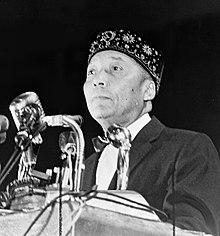
Elijah Muhammad (1897-1975, Religious Leader of NOI)

Elijah Muhammed’s advance of the Nation of Islam (NOI) is credited for advocating black empowerment, but Baldwin implies that empowerment mitigates against belief in the equality of all human beings.

Baldwin evolves to a more humanist view of life and declines to take a prominent role either in the Nation of Islam, or the Pentacostal religion he left twenty years earlier. James Baldwin’s “The Fire Next Time” gives advice that resonates with the troubles of the world today.

BEING HUMAN

Robinson shows society treats people unequally, wages war for power, lacks control over behavior, and deceives itself about human nature.

Books of Interest
 Website: chetyarbrough.blog

Gilead

By: Marilynne Robinson

Narrated By: Tim Jerome

Marilynne Robinson (Author, received the 2005 Pulitzer Prize for fiction for “Gilead”.)

“Gilead” is a Pulitzer Prize winning novel. It is cleverly written by Marilynne Robinson and beautifully narrated by Tim Jerome. Some listeners may have a hard time getting through its religious point of view. It is largely about belief in God. However, it’s truth about human nature makes it a classic regardless of one’s religious beliefs.

In broad outline, it is about three generations of preachers, a grandfather, his son, and a grandson, who live in Gilead, Iowa.

There is the grandfather who fights on the Union side of the Civil War in Kansas, presumably because of belief in human equality and union. However, it appears his son cannot justify killing of any human being, for any reason. Later, a listener/reader finds there is a rift between the Civil War’ preacher and his son who also becomes a preacher. The son becomes a father who has his own son. This book is like a letter to his son to explain his journey through life and what he has learned. The story begins by recalling a trip he and his son take to discover the grandfather’s grave in Kansas.

The journey is in the late 19th century.

The grandson accompanies his father on the arduous journey from Gilead to Kansas. They begin in a horse drawn carriage but because of weather leave the horse and carriage to walk the last miles. It is hot. One realizes the father’s decision to travel with his son is for many reasons beyond companionship. One presumes the father is ambivalent about the grandfather’s decision to join union soldiers with a willingness to kill secessionists opposed to abolition. One wonders if the father is saying there is no justification for War. The story gains broader interest at this point.

KILLING IS NEVER JUSTIFIED.

After having found the grave, the father relates a story of burying his father’s gun and some shirts. The gun and clothing are dug up. The bloodied and dirty clothes are washed, but they do not come clean. The wife of the letter writer and preacher finally throws them away, but the gun is reburied, dug up again, dismantled and thrown into a lake by the preacher. The vignette suggests the father believes killing is never justified, even in a war meant to preserve union and abolish slavery.

Preachers.

The father’s writing suggests there is a gap in ages between him and his wife. We find he is 67 when he marries his wife who is in her 30s. The preacher is nearing death by the time of the letter to his son is written. With the gap in their ages, there is a hint of jealousy about a man raised by the preacher’s best friend, who is also a preacher of the cloth. The son is Jack Boughton. Jack often played baseball with the preacher’s son, but the preacher had been told by Jack Boughton’s father to be wary of Jack.

The carrot and stick of parenting.

The impact of neglectful parenting is referred to in a sermon noted in the preacher’s story. Jack Boughton’s intelligence and education combined with parental neglect is inferred to be a cause of atheism and a penchant for illicit behavior. This creates a tension between the preacher and his close friend’s son, particularly when the childhood friend visits the preacher’s wife and son.

One comes away from Robinson’s story with a summary of the flaws of humanity. At the end of the author’s story, Jack Boughton has created a second human nature crises that will resolve itself in either happiness or tragedy. Robinson shows society treats people unequally, wages war for power, lacks control over behavior, and deceives itself about human nature.