GENDER MATTERS

All gender differences beyond women’s birth of children seem more culturally than naturally determined. Gender does matter but not because of inherent qualities but because of cultural influences.

Books of Interest
 Website: chetyarbrough.blog

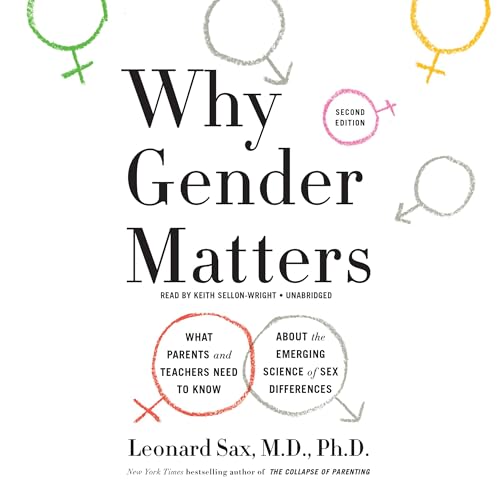
Why Gender Matters (What Parents and Teachers Need to Know About the Emerging Science of Sex Differences) 

Author: Leonard Sax MD PhD

Narrated By: Keith Sellon-Wright

Leonard Sax (Author, psychologist and family physician, graduate of MIT and the University of Pennsylvania.)

After listening to Sayaka Murata’s satire about gender differences and a future that minimizes the differences between males and females, one may wish to read/hear what a physician writes about gender and why difference matters. In listening/reading Doctor Sax’s book, this review is somewhat skeptical of his judgement about gender differences. Having been raised by a single parent, some of what he claims seems formulaic and based on weak evidence.

Gender differences.

Though Dr. Sax cites studies that support stereotypes of girls who are less inclined to pursue math and science, it seems impossible to separate acculturation from gender bias. One wonders if his opinion is not influenced by his own gender. As is true of all human judgements, we have a tendency to conflate correlation with causation.

Whether there is a direct relationship between two variables like gender and one’s potential in science or math may be culturally reinforced rather than intellectually adduced.

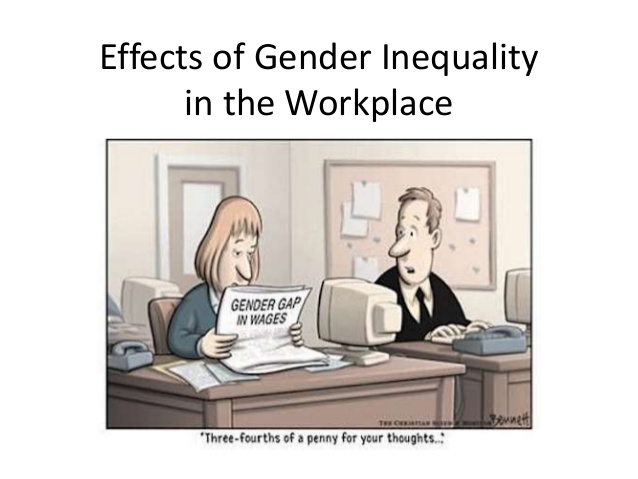
There may be some truth in gender difference based on women giving birth that naturally induces a more nurturing requirement for women than men. The fact that women bare children and traditionally take on the role of caregiving suggests a cultural as well as gender driven characteristic. Inequality of the sexes is well documented by numerous studies that show women are paid less for the same work done by men. Unequal pay has nothing to do with biology.
Gender difference.

It is economic and social circumstance that limits women’s potential. The question becomes whether a woman would run a business any differently than a man based on gender. One might believe women who have given birth may manage differently because of their experience as nurturers of early life. Why else, if education and intelligence are similar, would there be any difference between a woman or man who manages others?

Though most humans wish to be part of something greater than themselves, the shaming in this cell-phone age seems significantly more impactful on women than on men.

On the other hand, there are some observations about gender differences that seem true when one thinks about their own life experience. Though social acceptance is important to both sexes, it seems boys are less likely to be as stressed about not being part of the “in group” than girls. Though even that is challengeable in that males also have a desire to be a part of something greater than themselves.

On balance, this listener/readers’ opinion is that Doctor Sax’s explanation of innate gender difference is suspect with the caveat that women are different from men in that they give birth.

All gender differences beyond women’s birth of children seem more culturally than naturally determined. Gender does matter but not because of inherent qualities but because of cultural influences.

SEXUAL INEQUALITY

Emily Witt illustrates how undesirable sexual inequality is for the future of American society. Witt explains events in her life that have led her to become a successful author. Witt’s life experiences are like the events in every human’s life but without the unfair burden of sexual inequality.

Books of Interest
 Website: chetyarbrough.blog

Health and Safety (A Breakdown)

By: Emily Witt

Narrated By: Emily Witt

Emily Witt (Author, investigative journalist based in Brooklyn, worked as a staff writer for The New Yorker.)

Emily Witt is born two generations after this reviewer’s youth. It is a refreshing look at the great changes and similarities between my generation and Ms. Witt’s. The big difference is Ms. Witt is an attractive woman, not a man. Her life, in many ways, is unlike women of past generations but similar to men of my generation. She writes of her life, of experimenting with drugs, being in and out of serious and not-so-serious sexual relationships and striving for success in today’s America.

Witt is representative of societal change in America.

On the one hand she shows the independence and growing equality of the sexes. Liberated from the stereotypes of women as bearers of children and keepers of home and hearth, Witt’s story is like what American men’s lives were two generations ago. Her life today reminds one of a man’s life in the 1960s. She shows an understanding of the difference between love and sex but seems neither consumed nor controlled by either sex or love’s existence. She chooses her own path in life. There is strength and weakness in her character just as there is in all human beings.

The other side of her story is the consequence of sexual equality and its impact on culture.

In women’s liberation something is gained and lost. The gain is in women’s opportunity. It is time for men to step up and take equal responsibility for family comity, stability, and growth. One who did not come from an Ozzie and Harriet family but from a single parent family sees the strength of liberation of women but wonders what is lost by children raised by single parents in America. Do children become more or less dependent on others as a result of being raised by a single parent? In some ways they become more independent but in others they become socially isolated and culturally inept. That social isolation and ineptness has future consequences for children of single parent homes. Women are rightfully liberated from being the sole responsible parent for children’s care, but fathers are failing to pick up the slack.

Though juvenile delinquency is shown to have decreased in America, the education and success of children begins at home. More responsibility must be taken by fathers for teaching societal values and behavior to children. By taking equal responsibility, fathers will reinvigorate American society. Without a reorientation of men’s lives in American families, i.e., acceptance of family responsibility and women’s equality, American democracy’s economic and social success will be diminished.

The current political environment in America is trying to return the economy and society to the twentieth century, a fool’s errand.

Witt illustrates how undesirable sexual inequality is for the future of American society. Witt explains events in her life that have led her to become a successful author. Witt’s life experiences are like the events in every human’s life but without the unfair burden of sexual inequality.

Addendum: The most troubling part of Witt’s story is the feeling that her generation is failing American society by withdrawing into themselves with drugs to avoid dealing with the problems of the 21st century. Experimenting with drugs is one thing but using them to escape America’s problems is a disappointment to this aged survivor of the baby boom generation.

LIFE

The eradication of inequality is in the eyes of beholders. We are mere humans struggling to be better than we are.

Books of Interest
 Website: chetyarbrough.blog

The Female Persuasion (A Novel)

By: Meg Wolitzer

Narrated By: Rebecca Lowman

Meg Wolitzer (Author)

Many “sexual awakening” books of the past are about men and boys. Nabokov’s Lolita, Lawrence’s “Lady Chatterley’s Lover, Baldwins “Giovanni’s Room” to name three. “The Female Persuasion” gives listener/readers a glimpse of what “sexual awakening” is for girls. That is not to say “The Female Persuasion” is only about sexual awakening. Wolitzer’s story illustrates there is little difference between young men’s and women’s interest in sex and their ambition for success in an adult world.

“The Female Persuasion” gives voice to the equality of women despite historical misogyny.

Two women roommates at a fictional college talk about their lives and explain their frustration with unequal treatment in society. One has sexual relations with women, the other with men but each feel their opportunities in life are limited by being women in a Mans’ world. Greer Kadetsky complains to the University about a male student who sexually assaults her and is ignored by the administration. She is characterized as an intelligent woman who is eligible for admission to Yale but is rejected because of her parents’ mistakes on a financial disclosure form about scholarship assistance. Her unhappiness about not getting into Yale is compounded by the student assault she reports that is essentially ignored by the local college she attends.

Men and women are equal and should be afforded all the rights and opportunities available to men.

The heroine of the story has a boyfriend, Cory Pinto, whom she met in high school. They became lovers at some point in their relationship. She notes in a college dorm where her boyfriend undresses her and expresses admiration of her body. She appreciates her lover’s comment. The author’s perception of beauty reinforces the similarity between men and women and their sexuality. Beauty is in the eye of the beholder, whether male or female, but every person appreciates positive comment about their appearance.

Another element of interest in “The Female Persuasion” is a reinforcement of the saying “Birds of a feather flock together”. Cory and Greer come from lower middleclass families while showing higher than average intelligence in high school that leads them to a college education. After graduation, Cory and Greer move-in together with Cory finding a job while Greer volunteers at a non-profit while pursuing a writing career. Is it a surprise that a person with a college degree has a hard time finding a job after graduating? No, but it seems men are luckier, or one might conclude men are beneficiaries of a built-in gender bias.

Not to read too much into Wolitzer’s story, it seems most job opportunities are better for men than women.

Greer has a chance meeting with a feminist who speaks at the university she attends. In that serendipitous contact, Greer makes a positive impression on the speaker. After graduation, Greer is contacted by the famous feminist with a possible job interview. However, the potential employer dies, and the interview never happens. Meanwhile, Cory has found a job and is pursuing his career. Greer is living at home with her parents to cut down on expenses.

Greer is contacted by a New York feminist organization and is offered an interview that results in a job in New York.

Cory is working outside the country for his company, but the couple continues a long-range relationship. Greer is gaining some success and experience in her job. An interesting incident is noted that gives listener/readers insight to women’s competitiveness when Greer exhibits reluctance to show a letter to her employer for her former gay friend looking for a job. Greer chooses not to proffer the letter to her employer and lies to her friend about having given it. This seems a petty incident, but it is present in all human beings, i.e., the feeling that a person who has found their step on the ladder of success should care about others when they might be competing with them if they go to work for the same company. This seems a matter of personal ambition, not a gender or sexual orientation issue.

The end of the book offers an unsatisfying “bow tie”. The ending has a fairy tale quality that will appeal to some, but the real world is different. Life happens, jobs change, people’s relationships fall apart; some mend, others do not. The eradication of inequality is in the eyes of beholders. We are mere humans struggling to be better than we are.