CHILD ABUSE

The complexity of Freida McFadden’s character relationships diminishes its appeal, but the point of the story is that child abuse takes many forms which often repeat themselves in future generations.

Books of Interest
 Website: chetyarbrough.blog

THE INTRUDER 

Author: Freida McFadden

Narration by: Joe Hempel, Patricia Santomasso, Tina Wolstencroft

Freida McFadden (Author, practicing physician, specializing in brain injury.)

Freida McFadden’s book is a mess. The story is burdened by too many relationship complications. On the other hand, it reveals the hardship children face when raised by parents who lose control of their minds. The base story is about a 12- or 13-year-old girl named Ella. She is being raised by her mother who is a hoarder struggling to cope with life. As a single mother with a young girl, her hoarding complicates her daughter’s life. The house in which they live is a pigsty because of the hoarding. The odor of spoiled fruits and food permeates the clothing that Ella wears to school. Her mother often locks her daughter in a closet when she leaves the house. The closet is dark, cramped, and smelly from the mother’s hoarding mania. She punishes her child with the lit end of a cigarette when her daughter complains about anything.

Child abuse statistics.
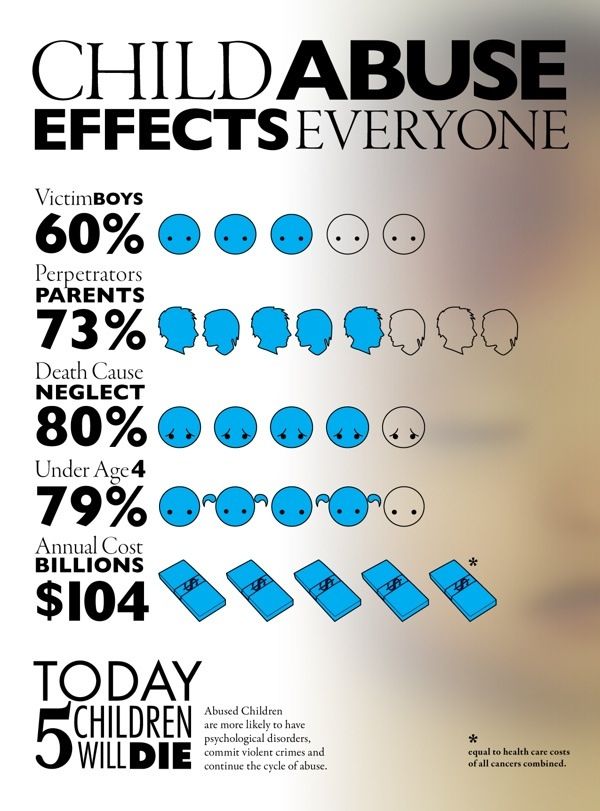
Ella dreams of escaping to a better life while coping with school and hiding the trauma she endures with her mother’s mental instability. Ella fantasizes the idea of finding her father who she does not know. She makes friends with a young boy of her age who has anger issues because his father drinks too much and is abusive toward his son and wife. As Ella and the boy become closer, a serious assault incident at school results in the boy being permanently expelled. Ella has lost the support of her best friend and is faced with the instability of her mother’s behavior. Ella wishes for a better life and searches for evidence of her father as a way of escaping and improving her life. That search appears to be a dead end.

Ella’s mother hooks up with a man who becomes a boyfriend with a violent temper.

A fight between the two leads to Ella’s mother being stabbed. Blood from her wounds splatters her daughter from head to foot. Ella sets the house on fire and runs to the woods near her neighborhood where she cowers in a shed. The shed is next to a house rented by a teacher who has been fired by the school that had hired her. There is a storm brewing as Ella cowers in the shed next to the former teacher’s house. The former teacher named Casey, sees a light in the shed and cautiously approaches it to find Ella, a bloody mess lying on the shed floor. Ella is the intruder of McFadden’s story.

The value of this story lies in the reality of children being raised in families that abuse their children through neglect, psychological, or physical abuse.

McFadden’s story is of a neglectful and deranged mother who is incapable of caring for herself, let alone a child. Every child that survives their childhood is impacted by parents whether sane or mentally unbalanced. Most children are raised by single or married parents. Others are taken away by State sponsored childcare facilities or escape abusive parents to live on the street.

How a child responds to their parents or the way they deal with life is like the predictive quality of quantum physics.

How a child responds to how they are raised is unpredictable. That is the substantive meaning of “The Intruder”, a story that keeps one in suspense but does not appear likely to end well. It is a story that many children live in America and presumably in other countries of the world. The complexity of McFadden’s character relationships diminishes its appeal, but the point of the story is that child abuse takes many forms which often repeat themselves in future generations.

RESPONSIBILITY

Adults need to be present, honest, and emotionally available to children under their care. It is a big job for which most of us fail, but children are the world’s future.

Books of Interest
 Website: chetyarbrough.blog

A Beautiful Family (A Novel)

Author: Jennifer Trevelyan 

Narrated By: Ruby Hansen

Jennifer Trevelyan (Author, lives in Wellington, New Zealand.)

Set in the beautiful island nation of New Zealand, Jennifer Trevelyan writes a coming-of-age story of a ten-year-old girl named Alix. Through Alix’s eyes, a listener/reader is reminded of their youth and the many events in childhood that show the truth of human nature. What we see and interpret when we are young is clouded by our ignorance and struggle to appreciate life as it is rather than what we think it should be. Ignorance is usually dispelled as we grow older, lose our innocence, and begin to understand life’s struggles are universal.

Humans are animals with advanced abilities to think and communicate.

Humans cooperate, compete, and adapt to their environment to survive. Our imperfections are legion beginning in childhood and multiplying throughout our lives. As a child, we see the world and interpret what we see with innocent eyes. Whether raised by an institution, two parents or one, a child sees through inexperienced eyes which are only interpretations of a real world that only time and maturity will reveal. Trevelyan shows how a child sees more than adults realize but often interpret what they see incorrectly. Eventually a child loses his/her innocence as they mature and reinterpret past experiences, but the fog of memory often interferes with truth.

Trevelyan’s main character, Alix is you, me, and every child raised in a world of married and unmarried parents or institutions.

Trevelyan offers concrete examples of the fragility and complexity of caring for children of the future. Many examples are given of Alix’s seeing life happen with interpretations that are as often wrong as right. Alix has had explanations of the difference between right and wrong but sees her sister steal make-up from a store, get drunk as a teenager, and befriend others who encourage bad behavior. She sees her mother at a distance who appears to be amorously kissing a stranger. Her mother and father are often confrontational with each other. Her mother takes long solitary walks, and her father shows passive detachment from the family.

Alix is on a vacation with her family at a New Zealand’ beach resort. She is an excellent swimmer who often swims alone.

The risk of swimming in the sea introduces the reality of danger in the world even when the environment is beautiful. One thinks about the many shark incidents on the coasts of the world and Malcolm-Jamal Warner’s death from a riptide while swimming in Costa Rica.

Trevelyan offers many lessons for adults who are raising children in this world. Children see more than adults realize and they interpret what they see in ways that can be as easily wrong as right. They incorporate what they see into their perception of the world. Parents are models of who children become as adults. As parents, or institutions that influence and raise children, it is important to be emotionally available, not just present to children. Keeping secrets or being silent about something is human. However, what a child sees or hears can be harmful when not discussed with a parent or guardian. Parents and institutions need to provide age-appropriate transparency to build trust with children. Those children with siblings should have sibling relationships nurtured by responsible adults. Adults need to take responsibility for the environment in which children are raised.

Being on vacation in an idyllic setting does not mean there are no dangers.

Trevelyan story explains why raising children is important. Adults need to be present, honest, and emotionally available to children under their care. It is a big job for which most of us fail, but children are the world’s future.

DYING

One may ask oneself is hospice the only humane thing to do for a dying parent. If a parent is able to make a rational decision about continuation of life, would he/she choose to be treated in a hospice or choose to end life on their own terms?

Books of Interest
 Website: chetyarbrough.blog

Dying

By: Cory Taylor (A Memoir)

Narrated By: Larissa Gallagher

Cory Taylor (Australian author, died at age 61 on July 15, 2016, born in 1955.)

Dying: A Memoir author Cory Taylor passes away, aged 61 | The Australian

Cory Taylor confronts the complicated question of what to do when a person knows they are nearing the end of their life. Taylor is diagnosed with terminal brain cancer in 2005. Living with that diagnosis, Taylor recounts her life, religious beliefs, and a commemoration of her family relationships. She thinks of what her life means to herself and others. She waivers between living with her physical and mental deterioration or volitionally ending her life.

Taylor, though raised in a Christian household, identifies herself as agnostic.

In the 20th century, it is estimated that 200 to 240 million people identify themselves as atheists or agnostics. In 2013, that number increased to 450 to 500 million, about seven percent of the world population. Taylor chooses medically assisted death.

Having personally experienced a parent’s death and a parent’s physical and mental deterioration, a listener/reader will either condemn or condone a choice of assisted death.

Those with strong religious beliefs are likely to blame a person for killing themselves, while those who are agnostic or atheist are likely to have a different opinion. To some, life is hardship that is a human being’s obligation to either suffer or grow from, with conscious awareness of death’s inevitability. The fundamental question is–does one have the right to choose whether to live or die?

Seeing a parent’s life deteriorate despite the care of an attentive family member is heartbreaking.

Image result for hospice

An example is a son whose mother is dutifully cared for by her husband but recognizes the husband is too aged to handle the mother’s incapacities. What should a son or extended family do? There are hospice alternatives for the mother, but should she have a voice in deciding how she is to be treated? The husband realizes, a care facility is the only practical alternative for her needed care. The son or daughter is married and is consumed by their employment and making a living for their own career and family. The mother may or may not be able to express her opinion. The table is set for institutionalization.

The mother’s response may be to curl up in her new bed, refuse to eat and waste away in the eyes of a loving husband and a career consumed son or daughter.

One may ask oneself is hospice the only humane thing to do for a dying parent. If a parent is able to make a rational decision about continuation of life, would he/she choose to be treated in a hospice or choose to end life on their own terms?

NARCISSISM

Jollett concludes his memoir by arguing his mother is a narcissist. Who is the narcissist in “Hollywood Park: A Memoir”? Mikel Jollett fails to understand how difficult it is for a single mother to raise children on her own.

Books of Interest
 Website: chetyarbrough.blog

Hollywood Park: A Memoir 

By: Mikel Jollett

Narrated By: Mikel Jollett

Mikel Jollett (Author, American musician, frontman for Airborne Toxic Event.)

Narcissism is an excessive sense of self-importance and a lack of empathy for others. Though Mikel Jollett shows skill as a writer, his assessment of life as a child grown-up exhibits a personal blindness about the hardship of single parents.

Every child has a story. This is a memoir of Mikel Jollet’s life. Jollett’s story is about his family that joined what became a cult in the 1960s. It was called Synanon, a rehab program in Santa Monica, California for addicts that began in the late 1950s. The rehab program evolved into a religious movement. As it became a religious movement, its harsh policies drove some residents to flee. Jollett’s story is about leaving with his mother and brother when he is five years old.

Jollett’s mother leaves the Synanon commune and the father of her children to return to her parent’s house to re-start her and her children’s lives.

To Mikel, leaving was a dramatic break from the Synanon way of life and a father he misses. Jollett’s father was an addict and former convict who lived what seems a vagabond life until he joins Synanon. Mikel’s mother decides to secretly escape with her two boys as the Synanon life became more and more harsh. Despite its growing religiosity and authoritarian milieu, Synanon survives until 1991 when it faces numerous legal issues related to forced sterilizations and violence toward members.

As a single parent, Mikel’s mother struggles to regain an identity and her own life.

Some of the religious teaching at Synanon appears to have remained with her. After living with her mother and father in California, she chooses to move to Salem, Oregon. The move is motivated by the high cost of living in California and a job she finds in Salem. After some time in Salem, she meets a reformed alcoholic who comes to live with her and the boys. Mikel grows to like the reformed alcoholic, but his mother’s new companion falls off the wagon and leaves the boys and their mother. He returns sometime later, only to leave again.

Bonnie who was close to Mikel when they lived in the Synanon community became a companion with Mikel’s father in California.

The boy’s paternal father remains in California and eventually looks up his wife’s children in Oregon. Upon visiting the boys in Salem, he tells them they will be invited to visit him in California, where he lives near the beach. In their first visit they become reacquainted with Bonnie who had been in the Synanon program. Mikel had been emotionally attached to the woman when at Synanon, so he was pleased to see her.

Mikel reminds reader/listeners that many children in America are not raised in “Leave to Beaver” families.

Life is a struggle for most children, even in unbroken families. Being raised in a single parent home, particularly when the single parent is a woman is harder because of societal inequality. Mikel and his brother are boys, so they have better chances for breaking poverty’s cycle, but their mother is faced with greater obstacles. Mikel’s story shows a better chance for success than some children raised by a single parent because of a precocity recognized by the principal at his school in Salem. Precocity is no guarantee of success but being a male and smart are significant advantages.

Mikel and his brother, Tony, had older brother/younger brother conflicts.

Tony, as the older brother, was sometimes cruel or uncaring about his younger sibling. As Mikel grew older, he found ways to punish his older brother for his cruelty. As they matured, they reconciled but both left their mother to live with their father in California. The baggage their mother had from her experience at Synanon, her husband’s abandonment, and the circumstances of poverty became too much for Mikel to understand the trials of being a single mother with two children. Mikel’s judgement is that his mother was too narcissistic.

Sexual inequality are two strikes against women in life. Some women overcome great odds to become economically independent; most do not.

Women struggle with life’s inequality in ways that escape understanding of masculine society, i.e., particularly male children who live with a single mother’s nurturing through the formative years of their lives. Divorced or abandoned mothers often do what they must do to raise children that fathers mostly neglect during the formative years of life. Male parents escape responsibility by leaving their children with mothers. Ex-husbands have the privilege of regaining an independent life in a world that offers better opportunities for men than women. They often re-marry which is what Mikel’s father does.

Jollett concludes his memoir by arguing his mother is a narcissist. Who is the narcissist in “Hollywood Park: A Memoir“? Mikel Jollett fails to understand how difficult it is for a single mother to raise children on her own.