A President who only sees government as a cost and the wealthy as the nation’s only benefactors, compounds America’s inability to solve the problems of poverty with eviction being a preeminent symptom.
Books of Interest Website: chetyarbrough.blog
Evicted (Poverty and Profit in the American City)
By: Matthew Desmond
Narrated By: Dion Graham
Matthew Desmond (Author, sociologist and a Pulitzer Prize winner, Professor of Sociology at Princeton.)
Matthew Desmond has written about American poverty in “Evicted”. There are two types of poverty. One is a worker who is not making enough money to be anything more than poor. The second kind of poor is grinding poverty where one must choose between having food to eat or a roof over one’s head. One who is poor can live in America, may get an education, find a job, and get along in life. However, those with too little money to eat and have shelter–live lives of desperation. Desmond’s book is about the latter to show how American society is failing desperate citizens. Desmond interviews several poor Americans that offer a clear understanding of the difference between being poor in America and being desperately poor in America.
“Land of opportunity” believers argue there are jobs in America and those who choose to beg for food rather than work deserve their fate. The truth is that many jobs in America do not pay enough for those who have jobs to pay rent and feed their families. Housing is expensive and affordable housing is not being produced in large enough quantities to reduce the costs of housing. Affordable housing is hard to build because many homeowners resist having it built in their neighborhoods. When land is found, it is often too expensive for the builder to make a profit with low rents. The cost of construction is often higher than it needs to be because of high land prices, building code requirements, or rezoning needed to allow multifamily housing.
Education in America is not meeting the needs of its citizens.
School availability is not well enough managed to ensure education for all who live in America. Sex education and contraception are being discouraged in school, which is a foolish, self-destructive societal mistake. Healthcare is too expensive for many Americans with low incomes which compounds the health problems of the poor who cannot afford either medical service or treatment. Grinding poverty causes some to seek relief through drugs which increases medical problems and further aggravates inequality being fed by an illicit industry that is growing in America. Drug abuse kills Americans in many ways; not the least of which is addiction and poverty.
The history of American income inequality is burdened by forms of racism and sexual discrimination that do not treat people equally.
Jobs are changing with automation and outsourcing of goods produced by an international economy. American government has failed to create policies that help those who need more help. As one of the wealthiest nations in the world, America has been incapable of solving the spread of poverty among its citizens.
In reading/listening to Desmond’s research, it seems like there is an American conspiracy making one of the wealthiest countries in the world incapable of solving the housing, education, and employment problems of its citizens.
A President who only sees government as a cost and the wealthy as the nation’s only benefactors, compounds America’s inability to solve the problems of poverty with eviction being a preeminent symptom.
Eubanks is wrong to think digitization ensures a future that will create a permanent underclass. The next four years may not show much progress in welfare, but American history has shown resilience in the face of adversity.
Books of Interest Website: chetyarbrough.blog
Automating Inequality (How Hich-tech Tools Profile, Police, and Punish the Poor
By: Virginia Eubanks
Narrated By: Teri Schnaubelt
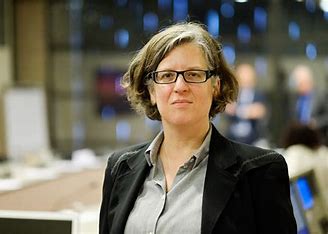
Virginia Eubanks (Author, American political scientist, professor at the University at Albany, New York.)
At the risk of sounding like a “bleeding heart” liberal, Virginia Eubanks assesses the inefficient and harmful effects of technology on welfare, childcare services, and homelessness in America. Eubanks illustrates how technology largely reduced the cost of Indiana’s welfare. However, cost reduction came from removing rather than aiding Americans in need of help. She shows southern California is better organized in the 2000s than Indiana in their welfare reform movement in the 1990s. However, the fundamental needs of the poor and homeless are shown to be poorly served in both jurisdictions.
In the last chapters of the book, Eubanks looks at Pennsylvania’s childcare services (CCW). She argues her research shows digitization of personal information, societal prejudice, and inadequate financial investment as fundamental causes of America’s failure to help abused children. Eubanks implies the cause of that failure is the high-tech tools of the information age.
Eubanks offers a distressing evaluation of Indiana’s, California’s, and Pennsylvania’s effort to improve state welfare programs.
The diagnosis and cure for welfare are hard pills to swallow but Eubank’s research shows welfare’s faults without clarifying a cure. She clearly identifies symptoms of inequality and how it persists in America. Eubank infers America’s politicians cannot continue to ignore homelessness and inequality. America needs to reinforce its reputation as the land of opportunity and freedom. Eubank implies technology is the enemy of a more equal society by using collected information to influence Americans to be more than self-interested seekers of money, power, and prestige.
Eubank explains how Indiana welfare recipients were systematically enrolled in an information technology program meant to identify who receives welfare, why they are unemployed, and how they spend their money.
She argues this detailed information is not just used to categorize welfare recipients’ qualifications for being on welfare. The purported reason for gathering the information is to help those on welfare to get off welfare and become contributors to the American economy. What Eubank finds is the gathered information is used to justify taking citizens off of welfare, not improve its delivery. Poorly documented information became grounds for denying welfare payments. If someone failed to complete a form correctly, their welfare payments were stopped. The view from government policy makers was that welfare costs went down because of the State’s information gathering improvements. In reality welfare costs went down because recipients were rejected based on poorly understood rules of registration. Indiana did not have enough trained management personnel to educate or help applicants. Welfare applicants needed help to understand how forms were to be completed and what criteria qualified them for aid.
From Indiana State’s perspective, information technology reduced their cost of welfare. From the perspective of Americans who genuinely needed welfare, technology only made help harder to receive.
Eubank notes there are three points that had to be understood to correct Indiana’s welfare mistakes:
information algorithms qualifying one for welfare must be truthful, fair, and accurate,
the information must reflect reality, and
training is required for welfare managers and receivers on the change in welfare policies.
Another point made by Eubank is the danger of computer algorithms that are consciously or subconsciously biased. A biased programmer can create an algorithm that unfairly discriminates against welfare applicants that clearly need help. This seems a legitimate concern, but Eubank misses the point of more clearly understanding the need of welfare for some because of the nature of American capitalism and the consequence of human self-interest. Contrary to Eubank’s argument, digitalization of information about the poor offers a road to its cure not a wreck to be avoided.
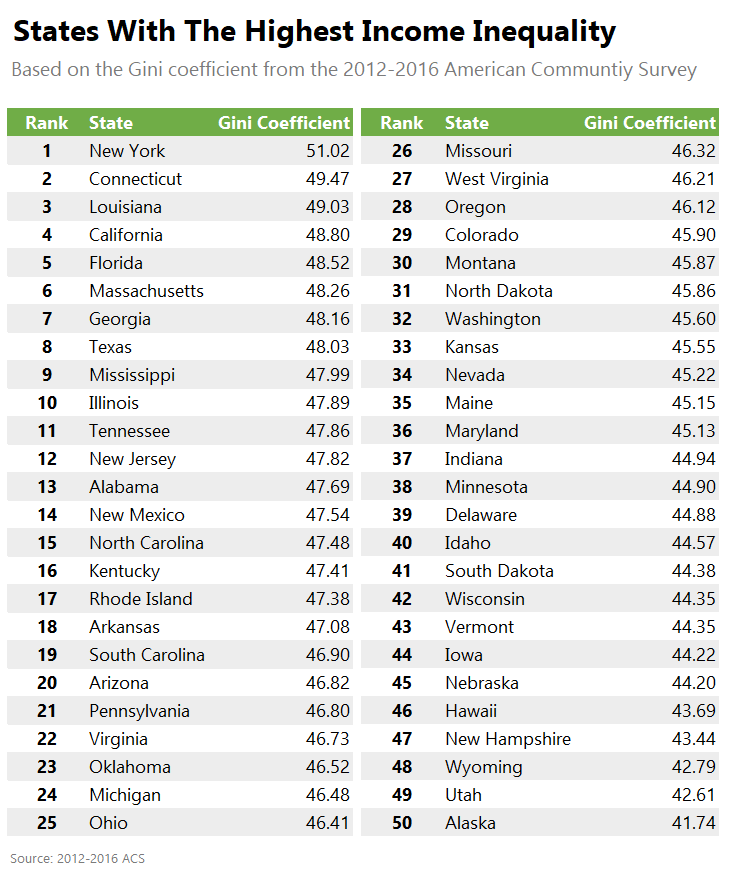
WELFARE CATEGORY ELIGIBILITY PERCENTAGES IN INDIANA
Eubank tells the story of a number of Indiana residents that had obvious medical problems making them unemployable but clearly eligible for welfare payments. They are taken off welfare because of mistakes made by government employees’ or welfare recipient’ misunderstandings of forms that had to be completed. From the government’s standpoint Indiana’ welfare costs went down, but many who needed and deserved help were denied welfare benefits. The rare but widely publicized welfare cheats became a cause celeb during the Reagan years that aggravated the truth of the need for welfare in America. The truth, contrary to Eubanks opinion, becomes evident with the digitization of information as a basis for legislative correction.
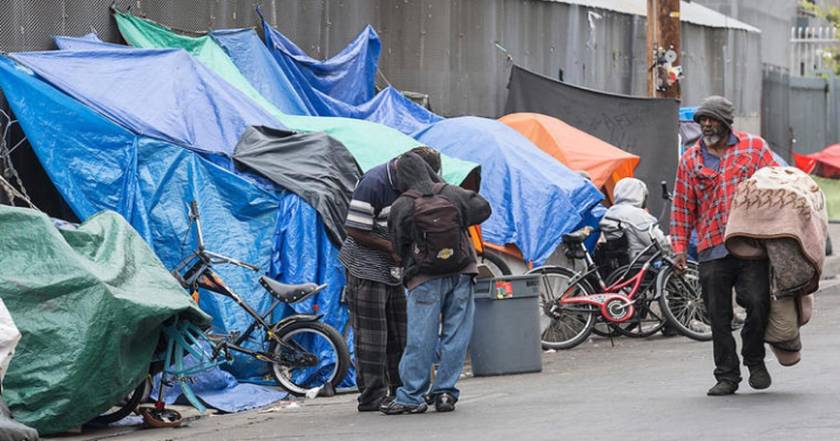
Eubank notes Skid Row in Los Angeles lost many of its welfare clients with gentrification of the neighborhood. The poor were moved out by rich Californians who rebuilt parts of Skid Row into expensive residences.
Eubank explains a different set of problems in the Los Angeles, California welfare system. The technological organization of the LA welfare system is better but still fails to fairly meet the needs of many citizens. The reasons are similar to Indiana’s in that algorithms that categorize information were often misleading. However, the data-gathering, management, and use of information is better. The more fundamental problem is in resources (money and housing) available to provide for the needs of those who qualify for welfare. It is not the digitization of the public that is causing the problem. Contrary to the author’s opinion, digitization of reality crystalizes welfare problems and offers an opportunity for correction.
Homelessness is complex because of its many causes. However, having affordable housing is a resource that is inadequately funded and often blocked by middle class neighborhoods in America. Even if the technological information is well organized and understood, the resources needed are not available. Here is where the social psychology of human beings comes into play. Those in the middle class make a living in some way. They ask why can’t everyone make a living like they have? Why is it different for any other healthy human being in America? Here is where the rubber meets the road and why homelessness remains an unsolved problem in America.
People are naturally self-interested. One person’s self-interest may be to get high on drugs, another to steal what they want, others to not care about how they smell, where they sleep, look, live, or die. Others have chosen to clean themselves up and get on with their life. Why should their taxes be used to help someone who chooses not to help themselves? Understanding the poor through digitization is the foundation from which a solution may be found.
Traveling around the world, one sees many things. In India, the extraordinary number of people contributes to homelessness. In France, it is reported that 300 of every 100,000 people are homeless. Even in Finland, though there are fewer homeless, they still exist.
It is a complex problem, but it seems solvable with the example of what Los Angles is trying to do. It begins with technology that works by offering a clear understanding of the circumstances of homelessness. A detailed profile is made of every person that is living on the street. They are graded on a scale of 1 to 17 based on the things they have done in their lives. That grade determines what help they may receive. Some may be disqualified because of a low number but the potential of others, higher on the scale, have an opportunity to break the cycle of poverty with help from welfare. It is the resources that are unavailable and social prejudice, not gathered personal digital information, that constrain solutions.
With informational understanding of a welfare applicant, it principally requires political will and economic commitment by welfare providers. There is no perfect solution but there are satisficing solutions that can significantly reduce the population of those who need a helping hand. American is among the richest countries in the world. Some of that wealth needs to be directed toward administrative management, housing, mental health, and gainful employment.
Like all countries of the world, as technological digitization improves, human services will grow to become a major employment industry in the world.
America, as an advanced technology leader, has the tools to create a service economy that is capable of melding industrial might with improved social services.
Eubanks travels to Pennsylvania to look at their child services program.
What Eubanks finds in Pennsylvania is similar to what she found in LA and, to a degree, Indiana. Children who are at risk of being abandoned, abused, or neglected are categorized in a data bank that informs “Child Services” of children who need help. The problem is bigger than what public services can handle but the structure of reporting offers hope to many children that are at risk. Like LA, it is a resource problem. But also, it is a problem that only cataloging information begins to address.
Parents abuse their children in ways that are often too complicated for a standardized report to reveal. Details are important and digitization of personal information helps define what is wrong and offers a basis for pragmatic response.
Computerized reports, even with A.I., are only a tip of the reality in which a child lives. This is not to argue child-services should be abandoned or that reports should not be made but society has an obligation to do the best it can to ensure equality of opportunity for all. Every society’s responsibility begins with childhood, extends through adulthood and old age–only ending with death. Understanding the problems of the poor is made clearer by digitization. Without digital visibility, nothing will be done.
Eubanks gives America a better understanding of where welfare is in America. She is wrong to think digitization ensures a future that will create a permanent underclass. The next four years may not show much progress in welfare, but American history has shown resilience in the face of adversity.
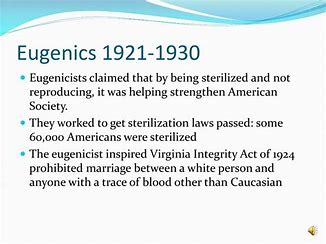
Eugenics and the fickle political nature of human beings outweighs the benefits of Harden’s idea of choosing what is best for society.
Books of Interest Website: chetyarbrough.blog
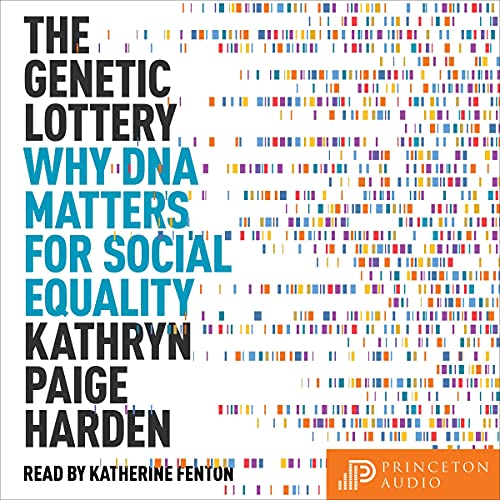
“The Genetic Lottery” Why DNA Matters for Social Equality
By: Kathryn Paige Harden
Narrated By: Katherine Fenton
Kathryn Paige Harden (Author, American psychologist and behavioral geneticist, Professor of Psychology at the University of Texas at Austin.)
“The Genetic Lottery” is an important book that may be easily misinterpreted. Hopefully, this review fairly summarizes its meaning. Fundamentally, Kathryn Paige Harden concludes all human beings are subject to a genetic lottery and the culture in which they mature. It is not suggesting all human beings are equal but that all can develop to their potential as long as he/she has an equal opportunity to become what their genetic inheritance, education, and life’s luck allow.
Harden explains racial identity is a false flag signifying little about human capability.
Every human being is born within a culture and from a mother and father who have contributed genetic DNA they inherited from previous generations. DNA carries genetic instructions for development, growth, and reproduction of living organisms. Those instructions are a blueprint for an organism’s growth. However, the genetic information passed on to future generations varies with each birth and is subject to a lottery of DNA instructions.
The lottery of genetics extends a multitude of characteristics ranging from intelligence to height to the color of one’s skin.
One may become an Einstein, or a slow-witted dolt. One may be born healthy or destined to die from an incurable disease. The growing understanding of genetics suggests the potential for human intervention to prevent disease, but also the possibility of creating a master race of human beings. That second possibility is a Hitlerian idea that lurks in the background of science and political power. It revolves around the theory of eugenics.
Harden suggests an ameliorating power of eugenics is its potential for offering equal opportunity for all to be the best version of themselves within whatever culture they live.
Putting aside the potential of human genetic theory’s risk, Harden explains every human is born within a culture that reflects the genetic inheritance of the continent on which they are born. The combination of the human genetic lottery and the culture in which humans live create ethnic identity and difference. Differences are the strengths and weaknesses of society. Strengths are in the diversity of culture that adds interest and dimension to life. The weakness of society is its tendency to look at someone who is different as a threat or obstacle to a native’s ambition or cultural identity.
Harden suggests every human being’s genetic code should be identified to aid human development by creating an environmental support system that capitalizes on genetic strengths and minimizes weaknesses.
This idealistic view of genetics is fraught with a risk to human freedom of thought and action. Science is generations away from understanding genetics and its relationship to the weaknesses and strengths of human thought and action. Understanding what gave Einstein a genetic inheritance that could see and understand E=MC squared is not known and may never be known. The luck of genetic inheritance and the lottery of life experiences are unlikely to ever be predictable. One interesting note in the forensic examination of Einsteins brain (recorded in another book) is that he had a higher-than-normal gilia cell ratio, non-normal folding patterns in his parietal lobe, and a missing furrow in the parietal lobe that may have allowed better connectivity between brain regions.
The threat of eugenic determinism and the fickle political nature of human beings outweighs the benefits of Harden’s idea of choosing what is best for society.
Marie Arana clearly argues the color of one’s skin has given great advantage to white citizens of the world.
Books of Interest Website: chetyarbrough.blog
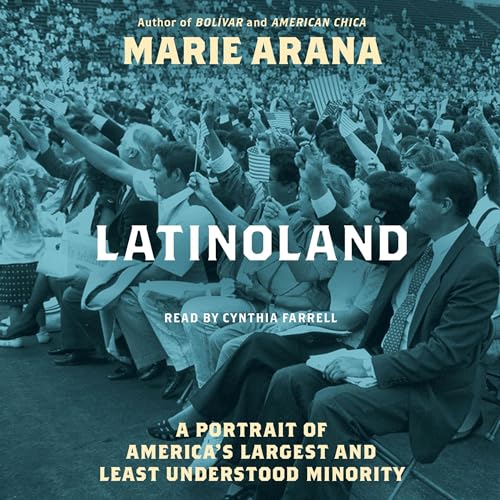
“LatinoLand” (A Portrait of America’s Largest and Least Understood Minority)
By: Marie Arana
Narrated by: Cynthia Farrell
Marie Arana (Author, graduate of Northwestern University of Hong Kong with a BA in Russian Language and Literature and an MA in Linguistics.)
“LatinoLand” begins shakily with what seems an exaggeration of international Latino cultural influence in the world. However, as Marie Arana continues her report a listener/reader appreciates her knowledge of American Latino history. Her argument is that Americans have little understanding of the largest and least understood minority in the continental United States. If one continues the book beyond the first chapters, her argument about Latino culture in America becomes clear and compelling.
MarieArana was born in Peru.
Presuming from Arana’s education in Hong Kong, she speaks and understands several languages. From her book, it appears she was born into an upper-class Peruvian family who could afford a superior education for their children. Her father was a successful civil engineer who married an American from Kansas. She moved with her parents to Summit, New Jersey when she was nine years old. Arana earned two college degrees from the Northwestern University of Hong Kong.
In one sense, “LatinoLand” is about America’s greatest 21st century challenge, immigration.
More importantly, it is about human discrimination, ignorance, and inequality. Discrimination begins with perceived difference. The greatness visible marker of difference is the color of one’s skin. Arana argues discrimination begins with skin color. She explains how inequality grows from discrimination, and cultural ignorance. (Though not mentioned, human self-interest plays a role in the creation of inequality.) A mixture of ignorance and not caring for others creates fear and potential for violence.
Mosaic of children from around the world, including, Kayapo, Indian, Native American, Inuit, Balinese, Polynesian, Yanomamo, Cuban, Tsaatan, Moroccan, Mongolian, Karo, Malagasy, and Pakistani.
Arana notes how the color of one’s skin is one of the most prominent features of difference among humans. Skin color differences, lack of caring, self-interest, and ignorance breed economic inequality. Arana implies the American Constitution ameliorates some human failings but does not achieve its ideals. She suggests American democratic ideals have been used by some political leaders as a Trojan horse for authoritarianism. She particularly points to the difference between what Fidel Castro said about creating a Cuban democracy when he overthrew Batista, i.e., he claimed to want a democratic haven for its people. However, under Castro, Arana notes Cuba became an authoritarian dictatorship that victimized its citizens by taking their assets and using their value to create and maintain a government-controlled economy.
Arana recounts the history of Cuba, Haiti, and Puerto Rico as examples of countries that preached democratic ideals but became authoritarian dictatorships that eschewed freedom and impoverished its citizens.
Many Cubans, Haitians, and Puerto Ricans fled to the U.S. to escape authoritarian victimization. What many found was American discrimination made it difficult, if not impossible, to achieve the American ideal of freedom and independence. Immigrants could not escape poverty because of the color of their skin, their language difference, and a lack of caring by white Americans pursuing their own dreams.
She goes on to explain the first Latino becomes part of President Reagan’s cabinet as the Secretary of Education in 1988. Of course, Arana acknowledges many Latinos have succeeded in America. From sports stars to musicians to military heroes to Supreme Court justices, America has benefited from the Latino diaspora. But Arana suggests many more Latinos have not achieved the American dream because of the color of their skin.
Arana notes the Nixon Administration is the first President to recognize a separate and distinct ethnic group labeled Hispanic.
Arana suggests the labeling of ethnic groups is a chimera, a fabrication of the mind. People are a mixture of different ethnicities. She implies no one is a pure anything because of the nature of humankind. The inference is that all humans are just humans, and the only difference is in their respective cultures. Cultural differences are relevant but the color of one’s skin is the mark that bodes ill for societies’ future.
In her review of history, Arana notes how a Latino child was discriminated against by having to play in different playgrounds than white children. Only with the advance of Brown v. Board of Education in 1954 did that wrong get righted.
The proximate and initial cause of discrimination always seems to be the color of one’s skin. Interestingly, Arana notes that white skin makes a difference in many cultures, including her native culture in Peru where white skin was highly coveted and sought through marriages with white skinned relations.
Arana points to the great contributions that have been made and continue to be made by Latinos to American growth and prosperity.
Discrimination has always been a struggle because of inherent human self-interest, regardless of the ideals of the American Constitution. Arana notes the hurdles that immigrants face in getting to America, let alone becoming free and independent. Many Americans, from Presidents to Congressman to individual American citizens fight newcomers who are struggling to find a better life, employment, security, and peace.
Arana notes more Latinos are coming to America, but from other countries than Mexico. It is surprising to find more Mexican citizens are choosing to leave than come to America. This is not changing the struggle, but it clarifies Arana’s many reasons for writing her book. The ideals of the American Constitution and America’s economic wealth offer hope to immigrants.
In the 21st century, Arana notes that today more Mexicans are returning to Mexico than emigrating to the U.S.
Marie Arana clearly argues the color of one’s skin has given great advantage to white citizens of the world.
















 REVIEWS AND VIEWS OF LIFE