COMMUNISM

Audio-book Review

By Chet Yarbrough

(Blog:awalkingdelight)

Website: chetyarbrough.blog

Karl Marx: A Nineteenth-Century Life
karl marx

By Jonathan Sperber

Narrated by Kevin Stillwell
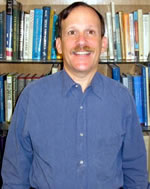
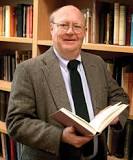
JONATHAN SPERBER (PROFESSOR AND AUTHOR)

JONATHAN SPERBER (PROFESSOR AND AUTHOR)

Having just returned from China (more about the trip in a future blog), it seems apropos to revisit Jonathan Sperber’s biography of Karl Marx.  In many respects, China’s resurgence as a major economic power suggests Marx may have outlined an economic system with some strengths, but communism and China’s form of communism have catastrophic weaknesses.

Johnathan Sperber has gathered an impressive amount of data in his history of Karl Marx’s life.  Sadly, his presentation is not equal to his collection.  Unlike biographies done by Robert Caro (who wrote “The Power Broker” about Robert Moses, the land planner of New York, and former President, Lyndon Johnson) or William Manchester (a Winston Churchill Biographer), Sperber fails to bring his subject to life.
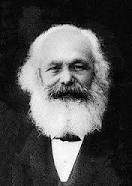
KARL MARX (BORN TRIER, GERMANY 1818-DIED LONDON, ENGLAND 1883)

KARL MARX (BORN TRIER, GERMANY 1818-DIED LONDON, ENGLAND 1883)

Marx is considered by some to be one of the three most influential economists that ever lived (Adam Smith and John Maynard Keynes being the other two.)   That high praise is not forcefully presented in Sperber’s biography.  Sperber offers facts but leaves coherence to the reader.

Marx means something to the 21st century.  Some might argue America is reaching a point in the history of capitalism that is foretold by Marx’s theory of socialist economics.  As Sperber notes, Marx believed capitalism was a step in the economic evolution of the world, leading to a governmental revolution.  Marx believed capitalism would reach a nadir of conflict between haves and have-nots because of social inequity inherent in capitalist economies.

As Sperber notes, Marx lived through and wrote about social conflict created by feudalism and capitalism in the mid-nineteenth century.  Marx is raised in Prussia, ruled by a Czar in a feudal economic system. He witnesses growing discontent of feudalistic working-class Russia.

'Remember, an economic boom is usually followed by an economic kaboom,'

Marx created a theory of economic evolution showing feudalism, capitalism, socialism, and communism as progressive improvements in the lives of all people.
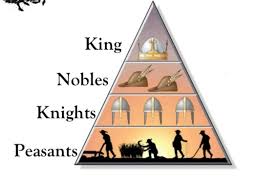
feudalism

Feudalism grew out of the rule of Kings and Czars with a small aristocracy receiving privileges of wealth and property with the bulk of human civilization indentured to the privileged class.

As the indentured, under-privileged population grew, discontent led to revolution.
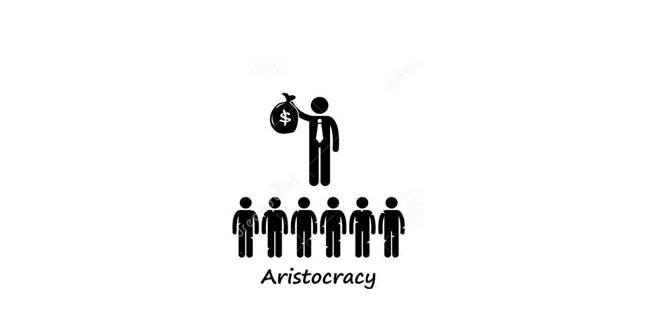
Aristocracy Government

In 1776, America broke with English aristocracy to form a “checks and balances” democracy; in 1789, the French population broke with absolute monarchy to form a populist democracy; in 1848, German states rebelled against the aristocratic Prussian confederation of thirty-nine states ruled by an aristocracy and chose various forms of government to establish their own nationalist identities.
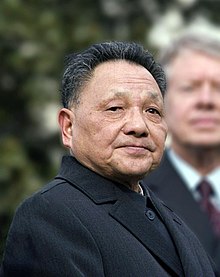
DENG XIAOPING (CHINA'S CHAIRMAN OF THE CENTRAL ADVISORY COMMISSION 1982-1987)

DENG XIAOPING (CHINA’S CHAIRMAN OF THE CENTRAL ADVISORY COMMISSION 1982-1987,) In 1980 Deng Xioping, though maybe not in a revolutionary sense, changed the direction of communism in China.

Each Chinese change in governance led to more liberal, slightly more democratic, and capitalist economies.

China did not abandoned communism but insisted on a more pragmatic way of governing.  Deng’s famous quote,  “It doesn’t matter whether a cat is black or white, as long as it catches mice. …. “,  crystallizes China’s insistence on a communist form of government.

XI JINPING (GENERAL SECRETARY OF THE COMMUNIST PARTY OF CHINA AND PRESIDENT OF THE PEOPLE'S REPUBLIC OF CHINA)

XI JINPING (GENERAL SECRETARY OF THE COMMUNIST PARTY OF CHINA AND PRESIDENT OF THE PEOPLE’S REPUBLIC OF CHINA)

The current President of China, Xi Jinping, reinforces Communism in China by imposing party rule over China’s semi-autonomous provinces; e.g. Tibet and Hong Kong.

Hong Kong is presently in the throes of resistance to China’s encroachment on their semi-autonomous existence. Hong Kongers’ discontent could be seen in traveling to Hong Kong months before today’s demonstrations.

As nations prospered during the industrial revolution, more mercantile economies formed.  Aristocracy became broadly defined by wealth rather than inheritance.  Parliaments and congresses were created to represent wider population interests.

However, Sperber explains Marx believed that the greatest part of nation-state citizens remained in poor economic condition; even when based on mercantilism.  Marx, looked at the economic condition of the world, and noted that transition from feudalism to mercantilism only marginally improved living conditions for the majority of state citizens and, in fact, actually worsened the condition of the young and impoverished who worked long hours for little pay.  To Marx, capitalism just exacerbates the mercantile economic condition of the poor.

CHINA MOVING 250 MILLION PEOPLE INTO CITIES ACCORDING TO THE NEW YORK TIMES

CHINA IS MOVING 250 MILLION PEOPLE INTO CITIES ACCORDING TO THE NEW YORK TIMES (Housing is un-affordable for a large percentage of new city dwellers.  The government of China subsidizes housing for many Chinese that come from rural areas.)

In 2018, it seems China may be reaching a capitalist tipping point where low wages do not cover the cost of living.  Though many Chinese have moved from rural areas, wages remain low in comparison to the cost of living.  Housing and health coverage is un-affordable for a large percentage of new city dwellers.  The government of China subsidizes housing for many Chinese that come from rural areas to mitigate the plight of the poor.

ADAM SMITH (1723-1790, AUTHOR OF -THE WEALTH OF NATIONS)

ADAM SMITH (1723-1790, AUTHOR OF -THE WEALTH OF NATIONS) Marx developed the labor theory of value to suggest that classical economic theory suggested by Adam Smith leaves too many people in the gutter.

Marx felt Smith did not properly quantify the value of labor.  Marx argued that capital was created to benefit owners at an unfair expense to labor.

Marx believed capitalist aristocracy continued to victimize the working class, trading one form of indenture for another.  Marx suggested democracy was an evolution for economies that widened the benefited population but still left most workers underpaid, undernourished, and disadvantaged.

Sperber clearly points out that Marx did not believe that communal ownership of property redressed the inequities of state’ economies; i.e. Marx argued that inequity is caused by capital creation that only benefited ownership and undervalued labor that created capital.

China’s current experience seems to show Marx may have been right to believe communal ownership has little to do with state’ economics because communal ownership remains a dominant factor in China’s extraordinary economic resurgence.  Property is not owned by individuals in China.  Land is either owned by a collective or by the State.

BEIJING CHINA HIGH RISES (TYPICAL IN MAJOR CHINESE CITIES 2018)

Though land cannot be owned by Chinese citizens, distribution of capital has been widely increased through rising prices of high-rise condominiums. Many high-rise condominiums are owned by individual Chinese.  Some citizens inherited or bought condominiums at such low prices–appreciation made them rich.
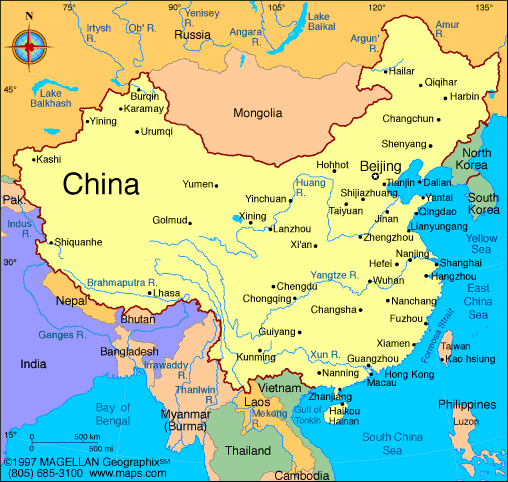
CHINA MAP

The fly in the ointment of their newfound wealth is the price of sale must be agreed upon by the government which creates an artificial bubble that may burst into hyper-inflation, with the potential for a nation-wide economic collapse. 

China moves to address a potential economic collapse in an inventive and creative way. What China is doing--is trying to widen their market for goods with an economic growth plan called "Belt and Road".  China invests billions of dollars in other countries infrastructure.  China is betting that these improvements will create consumers for Chinese manufactured products.  A side benefit is that these infrastructure improvements offer employment to Chinese citizens and businesses.  (As can be read in news magazines like the Economist and papers like the Wall Street Journal and New York Times, some nations resent China's investments in their countries for various nationalist and economic reasons.)
China is also investing in the world's natural resources to expand their manufacturing capability.  The question is whether these long-term investments will pay off in time to stabilize China's construction market. The construction market is where individual Chinese citizens carry their wealth. Condominium prices will reach a limit.  In 2018, a 300 square foot condominium sells for over $500,000 in China's larger mainland cities.  That is nearing $2,000 per square foot (and Chinese buyers do not own the land).  In the United States, most housing is less than $200 per square foot; including the land.   Continued wealth distribution in China depends on the success of the "Belt and Road" program.

Marx supported worker unionization’s effort to equalize benefit through a more equitable distribution of capital.  He was deeply involved in the “International Workingmen’s Association” (aka First International).  Herein lays the evolution of capitalism to socialism and Marx’s belief (and maybe Xi’s belief) in the fairness of economic communism.  Modern China seems to be addressing the idea of a more equitable distribution of capital on paper, but the paper is based on what appears to be an unsustainable real estate market.
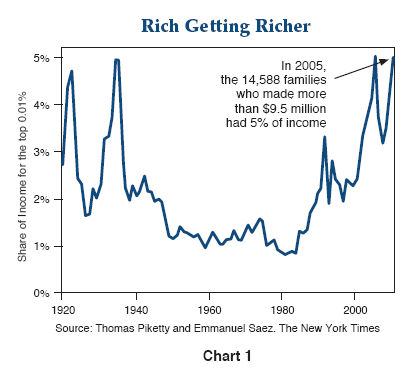
INCOME GAP

Piketty argues that the income gap widens once again, after World War II.  He estimates 60% of 2010’s wealth is held by less than 1% of the population; with a lean toward the historical 90% threshold. Moneyed interests have become the new aristocracy, as repressive and privileged as the Kings and Czars of the mid-19th century.

One can disagree with Marxian theory but the widening gap between haves and have-nots (the 1% and 99%,) is a real-world concern in the 21st century.

Marx’s solution for economic inequity is flawed but the condition he describes in the evolution of economies seems prescient. To most Americans, Marx’s communism is not the answer. 

RAZOR'S EDGE

When CEOs of companies are making over 200 times average laborers’ income, there is a glaring problem in the current condition of capitalist economies. Instead of income differences, it is housing value in China.  China is on a razor’s edge that may as easily cut their throat as shave their face.

This is a disappointing book because it garners too little interest in the power and influence of Marx’s economic theories.  However, it offers insight to what Marx may have had right (the importance of distribution of wealth) and what he had wrong (communal productivity).  China is using a different vehicle than America for distribution of wealth but the principle of wealth-distribution addresses what ails all forms of government.

AMERICAN ELECTIONS

Audio-book Review
By Chet Yarbrough

(Blog:awalkingdelight)

Website: chetyarbrough.blog

Sons of Wichita

By: Daniel Schulman

Narrated by: Daniel Schulman

DANIEL SCHULMAN (AUTHOR, AND SENIOR EDITOR OF MOTHER JONES-MAGAZINE NOMINATED FOR 27 NATIONAL AWARDS WITH 6 WINS)

DANIEL SCHULMAN (AUTHOR, AND SENIOR EDITOR OF MOTHER JONES-MAGAZINE NOMINATED FOR 27 NATIONAL AWARDS WITH 6 WINS)

When organizations became people, American elections became less democratic. The wide gap in fund raising between Trump and Biden is disturbing. The story is the same–corporations are currying favor with the next President. This is not “one person, one vote”. It’s corporate influence peddling. The shoe is simply on a Republican’s rather than Democrat’s foot in 2024.

Corporate contributions to the election process distort the meaning of “one person – one vote”.  Daniel Schulman’s story of the Koch brothers is an example of what is wrong with the Supreme Court’s 2010 decision that gave corporations person-hood.

The Koch brothers are tough-minded, intelligent, well-educated engineers; driven by the arithmetic of life.   Business leaders often see the profit of a transaction without considering the cost to the general public.  Life is not a transaction.  Life is multi-dimensional puzzle of genetic pre-disposition, learned behavior, and interpreted experience.

CHARLES (LEFT) AND DAVID KOCH

Like Donald Trump, the Koch brothers make decisions based on profits without care for either the environment or the politics of the common good.

CHARLES (LEFT) AND DAVID KOCH

Daniel Schulman recounts details of the Koch brothers’ lives that make one admire the Koch brother’s strengths and fear their weaknesses. This became particularly clear in the last few days when Charles Koch admits that injecting partisanship in their political drive for a libertarians’ economy was a mistake.

One doubts that Charles Koch is abandoning libertarianism but he implies partisanship is destructive to the cause of less government as good government. As was inferred in the November 13, 2020 WSJ Koch interview, “…Republican partisanship over the years blew up a lot of bridges.”

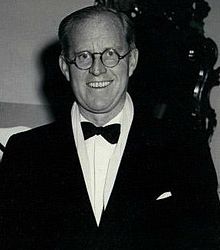
JOSEPH KENNEDY (1888-1969) As a listener is titillated by Schulman’s characterization of each of the brothers, one is reminded of Joseph Kennedy Senior’s biography (“The Patriarch”) and Kennedy’s determination that no circumstance justifies America’s entry into WWII.  Kennedy’s underlying belief was that German atrocity is a matter of arithmetic not politics.  Joseph Kennedy, like the Kochs, believed “living life” is transactional.

JOSEPH KENNEDY (1888-1969)

Kennedy believed Hitler could be contained like any unfair business conglomerate that fails to follow the rules of society.  To a business mogul, everything is negotiable whether dealing with a mad-man or saint. Charles Koch, like Joseph Kennedy, is the patriarch of the Koch family.  He. like Kennedy, believes life is merely a matter of arithmetic. 

AYN RAND (1905-1982)

AYN RAND (1905-1982, AUTHOR WHO FIRMLY BELIEVED IN THE VIRTUE OF SELF-INTEREST AND UNREGULATED CAPITALISM.)

Charles is a devotee of Ayn Rand and Friedrich Hayek.   Rand was an author and founder of a philosophical system called “Objectivism” while Hayek was an academic economist-author, and follower of a philosophical system that reduces economics to the arithmetic of free markets. 

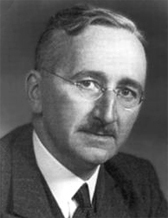
FRIEDRICH AUGUST von HAYEK (1899-1992)

Charles Koch, and his brothers David and William, grew a multi-million dollar company into a multi-billion dollar conglomerate based on Rand’s, and Hayek’s philosophy.  (In fairness, this is an oversimplification and distortion of Hayek in the sense that he did believe government has a responsibility for a safety net for the poor, unemployed, and disabled.)

FRIEDRICH AUGUST von HAYEK (1899-1992)

Growing millions into billions of dollars is unquestionably a great accomplishment, born of hard work, dedication, and tenacity.  (Of course, it helps to start out, like Donald Trump, with a million dollars or more.)

The Koch brothers were born rich and raised in a safe and competitive family environment.  Schulman explains actions of Charles, David, and William that show how intelligent, driven Americans can adopt Rand and Hayek’s philosophy to become enormous job creators, philanthropists, and benefactors for American society. 

On the other hand, the Koch brother’s story shows how their philosophical beliefs ignore the reality of human nature that relegates many to a cycle of poverty; i.e. a cycle engendered by poor education, unsafe neighborhoods, a lack of health care, and un-employ-ability.

Charles, David, and William Koch offer great opportunities for workers of the world through the arithmetic of profit, growth, and self-interest.  However, if a worker is not smart or healthy enough to join the Kochs’ group of workers, they have no value; they are the bums one sees sleeping on the sidewalk, gang members selling drugs and sex, or beggars asking for lose change.

The Koch brother’s success lies in their alloyed belief in self-interest, their inherited wealth, genetics, environment, and luck.  The Koch’s success is a matter of the arithmetic of wealth, power, and privilege; therein lies the flaw in the use of dark money in American elections.  To presume equal opportunity exists in America because of self-interest is ridiculously simplistic. 

The Supreme Court gifted an advantage to wealthy corporate owners.  Dark money from corporations distorts “one person, one vote” democracy.

MONEY

Schulman infers the Koch brother’s arithmetic view of the world is skewed.  The Koch’s imply only market driven, free choice of employees is what makes companies and America grow stronger.  Charles argument is compelling except it is based on theories of two academics (Rand’s self-interest and a distortion Hayek’s economic beliefs).   When 21st century Americans cannot get a decent education, they are on a treadmill of malnutrition and genetic disadvantage.  They often live in unsafe and unhealthy environments, and are destined to become part of an underclass society.

Charles’ arithmetic works within a corporate culture that gives no value to government’s responsibility for health, education, and welfare.  Even Hayek, as an academic, suggests that the disadvantaged of society should be protected from the extremes of disablement, poverty, and starvation.  In contrast, Ayn Rand’s belief is that people are poor because they are lazy, unproductive, and dependent on the charity of others; i.e. being poor, to Rand, is a personal fault; not a societal concern.

Life is not arithmetic.  A human life is not just a matter of dollars and cents. Covid 19 continues to be grossly misrepresented by America’s President.

Many inner city poor cannot get a job so they sell drugs or their bodies to put bread on the table.  Who is going to hire a person arrested for peddling drugs or serving time for prostitution.  The cycle of poverty is perpetuated by the belief that America is a free enterprise market.  Everything from agricultural products, to drug manufacturers, to the energy industry, to cars we drive, and planes we fly are subsidized by the American tax dollar.

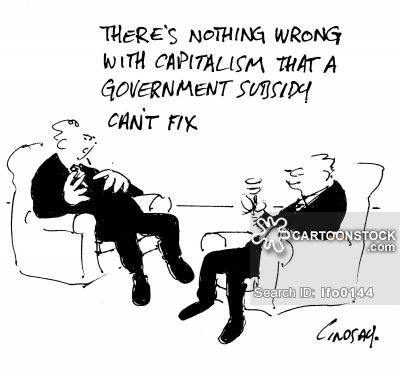
'There's nothing wrong with capitalism that a government subsidy can't fix.'

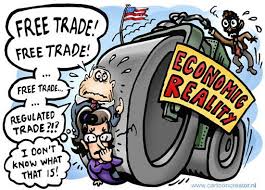
To the Koch brothers, free markets and the arithmetic of life will correct unemployment and the disadvantage of the poor.  The idea of a free market is a joke.  Markets are not free.  Many industries in the United States are subsidized in one way or another by federal tax dollars.

Schulman’s biography infers that Charles, David, and William believe less government interference will correct the maladies of society.  Public health, education, and welfare are private sector responsibilities, particularly in Charles’ idealistic world.  This view ignores the reality of human nature.  There is good and evil in all human beings.  Power, money, and self-interest are swords with two edges that build and destroy societies.  Without government, there is no protection from the evil side of human nature.

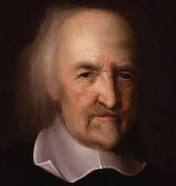
THOMAS HOBBES (1588-1679)

THOMAS HOBBES (1588-1679) Without government, there is no protection from the evil side of human nature.

Schulman explains a rift that occurs between William and Charles and the future management of the Koch conglomerate. William Koch’s legal battles with Charles and David (William is the twin brother of David) reflect the frailty of unfettered human nature.

WILLIAM KOCH (AMERICAN BUSINESSMAN, SAILOR, AND COLLECTOR)
WILLIAM KOCH (AMERICAN BUSINESSMAN, SAILOR, AND COLLECTOR)(William is the twin brother of David. His legal battles with Charles and David Koch reflect the frailty of unfettered human nature.)

Human nature is good and evil for all; including the Koch brothers.  Government, as noted by Thomas Hobbes, is to protect people from the evil that is inherent in humankind.

President Trump is a deluded antiquarian leader with no moral center. “America first” is code for making the rich richer.

This is not to argue that every time government legislates or acts, it is in the best interest of the public.  However, murder, rape, and theft are unfettered human choices without government.  Murder comes in many forms, including gas leaks, environmental contamination, and scientifically proven causes for global warming.

Great industrialists, like the Koch brothers, are a boon to the American economy and to millions of American citizens but to believe their success is based on limited government is self-delusion. American government created a safe environment for “free” enterprise with relative freedom of choice; not absolute freedom of choice.

POLLUTION IN BEJING, CHINA

INDUSTRIAL POLLUTION ON A BAD DAY IN BEJING,, CHINA

Schulman suggests Charles Koch believes a plutocracy of industrialists, managed by the principles of market driven self-interest, will cure the maladies of American society.

The arithmetic of business fails to address the nature of human beings.  Creating jobs and wealth does not raise all boats; i.e. jobs and wealth are quantifiable variables in a sea of un-quantifiable needs.

Human nature may change over time but only when, or if, humans reach a level of belief, and action “to do others as you would have them do to you”.  Until human nature is rid of evil, something more than market driven self-interest is required to advance society.

In the end, one concludes from Schulman’s fascinating book, the Koch brothers are neither devils nor angels; just humans with wealth, extraordinary abilities, tenacity, and luck.

ANOTHER LAS VEGAS

BEAUTIFUL, QUIET, AND FUN

WALKING, BIKING, CLIMBING STAIRS

Red Rock Canyon is one of many natural wonders in the Las Vegas Valley.  Hiking, biking, and climbing are popular resident and tourist pastimes.

Climber

ROCK CLIMBERS IN RED ROCK CANYON–20 MINUTES FROM THE LAS VEGAS STRIP

Charleston Boulevard is a major east/west arterial road in Las Vegas.  Travel for 20 minutes east on the Boulevard and Red Rock Canyon looms large; the vista explains the name.  Like rusty pieces of sheet metal, hills are colored and striped by iron oxide bleeding red below a blue skyline.  In January, it can be cold (say 30 to 40 degrees) and windy (say 30 to 40 mph) but on a good January day temperatures can be in the 60s with no wind.

Red-Rock-Canyon-Vicinity-Map-273x300[1]

Charleston Boulevard is a major east/west arterial road in Las Vegas.  Travel for 20 minutes east on the Boulevard and Red Rock Canyon looms large; the vista explains the name.

Hiking the Bristlecone Loop on winter days is an oddly quiet experience, even though birds are flying in and out of parched bushes and bleached bark trees, there is little chirping.  Burros track the fields and valleys with an occasional mountain goat peeking down from a ridge.

Hike #2 2011_2011 09 01_2824

HIKING THE BRISTLECONE LOOP ON WINTER DAYS IS AN ODDLY QUIET EXPERIENCE, EVEN THOUGH BIRDS ARE FLYING IN AND OUT OF PARCHED BUSHES AND BLEACHED BARKTREES, THERE IS LITTLE CHIPING.

Well-traveled hiking Trails split the terrain leading to tiny snow melt waterfalls, clear water streams and occasional wild life.  Ancient tribes left their mark on sandstone Red Rock Canyon monoliths jutting from dried grass ground.  Climbers cling to mountain face crevices on their way to nowhere to satisfy some untouched need.

Hiking Muffin and earlier Red Rock_0562

A VIEW OF LAS VEGAS IN THE DISTANCE FROM A HIKE UP “MUFFIN”

The Las Vegas Valley packs a lot of life styles within an hour’s drive; i.e. entertainment and dining that rivals New York; Boulder Dam, Mount Charleston, and Red Rock Canyon that offer every outdoor experience  a resident or tourist can think of.

Another Trail @ Mt. Charleston_2011 09 16_2937_edited-1

VIEW FROM MT. CHARLESTON–WHEN ITS 100 DEGREES IN LAS VEGAS, THIS 30 MINUTE DRIVE DROPS THE TEMPERATURE TO 80 DEGREES.

Backyard Sunset

SETTING SUN IN LAS VEGAS

As “Borat”, the comic actor says—WHAT A COUNTRY.

BUSINESS IN AMERICA

Audio-book Review
By Chet Yarbrough

(Blog:awalkingdelight)
Website: chetyarbrough.blog

The Jungle

By: Upton Sinclair

Narrated by Casey Affleck

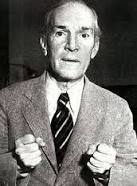
UPTON SINCLAIR, JR. (1878-1968, WINNER OF THE PULITZER PRIZE FOR FICTION)

UPTON SINCLAIR, JR. (1878-1968, WINNER OF THE PULITZER PRIZE FOR FICTION)

It seems appropriate to revisit Sinclair’s book in light of the current administration in Washington D.C.

In the era of Trump, it is not meat packing but the coal industry that needs help. Trump’s pandering to the American coal miner offers air without oxygen to an industry that is dying.

Private industry and the American government need to step in and offer a way out for coal industry’ laborers. The Trump administration undervalues American labor by presuming laborers can only be cogs in a machine rather than complete human beings.

Instead of insisting on continuing an industry destined to fail, private industry and government should be offering living-wage transition, and education for new jobs; i.e. jobs that look to a future rather than a past.

Sinclair exposes the dark side of poverty and immigration in the United States.  It reminds one of Charles Dickens’ stories of child labor in London but does not offer much warmth or balance.  Sinclair’s story offers no respite from utter degradation.  There is no respite for the reader to believe there is any redemption for being poor in Chicago in the early 1900s.

“The Jungle” is a grim tale written by Upton Sinclair about the meat-packing industry in early 20th century America.

MEAT PACKING INSPECTORS (1900, STOCKYARDS, CHICAGO)

Lessons of “The Jungle” are reminders of the limits of unregulated capitalism, industry’ greed, and government neglect.  Sinclair attacks the meat-packing industry of the 1900’s. 

Descriptions are given of spoiled meat ground into sausages; loaded with chemicals for appearance and smell, with too much production to be adequately inspected by too few inspectors. Employees lose limbs and lives in accidents; with corporate lawyers preparing to swindle the uneducated with unfair financial settlements.  Wages are too low to offer enough money for shelter and food; let alone any savings, to break the cycle of poverty.  Promotion is limited to those who are willing to compromise their morality by feeding a corrupt system that thrives on human exploitation.

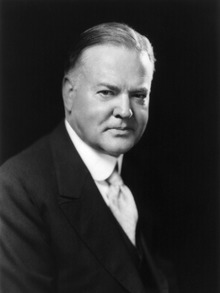
Herbert Hoover is the 31st President of the U. S. when the meat packing industry is at its worst. Like Herbert Hoover, Trump seems to think the strong survive and the poor deserve their fate.

To some, this is the same as today’s stories of the coal industry.

Don Blankenship (Former CEO of the 6th largest coal company in the U.S., Massey Energy)

Convicted on a misdemeanor charge of conspiring to willfully violate mine safety and health standards in 2015. Sentenced to 1 year in prison and fined $250,000.

HOMELESS

Images of poverty and what it leads to are still seen in American cities; i.e. people living on the street, begging for a dollar to eat; some drinking the dollar away at a local tavern because it blunts the pain of being poor and offers a haven from a cold winter day. Young people, some children, turning tricks to survive; selling their body because low paying jobs of high volume/low price conglomerates do not pay enough for rent and food.

Hearing of the meat industry–its lax government oversight, greedy corporate owners, and corrupt politicians deeply offends American ideals.  Grinding poverty changes a family of ambitious immigrants into cogs in a meat butchering machine that breaks spirits and turns good people into bums and latent criminals.

In Dickens novels, there are some remnants of human joy; even in impoverished London.  In Sinclair, the only glimmer of light is small-scale concern for fellow human beings.  The early days of the union movement offer some hope.  However, even Sinclair’s positive sentiments are corrupted by politics.  Sinclair idealizes socialism and touches on early communism.

America still offers the best known vehicle for freedom in a regulated democracy.

Since 1789, America’s relationship to immigrants has been a work in progress.

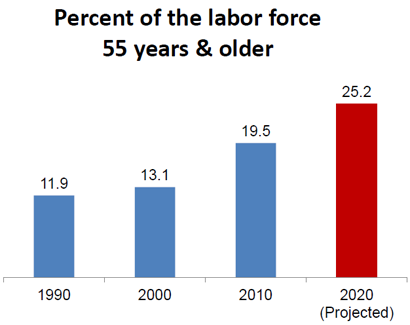
The United States has a growing need for younger workers; not to the extent of countries like Japan, but after 2020 it is increasingly important.

America needs more youth to re-balance its economic growth.

The influx of immigrants generated much of America’s success in the industrial age. Immigrants offer the same opportunity for America in the tech age.

To some immigrants, the avenue out of poverty is crime and immorality, but that has always been true in America’s history. That is why American democracy is founded on rule-of-law. Human nature does not change.

The life cycle for an honest immigrant is grim; arriving poor; staying poor, and dying.  American Presidents who only focus on the business of business fail to understand or care about the trials of the poor, the newly arrived immigrant, or the social condition of impoverished communities.

Every country in the world benefits and suffers from the nature of man and the effects of urbanization; none offer Eden.  America remains a land of opportunity, but to close our doors to those who want to improve their lives with freedom and honest work is an unconscionable mistake.  Demographics are destiny. America’s and many post-industrial economy’s populations need help.

Modern America is not quite so dark but inequality of opportunity still plagues capitalism with wealth, greed, and political corruption hiding the dire condition of the poor.

As long as the poor remain hidden; the rich and middle class will avert their eyes, mutter “get a job”, and think the poor get what they deserve.

America is Constitutionally responsible for the welfare of its citizens.

Those who think the business of government is only business are incorrect. Business is a tool to use in forming a more perfect union; governing with justice, supporting domestic tranquility, providing for a common defense, and promoting the general welfare.

REWIRING THE BRAIN

Audio-book Review
By Chet Yarbrough

(Blog:awalkingdelight)
Website: chetyarbrough.blog

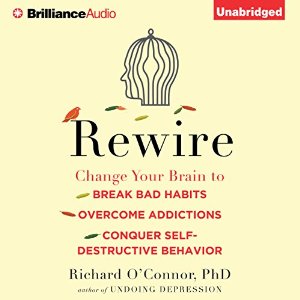
Rewire: Change Your Brain to Break Bad Habits, Overcome Addictions, Conquer Self-destructive Behavior

rewire

Written by: Richard O’Connor, PhD

Narrated by: Fred Stella

DR. RICHARD O'CONNOR (AUTHOR, CLINICAL THERAPIST)
DR. RICHARD O’CONNOR (AUTHOR, CLINICAL THERAPIST)

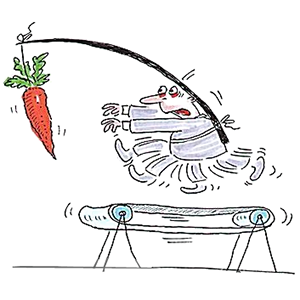
In 1971, Brickman and Campbell coined the term Hedonic Treadmill to explain that people have a baseline level of happiness, regardless of what occurs in their lives.  That definition infers winning the lottery, or being diagnosed with cancer have opposite happiness quotients–one joyfully positive; the other horrendously negative.  The Hedonic Treadmill theory suggests happiness will return to a baseline level of individual happiness when the initial joy or sorrow subsides.

Toward the end of Richard O’Connor’s book, “Rewire”, the term Hedonic Treadmill is used to infer that America’s materialist predilection is like a psychological cul-de-sac; i.e. a mental trap with only one exit. O’Connor explains, in a different way, that the cul-de-sac is created by life experience that imprints memories that become automatic responses to current events.

DAVID R. HAWKINS (1927-2012, DIED AT AGE 85, AUTHOR, PHILOSOPHER, MD, PSYCHIATRIST)
This reminds one of David Hawkins expressed belief in “Letting Go”. 

O’Connor argues that rational behavior is unconsciously modified by subconscious imprinting from early life experience. The only exit from the cul-de-sac is to leave the way you came, recall how and why you entered, and teach your brain not to take that turn again.  This reminds one of David Hawkins expressed belief in “Letting Go”.

More fundamentally, O’Connor infers American society is more materialistic today; and, as a consequence, Americans are more mentally unbalanced than in the past because happiness from material acquisition is a road to nowhere, a Hedonic Treadmill.

HEDONIC TREADMILL
O’Connor argues that Americans are more mentally unbalanced than in the past because happiness from material acquisition is a road to nowhere, a Hedonic Treadmill.

Rewire offers a great deal of information about causes and cures for individual mental dysfunction in America.  A reader or listener may disagree with O’Connor’s causal analysis but his examples of psychological dysfunction can be seen in one’s self and in others.  What makes “Rewire” interesting is O’Connor’s suggested cures, based on thirty years of experience as a therapist.

MAPPING THE BRAIN
What makes “Rewire” interesting is O’Connor’s suggested cures, based on thirty years of experience as a therapist. O’Connor endorses the belief that the brain’s functions can be rewired at any age with repetitive practice. 

O’Connor endorses the belief that the brain’s functions can be rewired at any age with repetitive practice.  As an example, he explains the utility of the 12 step program designed by Alcoholics Anonymous for addicts to avoid being trapped in a mental cul-de-sac.  The AA steps are 1) Admit powerlessness, 2) find hope, 3) surrender, 4) take inventory, 5) share your inventory, 6) become ready, 7) ask God, 8) make a list of amends, 9) make amends, 10) continue your inventory, 11) pray and meditate, and finally, 12) help others.

Though AA presumably requires a Supreme Being in their 12 step process, the point of the treatment is to train one’s mind to act differently when confronted with influences that make a person turn into a cul-de-sac rather than back to an individuated baseline happiness.

AA
Though AA presumably requires a Supreme Being in their 12 step process, the point of the treatment is to train one’s mind to act differently when confronted with influences that make a person turn into a cul-de-sac rather than back to an individuated baseline happiness. 

drug use in war
O’Connor suggests drugs are sometimes used incorrectly and become part of the patient’s problem. 

O’Connor suggests drugs may be used to treat mental illnesses like depression for immediate results but that underlying causes need to be revealed to change longer-term aberrant psychological behavior.

O’Connor notes that drugs are sometimes used incorrectly and become part of the patient’s problem.  With knowledge of triggering events for depression or addiction, behavior can be retrained to make the mind react differently.

O’Connor cautions the reader/listener to understand that negative triggers may be ingrained over years and will not disappear without repetitive behavioral training that avoids or consciously assesses negative emotional triggers.  The key to success is enough behavioral repetition to make curative responses to triggers for depression, or aberrant behavior, automatic.

BEHAVIORAL REPETITION
O’Connor argues the key to success in rewiring the brain is enough behavioral repetition to make curative responses to triggers for depression, or aberrant behavior, automatic.

O’Connor offers several mental exercises to change how the mind works.  Rewire is an insightful book but one wonders if O’Connor is not on the Hedonic Treadmill he criticizes.  After all, one presumes the book is only selling to people who can afford it, and read it.  Rewire seems unlikely to help all who are on the real American treadmill–those who cannot afford the book, pay a therapist, or practice its contemplative methodology.

HALF THE SKY

Audio-book Review
By Chet Yarbrough

(Blog:awalkingdelight)
Website: chetyarbrough.blog

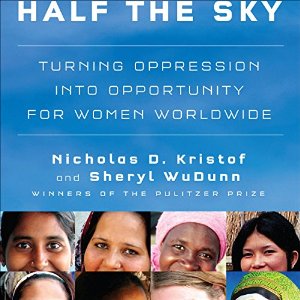
Half the Sky: Turning Oppression into Opportunity for Women Worldwide

Written by: Nicholas D. Kristof and Sheryl WuDunn

Narration by:  Cassandra Campbell

SHERYL WuDUNN (AMERICAN BUSINESS EXECUTIVE,WRITER,LECTURER,AND PULITZER PRISE WINNER)

SHERYL WuDUNN (AMERICAN BUSINESS EXECUTIVE,WRITER,LECTURER,AND PULITZER PRIZE WINNER)

NICHOLAS KRISTOF (AMERICAN JOURNALIST, WINNER OF TWO PULITZER PRIZES)

NICHOLAS KRISTOF (AMERICAN JOURNALIST, WINNER OF TWO PULITZER PRIZES)

In “Half the Sky”, Nicholas Kristof and Sheryl WuDunn document endemic misogyny.  They report the contempt of men, and prejudice of society toward women.  Their assessment of guilt is not limited to gender.  Misogyny is argued to have been originated by men, but the author’s stories offer evidence of a level of perpetuation by women.

One might note evidence of women’s tacit acceptance of misogyny with their continued support of Trump despite his boorish treatment and crude comments about women in the Billy Bush’ interview. And, of course, there is the momentous Supreme Court decision regarding women’s equal rights and Roe V. Wade.

Traveling from North American to Europe; to Asia, to the Middle East, to Africa, to South America, Kristof and WuDunn report incidents of girls’ enslavement, the beating of wives and mothers, and societies’ neglect of women in nearly all continents of the world.  (Continents missed are undoubtedly participants, but not included.)

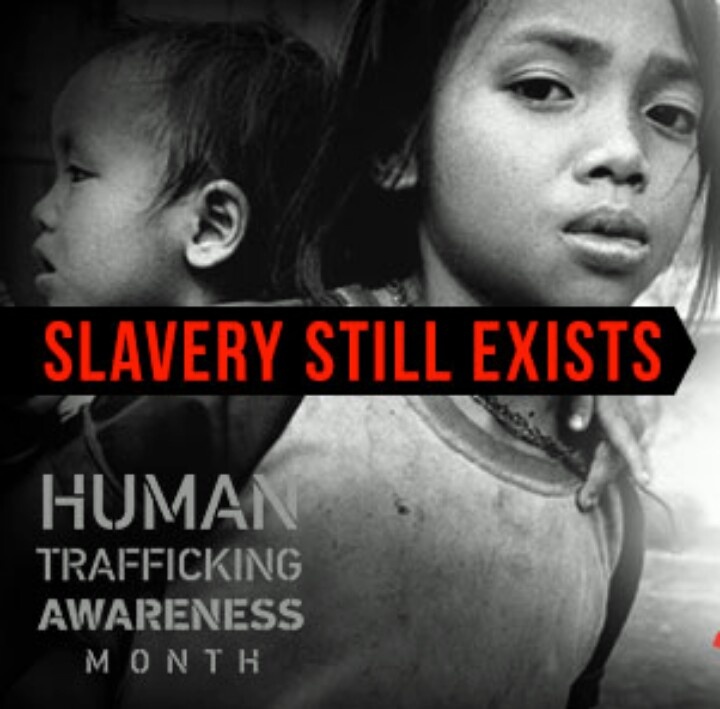
“Half the Sky” is filled with interviews of brothel women in Asia, the Middle East, and Africa. The authors recount young girls’ seduction, abduction, or purchase from families around the world.

Different societies discount the humanity of women.  Young girls are so desperate to survive; they believe stories about jobs in other countries and accept human traffickers’ lies.  They blindly follow traffickers and leave their families.

prostitution

In some cases, families are so poor they sell their girl-children for family survival.  Prostitution and pornography are growth industries that perpetuate societal misogyny.

Kristof’s and WuDunn’s story is not an academic’s polemic about the original source of misogyny.  It is reporters’ descriptions of today’s world of 13-year-old, and younger, girls that are sold, raped, and re-sold into slavery.  The authors recount the social stigma of a woman being born in a world dominated by men. 

FEMALE SLAVES CALLED COMFORT WOMEN DURING WWII

Male domination corrupts society to reinforce belief that women are property; not human beings, and not “Half the Sky”.

FEMALE SLAVES CALLED COMFORT WOMEN DURING WWII

Though women are kidnapped and sold by men into slavery and prostitution, many houses of prostitution are run or owned by women.  Though men (most often) make and control income in families, women are more likely to use income for food and shelter while men are more likely to waste income on liquor and prostitutes.

HUMAN TRAFFICKING

There are a host of ironies in Kristof’s and WuDunn’s observations. 

MAO ZEDONG (1893-1976, FOUNDING FATHER OF PEOPLE'S REPUBLIC OF CHINA)

MAO ZEDONG (1893-1976, Ironically, Mao Zedong  is estimated to have caused the starvation of 30 to 40 million people between 1959 and 1961, but Mao wrote that women are “Half the Sky” and should be treated as equals.

Sweat shops in Asia are factories of enslavement (see “Factory Girls” review) but offer women their first opportunity to break the cycle of poverty and dependence in China.

Some cultures in Asia, the Middle East, and Africa genitally mutilate females to insure chastity until marriage.  Kristof and WuDunn detail the cultural difficulty in eliminating the barbaric practice of removing female genitalia.  The rates of female genital mutilation rise as high as 90% in some cultures.

FEMALE GENITAL CUTTING IN MODERN TIMES (The rates of female genital mutilation rise as high as 90% in some cultures.)

FEMALE GENTITAL CUTTING IN MODERN TIMES

There are glimmers of light that infer change in “Half the Sky” but there is very little bright sunshine.  Kristof and WuDunn argue that education is the key.  They report on successes of men and women fighting for gender equalization and elimination of women’s enslavement and debasement.  They write of the much-touted microloan market initiated in South Asia to lend small amounts of money, without collateral, for people wanting to start a business.  The authors note several stories of women that took microloans, of as little as $3, and changed their relationship with husbands.  Husbands begin to realize women are more than objects of sexual gratification and baby’ producers, i.e., they are equally capable human beings.

Iran’s and Afghanistan’s misogynist views demand veiling of women and deny equal rights. Cultures that continue to discriminate against women deny “Half the Sky” of the equal contribution they make to society.

Two hundred thousand years of gender discrimination is unlikely to be reversed in this century.  Kristof and WuDunn infer that each step individuals take to fight misogyny makes a difference.

Progress will be slow because men are still mostly in control and more often think “it is a relief not to be a woman”, rather than how much more a woman can be.  By the end of Kristof’s and WuDunn’s book, guilt is not assuaged and equality seems years, if not centuries, away.

COSMIC MIND

Audio-book Review
By Chet Yarbrough

(Blog:awalkingdelight)
Website: chetyarbrough.blog

Letting Go

Written by: David R. Hawkins

Narration by:  Peter Lownds

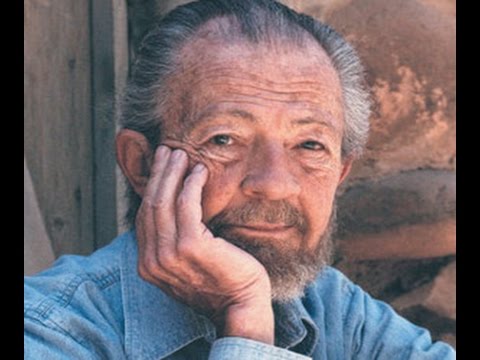
DAVID R. HAWKINS (1927-2012, DIED AT AGE 85, AUTHOR, PHILOSOPHER, MD, PSYCHIATRIST)

AUTHOR–David R. Hawkins died in 2012.  He was 85 years old.

David R. Hawkins died in 2012.  He was 85 years old.    At turns, Hawkins transitioned from agnosticism to atheism to belief in God.  This progression seems correlated with education and experience but ends in philosophical belief.  In each transition, Hawkins uses his intellect to form a philosophy that has appeal to many in search of life’s meaning. 

At times, Hawkins seems beyond reason but each step he takes offers insight to how one may live a more fulfilling life. Hawkins might be broadly characterized as a mystic.  Even so, he was a formally educated, practicing physician, and psychiatrist.

Mysticism lies in Hawkins belief in human dualism, a belief dating back to Plato and adopted by many later philosophers. 

PLATO'S BELIEF IN DUALITY-BODY AND SOUL

Hawkins dualism is belief in a distinct separation between mind and body.  More precisely for Hawkins, it is a separation between mind and brain.

The power of this cosmic mind can cure all the maladies of humankind, both physical and mental.  Hawkins implies this cosmic mind can cure physical disease manifested in the body.  If you cannot see; if you cannot hear; if you cannot feel, your condition can be cured by a force of will that engages the cosmic mind.

COSMIC MIND BELIEF

Hawkins becomes a mystic when he posits belief in a cosmic mind shared by all humanity. 

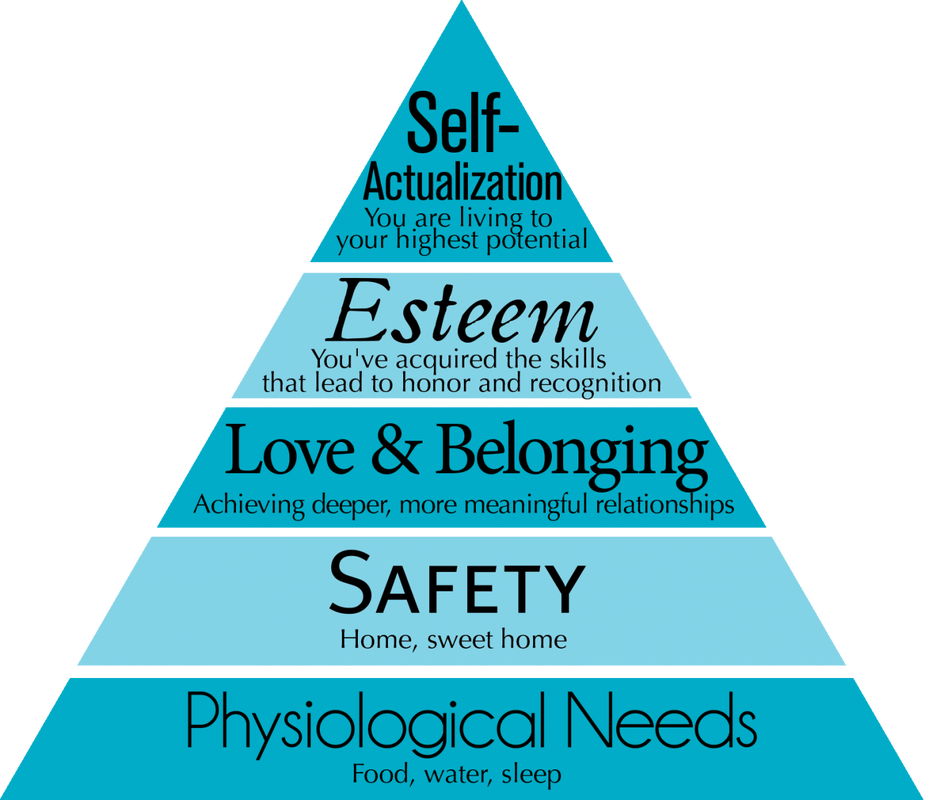
This is a point at which Hawkins loses some believers.  However, before one gets to a point of rejection, Hawkins offers wise counsel on how to live life and approach a level of what Abraham Maslow labeled self-actualization.

SELF-ACTUALIZATION

Abraham Maslow’s self-actualization.

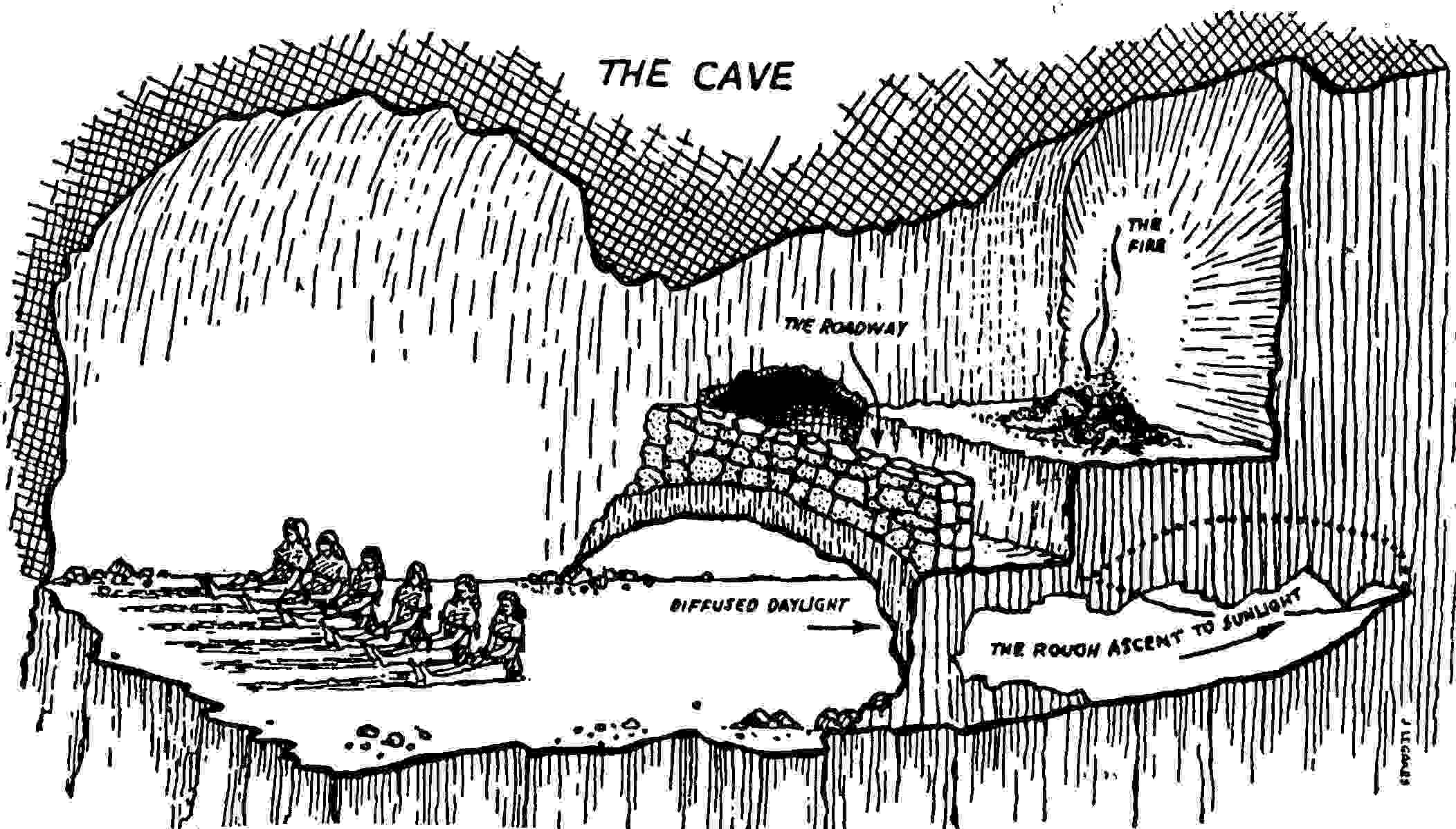
The mind gets trapped in Plato’s cave and only sees shadows of reality.  Reality is obscured by what the human mind tells them.  The mind’s interpretation of life’s events distorts reality.  A child remembers a father’s or mother’s rebuke as an eternal judgement when the reality may have been to protect a child from harm.  The shadow is created and remains with the child for the rest of his/her life.

PLATO'S CAVE

PLATO’S CAVE (Hawkins argues that everything that happens in one’s life is because of the mind’s interpretation of the world.)

LETTING GO GRAPHIC

To escape the trap of Plato’s cave, Hawkins explains one must use their senses to accept the mind’s perception of reality and continually let it go until its negative power disappears.

An example would be one who gets angry over some event or action and accepts the anger; looks at it, accepts it, uses the mind to understand why there is anger, where it is coming from, and then letting it go.  In the process, one finds anger has no meaning other than what one’s mind gave it.

With continual use of this process, Hawkins believes individual minds tap into a cosmic mind that shows the world as it really is; not simply as shadows on a cave wall. 

There is wisdom in Hawkins’ perception of life and how one can more constructively deal with its vicissitudes. In this time of Covid 19, “Letting Go” is wise counsel for those troubled by emotional and/or physical trauma.  However, the principle of a cosmic mind takes a leap of faith.

CLIMATE CHANGE

Audio-book Review
By Chet Yarbrough

(Blog:awalkingdelight)
Website: chetyarbrough.blog

This Changes Everything: Capitalism vs. the Climate

This Changes Everythiing

Written by: Naomi Klein

Narration by:  Ellen Archer

NAOMI KLEIN (CANADIAN AUTHOR, SOCIAL ACTIVIST, FILMAKER)

A change of book titles comes to mind in reviewing Naomi Klein’s book, “This Changes Everything”.  A first thought is a title like “Beat the Drum.”   On second thought, it is the question “Who Gets to Decide?”  Ninety seven percent of “…actively publishing climate scientists” say climate warming trends are likely due to human activity.

TRUMP AND CLIMATE CHANGE

Deniers think current weather phenomena are a natural aberration that will be corrected by time.  Others are apathetically fatalistic and call global warming a myth.  But almost universally, science is saying climate warming is real.

GLOBAL WARMING
Deniers think current weather phenomena are a natural aberration that will be corrected by time. But almost universally, science is saying climate warming is real.

A “Beat the Drum” title is meant to convey appreciation of Naomi Klein’s studied effort to awaken the general public to the truth of global warming.  (She is not a scientist but a writer, researcher, and social activist.)  However, the title “Who Gets to Decide?” is meant to convey a monumental weakness in Klein’s spun presentation on solutions for the problems of global warming.

CAPITALISM-COMMUNISM
Klein’s argument that global warming is a consequence of capitalism is false.  Global warming is a consequence of human nature.

Klein’s argument that global warming is a consequence of capitalism is false.  Global warming is a consequence of human nature.  To date, democratic capitalism is the only economic form of government that offers a degree of freedom for all Peoples subject to rule of law.  Democratic capitalism unleashes the power of human nature, both good and bad.  Until some better form of governance is created, the best chance for a global warming solution is captialism.  History shows freedom, subject to rule of law, is essential to a deliberative process that will provide best-case solutions to seemingly unsolvable problems.

GOVERNMENT
Capitalism is not the proximate cause of global warming.  It is the failure of the E.P.A., the President, and congressional legislators to do their job.

POLITICS AND SCIENCE
Global warming solutions lie in politics and science; not one or the other, but both.

Global warming solutions lie in politics and science; not one or the other, but both.

Einstein and fellow scientists prove that energy and mass are always equal.  That scientific proof leads to Nagasaki and Hiroshima’s atom bombs just as 97% of the scientific community’s proof leads to earth’s climate bomb.

Great Britain, France, Russia, and Germany were worn down by WWII.  American democratic capitalism makes the decision to end the war by using the atomic bomb.  One may argue that this decision is morally reprehensible but it ended a war that would have continued without definitive action based on the deliberative process of a democratic capitalist country. The same may be said for a pragmatic solution for global warming.

The world is suffering from a global warming war.  Eventually, that suffering will create a political consensus for something to be done to combat its consequence.  Evidence of something being done is everywhere.  By beating the drum Klein is creating sense of urgency about global warming.  What is misleading and spun by Klein is discounting of rich entrepreneurs, like Gates, Bloomberg, Branson, and Buffett, who are taking self-interested steps to curb global warming.  Yes, they are self-interested steps but self-interest is not inherently bad.  Self-interest is in the fight to abate global warming.

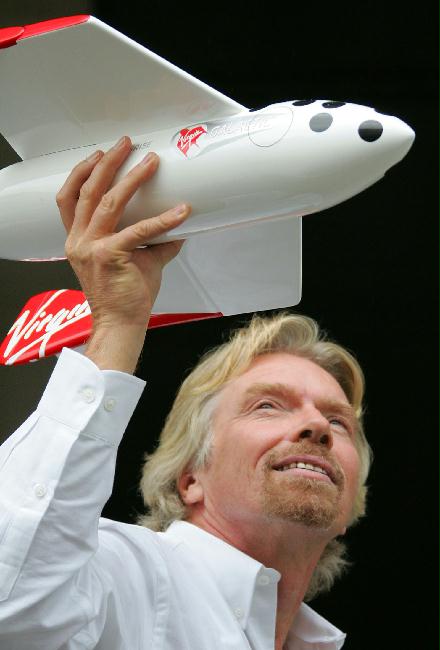
RICHARD BRANSON
Klein suggests that Branson expands his airline to make more money at the cost of further pollution.

Klein suggests Branson expands his airline to make more money at the cost of further pollution.  (In truth Branson did sell his airline in 2016.)  Branson is a pariah to Klein because of his self-interest in vertically integrating research for alternative fuels for plane travel.

Klein explains Branson is only spending two to four hundred million dollars for research on alternate fuels while having pledged three billion dollars over ten years.  One wonders, how many rich have spent one million dollars, let alone two to four hundred, on alternate fuels.  Klein infers Branson is all show and no go by reaping publicity benefit while raping the global environment.  Whatever Branson’s motive may be, two to four hundred million dollars for a less polluting fuel is better than doing nothing.

Klein vilifies Buffett for buying railroads because they are transporting coal.  Klein offers no suggestion that railroads are a more energy-efficient than some other forms of material transportation.  Klein infers Buffett made the railroad investment out of self-interest.  He probably did but that is not proof of a lack of concern about global warming.   Klein infers Buffett’s investment decisions should be dictated by whom?  Who gets to decide?

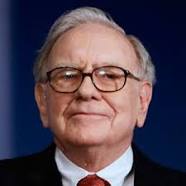
WARREN BUFFETT (NET WORTH 75.2 BIILLION DOLLARS)
Klein vilifies Buffett for buying railroads because they are transporting coal.  Klein offers no suggestion that railroads are a more energy-efficient than some other forms of material transportation.

Because people like Klein are beating the drum, the largest coal producer in the world has lost 95 percent of its stock value.  The investing public finds that the industry misleads investors on its liability as a climate polluter.  This is democratic capitalism in action.

Self-interest, good and bad, is the nature of human beings.  Klein and others need to continue to “Beat the Drum” but decisions on what is to be done will be from a political consensus and action from leaders of the world and the scientific community.  It is not what Klein says so much as how she says it.  Money, power, and prestige are human nature’s motivations.  It will be a matter of competing self-interests that reach a consensus on the preservation of life.

Klein and others should continue to raise awareness and sense of urgency, but it is self-delusion to think human nature will change within the time frame of this world’s declining environment.

In a free society, all realize they have “skin in the game”.  Those governments that validate individual freedom offer the best hope for a global warming solution.  The answer to the question of “Who gets to decide?” is best left in the hands of nation-states that validate individual freedom.  America is one that holds the hope for a solution to global warming, in spite of its democratic capitalist leaning and today’s inept Executive and Legislative branch leadership.

LUCK’S PLAN

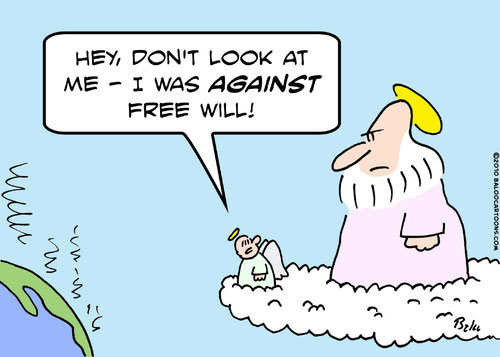
Robert Wright is saying human beings are only replicating machines; without God; without free will, and dependent upon the arbitrariness of natural selection.

Audio-book Review
By Chet Yarbrough

(Blog:awalkingdelight)
Website: chetyarbrough.blog

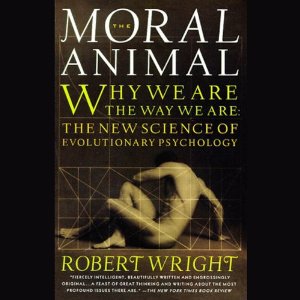
The Moral Animal: Why We Are the Way We Are: The New Science of Evolutionary Psychology

By: Robert Wright

Narrated by Greg Thornton

Robert Wright

ROBERT WRIGHT (AUTHOR, JOURNALIST)

Robert Wright emboldens Darwin’s theory of evolution in “The Moral Animal”.  Wright argues that Darwin infers evolution is biological, an all-inclusive generative theory.  Not only is humankind evolving physically through natural selection, it is evolving psychologically.

BEHAVIORAL EVOLUTION

Wright suggests every human action in life is determined by evolution.

The import of that conclusion is that all life is pre-determined at birth by evolution.  Humans, like all others in the animal kingdom have no free will.  Life is physically and morally pre-determined by evolution.  Unlike Richard Dawkins, Wright wastes no time creating the idea of memes (inherited social customs) as a determinant of behavior.  Wright suggests every human action in life is determined by evolution.  In other words, Wright is saying “the devil did not make you do it”, and God is only a false construct of human evolution.

Wright argues that all life is based on arbitrary evolutionary changes in reproduction.  Physical (genetic) and psychological (motive) changes that reinforce survival are pre-determined controllers of human behavior. Wright’s experimental evidence for physical evolution is research on human remains.  His evidence for psychological evolution is advance in biological science.

CHEMISTRY OF LIFE

The discovery of endorphin, serotonin, enzyme, and other chemical interactions that effect human behavior are markers for evolutionary change in human psychological influence and control.

Biological research shows that chemical interactions in the human body effect psychological behavior, just as genetics effect physical being.

Physical and psychological correlation with evolution changes one’s view of civilization and its discontents. It is not only suggests the death of God’s omniscience and control, but the death of free choice.  Humans are born programmed; programmed to be good and evil. Humans kill, cheat, lie, and steal.  At the same time, humans build cities, create art, love others, and sacrifice their lives for something greater than themselves.

Without God; without free choice, where is morality, where is good will, where is value in living?  Wright suggests morality evolves into normative ethics, an ethics of pleasure as long as pleasure’s pursuit does not harm others.  Wright’s idea is that humans level their moral behavior using a “tit for tat” penalty/reward system designed by evolution.  A precursor of this philosophy is inferred by Epicurus in 4th century BC but evolves into utilitarianism in the 19th century.

MORALS

Without God; without free choice, where is morality, where is good will, where is value in living?  Wright suggests morality evolves into normative ethics, an ethics of pleasure as long as pleasure’s pursuit does not harm others.

Wright argues that humankind historically demonstrated sympathy, empathy, compassion, conscience, guilt remorse, and justice.  Whether evolutionary or God-given, these moral beliefs are historically exhibited by civilization.

Civilization benefits from these feelings. Wright argues that penalties for violating rules of doing no harm to others are a part of a “tit for tat” evolutionary psychology that sustains civilization.  Whether this idea reflects God, evolution, or free-choice; “tit for tat” offers a morally grounded philosophy that has pragmatic and utilitarian value. It helps humans feel better or worse, depending on their side of the “tit for tat”.

Wright suggests Freud was on to something in the idea of id, ego, and superego.  Wright endorses Freud’s suggestion of homo sapient need for social interaction and the libidinous nature of humanity.  However, Wright believes Freud took the idea too far when suggesting humans have a death instinct or Oedipus complex.  Neither a death instinct nor Oedipus complex makes sense in an evolutionary world where replication of life is the essence of being.

HUMAN REPLICATION

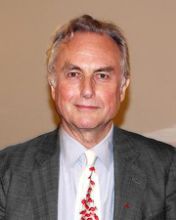
English ethologist, evolutionary biologist and author.

In summary, like Richard Dawkins, Wright is saying human beings are only replicating machines; without God; without free will, and dependent upon the arbitrariness of natural selection.

MORALITY

Audio-book Review
By Chet Yarbrough

(Blog:awalkingdelight)
Website: chetyarbrough.blog

Books That Have Made History: Books That Can Change Your Life

Written by: Professor Rufus J. Fears

Lecture by:  Professor Rufus J. Fears

J. RUFUS FEARS (1945-2012--AMERICAN HISTORIAN, LECTURER FOR THE GREAT COURSES)

J. RUFUS FEARS (1945-2012–AMERICAN HISTORIAN, LECTURER FOR THE GREAT COURSES)

Rufus Fears is an excellent story-teller.  “Books That Have Made History” is a series of lectures given by Fears that dwells too much on God but delightfully entertains all who are interested in living life well.  (Professor Fears died in October of 2012.)

An irony of Fears lecture series about “Books that can Change Your Life” is his most revered historical figures, Confucius, Socrates, and Jesus–never wrote a book.  He thematically presents a story that argues these three figures are witnesses to the truth.

Fears believes Confucius’s, Socrates’, and Jesus’s truths have been played out and proven over centuries of writings and doings.  Those writings and doings are recorded in secular and religious texts that range from Homer, to Plato, to the “Bible”, to the “Koran”, to “The Prince”, to Dietrich Bonhoeffer, Winston Churchill, and Aleksandr Solzhenitsyn.  Bonhoeffer is Fears first example of one who practices what he writes about and believes.

DIETRICH BONHOEFFER (1906-1945, Bonhoeffer  was arrested in 1943 and transferred to a Nazi concentration camp and executed in April 1945.  Bonhoeffer is a symbol of moral and physical courage in the face of injustice.)

DIETRICH BONHOEFFER (1906-1945, A GERMAN LUTHERAN PASTOR, THEOLOGIAN AND ANTI-NAZI DISSIDENT WHO DIES IN NAZI' CUSTODY)

Dietrich Bonhoeffer insists on returning to Germany to protest Hitler’s totalitarian dictatorship.  As a Lutheran pastor and theological scholar, Bonhoeffer publicly denounced Hitler’s persecution of the Jews.  This is Fears jumping off point in arguing that theism as professed by secular and religious texts are “Books That Can Change Your Life”.

Justice, courage, moderation and belief that “wisdom comes from suffering” come from Homeric literature, the writings of Marcus Aurelius, Plato’s “Republic”, the King James Version of the bible, and the holy Koran.  Fears emphasizes the transcendent impact of “Book of Exodus”, “Gospel of Mark”, and “Book of Job” as they become memes for moral belief.

In the “Book of Exodus” Fears notes the story of Moses and how Moses leads the Israelites out of slavery, a story repeated throughout history by the courage of moral leaders.

The “Gospel of Mark” tells the story of Jesus, the sins of man, and the redemptive powers of forgiveness, and justice.

The “Book of Job” symbolizes life as a struggle but, in struggle, one gains wisdom through faith in something greater than oneself.

FREE WILL VS. DETERMINISM

FREE WILL VS. DETERMINISM

Fears draws from many cultures to explore “Books That Have Made History.  He explains how the “Bhagavad Gita” identifies truth as a divine power and how stories like Gilgamesh and Beowulf suggest life is destiny, fated when one is born, while Aeschylus believes life is a matter of free will.

Plato posits duality of being with a mortal body and immortal soul.  Religious and secular writings reinforce Plato’s concept of human duality.

PLATO’S BELIEF IN DUALITY-SEPARATE ENTITIES-BODY AND SOUL

PLATO'S BELIEF IN DUALITY-BODY AND SOUL

The immortal soul is terribly and beautifully rendered in Dante’s “Divine Comedy”.  Dante describes torments souls endure if mortal life is lived in sin, but offers belief in redemption.

danteinferno_400x606

DANTE’S INFERNO Dante describes torments souls endure if mortal life is lived in sin, but offers belief in redemption.

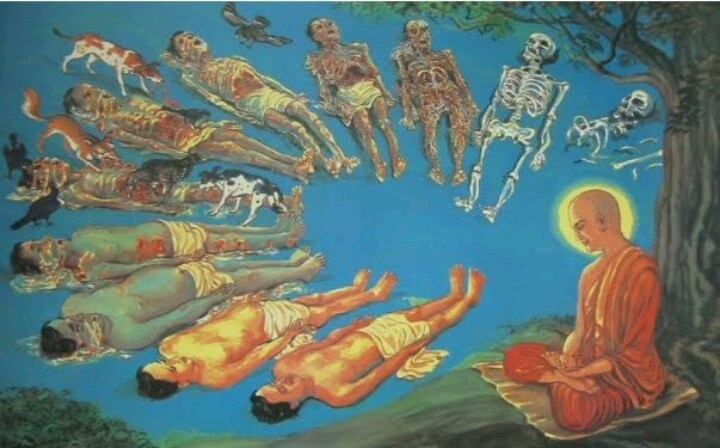
Buddhist belief in reincarnation offers a road to peace or continued struggle based on mortal life’s actions. 

A Buddhist soul’s reincarnation may be as a beast if one’s former life is filled with sin.  But as each new life approaches enlightenment, it is offered opportunity for peace without struggle in a spiritual life that requires no further incarnations.

BUDDHIST REBIRTH IN SEARCH OF NIRVANA

Fears moves back and forth in history to identify some of the “Books That Can Change Your Life”.  He jumps to the twentieth century to tell the story of Winston, the defeated hero in Orwell’s “1984”.

Fears explains how totalitarianism sucks struggle out of life but leaves dead bodies or soulless automatons in its wake.  Fears notes how Stalin murders twenty million in a totalitarian system similar to what Orwell wrote about in the late 1940s.

Fears reinforces his argument by jumping back in history to tell the story of “The Prince”, Machiavelli’s masterpiece about totalitarian rule.  Just as predicted in “The Prince”, Stalin lives to old age (lived to be 74, died in 1953) by following the rules set down in Machiavelli’s 16th century book.  Stalin murders or imprisons any opposition to his rule.  Stalin’s single-minded objective is acquisition, retention, and use of power to achieve control of society.  Stalin’s objectives are achieved through a police state that controls media, arbitrarily arrests citizens, and acts without moral conscience.

ALEKSANDR SOLZHENITSYN (1918-2008, RUSSIAN NOVELIST AND ESSAYIST)

ALEKSANDR SOLZHENITSYN (1918-2008, RUSSIAN NOVELIST AND ESSAYIST)

Ironically, Fears notes that Solzhenitsyn returns to Russia and vilifies capitalist America for ignoring the plight of the poor by losing sight of its own values. He recognized the inequality of communism but believed democratic capitalism offered little solution with similar consequence.

Fundamentally, one takes from Fears’ lectures that one must internalize morality and have the courage to reduce inequality regardless of its cost.  This is a lesson for today in the face of an American President who has no moral compass and views wealth as the only measure of social value.

DONALD TRUMP (REPUBLICAN NOMINEE FOR PRESIDENT OF THE U.S. 2016)

Stalin’s terror is revealed in Aleksandr Solzhenitsyn’s “The Gulag Archipelago”, published in 1973.  Solzhenitsyn dies in 2008, near Moscow, at the age of 89.

This is only a smattering of the many books Fears talks about in his lectures.