SKEPTIC

Audio-book Review
By Chet Yarbrough

(Blog:awalkingdelight)
Website: chetyarbrough.blog

The Believing Brain

By Michael Shermer

Narrated by Michael Shermer

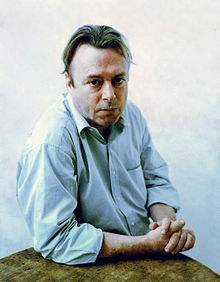
Michael Shermer (Author, American science writer, editor of the magazine Skeptic.)

Michael Shermer is an academic psychologist, writer, myth buster, and faith breaker.  Shermer characterizes himself as a religious skeptic. His underlying skepticism about God is grounded in 1.) prayer’s failure to cure the incurable, 2.) the nature and history of recorded life, and 3.) scientific studies of brain function.

Shermer writes of personal prayers’ failure to heal a medically un-heal-able friend.  He recounts common sectarian stories that occur in the history of different religions in the world suggesting that stories of religious belief are genetically imprinted; i.e. a condition of human memes rather than proof of God. 

Sherman has company in that belief. Richard Dawkins wrote The Selfish Gene to make the same mimetic point.

Shermer reviews brain function studies that confirm neurological causes for “out of body experience”, “voices from the unseen”, alien abduction, white light cognition during near death experience, and other anecdotes that mythologize the existence of other beings, God , the devil, and/or an “after life”.

The Believing Brain characterizes belief in God as a genetically evolved faith-based myth.  Shermer cites science and history to deny God’s existence.  Shermer believes faith in God comes from a genetic predisposition of human beings to complete causal, mythological stories to explain unexplained phenomena. 

Aside from Shermer’s disbelief in God, his most substantive observations are the experimentally reproducible studies that clearly demonstrate man’s ability to invent stories, deny physical reality, and act in socially reprehensible ways. 

Shermer notes how such things as framing an idea distorts human cognition.  Scientific studies show that human cognition is proven to be biased by a person’s belief system.  Shermer cites B. F. Skinner’s operant conditioning and the famous Milgram obedience experiments to show how human perception, and more consequentially, behavior are manipulated by human instinct and contextual bias.

It is no wonder that “eyewitness” accounts of crime are being discounted as a source for conviction of presumed perpetrators.

The foundation of Shermer’s skepticism is what he calls “patternicity” and “agenticity”.  “Patternicity” is the human compulsion to see causal relationship in the physical world. 

“The Believing Brain” outlines a psychological inclination of human brains to manufacture causal patterns and agents (“agenticity”) to support predetermined beliefs. 

The irony of Shermer’s analysis of brain function is that “patternicity” is an essential tool of the scientific community. 

Without the use of “patternicity”, how would Bohr, Einstein, or Paul Dirac have advanced the world of physics?  These men believed something before science could prove them right.  They had faith in their own judgement when experiment could not prove their point.

Shermer notes that science is the key to knowledge.  Science requires experimentally reproducible results. When experimental results are not the same, knowledge escapes.  Experiment recently confirmed existence of the Higgs Boson 16 years after François Englert and Peter Higgs created the theory.

One must presume Shermer chooses to call himself a skeptic because—when asked if he believes in God, no experiment can be done to confirm or deny existence.

GENIUS

Audio-book Review
By Chet Yarbrough

(Blog:awalkingdelight)
Website: chetyarbrough.blog

Narrated by B.J. Harrison

The Strangest Man: The Hidden Life of Paul Dirac

By Graham Farmelo

Graham Farmelo (Author, biographer, science writer, and an Adjunct Professor of Physics)

Paul Dirac (1902-1984, English theoretical physicist born in Bristol, UK)
After listening to Farmelo’s biography of Paul Dirac, one begins to understand why so few outside of Science know of this “brainiac”.  Paul Dirac’s history of communication is Spartan; i.e. rife with “yes” and “no” answers, long pauses, or abrupt departures, Dirac fails to become a household name like Einstein or Bohr.

Considered by some to be the second Einstein of Physics’, Paul Dirac is practically unknown to most of the non scientific community.  At the age of 31, Dirac shares the Nobel Prize with Erwin Schrodinger for discovery of new forms of atomic theory. 

In the span of Dirac’s life, he manages to astound the Physics community with his independent research, and taciturn analysis of quantum mechanics.

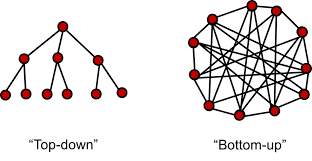
From Dirac’s top down theoretical formulation of quantum mechanics, he manages to reveal the spin of electrons and an early stage belief about string theory.  His formulations were solitary revelations born of a superior perception of reality that kept Dirac at the cutting edge of Physics well beyond his 30th year of life.

One of the revealing parts of Farmelo’s biography is Dirac’s remembrance of childhood and his parent’s treatment of him and his two siblings.  Dirac believes his father destroyed his children’s lives while Farmelo’s biography seems to show Charles Dirac deeply loved his two sons and daughter. 

Farmelo is not suggesting that Charles Dirac was a good father or husband but he is saying an offspring’s memory of what happens in their childhood is a distortion of reality. 

Charles Dirac may have been a martinet, though he did not strike his children.  He may have been a philanderer, but he remained with his wife until she died.  He may have been a cheap skate, but he left what he had to his wife when he died.  Ironically, Paul Dirac is genetically predisposed to be a genius but he seems to see a distorted truth of his childhood. 

The Chinese curse of “may you live in interesting times” is a hallmark of Paul Dirac’s life.  Born in 1902 Dirac lives through WWI, WWII, The Korean War, The 1950’s Red Scare, the reign of Joseph Stalin, Sputnik, the Cuban missile crisis, and Vietnam.  He dies in Tallahassee, Florida in 1984.  In the course of his life he met. competed with, and mostly surpassed the
crème de la crème of the Physics community.

Dirac’s life is a journey through 20th century history.  He falls for Russian communism as many intellectuals of the 1920s did.  He lives through and understands the potential of the atomic bomb and chooses not to participate in its creation.  He lives through Germany’s bombing of England, deplores German dehumanization of Jewish scientists, but accepts post war rationalizations of German scientists (e.g. Werner Heisenberg) who supported Hitler.  Dirac is denied a visa to immigrate to the United States in the 1950s because of McCarthyism.  He leaves Cambridge in the 1970s to become Florida State University’s most famous professor.

Though Dirac made monumental theoretical contributions in the field of Physics, he fails to acquire the same cosmological gravitas as Albert Einstein or Niels Bohr. It seems largely because of his lack of charisma. 

Farmelo’s biography shows Dirac as a human being working through life, burdened by perceptions of childhood, blessed with a superior perception of reality, and subject to the exigencies of living any life in this world; the difference being that Dirac was a genius among geniuses.

PHYSICS

Audio-book Review
By Chet Yarbrough

(Blog:awalkingdelight)
Website: chetyarbrough.com

The Elegant Universe
By Brian Greene

Narrated by Erik Davies

Brian Greene (Author, American Theoretical Physicist)

Who cares about physics?

If the world is orderly and predictable, physics is the key to that orderliness and predictability; the key to our future. (Knowing what E = mc2 reminds us of the importance of understanding physics.)

A unified field theory has been the goal of physicist’s since Einstein’s break through discovery of the equivalence of mass and energy.  Brian Greene excites a listener’s appreciation of string theory and its potential for becoming the basis for a unified field theory.

Greene is a theoretical physicist that helps bridge the gap between sciences’ understanding of the universe and an uninformed public.  He links analogy with obscure conceptual physics. Many concepts addressed by Greene remain obscure (“Calabi-Yau manifolds” for example) despite his valiant effort to analogize his way to our understanding.  But, “The Elegant Universe” does open doors for a non-physicist’s understanding.  

Greene explores the theory that elemental particles are made up of strings that vibrate at different frequencies.  Those vibrations determine the elemental nature of particles that make up the world; one string can become different particles based on the frequency of its vibration.  These strings move through out the galaxy to make all we see and think we know of the universe. 


“The Elegant Universe” unfolds the concept of vibrating strings.  The concept, of course, is called “string theory”. With this theory, quantum mechanics becomes a verifiable structure for physics; something that Einstein could not accept in his life time.

Conceptually, strings make up all matter and energy and have characteristics that maintain and repair the fabric of space. String theory has the potential of explaining how the universe works.  Quantum mechanics, ideas of equivalence (energy and mass), duality, symmetry and super symmetry are explored by Greene in “The Elegant Universe”. 

The truth of string theory either obviates or combines the reality of space, time, and dimension.  However, the future of string theory rests on experimental observance and measurement.

Advances in string theory demand predictability and comprehensibility. The problem is that these “strings” are so small, they cannot be measured with current technology. Without measurement, the theory cannot be tested. Without tests, the theory can only be a theory.

Of course, that was true at the time of Einstein’s theory of the equivalence of energy and matter. Since Einstein’s discovery, atomic energy and atomic bombs have proven his theory’s validity. Not so, at least yet, for “string theory”.

There are significant objections to this avenue of research by fellow scientists like Richard Feynman (now deceased), and Lee Smolin. Smolin believes “String Theory” is blunting sciences’ effort to find a more plausible explanation of the nature of the universe.

Unraveling nature’s mysteries may or may not be accomplished with this exploration but string theory has the potential of being the greatest discovery since Newton’s theory of gravity and/or Einstein’s theory of relativity.   

ENTANGLEMENT

 Audio-book Review
By Chet Yarbrough
(Blog:awalkingdelight)
Website: chetyarbrough.blog

The Age of Entanglement
By Louisa Gilder


Narrated by Walter Dixon

LOUISA GILDER (AMERICAN AUTHOR)
Louisa Gilder, in her first published book, offers a layman’s look at the science of quantum entanglement.

In the mind of a three-year-old, string can become tangled. String theory and The Age of Entanglement must have a relationship, right?

Physics is presently a mathematician’s art as much as science, particularly with the advent of quantum theory. As a non-mathematician, science’s pursuit of physics is fascinating because it tickles imagination. It offers insight to the mystery of how we got here, who we are, and where we are going.

Physics, pre- and post- Einstein, is a pursuit for the keys to the universe. Einstein’s “E=MC Squared” is a turning point. It focuses attention on unified field theory, the thought that there is a single formula that explains everything about everything.

Physics progresses from particles to waves to strings in its effort to unravel the key to the door of beginnings and endings. “The Age of Entanglement” brings a listener to 2006 without explaining how string theory relates to entanglement when they seem to have some important relationship. Gilder chooses not to include string theory (postulated in 1986 by Green and Schwarz) in her exploration of entanglement.

Nobel Prize winners in physics 2022.

Aside from that gripe, this is an enjoyable exploration of the world of physics; its theorists and experimentalists. The exploration is made better by the quality of Walter Dixon’s narration. Gilder cleverly delves into correspondence between physics legends–Einstein, Bohr, and later, John Bell and his contemporaries.

JOHN STEWART BELL (ENGLISH PHYSICIST 1928-1990) Even though Bell is not Einstein’s and Bohr’s contemporary, Bell is a critical change agent in the on-going argument begun by Einstein and Bohr about Quantum Theory. Bell changes quantum theory argument from a question of “if” to a question of “how” Quantum Theory is a valid construct of Physics.

Gilder reveals the humanness of the scientific community. She exposes the frustration and joy of discovery among scientists that think about the unknown and experiment with the unseen. The Age of Entanglement reveals the tensions that are created by strong beliefs and the utter devastation and human depression caused when beliefs are refuted by reproducible experiment.

Along the way Gilder offers a definition of entanglement; i.e. the idea that one minute quanta of existence affects other faraway elements of existence.

THE QUEST TO DEFINE QUANTUM ENTANGLEMENT

FAULTS OF HUMANITY

Audio-book Review
By Chet Yarbrough

(Blog:awalkingdelight)
Website: chetyarbrough.blog

The Illustrated Man
By Ray Bradbury

Narrated by Paul Michael Garcia (this version not available at Audible)

Ray Bradbury (1920-2012, American Author and screenwriter)

Flights of imagination sparkle and spin in this updated 1950s classic by Ray Bradbury, “The Illustrated Man” and its accompanying short stories.

Bradbury writes stories that remind one of late night re-runs of Rod Serling’s “Twilight Zone”.  (Serling died in 1975.) Every episode sparkles with stars and planets, habitable by man but riddled with fear, death, and destruction. 

Bradbury grasps human nature and turns it against itself by writing stories that illustrate man’s selfishness, insecurity, wantonness, and aggression.

Tattoos come alive on rippling skin to act out a series of plays about mankind’s future.  Everyone fears the illustrated man because his tattoos expose the worst in man. 

Bradbury writes a story showing nuclear cataclysm will end life on earth.  Traveling to other planets changes mankind’s environment but man’s nature remains the same.

These are not happy stories but they are great flights of imagination.  Bradbury tells a story of human exile and deprivation that heightens human selfishness.

When personal reward is dangled in front of exiled and deprived human beings, the dangled reward is stolen by one to keep it from the many. In the end the reward is destroyed by the selfishness of each against the other.  

As the psychologist Erich Fromm notes: Greed is a bottomless pit which exhausts the person in an endless effort to satisfy the need without ever reaching satisfaction. 

Insecurity and envy are devouring beasts in the story of a planet blessed by an appearance of a Visitor (presumably Jesus) just before a rocket ship lands on the planet that has been visited.

The ship’s captain disbelieves it has happened. The captain who lives here is living in paradise. He is driven to track down this Visitor rather than settle in the secure surroundings of a blessed world.  The captain is left to wander the universe, never to arrive in time to actually see the Visitor. 

Wantonness is illustrated by the husband that is unhappily married.  He duplicates himself.  His duplicate takes his place beside his wife so so the real husband can buy a ticket to Rio to exercise his fantasy. 

The duplicate is so perfect it becomes as human as the husband.  When the wanton husband returns from Rio, the duplicate puts him in a box to die. The duplicate then buys a ticket for the wife to accompany him to Rio. 

Human kind is aggressive.  Humans conquer and destroy civilizations.  Bradbury creates a world of the future invaded by humans. The humans destroy its civilization.

The remnants of the destroyed civilization prepare for a second visit from mankind. The remnants of the city devour the humans of the second visit and assume their bodies. These doppelgangers plan to return to earth to destroy those who had destroyed them.

Bradbury is a master story teller.  Paul Michael Garcia’s narration is a tribute to Bradbury’s skill.

UNBRIDLED CAPITALISM

(Blog:awalkingdelight)
Website: chetyarbrough.blog

Audio-book Review
By Chet Yarbrough

White Tiger

By Aravind Adiga

Narrated by John Lee

ARAVIND ADIGA, INDO-AUSTRAILIAN AUTHOR, Winner of the Booker Prize in 2008 for “White Tiger”.

“White Tiger” pictures the chasm between haves and have-nots. It reminds one of “Native Son”.  Like “Native Son”, “White Tiger” speaks about the ugly consequence of discrimination and poverty. 

A big difference between “White Tiger” and “Native Son” is in the tragi-comic rendition of “White Tiger” on Netflix. One wonders if “White Tiger” is meant to be satire or a reflection on a flaw of capitalist self-interest. Maybe both.

A visiting dignitary from China is given a note by a former Indian servant who describes his entrepreneurial success in India.  The servant tells the story of his rise from the second lowest caste in India to successful entrepreneur. He is from a lower caste of the poor, but now he is rich.

The caste system remains strong in India. Having traveled there in 2018, our tourist guide notes his family is from the warrior class.

undefined

In speaking of his daughter, he explains that though he has limited control over whom she marries, his biggest concern is that she marry within her class. Caste ancestry still binds and defines much of India’s culture.

In “White Tiger”, Balram is the main character. Balram is an uneducated but clever observer of society. He is acutely aware of his position in life. 

Balram is destined to be a breaker of social convention. 

In India (and around the world) changing sociopolitical ideals, collapsing religious belief, deteriorating family ties, and human nature’s “good and evil” amplify the chasm between rich and poor.  

An irony of Balram’s story is that it is between two countries that have different political philosophies; i.e. one, democratic; the other communist. Their socioeconomic maladies are similar.  Both countries have dense populations, high industrial growth, and consequential environmental degradation. The common thread is China‘s and India’s drive toward capitalism.  

Balram considers himself a social entrepreneur who becomes a successful capitalist by breaking social convention. His broken convention is murder.

As the Indian servant’s story progresses, Richard Wright’s “Native Son”  and Adiga’s “White Tiger” metaphorically meet. Both carry out wanton murders of sociologically ignorant human beings. 

Bigger Thomas (the main character in “Native Son”) and Balram are one side of a capitalist’s coin, minted by poor education, poverty, and discrimination.  Their capitalist reality corrupts thought and action.

“White Tiger”, like “Native Son”, is a world warning about the consequence of the growing chasm between rich and poor; i.e. as long as societies believe that “a rising tide lifts all boats”, discontent and hostile action of the poor is the main thing that will rise.

Lack of prudent regulation of capitalism leads to the worst in human nature. Even though “prudent” is in the eyes of the beholder, ignoring the poor is a monumental failure of any society, whether capitalist or communist. Equality of education and opportunity are capitalism’s saving grace but grace is not natural to man; i.e. prudent regulation of human nature is required.

“White Tiger” is a credible warning of the danger of unbridled capitalism.

WINNERS AND LOSERS

Audio-book Review
By Chet Yarbrough

(Blog:awalkingdelight)
Website: chetyarbrough.com

Embracing Defeat
By John W. Dower

Narrated by Edward Lewis

JOHN W. DOWER (AMERICAN AUTHOR, HISTORIAN)

Victory is sweet; defeat is bitter.  Victory engenders responsibility for the defeated; defeat demands fealty to a victor. Fealty is not the goal of a victorious leader who seeks lasting peace.

Peace among nations has a price. John Dower’s reflection on WWII and Japan holds lessons for today’s American leadership and Putin’s folly.

John Dower, in “Embracing Defeat”, endeavors to picture Japan’s condition; i.e. the state of its economy and its people, after surrender in WWII. 

History’s complexity is difficult to capture in words.  Dower makes an effort to explain the context of post war Japan by showing Japanese attitude in media reports and literature of the time.  The irony of Dower’s effort is that media reports and literature are censored by Allied forces, particularly the United States. This is not unlike Vladimir Putin’s control of Russian media during the Ukraine invasion. Putin will undoubtedly use that control to soft petal a hopeful settlement, though unlikely palliative acceptance by Ukraine.

MICHINOMIYA HIROHITO (124TH EMPEROR OF JAPAN 1901-1989)
Dower covers the history of an American white wash of Hirohito’s war complicity and responsibility.  The American government uses Hirohito to make occupation and influence in Japan more acceptable to its population.  It became politically expedient to hide Hirohito’s true involvement in Japan’s war plans. 

Dower reports on post-war trials of Japanese military and government leaders; i.e. Dower writes about trial testimony of Japan’s WWII’ atrocities but his history shows that victor’ justice is not necessarily victim’ justice.

Hideki Tojo as hero and/or goat–tried and convicted; sentenced to a prison in which he dies. Tojo refuses to implicate the Emperor in his actions during the war.

In spite of (partly because of) American military occupation of Japan, financial aid is misdirected and food goods and material are stolen, a black market develops, gangs are formed, and corruption thrives. (Sounds like Iraq after America’s invasion.).  Prostitution became a way of making a living, and immoral behavior became semi-acceptable because of rising poverty.

NICOLAS MADURO (PRESIDENT OF VENEZUELA SINCE 2013)
A case in point today is the President of Venezuela, Nicolás Maduro. Are his actions a “crime against humanity” or is he fighting for his country’s independence?


Economic sanctions are as likely to punish the innocent as the guilty in countries that fight for their own identity. One’s interest is peaked by Japan’s experience after WWII because of the current Middle East muddle. 

Syria, Iraq, and Iran are challenged by domestic unrest and punitive actions by non-indigenous forces.  These three countries are particularly impacted by military and/or economic pressures from outsiders.  What is going to happen in those countries?  Are there any clues in the great change that occurred in Japan after WWII?

General MacArthur assumed the role of “Dear Leader”, treating the Japanese like 12-year-olds that were to be taught the ways of Democracy with a capital “D”.  This role by MacArthur in post war Japan is accepted by many Japanese because of centuries of Imperial control, exemplified by Emperor Hirohito.

BONNER FELLERS (U.S. ARMY OFFICER, SERVED AS A MILTARY ATTACHE IN WWII)
Dower also suggests that a large part of General MacArthur’s success is due to Major Bonner Fellers, a Japanese scholar that predicted Japan’s war several years before the attack on Pearl Harbor.  Major Fellers’ respect and understanding of Japanese culture and his influence contributes much to the success of American policy in post war Japan. 

One may hope for a similar go-between if a settlement can be reached between Russia and Ukraine.

Fellers recognizes Japan’s people, with new found freedom, are inwardly driven toward a capitalist philosophy inherent in democracy.  The Japanese did not abandon their ideas of production, the ideas of small business cooperation to achieve common goals.  Those ideas made them a military behemoth in the 1920s.  They redirected that belief system toward domestically driven capitalism. Japan became a dominant 20th century economic power. Japan’s experience suggests that freedom will not be denied but how it exhibits is a mystery wrapped in nation’s histories, beliefs, and practices.

Are there equivalents of “Major Bonner Fellers” to guide America’s policy toward other countries like Venezuela the Middle East, and today’s Russia/Ukraine conflict?

America can help or hinder a peoples’ drive for freedom but where it leads in Venezuela, Iraq, Iran, or Ukraine must be their peoples’ decision.

Nature abhors a vacuum (Spinoza).  The centralized governments and economies of Venezuela, Syria, Iraq, Iran, and Ukraine will be occupied democratically, autocratically, or some combination thereof, when domestic tumult subsides. 

A peaceful settlement of the Russia/Ukraine war will be difficult. Outside countries cannot mandate lasting peace within other countries; let alone their own country. Sovereignty should be recognized as an inalienable right. It is not America’s or other countries’ job to pick winners and losers.

BLACK FACE

Audio-book Review
By Chet Yarbrough

(Blog:awalkingdelight)
Website: chetyarbrough.blog

Uncle Tom’s Cabin 


By Harriet Beecher Stowe

Narrated by Richard Allen

The meaning of words changes with the generations.  An “Uncle Tom” became a pejorative description of any oppressed minority that accepts slavery and maltreatment as a God given burden, a condition of natural life.  (See “Freedom and Equality”.)

The rise of black face minstrels and college party jokers carry through to the 20th century. The “Uncle Tom…” in Harry Beecher’s book is no minstrel and no joke.

In the context of the 20th and 21st centuries Beecher’s book is taken out of context.

“Uncle Tom’s Cabin” is written in an era, brutally described by Frederick Douglas (see “Frederick Douglas”), when human beings are traded as futures commodities. Douglas, a great American black leader, who personally knew Stowe, praises her for writing this book.

In the 18th and 19th centuries, the slave trade lines the pockets of slave traders, plantation owners, and industrialists.  Black degradation is reinforced by laws of the land; i.e. slave owners could shackle, whip, sell, rape, and murder slaves with little censure and no penalty. In that context, Harriet Beecher Stowe’s “Uncle Tom…” is a Black Saint.

This is not only a book about slavery; i.e. it is a book about humankind and how abominably one ethnic group can treat another. It is a story told many times in history and in the present day.

The apocryphal story of Abraham Lincoln having said “So this is the little lady who started this great war” is undoubtedly un-true, but for the 1850’s, “Uncle Tom’s Cabin” is a revolutionary book used to fuel the abolitionist cause in America and around the world. 

The role of religion has a mixed history in the story of slavery.  Religion plays roles in advancing and abolishing slavery.  Religion serves as a refuge for slaves by preaching the gospel of forgiveness and an afterlife while many Catholic and protestant religions promote slavery as a biblical right of the white race.

The irony of religion’s followers is that it mollifies Black resistance for those who believe in a Divine Creator. At the same time, biblical writings are used by white supremacists to justify unequal treatment. 

Some religions rose above religion’s ugly endorsement of slavery; most did not.  Quakers in the 1850s fought slavery in the United States, as is shown in Stowe’s story. Some Quaker households became a refuge for runaway slaves.

At bottom, Stowe shows commerce and greed are pillars of slavery.  The farmers, businesses, and industrialists that strove to improve their bottom line directly or indirectly abetted slavery, just as the temptation of cheap labor in China and India seduce today’s American entrepreneurs and consumers. 

More broadly, one realizes human nature is good and evil.  Most members of society succumb to temptation in life.  No human is purely good or evil but a mixture. Human nature blurs the line between right and wrong because every human is tempted by money, power, and/or prestige.

“Uncle Tom’s Cabin” is as relevant today as it was in the 1850s.

NEVER AGAIN?


(Blog:awalkingdelight)
Website: chetyarbrough.blog

  Audio-book Review
By Chet Yarbrough


Last Train from Hiroshima


By Charles Pellegrino


Narrated by Arthur Morey

CHARLES R. PELLEGRINO (AUTHOR, AMERICAN WRITER)

Putin’s Ukranian invasion raises the specter of nuclear war with the demented belief that it can be limited. Consider whether this history of nuclear cataclysm horrifies more than enlightens. “Last Train from Hiroshima” is not for the feint-hearted. It is a gruesome reminder of the horror of war.

Pellegrino has written a story of Hiroshima and Nagasaki’s bomb survivors.  Arthur Morey brings Pellegrino’s words to life. Pellegrino recounts survivor stories; i.e. what they saw, and what happened to them and their families in the aftermath of the world’s first use of a nuclear weapon.

Pellegrino is a wordsmith. He uses words that blow torch images on a listener’s mind.  His words capture the horror of nuclear war, the physical and mental effect of nuclear detonation on human beings.

After Nagasaki’s bomb, a young girl walks out of a tubular bomb shelter and sees a shadowy figure that she presumes is an escaped zoo animal. It has rough, blackened, mottled skin, and is crawling on four limbs. It is a human being, exposed to the flash and burn (pikadon) of the bomb.

Pellegrino describes this crawling man as one of the “alligator people”, a classification that repeats it self on the skins of anyone that survives direct exposure to the bomb’s flash and burn.

He tells the story of a “tap dancer” running down a street in Hiroshima; tap, tap, tapping the hard surfaced street because he has no feet.

Pellegrino recounts the story of a father greeting his lost daughter by asking “…do you have feet” because a Japanese aphorism believed ghosts are recognized as apparitions with no feet.

The aftermath of Japan’s nuclear blasts left thousands of people with few apparent injuries.  They wander in a fog of confusion, like ants in long lines following each other, single file to nowhere. They were, as Pellegrino explains, the “ant walkers”.

Days later, the “ant walkers” are stricken with fever, vomiting, loss of appetite, and internal bleeding; some survive to go through the same symptoms weeks or months later; some become crippled for the remainder of their lives; some die after the first onset of sickness; some die years later from leukemia or other maladies traced back to those two fateful August days in 1945.

The survivor stories in Pellegrino’s book are so vivid that one wonders where real history ends and his imagination begins. Regardless of the veracity of Pellegrino’s survivor facts, his description of nuclear weapon damage and radioactive exposure is verified by later scientific experiments and accidents.

One is left with the thought and fear of future world conflagration.  After all, “Never again” has been said before.

AN INNER COMPASS

Audio-book Review
By Chet Yarbrough

(Blog:awalkingdelight)
Website: chetyarbrough.blog

Jane Eyre
By Charlotte Bronte
Narrated by Lucy Scott

CHARLOTTE BRONTE (ENGLISH NOVELIST AND POET, 1816-1855)

The story of “Jane Eyre” is an example of someone who relies on reason and moral certainty to believe and act on what is right, and to live decently. “Jane Eyre” replays the tautology of “life is not fair; i.e., it just is”.

In this era of “click bait” media, we can easily lose our way. The difference between a lie and truth is harder to recognize when bombarded by viral postings on the internet. We need to remind ourselves-there is no correlation between popularity and truth.

The author, Charlotte Bronte, captures life’s joy and hardship. The story emphasizes the importance of having a moral “inner compass” to guide one to choose between right and wrong. By making right choices, fulfillment comes from working through good and bad things in life.

Jane is an orphaned girl raised by an uncaring Aunt that feels burdened by her filial obligation. The orphaned girl directly confronts her Aunt’s resentment. To escape further confrontation and embarrassment, the Aunt boards Jane Eyre in an indigent’s school.

Jane Eyre is formally educated.  She becomes a teacher at the school. Later, she is hired by a wealthy landowner to tutor a young girl that is alleged to be the landowner’s illegitimate daughter. The wealthy landowner is revealed as a man with too many secrets who covets Jane Eyre’s mind and body. Jane Eyre, driven by her inner compass, flees to endure new hardship and temptation.

At the end, Jane Eyre returns to merry the wealthy landowner. She finds him blind, chastened, and older, but still in love with the Jane Eyre he had hired as his daughter’s tutor.

An ever present refrain in “Jane Eyre” is that all life decisions and actions have consequences. The many themes that run through Charlotte Bronte’s book are what make it a classic.

Every listener will identify with some part of Charlotte Bronte’s story. The audio version of “Jane Eyre” is a tribute to Charlotte Bronte’s story telling skill.

In the 21st century, an inner moral compass is needed to offset the blizzard of falsehood disseminated by a largely unregulated internet. Social media hides behind a distorted understanding of the meaning of free speech. Free speech in America has always been conditionally defined.

Peter Thiel (Trump supporter who believes fact checking of Facebook postings is an attack on the Constitutional Right of free speech.)

Unregulated free speech spreads hatred. People are seduced into believing truth is defined by social media’ clicks. Notoriety is as important as popularity or truth.

The next mass murder or school shooting lays at the doorstep of unregulated free speech.