ARAB DISUNITY

Audio-book Review
           By Chet Yarbrough

(Blog:awalkingdelight)
 Website: chetyarbrough.blog

Arabs (A 3,000-Year History of Peoples, Tribes, and Empires)

By: Tim Mackintosh-Smith

Narrated by: Ralph Lister

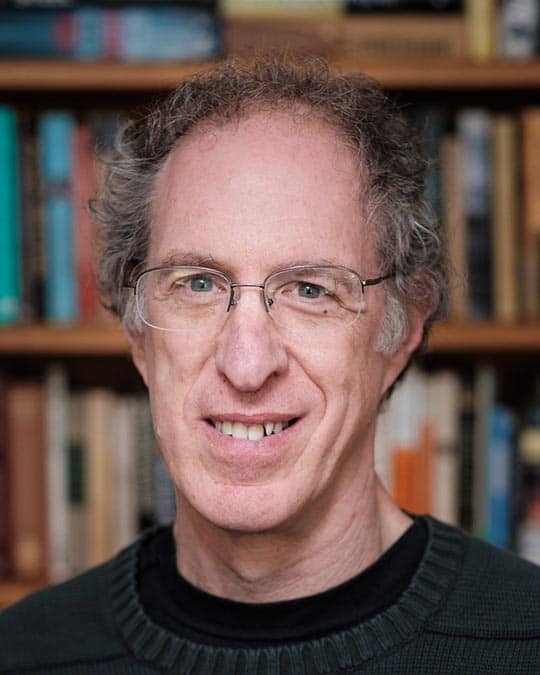
Tim Mackintosh-Smith (Author, British historian living in Yemen.)

Tim Mackintosh-Smith attempts to unravel a complicated political, and ethnic history of a society broadly identified as Arab. One begins Mackintosh-Smith’s book with a hope to understand the complex socio-economic ambition of the Middle East. In the end, the author shows there is an unresolvable contradiction that historically guarantees Arab disunity.  

To be Arab, Mackintosh-Smith explains it is necessary to understand the intricacies of Arab language because language is what maintains and sustains Arab’ culture. He notes language holds Arabic culture together, but its use reveals an unresolvable contradiction, a desire for unity without human leadership.

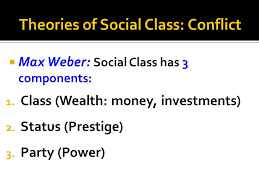
The faults of human nature, the drive for money, power, and prestige generate Arab distrust of leaders. Of course, that distrust is evident in every ethnic culture, but Mackintosh-Smith suggests that distrust demands supernatural intervention for any chance of Arab unity.
Supernatural intervention came in the form of Muhammad as the messenger of Allah in the seventh century.

Muhammad ibn Abdullah (570 AD-632 AD, Arab religious, social, and political leader, founder of the Islamic religion.)

Jesus, in contrast to Muhammed, separates religion from politics. The devil allegedly offered earth’s rulership to Jesus, but Jesus refused. In Mark 10:42-45, Jesus speaks to his followers, “You know that those who are regarded as rulers of the Gentiles lord it over them, and their high officials exercise authority over them. Not so with you. Instead, whoever wants to become great among you must be your servant, and whoever wants to be first must be slave of all. For even the Son of Man did not come to be served, but to serve, and to give his life as a ransom for many.”

One might believe that is true for believers of other faiths, but the difference is that Muhammad ibn Abdullah chose to take Allah’s words as a political as well as religious mandate.

Muhammad did not refuse a political life and chose leadership to create a better world by using the word of Allah, as later revealed in the Koran. Arab experience and distrust of human leadership demands belief in a divinity. As an Arab, Muhammad recognizes the importance of the supernatural in being a leader and chose to take political leadership as an obligation to spread the word and practice of Allah on earth.

The course of Arab history is shown by Mackintosh-Smith to reinforce the importance of divinity in Arab unity. Most great leaders in Arab history led by the sword and the word of Allah, as revealed by interpretation of the Koran. The principle of “great” is not meant to be good or bad but only powerful enough to unite a community of Arabs. These leaders came from disparate backgrounds and nations. The first seven “great” leaders (with exception of Timur and Babur) of the Arabs came from different areas of the Middle East.

1 – Tariq Bin Ziyad (670? – 720) Persia 2 – Harun al-Rashid (763?-809) Iran 3 – Mahmud of Ghazni (971 – 1030) Afghanistan 4 – Saladin (1137/38 – 1193) Egypt 5 – Timur (1336 – 1405) Uzbekistan 6 – Mehmed II (1432 – 1481) Corner of Bulgaria, Turkey & Greece 7– Babur (1483 – 1530) Uzbekistan

Mackintosh-Smith’s history reveals how many Arab countries boundaries were determined after WWII with France and England intent on creating spheres of influence. These boundaries became solidified with the discovery of oil reserves.

The 19 Arab Countries are: Algeria, Bahrain, Egypt, Iraq, Jordan, Kuwait, Lebanon, Libya, Mauritania, Morocco, Oman, Palestine, Qatar, Saudi Arabia, Sudan, Syria, Tunisia, United Arab Emirates, and Yemen.

These 19 Arab countries, some of which are thousands of years old, and others like Bahrain, Qatar, Yemen, Tunisia, and the United Arab Emirates did not become independent nations until the middle to late 1900s.

Mackintosh-Smith notes the Arabic language, despite its many 21st century dialects, remains the glue that holds the concept of Arab together. However, dialects and geographic boundaries reinforced by oil reserves recreate the tribalist instincts of the past.
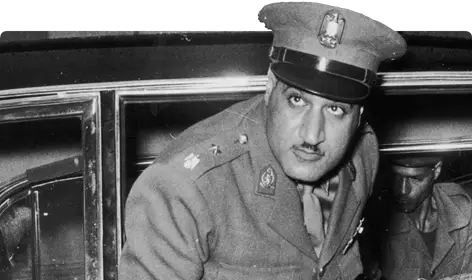
With the brief rise and fall of Gamal Abdel Nasser in Egypt, Mackintosh-Smith suggests there have been no Arab leaders to rally nationalist feeling in the 20th or 21st centuries that could blunt Arab tribalism.

Gamal Abdel Nasser. (1918-1970, overthrows the Egyptian monarchy in 1952, President from 1954 until his death.)

The internecine conflicts between great powers like Shite Iran and predominantly Sunni Arab countries, like Iraq, Saudi Arabia, is missing from Mackintosh-Smith’s book.

Muqtada al Sadr withdrawal from politics even though he is a Shite is an ill omen.

Muqtada al Sadr makes it clear that religion is a motive force in Arab culture, but the history of the Muslim split becomes opaquer. On the other hand, the author’s detailed explanation of Arab tribalism and its resurgence is a valuable contribution to one’s understanding of Middle Eastern history.

There is a minor note of optimism in the future of Arab culture in Tunisia. But, overall, after wading through this long narration, it seems the Middle East is destined to remain a fragmented tribalist culture for centuries to come.

THOREAU

Audio-book Review
           By Chet Yarbrough

(Blog:awalkingdelight)
 Website: chetyarbrough.blog

Now Comes Good Sailing (Writers Reflect on Henry David Thoreau)

By: Andrew Blauner

Narrated by: William Hope, Barbara Barnes, Kaliswa Brewster, Kate Harper, Peter Marinker, Ako Mitchell

Andrew Blauner (Founder of Blauner Books Literary Agency, Editor of anthologies.)

Blauner’s compilation of essays about Thoreau’s life and philosophy is broken into five sections.

  1. Excursions Near and Far.
  2. Deliberate Living.
  3. Direction of His Dreams.
  4. Practicalities.
  5. At Walden.

David Henry Thoreau (1817-1862, Writer, environmentalist, ecologist, philosopher.)

An apocryphal saying by Thoreau on his death bed is “Now Comes Good Sailing”.

The first section is ironically titled “Near and Far”.

Thoreau lives a narrow parochial life which explains “Near”, but his writing reflects a wide philosophical understanding of nature. Of course, Thoreau’s most famous book is “Walden”.

“Walden” is a short book about Thoreau’s two-year experience in his self-built house beside a Massachusetts’s pond.

Thoreau’s observations about nature’s fragility, beauty, and rebirth resonate with many who fear global warming and environmental destruction.

The essayists in the first section of the book lauds Thoreau’s view of solitude and peace that come from communing with nature, away from the hustle of everyday life. One living in this time is discomfited in some ways by these essays of Thoreau’s sabbatical because most who wish to live a life of solitude and peace have bills to pay and children to raise. Thoreau’s answer is “simplify your life”.

A few Americans seem to have interpreted “simplify” to mean one should become a vagrant, live in a tent, and ask charity from others who work for a living. That is not the story of these essays.

Thoreau works as a surveyor, builds his own house, and chooses self-sufficiency as a goal for living within one’s means. He did not look for hand-outs as a way of simplifying his life. He chose to live a simple life, not a life dependent on other’s charity.

When young there is little understanding of who we are or what we can do. As we age, Thoreau argues for understanding yourself and living deliberately with choices based on one’s self-understanding.

Deliberate living is living within one’s means and capabilities. Alan Lightman, a physicist, and writer, recognizes his life is slower now than when he was young. He chooses to live deliberately based on what his life has become, not on what life was when he was young. He obviously misses that fast pace but deliberation, careful consideration of life as it is now, compels deliberative recalibration.

Jennifer Boylan (Author, transgender activist, professor at Barnard College.)

Jennifer Boylan’s essay about Thoreau reveals how much better life is when you are who you are rather than what others think you should be. Boylan chooses to live a deliberative life.

“Directions of His Dreams” is a personal speculation by essayists of Thoreau’s feelings about love and life. James Marcus suggests Thoreau is in love with Ralph Waldo Emerson’s wife. He bases that speculation on scant evidence in Thoreau’s written correspondence. Whether Thoreau is gay, bi, or hetero seems superfluous whether in dreams or reality. Marcus’s speculation seems more titillation than revelation.

“As for Clothing” Amor Towles and Adam Gopnik note Thoreau finds comfort and utility as a measure of value for what one wears.

The point is that clothes made for a King that are only worn once have little comfort and no value. In contrast, Thoreau would suggest clothes that keep one warm when it is cold, comfortable from long wearing, and useful for work have great value.

Geoff Wisner (Author, editor of Thoreau’s Animals.)

Geoff Wisner suggests Thoreau’s measure of “what is worth doing” is based on answering the question of “Is It Worth the While”.

The last section of the essays reflects on independence and political risks Thoreau chooses in his short 44 years of life. Thoreau actively supports abolition by physically participating in the underground railroad with help for escaping slaves. Thoreau wrote about and actively participated in civil disobedience. He went to jail for non-payment of taxes (eventually paid by Emerson) because he disagreed with government policy.

Thoreau aides one of the participants in the abolitionist uprising by John Brown in the 1859 Harper’s Ferry raid. (Brown was hung for his action.)

There are reasons to admire Thoreau in these essays whether one has read “Walden” or not. Equally, there are reasons to question interpretation of Thoreau’s thoughts by 21st century essayists.

CHINA’S FUTURE

Audio-book Review
           By Chet Yarbrough

(Blog:awalkingdelight)
 Website: chetyarbrough.blog

   China’s Great Wall of Debt (Shadow Banks, Ghost Cities, Massive Loans, and the End of the Chinese Miracle.)

By: Dinny McMahon

         Narrated by: Jaimie Jackson

Dinny McMahon (Author, former reporter for the Wall Street Journal, Dow Jones Newswires, and former fellow of the Woodrow Wilson International Center for Scholars.)

Dinny McMahon lived in China for ten years before writing “China’s Great Wall of Debt”. He is neither the first nor undoubtedly the last chronicler of modern China’s future.

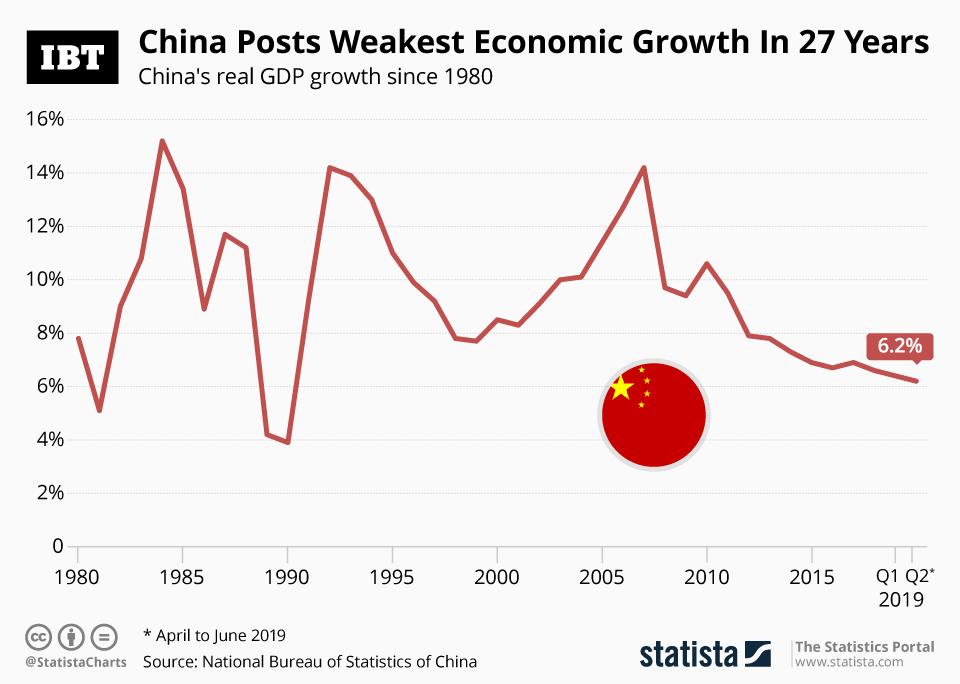
Taking his observation of China’s remarkable advance in the last 27 years, McMahon joins others who argue China is at the precipice of a cyclical economic trough.
Visiting China for the first time, one is amazed at the modern look of Beijing. Its bullet trains, wide boulevards, and streetscapes remind one of model cities like other storied capitols of the world.
On the other hand, outlying suburbs, and cities fit the description of McMahon’s “Ghost Cities” with block-to-block, mid-rise apartment buildings, no tenants, and slap-dash HVAC wall-units.

Wealth is a function of the have and have-nots in China. This is a familiar refrain to many who believe it equally describes America’s economy.

McMahon explains how the last twenty years of economic growth in China is a function of real-estate monetization that has reached a mortgage nadir, teetering on the edge of collapse. McMahon notes the difference between America’s real estate booms and busts and China’s is that it has taken America two hundred years to reach its present prosperity while China has done it in less than 3o years. He implies that time difference has benefited America by giving it more tools than China for dealing with economic inequality.

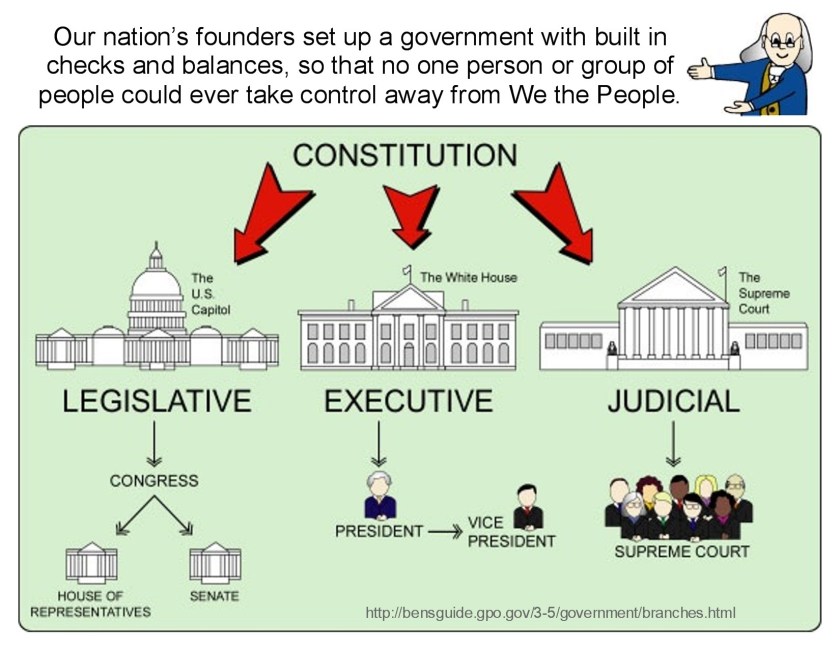
Adding to McMahon’s note about the time difference is the political difference between America and China.  America’s political system is tested by checks and balances, both by party and governmental organization.

China has a singular party with one leader who has few checks and balances, with a singularly authoritarian governmental organization.

When leadership changes in America, political and economic policies are only incrementally adjusted. In leadership change in China, political and economic policies may be dramatically altered or even abandoned. That truth is evident in China’s transition from Chiang Kai-shek to Mao to Deng Xiaoping, to Xi Jinping.

McMahon’s fundamental point is China’s rapid economic growth is founded on a financial structure dependent on real estate financed by the state and a poorly governed semi-private banking system that artificially inflates China’s assets.

McMahon notes there was pent-up demand for private real estate ownership when all land was owned by the government. That pent-up demand is the source of China’s rapid economic growth. However, in the current market, McMahon suggests real value in that real estate is diminished by a public that is not wealthy enough to afford it. A kind of Ponzi scheme is growing with consumers that are buying land without real collateral but with a ghost banking system that is condoned, if not supported, by the state.

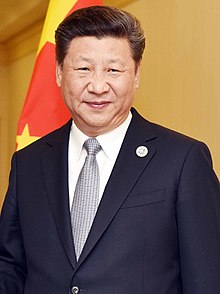
McMahon leaves some doubt about China’s near future collapse because of adjustments President Xi is making in reducing bureaucratic corruption that allows ghost banks to prosper. McMahon also notes that President Xi is addressing the domestic needs of China’s citizens by emphasizing economic growth within China to make them less dependent on international trade. However, McMahon notes Xi Jinping is a singular leader. The question is—what happens when Xi Jinping is no longer China’s leader?

McMahon is not alone in suggesting China may be headed for trouble. Whether shadow banks, ghost cities, and massive loans will be the end of the Chinese Miracle seems less important than what a Chinese economic collapse would mean to the rest of the world.

A STEP TOO FAR

Audio-book Review
           By Chet Yarbrough

(Blog:awalkingdelight)
 Website: chetyarbrough.blog

   We the Corporations (How American Businesses Won Their Civil Rights)

By Adam Winkler

         Narrated by: William Hughes

Adam Winkler (Author, Connell Professor of Law at UCLA.)

If only minorities could have kept pace with corporations’ pursuit of and success for civil rights, American society may have become more equal.

Liz Truss (Newly elected Prime Minister of the UK.)

It is announced this morning (9/5/22) that the new Prime Minister of the UK is to be Liz Truss. A primary issue in Ms. Truss’s campaign is to reduce taxes. America’s experience of reducing taxes seems a replay of the Reagan/Thatcher years. Many consider these two leaders as just what was needed at the time to advance their respective countries’ economies. As a result of their tax reduction policies, the gap between the rich and poor widened with corporations and their leaders being the primary beneficiaries. Hopefully Ms. Truss’s tax reductions do not benefit only corporations.

Experience of reducing taxes in the UK may be a replay of the Reagan/Thatcher years in America.

Corporations need to consider their responsibility for passing on those tax benefits to workers. If Ms. Truss’s tax reductions only increase the gap between rich and poor, democratic government is doomed.

It may be a surprise to many that corporate pursuit of civil rights dates to the early beginnings of American history. The first battle for corporate civil rights began with Alexander Hamilton’s drive to create the first American bank. His major political opponent is Thomas Jefferson. 

Jefferson opposes a national bank because he believes it diminishes State’s rights by ceding too much control to the national government. Winkler notes the irony of Jefferson’s objection in that Jefferson relies on national bank loans to subsidize his profligate lifestyle.

Winkler notes some level of civil rights for corporations is needed to protect the public from exploitation. If a corporation is not recognized as a singular public body, individual Americans could not sue for redress. Harm from unfair or harmful practices of corporations could not be tried in a court of law. However, Winkler explains an underlying concern is the gain of personhood for corporations. By being recognized as a person, corporations gain political influence beyond any individual person’s rights.

To many Americans, a 21st century Supreme Court decision on corporate civil rights is a step too far.

With the decision in Citizens United v. Federal Election Commission, the Supreme Court allows unlimited corporate donations to Americans running for political office.

Money is power, particularly in a capitalist economy. Elected officials become beholding to corporations rather than private citizens when running for office.

A prime example is the pharmaceutical and gun lobbies that have dominated both Democratic and Republican parties.

The rights of these corporate enterprises distort the benefits and dangers of both drugs and guns in American society. Over prescribed drugs and opiates advertised to the public by the pharmaceutical industry are more widely spread than ever before. If elected officials were not so beholding to gun lobbies, national background checks and red flag laws would not be so difficult for Congress to pass.

The opiate epidemic and the 5.25.22 Uvalde murder of 19 children and 2 adults is evidence of the harm done by granting too many civil rights to corporations.

Winkler’s book about corporate pursuit of personhood is burdened by legal explanations for non-lawyer listeners. However, his history gives one a deep appreciation of how civil rights can bring both good and harm to American society.

SOCIAL DYSFUNTION

Audio-book Review
By Chet Yarbrough

(Blog:awalkingdelight)
 Website: chetyarbrough.blog

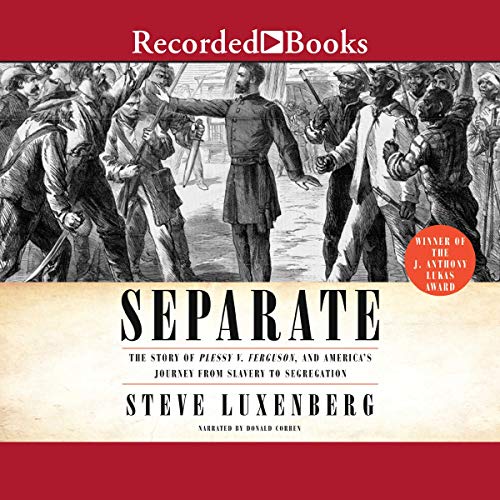
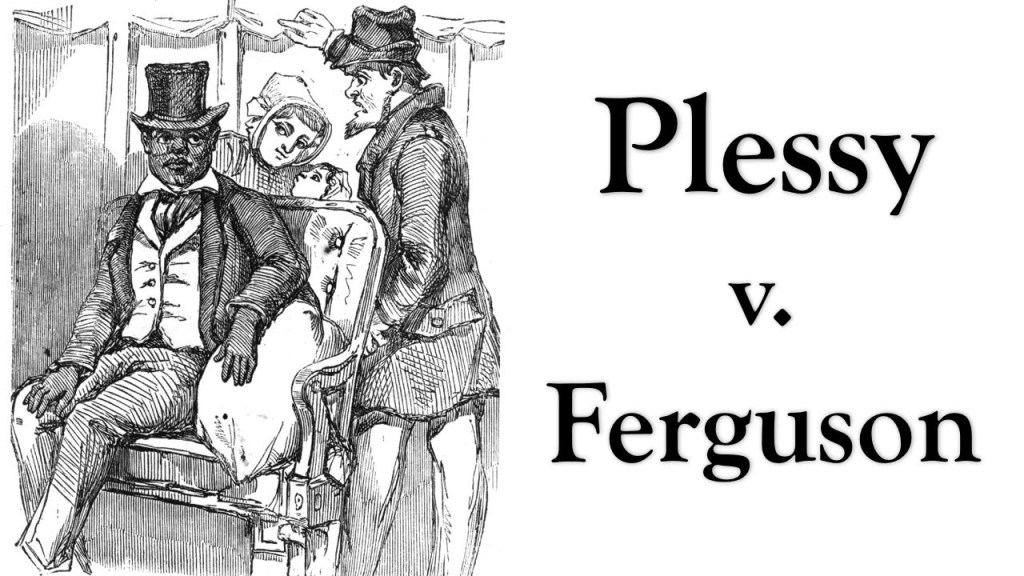
   Separate (The Story of Plessy V. Ferguson, and America’s Journey from Slavery to Segregation)

By Steve Luxenberg

         Narrated by: Donald Corren

Steve Luxenberg (Author, associate editor The Washington Post.)

“Separate” is a disheartening history of American social dysfunction. It is largely a biographic picture of two Americans, John Harlan and Albion Tourgée. Both play a pivotal role in the transition of American slavery to American segregation. Both are against the iniquity of segregation but fail as civil war veterans and public servants to eradicate America’s belief in a “separate but equal” doctrine.

Their social positions are quite different in that Harlan is from a relatively wealthy slave holding Kentucky family while Tourgée is from a small Ohio farming family.  Both become Republicans that serve in the union army during the civil war. Harlan’s family is politically connected in Kentucky while Tourgée has no interest in politics until he goes to college. Both men become lawyers, but Tourgée is a much less successful lawyer while becoming a noted writer. In contrast John Harlan gains reputation as an astute lawyer who evolves into a well-known dissenter on the Supreme Court of the United States.

Harlan serves as an officer in the Union army and recruits a Kentucky militia that fights for the union.  Interestingly, though Harlan becomes a Republican, he is opposed to Lincoln’s Emancipation Proclamation. Tourgée initially enters the Union army as a volunteer in New York.

Tourgée is seriously wounded in the First Battle of Bull Run in an accident. After recovery, he reenlists as an officer in the 105th Ohio Volunteer infantry and is wounded again, captured, and imprisoned in Richmond, Virginia. He is freed in a prisoner exchange and rejoins the Union army, fights in two more battles, and resigns his commission in 1863.

Tourgée gains a reputation as a staunch defender of equal rights for what then were classified as colored Americans.

To this listener, the contrast between Harlan and Tourgée are the most interesting part of Luxenberg’s history. Harlan changes his view of slavery and segregation during his life. Tourgée never changes.

Harlan grows to recognize the inherent inequality of segregation. In Harlan’s changed beliefs, he becomes well regarded by famous black orators like Frederick Douglas.

Tourgée becomes a noted and self-proclaimed “carpet bagger” from the north. He is vilified throughout the south for his beliefs and writing about equality of all races. Tourgée settles in North Carolina with his wife, and they take in a young black girl who is raised and educated at the expense of the Tourgée’s.

An interesting note by the author that gives a listener an inkling of Tourgée’s failure as a lawyer is the defense used for a soldier who is accused of stealing money from the government. Tourgée loses the case. However, the soldier is later exonerated by testimony and affirmations from fellow soldiers. This is early in Tourgée’s career as a lawyer, but it presages his loss of the important Plessy vs. Ferguson decision that reaffirms “separate but equal” precedent. Tourgée’s legal augments get lost in a forest of trees with too many ideas that do not hold the attention of his judges.

The decision by the Supreme Court in Plessy v. Ferguson is 7 to 1 which affirms the principle of separate as equal. The lone dissenter is John Marshall Harlan.

Harlan’s dissent presages today’s consequence of the mistaken belief that separate can be equal. The nature of humankind makes separate but equal impossible.

The only enforced legal truth of separate is not equal is the decision of Brown v. Board of Education, but there are many who continue to disagree.

It has been social pressure, not legal standing, that has changed the lie of “separate but equal” in America. Plessy v. Ferguson has never been overturned except for education. Of course, the problem now is that education is not being adequately provided for reasons too numerous to detail. That problem is not the subject of Luxenberg’s history.

PINOCCHIO’S NOSE

Audio-book Review
           By Chet Yarbrough

(Blog:awalkingdelight)
 Website: chetyarbrough.blog

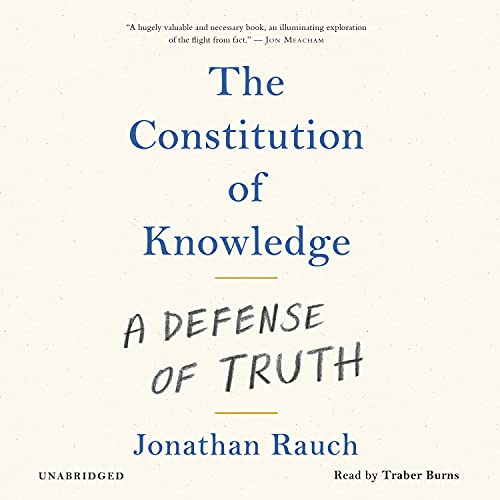
   The Constitution of Knowledge (A Defense of Truth)

By Jonathan Rauch

Narrated by: Traber Burns

Jonathan Rauch (American author, journalist, freelance writer for The Economist and senior fellow at the Brookings Institution.)

The structure of knowledge is the subject of Jonathan Rauch’s “…Constitution of Knowledge”.  What may come as a surprise to some is Rauch’s argument that knowledge is a social construct, not an inviolable fact or truth. Knowledge grows from tests of society.

As Karl Popper, a highly respected philosopher of science noted, knowledge can only be found through pursuit of its falsification.

The fear that accompanies Rauch’s argument about knowledge, and Popper’s belief about science’s truth means a lie can be as influential as truth. The two greatest twenty first century examples are Trump and Vladimir Putin.

U.S. President Donald Trump and Russian President Vladimir Putin shake hands as they hold a joint news conference after their meeting in Helsinki, Finland, July 16, 2018. REUTERS/Leonhard Foeger

All human beings lie. The problem is those with preeminent power use the lie to lead others to believe what society’s tests show to be false. The problem is distinguishing a lie from societal truth. A lie is never as evident as it is with Pinocchio’s nose.

Truths should not be based on a singular view of reality.  Lies of leadership in recent history have led to tragic interventions by America, France and most recently, Russia in sovereign countries like Vietnam, Iraq, Afghanistan, Syria, and today’s Ukraine.

The great fear accompanying this view of knowledge is that truth only reveals itself as past events. It is exhibited in the death of innocent bystanders that follow leader’s lies. World wars prove how the truth is never known in real time, only in history. Society’s tests of Trump and Putin show how destructive a leader’s lies can be in both democratic and autocratic nations.

Rauch both personalizes damage that lies have on individuals and society with his experience as a gay person and combatant against cancel culture, violence, sexism, and racism. Though Rauch’s explanation notes many examples of what is wrong with society, he ends with a degree of optimism about how one can deal with leadership’ lies.

Words matter but if they don’t lead to violence, they can be logically addressed by society and rejected for their distortion of perceived truth. Rauch is careful to explain truth is a perception, not a fact or necessarily a truth. As is shown by science, the human brain does not record facts but recreates events that fit a human’s perception of reality.

What is true is tested in Popper’s theory of facts that are tested by search for falsifiability.

If a tree falls in the forest and a tape recorder records the sound, one is tempted to believe a fact has been found. If that experiment is repeated many times by different people, the falling tree makes noise, whether a human is there or not, is likely to be true. However, it is a sound that remains a perception. The difference is it has been tested many times by society with the same result.

Cancel culture is when there is a public boycott of people or organizations because of an interest group’s belief. If a group’s belief is challenged by perceptions and experience of a broader society, cancel culture can be, at least, ameliorated.

Rauch shows himself to be a free speech believer. One presumes he endorses all free speech if it does not induce or insight violence. This is not to suggest words spoken or written are not harmful, but they are not physically injuring another.

Attacking a person physically for words spoken is reprehensible but attacking an idea is societies’ way of revealing the truth and acquiring knowledge.

After listening to Rauch’s explanation of what knowledge is and how it is acquired, one wishes a signal could be sent when one is knowingly lying, e.g., something like Pinocchio’s nose.

AMERICAN CAPITALISM

Audio-book Review
           By Chet Yarbrough

(Blog:awalkingdelight)
 Website: chetyarbrough.blog

Can Democracy Survive Global Capitalism?

By Robert Kuttner

     Narrated by: Mike Chamberlain

Robert Kuttner (Author, journalist, professor of social policy at Brandeis University)

Robert Kuttner personalizes the history of capitalism as an historian and journalist, not an economist. This book is a tedious fact-filled tour of capitalist experimentation. Kuttner illustrates how government economic policy is like a roulette game. Government leaders spin the wheel. The ball drops on a numbered slot that is either black or red. A player chooses Kuttner’s fundamental point and the answer to the question “Can Democracy Survive Global Capitalism?” seems a matter of luck.
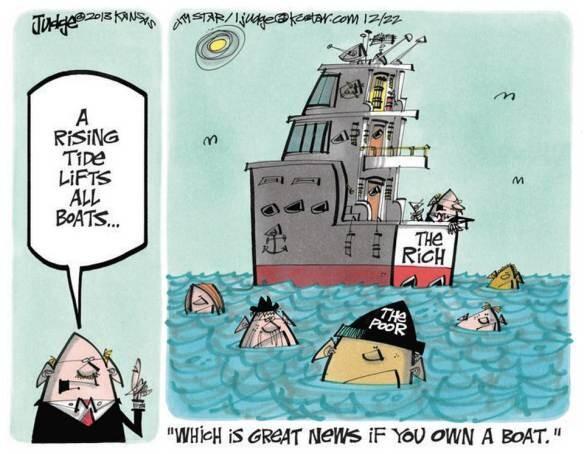
Choice for survival of global capitalism seems dependent on reducing the gap between billionaire/millionaire capitalists and the wage-earning public. However, what Kuttner’s rambling history shows is that there is no definitive answer. There are some clues but the balance between democratic freedom and equality of opportunity teeter on the metallic edge of a black and red slot of a roulette wheel. He asks the question whether America is going to become more like China or China more like America?

Kuttner offers some examples of economic policy in Scandinavian countries, Africa, the Baltics, Great Britain, France, Germany, Greece, China, and the European Union. Kuttner implies, if there is a common denominator for survival of global capitalism, it is government policy that benefits wage earners.

Capitalism must benefit more than a simple minority or small majority of citizens within a country.

Kuttner’s history shows achievements in democratic capitalism have been hit and miss with luck as much a factor of success as policy. Adam Smith, Karl Marx, and John Maynard Keynes theories offer hints about what can be done to grow and sustain capitalist economic stability. What gets in the way of their theories is interpretation, policy, action, and results.

Kuttner offers many good and bad examples democratic capitalism’ interpretation. Denmark denies Ryan Air’s employment model in their country because it is unfair to employees of the Airline. Public benefit services like mail in the United States assure delivery of the mail in a timely manner, regardless of profitability.
Unions are formed in various countries to give wage earners a seat at the table in determining fair compensation and benefits in privately held companies.

On the other hand, privatizing prison management only reduces cost to the public by reducing pay and training of prison guards. The prisons are not better managed, but costs are less because quality of service and overhead is reduced while prisoners are poorly managed. Immigrant labor is farmed out by private companies to reduce corporate costs but at the expense of laborers that work for less than a livable wage. Private companies higher “independent contractors” like Uber drivers for which the company does not pay medical premiums or employment taxes. Corporate raiders buy faltering high cash-flow companies with borrowed money. These corporate raiders reduce wages of employees, drives formally marginally profitable companies into bankruptcy, and walk away with millions paid by loans used to buy the company in the first place.

Kuttner caps these negative global capital maneuvers by revealing how American corporate owners and leaders move manufacturing to foreign competitors because of cheaper labor. That movement benefits corporations at the expense of American manufacturing.

Kuttner explains corporate outsourcing unfairly diminishes American workers and decimates American manufacturing. He notes Germany chose to improve the quality of their manufactured products to remain viable manufacturing global competitors even though their workers are paid more than comparable American workers.

This is a frustrating book to use as evidence for the survival of global capitalism because there are many examples of government policies meant to do good that fail.

This history reinforces the analogy of the roulette wheel. Either red or black may be the best result one can expect but the consequence seems as much luck as foresight.

Hope lies in reducing the gap between haves and have-nots by insuring equality of opportunity through public education and job opportunities. This is not to suggest homelessness and poverty will disappear in democratic capitalist societies, but it becomes a manageable societal responsibility.

Having lived in different areas of the United States shows homelessness and poverty are presently out of control.

Today, in the United States, homelessness and poverty are not being well managed because public education and job opportunities are not being adequately addressed. As one of the richest countries in the world, American democratic capitalism can do better than just survive.

Education and employment are key to turning these crises into something that can be managed.

One cannot dismiss Kuttner’s observations as liberal ranting. Wage earner respect and treatment, whether in manufacturing, technology, or service industries, are the key to survival of world capitalist democracies. America can choose to become more like China and support authoritarian miscreants like Donald Trump or elect leaders that experiment with political ideas that have made America great.

FEMINISM

Audio-book Review
           By Chet Yarbrough

(Blog:awalkingdelight)
 Website: chetyarbrough.blog

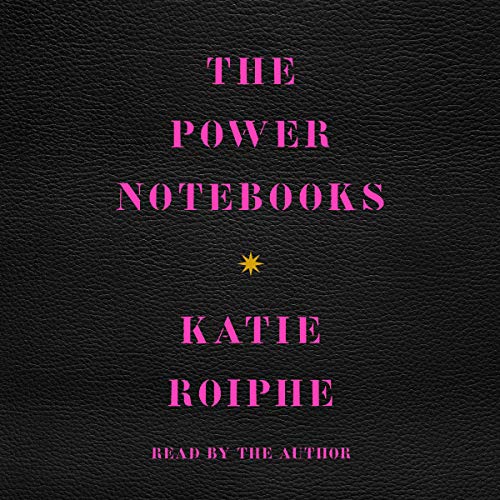
The Power Notebooks

By Katie Roiphe

           Narrated by: Katie Roiphe

Katie Roiphe (Author, critic, tenured professor at New York University.)

“The Power of Notebooks” is a memoir of Roiphe’s life between the age of fifteen and fifty. Her first love affair is with a Rabbi when she is fifteen. On the one hand, Roiphe notes the inappropriateness of the Rabbi’s seduction; on the other, she implies a level of guilt for the affair. Roiphe is married and divorced twice and has two children which she mostly raises as a single parent. Her father was a psychoanalyst and her mother, Anne Roiphe, is an American writer and journalist.

To borrow a phrase and title of a well-known book, this memoir is of a woman who is “Naked and Unafraid”.  

Though labeling is fraught with misrepresentation, Katie Roiphe is a feminist. She is an advocate for women’s rights and equality of the sexes but questions the veracity of “me to” in the world of Harvey Weinstein and Jeffrey Epstein. One doubts Roiphe would not vilify Weinstein’s and Epstein’s behavior but “The Power Notebooks” implies extreme behavior is not a reflection of society in general.

In “The Power Notebooks” Roiphe’s strident voice reflects on her life as an independent woman. She chooses her friends, lovers, and fellow writers based on a qualification of not caring about who you do, or what you do. Roiphe writes about what she did and what she believes.

Roiphe notes how some question her role as a single parent raising two children on her own. It is not a concern of Roiphe’s, and one wonders why anyone would question that circumstance in the 21st century.

Roiphe examines her relationship with men whom she neither depends on nor expects will be dependent on her. It is not that she does not fall in love, but that love is not all there is to a relationship.

Relationship is always a work in progress and if there is no progress, relationships end.

Roiphe expresses the same concern of all working parents in being concerned about job security. She explains how she successfully gains tenure at a university which assures continued employment. In a way, there is a disingenuousness in that employment concern considering the professional status of her family. However, Roiphe shows herself to be a highly independent woman who seems unlikely to seek help from anyone in living the life she chooses.

“The Power Notebooks” shows there is only one difference between the sexes. Women give birth, men do not. Roiphe could be telling anyone’s story, male or female, if they were not reluctant to be “Naked and Unafraid”.

TERROISM

Audio-book Review
           By Chet Yarbrough

(Blog:awalkingdelight)
 Website: chetyarbrough.blog

Anatomy of Terror (From the death of bin Laden to the Rise of the Islamic State.)

By Ali Soufan

           Narrated by: Aaron Abano

Ali Soufan (Author, former American FBI agent, Lebanese heritage from a Sunni Muslim family.)

This is Soufan’s characterization of the western world’s effort to quell the beast of middle eastern terrorism.

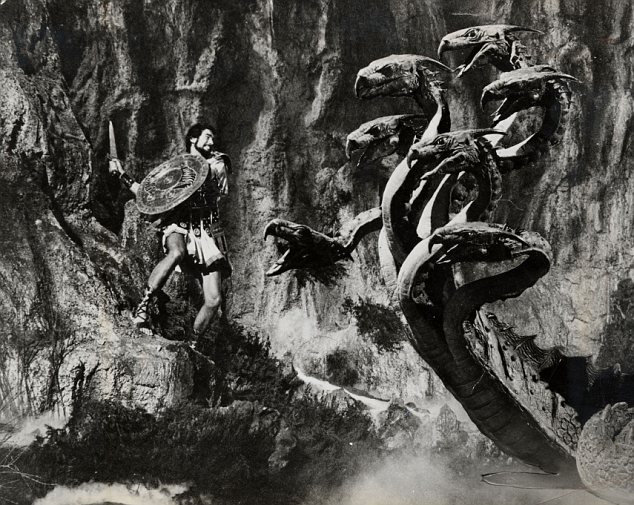
Ali Soufan paints a dark picture of America’s middle east relationship in “Anatomy of Terror. He envisions a hydra, the mythical monster that grows two heads when one is cut off.

The terrorist event that sets the tone for Abano’s history is, of course, America’s 9/11/01 disaster.

Osama bin Laden’s plan for the destruction of the Twin Towers in New York is hatched by Khalid Sheikh Mohammed (aka KSM).

Abano offers a brief history of KSM’s addition to al Qaida. In KSM’s early introduction to bin Laden, the dramatic idea of using an airplane hijacking to create a terrorist event is skeptically dismissed. As KSM’s reputation in al Qaida grows, the idea gains support of bin Laden. The impact of a singular terrorist event changes the world.

Abano tirelessly assembles so many facts about this Hydra’s growth that one becomes numbed by terrorist events and names. Only a CIA or FBI agent is likely to be interested in Abano’s research. However, a listener who perseveres realizes Abano is not just a problem bringer but one who has an idea of how terrorism can be defeated.

The complexity of the middle east’s terrorist origins, persistence, and ubiquity seem as incurable as world poverty and hunger.

Abano’s solution, as is true for any complex problem, begins with understanding. As difficult as it is, one must try to understand another’s reasons for carrying out a terrorist act. With understanding, one can constructively rather than destructively respond to a terrorist act. Murder for murder simply leads to further senseless murder.

Only with understanding can the causes for terrorism be either exposed as hypocrisy or dealt with as a reason, though not justification, for a murderous act.

The causes of terrorism must be exposed. Stories need to be told and re-told in ways that explain causes. These stories must come from nation-state leaders who have influence in their countries and reputations in other countries. Abano suggests these nation-state messengers can cultivate community leaders to spread the word, whether of God or mammon, to address the true and false reasons for terrorist acts.

Exposure of true and false causes offer hope for a solution that eliminates or, at least, ameliorates conflicting terrorist ideas, beliefs, and acts.

Abano argues money should be invested in schools and teachers who educate children in their own countries.

Through education in reading, writing, and arithmetic, children will grow to understand reason, truth, and falsity.

The expense of incarceration should be supplemented by rehabilitation with the objective of re-introducing the captured to society.  

To Abano, captured terrorists should not be demeaned, tortured, or executed.

A listener may feel Abano is being altruistic. In truth, he is altruistic but the path presently being followed is not working.

As the saying goes—an eye for an eye will make the whole world blind.

By putting oneself in the terrorist’s shoes, Abano implies one is taking a first step in attacking the fundamental causes of terrorism. Without understanding there is no solution.

ECONOMIC EVOLUTION

Audio-book Review
           By Chet Yarbrough

(Blog:awalkingdelight)
 Website: chetyarbrough.blog

Karl Marx (Philosophy and Revolution)

By Shlomo Avineri

           Narrated by: Roger Clark

Shlomo Avineri (Author, Professor of political science at Hebrew University of Jerusalem.)

Is economic evolution about mind or matter?

Shlomo Avineri offers a more studied view of one of the three most influential economist in history, Karl Marx. Marx’s influence extends to philosophy, history, sociology, and politics.  

Avieneri illustrates how categorization of Marx as an influential economist minimizes his historical significance. Marx is born in Trier, Germany.

His father, Hirschel HaLevi (aka Heinrich Marx), is a practicing lawyer, the son of Marx HaLevi Mordechai and Eva Lwow.

In Trier, after Napoleon is defeated at Waterloo, Germany returns to a highly discriminatory Prussian attitude toward Judaism. Karl Marx’s father, and eventually his mother, are compelled to convert to a Christian religion to advance Marx’s father’s career as a lawyer. Karl Marx’s grandfather is the rabbi of Trier who passes on that title to Karl Marx’s brother.

Avineri gives this brief family history to explain Marx’s Jewish heritage. It offers some insight to why Marx outwardly discounts his religious heritage while putting him on an intellectual journey toward political and economic reform.

Marx’s father might be considered a classical liberal because he promoted constitutional reform of the Prussian government’s denial of equal rights. Avineri implies the experience of his father leads Karl to pursue the study of history and philosophy because of discriminatory treatment of his family. The act of discrimination naturally makes one class conscious. Karl Marx’s political and economic ideas grow from that familial background.

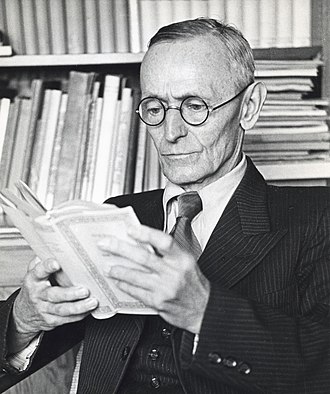
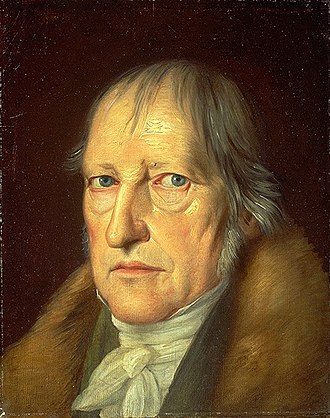
Avineri suggests Hermann Hesse and Hegel are significant influences in Karl Marx’s life. Hesse is a contemporary of Marx. Hesse is influenced by Rousseau who believed in natural equality. Hesse’s literature addresses the inequality of workers and the capitalist class. He sensed the growing political danger of that inequality and, in writing about it, became an influence on Karl Marx’s view of capitalism.

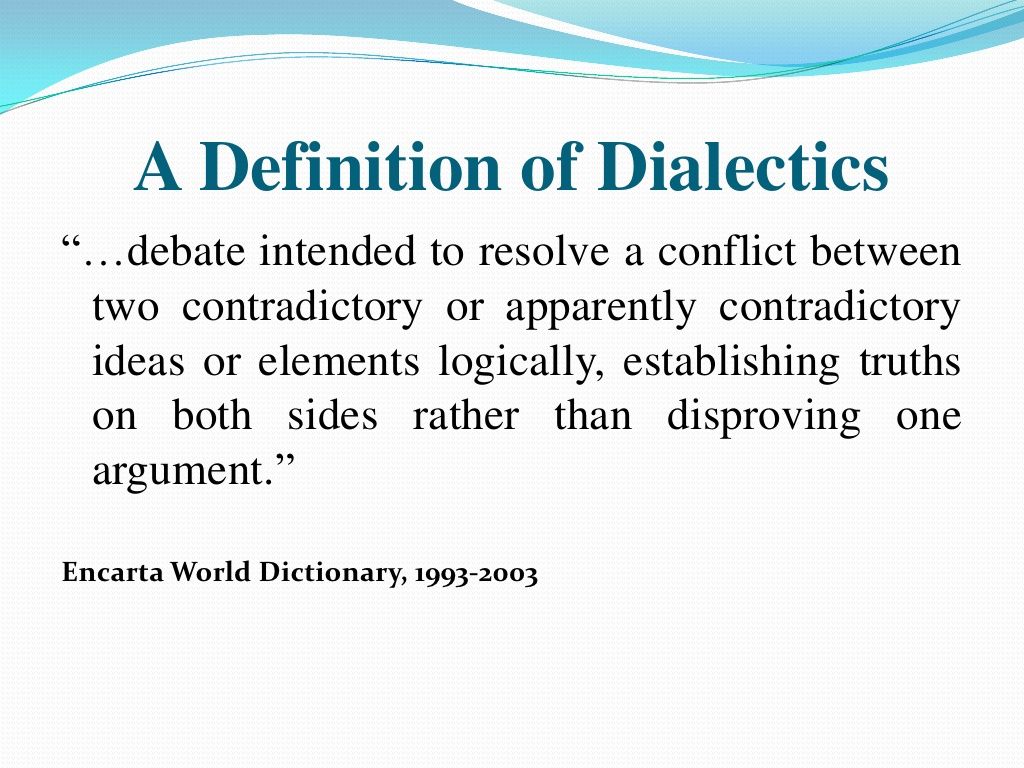
Avineri’s explanation of Hegel’s influence on Karl Marx is a little more complicated. Fundamentally Hegel believes social development is an evolution of one’s mind to recognize that all humans are created equal. In contrast Marx believes social development is an evolutionary process of society’s actions in regard to material things. Marx believes the haves of the society recognize the inequity of the have-nots and will evolve to establish common good in the distribution of material things. Both Hegel and Marx agree that there is a dialectic process, but Hegel thinks it is a state of mind that changes while Marx suggests it’s a state of equal distribution of concrete goods.

It is impossible to deny Marx’s notes about inequality. One can argue that this was truer in Marx’s lifetime than it is today. The advent of social security and national health care, and welfare programs have reduced human inequality.  However, human inequality remains a serious social problem in every society and all government systems of the present day.

Whether Marx or Hegel’s evolutionary dialectic is true remains unknown. Neither capitalism, socialism, or communism have evolved to solve the problem of inequality, whether it is the dialectic of mind or matter.

Avineri’s biography of Marx is better than the previous biography reviewed in this blog. He offers a more intimate understanding of Karl Marx’s life and how he came to believe what he believed. The answer to the question of whether economic evolution is one of mind or matter is, of course—both. Human brains must evolve, and matter must be equally available.