NUCLEAR POWER

Audio-book Review
By Chet Yarbrough

(Blog:awalkingdelight)
Website: chetyarbrough.blog

Atomic Accidents: A History of Nuclear Meltdowns and DisastersAtomic Accidents

By James Mahaffey

Narrated by: Tom Weiner

Listening to Atomic Accidents, the first thing that comes to mind is point-of-view, second the author’s qualification, and third writing skill.  Mahaffey’s book is historically fascinating, and enlightening.  And happily, Mahaffey writes well.

DR. JAMES MAHAFFEY (AUTHOR)

Doctor James Mahaffey’s professional career is founded on the nuclear industry.  Educated at the Georgia Institute of Technology, Mahaffey holds a bachelor’s degree in physics, a master’s in science, and doctoral in nuclear engineering.

Mahaffey is well versed in the science, engineering, and mechanics of nuclear energy.  Because of education, one presumes Mahaffey is a proponent of the nuclear power industry.  After dissection of several atomic accidents, a listener becomes unsure of Mahaffey’s point of view.  By the end, his point of view is clear.  

nagasaki bombing aftermath
The best known nukes, Big Boy and Little Boy, were dropped on Hiroshima and Nagasaki at the end of WWII.

America has dropped and lost nuclear bombs around the world.  The best known nukes, Big Boy and Little Boy, were dropped on Hiroshima and Nagasaki at the end of WWII.

Less known bomb drops were in peace time.  Nukes were accidentally released on remote military bases, in sparsely populated residential areas, and in the sea.  Some of those dropped in the sea remain unrecoverable.  None of the peace time bombs exploded.

America chose to keep nuclear secrets from Great Britain after WWII because of concern over nuclear bomb proliferation.  Because of America’s secrecy and  lack of cooperation, Mahaffey  suggests design mistakes were made.

In reviewing the history of nuclear energy, Mahaffey notes English scientists and engineers designed graphite nuclear power plants that were inherently dangerous.  Graphite catches fire at high temperatures and is notoriously hard to extinguish.  However, graphite nuclear plants became widely copied throughout the world.
Mahaffey’s stories of nuclear mishaps range from dumb to dumber; i.e. from wind fans that feed graphite nuclear plant fires to technicians that ignore rules of reactor management.  Nuclear accidents seem inevitable and insurmountable.

CHERNOBYL NUCLEAR REACTOR (e.g. A FAMOUS GRAPHITE REACTOR ACCIDENT.)
CHERNOBYL NUCLEAR REACTOR ( Chernobyl is an example of a major graphite nuclear reactor failure.)

Mahaffey explains that the former U.S.S.R. ignored environment in their nuclear bombs race with America.  They dumped plutonium in Russian waters and blew up a graphite nuclear plant that killed Russian workers in a steam explosion.  The explosion contaminated miles of Russian homeland with radioactive fallout.

CHERNOBYL REACTOR DAMAGE

Later, the U.S.S.R. mismanaged Chernobyl’s nuclear facilities and created a nuclear meltdown that reportedly killed over 60 people from radiation and left an area of Russia uninhabitable for generations to come.

FRANCIS GARY POWERS (1929-1977, CAPTAIN IN THE US AIR FORCE, SHOT DOWN OVER RUSSIA IN 1960 AND HELD PRISONER FOR 2 YEARS)
FRANCIS GARY POWERS (1929-1977)

Mahaffey tells the story of the American, Gary Powers, the pilot shot down by the Russians in the 1950s.  Powers is taking aerial pictures of plutonium manufacturing facilities in the U.S.S.R.  Eisenhower is compelled to lie and then apologize to Russia for the clandestine operation.  Mahaffey makes the story interesting by revealing the monumental effort made by the U.S.S.R. to shoot down Powers’ airplane and reassemble plane parts to prove Powers was spying.

FRANCIS GARY POWERS (DIES IN HELECOPTER CRASH WORKING AS KNBC WEATHER PILOT)
FRANCIS GARY POWERS (DIES IN A 1977 HELECOPTER CRASH WORKING AS KNBC WEATHER PILOT)

In the end, Mahaffey discounts the many nuclear accidents and incidents he examines.  His conclusion is that nuclear power can be made probabilistically safe.  Mahaffey argues for the design of nuclear energy facilities that are small and simple to operate.  He suggests that small nuclear power plants be designed and manufactured for specific industrial facilities. 

Rolls Royce is entering the nuclear facilities market in Great Britain.  Small nuclear plants could meet industrial energy demands while limiting environmental carbon emission from other sources of energy Rolls Royce Small Nuclear Plant Production

With small nuclear energy plants, the potential for catastrophic Chernobyl-like’ events would not happen.  The massive underwater earthquake and tsunami would not have decimated Japan’s nuclear energy capability if the power plants had not been so massive and concentrated on the coast.

Mahaffey implies proper design and training for small, simple nuclear energy facilities will mitigate the world energy crises.  Mahaffey infers nuclear accidents are unavoidable, but human and environmental damage is minimized with smaller nuclear energy plants.

Rolls-Royce recently (in November 2021) announced they are getting into the small nuclear reactor business.

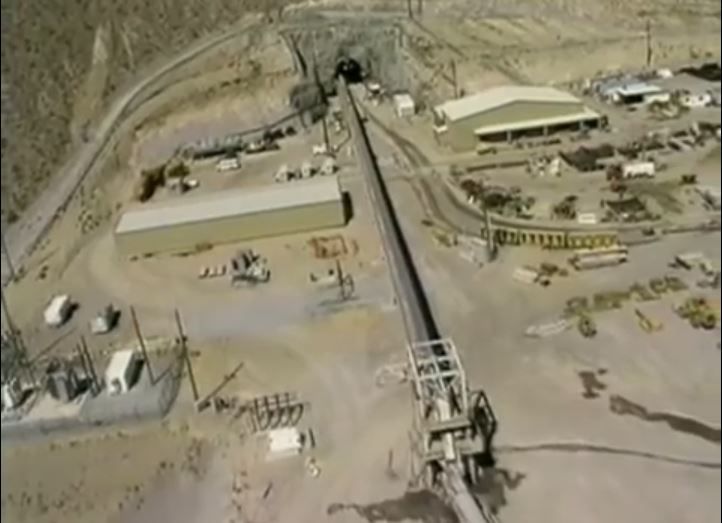
Mahaffey explains that radiation is a naturally occurring phenomenon.  He argues that shutting down nuclear waste disposal facilities like Yucca Mountain in Nevada are a mistake.  Many in Las Vegas oppose President Trump’s resurrection of the Yucca Mountain waste site.

Mahaffey’s point of view is that nuclear power accidents will happen but their consequences can be minimized with smaller plants and better planning for treatment of victims when accidents occur.  He believes nuclear energy benefits far out weigh their risks.

The 2020 Presidential election is over.  President Biden’s campaign speaks to America’s gradual transition from fossil fuels to wind, water, and solar power.  That transition is a potential source for thousands of new American jobs.  Mahaffey persuasively argues there should be a place for nuclear energy in that transition.

SOVEREIGNTY

Audio-book Review
By Chet Yarbrough

(Blog:awalkingdelight)
Website: chetyarbrough.blog

The Origins of Political Order: From Prehuman Times to the French RevolutionTHE ORIGINS OF POLITICAL ORDER

Written by: Francis Fukuyama

Narrated by: Jonathan Davis

FRANCIS FUKUYAMA (AMERICAN POLITICAL SCIENTIST, POLITCAL ECONOMIST, AND AUTHOR)
FRANCIS FUKUYAMA (AMERICAN POLITICAL SCIENTIST, POLITICAL ECONOMIST, AND AUTHOR)

Francis Fukuyama’s analysis of state and government formation is both insightful and politically actionable.  In “The Origins of Political Order” and “Political Order and Political Decay” Fukuyama provides a basis for understanding politics and its contribution to society.

THOMAS HOBBES (1588-1679)
THOMAS HOBBES (1588-1679) Hobbes generally considered humankind to be both good and evil with a need for regulation of his/her evil instincts through government.

In previous book reviews, references have been made to Thomas Hobbes’ theory of the nature of man.  Hobbes generally considered humankind to be both good and evil with a need for regulation of his/her evil instincts through government.  He identifies government as “The Leviathan”.  Hobbes suggests “The condition of man…is a condition of war of everyone against everyone”.

PREHISTORIC HUMAN KIND
Fukuyama finds a singular and significant flaw in Hobbes’ observation.  From the beginning of time, humans associated with other humans to survive the brutish nature of life.  He suggests humans are by nature violent with that violence becoming ingrained as a societal meme to cope with the exigencies of life.  Fukuyama goes on to suggest violence and change are intertwined.

Fukuyama finds a singular and significant flaw in Hobbes’ observation.  Though Fukuyama may agree with Hobbes’ view of individual humans, he tempers it by noting humans have always been social beings.  From the beginning of time, humans associated with other humans to survive the brutish nature of life.  He suggests humans are by nature violent with that violence becoming ingrained as a societal meme to cope with the exigencies of life.  Fukuyama goes on to suggest violence and change are intertwined.

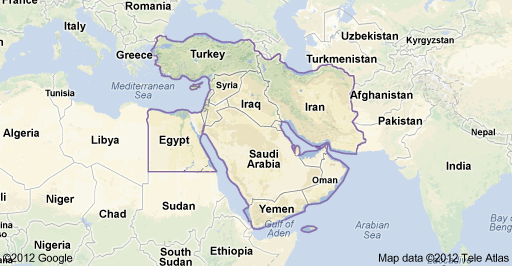
The significance of humans as societal creatures is that governments are formed by dominant tribes. Politics is the language of tribes negotiating with each other to preserve status.  However, Fukuyama notes that cultural norms are dramatically different in governments that evolve over time.  These cultural differences play out in the history of Russia, China, France, Great Britain, Italy, America, the countries of Africa, and the Middle East.

world map
Fukuyama notes cultural differences play out in the history of Russia, China, France, Great Britain, Italy, America, the countries of Africa, and the Middle East.

RELIGIOUS BELIEF
A counter-intuitive note by Fukuyama is that religion plays a significant role in civilizing, rationalizing, and establishing state governments.

A counter-intuitive note by Fukuyama is that religion plays a significant role in civilizing, rationalizing, and establishing state governments.  It is counter-intuitive because it seems in the present-day religion is tearing the world apart.  However, in the context of history, the size of tribes within countries hugely increases with the spread of religion.  Religion becomes a cultural phenomenon that ameliorates (but does not eliminate) violence among different tribes within wider territories that evolve into nation-states.

Fukuyama implies nation-state development is a living organism that evolves in the manner of natural selection identified by Darwin in the “Origin of Species”.  Characteristics of effective governments perpetuate themselves through adaptation to respective societal norms.  In other words, every society grows via its own cultural norms which suggests sovereignty should be inviolable.

Fukuyama is saying that American democracy, Chinese socialism, Russian federation, India democracy or any other system of government will be different because of their social history.  In other words, India may be classified as the world’s largest democracy but not as an American democracy because of its different societal norms.

WORLD WIDE WEB
Can the World Wide Web, the growth of science, and recognition of environmental interdependence overcome the nationalist stupidity of government leaders?

In one sense, the complexity of Fukuyama’s theory makes one less optimistic about the future of the world.  What can take the place of religion to meld societies into a common tribe?  Can the World Wide Web, the growth of science, and recognition of environmental interdependence overcome the nationalist stupidity of government leaders?

If Trump, Putin, al-Baghdadi, and Kim Jong-un represent the future, the answer is no.  On the other hand, one may argue survival of humans is dependent on experimentation by governments, enhanced by nation-state societal differences.

Just as one species evolves into an improved human, one species of government may evolve into an improved government (presuming humans survive an interregnum).

RISE AND FALL

Audio-book Review
By Chet Yarbrough

(Blog:awalkingdelight)
Website: chetyarbrough.blog

Asabiyyah: What Ibn Khaldun, the Islamic Father of Social Science, Can Teach Us About the World Today

Written by: Ed West 

Narrated by:  P. J. Ochlan

ED WEST (ENGLISH AUTHOR, JOURNALIST, BLOGGER)

ED WEST (ENGLISH AUTHOR, JOURNALIST, BLOGGER)

IBN KHALDUN (STATUARY SYMBOL OF ISLAMIC HISTORIAN BORN 1332, DIED 1406 AT 73 YEARS OF AGE.)

IBN KHALDUN (STATUARY SYMBOL OF ISLAMIC HISTORIAN BORN 1332, DIED 1406 AT 73 YEARS OF AGE.)

Ed West offers a brief introduction to the life of an ancient historian.  His name is Ibn Khaldun.  Khaldun describes the first known evolutionary theory of human origin.  West also notes this 14th century scholar creates the first known socio/political theory of the rise and fall of civilizations.

Khaldun explains life’s origin as a aggregation of chemicals and minerals that create organic life and, in turn, evolve into different species. 

DESCENT OF MAN

West notes that Khaldun suggests humankind evolved from monkeys. This is four centuries before Darwin’s “Origin of Species”.

Ibn Khaldun is considered by some to be the first person to write foundational theories for modern sociology, economics, and demography.  West notes that Khaldun explains how nations are formed, maintained, and destroyed by sociological, economic, and demographic forces.

Khaldun offers counsel to the great conqueror, Amir Timur (aka Tammerlane), who plans to resurrect the 13th century Mongol empire built by Genghis Khan.  

TIMUR (AKA TAMMERLANE, 1336-1405)

TIMUR AKA TAMMERLANE IS COUNCELED BY IBN KHALDUN  (1336-1405–(Timur is said to have caused the death of over 17 million people in the effort.)

West suggests that Khaldun explains how Timur and other rulers, from the Roman empire to Genghis Kahn to Timur successfully conquered great areas of the known world.  His explanation is “Asabiyyah” (aas-sah-bee-ah), a theory that all successful conquerors establish a social environment that creates solidarity among a group of people sharing understanding, purpose, and achievement.

West explains that Khaldun expands “Asabiyyah” to a theory of civilization’s rise and fall.  Humans proliferate based on family affiliations.  Religion widens family relationships to create tribes. Tribes become a congregation of different families with common beliefs.  Tribes come into conflict and eventual settlements that grow into larger groups based on evolved common beliefs. 

At each step of widening common interest, a leader rises from the ranks.  With an accretion of social ties, villages, towns, and cities are formed with a leader at its head.  As the ties that bind continue to expand, nation-states are formed.

RISE AND FALL OF CIVILIZATIONS

Ibn Khaldun’s explanation is “Asabiyyah”, a theory that all successful conquerors establish a social environment that creates solidarity among a group of people through shared understanding, purpose, and achievement.

West shows that Khaldun goes on to explain how civilizations decline. First, Khaldun notes that sons and daughters of great leaders rarely exceed their parent’s leadership success.  Khaldun posits the current social and scientific belief of “reversion to a mean”. 

REVERSION TO THE MEAN

Each subsequent offspring of a great leader comes closer to the average of a civilization’s population.  Leadership diminishes in succeeding generations.

Second, Khaldun suggests diminished common beliefs lessen a civilization’s cohesion.  Religious differences rise, economic circumstances change, social groups fracture, family ties reassert themselves as ties that are more important than community.  The example that Khaldun gives is Rome’s decline as a world power. West suggests the same may be said of the United Kingdom’s decline.

AMERICAN DREAM

Has the American Dream become a lie few believe in?  Are elected officials withdrawing to their families at the expense of nation-state’ leadership?

West’s “Asabiyyah” makes one think of America.  Does today’s political conflict reflect diminishment of commonly held nation-state belief?  Is the increasing gap between rich and poor destroying the social fabric of America?  Is the divisiveness of former President Trump a reflection of a nation in decline?

Is nationalism dead, or are we crossing a threshold where the principals of nation-state need to be expanded to include a wider community?  Is the next step reflected by the E.U. or some similar congregation of nation-states?

EUROPEAN UNION

According to West, Khaldun believes nationalism is critically important for a civilization to remain strong.  In the time of Khaldun, there was no vehicle for common beliefs except a leader’s influence over conquered nations. 

Today, there is an internet.  It seems the human family may once again be expanded.  Nation-states may not be prepared for “space-ship-earth” but there may be an interim step.

That interim step was tried during the cold war with the U.S.S.R.  It failed.  The E.U. is facing challenges today.

U.S.S.R. BREAK-UP

Trump’s America is regressing from comity to disparity with emphasis on making itself great again.  A leading question today is whether civilizations are competing to be in decline or ascendance?

Of course, leadership is key to any future.  Right now, there seem few leaders that can make civilizations grow beyond their borders. Khaldun seems as relevant today as he was in the 4th and early 5th centuries.

BITCOIN

Audio-book Review
By Chet Yarbrough

(Blog:awalkingdelight)
Website: chetyarbrough.blog

DIGITAL GOLDDigital Gold, Bitcoin and the Inside Story of the Misfits and Millionaires Trying to Reinvent Money

Written by: Nathaniel Popper

Narrated by:  Robert Fass

NATHANIEL POPPER (AUTHOR, NYT'S REPORTER)
NATHANIEL POPPER (AUTHOR, NYT’S REPORTER)

Nathaniel Popper writes a book on the history of bitcoin.  His history is a “Just the facts Mam” presentation.  One will draw their own conclusion about the good and bad qualities of crypto currency.

Just like the dollar, pound, renminbe (yuan), franc, and euro, bitcoin is used for legal and illegal transactions.  There are a host of criminals who have gamed currencies.  Pepper recounts examples of bitcoin that show it is not exempt from currency manipulation.

BERNARD MADOFF (AGE 74) SERVING 150 YEAR PRISON SENTENCE

However, the manipulation takes the form of coding modification, or criminal hacking, rather than overt Bernie Madoff-like’ deceit. Wealth has been accumulated and lost in every medium of exchange since the beginning of barter between buyers and sellers.  Popper shows that the fundamental difference between conventional currencies and bitcoin is how value is determined; who decides on what the value should be, and the transparency of change.

Popper explains bitcoin’s value is a consensus of its owners and users.  Bitcoin value rises or falls based on most of its holder’s and merchant’s willingness to sell goods in exchange for bitcoin’ value.  In contrast, conventional currencies are based on government fiat and national economic stability.

BITCOIN SYMBOL
Popper explains bitcoin’s value is a consensus of its owners and users.  Bitcoin value rises or falls based on most of its holder’s and merchant’s willingness to sell goods in exchange for bitcoin’ value.

CHECKS AND BALANCES
All currencies offer exchange of goods based on willing seller and buyer discretion.  However, conventional money does not rely on majority determination of value.  Value of conventional currency is an inchoate combination of government decision, and the economic condition of respective nations.   http://news.webshots.com/photo/2005825900056011884kLVAuD

All currencies offer exchange of goods based on willing seller and buyer discretion.  However, conventional money does not rely on majority determination of value.  Value of conventional currency is an inchoate combination of government decision, and the economic condition of respective nations.  When aberrant government actions or economic crises occur willing buyers disappear, and currency value falls.  However, bitcoin is not dependent on government regulation or the state of one economy.  Bitcoin relies on its buyers and sellers and is independent of singular government decisions or any singular national economies.

INFLATION
When aberrant government actions or economic crises (like hyper-inflation) occur willing buyers disappear, and currency value falls.  However, bitcoin is not dependent on government regulation or the state of one economy.  Bitcoin relies on its buyers and sellers and is independent of singular government decisions or any singular national economies.

What Popper clearly explains is that troubled economic countries can see dramatic conventional currency movements that destroy wealth because of government decisions.  However, he equally notes many examples of large devaluations in bitcoin.  The difference is that devaluation of bitcoin is based on owners and users who are not tied to any single nation-state economy or government regulation.  Bitcoin value is based on the opinion of its owners and users.

One might conclude bitcoin is more egalitarian than conventional currency because it is based on the will of the majority of owners and users.  That may be true but the idea of depending on bitcoin’s open system modification of cryptographic code is a threat to the will of the majority.

Only code technologists understand the ramification of code changes in bitcoin.  Most users can only vote in ignorance and hope.  One may argue that is also true when electing a government;  however, the difference is transparency.  Bad governments can be judged by the public and eventually defeated.  Cryptocurrency is, as its title implies, concealed.  It is both secret and incomprehensible to most owners and users.  Most bitcoin users can only vote in ignorance and hope that coders are acting in a majorities best interest.

No form of currency guarantees value.  Every form of currency has its ups and downs.  The difference is in who makes the decision about value.  If you live in a highly inflationary country, bitcoin offers some level of stability.  If you live in a wealthy and relatively stable country, bitcoin seems less attractive.

The future of bitcoin or other cryptocurrencies seems more utilitarian in a future where nationalism disappears and there is acceptance of a world economy based on equality of opportunity.  We seem far from such a Utopian world.

TOTALITARIANISM

Audio-book Review
By Chet Yarbrough

(Blog:awalkingdelight)
Website: chetyarbrough.blog

The Trial

By Franz Kafka, David Whiting (translator)

Narrated by Rupert Degas

FRANZ KAFKA (1883-1924, AUTHOR, NOVELIST)

FRANZ KAFKA (1883-1924, AUTHOR, NOVELIST)

“The Trial” is a Franz Kafka picture of hell; i.e. a totalitarian nightmare, ruled by bureaucracy and controlled through human despair. “The Trial” is a book to listen to because it mesmerizes when narrated by an artist but numbs when read by an undisciplined mind.

Imagine arbitrary arrests, undefined accusations, and undisclosed trials; i.e. trials operating in obscurity that secretly sentence the accused to mental purgatory or death; add shadows of human beings, dark rooms of judgment, stifling closeness, and oppressive anxiety.  This is Kafka’s world in “The Trial”.

There is no lightness in Kafka’s tale; no human redemption.  The main character, Ka (in this version of the book), is the only person that seems to seek self-understanding.  

All other characters are “other directed”, trying to be what someone else expects them to be by playing whatever role they need to play to survive.

BUREAUCRACY

Kafka imagines a country of directionless people, subsumed in a bureaucracy that feeds on itself.

This is a country of directionless people, subsumed in a bureaucracy that feeds on itself.  Citizens of this country are either a part of the bureaucracy or they are controlled by its administration. 

Control is exercised by creating fear and anxiety.  This characterization reminds one of Donald Trump and his current attempt to overthrow over 200 years of American government history.

Trump’s tacit support by the Republican party is a crime against democracy. Patriotic Republicans are diminished by Trump’s abhorrent behavior.

Should Trump be impeached a second time? It’s complicated. On the one hand, incitement by Trump on January 6th is obvious to most Democrats. On the other, Republicans now represent 70,000,000 Americans who think Trump is good for America.

There is no societal objective; there is only bureaucracy’s perpetuation.  Lawyers, bankers, judges, business moguls, landlords, artists, servers and assistants of this society, though rarely singled out for terror or torture, are consumed with anxiety from an ever-present threat of arrest.  The working public enriches itself by taking bribes to subvert bureaucratic action.  The working public’s subversion is not destruction of the bureaucracy but a tacit acceptance of its hegemony.

Ka attempts to break the cycle of bureaucracy’s self-perpetuation.  His attempt fails.

The redeeming quality of Kafka’s story is the human desire for freedom that is not extinguished even in the darkest times of a country’s repression.  Against all obstacles, Ka insists on freedom.  In Ka’s case freedom means death just as it did for many who died in Auschwitz, Dachau, and Treblinka.

FRANZ KAFKA QUOTE

Kafka’s hell exists in today’s world just as it did when it was published in 1925.

KNOWING NOTHING

Audio-book Review
By Chet Yarbrough

(Blog:awalkingdelight)
Website: chetyarbrough.blog

Thinking Fast and Slowthinking fast and slow

By Daniel Kahneman

Narrated by Patrick Egan

DANIEL KAHNEMAN
Author, Daniel Kahneman, is a renowned psychologist and noble laureate.

There are certain knowns that are known and certain knowns that are unknown.  Well, I know I know nothing and Kahneman seems to prove it.  Every chapter of Kahneman’s book suggests something one finds hard to believe is true.

Daniel Kahneman is a renowned psychologist and Nobel laureate.  He is an American citizen that served in the Israeli military and used his education, research, and experience to write “Thinking Fast and Slow”.  His observations explore many aspects of human decision-making.

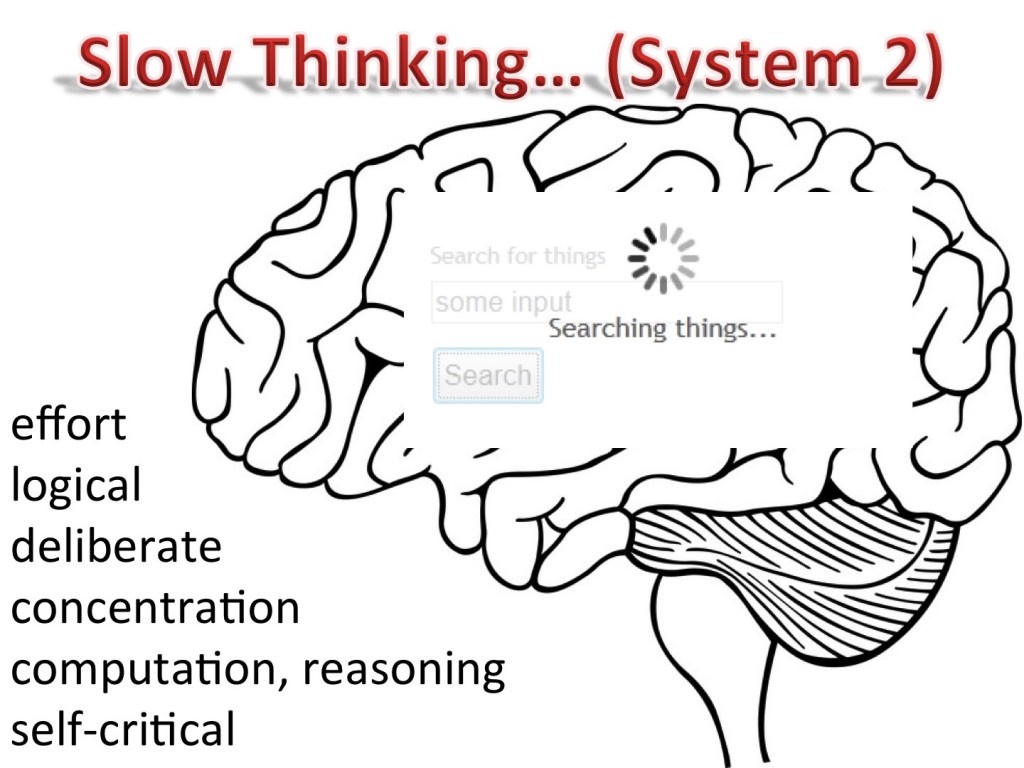
How one runs their business or lives their life is framed by how they think.  Kahneman explores two fundamental ways of thinking that reveal human strengths and weaknesses.  “Thinking Fast…” is intuitive and easy.  It is prejudiced by personal life experience and education.  It is activated through an evolved instinct that forms the basis for snap decisions.  In contrast, “…Thinking Slow” is a deliberative, calculating, and mind-numbing way of making rational decisions.  Kahneman calls these mental functions System 1 and System 2 respectively.

THINKING SLOW
“…Thinking Slow” is undoubtedly prejudiced by Kahneman’s scientific interpretation of “human thought and action”’ but judgment of his observations is the responsibility of the reader or listener; so, caveat emptor.

“…Thinking Slow” is undoubtedly prejudiced by Kahneman’s scientific interpretation of “human thought and action”’ but judgment of his observations is the responsibility of the reader or listener; so, caveat emptor.

The more common decision-making tendency of the brain is to use System 1 rather than System 2 when making decisions because it is easier and because, as Kahneman notes, behavioral studies and brain imaging show human brains are lazy (not inclined to use System 2’ thinking because it is more laborious than System 1).

System 1 often leads humans to make incorrect intuitive decisions.  System 2 potentially improves probability of making better, or at least more rational, decisions.  However, System 1 is important to life and death decisions that require instantaneous action.  System 2 requires one to consider options before settling on an action.  A current example is the dilemma of choice in regard to social media.  Fighting hardly seems logical based on the direction of technology.  Flight seems equally illogical for the same reason.

FIGHT, FLIGHT, LIGHT
System 1 is important to life and death decisions that require instantaneous action.  System 2 requires one to consider options before settling on an action.

FIREMAN NARROWLY ESACAPES FLOOR COLLAPSE
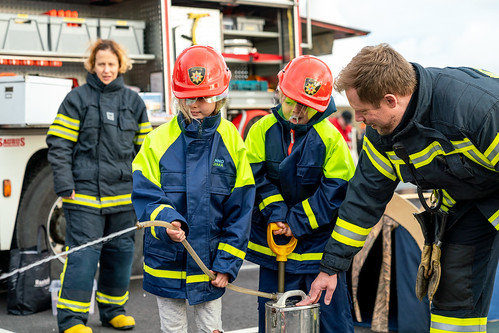
FIREMAN NARROWLY ESCAPES FLOOR COLLAPSE  ( Using System 1 thinking the fire commander tells his team to get out of a burning house because his mind subconsciously gathers experiential information telling him the floor is about to collapse.)

Kahneman gives a more concrete example with an experienced fire commander.  Using System 1 thinking the fire commander tells his team to get out of a burning house because his mind subconsciously gathers experiential information telling him the floor is about to collapse.  The fire commander’s system 1 thinking saved his team’s lives.

Kahneman contrasts the value of System 2 thinking by exploring System 1’s habit of unconsciously bench-marking manufactured product pricing to seduce consumers to buy at higher prices; i.e. if a product is priced high, System 1 thinking is willing to pay a higher price.

Attention
The “halo” effect caused by System 1’ thinking gives too much weight to a one time “good” interview evaluation of an employee candidate.

Another observation is that employee interviews are often detrimental to the selection of the best job candidate.  Kahneman describes the “halo” effect caused by System 1’ thinking that gives too much weight to a one time “good” interview evaluation of an employee candidate.  To protect from the “halo” effect, Kahneman suggests that interview questions be structured and an employment process be standardized to give more objective criteria for choosing the best employment candidate.  In other words, design an employee selection process based on clearly defined job requirements that are equally measured and fairly weighted for each candidate.  Employer hiring solely based on a candidate’s interview is not a good determinant of employee performance.

This brief review is a single drip of sweat in a twenty hour work out.  Kahneman undoubtedly exaggerates the import of some scientific studies but his writing engages System 2 thinking.  A System 2 person will want to listen to “Thinking Fast and Slow” more than once.

MENTAL DETERIORATION

Audio-book Review
By Chet Yarbrough
(Blog:awalkingdelight)
Website: chetyarbrough.blog

The Other Brainthe other brain
By R. Douglas Fields        Narrated by Victor Bevine

As we grow older, our physical and mental abilities deteriorate. Knowing that decline is the nature of life, the older one becomes, the more grasping one is for new ideas that mitigate life’s inevitable degradation.

R. DOUGLAS FIELDS (AUTHOR PhD IN NEUROSCIENCE)
R. DOUGLAS FIELDS (AUTHOR Ph.D. IN NEUROSCIENCE)

“The Other Brain”, written by Dr. Douglas Fields (a department head at the National Institute of Health and adjunct Professor of Neuroscience at the University of Maryland) is an expert in the field of cognitive science, i.e., the exploration of how minds work.

DR. THOMAS HARVEY
DR. THOMAS HARVEY (the pathologist that stole Einstein’s brain and kept it for some twenty years before telling anyone he had it.)

Fields begins with a story of when he is a ten-year old boy requesting a brain to dissect to see how it works. He moves on to tell the story of the pathologist that stole Einstein’s brain and kept it for some twenty years before telling anyone he had it. Einstein’s brain is eventually analyzed to see if there was a physical difference in Einstein’s brain that allowed him to see what others could not.

albert einstein, creator and rebel

With this opening, Fields begins an exploration of the brain and how it functions. What he reveals is that Einstein’s brain was different but not because it was any bigger nor had more neurons but that it had more glia cells than the average brain. Until glia cell discoveries were made, the consensus of scientists was that neurological function was singularly based on an electrical impulse, i.e., an impulse transmitted to the brain through neurons via axons and dendrites to command thought and action.

With careful examination of glia cells, scientists found that there is what Fields calls a “second brain”. Glia cells are different from neurons. They do not use the axons and dendrites that transmit electrical pulses to compel performance. Glia cells use a chemical interaction within and between glia that create stimulus and response.  The significance of the discovery of glia cells as a chemical alternative to electrical impulse suggests motor and mental function may be improved by other means.

SPINAL CORD INJURY
This discovery OF GLIA cells potentially offers alternative ways of treating spinal cord injuries and mental in-capacities caused by diseases that interfere with the neuronal circuits of the brain.

This discovery means that the study of a “second brain” may offer alternative ways of treating spinal cord injuries and mental in-capacities caused by diseases that interfere with the neuronal circuits of the brain. Further, it may offer treatment alternatives for patients suffering from dementia or Alzheimer’s, a growing and feared neurological dysfunction.

Fields explores several glia related cells and their positive and negative functions in the neurological system. It is not a panacea for cure of neurologically impaired patients or aging brains because experiments show glia cells are both curative and destructive in their effect on the neurological system. However, a second brain does open a new field of opportunity for cure. Maybe young brains can be re-booted and old brains rehabilitated.

Dementia gives no comfort to one who is older and have a fear of Alzheimer’s and its consequence for others. Others, who are left to care for the stricken.

COMMUNICATION SUPERSIZING

Audio-book Review
By Chet Yarbrough
(Blog:awalkingdelight)
Website: chetyarbrough.blog

The Master Switch
By Tim Wu
Narrated by Marc Vietor

Tim Wu writes about the capitalist drive to acquire a master switch that controls how the public receives information. President Biden has chosen Wu to serve on the White House National Economic Council. It will be interesting to see what influence Wu will have on American technology companies.

TIM WU (AUTHOR, PROFESSOR OF LAW AT COLUMBIA )

TIM WU (AUTHOR, PROFESSOR OF LAW AT COLUMBIA

The first section of “The Master Switch” sets a table for understanding 21st century communication technology. Wu doggedly recounts a history of the communication industry.  It will turn some listeners off but stick with it, Wu does have something to say.

“The Master Switch” is written before Huawei technology company became a perceived security and privacy threat. Instead of corporate domination of the internet, Huawei might be a nation-state security and privacy threat. Huawei’s break-through 5g internet system is coveted by many countries in the world.

Some of what Wu reveals is counter intuitive. Steve Jobs’ genius is not as a technical wizard but as a deal maker.

None of these revelations denigrate the spectacular achievements of Jobs and Wozniak or the success of any of the companies mentioned. Jobs is a marketing genius that envisions what the market doesn’t know they want and demands perfection in a product that will serve that market.

STEVE JOBS (1955-2011)
STEVE WOZNIAK

STEVE WOZNIAK (Wozniak, is characterized as the real wizard of “Menlo Park” –a few doors down from a similar laboratory occupied by Bill Gates.)

In their early days, one suspects neither genius cared about the power and influence of the internet and the potential of a “Master Switch” controlled by a government, or corporation. A prospect that is both troubling and (probably) inevitable.

Wu is arguing that communication businesses have expanded and contracted like rubber bands; i.e. pulled and snapped by inventors, governments, and business moguls.

From what Wu reports, history favors the likelihood of a “Master Switch” controlled by one of these rubber band pullers.

TRUMP COMMENT (POLITICAL CARTOON)

Wu’s stories of the communication industry suggest that a closed system is more likely to prevail in the shake-out of the internet; i.e. one “switcher” that will control the medium. The Trump administration endorses that philosophy by suggesting the private sector is a better arbiter of control than the government.  Wu shows that a closed system tends to perpetuate itself and retard innovation because of a monopolist’s fear of competition. 

In today’s political climate, the potential of a closed system looms large.  Wu recounts the history of telephony, radio, movie, and television communication businesses that started as open systems but evolved into closed systems due to the acquisitive and greedy nature of mankind.

CHECKS AND BALANCES

Wu argues that vertical integration (a closed system) of the communication industry can be discouraged with a check and balance system.

He suggests inventors, manufacturers and government regulators should remain independent (integrated horizontally rather than vertically) to check and balance human nature’s drive for one entity’s control of a “Master Switch”. This seems unlikely in light of an autocratic government like China. China’s outsize involvement and influence on the financing and regulation of a company like Huawei is an unlikely check and balance on sovereign security or privacy.

Wu lauds Google for preaching and practicing open system management of the internet but the history of communication companies reminds the listener that founders and their philosophies mutate.  Private industry history of corporate greed in a capitalist society makes one suspect.

A check and balance system for communication or any industry is unlikely to grow based on past experience and human nature. 

EXTREMES OF AMERICAN GOVERNANCE

Free societies over-regulate and then under-regulate. America has always practiced rubber band management. Separation of powers is a temporary construct; not a permanent condition. When conflict begins, human nature takes charge.  Mankind is acquisitive, greedy, and human.

Wu is a naive free enterprise philosophizer.  History, Ayn Rand, and human nature tell us that the internet will become a closed system.

TECHNOLOGY

The public doesn’t understand technology and could care less. “Show me the product and what it can do”. “Show me the money” are humankind’s arbiters of who gets the “Master Switch”.

Ignorance of communication technology is everywhere. Consumers are more interested in what they can get than what they can change.

The general public would rather let someone else make product decisions and vote with their pocketbook when they are dissatisfied. That seems an even greater threat with a company like Huawei that is integrated with an autocratic government.

Wu opens one’s mind but fails to come up with a plan that will change the internet’s future.

OTHER WORLDS

Audio-book Review
By Chet Yarbrough

(Blog:awalkingdelight)
Website: chetyarbrough.blog

Beyond: Our Future in SpaceBeyond, Our Future in Space

Written by: Chris Impey

Narration by:  Julie McKay

CHRIS IMPEY (BRITISH ASTRONOMER, EDUCATOR, AND AUTHOR)

After listening to Chris David Impey’s book, “Beyond: Our Future in Space”, traveling to other worlds seems distant and unachievable.  Impey cleverly begins his story about space travel as though the first human to permanently leave earth is born in the 21st century.  That novelistic beginning is revisited twice, but the true subject of “Beyond: Our Future in Space” is the physics, astronomy, and observational cosmology of the present day.

One presumes Impey’s purpose is to encourage the possibility of reaching the stars but, by the end of the audiobook, little optimism is left to the listener.  The daunting task of overcoming gravity, surviving an inhospitable environment, and leaving the only home humans have ever known, warrants some pessimism.  Some minor relief from pessimism is offered with world history’s comparison of human migration across the continents.  Impey implies history’s adventurers on earth have something in common with adventurers in space.

SPACE SHIP EARTH FROM THE MOON
One presumes Impey’s purpose is to encourage the possibility of reaching the stars but, by the end of the audio book, little optimism is left to the listener.

The GeneThe literal common characteristic of adventurers is a gene called DRD4.  Impey suggests DRD4 alleles have evolved in 39 population groups that have historically migrated over long distances.  These population cohorts are loosely classified as risk takers but, with a 7R variant of this gene, they have a higher incidence of attention deficit hyperactivity disorder (ADHD), schizophrenia, bipolar disorder, and addictive behavior.  This observation seems unlikely to inspire confidence in “…Our Future in Space.”

The next difficulty of space exploration noted by Impey is escaping gravity.  Current science shows fuel propellant is 80% of the weight of a rocket launch.  Without a more efficient source of propulsion, sending thousands of people on earth to another planet is a pipe dream.Escape VelocityImpey notes that science is exploring alternatives like sail power, nuclear fission, radiation collection systems, and the physics of teleportation, via spooky action at a distance, but the evidence of success is either solely theoretical or miniscule.

Political will for space exploration has dwindled since the 1960s.  American government financing has dropped from nearly 4.5% to well below 1% of the Federal Budget.NASA's Share of the Federal Budget

Elon Musk's Space Exploration (Launching a Tesla into space.)
Elon Musk’s Space Exploration (Launching a Tesla into space.)

NASA has nearly been dismantled.  Most research and development is being done by one-off entrepreneurs like Elon Musk, Burt Rutan, and Robert Bigelow.  Part of the reason for the loss of political support is its cost.  Current science shows it costs more than $1,000 per kilogram for human and/or cargo delivery to the space station.

It is encouraging that reusable launch vehicles have potential for reducing that cost but space tourism seems a long way off.  Until humans experience space flight, it seems unlikely a Columbus or Matt Damon is waiting in the wings to set sail for Mars.

Elon Musk's Successful Return of Rockets Launched into Space
Elon Musk’s Successful Return of Rockets Launched into Space. It is encouraging that reusable launch vehicles have potential for reducing that cost but space tourism seems a long way off.

Impey makes the case for habitable planets in the cosmos based on current robotic, radio signal, and telescope explorations.  He argues there is growing evidence of many planets orbiting stars outside earth’s solar system.  From year 2000, the number of exoplanets (those orbiting stars) increased by more than 775 planets.

CURIOSITY
CURIOSITY-Impey makes the case for habitable planets in the cosmos based on current robotic, radio signal, and telescope explorations.

Impey goes on to explain space voyage and exoplanet living’s physiological effect on any human that chooses to leave earth.  There is the detrimental effect of radiation, extreme temperature, lack of water, lack of oxygen, and reduced gravity.  All of these space voyage and planetary differences discourage optimism about “…Our Future in Space”.

SPACE WALK
Quote from astronaut Andrew Feustel– “I don’t think we’ve solved the radiation problem yet and that’s really a function of how fast we can get there. So the faster we can there, the less radiation exposure we have. At the moment it would take a year but we need it to be three months there and three months back.”

However, Impey soldiers on.  He revisits the novelistic idea of the first space explorers by noting extensive sociological training, refinement of suspended animation, and psychological profiling to create ideal space voyager teams.  Impey notes that several animals have been put in a state of suspended animation and revived; i.e. implying that humans could be put in the same state of suspension for long space voyages.

NANO-ROBOTICS SPACE EXPLORATION
NANO-ROBOTICS SPACE EXPLORATION As a fall back to the difficulty of human space travel, Impey suggests an alternative to human exploration of exoplanets.  He writes about advances in nanorobotics; i.e. miniscule components that can function as human substitutes for exploration of exoplanets. 

As a fall back, Impey suggests an alternative to human exploration of exoplanets.  He writes about advances in nanorobotics; i.e. miniscule components that can function as human substitutes for exploration of exoplanets.  The reduced size of nanorobotics decreases payload weights and increase the speed and distance that can be traveled for space exploration.  This still leaves propulsion for great distances an issue but it mitigates human risk.  The presumption is, with more information about exoplanets, political will for space exploration will increase.  With better funding, the science to support human beings “…Future in Space” will be expanded.

RAY KURZWEIL (AUTHOR,SCIENTIST,INVENTOR,DIRECTOR OF ENGINEERING AT GOOGLE)

Finally, Impey touches on Kurzweil’s singularity and the advance of Artificial Intelligence, where computers equal and/or exceed the capabilities of human beings.  In Kurzweil’s world, either AI will explore other planets on its own, and/or AI will meld into the human race to mitigate all the negative consequences of space travel.

Who would have thought that human beings would set sail for a new world when many thought sailing from land meant you would fall off the edge of earth?  Maybe that is where space exploration is today.  Impey’s fictional character arrives at an exoplanet with her team at the end of “Beyond: Our Future in Space”.  Now that is optimism.

INFORMATION MONITIZATION

Audio-book Review
By Chet Yarbrough

(Blog:awalkingdelight)
Website: chetyarbrough.blog

Who Owns the Future?

Written by: Jaron Lanier

Narration by:  Pete Simoneilli

JARON LANIER (AUTHOR, INFORMATION AGE PHILOSOPHER,FUTURIST)

JARON LANIER (AUTHOR, INFORMATION AGE PHILOSOPHER,FUTURIST)

Society is at the threshold of change.  Jaron Lanier writes about the information age in “Who Owns the Future”.  Just as the industrial revolution, and two world wars mechanized human production, the computer and internet “informationizes” mechanical production.  Lanier bluntly explains that human employment will decline in proportion to computerization of production.

Lanier is neither posturing as a Luddite nor abandoning the principles of capitalism.  He suggests human beings need to understand their changing role in society.  Lanier infers a failure to understand human’ role-change will compel disastrous reactions; i.e. reactions like the Luddites of the Industrial Revolution or socialist, fascist, and communist sympathizers of the post-industrial world.

Workmen take out their anger on the machines

Luddites during the Industrial Revolution–Workmen take out their anger on the machines.

Automate This

Lanier argues that automation is replacing jobs at a faster rate today than in the 20th century.  Human nature does not change. Money, power, and prestige remain the motive force of human achievement.

Achievement in the past is based on productivity from the work of human hands with the assistance of mechanization.  The days of human assistance in mechanization are steadily being reduced by computerization.

Lanier forecasts a future of abundance where the goods of life will be available upon request; without the assistance of human hands.  No one knows how far into the future humans must travel to arrive at that age of abundance but Lanier suggests it will happen. 

AGE OF ABUNDANCE

Lanier has an abiding faith in human beings’ ability to adapt and control technological change.

Lanier infers human initiated technology will continue to eradicate disease, and manipulate the atomized world to manufacture the necessities and desires of life.  Replication machines will become common household appliances to manufacture diverse products, ranging from food to toothbrushes, to “goop” machines that extrude finished product. 

SONY DSC

HIGH SPEED GOO KNITTING MACHINE MANUFACTURED BY SONY–PRICED AT $30,000.

Industries will become more automated and less dependent on human employment.  Lanier suggests now is the time for society to understand the change.  As means of production reduces the need of human hands, the contribution humans make to society will increasingly become information based.

Lanier begins to explain the concept of information monetization.  This is something that exists today but is mistakenly understood as something that is free. 

Examples are Facebook, Google Search, Amazon.com, Microsoft Windows 10, Apple ITunes, governments, and other organizations that Lanier calls Siren Servers. 

Nothing is free.  The price humans pay is information about themselves, their needs, desires, habits, interests, etc.  Every phone call, every web search, every email, every purchase made tells Siren Servers what product they can sell, what price they can sell it at, and how much money, power, and prestige they can accumulate.

Lanier suggests that the concept of Siren Servers should be expanded to include defined populations, common-interest groups, and individuals.  Lanier argues that information humans now give for free be monetized.  Every person that produces information that increases another’s money, power, or prestige should be compensated. 

Employment continues to be an integral part of living life.  Compensation is proportioned based on others’ use of provided information.  It does not eliminate unemployment but it offers a more broadly applicable potential for employment.  It does not eliminate poverty or extreme wealth, but it offers potential for broadening the middle class.  More significantly, it does not demand the impossible; i.e. a change in human nature.

Though not addressed in this book, Lanier does believe there is a circumstance where information should be provided for free.

He argues the experience of Taiwan, in the Covid19′ pandemic, offers an example of free information that helps society. Taiwan created an open platform for Covid19 to allow the general public to enter information about their infection, masks that they are wearing, and where they are located. Of course, a key to their success is testing kits to determine infection. American can learn from this. It offers a pragmatic way of safely returning to work.

There is a slippery slope aspect to Lanier’s idea.  The slippery slope is the intrusive requirement of government regulation inherent in any system based on information contribution. 

In the case of the Covid19 pandemic, the idea would be for the platform to inform the public; not to be used by a central government to direct people’s decisions. It remains an opened Pandora’s box that only leaves hope.

Congress is asking how far down the road of “1984” should a nation go before becoming a creature of totalitarianism?

If the government is in control, numerous questions rise. Who decides what information is being used by another and what the rate of pay should be?  One may argue that is a fault of any economic system but how far down the road of “1984” would a nation go before becoming a creature of totalitarianism?

The point is that human nature does not change.  Though Lanier may be absolutely correct in societies’ transition from industrialization to computerization, people remain greedy, power-hungry, and hubristic. 

Can democratic capitalism resist totalitarianism in an Information Age?  America’s two most current Presidents suggest otherwise. 

Both Obama and Trump expanded the potential of “executive action” that bypasses congressional oversight.

Also, Lanier’s age of abundance presumes technology will keep pace with human needs, desires, and habits.  Global warming, rare earth monopolies, and population increases suggest otherwise.

“Who Owns the Future” is an insightful view of the modern world.  Unlike those who revile modernity and pine for a return to an idealized past, Lanier offers an alternative.  Lanier strikes one as a Socratic seer of modernity.

Link below is a synopsis of Jaron Lanier’s history: http://www.theguardian.com/technology/2001/dec/29/games.academicexperts