MOST INTERESTING ESSAYS 12/4/25: THEORY & TRUTH, MEMORY & INTELLIGENCE, PSYCHIATRY, WRITING, EGYPT IN 2019, LIVE OR DIE, GARDEN OF EDEN, SOCIAL DYSFUNCTION, DEATH ROW, RIGHT & WRONG, FRANTZ FANON, TRUTHINESS, CONSPIRACY, LIBERALITY, LIFE IS LIQUID, BECOMING god-LIKE, TIPPING POINT, VANISHING WORLD
Author, Daniel Kahneman, is a renowned psychologist and noble laureate.
There are certain knowns that are known and certain knowns that are unknown. Well, I know I know nothing and Kahneman seems to prove it. Every chapter of Kahneman’s book suggests something one finds hard to believe is true.
Daniel Kahneman is a renowned psychologist and Nobel laureate. He is an American citizen that served in the Israeli military and used his education, research, and experience to write “Thinking Fast and Slow”. His observations explore many aspects of human decision-making.
How one runs their business or lives their life is framed by how they think. Kahneman explores two fundamental ways of thinking that reveal human strengths and weaknesses. “Thinking Fast…” is intuitive and easy. It is prejudiced by personal life experience and education. It is activated through an evolved instinct that forms the basis for snap decisions. In contrast, “…Thinking Slow” is a deliberative, calculating, and mind-numbing way of making rational decisions. Kahneman calls these mental functions System 1 and System 2 respectively.
“…Thinking Slow” is undoubtedly prejudiced by Kahneman’s scientific interpretation of “human thought and action”’ but judgment of his observations is the responsibility of the reader or listener; so, caveat emptor.
The more common decision-making tendency of the brain is to use System 1 rather than System 2 when making decisions because it is easier and because, as Kahneman notes, behavioral studies and brain imaging show human brains are lazy (not inclined to use System 2’ thinking because it is more laborious than System 1).
System 1 often leads humans to make incorrect intuitive decisions. System 2 potentially improves probability of making better, or at least more rational, decisions. However, System 1 is important to life and death decisions that require instantaneous action. System 2 requires one to consider options before settling on an action. A current example is the dilemma of choice in regard to social media. Fighting hardly seems logical based on the direction of technology. Flight seems equally illogical for the same reason.
System 1 is important to life and death decisions that require instantaneous action. System 2 requires one to consider options before settling on an action.FIREMAN NARROWLY ESCAPES FLOOR COLLAPSE ( Using System 1 thinking the fire commander tells his team to get out of a burning house because his mind subconsciously gathers experiential information telling him the floor is about to collapse.)
Kahneman gives a more concrete example with an experienced fire commander. Using System 1 thinking the fire commander tells his team to get out of a burning house because his mind subconsciously gathers experiential information telling him the floor is about to collapse. The fire commander’s system 1 thinking saved his team’s lives.
Kahneman contrasts the value of System 2 thinking by exploring System 1’s habit of unconsciously bench-marking manufactured product pricing to seduce consumers to buy at higher prices; i.e. if a product is priced high, System 1 thinking is willing to pay a higher price.
The “halo” effect caused by System 1’ thinking gives too much weight to a one time “good” interview evaluation of an employee candidate.
Another observation is that employee interviews are often detrimental to the selection of the best job candidate. Kahneman describes the “halo” effect caused by System 1’ thinking that gives too much weight to a one time “good” interview evaluation of an employee candidate. To protect from the “halo” effect, Kahneman suggests that interview questions be structured and an employment process be standardized to give more objective criteria for choosing the best employment candidate. In other words, design an employee selection process based on clearly defined job requirements that are equally measured and fairly weighted for each candidate. Employer hiring solely based on a candidate’s interview is not a good determinant of employee performance.
This brief review is a single drip of sweat in a twenty hour work out. Kahneman undoubtedly exaggerates the import of some scientific studies but his writing engages System 2 thinking. A System 2 person will want to listen to “Thinking Fast and Slow” more than once.
Audio-book Review By Chet Yarbrough (Blog:awalkingdelight) Website: chetyarbrough.blog
The Other Brain By R. Douglas Fields Narrated by Victor Bevine
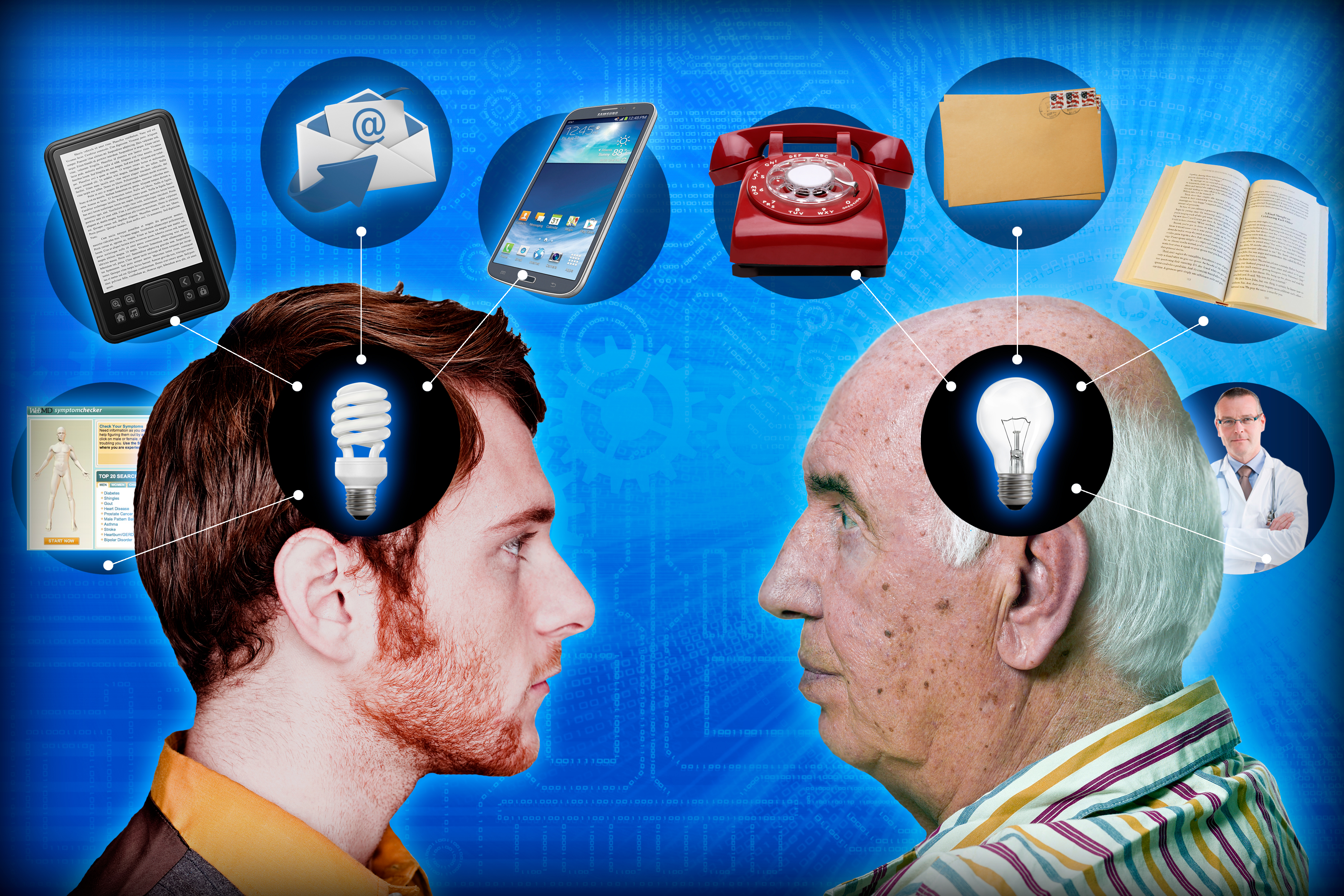
As we grow older, our physical and mental abilities deteriorate. Knowing that decline is the nature of life, the older one becomes, the more grasping one is for new ideas that mitigate life’s inevitable degradation.
R. DOUGLAS FIELDS (AUTHOR Ph.D. IN NEUROSCIENCE)
“The Other Brain”, written by Dr. Douglas Fields (a department head at the National Institute of Health and adjunct Professor of Neuroscience at the University of Maryland) is an expert in the field of cognitive science, i.e., the exploration of how minds work.
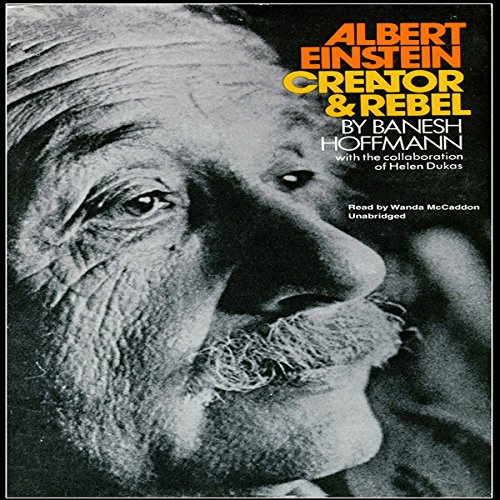
DR. THOMAS HARVEY (the pathologist that stole Einstein’s brain and kept it for some twenty years before telling anyone he had it.)
Fields begins with a story of when he is a ten-year old boy requesting a brain to dissect to see how it works. He moves on to tell the story of the pathologist that stole Einstein’s brain and kept it for some twenty years before telling anyone he had it. Einstein’s brain is eventually analyzed to see if there was a physical difference in Einstein’s brain that allowed him to see what others could not.
With this opening, Fields begins an exploration of the brain and how it functions. What he reveals is that Einstein’s brain was different but not because it was any bigger nor had more neurons but that it had more glia cells than the average brain. Until glia cell discoveries were made, the consensus of scientists was that neurological function was singularly based on an electrical impulse, i.e., an impulse transmitted to the brain through neurons via axons and dendrites to command thought and action.
With careful examination of glia cells, scientists found that there is what Fields calls a “second brain”. Glia cells are different from neurons. They do not use the axons and dendrites that transmit electrical pulses to compel performance. Glia cells use a chemical interaction within and between glia that create stimulus and response. The significance of the discovery of glia cells as a chemical alternative to electrical impulse suggests motor and mental function may be improved by other means.
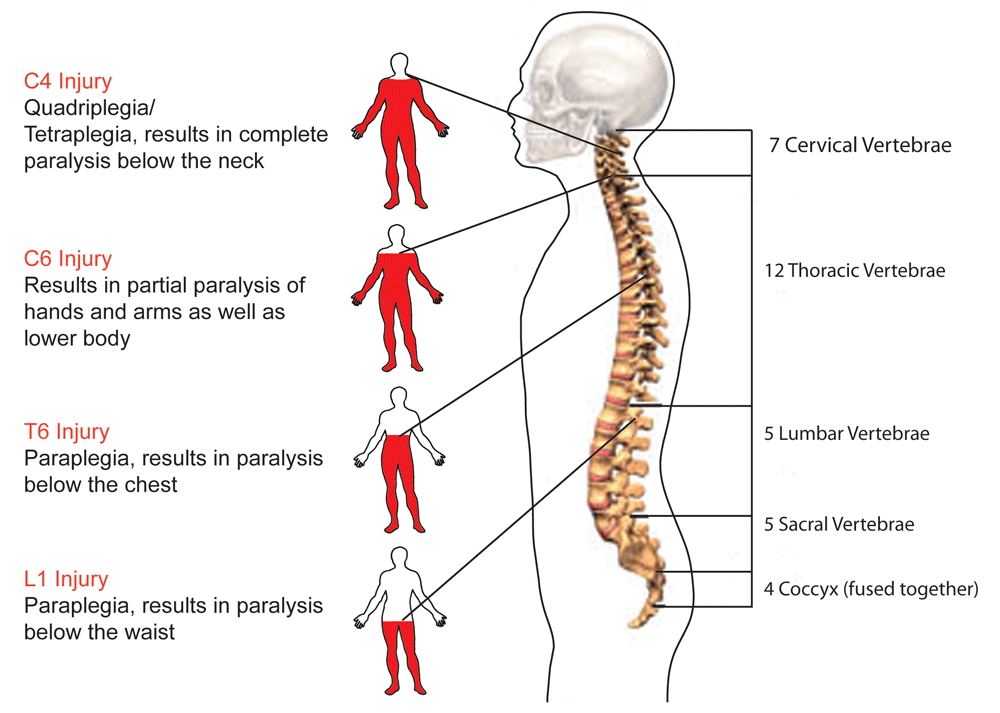
This discovery OF GLIA cells potentially offers alternative ways of treating spinal cord injuries and mental in-capacities caused by diseases that interfere with the neuronal circuits of the brain.
This discovery means that the study of a “second brain” may offer alternative ways of treating spinal cord injuries and mental in-capacities caused by diseases that interfere with the neuronal circuits of the brain. Further, it may offer treatment alternatives for patients suffering from dementia or Alzheimer’s, a growing and feared neurological dysfunction.
Fields explores several glia related cells and their positive and negative functions in the neurological system. It is not a panacea for cure of neurologically impaired patients or aging brains because experiments show glia cells are both curative and destructive in their effect on the neurological system. However, a second brain does open a new field of opportunity for cure. Maybe young brains can be re-booted and old brains rehabilitated.
Dementia gives no comfort to one who is older and have a fear of Alzheimer’s and its consequence for others. Others, who are left to care for the stricken.
Audio-book Review By Chet Yarbrough
(Blog:awalkingdelight)
Website: chetyarbrough.blog
The Master Switch By Tim Wu Narrated by Marc Vietor
Tim Wu writes about the capitalist drive to acquire a master switch that controls how the public receives information. President Biden has chosen Wu to serve on the White House National Economic Council. It will be interesting to see what influence Wu will have on American technology companies.
TIM WU (AUTHOR, PROFESSOR OF LAW AT COLUMBIA
The first section of “The Master Switch” sets a table for understanding 21st century communication technology. Wu doggedly recounts a history of the communication industry. It will turn some listeners off but stick with it, Wu does have something to say.
“The Master Switch” is written before Huawei technology company became a perceived security and privacy threat. Instead of corporate domination of the internet, Huawei might be a nation-state security and privacy threat. Huawei’s break-through 5g internet system is coveted by many countries in the world.
Some of what Wu reveals is counter intuitive. Steve Jobs’ genius is not as a technical wizard but as a deal maker.
None of these revelations denigrate the spectacular achievements of Jobs and Wozniak or the success of any of the companies mentioned. Jobs is a marketing genius that envisions what the market doesn’t know they want and demands perfection in a product that will serve that market.
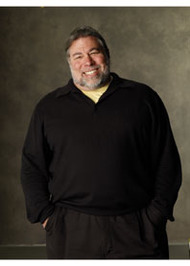
STEVE WOZNIAK (Wozniak, is characterized as the real wizard of “Menlo Park” –a few doors down from a similar laboratory occupied by Bill Gates.)
In their early days, one suspects neither genius cared about the power and influence of the internet and the potential of a “Master Switch” controlled by a government, or corporation. A prospect that is both troubling and (probably) inevitable.
Wu is arguing that communication businesses have expanded and contracted like rubber bands; i.e. pulled and snapped by inventors, governments, and business moguls.
From what Wu reports, history favors the likelihood of a “Master Switch” controlled by one of these rubber band pullers.
Wu’s stories of the communication industry suggest that a closed system is more likely to prevail in the shake-out of the internet; i.e. one “switcher” that will control the medium. The Trump administration endorses that philosophy by suggesting the private sector is a better arbiter of control than the government. Wu shows that a closed system tends to perpetuate itself and retard innovation because of a monopolist’s fear of competition.
In today’s political climate, the potential of a closed system looms large. Wu recounts the history of telephony, radio, movie, and television communication businesses that started as open systems but evolved into closed systems due to the acquisitive and greedy nature of mankind.
Wu argues that vertical integration (a closed system) of the communication industry can be discouraged with a check and balance system.
He suggests inventors, manufacturers and government regulators should remain independent (integrated horizontally rather than vertically) to check and balance human nature’s drive for one entity’s control of a “Master Switch”. This seems unlikely in light of an autocratic government like China. China’s outsize involvement and influence on the financing and regulation of a company like Huawei is an unlikely check and balance on sovereign security or privacy.
Wu lauds Google for preaching and practicing open system management of the internet but the history of communication companies reminds the listener that founders and their philosophies mutate. Private industry history of corporate greed in a capitalist society makes one suspect.
A check and balance system for communication or any industry is unlikely to grow based on past experience and human nature.
Free societies over-regulate and then under-regulate. America has always practiced rubber band management. Separation of powers is a temporary construct; not a permanent condition. When conflict begins, human nature takes charge. Mankind is acquisitive, greedy, and human.
Wu is a naive free enterprise philosophizer. History, Ayn Rand, and human nature tell us that the internet will become a closed system.
The public doesn’t understand technology and could care less. “Show me the product and what it can do”. “Show me the money” are humankind’s arbiters of who gets the “Master Switch”.
Ignorance of communication technology is everywhere. Consumers are more interested in what they can get than what they can change.
The general public would rather let someone else make product decisions and vote with their pocketbook when they are dissatisfied. That seems an even greater threat with a company like Huawei that is integrated with an autocratic government.
Wu opens one’s mind but fails to come up with a plan that will change the internet’s future.
CHRIS IMPEY (BRITISH ASTRONOMER, EDUCATOR, AND AUTHOR)
After listening to Chris David Impey’s book, “Beyond: Our Future in Space”, traveling to other worlds seems distant and unachievable. Impey cleverly begins his story about space travel as though the first human to permanently leave earth is born in the 21st century. That novelistic beginning is revisited twice, but the true subject of “Beyond: Our Future in Space” is the physics, astronomy, and observational cosmology of the present day.
One presumes Impey’s purpose is to encourage the possibility of reaching the stars but, by the end of the audiobook, little optimism is left to the listener. The daunting task of overcoming gravity, surviving an inhospitable environment, and leaving the only home humans have ever known, warrants some pessimism. Some minor relief from pessimism is offered with world history’s comparison of human migration across the continents. Impey implies history’s adventurers on earth have something in common with adventurers in space.
One presumes Impey’s purpose is to encourage the possibility of reaching the stars but, by the end of the audio book, little optimism is left to the listener.
The literal common characteristic of adventurers is a gene called DRD4. Impey suggests DRD4 alleles have evolved in 39 population groups that have historically migrated over long distances. These population cohorts are loosely classified as risk takers but, with a 7R variant of this gene, they have a higher incidence of attention deficit hyperactivity disorder (ADHD), schizophrenia, bipolar disorder, and addictive behavior. This observation seems unlikely to inspire confidence in “…Our Future in Space.”
The next difficulty of space exploration noted by Impey is escaping gravity. Current science shows fuel propellant is 80% of the weight of a rocket launch. Without a more efficient source of propulsion, sending thousands of people on earth to another planet is a pipe dream.Impey notes that science is exploring alternatives like sail power, nuclear fission, radiation collection systems, and the physics of teleportation, via spooky action at a distance, but the evidence of success is either solely theoretical or miniscule.
Political will for space exploration has dwindled since the 1960s. American government financing has dropped from nearly 4.5% to well below 1% of the Federal Budget.
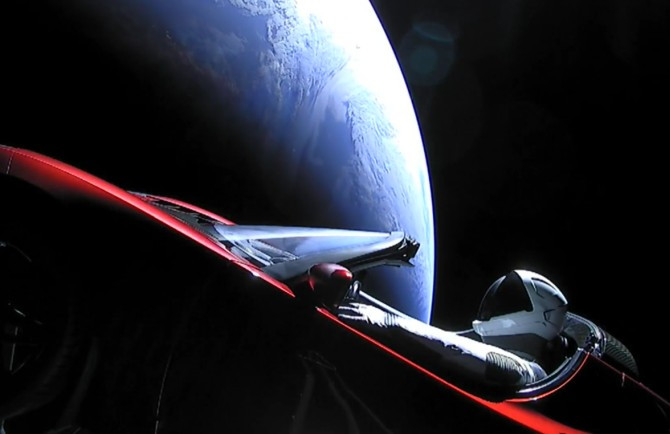
Elon Musk’s Space Exploration (Launching a Tesla into space.)
NASA has nearly been dismantled. Most research and development is being done by one-off entrepreneurs like Elon Musk, Burt Rutan, and Robert Bigelow. Part of the reason for the loss of political support is its cost. Current science shows it costs more than $1,000 per kilogram for human and/or cargo delivery to the space station.
It is encouraging that reusable launch vehicles have potential for reducing that cost but space tourism seems a long way off. Until humans experience space flight, it seems unlikely a Columbus or Matt Damon is waiting in the wings to set sail for Mars.
Elon Musk’s Successful Return of Rockets Launched into Space. It is encouraging that reusable launch vehicles have potential for reducing that cost but space tourism seems a long way off.
Impey makes the case for habitable planets in the cosmos based on current robotic, radio signal, and telescope explorations. He argues there is growing evidence of many planets orbiting stars outside earth’s solar system. From year 2000, the number of exoplanets (those orbiting stars) increased by more than 775 planets.
CURIOSITY-Impey makes the case for habitable planets in the cosmos based on current robotic, radio signal, and telescope explorations.
Impey goes on to explain space voyage and exoplanet living’s physiological effect on any human that chooses to leave earth. There is the detrimental effect of radiation, extreme temperature, lack of water, lack of oxygen, and reduced gravity. All of these space voyage and planetary differences discourage optimism about “…Our Future in Space”.
Quote from astronaut Andrew Feustel– “I don’t think we’ve solved the radiation problem yet and that’s really a function of how fast we can get there. So the faster we can there, the less radiation exposure we have. At the moment it would take a year but we need it to be three months there and three months back.”
However, Impey soldiers on. He revisits the novelistic idea of the first space explorers by noting extensive sociological training, refinement of suspended animation, and psychological profiling to create ideal space voyager teams. Impey notes that several animals have been put in a state of suspended animation and revived; i.e. implying that humans could be put in the same state of suspension for long space voyages.
NANO-ROBOTICS SPACE EXPLORATION As a fall back to the difficulty of human space travel, Impey suggests an alternative to human exploration of exoplanets. He writes about advances in nanorobotics; i.e. miniscule components that can function as human substitutes for exploration of exoplanets.
As a fall back, Impey suggests an alternative to human exploration of exoplanets. He writes about advances in nanorobotics; i.e. miniscule components that can function as human substitutes for exploration of exoplanets. The reduced size of nanorobotics decreases payload weights and increase the speed and distance that can be traveled for space exploration. This still leaves propulsion for great distances an issue but it mitigates human risk. The presumption is, with more information about exoplanets, political will for space exploration will increase. With better funding, the science to support human beings “…Future in Space” will be expanded.
RAY KURZWEIL (AUTHOR,SCIENTIST,INVENTOR,DIRECTOR OF ENGINEERING AT GOOGLE)
Finally, Impey touches on Kurzweil’s singularity and the advance of Artificial Intelligence, where computers equal and/or exceed the capabilities of human beings. In Kurzweil’s world, either AI will explore other planets on its own, and/or AI will meld into the human race to mitigate all the negative consequences of space travel.
Who would have thought that human beings would set sail for a new world when many thought sailing from land meant you would fall off the edge of earth? Maybe that is where space exploration is today. Impey’s fictional character arrives at an exoplanet with her team at the end of “Beyond: Our Future in Space”. Now that is optimism.
JARON LANIER (AUTHOR, INFORMATION AGE PHILOSOPHER,FUTURIST)
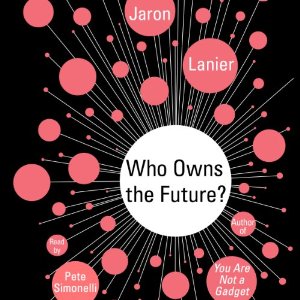
Society is at the threshold of change. Jaron Lanier writes about the information age in “Who Owns the Future”. Just as the industrial revolution, and two world wars mechanized human production, the computer and internet “informationizes” mechanical production. Lanier bluntly explains that human employment will decline in proportion to computerization of production.
Lanier is neither posturing as a Luddite nor abandoning the principles of capitalism. He suggests human beings need to understand their changing role in society. Lanier infers a failure to understand human’ role-change will compel disastrous reactions; i.e. reactions like the Luddites of the Industrial Revolution or socialist, fascist, and communist sympathizers of the post-industrial world.
Luddites during the Industrial Revolution–Workmen take out their anger on the machines.
Lanier argues that automation is replacing jobs at a faster rate today than in the 20th century. Human nature does not change. Money, power, and prestige remain the motive force of human achievement.
Achievement in the past is based on productivity from the work of human hands with the assistance of mechanization. The days of human assistance in mechanization are steadily being reduced by computerization.
Lanier forecasts a future of abundance where the goods of life will be available upon request; without the assistance of human hands. No one knows how far into the future humans must travel to arrive at that age of abundance but Lanier suggests it will happen.
Lanier has an abiding faith in human beings’ ability to adapt and control technological change.
Lanier infers human initiated technology will continue to eradicate disease, and manipulate the atomized world to manufacture the necessities and desires of life. Replication machines will become common household appliances to manufacture diverse products, ranging from food to toothbrushes, to “goop” machines that extrude finished product.
HIGH SPEED GOO KNITTING MACHINE MANUFACTURED BY SONY–PRICED AT $30,000.
Industries will become more automated and less dependent on human employment. Lanier suggests now is the time for society to understand the change. As means of production reduces the need of human hands, the contribution humans make to society will increasingly become information based.
Lanier begins to explain the concept of information monetization. This is something that exists today but is mistakenly understood as something that is free.
Examples are Facebook, Google Search, Amazon.com, Microsoft Windows 10, Apple ITunes, governments, and other organizations that Lanier calls Siren Servers.
Nothing is free. The price humans pay is information about themselves, their needs, desires, habits, interests, etc. Every phone call, every web search, every email, every purchase made tells Siren Servers what product they can sell, what price they can sell it at, and how much money, power, and prestige they can accumulate.
Lanier suggests that the concept of Siren Servers should be expanded to include defined populations, common-interest groups, and individuals. Lanier argues that information humans now give for free be monetized. Every person that produces information that increases another’s money, power, or prestige should be compensated.
Employment continues to be an integral part of living life. Compensation is proportioned based on others’ use of provided information. It does not eliminate unemployment but it offers a more broadly applicable potential for employment. It does not eliminate poverty or extreme wealth, but it offers potential for broadening the middle class. More significantly, it does not demand the impossible; i.e. a change in human nature.
Though not addressed in this book, Lanier does believe there is a circumstance where information should be provided for free.
He argues the experience of Taiwan, in the Covid19′ pandemic, offers an example of free information that helps society. Taiwan created an open platform for Covid19 to allow the general public to enter information about their infection, masks that they are wearing, and where they are located. Of course, a key to their success is testing kits to determine infection. American can learn from this. It offers a pragmatic way of safely returning to work.
There is a slippery slope aspect to Lanier’s idea. The slippery slope is the intrusive requirement of government regulation inherent in any system based on information contribution.
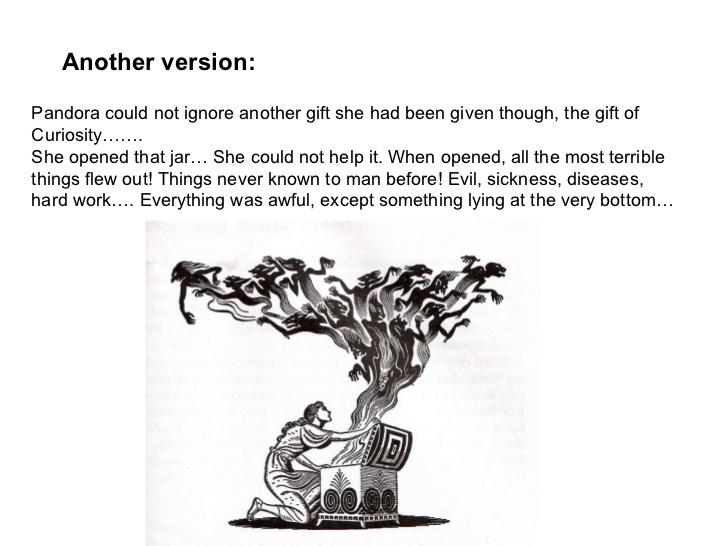
In the case of the Covid19 pandemic, the idea would be for the platform to inform the public; not to be used by a central government to direct people’s decisions. It remains an opened Pandora’s box that only leaves hope.
Congress is asking how far down the road of “1984” should a nation go before becoming a creature of totalitarianism?
If the government is in control, numerous questions rise. Who decides what information is being used by another and what the rate of pay should be? One may argue that is a fault of any economic system but how far down the road of “1984” would a nation go before becoming a creature of totalitarianism?
The point is that human nature does not change. Though Lanier may be absolutely correct in societies’ transition from industrialization to computerization, people remain greedy, power-hungry, and hubristic.
Can democratic capitalism resist totalitarianism in an Information Age? America’s two most current Presidents suggest otherwise.
Both Obama and Trump expanded the potential of “executive action” that bypasses congressional oversight.
Also, Lanier’s age of abundance presumes technology will keep pace with human needs, desires, and habits. Global warming, rare earth monopolies, and population increases suggest otherwise.
“Who Owns the Future” is an insightful view of the modern world. Unlike those who revile modernity and pine for a return to an idealized past, Lanier offers an alternative. Lanier strikes one as a Socratic seer of modernity.
ELIZABETH KOLBERT (AUTHOR,AMERICAN JOURNALIST,PROFESSOR AT WILLIAMS COLLEGE)
Homo sapiens are the only species that has the capacity to change events to conform to plan.
Elizabeth Kolbert argues that the fate of life on earth is subject to the randomness of nature’s cataclysmic events and the will of society.
“The Sixth Extinction” recounts the history of five worldwide extinctions. In recounting that history, Kolbert and most scientists suggest there is a pending sixth extinction. The difference between the first five and a presumed sixth is the birth and maturity of humankind.
To some listeners, this story is tiresome. It is tiresome because the future seems so far away. It is tiresome because some think it a hoax. It is tiresome because humans are an adaptive species. It is tiresome because some believe it is God’s plan. It is tiresome because science says extinction is a part of evolutionary science.
TRUMP’S VIEW ON CLIMATE CHANGE:
A fatalist might read Kobert’s book and think it implies a “…Sixth Extinction” is inevitable, regardless of one’s belief. President Trump and other “do-nothings” sing “Be Happy, Don’t Worry”. There is nothing that can be done; so why try?
The truth is– much can be done to abate the consequence of wild fires, hurricanes, and other cataclysmic events.
Cities can be hardened against flooding.
Forests can be better managed.
At risk populations can be permanently relocated. It’s a matter of recognition of threat and political will to mitigate environmental consequence.
In spite of, earth’s rising average temperatures, melting icebergs, and seashore flooding, the story of extinction offers no sense of urgency.
Some believe wildlife extinction is a part of the natural order of existence; others, a cataclysm of human-caused events, while coreligionists believe it is a part of “God’s” plan. And finally Kolbert and others believe science will provide a solution for humans to escape extinction.
Kolbert’s book is popular, and is awarded the 2015 Pulitzer Prize for general non-fiction because she writes well and has a point of view that offers hope for the future of humanity. She infers science will provide a plan for humans to escape extinction. On the one hand, Kolbert decries the death of bat species, the acidification of earth’s oceans, and the loss of coral reefs. On the other, she suggests human life prevails because it has shown capacity to change.
The real fear that Kolbert, and many other journalists, scientists, and politicians talk about, is that society will not respond to manmade degradations of earth’s environment soon enough to delay an inevitable “…Sixth Extinction”.
Kolbert infers artificial preservation of endangered species is a fool’s errand in the face of habitat destruction. After all, what is the point of preserving a species in a zoo or in a frozen state of animation if natural habitats are destroyed?
Another way of interpreting Kolbert’s theme is to argue that loss of life’s diversity is a consequence of earth becoming an island of sameness. She calls loss of diversity is an island of sameness because environmental degradation introduces the same bacteria, the same pollutants, and the same adaptive needs to survive.
Biodiversity becomes less possible because of the interconnectedness of continents, consequent to international travel and species introduction to all continents of the world.
One may argue this is the fault of human civilization. That seems wasted intellectualization. The advance of civilization naturally induces loss of biodiversity. But, Kolbert’s theme suggests interconnectedness is only a proximate cause of loss of biodiversity. She argues it does not have to be a cause for a “…Sixth Extinction”.
Kolbert’s argument reminds one of the Serenity Prayer:
“God, grant me the serenity to accept the things I cannot change,
The courage to change the things I can,
And the wisdom to know the difference.”
“The Sixth Extinction” notes that human beings are the only species that shows the capacity to change events to conform to plan.
What humanity needs is the political will to mitigate the causes of human environmental pollution. It is not that a “…Sixth Extinction” will not occur, but human beings need not be the proximate cause.
Siddhartha Mukherjee draws a Delphic map outlining the boundaries of genetic science and Homo sapiens’ future. (Interviewed on PBS March 31, 2020 regarding Covid19.)
Predictions for Homo sapiens’ future are “Delphic” in the sense of being obscure. Ancient predictions of the Oracle of Delphi are noted to have been subject to interpretation. The predictive quality of a Delphic map of genes involves the morality and ethics of manipulating heritable characteristics of humankind.
Picture this: an average life span of 150 or more years, cure for all known diseases of mind and body, elimination of known genetic causes for debilitating mental and physical deformities.
Now, picture this: loss of the ability to procreate, accidental creation of a new disease because of an unintended consequence of a manipulated gene, extinction of the human race caused by artificial enhancement of the genetic code.
Mukherjee notes that the science of genetics is rapidly reaching the point of modifying, and potentially creating, human life that has no known physical or mental handicaps. Mukherjee’s Delphic map is intimately drawn in vignettes about his family’s life, and particularly a brother’s loss of life from mental dysfunction; i.e. a brother that takes his own life as a result of schizophrenia. Through Mukherjee’s family vignettes, and stories of children with inherited medical maladies, he poignantly clarifies the seriousness of the subject.
Though genes are not the source of everything human life becomes, the science of the subject shows that human beings originated in Africa and grew to populate the world with humans from one original mother.
The science of genetics is changing medicine and society. Apocryphally, the Oracle of Delphi is a priestess rather than a priest who foretells the future. Once again, the future is scientifically acknowledged as dependent upon women.
Though human existence is dependent upon both nature and nurture, mitochondrial DNA comes from mothers while sex determination comes from fathers.
The significance of that discovery is that converting food to energy comes from mitochondrial DNA (mtDNA), which is only inherited from mothers. Without a mitochondrial Eve, there would be no human race (an ironic thought in view of the unequal treatment of women in the world.)
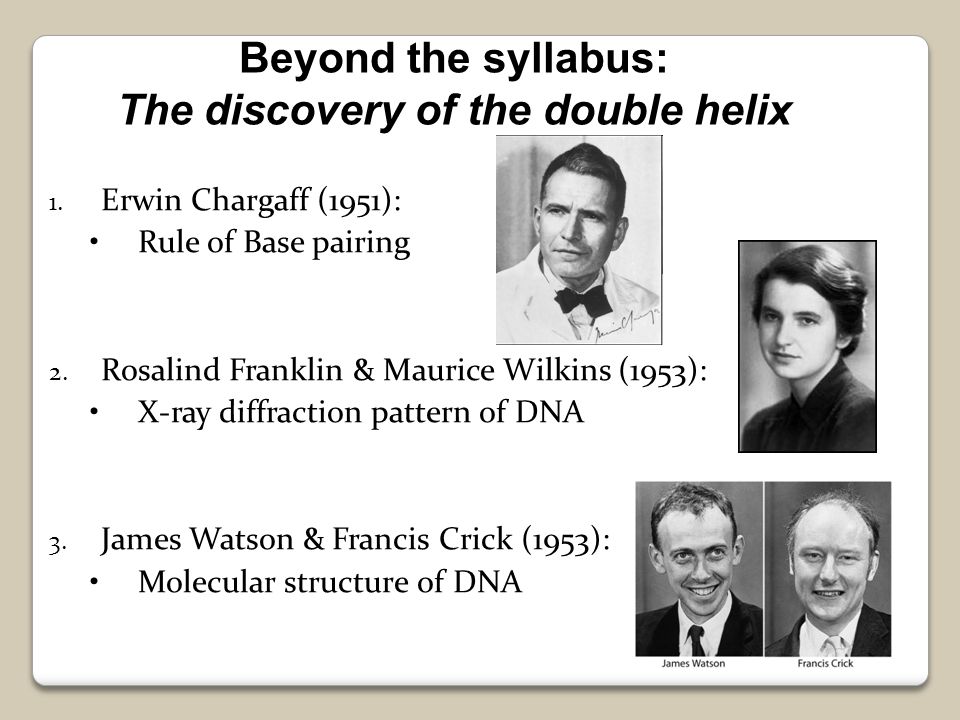
Mukherjee recounts discovery of DNA structure and how identifying the double helix in 1953 (by James Watson and Francis Crick) leads to mapping the human genome.
With a map of the gene, it becomes possible to manufacture drugs that attack medical and psychological maladies at a genetic level. Mukherjee shows how the history of Watson’s and Crick’s discovery defines western culture’s search for knowledge.
Mukherjee is not overtly critical of the two approaches but implies that corners are cut by the private sector in order to patent discoveries for new medicines that heal but also sometimes kill. (Something to be wary of in regard to Covid19.)
During President Clinton’s term of office, competition for gene sequencing leads to a private/ public race that exemplifies the difference between entrepreneurial and governmental pursuit of scientific discovery. The objective of the private sector is to win the race by any means necessary. The private sector’s primary objective is to create financial return on investment. In contrast, government focuses on methodology of discovery and accuracy of results, with societal reward as a primary objective.
This is somewhat analogous to what happened during WWII with the discovery and use of computers; i.e. one element of discovery is public and another is private. The difference is that computer discoveries indirectly relate to death and destruction while genetic discoveries directly relate to death and destruction. Each approach to scientific discovery, private enterprise and government research, have benefits and costs. What is at stake in the case of human manipulation of genes is the destiny of the human race.
Mukherjee reflects on the terrible consequence of family members, friends, or professional counselors who insist people who are lesbian, gay, bi-sexual, transgender, or questioning, can be socially engineered to be heterosexual. The insistence leads to psychological dysfunction and worse, the arbitrary murder of innocents; like the Orlando, Florida massacre in 2016.
Mukherjee acknowledges genes are only part of what makes humans human. A most striking reveal is about LGBTQ and the genetic component of what makes humans one sexual preference or another; i.e. winners of the battle between inheritable XX (female) and XY (male) chromosomes show significant correlation with sexual preference.
TWINS: Though genetics are a major determinant in what humans are-environment plays a role. The role is complicated because one person’s response to outside stimulation can be entirely different from another’s even though they may be near genetic duplicates.
Mukherjee sites studies of twins raised in different parts of the country, with different families, having uncannily similar life preferences; presumable because they have the same genetic inheritance.
“The Gene” is an important book. Its importance lies in the dangers inherent in sciences’ ability to tamper with a natural selection process discovered by Charles Darwin in the 19th century.
Modern humans have evolved over 200,000 years through a process of adaptive genetic changes defined by Richard Dawkins as immortal genes. The caution one must recognize is that when humans make decisions for other humans, the consequence is inevitably different from what is expected.
Humans may become extinct because of our environmental mistakes wrought by natural selection and nurture. However, one is equally wary of becoming extinct because of what society decides about gene modification by humans; for humans.
STANISLAS DEHAENE (AUTHOR, DIERECTOR OF INSERM FOR COGNITIVE NEUROIMAGING, PROFESSOR AT COLLEGE de FRANCE)
Stanislas Dehaene argues that consciousness is a measurable state of mind. He speculates that a measurable artifact will be found to quantify consciousness. Dehaene believes consciousness is within the grasp of science and technology. He suggests mapping of brain consciousness may produce standardized principles of artificial intelligence. Dehaene explains that brain mapping is far from complete but its potential for defining consciousness is experimentally testable.
Dehaene explains current science experiments show that elements of consciousness can be identified and measured. Specific electro/chemical signals from different parts of the brain are being mapped. With the use of electroencephalographs, documented patient experience, and the use of brain probes, repeatable electro/chemical signals are identifiable. Physical and mental performances have been repeated in controlled experiments by using identified electro/chemical signals. Specific electro/chemical bursts between dendrites and axons in the human brain have been shown to create thoughts and actions.
MAPPING THE BRAIN
What Dehaene explains is that brain function is highly complex. Physical and mental activity involve different parts of the brain. Some thoughts are subconscious or pre-conscious and obscured; others are conscious and re-callable. An element of consciousness is periodicity; i.e. how long a stimulus is maintained. Anything less than 1/3rd of a second is noted but is obscured from the conscious mind. However, subconscious activity does have a measurable effect on cognitive function. The complexity of memory involves many parts of the brain that are interconnected by electro/chemical signals between neural dendrites and axons.
The complexity of memory involves many parts of the brain that are interconnected by electro/chemical signals between neural dendrites and axons.
DANIEL KAHNEMAN tells story of a fireman that senses a collapse of a building because of a subconscious experience of many similar catastrophic events. The fireman orders his team out of a building without clearly understanding why.
Some subconscious functions are evident in what might be classified as instinct. For example, the story of a fireman that senses a collapse of a building because of a subconscious experience of many similar catastrophic events. The fireman orders his team out of a building without clearly understanding why.
Dehaene believes quantum computing opens a door to artificial intelligence that can replicate consciousness. He implies the myriad signals that come from different parts of the brain will eventually be mapped. Dehaene infers brain mapping offers a framework for consciousness that can be created in a computer program.
In a world based on probabilities rather than Newtonian cause and effect, artificial intelligence offers a “Brave New World”. Is that a good or bad thing? Will A.I. be a Huxley redux or revision?
Data and Goliath: The Hidden Battles to Capture Your Data and Control Your World
Written by: Bruce Schneier
Narrated by: Dan John Miller
BRUCE SCHNEIER (AMERICAN AUTHOR, FELLOW AT THE BERKMAN CENTER FOR INTERNET & SOCIETY AT HARVARD LAW SCHOOL)
Bruce Schneier’s book is about the battles with government and the open market for personal privacy and freedom in the information age.
The seriousness of the subject is diminished by millions who revel in the knowledge, accessibility, and convenience of the internet. However, Schneier explains how our appreciation and use of the internet threatens privacy and freedom. What is needed is a perfect balance between personal privacy and public utility.
Perfect as an adjective for balance between private use and public utility is oxymoronic. All human beings are emotionally and intellectually imperfect. The general public conducts their lives within normative social boundaries. They are generally not criminal, sexually perverted, or psychologically impaired. However, all human beings transgress some social boundaries.
Most individuals feel appropriately guilty for their transgression; suffer the personal and societal consequence, and then get on with their lives.
Like a forest of pine trees being attacked by borer beetles, the internet infects the public; not with malicious intent, but with a hunger for money, power, and prestige.
This loose definition is a fair description of all human beings. However, Schneier argues that the internet categorizes, spindles, and mutilates human lives in a more public and destructive way than ever before in history.
The borer beetles of the internet are well-known; e.g. Apple, Microsoft, Facebook, Google, Amazon, the Federal Government, and a host of smaller species. Some borer beetles can kill a forest, while others benefit nature’s ecology by getting rid of weakened trees to regenerate healthy trees. Schneier suggests America is at a crossroad where captured data from the general public will either grow into a society’ killer or a humanized friend.
Facebook is in the news today because it is being investigated as a monopoly for predatory acquisition of potential competitors. To some, Facebook is a borer beetle of a diminishing forest of internet companies.
Schneier suggests or implies government, eleemosynary, and private entities continually gather personal information and mine it for public and private purposes. The government’s objective is to protect American citizens from crime and terrorism. Churches, charities, and private industry mine private data, not to commit crime or terror, but to increase donations in the first case and profitability in the second.
On some level, Schneier suggests there is no harm; no foul. On another level he argues, surveillance, big data collection, and unregulated invasion of privacy attacks the foundation of democracy. Though the right to privacy is not explicitly protected by America’s founding documents, Schneier suggests the internet encroaches on the 4th 5th and 9th articles of the Constitution.
Schneier acknowledges the benefits of the internet; e.g. educational opportunity, communication timeliness, shopping convenience, banking access, and interconnectedness. Every article written in this blog is benefited by information available on the internet. Convenient purchase of consumer goods requires no trips to a local vendor. The bank writes checks with a few taps at a computer terminal. A personal Ipad, Iphone, and laptop communicate with each other via Bluetooth with input only required once; on one device. A wonderful life with no harm, no foul—right?
Schneier notes there is a price paid for these benefits. Unquestionably, the internet is a great source of valuable information and convenience. However, it is also a vehicle for illicit activity. The internet reveals personal information about users that embarrass, bully, and sometimes ruin lives. It disseminates bigotry that recruits like-minded miscreants. It provides access to bank accounts, credit cards, and other financial instruments for fraudulent use.
Every purchase made on the internet becomes a factoid in the history of a purchaser. All of these factoids are accumulated and used by privately owned search-engine companies (like Google, AOL, and Amazon) to profile personal habits and preferences. That information is sold to retailers for a fee. Private retailers use that information to customize their sales pitches to consumers. The retailer adjusts prices according to buyer’ purchasing and income profile. The search engine owner sells the retailer a first position on internet searches. That first position increases probability that the profiled consumer will purchase from that retailer who has enough information to estimate how much you are willing to pay. The public is being manipulated by retailers that know where you are, what you buy, and what you are willing to pay, or capable of paying. Retailers who purchase data from search engine owners can estimate (if not know) your net worth, sexual orientation, educational achievement, and personal preferences.
The internet is a money machine for search-engine owners. First, the search-engine owner raises revenue by selling personal information and then increases income by selling positions on search-engine advertising web pages. The retailer benefits by having personal consumer information and a primary position on web-page searches. It increases the retailer’s odds of being seen on a search and the consumer’s likelihood of purchase.
The internet is a three-headed dog guarding the entrance to Sartre’s “No Exit” hell.
Schneier implies the consumer is being controlled by Goliath’s data collection. The David in this hidden battle is the consumer with only hope and a sling shot to defend themselves.
The internet is a supersonic communications vehicle. There is no waiting for the mail. Instant messaging and the twitterverse are part of the spindling and mutilating process of the age. Thinking before one speaks is yesterday’s reality. Today, even in the race for President of the United States, speaking without thought is commonplace.
Internet access provides a forum to convince people of the corruption of society. With the click of a mouse, fiction competes with truth to lead and mislead the public. Publicly shared television news programs created by professionals are now created by anyone with access to the internet. There is no incentive or structure to fact-check reports posted on the internet.
The internet is a worldwide recruiting vehicle for the extremes of society; some of which fly airplanes into skyscrapers.
Schneier suggests government intrusion into private lives has gone too far as a result of 9/11 and other terrorist events around the world. Schneier implies that Edward Snowden is a hero; not a traitor.
Snowden exposed the covert surveillance of the NSA (National Security Administration) in gathering information about private citizens without their knowledge; and without probable cause, or judicial consent. Schneier argues that big data surveillance, by private enterprise and the government, have colluded to compromise freedom and control of the individual.
EDWARD SNOWDEN IS A FORMER CIA EMPLOYEE THAT RELEASED CLASSIFIED INFORMATION ON GOVERNMENT SURVEILLANCE OF THE AMERICAN PUBLIC.
Schneier suggests that promulgation of fear, exacerbated by public access to the internet, causes the government to overreact. He notes how the Prime Minister of Great Britain, David Cameron, stated that he did not want to be accused of not protecting British citizens because of lax surveillance of private citizens.
This climate of fear pervades the politics of our time. It is not the first time American abandoned the principles of privacy and freedom. Schneier notes examples:
the “Alien and Sedition Act” passed by Congress and signed by President John Adams,
the incarceration of American Japanese during President Roosevelt’s administration, and the McCarthy witch-hunt for communists in the 1950 s.
He suggests those were mistakes made then and the same mistakes are being made now.
Schneier offers solutions. He acknowledges the necessity of surveillance but believes government oversight should be strengthened. Government regulation should require judicial warrants for spying on an individual. He argues that mass data collection is an unwarranted invasion of privacy that has little value in defeating terrorism.
GOVERNMENT REGULATION OF THE INTERNET AND ITS DIFFICULTIES
Only after the fact, did mass surveillance reveal the Boston marathon bombing perpetrators. He suggests the same is true for the shoe bomber and the terrorist attack of the disability hospital in California. Schneier suggests that consumers should know who in the private sector is accumulating their personal information. Private citizens should have a right to opt out of private sector data collection by any internet user. He believes a set of rules should be established for government to follow when seeking specific surveillance. Schneier suggests those rules should be designed for transparency; legislatively adopted, and justified by legislators to their constituency.
Schneier suggests there is credible benefit in accumulating data about medical history of individuals but that this data should be encrypted in ways that limit access to those authorized by the individual. In general, Schneier is a proponent of encryption to secure the privacy of individuals.
Schneier’s book aptly describes the threats and benefits of big data. Terrorism is real but its threat cannot become an excuse for denying the privacy and freedom of the individual. Terrorism is just one of many risks in life.