One can choose the life of Buddha, Muhammed, Jesus Christ, Zoroaster, Rishabhanatha, Maimonides, Saint Francis of Assisi, Confucious or some other spiritual figure but it is one’s individual memories and our ability in “letting go” that will give one peace of mind and happiness in life.
Audio-book Review By Chet Yarbrough
Blog: awalkingdelight Website: chetyarbrough.blog
The Untethered Soul (The Journey Beyond Yourself)
By:Michael A. Singer
Narrated by:Peter Berkrot
Michael Alan Singer (American Author, journalist, motivational speaker, software developer.)
Michael Alan Singer’s audiobook is a reification of “Letting Go” written by David Hawkins. Hawkins, a medical practitioner, and Singer, a successful tech entrepreneur, come to similar conclusions about how to live life. Singer offers a more spiritual and ritualistic approach in working through remembered, and often suppressed, experiences of life by confronting them and letting them go.
Dr. David Hawkins posits the idea of a cosmic mind that can be tapped into by one’s thoughts to mitigate negative feelings. Singer’s approach is more direct and based on actual experience revealed by conscious thought and conscious rejection.
Singer believes every experience in one’s life is recorded by the mind, either correctly or falsely.
Singer suggests, through meditation, harmful or distorted memories can be revealed and discarded as inconsequential by the process of “letting go”. This is the same “letting go” referred to by Hawkins but located in a cosmic mind (the totality of human thought) rather than the individual mind argued by Singer.
Singer’s idea for treatment seems more therapeutically practical than Hawkins.
Both writers offer a solution to many human problems, but Singer suggests a therapeutic process exercisable by the individual, without the mysticism of a cosmic mind.
Singer introduces the idea that every experience in an individual’s life is consciously or subconsciously recorded in one’s mind.
Singer’s suggestion is that all negative feelings from life experience can be eradicated by letting them go. By “letting go” of accurate or inaccurate memory, Singer suggests one’s peace of mind, energy, and happiness improves.
One can choose the life of Buddha, Muhammed, Jesus Christ, Zoroaster, Rishabhanatha, Maimonides, Saint Francis of Assisi, Confucious or some other spiritual figure but it is one’s individual memories and our ability in “letting go” that will give one peace of mind and happiness in life.
Detroit manages to restructure their debt with the help of its citizens. Greece is caught in the grips of E.U.’ and IMF’ bureaucracy that only increases its debt.
Audio-book Review By Chet Yarbrough
Blog: awalkingdelight Website: chetyarbrough.blog
Adults in the Room (My Battle with the European and American Deep Establishment)
By:Yanis Varoufakis
Narrated by:Leighton Pugh
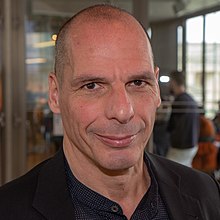
Yanis Varoufakis (Author, Greek economist and politician, Minister of Finance of Greece for 7 months in 2015, launched Diem25, the “Democracy in Europe Movement 2025” in February 2016.)
Yanis Varoufakis gives listeners a glimpse of decisions made when a national government is compelled to declare a national debt crisis. To fairly understand “Adults in the Room”, one will struggle with Varoufakis long story. His story is about restructuring rather than refinancing the debt owed the E.U. and IMF for a national debt crisis. Restructuring debt changes terms of repayment based on an original debt, while refinancing increases the debtor’s burden.
It is helpful to have listened to a book about Detroit’s bankruptcy. Detroit’s harrowing experience gives some idea of how difficult it is for a government entity to repay creditors for profligate government economic management. Detroit manages to restructure their debt with the help of its citizens. Greece is caught in the grips of E.U.’ and IMF’ bureaucracy that only increases its debt.
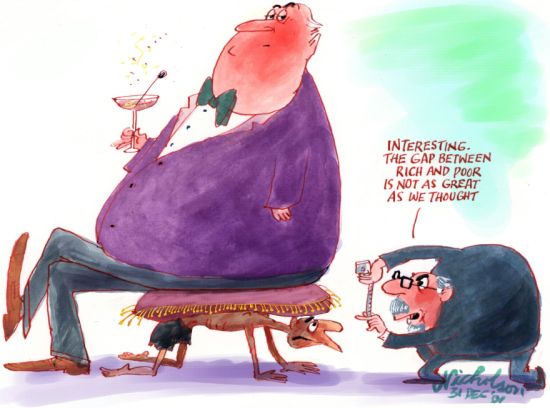
Varoufakis’ argument for understanding the plight of society’s poor is highly relevant in this era of democracies’ homelessness and economic inequality.
Varoufakis acknowledges socialist beliefs while inferring a negative opinion about capitalism. Varoufakis professes strong belief in democracy with a pronounced lean toward socialism, i.e., a belief similar to America’s Bernie Sanders who is mentioned in “Adults in the Room”.
Varoufakis notes that Greek, like American society, is unequal with rich and poor being disproportionately benefited by intended and unintended government and economic policy.
Greek government’s effort to compensate for inequality seems couched in an economic system meant to equalize citizen inequity with a pension system designed to compensate the poor for economic inequality. A poorly managed national economy and a weakly enforced tax collection system compounds Greek government failure to live within its means.
When Greece declares a sovereign debt crisis, the European Union and the IMF (International Monetary Fund) provide a credit lifeline of $9.5 billion to avoid a default on a previous bailout.
This so-called lifeline is contrary to what is requested by Varoufakis who becomes the Minister of Finance for Greece. The benefit of restructuring the debt provides liquidity to the Greek banking system without theoretically damaging credit worthiness of either the E.U. or IMF. On its face, it seems a win-win solution for Greece’s debtors and Greece’s citizens. However, the E.U. sees it as a dangerous alternative that fails to address the root causes of Greece’s profligate behavior. The E.U. demands control of all economic expenditures of the Greek government in return for a bail-out of past debt with a larger tranche of new debt. Financial control of Greece’s use of the new funds is to be exercised by a triumvirate representing the debt holders.
Varoufakis asks that Greece’s original bailout debt be restructured as a long-term bond with reduced payments over a long period of time, with payment size largely determined by Greece’s liquidity in a recovering economy.
In contrast, the demands of the E.U. and IMF are that salaries and pensions be cut, government employees’ pensions frozen, and retirement age raised. Those measures disproportionately hit the poor, destroy jobs, do nothing to improve tax receipts, and make it more difficult for Greece to pay its debt; not to mention the strict control of all expenditures by an external triumvirate of debt holders.
With these draconian rules, Varoufakis notes unemployment improves. However, the economy is estimated to be 25% smaller; not to mention the impact of the external triumvirates’ control reduces living standards, pensions, and salaries of the working poor.
The point of Varoufakis’ story is that the E.U. and I.M.F.’s mandated terms victimizes the most vulnerable Greek citizens trying to make a living.
Varoufakis resigns after 7 months in office after unsuccessfully fighting the onerous and inequitable demands of the E.U. and IMF. In some listener’s opinion, some may suggest Varoufakis abandons the poor, but his story suggests the decision of the controlling triumvirate of the E.U. and IMF rendered his continued role as Minister of Finance a virtual joke. Varoufakis is unable to change the E.U. and IMF board’s inflexible rules. Greece’s Minister of Finance cannot achieve a delay in their demand for restructuring the Greek’s debt to correct a poorly managed tax system and weak economy that victimizes the most vulnerable citizens of Greece.
For listeners of “Adults in the Room”, one wonders where wealthy Greek citizens were when Varoufakis tries to pull Greece out of its financial ditch.
Unlike the book about Detroit’s bankruptcy, there seems no appeal to rich citizens of Greece and a method for using Greece’s historical art and artifacts to collateralize a more equitable bail out for its people. Where were the Greeks who could afford to pay their taxes? Where were the art and antiquity foundations that could have aided in the negotiations with the E.U. and the I.M.F.? The historic art and monuments of Greece are an international treasure, particularly for western culture.
In retrospect, Varoufakis’s idea of restructuring the debt seems brilliant but there seems no time is allowed for Varoufakis to organize a response that could change the mindset of the members of the E.U. and IMF decision makers. As a “Monday morning quarterback”, Varoufakis’s idea would have carried more weight if he had gathered support from wealthy Greek merchants and art foundation entities that could have created a repayment sweetener to seal his loan restructuring idea. However, it appears there was not enough time for Varoufakis to gather enough support to make a case for debt restructuring. The triumvirate controlling the purse strings of the bailout would not wait.
Listeners owe a debt to writers like Varoufakis who are willing to tell their stories, whether right or wrong. In fairness to Varoufakis, it is easy to retrospectively review his actions to save the Greek economy.
At best, one concludes, restructuring Greece’s debt was a great idea that could have achieved a decent compromise for its lenders. On the other hand, one wonders what the leaders of Greece were doing when the repayment crises first began to show itself.
There were undoubtedly some powerful and rich Greek leaders who could have come to the aid of their country in this 21st century “time of need”. One is reminded of the heroic defense of Greek citizens in Crete when Nazis invaded their strategically located island. Where were the descendants of the many great Greek heroes of antiquity?
Francis Spufford (Author, received the 2017 Desmond Elliot Prize and Costa Book Award for “Golden Hill”, the author’s first novel.)
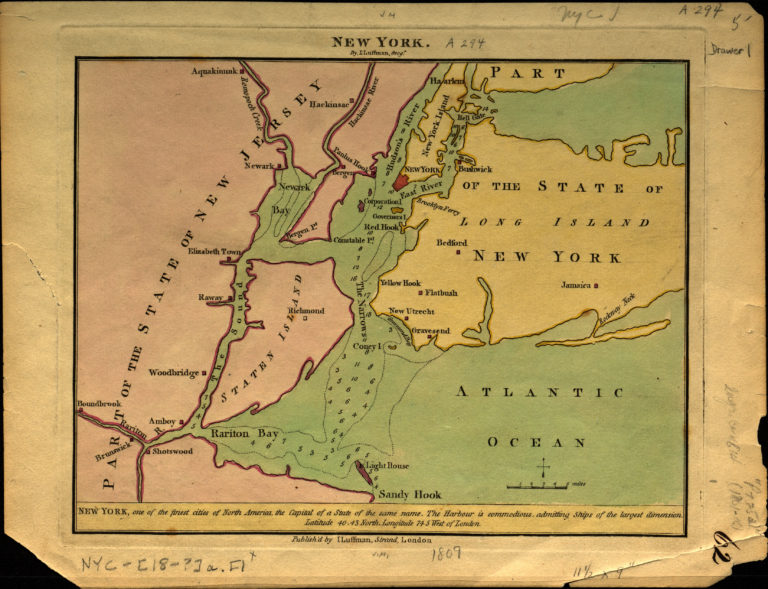
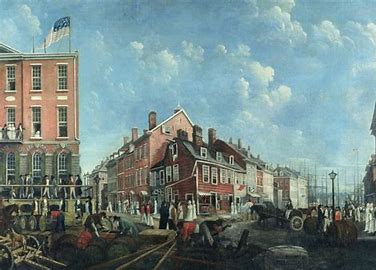
Francis Spufford captures a listener’s interest in “Golden Hill” with the idea of an Englishman sailing from London to New York City in 1746. New York City has a population of maybe 20,000, while London is a city of 630,000 to 740,000. What would a young Englishman with a 1,000-pound Bill-of-Exchange want in traveling from London to New York city? In today’s dollars 1,000 pounds would be over $127,000. The hero’s reason for leaving London for New York is not given until the end of Spufford’s story.
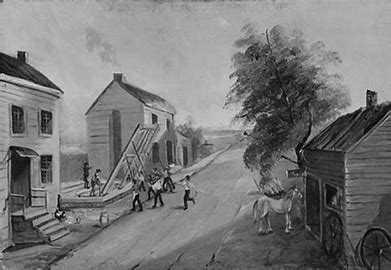
This is New York city in the 18th century. One could walk around the city in a day with its circumference less than a square mile.
This is a fascinating beginning to a story that gets bogged down by too many incidents that are mystifying until the last chapters of the book. The incidents are relevant to what it must have been like in 1746 but some listeners will become impatient for answers that could have been explained earlier.
New York City in 1746 is a mecca for protestants from many parts of the world. Spufford implies many New Yorkers are Dutch, a prominent ethnic group in wealthy New York.
Spufford’s hero is found to have a deep understanding of the theatre and its impact on an audience if an actor’s parts are well played. He attends a bad play that has an actress who, in spite of her poor lines, shows talent he recognizes. His appreciation of her acting leads to an unforeseen tragedy. This becomes a clue to the traveler’s perception of others and how unintended consequences impact one’s life. He seems to walk through life as though the City of New York is his stage. He plays his part, but his acting chops end with a mixed review.
Spufford’s hero appears to be accepted by the influential citizens of the city. At least, until it appears the Bill-of-Exhange is not going to be honored. The hero is thrown into debtors’ prison.
Debtors’ prison is an interesting place to write about. Spufford reflects on its barbarity in a confrontation with a fellow prisoner. The Bill of Exchange is eventually honored, and the hero is released. The next chapters address the repatriation of the hero to the Poo Bahs of the town and a woman of interest becomes more enamored with the traveler. The profile of the woman is somewhat unbelievable because of her implied business influence in a time when women have even less power than today.
The hero attends a party set up by leading members of the city that is, in part, to apologize for his mistreatment and to carry out whatever his mission is in the city. An interesting historical point of the apology is that America is primarily a barter system of exchange. Even though the traveler’s security is in English pound sterling, any negotiation for exchange is in goods, not cash. This is fine for the traveler’s purpose, but it reflects a point in American history that is often forgotten. There is no full faith and credit of a bank with gold or some other form of value to back-up American currency.
An interesting point Spufford reminds listeners of is the American’ anti-Catholic sentiment of the time.
One realizes how important Protestantism is in the foundation of America. The hero is almost killed by a mob that believes the traveler is a papist. Some historians have noted Protestantism is one of the deepest biases of early American citizens.
The reason for the hero’s appearance in New York is explained at last. To avoid discouragement of listeners, the purpose of the hero’s journey is not disclosed. “Golden Hill” is an interesting commentary on the tenor of an historic time, and it reveals some founding principles that trouble America to this day. The criticism of Spufford’s story is that it is too clever by half with a denouement too long in its revelation.
Gorbachev freed the Russian economy and Putin capitalized on that freedom. However, both reached beyond their grasp and damaged Russia’s standing in the world.
A History of Russia: From Peter the Great to Gorbachev
By: Mark Steinberg, The Great Courses
Narrated by:Mark Steinberg
Mark David Steinberg (History Professor at University of Illinois specializing in the cultural, intellectual, and social history of Russia.)
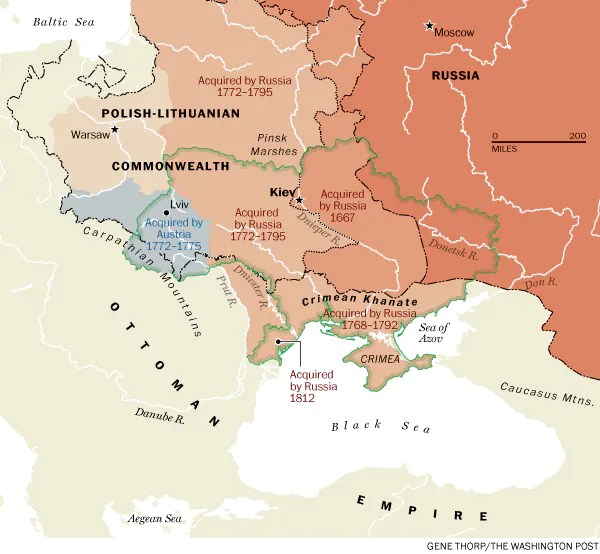
Professor Mark Steinberg’s history of Russia is an informative tour of Russian history that gives some context to the perplexing, contradictory, and murderous behavior of Vladimir Vladimirovich Putin. Though Steinberg’s history focuses on Tsarist Russia, a little research reveals why Putin argues Ukraine is historically a part of Russia.
Russia is an ancient nation that reaches back to the year 862.
The northern and southern lands were combined in 882 by Prince Oleg of Novgorod upon the seizure of Kiev in what is today the capital of Ukraine. Kiev becomes the capital of the combined lands. Eastern Christian religion is adopted from the Byzantine Empire by Russia in 988. Upon the Mongol invasion in 1237-1240, Russia’s size diminishes, and Russia’s capital moves to Moscow.
The first leader to be titled Tsar of Russia is Ivan the Terrible in 1547.
Ivan IV (Called Ivan the Terrible’s visage is forensically reconstructed by Mikhail Gerasimov)
Ukraine emerges as a nation in the mid-18th century, but large portions of the country remain under the control of Russia.
It is not until 1991, that Ukraine’s independence is recognized by America, Poland, and Canada.
Steinberg’s history addresses the time of Peter the Great through Mikhail Sergeyevich Gorbachev. What one hears from the lectures is the vacillation of Russian leadership from Europeanization to de-Europeanization. The primary interest of non-aristocratic Russians is in the political principle of socialism.
Autocracy is a common thread in Steinberg’s history of Russia. However, beginning with Peter the Great, that thread is frayed by changes that modernize Russian government management of its citizens. It remains autocratic but recognizes the country is behind Europe in its economic and cultural improvement.
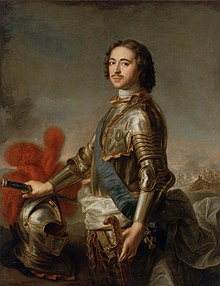
Tsar Peter the Great (As Tsar from 1682 to 1721, Pyotr I Alekseyevich leads Russia as a harsh autocrat with the goal of defeating Ottoman and Swedish control of the Sea of Azov and the Baltic.
Steinberg explains Peter the Great’s objective is to create a new Russia by replacing its traditionalist and medieval social and political systems with enlightened public policies. He plans to modernize Russia by promoting education and industrialization. His objective is to emulate and compete with European modernization. The Russian Academy of Science and Saint Petersburg State University are founded in 1724. Peter the Great creates a governing Senate in 1711 and other institutions to improve the administration of the Russian autocracy.
Peter the Great dies unexpectedly and fails to designate an heir to the throne. Succession founders for several years with little progress toward modernization until Catherine II becomes Catherine the Great, empress of Russia from 1762 to 1796.
Catherine the Great II (Born 1729, dies in 1796 at age 67.)
Catherine the Great marries the grandson of Peter the Great who died months after becoming Emperor of Russia. Catherine the Great is of the same mind as Peter the Great in modernizing Russia. New Russian cities, universities, and theatres are created by Catherine the Great. With the help of fellow nobles, Grigory Orlov and Grigory Potemkin, and Russia’s generals of that time, Russia expands their territory and continues its Europeanization. Western philosophers like Voltaire become friends of Catherine the Great.
After Catherine the Great, her son Tsar Paul I takes control of the Russian government. Steinberg characterizes Paul I as a despotic ineffectual leader who projects an authoritarian and patriarchal image and reverses many of the liberal policies initiated by Catherine the Great. He is assassinated by the elite guards of the Russian military and his son, Alexander I, becomes Tsar.
With the rise of education, Steinberg explains the creation of what is called the “intelligensia”, a class of younger Russians interested in social change. Some were largely self-educated like Vissarion Belinsky, the son of a rural physician and Nikolai Gogol, born into the Ukranian family gentry (a class below aristocracy). Others were from the aristocratic class like Alekasndr Pushkin.
From left to right, Belinsky, Gogol, Pushkin–associated with the Russian Intelligesia in the early and mid-19th century.
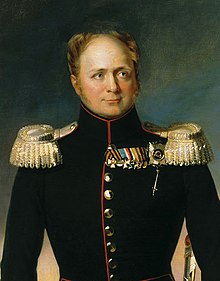
Alexander I (reigned 1801-1825) is described by Steinberg as a leader of two minds that on the one hand reestablishes many of the reforms of his grandmother, Catherine the Great.
On the other hand, Steinberg suggests Alexander I resists revolutionary movements that were roiling Europe during his reign. Alexander, I joins Britain in 1805 to defeat Napoleon Bonapart. Alexander switches sides and forms an alliance with Napoleon in the Treaty of Tilsit in 1807. However, in 1810, Alexander abandons Napoleon over disagreement on Polish territory. Napoleon’s invasion of Russia in 1812 is a disaster for the French and Russia gains territory in Finland and Poland.
Nicholas I (Reign 1825-1855, Grandson of Catherine the Great.)
Serfdom is a troubling social problem in Russia that is acknowledged by Catherine the Great but not resolved until after an 1861 decree for abolition by Alexander II. Though Catherine and Allexander II are not related, it is Alexander II who initiates what Catherine the Great recognized as the iniquity of Russian inequality. Though it is many years before the reality of abolition of Serfdom is truly addressed, Alexander II is the first to begin its reversal. His predecessor, Nicholas I did nothing to eliminate serfdom and in fact tried to re-establish aristocratic privilege.
Mid-day meal for peasants in 1860s Russia
Inequality in Russia, just as is true in America, remains a work in progress. Steinberg offers more detail of Russia’s drive toward modernity, but the next great change is of course the revolution of 1917. Steinberg explains Russia’s growing interest in socialism and its conflict with patriarchal rule. He notes the two major factions that wished to change the course of Russian history. One is the Bolshevik movement. The other is the Menshevik movement. But, before we get to 1917, it seems the 1904-1905 Russo-Japanese war is important because of its relevance to Putin’s decision to invade Ukraine.
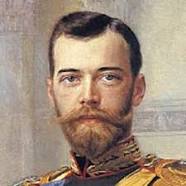
The last Tsar of Russia is Tsar Nicholas II. Nicholas II’s reign is from 1894 to 1917, after which his entire family is murdered by Bolshevik revolutionaries.
A precursor to the 1917 revolution is the 1905 uprising of Russian citizens who are unhappy with Tsar Nicholas II’s leadership. Growing inflation, poverty and hunger, a defeat in the Russo-Japanese War, and widespread discontent lead to a revolt. A workers demonstration leads to “Bloody Sunday”. An estimated 1,000 to 4,000 Russian citizens are murdered by Russian soldiers.
Of particular interest is the loss of the Russo-Japanese war. Both Russia and Japan want warm-water ports in the Pacific Ocean. A port that served that purpose is on the Korean peninsula, either off Manchuria or Korea. Tsar Nicholas’s inept management and the superior military actions of the Japanese defeat Russia.
The relevance of that defeat is the position Putin has put the Russian government in with the invasion of Ukraine. The question is whether Ukraine will be as successful as Japan in defeating Russia. The west must ask itself whether they have a dog in this fight or let Ukraine bear the brunt of an unjust war.
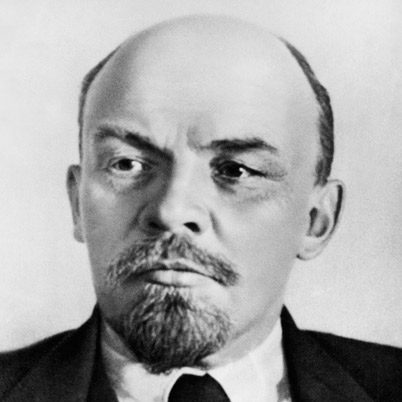
The exclusiveness of being a member of Lenin’s red party undoubtedly aided the ultimate success of the revolution because it required committed enforcers to rally the Russian people.
Steinberg explains Lenin clearly understood that authoritarian force would be required for communist’ socialism to succeed. The future of the revolution became dependent on a leader like Stalin who exemplified a party member that understood the importance of authoritarian command. The test of that truth comes in 1924 when Lenin dies from a brain hemorrhage.
Joseph Stalin (1878-1953, died at age 74, ruled Russia from 1929 to 1953.)
Authoritarian leadership, with its history of competent and incompetent Russian Tsars, is not new to the Russian people. With an improved education system in the 18th century, Steinberg explains even the intelligentsia accepted authoritarian rule. Adding to Russian’ acceptance of authoritarian rule is the belief that something had to change because life in Russia during Tsar Nicholas II’s rule is abysmal for the majority of Russian people.
Mikhail Gorbachev (1931-2022, died at age 91. Ruled the U.S.S.R. from 1985-1991 and served as President of Russia 1990-1991.)
Nearing the end of Steinberg’s lectures, the rise of glasnost with Mikhail Gorbachev is addressed. Between the death of Stalin and the rule of Gorbachev, 5 men ruled the U.S.S.R. Gorbachev wishes to keep the U.S.S.R. together but fails. His failure, in part, seems related to Steinberg’s history. Rather than glasnost, the U.S.S.R. seems to have needed a more authoritarian leader. Not in the sense of repression but in a demand to keep the U.S.S.R. together until the government’s effort at reform has time to be enacted. America had a civil war to prove it is one nation. That may have been a possibility with a more authoritarian Russian leader but that appears not to have been in the nature of Mikhail Gorbachev.
The U.S.S.R. dissolves in 1991. Since that dissolution, Russia has occupied some of the eastern territory of Ukraine and Crimea.
Though Steinberg does not fully address Vladimir Putin in his history of Russia, he sets the table for understanding why a reader/listener might think there is no way out for Vladimir Putin. The history Steinberg suggests Putin in one sense is the perfect transitional leader of the territorially reduced Russia. The firm hand of a secret police officer, with 16 years’ experience as a former KGB agent, and a position as Deputy Mayor of St. Petersburg’s seems an apt formula for success for a future President of Russia. Putin did well in his first years as President of Russia but seems to have made a career, if not life ending, error in his invasion of Ukraine.
Steinberg illustrates how Russia’s leaders range from enlightened to repressive managers of government. At different times in history, that management style served Russia’s economy and citizens, sometimes well and sometimes poorly. It is up to Russian citizens to decide which government actions and leaders best serves their needs.
From a western perspective, both Gorbachev and Putin served Russia well.
Anton Chekhov in 1989 (Author, 1860-1904, physician and philanthropist.)
Most societies in the 1800s have variations of the same story. However, one recognizes there are societal remainders that carry through to modern times. Anton Chekhov’s short stories tell much of what is evident in today’s Russia just as stories of the wild west is in today’s America. In both Russian and American history (as well as most of the world), women are considered the inferiors of men. Children were generally seen as a burden until they could take responsibility for work that had to be done. Rarely did women work outside the home except as servants to families with means to pay for their work. In the 1800s, both Russia and America had a gap between the rich and poor.
Chekov’s first story is of a young woman who is characterized as beautiful, vivacious, and promiscuous.
She chooses or is seduced by a man who is not her husband. She is caught in an embrace with this man by her husband who berates her for her flirtations. The cuckolding suiter offers 100,000 rubles to allow the husband’s wife to divorce him and leave her husband to marry the alleged seducer. The husband agrees but at a price of 150,000 rubles. This is an example of two transgressions. One, a human being treated as property and two, a woman having a right to choose how she wishes to live her life. Just as in most of the world today, this Russian story shows women being treated as unequal to men.
Uneducated Americans and Russians in the 1800s took advantage of the environments in which they lived. One of Chekov’s stories addresses a peasant who removes a nut from a railroad track because he needed a weight for his fishing line. He is taken to court for removing the nut because there were incidents of derailment from peasants who took several nuts from railroad track bolts for not only a single fishing line but for nets used for the same purpose. American killing of bison for sport is a similar ignorance that reduced a major resource for food and protective clothing of native Americans.
Serfdom in Russian history is long and sustained as a social and economic reality.
What Chekov’s short stories tell listeners is that though there are similarities, there are differences. Serfdom never takes hold in America, but its consequence extends into the mid 19th century despite Czar Alexander’s decree to eliminate it and Catherine the Great’s effort to end it. Even with the Alexander’s decree, serfdom remains a law until 1861 with its true abolition only begun during Catherine’s reign. Of course, America’s tragic faults are black slavery and Indian displacement with consequences that extend into today’s century.
Because serfdom did not take hold in America, the growth of capitalism created economic opportunities not available in mid-19th century Russia.
American capitalism is a two-edged sword that undermines the ideals of equality by denying equal opportunity for all. An underclass exists in both Russia and America, but Russia’s underclass suffers from slower economic growth as well as discrimination.
Though economic growth is turbocharged by capitalism it creates an underclass based on easily identifiable racial, ethnic, and sexual differences.
Social position in Russia came through military experience and promotion, or in association with unique opportunities offered to peasants by wealthy landowners. Capitalism had little place in Chekov’s mid-19th century history of Russia. What mattered to Russian citizens is social hierarchy. This seems evident even in today’s Russian kleptocracy.
In almost every Chekov story, heavy drinking is a common part of Russian men’s, if not women’s, lives.
Reasons for the Russian tradition of drinking may be related to the economic, or socio/political environment but its tradition is evident in today’s Russia. Not that alcoholism is not a problem in America, but in Russia alcohol seems an ever-present libation in all political and social recollections of modern events.
Wealth grows as a societal leveling influence in America while Chekov shows wealth only reinforces societal separation in Russia.
He tells a story of a woman actress that makes more money than her husband. The husband sees that reversal as a challenge to his ability rather than a benefit to his family. The husband acts like a petulant child when his wife is awakened late in the night by his drunken arrival in which he rants about money needed to start a business that has little prospect of success.
As with all short stories of an era, there is much to be learned about a nation’s cultural roots. Most of Chekov’s stories in this first folio are well written and informative. One will find them entertaining and interesting, maybe even enlightening.
Ha Jin is the pen name of Jin Xuefei (born in 1956, a Chinese-American poet and novelist. Graduated from Brandeis University with an MA and PhD.)
Ha Jin’s book, “Waiting”, reminds one of our misogynistic world.
“Waiting” may be a true story or a mix of truth and fiction. The last chapter infers it is a part of Ha Jin’s life during Mao’s reign in the late 1960s as leader of China.
Ha Jin is the pen name of Jin Xuefei, a Chinese American poet and novelist. Jin’s father was a military officer in China. At 13, Jin joined the “People’s Liberation Army” during the Cultural Revolution in China. He left the army at nineteen to earn a bachelor’s degree in English at Heilongjiang University and a master’s degree in Anglo-American literature at another Chinese university. He went on to Brandies University to extend his education.
As is noted in the last chapter of “Waiting”, Ha Jin receives a scholarship to Brandeis University which is interestingly the author’s destination in America. He chooses to emigrate after Tiananmen Square’s Massacre in 1989. Of course, this is long after Mao’s cultural revolution between 1966 and the early 70s, i.e., the time of Ha Jin’s story in “Waiting” and the time of the author’s experience in the “People’s Liberation Army”.
The “People’s Liberation Army” was created as a teaching body for Mao Zedong Thought.
“Waiting” is about a 23-year-old nurse in the Peoples Liberation Army that falls in love with a doctor named Ha Jin, who is already married with a daughter who lives with her mother. The mother and daughter live in a village away from Ha Jin while he serves in Mao’s Cultural Revolution. Ha Jin may be viewed by a reader/listener as either a strong moral character or a weak “go along to get along” Maoist survivor.
Ha Jin either chooses or is compelled by the influence of the 23-year-old nurse to seek a divorce from his wife. Ha Jin takes 20 years of numerous appeals (the “Wait”) for the Chinese judicial system to finally approve the divorce.
During those 20 years, he and the nurse have no sexual relationship. In that time, the nurse is raped by a soldier who had befriended Ha Jin. The rape is unreported for the same reason many rapes are not reported today. The nurse does not believe the authorities will believe her story. The nurse tells Ha Jin of the rape. Ha Jin tries to convince her to tell the authorities. She refuses and Ha Jin reconciles himself to an understanding of her position and blames himself for what happened. As has been reported by other women who have been raped, the nurse feels guilt for the rape even though she said no and fought the rapist.
Ha Jin continues to pursue a divorce from his wife. His wife, despite Ha Jin’s numerous appeals for divorce, stands by her husband and cares for their daughter throughout the 20 years of their pending divorce. She finally agrees and Ha Jin is free to marry the nurse.
Ha Jin agrees to pay his ex-wife a monthly fee as a part of his obligation to her for their years of marriage. Ha Jin grows to love his daughter and wishes to help her succeed in life.
The nurse, at the time of marriage, is now in her early forties. She becomes pregnant and twin boys are born. The delivery is premature, but the boys are born healthy. Their fate is undisclosed. The relationship between the father and the nurse deteriorates for reasons that seem related to the hardship of the birth and a growing animosity of the nurse toward her husband.
The nurse suggests Ha Jin visit his ex-wife and daughter to see how they are doing. Ha Jin visits appears to realize he has made many mistakes in his life, not the least of which is the pursuit of a divorce and his failing marriage to the nurse.
The story ends with Ha Jin leaving China and becoming a professor at Brandies University in the United States. The listener is left to ponder which of these personalities, the husband, or the nurse and ex-wife are the strongest mental and physical humans in this battle of the sexes. At the very least, what is clear in “Waiting” is that misogyny is a multicultural reality.
The demographics of life demand better care of the human population and the environment. Power, whether from individual wealth or ruling authority, needs to be refocused on service.
Braiding Sweetgrass: Indigenous Wisdom, Scientific Knowledge and the Teachings of Plants
By: Robin Wall Kimmerer
Narrated by:Robin Wall Kimmerer
Robin Wall Kimmerer (Author, Professor of Environmental and Forest Biology, PhD from the University of Wisconsin-Madison.)
Robin Wall Kimmerer’s “Braiding Sweetgrass” channels a movement for economic change around the world. Capitalism and socialism are evolving in similar ways to respond to the world’s ecological crises. Neither economic system is capable of dealing with the crises because of the governing weaknesses of their evolution. Capitalism, like socialism, is driven by human nature’s self-interests. With capitalism, unbridled self-interest views individual wealth as a measure of success. Socialism views unbridled power as a measure of success. Neither freedom of capitalism nor the power exercised in socialism will stop earths’ despoliation.
Kimmerer tries to convince listeners to recognize their self-interest is in caring for the ecology of earth and its environmental and human diversity.
This is not a new argument. Sir David Attenborough, Jonnie Hughes, Joseph Marshall III, Charles Mann, Barry Lopez and others make similar arguments. Even though they may be right, human’ interest in balancing ecology and diversity will only happen with governance that is neither purely capitalist nor purely socialist.
At times, Kimmerer’s solutions are too mystical and spiritual. Some of her tales will dispirit listeners. On the other hand, some of the mythology she writes about is entertaining, if not actionable.
The character of “Windigo” is a representation of the weakness of capitalism and its extremity that entails the growth of greed. Her tales of the creation of humanity reflect on the strengths and weaknesses of human nature.
What Kimmerer offers listener’s is contemplation, if not realistic solutions for earth’s despoilation.
What is wrong with capitalism and/or socialism that can be corrected to stop earth’s deterioration? It is in a middle way where money and power are not ends in themselves but tools for improvement. Service to all species of life is an objective that can only be achieved with money and power. A cultural shift is required to understand what can be done. There needs to be a shift from manufacturing and industrial growth to a service-based economy. With the advent of technology, particularly A.I. that shift is happening.
INDUSTRIAL POLLUTION ON A BAD DAY IN BEJING,, CHINA
Homelessness, hunger, disease, natural disasters, pollution, mental dysfunction, failing public education, racial and religious discrimination are all solvable problems in the world. Money and power are the tools that can be used to solve those problems, but it requires the will of governments to manage those tools to focus on service to society, not manufacture of things that do not conserve the environment. This is evident in the too-long story written by Kimmerer. There is an element of irony in her book because that is what her Indian heritage practiced hundreds of years ago. Indian tribes had no need for money, but their Chiefs used their power to care for land and its diversity that served their people’s needs.
Money has become synonymous with power in both capitalist and socialist economies.
Even Indian societies in America have adopted that reality with the building of Casinos. What is missing is how that power is being used. Kimmerer explains power should be used to serve the earth’s rebirth and the needs of all life. The obvious point is that without earth’s rebirth, human society ends. The future of the world is dependent on service, not manufacturing. The demographics of life demand better care of the human population and the environment. That job can be fulfilled with a reorientation of the world’s economic rewards and punishments. Power, whether from individual wealth or ruling authority, needs to be refocused on service.
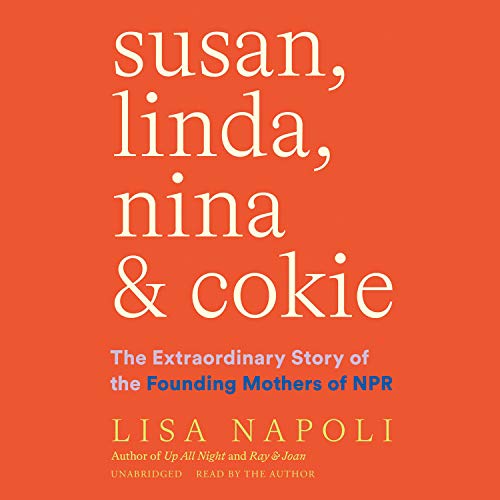
Napoli does a good job explaining the history of what many consider an American national treasure. Of course, others argue NPR is no treasure, but a bastion of liberalism designed to undermine American conservatism.
Lisa Napoli (American Author, Journalist, Broadcaster & Speaker.)
Lisa Napoli introduces four women, Susan Stamberg, Linda Wertheimer, Nina Totenberg and Cokie Roberts with “Susan, Linda Nina & Cokie”. They are known as the “founding mothers of National Public Radio”. Napoli shows NPR did not succeed solely because of these four women but their contribution to its ultimate success appears unimpeachable.
Napoli shows how these four women reinforce the truth and necessity of sexual equality. Equal rights have not been achieved in America (or anywhere in the world), but its struggle for women is exemplified by Napoli’s story.
All four women represent a movement for equal rights in America.
N.P.R. is created by the Public Broadcasting Act of 1967. The first broadcast to garner a national reputation is “All Things Considered”. It is co-hosted by Robert Conley, an American newspaper, television and radio reporter. The first program director of “All Things Considered” is Linda Wertheimer.
Linda Wertheimer (American radio journalist and Wellesley College graduate, directed the first “All Things Considered” N.P.R. program.)
The co-host of that program is Susan Stamberg.
Susan Stamberg (American Radio Journalist on N.P.R. who co-hosted “All Things Considered” with Robert Conley.)
The two most recognizable names in Napoli’s history of NPR are Nina Totenberg and Cokie Roberts because of their widely distributed commentary in television and newsprint. Totenberg’s supreme court news and Roberts political commentary gave them greater visibility and recognition by the public.
The story of these four women shows how important equal rights are in the world. One may argue something is lost while something is gained by families raised by working mothers. On the one hand, it seems disingenuous for someone from a rich family like Cokie Roberts to be pro-life (noted in Napoli’s book) because they have the wealth to pay for care of their children. On the other hand, as a former latch-key kid, one realizes every life is a matter of luck and circumstance.
The story of these four women infers every person finds their way and should live in a world where they have an equal right to choose their path.
There is no logical reason to believe women, or any race or ethnicity should not have equal rights. Some people are born in wealth, some in poverty, and some of one race, religion, or ethnicity. In a perfect world, there would be equal opportunity for every human being. Napoli shows America is not perfect, but it strives to improve. That becomes clear in Napoli’s last chapters that show how NPR nearly goes bankrupt because of financial mismanagement.
As noted earlier, women are not the only reason for NPR’s growth and success. As with all corporations, NPR has a management group that guides small corporations interested in becoming large corporations. The programing and growth success of NPR is initiated by its first President, Donald Quayle. After Quayle, Frank Mankiewicz becomes President (1973-1977). Rapid expansion of NPR outstrips prudent financial management of NPR’s ballooning operational costs. What is initially recognized as a 1.5-million-dollar deficit balloons to 6 million dollars. Mankiewicz is a political science and journalism graduate who had a great sense of promotion but a poor sense of cost control. Napoli notes Hunter Thompson, in “Fear and Loathing on the Campaign Trail ’72” described Mankiewicz as a “rumpled little man who looked like a used-car salesman”.
Frank Mankiewicz, political and media insider, died Oct.23, 2014at 90 years of age.
NPR is on the edge of bankruptcy when Douglas Bennet Jr. takes over the presidency, beginning in 1983 and ending in 1993.
Douglas J. Bennett Jr., President of NPR. Restored NPR’s financial stability and directed its further growth. Died June 10,2018, at the age of 79.
By 1983, NPR, through a donation system and prudent financial management, returns to solvency. Through a combination of dues and fees paid by member stations, underwriting from corporate sponsors, and annual grants, NPR survives.
The elephant in the room is reserved for an epilogue in Napoli’s history of NPR. Napoli explains Nina Totenberg’s investigation of Clarence Thomas as he defends himself from his boorish behavior toward Anita Hill. Every rational human being recognizes Hill is sexually harassed by Thomas, but the tenor of those times was to ignore rather than vilify misogyny. With Biden as the chair of the committee to approve his nomination, Thomas becomes a Supreme Court justice. Totenberg and Thomas become famous, and Hill becomes a footnote in history.
Anita Hill as she appeared in the Clarence Thomas hearings for appointment to the Supreme Court in October 1991.
Napoli does a good job explaining the history of what many consider an American national treasure. Of course, others argue NPR is no treasure, but a bastion of liberalism designed to undermine American conservatism.
Leadership that fails to understand and care for all citizens within its borders may last for some years but will ultimately fail. That is the point that is sorely missing in an earlier review of Ajami’s insightful history of the Middle East.
After re-listening to Ajami’s book, a major point missed in the first review is Ajami’s poignant and tragic examples of Arab despair in the Middle East.
That despair is not about freedom but about care for traditions of the Middle East’s ancient and diverse cultures. The monumental discovery of oil roiled religious and ethnic differences in the Middle East. Foreign and local self-interests interfered with the peripatetic freedom of Arab cultures. Adding to that loss of freedom, the discovery of oil changed the relationship between rulers and the ruled.
Just as America is made of many races, ethnicities, and religions, it is the responsibility of government leaders to care for all its people.
In the 21st century, the Middle East has established borders even though they may not be of their citizens own choosing. The responsibility of leaders in any country is to care for their citizens. Government leaders that have recognized borders are responsible for the care of everyone within their country. When leaders fail to care about all people within their borders, they risk civil war. America has, at times, failed to care for all its citizens in its young historical life. However, those failures have not, at least not yet, led to national dissolution.
Lebanon’s Golden Age 1950-1970
Lebanon became one of the first 21st century Middle Eastern countries to realize a diverse society can be peaceful and prosperous with leaders that know how to care for all citizens within its borders. It is known as Lebanon’s “Golden Age” which lasted from the 1950s to the mid 1970s when a civil war began. When Lebanon’s leaders lost sight of the necessity of care for everyone, including Maronite Christians, Suni and Shia Muslims, and Druze within their borders, peace and prosperity declined. The same loss of care for others by leadership is true in all countries of the world made of different races, cultures, and religions.
Ajami notes Sadat is assassinated because he was seduced by American influence. That influence displaced Sadat’s care for all Egyptian citizens.
This is only partly America’s fault. Ultimately, it is a respective nations leader’s decision on how to care for their own citizens. Ajami notes Saddam Husein is abandoned by his army when America invaded Iraq because he did not care for all his people. It is the same failure that may occur in Syria and Iran if their leaders fail to learn the importance of caring about all of their citizens, not just those who believe what their leaders’ believe.
Nizar Qabbani (Syrian diplomat, poet, writer and publisher, became Syria’s National Poet.)
What makes the principle of “care about me” is clearly implied in Nizar Qabbani’s poem quoted in Adami’s book.
“Children of the Stones”
They stunned the world
With only stones in their hands.
They lit the lanterns, and came like good omens
They resisted, exploded and were martyred
And we remained ..polar bears
Heavily armored against heat (feelings)
They fought for us until they were killed
And we sat in or cafes like spitting oysters
One of us looking for business
One.. a new million
One.. a fourth wife
And breasts polished by civilization
One looking in London for a lofty palace
One working as
One seeking vengeance in bars
One, looking for a throne, an army a position of authority
Alas, O generation of treacheries
O Generation of deals
O generation of rubbish
Abraham Lincoln saved America just as great leaders in the Middle East may or may not save their countries.
Laurel Snyder (American Author, Poet, writer of children’s books, and PBS commentator.)
“My Jasper June” is a beautifully rendered story of life by Laurel Snyder. Snyder shows different ways of coping with life’s broken parts. It takes place in Atlanta, Georgia, but it could be in Anywhere, America. It is a story of a 13-year-old girl, her friend, and her family. Every parent who has a teenage child will be entranced by Snyder’s tale.
Having lived long, older reader/listeners know every life has broken parts. We either recover from the broken parts or we lose our way.
Snyder’s novel of a family who loses a son from drowning may be at the extreme end of life’s broken parts, but every life is touched by loss and hardship.
Snyder shows how a mother, father, and daughter respond to a child’s loss in their family.
Snyder’s story explains a broken part in life is suffered individually. Being broken comes in many forms. It may be a death of a loved one, failure in work, failure as a mother-father-daughter-son, failure in intellect, failure in physical health, so on, and on. Every person is broken in their own way. Care for broken parts is often lost in a fog of grief and despair. That grief and despair only disappears with time, understanding, and action.
Snyder’s novel shows grief is ameliorated with acceptance and reworking of one’s perspective.
Snyder’s story is not just about a death in the family. There are many ways Snyder’s story resonates with its reader/listeners. The most significant is in ways of coping with broken parts of one’s life. Some run from problems, but as the boxer Joe Louis famously said, “You can run but you can’t hide.” Snyder shows healing from broken parts can only begin with being honest with yourself and those around you. Understand how you are broken and explain the broken parts to those who are important to you. Snyder shows with understanding of what is broken, plans can be made, and actions taken.
Snyder’s novel shows–only with honesty of explanation can one’s relationship with another be restored.
Laurel Snyder’s story is as interesting and satisfying in its end as in its beginning.































































 REVIEWS AND VIEWS OF LIFE