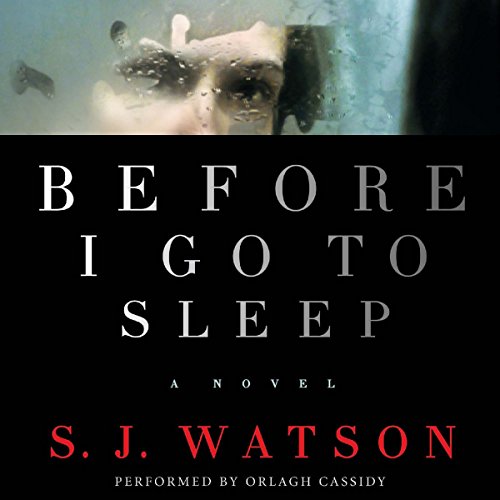
Audio-book Review
By Chet Yarbrough
(Blog:awalkingdelight)
Website: chetyarbrough.blog
Before I Go to Sleep (A Novel)
By: S. J. Watson
Narrated by: Orlagh Cassidy

S. J. Watson (English author, writer, audiologist.)
“Before I Go to Sleep” is a terrifying novel about human relationship. On the one hand, it is a story about memory and identity, trust and deception, power and control. On the other, it is about the immense harm that may come from a psychotic episode of one who has lost control of their temper and behavior. Watson writes a story about a wife, Christine, who is married to Ben. They go through a rough patch in their marriage and Christine has an affair with a man named Mike whom she meets at a coffee pub. Through several meetings and conversations, Christine is seduced and chooses to have an affair with Mike.

Relationship building.
Christine chooses to end the affair, but Mike reacts to her rejection by beating her into unconsciousness. She loses her memory from the brutalization, and in a mysterious way, Christine reconnects with Mike who takes care of her during a long and extended recovery. Her husband, Ben, seems both absent and present during Catherine’s recovery. Mike assumes the role of Ben as Christine’s husband when Ben is not present. Because of Christine’s lack of memory, she remembers neither the faces nor behaviors of what are essentially caregivers in her life. Mike takes Ben’s place by living with and caring for Christine when the real Ben is not present. Mike chooses to become Ben and changes the story of Christine’s brutalization from his attack to an automobile accident as the cause of her injuries. Mike purposefully misleads Catherine about events in her life. He re-establishes an intimate relationship with Catherine as her husband named Ben.
Threats to relationships in life.

Mike’s deception becomes threatened when an interested psychiatrist named Nash wishes to help her recover her memory. Dr. Nash is interested because of the unusual nature of Christine’s memory loss. In one sense, this heightens the mysteriousness of the author’s story because a reader/listener wonders why Nash involves himself in Christine’s life. Presumably, Nash knows something about what really happened to Christine and advises her not to say anything to Mike about his aid because he believes she is not being told the truth about what happened to her. He advises Christine to keep a secret journal of everything that happens in her life to aid recovery of her memory.

Violence against women.
Violence against women by men is a tragic truth that is magnified in patriarchal societies. Of course, women can also be violent, but their history is less often physical, and more often verbal and/or psychological abuse. The author creates a story that draws one into an engrossing thriller about male physical assault that makes a listener/reader want to find out how Christine recovers her memory of what really happened. Christine is lovingly cared for by the man who had brutalized her. This imaginative social relationship gives a tension to the writing that keeps one engrossed in Watson’s story.

Human nature.
What Watson reminds reader/listeners of is the nature and development of human beings. Relationships between people who care for each other are complicated by genetic inheritance, learned experiences, physical characteristics, and emotional stability. Celibacy, marriage, infidelity, and the experiences of education, financial security, and life make human relationships unpredictable. Watson’s story shows how unpredictable life can be.