MOST INTERESTING ESSAYS 2/5/26: THEORY & TRUTH, MEMORY & INTELLIGENCE, PSYCHIATRY, WRITING, EGYPT IN 2019, LIVE OR DIE, GARDEN OF EDEN, SOCIAL DYSFUNCTION, DEATH ROW, RIGHT & WRONG, FRANTZ FANON, TRUTHINESS, CONSPIRACY, LIBERALITY, LIFE IS LIQUID, BECOMING god-LIKE, TIPPING POINT, VANISHING WORLD, JESUS SAYS
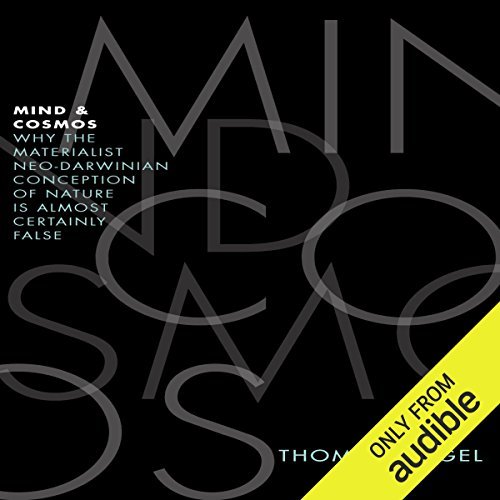
Mind and Cosmos: Why the Materialist Neo-Darwinian Conception of Nature is Almost Certainly False
By: Thomas Nagel
Narrated by: Brian Troxell
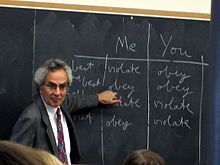
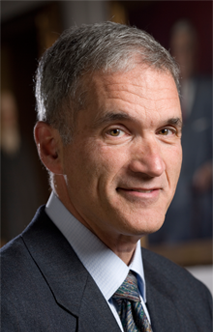
THOMAS NAGEL (AMERICAN AUTHOR, PROFESSOR NEW YORK UNIVERSITY)
Thomas Nagel believes Darwin’s theory of natural selection is wrong. Nagel suggests natural selection fails to encompass the concept of mind. Even though Nagel acknowledges biology and physics have made great strides in understanding the nature of life, he suggests the mind should be a starting point for a theory of everything. Nagel infers that science research is bogged down by a mechanistic view of nature. Nagel suggests science must discover the origin of consciousness to find the Holy Grail; i.e. an all-encompassing theory of nature.
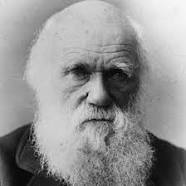
CHARLES DARWIN (1809-1882) FOUNDER OF THE THEORY OF THE ORIGIN OF SPECIES.
Nagel does not believe Darwinian evolution can explain consciousness. Nagel offers a sliver of hope to believers in God as the Creator but, as an atheist, he suggests there is a teleological (an account of a given thing’s end or purpose) explanation for consciousness that is yet to be discovered. In that discovery, he believes there will be a theory of everything that encompasses the true nature of life.
Nagel acknowledges God may be the answer but places that idea near the level of space aliens leaving seeds of life on earth. He argues that discovery of the origin of consciousness through science will be the key to open the door to a theory of everything. Like Einstein and Newton, Nagel believes humans live in a world of cause and effect. But, like Newtonian’ physics failure to encompass the universe’s laws of motion, and Einstein’s belief that God does not play with dice, Nagel believes Darwin’s concept of natural selection is, at best, incomplete. (Both Newton and Einstein failed to incorporate laws of quantum mechanics in their respective theories of nature.)
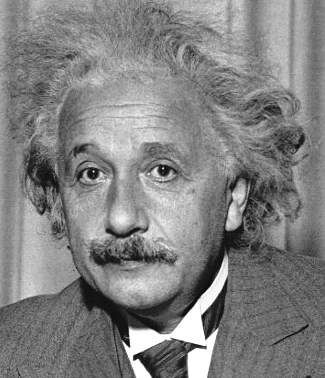
SIR ISAAC NEWTON (1642-1727)ALBERT EINSTEIN (1879-1955)
Without agreeing or disagreeing with Nagel’s idea, it seems propitious for the United States to fund and begin their decade-long effort to examine the human brain. A giant step forward was taken by President Obama but Trump’s anti-science mentality suggests Nagel’s idea will not be explored during Trump’s administration.
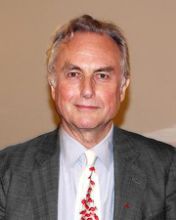
OBAMA BRAIN INITIATIVE IN 2014 ($300 MILLION DOLLAR FOR NEUROLOGICAL R&D–Trump’s anti-science mentality suggests Nagel’s idea will not be explored during Trump’s administration.)RICHARD DAWKINS (ENGLISH ETHOLOGIST AND BIOLOGIST INFERS A GENE MAY BE THE SOURCE OF CONSCIOUSNESS)
Though nearer term objectives are to understand Alzheimer’s and Parkinson’s diseases, the longer term result may be to discover the origin of consciousness. Contrary to Nagel’s contention that natural selection cannot explain consciousness, brain research may reveal consciousness rises from the same source of mysterious elemental and repetitive combinations of an immortal gene that Darwin dimly understood. Brain research offers an avenue for extension or refutation of Darwin’s theory of natural selection.
Mind and Cosmos is a tribute to Nagel’s “outside the box” philosophical’ thought. Like some who say string theory is a blind alley for a theory of everything, natural selection may be a mistaken road to the origin of life.
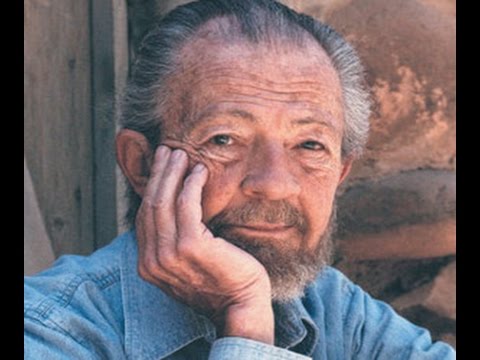
AUTHOR–David R. Hawkins died in 2012. He was 85 years old.
David R. Hawkins died in 2012. He was 85 years old. At turns, Hawkins transitioned from agnosticism to atheism to belief in God. This progression seems correlated with education and experience but ends in philosophical belief. In each transition, Hawkins uses his intellect to form a philosophy that has appeal to many in search of life’s meaning.
At times, Hawkins seems beyond reason but each step he takes offers insight to how one may live a more fulfilling life. Hawkins might be broadly characterized as a mystic. Even so, he was a formally educated, practicing physician, and psychiatrist.
Mysticism lies in Hawkins belief in human dualism, a belief dating back to Plato and adopted by many later philosophers.
Hawkins dualism is belief in a distinct separation between mind and body. More precisely for Hawkins, it is a separation between mind and brain.
The power of this cosmic mind can cure all the maladies of humankind, both physical and mental. Hawkins implies this cosmic mind can cure physical disease manifested in the body. If you cannot see; if you cannot hear; if you cannot feel, your condition can be cured by a force of will that engages the cosmic mind.
Hawkins becomes a mystic when he posits belief in a cosmic mind shared by all humanity.
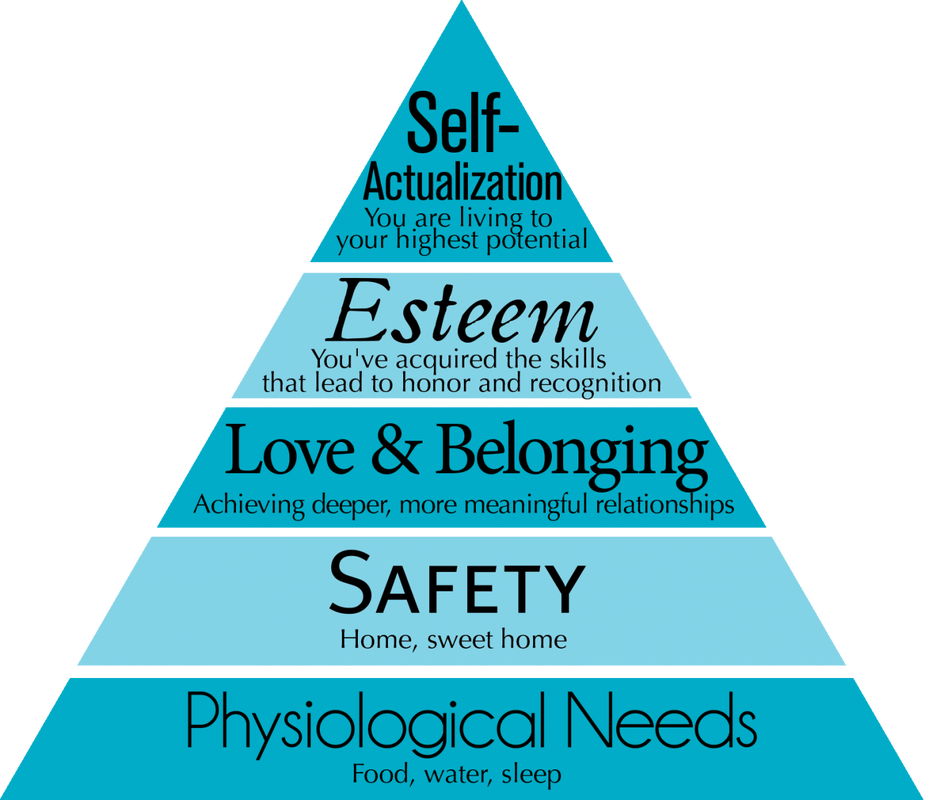
This is a point at which Hawkins loses some believers. However, before one gets to a point of rejection, Hawkins offers wise counsel on how to live life and approach a level of what Abraham Maslow labeled self-actualization.
Abraham Maslow’s self-actualization.
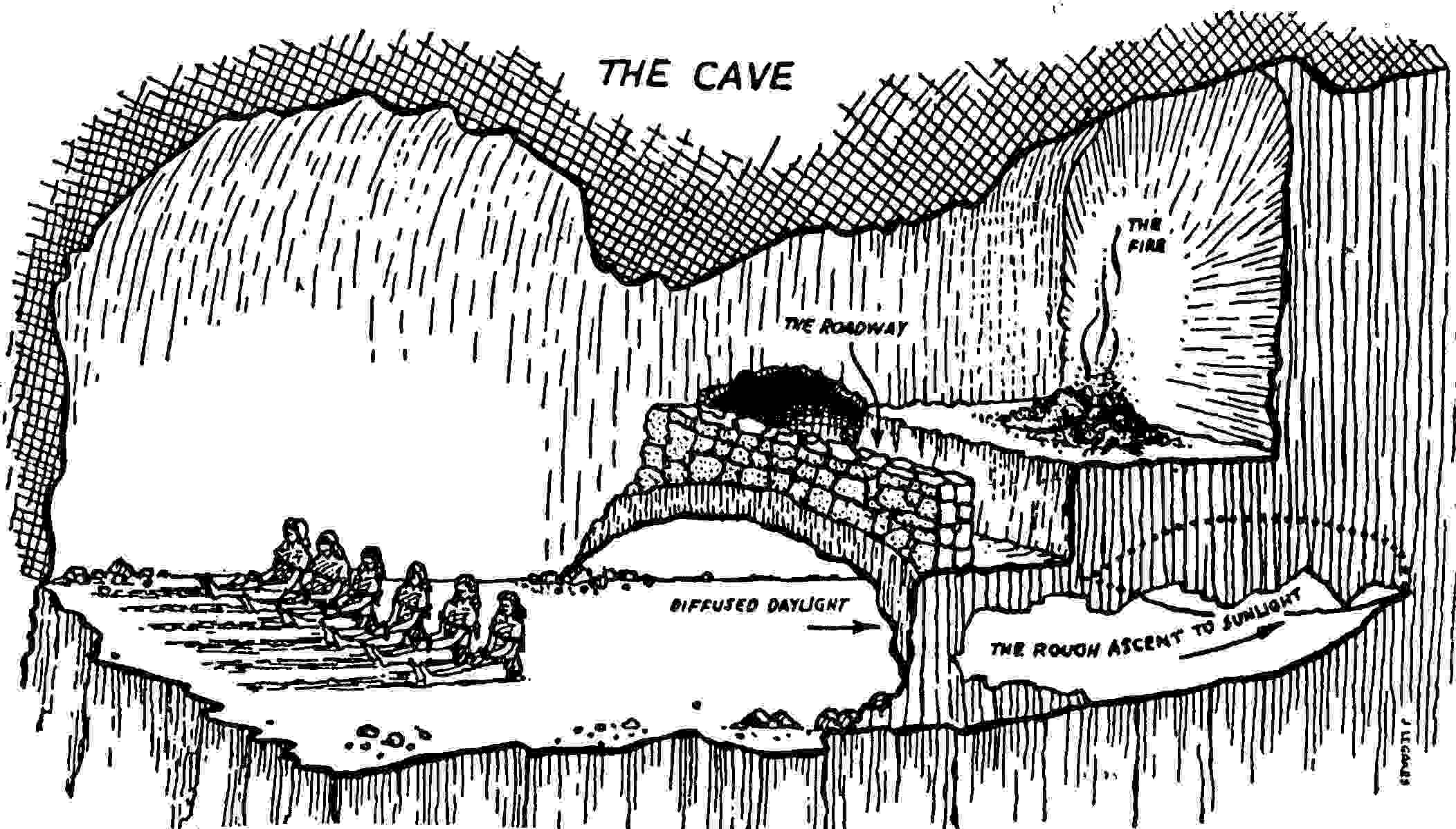
The mind gets trapped in Plato’s cave and only sees shadows of reality. Reality is obscured by what the human mind tells them. The mind’s interpretation of life’s events distorts reality. A child remembers a father’s or mother’s rebuke as an eternal judgement when the reality may have been to protect a child from harm. The shadow is created and remains with the child for the rest of his/her life.
PLATO’S CAVE (Hawkins argues that everything that happens in one’s life is because of the mind’s interpretation of the world.)
To escape the trap of Plato’s cave, Hawkins explains one must use their senses to accept the mind’s perception of reality and continually let it go until its negative power disappears.
An example would be one who gets angry over some event or action and accepts the anger; looks at it, accepts it, uses the mind to understand why there is anger, where it is coming from, and then letting it go. In the process, one finds anger has no meaning other than what one’s mind gave it.
With continual use of this process, Hawkins believes individual minds tap into a cosmic mind that shows the world as it really is; not simply as shadows on a cave wall.
There is wisdom in Hawkins’ perception of life and how one can more constructively deal with its vicissitudes. In this time of Covid 19, “Letting Go” is wise counsel for those troubled by emotional and/or physical trauma. However, the principle of a cosmic mind takes a leap of faith.
Robert Wright is saying human beings are only replicating machines; without God; without free will, and dependent upon the arbitrariness of natural selection.
The Moral Animal: Why We Are the Way We Are: The New Science of Evolutionary Psychology
By: Robert Wright
Narrated by Greg Thornton
ROBERT WRIGHT (AUTHOR, JOURNALIST)
Robert Wright emboldens Darwin’s theory of evolution in “The Moral Animal”. Wright argues that Darwin infers evolution is biological, an all-inclusive generative theory. Not only is humankind evolving physically through natural selection, it is evolving psychologically.
Wright suggests every human action in life is determined by evolution.
The import of that conclusion is that all life is pre-determined at birth by evolution. Humans, like all others in the animal kingdom have no free will. Life is physically and morally pre-determined by evolution. Unlike Richard Dawkins, Wright wastes no time creating the idea of memes (inherited social customs) as a determinant of behavior. Wright suggests every human action in life is determined by evolution. In other words, Wright is saying “the devil did not make you do it”, and God is only a false construct of human evolution.
Wright argues that all life is based on arbitrary evolutionary changes in reproduction. Physical (genetic) and psychological (motive) changes that reinforce survival are pre-determined controllers of human behavior. Wright’s experimental evidence for physical evolution is research on human remains. His evidence for psychological evolution is advance in biological science.
The discovery of endorphin, serotonin, enzyme, and other chemical interactions that effect human behavior are markers for evolutionary change in human psychological influence and control.
Biological research shows that chemical interactions in the human body effect psychological behavior, just as genetics effect physical being.
Physical and psychological correlation with evolution changes one’s view of civilization and its discontents. It is not only suggests the death of God’s omniscience and control, but the death of free choice. Humans are born programmed; programmed to be good and evil. Humans kill, cheat, lie, and steal. At the same time, humans build cities, create art, love others, and sacrifice their lives for something greater than themselves.
Without God; without free choice, where is morality, where is good will, where is value in living? Wright suggests morality evolves into normative ethics, an ethics of pleasure as long as pleasure’s pursuit does not harm others. Wright’s idea is that humans level their moral behavior using a “tit for tat” penalty/reward system designed by evolution. A precursor of this philosophy is inferred by Epicurus in 4th century BC but evolves into utilitarianism in the 19th century.
Without God; without free choice, where is morality, where is good will, where is value in living? Wright suggests morality evolves into normative ethics, an ethics of pleasure as long as pleasure’s pursuit does not harm others.
Wright argues that humankind historically demonstrated sympathy, empathy, compassion, conscience, guilt remorse, and justice. Whether evolutionary or God-given, these moral beliefs are historically exhibited by civilization.
Civilization benefits from these feelings. Wright argues that penalties for violating rules of doing no harm to others are a part of a “tit for tat” evolutionary psychology that sustains civilization. Whether this idea reflects God, evolution, or free-choice; “tit for tat” offers a morally grounded philosophy that has pragmatic and utilitarian value. It helps humans feel better or worse, depending on their side of the “tit for tat”.
Wright suggests Freud was on to something in the idea of id, ego, and superego. Wright endorses Freud’s suggestion of homo sapient need for social interaction and the libidinous nature of humanity. However, Wright believes Freud took the idea too far when suggesting humans have a death instinct or Oedipus complex. Neither a death instinct nor Oedipus complex makes sense in an evolutionary world where replication of life is the essence of being.
English ethologist, evolutionary biologist and author.
In summary, like Richard Dawkins, Wright is saying human beings are only replicating machines; without God; without free will, and dependent upon the arbitrariness of natural selection.
Books That Have Made History: Books That Can Change Your Life
Written by: Professor Rufus J. Fears
Lecture by: Professor Rufus J. Fears
J. RUFUS FEARS (1945-2012–AMERICAN HISTORIAN, LECTURER FOR THE GREAT COURSES)
Rufus Fears is an excellent story-teller. “Books That Have Made History” is a series of lectures given by Fears that dwells too much on God but delightfully entertains all who are interested in living life well. (Professor Fears died in October of 2012.)
An irony of Fears lecture series about “Books that can Change Your Life” is his most revered historical figures, Confucius, Socrates, and Jesus–never wrote a book. He thematically presents a story that argues these three figures are witnesses to the truth.
Fears believes Confucius’s, Socrates’, and Jesus’s truths have been played out and proven over centuries of writings and doings. Those writings and doings are recorded in secular and religious texts that range from Homer, to Plato, to the “Bible”, to the “Koran”, to “The Prince”, to Dietrich Bonhoeffer, Winston Churchill, and Aleksandr Solzhenitsyn. Bonhoeffer is Fears first example of one who practices what he writes about and believes.
DIETRICH BONHOEFFER (1906-1945, Bonhoeffer was arrested in 1943 and transferred to a Nazi concentration camp and executed in April 1945. Bonhoeffer is a symbol of moral and physical courage in the face of injustice.)
Dietrich Bonhoeffer insists on returning to Germany to protest Hitler’s totalitarian dictatorship. As a Lutheran pastor and theological scholar, Bonhoeffer publicly denounced Hitler’s persecution of the Jews. This is Fears jumping off point in arguing that theism as professed by secular and religious texts are “Books That Can Change Your Life”.
Justice, courage, moderation and belief that “wisdom comes from suffering” come from Homeric literature, the writings of Marcus Aurelius, Plato’s “Republic”, the King James Version of the bible, and the holy Koran. Fears emphasizes the transcendent impact of “Book of Exodus”, “Gospel of Mark”, and “Book of Job” as they become memes for moral belief.
In the “Book of Exodus” Fears notes the story of Moses and how Moses leads the Israelites out of slavery, a story repeated throughout history by the courage of moral leaders.
The “Gospel of Mark” tells the story of Jesus, the sins of man, and the redemptive powers of forgiveness, and justice.
The “Book of Job” symbolizes life as a struggle but, in struggle, one gains wisdom through faith in something greater than oneself.
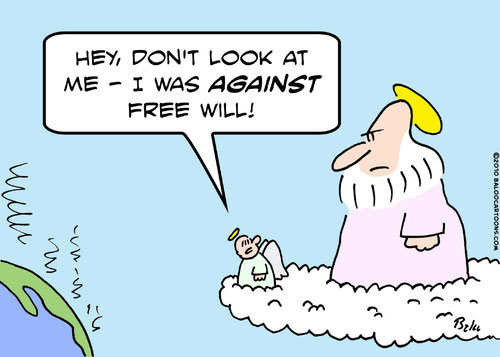
FREE WILL VS. DETERMINISM
Fears draws from many cultures to explore “Books That Have Made History. He explains how the “Bhagavad Gita” identifies truth as a divine power and how stories like Gilgamesh and Beowulf suggest life is destiny, fated when one is born, while Aeschylus believes life is a matter of free will.
Plato posits duality of being with a mortal body and immortal soul. Religious and secular writings reinforce Plato’s concept of human duality.
PLATO’S BELIEF IN DUALITY-SEPARATE ENTITIES-BODY AND SOUL
The immortal soul is terribly and beautifully rendered in Dante’s “Divine Comedy”. Dante describes torments souls endure if mortal life is lived in sin, but offers belief in redemption.
DANTE’S INFERNO Dante describes torments souls endure if mortal life is lived in sin, but offers belief in redemption.
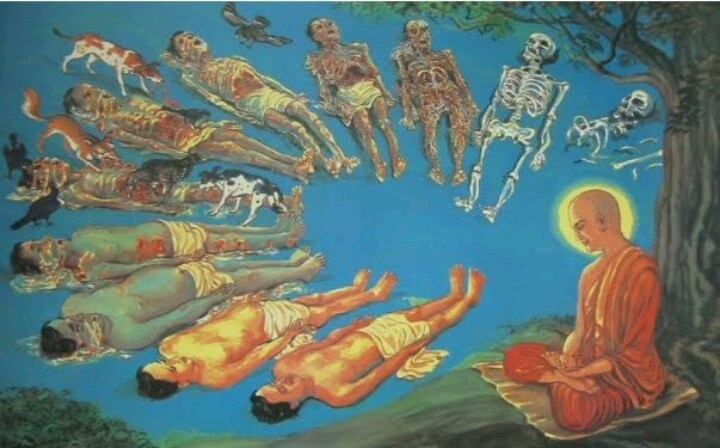
Buddhist belief in reincarnation offers a road to peace or continued struggle based on mortal life’s actions.
A Buddhist soul’s reincarnation may be as a beast if one’s former life is filled with sin. But as each new life approaches enlightenment, it is offered opportunity for peace without struggle in a spiritual life that requires no further incarnations.
Fears moves back and forth in history to identify some of the “Books That Can Change Your Life”. He jumps to the twentieth century to tell the story of Winston, the defeated hero in Orwell’s “1984”.
Fears explains how totalitarianism sucks struggle out of life but leaves dead bodies or soulless automatons in its wake. Fears notes how Stalin murders twenty million in a totalitarian system similar to what Orwell wrote about in the late 1940s.
Fears reinforces his argument by jumping back in history to tell the story of “The Prince”, Machiavelli’s masterpiece about totalitarian rule. Just as predicted in “The Prince”, Stalin lives to old age (lived to be 74, died in 1953) by following the rules set down in Machiavelli’s 16th century book. Stalin murders or imprisons any opposition to his rule. Stalin’s single-minded objective is acquisition, retention, and use of power to achieve control of society. Stalin’s objectives are achieved through a police state that controls media, arbitrarily arrests citizens, and acts without moral conscience.
ALEKSANDR SOLZHENITSYN (1918-2008, RUSSIAN NOVELIST AND ESSAYIST)
Ironically, Fears notes that Solzhenitsyn returns to Russia and vilifies capitalist America for ignoring the plight of the poor by losing sight of its own values. He recognized the inequality of communism but believed democratic capitalism offered little solution with similar consequence.
Fundamentally, one takes from Fears’ lectures that one must internalize morality and have the courage to reduce inequality regardless of its cost. This is a lesson for today in the face of an American President who has no moral compass and views wealth as the only measure of social value.
Stalin’s terror is revealed in Aleksandr Solzhenitsyn’s “The Gulag Archipelago”, published in 1973. Solzhenitsyn dies in 2008, near Moscow, at the age of 89.
This is only a smattering of the many books Fears talks about in his lectures.
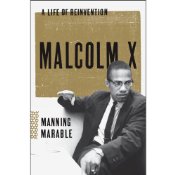
Malcolm X has been in the news lately. Some Malcom X’ papers have been found that seem to reveal a new vision of the man. However Manning Marable’s biography of Malcom X suggests the papers were never lost. Malcolm X’s life became an open book.
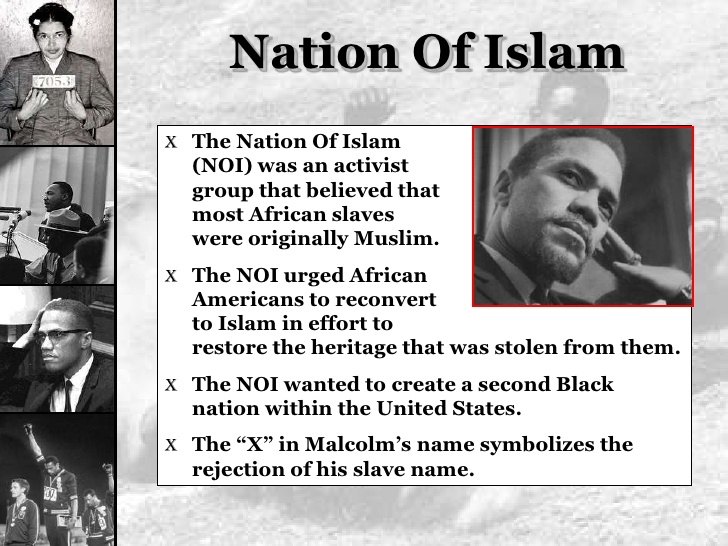
Driving to the office the other day, while waiting for a traffic light to change, a well-dressed youngish black man offers a newspaper titled “The Final Call” to anyone willing to make a donation to its publication. “The Final Call” is the official paper of the “Nation of Islam” (NOI) that covers news worthy events of black America and expounds the philosophy of Elijah Muhammad, the second leader of NOI, in the United States. Some suggest the founder of NOI, Wallace Fard Muhammad, was a con man who mysteriously disappeared in 1934.
Driving to the office the other day, while waiting for a traffic light to change, a well-dressed youngish black man offers a newspaper titled “The Final Call” to anyone willing to make a donation to its publication.
After reading a couple of “The Final Call” papers, one can understand its appeal because it offers news about black experience in America. However, every edition has one page dedicated to the philosophy of the “Nation of Islam” as a religious movement. It states blacks and whites must have separate nations with their own governments, including dedicated land for Nation of Islam’ believers, qualified by the color of their skin.
After reading a couple of “The Final Call” papers, one can understand its appeal because it offers news about black experience in America.
Acknowledging my personal skepticism about “organized religion”, the Nation of Islam has the same negative qualities of all organized religions; it makes claims of divine authority for humans that have the same failings of all humans; i.e. lust, and greed for money, power, and prestige.
“Malcolm X: A Life of Reinvention” is an educational tour de force of the good and not so good aspects of the NOI movement in the United States. Acknowledging my personal skepticism about “organized religion”, the Nation of Islam has the same negative qualities of all organized religions; it makes claims of divine authority for humans that have the same failings of all humans, i.e. lust, and greed for money, power, and prestige.
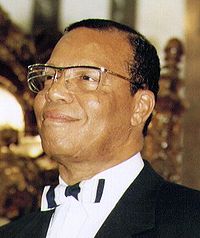
Men like Elijah Muhammad, Malcolm X, and Louis Farrakhan offer a sense of pride and belief in oneself that every human being owns when they are born. But they, like all human beings, are not perfect. One can cast stones at Elijah Muhammad’s infidelity, Malcolm X’s incitement to riot, or Louis Farrakhan’s belief that a Black person can only be free in a Black nation, but what human being has not lusted for sex or coveted money, power, and prestige?
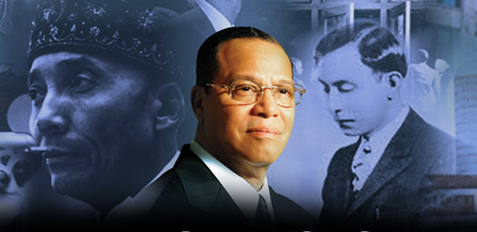
NATION OF ISLAM FOUNDER AND CURRENT LEADER (Elijah Muhammad left, and Louis Farrakhan center.) One can cast stones at Elijah Muhammad’s infidelity, Malcolm X’s incitement to riot, or Louis Farrakhan’s belief that a Black person can only be free in a Black nation but what human being has not lusted for sex or coveted money, power, and prestige?
MALCOLM X (1925-1965) Malcolm X was assassinated in 1965. In the last year of his life, he split from NOI because he did not believe America could be separate and equal for black and white Americans, i.e. he endeavored to make NOI political; not just religion-based, black organization.
Manning Marable, the author of this book, was (he died in April of 2011) a professor of African American Studies at Columbia University. This American historian, with the help of Alex Haley (author of “Roots” and “The Autobiography of Malcolm X”), has written this book to educate ignorant Americans on the NOI movement in the United States.
Though “Malcolm: A Life of Reinvention” is primarily about Malcolm Little’s (Malcolm X’s) life, it tells the history of the Nation of Islam and the rise of its current leader, Louis Farrakhan Muhammad, Sr.
Malcolm X was assassinated in 1965. In the last year of his life, he split from NOI because he did not believe America could be separate and equal for black and white Americans, i.e. he endeavored to make NOI political, not just religion-based, black organization. This was a contradiction to the Nation of Islam leader’s teaching, which may have led to his assassination. Malcolm Little’s transition from uneducated hoodlum to Malcolm X, a self-educated political activist and religious leader, is a well told story in Marable’s book.
With the election of Barack Obama, one is inclined to believe Malcolm X was on the right trail (the political power trail).
With the election of Barack Obama, one is inclined to believe Malcolm X was on the right trail (the political power trail) and Elijah Muhammad, the founder of the Nation of Islam in the United States, was mistaken because he relegated the black movement to an extreme form of religion; akin to nationalism, that has the same social baggage carried by right-wing propagandists like George Lincoln Rockwell, the American Nazi Party leader of the early 60s.
LOUIS FARRAKHAN MUHAMMAD, SR (1933-PRESENT) BECAME NOI LEADER 1978
GEORGE LINCOLN ROCKWELL (1918-1967) AMERICAN NAZI MOVEMENT LEADER
Louis Farrakhan Muhammad continues Elijah Muhammad’s message by insisting on NOI’s adherence to religious, economic, and political separation of black and white people. In a practical and bigoted sense, Rockwell and Farrakhan are allies in extremis.
Malcolm X is not a saint in this biography. He is shown to be a hoodlum in transition, but he touches the nerves and lives of black and white America. Malcolm X lives and dies in America’s effort to become a true land of the free, with equality of opportunity for all.
Malcolm X’s life story kindles fear and hope in a world populated by “all too human” human beings.
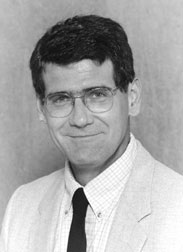
Timothy Shutt’s lectures on “The Divine Comedy” are a valuable guide to understanding Dante’s masterpiece.
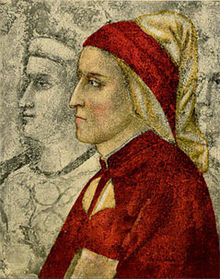
Dante Alighieri (1265-1321) Alighieri is a wealthy aristocrat that represents a major leadership faction in 13th century Italy, the “White Gulphs”, which are vying for power with the Ghibelline.
The origin of the story seems simple but its meaning is complex and revelatory. Dante Alighieri is a wealthy aristocrat that represents a major leadership faction in 13th century Italy, the “White Gulphs”, which are vying for power with the Ghibelline. Their conflict is over the integrity of the Pope in Rome when the papal enclave is to be relocated to Avignon, France. The move occurs in 1309 and lasts for 67 years.
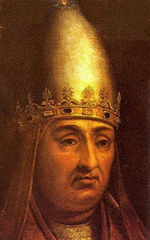
POPE BONIFACE VIII (1294-1303) Pope Boniface VIII sides with the Ghibelline to over throw the Gulphs and excommunicate Dante. Dante loses his political position, his wealth, and coincidentally, the life of the woman he loves, Beatrice.
Pope Boniface VIII sides with the Ghibelline to over throw the Gulphs and excommunicate Dante. Dante loses his political position, his wealth, and coincidentally, the life of the woman he loves, Beatrice. This crushing change in Dante’s life compels him to complete (between 1308 and 1321) what Shutt calls the greatest single piece of literature ever written.
Over a century before Martin Luther posts the “95 Theses” objecting to the church’s sale of indulgences; i.e. the sale of “the word” is a preeminent issue between the Gulphs and the Ghibelline. Pope Boniface betrays the Gulph Christian community by siding with the Ghibelline who endorse sale of indulgences.
Martin Luther (1483-1546) Over a century before Martin Luther posts the “95 Theses” objecting to the church’s sale of indulgences, the sale of “the word” is a preeminent issue between the Gulphs and the Ghibelline.
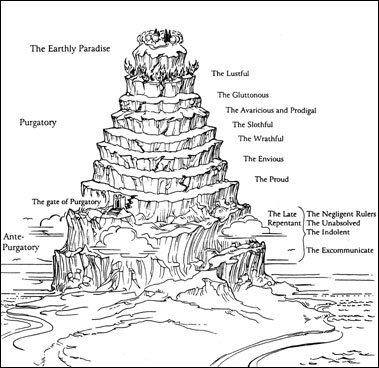
The Pope, in Dante’s view, is a traitor to his community. In the pit of Dante’s despair, he creates an image of purgatory. He writes of a hell and heaven that crystallizes human belief in the divine. Virgil becomes Dante’s guide on an imagined journey from earth, to purgatory, to hell, and back.
Dante meets the souls of the dead and explains where they are, what sin they committed, what fate awaits them, and why some sins are greater than others. Dante reveals how all sins in life may only be forgiven with the grace of God. The keys to heaven lay in asking God’s forgiveness before death.
Dante defines sin, and redemption. Human death places souls in one of three places; i.e. purgatory, hell, or heaven. All sins are not created equal but all humankind begins life in sin and can only be redeemed through good works, baptism, forgiveness, and the grace of God.
Good works alone do not protect one from hell, or purgatory. It seems all transgressions can be forgiven but only with a request for grace from God before death. Sins have a weighted hierarchy; i.e. lust as the lesser; while being a traitor to one’s community is the greatest sin of all.
Sins have a weighted hierarchy; i.e. lust as the lesser; while being a traitor to one’s community is the greatest sin of all. Hell is perdition for eternity with no surcease of pain or opportunity for escape. Heaven is a place of eternal rest, peace, and love.
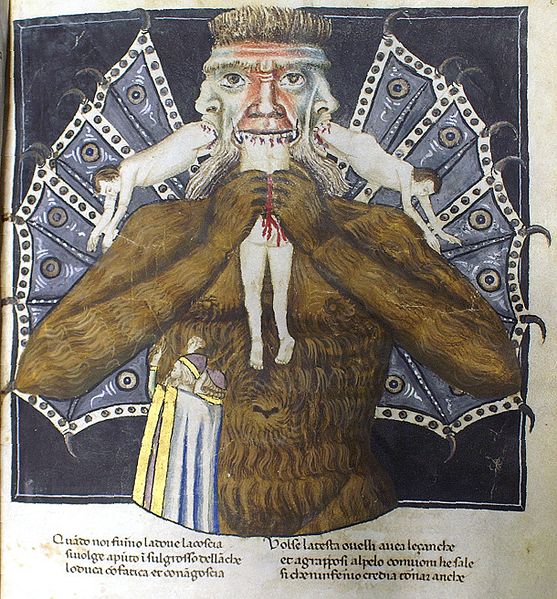
The devil does not speak but has three faces with three stuffed mouths that eternally chew on the bodies of three traitors; i.e. Brutus, Cassius, and Judas—the greatest of earth’s sinners in Dante’s poem.
Dante’s hell is sometimes hot and sometimes cold—just below the ninth and lowest circle of hell, Dante sees Lucifer who dwells in an ice-cold wasteland. The devil does not speak but has three faces with three stuffed mouths that eternally chew on the bodies of three traitors; i.e. Brutus, Cassius, and Judas—the greatest of earth’s sinners in Dante’s poem. Surprisingly, some say, Pope Boniface VIII is at the eighth circle of hell; presumably because his betrayal was the lesser of Dante’s selected and unrepentant traitors.
After passing through the final depth of hell, Virgil guides Dante back to the beginning of the journey; here, Dante meets the soul of Beatrice. Virgil leaves, and Dante accompanies Beatrice in a journey to heaven.
Dante’s heaven encompasses all that is known and unknown. Dante journeys to the planets and stars. He sees God and views an inversion of time and space. He finds earth is the center of all that is God and that nothing exists that is not created by God.
Purgatory may be a way-station to heaven for a believer that is cleansed of their sin, or it may be an eternal home for the traitor, non-believer, or pagan.
Heaven is a circle of angels that dance and spin so fast that heaven and God are everywhere at all times and in all places. There are degrees of heaven but all who are worthy will have eternal life. Degrees of heaven have no consequence to those who dwell in higher or lower levels because they are happy in their place–without envy; and with acceptance, and grace for the imperfection of their souls.
Purgatory may be a way-station to heaven for a believer that is cleansed of their sin, or it may be an eternal home for the traitor, non-believer, or pagan. Hell is perdition for eternity with no surcease of pain or opportunity for escape. Heaven is a place of eternal rest, peace, and love.
One is overwhelmed by Dante’s genius whether or not he/she is a believer. Shutt gives one a better understanding of who Dante was and why “The Divine Comedy” is a classic.
As Ronald Reagan famously said in his successful campaign against Jimmy Carter, “There you go again”.
Dave Eggers writes another book about a tragic human event. However, Eggers avoids character controversy like that which followed “Zeitoun”, a story about the Katrina disaster.
Eggers classifies “What Is the What” as a novel, without any claim to source-vetted facts or the integrity of its primary character.
SUDAN IN THE WORLD
“What Is the What” is about Sudan and its 20th century genocidal history. This is a story of the complex religious, ethnic, and moral conflict that exists in Sudan and in all nations peopled by extremes of wealth and poverty.
“What Is the What” is a tautology exemplified by a story of one who has something, knows it, and another that has nothing, and knows not why.
Valentino Achak Deng, the hero of Eggar’s story, tells of his father. Achak’s father explains the story of “What is the What”.
God offers man a choice of cows or something called the What. God asks, “Do you want the cows or the What?
But, man asks, “What is the What”? God says, “The What is for you to decide.”
Achak’s father explains that with cows a man has something; he learns how to care for something; becomes a good caretaker of a life-sustaining something, but a man who has no cows has nothing, learns nothing about caring; and only becomes a taker of other’s something.
By mixing truth with fiction, Eggers cleverly reveals the story of Sudan’s “lost boys”, refugees from the murderous regime of President Al-Bashir in Sudan. At every turn, Achak is faced with hard choices.
Omar Al-Bashir is deposed in April 2019 after almost 30 years in power.
Omar Al-Bashir, a Muslim Sudanese military leader who becomes President, releases dogs of war by condoning the rape and pillage of indigenous Sudanese by Muslim extremists. It is partly a religious war of Muslims against Christians but, more fundamentally, it is about greed.
Greed is engendered by oil reserves found in southern Sudan in 1978. Bashir strikes a match that ignites a guerrilla war. Eggers reveals the consequence of that war in the story of Achak, one of thousands of lost boys that fled Sudan when their parents were robbed, raped, and murdered. Bashir’s intent was to rid Sudan of an ethnic minority that held lands in southern Sudan.
Eggers cleverly begins his story with Achak being robbed in Atlanta, Georgia. But, this is America; not Sudan.
Robbers knock on Achak’s door with a request to use his telephone. Achak is pistol whipped, tied, and trapped in his apartment while his and his roommate’s goods are stolen.
There is much to be taken from the apartment. The robbers leave a young boy to guard Achak while they leave to get a larger vehicle to remove the stolen goods.
Achak identifies with the young boy. Achak recalls his life in Sudan and his escape to America; i.e.the land of the free; the land of opportunity. Achak sees the young boy as himself, victimized by life’s circumstances, hardened by poverty, and mired in the “What” (the takers of other’s something).
Eggers continues to juxtapose the consequence of poverty and powerlessness in Atlanta with Achak’s experience in Sudan. Achak’s roommate returns to the apartment to find Achak tied and gagged in an emptied apartment. He releases Achak.
They call the police to report the robbery and assault. An officer arrives to investigate. The police officer listens, takes brief notes, offers no hope for the victims, and leaves; i.e., just another case of poor people being victimized by poor people.
The episode reminds one of the Sudanese government’s abandonment of the “lost boys”. They are citizens governed by leaders who look to rule-of-law for the rich, and powerful; not the poor and powerless. They are leaders of the “what” (takers of other’s something); rather than leaders of all citizens.
Achak has been injured in the robbery. He goes to a hospital emergency room for help. Achak waits for nine hours to be seen by a radiologist. He presumes it is because he has no insurance but it is really because he has no power.
He has enough money to pay for treatment but without insurance, this emergency room puts Achak on a “when we can get around to it” list. The doctor who can read the radiology film is not due for another three hours; presumably when his regular work day begins. Achak waits for eleven hours and finally decides to leave. It is 3:00 am and he has to be at work at 5:30 am.
As Achak waits for the doctor he remembers his experience in Sudan. When the Muslim extremists first attack his village, many boys of his village, and surrounding villages are orphaned. These orphans have nowhere to go. By plan or circumstance the lost boys are assembled by a leader who has the outward-appearing objective of protecting the children. The reality of the “what” (takers of other’s something) raises its head when the children are recruited by this leader for the “red army” of South Sudan (aka SPLA or Sudan People’s Liberation Army).
The reality of the “what” (takers of other’s something) raises its head when Sudanese children are recruited by this leader for the “red army” of South Sudan (aka SPLA or Sudan People’s Liberation Army).
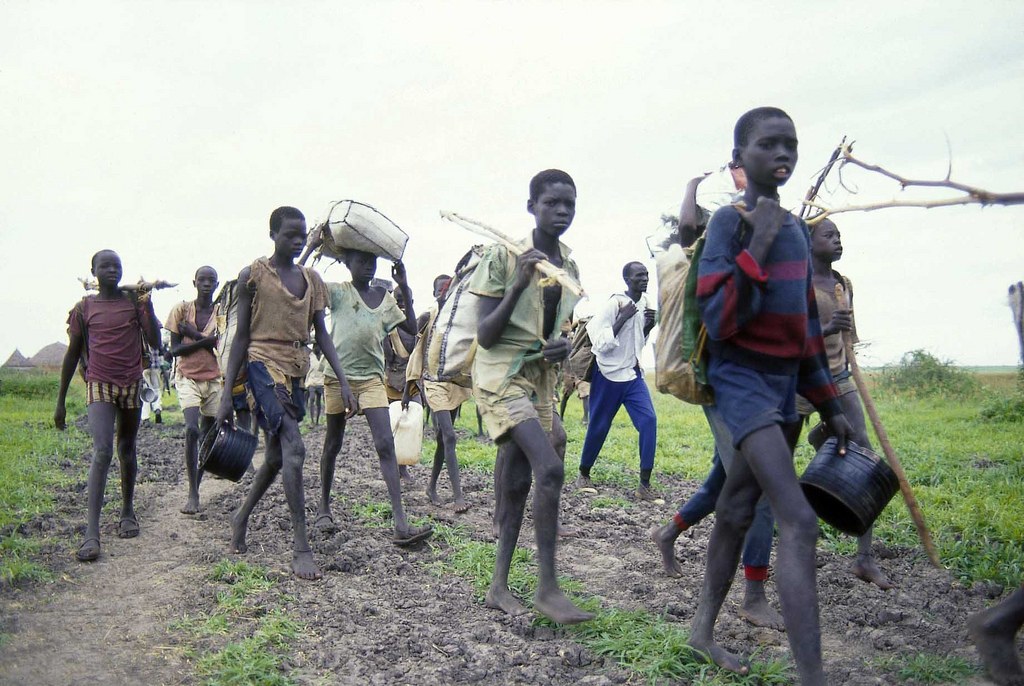
These are boys of 8, 9, 10, 11 years of age. This army-of-recruits begins a march from South Sudan to Ethiopia, a journey of over 700 miles, gathering more orphans as they travel across Sudan. Along the way, they become food for lions, and crocodiles; they are reviled as outsiders by frightened villagers and, unbeknownst to Achak and many of the boys—they are meant to become seeds of a revolution to overthrow Al-Bashir’s repressive government. These children are to be educated and trained in Ethiopia to fight for the independence of South Sudan. They are led by leaders of the “what” (takers of other’s something).
The lost boys are victims of believers in the “what”. Achak and other Sudanese’ refugees walk, run, and swim a river to arrive in Kenya, hundreds of miles south of Ethiopia. Some Sudanese were shot by Ethiopians; some were eaten by crocodiles; some died from disease and starvation.
Then, in 1991, Ethiopia’s government changes. The lost boys, a part of an estimated 20,000 Sudanese’ refugees, are forcibly ejected by the new government.
The Sudanese’ refugees arrive in Kakuma, Kenya. Achak says Kakuma is a Swahili word for “nowhere”. In 1992, it becomes home to an estimated 138,000 refugees who fled from several different warring African nations. The SPLA remains a part of the refugee camp but their recruiting activity is mitigated in this new environment. The camp is somewhat better organized but meals are limited to one per day with disease and wild animals as ever-present dangers. Education classes are supported by Kenya, Japan, and the United Nations to help refugees manage themselves and escape their past.
Achak survives these ordeals and reflects on his unhappiness in Atlanta, Georgia. Achak clearly acknowledges how much better living in America is than living in Africa. However, Achak makes the wry suggestion that Sudanese settlement in America changed his countrymen from abusers to killers of their women.
He suggests Sudanese killing of their women is because of freedom. He explains freedom exercised by women in America is missing in Sudan. In Sudan, Sudanese women would not think of doing something contrary to wishes of their husbands. Achak infers Sudanese women adapt to freedom while Sudanese men feel emasculated. The emasculation leads to deadly force in Sudanese families; a deadly force that includes murder of wives or girlfriends and suicide by male companions.
Eggers successfully and artistically reveals the tragedy of Sudan. Cultural and religious conflict in the world and American freedom are called into question. The cultural belief of parts of the Middle East, Africa, and America drive Achak from nation to nation. Achak, despite misgivings, appears to love America. But, American democracy is no utopia. Achak realizes no system of government is perfect. His ambition is to educate himself and his home country. Achak realizes education is the key to a life well lived.
What is the What? Ironically, it is more than cows; it is education that combats cultural ignorance and celebrates freedom and equal opportunity for all.
Eggers story implies America needs to re-think its policy on immigration. We are a nation of immigrants. Achak’s story highlights what is wrong with America and other parts of the world. But it also shows the “what” (“the ‘what’ that is for you to decide”) can be made better because it is more than cows.
The Pope and Mussolini: The Secret History of Pius XI and the Rise of Fascism in Europe
Written by: David I. Kertzer
Narration by: Stefan Rudnicki
DAVID KERTZER (AUTHOR, ANTHROPOLIGIST, PAUL DUPEE UNIVERSITY PROFESSOR, HISTORIAN SPECIALIZING IN ITALIAN STUDIES)
David Kertzer reminds society that organized religion is only human. Religions are subject to the goodness and sins of human nature. Whether one believes in a Supreme Being or not, actions of organized religion are freighted with human error.
Kertzer is only one of many who have exposed the perfidy of organized religion. His target, in “The Pope and Mussolini, is the Roman Catholic Church.
Cardinal Ratti becomes Pope Pius XI during the ascension of European Fascism and Nazism in the 1920s and 30s. Ratti is characterized as a pedantic, conservative, and sometimes bellicose Christian believer in the Roman Catholic Church. As a religious pedant rather than trailblazer, Pope Pius XI focuses on returning Roman Catholicism to a former time of independence and influence. No price appears too high; Pope Pius XI’s purchase price paves the way for state Fascism (total control of government and society) in Italy.
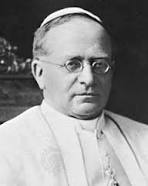
POPE PIUS XI (1857-1939) Cardinal Ratti becomes Pope Pius XI. Ratti is characterized as a pedantic, conservative, and sometimes bellicose Christian believer in the Roman Catholic Church.
Kertzer recounts early 19th century history of the Roman Catholic Church. The secular government of Italy confiscates Church lands. That taking decimated Catholic wealth, restricted Popes to the Vatican grounds, and reduced Papal control of the Holy See. More significantly, it reduced the church’s power to influence believers. After 1860 and until the Lateran Treaty negotiated between Mussolini and Pope Pius XI, the Church is treated as a part of the state of Italy, subject to secular rule.
Pope Pius XI agrees to support the government of Benito Mussolini in 1929 in return for the creation of an independent Papal State in Rome. Mussolini agrees to pay the church approximately $100 million for formally confiscated church land. Pope Pius XI acquires for himself and future Popes the right of independent rule, religious interpretation, and Catholic dictation. In return Mussolini gains the support of the Roman Catholic Church, the dissolution of Catholic political parties, and a title as II Duce, “The Leader” of Italy. At the stroke of a pen, Mussolini becomes a hero of Italian Catholics (over 90% of the population) and the totalitarian leader of Italy.
BENITO MUSSOLINI (1883-1945, PRIME MINISTER OF ITALY 1922-1943, LEADER OF NATIONAL FASCIST PARTY)
Kertzer notes there are common goals for Mussolini and Pius XI in the Lateran treaty which separates church from state. Both covet power. Both dislike the idea of a Catholic party interfering with religious or state matters. Both desire elimination of factional interference in government and religion; i.e. Mussolini’s Fascist control of government and the Pope’s control of Church doctrine.
Seeking sovereign independence of the Holy Sea. Pius XI becomes head of state of the smallest state in the world. $100 million is paid to the church for confiscated land since 1860.
Pius XI is the first Pope to broadcast on radio in the early 1920s. With the Lateran Treaty of 1929, the Papal State is created; after 58 years of refusal to become part of Italy. Prisoners in the Vatican before 1929, the Lateran Treaty required elimination of the Catholic Italian Popular Party, a political organization.
DAVID KERTZER “THE RELATIONSHIP OF BENITO MUSSOLINI AND POPE PIUS XI (1922-1939):
An unintended consequence was to reinforce Fascism in Italy. With the ascension of Pope Pius the XII, the Nazi government is solidified. The trade-off for the Roman Catholic church is an increase in international influence. At the same time, pagan worship of fascism by Church youth groups diminishes the church’s moral stature.
POPE PIUS XII (1876-1958, FORMERLY CARDINAL PACELLI) Pope Pius XI refuses to excommunicate Hitler, Mussolini gravitates to Nazism, and Pius XII ignores Nazi atrocity.
The Lateran treaty is a slippery slope for both Nazi Germany and the Roman Catholic Church. Mussolini and Pius XI are blinded by hubris and false piety.
Mussolini is shot by his countrymen, hung by his heals for destroying people’s freedom, and losing a war that compromised and betrayed his county. Pius XI compromises his morals and paves the way for Pius XII, a closet Christian anti-Semite, who becomes a Hitler’ stooge by tacitly endorsing the immorality of belief in ethnic purity.
The closing years of Pius XI’s reign is marked by a closer association with democracies as the Western nations and the Vatican found both were threatened by totalitarian regimes and ideologies of Hitler, Mussolini, and Stalin. However, with Pius XI’s death and ascension of Pope Pius XII, distinction between totalitarianism and democracy diminishes.
Pope Pius XII—Hitler’s Pope. FORMER CARDINAL PACELLI Hitler and the roman catholic church: <iframe width=”854″ height=”510″ src=”https://www.youtube.com/embed/2x_MdS88qr8″ frameborder=”0″ allowfullscreen>
***IRONIC SPEECH POPE PIUS XII SPEAKING ENGLISH TO TROOPS WHO LIBERATED ROME:
Kertzer offers insight to what really happened in Italy in the 1920s, 30s, and early 40s but the story resonates with all organized religions. Jewish isolation of Palestinians, ISIL’s attempt to resurrect the Caliphate, Muslim repression of Kurds, Taliban Muslim cruelty in Afghanistan, Chinese suppression of Uighurs, and Protestant proselytizing around the world are cut from the same flawed fabric; i.e. the flawed fabric of human interpretation of humanly manufactured texts and religions.
In the name of God, organized religion’s killings continue. If there is a God, he/she is not evil; i.e. only humans are evil.
36 Arguments for the Existence of God By Rebecca Newberger Goldstein Narrated by Stephen Pinker, Rebecca Newberger Goldstein, Oliver Wyman
REBECCA NEWBERGER GOLDSTEIN
Rebecca Goldstein writes like Stephen Pinker on steroids. (Coincidentally, Goldstein is married to Pinker.) Goldstein’s novel is not the story one expects from its title because “36 Arguments for the Existence of God” is about denial; not affirmation of existence.
STEVEN PINKER (Cognitive psychologist, linguist, and author who wrote “How the Mind Works”, “The Blank Slate”, “Angels of Our Better Nature”, etc.)
A more apt title for Goldstein’s book might be “The Science of Human Nature Denies the Existence of God”.
Goldstein has done a masterful job of creating “fear and trembling” in believers. This is “fear and trembling” in the opposite sense of Soren Kierkegaard’s meaning. Kierkegaard’s meaning awakens believers in God. Kierkegaard, an author, theologian, and philosopher, argues one should fear and tremble at the truth of God’s existence.
SOREN KIERKEGAARD 1813-1855 (Kierkegaard, an author, theologian, and philosopher, argues one should fear or tremble at the truth of God’s existence.)
On one level this is a story about a man named Cass Seltzer and his personal (sometimes romantic) relationships.
On a second level it is about human ethnocentrism. Characters, including Cass Seltzer, see through myopic eyes based on who they have become and what peer group they belong to.
On a third level “36 Arguments…” is about human nature and cultural memes (Richard Dawkins defines a cultural meme as an inherited learned behavior).
On multiple levels, Goldstein’s writing is about the elephant in the room; i.e. mankind’s belief in a Supreme Being.
The story of Cass Seltzer’s life is absorbing. The women he loves are monumentally independent, fantastically alluring, and maddeningly self-centered (as self-centered as Cass Seltzer). Each character believes what they believe with conviction that directs their lives.
The introduction of Felix Fidley exemplifies tribal ethnocentrism and conviction; i.e. a believer who says one way is the only way.
Goldstein’s introduction of Felix Fidley in her novel exemplifies tribal ethnocentrism and conviction; i.e. a believer who says one way is the only way.
Ms. Goldstein cleverly introduces the town of New Walden. Its isolated belief system reflects the heritability of good and bad genetic markers and memes that trap people in worshipful repetition. One might categorize it as a cult or, more politely, a commune.
Finally, Goldstein creates a straw man debate about God, The debate is conducted in the next to last chapter. It pits Cass Seltzer against a purportedly renowned debater. Seltzer beats his debate opponent. Believers in God lose. In the last chapter, 36 arguments for belief in God are stated and refuted.
One doubts Goldstein will change the world with her book but its rational arguments are a big add to the non-believing world’s arguments for a scientific theory of the world that explains everything about everything.
Faith is always a refuge but is it enough?
If you are a believer, “36 Arguments…” is a clear explanation of your battleground; it reveals the manifesto, strategy, and tactics of a non-believer. Faith is always a refuge but is it enough?
“36 Arguments for the Existence of God” is a fascinating piece of literature.
Asabiyyah: What Ibn Khaldun, the Islamic Father of Social Science, Can Teach Us About the World Today
Written by: Ed West
Narrated by: P. J. Ochlan
ED WEST (ENGLISH AUTHOR, JOURNALIST, BLOGGER)
IBN KHALDUN (STATUARY SYMBOL OF ISLAMIC HISTORIAN BORN 1332, DIED 1406 AT 73 YEARS OF AGE.)
Ed West offers a brief introduction to the life of an ancient historian. His name is Ibn Khaldun. Khaldun describes the first known evolutionary theory of human origin. West also notes this 14th century scholar creates the first known socio/political theory of the rise and fall of civilizations.
Khaldun explains life’s origin as a aggregation of chemicals and minerals that create organic life and, in turn, evolve into different species.
West notes that Khaldun suggests humankind evolved from monkeys. This is four centuries before Darwin’s “Origin of Species”.
Ibn Khaldun is considered by some to be the first person to write foundational theories for modern sociology, economics, and demography. West notes that Khaldun explains how nations are formed, maintained, and destroyed by sociological, economic, and demographic forces.
Khaldun offers counsel to the great conqueror, Amir Timur (aka Tammerlane), who plans to resurrect the 13th century Mongol empire built by Genghis Khan.
TIMUR AKA TAMMERLANE IS COUNCELED BY IBN KHALDUN (1336-1405–(Timur is said to have caused the death of over 17 million people in the effort.)
West suggests that Khaldun explains how Timur and other rulers, from the Roman empire to Genghis Kahn to Timur successfully conquered great areas of the known world. His explanation is “Asabiyyah” (aas-sah-bee-ah), a theory that all successful conquerors establish a social environment that creates solidarity among a group of people sharing understanding, purpose, and achievement.
West explains that Khaldun expands “Asabiyyah” to a theory of civilization’s rise and fall. Humans proliferate based on family affiliations. Religion widens family relationships to create tribes. Tribes become a congregation of different families with common beliefs. Tribes come into conflict and eventual settlements that grow into larger groups based on evolved common beliefs.
At each step of widening common interest, a leader rises from the ranks. With an accretion of social ties, villages, towns, and cities are formed with a leader at its head. As the ties that bind continue to expand, nation-states are formed.
Ibn Khaldun’s explanation is “Asabiyyah”, a theory that all successful conquerors establish a social environment that creates solidarity among a group of people through shared understanding, purpose, and achievement.
West shows that Khaldun goes on to explain how civilizations decline. First, Khaldun notes that sons and daughters of great leaders rarely exceed their parent’s leadership success. Khaldun posits the current social and scientific belief of “reversion to a mean”.
Each subsequent offspring of a great leader comes closer to the average of a civilization’s population. Leadership diminishes in succeeding generations.
Second, Khaldun suggests diminished common beliefs lessen a civilization’s cohesion. Religious differences rise, economic circumstances change, social groups fracture, family ties reassert themselves as ties that are more important than community. The example that Khaldun gives is Rome’s decline as a world power. West suggests the same may be said of the United Kingdom’s decline.
Has the American Dream become a lie few believe in? Are elected officials withdrawing to their families at the expense of nation-state’ leadership?
West’s “Asabiyyah” makes one think of America. Does today’s political conflict reflect diminishment of commonly held nation-state belief? Is the increasing gap between rich and poor destroying the social fabric of America? Is the divisiveness of former President Trump a reflection of a nation in decline?
Is nationalism dead, or are we crossing a threshold where the principals of nation-state need to be expanded to include a wider community? Is the next step reflected by the E.U. or some similar congregation of nation-states?
According to West, Khaldun believes nationalism is critically important for a civilization to remain strong. In the time of Khaldun, there was no vehicle for common beliefs except a leader’s influence over conquered nations.
Today, there is an internet. It seems the human family may once again be expanded. Nation-states may not be prepared for “space-ship-earth” but there may be an interim step.
That interim step was tried during the cold war with the U.S.S.R. It failed. The E.U. is facing challenges today.
Trump’s America is regressing from comity to disparity with emphasis on making itself great again. A leading question today is whether civilizations are competing to be in decline or ascendance?
Of course, leadership is key to any future. Right now, there seem few leaders that can make civilizations grow beyond their borders. Khaldun seems as relevant today as he was in the 4th and early 5th centuries.