MASOCHIST’S GUIDE TO AFRICA

Audio-book Review
By Chet Yarbrough
(Blog:awalkingdelight)
Website: chetyarbrough.blog

A Primate’s Memoir: A Neuroscientist’s Unconventional Life Among the Baboons

A PRIMATE'S MEMOIR

3 star symbol
Written by: Robert M. Sapolsky

Narration by: Mike Chamberlain

ROBERT SAPOLSKY (AMERICAN NEUROENDOCRINOLGIST, PROFESSOR OF BIOLOGY, NEUROSCIENCE, AND NEUROSURGERY AT STANFORD UNIVERSITY)
ROBERT SAPOLSKY (AMERICAN NEURO-ENDOCRINOLGIST, PROFESSOR OF BIOLOGY, NEUROSCIENCE, AND NEUROSURGERY AT STANFORD UNIVERSITY)

Robert Sapolsky’s “A Primates Memoir” is a masochist’s guide to Africa. (Our 2017 trip to Africa was luxurious in comparison.)  Sapolsky’s trip is what you would expect from a biological anthropologist who sojourns to Africa in the early 80s.  Sapolsky lives in a tent while studying baboons.

AFRICA JULY 2017_7695.JPG
Our stay in Africa is luxurious in comparison to Sapolsky’s in the 1980s.

At the age of 12, Sapolsky appears to know what he wants from life. In his middle-school years, he begins studying Swahili, the primary language of Southeast Africa.

Sapolsky’s career is aimed at understanding Southeast Africa.  Sapolsky’s 1984 PhD. thesis is titled “The Neuro-endocrinology of Stress and Aging”. Presumably, his trip to Africa became the basis for his academic thesis. Sapolsky’s experience in Africa is recounted in “A Primate’s Memoir”.

AFRICA JULY 2017_8101.JPG
Animal preserve in Southeast Africa

While studying Baboons, Sapolsky is exposed to the worst of African society. His memoir of those years touches on the aftermath of Africa’s colonization, Africa’s ubiquitous diseases, its governments’ instability, and its abundant and frequently poached wildlife.

SOUTHEAST AFRICA
SOUTHEAST AFRICA
Robert Mugabe (President of Zimbabwe)
Robert Mugabe (Former President of Zimbabwe)
JACOB ZUMA (FORMER PRESIDENT OF SOUTH AFRICA)

Though some of what Sapolsky writes has  changed, today’s news shows characters like Robert Mugabe, and Jacob Zuma, who are accused of victimizing the poor to enrich themselves.

Some African, and other nation-state leaders around the world, are corrupt.  Many Southeastern African bureaucrats, foreign business moguls, indigenous apartheid promoters, and wildlife exploiters still walk, drive, and bump down streets and dirt trails of this spectacular continent.

Self-interest often conflicts with general economic growth and stability.  Today’s Southeast Africa is great for tourism (one of the three biggest industries) but the poor remain poor, the rich richer, and the middle class nearly non-existent.

AFRICA JULY 2017_7219.JPG
Today’s Southeast Africa is great for tourism (one of the three biggest industries) but the poor remain poor, the rich richer, and the middle class nearly non-existent.

Sapolsky returns to Africa after marrying. He squires his science and marriage partner to revisit a baboon troop he was studying in the 1980s. At the same time, he touches on the cultural norms of a society that seems little changed from his early years in Africa.

Sapolsky recounts the melding of a tragi-comic story of an African who is mauled by a Hyena. In telling the story, he reveals the stoic acceptance of life as it is. However, each time the story of the mauling is told by different people, it changes. The change comes from a blend of truth and fiction that conforms to the tellers’ view of themselves. The essence of the story is that an African man sleeping in a tent is mauled by a Hyena looking for food.

CHANGING STORY
Re-telling of an African story changes with each narration–The change comes from a blend of truth and fiction that conforms to the tellers’ view of themselves..

When the story is told by Masai warriors hired by a company to protect its employees, the victim is saved when the Hyena is speared by the Masai warrior’s courage. When the story is told by the victim, it is a company cook who bashes the Hyena that runs away. When the story is told by a newspaper reporter, the Masai warriors were drunk and not doing their job; the cook bashed the Hyena, and the victim survived. When the story is told by the cook, the victim’s yell brings the cook to the tent; the cook grabs a rock, bashes the Hyena, and the Hyena flees. Finally, when the story is told by the company employer, the victim is not an employee, the Mesai warriors did spear the Hyena, and the employer had no responsibility for the victim.

A cultural interpretation is inferred by these many versions of the same story. Some humans indulge in alcohol to escape reality. Most humans wish to protect an idealized version of their existence. News coverage is sometimes a mix of truth and fiction to make stories more interesting than accurate.

Life is happenstance with each human dealing with its consequence as an end or beginning that either defines, or extends their understanding of life. Truth is in the eye of the beholder. Some people are willing to risk their lives for others. Private companies focus on maximizing profit and minimizing responsibility.  Life is not an either/or proposition despite Kierkegaard’s philosophy.  Humans are good and bad; no one is totally one or the other–not even America’s morally corrupt and ethically challenged leader.

BABOONS
Sapolsky shows that baboon families, like all families, are born, mature, and die within a framework of psychological and physical challenges imbued by culture. All lives face challenge but culture can ameliorate or magnify the intensity and consequence of the challenge.

The overlay of Sapolsky’s memoir is the research and reported evolution of a baboon family in Southeast Africa. He shows that baboon families, like all families, are born, mature, and die within a framework of psychological and physical challenges imbued by culture. All lives face challenge but culture can ameliorate or magnify the intensity and consequence of the challenge.

Sapolsky gives the example of Kenyan “crazy” people who are hospitalized, treated, and fed to deal with their life circumstance. In America, it seems “crazy” people are left to the street. The inference is that Kenyan “crazy” people live a less stressful life than American “crazy” people. This is a positive view of Kenyan culture but there are ample negative views in Sapolsky’s memoir. Rampant poverty, malnutrition, and abysmal medical treatment are Sapolsky’s recollected examples.

Sapolsky’s memoir shows he clearly lives an unconventional life, but it seems a life of purpose. What more is there?


KNOWLEDGE AND EXPERIENCE

Audio-book Review
By Chet Yarbrough

(Blog:awalkingdelight)
Website: chetyarbrough.blog

Brain Myths Exploded-Lessons from Neuroscience

Brain Myth's

Recorded by THE GREAT COURSES
By Indre Viskontas

Lecture

INDRE VISKONTAS

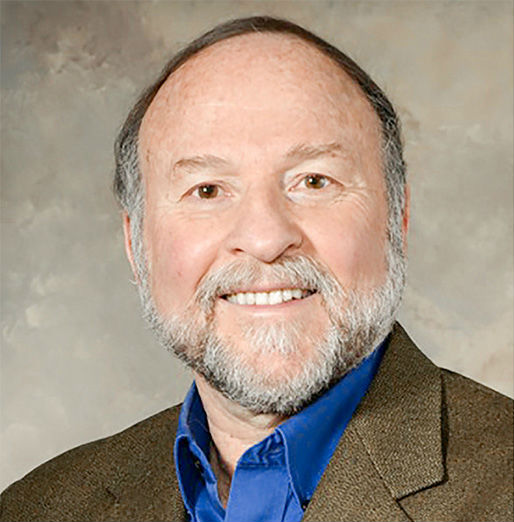
(AUTHOR) Indre Viskontas is an Adjunct Professor of Psychology at the University of San Francisco.  With a PhD in Cognitive Neuroscience, Viskontas has done research on neuro-degenerative diseases.

Indre Viskontas covers a broad area of knowledge and experience.  She offers many counter intuitive insights to human behavior and the brain in several recorded lectures.  She explains neuronal and behavioral functions of the brain.

Viskontas explains how and why the brain, though highly complex, and insightful, can be judgmentally weak, misleading, and health adverse.  A human brain can provide extraordinary insight to the nature of things and events while maintaining the body’s autonomic system.  On the other hand, that same brain can create appalling misinformation about things and events, distort the truth, and cause autonomic failures.

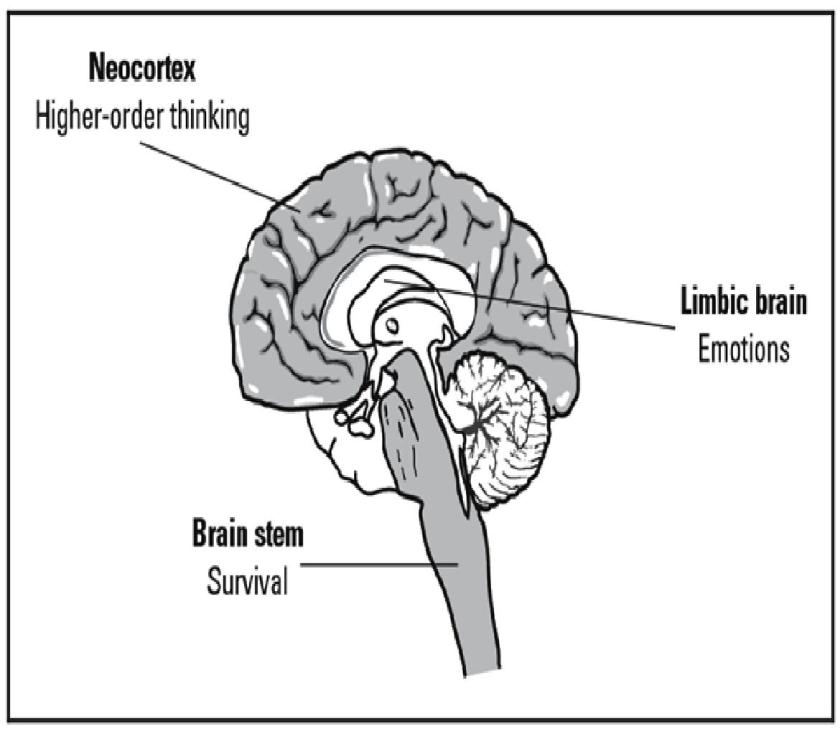
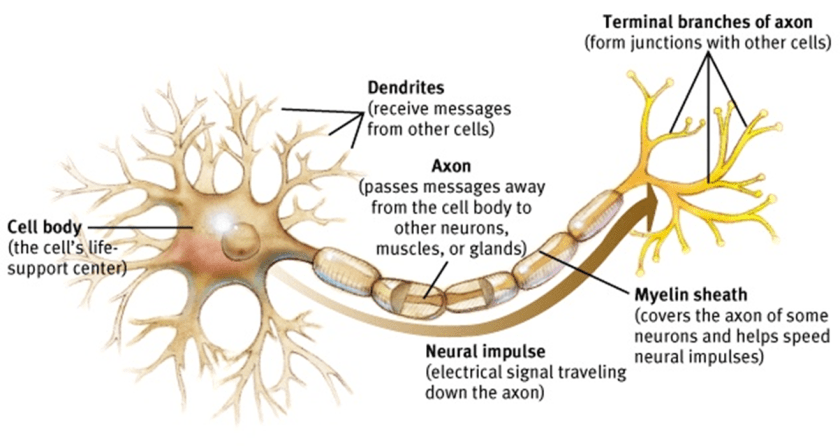
From regions of the brain to basic parts of neurons, Viskontas dissects what is known and unknown about brain function. She ties brain anatomy to our limited knowledge of consciousness and human behavior.

Viskontas is one of many myth breakers. She notes, the brain has adapted to its environment, but some functions are inefficient, misdirected, and self-destructive. Brain evolution is a lucky draw informed by circumstances.

The brain is not perfect. She notes that the brain is a part of an evolutionary cycle.  Every cycle of life has the chance of improving or destroying some aspect of the brain’s design.  So far, the brain has adequately adapted to its environment, but some functions are inefficient, misdirected, and self-destructive.  Brain evolution is a matter of luck and circumstance.

Giant dinosaurs adapted in their generation, but most dinosaur species died because their physical evolution could not keep pace with environmental change.  Viskontas notes the human species follows the same evolutionary path.
Luck comes from adaptation to an evolutionary change.  Circumstance comes from the environment that compels change.  Only time will tell whether environmental change becomes too great for human adaptation.

Viskontas shows the perfect brain is a myth because evolution is an arbitrary and imperfect process.  Evolution can produce human gene improvements or replicate destructive gene changes.

Intelligence

Viskontas notes current measurement of intelligence slightly correlates with brain size.  But, size matters little. 

She notes that Einstein’s brain is found to be average in size.  However, it is noted to have some differences; i.e. like the number of glia cells (chemical “information transmission” cells) which were more numerous in Einstein than the average brain.  Also, Einstein’s brain had more interconnection between brain segments than the average brain.  Bigger is not necessarily better.

The Brain Chemistry Effect

Viskontas suggests chemical imbalance as a singular explanation for psychosis is misleading.

The many connections between brain segments suggest chemical imbalance is an oversimplification of psychiatric dysfunction. Viskontas acknowledges the success of drugs to mitigate aberrant behavior but she notes that neurotransmitters affected by a chemical imbalance are only one part of a healthy functioning brain.  Chemicals in the brain are always in flux.  Drug therapy is a scatter shot solution rather than precise treatment for negative psychological symptoms.

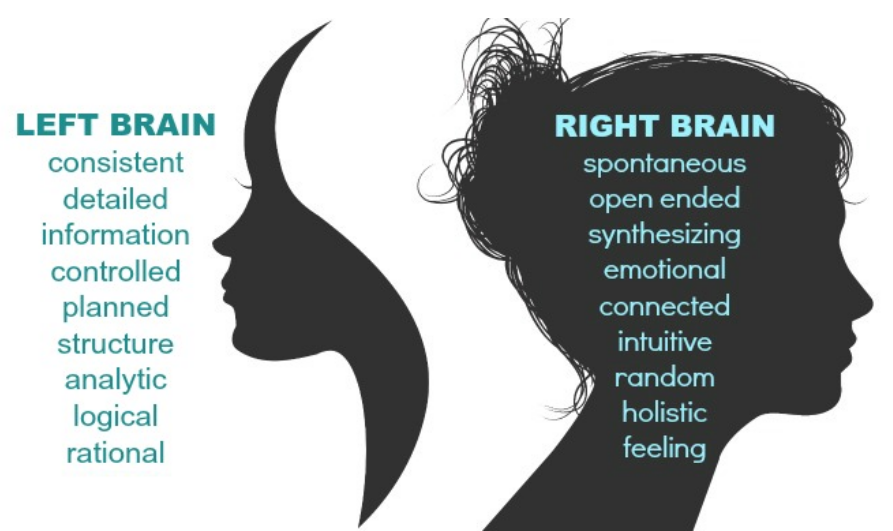
Another often-believed myth is that people who are left-brained are logical; while people who are right-brained are creative. 

LEFT BRAIN-RIGHT BRAIN

Viskontas shows that both sides of the brain are activated when creativity or logic are drawn upon. The interconnections and malleability of brain hemispheres suggest logic and creativity come from both hemispheres and can (to a degree) come from one, if the other is damaged.

BRAIN DIFFERENCE MEN AND WOMEN

Viskontas notes that men’s and women’s brains are different. 

However, Viskontas concludes similarities far outweigh differences.  She notes double-blind experiments that show women have better memories than men when emotion is involved.  The region of the brain called the amygdala is larger for men than women.  Viskontas suggests the different sizes may account for differences in sexual behavior.

Parenthetically, she notes there is a medication bias in treatment for men and women because most experiments use men as the subject of investigation for drug trials.  Women are underrepresented in clinical trials.

EYE WITNESS IDENTIFICATION ERRORS

Viskontas and other writers have exploded myths of accurate human memory. 

Human brains are not movie projectors.  Human brains recall memories as stories; not discrete facts.  Memories are recreations of what one has experienced (both in the distant past, near past, and present).  Facts are often added, and stories are embellished when memories are recalled.  The accuracy of memories is highly influenced by an individual’s past and present experience.

Viskontas goes on to explain that life experience creates conscious and sub-conscious bias.  When past experience is added to the memory of an event, the brain recalls memory for continuity, more than truth; i.e., facts change, and incidents are misrepresented, or misunderstood.  Recalled events are biased by experience.

THE FIVE SENSES

We have five senses, but they focus on details that meld into a story that makes logical sense to the person recalling a memory. 

Viskontas notes that our senses mislead us because we do not see everything.  Like historians, we only report the facts we choose to include.  There are always more facts about historical events than can be reported by the most diligent historians.  Some facts are left out that change the accuracy of history.  That is why Ulysses Grant is an incompetent President to some and a great President to others.

HEALTHY OLD AGE

Viskontas sites experiments that show neurons continue to grow throughout one’s life if they stay engaged with society and work on learning new things. Those over 50 need to get out of their cars and walk to the store or the local coffee shop whenever possible or practical.  Stand more; sit less.

Then there is the myth of old age and neuronal decay that begins after 50.  Viskontas sites experiments that show neurons continue to grow throughout one’s life if they stay engaged with society and work on learning new things.  An important caveat is that neuronal growth is improved with exercise.  So those over 50 need to get out of their cars and walk to the store or the local coffee shop whenever possible or practical.  Stand more; sit less.

There are more brain myths exploded by Viskontas, but a final example is the myth that we use only 10% of our brain.  All parts of our brain are interconnected.  Not all parts are necessarily engaged at once, but interconnections suggests 100% of our brain is used at one time or another.

Viskontas’s knowledge and experience suggest memory holds some truth but not all the truth.

PRACTICAL PHYSICS

Audio-book Review
By Chet Yarbrough

(Blog:awalkingdelight)
Website: chetyarbrough.blog

Physics for Future Presidents: The Science Behind the Headlines

PHYSICS FOR FUTURE PRESIDENTS

4 Star Symbol

By Richard A. Muller

Narrated by Peter Larkin

RICHARD A. MULLER (PROFESSOR OF PHYSICS @ UNIVERSITY OF CALIFNIA, BERKELEY)
RICHARD A. MULLER (PROFESSOR OF PHYSICS @ UNIVERSITY OF CALIFORNIA, BERKELEY)

“Physics for Future Presidents” suggests understanding of practical physics is critical for future Presidents.  Richard Muller’s argument is that Presidents need to know some physics to comprehend the utility of everything from energy, to manned space flight, to satellite surveillance, to terrorist use of nuclear bombs.  Muller is not arguing that future Presidents need to understand the science of physics but the practical limitations of manned space flight, carbon-based energy, satellite intelligence, and weapons of mass destruction (WMD).

Muller begins his book with the modern world’s effort to understand and contain terrorism.  Muller’s book seems apropos based on President Trump’s effort to limit science research, discount CIA and FBI intelligence, and denuclearize North Korea.

TRUMP AND KIM MEETING
President Trump’s effort to limit science research, discount CIA and FBI intelligence, and denuclearize North Korea.

Muller explores the possibility of a terrorist organization building a nuclear bomb and detonating it in the middle of an American City.  He looks at the possibility from three perspectives.  One, difficulty in acquiring fissionable material; two, difficulty of building a nuclear device and three, difficulty in delivering a weapon of mass destruction to a desired location.

Surprisingly, Miller suggests a greater danger is terrorist attack by private planes, loaded with highly flammable fuel.  Or, for a terrorist organization to use chemical and biological agents that directly or indirectly infect population centers.

CHEMICAL ATTACKS
Surprisingly, Miller suggests a greater danger is terrorist attack by private planes, loaded with highly flammable fuel.  Or, for a terrorist organization to use chemical and/or biological agents that directly or indirectly infect population centers.

9.11.01TRADE CENTER ATTACK
Muller reasons a future terrorist attack (with 1000s killed) will be like 9/11, but with a private plane filled with fuel (not a nuclear bomb) flown into a major entertainment event.

Miller believes practical physics will determine the next world terrorist attack.  Miller argues that the simplest plan will have the greatest impact.  (Of course, there is also the implied psychology of terrorism.)  Muller reasons a future terrorist attack (with 1000s killed) will be like 9/11, but with a private plane filled with fuel (not a nuclear bomb) flown into a major entertainment event.

There are a number of counter-intuitive insights in “Physics for Future Presidents”.  Muller believes manned space flight is a waste of money.  He argues that most of the greatest innovations in science have come from unmanned space flight.  Weather satellites, spy satellites, entertainment satellites, global positioning satellites, drones, exploration of planets and the solar system have all come from unmanned space flight.  Muller believes there is a time for manned space flight but not now.  It is too dangerous and produces little new-science.  He implies America should primarily invest in unmanned space flight.

CURIOSITY--FIRST -SELFIE- IN 2015 ON MARS
CURIOSITY–FIRST -SELFIE- IN 2015 ON MARS (Muller believes there is a time for manned space flight but not now.  It is too dangerous and produces little new-science.  He implies America should primarily invest in unmanned space flight.)

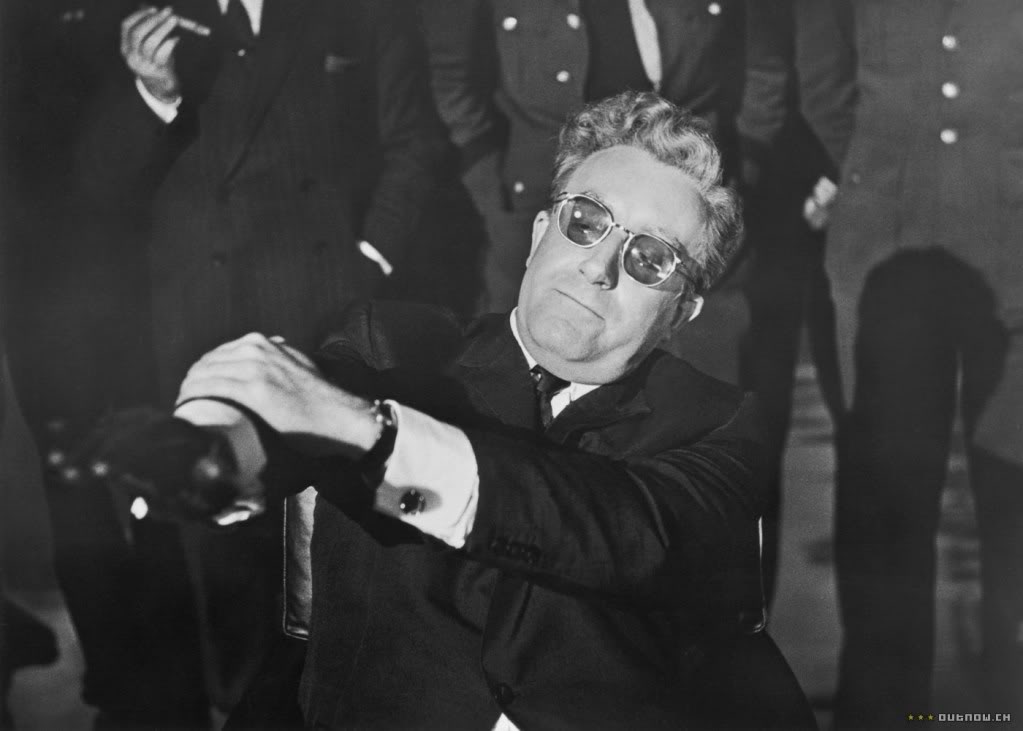
DR. STRANGLOVE
Dr. Strangelove- Richard Muller, at times, seems to stand at the side of fictional character Dr. Strangelove.(Movie titled “How I Learned to Stop Worrying and Love the Bomb)

Richard Muller, at times, seems to stand at the side of fictional character Dr. Strangelove.  He describes historical information about radiation poisoning from nuclear bombs and accidents.  Muller notes that statistical deaths from war (the Nagasaki and Hiroshima bombing), Three Mile Island, and Chernobyl show that deaths from nuclear radiation is small in comparison to terrorist events initiated by simple, practical, and conventional physics.

Muller argues that nuclear power can be used as a fail-safe source of energy by using the latest technology for nuclear power plants.  The latest technology (actually first used in the 1960s by Germany) is a pebble bed reactor (PBR).  It is considered safe because it does not rely on water cooling of the nuclear core in the event of an accident.

PEBBLE BED REACTOR IN WEST GERMANY
PEBBLE BED REACTOR IN WEST GERMANY – Muller argues that nuclear power can be used as a fail-safe source of energy by using the latest technology for nuclear power plants.  The latest technology (actually first used in the 1960s by Germany) is a pebble bed reactor (PBR).  It is considered safe because it does not rely on water cooling of the nuclear core in the event of an accident.

YUCCA MOUNTAIN NUCLEAR WASTE DEPOSITORY NEAR LAS VEGAS, NEVADA
YUCCA MOUNTAIN NUCLEAR WASTE DEPOSITORY NEAR LAS VEGAS, NEVADA (Richard Muller believes Yucca Mountain is an adequately safe repository for nuclear waste that should be reopened.)

This is unlikely to be a popular book in Las Vegas, Nevada. Among other controversial subjects, Richard Muller believes Yucca Mountain is an adequately safe repository for nuclear waste that should be reopened.  His argument largely rests on the science of probability.  Muller infers that natural radiation in Colorado is as toxic as the probability of radiation leaks from stored nuclear waste at Yucca Mountain.

Muller argues that revision of nuclear construction standards in the United States would make construction of pebble bed reactors less expensive than conventional American nuclear facilities.  The added benefit is a safer energy source that reduces the need for carbon based energy supplies that increase global warming.  A large part of Muller’s argument for the use of more nuclear power is based on the generally accepted scientific belief that global warming exists and is most likely caused by human activity.

GLOBAL WARMING
A large part of Muller’s argument for the use of more nuclear power is based on the generally accepted scientific belief that global warming exists and is most likely caused by human activity.

Muller spends a great deal of time explaining that global warming is not a 100% certainty but, in probability terms, is highly likely and largely related to carbon-based energy use.  He notes that use of carbon-based energy is likely to increase with China and India’s continued economic growth.  Muller creates a sense of urgency in creating other sources of energy.  He strongly urges increasing motor vehicle mileage requirements but questions the viability of battery operated vehicles.  Muller believes the costs of battery replacement will drive consumers back to carbon-based energy models.

ELON MUSK ROLLS THE DICE AGAIN BY PURCHASING SOLAR CITY, THE LARGEST SOLAR CONVERSION COMPANY IN THE U.S.
ELON MUSK ROLLS THE DICE AGAIN BY PURCHASING SOLAR CITY, THE LARGEST SOLAR CONVERSION COMPANY IN THE U.S.–Muller sees potential in solar and wind energy production but believes conservation will do more short-term good than any new source of energy.

Muller sees potential in solar and wind energy production but believes conservation will do more short-term good than any new source of energy.  He clearly sees that the cost of energy is the primary driver of technological innovation.  As long as oil and coal are less expensive than other sources of energy, they will remain the primary source of power.  With that realization, Muller insists on technological innovation in conservation because it motivates the consumer to become a part of the energy-crises’.  Consumer’ participation is guaranteed by savings received from use of more energy-efficient devices.

The key to the world’s future is energy.  Muller believes the short-term solution is conservation.  He believes long-term solution revolves around nuclear fission and fusion.  Fusion is a longer term prospect but offers an infinite source of energy.  Fission is shown to work now, with probabilities of failure that can be improved upon.

This circles back to the critical importance of storing nuclear waste.  Muller notes that the fragmented system of nuclear storage in the United States is a bigger risk to the environment than having it located in a limited number of specifically designed storage locations.  Yucca Mountain fits Muller’s criteria for safe storage of nuclear waste.  He acknowledges that nuclear accidents may occur but the probability of an accident at Yucca Mountain is less than the probability of accident at other relatively unsecured and fragmented sites.

PROBABILITYThe physics that Muller insists Presidents must understand is that scientific proof is a matter of probability; not absolute certainty.  Muller warns Presidents to not be misled by cherry-picking fact finders that have objectives that are not related to practical physics.  Even if there is no certainty in science, knowing probabilities offer a basis for informed decision.
 

OTHER gods

Audio-book Review
By Chet Yarbrough

(Blog:awalkingdelight)
Website: chetyarbrough.blog

The Attention Merchantsthe attention merchants

By Tim Wu

Narrated by Marc Cashman

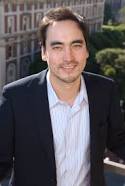
TIM WU (AUTHOR, PROFESSOR OF LAW AT COLUMBIA )

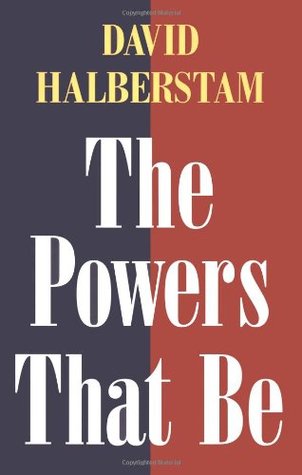
Not since “The Powers That Be” (published in 1979) has there been a better history of the media industry.  Tim Wu is heir to David Halberstam.  First there were newspapers, then radio, then television, and now the world-wide web.  Wu offers a modern vision of media’s impact on society in “The Attention Merchants”.

Gone are many of the famed “…Attention Merchants” like Bill Bernbach, Neil French, and David Ogilvy.   They were the early influencers; i.e. the copy writers, and agents that created consumer advertising for Sulzberger, Chandler, Hutchins, Paley, and Luce.  They worked for founders of some of the most influential newspaper, radio, television and magazine outlets of the 19th and 20th centuries. They were the “gods” of a newly formed consumer society. Consumers read, watched, and listened to pitches for everything from votes to vitamins to the latest model Cadillac.  Wu shows pitches remain the same, but methods have changed.

DAVID HALBERSTAM'S SEMINAL WORK ON THE MEDIA INDUSTRY (PUBLISHED 1979)
DAVID HALBERSTAM’S SEMINAL WORK ON THE MEDIA INDUSTRY (PUBLISHED 1979)  Gone are many of the famed “…Attention Merchants” like Bill Bernbach, Neil French, and David Ogilvy.  They were the “gods” of a newly formed consumer society. Consumers read, watched, and listened to pitches for everything from votes to vitamins to the latest model Cadillac.

Today’s social, political, and economic consumers are recorded, manipulated, spindled, and controlled by “other gods”.  Modern “…Attention Merchants” are internet entrepreneurs like Amazon’s Jeff Bezos, Google’s Larry Page & Sergey Brin, Microsoft’s Bill Gates & today’s CEO Satya Nadella, Apple’s (now deceased) CEO, Steve Jobs & today’s CEO Tim Cook, Facebook’s Mark Zuckerberg, and Netflix’s Reed Hastings. Television, newspapers, radio, and magazines still capture our attention but not like past “…Attention Merchants”.  Old media are still with us, but computer screens and mobile phones have joined the mix.  Wu shows how the public’s decisions have become less volitional, more manipulated, and addictive as www. sites came into being and technology matured.

INTERNET LOGO
Old media is still with us, but computer screens and mobile phones have joined the mix.  Wu shows how the public’s decisions have become less volitional, more manipulated, and addictive when www. came into being and technology matured.

MARLBORO MAN
Neither smoking or “free” access to information is without harm or cost.  The Marlborough man is dead, and “free” internet information is not free.

Wu recounts how advertising became a critical part of early media’s power, influence, and profit.  Just as advertisers promoted false benefits of smoking in the 20th, internet advertisers promote false benefits of free access to information and entertainment in the 21st century.  Neither smoking or “free” access to information is without harm or cost.  The Marlborough man is dead, and “free” internet information is not free.  “Fake news” has always been in the “…Attention Merchant’s” tool box but Wu shows that a new dimension is created with the rise of “free” information technology.

The internet not only informs the public, i.e., it distracts society, distorts facts, and reveals intimate details of personal lives. Internet users become products, rather than just consumers. Information gathered on consumers is provided to government and sold to private enterprise.

More ominous than media distortion by capitalist manipulators is government-controlled media that distorts truth to justify the Ukraine war.
ukraine bombing

Personal information is used by governments, and private sector businesses to achieve their own purposes.  Power and control become centered on organizations rather than individuals.  Data mining is a new industry. Decisions are less determined by personal being and private belief.  Today, decisions are shaped by a society “under the influence” of government, and private sector’s “…Attention Merchants”.

data mining
Personal information is used by governments, and private sector businesses to achieve their own purposes.  Power and control become centered on organizations rather than individuals.  Data mining is a new industry.

facebook
In this Facebook age, there are few secrets about what one likes and what one is willing to pay for product.

Wu notes how today’s “…Attention Merchants” are different.  Advertisers have always tried to influence individuals.  Advertisers have always told lies or distorted truth to get buyers to buy and believe.  Wu explains the difference.  Now personal information is acquired with confused consent by users of the internet. In this Facebook age, there are few secrets about what one likes and what one is willing to pay for product.

Customers are no longer just consumers.  Wu notes customers have become products.  Customers are sold to the highest bidder without customer awareness or compensation.  Today’s “…Attention Merchants” argue that sales pitches are customized to what the customer wants.  Businesses rationalize access as the customer’s compensation.  Government rationalizes access as a way of staying in touch and understanding the public.  Wu implies both arguments are willful misrepresentations.

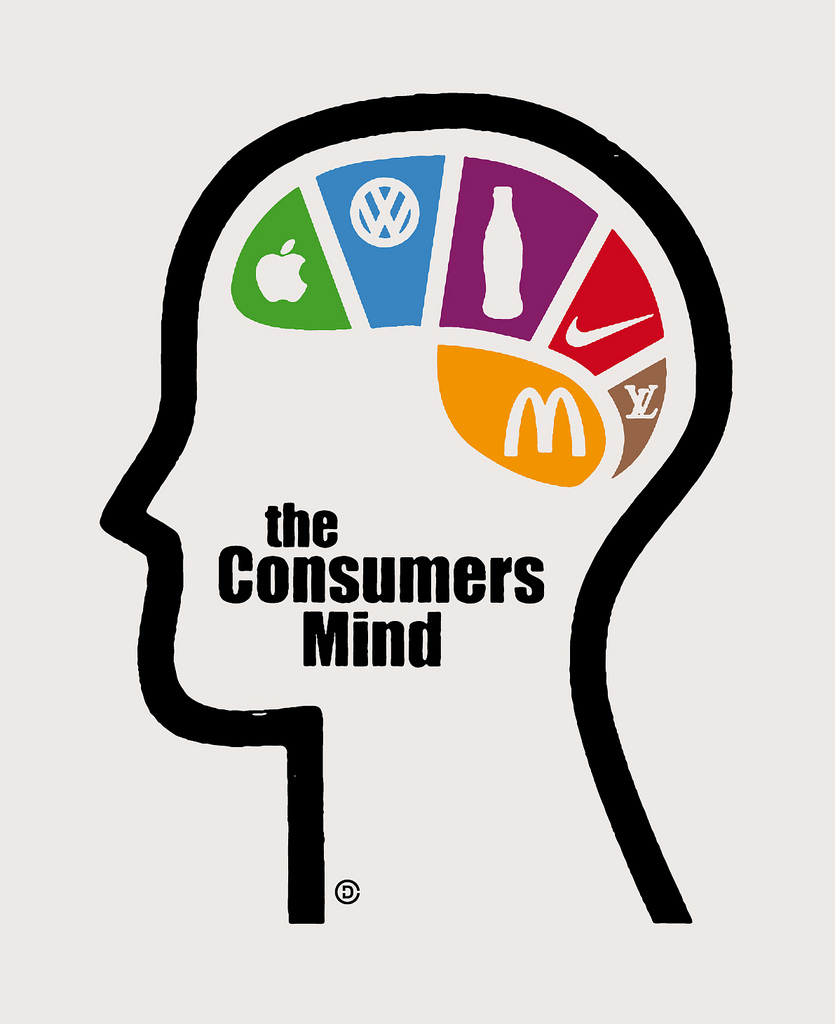
consumer's mind
Consumers have less control over their decisions because “…Attention Merchants” use intimate personal information to seduce conscious and unconscious motivation.

There is a cost to voters and consumers because personal information is being sold without pay for product that enriches “…Attention Merchants”, private enterprise, and government.  The product delivered is the personal information that reveals who we are, what we think, what we desire, and what we are willing to pay.  Consumers have less control over their decisions because “…Attention Merchants” use intimate personal information to seduce conscious and unconscious motivation.

The sinister aspect of Wu’s explanation is that “…Attention Merchants” now have tools that exaggerate the impact of “fake news”.  By knowing intimate beliefs of consumers, “…Attention Merchants” are able to create algorithms that funnel “fake news” that feeds what consumer’s may either accurately or inaccurately believe.  Prejudices and discrimination are reinforced.  The worst characteristics of political populism are reinforced.  “The Attention Merchants” expand control of individual thought so that the course of democratic elections, government policies, or business successes can be unduly influenced by false or misleading information.

wikipedia
The positive aspect of the internet is shown by sites created without advertising input; e.g. Wikipedia and some blogosphere creations abjure advertising as a source of compensation.

Wu notes there are glimmers of hope with a growing recognition of the impact of the internet. The internet broadens human understanding of the world. The positive aspect of the internet is shown by sites created without advertising input; e.g. Wikipedia and some blogosphere creations abjure advertising as a source of compensation.

Exposure of blind spots in acquisition of personal data are currently being exposed in congressional hearings with Facebook CEO, Mark Zuckerberg.  At the same time, Russian interference in American elections is being more seriously investigated.

As Marie Currie is to have said— “Nothing in life is to be feared.  It is only to be understood.  Now is the time to understand more, so that we may fear less.”  Of course, one might remember, she died from the radiation she received from her discoveries.  (Ironically, Marie Currie’s death was found not to be from radiation exposure.  In autopsy, her body radiation levels were within normal range.)

GOD’S EXISTENCE

Audio-book Review
By Chet Yarbrough

(Blog:awalkingdelight)
Website: chetyarbrough.blog

36 Arguments for the Existence of God36 Arguments for the Existence of God
By Rebecca Newberger Goldstein
Narrated by Stephen Pinker, Rebecca Newberger Goldstein, Oliver Wyman

REBECCA NEWBERGER GOLDSTEIN

Rebecca Goldstein writes like Stephen Pinker on steroids.  (Coincidentally,  Goldstein is married to Pinker.)  Goldstein’s novel is not the story one expects from its title because “36 Arguments for the Existence of God” is about denial; not affirmation of existence.

STEVEN PINKER (Cognitive psychologist, linguist, and author)
STEVEN PINKER (Cognitive psychologist, linguist, and author who wrote “How the Mind Works”, “The Blank Slate”, “Angels of Our Better Nature”, etc.)

A more apt title for Goldstein’s book might be “The Science of Human Nature Denies the Existence of God”.

Goldstein has done a masterful job of creating “fear and trembling” in believers.  This is “fear and trembling” in the opposite sense of Soren Kierkegaard’s meaning. Kierkegaard’s meaning awakens believers in God.  Kierkegaard, an author, theologian, and philosopher, argues one should fear and tremble at the truth of God’s existence.

SOREN KIERKEGAARD (1813-1855, DANISH PHILOSOPHER, AUTHOR, THEOLOGIAN)
SOREN KIERKEGAARD 1813-1855 (Kierkegaard, an author, theologian, and philosopher, argues one should fear or tremble at the truth of God’s existence.)

On one level this is a story about a man named Cass Seltzer and his personal (sometimes romantic) relationships.

On a second level it is about human ethnocentrism. Characters, including Cass Seltzer, see through myopic eyes based on who they have become and what peer group they belong to.

On a third level “36 Arguments…” is about human nature and cultural memes (Richard Dawkins defines a cultural meme as an inherited learned behavior).

On multiple levels, Goldstein’s writing is about the elephant in the room; i.e. mankind’s belief in a Supreme Being.

The story of Cass Seltzer’s life is absorbing.  The women he loves are monumentally independent, fantastically alluring, and maddeningly self-centered (as self-centered as Cass Seltzer).  Each character believes what they believe with conviction that directs their lives.

The introduction of Felix Fidley exemplifies tribal ethnocentrism and conviction; i.e. a believer who says one way is the only way.

RELIGIOUS BELIEF
Goldstein’s introduction of Felix Fidley in her novel exemplifies tribal ethnocentrism and conviction; i.e. a believer who says one way is the only way.

Ms. Goldstein cleverly introduces the town of New Walden.  Its isolated belief system reflects the heritability of good and bad genetic markers and memes that trap people in worshipful repetition.  One might categorize it as a cult or, more politely, a commune.

Finally, Goldstein creates a straw man debate about God,  The debate is conducted in the next to last chapter.  It pits Cass Seltzer against a purportedly renowned debater. Seltzer beats his debate opponent.  Believers in God lose.  In the last chapter, 36 arguments for belief in God are stated and refuted.

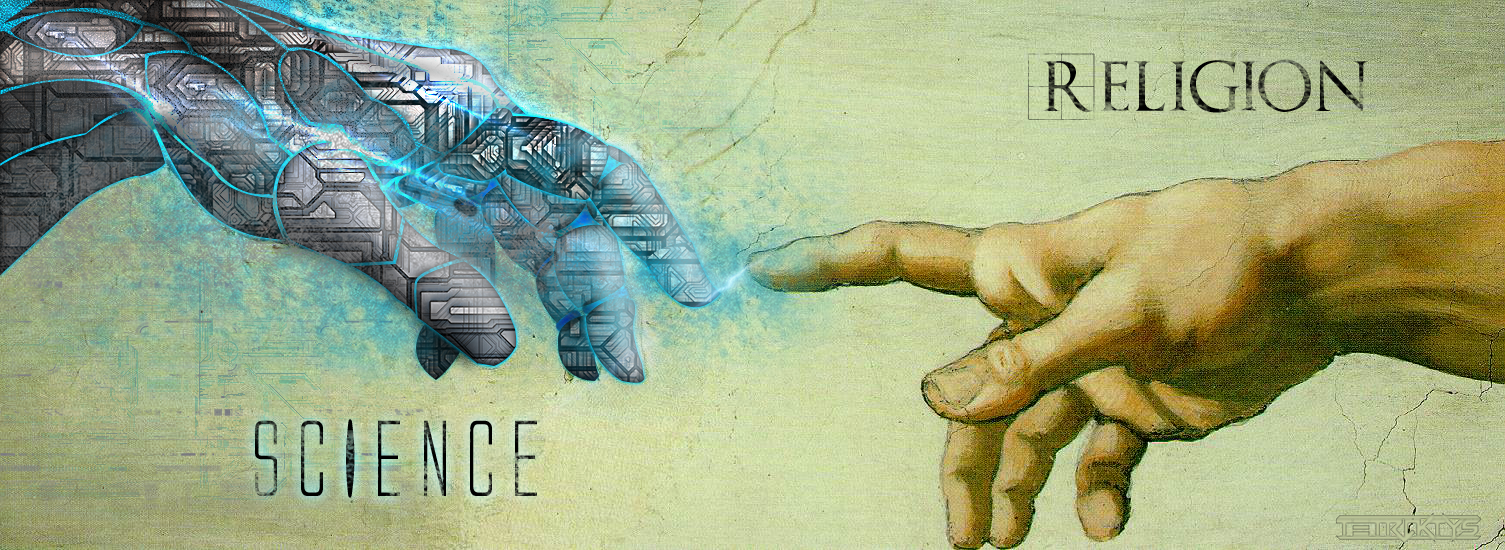
SCIENCE AND RELIGION
One doubts Goldstein will change the world with her book but its rational arguments are a big add to the non-believing world’s arguments for a scientific theory of the world that explains everything about everything.

One doubts Goldstein will change the world with her book but its rational arguments are a big add to the non-believing world’s arguments for a scientific theory of the world that explains everything about everything.

PREACHER PREACHING
Faith is always a refuge but is it enough?

If you are a believer, “36 Arguments…” is a clear explanation of your battleground; it reveals the manifesto, strategy, and tactics of a non-believer.  Faith is always a refuge but is it enough?

“36 Arguments for the Existence of God” is a fascinating piece of literature.

RISE AND FALL

Audio-book Review
By Chet Yarbrough

(Blog:awalkingdelight)
Website: chetyarbrough.blog

Asabiyyah: What Ibn Khaldun, the Islamic Father of Social Science, Can Teach Us About the World Today

Written by: Ed West 

Narrated by:  P. J. Ochlan

ED WEST (ENGLISH AUTHOR, JOURNALIST, BLOGGER)

ED WEST (ENGLISH AUTHOR, JOURNALIST, BLOGGER)

IBN KHALDUN (STATUARY SYMBOL OF ISLAMIC HISTORIAN BORN 1332, DIED 1406 AT 73 YEARS OF AGE.)

IBN KHALDUN (STATUARY SYMBOL OF ISLAMIC HISTORIAN BORN 1332, DIED 1406 AT 73 YEARS OF AGE.)

Ed West offers a brief introduction to the life of an ancient historian.  His name is Ibn Khaldun.  Khaldun describes the first known evolutionary theory of human origin.  West also notes this 14th century scholar creates the first known socio/political theory of the rise and fall of civilizations.

Khaldun explains life’s origin as a aggregation of chemicals and minerals that create organic life and, in turn, evolve into different species. 

DESCENT OF MAN

West notes that Khaldun suggests humankind evolved from monkeys. This is four centuries before Darwin’s “Origin of Species”.

Ibn Khaldun is considered by some to be the first person to write foundational theories for modern sociology, economics, and demography.  West notes that Khaldun explains how nations are formed, maintained, and destroyed by sociological, economic, and demographic forces.

Khaldun offers counsel to the great conqueror, Amir Timur (aka Tammerlane), who plans to resurrect the 13th century Mongol empire built by Genghis Khan.  

TIMUR (AKA TAMMERLANE, 1336-1405)

TIMUR AKA TAMMERLANE IS COUNCELED BY IBN KHALDUN  (1336-1405–(Timur is said to have caused the death of over 17 million people in the effort.)

West suggests that Khaldun explains how Timur and other rulers, from the Roman empire to Genghis Kahn to Timur successfully conquered great areas of the known world.  His explanation is “Asabiyyah” (aas-sah-bee-ah), a theory that all successful conquerors establish a social environment that creates solidarity among a group of people sharing understanding, purpose, and achievement.

West explains that Khaldun expands “Asabiyyah” to a theory of civilization’s rise and fall.  Humans proliferate based on family affiliations.  Religion widens family relationships to create tribes. Tribes become a congregation of different families with common beliefs.  Tribes come into conflict and eventual settlements that grow into larger groups based on evolved common beliefs. 

At each step of widening common interest, a leader rises from the ranks.  With an accretion of social ties, villages, towns, and cities are formed with a leader at its head.  As the ties that bind continue to expand, nation-states are formed.

RISE AND FALL OF CIVILIZATIONS

Ibn Khaldun’s explanation is “Asabiyyah”, a theory that all successful conquerors establish a social environment that creates solidarity among a group of people through shared understanding, purpose, and achievement.

West shows that Khaldun goes on to explain how civilizations decline. First, Khaldun notes that sons and daughters of great leaders rarely exceed their parent’s leadership success.  Khaldun posits the current social and scientific belief of “reversion to a mean”. 

REVERSION TO THE MEAN

Each subsequent offspring of a great leader comes closer to the average of a civilization’s population.  Leadership diminishes in succeeding generations.

Second, Khaldun suggests diminished common beliefs lessen a civilization’s cohesion.  Religious differences rise, economic circumstances change, social groups fracture, family ties reassert themselves as ties that are more important than community.  The example that Khaldun gives is Rome’s decline as a world power. West suggests the same may be said of the United Kingdom’s decline.

AMERICAN DREAM

Has the American Dream become a lie few believe in?  Are elected officials withdrawing to their families at the expense of nation-state’ leadership?

West’s “Asabiyyah” makes one think of America.  Does today’s political conflict reflect diminishment of commonly held nation-state belief?  Is the increasing gap between rich and poor destroying the social fabric of America?  Is the divisiveness of former President Trump a reflection of a nation in decline?

Is nationalism dead, or are we crossing a threshold where the principals of nation-state need to be expanded to include a wider community?  Is the next step reflected by the E.U. or some similar congregation of nation-states?

EUROPEAN UNION

According to West, Khaldun believes nationalism is critically important for a civilization to remain strong.  In the time of Khaldun, there was no vehicle for common beliefs except a leader’s influence over conquered nations. 

Today, there is an internet.  It seems the human family may once again be expanded.  Nation-states may not be prepared for “space-ship-earth” but there may be an interim step.

That interim step was tried during the cold war with the U.S.S.R.  It failed.  The E.U. is facing challenges today.

U.S.S.R. BREAK-UP

Trump’s America is regressing from comity to disparity with emphasis on making itself great again.  A leading question today is whether civilizations are competing to be in decline or ascendance?

Of course, leadership is key to any future.  Right now, there seem few leaders that can make civilizations grow beyond their borders. Khaldun seems as relevant today as he was in the 4th and early 5th centuries.

TOTALITARIANISM

Audio-book Review
By Chet Yarbrough

(Blog:awalkingdelight)
Website: chetyarbrough.blog

The Trial

By Franz Kafka, David Whiting (translator)

Narrated by Rupert Degas

FRANZ KAFKA (1883-1924, AUTHOR, NOVELIST)

FRANZ KAFKA (1883-1924, AUTHOR, NOVELIST)

“The Trial” is a Franz Kafka picture of hell; i.e. a totalitarian nightmare, ruled by bureaucracy and controlled through human despair. “The Trial” is a book to listen to because it mesmerizes when narrated by an artist but numbs when read by an undisciplined mind.

Imagine arbitrary arrests, undefined accusations, and undisclosed trials; i.e. trials operating in obscurity that secretly sentence the accused to mental purgatory or death; add shadows of human beings, dark rooms of judgment, stifling closeness, and oppressive anxiety.  This is Kafka’s world in “The Trial”.

There is no lightness in Kafka’s tale; no human redemption.  The main character, Ka (in this version of the book), is the only person that seems to seek self-understanding.  

All other characters are “other directed”, trying to be what someone else expects them to be by playing whatever role they need to play to survive.

BUREAUCRACY

Kafka imagines a country of directionless people, subsumed in a bureaucracy that feeds on itself.

This is a country of directionless people, subsumed in a bureaucracy that feeds on itself.  Citizens of this country are either a part of the bureaucracy or they are controlled by its administration. 

Control is exercised by creating fear and anxiety.  This characterization reminds one of Donald Trump and his current attempt to overthrow over 200 years of American government history.

Trump’s tacit support by the Republican party is a crime against democracy. Patriotic Republicans are diminished by Trump’s abhorrent behavior.

Should Trump be impeached a second time? It’s complicated. On the one hand, incitement by Trump on January 6th is obvious to most Democrats. On the other, Republicans now represent 70,000,000 Americans who think Trump is good for America.

There is no societal objective; there is only bureaucracy’s perpetuation.  Lawyers, bankers, judges, business moguls, landlords, artists, servers and assistants of this society, though rarely singled out for terror or torture, are consumed with anxiety from an ever-present threat of arrest.  The working public enriches itself by taking bribes to subvert bureaucratic action.  The working public’s subversion is not destruction of the bureaucracy but a tacit acceptance of its hegemony.

Ka attempts to break the cycle of bureaucracy’s self-perpetuation.  His attempt fails.

The redeeming quality of Kafka’s story is the human desire for freedom that is not extinguished even in the darkest times of a country’s repression.  Against all obstacles, Ka insists on freedom.  In Ka’s case freedom means death just as it did for many who died in Auschwitz, Dachau, and Treblinka.

FRANZ KAFKA QUOTE

Kafka’s hell exists in today’s world just as it did when it was published in 1925.

KNOWING NOTHING

Audio-book Review
By Chet Yarbrough

(Blog:awalkingdelight)
Website: chetyarbrough.blog

Thinking Fast and Slowthinking fast and slow

By Daniel Kahneman

Narrated by Patrick Egan

DANIEL KAHNEMAN
Author, Daniel Kahneman, is a renowned psychologist and noble laureate.

There are certain knowns that are known and certain knowns that are unknown.  Well, I know I know nothing and Kahneman seems to prove it.  Every chapter of Kahneman’s book suggests something one finds hard to believe is true.

Daniel Kahneman is a renowned psychologist and noble laureate.  He is an American citizen that served in the Israeli military and used his education, research, and experience to write “Thinking Fast and Slow”.  His observations explore many aspects of human decision-making.

How one runs their business or lives their life is framed by how they think.  Kahneman explores two fundamental ways of thinking that reveal human strengths and weaknesses.  “Thinking Fast…” is intuitive and easy.  It is prejudiced by personal life experience and education.  It is activated through an evolved instinct that forms the basis for snap decisions.  In contrast, “…Thinking Slow” is a deliberative, calculating, and mind-numbing way of making rational decisions.  Kahneman calls these mental functions System 1 and System 2 respectively.

THINKING SLOW
“…Thinking Slow” is undoubtedly prejudiced by Kahneman’s scientific interpretation of “human thought and action”’ but judgment of his observations is the responsibility of the reader or listener; so, caveat emptor.

“…Thinking Slow” is undoubtedly prejudiced by Kahneman’s scientific interpretation of “human thought and action”’ but judgment of his observations is the responsibility of the reader or listener; so, caveat emptor.

The more common decision-making tendency of the brain is to use System 1 rather than System 2 when making decisions because it is easier and because, as Kahneman notes, behavioral studies and brain imaging show human brains are lazy (not inclined to use System 2’ thinking because it is more laborious than System 1).

System 1 often leads humans to make incorrect intuitive decisions.  System 2 potentially improves probability of making better, or at least more rational, decisions.  However, System 1 is important to life and death decisions that require instantaneous action.  System 2 requires one to consider options before settling on an action.  A current example is the dilemma of choice in regard to social media.  Fighting hardly seems logical based on the direction of technology.  Flight seems equally illogical for the same reason.

FIGHT, FLIGHT, LIGHT
System 1 is important to life and death decisions that require instantaneous action.  System 2 requires one to consider options before settling on an action.

FIREMAN NARROWLY ESACAPES FLOOR COLLAPSE
FIREMAN NARROWLY ESCAPES FLOOR COLLAPSE  ( Using System 1 thinking the fire commander tells his team to get out of a burning house because his mind subconsciously gathers experiential information telling him the floor is about to collapse.)

Kahneman gives a more concrete example with an experienced fire commander.  Using System 1 thinking the fire commander tells his team to get out of a burning house because his mind subconsciously gathers experiential information telling him the floor is about to collapse.  The fire commander’s system 1 thinking saved his team’s lives.

Kahneman contrasts the value of System 2 thinking by exploring System 1’s habit of unconsciously bench-marking manufactured product pricing to seduce consumers to buy at higher prices; i.e. if a product is priced high, System 1 thinking is willing to pay a higher price.

Attention
The “halo” effect caused by System 1’ thinking gives too much weight to a one time “good” interview evaluation of an employee candidate.

Another observation is that employee interviews are often detrimental to the selection of the best job candidate.  Kahneman describes the “halo” effect caused by System 1’ thinking that gives too much weight to a one time “good” interview evaluation of an employee candidate.  To protect from the “halo” effect, Kahneman suggests that interview questions be structured and an employment process be standardized to give more objective criteria for choosing the best employment candidate.  In other words, design an employee selection process based on clearly defined job requirements that are equally measured and fairly weighted for each candidate.  Employer hiring solely based on a candidate’s interview is not a good determinant of employee performance.

This brief review is a single drip of sweat in a twenty hour work out.  Kahneman undoubtedly exaggerates the import of some scientific studies but his writing engages System 2 thinking.  A System 2 person will want to listen to “Thinking Fast and Slow” more than once.


INDICTMENT

Audio-book Review
By Chet Yarbrough

(Blog:awalkingdelight)
Website: chetyarbrough.blog

Tears We Cannot Stop-A Sermon to White America

Written by: Michael Eric Dyson

Narrated by:  Michael Eric Dyson

MICHAEL ERIC DYSON (AUTHOR, BAPTIST MINISTER, PROFESSOR OF SOCIOLOGY AT GEORGETOWN UNIVERSITY)

MICHAEL ERIC DYSON (AUTHOR, BAPTIST MINISTER, PROFESSOR OF SOCIOLOGY AT GEORGETOWN UNIVERSITY)

Michael Eric Dyson is a graduate of Princeton who teaches at Georgetown University.  “Tears We Cannot Stop” is an indictment of white America.  The indictment accuses white Americans of serious crimes stemming from today’s bigotry, neglect, permanent injury, and murder of black Americans. 

Examples of police violence against black Americans, a history of ethnic isolation, forced conformity and denied equal opportunity strongly support Dyson’s accusation.

Each accusation and the evidence gathered by Dyson confront the conscience of every white American.  What he writes rings of truth.  The more Dyson explains, the greater is white America’s guilt.  It is a message missed by white Americans because they do not live the life of black Americans.  White privilege is taken for granted in America because money, power, and prestige are held by mostly white American males.

RODNEY KING (APPEARANCE 3 DAYS AFTER BEATING 3.6.92--KING DIES IN JUNE 2012 @ 47 YEARS OF AGE)

RODNEY KING (APPEARANCE 3 DAYS AFTER BEATING 3.6.92–KING DIES IN JUNE 2012 @ 47 YEARS OF AGE)

The institutionalization of racism makes black Americans afraid.  Out of that fear comes distrust, anger, apathy, and isolation.  Black mothers and fathers fear for their children whenever they leave home.  Regardless of education, fame, or fortune, Dyson notes an honest and law-abiding black American is subject to a different set of social rules.  From birth, black Americans are told by their parents not to disagree with police for fear of being beaten, arrested or shot.

Truth does not matter in a black person’s response to accusation.  Most black Americans live with fear; most white Americans do not.  When stopped by the police, a black American thinks–what can I do; where can I go; what can I say; who can I trust other than myself and my race?   When unjustly accused, black Americans have limited recourse.  Those limits are tinged with frustration, and/or anger.  No wonder some feel disrespected and alone in America.

RUDY GIULIANI (FORMER MAYOR OF NEW YORK CITY)

RUDY GUILIANY (FORMER MAYOR OF NEW YORK CITY) Dyson attacks pundits who suggest black Americans are their own worst enemy.  The white pundit’s argument is they kill each other.  The argument ignores two monumental facts.  One, the toll that poverty and unemployment play in poor communities; and the truth that whites murder whites nearly as often as blacks kill blacks.

Dyson attacks pundits who suggest black Americans are their own worst enemy.  Some white pundit’s argue blacks  kill each other more than whites kill blacks.  The argument ignores two monumental facts.  One, the toll that poverty and unemployment play in poor communities; and two, the truth that whites murder whites nearly as often as blacks kill blacks.

The real difference between black and white victimization is whites have more opportunity in America.  White, mostly male, Americans write the history of America and create the rules for “democratic” governance. 

Dyson encourages white Americans to become more involved with black Americans.  The social disconnect between races promotes ignorance of common goals and aspirations.  Who does not want to live in peace, provide for themselves and their families, raise their children to be better off than themselves?  Part of the difficulty is that there is little trust between black and white Americans as is noted in the following social experiment.

Leaders in America, consciously or subconsciously, treat non-white Americans as “others”.  When humans treat someone as an “other”, they become less human.  Minorities and other nation’s populations become “gooks”, “spics”, “towel heads”, “niggers”; i.e. something identified as less than human.  This human categorization institutionalizes discrimination.  It leads to this American dilemma and to world wars. 

Leaders of America, who are mostly white males, ignore the plight of black Americans.  One wonders how many white Americans thank their God for not being born black.  That is Dyson’s reason for concluding black Americans shed “Tears We Cannot Stop”.

Psychological Unease

Audio-book Review
By Chet Yarbrough

(Blog:awalkingdelight)
Website: chetyarbrough.blog

The Cosmic SerpentTHE COSMIC SERPENT

Written by: Jeremy Narby

Narration by:  James Patrick Cronin

JEREMY NARBY (AUTHOR, PHD ANTHROPOLOGY FROM STANFORD)
JEREMY NARBY (AUTHOR, PhD ANTHROPOLOGY FROM STANFORD)

Psychological unease accompanies Jeremy Narby’s erudite speculation about the meaning and origin of life in “The Cosmic Serpent”.  The unease comes in two forms.  One, is Narby’s seduction by hallucinatory experience.  Young people in America are choosing to overdose rather than face today’s perceived reality.  The other is Narby’s patterning of observations to create either a true or false belief.  It reminds one of the potential of Einstein’s discovery of matter and energy equivalence.  Einstein discovered falsifiable evidence of nuclear fission that holds a key to sustainable energy.  He also opened the door to Armageddon.

TIMOTHY LEARY (1920-1996)

Narby, like Timothy Leary, is educated at some of the best universities in the world (Leary at Harvard; Narby at Yale).  Both have PhDs. Narby has a PhD in anthropology; Leary in Psychology.  Few, if any, believe LSD (Leary’s hallucinatory drug of choice) offers insight to the origin and meaning of life. However, like Leary, Narby suggests hallucinatory drugs may be a pathway to understanding.

Regarding hallucinatory experience, Narby does not appear to have slipped into the bizarre behavior of a Timothy Leary; at least not yet. Narby is 59 years old.  When Narby did his research, he was in his late 20s and early 30s.  “The Cosmic Serpent is published when Narby is still in his 30s.  Leary lived to be 76.  Each passing year exaggerated Leary’s belief in the therapeutic potential of psychedelic drugs.

MIND PATTERNINGPatterning is the human ability to see structure in disparate facts and events.  Some say this is the sign of genius.  Einstein is said to have formulated a theory of time by riding a train.  Einstein’s insight came from thinking (patterning) how time is relative based on a person riding a train and a stationary observer watching the train pass.  However, patterning also leads to incorrect conclusions like a person’s recollection of a crime.  Human brains are shown to manufacture events and facts to make stories complete rather than necessarily accurate.

SHAMANISM
SHAMANISM – Narby’s articulate presentation of Peruvian shamanism tempts seekers of knowledge and experience to try something new.

Narby’s articulate presentation of Peruvian shamanism tempts seekers of knowledge and experience to try something new.  The temptation comes from different sources.  One is genuine interest in understanding more about the world and our place and purpose in it.  Another is the desire to believe that there is something more important in life than wealth, power, or position.

“The Cosmic Serpent” suggests that native cultures around the world offer insight to the origin and meaning of life because of common hallucinatory experiences.  Narby suggests the hallucinatory symbol of a winding serpent is evidence of the configuration and importance of DNA; long before Watson’s and Crick’s discovery.  The inference is that shamanistic hallucinations are not mere symbols but a truth of life.  Narby’s inference is that seekers of life’s truth should listen to the experience of shamans and pursue shamanistic experience through the studied use of their methods.

SNAKE-DNA IMAGE
Narby suggests the hallucinatory symbol of a winding serpent is evidence of the configuration and importance of DNA; long before Watson’s and Crick’s discovery.

Narby argues that the scientific community needs to widen its view of the world. He believes DNA holds the secrets of nature’s existence.  The question is whether youth and science should accept the risk of Narby’s patterned belief?

At the least, Narby makes one appreciate the importance of native culture.  He may be opening a worthy field of scientific research.  On the other hand, Narby may be creating false expectations that offer ignorance and escapism, rather than research and science.