GARDEN OF EDEN

Yarbrough (Blog:awalkingdelight)
Website: chetyarbrough.blog

New Zealand in 2019

Written by: Chet Yarbrough

Having the wonderful experience of visiting New Zealand as an America tourist was like visiting a biblical Eden. However, no country is without political controversy.

On the one hand, New Zealand has the ambition of being an ecological Eden with no natural predators and a perfectly balanced environment.

Is that realistic? How can nature be nature without predation? From times untold, wild animals have eaten each other.

And then, there are humans. Humans are by nature predators. Environmental degradation is accelerated by economic prosperity.

American media gives positive marks to the current Prime Minister of New Zealand, Jacinda Ardern. In part because of her immediate response to the Christ Church mass shooting but also because of her environmental effort to reduce greenhouse gases and pollution.

Ardern is also lauded for her response to the Covid19 crises.

Looking back to a 2019 trip, first impressions are renewed by today’s headlines about New Zealand’s democracy. Elections in New Zealand reinforce egalitarian ideals Americans covet. The NYTs’ headline notes “…Ardern’s 2nd Term…Seats Most Diverse Parliament Ever.” Election of women and indigenous Kiwis is a message to all democracies.

Nanaia Mahuta (New Zealand elected official, indigenous Maori politician, Minister of Foreign Affairs,).

New Zealand is blessed with renewable energy sources from geothermal-power, hydro-power, and a burgeoning wind and solar power industry. Not that this is something only the Prime Minister has done in her short term, but it illustrates the environmental sensitivity of the country.

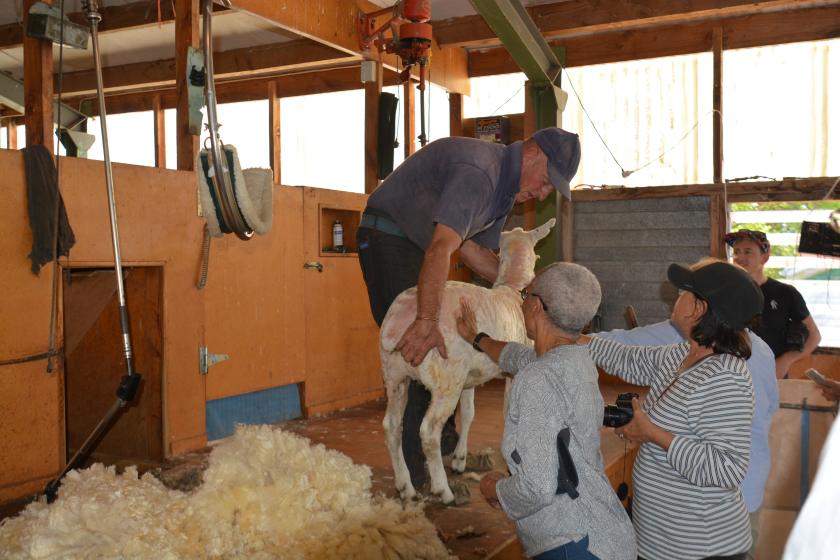
Prime Minister Ardern is not universally applauded by fellow New Zealanders. Contrary to Ardern’s press coverage in the U.S., some New Zealand farmers seem quite upset with Ardern. We had the happy opportunity to spend a day and night with a farming family in New Zealand.

The farming family we spent time with explains there is a conflict between New Zealand’ farmers and the current administration. Over 45 percent of New Zealand is farm land. It is distributed among farmers that have an average size farm of over 350 acres. An important distinction between our countries is that American corporations may use farms as a tax shelter while New Zealanders use farm land to produce more product. There are few if any corporate farms in New Zealand. New Zealand farms are owned by real farmers.

However, farming is a major polluter of land in America; as well as New Zealand.

Over 50% of methane and nitrous oxide in the world comes from farm animals. Adern puts the burden of correction on private farms. Over 50% of methane and nitrous oxide in the world comes from farm animals. Cattle, sheep, goats, deer, alpaca, llamas, goats, and chickens are common farm animals raised on New Zealand farms. Land, water, and air quality issues being raised by the current administration are a big concern of the farming community.

New Zealand farmland regulation is creating a furor among some farmers that are being told to change their practices to reduce pollution. The cost of these changes are to be borne solely by the farmer according to the farm family we visited.

Real farmers in both America and New Zealand have a reputation for being independent. That independence is distorted by corporate ownership in America but not in New Zealand. The New Zealand farming community is made of farmers who work the land. One gets the impression they will not re-elect Ms. Ardern unless she changes direction.

The irony of what we were hearing is that farmers like all people are concerned about the environment. The problem is in the cost of adjusting farming practices to accommodate environmental concern.

From an outsider’s perspective, the solution seems simple. Farmers in New Zealand are not constrained by corporate farming practices like America. New Zealanders do not farm to shelter income but to produce product. It would seem reasonable for the government to assist New Zealand’ farmers financially to adjust to less environmentally damaging practices. The perception we had from the family we spent the night with was that the current government wants all of that cost to be borne by the farmers.

When the word subsidization is mentioned, both husband and wife of the New Zealand farm family seem to wince. Without knowing the history of farming subsidization in New Zealand, one wonders what happened in its history.

As long as real farmers are producing groceries there seems every reason for tax dollars to be used to help farmers mitigate pollution. Farmers are as concerned about the environment as environmentalists. Where would the world be without food production and real farmers?

Visiting other countries is a guilty pleasure. It is an expensive undertaking that many cannot afford. We loved our time in New Zealand. One sees there is no perfect country. Every country has its discontents; America, not withstanding.

CLOSED MINDS

Audio-book Review
By Chet Yarbrough

(Blog:awalkingdelight)
Website: chetyarbrough.blog

The New Jim Crow: Mass Incarceration in the Age of Colorblindness

By: Michelle Alexander

Narrated by Karen Chilton

MICHELLE ALEXANDER (AUTHOR, CIVIL RIGHTS ADVOCATE, VISITING PROFESSOR AT UNION THEOLOGICAL SEMINARY)

Multicultural societies are threatened by closed minds. Michelle Alexander pulls no punches in explaining how American minds are not exempt.  From both conscious and subconscious actions, people who are perceived as different are treated unequally.   

America, like most (if not all) nations, is a failed egalitarian state.  From its early history, America has striven to mitigate inequality but with mixed results, and only marginal successes.

This is not to suggest America is less egalitarian than most nations but that unregulated human nature is a danger to all nations. Witness the murderous regimes of Qaddafi, Saddam Hussein, and more recently, al Assad in Syria.

Two police officers are shot during a public protest over the police shooting of Breonna Taylor (a police raid’s innocent bystander). Where does this end? Public policy failures should not be used as an excuse for violence. No one wins, everyone loses.

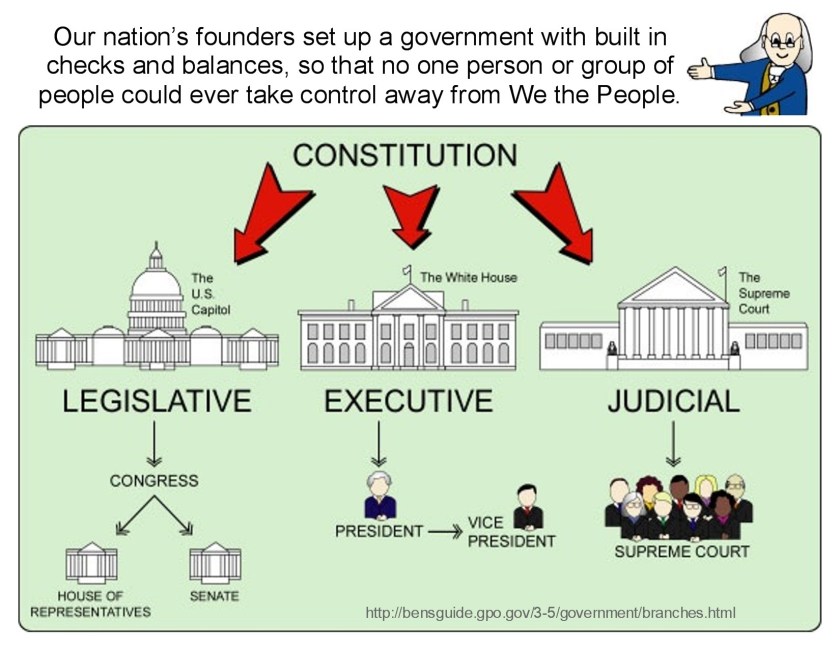
Money, power, and prestige corrupt every nation’s leaders; whether well or poorly educated. America is different from many nations because society is subject to a system of checks and balances. However, checks and balances have not saved America from discrimination and inequality.

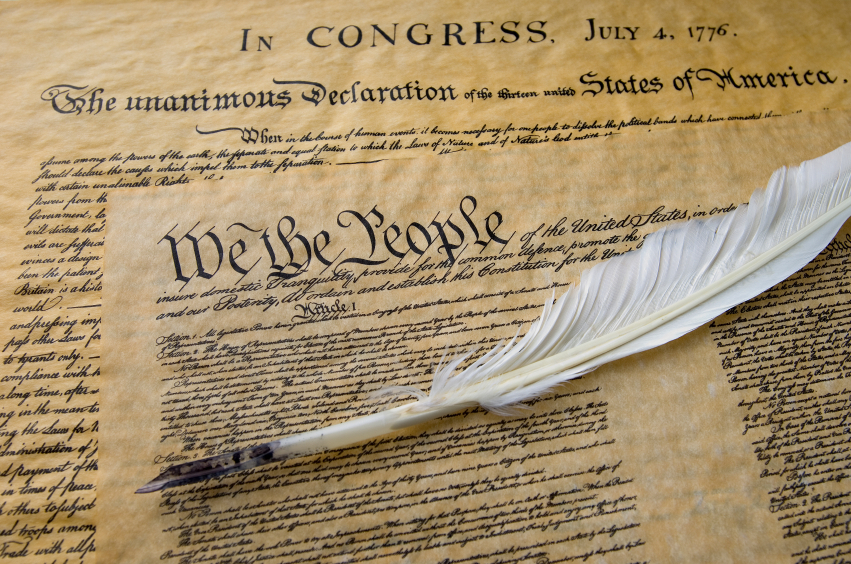
As memorialized in the Constitution’s 14th Amendment (which requires equality of all before the law) America attempts to treat all people equally.  America succeeds in principle and fails in practice. 

Though the American mind is willing, the will fails to support the mind.  Alexander notes how some laws passed by the American government purposely, and sometimes inadvertently, undermine the Constitutional guarantees of equality for all.

The veil of which Dubois is speaking is the real affect of American laws and customs on black Americans. It is the same veil one sees in history that is written by victors; not the defeated.

Examples of unequal treatment are noted by Alexander.  She exposes the insidious affects of the war on drugs and America’s “3 strikes law” that disproportionately affect the poor; particularly those raised in black communities.

Alexander reflects on America’s failure to address root causes of crime—like unemployment, inadequate medical care, poor education, and racial discrimination.  She suggests those failures are exemplified by “…New Jim Crow” laws.  Her point is that “…New Jim Crow” laws are re-hatched by the War on Drugs and “3 strikes law”. 

Jim Crow laws segregated the Southern United States in the late 19th and early 20th century.  Her argument is that today’s Jim Crow laws are like Dubois’s explanation of the veil of American acts of conscience.  It is a veil in the guise of fighting crime. 

No one wants crime; whether poor or rich. The author does not argue that fewer violent crimes occur in poor communities.  She acknowledges more violent crimes occur in poor communities. But, poor communities, like all communities, abhor the reality of violent crime. 

Whether poor or not, all want protection from violence.  No one wants to see their family threatened.  Those truths make the policies of the War on Drugs and 3 strikes appealing to most Americans.  Alexander’s point is these well meaning policies do not address the root causes of crime. They attempt to treat symptoms rather than offer cures. In treating the symptoms, the underlying causes remain untouched and ever virulent.

Alexander suggests the war on drugs and “3 strikes law” are a return of Jim Crow laws that segregated the Southern United States. 

The War on Drugs and 3 strikes neglect the reality of living in poor neighborhoods.  Poor neighborhoods resort to drug use and sale because it is the only job available, or often the only way of escaping the reality of being trapped in a circle of despair.  

When a person is convicted of a violent crime, manufacture or sale of drugs, or minor drug charges, they are marked for life. 

Job applications ask if they have ever been convicted of a crime. If the answer is yes, most are left with poor prospects for employment or advancement.  No effort is made to rehabilitate but only to isolate. Once a criminal, always a criminal.

America chooses not to spend money to educate the young in poor school districts.  America chooses to ignore the circumstances of drug addiction or the need for medical treatment.  Crime is a zero-sum game with no treatment for the psychologically disturbed. Little investment is made in rehabilitation or re-introduction into society for the first-time offender.  

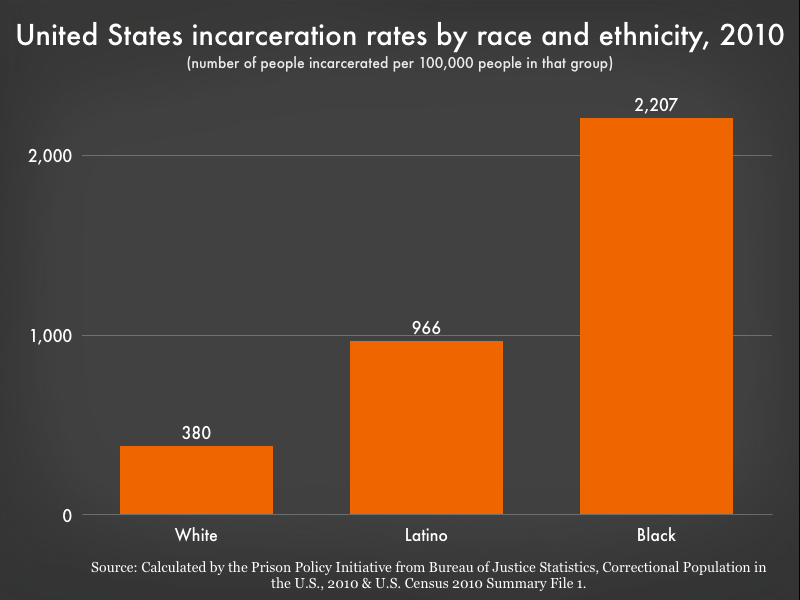
The drug laws and “3 strikes law” dis-proportionally fall on the poor and black as evidenced by America’s prison population.  Alexander argues the real effect of these laws is the same as the historic Jim Crow laws.  They segregate minorities from the dominate American culture.

Alexander’s book is difficult for some to read because it denies the universality of the American Dream.  What is forgotten is how much the luck of race and circumstance play in everyone’s life.  Equally forgotten is the good for those in power is not always good for those without power. 

Dubois and Alexander have something in common.  Minds must be kept open to the truth.  Empathy is needed by both those in power and those without power.  Trust must come from both sides of any power structure. 

No singularly elected person or autocrat will unwind history’s discrimination. Respect for difference and rule of law are the best one can expect. With respect and rule of law, equal opportunity is possible.

Police who brutalize the poor are as guilty of crime as the poor who victimize the rich.  Each needs to put themselves in the other’s shoes to understand their own closed mindedness. 

With better understanding of ourselves and others, more will be done to constructively address public policy failures.  The alternative is increased cultural deterioration, discontent, and violence.  

CORPORATISM

Audio-book Review
By Chet Yarbrough

(Blog:awalkingdelight)
Website: chetyarbrough.blog

The Price of Civilization

By Jeffrey Sachs

Narrated by Richard McGonagle

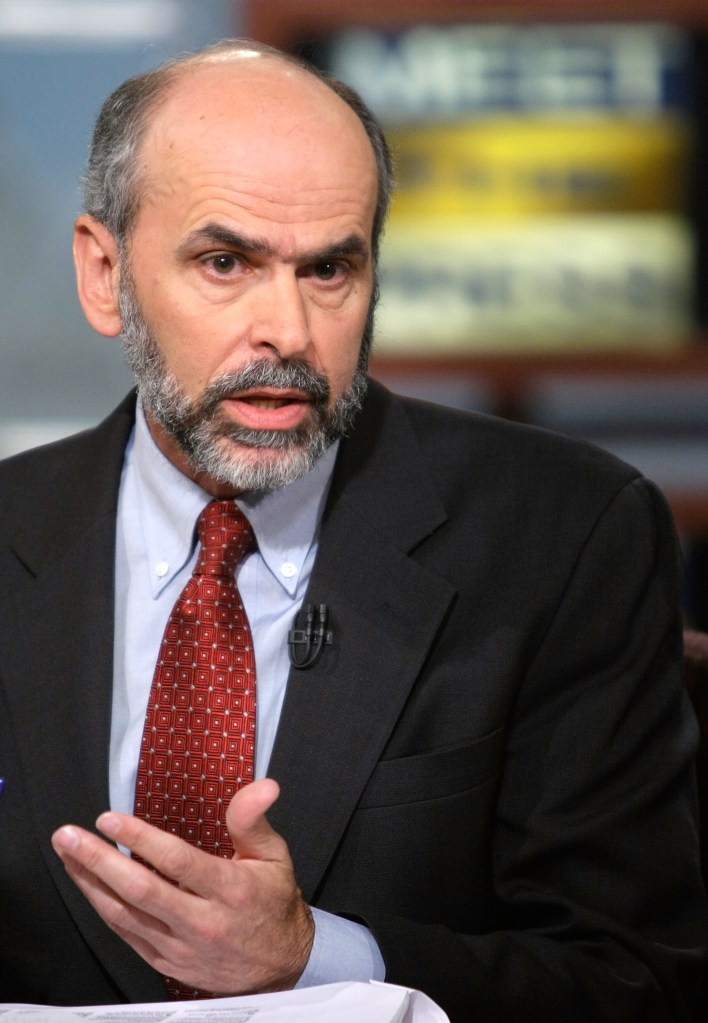
Jeffrey Sachs (Author, American economist, Columbia University Professor)

Jeffrey Sachs skewers modern Presidents and lionizes John Kennedy.  Written before 2016, one wonders what Sachs might have written about President Trump.

One may agree with some of Jeffrey Sachs’ observations of what is wrong with America but his solutions are academic; not pragmatic. Sachs is an idealist. Corporatism is an out sized economic benefactor for the United States.

Government checks and balances are America’s only defense against corporatism.

“The Price of Civilization” is an unsatisfying audio book.  Not because it is irrelevant but because it’s saccharine idealism and disconnection from the real world.

Though much of Sach’s criticism of Obama, George Bush, Bill Clinton, and Ronald Reagan is deserved, his professorial economics is cloying because it ignores political reality and the truth of human nature.

The father of American economics, Adam Smith, is the first to have recognized the critical role of politics in economics.

Politics is a social science of give-and-take in both democratic and autocratic societies. The difference is–politics in democracy is practiced among the many; while in autocracy, politics is practiced among the few.

Just as Adam Smith’s “Wealth of Nations” includes politics in economics, Thomas Hobbes’ “Leviathan”, introduces human nature to government. Thomas Hobbes notes Human nature is both good and bad. As logic dictates, politics in economics is both good and bad.

Sachs is spot-on as an academic economist. Trump and many elected officials ignore political reality.  Public policy has always been a matter of “who’s ox is getting gored” whether Democrats, Republicans, or despots are in control of government.

Sachs cleaves to Platonic and Aristotelian platitudes like “all things in moderation”. To suggest that a philosophical awakening of the millennial generation (those born between 1977 and 1992) will cure American lassitude and political apathy is naive.


Sachs optimistically believes the millennial generation will eschew the luxuries of American dreamers (owning hot cars, nice homes, and beautiful clothes) to become voters for change.  Obama represents those voter’ beliefs but fails politically for the same reason Sachs’ book is a mess.

Changing public policy is not going to occur with an American generation that magically begins believing less is more. Re-election of a new President, whether Democrat or Republican, will not fundamentally change America’s system of choosing corporate winners and losers.

One can agree with Sachs’ observation on 2010’s “Citizens United v. Federal Election Commission” decision. The Supreme Court erred in identifying corporations as individuals with the rights of unlimited corporate donation to electors.

Defeat of gun control legislation shows how entrenched lobbyist organizations can steer the course of public policy, regardless of a democratic majority’s support of policy change.

Sachs is right in his assessment of the wrong-headedness of what he calls “corporatocracy”; i.e. the institutionalization of an election process that is founded on money rather than public representation. 

Human nature gets in the way of doing the right thing.  Humankind naturally seeks freedom.  (Las Vegas demonstration to reopen the economy during the pandemic.)

When freedom of choice is impinged upon, human beings are reluctant to change.   Of course, this is an over simplification but Sachs minimizes mankind’s innate desire for freedom. 

Las Vegas mayor Goodman wants to re-open the economy in the face of Covid19. She believes freedom and survival of the fittest is a matter of human nature; not government fiat.

She infers–if its your time to die, so be it.

Regulation of human activity impinges on free choice whenever one person thinks they know what is best for another.

Human nature is not going to change; i.e. it will always contain good and evil intention. Bernard Madoff comes from the same culture as Warren Buffet. 

Trump and the Republican party’s approved tax law and Covid19′ fiscal response illustrates contempt for the middle-class, and ignores the needs of the poor.

Many Americans are disgusted with the political process in 21st century America.  Even the super rich and rich are not satisfied with the status quo.  The rising gap between rich and poor embarrasses those who believe in equal opportunity for all.

How can America justify a social security tax for a movie actor’s (or sports star’s) income of millions per year when a middle income family makes $40,000 to $132,900 per year and has to contribute the same amount as a multi-millionaire.

A person with a middle class income will pay 6.2 percent of their income for social security. There is a maximum cap of $8,239.80/year/person. One who makes millions of dollars per year will not have to pay more than that $8,239.80/year; i.e. the same maximum amount a middle income person pays. No wonder social security is going broke.

When one is elected to congress every two years, fund raising becomes the elector’s primary focus of attention.  When corporations speak, electors listen.  Lobbyists and corporate money are more important than the aggregate input of voters.  No wonder American voters are apathetic.

Sachs notes Oliver Wendell Holmes dictum about taxes.  Holmes wrote that he loved to pay taxes because taxes are the cost of civilization.  The weakness of that generalization is in the definition of civilization.  If civilization is that stage of human social and cultural development and organization that is considered most advanced, why does the richest country in the world:

  • 1)have citizens living on the street,
  • 2)have citizens imprisoned-to only isolate and punish, and
  • 3)have children dying because of poor medical care.

When an investor turns a portfolio over to a brokerage company, that investor has to “trust but verify” the actions of the brokerage company in regard to overall portfolio performance.  If the broker under performs the market, the investor knows it is time to change brokers. 

When a government under performs when public tax dollars are invested, voters cannot, without revolution, change governments. 

Sachs accurately notes there is no difference between Democrats and Republicans in the United States.  Both parties talk the talk but fail to walk the walk. Elected officials are too beholding to lobbyists and corporate America.

Americans are reluctant to pay higher taxes because they see no discernible improvement in their lives.  Why invest in a government (pay more taxes) that fails to produce improved results?

Sachs ideas for correcting America’s ills—

  1. Reduce the deficit by cutting military spending and increasing taxes.
  2. Reduce wealth disparity by investing in and retraining an obsolescent work force.
  3. Invest in and improve education with emphasis on primary and secondary graduation.
  4. Create jobs through infrastructure investment.  He argues that dependence on carbon-based energy is to be reduced by conservation with increased investment in alternative energy sources and more scientific research and development. 
  5. He argues that medical insurance should be provided to all Americans with a plan crafted by the medical community.

All of these goals are exemplary but to get there requires a massive (and unlikely) re-invention of human nature.   One could argue that many of these policies were promoted by the Obama administration, but little changed.

It is counterintuitive for a free society to choose moderate consumption.  Add mistrust of the American government and the likelihood of turning more money over to a government that does not work seems stupid to any rationale human being.

Hitler wrote in Mein Kampf, “Industry, technology, and commerce can thrive only as long as an idealistic national community offers the necessary preconditions.  And these do not lie in material egoism, but in a spirit of sacrifice and joyful renunciation.”  Sach’s idealism is a threat to an American economy that ignores the poor. It hides behind idealized Hitlerian propaganda.

Hitlerian characters are a threat to America when corporatism is the basis of public policy.

Of course, this analysis of Sach’s book is also a form of idealism.

AMERICAN RIGHTS

Audio-book Review
By Chet Yarbrough

(Blog:awalkingdelight)
Website: chetyarbrough.blog

Rights of Man


By Thomas Paine

Narrated by Arthur Morey

Thomas Paine (Author 1737-1809)

It seems time today to read Thomas Paine’s “Rights of Man”.  Though his primary purpose is to refute Edmund Burke’s condemnation of the 1789 French revolution, his observations on British Aristocracy are the essence of today’s American “moneyocracy”.

Though President Trump is not the originator of American “moneyocracy”, he is its quintessential representative.

In spite of domestic mass murders by demented Americans, Trump and many of his followers insist on giving voice to the NRA’s belief in an American right to buy automatic weapons designed only to kill people.

Uvaldi, Texas elementary school shootings 5.24.22

It takes money to run a campaign for public office. Trump, like most politicians, panders to lobbyist’ and business’ interests that distort the American electoral process.

The appeal of Trump has to do with American’s desire to be left alone. Whether a misogynist, a gun toting individualist, a federal tax cheat, or an independent morally upright American, many believe that is their right. Trump exemplifies the right to be left alone.

Beginning with congress’s approval of tax reform, America’s ballooning deficit is a direct consequence of a mistaken belief that “a rising tide lifts all boats”. Contrary to the tired refrain “jobs, jobs, jobs” to make “America Great Again”, the current administration is setting the table for the world’s next economic crises.

The “Occupy Wall Street” demonstrations are an amorphous scream of disgust by an educated population that resents American “moneyocracy’s” control of the economy, elected representatives, the election system, and the “Rights of Man”.  “Moneyocracy” is an inheritable line of an American aristocracy.

Instead of 18th century Aristocratic control of British government, 21st century America substitutes the wealth of individuals and corporations (classified as individuals) to control American Democracy. This is not a partisan issue in America.

Every President, Republican or Democratic, has sided with corporate interests in this era of corporate largess. The world is in a state of economic upheaval that is fueled by technology. That economic upheaval is not adequately addressed by corporate America. The government continues to subsidize yesterday’s economy at the expense of middle and lower income citizens.

Management executives that are employees of corporate America take salaries 50 times or more than salaries of their average employee. 

The new controller of our economy, the primary interest group of elected representatives, and the master of the American election system is corporate America.

Wealth is the new hereditary right of succession. Corporate America is the thief and ruler of inherent “Rights of Man”.

Once individual compensation reaches beyond rationality, money becomes fuel to maintain America’s “Moneyocracy”, the new hereditary right of succession.

The controller of our economy and political representation is corporate America.

The primary interest group of elected representatives, the master of the American election system, and ultimately, the thief and ruler of inherent “Rights of Man” are corporations and the super-rich. Of course, the rich have always been in control of American government. However, now the rich are not just singular individuals. They are corporations classified as individuals.

The Supreme Court in “Citizens United v Federal Election Commission” in 2010 rules that corporations are persons with the right to support candidates for office with as much money as they want to influence government policy.

The Supreme Court’s unwise decision based on freedom of speech identifies corporations as persons. With that nose in Democracy’s tent, corporations could offer millions of dollars to election campaigns. What human being cannot be influenced by such largess? Excessive executive compensation perpetuates “moneyocracy”, but corporate influence is the cause of the loss of the “Rights of Man”.

Tax change is a smoke screen that obscures the real danger of American decline in the 21st century.  It is too blunt an instrument to bludgeon the rich. It smacks of false patriarchy and jingoist rhetoric. 

American history shows that Americans believe that hard work is the source of success but being American does not guarantee a free ride. Equal opportunity is where America fails.

Education, anti-discrimination legislation, and equality of opportunity have to be strengthened. Corporate America needs to step up. Corporations need to quit wasting money influencing legislators and invest in human rights.

Corporations need to subsidize education by re-training their employees to meet changes wrought by technology.

Corporations must insist on equal treatment of employees, by gender and/or ethnicity. The government needs to re-enforce equal opportunity for all.

America needs to return to the ideals of equal opportunity by allowing entrepreneurs to create wealth through human productivity.  Money is not an end but it has become an end that has no end; i.e. high salaries perpetuate themselves through an Aristocratic “moneyocracy”.  If one says they make a $1,000,000 a year they are saying they are better then someone who makes $10,000 or $100,000 a year.  Salaried compensation is perceived as human value. 

Denying salaries that exceed 50 times average employee compensation is not denying the creation of wealth.  Entrepreneurs that create productive companies that grow to multi-billion dollar enterprises have opportunity to become billionaires; not from salaries, but from building human productivity that creates wealth.

“Occupy Wall Street” is an unlikely precursor of another American Revolution; however, it may be a symptom of an American cancer that debilitates productive life without killing the patient.  “Occupying Wall Street” is not a hippie “sit in” but a plea for reform of American “moneycracy” just as Thomas Paine’s “Rights of Man” was a plea for reform of Aristocratic inheritance.

ADDENDUM: Does the “right to be left alone” extend to pandemics? The question is raised when it comes to a pandemic that has killed over 783,000 people in the United States as of November 15, 2021. (Statistics provided by “worldometer”, a reference website that provides real-time statistics. Considered the best free reference website by the American Library Association.)

TALKING HEADS

Audio-book Review
By Chet Yarbrough

(Blog:awalkingdelight)
Website: chetyarbrough.blog

America Alone: The End of the World as We Know It

By Mark Steyn

 Narrated by Brian Emerson

Mark Steyn (Canadian conservative author and commentator. Occasional guest host on the Rush Limbaugh Show and Tucker Carlson Tonight.)

Listening to Brian Emerson’s narration of Steyn’s book makes one smile and cringe.  In one section Steyn intelligently reflects on the demographics of world population, and in the next, he whips out a Limbaugh/Carlson-like’ riff on the name “Muhammad”.

Steyn uses “guilt by association” as proof of something when it is nothing. Someone named Muhammad can be an American patriot or a domestic terrorist; not because of a name but because of belief and volition.

To suggest ex-Senator Wiener’s wife, Huma Abedin, is a member or agent of the Muslim Brotherhood is ridiculous.

Abedin grew up in Saudi Arabia and worked for an academic journal called “The Journal of Muslim Minority Affairs”. (Ms. Abedin was born in Kalamazoo, Mich.) To state the obvious–meeting with someone or writing about minority affairs does not mean you changed religions or beliefs .

Steyn, like President Trump, incriminates the entire Muslim world by inferring there is a fascist conspiracy to take over the world.

On the one hand, Steyn reasonably notes the average age of many Muslim countries is 15 and youth is often a source of discontent and aberrant cultural behavior; on the other, he infers Muslims hold a monolithic belief system that is bent on converting or destroying the world “…as We Know It”. 

Steyn flits from reason to nonsense at the turn of a page. 

Those who have the privilege of living in America, or visiting other countries, recognize many of the ridiculous comments made by pundits. Conspiracies, and monolithic beliefs in other countries are more myth than truth.

As inferred by Ben Zimmer in his 11/7/20 article in the WSJ, “punditocracy” is a joke played on the public by the media. “Punditocracy” predicts little and enlightens few, if any. “Punditocracy” is a game to predict unknowable results that fit personal prejudices.

In a recent visit my wife and I made to India, a young Muslim woman explains her disgust with Osama bin Laden and the 9/11 terrorist event.  This young Muslim is appalled and embarrassed by the belief that bin Laden is considered a representative of her or her family’s religion. 

In traveling to Egypt, a Muslim farmer is appalled by terrorists who use the cloak of religion to justify their murderous actions. 

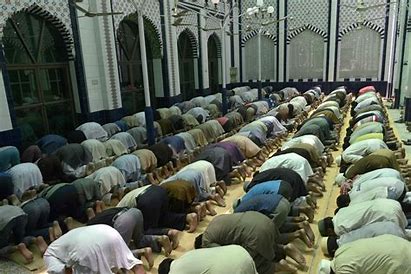
The many mosques visited in other countries reinforce history’s record of acceptance and tolerance of other faiths by Muslim leaders.

One appreciates an argument that is made by Steyn that socialist government policy has the potential for demotivating entrepreneurs and subsidizing economic freeloaders.

But, Steyn fails to criticize or comment on unregulated capitalism that increases the gap between rich and poor and presumes that “free enterprise” equates equal opportunity. 

The world economy is in a state of transition like that which was experienced in the industrial revolution.  Jobs are being lost because they are being replaced by technological advances. 

Truly free enterprise does not exist in the world.

Today’s technocratic revolution is as tragic to an automobile assembler or coal miner in 21st century as it was to a loom operator in the 19th

The United States, like other nations in the world, adopt unfair tax codes that subsidize big oil, big banks, and dying industries.

Who does the major bread winner in a family turn to when they lose their job because of changes beyond their control?

It is the job of private and public organizations to educate and train workers displaced by technological change.  This re-education creates jobs while ameliorating unemployment.

Limbaugh rails against Trump by suggesting he is waffling on a political commitment to build a wall between Mexico and the United States.  Trump responds with an equal level of irrationality by closing vital functions of the government to force Congress to fund the wall.

Trump’s wall between Mexico and the U.S. is a joke. It does nothing to serve the truth of what immigrants have contributed to America.

Steyn is obviously well read and informed but one feels like he plays the publicity game of talking heads. Some (not all) Fox newscasters, CNN contributors, and other pundits are darlings of an ideological group that get paid for what their constituency wants to hear.  It has little to do with truth.

Steyn, like many talking heads (liberal and conservative), wastes his intelligence; pandering to an ideological constituency, rather than serving the general public by searching for the truth.

Demography and economic conditions change. They are a part of the human condition that can be managed by recognizing human nature’s fundamentals, and conscientiously creating nations that are governed by rule-of-law. There is a truth but it lies in freedom and social responsibility. 

PARADOX OF POWER

Kotkin’s first volume about Stalin’s rise to power offers lessons to modern American and Chinese governments.  China seems on one path; America another. 

Audio-book Review
By Chet Yarbrough

(Blog:awalkingdelight)
Website: chetyarbrough.blog

Stalin, Volume I: Paradoxes of Power, 1878-1928STALIN VOLUME 1

Written by: Stephen Kotkin

Narration by:  Paul Hecht

STEPHEN KOTKIN (AMERICAN AUTHOR, HISTORIAN, ACADEMIC)

STEPHEN KOTKIN (AMERICAN AUTHOR, HISTORIAN, ACADEMIC)

Stephen Kotkin offers a remarkable and comprehensive view of Russia’s 1917 Revolution in “Stalin, Volume I”.  Kotkin succinctly describes how power in the hands of one may advance a nation’s wealth, but at a cost that exceeds its benefit.

Kotkin’s first volume about Stalin’s rise to power offers lessons to modern American and Chinese governments.  China seems on one path; America another. 

The formation of “checks and balances” sustains America’s economic growth, even in the face of leadership change.  In contrast, a “rule of one” has moved China’s economic wealth to new heights, but “rule of one” threatens its future success; particularly if it follows Stalin’s, and now Putin’s mistaken path.

SIZE OF CHINA IN COMPARISON TO AMERICA
FORMER U.S.S.R.

In historical context, Kotkin profiles the three most important characters of the Russian revolution; e.g. Vladimir Lenin, Joseph Stalin, and Leon Trotsky.  Kotkin documents the personalities and circumstances of the pre-U.S.S.R.’ economy; i.e. an economy based on the disparity between wealth and poverty, federalization and centralization, political idealism and pragmatism.

MAO ZEDONG (1893-1976, FOUNDING FATHER OF PEOPLE’S REPUBLIC OF CHINA.)

MAO ZEDONG (1893-1976, FOUNDING FATHER OF PEOPLE'S REPUBLIC OF CHINA)

Three leaders in the Chinese revolution were Mao Zedong , Zhou Enlai, and Deng Xiaoping.  Zhou Enlai is the moderate of the three in trying to preserve traditional Chinese customs.  Mao is by some measures an idealist who attempts to expand the theory of communism.  His idealism creates a bureaucracy that nearly derails China’s economy.  “The Gang of Four” radicalized Mao’s idealism into a more Stalinist view of communism.  “The Gang of Four”s radicalization of Chinese communism is eventually reversed with the leadership of Deng Xiaoping, but not until after the Tiananmen Square massacre.

DENG XIAOPING (CHINA'S CHAIRMAN OF THE CENTRAL ADVISORY COMMISSION 1982-1987)

DENG XIAOPING (CHINA’S CHAIRMAN OF THE CENTRAL ADVISORY COMMISSION 1982-1987)

After Tiananmen Square, Deng recognizes the power of public dissent.  Rather than increasing suppression, Deng opens the Chinese economy to a degree of self-determination.  Deng does not abandon communist ideology.  However, he recognizes the importance of economic growth and how less doctrinal communist policy would unleash the power of people as demonstrated at Tienanmen Square.

Deng dies in 1987 and the government of China is reshuffled.  Deng’s eventual successor, President Xi, emphasizes the idealism of communism that threatens return to a Stalinist-like terror in China; i.e. a terror enhanced by technological invasion of privacy, and “big brother” control.

XI JINPING (GENERAL SECRETARY OF THE COMMUNIST PARTY OF CHINA AND PRESIDENT OF THE PEOPLE’S REPUBLIC OF CHINA)

XI JINPING (GENERAL SECRETARY OF THE COMMUNIST PARTY OF CHINA AND PRESIDENT OF THE PEOPLE'S REPUBLIC OF CHINA)

President Xi returns to Mao’s authoritarian belief in enforced collectivism with the idea of expanding China’s new-found wealth through government subsidization of industry.  Xi renews emphasis on rule by the Communist party, headed by himself.

GAP BETWEEN RICH & POOR

The growing disparity between rich and poor in both China and America is widely seen in the internet, and with increased international travel.  China’s rapid rise in economic wealth is unevenly spread, just as it is in the United States.  The difference is in how that economic disparity is addressed.

In America, private dissent is an inherent part of its history which lauds individualism, self-determination, and freedom (within the boundary of “rule of law”).  But, these characteristics denigrate American citizens who are unable or unwilling to reap the rewards of  individualism, self-determination, and freedom.  These are the Americans sleeping on America’s streets and living in their cars. 

America’s system of governance allows a rift between the rich and poor because it is based on a system of “checks and balances”.  America’s system demands debate, and more broadly considered human consequence, before government action is taken.

LIVING ON THE STREET IN AMERICA

HOMELESS

In China, the homeless are compelled to work at jobs created by the government.  China’s system of governance is driven from the top, with limited debate, and more singularly determined public consequence.  Government action is autocratically determined.

BEIJING CHINA HIGH RISES (TYPICAL IN MAJOR CHINESE CITIES 2018)

BEIJING-In China, dissent is discouraged and freedom is highly restricted, but homelessness is addressed with housing for the poor at subsidized prices. 

In ancient China, singular autocratic rule offered a mixed blessing.  Some of the world’s wealthiest and most cultured governments were created in China.  These ancient dynasties successfully expanded their economies to make China a world leader in science and industry.  At the same time, with few checks and balances, the history of China’s “rule of one” resulted in periodic social and economic collapse.

In some ways, China’s ancient civilization’s rise and fall is reminiscent of the rise and fall of the U.S.S.R. after 1917.  Kotkin describes the turmoil surrounding Russia in 1917.  The beginning of WWI and Germany’s invasion exaggerate the paradox of power in Russia.  Modern European, Asian, North American, Middle Eastern, and African countries are experiencing some of the same economic, and political disruption.

On the one hand, the peasant is a proud Russian; on the other hand, he is a slave of the landed gentry; indentured to preserve the wealth of others at the cost of his/her life.

RUSSIAN SERFS AND PEASANTS

In 1917, the Czar and wealthy aristocracy depend on a population of the poor to defend the government.  Russian peasants are faced with defending a government system that recognizes them as serfs, agricultural laborers indentured to wealthy landowners.  (A similar system existed in China prior to 1949.) 

In 1949, Mao recognizes the same inequity and judiciously separates landlords from their vast estates and re-distributes it to tenant farmers who worked for them.  Ownership restructuring improved agricultural production until Mao tried to make small collectives into large collectives with Communist party oversight.  Formation of a Chinese Communist Party bureaucracy distorted actual production and de-motivated farmers that did the real work of farming.  The result of production over-estimation caused a nation-wide famine.

KARL MARX (BORN TRIER, GERMANY 1818-DIED LONDON, ENGLAND 1883)

KARL MARX (BORN TRIER, GERMANY 1818-DIED LONDON, ENGLAND 1883)

Kotkin notes Russian social and economic inequity is a breeding ground for a Leninist/Marxist revolution.  Marx’s dialectic view of the wealth of nations suggests that governments will change based on the growing recognition of the value of labor; i.e. beginning with agrarian feudalism, growing through industrialized capitalism, and socialism; reaching to a state of equilibrium in communism (a needs-based and communal sharing of wealth).  Marx suggests all nations will go through this dialectic process.

Lenin bastardizes Marx’s dialectic idealization.  Lenin believes the process can be accelerated through revolution and centralized control of the means of production.  This idea is adopted by Mao Zedong in China in 1949 with early success.  However, Mao expands the collectivist policy with “The Great Leap Forward” in 1958.  Mao’s broader collectivist policy collapses the Chinese economy in 1962.  Thousands of Chinese die from starvation as communist overseers exaggerate food production quotas.

Collectivist expansion is an oversimplification of Kotkin’s explanation of Vladimir Lenin’s form of communism but it shows the risk of “rule of one” governance.  Even Lenin is conflicted about how Russia will grow into a communist society.

VLADIMIR LENIN (1870-1924, LEADER OF THE 1917 RUSSIAN REVOLUTION)

Lenin recognizes the social and economic distance that Russian peasants must travel to gain an appreciation of a new form of government.

Much of the Russian population, like the Chinese in 1949, were illiterate and living at a subsistence level; bounded by a non-mechanized agrarian economy.  Lenin vacillates between growth through education and growth through autocratic command.  Kotkin suggests that Lenin gravitates toward centralized command because of the need to consolidate power within the revolution.

What Lenin needed in 1917 were followers that could get things done.  Before being felled by brain disease and stroke, Lenin relies on the abilities of men like Joseph Stalin.  Mao relies on his revolutionary Red Guard.  Kotkin argues that Stalin became close to Lenin as a result of his organizational skill and his penchant for getting things done without regard to societal norms.  For Mao, close associates like Deng Xiaoping, were his enforcers.  Stalin becomes the most powerful enforcer in Lenin’s revolution.  Deng eventually becomes the leader of Communist China.

Though Stalin wields great enforcement powers, Kotkin infers Trotsky is the intellectual successor to Lenin.   Stalin and Trotsky are shown to be at odds on the fundamental direction of the Bolshevik party, the successor party of Russian communism.  However, the exigency of getting things done, as opposed to understanding the goals of creating a Leninist/Marxist government, were paramount goals for consolidating power after the revolution.  Kotkin explains how Stalin became a defender of Leninist doctrine while Trotsky became an antagonist and eventual apostate because of Stalin’s manipulation of events.

MAO AND STALIN IN 1949

MAO AND STALIN IN 1949

China waits and observes Stalin’s method for rapid industrialization of Russia.  Kotkin explains that Stalin gains an intimate understanding of Lenin’s doctrines while Trotsky chooses to compete with Lenin’s philosophical positions.  The threat of factionalism accompanies Trotsky’s doctrinal departures.

The irony of the differences between Stalin and Trotsky are crystallized by Kotkin.  Stalin’s intelligence is underestimated by both Lenin and Trotsky.  Stalin carefully catalogs and memorizes Lenin’s communist beliefs.  In contrast, Trotsky chooses his own communist doctrinal path based, in part, on Lenin’s writing.  Here, another similarity is drawn with the near religious following of Mao’s Red Book with aphorisms about governing oneself and China.

Kotkin suggests Lenin views Trotsky as a more likely successor than Stalin as leader of the country.  Lenin appreciates Stalin’s organizational ability but views Stalin’s temperament as too volatile for long-term government control.  In 1922, Lenin is said to have dictated a “testament” saying that Stalin should be removed from his position as General Secretary.  Lenin’s “testament” critiqued the ruling triumvirate of the party (Stalin, Zinoviev, and Kamenev) and others like Bukharin, Trotsky and Pyatakov but the pointed suggestion of removal for Stalin is subverted.

After Lenin dies, the triumvirate chooses to ignore Lenin’s “testament” for Stalin’s removal.  After all, Stalin is a doer; i.e. he gets things done.  Just as Stalin suppresses opposition to his interpretation of Lenin, China suppresses opposition to the Communist Party’s doctrines.  Doctrinal differences are successfully suppressed in China until the the failure of “The Great Leap Forward” in the 1950’s.  The consequence of “The Great Leap Forward”s failure is the cultural revolution in the 1960’s.

AMERICA'S GDP
CHINA'S GDP

In America’s history the economy slugs along with setbacks and successes.  Though 1929 sees the collapse of the American economy, it recovers with government intervention, the advent of WWII, and the push and pull of a decision-making process designed by the framers of the Constitution.  That push and pull is from leadership that is influenced by the checks and balances of three branches of government.  That same process saves the American economy in 2008.  The power and economy of America has grown to become the strongest in the world.

Kotkin’s research suggests young Stalin is something different from what is portrayed in earlier histories.  Stalin grows close to Lenin because he is the acting arm of Lenin’s centralized command.  Lenin relies on Stalin to get things done.  He is Lenin’s executor.  At the same time, Lenin turns to Trotsky as an economic adviser to ensure a more comprehensive understanding of what needs to be done to stabilize the revolution.  Trotsky believes in the importance of centralized control of the economy.

Both Lenin and Stalin believed in communism but the first acts on a vision of the future; the second acts on the “now”. 

DENG XIAOPING AND PRESIDENT XI

China’s Deng and Xi seem to reverse Lenin’s and Stalin’s reasoning.  Rather than Deng being like Lenin, he acts on China in the “now”. 

Xi seems more like Lenin and looks at China’s future based on the ideals of communism. However, from an American perspective, all autocrats common failing is belief in “rule of one”. The rising dictatorship of Putin is doomed to fail but there is no guarantee that his replacement will either be soon or less repressive.

Glasnost and perestroika fail to overcome that belief.

Kotkin puts an end to any speculation about Lenin being poisoned by Stalin.  Kotkin argues that Lenin died of natural causes, strokes from a brain disease.  What Kotkin reveals is the internecine war that is waged between Stalin and Trotsky while Lenin is dying.  The strokes steadily debilitate Lenin and suspicious written pronouncements are made that may or may not have originated with Lenin.  Lenin’s secretary is his wife.  Some evidence suggests a missive from Lenin saying Stalin should not be his successor, noting Trotsky as a better choice.  Kotkin suggests such a missive is unlikely.  Lenin seems to have had his doubts about both men.

Succession in modern China seems less filled with intrigue than communist Russia but the opaqueness of China’s politics makes the rise of Xi a mystery to most political pundits.  What seems clear is that China’s rise and fall has always been in the hands of the “…one”.

PRESIDENT XI’S ONE BELT, ONE ROAD PLAN FOR CHINA’S FUTURE

CHINA'S BELT AND ROAD PLAN

History will be the arbiter for President Xi’s success or failure with a road and belt plan for China’s economic future.  The same may be said for President Trump’s focus on the virtue of selfishness for America’s economic future. The fundamental difference between America and China is Xi has no “checks and balances”; American Presidents have the Supreme Court, Congress, and a 4-year-election-cycle to assuage arbitrary government action.

AYN RAND (1905-1982)

AYN RAND (1905-1982, AUTHOR WHO FIRMLY BELIEVED IN THE VIRTUE OF SELF-INTEREST AND UNREGULATED CAPITALISM.)

In Russia, Trotsky is characterized as an intellectual while Stalin is a pragmatist.  In China, Deng is characterized as a pragmatist while Xi seems a doctrinal theorist.

In history, Trotsky is highly opinionated and arrogant.  Stalin is street smart and highly Machiavellian.  Trotsky thinks right and wrong while Stalin thinks in terms of what works.  In China, Deng is Stalin and Xi is Trotsky.  In America, Trump is Stalin and his opposition is Trotsky-like do-nothings.

Trump lost the election in 2020 because–from an American perspective, all autocrats common failing is belief in “rule of one”.

Stalin is reputed to be temperamental while Trotsky is aloof.  Though Trotsky insists on centralized control, Stalin argues for federalization.  Stalin paradoxically argues for federalization because he knows Russian satellite countries want independence, but he will act in the short-term for centralization to get things done.  And of course, Stalin clearly adopts centralized economic planning for the U.S.S.R.; i.e., another of Kotkin’s paradoxes of power.

Ironically, though Putin is now showing himself to be as ruthless as Stalin, he is unable to exercise the same level of dictatorial control. Unrest is not quelled in the face of the Russian people’s assessment of Putin’s justification for the Ukrainian war.

There is much more in Kotkin’s powerful first volume about Stalin and the Russian revolution.  Germany’s role in the revolution is a case in point.  The writing is crisp and informative.  The narration is excellent.  After listening to “…Volume I”, one looks forward to Kokin’s next which is published this year.

The past is present in Kotkin’s excellent biography of Joseph Stalin.

COMMUNISM

Audio-book Review

By Chet Yarbrough

(Blog:awalkingdelight)

Website: chetyarbrough.blog

Karl Marx: A Nineteenth-Century Life

karl marx

By Jonathan Sperber

Narrated by Kevin Stillwell

JONATHAN SPERBER (PROFESSOR AND AUTHOR)

JONATHAN SPERBER (PROFESSOR AND AUTHOR)

Having just returned from China (more about the trip in a future blog), it seems apropos to revisit Jonathan Sperber’s biography of Karl Marx.  In many respects, China’s resurgence as a major economic power suggests Marx may have outlined an economic system with some strengths, but communism and China’s form of communism have catastrophic weaknesses.

Johnathan Sperber has gathered an impressive amount of data in his history of Karl Marx’s life.  Sadly, his presentation is not equal to his collection.  Unlike biographies done by Robert Caro (who wrote “The Power Broker” about Robert Moses, the land planner of New York, and former President, Lyndon Johnson) or William Manchester (a Winston Churchill Biographer), Sperber fails to bring his subject to life.

KARL MARX (BORN TRIER, GERMANY 1818-DIED LONDON, ENGLAND 1883)

KARL MARX (BORN TRIER, GERMANY 1818-DIED LONDON, ENGLAND 1883)

Marx is considered by some to be one of the three most influential economists that ever lived (Adam Smith and John Maynard Keynes being the other two.)   That high praise is not forcefully presented in Sperber’s biography.  Sperber offers facts but leaves coherence to the reader.

Marx means something to the 21st century.  Some might argue America is reaching a point in the history of capitalism that is foretold by Marx’s theory of socialist economics.  As Sperber notes, Marx believed capitalism was a step in the economic evolution of the world, leading to a governmental revolution.  Marx believed capitalism would reach a nadir of conflict between haves and have-nots because of social inequity inherent in capitalist economies.

As Sperber notes, Marx lived through and wrote about social conflict created by feudalism and capitalism in the mid-nineteenth century.  Marx is raised in Prussia, ruled by a Czar in a feudal economic system. He witnesses growing discontent of feudalistic working-class Russia.

'Remember, an economic boom is usually followed by an economic kaboom,'

Marx created a theory of economic evolution showing feudalism, capitalism, socialism, and communism as progressive improvements in the lives of all people.

feudalism

Feudalism grew out of the rule of Kings and Czars with a small aristocracy receiving privileges of wealth and property with the bulk of human civilization indentured to the privileged class.

As the indentured, under-privileged population grew, discontent led to revolution.

Aristocracy Government

In 1776, America broke with English aristocracy to form a “checks and balances” democracy; in 1789, the French population broke with absolute monarchy to form a populist democracy; in 1848, German states rebelled against the aristocratic Prussian confederation of thirty-nine states ruled by an aristocracy and chose various forms of government to establish their own nationalist identities.

DENG XIAOPING (CHINA'S CHAIRMAN OF THE CENTRAL ADVISORY COMMISSION 1982-1987)

DENG XIAOPING (CHINA’S CHAIRMAN OF THE CENTRAL ADVISORY COMMISSION 1982-1987,) In 1980 Deng Xioping, though maybe not in a revolutionary sense, changed the direction of communism in China.

Each Chinese change in governance led to more liberal, slightly more democratic, and capitalist economies.

China did not abandoned communism but insisted on a more pragmatic way of governing.  Deng’s famous quote,  “It doesn’t matter whether a cat is black or white, as long as it catches mice. …. “,  crystallizes China’s insistence on a communist form of government.

XI JINPING (GENERAL SECRETARY OF THE COMMUNIST PARTY OF CHINA AND PRESIDENT OF THE PEOPLE'S REPUBLIC OF CHINA)

XI JINPING (GENERAL SECRETARY OF THE COMMUNIST PARTY OF CHINA AND PRESIDENT OF THE PEOPLE’S REPUBLIC OF CHINA)

The current President of China, Xi Jinping, reinforces Communism in China by imposing party rule over China’s semi-autonomous provinces; e.g. Tibet and Hong Kong.

Hong Kong is presently in the throes of resistance to China’s encroachment on their semi-autonomous existence. Hong Kongers’ discontent could be seen in traveling to Hong Kong months before today’s demonstrations.

As nations prospered during the industrial revolution, more mercantile economies formed.  Aristocracy became broadly defined by wealth rather than inheritance.  Parliaments and congresses were created to represent wider population interests.

However, Sperber explains Marx believed that the greatest part of nation-state citizens remained in poor economic condition; even when based on mercantilism.  Marx, looked at the economic condition of the world, and noted that transition from feudalism to mercantilism only marginally improved living conditions for the majority of state citizens and, in fact, actually worsened the condition of the young and impoverished who worked long hours for little pay.  To Marx, capitalism just exacerbates the mercantile economic condition of the poor.

CHINA MOVING 250 MILLION PEOPLE INTO CITIES ACCORDING TO THE NEW YORK TIMES

CHINA IS MOVING 250 MILLION PEOPLE INTO CITIES ACCORDING TO THE NEW YORK TIMES (Housing is un-affordable for a large percentage of new city dwellers.  The government of China subsidizes housing for many Chinese that come from rural areas.)

In 2018, it seems China may be reaching a capitalist tipping point where low wages do not cover the cost of living.  Though many Chinese have moved from rural areas, wages remain low in comparison to the cost of living.  Housing and health coverage is un-affordable for a large percentage of new city dwellers.  The government of China subsidizes housing for many Chinese that come from rural areas to mitigate the plight of the poor.

ADAM SMITH (1723-1790, AUTHOR OF -THE WEALTH OF NATIONS)

ADAM SMITH (1723-1790, AUTHOR OF -THE WEALTH OF NATIONS) Marx developed the labor theory of value to suggest that classical economic theory suggested by Adam Smith leaves too many people in the gutter.

Marx felt Smith did not properly quantify the value of labor.  Marx argued that capital was created to benefit owners at an unfair expense to labor.

Marx believed capitalist aristocracy continued to victimize the working class, trading one form of indenture for another.  Marx suggested democracy was an evolution for economies that widened the benefited population but still left most workers underpaid, undernourished, and disadvantaged.

Sperber clearly points out that Marx did not believe that communal ownership of property redressed the inequities of state’ economies; i.e. Marx argued that inequity is caused by capital creation that only benefited ownership and undervalued labor that created capital.

China’s current experience seems to show Marx may have been right to believe communal ownership has little to do with state’ economics because communal ownership remains a dominant factor in China’s extraordinary economic resurgence.  Property is not owned by individuals in China.  Land is either owned by a collective or by the State.

BEIJING CHINA HIGH RISES (TYPICAL IN MAJOR CHINESE CITIES 2018)

Though land cannot be owned by Chinese citizens, distribution of capital has been widely increased through rising prices of high-rise condominiums. Many high-rise condominiums are owned by individual Chinese.  Some citizens inherited or bought condominiums at such low prices–appreciation made them rich.

CHINA MAP

The fly in the ointment of their newfound wealth is the price of sale must be agreed upon by the government which creates an artificial bubble that may burst into hyper-inflation, with the potential for a nation-wide economic collapse. 

China moves to address a potential economic collapse in an inventive and creative way. What China is doing--is trying to widen their market for goods with an economic growth plan called "Belt and Road".  China invests billions of dollars in other countries infrastructure.  China is betting that these improvements will create consumers for Chinese manufactured products.  A side benefit is that these infrastructure improvements offer employment to Chinese citizens and businesses.  (As can be read in news magazines like the Economist and papers like the Wall Street Journal and New York Times, some nations resent China's investments in their countries for various nationalist and economic reasons.)
China is also investing in the world's natural resources to expand their manufacturing capability.  The question is whether these long-term investments will pay off in time to stabilize China's construction market. The construction market is where individual Chinese citizens carry their wealth. Condominium prices will reach a limit.  In 2018, a 300 square foot condominium sells for over $500,000 in China's larger mainland cities.  That is nearing $2,000 per square foot (and Chinese buyers do not own the land).  In the United States, most housing is less than $200 per square foot; including the land.   Continued wealth distribution in China depends on the success of the "Belt and Road" program.

Marx supported worker unionization’s effort to equalize benefit through a more equitable distribution of capital.  He was deeply involved in the “International Workingmen’s Association” (aka First International).  Herein lays the evolution of capitalism to socialism and Marx’s belief (and maybe Xi’s belief) in the fairness of economic communism.  Modern China seems to be addressing the idea of a more equitable distribution of capital on paper, but the paper is based on what appears to be an unsustainable real estate market.

INCOME GAP

Piketty argues that the income gap widens once again, after World War II.  He estimates 60% of 2010’s wealth is held by less than 1% of the population; with a lean toward the historical 90% threshold. Moneyed interests have become the new aristocracy, as repressive and privileged as the Kings and Czars of the mid-19th century.

One can disagree with Marxian theory but the widening gap between haves and have-nots (the 1% and 99%,) is a real-world concern in the 21st century.

Marx’s solution for economic inequity is flawed but the condition he describes in the evolution of economies seems prescient. To most Americans, Marx’s communism is not the answer. 

RAZOR'S EDGE

When CEOs of companies are making over 200 times average laborers’ income, there is a glaring problem in the current condition of capitalist economies. Instead of income differences, it is housing value in China.  China is on a razor’s edge that may as easily cut their throat as shave their face.

This is a disappointing book because it garners too little interest in the power and influence of Marx’s economic theories.  However, it offers insight to what Marx may have had right (the importance of distribution of wealth) and what he had wrong (communal productivity).  China is using a different vehicle than America for distribution of wealth but the principle of wealth-distribution addresses what ails all forms of government.

AMERICAN ELECTIONS

Audio-book Review
By Chet Yarbrough

(Blog:awalkingdelight)
Website: chetyarbrough.blog

Sons of Wichita

By: Daniel Schulman

Narrated by: Daniel Schulman

DANIEL SCHULMAN (AUTHOR, AND SENIOR EDITOR OF MOTHER JONES-MAGAZINE NOMINATED FOR 27 NATIONAL AWARDS WITH 6 WINS)

DANIEL SCHULMAN (AUTHOR, AND SENIOR EDITOR OF MOTHER JONES-MAGAZINE NOMINATED FOR 27 NATIONAL AWARDS WITH 6 WINS)

When organizations became people, American elections became less democratic. The wide gap in fund raising between Trump and Biden is disturbing. The story is the same–corporations are currying favor with the next President. This is not “one person, one vote”. It’s corporate influence peddling. The shoe is simply on a Republican’s rather than Democrat’s foot in 2024.

Corporate contributions to the election process distort the meaning of “one person – one vote”.  Daniel Schulman’s story of the Koch brothers is an example of what is wrong with the Supreme Court’s 2010 decision that gave corporations person-hood.

The Koch brothers are tough-minded, intelligent, well-educated engineers; driven by the arithmetic of life.   Business leaders often see the profit of a transaction without considering the cost to the general public.  Life is not a transaction.  Life is multi-dimensional puzzle of genetic pre-disposition, learned behavior, and interpreted experience.

CHARLES (LEFT) AND DAVID KOCH

Like Donald Trump, the Koch brothers make decisions based on profits without care for either the environment or the politics of the common good.

CHARLES (LEFT) AND DAVID KOCH

Daniel Schulman recounts details of the Koch brothers’ lives that make one admire the Koch brother’s strengths and fear their weaknesses. This became particularly clear in the last few days when Charles Koch admits that injecting partisanship in their political drive for a libertarians’ economy was a mistake.

One doubts that Charles Koch is abandoning libertarianism but he implies partisanship is destructive to the cause of less government as good government. As was inferred in the November 13, 2020 WSJ Koch interview, “…Republican partisanship over the years blew up a lot of bridges.”

JOSEPH KENNEDY (1888-1969) As a listener is titillated by Schulman’s characterization of each of the brothers, one is reminded of Joseph Kennedy Senior’s biography (“The Patriarch”) and Kennedy’s determination that no circumstance justifies America’s entry into WWII.  Kennedy’s underlying belief was that German atrocity is a matter of arithmetic not politics.  Joseph Kennedy, like the Kochs, believed “living life” is transactional.

JOSEPH KENNEDY (1888-1969)

Kennedy believed Hitler could be contained like any unfair business conglomerate that fails to follow the rules of society.  To a business mogul, everything is negotiable whether dealing with a mad-man or saint. Charles Koch, like Joseph Kennedy, is the patriarch of the Koch family.  He. like Kennedy, believes life is merely a matter of arithmetic. 

AYN RAND (1905-1982)

AYN RAND (1905-1982, AUTHOR WHO FIRMLY BELIEVED IN THE VIRTUE OF SELF-INTEREST AND UNREGULATED CAPITALISM.)

Charles is a devotee of Ayn Rand and Friedrich Hayek.   Rand was an author and founder of a philosophical system called “Objectivism” while Hayek was an academic economist-author, and follower of a philosophical system that reduces economics to the arithmetic of free markets. 

FRIEDRICH AUGUST von HAYEK (1899-1992)

Charles Koch, and his brothers David and William, grew a multi-million dollar company into a multi-billion dollar conglomerate based on Rand’s, and Hayek’s philosophy.  (In fairness, this is an oversimplification and distortion of Hayek in the sense that he did believe government has a responsibility for a safety net for the poor, unemployed, and disabled.)

FRIEDRICH AUGUST von HAYEK (1899-1992)

Growing millions into billions of dollars is unquestionably a great accomplishment, born of hard work, dedication, and tenacity.  (Of course, it helps to start out, like Donald Trump, with a million dollars or more.)

The Koch brothers were born rich and raised in a safe and competitive family environment.  Schulman explains actions of Charles, David, and William that show how intelligent, driven Americans can adopt Rand and Hayek’s philosophy to become enormous job creators, philanthropists, and benefactors for American society. 

On the other hand, the Koch brother’s story shows how their philosophical beliefs ignore the reality of human nature that relegates many to a cycle of poverty; i.e. a cycle engendered by poor education, unsafe neighborhoods, a lack of health care, and un-employ-ability.

Charles, David, and William Koch offer great opportunities for workers of the world through the arithmetic of profit, growth, and self-interest.  However, if a worker is not smart or healthy enough to join the Kochs’ group of workers, they have no value; they are the bums one sees sleeping on the sidewalk, gang members selling drugs and sex, or beggars asking for lose change.

The Koch brother’s success lies in their alloyed belief in self-interest, their inherited wealth, genetics, environment, and luck.  The Koch’s success is a matter of the arithmetic of wealth, power, and privilege; therein lies the flaw in the use of dark money in American elections.  To presume equal opportunity exists in America because of self-interest is ridiculously simplistic. 

The Supreme Court gifted an advantage to wealthy corporate owners.  Dark money from corporations distorts “one person, one vote” democracy.

MONEY

Schulman infers the Koch brother’s arithmetic view of the world is skewed.  The Koch’s imply only market driven, free choice of employees is what makes companies and America grow stronger.  Charles argument is compelling except it is based on theories of two academics (Rand’s self-interest and a distortion Hayek’s economic beliefs).   When 21st century Americans cannot get a decent education, they are on a treadmill of malnutrition and genetic disadvantage.  They often live in unsafe and unhealthy environments, and are destined to become part of an underclass society.

Charles’ arithmetic works within a corporate culture that gives no value to government’s responsibility for health, education, and welfare.  Even Hayek, as an academic, suggests that the disadvantaged of society should be protected from the extremes of disablement, poverty, and starvation.  In contrast, Ayn Rand’s belief is that people are poor because they are lazy, unproductive, and dependent on the charity of others; i.e. being poor, to Rand, is a personal fault; not a societal concern.

Life is not arithmetic.  A human life is not just a matter of dollars and cents. Covid 19 continues to be grossly misrepresented by America’s President.

Many inner city poor cannot get a job so they sell drugs or their bodies to put bread on the table.  Who is going to hire a person arrested for peddling drugs or serving time for prostitution.  The cycle of poverty is perpetuated by the belief that America is a free enterprise market.  Everything from agricultural products, to drug manufacturers, to the energy industry, to cars we drive, and planes we fly are subsidized by the American tax dollar.

'There's nothing wrong with capitalism that a government subsidy can't fix.'

To the Koch brothers, free markets and the arithmetic of life will correct unemployment and the disadvantage of the poor.  The idea of a free market is a joke.  Markets are not free.  Many industries in the United States are subsidized in one way or another by federal tax dollars.

Schulman’s biography infers that Charles, David, and William believe less government interference will correct the maladies of society.  Public health, education, and welfare are private sector responsibilities, particularly in Charles’ idealistic world.  This view ignores the reality of human nature.  There is good and evil in all human beings.  Power, money, and self-interest are swords with two edges that build and destroy societies.  Without government, there is no protection from the evil side of human nature.

THOMAS HOBBES (1588-1679)

THOMAS HOBBES (1588-1679) Without government, there is no protection from the evil side of human nature.

Schulman explains a rift that occurs between William and Charles and the future management of the Koch conglomerate. William Koch’s legal battles with Charles and David (William is the twin brother of David) reflect the frailty of unfettered human nature.
WILLIAM KOCH (AMERICAN BUSINESSMAN, SAILOR, AND COLLECTOR)
WILLIAM KOCH (AMERICAN BUSINESSMAN, SAILOR, AND COLLECTOR)(William is the twin brother of David. His legal battles with Charles and David Koch reflect the frailty of unfettered human nature.)

Human nature is good and evil for all; including the Koch brothers.  Government, as noted by Thomas Hobbes, is to protect people from the evil that is inherent in humankind.

President Trump is a deluded antiquarian leader with no moral center. “America first” is code for making the rich richer.

This is not to argue that every time government legislates or acts, it is in the best interest of the public.  However, murder, rape, and theft are unfettered human choices without government.  Murder comes in many forms, including gas leaks, environmental contamination, and scientifically proven causes for global warming.

Great industrialists, like the Koch brothers, are a boon to the American economy and to millions of American citizens but to believe their success is based on limited government is self-delusion. American government created a safe environment for “free” enterprise with relative freedom of choice; not absolute freedom of choice.

POLLUTION IN BEJING, CHINA

INDUSTRIAL POLLUTION ON A BAD DAY IN BEJING,, CHINA

Schulman suggests Charles Koch believes a plutocracy of industrialists, managed by the principles of market driven self-interest, will cure the maladies of American society.

The arithmetic of business fails to address the nature of human beings.  Creating jobs and wealth does not raise all boats; i.e. jobs and wealth are quantifiable variables in a sea of un-quantifiable needs.

Human nature may change over time but only when, or if, humans reach a level of belief, and action “to do others as you would have them do to you”.  Until human nature is rid of evil, something more than market driven self-interest is required to advance society.

In the end, one concludes from Schulman’s fascinating book, the Koch brothers are neither devils nor angels; just humans with wealth, extraordinary abilities, tenacity, and luck.

CLIMATE CHANGE

Audio-book Review
By Chet Yarbrough

(Blog:awalkingdelight)
Website: chetyarbrough.blog

This Changes Everything: Capitalism vs. the Climate

This Changes Everythiing

Written by: Naomi Klein

Narration by:  Ellen Archer

NAOMI KLEIN (CANADIAN AUTHOR, SOCIAL ACTIVIST, FILMAKER)

A change of book titles comes to mind in reviewing Naomi Klein’s book, “This Changes Everything”.  A first thought is a title like “Beat the Drum.”   On second thought, it is the question “Who Gets to Decide?”  Ninety seven percent of “…actively publishing climate scientists” say climate warming trends are likely due to human activity.

TRUMP AND CLIMATE CHANGE

Deniers think current weather phenomena are a natural aberration that will be corrected by time.  Others are apathetically fatalistic and call global warming a myth.  But almost universally, science is saying climate warming is real.

GLOBAL WARMING
Deniers think current weather phenomena are a natural aberration that will be corrected by time. But almost universally, science is saying climate warming is real.

A “Beat the Drum” title is meant to convey appreciation of Naomi Klein’s studied effort to awaken the general public to the truth of global warming.  (She is not a scientist but a writer, researcher, and social activist.)  However, the title “Who Gets to Decide?” is meant to convey a monumental weakness in Klein’s spun presentation on solutions for the problems of global warming.

CAPITALISM-COMMUNISM
Klein’s argument that global warming is a consequence of capitalism is false.  Global warming is a consequence of human nature.

Klein’s argument that global warming is a consequence of capitalism is false.  Global warming is a consequence of human nature.  To date, democratic capitalism is the only economic form of government that offers a degree of freedom for all Peoples subject to rule of law.  Democratic capitalism unleashes the power of human nature, both good and bad.  Until some better form of governance is created, the best chance for a global warming solution is captialism.  History shows freedom, subject to rule of law, is essential to a deliberative process that will provide best-case solutions to seemingly unsolvable problems.
GOVERNMENT
Capitalism is not the proximate cause of global warming.  It is the failure of the E.P.A., the President, and congressional legislators to do their job.

POLITICS AND SCIENCE
Global warming solutions lie in politics and science; not one or the other, but both.

Global warming solutions lie in politics and science; not one or the other, but both.

Einstein and fellow scientists prove that energy and mass are always equal.  That scientific proof leads to Nagasaki and Hiroshima’s atom bombs just as 97% of the scientific community’s proof leads to earth’s climate bomb.

Great Britain, France, Russia, and Germany were worn down by WWII.  American democratic capitalism makes the decision to end the war by using the atomic bomb.  One may argue that this decision is morally reprehensible but it ended a war that would have continued without definitive action based on the deliberative process of a democratic capitalist country. The same may be said for a pragmatic solution for global warming.

The world is suffering from a global warming war.  Eventually, that suffering will create a political consensus for something to be done to combat its consequence.  Evidence of something being done is everywhere.  By beating the drum Klein is creating sense of urgency about global warming.  What is misleading and spun by Klein is discounting of rich entrepreneurs, like Gates, Bloomberg, Branson, and Buffett, who are taking self-interested steps to curb global warming.  Yes, they are self-interested steps but self-interest is not inherently bad.  Self-interest is in the fight to abate global warming.
RICHARD BRANSON
Klein suggests that Branson expands his airline to make more money at the cost of further pollution.

Klein suggests Branson expands his airline to make more money at the cost of further pollution.  (In truth Branson did sell his airline in 2016.)  Branson is a pariah to Klein because of his self-interest in vertically integrating research for alternative fuels for plane travel.

Klein explains Branson is only spending two to four hundred million dollars for research on alternate fuels while having pledged three billion dollars over ten years.  One wonders, how many rich have spent one million dollars, let alone two to four hundred, on alternate fuels.  Klein infers Branson is all show and no go by reaping publicity benefit while raping the global environment.  Whatever Branson’s motive may be, two to four hundred million dollars for a less polluting fuel is better than doing nothing.

Klein vilifies Buffett for buying railroads because they are transporting coal.  Klein offers no suggestion that railroads are a more energy-efficient than some other forms of material transportation.  Klein infers Buffett made the railroad investment out of self-interest.  He probably did but that is not proof of a lack of concern about global warming.   Klein infers Buffett’s investment decisions should be dictated by whom?  Who gets to decide?

WARREN BUFFETT (NET WORTH 75.2 BIILLION DOLLARS)
Klein vilifies Buffett for buying railroads because they are transporting coal.  Klein offers no suggestion that railroads are a more energy-efficient than some other forms of material transportation.

Because people like Klein are beating the drum, the largest coal producer in the world has lost 95 percent of its stock value.  The investing public finds that the industry misleads investors on its liability as a climate polluter.  This is democratic capitalism in action.

Self-interest, good and bad, is the nature of human beings.  Klein and others need to continue to “Beat the Drum” but decisions on what is to be done will be from a political consensus and action from leaders of the world and the scientific community.  It is not what Klein says so much as how she says it.  Money, power, and prestige are human nature’s motivations.  It will be a matter of competing self-interests that reach a consensus on the preservation of life.

Klein and others should continue to raise awareness and sense of urgency, but it is self-delusion to think human nature will change within the time frame of this world’s declining environment.

In a free society, all realize they have “skin in the game”.  Those governments that validate individual freedom offer the best hope for a global warming solution.  The answer to the question of “Who gets to decide?” is best left in the hands of nation-states that validate individual freedom.  America is one that holds the hope for a solution to global warming, in spite of its democratic capitalist leaning and today’s inept Executive and Legislative branch leadership.

MORALITY

Audio-book Review
By Chet Yarbrough

(Blog:awalkingdelight)
Website: chetyarbrough.blog

Books That Have Made History: Books That Can Change Your Life

Written by: Professor Rufus J. Fears

Lecture by:  Professor Rufus J. Fears

J. RUFUS FEARS (1945-2012--AMERICAN HISTORIAN, LECTURER FOR THE GREAT COURSES)

J. RUFUS FEARS (1945-2012–AMERICAN HISTORIAN, LECTURER FOR THE GREAT COURSES)

Rufus Fears is an excellent story-teller.  “Books That Have Made History” is a series of lectures given by Fears that dwells too much on God but delightfully entertains all who are interested in living life well.  (Professor Fears died in October of 2012.)

An irony of Fears lecture series about “Books that can Change Your Life” is his most revered historical figures, Confucius, Socrates, and Jesus–never wrote a book.  He thematically presents a story that argues these three figures are witnesses to the truth.

Fears believes Confucius’s, Socrates’, and Jesus’s truths have been played out and proven over centuries of writings and doings.  Those writings and doings are recorded in secular and religious texts that range from Homer, to Plato, to the “Bible”, to the “Koran”, to “The Prince”, to Dietrich Bonhoeffer, Winston Churchill, and Aleksandr Solzhenitsyn.  Bonhoeffer is Fears first example of one who practices what he writes about and believes.

DIETRICH BONHOEFFER (1906-1945, Bonhoeffer  was arrested in 1943 and transferred to a Nazi concentration camp and executed in April 1945.  Bonhoeffer is a symbol of moral and physical courage in the face of injustice.)

DIETRICH BONHOEFFER (1906-1945, A GERMAN LUTHERAN PASTOR, THEOLOGIAN AND ANTI-NAZI DISSIDENT WHO DIES IN NAZI' CUSTODY)

Dietrich Bonhoeffer insists on returning to Germany to protest Hitler’s totalitarian dictatorship.  As a Lutheran pastor and theological scholar, Bonhoeffer publicly denounced Hitler’s persecution of the Jews.  This is Fears jumping off point in arguing that theism as professed by secular and religious texts are “Books That Can Change Your Life”.

Justice, courage, moderation and belief that “wisdom comes from suffering” come from Homeric literature, the writings of Marcus Aurelius, Plato’s “Republic”, the King James Version of the bible, and the holy Koran.  Fears emphasizes the transcendent impact of “Book of Exodus”, “Gospel of Mark”, and “Book of Job” as they become memes for moral belief.

In the “Book of Exodus” Fears notes the story of Moses and how Moses leads the Israelites out of slavery, a story repeated throughout history by the courage of moral leaders.

The “Gospel of Mark” tells the story of Jesus, the sins of man, and the redemptive powers of forgiveness, and justice.

The “Book of Job” symbolizes life as a struggle but, in struggle, one gains wisdom through faith in something greater than oneself.

FREE WILL VS. DETERMINISM

FREE WILL VS. DETERMINISM

Fears draws from many cultures to explore “Books That Have Made History.  He explains how the “Bhagavad Gita” identifies truth as a divine power and how stories like Gilgamesh and Beowulf suggest life is destiny, fated when one is born, while Aeschylus believes life is a matter of free will.

Plato posits duality of being with a mortal body and immortal soul.  Religious and secular writings reinforce Plato’s concept of human duality.

PLATO’S BELIEF IN DUALITY-SEPARATE ENTITIES-BODY AND SOUL

PLATO'S BELIEF IN DUALITY-BODY AND SOUL

The immortal soul is terribly and beautifully rendered in Dante’s “Divine Comedy”.  Dante describes torments souls endure if mortal life is lived in sin, but offers belief in redemption.

danteinferno_400x606

DANTE’S INFERNO Dante describes torments souls endure if mortal life is lived in sin, but offers belief in redemption.

Buddhist belief in reincarnation offers a road to peace or continued struggle based on mortal life’s actions. 

A Buddhist soul’s reincarnation may be as a beast if one’s former life is filled with sin.  But as each new life approaches enlightenment, it is offered opportunity for peace without struggle in a spiritual life that requires no further incarnations.

BUDDHIST REBIRTH IN SEARCH OF NIRVANA

Fears moves back and forth in history to identify some of the “Books That Can Change Your Life”.  He jumps to the twentieth century to tell the story of Winston, the defeated hero in Orwell’s “1984”.

Fears explains how totalitarianism sucks struggle out of life but leaves dead bodies or soulless automatons in its wake.  Fears notes how Stalin murders twenty million in a totalitarian system similar to what Orwell wrote about in the late 1940s.

Fears reinforces his argument by jumping back in history to tell the story of “The Prince”, Machiavelli’s masterpiece about totalitarian rule.  Just as predicted in “The Prince”, Stalin lives to old age (lived to be 74, died in 1953) by following the rules set down in Machiavelli’s 16th century book.  Stalin murders or imprisons any opposition to his rule.  Stalin’s single-minded objective is acquisition, retention, and use of power to achieve control of society.  Stalin’s objectives are achieved through a police state that controls media, arbitrarily arrests citizens, and acts without moral conscience.

ALEKSANDR SOLZHENITSYN (1918-2008, RUSSIAN NOVELIST AND ESSAYIST)

ALEKSANDR SOLZHENITSYN (1918-2008, RUSSIAN NOVELIST AND ESSAYIST)

Ironically, Fears notes that Solzhenitsyn returns to Russia and vilifies capitalist America for ignoring the plight of the poor by losing sight of its own values. He recognized the inequality of communism but believed democratic capitalism offered little solution with similar consequence.

Fundamentally, one takes from Fears’ lectures that one must internalize morality and have the courage to reduce inequality regardless of its cost.  This is a lesson for today in the face of an American President who has no moral compass and views wealth as the only measure of social value.

DONALD TRUMP (REPUBLICAN NOMINEE FOR PRESIDENT OF THE U.S. 2016)

Stalin’s terror is revealed in Aleksandr Solzhenitsyn’s “The Gulag Archipelago”, published in 1973.  Solzhenitsyn dies in 2008, near Moscow, at the age of 89.

This is only a smattering of the many books Fears talks about in his lectures.