DEMOCRACY

Audio-book Review
By Chet Yarbrough

(Blog:awalkingdelight)
Website: chetyarbrough.blog

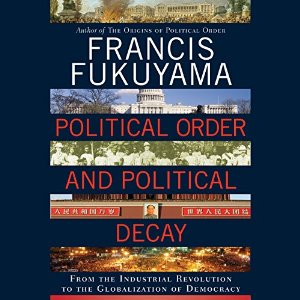
Political Order and Political Decay: From the Industrial Revolution to the Globalization of Democracy

Written by:  Francis Fukuyama

Narrated by:  Johnathan Davis

FRANCIS FUKUYAMA (AMERICAN POLITICAL SCIENTIST, POLITCAL ECONOMIST, AND AUTHOR)

FRANCIS FUKUYAMA (AMERICAN POLITICAL SCIENTIST, POLITICAL ECONOMIST, AND AUTHOR)

Francis Fukuyama offers a benediction and warning about democracy in “Political Order and Political Decay”.  His book is difficult to absorb because of its wide view of politics and a listener’s sense that political theory is being justified as much as proven.  However, Fukuyama impressively argues that democracy is the best form of government in the world and may evolve into a form of government that is best for all modern societies.

Fukuyama writes this with an examination of the current state (actually pre-Trump) of American democracy.  He addresses other forms of democracy developed, or developing, in other countries.

Fukuyama explains there are three pillars of democracy. 

First, a state must be formed to protect its citizens and its territory.

Second, rule of law must be established to constrain power held by the few over the many.

ACCOUNTABILITY

And three, accountability must be established for policies that serve the interest of all the people; not only factions or special interests.  When any of these supports are weakened, democracy decays.

Many examples of good and bad democracies are given by Fukuyama.  To narrow the territory, this review will focus on the United States but the author offers many more examples that reinforce his theory.

In the U. S., the founding fathers address forming a nation-state with rule of law and a balance of power formula intended to serve the interest of all of its citizens.  For over two hundred years, America has adhered, in principle, to these three pillars of democracy. 
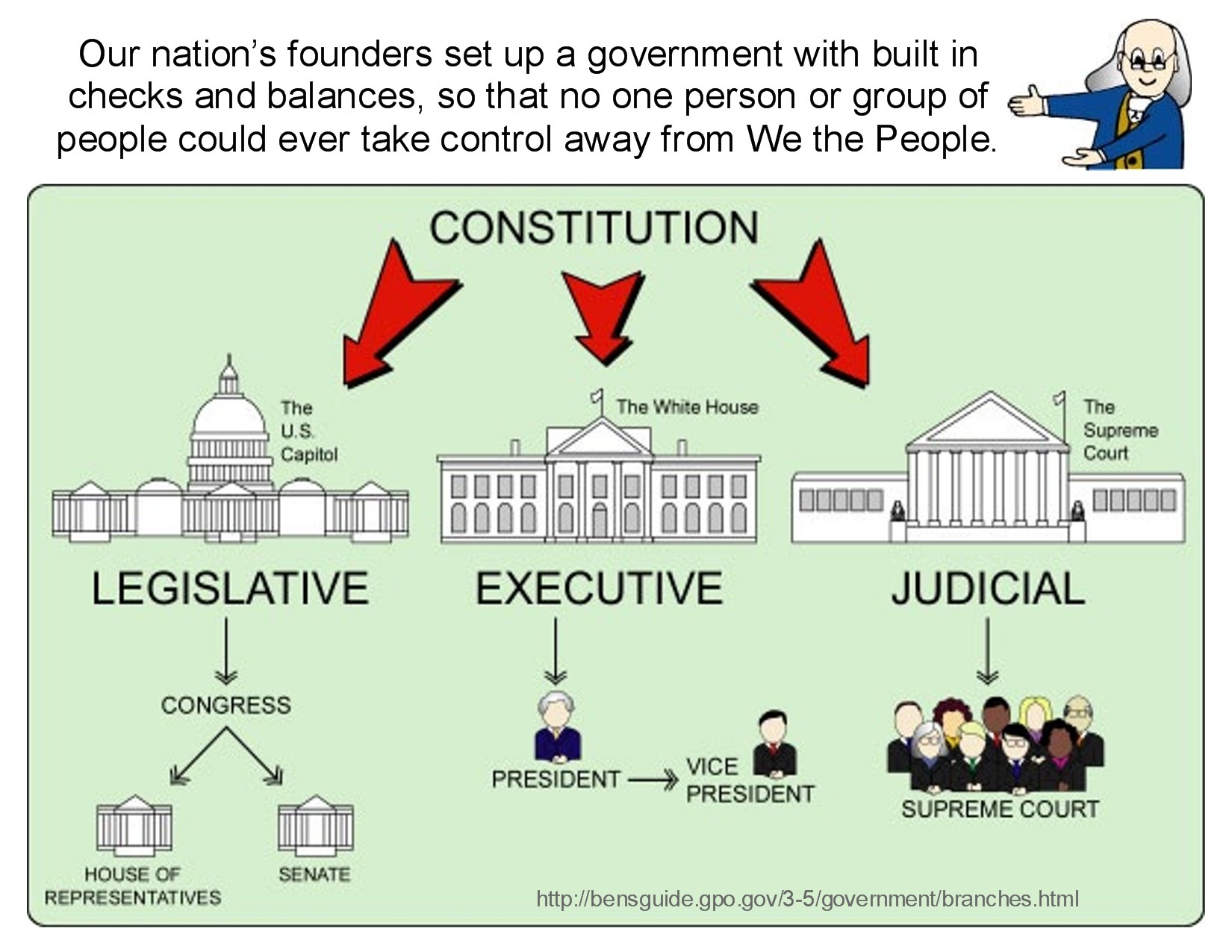
CHECKS AND BALANCES

However, America has failed, at different times, in different degrees, in ways that have shaken each of democracy’s pillars.

The iniquity of slavery is played out.  The right of national governance of all states of the union is clarified and mandated by the victory of Union forces.  Through the blood and treasure lost in the war, the nation became one.

AMERICAN CIVIL WAR

The nation-state is nearly destroyed by the American civil war. 

There have been numerous attacks on the rule of law when addressing equality of opportunity, the right to vote, and freedom of expression.  Victories and losses are referred to in Fukuyama’s book with a trend toward betterment in America but still as a work in progress.  Fukuyama notes that many nations are not ready for democracy because they have not adopted rule of law that requires human rights for all citizens.
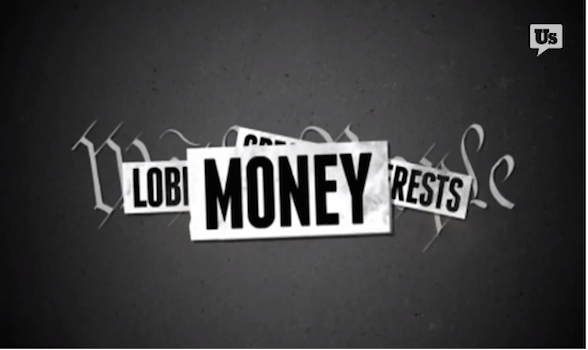
MONEY

Accountability has been distorted by political gerrymandering, special interest influences, patronage, and what Fukuyama calls “clientism” (selling one’s vote for reward).

Concern is expressed over the role of special interest money in its distortion of the political will of the many by the few.

Fukuyama decries the growing extremism in America because of political parties that rely on local political caucuses controlled by minorities, or special interests.  These special interests nominate candidates who are not qualified to be leaders but are beholding to small interest groups.  If elected, they become clients of special interests rather than representatives of their districts.

Fukuyama spends a good deal of time giving examples of Presidents like Jackson (a President which some compare to Trump) who strongly endorses patronage appointments based on relationship rather than merit.  Fukuyama notes that patronage is significantly changed when a disgruntled acquaintance is denied a foreign post by President Garfield.  The denied acquaintance assassinates the President.

The Pendleton Act is passed and a merit system of appointment is established for government positions.  Fukuyama notes that the Pendleton Act did not eliminate patronage but it reduced its use–the Civil Service came into being.

Fukuyama makes the point that institutionalization of the ideals of the three pillars of democracy ensures government stability and longevity.  The Civil Service is an example of another step taken by America to preserve democratic government. 

Trump-Putin summit in Helsinki

Fukuyama implies vilification of civil service employees undermines democratic stability.

At a Summit, Trump discounts the CIA’s intelligence system.

Marie Yovanovitch (Former Ambassador to Ukraine is summarily fired by President Trump.)

The main points of “Political Order and Political Decay” revolve around the pillars of democracy.  Fukuyama shows that there are many democracies in the world but those that violate any of the three pillars are likely to decay over time. 

Fukuyama argues–when institutions fail to maintain the state as sovereign, defensible, and dependent on the good will of many, willing to guarantee individual rights by rule of law, and accountable for political leader’s actions, democracy decays.

Fukuyama infers countries that choose not to be democratic, based on the three pillars he describes, will not rival the success of modern nation-states that have achieved economic and political stability.

Fukuyama suggests the United States will not necessarily remain the super power it has become.  Fukuyama argues that warning signals are flashing in America because of changes occurring in its political system.  Recognition of corporations as individuals by the Supreme Court opens the door wider for special interest influence on public policy. 

Corporations are able to contribute as much money as they want to super-pacs as clients for political representatives who are primarily influenced by corporate interests rather than public good.  History has made it clear that what is good for General Motors is not necessarily good for the country.

The Supreme Court’s decision to recognize corporations as people opened the flood gate to corporate influence in government.

Another warning bell in America is the blurring lines for separation of powers.  The Supreme Court is entering the realm of legislature.  Veto power has disrupted compromise between the Legislature and Presidency.  Rules in Congress are being used to block negotiation that results in “do-nothing” legislation.

Confidence in the American Federal Government is diminishing.  Belief in the legislative process is at an all-time low.  The public grows to believe government serves special interests more than the common good.

Fukuyama suggests every developing sovereign country should be treated with respect based on their road to nationhood.  Governments will form based on acquiring their own state identity.   America’s role should be support of nations trying to establish rule of law that serves the interests of their citizens.   Finally, America’s role is to demonstrate, encourage, and supplement other nations’ efforts to create institutional organizations that promote the pillars of democracy.

Trump relationship with traditional democratic allies is considered by some to be more confrontational than friendly.

President Trump’s vilification of traditional democratic allies  bodes ill for Fukyama’s theory of “Political Order and Political Decay”.  Trump diminishes America’s example as a good democracy.

If Fukuyama’s theory is correct, it offers a road map for how America can recover and retain a leadership role in the world.  The road map starts with America righting its own ship of state by being a good example of democracy.  If one accepts Fukuyama’s theory, America should support outside countries efforts to become independent democracies.

REINCARNATION HUMOR

Mo Yan chooses to use reincarnation to bind China’s twentieth century history together. The choice of reincarnation adds humor but suggests something more than laughs.

Audio-book Review

By Chet Yarbrough

(Blog:awalkingdelight)

Website: chetyarbrough.blog

Life and Death are Wearing Me Out

By Mo Yan (Translated by Howard Goldblatt)

Narrated by Feodor Chin

HOWARD GOLDBLATT (TRANSLATOR OF MO YAN CLASSIC)

HOWARD GOLDBLATT (TRANSLATOR OF MO YAN CLASSIC)

Cultural understanding is missing from Howard Goldblatt’s translation of Mo Yan’s “Life and Death are Wearing Me Out”.  Mo Yan chooses to use reincarnation to bind China’s twentieth century history together. The choice of reincarnation adds humor but suggests something more than laughs. 

MO YAN

Author, Mo Yan

The story begins with a murdered man who comes back as a donkey, then as an ox, a pig, a dog, and finally as another man—funny, but is there rhyme or reason in the order?

China becomes communist in the 1940s under the leadership of Mao Zedong.  Communism seeks re-distribution of private land into cooperatives to benefit the many at the expense of the few.  Mo Yan’s story begins with China’s communist revolution and the unjust murder and confiscation of a landowner’s farm.

The murdered landowner is Ximen Nao.  After death, Ximen Nao falls into an imagined purgatory to, presumably, be cleansed of his sins.  Despite severe torture, Ximen Nao refuses purgatory’s judgment of his sin.  In consequence, or happenstance, he is reincarnated as a donkey.  The twist in his reincarnation is that he remembers his former life.  Returning to life as a donkey, he meets former employees, a wife, two mistresses, and his children.

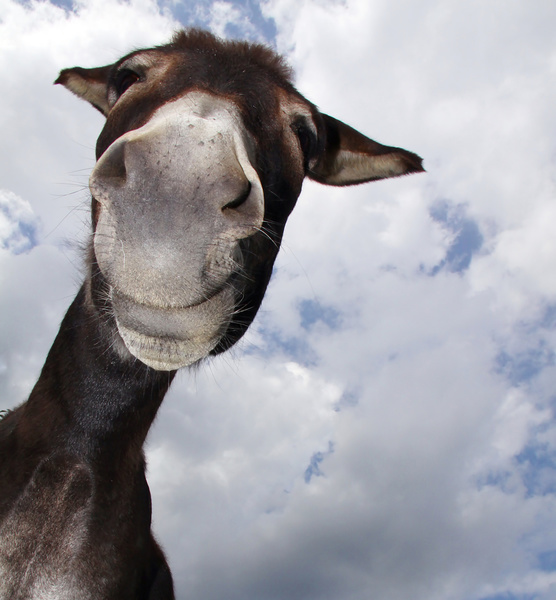
DONKEY

During the Communist revolution, Ximen Nao is murdered.  After death, Ximen Nao falls into an imagined purgatory to, presumably, be cleansed of his sins.  Despite severe torture, Ximen Nao refuses purgatory’s judgment of his sin.  In consequence, or happenstance, he is reincarnated as a donkey.

Ximen Nao, as a donkey, returns to his homeland and finds that his former employee has married one of his mistresses and is farming 6 acres of his confiscated land.  Ximen Nao, the reincarnated donkey, gains a grudging respect for his former employee because the employee steadfastly resists public ownership (being part of the communist co-op) of property and insists on being an independent farmer.  (Communist China’s law allows a farmer to be independent of a cooperative if they choose to work the land themselves.)

The former employee and his new wife become emotionally attached to the donkey because they believe it is a reincarnation of an important person in their lives.  (Later, Ximen Nao’s wife consciously acknowledges that the donkey is a reincarnation of her husband.) The independent farmer and his wife cherish the donkey’s existence and its aid in farming the land.  Several incidents involving the donkey reflect on life in China during Mao Zedong’s reign.

Mo Yan straddles acceptance and rejection of communism and China’s current form of capitalism.  His story skewers both political systems.  In Mo Yan’s story, communism and its belief in public ownership are defeated by human nature’s drive for independence.  The independent farmer lives through Mao’s Cultural Revolution and witnesses the return of a capitalist form of property ownership.  Mo Yan denigrates communism’s intrusion in family affairs and how it turns son against father, brother against brother, and compels women to choose between family and a communist’ collective way of life.

CAPITALISM-COMMUNISM

Mo Yan straddles acceptance and rejection of communism and China’s current form of capitalism.  His story skewers both political systems.

Capitalism and its belief in unfettered freedom are also ridiculed. Mo Yan characterizes capitalism in a story about the lives of spoiled youth.  Youth that live off their family’s wealth; living for adventure; denigrating love, productive work, and respect for tradition and family. 

PROFLIGACY

Mo Yan shows how singular pursuit of wealth corrupts morality; how leisure becomes more important than caring for others or working for human improvement.

Is there some significance in the order of Ximen Nao’s reincarnations?  Ximen Nao is first reincarnated as a donkey, then as an ox, then as a pig, then as a dog, and finally as another man.  It is a clever way of observing history through the prism of different animal’s lives.  It also makes one wonder about humankind’s ethnocentricity and failure to respect all living things.

Most importantly –It makes one wonder where these two Presidents are taking their countries.
Finding the right balance in life is an overriding theme in Mo Yan’s story.  As the inscription on the temple of Apollo at Delphi suggests, “Nothing in excess”; Aristotle, Benjamin Franklin, Mark Twain and many others have suggested moderation in all things. Mo Yan suggests that both Chinese communism and capitalism fail to offer the right balance in life.

SUDAN’S RELEVANCE

Audio-book Review
By Chet Yarbrough

(Blog:awalkingdelight)
Website: chetyarbrough.blog

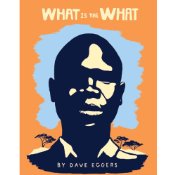
What Is the What

By: Dave Eggers

Narrated by Dion Graham

As Ronald Reagan famously said in his successful campaign against Jimmy Carter, “There you go again”.

Dave Eggers writes another book about a tragic human event. However, Eggers avoids character controversy like that which followed “Zeitoun”, a story about the Katrina disaster.

Eggers classifies “What Is the What” as a novel, without any claim to source-vetted facts or the integrity of its primary character.

SUDAN IN THE WORLD

SUDAN IN THE WORLD 

“What Is the What” is about Sudan and its 20th century genocidal history. This is a story of the complex religious, ethnic, and moral conflict that exists in Sudan and in all nations peopled by extremes of wealth and poverty.

“What Is the What” is a tautology exemplified by a story of one who has something, knows it, and another that has nothing, and knows not why. 

Valentino Achak Deng, the hero of Eggar’s story, tells of his father. Achak’s father explains the story of “What is the What”.

God offers man a choice of cows or something called the What.  God asks, “Do you want the cows or the What? 

But, man asks, “What is the What”?  God says, “The What is for you to decide.” 

Achak’s father explains that with cows a man has something; he learns how to care for something; becomes a good caretaker of a life-sustaining something, but a man who has no cows has nothing, learns nothing about caring; and only becomes a taker of other’s something.

By mixing truth with fiction, Eggers cleverly reveals the story of Sudan’s “lost boys”, refugees from the murderous regime of President Al-Bashir in Sudan.  At every turn, Achak is faced with hard choices. 
Omar Al-Bashir is deposed in April 2019 after almost 30 years in power.

Omar Al-Bashir, a Muslim Sudanese military leader who becomes President, releases dogs of war by condoning the rape and pillage of indigenous Sudanese by Muslim extremists.  It is partly a religious war of Muslims against Christians but, more fundamentally, it is about greed.

Greed is engendered by oil reserves found in southern Sudan in 1978.  Bashir strikes a match that ignites a guerrilla war.  Eggers reveals the consequence of that war in the story of Achak, one of thousands of lost boys that fled Sudan when their parents were robbed, raped, and murdered.  Bashir’s intent was to rid Sudan of an ethnic minority that held lands in southern Sudan.

Eggers cleverly begins his story with Achak being robbed in Atlanta, Georgia.  But, this is America; not Sudan.

Robbers knock on Achak’s door with a request to use his telephone.  Achak is pistol whipped, tied, and trapped in his apartment while his and his roommate’s goods are stolen.

There is much to be taken from the apartment.  The robbers leave a young boy to guard Achak while they leave to get a larger vehicle to remove the stolen goods.

SUDAN'S LOST BOYS

Achak identifies with the young boy.  Achak recalls his life in Sudan and his escape to America; i.e.the  land of the free; the land of opportunity.  Achak sees the young boy as himself, victimized by life’s circumstances, hardened by poverty, and mired in the “What” (the takers of other’s something).

Eggers continues to juxtapose the consequence of poverty and powerlessness in Atlanta with Achak’s experience in Sudan. Achak’s roommate returns to the apartment to find Achak tied and gagged in an emptied apartment.  He releases Achak.

They call the police to report the robbery and assault.  An officer arrives to investigate.  The police officer listens, takes brief notes, offers no hope for the victims, and leaves; i.e., just another case of poor people being victimized by poor people.

The episode reminds one of the Sudanese government’s abandonment of the “lost boys”.  They are citizens governed by leaders who look to rule-of-law for the rich, and powerful; not the  poor and powerless.  They are leaders of the “what” (takers of other’s something); rather than leaders of all citizens.

Crowded emergency room waiting area.

Achak has been injured in the robbery.  He goes to a hospital emergency room for help.  Achak waits for nine hours to be seen by a radiologist.  He presumes it is because he has no insurance but it is really because he has no power. 

He has enough money to pay for treatment but without insurance, this emergency room puts Achak on a “when we can get around to it” list.  The doctor who can read the radiology film is not due for another three hours; presumably when his regular work day begins.  Achak waits for eleven hours and finally decides to leave.  It is 3:00 am and he has to be at work at 5:30 am.

As Achak waits for the doctor he remembers his experience in Sudan.  When the Muslim extremists first attack his village, many boys of his village, and surrounding villages are orphaned.  These orphans have nowhere to go.  By plan or circumstance the lost boys are assembled by a leader who has the outward-appearing objective of protecting the children.  The reality of the “what” (takers of other’s something) raises its head when the children are recruited by this leader for the “red army” of South Sudan (aka SPLA or Sudan People’s Liberation Army).

SUDAN'S BOY ARMY

The reality of the “what” (takers of other’s something) raises its head when Sudanese children are recruited by this leader for the “red army” of South Sudan (aka SPLA or Sudan People’s Liberation Army).

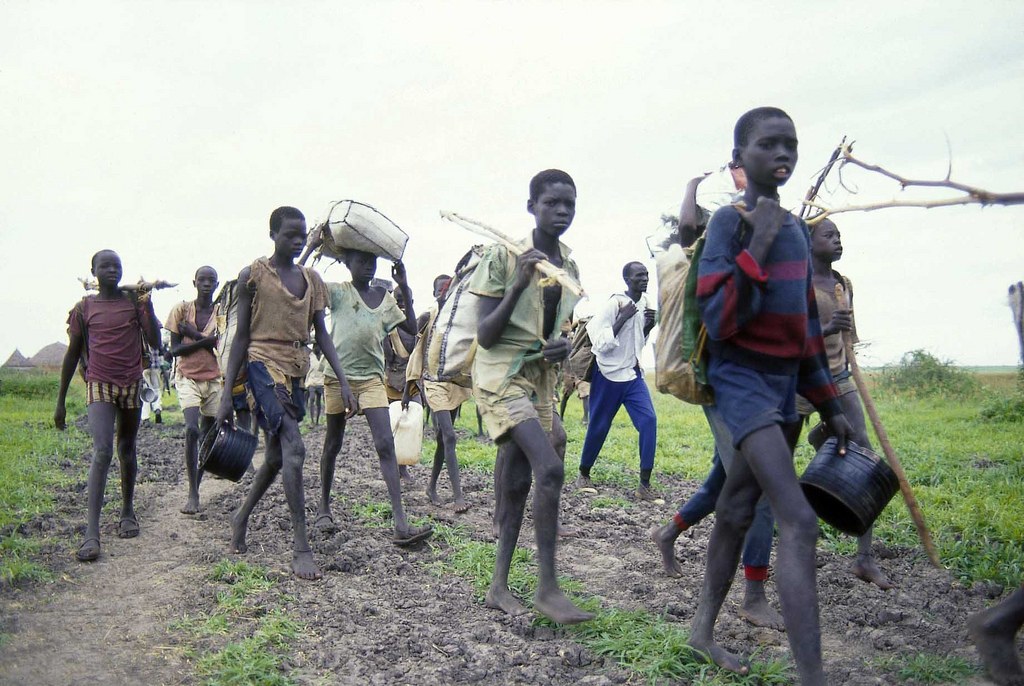
SUDAN'S 700 MILE WALK

These are boys of 8, 9, 10, 11 years of age.  This army-of-recruits begins a march from South Sudan to Ethiopia, a journey of over 700 miles, gathering more orphans as they travel across Sudan.  Along the way, they become food for lions, and crocodiles; they are reviled as outsiders by frightened villagers and, unbeknownst to Achak and many of the boys—they are meant to become seeds of a revolution to overthrow Al-Bashir’s repressive government.  These children are to be educated and trained in Ethiopia to fight for the independence of South Sudan.  They are led by leaders of the “what” (takers of other’s something).

The lost boys are victims of believers in the “what”.  Achak and other Sudanese’ refugees walk, run, and swim a river to arrive in Kenya, hundreds of miles south of Ethiopia.  Some Sudanese were shot by Ethiopians; some were eaten by crocodiles; some died from disease and starvation.

KENYA'S REFUGEE CAMP

Then, in 1991, Ethiopia’s government changes.  The lost boys, a part of an estimated 20,000 Sudanese’ refugees, are forcibly ejected by the new government.

The Sudanese’ refugees arrive in Kakuma, Kenya.  Achak says Kakuma is a Swahili word for “nowhere”.  In 1992, it becomes home to an estimated 138,000 refugees who fled from several different warring African nations.  The SPLA remains a part of the refugee camp but their recruiting activity is mitigated in this new environment.  The camp is somewhat better organized but meals are limited to one per day with disease and wild animals as ever-present dangers.  Education classes are supported by Kenya, Japan, and the United Nations to help refugees manage themselves and escape their past.

Achak survives these ordeals and reflects on his unhappiness in Atlanta, Georgia.  Achak clearly acknowledges how much better living in America is than living in Africa. However, Achak makes the wry suggestion that Sudanese settlement in America changed his countrymen from abusers to killers of their women.

He suggests Sudanese killing of their women is because of freedom.  He explains freedom exercised by women in America is missing in Sudan.  In Sudan, Sudanese women would not think of doing something contrary to wishes of their husbands.  Achak infers Sudanese women adapt to freedom while Sudanese men feel emasculated.  The emasculation leads to deadly force in Sudanese families; a deadly force that includes murder of wives or girlfriends and suicide by male companions.

AMERICAN DREAM

Eggers successfully and artistically reveals the tragedy of Sudan.  Cultural and religious conflict in the world and American freedom are called into question.  The cultural belief of parts of the Middle East, Africa, and America drive Achak from nation to nation.  Achak, despite misgivings, appears to love America.  But, American democracy is no utopia. Achak realizes no system of government is perfect.  His ambition is to educate himself and his home country.  Achak realizes education is the key to a life well lived.

What is the What?  Ironically, it is more than cows; it is education that combats cultural ignorance and celebrates freedom and equal opportunity for all.

Eggers story implies America needs to re-think its policy on immigration.  We are a nation of immigrants.  Achak’s story highlights what is wrong with America and other parts of the world.  But it also shows the “what” (“the ‘what’ that is for you to decide”) can be made better because it is more than cows.

BROKEN TRUST

Audio-book Review
By Chet Yarbrough

(Blog:awalkingdelight)
Website: chetyarbrough.blog

Ghettoside: A True Story of Murder in America

Written by: Jill Leovy

Narration by:  Rebecca Lowman

JILL LEOVY (AUTHOR)

JILL LEOVY (AUTHOR)

Broken families, broken hearts, but most of all, broken trust are described in Jill Leovy’s book, “Ghettoside”.

Leovy’s “true story”, somewhat surprisingly, deals mostly with the relationship between Black communities and local law enforcement in an area known as South Central Los Angeles. The surprise in the story is that the 2000 census shows 87.2% of the population of South Central Los Angeles is Latino–only 10.1% is Black; the remainder white, Asian, or other.

SOUTH CENTRAL LOS ANGELES (51 SQUARE MILES, 25 NEIGHBORHOODS)

SOUTH CENTRAL LOS ANGELES (51 SQUARE MILES, 25 NEIGHBORHOODS)

The 2000 census shows of 49,728 people live on 2.55 square miles of land, made up of nine communities.  One presumes Leovy chooses the relationship between Blacks and the police because it fits the particular facts of her story.

Food distribution as a result of Covid19 and unemployment.

It seems fair to suggest broken families, hearts, and trust are equally true for Latin South Central Los Angeles families because poverty and gang violence are common denominators of its residents.

EXTREMES OF AMERICAN GOVERNANCE

Though Leovy’s story is not about poverty, “Ghettoside” (a coined word for ethnic groups killing themselves) is partly related to poorly regulated capitalism; just as genocide is partly related to totalitarianism.  The poor in American cities have few legal means of escape.

Exploring Exotic Hong Kong

“Ghettoside” appears most obviously in modern cities because of population concentration.  The poor have few available living-wage jobs.  The poor congregate in run down inner-city neighborhoods because that is all they can afford.

Decent education is a cost without immediate benefit; i.e. robbery, extortion, prostitution, and other illegal activities provide gainful employment, put food on the table, and pay the rent.  On-job-training is provided by street gang activities.
Violence provides “street-cred” and gang affiliation provides power.  Money, power, and prestige, the hallmarks of capitalism, are as coveted by the poor as the middle class and rich.

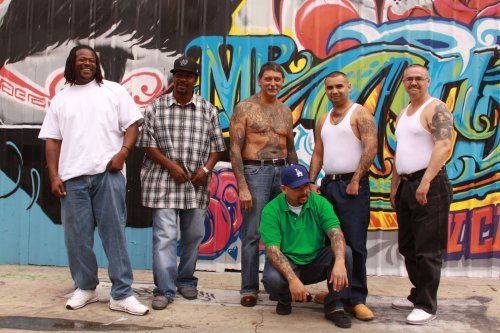
GANGS IN SOUTH CENTRAL LOS ANGELES

GANGS IN SOUTH CENTRAL LOS ANGELES  (A son rejects the gang culture but, like all teenagers, craves his own identity.  He ignores gang-culture rules of living in South Central.  Standing on a corner, with a hat that is the wrong color, he is shot in the head by another teenager that presumes gang affiliation.)

This story about South Central is primarily told from the perspective of the police department.  Leovy tells the “true story” of a black South Central Los Angeles’ cop who works and lives in a South Central L.A.’ community.  He is an exception to the rule of most South Central policemen because he lives in the neighborhood he polices.  He is an excellent homicide detective, who works hard to solve crimes in a city he loves.  He raises a family that exemplifies the American dream.  He comes from a lower middle class family, marries a Costa Rican wife while in the marines, and returns to South Central to become a cop.  They raise three children; two younger children went to college while the oldest struggled in school.  With extra effort, the oldest finishes high school.  He is not interested in college but is a conscientious, hardworking young man; much like his father.  The oldest son rejects the gang culture but, like all teenagers, craves his own identity.  He ignores gang-culture rules of living in South Central.  Standing on a corner, with a hat that is the wrong color, he is shot in the head by another teenager that presumes gang affiliation.

LAPD IN SOUTH CENTRAL LOS ANGELES

LAPD IN SOUTH CENTRAL LOS ANGELES (Leovy explores police department reaction to inner-city homicide to reveal how good cops are overwhelmed by a culture that victimizes itself.)

Leovy explores police department reaction to inner-city homicide to reveal how good cops are overwhelmed by a culture that victimizes itself.  As the story unfolds, the police officers’ oldest son dies.  The investigation is turned over to a different department that initially fails to solve the crime; not because of lack of effort but because of a bureaucratic way of conducting the investigation.  The officer in charge is a meticulous detective but the record of his investigation shows he repeatedly knocks on doors of possible witnesses without actually making contact.  The effort is duly noted in the “murder book” but no new evidence is found.  A new officer is assigned to the case that is equally organized but pursues witnesses until he finds them.  A record of attempted contacts is not acceptable to this detective.

POLICE INTERROGATION

Leovy provides detail of the new officer’s interrogation of a suspect that rivals the skill of the investigator of Raskolnikov in Dostoyevsky’s classic fictional story of “Crime and Punishment”.

The interrogation description is a pleasure to listen to and a high commendation by Leovy for the investigating detective.  The case is solved but one is left with the feeling that justice is not done.  A young man, a teenager, is dead.  The killer is also a teenager.  When asked why he murdered the police officer’s son, he said he shot him with his eyes closed; he only did it because the officer’s son looked like he belonged to a rival gang, and, after all, he is Black, so who cares?

Leovy systematically reveals how difficult it is for a good police officer to keep up with the murder rate in South Central L.A.  Everything from budget cuts, to bureaucratic “cover your ass” investigation, to a culture that feeds on itself, makes a good policeman’s job un-doable.

POLICE MURDER INVESTIGATION

Leovy explains how Black families believe they do not matter to the police because murders do not get solved.

Police officers are faced with mistrust that makes solving murders less important than bureaucratic record keeping that shows they are working

no exit

“Ghettoside” is a picture of hell; i.e. a picture of broken families, broken hearts, and broken trust.

When trust between citizens and police is broken, witnesses will not cooperate because they fear reprisal from the accused. 

Ineffective police bureaucracy is compounded by officers that are not part of the community for which they are responsible.  The irony of that observation is made obvious in Leovy’s story of a good officer who lives in the community and has a son murdered for being part of the community.

Being a cop in South Central L.A. looks like the hell described in Sartre’s play, “No Exit”.  It is a play where three dead characters are locked in a room with no exit.  In Leovy’s story, there are the police, the citizens, and the perpetrators.  Sartre is saying “hell is other people” because each is perpetually viewed by the other as the worst part of themselves. 

ORGANIZED RELIGION

Audio-book Review
By Chet Yarbrough

(Blog:awalkingdelight)
Website: chetyarbrough.blog

The Pope and Mussolini: The Secret History of Pius XI and the Rise of Fascism in Europe

Written by: David I. Kertzer

Narration by:  Stefan Rudnicki

DAVID KERTZER (AUTHOR, ANTHROPOLIGIST, PAUL DUPEE UNIVERSITY PROFESSOR, HISTORIAN SPECIALIZING IN ITALIAN STUDIES)

DAVID KERTZER (AUTHOR, ANTHROPOLIGIST, PAUL DUPEE UNIVERSITY PROFESSOR, HISTORIAN SPECIALIZING IN ITALIAN STUDIES)

David Kertzer reminds society that organized religion is only human.  Religions are subject to the goodness and sins of human nature.  Whether one believes in a Supreme Being or not, actions of organized religion are freighted with human error.

Kertzer is only one of many who have exposed the perfidy of organized religion.  His target, in “The Pope and Mussolini, is the Roman Catholic Church.

Cardinal Ratti becomes Pope Pius XI during the ascension of European Fascism and Nazism in the 1920s and 30s.  Ratti is characterized as a pedantic, conservative, and sometimes bellicose Christian believer in the Roman Catholic Church.  As a religious pedant rather than trailblazer, Pope Pius XI focuses on returning Roman Catholicism to a former time of independence and influence.  No price appears too high; Pope Pius XI’s purchase price paves the way for state Fascism (total control of government and society) in Italy.

POPE PIUS XI (1857-1939)

POPE PIUS XI (1857-1939) Cardinal Ratti becomes Pope Pius XI.  Ratti is characterized as a pedantic, conservative, and sometimes bellicose Christian believer in the Roman Catholic Church.

Kertzer recounts early 19th century history of the Roman Catholic Church.  The secular government of Italy confiscates Church lands. That taking decimated Catholic wealth, restricted Popes to the Vatican grounds, and reduced Papal control of the Holy See.  More significantly, it reduced the church’s power to influence believers.  After 1860 and until the Lateran Treaty negotiated between Mussolini and Pope Pius XI, the Church is treated as a part of the state of Italy, subject to secular rule.

Pope Pius XI agrees to support the government of Benito Mussolini in 1929 in return for the creation of an independent Papal State in Rome.  Mussolini agrees to pay the church approximately $100 million for formally confiscated church land.  Pope Pius XI acquires for himself and future Popes the right of independent rule, religious interpretation, and Catholic dictation.  In return Mussolini gains the support of the Roman Catholic Church, the dissolution of Catholic political parties, and a title as II Duce, “The Leader” of Italy.   At the stroke of a pen, Mussolini becomes a hero of Italian Catholics (over 90% of the population) and the totalitarian leader of Italy.

BENITO MUSSOLINI (1883-1945, PRIME MINISTER OF ITALY 1922-1943, LEADER OF NATIONAL FASCIST PARTY)

BENITO MUSSOLINI (1883-1945, PRIME MINISTER OF ITALY 1922-1943, LEADER OF NATIONAL FASCIST PARTY)

Kertzer notes there are common goals for Mussolini and Pius XI in the Lateran treaty which separates church from state.  Both covet power.  Both dislike the idea of a Catholic party interfering with religious or state matters.  Both desire elimination of factional interference in government and religion; i.e. Mussolini’s Fascist control of government and the Pope’s control of Church doctrine.

Seeking sovereign independence of the Holy Sea. Pius XI becomes head of state of the smallest state in the world.  $100 million is paid to the church for confiscated land since 1860.

Pius XI is the first Pope to broadcast on radio in the early 1920s.  With the Lateran Treaty of 1929, the Papal State is created; after 58 years of refusal to become part of Italy.  Prisoners in the Vatican before 1929, the Lateran Treaty required elimination of the Catholic Italian Popular Party, a political organization.

DAVID KERTZER “THE RELATIONSHIP OF BENITO MUSSOLINI AND POPE PIUS XI (1922-1939):

An unintended consequence was to reinforce Fascism in Italy.  With the ascension of Pope Pius the XII, the Nazi government is solidified.  The trade-off for the Roman Catholic church  is an increase in international influence.   At the same time, pagan worship of fascism by Church youth groups diminishes the church’s moral stature. 

POPE PIUS XII (1876-1958, FORMERLY CARDINAL PACELLI)

POPE PIUS XII (1876-1958, FORMERLY CARDINAL PACELLI)
Pope Pius XI refuses to excommunicate Hitler, Mussolini gravitates to Nazism, and Pius XII ignores Nazi atrocity.

The Lateran treaty is a slippery slope for both Nazi Germany and the Roman Catholic Church.  Mussolini and Pius XI are blinded by hubris and false piety.

BENITO MUSSOLINI HANGING BY HIS HEALS NEXT TO HIS MISTRESS

Mussolini is shot by his countrymen, hung by his heals for destroying people’s freedom, and losing a war that compromised and betrayed his county.  Pius XI compromises his morals and paves the way for Pius XII, a closet Christian anti-Semite, who becomes a Hitler’ stooge by tacitly endorsing the immorality of belief in ethnic purity.

The closing years of Pius XI’s reign is marked by a closer association with democracies as the Western nations and the Vatican found both were threatened by totalitarian regimes and ideologies of Hitler, Mussolini, and Stalin.  However, with Pius XI’s death and ascension of Pope Pius XII, distinction between totalitarianism and democracy diminishes.

Pope Pius XII—Hitler’s Pope.  FORMER CARDINAL PACELLI Hitler and the roman catholic church: <iframe width=”854″ height=”510″ src=”https://www.youtube.com/embed/2x_MdS88qr8&#8243; frameborder=”0″ allowfullscreen>

***IRONIC SPEECH  POPE PIUS XII SPEAKING ENGLISH TO TROOPS WHO LIBERATED ROME:

Kertzer offers insight to what really happened in Italy in the 1920s, 30s, and early 40s but the story resonates with all organized religions.  Jewish isolation of Palestinians, ISIL’s attempt to resurrect the Caliphate, Muslim repression of Kurds, Taliban Muslim cruelty in Afghanistan, Chinese suppression of Uighurs, and Protestant proselytizing around the world are cut from the same flawed fabric; i.e. the flawed fabric of human interpretation of humanly manufactured texts and religions. 

RELIGIOUS BELIEF

In the name of God, organized religion’s killings continue.  If there is a God, he/she is not evil; i.e. only humans are evil.

MASOCHIST’S GUIDE TO AFRICA

Audio-book Review
By Chet Yarbrough
(Blog:awalkingdelight)
Website: chetyarbrough.blog

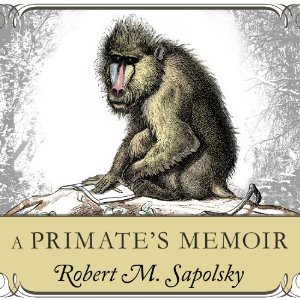
A Primate’s Memoir: A Neuroscientist’s Unconventional Life Among the Baboons

A PRIMATE'S MEMOIR

3 star symbol
Written by: Robert M. Sapolsky

Narration by: Mike Chamberlain

ROBERT SAPOLSKY (AMERICAN NEUROENDOCRINOLGIST, PROFESSOR OF BIOLOGY, NEUROSCIENCE, AND NEUROSURGERY AT STANFORD UNIVERSITY)
ROBERT SAPOLSKY (AMERICAN NEURO-ENDOCRINOLGIST, PROFESSOR OF BIOLOGY, NEUROSCIENCE, AND NEUROSURGERY AT STANFORD UNIVERSITY)

Robert Sapolsky’s “A Primates Memoir” is a masochist’s guide to Africa. (Our 2017 trip to Africa was luxurious in comparison.)  Sapolsky’s trip is what you would expect from a biological anthropologist who sojourns to Africa in the early 80s.  Sapolsky lives in a tent while studying baboons.

AFRICA JULY 2017_7695.JPG
Our stay in Africa is luxurious in comparison to Sapolsky’s in the 1980s.

At the age of 12, Sapolsky appears to know what he wants from life. In his middle-school years, he begins studying Swahili, the primary language of Southeast Africa.

Sapolsky’s career is aimed at understanding Southeast Africa.  Sapolsky’s 1984 PhD. thesis is titled “The Neuro-endocrinology of Stress and Aging”. Presumably, his trip to Africa became the basis for his academic thesis. Sapolsky’s experience in Africa is recounted in “A Primate’s Memoir”.

AFRICA JULY 2017_8101.JPG
Animal preserve in Southeast Africa

While studying Baboons, Sapolsky is exposed to the worst of African society. His memoir of those years touches on the aftermath of Africa’s colonization, Africa’s ubiquitous diseases, its governments’ instability, and its abundant and frequently poached wildlife.

SOUTHEAST AFRICA
SOUTHEAST AFRICA

Robert Mugabe (President of Zimbabwe)
Robert Mugabe (Former President of Zimbabwe)

JACOB ZUMA (FORMER PRESIDENT OF SOUTH AFRICA)

Though some of what Sapolsky writes has  changed, today’s news shows characters like Robert Mugabe, and Jacob Zuma, who are accused of victimizing the poor to enrich themselves.

Some African, and other nation-state leaders around the world, are corrupt.  Many Southeastern African bureaucrats, foreign business moguls, indigenous apartheid promoters, and wildlife exploiters still walk, drive, and bump down streets and dirt trails of this spectacular continent.

Self-interest often conflicts with general economic growth and stability.  Today’s Southeast Africa is great for tourism (one of the three biggest industries) but the poor remain poor, the rich richer, and the middle class nearly non-existent.

AFRICA JULY 2017_7219.JPG
Today’s Southeast Africa is great for tourism (one of the three biggest industries) but the poor remain poor, the rich richer, and the middle class nearly non-existent.

Sapolsky returns to Africa after marrying. He squires his science and marriage partner to revisit a baboon troop he was studying in the 1980s. At the same time, he touches on the cultural norms of a society that seems little changed from his early years in Africa.

Sapolsky recounts the melding of a tragi-comic story of an African who is mauled by a Hyena. In telling the story, he reveals the stoic acceptance of life as it is. However, each time the story of the mauling is told by different people, it changes. The change comes from a blend of truth and fiction that conforms to the tellers’ view of themselves. The essence of the story is that an African man sleeping in a tent is mauled by a Hyena looking for food.

CHANGING STORY
Re-telling of an African story changes with each narration–The change comes from a blend of truth and fiction that conforms to the tellers’ view of themselves..

When the story is told by Masai warriors hired by a company to protect its employees, the victim is saved when the Hyena is speared by the Masai warrior’s courage. When the story is told by the victim, it is a company cook who bashes the Hyena that runs away. When the story is told by a newspaper reporter, the Masai warriors were drunk and not doing their job; the cook bashed the Hyena, and the victim survived. When the story is told by the cook, the victim’s yell brings the cook to the tent; the cook grabs a rock, bashes the Hyena, and the Hyena flees. Finally, when the story is told by the company employer, the victim is not an employee, the Mesai warriors did spear the Hyena, and the employer had no responsibility for the victim.

A cultural interpretation is inferred by these many versions of the same story. Some humans indulge in alcohol to escape reality. Most humans wish to protect an idealized version of their existence. News coverage is sometimes a mix of truth and fiction to make stories more interesting than accurate.

Life is happenstance with each human dealing with its consequence as an end or beginning that either defines, or extends their understanding of life. Truth is in the eye of the beholder. Some people are willing to risk their lives for others. Private companies focus on maximizing profit and minimizing responsibility.  Life is not an either/or proposition despite Kierkegaard’s philosophy.  Humans are good and bad; no one is totally one or the other–not even America’s morally corrupt and ethically challenged leader.

BABOONS
Sapolsky shows that baboon families, like all families, are born, mature, and die within a framework of psychological and physical challenges imbued by culture. All lives face challenge but culture can ameliorate or magnify the intensity and consequence of the challenge.

The overlay of Sapolsky’s memoir is the research and reported evolution of a baboon family in Southeast Africa. He shows that baboon families, like all families, are born, mature, and die within a framework of psychological and physical challenges imbued by culture. All lives face challenge but culture can ameliorate or magnify the intensity and consequence of the challenge.

Sapolsky gives the example of Kenyan “crazy” people who are hospitalized, treated, and fed to deal with their life circumstance. In America, it seems “crazy” people are left to the street. The inference is that Kenyan “crazy” people live a less stressful life than American “crazy” people. This is a positive view of Kenyan culture but there are ample negative views in Sapolsky’s memoir. Rampant poverty, malnutrition, and abysmal medical treatment are Sapolsky’s recollected examples.

Sapolsky’s memoir shows he clearly lives an unconventional life, but it seems a life of purpose. What more is there?


TODAY’S LUDDITES

Audio-book Review
By Chet Yarbrough

(Blog:awalkingdelight)
Website: chetyarbrough.blog

The Glass Cage-Automation and Us

By: Nicholas Carr

Narrated by: Jeff Cummings

NICHOLAS G. CARR (AMERICAN WRITER-FORMER EDITOR OF HARVARD BUISNESS REVIEW)

NICHOLAS G. CARR (AMERICAN WRITER-FORMER EDITOR OF HARVARD BUSINESS REVIEW)

The Glass Cage, written by Harvard alumnus Nicholas Carr, ironically places him in the shoes of an uneducated English textile artisan of the 19th century, known as a Luddite.

Luddites protested against the industrial revolution because machines were replacing jobs formerly done by laborers.  Just as the Luddites fomented arguments against mechanization, Carr argues automation creates unemployment and diminishes craftsmanship.

WORKMEN TAKE OUT THEIR ANGER ON MACHINES DURING THE INDUSTRIAL REVOLUTION. (Just as the Luddites fomented arguments against mechanization, Carr argues automation creates unemployment and diminishes craftsmanship.)

Workmen take out their anger on the machines

Carr carries the Luddite argument a step further by inferring a mind’s full potential may only be achieved through a conjunction of mental and physical labor.  Carr posits the loss of physical ability to make and do things diminishes civilization by making humans too dependent on automation.

There is no question that employment was lost in the industrial revolution; just as it is in the automation age, but jobs have been and will continue to be created as the world adjusts to this new stage of productivity.

INDUSTRIAL REVOLUTION

Unquestionably, the advent of automation is traumatic but elimination of repetitive industrial labor by automation is as much a benefit to civilization as the industrial revolution was to low wage workers spinning textile.

The Covid19 pandemic of 2020 will accelerate world’ transition to automation. Though this book is written earlier than the pandemic’s economic consequence, corporations are reevaluating the necessity for office buildings to conduct their business. More and more employees will work from home.

Employment adjustment is traumatic.  The trauma of this age is that work with one’s hands is being replaced by work with one’s brain.  The education of the world needs to catch up with socio-economic change; just as labor did in the 20th century.  To suggest humans do not learn when they cannot fly a plane, build a house, or construct an automobile with their own hands is a specious argument. 

Houses and cars have not been built by one person since humans lived in caves and iron horses replaced carriage horses.  Houses and cars were built by teams of people who worked with their hands but only on specific tasks.  Those teams of people were managed by knowledge workers.

ASSEMBLY LINE WORK

Service and education for society are the keys to the transition from industrialization to automation.

QUANTS

Automation of tasks reduces the mind numbing, low pay work of laborers.  Automation turns manual labor into the development and education of people who design hardware and software to execute tasks that result in more safely flown planes, new houses, new cars, new refrigerators, so on and so on.

Carr suggests that airplane pilots should be given more control over automated planes they fly despite the facts he quotes that clearly show plane crashes kill fewer people today than ever in history.  They are bigger, faster, and more complicated to fly.  The argument that pilots need to learn how to fly a jumbo jet when automation fails is like telling a farmer to pull out his scythe to harvest the wheat because the thresher quit working.

Carr’s argument is that pilots have forgotten how to fly because automation replaced their skill set.  To state the obvious, planes are not what they were 100 or even 10 years ago.

WRIGHT UNPOWERED AIRCRAFT

One might argue that Boeing’s 737 Max mistakes are evidence that Carr is correct in suggesting planes have become too complicated, but it ignores the reality of mistakes have always being made by humans. Humans are preternaturally motivated by self-interest.

Boeing’s leaders made mistakes in not fully analyzing and disclosing risks of 737 changes, and in not adequately training airline pilots on the safety features of the plane.

Carr raises a morality argument for not saving life when an automated machine makes a decision rather than a human being.  One can suggest an example of how an automated machine is more likely to make the right decision than a human.

For example, presume a driver-less car is programmed to save its occupant when an injured bicyclist is laying in the street around a blind curve. A fast moving automated car with a family inside, with mountain cliffs on both sides of the road, will drive over the bicyclist without conscience.  The bicyclist is dead but the car passengers are alive.   If the car is driven by a person, both the cyclist and the family are likely dead. 

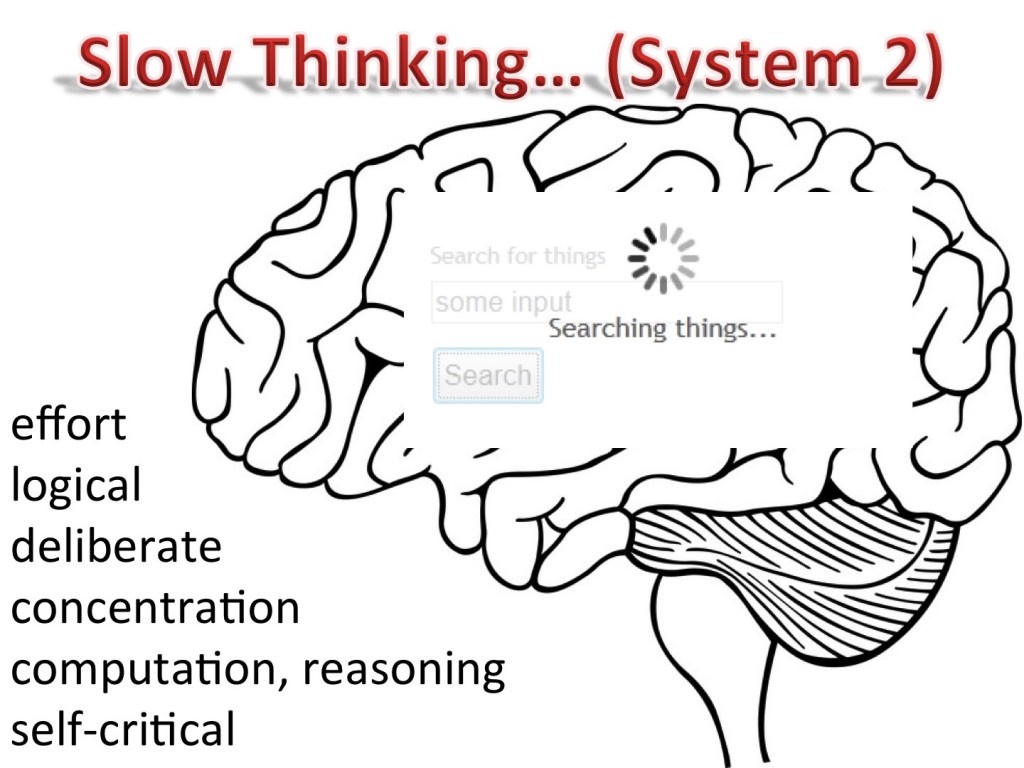
THINKING SLOW
Carr’s argument is that humans need to make their own intuitive decisions.  As pointed out by Daniel Kahneman in “Thinking Fast and Slow”, the primary “think fast” mode in humans is intuition, which is often wrong.

Without doubt, many automation errors (e.g., the 737 Max) have been and will be made in the future, but to suggest automation is not good for society is as false as the Luddites arguments about industrialization.

This period of the world’s adjustment is horrendously disruptive.  It is personal to every parent or person that cannot feed, clothe, and house their family or themselves because they have no job.

Decrying the advance of automation is not the answer.  Making the right political decisions about how to help people make job transitions is what will advance civilization.

OTHER gods

Audio-book Review
By Chet Yarbrough

(Blog:awalkingdelight)
Website: chetyarbrough.blog

The Attention Merchantsthe attention merchants

By Tim Wu

Narrated by Marc Cashman

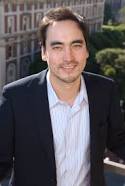
TIM WU (AUTHOR, PROFESSOR OF LAW AT COLUMBIA )

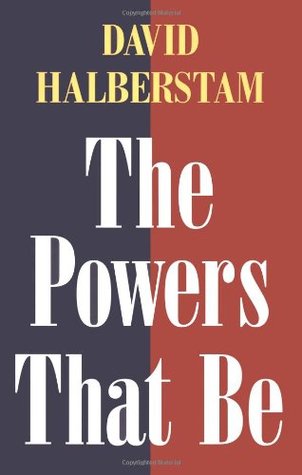
Not since “The Powers That Be” (published in 1979) has there been a better history of the media industry.  Tim Wu is heir to David Halberstam.  First there were newspapers, then radio, then television, and now the world-wide web.  Wu offers a modern vision of media’s impact on society in “The Attention Merchants”.

Gone are many of the famed “…Attention Merchants” like Bill Bernbach, Neil French, and David Ogilvy.   They were the early influencers; i.e. the copy writers, and agents that created consumer advertising for Sulzberger, Chandler, Hutchins, Paley, and Luce.  They worked for founders of some of the most influential newspaper, radio, television and magazine outlets of the 19th and 20th centuries. They were the “gods” of a newly formed consumer society. Consumers read, watched, and listened to pitches for everything from votes to vitamins to the latest model Cadillac.  Wu shows pitches remain the same, but methods have changed.

DAVID HALBERSTAM'S SEMINAL WORK ON THE MEDIA INDUSTRY (PUBLISHED 1979)
DAVID HALBERSTAM’S SEMINAL WORK ON THE MEDIA INDUSTRY (PUBLISHED 1979)  Gone are many of the famed “…Attention Merchants” like Bill Bernbach, Neil French, and David Ogilvy.  They were the “gods” of a newly formed consumer society. Consumers read, watched, and listened to pitches for everything from votes to vitamins to the latest model Cadillac.

Today’s social, political, and economic consumers are recorded, manipulated, spindled, and controlled by “other gods”.  Modern “…Attention Merchants” are internet entrepreneurs like Amazon’s Jeff Bezos, Google’s Larry Page & Sergey Brin, Microsoft’s Bill Gates & today’s CEO Satya Nadella, Apple’s (now deceased) CEO, Steve Jobs & today’s CEO Tim Cook, Facebook’s Mark Zuckerberg, and Netflix’s Reed Hastings. Television, newspapers, radio, and magazines still capture our attention but not like past “…Attention Merchants”.  Old media are still with us, but computer screens and mobile phones have joined the mix.  Wu shows how the public’s decisions have become less volitional, more manipulated, and addictive as www. sites came into being and technology matured.

INTERNET LOGO
Old media is still with us, but computer screens and mobile phones have joined the mix.  Wu shows how the public’s decisions have become less volitional, more manipulated, and addictive when www. came into being and technology matured.

MARLBORO MAN
Neither smoking or “free” access to information is without harm or cost.  The Marlborough man is dead, and “free” internet information is not free.

Wu recounts how advertising became a critical part of early media’s power, influence, and profit.  Just as advertisers promoted false benefits of smoking in the 20th, internet advertisers promote false benefits of free access to information and entertainment in the 21st century.  Neither smoking or “free” access to information is without harm or cost.  The Marlborough man is dead, and “free” internet information is not free.  “Fake news” has always been in the “…Attention Merchant’s” tool box but Wu shows that a new dimension is created with the rise of “free” information technology.

The internet not only informs the public, i.e., it distracts society, distorts facts, and reveals intimate details of personal lives. Internet users become products, rather than just consumers. Information gathered on consumers is provided to government and sold to private enterprise.

More ominous than media distortion by capitalist manipulators is government-controlled media that distorts truth to justify the Ukraine war.
ukraine bombing

Personal information is used by governments, and private sector businesses to achieve their own purposes.  Power and control become centered on organizations rather than individuals.  Data mining is a new industry. Decisions are less determined by personal being and private belief.  Today, decisions are shaped by a society “under the influence” of government, and private sector’s “…Attention Merchants”.

data mining
Personal information is used by governments, and private sector businesses to achieve their own purposes.  Power and control become centered on organizations rather than individuals.  Data mining is a new industry.

facebook
In this Facebook age, there are few secrets about what one likes and what one is willing to pay for product.

Wu notes how today’s “…Attention Merchants” are different.  Advertisers have always tried to influence individuals.  Advertisers have always told lies or distorted truth to get buyers to buy and believe.  Wu explains the difference.  Now personal information is acquired with confused consent by users of the internet. In this Facebook age, there are few secrets about what one likes and what one is willing to pay for product.

Customers are no longer just consumers.  Wu notes customers have become products.  Customers are sold to the highest bidder without customer awareness or compensation.  Today’s “…Attention Merchants” argue that sales pitches are customized to what the customer wants.  Businesses rationalize access as the customer’s compensation.  Government rationalizes access as a way of staying in touch and understanding the public.  Wu implies both arguments are willful misrepresentations.

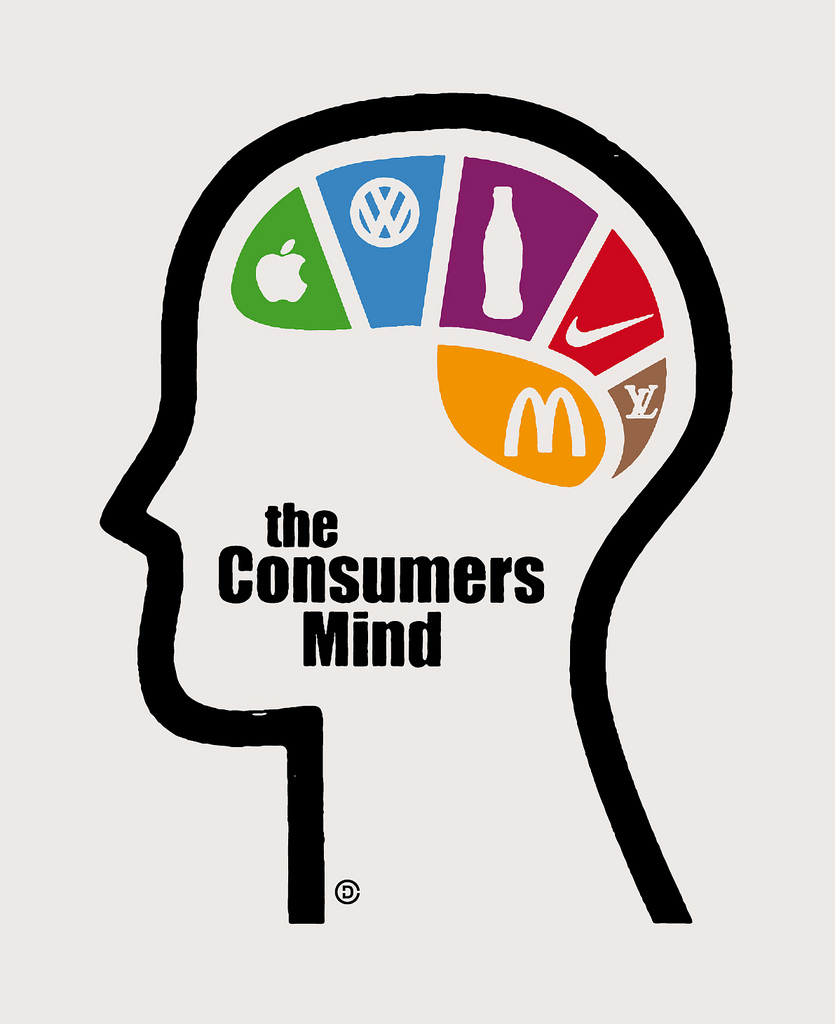
consumer's mind
Consumers have less control over their decisions because “…Attention Merchants” use intimate personal information to seduce conscious and unconscious motivation.

There is a cost to voters and consumers because personal information is being sold without pay for product that enriches “…Attention Merchants”, private enterprise, and government.  The product delivered is the personal information that reveals who we are, what we think, what we desire, and what we are willing to pay.  Consumers have less control over their decisions because “…Attention Merchants” use intimate personal information to seduce conscious and unconscious motivation.

The sinister aspect of Wu’s explanation is that “…Attention Merchants” now have tools that exaggerate the impact of “fake news”.  By knowing intimate beliefs of consumers, “…Attention Merchants” are able to create algorithms that funnel “fake news” that feeds what consumer’s may either accurately or inaccurately believe.  Prejudices and discrimination are reinforced.  The worst characteristics of political populism are reinforced.  “The Attention Merchants” expand control of individual thought so that the course of democratic elections, government policies, or business successes can be unduly influenced by false or misleading information.

wikipedia
The positive aspect of the internet is shown by sites created without advertising input; e.g. Wikipedia and some blogosphere creations abjure advertising as a source of compensation.

Wu notes there are glimmers of hope with a growing recognition of the impact of the internet. The internet broadens human understanding of the world. The positive aspect of the internet is shown by sites created without advertising input; e.g. Wikipedia and some blogosphere creations abjure advertising as a source of compensation.

Exposure of blind spots in acquisition of personal data are currently being exposed in congressional hearings with Facebook CEO, Mark Zuckerberg.  At the same time, Russian interference in American elections is being more seriously investigated.

As Marie Currie is to have said— “Nothing in life is to be feared.  It is only to be understood.  Now is the time to understand more, so that we may fear less.”  Of course, one might remember, she died from the radiation she received from her discoveries.  (Ironically, Marie Currie’s death was found not to be from radiation exposure.  In autopsy, her body radiation levels were within normal range.)

A CLASSIC’S TRUTH

Audio-book Review
By Chet Yarbrough

(Blog:awalkingdelight)
Website: chetyarbrough.blog

The Road to Serfdom

By Friedrich A. Hayek

 Narrated by William Hughes

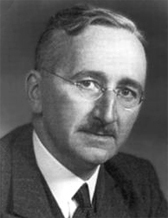
FRIEDRICH AUGUST von HAYEK (1899-1992)

Hayek wrote “The Road to Serfdom” during WWII.  His observation was that Nazi Germany and its rise to power had a direct relationship with the growth of socialism, a belief that central planning and control are keys to national prosperity. 

Hayek suggests that America and Great Britain suffer a similar strain of belief.  He argues that central planning and control leads to totalitarianism.  “The Road to Serfdom” is a prescient vision of the dangers of socialism.

The dilemma of government is in drawing the line between central planning and public service. It is particularly complicated by what the intent of Article 1, Section 8 of the Constitution meant when it said a part of the purpose of government is to “promote the general welfare”

It seems common that authors of popular, sometimes classic, books are often interpreted by people who have not read them.  Authors like Harriet Beecher Stowe, Richard Wright, Ayn Rand, Vladimir Nabokov, and Friedrich Hayek are frequently commented on but content often becomes a surprise to actual readers.

Friedrich Hayek’s book is frequently lauded by American conservatives and vilified by American liberals. 

classic liberalism

In truth, Hayek is a seer for both ignorant American’ conservatives and liberals; i.e. Hayek is neither a spokesman for modern American conservatism or liberalism but a strong proponent of classic liberalism.

To be clear, today’s conservatism and liberalism are not defined in the same way Hayek defines them in his 1944 publication.  Liberalism in 1944 meant belief in freedom of choice and endorsement of laissez-faire economic principles.  1944 conservatism meant a rejection of the principles of equality with an aristocratic, “rank has privileges”, ideology.

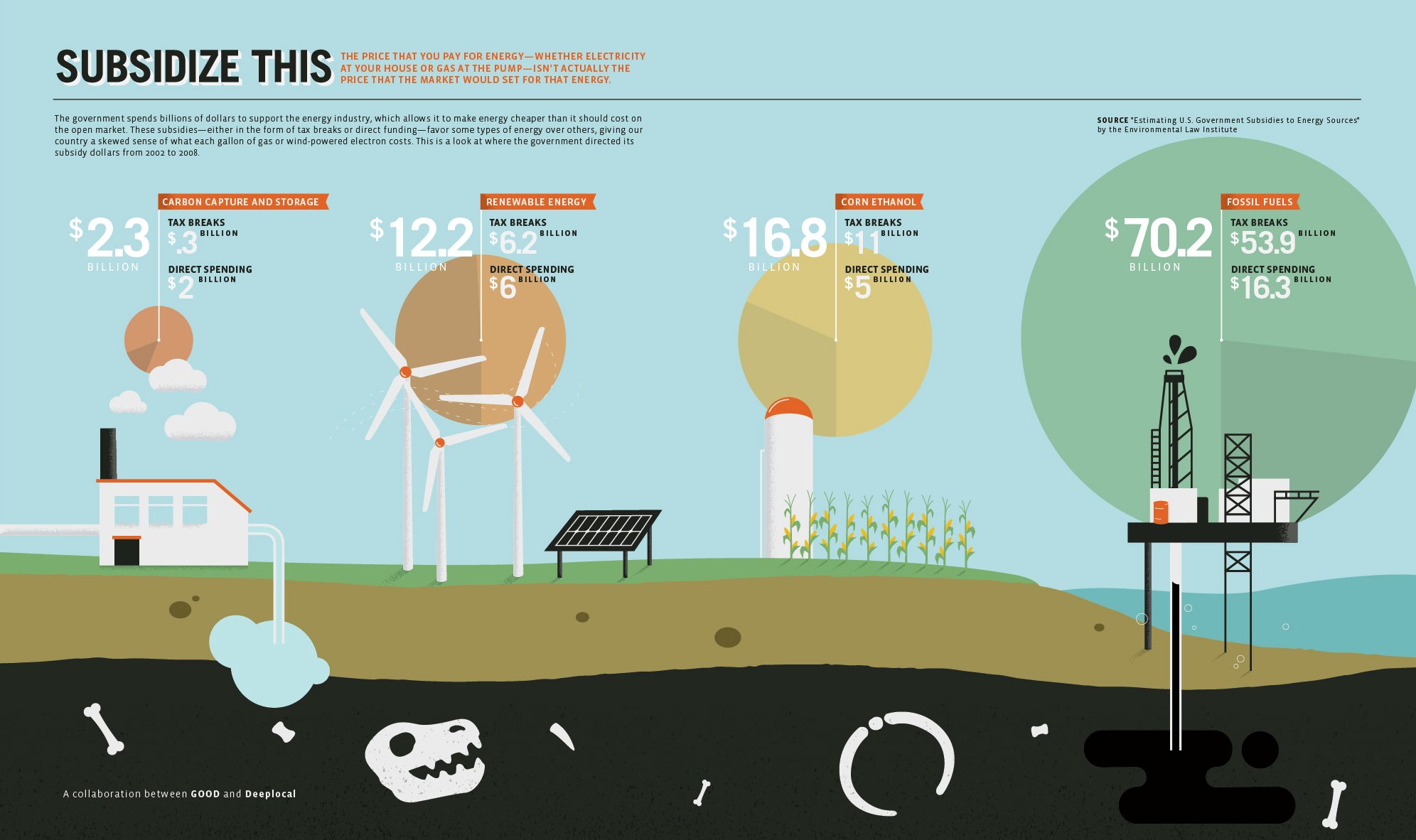
subsidization
Contrary to Hayek’s conservatism, modern conservatives and liberals endorse subsidization of private enterprise.  Subsidization comes from tariffs, tax incentives, and other preferential treatment for private business and industry.

Principles of equality and laissez-fair economic principles are less doctrinaire in the 21st century because American political parties blur the difference.  Modern liberals are closely associated with government regulation and intervention but not necessarily laissez-faire principles. 

Modern conservatives are opposed to government in most forms of regulation and intervention, but only in principle; not in practice.  Modern conservatives, as well as liberals, endorse subsidization of private enterprise.  Subsidization comes from tariffs, tax incentives, and other preferential treatment for private business and industry.

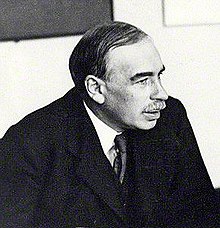
JOHN MAYNARD KEYNES (1883-1946)

Contrary to a wide perception that John Maynard Keynes (a liberal economist in today’s parlance) denigrated “The Road to Serfdom”; Keynes, in fact, praised it.  John Maynard Keynes believed in government intervention when a state’s economy is in crisis.

According to Thomas Hazlett in the July 1992 issue of “Reason Magazine”, Keynes wrote “In my opinion it  (Road to Serfdom) is a grand book…Morally and philosophically I find myself in agreement with virtually the whole of it; and not only in agreement with it, but in deeply moved agreement”. 

Though Keynes praised “The Road to Serfdom”, he did not think Hayek’s economic’ liberalism practical; i.e. Keynes infers that Hayek could not practically draw a line between a safety net for the poor, uninsured-sick, and unemployed (which Hayek endorsed) while denying government intervention in a competitive, laissez-faire economy.

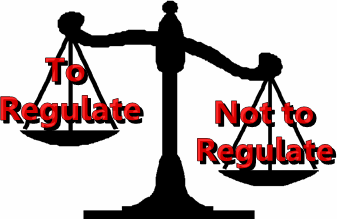
When businesses have an unfair advantage that denies competition, Hayek suggests government regulation is required.

GOVERNMENT REGULATION

Where modern conservatives get “The Road to Serfdom” wrong is where Hayek writes that government has an important role in a nation’s economy that goes beyond a simplistic notion of laissez-faire. 

Where modern liberals misunderstand “The Road to Serfdom” is where Hayek explains that freedom of choice is essential within the bounds of safe pursuit of economic success.  When human safety issues from uncontrolled industrial pollution threatens the safety of society (which most modern scientific opinion calls global warming) Hayek writes government intervention is necessary.

After listening to “The Road to Serfdom”, one cannot help but believe that Hayek would be as appalled by “private” industry’s greed in the 21st century. 

Hayek wrote that big business is not bad in itself but big business that fails to compete on a level playing field because of government subsidy, through tax concession and special treatment, should be regulated by government to ensure fair play.

REGULATING BIG BUSINESS
TRUMP AND CLIMATE CHANGE

In the face of overwhelming evidence to the contrary, Trump denies the reality of global warming.

One is compelled to agree with Hayek when he observes that government programs interfere with free choice when government officials create social programs they think are good for someone else.  Hayek is not saying that government should not care for the poor, work-disabled, or technologically unemployed.  He writes: “Where, as in the case of sickness and accident, neither the desire to avoid such calamities nor the efforts to overcome their consequences are as a rule weakened by the provision of assistance – where, in short, we deal with genuinely insurable risks – the case for the state’s helping to organize a comprehensive system of social insurance is very strong.” 

Hayek goes on to suggest that technological change that causes unemployment warrants government assistance.  The danger Hayek tries to make clear is that government interferes with free choice when social programs try to create false equalities.

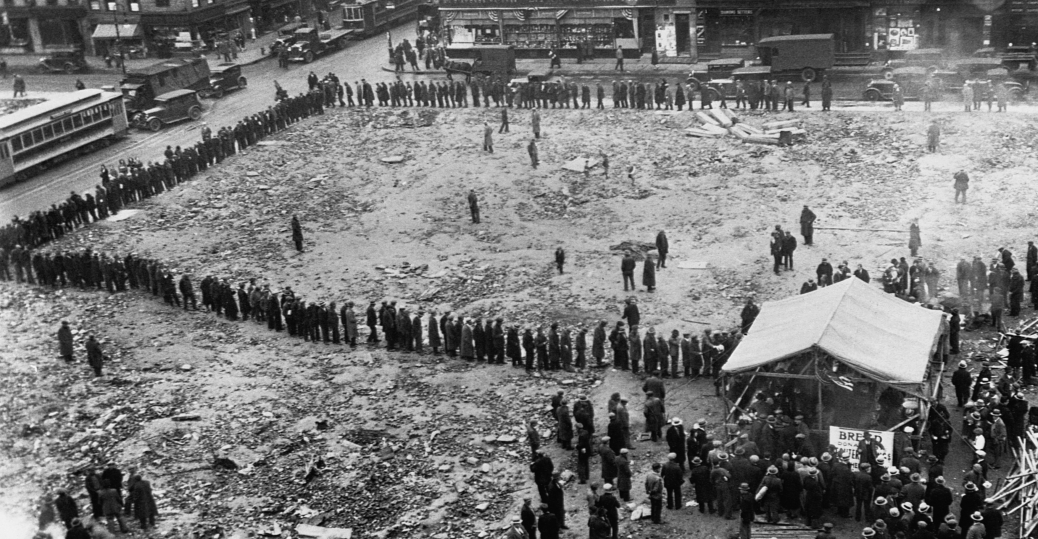
BREAD LINES IN NEW YORK 1933
BREAD LINES IN NEW YORK 1933–Hayek is not saying that government should not care for the poor, work-disabled, or technologically unemployed. 

Hayek writes: “Where, as in the case of sickness and accident, neither the desire to avoid such calamities nor the efforts to overcome their consequences are as a rule weakened by the provision of assistance – where, in short, we deal with genuinely insurable risks – the case for the state’s helping to organize a comprehensive system of social insurance is very strong.”

Hayek is acknowledging a role for government.  The role is to regulate private enterprise in those areas where freedom of choice or equal opportunity is infringed upon. 

HEALTH INSURANCE
If insurance is not available to all in a land of prosperity, then government has a role in creating a program that will offer insurance to all. 

Hayek’s only caveat is that the insurance be offered as an affordable, free enterprise, and individual choice, not as an entitlement.

FREE TRADE IDEAL

Hayek opposes government programs that interfere with free competition among similar businesses. 

The weakness of Hayek’s argument is in idealization of humanity; i.e. human nature is that leaders in government and the private sector will drive for advantage.  In the case of one country, that advantage may theoretically be mitigated by impartial government regulation but, in a world of sovereign nations, power is inherently limited.

If China wants to subsidize steel exports, American options are limited to creating import tariffs that further distort market competition. This is the mistaken route that President Trump has taken. Further, Hayek’s idealization presumes that politicians cannot be bribed, human beings are not prejudiced, populations have an equal opportunity to succeed, and humanity is inhumanly perfect when left in a state of grace.

Hayek correctly points out the importance of money as a measure of success in a free society.  However, in today’s America, “Moneyocracy” has become an American form of government.  “Moneyocracy” is the aristocracy of the 21st century that elects public officials, denies equality of opportunity—for education, economic mobility, and employment.

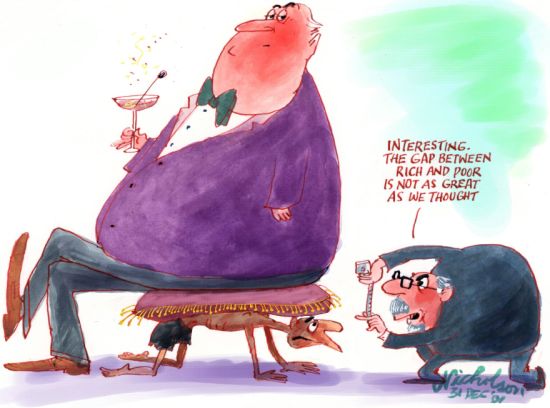
GAP BETWEEN RICH & POOR

The gap between the rich and poor is widening by degrees that may bankrupt America because of an enlarging safety net for the old, the sick, the unemployed, and the unemployable.

 The field of competition for free enterprise is becoming more unequal.  Hayek observes that government intervention slips into socialism when free enterprise is artificially manipulated.  The fear is that America will begin looking for their Hitler to manage a sick economy.

Conservatives that rant against government regulation based on Hayek’s “Road to Serfdom” are as incorrect as liberals that argue Hayek wrote against social government programs for the poor, disabled, and unemployed.

DECRIMINALIZATION

Audio-book Review
By Chet Yarbrough

(Blog:awalkingdelight)
Website: chetyarbrough.blog

flowers in the blood

Flowers in the Blood: The Story of Opium

By: Jeff Goldberg, Dean Latimer, William Burroughs (Introduction

Narrated by Stephen McLaughlin

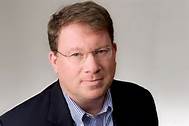
JEFF GOLDBERG (AMERICAN JOURNALIST, STAFF WRITER FOR THE ATLANTIC)
JEFF GOLDBERG (AMERICAN JOURNALIST, STAFF WRITER FOR THE ATLANTIC, & POLITICAL PUNDIT)

Published in 1981, “Flowers in the Blood” argues for decriminalization of opiates.  The idea remains controversial in 2018, and 2022.  Written by Jeff Goldberg and Dean Latimer, a listener feels misdirected by historical information.

DEAN LATIMER (WRITER FOR THE EVO, AKA EAST VILLAGE OTHER-WENT ON TO EDIT HIGH TIMES)

The feeling of misdirection is reinforced by a languid, seemingly opiated, performance of the narrator, Stephen McLaughlin. It is not that one is seduced by Goldberg and Latimer’s writing, but a listener feels cornered in a room of opium eaters.  Goldberg and Latimer reveal how opium is extracted from a flower to offer a tranquil escape from life’s stresses, with a tantalizing peek at world clarity.  Opiate extraction seems simple; the consequence of use, not.

OPIUM POPPY
Goldberg and Latimer reveal how opium is extracted from a flower to offer a tranquil escape from life’s stresses, with a tantalizing peek at world clarity.  Opiate extraction seems simple; the consequence of use, not.
brave new world
Goldberg and Latimer argue that opiates enhance natural neurotransmitters, like endorphins, to reduce stress and depression caused by living life.  This argument reminds one of a “Brave New World” where every stress in life is characterized as negative.

Goldberg and Latimer argue that opiates enhance natural neurotransmitters, like endorphins, to reduce stress and depression caused by living life.  This argument reminds one of a “Brave New World” where every stress in life is characterized as negative.

Goldberg and Latimer note that refinement of opium into morphine and heroin increases its addictive power.  They extol the pleasure of opiates while cataloging its history of addiction.  Goldberg and Latimer reflect on opium’s effect in altering cerebral states of being.  Their argument seems counter intuitive.

They note its use by artists ranging from Charles Dickens to Elizabeth Barrett Browning.  They infer opiates enhance artist’s abilities.  They realistically identify opiates’ medical benefit, while exposing its potential for addiction.  Goldberg and Latimer suggest opiates enhance artistic sensibility, and temper sociopathic homicidal acts. They begin an argument for legalizing opiates.

OPIATE LEGALIZATION
Goldberg and Latimer extol the pleasure of opiates while cataloging its history of addiction.  Their argument is counter intuitive. They begin a defense for legalizing opiates.

Goldberg and Latimer argue that there are three options.  One, continue jailing narcotic purveyors and users.  Two, legalize opiates and let the free market determine use.  Three, decriminalize opiates and offer treatment to those who become addicted.

Their argument is for number three; they suggest number one (the American standard) is ineffective, and number two would be a disaster in the making.  Goldberg and Latimer argue that America should legalize and regulate opiates and treat those who become addicted.

DRUG TREATMENT AND COUNCILING
America regulates alcohol and tobacco, both proven addictions.  Alcohol and tobacco are regulated by the market, with education on their harmful effects and government taxation to increase prices that affects consumption.  Goldberg and Latimer argue that America should legalize and regulate opiates and treat those who become addicted.

America regulates alcohol and tobacco, both proven addictions.  Alcohol and tobacco are regulated by the market, with education on their harmful effects and government taxation to increase prices that affects consumption.  These regulations have had some success, but people still have the right to drink and smoke to excess.

The option of opiate legalization is troubling because it infers substituting inner-direction of human beings for other-direction by government.  It increases the potential of a “Brave New World” where human choice is no longer individual but collective.

DRUG USERS
Goldberg and Latimer point out that punishing the addicted with prison is a mistake.  Those who succumb to addiction need help; not punishment.

Goldberg and Latimer point out that punishing the addicted with prison is a mistake.  Those who succumb to addiction need help; not punishment.  One can readily accept that argument but opiate regulation by the government is a step too far.  This may be a distinction without a difference but Alcohol and cigarettes are still a private sector choice with government intervention (principally tax increases and education) based on political input.

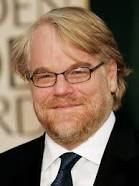
PHILIP SEYMOUR HOFFMAN (1967-2014)
The loss of Seymour Hoffman in February 2014 was a tragic loss.  Hoffman dies at the age of 46, John Belushi at 33, Kurt Cobain at 27, Billie Holiday at 44, River Phoenix at 23; all from opiate overdoses.  If opiates were legalized, would these artists have been saved—who knows?

The loss of Seymour Hoffman in February 2014 comes to mind.  Hoffman dies at the age of 46, John Belushi at 33, Kurt Cobain at 27, Billie Holiday at 44, River Phoenix at 23; all from opiate overdoses.  If opiates were legalized, would these artists have been saved—who knows?  They chose addiction to escape the insecurity and stress of life.  Their choice is their choice.  Insecurity and stress are facts in every human’s life.  America’s failure is related to treatment, not government control of human choice.

WAR ON DRUGS
With treatment programs, the government will make the objective of addicting users a waste of manufacturer’s and seller’s time.  It may not eliminate illegal drug activity but it will make it less financially viable.

America needs to continue their fight against illegal opiate manufacturers and sellers.  Threat of punishment is not the key but reduction in profitability will drive illegal manufactures out of the market.  With treatment programs, the government will make the objective of addicting users a waste of manufacturer’s and seller’s time.  It may not eliminate illegal drug activity but it will make it less financially viable.  Addiction treatment programs and substance abuse’ education are legitimate roles for state governments.  Opiates should be subject to the same laws that presently govern drug research and development.

Unfortunately, “Flowers in the Blood” fails to nuance legalization of opiates.  It leans more toward influencing uneducated poor, educated middle class, and idle rich to experiment with addictive drugs.  Goldman and Latimer are on the right track with regulation and treatment of addiction, but their book encourages drug experimentation in a culture that needs no encouragement.  Stress is a part of life and being drugged into obliviousness diminishes humanity.