U.S. AND ISRAEL

What seems glaringly obvious in Mead’s “too long” story is the immense contribution Jews have made to the United States.

Audio-book Review
 By Chet Yarbrough

Blog: awalkingdelight)
 Website: chetyarbrough.blog

The Arc of a Covenant

By: Walter Russell Mead

Narrated by: Josh Bloomberg

Walter Russell Mead (American Author, Professor of Foreign Affairs and Humanities at Bard College, taught American foreign policy at Yale.)

Walter Russell Mead hardens the consequence of race and creed in the history of the modern world. Mead offers a biblically influenced history of human progress in “The Arc of a Covenant”. One cannot diminish the value of human diversity, but Mead implies millions who were murdered, maimed, or imprisoned in history have paid a price for human progress. Mead suggests the greatest price paid is by Jews who were largely abandoned by Franklin Roosevelt’s America and imprisoned, gassed, and murdered in WWII.

Despite America’s decisive role in WWII, largely orchestrated by Franklin Roosevelt, Mead suggests President Truman’s actions to end the war and gain the peace shine as brightly as the social programs created by his predecessor.

As is widely known, the Ark of the Covenant carried two stone tablets that were given to Moses by God that contain the Ten Commandments.

Mead implies these commandments were adhered to by Truman more than any President before or after his presidency. He notes that despite Truman’s lack of a college degree and inexperience as a politician, he utilized the universal values of the ten commandments to guide America out of war into a peace meant to reinforce the “…Covenant” given to Moses by God. It is clear from Mead’s history, that Truman did not do it alone, but he led the effort with the support of his predecessors, direct reports, and successors.

As the 33rd President, Truman re-engaged the U.S. in internationalist foreign policy, adopted Kennan’s recommendation of containment of U.S.S.R. during the Cold War, passed the Truman Doctrine that helped eliminate the communist threat in Greece and Turkey, responded to the Berlin Wall crises with the Berlin Airlift, and passed the $13 billion dollar Marshall Plan to aid Western European recovery after WWII. Truman also ended racial segregation in the Armed Services, and established the NSC, the CIA, and the NSA.

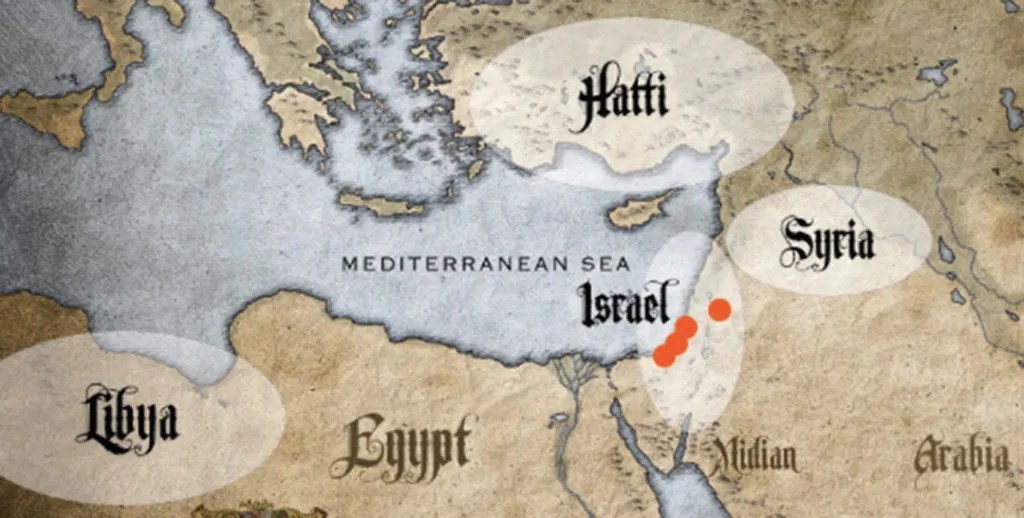
In America, Henry Cabot Lodge and evangelist, William Blackstone, were two predecessors to Truman that martialed American opinion to support the Balfour proposition of Englishman Arthur Balfour who recommended support for a Jewish homeland in Palestine. To an evangelist, one presumes the motivation is biblical belief in the prophecy of Armageddon that is to occur in the Middle east with the return of Jesus Christ to save believers in the faith. Lodge supports Zionism (a 19th century plan for a Jewish homeland in Palestine) as the Chairman of the Senate Republican Conference from 1918 to 1924.

In 1946, Palestinians refuse to agree to a separate Jewish homeland in their country. They would only agree based on a one state solution where Jews would be a minority in a Palestinian controlled state. The consequence of that refusal is to diminish the territorial control of the Palestinian people.

Mead notes the British walked a fine line between their need for oil from the Middle East and their effort to fulfill the promise of the Balfour agreement.

The conflict between Jews and Palestinians is initially controlled by the British military when the Jewish settlements first came to Israel. In the end, the British need for oil is greater than their continuing act as arbitrator for the Palestinian/Jewish conflicts.

The British decide to turn the conflict over to the United Nations which was formed in 1945 as a replacement for the League of Nations.

Though this body is meant to resolve international conflicts, it has five permanent members that have veto powers over its policies. They are China, France, Russia, the UK, and the US. Russia for a short time supports an independent Jewish State but becomes a notorious abuser and murderer of Russian Jews during the Stalinist years.

By a slim margin, with Stalin’s real-politic support, a UN resolution is passed to create a Jewish state in Palestine.

Stalin’s goal is to drive a wedge between Western powers like the UK and the US by supporting the resolution. The UK needs Arab oil even at the expense of the Balfour plan and the UN resolution. In enforcing the partition, Mead notes Truman is caught between the jaws of Cerberus guarding what is the hell between Arab states and a boundary line for Israel.

Mead explains Eleanor Roosevelt is a major force in politics of the U.S., particularly after the death of President Roosevelt.

She supports the UN resolution and expects the American government to enforce its implementation. In 1948, Mead notes Truman plans to enforce the UN resolution with the American military, if necessary, which is not popular with some American leaders and U.S. voters.

Mead illustrates how America aided Israel in its early formation, but notes Israel grew strong on its own. After the end of the Cold War, the world enters a Cold Peace. Mead drops a cultural bomb on his readers by noting America’s role as western world savior morphs into western world goat. Mead infers that transmogrification is the base upon which Donald Trump is elected. He suggests the fall of the U.S.S.R. seemingly created a bed of roses but turned into a crown of thorns.

Mead suggests America in in a post-cold-war era. America’s left-wing support of Israel is now Right-wing support.

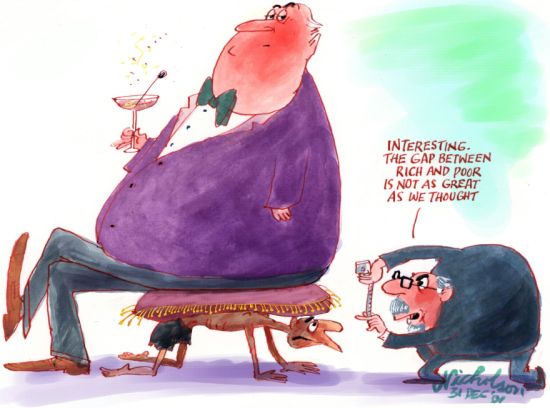
Deregulated growth of the economy is a causal factor in the widening gap between rich and poor. 9/11 destroyed America’s self-confidence by suggesting America cannot protect itself, let alone spread democratic values in the world. American power emulates authoritarian government with slogans like “Make America Great” with an underlying disregard for foreign relations and world peace. Mead suggests there is a growing loss of faith in American government.

It is sad to think how vilified and unfair history has been to such a small ethnic minority.

What seems glaringly obvious in Mead’s “too long” story is the immense contribution Jews have made to the United States. As a small minority, their contribution to the world outstrips any ethnic group in this dilatant’s flawed memory. Mead gives some perspective to that realization.

SOCIAL BRAIN

Is one born with a gender identity like a chicken or is one born as an egg with a chicken’ identity determined by socialization?

Audio-book Review
 By Chet Yarbrough

Blog: awalkingdelight)
 Website: chetyarbrough.blog

Gender and Our Brains (How New Neuroscience Explodes the Myths of the Male and Female Minds.)

By: Gina Rippon

Narrated by: Hannah Curtis

Gina Rippon (British Author, neurobiologist, received a PhD in physiological psychology, professor at Aston Brain Centre, Aston University in Birmingham, England.)

Gina Rippon develops an argument, reinforced by literature but indeterminant by science, that there is little intellectual or social difference between the sexes. Like white dominance of the western world, Rippon implies difference between the sexes has been institutionalized and biased by society.

Though Rippon does not reach back to fossil evidence of human beings, one might make a case for the beginning of biased human socialization in the discovery of homo habilis males and females that lived 2.4 to 1.4 million years ago in Eastern and Southern Africa. Ironically, “homo habilis” is Latin for “handy man”.

The vary choice of identification of the oldest known fossil is a reminder of the influence of socialization and gender discrimination by the actions and definitions of science researchers. ((Hardly a surprise when only 38% of the population of Science, Technology, Engineering and Mathematics’ (STEM) bachelor’s degrees are held by women.)) Conceivably, in the beginning of history men dominated women because of inherent physical strength and a division of labor that set sexual bias for generations to come.

In “Gender and Our Brains”, Rippon is raising the chicken and egg paradox for the origin of male and female identity.

Is one born with a gender identity like a chicken or is one born as an egg with a chicken’ identity determined by socialization?
Having been raised by a mother with the only consistent father figure in the family being an older brother, this reviewer’s belief is as clouded as the conclusions reached by Rippon. There is as much evidence for being born as a chicken as an egg in the history of science and sociology. The conclusion one may draw from “Gender and Our Brains” is “let people choose to be whom and what they desire to be”.

Society should neither condemn nor deny a person’s sexual preference. Just as racial and ethnic minorities should not be discriminated against, neither should those who choose a sexual identity.

Societal acceptance and equality of opportunity should be the same for all. There is no justification for denial of equal rights and opportunities based on what one becomes as an individual whether one’s life is an inherent or learned difference. The only reason sexual identity is a controversial question is because societies lean toward a “we/them” mentality. Why should one care whether one identifies as male or female if they make a positive contribution to society. America is founded on the principles of equal treatment and opportunity for all, not just a white, largely male, majority.

Rippon’s conclusion is that human beings may or may not have a sexual identity when they are born. Science experiments and studies give no distinct answer to inherent sexual identity.

If sexual identity is inherent (which is neither proven or unproven by science), socialization is shown to influence sexual identities maturation and how men and women behave toward each other. Rippon argues if sexual identity is partly determined by socialization, then socialization is where equality of the sexes should and can be reinforced.

Rippon makes a convincing argument that there is minimal difference between men and women except in their role in human reproduction.

Many literary stories believe in the equality of the sexes. Rippon’s fundamental point is that all humans are born equal whether male, female, or other. Her inference is that the world needs to get over discrimination and promote equal rights and opportunity for all because any natural origin of sexual identity remains a scientifically indeterminant puzzle.

WARS TRUTH

War is only a destroyer, not a builder of society. Samet implies the truth of war will continue to be distorted by both victors and losers who tell the tale.

Audio-book Review
 By Chet Yarbrough

Blog: awalkingdelight)
 Website: chetyarbrough.blog

Looking for the Good War: American Amnesia and the Violent Pursuit of Happiness

By: Elizabeth D. Samet

Narrated by: Suzanne Toren

Elizabeth D. Samet (Author, Professor of English at West Point.)

Elizabeth Samet’s “Looking for the Good War” tells a hard truth about war. Samet’s history of war is like the refrain from the Temptations’ song:

War, huh yeah
What is it good for?
Absolutely nothing, oh hoh, oh
War huh yeah
What is it good for?
Absolutely nothing, say it again y’all

THE FEAR OF WAR IN VIETNAM

As a professor at West Point, it seems incongruous for Samet to write this book. On the other hand, who would better understand a career for future military officers than a West Point’ professor? The command structure of the military requires soldiers do what they are ordered to do. In that doing, they may lose their minds, their lives, or their physical health. Samet raises the hard truth of every war, i.e., a soldier’s duty is to follow orders and when necessary, kill or be killed.

Samet questions stories, films, and images that glorify war.

Samet implies, once war is declared, its causes and consequences become fictionalized tales.

Once a country is compelled to defend itself in war, like Ukraine, Samet infers a “…Good War…” becomes fiction.

Truth of war becomes distorted by memory, and human bias that is memorialized by the visual arts and literature. The support for Samet’s view of war is in art and media representations of its history. From Picasso’s Guernica that illustrates the real horror of war to movies like Sands of Iwo Jima, war’s reality is distorted. Art and literature tell different truths.

Samet often refers to Shakespeare’s plays and his many observations about war, i.e., about its perpetrators and victims. From Julius Caesar to Richard III, to Henry IV, to Henry V, to Henry VIII, Samet quotes Shakespeare’s lines like

“Cry havoc’ and loose the dogs of war, That this foul deed shall smell above the earth With carrion men, groaning for burial.”

Samet argues Tom Brokaw, and Robert Rodat (screenwriter for “Saving Private Ryan”) glorify the winning side of WWII by choosing narratives that distort the true nature of war.

Samet is not alone in her opinion about the history of war distorting truth. American author and television writer, Rebecca Serle says the same. To Serle and Samet, history is a personalized perception, a truth imprinted on the minds of combatants. This personalized truth is an interpretation of what one experiences. War’s events are interpreted by the understanding of those who choose to write, paint, or film war’s events. War’s events become interpretations of interpretations. Samet implies a “…Good War…” is oxymoronic, a contradiction of words because there are no good wars.

American author and television writer, Rebecca Serle, wrote “History, memory is by definition fiction. Once an event is no longer present, but remembered, it is narrative. And we can choose the narratives we tell–about our own lives, our own stories, our own relationships.”

Samet is arguing no war is a good war because war is inherently bad for the mental and physical existence of human life. She argues narratives of America’s Civil War are prime examples of the distortion of truth about a “…Good War…” in the same sense as Brokaw’s WWII narrative. Samet coldly notes America’s idealization of rebel opposition to union and civil rights falls into the same category as the idealization of America’s role in WWII. There were singular brave actions in both wars, but those stories of bravery distort the reality of death and destruction, murder of human beings, an aftermath of coping with loss or permanent injury of loved ones, and the consequence of destroyed homes and economies of warring nations. Both WWII and America’s civil war solved nothing. Discrimination has not disappeared. Mass killings still occur. The only difference is in the organization, execution, and volume of deaths and injuries. There is no “…Good War…”

Samet explains neither WWII or the American Civil war were examples of a “…Good War…”. That statement shocks the senses.

Just as America did not save the world for democracy in WWII, America’s Civil War did not erase institutional racism. Racism hardened after America’s civil war and continues to this day.

Axis powers chose to wage war just as Allied powers chose to defend themselves. The story told by victors tends to view war by focusing on heroic events of conflict rather than war’s atrocity and aftermath. The story told by losers is one of blame for miscreant leaders who misled their countries into war. Both stories are fictions to justify new leader’s perceptions of reality. More importantly, Samet clearly explains how memory distorts the truth of what is accomplished by waging war.

Samet is simply writing about the fundamental truth–war is hell for all human beings, whether victors or losers.

The upside-down world of George Orwell notes “War is peace, Freedom is slavery. Ignorance is strength.” This is the world of which Samet writes. Samet explains what Orwell satirizes. War is hell. “Equal rights” are an unaccomplished ideal. Ignorance of war’s truth is compounded by distorted memories of the past.

As seen in Ukraine, Myanmar, Ethiopia, and Sudan–wars continue to roil the world. War is only a destroyer, not a builder of society. Samet implies the truth of war will continue to be distorted by both victors and losers who tell the tale.

DEFINING FREEDOM

Audio-book Review
 By Chet Yarbrough

Blog: awalkingdelight)
 Website: chetyarbrough.blog

The Rise and Fall of the Neoliberal Order (America and the World in the Free Market Era)

By: Gary Gerstle

Narrated by: Keith Sellon-Wright

Gary Gerstle (Author, Professor of American History and Fellow in History at Sidney Sussex College, University of Cambridge.)

Gary Gerstle’s history of the “…Neoliberal Order” is tiresome to listen to but gives weight to American belief and practice of freedom regardless of political affiliation or interest group association. Gerstle’s history is tiresome because of its labeling, not because of its historical accuracy. Whether one is a conservative, liberal, or neoliberal is superfluous.

Americans pride themselves on being beacons of freedom when in truth they are opinionated advocates of self-interest hiding behind political labels.

Gerstle’s history shows every President of the United States has been elected by the prevailing sentiment of the time. (To date, Presidents of the United States have always been men because of humanity’s history of misogyny.) The common thread of America’s leaders is their belief in freedom. In America, that freedom is limited by “rule of law” created by two branches of a popularly elected legislature. Sadly, as shown by Gerstle’s history, America’s “rule of law” has historically victimized the powerless and poor.

Belief in freedom has justified slavery, led to a civil war, given America the emancipation proclamation, voting rights for women, and created vituperative media manipulators like Rush Limbaugh, trolls like Alex Jones, and media conglomerates like Fox News.

The difficulty of American democracy is in knowing where to draw the line between freedom and rule of law that regulates excesses and treats all citizens equally. Guilt finally rose to the level for the emancipation proclamation to free slaves, and voting rights for women in 1920, but Black Americans and women are still seeking equal rights.

Gerstle accurately reveals America’s adaptation to the will of an ethnic majority to circumstances of different eras, whether it is enrichment of the rich, preparation for war, recovery from economic depression, or adjustment to the threat of global warming.

The strength of America democracy is its flexibility in dealing with societal change, with the caveat that government tends to protect the status quo.

Communal self-interest changes with the circumstances of its time. Self-interest is immutable in one sense and highly fungible in another. The power of money influences elections and government policy that aids the moneyed, often at the expense of the powerless and poor. Communal self-interest is reenforced by the right to vote but the economic advantage of government policy goes to the rich and middle class because that is where the money is that supports election campaigns.

Gerstle notes that in the 21st century, particularly with the ubiquity of media, the challenge for the public is to know the difference between propaganda, lies, and truth.

Gerstle infers history shows America takes the course of moneyed interests in elections whether it is one or the other of the three challenges to the public. Sadly, propaganda and lies are often believed by the public to be truth.

Gerstle recalls how the flood gate of media technology opens and its flood takes hold of America during the second term of the Clinton administration. Clinton chose to eliminate the Glass-Steagall Act that was designed in 1933 to prevent another Depression.

Clinton recognizes the world is at the precipice of the tech revolution. During the industrial revolution, banks were steered away from volatile equity markets by the Glass-Steagall Act. Clinton, with the help of Republicans like Newt Gingrich, wanted to loosen the chains of investment banks so the technology revolution could blossom. Neither Democratic nor Republic Presidents reversed that decision after the Clinton presidency.

In part, one might argue the near banking collapse in 2008 could have been avoided if the Glass-Stegall Act had been left in force.

Worse, in the 2008 financial debacle, stockholders in at risk banks were bailed out by the Obama government while overstretched homeowners were left with mortgages they could not pay. The rich were bailed out while the poor were bankrupted.

The three banks that failed in May and March of 2023 are arguably a consequence of the volatile investments made in technology companies, a second threat to the banking industry in the 21st century.

The choice of the government in 2023 is to replace depositors’ funds in excess of FDIC limits to avoid the loss of their businesses from the profligate investments by these three banks. The difference between the 2008 bailout and the 2023 government response is bank’ stockholders were not bailed out by the government while other banks took over their portfolios.

Gerstle’s history clearly shows American Democracy’s failures are non-partisan. Both Republican and Democratic leaders fail the poor and powerless populations of America.

That failure is not because of a failure of democracy but because of poorly regulated capitalism. Karl Marx explained democracy is a first step toward communism. One can disagree with that conclusion by noting self-interest is a part of life that makes the ideal of communism unattainable. What is attainable is a democracy that improves public education and mandates business legislation that ensures and enforces social equality and equal opportunity.

American Democracy needs to erase lobbyist, industry, and individual financial donors’ influence on government political campaigns.

Democracy is a work in progress, but it is the best form of government known today. Capitalism is the engine of economic growth that works in all forms of government. In today’s world, capitalism offers the greatest opportunity for humanity in any form of government, but particularly in Democracy.

In the 21st century, it seems democracy is evolving to meld the best of socialism with the self-interest of capitalism.

Democracy struggles with the principles of regulated freedom. Gerstle’s history shows democratic freedom, limited by rule of law, remains at the heart of what can truly make America Great. What gets in the way is the greed of moneyed interests that elect leaders who become dependent on a minority of American society.

Gerstle’s recounts the history of the second Bush’s administration’s misguided and disastrous invasion of Iraq.

The bloody toll of America’s invasion and failed reconstruction of Iraq illustrates the hubris of American belief that democratic freedom works for all nations of the world.

The invasion and reconstruction of Iraq is shown to be an American failure by any measure of societal improvement.

Gerstle shows the election of Donald Trump is a triumph of the disaster of believing American Democratic elections are in the best interest of its citizens. Trump’s administration mocks the ideals of American Democratic government and freedom. Rule of law is a joke to Trump as evidenced by the many indictments and denials of America’s former President. Gerstle notes how unprepared Trump was to become President of the United States.

By any measure, Trump is shown by Gerstle to have damaged America’s image in the world.

Gerstle’s history shows Democracy needs to be regulated by rule of law. Self-interest is unlikely to disappear from human nature which puts all societies at risk. Any form of government can become autocratic but taking the influence of money out of elections leaves hope that citizens of Democratic nations will have a chance to live well, and in peace.

POLITICAL EVOLUTION

The evolution of political governance offers a kernel of hope for world peace.

Audio-book Review
 By Chet Yarbrough

Blog: awalkingdelight)
 Website: chetyarbrough.blog

The Long Game: China’s Grand Strategy to Displace American Order

By: Rush Doshi

Narrated by: Kyle Tait

Rush Doshi (Author, founding director of the Brookings China Strategy Initiative and a fellow in Brookings Foreign Policy, fellow at Yale’s Paul Tsai China Center.

Rush Doshi’s review of China’s history in “The Long Game” is enlightening. One cannot deny the truth and logic of Doshi’s explanation of China’s commitment and success in returning to international prominence. Doshi’s proficiency in Mandarin Chinese and his thorough review of China’s history give credibility and gravitas to his assessment.

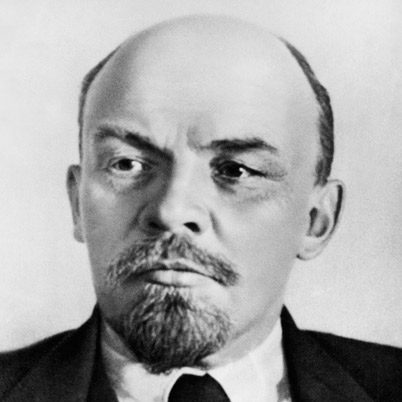
Doshi explains China’s socialist belief is grounded in Leninist communist theory. Lenin believed in the Marxist principles of history and society that show materialism leads to human exploitation.

As the Marxist/Leninist argument goes, exploitation (materialist self-interest) will alienate the majority of society which will revolt against a capitalist ruling class. The belief is that a different form of leadership will rise from the ashes of a revolution that will more fairly distribute the riches of life. In China’s history, Mao is the leader of that revolution. The key to Mao’s, and now President Xi’s belief, is top-down leadership by an enlightened ruling class will raise China’s role in the world. Doshi infers President Xi and his 20th century predecessors believe a communist party’s domination will be the basis upon which a fair distribution of life’s riches can be achieved.

Doshi implies the fundamental conflict between China and the U.S. is political.

China believes in Leninist communism. America believes in democracy. The irony is that human self-interest defeats the idealist intent of both political beliefs. Top-down management of a communist party is potentially as damaging to the public as a democratically elected representative government because of self-interest. No communist or democratic government in the history of the world has resisted the lure of money, power, and prestige that accompanies political leadership. This is not to diminish the relevance and importance of Doshi’s book but to disabuse listeners of an undeserved idealization of any form of government.

Doshi gives a clear explanation of why China is suspicious and wary of American power and influence in the world.

Doshi identifies a trifecta of world events in the twentieth century that influence China/American relations; making it unlikely they will ever become allies. The trifecta is the Tiananmen Square massacre, the collapse of the U.S.S.R., and the invasion of Iraq.

Deng Xiaoping was the Chairman of the Central Military Commission at the time. A secret mission by Brent Scowcroft, President George H.W. Bush’s National Security Advisor, made an effort to calm China/American relations but Doshi explains it failed. China objected to America’s interference and public rebuke of China in their response to the Tiananmen square demonstration.

The second blow to America’s relationship with China is the collapse of the U.S.S.R.

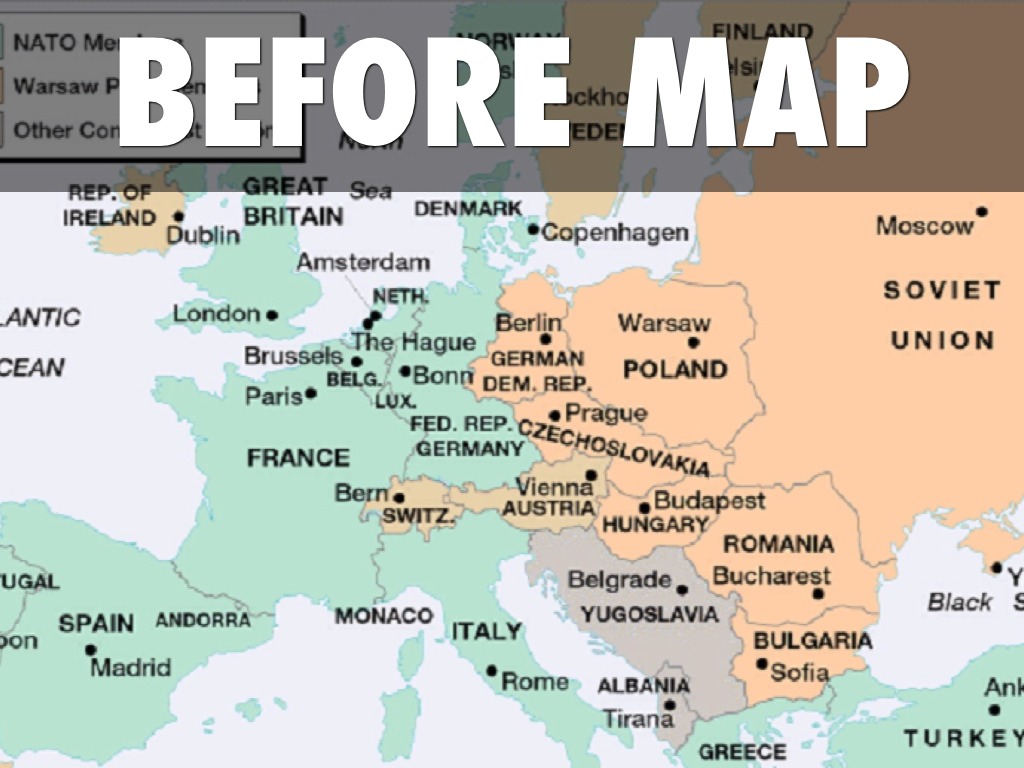
Doshi notes that China and America secretly cooperated in America’s U.S.S.R.’ containment policy that was recommended by American diplomat George Kennan in 1947. When the U.S.S.R. collapsed in 1991, China reassessed their relationship with America. Without a common enemy, China perceived America’s intent is to be hegemon of the world, not just the West. Doshi explains, China’s view of America becomes an imminent threat to its sphere of influence.

With President George W. Bush’s defeat of Saddam Hussein’s army in less than a month and a half, China recognizes how far they were from being the hegemon they wished to be. Doshi suggests this became the third blow of the trifecta that China perceived as an imminent threat to China’s position as hegemon of Asia, if not sole hegemon, of the world.

The irony of Doshi’s history is that no form of government has been found that fairly mitigates self-interest inherent in human beings.

Just as American leaders who have put their personal interest above the interests of their country, Chinese communist leaders have been found to be corrupt and more concerned about themselves than the lives of their country’s people. Both China and America have a history of discrimination and unfair treatment of their citizens.

History has many examples of the graft and corruption that exists in both communist and democratic forms of government.

China’s history and society is unique and much older than America’s. However, each country is struggling with their governments to be better stewards of their citizens. What all national governments of the world forget is that we live on one space ship. Without better international relations, the ship is headed for oblivion. Governments can continue to argue and fight over who is captaining the ship but no government seems to know how to steer.

Sadly, Doshi ends his scholarly work with details of how America can use the same methods as China to block its hegemonic ambition. Perceived self-interest, once again, chooses opposition over cooperation to achieve comity, not peace.

The evolution of political governance offers a kernel of hope for world peace. Until a form of government equitably manages human self-interest, periodic wars and social unrest will continue. Neither China nor America have found an answer. The answer is neither “Big Brother” nor unregulated freedom.

FOSSIL FUELS

Audio-book Review
 By Chet Yarbrough

Blog: awalkingdelight)
 Website: chetyarbrough.blog

Windfall (How the New Energy Abundance Upends Global Politics and Strengthens American Power.)

By: Meghan L. O’Sullivan

Narrated by: Eliza Foss

Meghan L. O’Sullivan (Author, Harvard professor, Former deputy national security adviser on Iraq and Afghanistan, worked in the George Bush administration.)

Meghan O’Sullivan offers an intelligent but flawed view of today’s world. It is true that energy is critical for economic growth and improved human life. It is also true that energy need and development cause international conflicts in the post-industrial world. O’Sullivan does a masterful job explaining the role of energy, noting its cost while explaining fossil fuels are at a turning point in history.

Fossil fuel prices fluctuated dramatically in the 20th century but O’Sullivan suggests the trend in the 21st century, despite the rise between 2000 and 2008, will trend downward for three reasons.

One is the recognition of energy’s environmental consequence and conservationists’ political response; two, energy’s extraction is becoming less costly for most fossil fuels. And three, technological advancement offers alternative sources of energy.

What O’Sullivan correctly notes is that energy will remain a driving force behind international relations.

However, her argument is flawed by suggesting governmental restrictions on discovery and growth of fossil fuels should be weakened. Even in the few years since publication of O’Sullivan’s book, the science of fossil fuel pollution is showing accelerating global warming with potential for a “no-return” human’ consequence. Global warming seems self-evident. That evidence does not change O’Sullivan’s insight to the outsize role energy plays in the real-politic world of today, yesterday, and tomorrow.

O’Sullivan loses a bet with a colleague that Russia would challenge world peace within five years of 2013. She was right, but it took a couple years longer for Russia’s re-invasion of Ukraine.

O’Sullivan correctly foretold Putin’s kleptocratic government’s intent to re-establish Russia’s place in the world by using its fossil fuel abundance to lure Europe and Asia with their need for energy. Putin’s drive to offer oil and/or gas pipelines to Germany, China, and Turkiye are meant to assuage their opposition to Ukraine’s invasion. Though China is somewhat supportive of Putin, it has little to do with its energy need but more to do with China’s opposition to U.S. involvement in their sphere of influence. In response to the Ukraine invasion, Germany found alternative sources for Putin’s pipelined energy with imported LNG (liquified natural gas). To some extent, Putin’s energy ploy worked. China, India, and Turkiye continue to buy oil from Russia despite its invasion of Ukraine. Their national interests outweigh their concern about Russia’s invasion, just as Putin undoubtedly calculated.

Energy’s role in the modern world is well documented by O’Sullivan. She notes the history and future of energy and how it will continue to roil international relations.

The cost of energy influences world leaders to exploit the environment despite its harm to society.

Exxon Valdez Oil Spill.

Coal continues to be burned for energy around the world because it is the least expensive.

Malaysia coal fire plant.

Technological innovation is decreasing natural gas costs which, though less environmental damaging than oil or coal, is becoming more widely used. Natural gas remains a pollutant. It is estimated to be 50-60 percent less polluting than coal and 20-30 percent less polluting than oil. (A caveat to the less pollution from natural gas is that it is being used in newer and more efficient energy producing facilities.) This argument does not change O’Sullivan’s flawed argument that restrictions should be removed, weakened, or moderated for further fossil fuel technological development and extraction.

Weather around the world, forest fires, and northern arctic warming are dramatic 21st century proof of continuing global warming. Science and nature tells us the world is warming. That warming is, at the least, greater because of fossil fuel use.

O’Sullivan remains correct in noting how energy is key to peace in the world. The vast natural gas find by Israel, called the Leviathan Reservoir, makes Israel’s influence in the Middle East much greater. Israelis use their natural gas’ find to improve their relationship with Middle East powers. On the other hand, it seems to give license to Israel to repress dislocated Palestinians as irreconcilable enemies.

Energy is both a weapon and tool of peace.

Where O’Sullivan’s book is less convincing is in its inference that the energy industry should be given free rein to continue developing fossil fuels. Even if energy is critical to the sovereign right of every country in the world, degradation of today’s environment makes fools of us all.

NO GIANTS AMONG US

Audio-book Review
 By Chet Yarbrough

Blog: awalkingdelight

Website: chetyarbrough.blog

When Women Ruled the World

The Chancellor

By: Maureen Quilligan By: Kati Marton

Narrated by: Suzanne Torne Narrated by: Alex Allwine, Kati Marton

Maureen Quilligan and Kati Marton illustrate how mistaken society is in forsaking women as leaders of the world. Quilligan argues four famous women “…Ruled the World” in the 16th century. “The Chancellor” addresses one woman who “…Ruled the World” in this century.

Quilligan explains an overriding conflict in the 16th century is a schism in the church. In 1517, Martin Luther posts the 95 Thesis that accuses the Catholic Church of selling indulgences to forgive sin to pave the way to heaven.

During Henry VIII’s reign (1509-1547) his first marriage to Catherine of Aragon does not produce a male heir to the throne. Henry wishes to dissolve his marriage to Catherine and marry Anne Boleyn. However, he needs an annulment from the Pope to marry Boleyn. The Pope resists.

Henry the VIII takes advantage of the growing schism in the church, exemplified by the 95 thesis. At the same time, as some historians note, Henry wishes to confiscate Catholic property in England to replenish the royal treasury. Henry the VIII creates the “Church of England” in 1534 as an alternative to the Papal Church in Rome. The Church of England annuls Henry VIII’s marriage to Catherine and the confiscation of Catholic Church property begins.

With the formation of the Anglican Church, England becomes Protestant which is the faith of Elizabeth I, the daughter of King Henry and Anne Boleyn.

Still, even after the marriage to Boleyn, there is no male heir. Catherine of Aragon remains Catholic, along with her daughter who becomes Queen Mary I of England after Henry’s death. Mary I, as a Catholic, is half sister to Elizabeth I who is Protestant. Mary I rules as a Catholic despite her half sister’s insistence on remaining Protestant.

Quilligan recounts the religious differences between Queen Mary I and Elizabeth, but Quilligan suggests they remain close, bound by their father and their sisterhood.

Queen Mary I of England (1516-1558)

Upon the death of Mary I, Elizabeth I ascends the throne as a Protestant Queen replacing England’s Catholic Queen. Quilligan explains religious differences were important but Mary I and Elizabeth I maintain a sister to sister relationship despite there religious difference. Quilligan implies Elizabeth I knew that maintaining a good relationship with Mary meant she would one day become Queen of England.

Quilligan then turns to Scotland’s monarch. Scotland’s history shows Mary Queen of Scots is a committed Catholic leader. She brutally persecutes Protestants during her reign and becomes known as “bloody Mary”.

Mary Queen of Scots (1542-1587)

Quilligan characterizes the relationship between Mary Queen of Scots, and Elizabeth I as friendly (almost sisterly), but a plot to assassinate Elizabeth I leads to the beheading of Mary Queen of Scots. The irony of that act is that Elizabeth paves the way for Prince James, the son of Mary Queen of Scots, to become James I, King of England after Elizabeth’s death.

The beheading of Mary Queen of Scots is said to have required two strokes with the first not completely severing her head. To some, Mary Queen of Scots became a martyr.

Elizabeth is known as the virgin queen but her sister-like relationship with the beheaded Scottish Queen gave Elizabeth a somewhat motherly relationship with James. However, Elizabeth (after her long reign) refuses to identify an heir at her death. Other historians note that James I ascends the throne by presumption and selection by remaining leaders of England, after Elizabeth’s death. Quilligan notes James I is a committed Protestant rather than a Catholic like his mother.

Maureen Quilligan’s history is less convincing about women who ruled the world because it relies on recollected details from scant original documents and facts proffered by other historians.

Quilligan’s book about women that ruled the 16th century world seems hyperbolic and only marginally convincing. Quillian’s argument for at least one woman of the 16th century who ruled the world is credible–based on Elizabeth I’s long reign and her acclaim by most historians.

Quilligan explains Elizabeth I, Mary I, Mary Queen of Scots of (bloody Mary), and Queen Catherine de’ Medici of France are world leaders.

Queen Catherine de’ Medici (1519-1589)

They were leaders in the 16th century but the author’s reported facts only fit the book’s catchy title. Quilligan’s history fails to convince listener/readers that women ruled the 16th century world. Spain is noted as the strongest world power of the 16th century. Spain was largely ruled by Kings with only one Queen (Queen Isabella) who ruled for four years of the 16th century.

In contrast to Quilligan’s the gathered historical facts of 16th century leadership by women, Kati Marton has the good fortune of first person interviews of Angela Merkel’s leadership in the 21st century.

There are boat loads of original source material that confirm Merkel is a great ruler of the world. Merkel serves Germany while 3 Presidents (George W. Bush, Barack Obama, and Donald Trump) are elected in the U.S. Marton convincedly explains why Merkel is a great woman leader of the 21st century world. Marton explains how Merkel comes to power in Germany. Merkel’s remarkable rise beggars imagination.

The fall of the Berlin wall in 1989 reunites Germany.

Merkel is raised in East Germany as a scientist, fluent in Russian and German, and then as an English speaker, when she chooses to become a national politician. In 16 years Merkel, an unknown quantum chemist, becomes leader of the third wealthiest country in the world with only the U.S. and Japan having higher GNPs.

Marton notes Helmut Kohl is Chancellor of West Germany when the Berlin Wall is taken down. Kohl became Chancellor of the entire country in 1990 (originally elected in 1982) and remained Chancellor until 1998.

Kohl recognized the political value of Merkel early in her political career. She represented East Germany’s zeitgeist because she lived the life of an East German. When Kohl loses the Chancellorship to Gerhard Schroeder, the table is set for Merkel to challenge Schroder for Germany’s seat of power.

Kohl’s last race is against Schroeder. Kohl is expected to be reelected. An exposed financial scandal ruins Kohl’s chance. He is beaten by Gerhard Schroeder.

Gerhard Schroeder (Former Chancellor of Germany.)

Marton explains what you see is what you get with Angela Merkel. Though much of Merkel’s rise in politics is due to Helmut Kohl’s support and sponsorship, she forthrightly and publicly criticizes Kohl for using an intricate web of secret bank accounts to illicitly finance the party that had got him elected. Schroeder beats Kohl but is challenged by Merkel for Chancellor in 2005. Schroder loses re-election and Merkel becomes the first woman in history to become Chancellor of Germany.

Marton explains how Merkel abjures the macho machinations of Vladimir Putin and directly confronts Putin’s lies about Russia’s Ukraine incursion in 2014.

Marton shows Merkel is not a glib politician but a highly intelligent leader, with immense energy, who does what she believes has to be done. Merkel is shown to be an independent thinker who represses her emotions when confronted with the exigencies of political conflict.

Marton goes on to explain her admiration of George H.W. Bush, and Mikhail Gorbachev and their support of independence. In the beginning of Obama’s administration, Merkel initially feels Obama talks a good game but she reserves judgement until she sees positive results. Merkel grows to respect Obama’s intelligence and what he accomplishes but nearly breaks with him when she finds her personal cell phone had been tapped by the U.S.

Marton shows the humanity of Merkel by noting her decision to accept 1,000,000 Muslim refugees from the war torn Middle East in 2015.

Thousands of German citizens welcomed the refugees and offered clothes, food, and support. At the same time there is German opposition to Muslim immigration. Merkel notes the human need of her action but also explains the value of the refugees to an ageing German population that needs more young workers.

Marton’s book reveals a concern that Merkel has about the hardening of German opposition to non-German immigrants. Merkel’s concern is the rise of a right wing party like that which brought Hitler to power.

Marton reveals one of Merkel’s speeches in Israel that addresses the Holocaust. Marton implies it is the first speech by a German Chancellor in Israel since WWII.

Marton implies Merkel views Trump as trouble for American democratic values.

Marton gives some insight to reader/listeners on Merkel’s perception of Trump. Trump reinforces beliefs of right wing Germans by denigrating immigrants and supporting right wing authoritarians like Putin in Russia and Pen in France.

One comes away from Marton’s book with admiration for Angela Merkel. Merkel appears to be one of the few politicians in the world that have a “superior perception of reality”, a phrase made famous by the American political strategist Lee Atwater. (One may like the phrase but Atwater is considered by some as the most devious campaign strategist in America. He played a role in electing Republicans Ronald Reagan and George H.W. Bush. Atwater died in 1991 at the age of 40.)

What both Quilligan and Marton make clear is that the world loses half the world’s intelligence and capability by not recognizing women are equals of men. There are no giants among us. We are all human, neither omniscient nor unerringly correct.

HUMANE WAR

Audio-book Review
 By Chet Yarbrough

Blog: awalkingdelight)
 Website: chetyarbrough.blog

Humane (How the United States Abandoned Peace and Reinvented War)

By: Samuel Moyn

Narrated by: Stephen R. Thorne

Samuel Moyn (Author, Chancellor Kent Professor of Law and History at Yale University.)

Sameul Moyn’s “Humane” shows America is one of many passengers on a train bound for Armageddon. The idea of a humane war is oxymoronic. War cannot, by definition be humane. There is no denying America’s war against Indians, Filipinos, Japanese, and Germans, with a history of mass violence against Blacks and other American minorities, is inhumane. The reasons for war’s violence range from defense of country to racism, to self-interest, to greed, i.e., the ingredients of human nature. From the crusades of Catholics against Muslims to persecution of Jews through the ages, to today’s Palistinian/Israli mayhem, inhumanity seems an integral part of the human condition.

Though Samuel Moyn makes war’s atrocity clear, it is odd to suggest America has reinvented the definition of war. The definition of war has never changed.

War is a conflict between power elites and the powerless. Though Moyn suggests President Obama revises nation-state war to be more humane, the tools of surreptitious killing by drone is just another weapon of war. It can as easily kill or injure the innocent as a WWI propeller driven dirigible dropping a bomb on an alleged enemy combatant. There will always be collateral damage. War boils down to a government leaders’ political strength whether he/she is President of Russia, America, China, or some other military power. Mistakes will always be made. Misjudgment and misperception are part of being human. Innocents will always die in war.

In accusation, Moyn’s history is an excellent reminder of war’s brutality. It is valuable to be reminded of war’s atrocity and stupidity, particularly in the face of Putin’s Ukraine invasion and attempt to recreate the U.S.S.R.

The galling part of Moyn’s reference to President Obama is to imply America is a lesser villain than other nation-states leaders by reinventing war, subject to rule-of-law. As the election of Trump proves, rational intelligent leadership is never guaranteed in democracy. The idea of targeted strikes in the hands of a Trump rather than an Obama is hard evidence of the ridiculous belief in humaneness of war.

War was designed by human nature to become more lethal with the science of many nations.

There is no reinvention of a humane war by any nation-state, let alone America. The only change in war is in scale, i.e., weapons of mass destruction have geometrically increased the number of human beings that can be murdered, wounded, or victimized by war’s execution. Science has added to potential world destruction with bigger nuclear bombs and viral research that could end life on earth, with many nations’ culpability. The point is America is just another player among nations that carry the risk of corruption of power, not to be an inventor of humane wars but to become hegemons of what they believe is their world. War is never humane.

Moyn recalls the history of George W. Bush’s decision to start a war on terror in response to the destruction of the World Trade Center.

Few Americans, if any, can forget or forgive those who perpetrated that heinous act. To prepare a response, the Bush Administration promoted the USA PATRIOT ACT. To some, that ACT violated American civil rights.

Considering Moyn’s history of the creation and legal defense of the USA PATRIOT ACT, rule-of-law is merely a matter of picking the right attorney to get the result a President wants.

That is what the Department of Justice leader John Ashcroft did in choosing John Yoo. Moyn explains Yoo’s family came from Korea, with their son having become a Harvard graduate and lawyer working for the government. Moyn implies Yoo’s success in America and his family’s knowledge of North Korean repression influenced John Yoo’s legal opinion of the PATRIOT ACT. Legal opinion is a fungible skill based on the biases of its writers.

Government leaders may represent a nation or a faction of people, but unless one believes in “the arc of the moral universe” as originated by Theodore Parker in the 19th century (made modern by Martin Luther King in the 20th century), the world will continue to have wars; all of which become inhumane.

QUANTUM

Audio-book Review
 By Chet Yarbrough

Blog: awalkingdelight)
 Website: chetyarbrough.blog

Helgoland (Making Sense of the Quantum Revolution)

By: Carlo Rovelli, Erica Segre-translator, Simon Carnell

Narrated by: David Rintoul

Carlo Rovelli’s book title, “Helgoland”, refers to a small island in the North Sea, off the coast of Germany. Werner Heisenberg, a pioneer in quantum mechanics theory, visits the island to think about the mystery of matter and energy and how it works at a subatomic level.

Werner Heisenberg (German theoretical physicist, pioneer of the theory of quantum mechanics. Born 1901, died 1976 at the age of 74.)

Rovelli explains this 20-year-old wunderkind had been given an assignment by Niel’s Bohr to determine how a quantum works in a subatomic environment. (A quantum is the minimum amount of a physical property’s interaction with the substance of the world.) The author suggests Heisenberg chooses Helgoland to think about his complicated assignment because he suffers from allergies which would not be aggravated by the austere island’s environment.

Rovelli argues that Heisenberg believes the known postulates of physics, rather than a new theory, held the key to the quantum world.

Using the tools of known physics, Heisenberg observed and recorded the actions of quantum particles. What he found was their actions could be measured mathematically with the addition of a matrix of numbers to finite calculations of known physics phenomena. The matrix introduced the principle of probability rather than certainty to quantum action at a sub-atomic level. This revelation overturned the certainty principles of cause and effect presumed by the Einstein’ physics community.

At a subatomic level, Heisenberg’s observation and number matrix postulate probability rather than certainty as a fundamental law guiding the principle of existence.

Rovelli goes on to explain this fundamental change in the understanding of physics is elemental but not substantively different for life as we know it. The author argues life remains relational at all scales of existence, just as it did before quantum mechanics became physics guiding principle. However, quantum physics remains mysterious and has led to new ideas like the many worlds’ hypothesis, the Copenhagen interpretation, and the Broglie-Bohm theory.

What Rovelli concludes in “Helgoland” is that what humans see, hear, feel, and think are based on relational understanding of the world.

Rovelli argues the world is a material place, but its substantive reality is based on life’s perceiver. This is a comforting and terrifying argument. It explains why humans can be so right about what is perceptually true and advantageous but also wrong and disastrous because of misleading perceptions.

BEHAVIORAL HOPE

Audio-book Review
 By Chet Yarbrough

Blog: awalkingdelight)
 Website: chetyarbrough.blog

Of Fear and Strangers (A History of Xenophobia)

By: George Makari

Narrated by: Paul Heitsch

George Jack Makari (American author, psychiatrist and historian, professor at Weill Cornell Medical College.)

George Makari notes his family emigrated from Lebanon to the United States when he was a young boy. This is an interesting note because of the diverse cosmopolitan history of Lebanon that reaches back more than 5,000 years. Lebanon is a country of many cultural, religious, and ethnic groups including Arabs & Syriac, Armenians, Kurds, Turks, and others.

Makari’s education and family background are well-suited for his explanation and history of the psychology of race and ethnicity. For Beirut to have become a cultural center for a period of time must have required high tolerance for difference among its residents.

Beirut got the name “Paris of the Middle East” following WWII when it became a vibrant cultural and intellectual center, largely influenced by the French.

Makari notes WWII’s end and implies society’s relief ameliorated conflict between Lebanon’s disparate cultures. However, that relief falls away in the 1970’s Lebanese civil war.

Beirut, Lebanon’s capitol, is a city some 40 miles from Makari’s hometown. It became a graveyard and failed state after the Lebanese civil war.

As Franklin Delano Roosevelt said in his 1933 inauguration, “The only thing we have to fear is fear itself.” Roosevelt is, of course, referring to fear felt by Americans during the Great Depression.

In “Of Fear and Strangers”, Makari suggests fear is at the heart of race and ethnic discrimination. Undoubtedly, the end of WWII reduced fear in the people of Lebanon. Reduction in fear might be the motivation for Beirut’s acceptance of cultural diversity, peace, and prosperity between 1945 and the 70s.

As a psychiatrist and historian, Makari offers a theory of how and why people become xenophobic.

He suggests it begins early in life. Makari argues the rise of Hitler and the horrid reality of the Holocaust lay at the feet of an authoritarian culture that suppressed freedom, demanded conformity, and used vilification of the “other” to reinforce a false belief in superiority.

Makari explains discrimination is largely based on fear of those who are different from us, i.e., us being anyone of a different race or ethnicity.

Makari’s history is about xenophobia, i.e., the fear or hatred of people who are different. The definition of xenophobia is first noted in 1880 with the combination of two ancient Greek words, i.e., “Xenos” meaning stranger and “Phobos” meaning fight or fear.

Makari argues the key to ameliorate fear of strangers or the “other” lies in the way parents raise their children.

Realigning fear of the stranger will not change the past and seems unlikely to change the future. However, Makari argues the key to ameliorate fear of strangers or the “other” lies in the way parents raise their children. He argues parenting that is less authoritarian and more open and nurturing will fundamentally change society to be more empathetic. Makari persuasively argues the rise of Hitler is partially related to German culture and the relationship between parents and their offspring. He suggests only with childhood experience of freedom will equal rights and equal opportunities be realized by society.

Makari suggests that family dynamic before WWII created German psychological projections for distrust of “others” and displacement that exhibits itself as anger and sometimes rage.

Makari suggests German family’ dynamics are culturally stricter and more demanding than those of many countries. He implies relationship change between parents and children would create a more empathetic generation in Germany.

Makari’s theory goes beyond individual psychological projection (an ego defense mechanism against unconscious impulses) by explaining how group psychology works to heighten rage against the “other”. Displacement (a redirection of a negative emotion) takes the form of rage against the “other”. Makari argues distrust of the “other” and rage is magnified by group hysteria. That hysteria is exhibited by Hitler’s followers. German rage led to the genocidal murder of Jews. Makari suggests one who is empathetic no longer fears the stranger and welcomes others as fellow humans–living lives, both different and the same as themselves. There is no motivation for displacement rage among those who are empathetic.

(Before this book was published, America experienced group rage in the January 6, 2021 attack on the capitol.)

The last chapters of Makari’s history of xenophobia explain how psychiatric and philosophical theories of mostly men (like Kraepelin, Freud, Adorno, Marx, Locke, Sartre, Camus, Foucault, and Simone de Beauvoir) provide a basis for his beliefs about histories’ recurrence of xenophobia.

Humanity will never become egalitarian without a common purpose.

What is ironic about Makari’s theory of the history of xenophobia is that it offers hope for the future. The experience of Lebanon after WWII suggests global warming, like WWII, may give common purpose to many, if not all, peoples of the world. (An exception would be those nations that insist on adherence to myths of hegemonic power and religious zealotry.)

According to Kamari’s theory, it begins with parenting. If he is right, change will begin with how future generations are raised. Might does not make right. Less authoritarianism will allow the world to more constructively address global warming’s world-wide risk.

Of course, this book was written before Russia invaded Ukraine. Kamari notes the rise of Trump, and his supporters implies group rage and xenophobia remain a clear and present danger in America.

In listening/reading Kamari’s book, one chooses to either be a pessimist or optimist about our world’s future.

The hope is that an interregnum (a gap in government and social order) is created to allow Makari’s theory of improving parental care of children is implemented. If Makari is right about how parents should raise their children, a more empathetic society may emerge to proffer a more egalitarian society. On the other hand, humanity may continue down the road of self-destruction, fueled by unregulated self-interest and diminishing human empathy.