MOST INTERESTING ESSAYS 12/4/25: THEORY & TRUTH, MEMORY & INTELLIGENCE, PSYCHIATRY, WRITING, EGYPT IN 2019, LIVE OR DIE, GARDEN OF EDEN, SOCIAL DYSFUNCTION, DEATH ROW, RIGHT & WRONG, FRANTZ FANON, TRUTHINESS, CONSPIRACY, LIBERALITY, LIFE IS LIQUID, BECOMING god-LIKE, TIPPING POINT, VANISHING WORLD
Audio-book Review By Chet Yarbrough (Blog:awalkingdelight) Website: chetyarbrough.blog
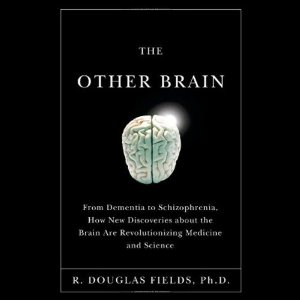
The Other Brain By R. Douglas Fields Narrated by Victor Bevine
As we grow older, our physical and mental abilities deteriorate. Knowing that decline is the nature of life, the older one becomes, the more grasping one is for new ideas that mitigate life’s inevitable degradation.
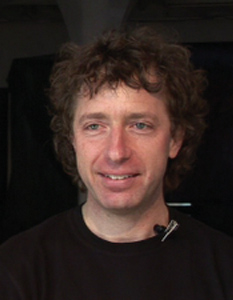
R. DOUGLAS FIELDS (AUTHOR Ph.D. IN NEUROSCIENCE)
“The Other Brain”, written by Dr. Douglas Fields (a department head at the National Institute of Health and adjunct Professor of Neuroscience at the University of Maryland) is an expert in the field of cognitive science, i.e., the exploration of how minds work.
DR. THOMAS HARVEY (the pathologist that stole Einstein’s brain and kept it for some twenty years before telling anyone he had it.)
Fields begins with a story of when he is a ten-year old boy requesting a brain to dissect to see how it works. He moves on to tell the story of the pathologist that stole Einstein’s brain and kept it for some twenty years before telling anyone he had it. Einstein’s brain is eventually analyzed to see if there was a physical difference in Einstein’s brain that allowed him to see what others could not.
With this opening, Fields begins an exploration of the brain and how it functions. What he reveals is that Einstein’s brain was different but not because it was any bigger nor had more neurons but that it had more glia cells than the average brain. Until glia cell discoveries were made, the consensus of scientists was that neurological function was singularly based on an electrical impulse, i.e., an impulse transmitted to the brain through neurons via axons and dendrites to command thought and action.
With careful examination of glia cells, scientists found that there is what Fields calls a “second brain”. Glia cells are different from neurons. They do not use the axons and dendrites that transmit electrical pulses to compel performance. Glia cells use a chemical interaction within and between glia that create stimulus and response. The significance of the discovery of glia cells as a chemical alternative to electrical impulse suggests motor and mental function may be improved by other means.
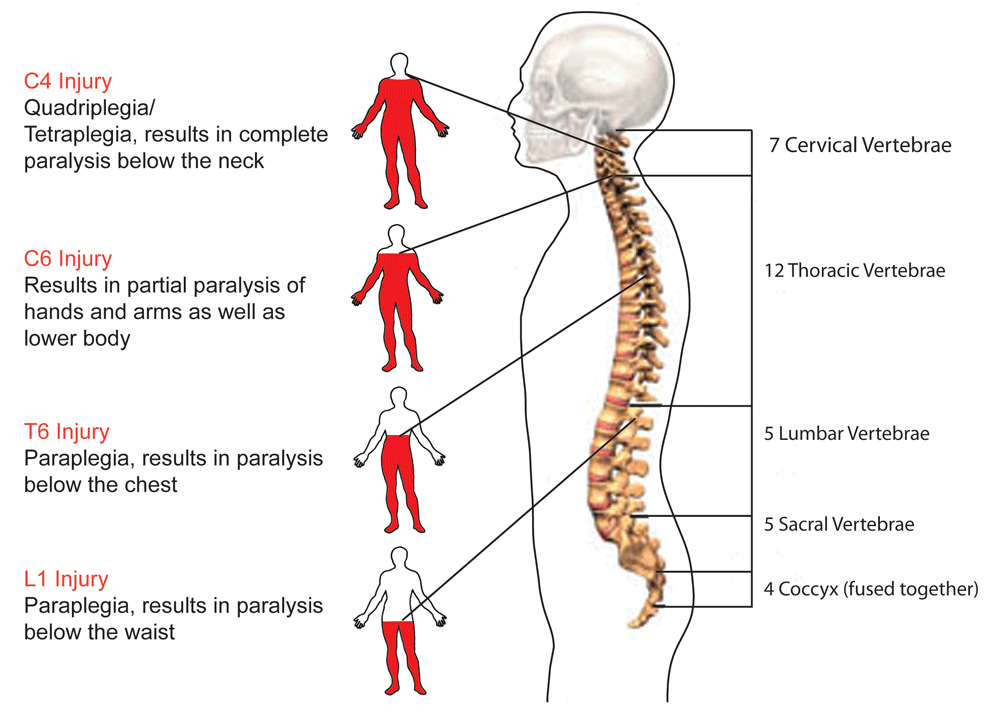
This discovery OF GLIA cells potentially offers alternative ways of treating spinal cord injuries and mental in-capacities caused by diseases that interfere with the neuronal circuits of the brain.
This discovery means that the study of a “second brain” may offer alternative ways of treating spinal cord injuries and mental in-capacities caused by diseases that interfere with the neuronal circuits of the brain. Further, it may offer treatment alternatives for patients suffering from dementia or Alzheimer’s, a growing and feared neurological dysfunction.
Fields explores several glia related cells and their positive and negative functions in the neurological system. It is not a panacea for cure of neurologically impaired patients or aging brains because experiments show glia cells are both curative and destructive in their effect on the neurological system. However, a second brain does open a new field of opportunity for cure. Maybe young brains can be re-booted and old brains rehabilitated.
Dementia gives no comfort to one who is older and have a fear of Alzheimer’s and its consequence for others. Others, who are left to care for the stricken.
JEREMY NARBY (AUTHOR, PhD ANTHROPOLOGY FROM STANFORD)
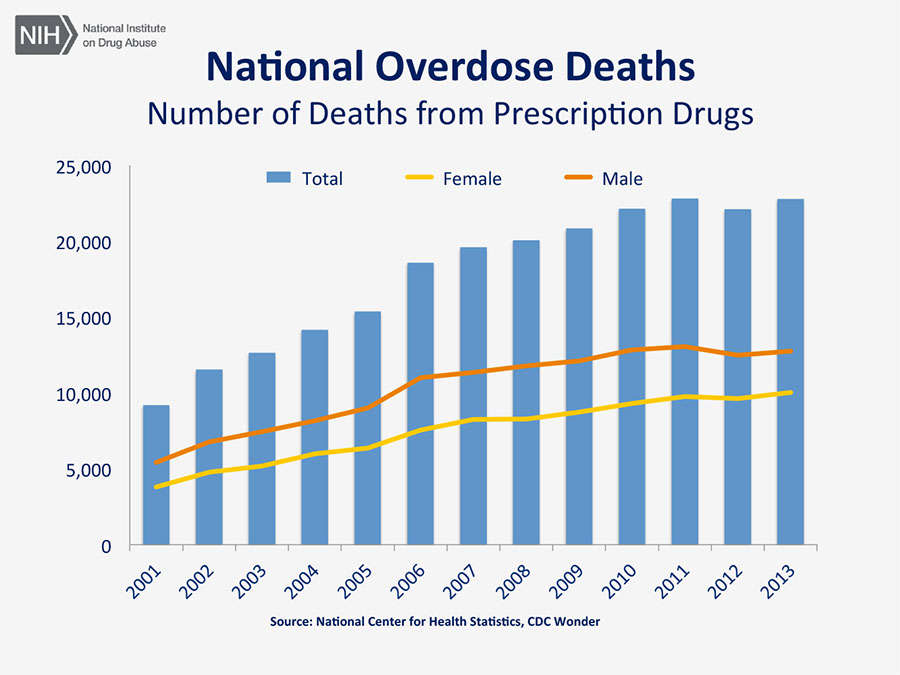
Psychological unease accompanies Jeremy Narby’s erudite speculation about the meaning and origin of life in “The Cosmic Serpent”. The unease comes in two forms. One, is Narby’s seduction by hallucinatory experience. Young people in America are choosing to overdose rather than face today’s perceived reality. The other is Narby’s patterning of observations to create either a true or false belief. It reminds one of the potential of Einstein’s discovery of matter and energy equivalence. Einstein discovered falsifiable evidence of nuclear fission that holds a key to sustainable energy. He also opened the door to Armageddon.
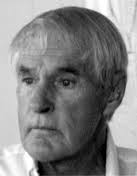
TIMOTHY LEARY (1920-1996)
Narby, like Timothy Leary, is educated at some of the best universities in the world (Leary at Harvard; Narby at Yale). Both have PhDs. Narby has a PhD in anthropology; Leary in Psychology. Few, if any, believe LSD (Leary’s hallucinatory drug of choice) offers insight to the origin and meaning of life. However, like Leary, Narby suggests hallucinatory drugs may be a pathway to understanding.
Regarding hallucinatory experience, Narby does not appear to have slipped into the bizarre behavior of a Timothy Leary; at least not yet. Narby is 59 years old. When Narby did his research, he was in his late 20s and early 30s. “The Cosmic Serpent is published when Narby is still in his 30s. Leary lived to be 76. Each passing year exaggerated Leary’s belief in the therapeutic potential of psychedelic drugs.
Patterning is the human ability to see structure in disparate facts and events. Some say this is the sign of genius. Einstein is said to have formulated a theory of time by riding a train. Einstein’s insight came from thinking (patterning) how time is relative based on a person riding a train and a stationary observer watching the train pass. However, patterning also leads to incorrect conclusions like a person’s recollection of a crime. Human brains are shown to manufacture events and facts to make stories complete rather than necessarily accurate.
SHAMANISM – Narby’s articulate presentation of Peruvian shamanism tempts seekers of knowledge and experience to try something new.
Narby’s articulate presentation of Peruvian shamanism tempts seekers of knowledge and experience to try something new. The temptation comes from different sources. One is genuine interest in understanding more about the world and our place and purpose in it. Another is the desire to believe that there is something more important in life than wealth, power, or position.
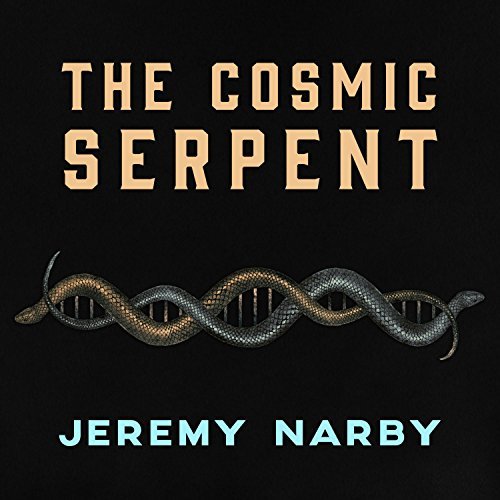
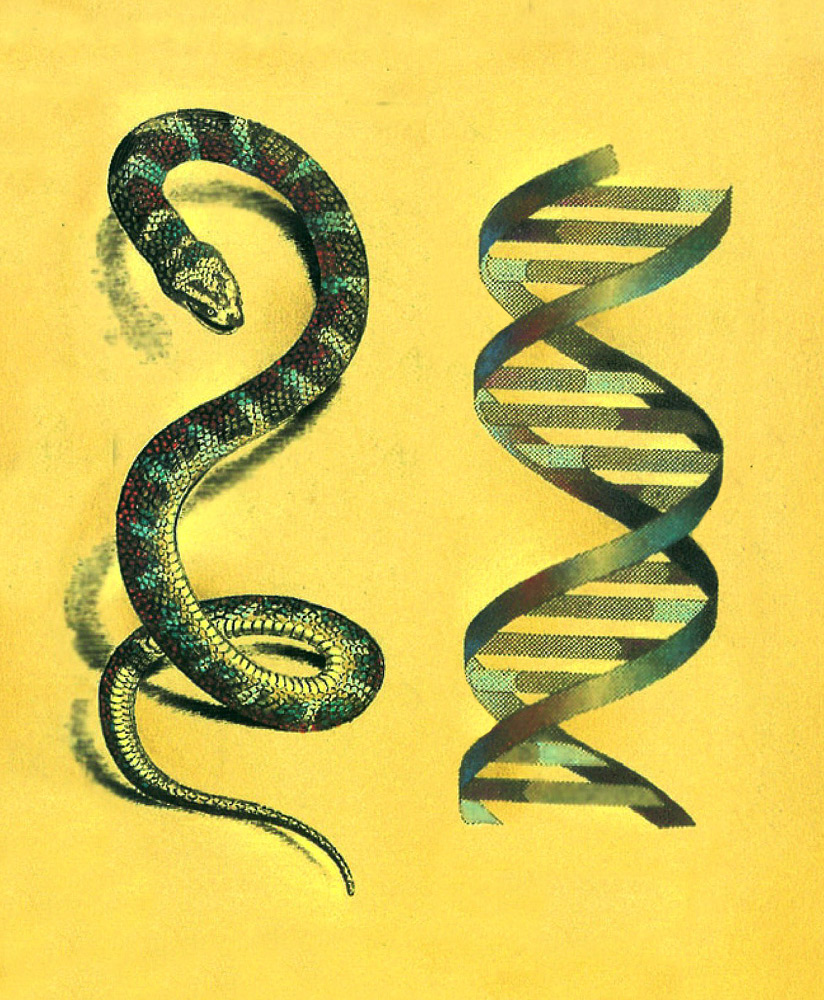
“The Cosmic Serpent” suggests that native cultures around the world offer insight to the origin and meaning of life because of common hallucinatory experiences. Narby suggests the hallucinatory symbol of a winding serpent is evidence of the configuration and importance of DNA; long before Watson’s and Crick’s discovery. The inference is that shamanistic hallucinations are not mere symbols but a truth of life. Narby’s inference is that seekers of life’s truth should listen to the experience of shamans and pursue shamanistic experience through the studied use of their methods.
Narby suggests the hallucinatory symbol of a winding serpent is evidence of the configuration and importance of DNA; long before Watson’s and Crick’s discovery.
Narby argues that the scientific community needs to widen its view of the world. He believes DNA holds the secrets of nature’s existence. The question is whether youth and science should accept the risk of Narby’s patterned belief?
At the least, Narby makes one appreciate the importance of native culture. He may be opening a worthy field of scientific research. On the other hand, Narby may be creating false expectations that offer ignorance and escapism, rather than research and science.
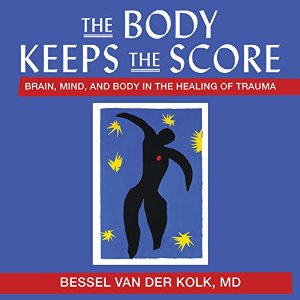
The Body Keeps the Score: Brain, Mind, and Body in the Healing of Trauma
Written by: Bessel van der Kolk, MD
Narration by: Sean Pratt
BESSEL van der KOLK (DUTCH PSYCHIATRIST, SPECIALIZING IN ATTACHMENT, NEROBIOLOGY, AND DEVLOPMENTAL ASPECTS OF TRAUMA’S EFFECTS ON PEOPLE)
Dr. Bessel van der Kolk argues that trauma has a neurological connection between mind, body, and time. Kolk offers numerous examples of patients who suffer from the trauma of war, rape, accident, and childhood experience to support a belief that “The Body Keeps the Score” and human consciousness pays the price.
In a limited sense, Kolk’s argument is convincing. The limited sense is in one’s definition of trauma. Trauma that clinically demonstrates disconnection between mind, body, and time, as proposed by Kolk, is a credible argument. However, Steven Pinker suggests a part of Kolk’s argument seems overdrawn. Steven Pinker is an American psychologist, cognitive scientist, and linguist. He is a Professor in the Department of Psychology at Harvard University.
Steven Pinker is an American psychologist, cognitive scientist, and linguist. He is a Professor in the Department of Psychology at Harvard University.
Pinker argues that human beings become who they are from genetics and life experience, largely exclusive of parenting. In contrast, Kolk suggests parenting plays a significant role in a child’s consciousness as a mature adult. Kolk argues that the trauma of parental abuse, neglect, and egoistic child’ indulgence form mind-body-time’ disconnects that profoundly affect mature adults. Kolk’s parenting arguments fly in the face of studies cited by Pinker that suggest less than one percent of a parent’s upbringing makes a difference in a child’s adulthood.
This may be a distinction without a difference if one accepts Kolk’s references to experience and sociological studies that show juvenile delinquency is credibly correlated with childhood trauma from incest, neglect of basic human needs like food or water, or hyper-vigilant (smothering) parental attention to children who sometimes just want to be left alone. Presumably, children in that type of hostile environment do not represent the general population.
Modern acceptance of PTSD in veterans of combat reinforces Kolk’s argument. The generally accepted definition of PTSD by the American Psychological Association “…is an anxiety problem that develops in some people after extremely traumatic events, such as combat, crime, an accident or natural disaster.”
What Kolk argues is that trauma often becomes an imprinted mind /body’ experience that disconnects from time. Modern acceptance of PTSD in veterans of combat offers evidence for Kolk’s argument. The generally accepted definition of PTSD by the American Psychological Association “…is an anxiety problem that develops in some people after extremely traumatic events, such as combat, crime, an accident or natural disaster.”
This broad definition is expanded by Kolk in two significant ways. One, those suffering from PTSD are riven with anxiety by a trauma that is stuck in time, i.e., time that stands still. Kolk explains that a PTSD sufferer recalls a past trauma as though it is happening now, and his/her body reacts in the same way it did when the trauma first occurred. The body’s chemical and hormonal reaction is the same as though the past trauma is happening now.
CHILD SOLDIERS OF MEXICO’S DRUG GANGS (Kolk’s second significant expansion is belief that children experience the equivalent of PTSD from parents’ psychological and physical abuse during their children’s childhood.)
Kolk’s second significant expansion is belief that children experience the equivalent of PTSD from parents’ psychological and physical abuse during their children’s childhood. A child’s chemical and hormonal response to recalled childhood trauma repeats itself. In some, time stands still when trauma is recalled, and the body repeats its physiological response. However, evidence is more anecdotal than scientifically measurable.
MASS MURDERERS-Psychiatric interviews rely on patients’ remembrance of things past which are historically unreliable. Sociological surveys cannot be done without the bias of a person or group that designs the questions that are to be asked of the person that answers the survey.
Kolk infers that the psychological maladies of adults can be significantly reduced by better parenting. The difficulty one has in accepting this argument is that documentary proof is in anecdotal evidence from psychiatrist interviews of patients and sociological surveys of defined populations, both of which are inherently biased. Psychiatric interviews rely on patients’ remembrance of things past which are historically unreliable. Sociological surveys cannot be done without the bias of a person or group that designs the questions that are to be asked of the person that answers the survey.
Kolk may be correct but there is enough reservation in the Psychiatric community to deny Kolk’s request for a psychiatric diagnosis of Developmental Trauma Disorder for children.
This is a frustrating issue because there are unquestionably millions of children that are abused and neglected in the world. These children are often not treated for their psychological problems because insurance is not available for un-diagnosed patients. If Kolk is correct, a diagnosis would be a first step in developing a course of medical treatment that is at least partially covered by insurance.
There is also the tangential argument made by psychologists like Steven Pinker that do not believe parenting has much to do with how children grow into adults. Nevertheless, one’s heart goes out to those children that are abused by their parents or are deprived of the basic needs of life.
TOM WAINWRIGHT (BRITISH AUTHOR, EDITOR OF THE ECONOMIST)
“Narconomics” is about the business of illegal drugs.
Joaquin Guzman (aka El Chapo, captured 2.22.2014 and recaptured 1.8.16).
Ismael Zambada Garcia (aka El Mayor, El M-Z, El Padrino).
Ignacio Coronel Villarreal (aka El Nacho killed 7.29.2010).
Tom Wainwright notes drug cartels are modern businesses. They benefit rich owners while liberally rewarding middle class managers with money, power, and prestige. The difference is–middle managers brutally terrorize employees, kill their customers, and murder innocent bystanders.
Drug Cartel murders Mormon Family living in Mexico in 2019.
Picture from the New York Post, Nov. 6, 2019.
These business conglomerates systematically brutalize the public. The manufacture and sale of illegal drugs is a growth industry, diversifying its practices and products while becoming global enterprises. An irony of Wainwright’s story is the ugliness and economic success of drug cartel businesses are abetted by bribe-taking government leaders.
President Enrique Peña Nieto (Former President of Mexico– accused of bribery from the Oil Industry and Sinaloa Drug Cartel.)
The substance of Wainwright’s book is that cartels are run with many of the fundamental principles (aside from overt terror and murder) that make international companies richly successful.
Though policies like the war on drugs and alcohol prohibition were meant to save people from themselves, Wainwright suggests they failed.
When desire for money, power, or prestige is unmet, humans compensate with drug use; or other escapist behaviors.
Wainwright argues that understanding drug cartel business practices will show how their industry profits can be disrupted.
Wainwright suggests changing the focus from a war on drug producers and sellers to a policy for treating, educating, and rehabilitating users.
Wainwright shows how drug cartels capitalize on fundamental human drives and weaknesses. He goes on to suggest how drug cartels can be destroyed.
Rather than spending billions to militarize national police forces, Wainwright suggests those dollars be spent to treat, rehabilitate, and educate accused and/or incarcerated users.
An encouraging article in the WSJ (12/15/21) notes that Mexico and U.S. drug interdiction agencies are working on a framework to combat drug cartels “… likely to focus more on drug addiction”. In destroying the drug cartel’s consumer base, they lose profit. Without profit there is no money, no power, and no prestige. There is only a failed business model.
Wainwright goes on to suggest that drug use be decriminalized and regulated by the government. This is no panacea but history shows that the war on drugs is a failure. The heart of success for drug cartels is its adoption of business practices that generate profit. The reality of the fundamentals of well-run business organizations is that they do not disappear. Remove the source of profit and businesses either fail or are compelled to change.
Wainwright explains that the business of illegal drugs is a global enterprise.
A global level of government cooperation is needed for effective elimination of drug cartels. No single nation can eradicate cartels because of globalization. One nation’s success in the drug war only compels cartels to move to neighboring countries. The solution lies in treating, rehabilitating, and educating drug users. Only with decriminalization, user medical treatment, and public education will the source of profit for drug cartels be cut off.
Wainwright offers a compelling argument for attacking drug cartels by removing the source of their profits. The source of profits is the consuming public; not the illegal drug manufacturers and distributors.
The fact that drug cartels are run like businesses reveals an infrastructure that allows diversification. Once profits are reduced for drug manufacture and distribution, cartels will change to survive.
Wainwright notes that drug cartels have already diversified; i.e. they are human traffickers, and extortion consortiums. Government agencies and the general public are equally repulsed by human trafficking, murder, and extortion. Governments and the general public are more likely to cooperate in eradicating that type of criminal activity; less so with drug addiction.
The glimmer of hope is that cartel diversification does not pander to the desire for escape from reality offered by drugs.
There is no simple or cheap alternative to “the war on drugs” but there is a history that shows in its current form, war does not work. The drug war is no joke, neither is it a solution.
Illegal drug manufacturers and distributors are just the cost of doing business; not the source of profit. Cure the public of its need for drugs, decriminalize drug use, or at least treat the addicted, and drug cartels have no motive to be in the business.
Siddhartha Mukherjee draws a Delphic map outlining the boundaries of genetic science and Homo sapiens’ future. (Interviewed on PBS March 31, 2020 regarding Covid19.)
Predictions for Homo sapiens’ future are “Delphic” in the sense of being obscure. Ancient predictions of the Oracle of Delphi are noted to have been subject to interpretation. The predictive quality of a Delphic map of genes involves the morality and ethics of manipulating heritable characteristics of humankind.
Picture this: an average life span of 150 or more years, cure for all known diseases of mind and body, elimination of known genetic causes for debilitating mental and physical deformities.
Now, picture this: loss of the ability to procreate, accidental creation of a new disease because of an unintended consequence of a manipulated gene, extinction of the human race caused by artificial enhancement of the genetic code.
Mukherjee notes that the science of genetics is rapidly reaching the point of modifying, and potentially creating, human life that has no known physical or mental handicaps. Mukherjee’s Delphic map is intimately drawn in vignettes about his family’s life, and particularly a brother’s loss of life from mental dysfunction; i.e. a brother that takes his own life as a result of schizophrenia. Through Mukherjee’s family vignettes, and stories of children with inherited medical maladies, he poignantly clarifies the seriousness of the subject.
Though genes are not the source of everything human life becomes, the science of the subject shows that human beings originated in Africa and grew to populate the world with humans from one original mother.
The science of genetics is changing medicine and society. Apocryphally, the Oracle of Delphi is a priestess rather than a priest who foretells the future. Once again, the future is scientifically acknowledged as dependent upon women.
Though human existence is dependent upon both nature and nurture, mitochondrial DNA comes from mothers while sex determination comes from fathers.
The significance of that discovery is that converting food to energy comes from mitochondrial DNA (mtDNA), which is only inherited from mothers. Without a mitochondrial Eve, there would be no human race (an ironic thought in view of the unequal treatment of women in the world.)
Mukherjee recounts discovery of DNA structure and how identifying the double helix in 1953 (by James Watson and Francis Crick) leads to mapping the human genome.
With a map of the gene, it becomes possible to manufacture drugs that attack medical and psychological maladies at a genetic level. Mukherjee shows how the history of Watson’s and Crick’s discovery defines western culture’s search for knowledge.
Mukherjee is not overtly critical of the two approaches but implies that corners are cut by the private sector in order to patent discoveries for new medicines that heal but also sometimes kill. (Something to be wary of in regard to Covid19.)
During President Clinton’s term of office, competition for gene sequencing leads to a private/ public race that exemplifies the difference between entrepreneurial and governmental pursuit of scientific discovery. The objective of the private sector is to win the race by any means necessary. The private sector’s primary objective is to create financial return on investment. In contrast, government focuses on methodology of discovery and accuracy of results, with societal reward as a primary objective.
This is somewhat analogous to what happened during WWII with the discovery and use of computers; i.e. one element of discovery is public and another is private. The difference is that computer discoveries indirectly relate to death and destruction while genetic discoveries directly relate to death and destruction. Each approach to scientific discovery, private enterprise and government research, have benefits and costs. What is at stake in the case of human manipulation of genes is the destiny of the human race.
Mukherjee reflects on the terrible consequence of family members, friends, or professional counselors who insist people who are lesbian, gay, bi-sexual, transgender, or questioning, can be socially engineered to be heterosexual. The insistence leads to psychological dysfunction and worse, the arbitrary murder of innocents; like the Orlando, Florida massacre in 2016.
Mukherjee acknowledges genes are only part of what makes humans human. A most striking reveal is about LGBTQ and the genetic component of what makes humans one sexual preference or another; i.e. winners of the battle between inheritable XX (female) and XY (male) chromosomes show significant correlation with sexual preference.
TWINS: Though genetics are a major determinant in what humans are-environment plays a role. The role is complicated because one person’s response to outside stimulation can be entirely different from another’s even though they may be near genetic duplicates.
Mukherjee sites studies of twins raised in different parts of the country, with different families, having uncannily similar life preferences; presumable because they have the same genetic inheritance.
“The Gene” is an important book. Its importance lies in the dangers inherent in sciences’ ability to tamper with a natural selection process discovered by Charles Darwin in the 19th century.
Modern humans have evolved over 200,000 years through a process of adaptive genetic changes defined by Richard Dawkins as immortal genes. The caution one must recognize is that when humans make decisions for other humans, the consequence is inevitably different from what is expected.
Humans may become extinct because of our environmental mistakes wrought by natural selection and nurture. However, one is equally wary of becoming extinct because of what society decides about gene modification by humans; for humans.
Neuro Tribes: The Legacy of Autism and the Future of Neurodiversity
Written by: Steve Silberman
Narration by: William Hughes
STEVE SILBERMAN (AMERICAN AUTHOR, CONTRIBUTOR TO WIRED MAGAZINE)
“Neuro Tribes” reminds one of the gambling phrase “the easy way and the hard way”. On a Las Vegas craps table, rolling two die with the same number and repeating it is the hard way. From Steve Silberman’s story, parents successfully raising a child with autism is the hard way because the odds are stacked against them. This may not be a great analogy but Silberman shows that parents have to work harder to understand and nurture a child who suffers from any one of the many variants of autism.
Silberman tends to name drop famous people who have never been diagnosed as autistic, but exhibit some of the characteristics of autism. Silberman offers brief biographies of Henry Cavendish, Nikolo Tesla, Paul Dirac, and others. Not every autistic person is a genius but Silberman’s point is that a person who may have social communication difficulties, obsessive/compulsive behaviors, or attention issues have in many cases become incredibly valuable to society. To suggest autism implies anything less is a slippery slope toward abandonment, psychiatric incarceration, concentration camps, medical castration, and threatened individual or collective extermination.
NIKOLA TESLA (1856-1943, SERBIAN AMERICAN INVENTOR, ELECTRICAL & MECHANICAL ENGINEER, PHYSICIST, FUTURIST)
PAUL DIRAC (1902-1984, NUCLEAR PHYSICIST, WINNER OF THE PULITZER PRIZE)
HENRY CAVENDISH (1731-1820, BRITISH NATURAL PHILOSOPHER, SCIENTIST, CHEMIST, AND PHYSICIST)
Silberman recounts the history of people who do not fit within social conventions. In some well-known instances these non-conformists are isolated, sterilized, and/or murdered.
They are classified as developmentally or intellectually inferior human beings to be eliminated by society for their aberrant physical abilities or mental faculties. One may think this is a description of Hitler’s Germany but Silberman recounts the story of the U. S. Supreme Court’s ruling in Buck v. Bell.
OLIVER WENDELL HOLMES (1841-1935, JUSTICE OF THE SUPREME COURT 1902-1932)
In 1927, no less than a giant of the U. S. Supreme Court, Justice Oliver Wendell Homes, Jr. writes the majority opinion that says compulsory sterilization of the intellectually disabled is not a violation of the Due Process clause of the 14th amendment. Common sense, if not history, shows that intellectual ability, by any measure, is a small part of what a human being is or can be. The very idea that there is a criterion that objectively measures intellectual capability is repugnant. Mrs. Buck is involuntarily incarcerated and Mrs. Buck’s daughter is sterilized based on a 1924 Virginia law. The United States reportedly sterilized 60,000 American men and women through the 1970s (See January 2016 Newsweek report).
BUCK FAMILY (MOTHER AND DAUGHTER STERILIZED BY THE STATE-Mrs. Buck is involuntarily incarcerated and Mrs. Buck’s daughter is sterilized based on a 1924 Virginia law. The United States reportedly sterilized 60,000 American men and women through the 1970s (See January 2016 Newsweek report).)
Silberman reminds reader/listeners of the child euthanasia program in Germany and how a German family’s support of Hitler leads to a request that their child be euthanized because of physical deformity.
Silberman offers a short history of the growth of Eugenics. The idea is, like a patch of peas, human beings can be bred to eliminate any undesirable characteristics. No civilizations’ hands seem clean. Silberman reminds reader/listeners of the child euthanasia program in Germany and how a German family’s support of Hitler leads to a request that their child be euthanized because of physical deformity. It is estimated that “…5,000 children were victims of this program” (see Wikipedia “Child euthanasia in Nazi Germany).
HANS ASPERGER (1906-1980, AUSTRIAN PEDIATRICIAN, MEDICAL THEORIST, AND MEDICAL PROFESSOR)
Silberman reports on the diagnostic discovery of autism by Hans Asperger in the 1940 s. Asperger’s storied career includes association with the Nazi Party that is both reprehensible and insightful. In defining autism, Asperger suggests children with the malady are of little social value. This categorization of human beings feeds Hitler’s extermination of handicapped and mentally challenged children and adults. Despite this horrendous consequence, Asperger’s careful examination of autistic behavior provides insight to its symptoms and potential treatments.
Silberman notes Asperger’s prescient understanding of autistic children’s needs. Autistic children need to be listened to and their behaviors analyzed to provide treatment that ameliorates social dysfunction. Though Silberman does not mention the Montessori school of education, Asperger suggests that autistic children should be educated in ways that reinforce their natural interests. Asperger, according to Silberman, had an uncanny knack of understanding what his patients were interested in and followed that lead to integrate them into society.
Though Silberman does not mention the Montessori school of education, Asperger suggests that autistic children should be educated in ways that reinforce their natural interests. Asperger, according to Silberman, had an uncanny knack of understanding what his patients were interested in and followed that lead to integrate them into society.
A part of Silberman’s story is about unscrupulous medical professionals that offer cures for autism that have nothing to do with science and everything to do with financial exploitation of parents that are overwhelmed by their child’s autism. These “doctors” provide bogus treatments like blood chelation to remove impurities that are alleged to cause autism. Silberman suggests there is no cure for autism. There is only the promise of amelioration with the hard work and understanding of parents and caregivers who appreciate the value of human life.
For parents, the hard way involves toleration of symptoms of autism while reinforcing those behaviors that comport with the innate abilities of their children. In the process of careful listening and observation, parents can reinforce socially acceptable behavior and diminish anti-social activity.
AUTISM–EARLY TREATMENT PROVIDES ENCOURAGING BRAIN CHANGES Silberman notes that in the process of careful listening and observation, parents can reinforce socially acceptable behavior and diminish anti-social activity.
Silberman implies autistic human beings exist in every society. Symptoms of hyperactivity, singular focus on particular subjects, poor communication skills, antisocial behavior, lack of interest in mutual achievements or interests, and a lack of empathy are symptoms that exist in many human beings. One concludes from Silberman’s book that parents with an autistic child have a harder roll of the dice. Their rewards can be monumentally greater but the odds are against parental success. Not every autistic child will be a Cavendish, Tesla, or Dirac but one can choose to believer every child is a gift to be treasured for whatever they become.
The Man Who Mistook His Wife for a Hat: and Other Clinical Tales
Written by: Oliver Sacks
Narration by: Jonathan Davis, Oliver Sacks
OLIVER SACKS (1933-2015, AUTHOR, BRITISH NEUROLOGIST)
Neurological dysfunction is Oliver Sacks field of study and training. The irony is that a tumor attacks his brain to end his life. Of course, he was 82. But somehow, a tumor attacking Sacks’ brain seems an unfair marker for his passing. Sacks opens the eyes of many to the wholeness of being human when a neurological dysfunction changes their lives. Sacks is the famous neurologist who wrote one book that becomes a movie and several that become best sellers.
AWAKENINGS – STARING ROBERT DeNIRO AND ROBIN WILLIAMS
Sacks is famous to some based on the movie “Awakenings” that recounts an experiment with L-dopa to treat catatonia; a symptom believed to be triggered by Parkinson’s. Patients may spend years in a state of catatonia; i.e. a form of withdrawal from the world exhibited by a range of behaviors from mutism to verbal repetition. Sacks wrote the book, “Awakenings” to tell of his experience in the summer of 1969 in a Bronx, New York hospital. The success and failure of the L-dopa experiment became a life-long commitment by Sacks to appreciate the fullness of life for those afflicted by neurological disorders.
With the use of L-dopa, Sacks reawakens the minds and rational skills of patients that had been catatonic for years. In their reawakening, Sacks found that catatonic patients have lives frozen in time. Their mind/body interactions became suspended in the eyes of society. They were always human but they lost their humanness in neurological disorder.
Sacks first story is about an accomplished musician and teacher who appears increasingly forgetful. He appears to forget people’s names. He cannot identify objects that are given to him to examine. He figuratively mistakes his wife for a hat.
“The Man Who Mistook His Wife for a Hat” is filled with stories of people with brain malfunctions that change theirs’s and other’s lives. The underlying truth of each story is that symptoms of neurological disorder mask the wholeness of being human. Sacks reveals that many people confuse what is seen with the completeness of what is an afflicted but whole human being. Sacks first story is about an accomplished musician and teacher who appears increasingly forgetful. He appears to forget people’s names. He cannot identify objects that are given to him to examine. He figuratively mistakes his wife for a hat. Aside from these bizarre symptoms, Sacks notes the patient is highly intelligent and is known as a great teacher of music.
He can identify all the parts of a face but is unable to associate the face with a name. When given a glove he examines it in parts. It has five pouches. It is made of a soft material. The pouches can hold things. But, it is only discovered as a glove when given clues about its use.
In examining “The Man Who Mistook His Wife for a Hat”, Sacks finds that the teacher’s mind works like a computer in that he sees the details of things without seeing the whole thing. He forgets names until he hears their voice because he cannot recognize faces. He can identify all the parts of a face but is unable to associate the face with a name. When given a glove he examines it in parts. It has five pouches. It is made of a soft material. The pouches can hold things. But, it is only discovered as a glove when given clues about its use. Sacks’ first story becomes a metaphor for the wholeness of human beings that have neurological disorders.
The music teacher relies on sound and other cognitive senses to fully interpret and appropriately act in the world. Sacks explains to the teacher’s wife that her husband’s neurological disorder is a part of who he is.
Sacks suggests the disorder may be ameliorated with drugs but an unintended consequence may be to destroy her husband’s extraordinary music and teaching ability. In the years of her husband’s life, he has unconsciously hidden a neurological dysfunction by using music as a method for routinizing his life. His wife notes that he always sings when he dresses himself with clothes carefully laid-out by his wife. He uses the rhythm of the song to properly dress himself.
Sacks writes of several more patients that circle the same theme. He notes that memory is a critical part of being human. When memory is lost humanness remains, but personal understanding of oneself is changed. Memory informs and affects action. When memory disappears, time is disjointed and experience is lost. On the one hand, lost memory makes one young again; on the other, friends are older than they should be and many things we know from experience are gone.
When memory is lost humanness remains, but personal understanding of oneself is changed. Memory informs and affects action.
Sacks is saying never give up on patients with neurological disorders. They are whole human beings. The neurologist’s job, as with all who practice medicine, is “first, do no harm”. “The Man Who Took His Wife for a Hat” illustrates how seriously Sacks took his calling.
Spark: The Revolutionary New Science of Exercise and the Brain
Written by: John J. Ratey, MD
Narrated by: Walter Dixon
JOHN RATEY (AUTHOR, MD)
Crash dieting and the brain compete for control of one’s established weight. Doctor John Ratey acknowledges that your first crash diet will undoubtedly help lose weight. However, when weight is regained, the same diet will not be equally successful. The brain automatically triggers weight conservation with a second crash diet because it signals body starvation. The third, fourth; etc. crash diet will be increasingly unsuccessful. Ratey’s point is that weight loss success requires cooperation from the brain. Ratey suggests he key to that cooperation is exercise.
Ratey is not suggesting we become athletes but that some exercise regimen, whether walking, riding a bike, or climbing stairs will offer numerous benefits for weight maintenance, mental function, and psychological health.
Ratey is not suggesting we become athletes but that some exercise regimen, whether walking, riding a bike, or climbing stairs will offer numerous benefits for weight maintenance, mental function, and psychological health. Ratey does not discount the importance of a healthy diet but food binges, foggy thinking, and states of depression or anxiety can be scientifically ameliorated by exercise. Ratey goes so far as to suggest exercise is medicine for health.

ASHLEY GRAHAM (FAMOUS PLUS SIZE MODEL)
An inference from Ratey’s research is that obsession over body image interferes with human health. As history shows, the svelte image of modern models is a reversal of what was considered beauty in earlier centuries. The substance of health is a combination of proper diet and exercise. In most cases, Ratey implies body weight and health will stabilize with that combination. Ratey acknowledges genetics and medical maladies may interfere with that conclusion.
Part of one’s frustration with Ratey’s conclusion is dependence on what is called a proper diet. It seems with each new study; some approved foods slip to the bottom of the good food pyramid, while some formerly disapproved foods move up the pyramid; i.e. cholate for example.
FOOD PYRAMID REPLACEMENT
The overriding value of Ratey’s book is the conclusion that exercise is a key to mood, memory, and learning. Numerous control experiments support Ratey’s argument.
Exercise seems more for the brain than the body. Every day should be an exercise day. Exercise does not have to be a fixed regimen but walking, rather than driving, to the store when it is only three blocks away is a beginning. Replacing TV time with household chores is another form of exercise. Keep moving. Ratey suggests “Even 10 minutes of activity changes your brain.”