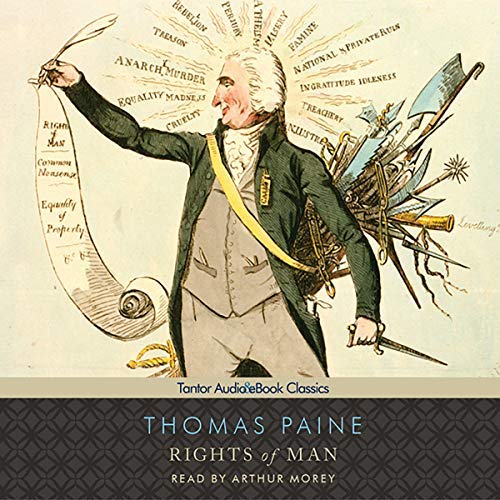
It seems time today to read Thomas Paine’s “Rights of Man”. Though his primary purpose is to refute Edmund Burke’s condemnation of the 1789 French revolution, his observations on British Aristocracy are the essence of today’s American “moneyocracy”.
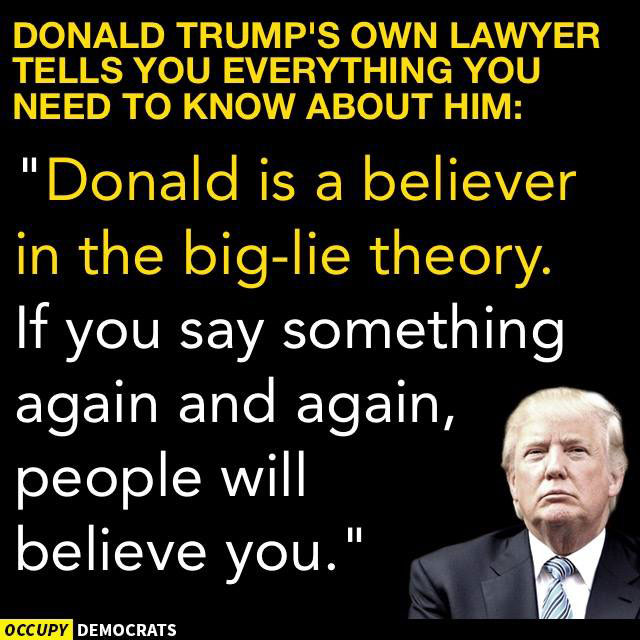
Though President Trump is not the originator of American “moneyocracy”, he is its quintessential representative.
In spite of domestic mass murders by demented Americans, Trump and many of his followers insist on giving voice to the NRA’s belief in an American right to buy automatic weapons designed only to kill people.
Uvaldi, Texas elementary school shootings 5.24.22
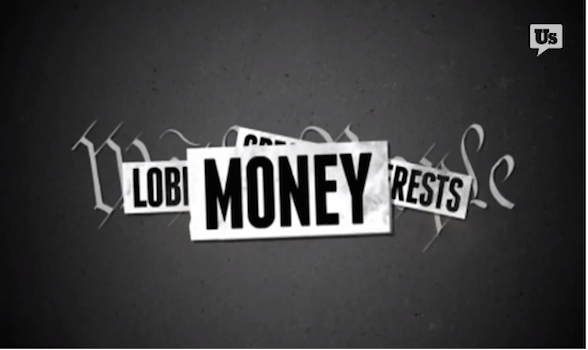
It takes money to run a campaign for public office. Trump, like most politicians, panders to lobbyist’ and business’ interests that distort the American electoral process.
The appeal of Trump has to do with American’s desire to be left alone. Whether a misogynist, a gun toting individualist, a federal tax cheat, or an independent morally upright American, many believe that is their right. Trump exemplifies the right to be left alone.
Beginning with congress’s approval of tax reform, America’s ballooning deficit is a direct consequence of a mistaken belief that “a rising tide lifts all boats”. Contrary to the tired refrain “jobs, jobs, jobs” to make “America Great Again”, the current administration is setting the table for the world’s next economic crises.
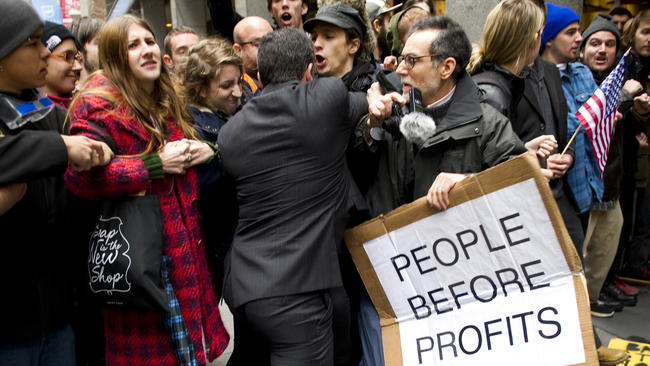
The “Occupy Wall Street” demonstrations are an amorphous scream of disgust by an educated population that resents American “moneyocracy’s” control of the economy, elected representatives, the election system, and the “Rights of Man”. “Moneyocracy” is an inheritable line of an American aristocracy.
Instead of 18th century Aristocratic control of British government, 21st century America substitutes the wealth of individuals and corporations (classified as individuals) to control American Democracy. This is not a partisan issue in America.
Every President, Republican or Democratic, has sided with corporate interests in this era of corporate largess. The world is in a state of economic upheaval that is fueled by technology. That economic upheaval is not adequately addressed by corporate America. The government continues to subsidize yesterday’s economy at the expense of middle and lower income citizens.
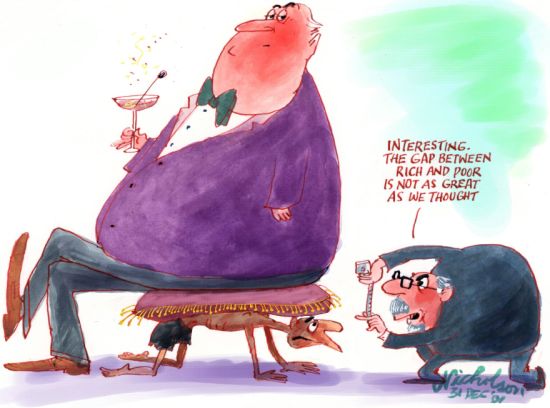
Management executives that are employees of corporate America take salaries 50 times or more than salaries of their average employee.
The new controller of our economy, the primary interest group of elected representatives, and the master of the American election system is corporate America.
Wealth is the new hereditary right of succession. Corporate America is the thief and ruler of inherent “Rights of Man”.
Once individual compensation reaches beyond rationality, money becomes fuel to maintain America’s “Moneyocracy”, the new hereditary right of succession.
The controller of our economy and political representation is corporate America.
The primary interest group of elected representatives, the master of the American election system, and ultimately, the thief and ruler of inherent “Rights of Man” are corporations and the super-rich. Of course, the rich have always been in control of American government. However, now the rich are not just singular individuals. They are corporations classified as individuals.
The Supreme Court in “Citizens United v Federal Election Commission” in 2010 rules that corporations are persons with the right to support candidates for office with as much money as they want to influence government policy.
The Supreme Court’s unwise decision based on freedom of speech identifies corporations as persons. With that nose in Democracy’s tent, corporations could offer millions of dollars to election campaigns. What human being cannot be influenced by such largess? Excessive executive compensation perpetuates “moneyocracy”, but corporate influence is the cause of the loss of the “Rights of Man”.
Tax change is a smoke screen that obscures the real danger of American decline in the 21st century. It is too blunt an instrument to bludgeon the rich. It smacks of false patriarchy and jingoist rhetoric.
American history shows that Americans believe that hard work is the source of success but being American does not guarantee a free ride. Equal opportunity is where America fails.
Education, anti-discrimination legislation, and equality of opportunity have to be strengthened. Corporate America needs to step up. Corporations need to quit wasting money influencing legislators and invest in human rights.
Corporations need to subsidize education by re-training their employees to meet changes wrought by technology.
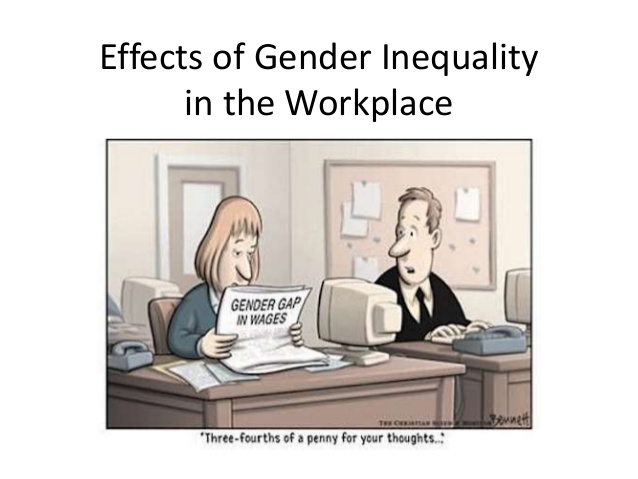
Corporations must insist on equal treatment of employees, by gender and/or ethnicity. The government needs to re-enforce equal opportunity for all.
America needs to return to the ideals of equal opportunity by allowing entrepreneurs to create wealth through human productivity. Money is not an end but it has become an end that has no end; i.e. high salaries perpetuate themselves through an Aristocratic “moneyocracy”. If one says they make a $1,000,000 a year they are saying they are better then someone who makes $10,000 or $100,000 a year. Salaried compensation is perceived as human value.
Denying salaries that exceed 50 times average employee compensation is not denying the creation of wealth. Entrepreneurs that create productive companies that grow to multi-billion dollar enterprises have opportunity to become billionaires; not from salaries, but from building human productivity that creates wealth.
“Occupy Wall Street” is an unlikely precursor of another American Revolution; however, it may be a symptom of an American cancer that debilitates productive life without killing the patient. “Occupying Wall Street” is not a hippie “sit in” but a plea for reform of American “moneycracy” just as Thomas Paine’s “Rights of Man” was a plea for reform of Aristocratic inheritance.
ADDENDUM: Does the “right to be left alone” extend to pandemics? The question is raised when it comes to a pandemic that has killed over 783,000 people in the United States as of November 15, 2021. (Statistics provided by “worldometer”, a reference website that provides real-time statistics. Considered the best free reference website by the American Library Association.)
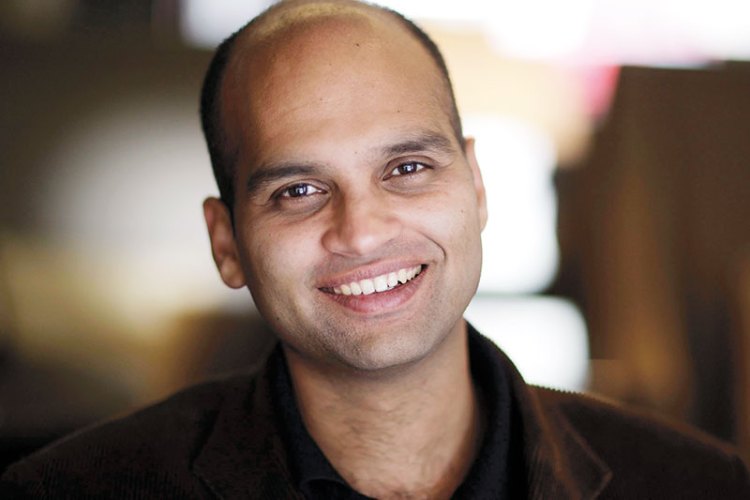
ARAVIND ADIGA, INDO-AUSTRAILIAN AUTHOR, Winner of the Booker Prize in 2008 for “White Tiger”.
“White Tiger” pictures the chasm between haves and have-nots. It reminds one of “Native Son”. Like “Native Son”, “White Tiger” speaks about the ugly consequence of discrimination and poverty.
A big difference between “White Tiger” and “Native Son” is in the tragi-comic rendition of “White Tiger” on Netflix. One wonders if “White Tiger” is meant to be satire or a reflection on a flaw of capitalist self-interest. Maybe both.
A visiting dignitary from China is given a note by a former Indian servant who describes his entrepreneurial success in India. The servant tells the story of his rise from the second lowest caste in India to successful entrepreneur. He is from a lower caste of the poor, but now he is rich.
The caste system remains strong in India. Having traveled there in 2018, our tourist guide notes his family is from the warrior class.
In speaking of his daughter, he explains that though he has limited control over whom she marries, his biggest concern is that she marry within her class. Caste ancestry still binds and defines much of India’s culture.
In “White Tiger”, Balram is the main character. Balram is an uneducated but clever observer of society. He is acutely aware of his position in life.
Balram is destined to be a breaker of social convention.
In India (and around the world) changing sociopolitical ideals, collapsing religious belief, deteriorating family ties, and human nature’s “good and evil” amplify the chasm between rich and poor.
An irony of Balram’s story is that it is between two countries that have different political philosophies; i.e. one, democratic; the other communist. Their socioeconomic maladies are similar. Both countries have dense populations, high industrial growth, and consequential environmental degradation. The common thread is China‘s and India’s drive toward capitalism.
Balram considers himself a social entrepreneur who becomes a successful capitalist by breaking social convention. His broken convention is murder.
As the Indian servant’s story progresses, Richard Wright’s “Native Son” and Adiga’s “White Tiger” metaphorically meet. Both carry out wanton murders of sociologically ignorant human beings.
Bigger Thomas (the main character in “Native Son”) and Balram are one side of a capitalist’s coin, minted by poor education, poverty, and discrimination. Their capitalist reality corrupts thought and action.
“White Tiger”, like “Native Son”, is a world warning about the consequence of the growing chasm between rich and poor; i.e. as long as societies believe that “a rising tide lifts all boats”, discontent and hostile action of the poor is the main thing that will rise.
Lack of prudent regulation of capitalism leads to the worst in human nature. Even though “prudent” is in the eyes of the beholder, ignoring the poor is a monumental failure of any society, whether capitalist or communist. Equality of education and opportunity are capitalism’s saving grace but grace is not natural to man; i.e. prudent regulation of human nature is required.
“White Tiger” is a credible warning of the danger of
unbridled capitalism.
Victory is sweet; defeat is bitter. Victory engenders responsibility for the defeated; defeat demands fealty to a victor. Fealty is not the goal of a victorious leader who seeks lasting peace.
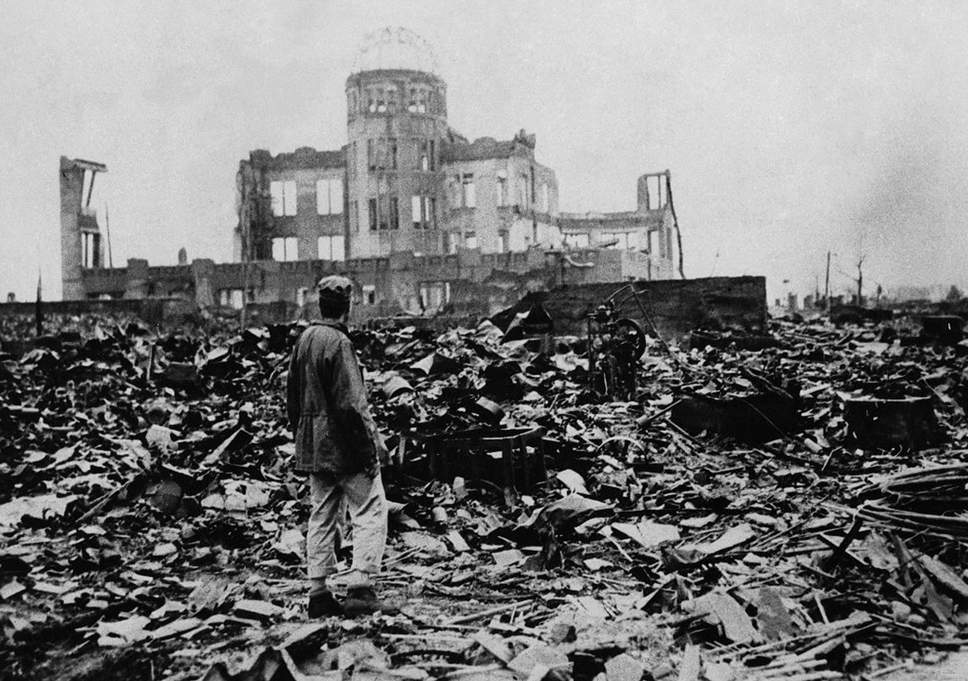
Peace among nations has a price. John Dower’s reflection on WWII and Japan holds lessons for today’s American leadership and Putin’s folly.
John Dower, in “Embracing Defeat”, endeavors to picture Japan’s condition; i.e. the state of its economy and its people, after surrender in WWII.
History’s complexity is difficult to capture in words. Dower makes an effort to explain the context of post war Japan by showing Japanese attitude in media reports and literature of the time. The irony of Dower’s effort is that media reports and literature are censored by Allied forces, particularly the United States. This is not unlike Vladimir Putin’s control of Russian media during the Ukraine invasion. Putin will undoubtedly use that control to soft petal a hopeful settlement, though unlikely palliative acceptance by Ukraine.
MICHINOMIYA HIROHITO (124TH EMPEROR OF JAPAN 1901-1989) Dower covers the history of an American white wash of Hirohito’s war complicity and responsibility. The American government uses Hirohito to make occupation and influence in Japan more acceptable to its population. It became politically expedient to hide Hirohito’s true involvement in Japan’s war plans.
Dower reports on post-war trials of Japanese military and government leaders; i.e. Dower writes about trial testimony of Japan’s WWII’ atrocities but his history shows that victor’ justice is not necessarily victim’ justice.
Hideki Tojo as hero and/or goat–tried and convicted; sentenced to a prison in which he dies. Tojo refuses to implicate the Emperor in his actions during the war.
In spite of (partly because of) American military occupation of Japan, financial aid is misdirected and food goods and material are stolen, a black market develops, gangs are formed, and corruption thrives. (Sounds like Iraq after America’s invasion.). Prostitution became a way of making a living, and immoral behavior became semi-acceptable because of rising poverty.
NICOLAS MADURO (PRESIDENT OF VENEZUELA SINCE 2013) A case in point today is the President of Venezuela, Nicolás Maduro. Are his actions a “crime against humanity” or is he fighting for his country’s independence?
Economic sanctions are as likely to punish the innocent as the guilty in countries that fight for their own identity. One’s interest is peaked by Japan’s experience after WWII because of the current Middle East muddle.
Syria, Iraq, and Iran are challenged by domestic unrest and punitive actions by non-indigenous forces. These three countries are particularly impacted by military and/or economic pressures from outsiders. What is going to happen in those countries? Are there any clues in the great change that occurred in Japan after WWII?
General MacArthur assumed the role of “Dear Leader”, treating the Japanese like 12-year-olds that were to be taught the ways of Democracy with a capital “D”. This role by MacArthur in post war Japan is accepted by many Japanese because of centuries of Imperial control, exemplified by Emperor Hirohito.
BONNER FELLERS (U.S. ARMY OFFICER, SERVED AS A MILTARY ATTACHE IN WWII) Dower also suggests that a large part of General MacArthur’s success is due to Major Bonner Fellers, a Japanese scholar that predicted Japan’s war several years before the attack on Pearl Harbor. Major Fellers’ respect and understanding of Japanese culture and his influence contributes much to the success of American policy in post war Japan.
One may hope for a similar go-between if a settlement can be reached between Russia and Ukraine.
Fellers recognizes Japan’s people, with new found freedom, are inwardly driven toward a capitalist philosophy inherent in democracy. The Japanese did not abandon their ideas of production, the ideas of small business cooperation to achieve common goals. Those ideas made them a military behemoth in the 1920s. They redirected that belief system toward domestically driven capitalism. Japan became a dominant 20th century economic power. Japan’s experience suggests that freedom will not be denied but how it exhibits is a mystery wrapped in nation’s histories, beliefs, and practices.
Are there equivalents of “Major Bonner Fellers” to guide America’s policy toward other countries like Venezuela the Middle East, and today’s Russia/Ukraine conflict?
America can help or hinder a peoples’ drive for freedom but where it leads in Venezuela, Iraq, Iran, or Ukraine must be their peoples’ decision.
Nature abhors a vacuum (Spinoza). The centralized governments and economies of Venezuela, Syria, Iraq, Iran, and Ukraine will be occupied democratically, autocratically, or some combination thereof, when domestic tumult subsides.
A peaceful settlement of the Russia/Ukraine war will be difficult. Outside countries cannot mandate lasting peace within other countries; let alone their own country. Sovereignty should be recognized as an inalienable right. It is not America’s or other countries’ job to pick winners and losers.
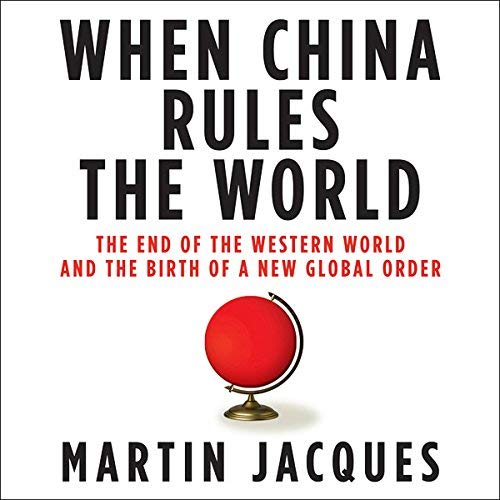
Martin Jacques has written an interesting book about China’s rise as a world economic power. His overview of the geo-political and Realpolitik relationships of the east and west are interesting; particularly in light of the Trump administration.
“When China Rules the World” has interesting details that inform but do not convince one that China will rule the world. The provocative title drives the bus but it does not reach its destination.
World control is a myth that causes wars and destroys the best and brightest, as well as the mean and maniacal.
What is happening in China is remarkable. China’s transition from Maoist communism to capitalist communism is a caterpillar turning into a butterfly; i.e. China has grown wings but it still lives in a world constrained by its environment.
Though President Xi is re-instituting some Maoist mistakes, China’s world wide investment in infrastructure is based on capitalist beliefs. Xi has an internationalist focus, just like that which made America great; at least, until Trump’s Presidency.
Chairman Mao’s cultural revolution and belief in enlarging collectivist ideology nearly destroys China’s path to prosperity
Xi is attempting to open new markets by financing infrastructure improvements in African, Middle Eastern, and Asian countries. He is creating customers for Chinese product.
Undoubtedly, Xi is also trying to seduce other nations into belief in Xi’s form of Communism. This is not unlike America’s intent to democratize the world.
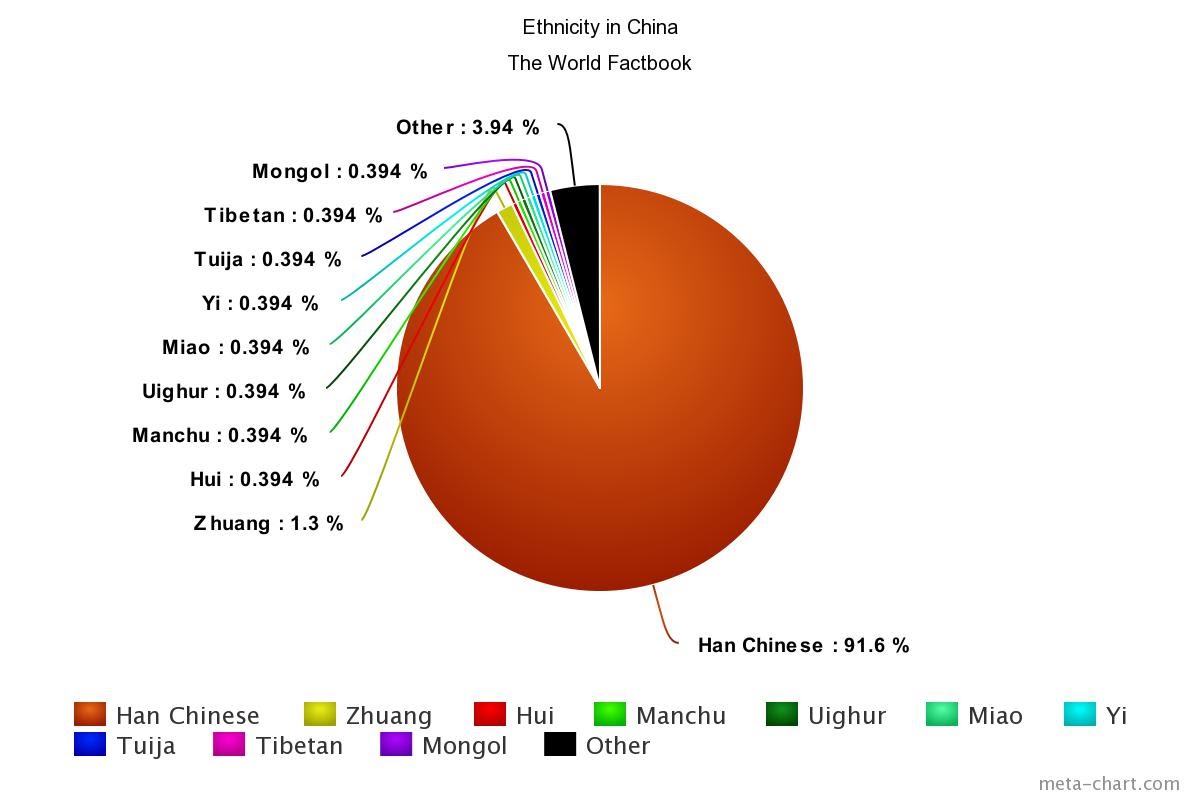
Jacques argues that a 90% Han Chinese cultural domination of 1/5th of the world’s population will change the nature of the 21st century. In a limited sense, that is undoubtedly true. However, regardless of the type of government rule, human nature is the same.
Money, power, and prestige, are the primary motivations of humankind. Whether one is Han Chinese, Tibetan, Uighur, Indian, Hispanic, Black, or any singular ethnic group, all humans seek control of money, power, and prestige. These innate drives are the speedometer, brakes, and steering wheels of nation-state’ leaders and followers.
There are dominant factions in every culture that are not necessarily the majority of a culture’s population. Jacques’ early comments suggest China’s 5000 year history reflects a cultural conformity greater than any other country in history while later he acknowledges that the predominant Han population is highly diverse in its beliefs.
Cultural conformity is not the relevant issue; i.e., dominant cultures, whether a majority or minority of an indigenous population, are the game changers of a nation’s history.
Jacques argues that China’s cultural history of familial respect and veneration will have profound affects on the future of world economies. Jacques has a valid point. However, the history of modernization suggests that the fabric of extended filial obligation will be ripped apart in China just as it has in every industrializing nation.
China, just as all modernizing nation-states, will see deterioration of familial bonds.
Human nature is immutable. As an agrarian culture moves to the city and parents are compelled to work for wages, family structure and filial commitment deteriorates.
Of course, capitalism is not the same in China as it is in the western hemisphere. As Jacques reports, major capitalist businesses are state owned in China. They compete in the world market but government support mitigates much of the free enterprise ideal of capitalist economies. However, no nation-state operates as a free enterprise capitalist country; i.e. government has always played a role in capitalist nations. Government subsidy of industrialization is a matter of degree.
It may be that China will change the way industrialized countries compete but global economic domination is no longer possible in a tech savvy world that recognizes knowledge is power and natural resources are limited.
All the world knows how each culture in the world lives. With that knowledge, countries will gravitate to systems of government that serve its dominant culture best. Best is defined as what is most important to the dominant culture in the context of either money, power, or prestige.
Long term, China is facing a tougher road to modernize because of population, environmental degradation, and dwindling natural resources, but their short term prospects look better than most other nations.
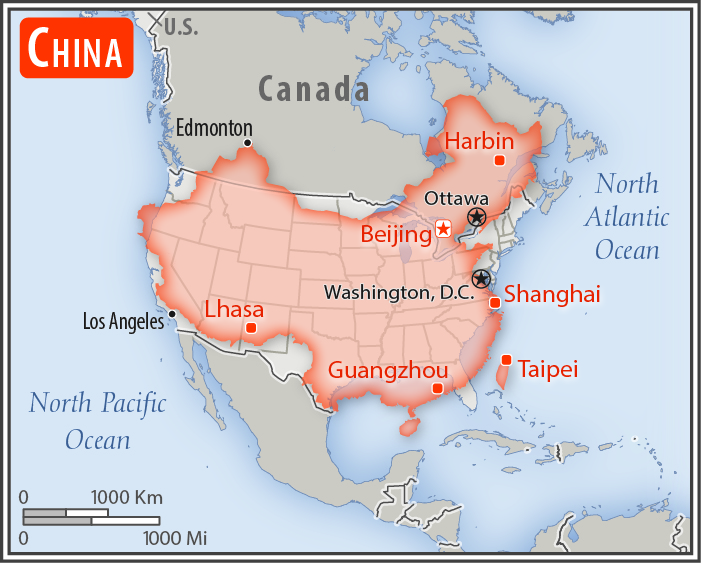
New estimates from the U.S. Census Bureau put China in the lead with 1.34 billion residents, followed by India with 1.19 billion. The United States is a distant third with 311.1 million people.Jul 6, 2011
As Jacques points out, China’s savings rate is over 20%, with a GDP growth rate 3 times that of America. The cost of dwindling natural resources is more affordable to China than most other modernizing countries. However, all economies are closely tied to each other and a major failure in America or Europe will have great consequence for the world economy which will significantly affect China’s short term advantage.
With a failure of a western countries economy, China’s drive toward modernization will be in danger. That danger is demonstrated today by America’s creation of a trade war with China.
Some argue this burgeoning trade war is hurting the Chinese economy more than the American economy. That may be true in the short term, but the efficacy of trade wars are questionable in the long term; particularly in our internet connected world.
Jacques’ book is worth its purchase price and a consumer’s time because he exposes some of the cultural biases of China that are not widely known. His suggestion that discrimination is as prevalent in China as it is in the United States is reprehensible, and disgustingly familiar. Globalization is real. Human nature is immutable. All mankind travels on the same space ship; i.e. our blue ball. At the very least, China is proving that our environment is fragile and natural resources are finite.
Audio-book Review By Chet Yarbrough (Blog:awalkingdelight) Website: chetyarbrough.blog
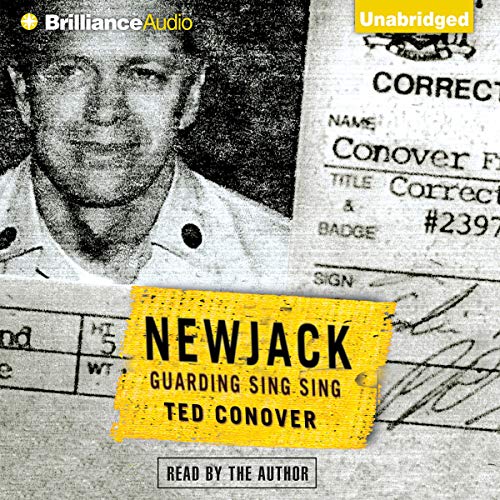
Newjack: Guarding Sing Sing
By Ted Conover Narrated by Ted Conover
TED CONOVER (AUTHOR, JOURNALIST)
On December 18, 2018, Congress approved a prison reform bill which is signed by President Trump. In this bill, Congress takes a first step in turning prisons into institutions of reform rather than isolation and punishment. The bill’s purported intention is to return prisoners to productive society by 1) improving prisoner treatment, 2) treating the drug addicted, 3) monitoring those put on probation to reduce recidivism, and 4) improving pretrial services for the arrested.
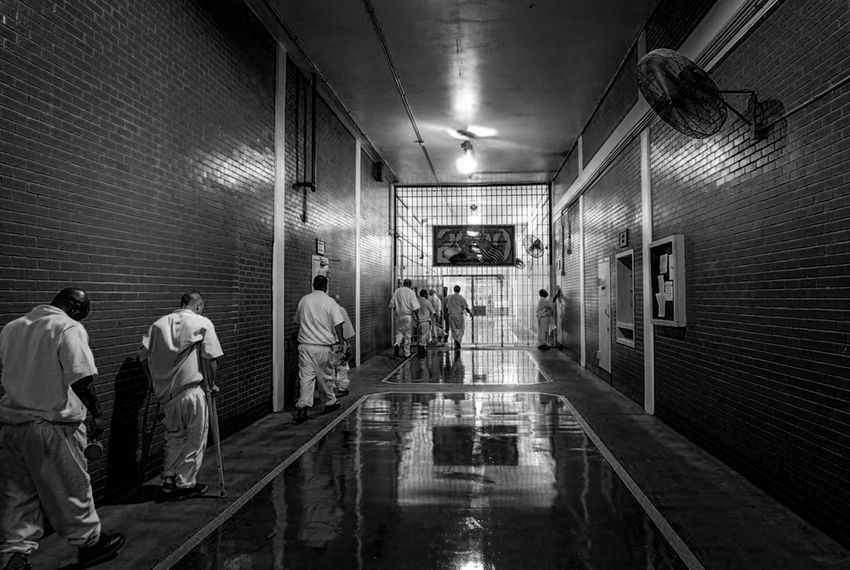
Clanging prison doors and simmering discontent are evident in Ted Conover’s book but it is not a polemic for prison reform.
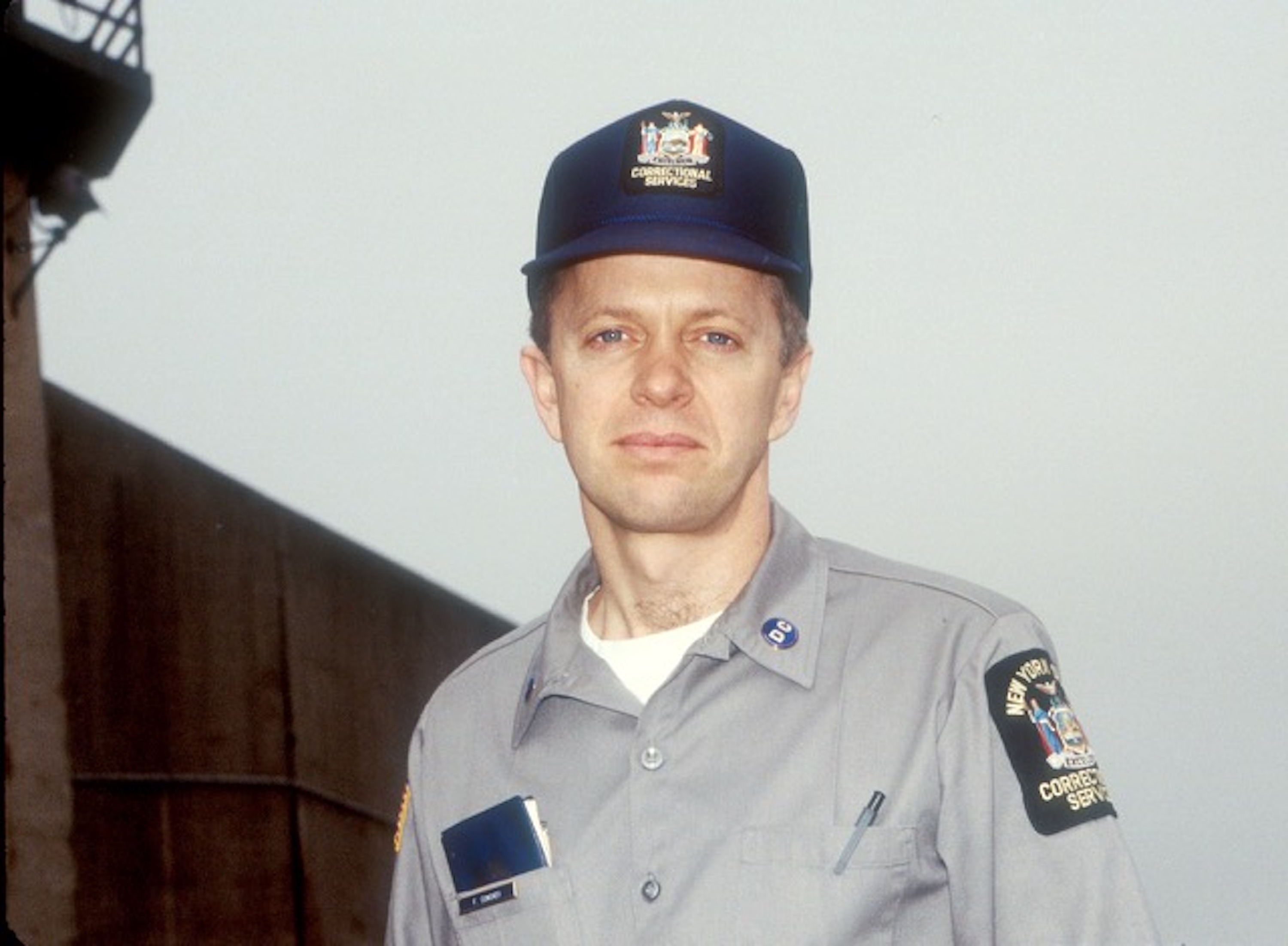
Conover surreptitiously becomes a Corrections Officer at a storied New York prison called Sing Sing (30 miles north of NYC). He enters a seven week boot camp and four week “On-Job-Training” program to become a C.O. for one year, including his 11 week training period.
Conover exposes many dysfunctions that are inherent in a system that isolates human beings from society. The American prison systems’ principle function is to punish the convicted with confinement. Criminals are then released into society based on time served. What Conover’s experience shows is that Corrections Officers are as likely to be changed by their roles as gate keepers as prisoners are by their confinement.
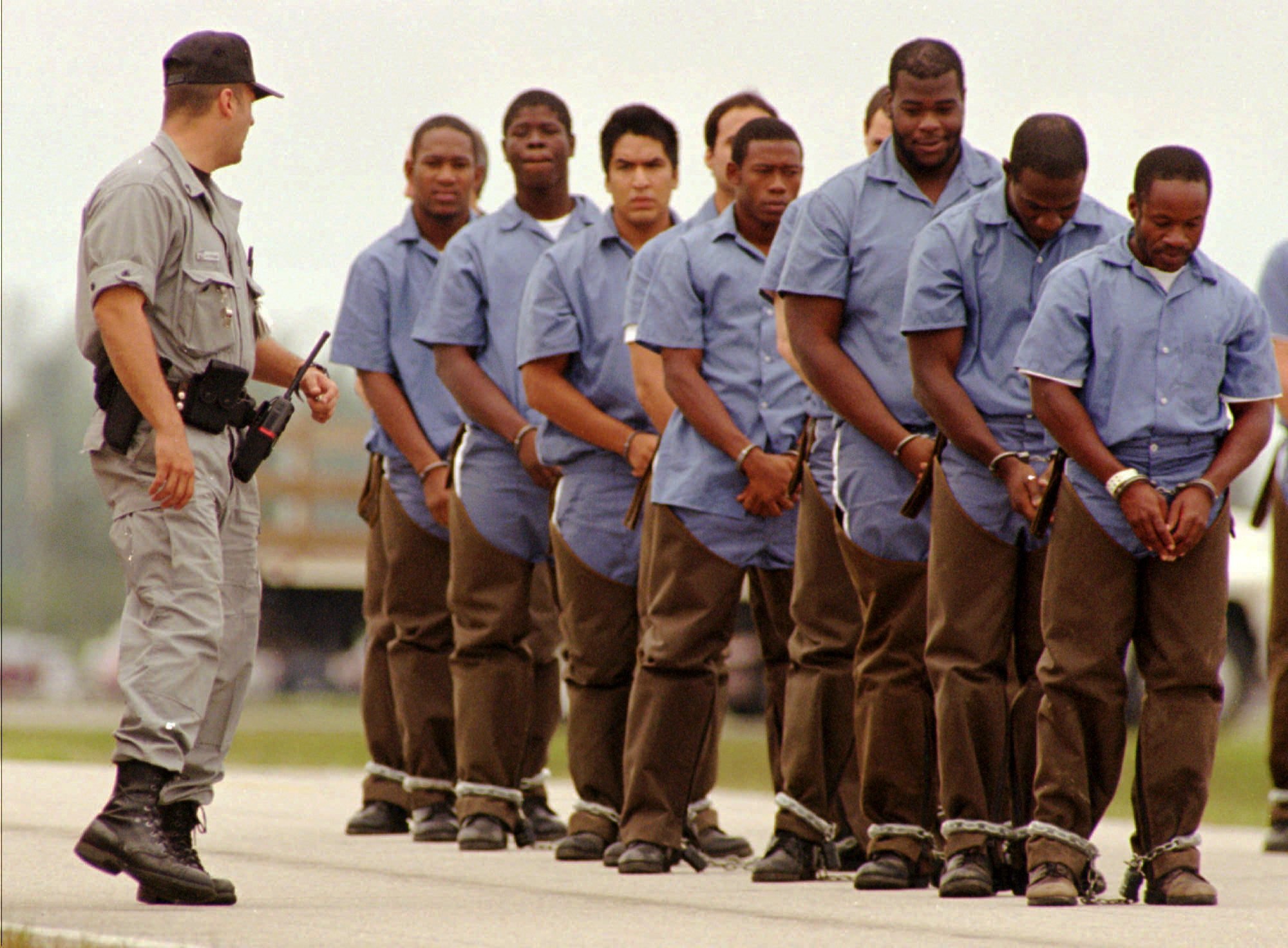
Both C.O. and prisoner roles increase human frustration. Corrections Officers, by training and experience, become martinets that focus on control of human nature, their own and the prisoners. COs are directed to control their emotions regardless of verbal abuse they hear from internees. Prisoners are treated like herd animals to be corralled, fed, and released at a master’s discretion.
A Correction Officer enforces rules, written and unwritten, and prisoners break rules. Both factions vie for respect. It becomes a “zero-sum” game with marginalized losers and short lived winners. The losers are prisoners and the winners are COs.
Rules become symbols of authority and control
rather than guidelines for human reform.
Conover gives the example of a rule that says a Correction Officer,
under no circumstance, is to assist a prisoner with his duties. When a prisoner is told to carry a bundle of
laundry that is too big for him to carry, the CO is not to assist him because
it violates a code of conduct that might compromise security. Offering help may engender friendship which
may lead to collusion, corruption, and/or escape. Cognitive dissonance causes some COs to question their humanity. Outside of prison, man is encouraged to help
his fellow man; inside prison, it is a sign of forbidden vulnerability.
Prisoners are being taught to believe that helping
one’s fellow man is not a societal benefit. Prisons do not reform prisoners;
i.e. prisons warehouse human beings and return most of them to society after
time served.
2008 was just yesterday but today’s attack on government regulation is destined to create America’s next crises.
Audio-book Review
By
Chet Yarbrough
(Blog:awalkingdelight)
Website: chetyarbrough.blog
The Big Short & No One Would Listen
By Michael Lewis By Harry Markopolos
Narrated by Jesse Boggs Narrated by Scott Brick & Others
There are lessons to be learned from Lewis’s and Markopolos’s books that are forgotten in the pending impeachment trial of President Trump.
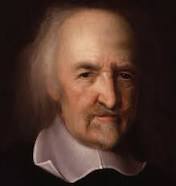
Both Adam Smith (the father of economics) and Thomas Hobbes (author of “The Leviathan”) argued self-interest is a universal human characteristic.
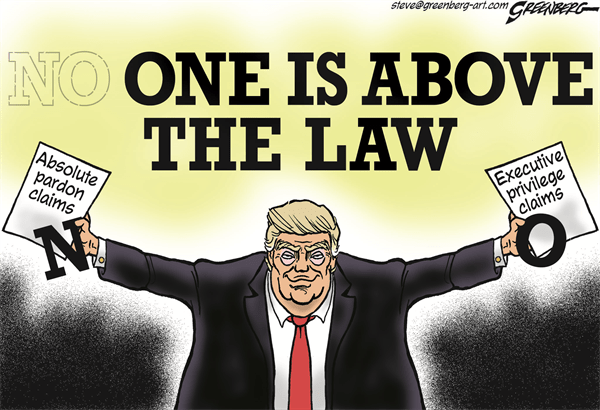
Self-interest led Trump to enlist the Justice Department to overthrow the election of President Biden. If that is not insurrection, one wonders what justifies any impeachment action.
Smith argued that capitalism takes the essence of human nature’s self-interest to advance civilization. He noted-the advance of capitalism is not a smooth upward curve but an improving trend. Smith was not saying that bad things do not happen in a capitalist society but they bend toward the good of society.
Hobbes would take issue with both of Smith’s assertions. Self-interest would not advance civilization unless it was regulated. Hobbes insisted on government control through “rule of law” to mitigate non-virtuous self-interest.
Hobbes feared unbridled self-interest in any form of government. Hobbes viewed human nature as brutish and unfair unless ruled by a Socratic philosopher king or, in a democracy, by tightly regulated and enforced “rule of law”.
The forensic reports of Michael Lewis and Harry Markopolos show what happens when efforts to regulate human nature are abandoned. One concludes from their books that Thomas Hobbes’ “Leviathan” wrecks havoc on society when “rule of law” is either not present, or unenforced.
Inept management by Fannie Mae, and Freddie Mac offered mortgage insurance for grossly over-leveraged mortgages. Companies like AIG removed investor risk by insuring banks against bad investments.
All of these foolish actions coalesced to bankrupt companies and families around the world. Individual lies, bungles, and missteps in the real estate industry created the worst recession since the 1929 stock market crash.
While this real estate debacle was developing, Bernie Madoff built a 50 to 70 billion dollar empire by making fools of the U.S. Government, European royalty, world wide charities, and working families. Madoff lied, cheated and stole billions of dollars from wealthy investors, charities, and mom and pop businesses with offers of bogus investment returns based on buying from Peter to pay Paul. He paid dividends to earlier investors by taking money from newer investors.
As long as people believed in Madoff, or deluded themselves, his wheel of fortune continued to roll. As the real estate market collapsed, old investor money was recalled and new money became unavailable. Madoff’s failure was inevitable.
Michael Lewis identifies seers that recognized “Quants” were packaging doomed mortgages into re-salable financial instruments called derivatives. These astute observers of the market, knew mortgage backed securities were at risk.
How could these things happen in a 21st century, democratically elected and governed society? Hobbes would say “how could these things not happen”?
Madoff’s investment lies were exposed by Harry Markopolos in a “red flag” report to the Security Exchange Commission in the year 2000; way before the 2008 economic catastrophe.
The title of the book “No One Would Listen” tells the story. This book is an indictment of democratic government in free society. Markopolos’s story exposes an inept and failed SEC, an agency created by government to protect investors–when, in fact, it protected corporate interests.
The irony is that Madoff did not get caught by the SEC. He confessed in 2009 because his Ponzi scheme fell apart. along with the collapse of the real estate industry.
Lying is part of being a human being. That is a fundamental reason for government to have “rule of law”. It protects people from the abhorrent self-interest of the few from the many.
President Trump is impeached by the House of Representatives. It is the moral responsibility of the Senate to have a trial.
Hiding behind a loose interpretation of the rules of the Constitution is a disservice to the people. Guilt or innocence should be proven by the facts; not the parties of interest.
Regulation is not a perfect solution for control of bad actors in a free society. However, no regulation is worse.
Everything to hide, everything to lose, and “Nothing to Envy” summarizes Barbara Demick’s book about North Korea. That is the frightening prospect of North Korea’s policy regarding nuclear armament.
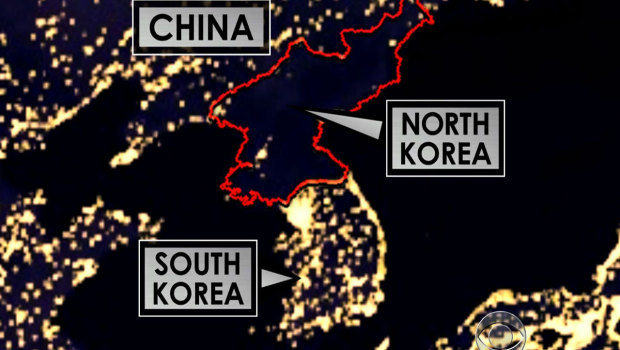
North Korea is dark because of a lack of infrastructure for power
Kim Jong-un’s rule of North Korea is founded on fear. Based on Demick’s characterization of the North Korean economy, Kim uses fear to control North Korean citizens. Kim presumes the same will work for control of North Korea’s position in the world. Trump deceives himself in believing he gets along better with meaner leaders.
President Trump understands the tool of fear but mistakenly believes Kim will change his behavior because of America’s superior wealth and power.
Because fear is the only tool Kim possesses to stabilize North Korea’s government, North Korea will not abandon its quest for more nuclear weapons.
Demick pictures life in North Korea based on interviews and stories told by refugees and defectors. There is an inherent bias in recollections of those who flee as opposed to those who stay. These stories, though different in details, are too alike to be lies.
Demick peels back the edge of a curtain that hides North Korea from the rest of the world. North Korean defector’s recollections are a re-telling of George Orwell’s fictional world of “1984”. North Korea is a reinvention of Joseph Stalin’s U.S.S.R.
Demick recounts the stories of Mrs. Song, Oak-hee, Mi-ran, and Jun-sang. Demick paints a picture of a gray country, wracked by hunger and controlled by a dictator and his army. Demick reveals a country that faces a grim future.
Nuclear warheads in the hands of North Korea are a threat to Asia and the far east.
Demick gives fear and anxiety a face with Mrs. Song’s story of her life as a rabid believer, self-deceiver, and follower of the “Dear Leader”, Kim Jong-il (Kim Jong-un’s father).
Mrs. Song and her children survive North Korea’s worst famine in history, but her husband dies. Mrs. Song’s daughter Oak-hee tricks her mother into visiting China and then lures her to South Korea. Oak-hee shows Mrs. Song that life in North Korea is a shadow of what life can be.
Demick’s second story is told by Jun-sang and Mi-ran, two other North Korean defectors. Jun-sang and Mi-ran introduce romance into this gray world. Their courtship in North Korea is sweetly pictured in clandestine walks on dark nights with sparkling bright stars in a lightless city. Jun-sang is an engineering student at a prestigious North Korean school. Mi-ran is the daughter of a naturalized North Korean farmer who lived in what became South Korea after the Korean War.
Jun-sang and Mi-ran talked of everything but what became the most important thing in their lives, the dishonesty of their government, the unfair treatment of its people, and their growing alienation.
Both defected at different times because they were afraid to reveal to each other their true feelings about life in their home country. Later, they meet in South Korea but as strangers that have grown into separate lives.
“Nothing to Envy” makes a listener believe North Korea’s government is destined to fail. Time and incident will cause its collapse.
President Trump only temporarily stopped displays of nuclear weaponization by North Korea. Obviously, Kim Jong-un is only acting in a play designed by Trump. It appears Trump’s play, as much of his administration, is out of his control.
Our President cannot say “you’re fired”. Kim Jong-un needs fear to govern his country. He believes fear is the only tool that will gain cooperation of the outside world.
Mark Steyn (Canadian conservative author and commentator. Occasional guest host on the Rush Limbaugh Show and Tucker Carlson Tonight.)
Listening to Brian Emerson’s narration of Steyn’s book makes one smile and cringe. In one section Steyn intelligently reflects on the demographics of world population, and in the next, he whips out a Limbaugh/Carlson-like’ riff on the name “Muhammad”.
Steyn uses “guilt by association” as proof of something when it is nothing. Someone named Muhammad can be an American patriot or a domestic terrorist; not because of a name but because of belief and volition.
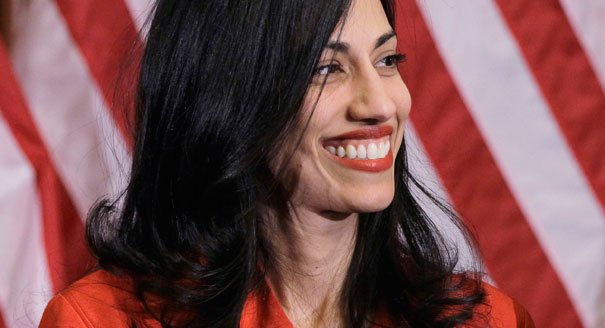
HUMA ABEDIN DISPARAGED BY MICHELE BACHMANN
To suggest ex-Senator Wiener’s wife, Huma Abedin, is a member or agent of the Muslim Brotherhood is ridiculous.
Abedin grew up in Saudi Arabia and worked for an academic journal called “The Journal of Muslim Minority Affairs”. (Ms. Abedin was born in Kalamazoo, Mich.) To state the obvious–meeting with someone or writing about minority affairs does not mean you changed religions or beliefs .
Steyn, like President Trump, incriminates the entire Muslim world by inferring there is a fascist conspiracy to take over the world.
On the one hand, Steyn reasonably notes the average age of many Muslim countries is 15 and youth is often a source of discontent and aberrant cultural behavior; on the other, he infers Muslims hold a monolithic belief system that is bent on converting or destroying the world “…as We Know It”.
Steyn flits from reason to nonsense at the turn of a page.
Those who have the privilege of living in America, or visiting other countries, recognize many of the ridiculous comments made by pundits. Conspiracies, and monolithic beliefs in other countries are more myth than truth.
As inferred by Ben Zimmer in his 11/7/20 article in the WSJ, “punditocracy” is a joke played on the public by the media. “Punditocracy” predicts little and enlightens few, if any. “Punditocracy” is a game to predict unknowable results that fit personal prejudices.
In a recent visit my wife and I made to India, a young Muslim woman explains her disgust with Osama bin Laden and the 9/11 terrorist event. This young Muslim is appalled and embarrassed by the belief that bin Laden is considered a representative of her or her family’s religion.
In traveling to Egypt, a Muslim farmer is appalled by terrorists who use the cloak of religion to justify their murderous actions.
The many mosques visited in other countries reinforce history’s record of acceptance and tolerance of other faiths by Muslim leaders.
One appreciates an argument that is made by Steyn that socialist government policy has the potential for demotivating entrepreneurs and subsidizing economic freeloaders.
But, Steyn fails to criticize or comment on unregulated capitalism that increases the gap between rich and poor and presumes that “free enterprise” equates equal opportunity.
The world economy is in a state of transition like that which was experienced in the industrial revolution. Jobs are being lost because they are being replaced by technological advances.
Truly free enterprise does not exist in the world.
Today’s technocratic revolution is as tragic to an automobile assembler or coal miner in 21st century as it was to a loom operator in the 19th.
The United States, like other nations in the world, adopt unfair tax codes that subsidize big oil, big banks, and dying industries.
Who does the major bread winner in a family turn to when they lose their job because of changes beyond their control?
It is the job of private and public organizations to educate and train workers displaced by technological change. This re-education creates jobs while ameliorating unemployment.
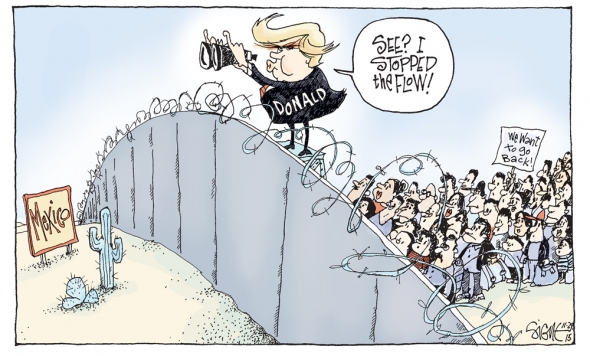
Limbaugh rails against Trump by suggesting he is waffling on a political commitment to build a wall between Mexico and the United States. Trump responds with an equal level of irrationality by closing vital functions of the government to force Congress to fund the wall.
Trump’s wall between Mexico and the U.S. is a joke. It does nothing to serve the truth of what immigrants have contributed to America.
Steyn is obviously well read and informed but one feels like he plays the publicity game of talking heads. Some (not all) Fox newscasters, CNN contributors, and other pundits are darlings of an ideological group that get paid for what their constituency wants to hear. It has little to do with truth.
Steyn, like many talking heads (liberal and conservative), wastes his intelligence; pandering to an ideological constituency, rather than serving the general public by searching for the truth.
Demography and economic conditions change. They are a part of the human condition that can be managed by recognizing human nature’s fundamentals, and conscientiously creating nations that are governed by rule-of-law. There is a truth but it lies in freedom and social responsibility.
Dostoevsky said, “There are things which a man is afraid to tell even to himself, and every decent man has a number of such things stored away in his mind.”
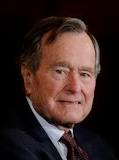
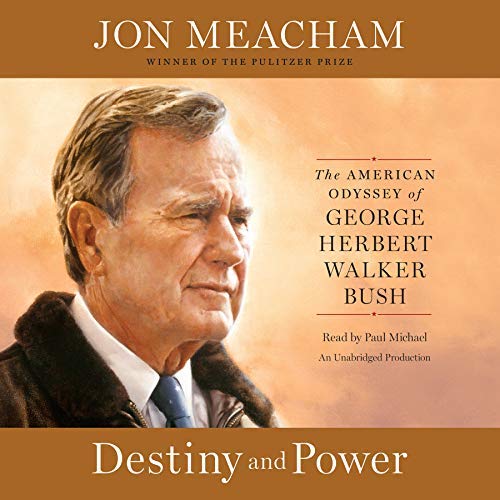
However, H. W. Bush seems unafraid in his interviews with Jon Meacham. Meacham’s biography refers often to H. W. Bush’s diary. H. W.’s diary appears written by a decent man who knows himself and chooses to divulge all he knows.
“Destiny and Power” is about H. W. Bush’s journey to the American Presidency and power in the executive branch of government. It begins with a brief history of the Bush/Walker families that reaches back to the beginnings of America. Both sides of H. W. Bush’s ancestors achieve the American dream through hard work, determination, and initiative. The success of the Bush/Walker families sets the stage for H. W. Bush’s public service; his Yale education, his relationship to the wealthy, his service to his country, and his tenure as President of the United States.
“Destiny and Power” reveals a candid picture of the 41st President of the United States. It is a story of family love, respect, and duty. It explores a family lineage blessed with wealth, good education, and expectation. H. W. Bush is a decent man who acknowledges his limitations in pursuit of good works.
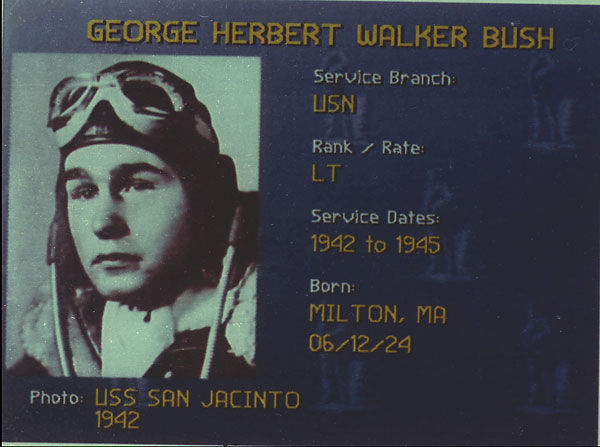
GEORGE H. W. BUSH MILITARY SERVICE WWII Meacham notes that H. W. Bush seems a go-along to get-along kind of guy; i.e. a non-confrontational person who is well liked by his associates and subordinates. After Pearl Harbor, H. W. enters the service at the age of 18 to become a pilot. When completing a bombing run, H. W. and his crew are downed at sea. As a downed bomber pilot, H. W mourns his fellow crewmen and wonders if there was anything he could have done differently to save their lives.
This life experience marks H. W. It illustrates H. W.’s sense of responsibility and how he cares for others. It reminds him of the horrors of war and the hurt felt by those left behind. It is a mark that guides his decision to begin the first Gulf war and insert American troops in Kuwait.
Meacham reveals how H. W. solicits friendship with everyone he meets. This facility for friendship is a key to his success in becoming a Texas oil man. His early success in the oil business appears based on who he knows and how well he cultivates wealthy associates’ interest in risking investment in land-lease oil exploration in Texas. H. W.’s friendliness leads him to politics. Meacham notes that friendliness did not immediately vault H. W. to political success but it paves his way to public service.T
H. W. is driven to succeed. In a widening circle of contacts, H. W. is welcomed into the Republican Party and becomes Chairman of the Party for Harris County, Texas. He runs for the Senate and is defeated by Texas Democrat Ralph Yarborough.
Later, in 1966, H. W. is elected to the House of Representatives and becomes acquainted with Richard Nixon.
President Nixon appoints H. W. to the United Nations as Ambassador for the United States. His social skill suited the United Nations Ambassador position perfectly.
As the Watergate scandal overtakes the Nixon Administration, H. W. supports Nixon up to the point of undeniable truth of Nixon’s cover-up. As the Republican National Committee Chairman, H. W. asks Nixon to resign.
When Gerald Ford became President, H. W. is asked to be America’s envoy to China.
After serving for one year, Ford asks Bush to take the position of CIA Director.
One year later, Ford is defeated by President Carter and H. W. returns to the private sector with plans to run for President.
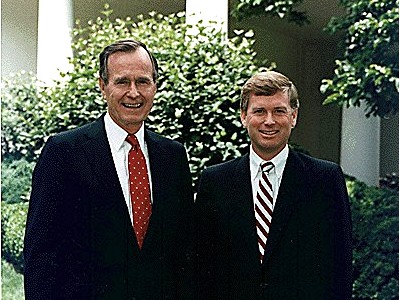
Bush’s cultivated Republican Party friendships compel Reagan to ask Bush to be his Vice President.
RONALD REAGAN (40TH PRESIDENT OF THE UNITED STATES) Meacham notes that running for President is something H. W. has prepared for through the course of his life but 1980 is the era of Ronald Reagan. Reagan’s public speaking skill clearly surpasses the oratorical skill of H. W. Bush. However, Bush’s appeal to a more liberal part of the Republican Party makes him an ideal running mate for the highly conservative Reagan. Reagan is reluctant to make the offer because of H. W.’s “Voodoo Economics” comment during their primary contest but Bush’s affable personality eventually endears Reagan to his running mate.
By the end of Meacham’s biography one sees Bush as a decent man who wishes to do the right thing. One might conclude that H. W. Bush is unduly influenced by the desire to be liked. This desire makes H. W. avoid confrontation, a characteristic of which Meacham offers many examples; e. g. Bush’s reluctance to confront the public with his decision to raise taxes; his ambivalence about using the bully pulpit to attack political opponents. H. W. Bush’s inner compass seems to wobble in the face of his desire for comity. However, when one puts H. W. in the context of history, Bush’s inner compass seems as true north as any of America’s Presidents.
On the one hand, comity may be what is missing in the extremes of the political climate of the 21st century; on the other hand, “read my lips” has little political efficacy.
On the one hand, comity may be what is missing in the extremes of the political climate of the 21st century; on the other hand, a wobbling inner compass leads to intellectually untested certainty. One may argue H. W. Bush’s avoidance of confrontation leads to decisions not tested by debate. All that is left is experience burnished by one person’s judgment. Avoidance of personal confrontation may lessen perspective but comity is an underrated commodity in today’s political climate.
A surprising note by Meacham is H. W.’s second guessing on Saddam Hussein. H. W. did not confront Saddam Hussein to demand unconditional surrender after his forced ejection from Kuwait. In retrospect, a demand for unconditional surrender seems superfluous. Arguably, H. W.’s courageous decision to inject the American military into Kuwait changed the course of history. One inclines to believe H. W. will go down in history as the antithesis of Nazi appeasers in WWII.
GEORGE W. BUSH (43RD PRESIDENT OF THE U.S. The most titillating part of Meacham’s biography of H. W. is a father’s judgment of his son’s Presidency. One tends to believe H. W. views George W. more as a beloved son than as President of the United States. George W., like all human beings, makes his own mistakes.
H. W. argues that his son is poorly served by his Vice President and Secretary of Defense. H. W. suggests Dick Cheney and Don Rumsfeld are the principal reason for the mistake of Iraq. (One must ask oneself, who hired Cheney and Rumsfeld? In a translation of Plato’s “Republic”, there is a phrase about leadership that suggests “Birds of a feather flock together”.)
George W. is his own man. He differs from his father in numerous ways. One may remember George W. standing on an aircraft carrier and saying “Mission Accomplished!” after the defeat of the Republican Guard in Iraq. Meacham’s biography suggests that kind of hubris-tic comment would never be made by H. W. Bush. History will show defeat of the Republican Guard accomplished very little. Defeat of the Republican Guard is only the beginning of many American mistakes in Iraq.
H. W. Bush may not go down in history as one of the greatest Presidents of the United States but he is among the most decent.
Kotkin’s first volume about Stalin’s rise to power offers lessons to modern American and Chinese governments. China seems on one path; America another.
STEPHEN KOTKIN (AMERICAN AUTHOR, HISTORIAN, ACADEMIC)
Stephen Kotkin offers a remarkable and comprehensive view of Russia’s 1917 Revolution in “Stalin, Volume I”. Kotkin succinctly describes how power in the hands of one may advance a nation’s wealth, but at a cost that exceeds its benefit.
Kotkin’s first volume about Stalin’s rise to power offers lessons to modern American and Chinese governments. China seems on one path; America another.
The formation of “checks and balances” sustains America’s economic growth, even in the face of leadership change. In contrast, a “rule of one” has moved China’s economic wealth to new heights, but “rule of one” threatens its future success; particularly if it follows Stalin’s, and now Putin’s mistaken path.
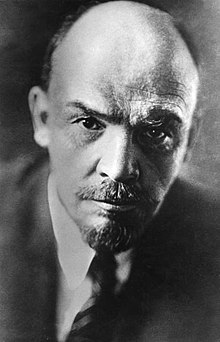
In historical context, Kotkin profiles the three most important characters of the Russian revolution; e.g. Vladimir Lenin, Joseph Stalin, and Leon Trotsky. Kotkin documents the personalities and circumstances of the pre-U.S.S.R.’ economy; i.e. an economy based on the disparity between wealth and poverty, federalization and centralization, political idealism and pragmatism.
MAO ZEDONG (1893-1976, FOUNDING FATHER OF PEOPLE’S REPUBLIC OF CHINA.)
Three leaders in the Chinese revolution were Mao Zedong , Zhou Enlai, and Deng Xiaoping. Zhou Enlai is the moderate of the three in trying to preserve traditional Chinese customs. Mao is by some measures an idealist who attempts to expand the theory of communism. His idealism creates a bureaucracy that nearly derails China’s economy. “The Gang of Four” radicalized Mao’s idealism into a more Stalinist view of communism. “The Gang of Four”s radicalization of Chinese communism is eventually reversed with the leadership of Deng Xiaoping, but not until after the Tiananmen Square massacre.
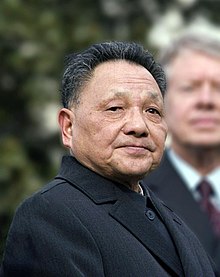
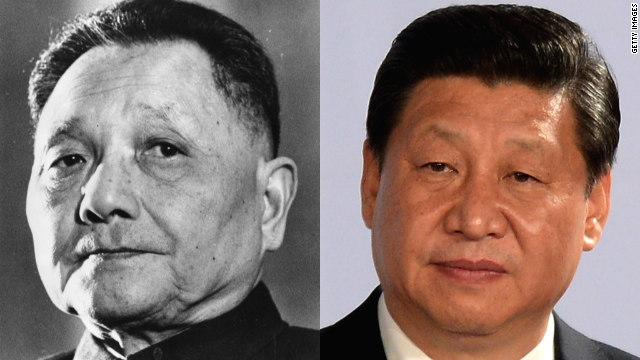
DENG XIAOPING (CHINA’S CHAIRMAN OF THE CENTRAL ADVISORY COMMISSION 1982-1987)
After Tiananmen Square, Deng recognizes the power of public dissent. Rather than increasing suppression, Deng opens the Chinese economy to a degree of self-determination. Deng does not abandon communist ideology. However, he recognizes the importance of economic growth and how less doctrinal communist policy would unleash the power of people as demonstrated at Tienanmen Square.
Deng dies in 1987 and the government of China is reshuffled. Deng’s eventual successor, President Xi, emphasizes the idealism of communism that threatens return to a Stalinist-like terror in China; i.e. a terror enhanced by technological invasion of privacy, and “big brother” control.
XI JINPING (GENERAL SECRETARY OF THE COMMUNIST PARTY OF CHINA AND PRESIDENT OF THE PEOPLE’S REPUBLIC OF CHINA)
President Xi returns to Mao’s authoritarian belief in enforced collectivism with the idea of expanding China’s new-found wealth through government subsidization of industry. Xi renews emphasis on rule by the Communist party, headed by himself.
The growing disparity between rich and poor in both China and America is widely seen in the internet, and with increased international travel. China’s rapid rise in economic wealth is unevenly spread, just as it is in the United States. The difference is in how that economic disparity is addressed.
In America, private dissent is an inherent part of its history which lauds individualism, self-determination, and freedom (within the boundary of “rule of law”). But, these characteristics denigrate American citizens who are unable or unwilling to reap the rewards of individualism, self-determination, and freedom. These are the Americans sleeping on America’s streets and living in their cars.
America’s system of governance allows a rift between the rich and poor because it is based on a system of “checks and balances”. America’s system demands debate, and more broadly considered human consequence, before government action is taken.
LIVING ON THE STREET IN AMERICA
In China, the homeless are compelled to work at jobs created by the government. China’s system of governance is driven from the top, with limited debate, and more singularly determined public consequence. Government action is autocratically determined.
BEIJING-In China, dissent is discouraged and freedom is highly restricted, but homelessness is addressed with housing for the poor at subsidized prices.
In ancient China, singular autocratic rule offered a mixed blessing. Some of the world’s wealthiest and most cultured governments were created in China. These ancient dynasties successfully expanded their economies to make China a world leader in science and industry. At the same time, with few checks and balances, the history of China’s “rule of one” resulted in periodic social and economic collapse.
In some ways, China’s ancient civilization’s rise and fall is reminiscent of the rise and fall of the U.S.S.R. after 1917. Kotkin describes the turmoil surrounding Russia in 1917. The beginning of WWI and Germany’s invasion exaggerate the paradox of power in Russia. Modern European, Asian, North American, Middle Eastern, and African countries are experiencing some of the same economic, and political disruption.
On the one hand, the peasant is a proud Russian; on the other hand, he is a slave of the landed gentry; indentured to preserve the wealth of others at the cost of his/her life.
In 1917, the Czar and wealthy aristocracy depend on a population of the poor to defend the government. Russian peasants are faced with defending a government system that recognizes them as serfs, agricultural laborers indentured to wealthy landowners. (A similar system existed in China prior to 1949.)
In 1949, Mao recognizes the same inequity and judiciously separates landlords from their vast estates and re-distributes it to tenant farmers who worked for them. Ownership restructuring improved agricultural production until Mao tried to make small collectives into large collectives with Communist party oversight. Formation of a Chinese Communist Party bureaucracy distorted actual production and de-motivated farmers that did the real work of farming. The result of production over-estimation caused a nation-wide famine.
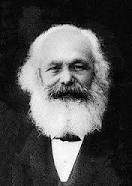
KARL MARX (BORN TRIER, GERMANY 1818-DIED LONDON, ENGLAND 1883)
Kotkin notes Russian social and economic inequity is a breeding ground for a Leninist/Marxist revolution. Marx’s dialectic view of the wealth of nations suggests that governments will change based on the growing recognition of the value of labor; i.e. beginning with agrarian feudalism, growing through industrialized capitalism, and socialism; reaching to a state of equilibrium in communism (a needs-based and communal sharing of wealth). Marx suggests all nations will go through this dialectic process.
Lenin bastardizes Marx’s dialectic idealization. Lenin believes the process can be accelerated through revolution and centralized control of the means of production. This idea is adopted by Mao Zedong in China in 1949 with early success. However, Mao expands the collectivist policy with “The Great Leap Forward” in 1958. Mao’s broader collectivist policy collapses the Chinese economy in 1962. Thousands of Chinese die from starvation as communist overseers exaggerate food production quotas.
Collectivist expansion is an oversimplification of Kotkin’s explanation of Vladimir Lenin’s form of communism but it shows the risk of “rule of one” governance. Even Lenin is conflicted about how Russia will grow into a communist society.
Lenin recognizes the social and economic distance that Russian peasants must travel to gain an appreciation of a new form of government.
Much of the Russian population, like the Chinese in 1949, were illiterate and living at a subsistence level; bounded by a non-mechanized agrarian economy. Lenin vacillates between growth through education and growth through autocratic command. Kotkin suggests that Lenin gravitates toward centralized command because of the need to consolidate power within the revolution.
What Lenin needed in 1917 were followers that could get things done. Before being felled by brain disease and stroke, Lenin relies on the abilities of men like Joseph Stalin. Mao relies on his revolutionary Red Guard. Kotkin argues that Stalin became close to Lenin as a result of his organizational skill and his penchant for getting things done without regard to societal norms. For Mao, close associates like Deng Xiaoping, were his enforcers. Stalin becomes the most powerful enforcer in Lenin’s revolution. Deng eventually becomes the leader of Communist China.
Though Stalin wields great enforcement powers, Kotkin infers Trotsky is the intellectual successor to Lenin. Stalin and Trotsky are shown to be at odds on the fundamental direction of the Bolshevik party, the successor party of Russian communism. However, the exigency of getting things done, as opposed to understanding the goals of creating a Leninist/Marxist government, were paramount goals for consolidating power after the revolution. Kotkin explains how Stalin became a defender of Leninist doctrine while Trotsky became an antagonist and eventual apostate because of Stalin’s manipulation of events.
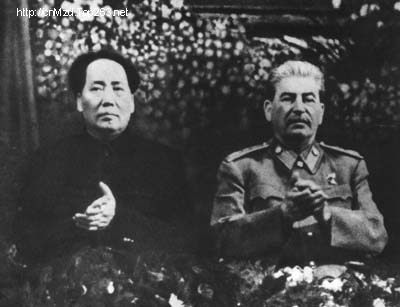
MAO AND STALIN IN 1949
China waits and observes Stalin’s method for rapid industrialization of Russia. Kotkin explains that Stalin gains an intimate understanding of Lenin’s doctrines while Trotsky chooses to compete with Lenin’s philosophical positions. The threat of factionalism accompanies Trotsky’s doctrinal departures.
The irony of the differences between Stalin and Trotsky are crystallized by Kotkin. Stalin’s intelligence is underestimated by both Lenin and Trotsky. Stalin carefully catalogs and memorizes Lenin’s communist beliefs. In contrast, Trotsky chooses his own communist doctrinal path based, in part, on Lenin’s writing. Here, another similarity is drawn with the near religious following of Mao’s Red Book with aphorisms about governing oneself and China.
Kotkin suggests Lenin views Trotsky as a more likely successor than Stalin as leader of the country. Lenin appreciates Stalin’s organizational ability but views Stalin’s temperament as too volatile for long-term government control. In 1922, Lenin is said to have dictated a “testament” saying that Stalin should be removed from his position as General Secretary. Lenin’s “testament” critiqued the ruling triumvirate of the party (Stalin, Zinoviev, and Kamenev) and others like Bukharin, Trotsky and Pyatakov but the pointed suggestion of removal for Stalin is subverted.
After Lenin dies, the triumvirate chooses to ignore Lenin’s “testament” for Stalin’s removal. After all, Stalin is a doer; i.e. he gets things done. Just as Stalin suppresses opposition to his interpretation of Lenin, China suppresses opposition to the Communist Party’s doctrines. Doctrinal differences are successfully suppressed in China until the the failure of “The Great Leap Forward” in the 1950’s. The consequence of “The Great Leap Forward”s failure is the cultural revolution in the 1960’s.
In America’s history the economy slugs along with setbacks and successes. Though 1929 sees the collapse of the American economy, it recovers with government intervention, the advent of WWII, and the push and pull of a decision-making process designed by the framers of the Constitution. That push and pull is from leadership that is influenced by the checks and balances of three branches of government. That same process saves the American economy in 2008. The power and economy of America has grown to become the strongest in the world.
Kotkin’s research suggests young Stalin is something different from what is portrayed in earlier histories. Stalin grows close to Lenin because he is the acting arm of Lenin’s centralized command. Lenin relies on Stalin to get things done. He is Lenin’s executor. At the same time, Lenin turns to Trotsky as an economic adviser to ensure a more comprehensive understanding of what needs to be done to stabilize the revolution. Trotsky believes in the importance of centralized control of the economy.
Both Lenin and Stalin believed in communism but the first acts on a vision of the future; the second acts on the “now”.
China’s Deng and Xi seem to reverse Lenin’s and Stalin’s reasoning. Rather than Deng being like Lenin, he acts on China in the “now”.
Xi seems more like Lenin and looks at China’s future based on the ideals of communism. However, from an American perspective, all autocrats common failing is belief in “rule of one”. The rising dictatorship of Putin is doomed to fail but there is no guarantee that his replacement will either be soon or less repressive.
Glasnost and perestroika fail to overcome that belief.
Kotkin puts an end to any speculation about Lenin being poisoned by Stalin. Kotkin argues that Lenin died of natural causes, strokes from a brain disease. What Kotkin reveals is the internecine war that is waged between Stalin and Trotsky while Lenin is dying. The strokes steadily debilitate Lenin and suspicious written pronouncements are made that may or may not have originated with Lenin. Lenin’s secretary is his wife. Some evidence suggests a missive from Lenin saying Stalin should not be his successor, noting Trotsky as a better choice. Kotkin suggests such a missive is unlikely. Lenin seems to have had his doubts about both men.
Succession in modern China seems less filled with intrigue than communist Russia but the opaqueness of China’s politics makes the rise of Xi a mystery to most political pundits. What seems clear is that China’s rise and fall has always been in the hands of the “…one”.
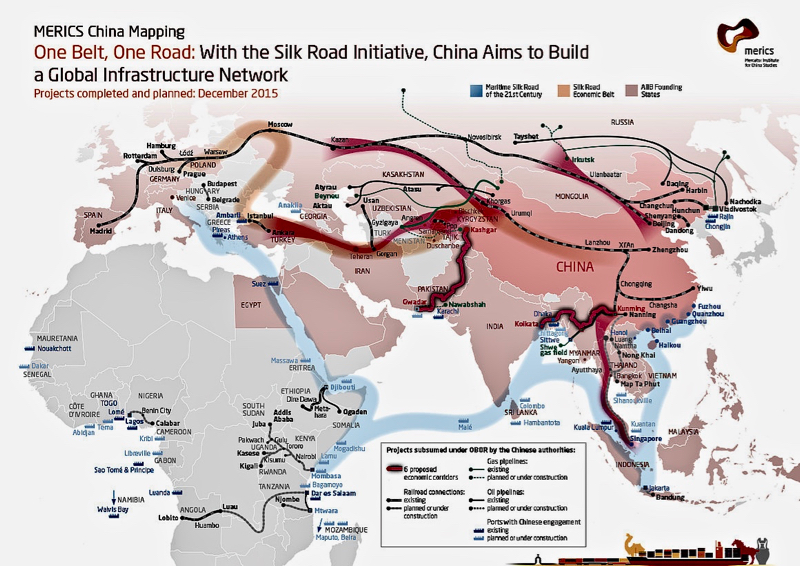
PRESIDENT XI’S ONE BELT, ONE ROAD PLAN FOR CHINA’S FUTURE
History will be the arbiter for President Xi’s success or failure with a road and belt plan for China’s economic future. The same may be said for President Trump’s focus on the virtue of selfishness for America’s economic future. The fundamental difference between America and China is Xi has no “checks and balances”; American Presidents have the Supreme Court, Congress, and a 4-year-election-cycle to assuage arbitrary government action.
AYN RAND (1905-1982, AUTHOR WHO FIRMLY BELIEVED IN THE VIRTUE OF SELF-INTEREST AND UNREGULATED CAPITALISM.)
In Russia, Trotsky is characterized as an intellectual while Stalin is a pragmatist. In China, Deng is characterized as a pragmatist while Xi seems a doctrinal theorist.
In history, Trotsky is highly opinionated and arrogant. Stalin is street smart and highly Machiavellian. Trotsky thinks right and wrong while Stalin thinks in terms of what works. In China, Deng is Stalin and Xi is Trotsky. In America, Trump is Stalin and his opposition is Trotsky-like do-nothings.
Trump lost the election in 2020 because–from an American perspective, all autocrats common failing is belief in “rule of one”.
Stalin is reputed to be temperamental while Trotsky is aloof. Though Trotsky insists on centralized control, Stalin argues for federalization. Stalin paradoxically argues for federalization because he knows Russian satellite countries want independence, but he will act in the short-term for centralization to get things done. And of course, Stalin clearly adopts centralized economic planning for the U.S.S.R.; i.e., another of Kotkin’s paradoxes of power.
Ironically, though Putin is now showing himself to be as ruthless as Stalin, he is unable to exercise the same level of dictatorial control. Unrest is not quelled in the face of the Russian people’s assessment of Putin’s justification for the Ukrainian war.
There is much more in Kotkin’s powerful first volume about Stalin and the Russian revolution. Germany’s role in the revolution is a case in point. The writing is crisp and informative. The narration is excellent. After listening to “…Volume I”, one looks forward to Kokin’s next which is published this year.
The past is present in Kotkin’s excellent biography of Joseph Stalin.







































































 REVIEWS AND VIEWS OF LIFE