Ali Smith is a good writer of interesting stories if one judges this audiobook as an example of her skill. However, to this reviewer, the dissection of Smith’s intent spoils its entertainment value.
Ali Smith (Scottish Author, playwright, academic, journalist.
Ali Smith has written several books and plays, mostly fiction with one nonfiction titled “Shire”. In 2014, she is awarded the Women’s Prize for Fiction (A prestigious UK Prize for fiction), and the Costa Book Award (also a UK award) for “How to Be Both”.
For this audiobook listener, “How to Be Both” is a difficult book to grasp.
It is two stories separated by eight centuries. The two stories are written from the perspective of a camera and what is categorized as “eyes”. Smith has the book published in two ways, i.e., with the first of the stories to be a photograph of “life” and the second, presumably, “life” as it happens. One can read either story first. The audiobook version of this listen is the camera version first. The two stories are related to each other. Camera takes place in the 21st century while “eyes” is in the 15th century.
The book is a little too clever. Both stories are well written, but each is entertaining on its own.
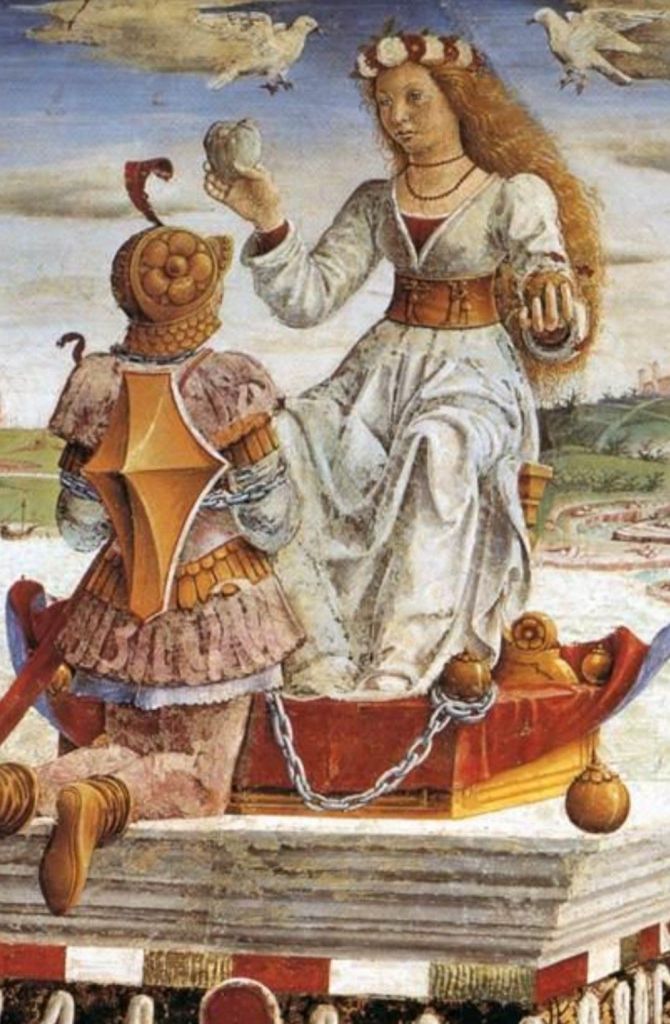
The tie between the two stories is about living lives, the inevitability of death, and the heart break of loss from death of those we love. The themes are viewed as a camera’s picture in one story and evolving events in the other. The tie between the stories is the loss of a mother who views a painting with her daughter, Georgia, by a 15th century painter, Francesco del Cossa. Georgia’s mother dies soon after seeing the painting with her daughter. The story of the painter’s life is part of its relevance. The painter’s talent is undervalued by his own standard just as Georgia seems undervalued by her 21st century belief about herself.
Georgia, like del Cossa, is tutored by an insightful and intelligent person (her mother) just as the artist is trained by a talented and aged painter of the 15th century. Georgia promises a great intellect just as del Cossa is eventually recognized as a great painter by his contemporaries.
“Triumph of Venus” by Francesco del Cossa.
There are many parallels one might draw in the two stories, but it is tiresome to contemplate what they are, and trying to ferret them out will make some reader/listeners quit this review, let alone the audiobook. Ali Smith is a good writer of interesting stories if one judges this audiobook as an example of her skill. However, to this reviewer, dissection of Smith’s intent spoils its entertainment value.
Laurel Snyder (American Author, Poet, writer of children’s books, and PBS commentator.)
“My Jasper June” is a beautifully rendered story of life by Laurel Snyder. Snyder shows different ways of coping with life’s broken parts. It takes place in Atlanta, Georgia, but it could be in Anywhere, America. It is a story of a 13-year-old girl, her friend, and her family. Every parent who has a teenage child will be entranced by Snyder’s tale.
Having lived long, older reader/listeners know every life has broken parts. We either recover from the broken parts or we lose our way.
Snyder’s novel of a family who loses a son from drowning may be at the extreme end of life’s broken parts, but every life is touched by loss and hardship.
Snyder shows how a mother, father, and daughter respond to a child’s loss in their family.
Snyder’s story explains a broken part in life is suffered individually. Being broken comes in many forms. It may be a death of a loved one, failure in work, failure as a mother-father-daughter-son, failure in intellect, failure in physical health, so on, and on. Every person is broken in their own way. Care for broken parts is often lost in a fog of grief and despair. That grief and despair only disappears with time, understanding, and action.
Snyder’s novel shows grief is ameliorated with acceptance and reworking of one’s perspective.
Snyder’s story is not just about a death in the family. There are many ways Snyder’s story resonates with its reader/listeners. The most significant is in ways of coping with broken parts of one’s life. Some run from problems, but as the boxer Joe Louis famously said, “You can run but you can’t hide.” Snyder shows healing from broken parts can only begin with being honest with yourself and those around you. Understand how you are broken and explain the broken parts to those who are important to you. Snyder shows with understanding of what is broken, plans can be made, and actions taken.
Snyder’s novel shows–only with honesty of explanation can one’s relationship with another be restored.
Laurel Snyder’s story is as interesting and satisfying in its end as in its beginning.
Dead authors may give understanding of life that offers a “…Tranquil Mind” but change in belief by renowned living authors explain why some feel they live in an age of anxiety.
Breaking Bread with the Dead (A Reader’s Guide to a Tranquil Mind.)
By: Alan Jacobs
Narrated by: P.J. Ochlan
Alan Jacobs (Author, distinguished professor of the humanities at Baylor University, considered a Christian conservative by the media.)
Alan Jacobs offers an example of why book’ reader/listeners are “Breaking Bread with the Dead”. A personal reason for reading/listening to books is to acquire understanding of an author’s opinion. Of course, perceptions may be incorrect, but a book writer’s intended meaning, at the very least, makes a reader/listener think. Jacobs gives many examples of what past authors made him think. He explains how and why dead writers are a “…Guide to a Tranquil Mind”.
In a short book, Jacobs notes knowledge of the past gives context and perspective to the present.
Dead authors add the dimension of a past that is either very like the present or very different. When a dead author’s beliefs are more like the present, it makes one think there may be something universal about their belief. At the least, a dead author’s beliefs help one understand the difference between the past and the present. Both circumstances offer what Jacobs suggests are a “…Guide to a Tranquil Mind”. Belief either remains the same or modern life makes past beliefs unique to their time.
Renowned dead authors, or for that matter, insightful living authors make one realize how much they do not know.
Dead authors may give understanding of life that offers a “…Tranquil Mind” but change in belief by renowned living authors explain why some feel they live in an age of anxiety. In either case, it pays to seek understanding from both dead and living writers.
Evan S. Connell (American Novelist, 1924-2o13., died at age 88.)
Evan Connell captures a woman’s middle-class life in the twentieth century. “Mrs. Bridges” is a story of a twentieth century woman whose life begins in the middle-class and rises to the upper middle-class. She marries, has three children (one boy and two girls) with a husband who becomes a highly successful lawyer. Her son is characterized as moderately intelligent with two sisters, one sister characterized as smart and haughty and another quiet and reserved. The story is set in middle America.
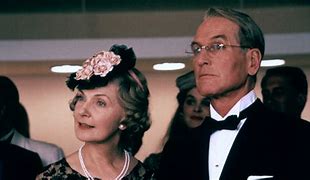
In 1959, “Mrs. Bridge” received the National Book Award in fiction. The novel became a moderately successful movie, “Mr. and Mrs. Bridge”, starring Paul Newman and Joanne Woodward.
“Mrs. Bridge” will resonate with many women’s and men’s aspiration in America. It is a reminder of what it is like to be an American in a world ruled by white men, i.e., not women or people of color. “Mrs. Bridge” is a wife slowly becoming aware of an evolving society that is far from the ideals of equality of opportunity outlined by the 1868′ 14th Amendment.
The Bridge’s smart and haughty daughter graduates from high school, chooses not to attend college, and decides to move from the Midwest to New York. She moves to Greenwich Village and finds a job as a manager’s assistant while living a bohemian life that mystifies her mother.
The son chooses to go to college and appears on his way to becoming an engineer with a fascination for measurement and construction. He seems to have a plan to achieve his father’s success. However, he rebels in a different and similar way to his sister by dating girls who do not reflect the staid relationship of his parents. On the one hand, the son strives to emulate his father, on the other, he rejects the privileges of wealthy upper-class existence in white America.
The youngest daughter takes a different route to adulthood. She is the quiet one who never challenges her mother or father.
She turns to religion. Ironically, she abandons her religious obsession, marries a plumber’s son who drops out of college to take over his uncle’s business with the ambition of becoming a financial success like his new wife’s father. That goal is unrevealed in Connell’s story, but he shows their marriage is rocky, presumably because of their societal upbringing. The husband unjustifiably strikes his wife. He apologizes but Connell infers the reason for their conflicts is because of the different economic circumstances in which they were raised. The Bridge’s young daughter is accustomed to having housework done by servants while the plumber’s son is self-reliant and an ambitious doer. The story infers they stay together but it is an untold exploration of their remaining lives.
Nearing the end of this family’s story, Connell illustrates the growing boredom in Mrs. Bridges’ life.
The children grow away from her. She feels a sense of loss of purpose in life. Housework is now entirely done by servants. The children no longer listen to her or seek her advice. Her husband is consumed by his work. No one seems to need or care about her. The only solace seems to be in wealthy women friends who are experiencing a similar ennui. One of these upper-class women commits suicide. Mrs. Bridges suggests to her husband that she should see a psychiatrist for her growing depression. Her husband suggests that is nonsense and the idea is dropped.
The life of the Bridges family is disrupted by WWII. The son chooses to leave the university and enlist in the Army. The implication is that life goes on for the family as it had before, but the experience of war is only reinforcing the dynamics of their family’s socialization.
Self-interest permeates human life. In a capitalist culture, self-interest is measured by wealth.
One suspects some who have lived this twentieth century life see themselves in Connell’s story of the Bridges family. In socialist culture, self-interest is measured by power. In a communist culture, self-interest is a combination of wealth and power as evidenced by Russia’s and China’s rule in the 21st century.
The value of Connell’s “Mrs. Bridge” is in its dissection of American society, and not just of its time but of today.
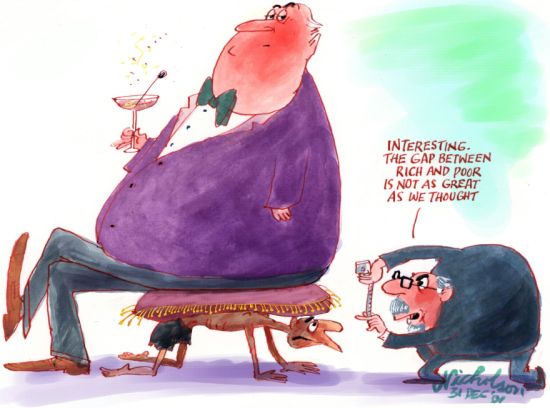
Its story implies American wealth should not be a measure of human value. The gap between rich and poor is a measure of how far America is from the intent of the Constitution’s statement “all men are created equal”. Connell’s story infers the statement in the American Constitution should have been “all people are created equal”, not just men. In being created equal, the 14th Amendment stipulates all citizens are to have equal rights in pursuit of life, liberty, and property.
Connell masterfully shows the strength and weakness of American society. Its strength lies in freedom to exploit human self-interest. Its weakness is in believing wealth is a measure of human value.
There must be no discrimination in society based on sex, race, religion, or ethnicity for equality of opportunity to evolve. That is aspirational in America, but whether equal opportunity can ever be achieved is problematic based on the nature of human beings.
Narrated by: Cherise Boothe, Karole Foreman, Myura Lucretia Taylor
Kaitlyn Greenidge (American novelist.)
Kaitlyn Greenidge’s “We Love You…” is an ironic tale about love and discrimination that blurs the line between science research, social truth, and exploitation. The story of Greenidge’s book does not cross the same line as the Tuskegee Experiments in 1932 and 1972 but it shows how it could happen. One may argue Greenidge defines the line to explain the ethical purpose of scientific research, but she also clearly illustrates how emotional entanglement influences human behavior which interferes with ethical purpose.
The Tuskegee Experiments were on 400 Black Americans who were purposely not treated for syphilis. Like test animals, these American patients were studied for the consequences of syphilis infection. None were given penicillin injections that could cure their infection.
“We Love You…” is somewhat difficult to follow because it goes back and forth in history with too many characters. If taken in order of history, the story begins with a white British anthropologist who is interested in studying “Negro” culture in the 1920s.
This well-educated white Anthropologist travels to a Black American community to observe the behavior of Black children being schooled by a Black teacher. The students object to the intrusive interruption by the anthropologist who asks questions and draws images of the children. The teacher asks the anthropologist to stop interviewing and making pencil drawings of the students. As a substitute for his interviews and drawings, the anthropologist asks the teacher to allow him to sketch her. In return, he would no long bother the students. She hesitatingly agrees. That agreement leads to increasingly intimate drawings of the teacher without her clothes. The teacher falls in love with the anthropologist while the anthropologist only sees her as a subject of study. The intimacy of the drawings alludes to the impropriety of the Tuskegee experiment.
The story jumps back to present time with the same research institute that the 1920’s anthropologist had joined. A Black family is employed by the institute to raise a chimpanzee and teach it to communicate by using signing like that used by the deaf.
One presumes the reason this particular Black family is chosen is because they use sign language to communicate with each other. Signing may be a more utilitarian and productive method for communication between chimpanzees and humans.
The father and mother of the family come to the institute for different reasons.
Though the father, Charlie, is a teacher, their income and housing will be better because housing is provided at no cost, and Charlie can teach at a local school. Improved income seems the primary motivation of the father while the mother is interested in the idea of caring for an additional child-like animal. Their two children are not happy about relocation to the institute. The repugnant nature of the story is that race, rather than communication with the simian world, might be the unstated purpose of the research.
“We Love You, Charlie Freeman” takes many twists and turns that diminish its impact on a listener.
One might argue the story is about how love grows between humans and animals and between humans and other humans. The story is also about the impropriety of scientific research that is not clearly spelled out to those who are part of the research and what use will be made of the results. Impropriety was introduced earlier with the anthropologist who visited the school to draw pictures of children. That study evolved into a study of the genitalia of a Black woman. The author alludes to love of the anthropologist and how it developed in the Black teacher as a one-sided obsession.
Greenidge’s story addresses three types of love. There is family love, human to animal love, and human to human love.
Loves similarities, differences, and causes for break-up are illustrated. A woman loves a man who does not love her but exploits what she has to offer. A woman loves a woman but moves on to love another woman just as many of both sexes do. A married couple falls out of love with their mate. A spouse chooses to love an idea more than a person.
To this listener, there are too many fragmentary ideas in Greenidge’s story that fail to move one to a singular appreciation of her creativity.
Louise Erdrich (American novelist and poet, member of the Chippewa Indians, a tribe of Ojibwe people.)
This is a review of a third novel of Louise Erdrich’s books. The three that are reviewed are about native American experience in the U.S.
Louise Erdrich who wrote “The Round House”, “The Night Watchman” and this book, “The Sentence”, grew up in Wahpeton, North Dakota. Erdrich’s parents, a Chippewa mother and German father, taught at the “Bureau of Indian Affairs” in Wahpeton. She is a member of the Turtle Mountain Band of Chippewa Indians. (Erdrich’s husband was a professor and writer who was the first director of “Native American Studies” at Dartmouth. He died at the age of 52.)
Erdrich begins “The Sentence” with a bizarre story of an addled brained addict, (the heroine of the story) who is convinced by her roommate to pick up a dead body from a friend’s house.
The addict agrees to do it in return for $26,000 lottery win that had recently been received by her friend. At first, one thinks the dead body is really just a pet, but it is actually a human that was once the boyfriend of the lottery winner. Further, we find this seems to have occurred on an Indian reservation which introduces an element of understandability because of the complication of reservation law versus America’s national government law.
The heroine rents a refrigerated van, picks up the body, and the next thing we find is she is arrested on a cocaine drug running charge. The corpse had bags of cocaine taped to its armpits. The heroine is convicted and sentenced by the federal government to a long prison sentence for breaking a federal law for drug running. The sentence is shortened from 60 years when her arresting reservation officer gets witnesses to recant their testimony. The former accused drug runner is released and marries the reservation lawman who arrested her for the alleged crime.
Finally, “The Sentence” begins to settle down to a somewhat normal life story. The now married couple adopts a young Indian girl who rebels against her mother’s care and attention. This seems a rather common case of mother/daughter relationships that either mends itself in maturity or remains ambivalent for the remainder of their lives.
The adopted daughter appears at her mother’s doorstep unannounced, with a baby carriage her mother presumes is loaded with some inane material items she brought with her.
What the mother finds is that it is a weeks old baby recently born from the daughter’s union with a man her mother has not met. The mother is thrilled to see her new grandson but asks too many questions about the father and disrupts the tentative truce between mother and daughter. The daughter withdraws to a bedroom, slams the door, and the mother realizes what she perceives to be her fault for asking about the baby’s father and his responsibilities.
However, the now grandmother is ecstatic about her new grandson and regrets having angered her daughter, presumably for fear of losing a future relationship with the baby.
Not too much new here from anyone who came from a broken home. Erdrich’s story begins to lag at this point because this seems like a common story of many American families. Then, Erdrich begins to refine her story.
Erdrich turns to events of America’s 21st century world and the story reclaims a listener’s interest. A bookstore in which the heroine works after her release from prison is in Minnesota, the home of George Floyd’s senseless murder by the Minneapolis police.
The heroine’s husband, as a former reservation police officer, offers a whiff of irony to the story. As a police officer, he had looked at crime on a scale of threat to others rather than transgression of a written law. He gauged his action in arrest based on a scale of threat to others rather than violation of the letter of law.
Erdrich’s story encompasses Covid19. It is becoming a clear and present danger to the characters in her story. Businesses are beginning to suffer from the reality of a worldwide lock down. Bookstores are identified as essential services, but customers are reluctant to visit because of fear of public contact. The government offers loans to essential businesses that may be forgiven if they choose to weather the growing pandemic.
Erdrich brings these events to the small world of one family. This family is every family with all the good and bad things that happen in life, but Erdrich implies bad things are more common in native American societies. The daughter is an alcoholic with an innocent baby born with an absent father. The daughter chooses to be in a pornographic movie to live a life she is able to afford. She expresses personal shame in a confession to her mother, a fact of her life of quiet desperation.
A layer of mysticism is added by the author that seems superfluous except that it is a reflection of native American’ belief in a spirit world.
The bookstore in which the heroine works is being haunted by the spirit of the woman who owned the bookstore, a woman that played an important role in the early life of the heroine. The haunting of the bookstore is related to the history of the deceased owner’s life. The bookstore owner lived a life dedicated to helping native Americans, believing she was born as an American Indian. Edrich recounts the discovery of a book by her husband that reveals a secret about the bookstore owner’s life. That secret becomes the focus of the story.
The storeowner’s spirit haunts the bookstore because of a book’s mysterious content.
The spirit will presumably continue to haunt the store as long as the book is missing. The heroine, without knowing the contents of the book, buries it in the hope that the storeowner’s spirit will leave the bookstore. Hiding the book doesn’t work. The storeowner continues to haunt the store and plans to possess the heroine’s body. The storeowner’s desire for possession of the heroine’s body is part of the mystery of the buried book.
The finale of Erdrich’s story is about life and death, love of family, reconciliation between mothers and daughters, and the fate of a storeowner’s spirit. The attraction of Edrich’s books is to know something more about native American culture. In a larger sense, “The Sentence” is about the broad meaning of poverty and discrimination in America and those who suffer from it. To appreciate much of what Erdrich offers in “The Sentence”, a listener needs to be patient.
Charles Dickens (British Author, 1812-1870, died at age 58.)Sir Jonathan Pryce (British Actor @ Age of 76)
“Oliver Twist” recreates the London of Dickens’ time with detail created by a genius of storytelling, observation, and wordsmithing.
Charles Dickens is considered by some to be the greatest novelist of the Victorian era. Though Dickens stories offer magnificent glimpses of the Victorian era, he is only one of a number of literary giants of his time. There are the Bronte sisters, George Eliot, Thomas Hardy and Rudyard Kipling. Though not having recently read Kipling, Charlotte Bronte’s “Jane Eyre” and George Eliot’s “The Mill on the Floss” recall visions of a past that are as large in imagination, revelation, and erudition as Dickens’ “Oliver Twist”.
What is interesting about audio books is that actors who narrate some of these great books add a dimension to their stories that are missed when read. “Oliver Twist” “Jane Eyre” and Elison’s “The Invisible Man” are three examples of how actors add an intimate dimension to great authors’ books.
A dimension of antisemitism slaps listeners in the face when Pryce says “The Jew” as Dickens’ primary appellation for a criminal named Fagin. Narration of Dicken’s story conjures an image of every nation’s tendency to identify minorities as the “other”, i.e., whomever is not one of “us”.
Pryce’s verbalization of “The Jew” raises remembrance of Hitler’s antisemitism, WWII’s holocaust, and more recently, the Pittsburgh synagogue shooting trial, its convicted perpetrator, and the repellent idea of racial and ethnic discrimination.
Listening to Pryce’s narration of Dicken’s description of Victorian London, a listener reminds oneself that the past is always present. Discrimination is as old as time. Diminishment, abuse, and women’s discrimination remain today. “Oliver Twist” is an example of a great writer who paints a spectacular picture of his time. The squaller of London, the hateful treatment of women, poverty’s existence, ethnic discrimination, and other failures of society are artfully and unforgettably illustrated in “Oliver Twist”.
Discrimination is an irradicable fact of life reinforced by great and forgettable writers.
This complicated story of lucky happenstance, evil doing, and rewarded goodness is artfully written by Dickens and beautifully rendered by Jonathan Price. Price gives weight to the horrible truth of historic antisemitism and how it insidiously permeates the human condition. This is not a condemnation of Dickens but a geniuses’ representation of a sad truth of life and the faults of human society.
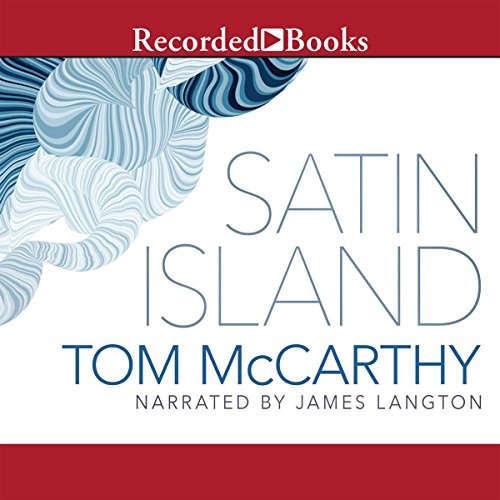
(Tom McCarthy, British Novelist, Nominated for the Booker Prize twice, One of which was for “Satin Island”.)
To this listener, “Satin Island” is an intellectual journey to nowhere. Obviously, others who determined McCarthy should be nominated for a Booker Prize for “Satin Island” disagree. Anthropology is the scientific study of human behavior, cultures, societies, and languages of the past.
Tom McCarthy seems to have sat at a desk and thought of an idea to write about, i.e., namely anthropology.
McCarthy’s main character is an anthropologist working for a fictional think tank that analyzes companies wishing to have some insight to an unknown future. His employer gives the anthropologist an assignment to write a paper that capsulizes the world’s future based on an understanding of the past and known present.
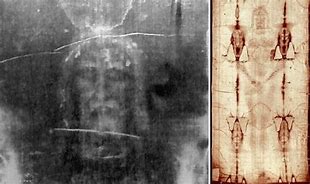
McCarthy’s story begins in Turin Italy with a brief explanation of the shroud of Turin which is alleged to have been wrapped around Jesus’s body after crucifixion.
The shroud could never have had the imprint of the remains of Jesus. The anthropologist notes it is proven fake because the shroud’s fabric is manufactured centuries after Christ’s crucifixion. The fake of the shroud is an inartful premonition to the course of the story.
The anthropologist’s assignment is a fool’s errand.
Whatever he writes in his report will be like the shroud of Turin. McCarthy tirelessly offers a series of vignettes to reinforce his message. A singular insight that one finds in McCarthy’s story is that anthropology is a science split into two disciplines. One is the acquisition of artifacts that tell an anthropologists’ interpretive story and two, anthropology is a search for written records and interviewed descendants that have first hand recollection of their ancestors’ societies. The first is clouded by interpretation. The second is clouded by understanding of language and descendants’ memories.
A recuring mystery in McCarthy’s story is of a parachutist that dies from a failed, presumably silk (like satin), parachute with nylon strings that were purposely cut.
The nylon strings holding the parachute are the threads of life’s history, like the fabric of the Shroud of Turin, and/or artifacts left for an anthropologist’s interpretation. McCarthy notes the cause of death may have been murder but it might have been suicide. Suspects are arrested. No one is convicted. The person who died is not suicidal. It becomes another mystery of the past.
The anthropologist realizes the report requested by his employer can be based on whatever he chooses to write. He begins to believe his report can be written and widely believed like the story of the shroud of Turin.
The story ends with the death of the owner who hired the anthropologist. The irony of the story is that the anthropologist is widely acclaimed for his final report meant to tell the future of life when he knows his story is like the shroud of Turin.
To this listener, there is too much intellectualism and not enough story. That may be why it did not win the Booker Prize. That is reason enough to me.
Eliot Ackerman (Author, former Marine Corps Special Operations Team Leader who served in Afghanistan.)
“Green on Blue” is about America’s military experience in Afghanistan. Like America’s experience in Vietnam and Iraq, knowing one’s enemy is shown to be difficult, at the least, and impossible at the most. Whether the American military is “Green on Blue” or not, it alludes to the fog of war and complications of knowing the color of your enemy.
Ackerman gives a first-hand account of what it was like to serve as a field commander in America’s intervention in Afghanistan. As a Marine Corps Special Operations team leader in Afghanistan, he knows the subject of which he writes.
Ackerman’s novel is a fiction but bells truth and understanding of America’ intervention in Afghanistan.
Just as Ackerman explains the complexity, folly, and error of America’s good intention, he clearly criticizes American leadership’s decision to invade Afghanistan. America’s intent is to dismantle al-Qaeda leadership and possibly capture bin-Laden. It seems the mistake is not about crushing al-Qaeda but in not understanding the culture in which al-Qaeda received support from Afghanistan’s Taliban.
Ackerman creates a story of an older brother that is fatally injured by a bomb blast and is taken to a hospital for treatment.
This is a frontline hospital in Afghanistan like that in Ackerman’s story.
The younger sibling, who had been cared for, and protected by his older brother, pleads with the hospital to save him. To be saved, because the injuries are severe, requires expensive long-term care which his younger brother cannot pay. A Pashtun visitor at the hospital offers to pay for the older brother’s treatment in return for the younger brother’s recruitment into his “army”. The younger brother appeals to a person who appears to be Pashtun, the same culture of the two brothers.
This Pashtun is actually a leader of an Afghanistan military group.
The Pashtun military leader assures the younger brother of his financial support for the older brother to receive the required treatment. The younger brother agrees. The younger brother’s name is Azize. As Ackerman’s story continues, one finds leaders in Afghanistan use America’s intervention only to reinforce their self-interest. Of course, self-interest is a universal human characteristic, but in war, its dimension becomes life and death.
As one continues listening to Ackerman’s book, one doubts the older brother is alive or that any support is provided by the recruitment leader. The recruiter simply uses the hospital as a tool to acquire and retain recruits from relatives grieving for lost or injured family members. The end of Ackerman’s story tells the tale.
This is a harsh story that reminds America of how risky and unwise it is to believe America knows best for what another culture has grown to believe.
Soldiers like Ackerman remind us of how hard it is to help other countries be the best they can be. It requires more than bravery. It requires understanding of another’s culture and a willingness to let go of one’s own preconceived notions.
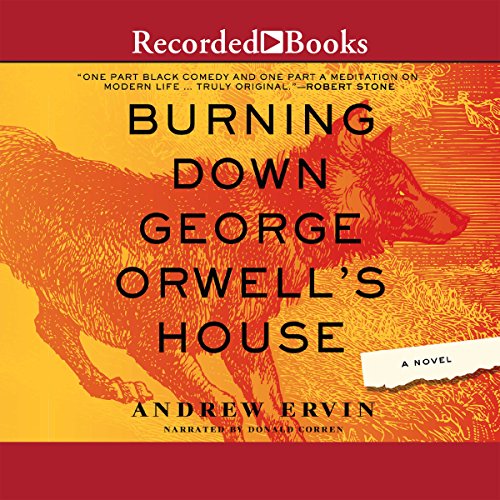
“Burning Down George Orwell’s House” seems a reification of John Ford’s “The Sports Writer”. Ervin’s main character, Ray Welter, is like Ford’s Frank Bascombe, but Welter is an alcoholic with a particular taste for aged whiskey.
Both Welter and Bascombe tend to look at women as sex objects, but Ervin characterizes women as equally capable of treating men as sex objects.
By the end of Andrew Ervin’s story, one realizes “Burning Down…” is not just about a man’s view of the world but about human nature and cultural difference. Ervin gives listeners a glimpse of Emily Fridlund’s “History of Wolves” by creating self-actualized women, one an adult, the other a teenager.
The island of Jura, aside from the location of George Orwell’s house, is known for its natural beauty, soaring mountains, and seasoned whiskey. Welter is an advertising executive with an obsession with Orwell who wrote about “newspeak” (a form of persuasion like advertising) and its influence in the world.
The story of culture is woven into “Burning Down George Orwell’s House” by Welter’s decision to leave America and spend several months on a Scottish Island where Orwell wrote “1984”.
Welter is at a crossroads in life. He has been a successful advertising executive but is soon to be divorced by his wife. He is unsure of what to do with his life. He chooses to escape to Jura to better understand the meaning of Orwell’s “1984” but finds a culture that is uniquely different from the life he lived in Chicago.
Welter chooses to let himself be seduced by a 17-year-old islander who is being raised by a violent father who gives her a black eye. The father tries to murder Welter. The young girl is a talented, head strong, graphic artist who is at the beginning of her adult life. She is unsure of what she should do with her life which seems entirely plausible for a 17-year-old. She is torn by her desire to be more than a young woman living her whole life on Jura or one who leaves Jura to see what else life has to offer.
There are many threads of life and culture in Jura that are similar but different than the American life Welter lived in Chicago. There is an underlying belief of Jura’s citizens that their culture is being destroyed by visiting foreigners and the ocean’s rising tides.
The Aisle of Jura’s culture is threatened by both foreign influence and its disappearance from the world by a rising sea.
Greta Thunberg – Swedish Environmental Activist who also happens to be a teenager.
Her father’s attempts to murder Welter based on two concerns. The father’s motive is a mixture of rage over the presumed seduction of his daughter and a wish to have his daughter remain in Jura for as long as he is alive. Jura’s culture is quite different from America’s. Welter decides to leave Jura but arranges for a full scholarship for the Jura teenager at his former wife’s university in Chicago.
Welter’s former employer plans to re-start an advertising business specializing in environmental preservation and wishes Welter to become a limited partner to manage the vaguely defined new business.
There are several transgressions and ironies that a listener will choose from Ervin’s story. The teenager decides to stay in Jura and not travel to Chicago despite her father’s bizarre physical abuse and murderous proclivity. Is there any justification for a 30- or 40-year-old man from Chicago to have sex with a 17-year-old girl? (Welter’s age is undisclosed.) Can Orwell’s “newspeak” help an advertising company make money while saving the environment? Are foreigners’ visits to other cultures a benefit or detriment to indigenous cultures? Is it in the best interest of humanity for all cultures to become less indigenous and more acculturated?
This is a well written story that resonates with life as it is rather than how life should be. Alcoholism and wanton sexual relations are two of many sources of human weakness and conflict in society; neither are likely to disappear, regardless of whether cultures remain distinct or unified.



























































 REVIEWS AND VIEWS OF LIFE