MEN

Audio-book Review
By Chet Yarbrough

(Blog:awalkingdelight)
Website: chetyarbrough.blog

The Sports Writer
By Richard Ford
Narrated by Richard Poe

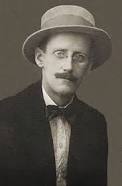
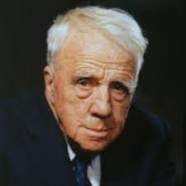
JOHN FORD (AMERICAN AUTHOR)

Selecting books from book lists like Random House’s Modern Library is not a full proof method for making good choices.  The decision to listen to Richard Ford's “The Sportswriter” came from one of those lists.  "The Sportswriter" deserves its place on the list because it offers societal insight.
The initial impression of "The Sportswriter" is that it is a story about wandering through life.  But as it progresses, the listener begins to realize that Richard Ford is writing about men and how some view life.
The main character is a guy's guy because he has the ability to charm women into thinking he is the man of their dreams.  He does not convince every woman of his commitment and interest but he manages to touch all the bases before he is called out.     
This is not a story that makes one proud to be a man but it offers insight to why the cliché "men are from Mars" has some truth. Ford's main character is a guy's guy named Frank Bascombe.  He is a traveling sports writer and a divorcée of his own making, a fool that fails to understand what is important in life.  After his marriage break up, he is cast adrift to find the next best thing which never turns into anything important.
Relationships for Bascombe become momentary escapes from real life, real life where good and bad things happen.  Real life for Bascombe is romance and break up without commitment.  What he does not understand is commitment helps humans work through the bad things in life to get to the next good.  Women seem to understand that better than men.  Women may wonder why men think seduction skill is the key to paradise.  Some would say it is 3000 years of genetic inheritance and experience.  Of course, that is a Martian's perception of reality.
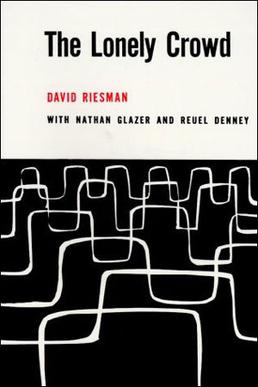
The irony of a guy's guy skill to seduce is that it leads to a lonely and empty life. David Riesman characterized this phenomena as people becoming "other directed" rather than "inner directed"; i.e. looking to society to determine who you are; rather than looking within oneself. 
 
In Ford's story, “The Sportswriter”, Bascombe drifts through life from relationship to relationship to nowhere.  He never comes to grips with what is wrong with his life.  He drifts to Retirementville, Florida to think about the next best thing.  That is how the story ends.  It is a rather depressing exploration of how vacuous life can be.
This is a book that gives a concrete explanation of what some men are looking for in life.
When listening to The Sportswriter, you may find someone you know; hopefully not you.

HUMAN FRAGILITY

Though cultures around the world are different, honesty and respect level cultural differences, and reveal how human justice is universal.

Audio-book Review
By Chet Yarbrough

(Blog:awalkingdelight)
Website: chetyarbrough.blog

A Passage to India
By E. M. Forster

Narrated by Sam Dastor

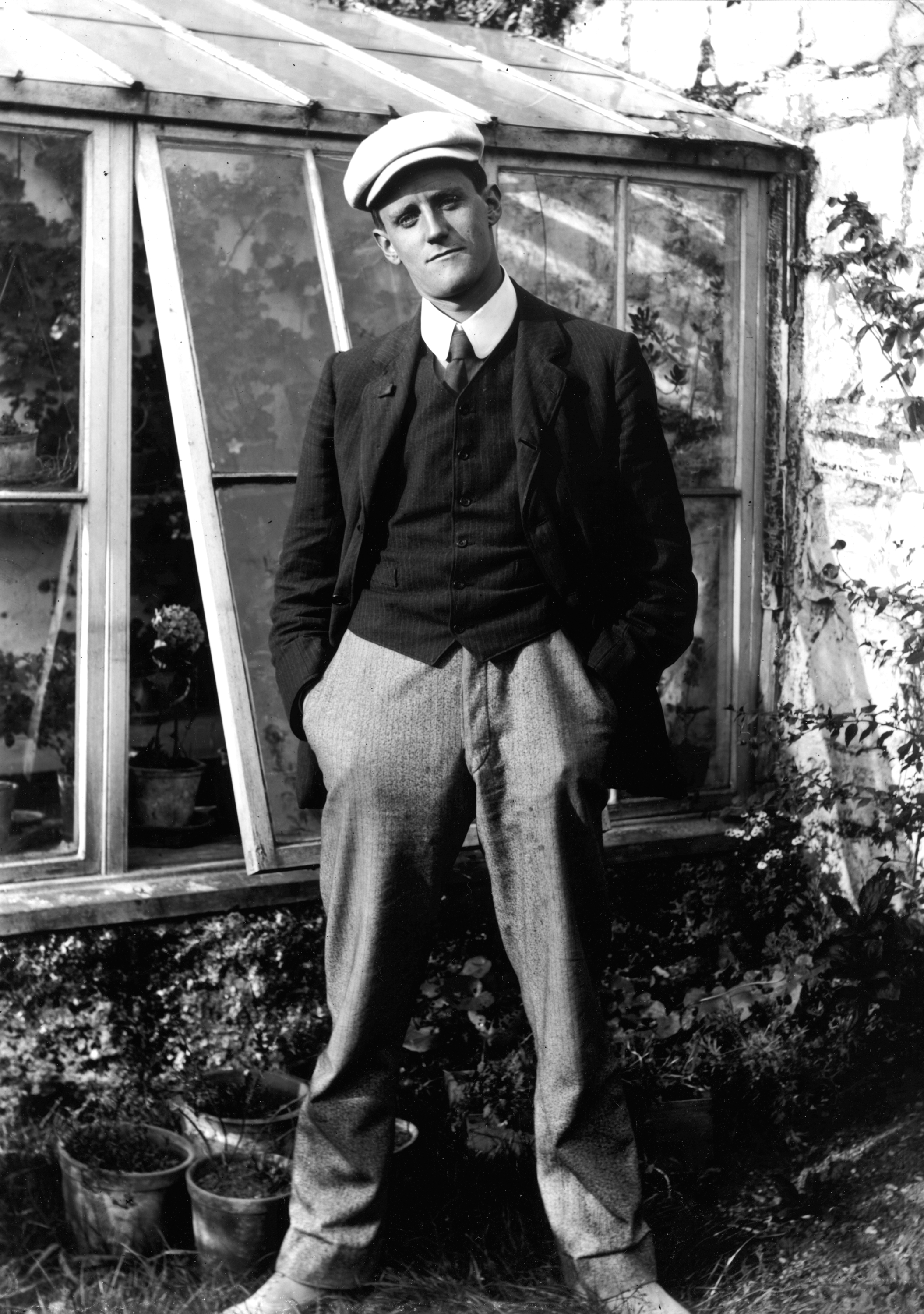
E. M. FORSTER (ENGLISH NOVELIST 1879-1970)

Considered by some to be one of the best novels ever written, “A Passage to India” exposes human fragility.  The story is beautifully narrated by Sam Dastor but the poetry of E. M. Forster’s writing shines best in its reading.

Published in 1924, “A Passage to India” is a primer on colonialism, ethnocentrism, and discrimination. 

Forster shows human nature is immutable and omnipresent, a force of good and evil.

Forster introduces Dr. Aziz, a Muslim Indian physician, Cyril Fielding, a British school master who teaches at a college for Indians, Mrs. Moore, the mother of a British magistrate governing India, and Adela Quested, a school teacher considering engagement to the British magistrate.  There are many more characters, but these four characters exemplify the best and worst of being human.  They carry the principle thread of life and what it means to be human.

History is replete with stories of nations, governments, leaders, and corporations that believe they know best for those they dominate.  Because self-interest (a lauded and reviled quality of human beings) pervades society, it distorts nations’, governments’, and corporations’ actions and decisions.

In the early the 20th century, the British govern India’s people by imposing their own vision of what is best for India.  The British leadership is convinced that their culture is superior to India’s; not unlike America’s belief that Anglo/American culture is superior to American Indian culture in centuries past and present.

When Adela Quested and Mrs. Moore ask to meet local Indians, a British city collector arranges a party for newcomers to India to meet locals.

The party is depicted as a crashing bore by British wives who gather on one side of the dance floor, demean Indian dress, habit, and intelligence.  On the other side of the floor, Indian wives wish they were somewhere else.  The British city collector mingles with Indian leaders as a duty of office. The city collector feels he offers high recognition; first, by inviting Indian guests and then by crossing the floor to say hello.

Ethnocentrism is clearly pictured in Forster’s book. The newcomers to India, Mrs. Moore and Ms. Quested, feel they are not seeing the real India at the party. They suggest a visit to an Indian household. 

Cyril Fielding, an admirer of Indian culture, suggests an outing be arranged for Mrs. Moore, Ms. Quested, and Dr. Aziz.  Fielding offers the idea of a visit to ancient caves outside of town. 

Arrangements are made for the next day.  In exploring the caves, Ms. Quested and Dr. Aziz are separated from Mrs. Moore.  Ms. Quested enters a cave by herself; she feints and thinks she has been assaulted.  Dr. Aziz is arrested. 

In the course of a trial for the alleged assault, discrimination is on display.  Ms. Quested is faced with great pressure from her British compatriots to verify details of the assault. She realizes she has made a false accusation and recants. Dr. Aziz is vindicated.

The ugliness of colonialism (cultural domination), ethnocentrism, and discrimination is exemplified in Forster’s beautifully crafted story.

Thankfully, the characters of Mr. Fielding, Mrs. Moore, and Ms. Quested give a sliver of hope for mankind’s redemption, a hope for cultural respect and truth.  Though cultures around the world are different, honesty and respect level cultural differences, and reveal how human justice is universal.

BLINK OF THE EYE

Audio-book Review

By Chet Yarbrough

(Blog:awalkingdelight)

Website: chetyarbrough.blog

The Overstory

THE OVERSTORY

By Richard Powers

Narrated by Suzanne Toren

RICHARD POWERS (AUTHOR, AMERICAN PROFESSOR OF ENGLISH)

RICHARD POWERS (AUTHOR, AMERICAN PROFESSOR OF ENGLISH)

Humanity’s years of life are but a blink of an eye.  Richard Powers, like Cervantes’ Don Quixote, tilts at a windmill that neither generates power, grinds corn, or pumps water.

You love Powers way with words but come away from “The Overstory” feeling like Quixote’s relatives–mourning his loss of sanity but rejoicing in his belief of love and life.

Humans think themselves the center of the universe.  To we puny creatures, no life is more important than human life.  Powers argues otherwise.

Humans are not the center of the universe.  Humans are part of an ecosystem; a system millions of years older.  A conclusion drawn by “The Overstory” is that the earth’s ecosystem will live millions of years after humans are gone.

TREE HUGGER

Powers tells a story that offers slim hope for humanity.  A congregation of misfits grow to understand the frailty of humanity and its essential need to support nature.  “The Overstory” begins in seemingly random stories of disparate characters who become part of a group of revolutionaries.  In some parts of the country, they are called “tree huggers”.

Powers forcefully develops the argument that trees are the foundation and future of life.  Every tree tells natures’ story of birth, life, death, and rebirth.  Every character in Powers’ story either supports forest preservation through protest or example.

TREE OF LIFE

Powers’ story is about the preservation of all life.

In Power’s story, a protest results in an accidental death.  It is a story of a husband and wife who symbolize the importance of a singular tree that cannot speak in a language that people can understand.

ECO-TERRORIST INCIDENT IN CALIFORNIA 2006

ECO-TERRORIST INCIDENT IN CALIFORNIA 2006

The protest is by a disparate group of eco-terrorists who sabotage a lumber harvesting company’s property.  One of the rebels dies from a firebomb meant to stop the harvest.  The consequence is the death of one, and the guilt carried by surviving rebels.  Those who survive, get on with their lives.  Many years after the incident, two of the participants are caught.  One chooses to implicate another to receive a lighter (7 year) sentence.  The other is sentenced to two seventy-year life sentences.

Powers’ symbolic example of human ecological ignorance is a highly successful corporate lawyer who has a stroke and cannot communicate with his wife.  He deeply loves his wife, but she insists on being free of any ownership by another, whether from love or physical possession.

The lawyer reminds one of trees that live but cannot communicate with humans.  His wife chooses to stay with him in his tree-like existence and begins to realize how he sees and understands without being able to clearly communicate.  She is free and begins to comprehend what freedom means when she looks out the window and interprets what her husband sees.

If there is revelation in Power’s story, it is not human centered.  The only slender hope Powers offers is for the language of trees to be understood by humanity.  The disparaging term “tree huggers” implies there is no hope.

In travels around the world, one sees our world in crises. Indigenous Chinese drink bottled water. An India’ guide notes his country is on the brink of ecological catastrophe. Why worry–our American President says global warming is a hoax.   It seems unlikely the world will wake up before it is too late.

THE LANGUAGE OF TREES

THE LANGUAGE OF TREES

Trees may have a language, but technology is unlikely to provide any translation that humanity will accept.  One hopes Powers’ imaginative story is a Cervantes’ tale;  not a prophecy.

BUNGLING ASSASSINS


Audio-book Review
By Chet Yarbrough

(Blog:awalkingdelight)
Website: chetyarbrough.blog

The Secret Agent, A Simple Tale the secret agent

Written by: Joseph Conrad

Narrated by: David Horovitch


JOSEPTH CONRAD (ENGLISH AUTHOR, 1857-1924)

TED KAZYNSKI (UNA-BOMBER, MATHEMATICIAN EDUCATED AT HARVARD AND UNIVERSITY OF MICHIGAN, SERVING LIFE SENTENCE WITHOUT PAROLE)

The uni-bomber, Ted Kaczynski is said to have read The Secret Agent as a coda for his decision to murder and maim innocents. Kaczynski’s craziness and the atrocity of 9/11 are most often referred to in modern reviews of The Secret Agent.

The Secret Agent is about a middle-aged, over weight secret service agent named Adolph Verloc.  Verloc lives in England and is a spy for an un-named country.  Verloc is called into his employer country’s Embassy to tell him that he is going to be fired unless he provides some actionable service for his pay.  Verloc is upset with the news because he is dependent on the income received from the foreign country.

Verloc lives with his wife, mother-in-law, and brother-in-law; none of which know that he is a spy.  The brother-in-law is mentally challenged but idolizes Verloc.  Despite Verloc’s ownership of a small business, his family depends on his income as a spy.  Verloc is a cypher, a character that must mean more than he seems.  He seems less than smart.  He is selfish.  He cares for others but only in proportion to what they can do for him.  He has infiltrated an anarchist organization as a principal officer but seems frozen in place.  As the story progresses, Conrad never dispels the feeling that this character is too dumb to be a spy.

TED KAZYNSKI (A QUINTISENTIAL NIHILIST)
TED KAZYNSKI (A QUINTESSENTIAL NIHILIST)

The anarchist organization members are made up of nihilistic agents; in particular, a con man named Ossipon and a bomb maker called The Professor.  Verloc asks The Professor to make a bomb for him based on a plan suggested by the Embassy that Verloc visited earlier.  The plan is to blow up the Greenwich Observatory near London.  Verloc chooses to use his mentally challenged brother-in-law to carry the bomb.  Once again a reader/listener is confronted with the feeling that Verloc is too dumb to be a spy.


What is to be made of re-publication of and public interest in The Secret Agent?  After all, it was published over 100 years ago.  Is it a satire that reveals the absurdity of secret service organizations?  Is it a primer for terrorist wannabes?  Is it a rejection of capitalism?  Is it about the vacuity of me-ism (life is all about me)?  Does it reveal the secrets of a terrorist’s philosophy?  Is it about the aftermath of a terrorist event?  It seems the book is partly about all of the above.

Trump-Putin summit in Helsinki
U.S. President Donald Trump and Russian President Vladimir Putin shake hands as they hold a joint news conference after their meeting in Helsinki, Finland, July 16, 2018. REUTERS/Leonhard Foeger

It’s relevance today reminds one of the poisoning in 2018 of a defecting Russian spy and his daughter in London.  Sergei Skirpal and his daughter are poisoned by a Novichok nerve agent in their home.  The bottle in which the Novichok is stored was discarded and picked up by two innocent bystanders who think it is a perfume bottle.  Dawn Sturgis, a 45 year old woman, dies in the hospital.

Putin denies ordering the poisoning and suggests the evidence for his denial is that the bunglers who handled the poisoning could not have worked for the Russian spy agency because they are professionals.

The Secret Agent is only marginally interesting because of Horovitch’s narration.  However, in light of Putin’s 2018 denial and the murder of Adnan Khashoggi, foreign agent’ bungling is more than an ironic joke.

PRESIDENT TRUMP AND THE CROWN PRINCE OF SAUDI ARABIA
PRESIDENT TRUMP AND THE CROWN PRINCE OF SAUDI ARABIA (MEETING TO DISCUSS THE MURDER OF ADNAN KHASHOGGI IN 2018)

AMERICA

Audio-book Review
By Chet Yarbrough

(Blog:awalkingdelight)
Website: chetyarbrough.blog

The Underground RailroadTHE UNDERGROUND RAILROAD

By: Colson Whitehead

Narrated by: Bahni Turpin

COLSON WHITEHEAD (AMERICAN AUTHOR)

COLSON WHITEHEAD (AMERICAN AUTHOR)

The story of Colson’s Cora shows how social injustice spreads and how it can only be cured by truth and belief in human equality. Whitehead describes Cora as an abandoned ten-year-old black slave.  She is abandoned by her mother who chooses to escape a Georgia slave plantation.  Cora’s mother is never recaptured and her legacy haunts her slave master, as well as the daughter she left behind.  It is presumed Cora’s mother escapes with the aid of “The Underground Railroad”.  Whitehead’s story suggests otherwise.

It seems unreal to believe America treated human beings as property in the ninetieth century.

Colson Whitehead’s story of “The Underground Railroad” shows how ingrained and ugly discrimination is, and how modern belief in ethnic or moral superiority continues to infect America. Another “I can’t breath” murder in Minnesota shows how deep the infection remains.

The existence of “The Underground Railroad” is a euphemistic symbol of a network of abolitionists that secretly aided slaves in escaping their bondage.  What Whitehead shows is that “The Underground Railroad” is a “real thing” (a coalition of Americans) created by Americans that abhorred the institution of slavery.

underground railroad

“The Underground Railroad” is a real thing built by Americans that abhorred the institution of slavery.

At the plantation, Cora is left a small patch of ground that was cultivated by her mother.  Cora’s protection of that vegetable patch, and what she endures reflect how tough Whitehead makes this extraordinary character.  A black overseer builds a dog house on Cora’s plot.  She takes a hand axe and destroys it in the face of a man who could crush her with his fist.  Whitehead tells a story of Cora being raped by two men as soon as she reaches puberty.  The story is told as though it is a “rite of passage” in an environment too evil to comprehend.

map of the underground railroad routes

Map of the Underground Railroad Routes

RULE OF LAW

If you are a slave, there is no penalty for rape or abuse in the mid-nineteenth century

Whitehead describes some of the laws created on slave plantations.  There is no penalty for rape or abuse of a slave whether it comes from owners or fellow slaves.  Life’s meaning to a slave owner is what a slave can offer in labor, blind obedience, or monetary value.  Slaves are property to be used, abused, or disposed of at the will of their owners.

Whitehead’s depiction of slave life in ninetieth century America is appalling. Cora escapes the Georgia plantation but at the cost of two other slave’s brutal murder.  Cora experiences the terror and hope of liberation by being recaptured three times, being victimized by South Carolinian medical practitioners, North Carolinian racists, and Indiana supremacists.

BLACK SLAVES LYNCHED IN AMERICA

BLACK SLAVES LYNCHED IN AMERICA IN 1882

Whitehead writes of an apocryphally designated “Freedom Trail” in North Carolina where blacks are hung on a byway as a reaction to slave insurrection.  (There is a designated “Freedom Trail” in Boston but it represents the American Revolution.)  There are credible reports of numerous black slaves hung from trees alongside roads in the south.  Great fear among whites is created in the mid-1800’s because of the Turner Rebellion, and John Brown’s raid in Virginia.

BLACK SLAVE OVERSEER

BLACK SLAVE OVERSEER

Whitehead also exposes the perfidy of white masters, slave catchers, and black overseers who treat slaves as property and supervise the capture and murder of escaped slaves.  Ridgeway is a slave catcher that captures Cora with the help of his obedient and worshiping black companion.

Where is America now?  Have 242 years of history changed America’s penchant for overt and covert violence against those who appear different?  South Carolina’s Charlottesville’ KKK rally and George Floyd’s murder suggests not.

BUSINESS IN AMERICA

Audio-book Review
By Chet Yarbrough

(Blog:awalkingdelight)
Website: chetyarbrough.blog

The Jungle

By: Upton Sinclair

Narrated by Casey Affleck

UPTON SINCLAIR, JR. (1878-1968, WINNER OF THE PULITZER PRIZE FOR FICTION)

UPTON SINCLAIR, JR. (1878-1968, WINNER OF THE PULITZER PRIZE FOR FICTION)

It seems appropriate to revisit Sinclair’s book in light of the current administration in Washington D.C.

In the era of Trump, it is not meat packing but the coal industry that needs help. Trump’s pandering to the American coal miner offers air without oxygen to an industry that is dying.

Private industry and the American government need to step in and offer a way out for coal industry’ laborers. The Trump administration undervalues American labor by presuming laborers can only be cogs in a machine rather than complete human beings.

Instead of insisting on continuing an industry destined to fail, private industry and government should be offering living-wage transition, and education for new jobs; i.e. jobs that look to a future rather than a past.

Sinclair exposes the dark side of poverty and immigration in the United States.  It reminds one of Charles Dickens’ stories of child labor in London but does not offer much warmth or balance.  Sinclair’s story offers no respite from utter degradation.  There is no respite for the reader to believe there is any redemption for being poor in Chicago in the early 1900s.

“The Jungle” is a grim tale written by Upton Sinclair about the meat-packing industry in early 20th century America.

MEAT PACKING INSPECTORS (1900, STOCKYARDS, CHICAGO)

Lessons of “The Jungle” are reminders of the limits of unregulated capitalism, industry’ greed, and government neglect.  Sinclair attacks the meat-packing industry of the 1900’s. 

Descriptions are given of spoiled meat ground into sausages; loaded with chemicals for appearance and smell, with too much production to be adequately inspected by too few inspectors. Employees lose limbs and lives in accidents; with corporate lawyers preparing to swindle the uneducated with unfair financial settlements.  Wages are too low to offer enough money for shelter and food; let alone any savings, to break the cycle of poverty.  Promotion is limited to those who are willing to compromise their morality by feeding a corrupt system that thrives on human exploitation.

Herbert Hoover is the 31st President of the U. S. when the meat packing industry is at its worst. Like Herbert Hoover, Trump seems to think the strong survive and the poor deserve their fate.

To some, this is the same as today’s stories of the coal industry.

Don Blankenship (Former CEO of the 6th largest coal company in the U.S., Massey Energy)

Convicted on a misdemeanor charge of conspiring to willfully violate mine safety and health standards in 2015. Sentenced to 1 year in prison and fined $250,000.

HOMELESS

Images of poverty and what it leads to are still seen in American cities; i.e. people living on the street, begging for a dollar to eat; some drinking the dollar away at a local tavern because it blunts the pain of being poor and offers a haven from a cold winter day. Young people, some children, turning tricks to survive; selling their body because low paying jobs of high volume/low price conglomerates do not pay enough for rent and food.

Hearing of the meat industry–its lax government oversight, greedy corporate owners, and corrupt politicians deeply offends American ideals.  Grinding poverty changes a family of ambitious immigrants into cogs in a meat butchering machine that breaks spirits and turns good people into bums and latent criminals.

In Dickens novels, there are some remnants of human joy; even in impoverished London.  In Sinclair, the only glimmer of light is small-scale concern for fellow human beings.  The early days of the union movement offer some hope.  However, even Sinclair’s positive sentiments are corrupted by politics.  Sinclair idealizes socialism and touches on early communism.

America still offers the best known vehicle for freedom in a regulated democracy.

Since 1789, America’s relationship to immigrants has been a work in progress.

The United States has a growing need for younger workers; not to the extent of countries like Japan, but after 2020 it is increasingly important.

America needs more youth to re-balance its economic growth.

The influx of immigrants generated much of America’s success in the industrial age. Immigrants offer the same opportunity for America in the tech age.

To some immigrants, the avenue out of poverty is crime and immorality, but that has always been true in America’s history. That is why American democracy is founded on rule-of-law. Human nature does not change.

The life cycle for an honest immigrant is grim; arriving poor; staying poor, and dying.  American Presidents who only focus on the business of business fail to understand or care about the trials of the poor, the newly arrived immigrant, or the social condition of impoverished communities.

Every country in the world benefits and suffers from the nature of man and the effects of urbanization; none offer Eden.  America remains a land of opportunity, but to close our doors to those who want to improve their lives with freedom and honest work is an unconscionable mistake.  Demographics are destiny. America’s and many post-industrial economy’s populations need help.

Modern America is not quite so dark but inequality of opportunity still plagues capitalism with wealth, greed, and political corruption hiding the dire condition of the poor.

As long as the poor remain hidden; the rich and middle class will avert their eyes, mutter “get a job”, and think the poor get what they deserve.

America is Constitutionally responsible for the welfare of its citizens.

Those who think the business of government is only business are incorrect. Business is a tool to use in forming a more perfect union; governing with justice, supporting domestic tranquility, providing for a common defense, and promoting the general welfare.

INCEST

Audio-book Review
By Chet Yarbrough

(Blog:awalkingdelight)
Website: chetyarbrough.blog

My Absolute Darling

MY ABSOLUTE DARLING

Written by: Gabriel Tallent

Narration by:  Alex McKenna

GABRIEL TALLENT (AUTHOR)

“My Absolute Darling” is a debut novel for Gabriel Tallent.  Tallent’s first book is a subject that shocks the senses.  It reminds one of Nabokov’s “Lolita” in its insight to child abuse.  However, it adds the reprehensible dimension of incest.  Though Tallent is less lyrical than Nabokov, the disgust a listener feels as he processes the story is equivalent.

lolita
Both Tallent and Nabokov identify men of subsumed intelligence that rationalize sexual perversion.

Both Tallent and Nabokov identify men of subsumed intelligence that rationalize sexual perversion.  Martin is father to a young girl who lost his wife.  The girl is named Julia but is generally called Turtle.  Turtle hides in a protective shell manufactured by her father.  The shell protects but also isolates her from the world.  Her view is her father’s view.  Her seduction is based on familial trust that is brutally and disgustingly enlisted by her father.

Martin believes the world is a wicked and unforgiving place. He raises his child with a survivalist’s view of life.  To Martin, the earth is doomed to extinction and its demise is inevitable.  The cause is ignorant mankind.  No one can be trusted. You can only rely on yourself and your immediate family.  Knowledge of self-protection, the use of guns, knives, and nature to survive are daily lessons for Turtle who is trained by her father and grandfather.

SURVIVALIST
Knowledge of self-protection, the use of guns, knives, and nature to survive are daily lessons for Turtle who is trained by her father and grandfather.

Martin’s view of the world is both misogynistic and misanthropic.  He indoctrinates his daughter into his bizarre world by demeaning her sex, satisfying his lust, and distorting familial love.  To Turtle, Martin is her world until it is not.  Turtle’s view begins to change as she experiences life outside of her shell.

Many listeners will be appalled by Tallent’s story just as they were with Nabokov.  One is compelled to put it down but drawn by Tallent’s skill in explaining how incest is a part of the human condition.

A Little LifeTallent’s ending is at once compelling and disappointing.  It compels with its drama but disappoints in its resolution.  The disappointment is in the real-world complexity of stopping parental abuse. 

Can anyone explain how incest and other forms of child abuse can be stopped?  Tallent explains how incest occurs, just as Nabokov and Yanagihara show how pedophilia infects humanity.  None of these fine authors offer resolution.


FEMININE MYSTIC VS. MALE EGOISM

Audio-book Review
By Chet Yarbrough

(Blog:awalkingdelight)
Website: chetyarbrough.blog

Purity

Written by: Jonathan Franzen

Narration by:  Jenna Lamia, Dylan Baker, Robert Petkoff

JONATHAN FRANZEN (NOVELIST, WROTE THE CORRECTIONS AND FREEDOM-WINNER OF THE NATIONAL BOOK AWARD 2001)

JONATHAN FRANZEN (NOVELIST, WROTE THE CORRECTIONS AND FREEDOM-WINNER OF THE NATIONAL BOOK AWARD 2001)

Jonathan Franzen’s new book, “Purity”, mixes feminine mystique and male egoism with a wooden spoon.  Franzen interestingly uses the image of a wooden spoon stirring people’s minds and motives. 

Like the 19th century custom of awarding losers of a competition a wooden spoon, either feminine mystique or male egoism will receive the award at the end of Franzen’s book. 

wooden spoon award
FLIRTATION

Purity works for a telemarketing company for an unlivable wage.  She struggles to make ends meet.  She flirts with her employer who is married and uses her sexuality as a tool to get ahead; not to the point of infidelity, but near the edge. 

Purity, Franzen’s main character, is a personification of the feminine mystique.  She is in her early twenties, graduates from college with a $130,000 debt, and struggles to find a job that allows her to live a decent independent life.  Purity loves her mother deeply but is smothered by her attention.  Purity rents a room in a house with a struggling married couple, two tenants, and an adopted boy.  Purity works for a telemarketing company for an unlivable wage.  She struggles to make ends meet.  She flirts with her employer who is married and uses her sexuality as a tool to get ahead; not to the point of infidelity, but near the edge.  The size of debt compels Purity to ask her mother about her father for financial help.  She does not know who her father is and her mother refuses to tell her.

A man, who looks like a Greek god, and has a satyr’s libido, develops a company with Mephistophelean  power.  This man is a personification of male egoism.

MALE EGOISM

A man, who looks like a Greek god, and has a satyr’s libido, develops a company with Mephistophelan  power.  This man is a personification of male egoism.  He rises to fame and fortune in East Germany, after the fall of the iron curtain.  Franzen’s god is named Andreas Wolf.  Franzen chooses a name that reminds one of “Little Red Riding Hood” with a wolf in sheep’s clothing.  There are many ewes in Franzen’s story.

Women are sheep to Wolf. His flock is full. He has a doting and selfish mother who has a penchant for promiscuity. Many sixteen-year-olds are seduced in Wolf’s early twenties, and a harem of beautiful twenty-year-olds when he is in his forties. Wolf owns and manages a cultish investigative service that 3exposes government and private industry corruption. He attracts one more lamb to his lair, a twenty-three-year-old female–a lost lamb named “Purity”.

Franzen’s hero rises to fame and fortune in East Germany, after the fall of the iron curtain.  Franzen’s god is named Andreas Wolf.  Franzen chooses a name that reminds one of “Little Red Riding Hood” with a wolf in sheep’s clothing.

MURDER

Wolf creates his business soon after the fall of the Berlin wall. However before fall of the wall, Wolf murders an East German secret service agent.  The agent is abusing his step daughter, a fifteen year old girl who becomes a future acolyte of Wolf’s company.

Wolf creates his business soon after the fall of the Berlin wall. However before fall of the wall, Wolf murders an East German secret service agent.  The agent is abusing his step daughter, a fifteen year old girl who becomes a future acolyte of Wolf’s company.  This young girl tells Wolf of the stepfather’s immoral and unconscionable way of continuing her sexual abuse.  Wolf suggests murder of the stepfather as the only sure way of ending the agent’s vile misconduct.  The agent is lured by the stepdaughter to a country house and bludgeoned to death by Wolf with a shovel.  The body is buried at the summer home of Wolf’s parents.  Wolf is quietly investigated by the secret service.  Soon after the murder, the Berlin Wall falls and records of the investigation of the agent’s disappearance are buried in East Germany’s government archives.  Wolf appears to have escaped prosecution for the agent’s mysterious disappearance.

Soon after the fall of the Berlin Wall, Wolf explains circumstances of the murder to a visiting American acquaintance.  This acquaintance starts an American non-profit newswire service later in life.  As Wolf’s organization grows and gains fame, the acquaintance implies a threat to Wolf’s company with revelations about the murder.  Wolf has earned a reputation for good works with his cult-like organization.  He fears exposure of the murder.

Franzen’s story is tied together when one of the two tenants, in the house that Purity lives in, is the German girl who was abused by her stepfather and now works for Wolf’s organization.  The German girl is Purity’s age and is aware of Purity’s debt problem.  She suggests Purity contact Wolf’s company about an internship that could make her debt payments, help her find who her father is, and give her a break from her deeply loving but smothering mother.  Purity takes the internship.  Wolf is surreptitiously behind the recruitment of Purity.

Another level of male and female relationship is opened.  Wolf has an ulterior motive in hiring Purity.  Many levels of conflict between feminine mystique and male egoism are exposed in Franzen’s story.  Purity’s father is abandoned by Purity’s mother.  Her name is Annabel.  Annabel reminds one of Edgar Allen Poe’s poem, Annabel Lee.  Purity’s mother’s and father’s relationship exposes another view of the feminine/masculine’ dynamic and its penchant for winners and losers.

ANNEBEL LEE POEM BY EDGAR ALLAN POE

Poe’s last completed poem. (Purity’s mother’s and father’s relationship exposes another view of the feminine/masculine’ dynamic and its penchant for winners and losers.)

The wooden spoon is awarded to the loser of a competition.  Franzen infers there is an inherent competition between and among men and women.  Every young person, every father, every mother, every adult will have an opinion about who should be awarded the wooden spoon after completing “Purity”.

REINCARNATION HUMOR

Mo Yan chooses to use reincarnation to bind China’s twentieth century history together. The choice of reincarnation adds humor but suggests something more than laughs.

Audio-book Review

By Chet Yarbrough

(Blog:awalkingdelight)

Website: chetyarbrough.blog

Life and Death are Wearing Me Out

By Mo Yan (Translated by Howard Goldblatt)

Narrated by Feodor Chin

HOWARD GOLDBLATT (TRANSLATOR OF MO YAN CLASSIC)

HOWARD GOLDBLATT (TRANSLATOR OF MO YAN CLASSIC)

Cultural understanding is missing from Howard Goldblatt’s translation of Mo Yan’s “Life and Death are Wearing Me Out”.  Mo Yan chooses to use reincarnation to bind China’s twentieth century history together. The choice of reincarnation adds humor but suggests something more than laughs. 

MO YAN

Author, Mo Yan

The story begins with a murdered man who comes back as a donkey, then as an ox, a pig, a dog, and finally as another man—funny, but is there rhyme or reason in the order?

China becomes communist in the 1940s under the leadership of Mao Zedong.  Communism seeks re-distribution of private land into cooperatives to benefit the many at the expense of the few.  Mo Yan’s story begins with China’s communist revolution and the unjust murder and confiscation of a landowner’s farm.

The murdered landowner is Ximen Nao.  After death, Ximen Nao falls into an imagined purgatory to, presumably, be cleansed of his sins.  Despite severe torture, Ximen Nao refuses purgatory’s judgment of his sin.  In consequence, or happenstance, he is reincarnated as a donkey.  The twist in his reincarnation is that he remembers his former life.  Returning to life as a donkey, he meets former employees, a wife, two mistresses, and his children.

DONKEY

During the Communist revolution, Ximen Nao is murdered.  After death, Ximen Nao falls into an imagined purgatory to, presumably, be cleansed of his sins.  Despite severe torture, Ximen Nao refuses purgatory’s judgment of his sin.  In consequence, or happenstance, he is reincarnated as a donkey.

Ximen Nao, as a donkey, returns to his homeland and finds that his former employee has married one of his mistresses and is farming 6 acres of his confiscated land.  Ximen Nao, the reincarnated donkey, gains a grudging respect for his former employee because the employee steadfastly resists public ownership (being part of the communist co-op) of property and insists on being an independent farmer.  (Communist China’s law allows a farmer to be independent of a cooperative if they choose to work the land themselves.)

The former employee and his new wife become emotionally attached to the donkey because they believe it is a reincarnation of an important person in their lives.  (Later, Ximen Nao’s wife consciously acknowledges that the donkey is a reincarnation of her husband.) The independent farmer and his wife cherish the donkey’s existence and its aid in farming the land.  Several incidents involving the donkey reflect on life in China during Mao Zedong’s reign.

Mo Yan straddles acceptance and rejection of communism and China’s current form of capitalism.  His story skewers both political systems.  In Mo Yan’s story, communism and its belief in public ownership are defeated by human nature’s drive for independence.  The independent farmer lives through Mao’s Cultural Revolution and witnesses the return of a capitalist form of property ownership.  Mo Yan denigrates communism’s intrusion in family affairs and how it turns son against father, brother against brother, and compels women to choose between family and a communist’ collective way of life.

CAPITALISM-COMMUNISM

Mo Yan straddles acceptance and rejection of communism and China’s current form of capitalism.  His story skewers both political systems.

Capitalism and its belief in unfettered freedom are also ridiculed. Mo Yan characterizes capitalism in a story about the lives of spoiled youth.  Youth that live off their family’s wealth; living for adventure; denigrating love, productive work, and respect for tradition and family. 

PROFLIGACY

Mo Yan shows how singular pursuit of wealth corrupts morality; how leisure becomes more important than caring for others or working for human improvement.

Is there some significance in the order of Ximen Nao’s reincarnations?  Ximen Nao is first reincarnated as a donkey, then as an ox, then as a pig, then as a dog, and finally as another man.  It is a clever way of observing history through the prism of different animal’s lives.  It also makes one wonder about humankind’s ethnocentricity and failure to respect all living things.

Most importantly –It makes one wonder where these two Presidents are taking their countries.

Finding the right balance in life is an overriding theme in Mo Yan’s story.  As the inscription on the temple of Apollo at Delphi suggests, “Nothing in excess”; Aristotle, Benjamin Franklin, Mark Twain and many others have suggested moderation in all things. Mo Yan suggests that both Chinese communism and capitalism fail to offer the right balance in life.

SUDAN’S RELEVANCE

Audio-book Review
By Chet Yarbrough

(Blog:awalkingdelight)
Website: chetyarbrough.blog

What Is the What

By: Dave Eggers

Narrated by Dion Graham

As Ronald Reagan famously said in his successful campaign against Jimmy Carter, “There you go again”.

Dave Eggers writes another book about a tragic human event. However, Eggers avoids character controversy like that which followed “Zeitoun”, a story about the Katrina disaster.

Eggers classifies “What Is the What” as a novel, without any claim to source-vetted facts or the integrity of its primary character.

SUDAN IN THE WORLD

SUDAN IN THE WORLD 

“What Is the What” is about Sudan and its 20th century genocidal history. This is a story of the complex religious, ethnic, and moral conflict that exists in Sudan and in all nations peopled by extremes of wealth and poverty.

“What Is the What” is a tautology exemplified by a story of one who has something, knows it, and another that has nothing, and knows not why. 

Valentino Achak Deng, the hero of Eggar’s story, tells of his father. Achak’s father explains the story of “What is the What”.

God offers man a choice of cows or something called the What.  God asks, “Do you want the cows or the What? 

But, man asks, “What is the What”?  God says, “The What is for you to decide.” 

Achak’s father explains that with cows a man has something; he learns how to care for something; becomes a good caretaker of a life-sustaining something, but a man who has no cows has nothing, learns nothing about caring; and only becomes a taker of other’s something.

By mixing truth with fiction, Eggers cleverly reveals the story of Sudan’s “lost boys”, refugees from the murderous regime of President Al-Bashir in Sudan.  At every turn, Achak is faced with hard choices. 

Omar Al-Bashir is deposed in April 2019 after almost 30 years in power.

Omar Al-Bashir, a Muslim Sudanese military leader who becomes President, releases dogs of war by condoning the rape and pillage of indigenous Sudanese by Muslim extremists.  It is partly a religious war of Muslims against Christians but, more fundamentally, it is about greed.

Greed is engendered by oil reserves found in southern Sudan in 1978.  Bashir strikes a match that ignites a guerrilla war.  Eggers reveals the consequence of that war in the story of Achak, one of thousands of lost boys that fled Sudan when their parents were robbed, raped, and murdered.  Bashir’s intent was to rid Sudan of an ethnic minority that held lands in southern Sudan.

Eggers cleverly begins his story with Achak being robbed in Atlanta, Georgia.  But, this is America; not Sudan.

Robbers knock on Achak’s door with a request to use his telephone.  Achak is pistol whipped, tied, and trapped in his apartment while his and his roommate’s goods are stolen.

There is much to be taken from the apartment.  The robbers leave a young boy to guard Achak while they leave to get a larger vehicle to remove the stolen goods.

SUDAN'S LOST BOYS

Achak identifies with the young boy.  Achak recalls his life in Sudan and his escape to America; i.e.the  land of the free; the land of opportunity.  Achak sees the young boy as himself, victimized by life’s circumstances, hardened by poverty, and mired in the “What” (the takers of other’s something).

Eggers continues to juxtapose the consequence of poverty and powerlessness in Atlanta with Achak’s experience in Sudan. Achak’s roommate returns to the apartment to find Achak tied and gagged in an emptied apartment.  He releases Achak.

They call the police to report the robbery and assault.  An officer arrives to investigate.  The police officer listens, takes brief notes, offers no hope for the victims, and leaves; i.e., just another case of poor people being victimized by poor people.

The episode reminds one of the Sudanese government’s abandonment of the “lost boys”.  They are citizens governed by leaders who look to rule-of-law for the rich, and powerful; not the  poor and powerless.  They are leaders of the “what” (takers of other’s something); rather than leaders of all citizens.

Crowded emergency room waiting area.

Achak has been injured in the robbery.  He goes to a hospital emergency room for help.  Achak waits for nine hours to be seen by a radiologist.  He presumes it is because he has no insurance but it is really because he has no power. 

He has enough money to pay for treatment but without insurance, this emergency room puts Achak on a “when we can get around to it” list.  The doctor who can read the radiology film is not due for another three hours; presumably when his regular work day begins.  Achak waits for eleven hours and finally decides to leave.  It is 3:00 am and he has to be at work at 5:30 am.

As Achak waits for the doctor he remembers his experience in Sudan.  When the Muslim extremists first attack his village, many boys of his village, and surrounding villages are orphaned.  These orphans have nowhere to go.  By plan or circumstance the lost boys are assembled by a leader who has the outward-appearing objective of protecting the children.  The reality of the “what” (takers of other’s something) raises its head when the children are recruited by this leader for the “red army” of South Sudan (aka SPLA or Sudan People’s Liberation Army).

SUDAN'S BOY ARMY

The reality of the “what” (takers of other’s something) raises its head when Sudanese children are recruited by this leader for the “red army” of South Sudan (aka SPLA or Sudan People’s Liberation Army).

SUDAN'S 700 MILE WALK

These are boys of 8, 9, 10, 11 years of age.  This army-of-recruits begins a march from South Sudan to Ethiopia, a journey of over 700 miles, gathering more orphans as they travel across Sudan.  Along the way, they become food for lions, and crocodiles; they are reviled as outsiders by frightened villagers and, unbeknownst to Achak and many of the boys—they are meant to become seeds of a revolution to overthrow Al-Bashir’s repressive government.  These children are to be educated and trained in Ethiopia to fight for the independence of South Sudan.  They are led by leaders of the “what” (takers of other’s something).

The lost boys are victims of believers in the “what”.  Achak and other Sudanese’ refugees walk, run, and swim a river to arrive in Kenya, hundreds of miles south of Ethiopia.  Some Sudanese were shot by Ethiopians; some were eaten by crocodiles; some died from disease and starvation.

KENYA'S REFUGEE CAMP

Then, in 1991, Ethiopia’s government changes.  The lost boys, a part of an estimated 20,000 Sudanese’ refugees, are forcibly ejected by the new government.

The Sudanese’ refugees arrive in Kakuma, Kenya.  Achak says Kakuma is a Swahili word for “nowhere”.  In 1992, it becomes home to an estimated 138,000 refugees who fled from several different warring African nations.  The SPLA remains a part of the refugee camp but their recruiting activity is mitigated in this new environment.  The camp is somewhat better organized but meals are limited to one per day with disease and wild animals as ever-present dangers.  Education classes are supported by Kenya, Japan, and the United Nations to help refugees manage themselves and escape their past.

Achak survives these ordeals and reflects on his unhappiness in Atlanta, Georgia.  Achak clearly acknowledges how much better living in America is than living in Africa. However, Achak makes the wry suggestion that Sudanese settlement in America changed his countrymen from abusers to killers of their women.

He suggests Sudanese killing of their women is because of freedom.  He explains freedom exercised by women in America is missing in Sudan.  In Sudan, Sudanese women would not think of doing something contrary to wishes of their husbands.  Achak infers Sudanese women adapt to freedom while Sudanese men feel emasculated.  The emasculation leads to deadly force in Sudanese families; a deadly force that includes murder of wives or girlfriends and suicide by male companions.

AMERICAN DREAM

Eggers successfully and artistically reveals the tragedy of Sudan.  Cultural and religious conflict in the world and American freedom are called into question.  The cultural belief of parts of the Middle East, Africa, and America drive Achak from nation to nation.  Achak, despite misgivings, appears to love America.  But, American democracy is no utopia. Achak realizes no system of government is perfect.  His ambition is to educate himself and his home country.  Achak realizes education is the key to a life well lived.

What is the What?  Ironically, it is more than cows; it is education that combats cultural ignorance and celebrates freedom and equal opportunity for all.

Eggers story implies America needs to re-think its policy on immigration.  We are a nation of immigrants.  Achak’s story highlights what is wrong with America and other parts of the world.  But it also shows the “what” (“the ‘what’ that is for you to decide”) can be made better because it is more than cows.