Unintended Consequence

Audio-book Review
By Chet Yarbrough

(Blog:awalkingdelight)
Website: chetyarbrough.blog

Dombey and Son
By Charles Dickens

Narrated by John Richmond

Charles Dickens’ wrote many works picturing life during the industrial revolution. His books motivated more than writers to write. They are chronicles of social change.

Count Lev Nikolayevich Tolstory (1828-1910)

Tolstoy, a master of social insight, said that Dickens’ literature was a source of motivation for him.   

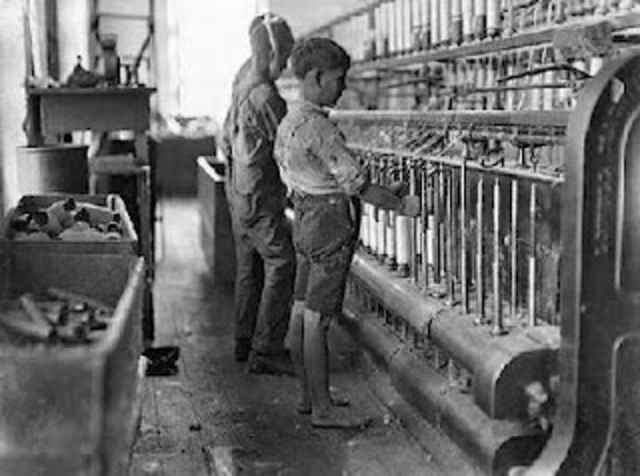
Dickens describes many of the negative consequences of the industrial revolution; particularly, child labor abuse and family-value deterioration.  Dickens becomes a source of information for societal reform. His reflection on business profitability at any human cost tests the world.

The Covid19 pandemic is today’s test. World leaders struggle with opening their economies at the right time, in the right way, to avoid a return to rising death rates.

It seems America has failed.

All further information on this statistic can be found at Statista

“Dombey and Son” is a lesser known work of Dickens that pleases the senses and gladdens the heart.  For anyone who has children, “Dombey and Son” teaches parenthood and touches on errors of parental commission and omission.

The consequence of hubris and greed in “Dombey and Son” are well told in this story of father/husband arrogance, and business manager misdeeds.

Like a Shakespearean play, Dickens writes about the difficulty of life with a dénouement of “Alls Well That Ends Well”. Dickens infers human cost must be weighed in determining value of any end. Human cost is the sine qua non of government leader’s decision on returning to economic prosperity after the Covid-19 pandemic.

The industrial revolution is in full swing in the 1800s with children working long hours for low wages.

In the mid 1800s, a patriarch and successful businessman, Paul Dombey, marries.  A daughter is born to a father who pines for a son.  Paul Dombey plans to call his growing company “Dombey and Son”. Fate chooses to provide a son but the boy loses his mother in child birth. The boy is sickly and destined to live a short life that never fulfills the desire of his father for a son to inherit the family business.  

Paul Dombey only grieves for his son.  He alienates and ignores his daughter, and marries again for appearance and convenience.  Paul Dombey lacks empathy or understanding of others or himself.

Dombey’s loss of a son and his hubris get in the way of any human compassion or love for others.  He is abandoned by his new wife.  He accuses his daughter of aiding the abandonment.  Dombey strikes his daughter and she runs away.  Through the connivance of his business manager, Dombey’s business is bankrupted.  Dombey spirals into a pit of despair and self loathing.

The beauty of Dickens’ writing is in his character development.  His skill is exhibited in multiple story lines that weave together to change the course of a story. Dickens juxtaposes pitiable despair with great joy. 

When his daughter flees she begins a new life, presaged by an earlier encounter with an apprentice.  The apprentice, after exile and ship wreck, becomes her husband.

The daughter, though neglected by her father, loves him deeply.  She attempts to reconcile Paul Dombey with his second wife.  Because of his second wife’s childhood miseries reconciliation is not possible, but Dickens suggests forgiveness is in Dombey’s future.

The relationship between father and daughter begins to heal.    Paul Dombey begins to understand himself; i.e. he recognizes his failure as a father and husband and begins to rebuild his life through his grandchildren.

The fracture of family values caused by yesterday’s industrialization is depicted in Dickens writing and well documented by sociologists and historians.

Looking back, after economic recovery from today’s pandemic, how will family values be recorded by tomorrow’s sociologists and historians?

America may have to live with the affects of Covid19, but lack of empathy from President Trump will be his legacy. It is a legacy memorialized by rising American deaths and millions of the less-privileged who will not receive any further help this year.

Fracturing of family values is exacerbated by today’s technological revolution. Adding a pandemic to technological change further reduces personal contact.

Dickens’ stories dramatize parental psychological abuse; an abuse that resonates with modern society. Much of the abuse is unintentionally caused by the demands of modernization, and human isolation.

The widening gap between rich and poor is harmful. The wealth gap reinforces human alienation. Less time is used to raise children because both parents work or are distracted by self-interest. Ironically, Covid-19 demands family re-connection, and empathy for others.

On one hand, Covid-19 compels families to reassess family values. On the other, 21st century technology continues to reduce physical contact. Some say the economy is in free fall today, but most have plans for tomorrow. It seems every good and bad historical event has unintended consequence. Hope is all that remains in Pandora’s box.

2 + 2 Makes 5

Audio-book Review
By Chet Yarbrough

(Blog:awalkingdelight)
Website: chetyarbrough.blog

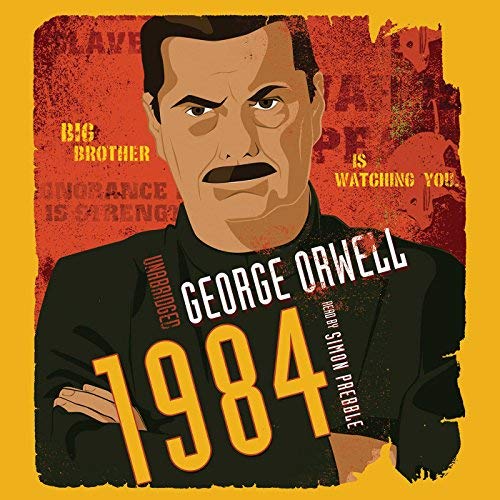
1984


By George Orwell

Narrated by Simon Prebble

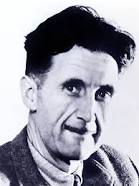
George Orwell (1903-1950, Author born in India, a British Citizen)

Orwell published “1984” in 1949.  Orwell’s vision of totalitarianism, technology, and thought-control match today’s fears and failures in America.

Technology (then and now) is a threat to everyone’s privacy and self-determination.However, technology has a much wider; more intrusive role today than in 1949

Advances in social media through Facebook, Twitter, LinkedIn, and others–with the help of Google, Amazon, and Apple, are encroaching on everyone’s right to privacy and personal thought.

Jingoism, war threats, and propaganda fill newspapers, television reports, and the Internet to influence and manipulate indigenous and exogenous populations. 

7/31/2019-China blames America for Hong Kong demonstrations.

American, Chinese, Iranian, Syrian, Russian and Turkish governments tell the world that their internal turmoil is caused by outside influences.

Truth is hidden by Trump’s divisive diversions and subversions. Trump’s dishonest attack on Georgia’s election process is his latest diversion and subversion of American Democracy.

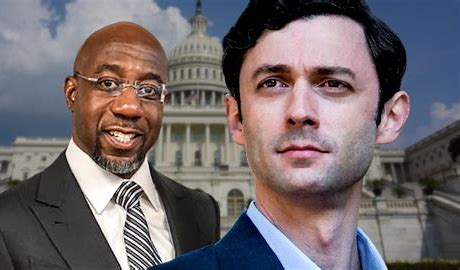
The Republican party can look to Trump to find why Georgia is now represented by two Democrats in the Senate.

Trump and Erdogan are masters of this art. As Lord Acton noted: Power corrupts and absolute power corrupts absolutely.

Today, it is gangster-ism in Ukraine; yesterday it was abandoning Kurdish allies who fought by the side of Americans in Syria; and today it is “don’t be afraid of Covid19” or Erdogan’s intervention in Armenia.

History reveals murders, imprisonment, and rigged elections caused by malignant use of the internet. Though the victim/hero of “1984” is tortured to say “2 + 2 make 5”, the use of the internet gives forum to lies and hate that make the unwary believe “2 + 2 makes 5”.

Putin’s domination of the media in Russia is quintessential Orwellian disinformation. From saying he is defending the homeland to comparing Ukraine leadership to Nazi Germany, Putin distorts the truth of his personal ambition.

Orwell’s vision of totalitarianism and population indoctrination in “1984” is more direct than today’s media manipulations. Google argues that search-engine’ clicks are meant to customize consumer searches for information, but how far is that from thought control?

The inherent subtlety of social media seduces rather than tortures people into thinking in a particular way. 

People are killed by media manipulation of the truth. Media manipulations cause conflict, but rarely cause death on a mass scale.  (Of course, it is a mass scale to the mother, father, grandparent, sibling or friend who loses someone they love.) Orwell is saying there are no ideological differences between a media-manufactured war and a real war when people die.  Is the American government out of control?

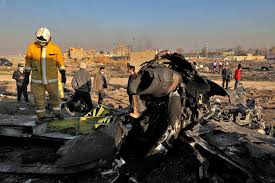
Ukrainian Airlines Crash from Iranian missile launch mistake

Orwell points to media-manufactured wars that are not really wars between nation-states. Thought diversions and public-conflict misinformation spread by the government and the media make indigenous populations endorse, obey, and follow their leaders.

Now we have the economic and health threat of Covid19. What measures must be taken to mitigate the economic destruction and death that it causes? Where is the line drawn between autocratic rule and democracy? With a President acting as king, are America’s “checks and balances” strong enough to protect volitional rights?

With arbitrary hiring and firing of critical government administrators there is reason to doubt more economic destruction and death are not inevitable.

Add private sector big data use to government sector misinformation, and individuals lose both privacy and independence.

Acquisition of nuclear weapons to foment a war is a fiction. It is a fiction designed to manipulate public opinion.

The concern over nuclear proliferation is about fear of mistakes and nuclear accidents; not nuclear war.

This is not to say nuclear proliferation is not a danger to the world. It is a danger, but more because of its use as a political weapon than a tool of war.

The fact is, nuclear accidents occur; for example, Russia’s recent nuclear-weapon’s failure in August 2019.

Iran and North Korea incite their people to expand nuclear weaponry to gain status in the world. It is not an irrational move in the real politic of public affairs. A former Israeli spy master (Meir Dagan) noted on national television that Iran’s government officials are rational; mutual nuclear destruction is not rational.

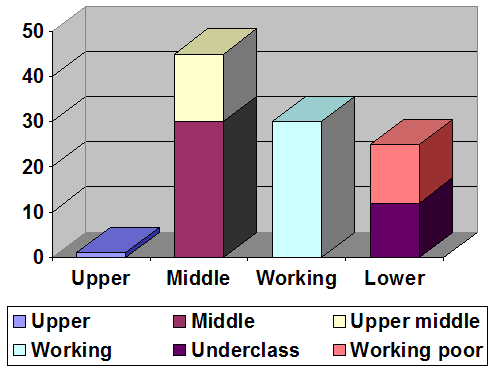
Orwell characterizes nation-state populations as three tiered; e.g. upper, middle, and lower.  The upper class conception is a ruling class that controls a nation; the middle class strives to become a part of the upper class, and the lower class (estimated at 25% in the U.S.) is suppressed by both the upper and middle class to maintain the three tiered structure. 

Orwell suggests the upper class becomes a kind of collective with a particular ideology that usurps capitalist ambition by trading wealth for collective power. This is the concern one has over the widening gap between rich and poor.

Piketty argues that the income gap widens once again, after World War II.  He estimates 60% of 2010’s wealth is held by less than 1% of the population; with a lean toward the historical 90% threshold. 

One might say that the “collective” concept has more relevance in a socialist country but money is power in America so Orwell’s upper class definition is equally relevant in a largely capitalist country.   The difference is a matter of degree; i.e. rather than an oligarchy of socialists, America has an oligarchy of wealthy corporations and multi-millionaires.

Today’s Moneyocracy is the upper class described in “1984” and the “Occupy Wall Street” protesters are Orwell’s revolutionary hero/victims

A striking parallel between Orwell’s “1984” and today is western culture’s 21st century “Occupy Wall Street” movement.  The “Occupy Wall Street” movement has protesters but they cannot articulate actions that can practically actualize their revolution.

All revolutionaries cannot be subverted, imprisoned, or murdered. One might argue Orwell’s “1984” torture of revolutionaries is being replaced by corporate use of private data and government propaganda to achieve the same purpose.

Orwell is as prescient today as he was in 1949.

FREEDOM OF CHOICE

Audio-book Review
By Chet Yarbrough

(Blog:awalkingdelight)
Website: chetyarbrough.blog

East of Eden


By John Steinbeck

Narrated by Richard Poe

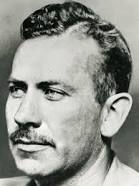
John Steinbeck (1902-1968, Author, Nobel & Pulitzer Prize Winner)

What does Steinbeck’s “East of Eden” have to do with the right to vote? It has to do with freedom of choice. Conservative’s effort to restrict a right to vote is a lie.

The Russian invasion of Ukraine in 2022 is a crisis of this moment. Putin is realizing the mistake he has made. Either through misdirection or a face-saving ploy, Putin is suggesting there be a vote to determine Ukraine’s independence. It is an international mistake not to take Putin’s vote proposal seriously. The only question should be how a plebiscite can be structured for Ukrainians in a war zone.

Now we know, Putin mocks freedom to vote with a gun pointed at your head.

“The Heritage Foundation’s database includes 1,296 ‘proven instances of voter fraud’ out of the hundreds of millions of votes cast going back to 1992. Of those cases identified, 1,120 resulted in criminal convictions. What rational human being would commit voter fraud and how likely is a fraudulent vote likely to change the outcome of a national election?

“East of Eden” is a judgement on the nature of humanity.

In “East of Eden”, every human being has a choice; the choice to be good or evil. An inference in Steinbeck’s “East of Eden” is that individuals choose who they want to be regardless of economic circumstance, or genetic inheritance.

“Black Lives Matter” questions that premise in the face of institutional racism.

Mixing and matching diverse personalities are a part of Steinbeck’s oeuvre.  An audio book listener sinks into the first few chapters of “East of Eden” thinking they know how the story ends.  However, each new character reveals some new facet of humanity that turns and twists the story.

Steinbeck’s anti-hero, Cathy Ames, seems destined for execution; the Trask family for tragedy, the Hamilton family for peace and prosperity, and Chinaman Lee for Saint-hood. What happens is only partly expected.

Steinbeck invents characters that show the best and worst of humankind; without making life a morality play. 

A listener cares what happens to Steinbeck’s characters.  The beauty and transcendence of Steinbeck’s writing informs; sometimes intimidates, those who think they know something about life.

Children of the world are raised in the best and worst conditions of existence.  Children are raised in the happiest families, the saddest families; in enslaved minorities, in blue collar majorities, in one parent, two parent and no parent families. Children die or mature to become someone or no one, but Steinbeck infers chance and choice are theirs to follow. 

Steinbeck raises questions about life and how one lives it.  Steinbeck writes a story showing that becoming oneself is influenced by genetics and environment but not determined by either. In “East of Eden” life’s journey is made of human choices and chances.
The most evil character in “East of Eden” is Cathy Ames.  She comes from a two parent “Ozzie and Harriet” family that owns a relatively successful leather tanning business.  Cathy Ames is loved by her family.  She is an only child that is doted on by her mother and loved by her father.  Cathy Ames chooses to murder her parents, and merry an unsuspecting man.

A good-hearted, trusting man–Adam Trask marries Cathy Ames. The Trasks have two children– twin boys who seem to reincarnate differences in their parents. The boys names are Cal and Aron with each seeming to take a different path in life.

Aron is more like his father. Cal is more like his mother–less trusting, prone to getting in trouble, and intent on finding and understanding the life of his mother.

Cathy Ames shoots her husband after the twin’s birth.  She abandons her wounded husband and newly born children. Cathy chooses to become a prostitute and Madam and lives her idea of the American dream. 

Chinaman Lee is the Trask family’s servant. Lee is an outlier observing the American dream with a philosophical belief that good and evil exist in all human beings. Lee views existence of good and evil as a God-given choice; not a fate or pre-ordination. Lee’s wisdom and philosophical beliefs influence the Trask family sons; particularly as their father’s health deteriorates.

One of the most laudable characters in “East of Eden” is Samuel Hamilton.  He is an Irish immigrant that comes to Southern California, and has a past that touches evil. Hamilton flirts with a “Cathy Ames kind” of relationship, but breaks away from its evil influence to become a sage and seer in Salinas County. 

Hamilton becomes the patriarch of a big family that is poor in wealth but rich in love, respect, and familial affection.  Samuel Hamilton lives a different American dream.

Lee is a cornerstone character in Steinbeck’s story. Lee’s philosophical belief in human choice is illustrated by Cal’s decision to avoid a life lived like his mother. Cal chooses good over evil after finding and recognizing his mother’s poor choices and their consequences.

Freedom of choice is both a human burden and benefit. Steinbeck implies each person chooses their course in life. Their choices are their own responsibility; not genetics, or economic circumstance.
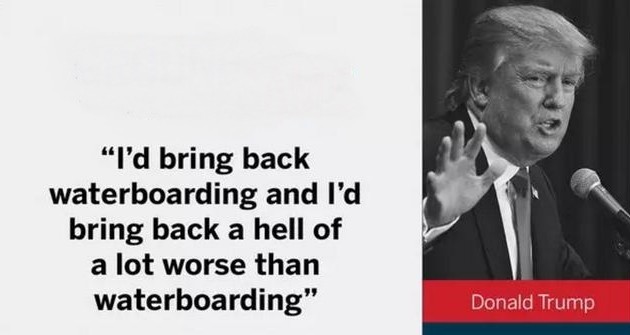
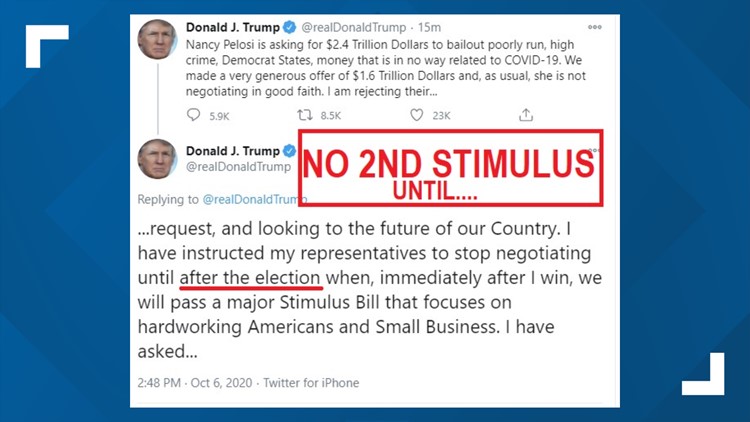
It is ironic. Trump chooses to bargain with Congress on mail-in voting when the unemployed are suffering from hunger and pending homelessness caused by Covid19′ joblessness.

Exception might be taken in poor communities that have no living wage jobs. In light of Steinbeck’s “…Grapes of Wrath”, one might argue there is a false bottom in belief that economic circumstance is irrelevant. One can certainly choose to be good rather than evil, but the consequence of poverty seems to compel evil.

Theft, like selling illegal drugs, is a way of making a living in poor communities that have no jobs. Both illegal enterprises recruit the unemployed by offering jobs, potential wealth, and identity.

Compelled evil is even more starkly reflected in Richard Wright’s “Native Son”. Is evil strictly a choice? Some would argue environment and genetics compel choice.

COLLECTIVIST BELIEF

Audio-book Review
By Chet Yarbrough

(Blog:awalkingdelight)
Website: chetyarbrough.blog

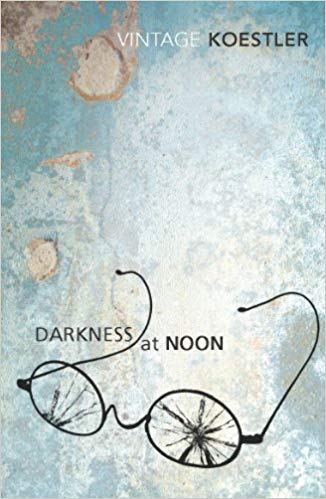
Darkness at Noon

By Arthur Koestler

Narrated by Frank Muller

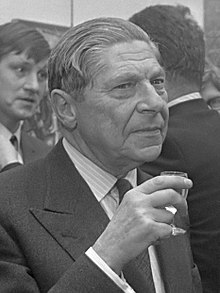
Arthur Koestler (1904-1983, Author)

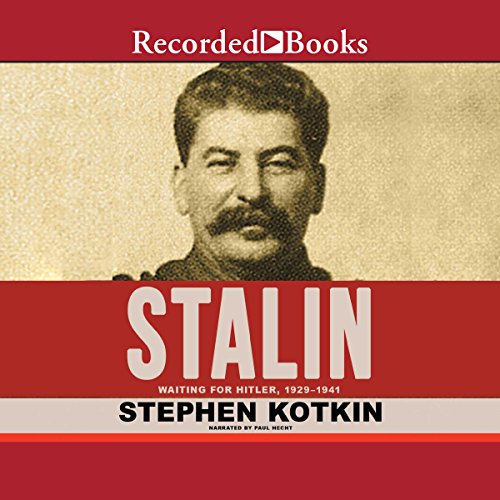
Though Stalin is never named in “Darkness at Noon”, Stalin is the “one” that encapsulates a vision of Communism that demands submission by the individual to the collective. 

When a young communist refuses to distribute Stalinist Party’ literature that ignores Nazi attacks on local Communist’ cells, he is expelled from the Party.

In real life, Koestler joined the Communist Party in Germany in 1931.  His resignation from the Party in 1938 is a likely motivation for writing “Darkness at Noon”.

Koestler’s hero is a young communist leader that disagrees with his Russian controller and is expelled from the Party in the 1930s.  The substance of the disagreement is the heart of the story.

The central character of “Darkness at Noon” is Nicholas Rubashov. Rubashov enforces Stalinist’ Communist belief in the collective, but he has doubts. Rubashov is the apparatchik who is ordered to expel a young German’ Communist because he looks at Russian Communism as a personal rather than collective savior.

Imprisonment of Putin’s political rivals, invasion of Crimea, and buildup of Russian troops on Ukraine’s border is reminiscent of Stalinist tactics before and after WWII.

Increasingly, Vladimir Putin exhibits the same drive for power as that characterized by Stalin, particularly in regard to his action in Chechnya and now Ukraine.

Koestler’s hero is characterized as one of the original participants in the 1917 revolution. As he ages, his blind acceptance of Stalin’s Communist belief in the collective waivers.  Rubashov is imprisoned and ordered to sign a confession.  The interrogators, Ivanov and Gletkin, are responsible for getting a signed confession from Rubashov. 

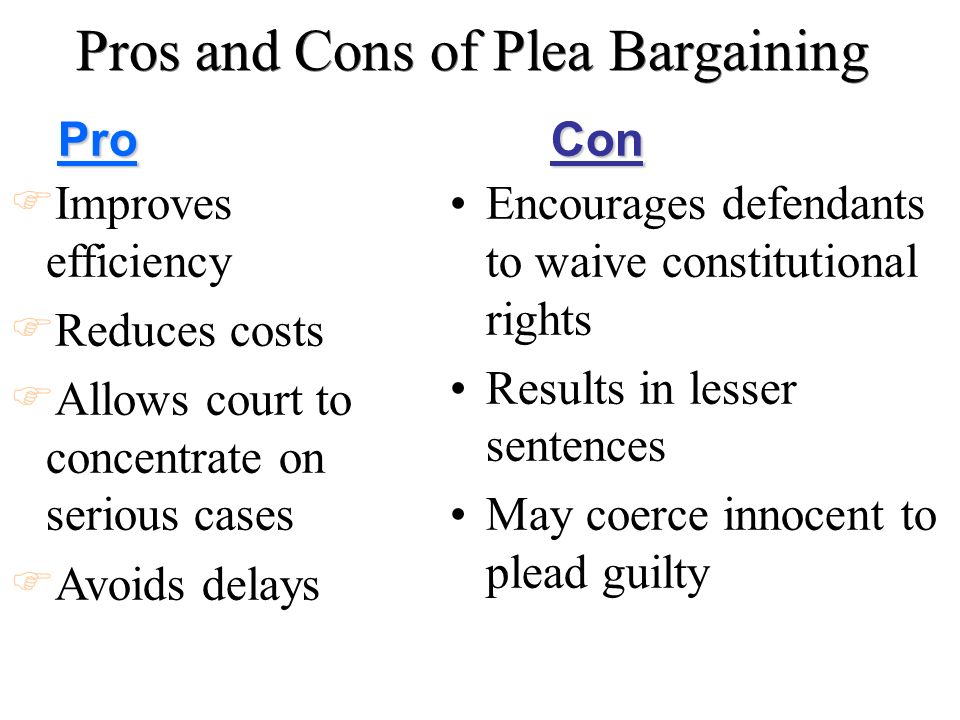
Ivanov, who is a former acquaintance and civil war comrade of Rubashov’s, offers an opportunity for Rubashov to redeem himself. Ivanov suggests that Rubashov confess to a lesser charge to justify incarceration for five years with a chance to return to political power.  Rubashov initially says “no” but Ivanov’s “plea bargain” approach works and Rubashov signs a confession.


However, Ivanov is later removed from power and Gletkin takes charge of Rubashov’s case.  Gletkin argues Ivanov’s approach is a mistake.  Gletkin insists on a complete confession of guilt; i.e. no redemption, only execution.

Much evidence is brought before Rubashov.  The evidence is weak but Rubashov becomes convinced through sleep deprivation, and a clever manipulation of Rubashov’s logic, that he must be executed. Rubashov’s personal feelings of guilt come from his denial of collective good. He reasons–the way he has been judged is the way he has lived his life; therefor his life should be forfeit for the cause; in the interest of the many over the few.

Gletkin might be characterized as a mindless Neanderthal because of his belief in torture, but one of many of his clever manipulations suggests he is diabolically clever.

Gletkin suggests Rubashov was given a watch when he was 7 or 8, which Rubshov acknowledges is probably correct.  Gletkin says he did not have a watch until he was a teenager and that he did not know there were 60 minutes in an hour until then.  No one in his social class looked at time in segments; waiting in line was not characterized by time but by results from waiting in line. 

“Darkness at Noon” implies the end result is what is important; not the means and time that one stands in line. This is a quintessential belief of the “true believer” in Stalinist communism.

LONG JOHN SILVER

Audio-book Review
By Chet Yarbrough

(Blog:awalkingdelight)
Website: chetyarbrough.blog

Treasure Island

By: Robert Louis Stevenson

Narrated by Philip Glenister, Daniel Mays, Catherine Tate, Owen Teale

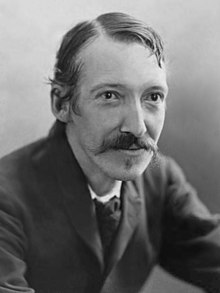
Robert Louis Stevenson (1850-1894, Author died at Age of 44)

Robert Louis Stevenson’s “Treasure Island” is a curious piece of literature that resonates with 21st century calumny.  Humans are not perfect.  There is a bit of Stevenson’s “Long John Silver” in everyone.

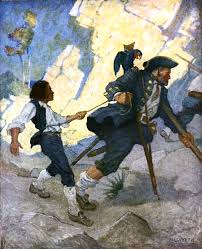
For those unfamiliar with Stevenson’s tale, “Long John Silver” is a pirate who hoodwinks a young boy, a crew of sailors, a doctor, a professional ship’s Captain, and a few others on a voyage to recapture a treasure.  Silver has the “gift of gab”; salted with a lifetime of experience in getting what he wants.

What strikes one about Silver’s character is his ability to see things as they are and change his behavior to suit the circumstance.  If a lie suits his purpose, he lies.  If the truth suits his purpose, he tells the truth.  What he lacks is morality. 

Silver is a narcissist.  He has an egoistic admiration of himself that includes self-flattery, arrogance, and a sharp tongue that cuts like a blade. When confronted with one whom Silver disagrees, he cajoles, belittles, or verbally (sometimes physically) attacks his opposition.

If disagreeing, belittling, and cajoling fail, a narcissist changes the focus of attention with a manufactured distraction.

Putting aside Silver’s narcissistic amorality, he understands a truth about human beings. Silver represents belief that money, power, and prestige rule the high seas and land.  With the skill of a practiced politician, Silver manipulates events to conform to plan. 

The curious piece of Stevenson’s story is Silver’s prediction that Ben Gunn, a stranded buccaneer on Treasure Island, would be cheated out of a share of the treasure even though he played a major part in the treasure hunters’ success. 

Gunn is an anti-hero who has lost his mind because of his isolation on the island.  Gunn is like a modern-day homeless man abandoned by society.

Silver’s plan is to capture the wealth of a buried treasure.  Though not entirely successful, he captures a share of the booty by co-opting Jim Hawkins, a cabin boy with a yearning for the sea.  In the end, Silver escapes the clutches of British authorities who would have convicted him for mutiny, and possibly, attempted murder.

What Silver points out is that the doctor, ship’s captain, and other survivors of “Treasure Island”, will cheat Gunn of his fair share.  Gunn is given 1000 Sovereigns (English pounds) and the rest (hundreds of thousands per person) is distributed to the surviving voyagers.  Silver infers all human beings are pirates. 

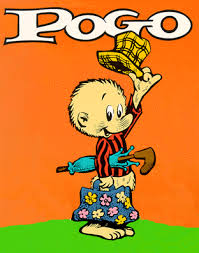
Some pirates wear suits, speak the King’s English, and live in the city; a Pogo version of “We have met the enemy-of-the-people and he is us.”

AMERICAN JURISPRUDENCE

Audio-book Review
By Chet Yarbrough

(Blog:awalkingdelight)
Website: chetyarbrough.blog

Snow Falling on Cedars

By: David Guterson

Narrated by George Guidall

David Guterson creates a court room drama in “Snow Falling on Cedars”.  The court case is presided over by a competent Judge, a determined prosecuting attorney, and a detail-oriented public defender.

“Snow Falling on Cedars” reflects on a criminal trial’s strengths and vulnerabilities.  It is a story of institutionalized discrimination that is as relevant today as in the 40s and 50s.  Though the author, Guterson, is not a lawyer, he is the son of a criminal defense attorney. 

As an author, Guterson tells the story of a Japanese American citizen accused of first-degree murder.

The story unravels slowly but with beautifully written descriptions of an island community off the Washington coast.  The setting begins in the 1940’s and ends in the 50’s. 

The historical relevance of “Snow Falling on Cedars” may be repeated in the tribulations of Carlos Ghosn; not in the sense of indictment, but for being guilty or innocent based on cultural bias.

Carlos Ghosn–Former CEO of Renault, Nissan, and Mitsubishi Motors (indicted by Japan) who escaped to Lebanon to avoid a trial which he believes is culturally biased.

“Snow Falling on Cedars” is equally a reminder of today’s appalling American attacks on Asian Americans.

The accused, Kabuo Miyamoto, is a gill-net fisherman like the person who is murdered.  The crime allegedly occurs on a foggy night when both fishermen lay their nets in the open sea.

The victim is Carl Heine, a childhood friend of Kabuo before the war.  Kabuo’s wife is Hatsue Miyamoto who also grew up on the island.  A fourth major character is Ishmael Chambers, the local newspaper publisher.  All three men serve in WWII.

In early chapters of Guterson’s story, a young Ishmael falls in love with Hatsue.  However, at a critical point in their burgeoning feelings, Hatsue, her family, and all Japanese-descent Americans are interned in a northwestern camp during the war.  The internment separates Ismael from Hatsue and she eventually marries Kabuo.

A NORTHWEST JAPANESE INTERNMENT CAMP:

This is the era of Pearl Harbor, WWII, and Japanese American internment. 

The story explores the nature of human beings in a small American community.

Kabuo, Carl, and Ismael serve in the military during WWII.  Kabuo serves on the German front; Ismael on the Japanese front.  Carl’s location during the war is superfluous except that he served and was the son of a local strawberry farmer who employed Hatsue’s father.

Before WWII, Americans of Japanese descent were not allowed to own property on the island.  Hatsue’s father makes a deal with Carl’s father to buy 7 acres of land for strawberries on an unrecorded contract. (This private contract violates the intent of the law.)  The last 2 payments on the property are not made because of Japanese American internment during the war. 

A feud rises between the Miyamoto family and the Heine family because the 7 acres is sold to another, based on Miyamoto’s payment default.  There had been a verbal agreement for the last two payments but it is dishonored because Carl’s father, who had made the agreement, died. This is interpreted as Miyammoto’s motive for the murder of Carl on a foggy night of fishing.

The American judicial system’s intent is to mitigate unfairness by having 12 jurors of one’s peers, competent legal investigators, judges, and attorneys. However, fairness often takes a back seat to politics.

Facts of a trial, whether true or not, are subject to interpretation.  What one sees, hears, or feels affects opinions. 

Guterson creates characters that fulfill the intent of the American judicial system.  The 12 jurors are islanders (though none are Japanese Americans).  The investigators are thorough (though they miss two important but obscure facts).  The judge is competent.  The prosecution and defense attorneys are fully prepared in presenting their arguments.

In spite of America’s intent, Guterson illustrates how America’s judicial system is subverted by human nature.  Guterson peels back the layers of human nature that distort truth. 

Here is where the reinstitution of the death penalty by William Barr raises the question of “common good”. Juries do make mistakes.

How many innocent people have been convicted and executed in the United States? The Human Rights Foundation reports 31 innocent people were executed between 1973 and 2004.

Facts are immutable but facts are woven into stories by the human mind.

Those stories fit preconceived notions borne from personal experience and internalized opinions.  Personal opinions are a fungible commodity that can distort the truth.

Facts are clear.  Miyamoto is a Japanese American.  Carl Heine is a white American.  However, during the trial these facts are interpreted differently.  The prosecutor points to facts for guilt and the defending attorney points to facts for innocence.  The truth of facts is to be adjudicated by a jury of peers. However, a jury of “peers” listens to prosecution and defense arguments and makes a judgement based on their personal interpretation of the facts and arguments of the attorneys. 

Guterson cleverly interjects the feelings generated by the main characters who served in WWII.  Kabuo feels guilty for having killed a young German soldier who seemed to be asking for mercy.  Kabuo’s guilt for murdering the young German makes him feel a cosmic force, like fate, is leading him to the gallows.  He begins to think he should die.

Ismael lost an arm in the war and led a broken-hearted life because of Hatsue’s marriage to another man.  Ismael resents Hatsue’s rejection of him and chooses to withhold a crucial fact in the trial.

Layers upon layers of human nature’s fragility bares witness to the truth.

A man’s life hangs in the balance.  Will he be convicted for murder based on facts or truth?  Is Miyamoto guilty or innocent?  Or, like all human beings, is he guilty of some things and innocent of others?

In some sense, the American judicial system is on trial in “Snow Falling on Cedars”.  Truth is a slippery slope.  Facts are immutable but interpretation is fungible.  Knowing facts is only part of the truth.  Therein lies the tragic reality of institutionalized discrimination.

WORDS MATTER

Audio-book Review
By Chet Yarbrough

(Blog:awalkingdelight)
Website: chetyarbrough.blog

Milkman

By: Anna Burns

Narrated by Brid Brennan

Anna Burns’ “Milkman” touches on Ireland’s conflict over independence. Though the story is set in Ireland’s period of conflict, the books fundamental message is “words matter”. 

“Words matter” is a timely subject in the era of President Trump’s America. President Trump is a showman with no moral compass. Appearing to be what his constituency wants is his “reason for being”. The consequence of Trump’s words increases extremist actions on both the left and right.

These are the indicted extremists planning to kidnap the governor of Michigan.

From saying Mexico sends their “rapists and criminals” to the United States–to saying he could “…stand in the middle of Fifth Avenue, shoot somebody, and I wouldn’t lose any voters” is absurdist language. It energizes political extremism.

How many people are not wearing masks or practicing social distancing because of Trump’s ambiguous comments about the danger of Covid19? His words have particular consequence because of his position as President of the United States.

Those who are not wearing masks are not entirely Trump’s fault but Burns’ story shows how people fail to think for themselves and are influenced by what people in authority think and say.

Burns tells the story of an 18-year-old girl, a middle child of a presumably Catholic family, who is defined by other people.  She is influenced by others because of their words and the examples they set.

This is an old story; philosophically revealed by David Reisman in a 1950s book, “The Lonely Crowd”. 

Contrary to the main character’s professed independence, this 18-year-old allows herself to be defined by what other people think of her.  Reisman called this malady “other directedness” meaning humans being more concerned about what other’s think of them than what they think of themselves.  This “other directedness” erodes independence. The development of a personal, moral inner compass is subverted by concern over what other’s think.  We become what others want us to be rather than who we choose to be based on a personal moral code.  In Reisman’s language we become “other directed” rather than “inner directed”.

There are two milkmen in Burns’ story.  One is a 30ish leader of a violent Irish independence group; the other is a 30ish bachelor emotionally connected to the 18-year-old’s family.  Rumor is spread that the independence leader, who is married, is sleeping with the young girl. 

The girl’s mother believes the rumor and berates her daughter for an affair that does not exist.  The 30ish bachelor is generally viewed as a maverick in the town who likes no one and chooses to live alone.  In fact, he is a caring human being that decries the violence of Ireland’s conflict and treats people with respect and kindness.  In Reisman’s vernacular, he is “inner directed”.  He lives his life in accordance with a personally developed inner moral compass.

Ironically, the young girl is intimately involved with a young man who she later finds is having an affair with another man.  There are many ways to look at these characters’ circumstances but fundamentally it clarifies the truth that humans are more than what words make them to be.

Words can do great harm when used by a showman who has no inner moral compass.  

Kimberley Strassel’s defense of Trump’s response to Covid19 in the 2/12/21 WSJ editorial is appalling . Most in the medical community emphasized the use of masks while Trump denigrated its importance, conducted rallies without masks, and made wearing one a political statement.

Importantly, a showman’s words reinforce what other people think rather than what a singular person’s inner moral compass would dictate.  Relationships become infected by what people think; more than by what they do.  It is particularly confusing to a young person of 18, but it is a confusion that pervades all human relationships, regardless of age.

“Jane Eyre”, by Charlotte Bronte, is a story about a young woman who listens and follows her inner moral compass.  She refuses to bow to what other people say she should do.  She chooses her own path. 

This is a crossroad that Burns’ 18-year-old is confronted with in “Milkman”.  It is a crossroad that her gay boyfriend fails to negotiate.  It is unclear that Burns’ main character is ready to come to grips with “other directedness” but leaves one with the impression that she is beginning to find her own way.

Former Ambassador of the United States to Ukraine, Marie Yovanovitch.

“Milkman” addresses the human need for an internal moral compass.  Words are weapons of mass destruction in the hands of amoral leaders. (Reference here is to the despicable way the Trump administration treated America’s ambassador to Ukraine.)

MYTH’S APPEAL

Audio-book Review
By Chet Yarbrough

(Blog:awalkingdelight)
Website: chetyarbrough.blog

Age of Myth

Written by: Michael J. Sullivan

Narrated by: Derek Tim Gerard Reynolds

Fans anxiously wait for the finale of “Game of Thrones”. Why has this fascinating mythological story captured the world’s interest? Why listen to a book of fiction; particularly when freighted with supernatural events? Michael Sullivan offers an answer in “Age of Myth”.

It is the thrill of discovering a good story with characters one likes, or reviles. Tribal bravery, cowardice, betrayal, honor, and morality are crystallized in each chapter of Sullivan’s story.

Sullivan begins and ends “Age of Myth” with battles. The beginning battle introduces Raithe, a killer of false gods (aka, the god killer). The god killer becomes protector of Persephone, the leader of a Rhune tribe. Persephone is introduced as the former 2nd chair of Dahl Rhen (a Rhune village). She is the widow of the deceased ruler of Dahl Rhen.

The ending battle produces Gryndal, a wielder of the black art. Gryndal is First Minister to the Fane (the Fane is leader of the Fhrey tribe). Gryndal can harness the forces of nature to destroy all that block his path to power. Gryndal’s obstacles are removed through guile, deception, and force.

Sullivan’s characters represent a fundamental conflict in life. He describes an age of tribal war with all against all. Mysteries are explained while Sullivan tantalizingly ends the first book of the series.

Sullivan’s mythical world offers a slender hope for freedom and equality of all living things. This may be a myth, but it gladdens the heart and pleases the soul.

TURKEY

Book Review
By Chet Yarbrough

(Blog:awalkingdelight)
Website: chetyarbrough.blog

Birds Without Wings

By Louis de Bernieres

Louis de Bernieres (British novelist)

“Birds Without Wings” is a fictional account of the rise of the Turkish Republic after WWI.  The author, Louis de Bernieres chooses a setting for his story in a village in southwestern Turkey, on the Mediterranean coast.  The village is populated by different ethnicities and religions at the time of Turkey’s transition from Ottoman Empire to independent state.  What makes the novel interesting is it comes from a recommendation of a Turkish Tour guide. 

There are many, many characters in de Bernieres’ novel.  The story’s attraction is marred by its leisurely pace and manifold characters.  However, threads of de Bernieres’ created lives come together in its last chapters.  Each character offers a novelist eye view of cultural disruption, conflict, and resolution in Turkey’s journey to statehood. 

The village of Eskibahce (presumed to be Kayakoy, Turkey) is peopled by Christians, Muslims, Jews, Arabs, Armenians, Greeks, and Turks who live under Ottoman rule. 

It is not a cosmopolitan village with wealthy merchants and productive industry. It is a small community of sheepherders, subsistence farmers, one Pasha, one successful entrepreneur, and two religious leaders.

One wonders about the purpose of a Tour guide’s selection of this book.  Is it to offer a better understanding of Turkish culture or to give an opinion on the current state of affairs in Turkey?  The story illustrates how cultural, and religious differences influence and often repeat history. The author shows how the past is always present.

It is troubling that this cultural novel is written by an Englishman because of England’s pre-WWI, and postwar history with Turkey. 

Is the writer being objective? One is reminded of an astute analysis of American Democracy by a Frenchman in 1835.

In WWI, the Turks (as part of the Ottoman Empire) are by treaty compelled to join the Central Powers (Germany, Austria-Hungary, Ottoman Empire, and Bulgaria) against the Allied powers (Britain, France, Russia, Italy, Portugal,and the U.S.)

The Village is relatively quiescent until war is declared and Turkey is compelled to take sides.   As the Allies defeat the Central Powers, the former Ottoman Empire is divided by the victors. In spite of the Central Powers defeat, Turkey demands independence and heads toward authoritarian dictatorship.

In de Bernieres’ novel, Mustafa Kemal is shown as an accomplished military leader who evolves into a secular President who nominally endorses democracy.

Though Kemal professes support for a democratic government, he remains an autocrat during his reign. Mustafa Kemal Ataturk became the 1st President of an independent Turkey (1923-1938). He dies at age 57 in 1938.

What makes the novel interesting is its depiction of rural life in a small multi-cultural village on the Mediterranean coast.  The influence of culture and religion is revealed in de Bernieres’ vignettes of Village life.

The author shows how Greeks and Turks live in the same community before WWI. They live in discord but measured acceptance.  Women can be stoned to death but saved by the religion that dictates such a punishment.  Written rules of conflicting religions and cultural differences co-exist in a diverse community.

Christians and Muslims intermarry.  Both a Christian Father and a Muslim Imam show compassion for residents of the Village.  Christian and Muslim youths are as close as brothers.

A Greek Christian Father is considered irascible and judgmental by many in the village but he is a source of education for illiterate villagers.

A Muslim’s son joins the Ottoman army in WWI and writes a letter to his mother.

The letter cannot be read by the Muslim family because it is written with Greek lettering.  Though the father of the Muslim son dislikes the Christian teacher in the village, he goes to him for help in reading the letter.

The son’s letter is translated by the Christian Father. This Christian taught the Greek alphabet to Muslim children, and showed them how to read and write Greek lettering.  The letter is beautiful and poignant. It explains how much his mother meant to the writer as a boy in the Village.  The Turkish father is deeply grateful for the gift of hearing what was written in the letter. He praises the Christian Father for teaching his son how to read and write. The letter is a precious gift for the family.

In another story, a political leader and the richest man in the village is profiled by the writer. His name is Rustum Bey. His wife has a lover. The lover is discovered by Rustum Bey. Partly from defense and partly from rage, Rustum Bey murders his wife’s lover and places her in front of a mob of locals (of all faiths) who begin stoning her for adultery. 

The Village Imam stops the stoning and rescues the adulterous wife from the enraged mob. 

In continuation of this vignette, the author tells of Rustum Bey’s guilt for placing his wife in harms way. The adulterous wife recovers from the stoning but is compelled by Village ostracism and Muslim belief to live the life of a prostitute.  Rustum Bey never divorces his wife. He shows remorse for having put her in front of a mob, and regrets her having to live the life she lives. To Rustum Bey, it is not a matter of forgiveness but of understanding.

In Rustum Bey’s loneliness, he purchases a concubine to become his companion. He presumes the concubine is Muslim. However, she is Greek. The two grow to love each other but circumstances of history compel his concubine to leave.

Rustum Bey’s concubine chooses to leave when Ataturk orders all Greeks to leave Turkey. Though she has not revealed her true nationality to Rustum Bey, she chooses to return to the country of her birth.

As a result of Ataturk’s command, in a mass exodus, Greek men, women, and children are turned out of their homes and forced to leave the Village. They leave by foot, mule, or boat with just what they can carry. Some are old, crippled, and without food for the trip. Many homes are left locked and unoccupied because they cannot be sold. The village begins to look like a ghost town.

Kayakoy, Turkey today–

Obvious hatred exists in Eskibahce (aka Kayakoy) for events that occurred in the past and are reminded of in the present.  Greece once ruled the area of Smyrna in Turkey.  Greeks committed many atrocities in their rule.  Those atrocities are compounded in various WWI’ battles. 

Greece’s occupation of Symrna 1919-1922.

The horror of war is dramatically described by de Bernieres.  The author writes of the stink of dead corpses, the vermin that infest the living and dead, and the rape of innocents. These historical events live in the minds of those who survive.

In another story, the author describes the betrothal of Ibrahim (a Turkish Muslim) and Philothei (a Greek Christian) at age 13 and 12 and how their love ends in tragedy.

An Ottoman Betrothal

WWI lives in Ibrahim’s memory with such horror that he cannot return to Eskibahce’s peace to marry Philothei.  Ataturk demands deportation of all Greeks from Eskibahce.  Philothei must leave unless she marries a Turk. 

Ibrahim is still dealing with the memories of war and is unable to understand Philothei’s pleas.  They argue near a cliff where Ibrahim is tending sheep.  Philothei trips and falls to her death.

These and many stories are told of life in early twentieth century Turkey that seem reminiscent of the same conflicts that exist today.  Is the current President of Turkey like Ataturk?  Have old conflicts between religion and culture changed or are they the same? Hopefully, a traveler to Turkey will gain some answers, or at least, insight to what it means to be a Turkish citizen.

MAD SCIENCE

Audio-book Review
By Chet Yarbrough

(Blog:awalkingdelight)
Website: chetyarbrough.blog

The Island of Dr. Moreau

By H.G.Wells

Narrated by: Simon Prebble

H. G. Wells (English Author, 1866-1946)

The Island of Dr. Moreau is an apocryphal story; i.e. it raises many human’ issues—like morality, ethics, meaning of life, and the boundaries of civilization. 

The original story is mired in 1896’ science but the story remains relevant for 21st century cloning and genetic manipulation.  Wells envisions a brilliant physiologist who finds a way to meld the physiological characteristics of man with beast.  This extraordinary feat is not technically revealed which diminishes the sense of suspended belief but the idea opens a Pandora’s Box of evil that is only mitigated by hope.

Dr. Moreau’s demented intent is to civilize the animal kingdom by creating “humanimals” that offer opportunity for animals to talk and resist thoughtless instinctive actions.  The idea is crazy on many levels–not the least of which is the evil that lurks in human’ minds that compel equally animalistic instinctive actions; but, Wells tells an apocryphal and believable story about science run amok.

In the 21st century, science advances to the point of cloning and creating an identical living animal.  “Dolly”, the sheep is cloned in 1996.  Science is on the edge of creating new life forms, if not human copies.  The only obstacle appears to be politics; political resistance to the idea of creating life in a test tube. 

Dolly (Born in 1996, dies in 2003 from lung disease and severe arthritis. Her 6 year life span compares unfavorably with the 10 to 12 years of most sheep.)

Political resistance to cloning is weakening as evidenced by the first clone of a man’s leg cell and a cow egg in 1998.  The embryo is destroyed after 12 days but a level of viability is proven.  (Coincidentally, Wells includes a bovine human in The Island of Dr. Moreau.)

In 2008, a biotechnology company created five mature human embryos from the nucleus of skin cells planted into a human egg.  The embryos are allowed to mature to a viable inner cell mass called a blastocyst which is an early structure of mammals.  They were destroyed at that stage but the experiment shows viability at a later stage of human cloning than in 1998.  In 2013, scientists successfully cloned adult human cells.

It is possible to create duplicates of living animals, and human’ cells; add to that the potential of modifying genetic material–a feat achieved, but politically reviled by most scientists and the general public.  For science, “humanimals” seem a viable and potential human creation.

“Humanimals” is a mad-scientist idea.  The seductive interest in this science is that cloning and genetic modification offer opportunities for regeneration of damaged nerve cells, medical cures, organ and limb replacements; etc.  Fear accompanies this avenue of research because the “thrill of discovery” seduces scientists’ into pursuit of knowledge without philosophical, moral, or ethical consideration of consequence. 

Chinese scientist, He Jiankui, uses CRSPR to modify the human genome in 2018. On December 30, 2019 He is sentenced to 3 years in prison for “illegal medical practice”.

A host of moral and philosophical conflicts are raised as science advances toward the creation of life.  When does life become life and what right does a living human being have to end or create life?  One might answer–society already has laws which allow life to end life; so why not create laws that allow creation of life.  There lays the restraining influence of politics; i.e. not all agree with life taking life, right to choose life, right to choose death; so on and so on. 

Politics mitigate the consequence of mad science. However, money, power, and prestige motivate the good and bad of humankind.

Growth of skin cells save a 7 year-old’s life by replacing 60 percent of skin loss from disease in 2015.

Doctor De Luca cultures skin cells from a portion of the boy’s body that is not diseased.

Ray Kurzweil suggests the future of human beings will involve a merger of human’ DNA and micro-technology.   The Island of Dr. Moreau may be re-titled “The Island of Dr. Anonymous” with island earth populated by “humanimals” and “humotics”. 

Like Well’s hero, Edward Prendick, surviving humans may have to leave island earth if they want to remain “only” human.  The fable of Pandora explains that “hope” is the politics of the possible. It may be all that is left at the bottom of the box.