ECOLOGY

Brannen emphasizes the importance of understanding the science of geology, climate modeling, and shaping energy systems to mitigate environmental damage. None of his ideas seem likely to change the direction of world leadership. Thinking on a planetary scale is beyond the interest of world leaders, let alone the fictional “Tom, Dick, and Harry” or “Mohammed, Jose, Wie, and Ahmed”. (All stupid men, of course.)

Books of Interest
 Website: chetyarbrough.blog

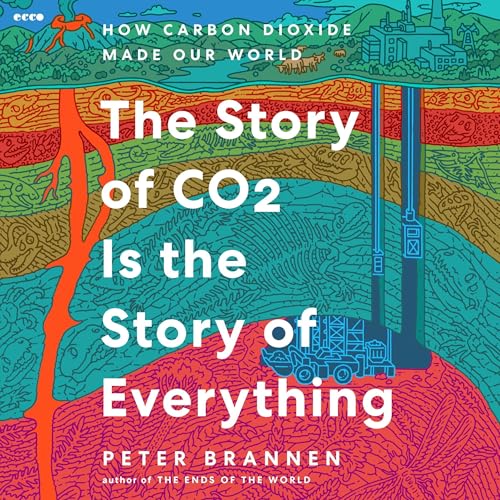
The Story of CO2 Is the Story of Everything (How Carbon Dioxide Made Our World)

AuthorPeter Brannen

Narrated By: Adam Verner

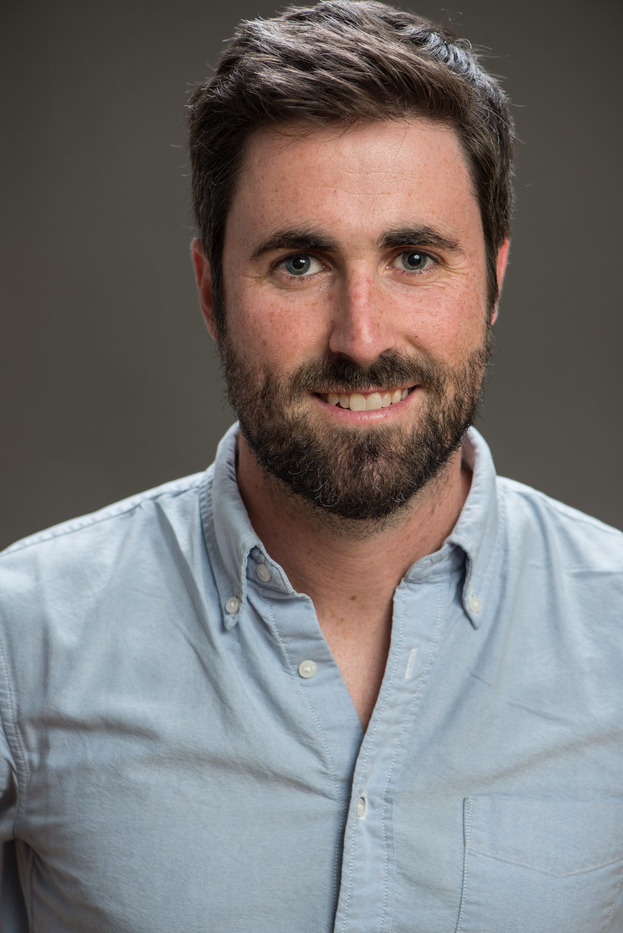
Peter Brannen (Author, Fellow at CU Boulder, science teacher, journalist who has written for The New York Times, The Washington Post, The Atlantic, The Guardian and other outlets.)

“The Story of CO2…” is a slog. Though Brannen’s points are important, the details are overwhelming. Brannen offers a view of global warming based on the history of carbon dioxide emissions and its role in earth’s mass extinctions caused by nature, human industrialization and capitalist growth. The scope of his 500+ page book addresses natural history and the advance of human civilization with so much detail that only a polymath would understand his vision of how “living things” end. On the other hand, even an inept reader will feel threatened by his detailed analysis of global warming’s risks to humanity.

On the one hand, it seems Brannen’s emphasis on CO2 discounts the roles of oxygen and water in the growth and survival of humanity but stick with his theme and you get it.
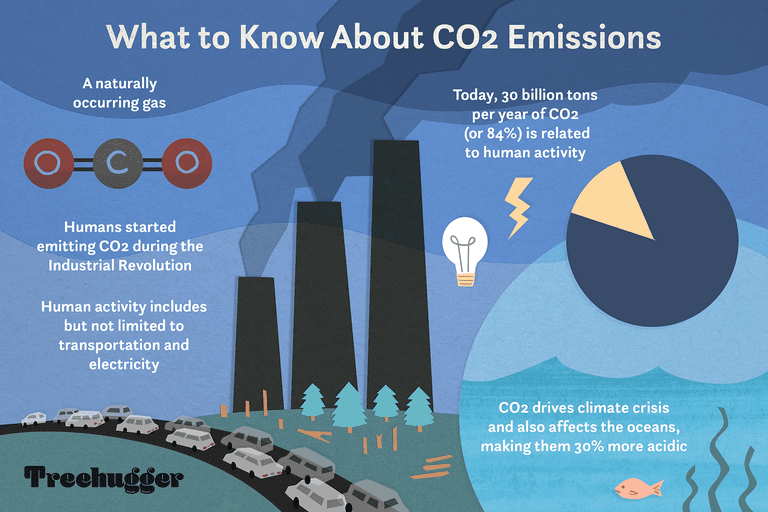
Brannen’s story is a frightening diagnosis of humanity’s risks. His book doesn’t offer much hope for civilization’s future. Brennen explains industrialization is driven by exploitation of energy and human nature. He notes these are the driving forces behind global warming that will end life on earth. It seems human greed is globalized whether political leaders consider themselves socialists or capitalist. Brannen explains societies of the world have exploited energy through release of CO2 in the atmosphere. That release of CO2 has raised living standards of civilization but, at the same time, polluted the world. Brannen argues civilization has little understanding of the truth that carbon dioxide release over eons of time have damaged the environment. Brannen details how that lack of understanding threatens life on earth. More seriously, many leaders of the world refuse to believe the science of global warming and continue to release CO2 into the atmosphere.
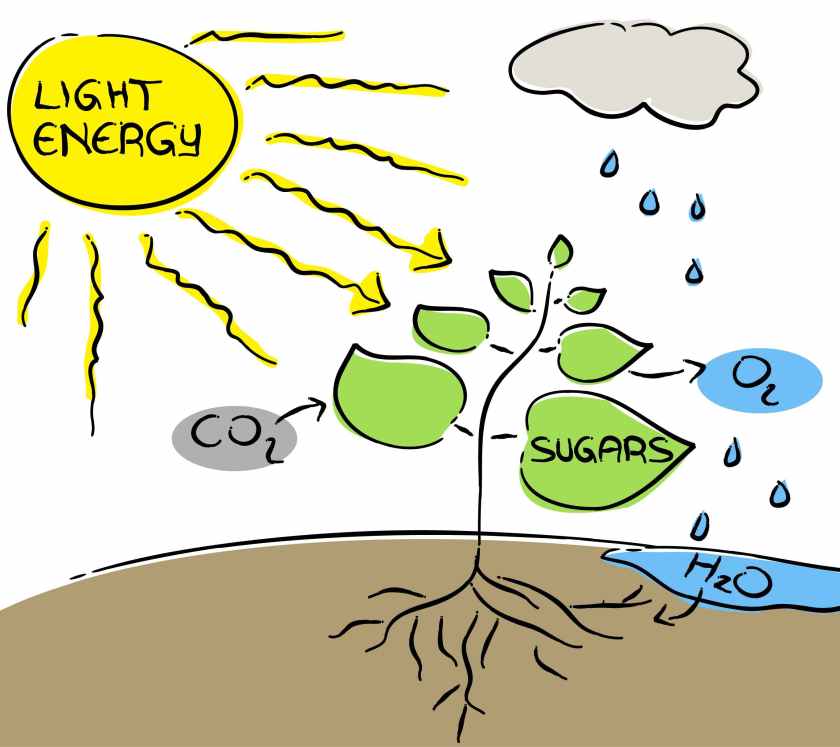
What is made clear in “The story of CO2…” is that photosynthesis by plants converts sunlight into energy which makes CO2 the basis upon which all life exists on earth.

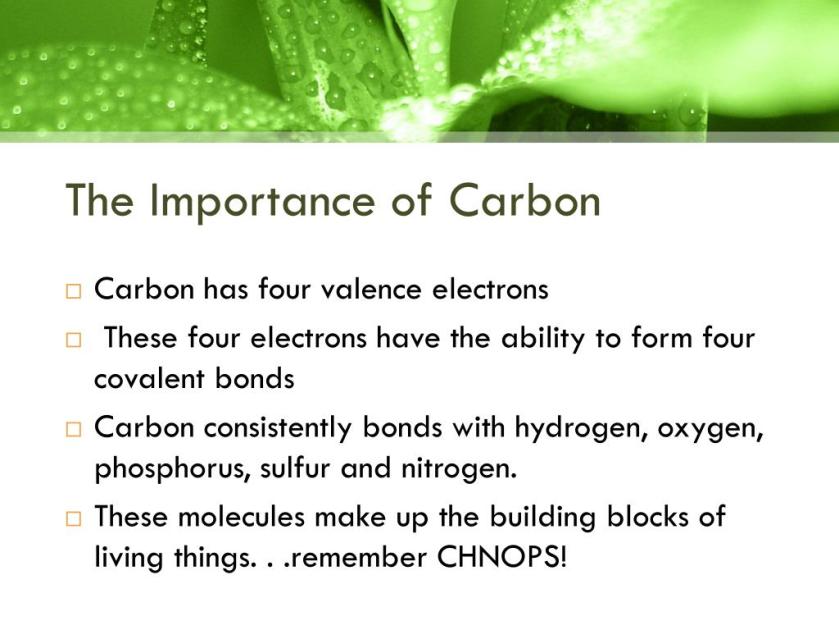
All living things are built from carbon. Humanity’s ability to release energy from carbon gave rise to industrialization, modern infrastructure, and global mobility. Living standards of society were raised, food production increased, lifespans were extended, and the public prospered. However, modern times show that excess production of CO2 threatens mass extinction. The irony is that CO2 seemed a free lunch in our early beginnings but now threatens life’s existence.

Global warming.
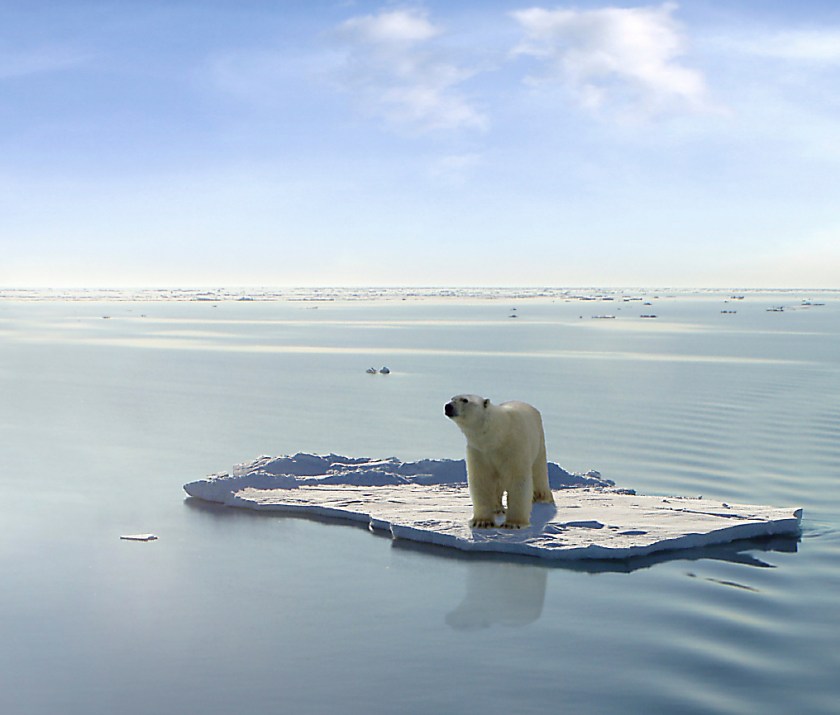
There are no easy answers to Brannen’s CO2 threat to life on earth. It is unrealistic to believe the world will abandon fossil fuel use. Some, like President Trump in the U.S., believe global warming is just a cycle of nature while supporting and encouraging continued development and use of fossil fuels like coal and oil. Though China has done more than any country to create renewable energy and clean transportation, neither China nor the world will achieve the Paris Agreement limit of a maximin 1.5-degree centigrade increase. In reality, China remains the largest emitter of CO2 with coal, petroleum and natural gas; despite being the largest clean energy investor in the world.

Brannen argues for understanding the true development direction of the world.

To reduce global warming, Brannen recommends a shift in economic and geopolitical systems with an alignment of economies based on ecological impact. He emphasizes the importance of understanding the science of geology, climate modeling, and shaping energy systems to mitigate environmental damage. None of his ideas seem likely to change the direction of world leadership. Thinking on a planetary scale is beyond the interest of world leaders, let alone the fictional “Tom, Dick, and Harry” or “Mohammed, Jose, Wie, and Ahmed”. (All stupid men, of course.)


Energy

Wysession explains coal and gasoline production costs will continue to rise making them too costly for most consumers. He believes energy production of wind, solar, hydro, and nuclear power will become more viable and less costly as science advances. From his lectures to our ears, listeners hope he is right.

Books of Interest
 Website: chetyarbrough.blog

The Science of Energy (Resources and Power Explained

By: The Great Courses

Narrated By: Michael E. Wysession

Michael E. Wysession (Brown University and Northwestern University PhD graduate in 1991, chair of the National Science Foundation (NSF).

Professor Wysession offers an overview of the world’s energy crises with a detailed history of “The Science of Energy”. It is a daunting series of lectures about the chemical nature and origin of energy with its evolving role in world economies. From a chemical perspective, energy is the capacity to do work or produce change. Wysession identifies the many forms of energy ranging from coal to oil to thermal to biological sources of fossil fuels. He reinforces the belief that global warming is largely the result of growth in carbon dioxide in the atmosphere exacerbated by the continued use of fossil fuels.

Wysession explains energy can be stored, transferred, and transformed by chemical reactions and processes. It is the bonding and breaking of atoms in molecules that create energy. He explains there are exothermic and endothermic reactions with combustion that create energy to move machinery and photosynthesis for plant growth.

To some, it is a surprise to hear of Wysession’s optimism about the future. He argues the world’s effort to sequester carbon dioxide and reduce dependency on fossil fuels will abate global warming, maintain, and sustain human life.

His optimism is based on a clear-eyed and educated understanding of how carbon dioxide increasingly damages the environment while fossil fuel use continues to pollute the air we breathe.

Wysession explains carbon dioxide is a greenhouse gas that traps heat in the Earth’s atmosphere.

That trapped heat is melting the ice caps, raising sea levels, and causing severe weather events like hurricanes, floods, and ironically, droughts. Higher carbon dioxide levels exacerbate respiratory and cardiovascular disease because of increased particulate matter in the air that causes heart attacks and strokes. Rising carbon dioxide levels increase ocean acidification that reduce biodiversity and threaten coral reefs and shellfish. Extreme weather events destroy farm crops and affect the food and water security of millions of people. Wysession notes the world economy suffers because of damaged infrastructure, increased health care costs, and loss of productivity from fossil fuel accidents and health consequences.

Greenhouse gases released by fossil fuels trap heat that causes the earth’s temperatures to rise.

The direct impacts of fossil fuel use and extraction are well known. Fossil fuels create air and water pollution that causes habitat destruction, and ocean acidification. Wysession notes both extraction and use of fossil fuels causes environmental damage from pollution’ accidents and methods of extraction from the earth.

Wysession notes some progress by world leaders in reducing the use of fossil fuels.

Wysession notes advances in renewable energy technology with solar, wind, and battery storage. He comments on the international cooperation in reducing greenhouse gas emissions and public awareness of the consequence of failure to address fossil fuel pollution. There are also economic benefits from the jobs created with solar, wind, and carbon capture manufacture. (One hopes but doubts our new President understands and acts on those job creation opportunities.)

Wysession believes it is important to keep in mind the potential of nuclear energy in the world’s future.

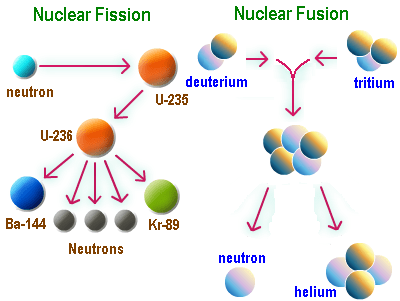
He revies the history of nuclear fission and fusion. As is widely known, our sun provides energy to the world with fusion that feeds photosynthesis which fuels plant growth by converting carbon dioxide and water into glucose and oxygen, both of which are critical needs for life on earth.

Fusion is a process where two nuclei combine to form a heavier nucleus which releases energy. The energy comes from the kinetic interaction of the nuclei. Though science has not successfully achieved the high temperatures of a sun-like process to make fusion a viable source of energy on earth, it has been done on a small scale. It has not achieved a sustained and economically viable form of energy but its potential as a clean energy source is limitless. In the meantime, fission has worked to destroy people and things while showing it can be harnessed to provide energy to the world. As of May 2024, there are 440 nuclear reactors in operation, with the U.S. having the most at 94.

Wysession acknowledges rising population demands more and more energy but he argues the average energy use of people in the United States has fallen to 10 KW per person and believes it will continue to drop in the future.

Wysession’s drop in energy use per person (whatever that means) may be correct, but the reality is that American population increases show energy use has risen in the 21st century to 94 quadrillion Btu. (Whatever a quadrillion Btu means.)

In the late 20th century, our consumption was 75-80 quadrillion Btus annually. American consumption has risen by 14 quadrillion Btu, i.e., a 17.5 percent increase in 23 years. Though the numbers are incomprehensible, energy consumption in America is rising, not falling.

He notes there are over 70 percent more people on earth than when he was born. The rising cost of gasoline will compel more transition to electric automobiles. He believes coal and gasoline use will continue to decrease for both environmental reasons and consumer costs. Wysession explains coal and gasoline production costs will continue to rise making them too costly for most consumers. He believes energy production of wind, solar, hydro, and nuclear power will become more viable and less costly as science advances. From his lectures to our ears, listeners hope he is right.

ENTROPY, TIME, & LIFE

As one gets older, the principle of entropy takes on a personal meaning. Getting older may make one wiser but not smarter.

Books of Interest
 Website: chetyarbrough.blog

The Great Courses: “Mysteries of Modern Physics: Time” 

By: Sean Carroll

Lectures by: Sean Carroll

Sean Michael Carroll (American theoretical physicist and philosopher specializing in quantum mechanics, cosmology, and philosophy of science.)

Sean Carroll presents scientists’ views of time, entropy, and life. There are instances of his lectures that are too obscure for this reviewer, but for physicists the lectures are undoubtedly clearer and more concise than for this seeker of understanding.

Carroll explains there are four physical dimensions in the world. There is length, width, depth, and a fourth dimension called time. The first three are easy to understand because they are physical characteristics while time is not. Time cannot be seen, touched, or tasted.

Time is a fourth dimension measured by calendars and clocks that divide the past and present into days, hours, minutes, and seconds. Carroll notes knowledge of length, width, and depth are of the past and present while time points to an unknown future as well as the present and past. Einstein refined the definition of time by renaming it space time which combines physical dimensions with observers’ perception of events, i.e., where and when observations occur and where the observer is located. The significance of Einstein’s space time is that the location and traveling speed of the observer affects the perceived time of events. Carroll’s attention is about time as an arrow that only points forward. Carroll explains how events of the present and past can be defined while the future is unknown. An extended meaning of the arrow of time is that it seems unlikely (though not impossible according to Carroll and the current state of physics) that we can physically return to a past.

There is a significant distinction between entropy and loss of energy. Energy is always conserved but it may not be useable for work. Entropy is about increased disorder and randomness of energy states. Carroll defines entropy as a characteristic of matter in the world which is in a state of molecular disorder, randomness, and uncertainty. This definition is reinforced by the discovery of quantum mechanics which experimentally illustrates probabilities rather than certainty at atom-level interactions. (Einstein never accepted quantum mechanics as a truth of life but only a step of discovery in physics. Einstein believed there would be a discovery that incorporates quantum mechanics in an ultimately predictive physics world.) Carroll notes a theory that explains gravity along with the proof of quantum mechanics holds a key to whether Einstein is wrong when he suggested God does not play with dice.

An interesting note by Carroll is that transition from low to high entropy has an interesting effect in an experiment with two separate enclosures that are connected. One has gas molecules in it while the other does not. There is a hole between the enclosures through which molecules can enter. Over time the two boxes will have the same amount of gas through a process of equilibration. This reinforces the idea of conservation of energy while demonstrating energy transformation.

Transformation of energy is exhibited in animal life by its eventual death, but Caroll explains it equally applies to all matter in the universe. The idea of entropy is reinforced by the arrow of time that only points in one direction.

At an atomic level, all matter transforms over time.

Entropy does not mean loss of energy. Energy is always conserved but it may not have a useful work purpose. The second law of thermodynamics, postulated by Rudolf Clausius in the 1850s, explains that heat always flows from hotter to colder through the process of entropy. For example, a low-level heat energy may not serve a work purpose, but it still conserves energy balance. Raising the heat on a cube of ice transforms its molecules from a frozen state to water to steam which conserves energy that can generate working steam molecules to power an engine.

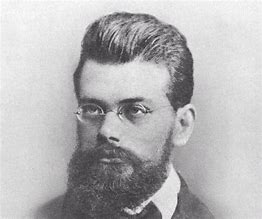
Much of Caroll’s lectures are an examination of Ludwig Boltzmann’s theory of statistical mechanics and kinetic theory. Much of Boltzmann’s contribution revolves around the concept of entropy and a detailed understanding of the behavior of particles in gases, liquids, and solids. He performed experiments that proved the conservation of energy and the equilibration of atoms and molecules as an observable phenomenon.

Boltzmann speculated that in the beginning of the universe, the chaotic activity of its beginning transformed into a lower state of entropy to create what we see in the world.

Ludwig Edward Boltzmann (1844-1906, Austrian physicist and philosopher.)

Boltzmann’s idea came before the theory of the Big Bang. The idea of the Big Bang actually presumes less entropy rather than more before the creation of the universe. Boltzmann’s idea is that the universe began in chaos (high entropy) to form what became known as a Boltzmann brain (low entropy), a thought experiment where a highly advanced brain formed in a void, from which the universe evolved. The Boltzmann brain is like the singularity of the Big Bang where cosmic dust condensed into a low entropy state and then exploded into our universe.

The origin of the universe may, in one sense, come from either a Boltzmann brain or a Big Bang. Both suggest the universe began in a low entropy state.

However, the Big Bang seems more reliably built on evidence by the measurement of an expanding universe with proven remnants (cosmic radiation) from a massive explosive event. Either theory implies the potential for a multiverse that began from a low entropy theory of our universe’s origin.

At this point in Carroll’s lectures, one’s head begins to hurt. He addresses the many ramifications of the origin of life. As one gets older, the principle of entropy takes on a personal meaning. Getting older may make one wiser but not smarter.

ENERGY MATTERS

The boon for composite material is their utility for work and play. Their bane is disposal and their effect on the environment.

Books of Interest
 Website: chetyarbrough.blog

“The Nature of Matter: Understanding the Physical World” (The Great Book Lectures)

By: David Ball

Narrated by: Professor David W. Ball

Professor David W. Ball (Professor of Chemistry and Chair of Chemistry Dept. at Cleveland State University, received Masters and Doctoral Degrees from Rice University,

Professor Bell offers a definition and description of matter in the universe. He carries on much of what is explained by Pollock in “Particle Physics”. Bell explains how physics particles form matter with the addition of energy, Bell reifies and expands Pollock’s history of physics. Though there is significant overlap in their presentations, Bell offers a more detailed understanding of matter with its component particles and the role of energy in what humans hear, feel, smell, and see.

Two facts about matter expanded by Bell are about energy’ component’s and structure’s interactions among and within atoms. Though Pollock alluded to the structure of matter and fully explains energy’s importance at the atomic level, Bell expands explanation of electrons and the way they provide energy within and between atoms.

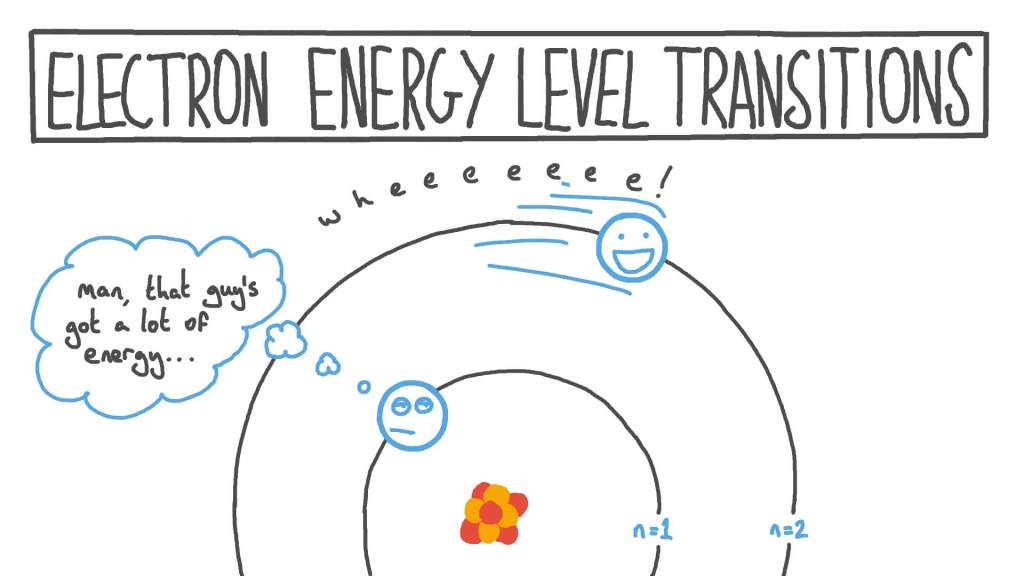
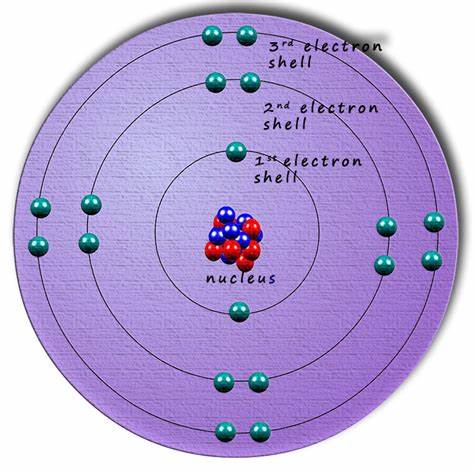
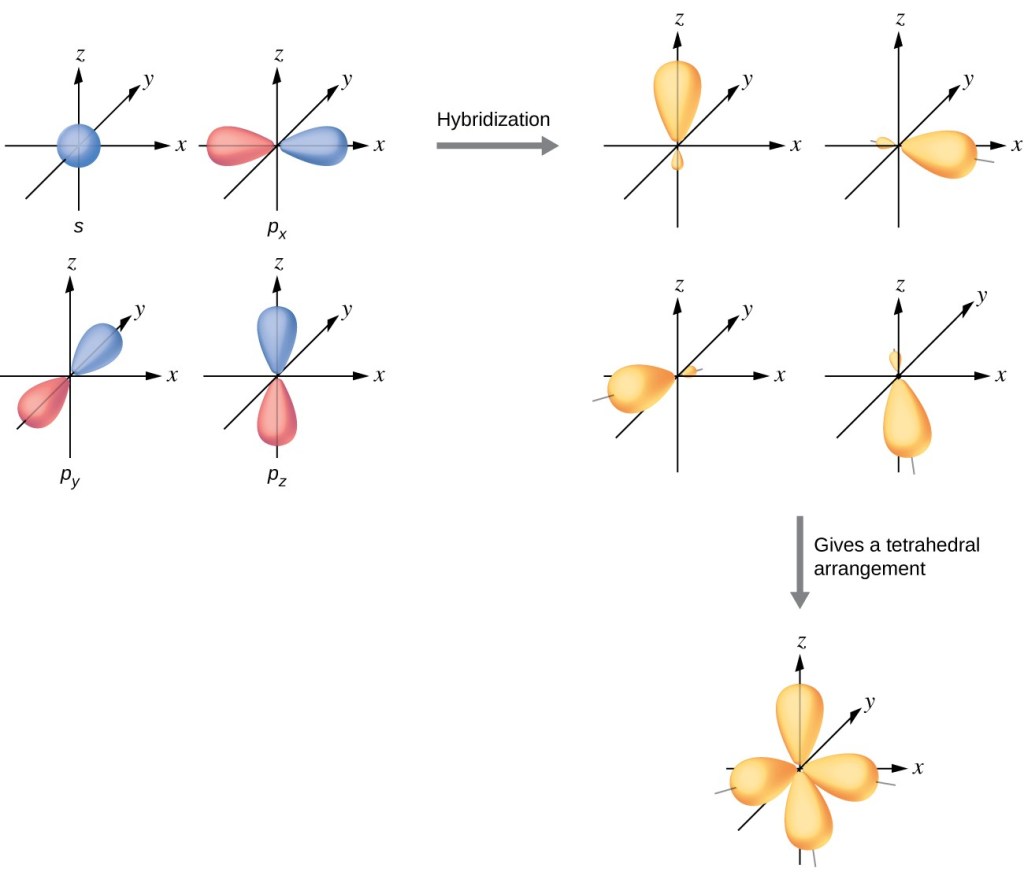
The structure of revolving electrons generate energy in different orbits around the nucleus of an atom. Initially, those orbits were thought to be like planets revolving around the sun but were found to be located within shells around the nucleus in three different orbits. These shells come in three categories. One is spherically symmetric (called the S orbital), the second is dumbbell-like with two lobes along specific axis’s (called P orbitals), and the third (which are also called P orbitals) follow a preferred direction that is not spherical. These shells are important because their reactivity and bonding play a critical role in the formation of matter.

Ball explains electron arrangement around the nucleus of an atom determine chemical properties and behavior of molecular interactions. Electrons are the wave feature of Quantum Mechanics that confound an ordered world of cause and effect postulated by Albert Einstein. What is made a little clearer by Ball is that color is an integral part of energy at the atomic level. Electron energy has discrete and precise energy levels that are arranged around the nucleus of an atom.

Without light particles (protons), energy would not exist. Ball notes electron energy is fundamentally affected by light.

Light or photons are the source of discrete energy levels called quanta that do different things–1) generate absorption, 2) cause transition between shell levels, 3) generate fluorescence, and/or 4) penetrate an atom’s dense nucleus to change mass to energy.

Ball explains why carbon is the most important element in the periodic table. Carbon’s importance is signified by its absence or presence in matter. Matter is either organic or inorganic with carbon being the measure of its classification. The astounding realization is that as a percentage of the earth’s elements, carbon is only 0.032% of our environment. (In contrast, the 3 largest fundamental elements on earth are oxygen at 46.6%, silicon is 27.7%, and Aluminum is 8.1%.) It is a reminder that earth’s living things (organic matter) are dependent on carbon, a miniscule percentage of our environment.

Without carbon, there would be no life (as we know it) on earth.

Ball’s chapter on water is an enlightening exploration of its reputation as a universal solvent with various uses and characteristics when boiled or frozen. Water’s dissolving and heat-storing capability are thoughtfully explained. Pollution is touched upon with explanations about what is being done and needs to be improved to preserve the world’s environment.

Ball explores prosthesis and material questions and solutions for the creation of body parts.

From dental fillings to tooth implants, to artificial hips, knees, hearts, arteries and breast implants, Ball explains how biochemistry and materials are critical to their manufacture and utility. He suggests the future will include brain implant enhancements and increases in human longevity.

In “Resistance is Futile”, Ball explains the value of superconductivity.

The current reality of world’ electrification is that 30% of its beneficial power is lost in transmission. Material qualities of our wired world inhibit electrical power conductivity. That 30% loss can be reduced by hugely lowering the temperature of transmission material, with the idea to invent a superconductive material that does not require super-cooled temperatures. Success in finding that material remains a work in progress. No one has found a superconductivity material that does not require super-cooled temperatures. However, Ball notes discovery would be an immense energy saver for the world.

In contrast to “Resistance is Futile” Ball notes “Resistance is Useful”.

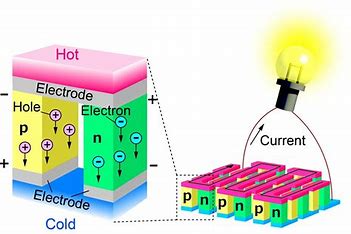
Ball explains how resistance creates heat in a semi-conductor that can be translated in a wired circuit to trigger a directed instrumental behavior or action. With the design of circuit boards with semi-conductors (specifically transistors), one could initiate or complete a series of tasks. From automating machines to creating powerful laptop computers, semi-conductor manufacture grew into an immense industry. As the complexity of tasks increased, the size of semi-conductors decreased. Gordon Moore proposed Moore’s law that suggested transistor’ size (a form of semi-conductor) in integrated circuits would become smaller and double every two years. Moore’s Law is not precisely true, but miniaturization, performance, and integration remain semi-conductor manufacturing’ goals.

The last lectures address composites and their component assembly in everything from concrete to fiberglass to tires.

These composites are formed from different materials based on their elemental properties that provide valuable materials to society. They are formed by atomic level interactions between elemental properties. Composite materials are noted as a boon and bane of society. The boon is their utility for new products for work and play. Their bane is disposal and their effect on the environment.

TIKTOK ENERGY

America and every nation must believe in themselves until, like all changes in society, the proof of an energy’s value becomes self-evident

Books of Interest
 Website: chetyarbrough.blog

“Energy” (A Human History)

By: Richard Rhodes

Narrated by: Jacques Roy

Richard Rhodes (American journalist, historian, and author.)

Richard Rhodes explains the many forms of “Energy” that have changed the course of history. The one constant is human ingenuity. The source of energy evolves over centuries of civilization. The source of energy has changed from human hands to fuel burning machines to atomic fission to fusion to information. The back and forth of human thought and action have used sources of energy to remake the world. Rhodes’ history shows progress is not always forward. Change is often resisted until results outweigh failures.

Having just gone through the first chapters of Rhode’s excellent history of energy, this review was prematurely completed because of the TikTok controversy noted in the news.

It is important to complete Rhodes’ history to have some understanding of why information is the energy of modern times. Citizens of the world are facing many of the same obstacles Rhodes wrote about in his book. That energy is information may seem incongruous to some but, Rhodes’ history about wood, coal, oil, electricity, nuclear power, and the current state of renewables is like the energy crises of information today. Rhodes does not consider what some argue is tomorrow’s energy source. Tomorrow’s energy source is information. The many trials, the fits and starts, of the energy sources Rhodes explains are the same trials facing today’s world with information as the most current iteration of “Energy”.

Energy is fuel for doing work. Its early forms are those noted in Rhodes’ history. Earlier forms of energy are still relevant, but their utility is being challenged by the immense growth of information and how information drives the future.

There are lessons to be learned about the challenges of information as energy from the experiences noted in Rhodes’ history. This is a bumpy time that shares the trials and tribulations of wood, coal, oil, electricity, nuclear power, and renewable energy of the past. Each energy source has improved the lives of its users but not without trial and error. The world is in the midst of a transition from the industrial age just as the industrial age transitioned from the agricultural age. The world is entering the information age.

The energy change today is information, most recently multiplied by artificial intelligence.

The paranoia of today is that foreign governments will use information to disrupt the progress of nations that have their own forms of government. The controversy of TikTok is a case in point. On the one hand TikTok is being used by small entrepreneurs in America to conduct their businesses. On the other, TikTok’ popularity is spreading the equivalent of porn to the public, distorting the perception and education of children. There is the added threat of influencing the public to overthrow governments. The question is would TikTok be any less a threat if it were owned and restricted to one country or another? Facebook offers the same potential as TikTok. Facebook, Google, and Amazon are energy sources for distorting truth and influencing the public in the same way as TikTok. Domestic ownership does not cure the negative potential of information distortion or abhorrent political influence.

Is TikTok going to change democratic capitalism or is it going to change Chinese communism? One suspects, it will change both. The information highway cannot be blocked. Information energy, like water, will find its own way through cracks in its environment.

The fundamental point made in the last two chapters of Rhode’s excellent history is that the world, and America, need to increase the number of nuclear energy plants based on the need to curb environmental pollution. His argument is based on learning from the nuclear accidents that have occurred, and designing nuclear power plants to mitigate the consequence of failure. He notes no energy source in the world has succeeded without learning from producer’s mistakes. Our mistakes at Chernobyl, 3-Mile Island, and Fukushima are correctable. Environmental degradation is the crises of the 21st century that threatens human existence.

America and every nation must believe in themselves until, like all changes in society, the proof of an energy’s value becomes self-evident.