Contrary to Leonhardt’s optimism, whether the American power structure continues to shift toward a more equitable treatment of the poor remains to be seen.
Blog: awalkingdelight
Books of Interest Website: chetyarbrough.blog
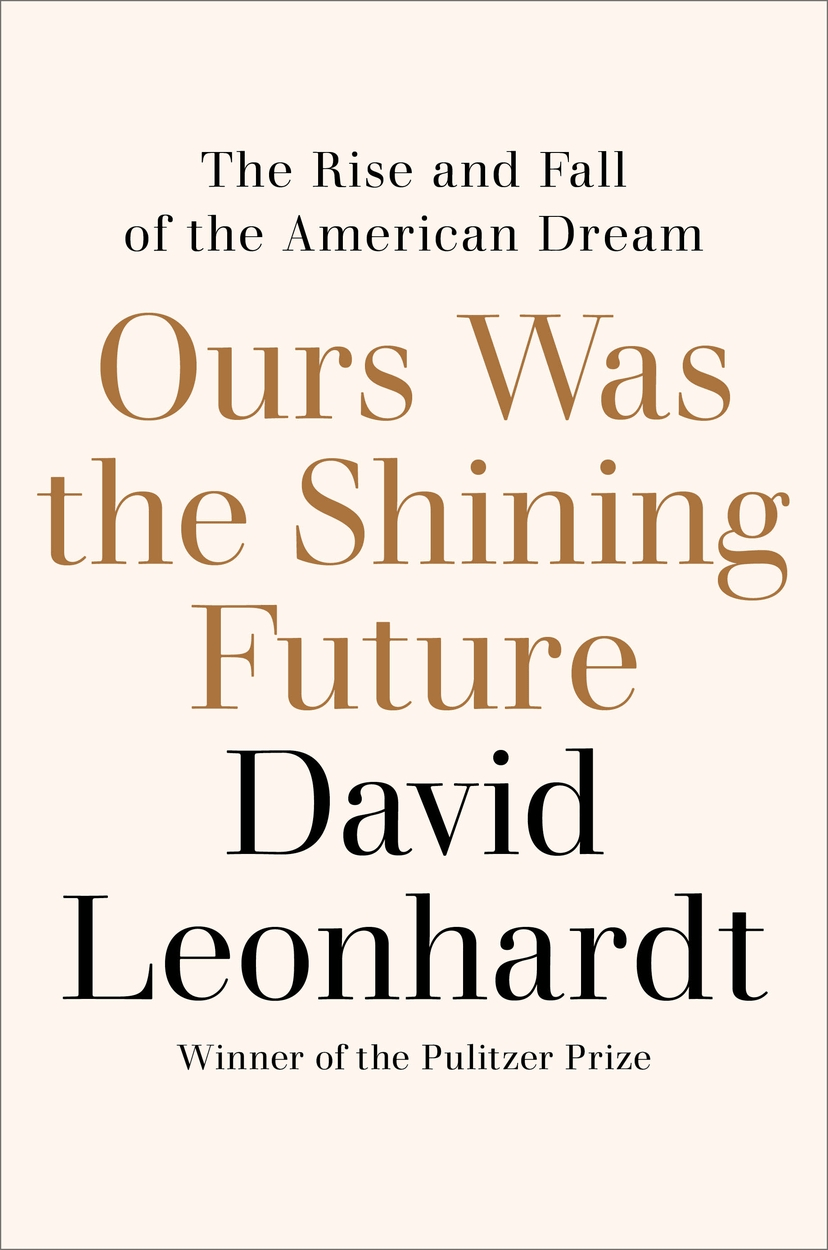
“Ours Was the Shining Future”
By:David Leonhardt
Narrated by: Dan John Miller
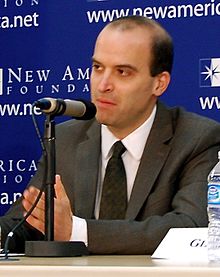
David Leonhardt (Author, journalist and columnist, writes “The Morning” newsletter for the “New York Times”, received a BS from Yale in applied mathematics in 1994.)
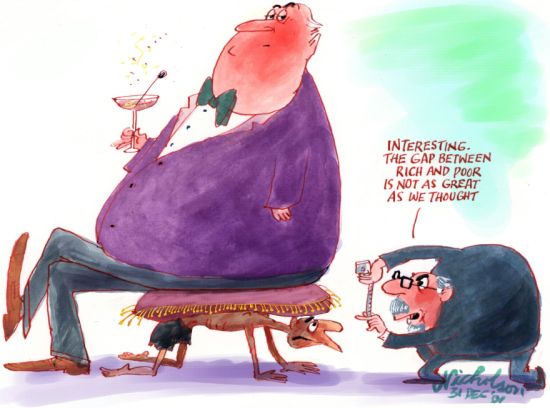
David Leonhardt writes an encomium to Democratic Capitalism in “Ours Was the Shining Future”. Some of what Leonhardt writes will make conservative Americans gag while liberals will tend to praise his view of American history. The hot button issues of 21st century America are immigration and the rising gap between rich and poor.
“Dallas, Texas, United States – May 1, 2010 a large group of demonstrators carry banners and wave flags during a pro-immigration march on May Day.”
Leonhardt’s selected historical facts argue that immigration has a cost to America that is mitigated by its contribution to the economy by second and later generation immigrants. He resurrects John F. Kennedy’s oft quoted phase about America as “A Nation of Immigrants”. Leonhardt argues the rising gap between rich and poor accelerated with the election of Ronald Reagan and subsequent tax and spend decisions made by later government administrations.
The difficulty one may have with Leonhardt’s reporting is that historical facts do not speak for themselves.
It is the power of Leonhardt’s persuasion rather than the facts of history (and one’s own prejudices) that make a credible argument for
(1) the benefit of unionization in America,
(2) the benefit of intervention by the Franklin Roosevelt administration during the depression,
(3) the aggressive tax reduction for high income earners with government overspending (beginning with Ronald Reagan) that negatively affected the American economy and disproportionately increased the gap between the rich and poor, and
(4) the monumental economic benefits from second generation immigrants like Sundar Pichai (CEO of Google), Indra Nooyi (former CEO of PepsiCo), Elaine Chao (the U.S. Secretary of Transportation under Trump), and Lin-Manuel Miranda (the creator of the Broadway musicals “Hamilton” and “In the Heights”), and others.
Leonhardt recounts the history of the union movement in America that evolved into a political power that improved the income and lives of the working poor.
He touches on the corruption of the union movement but on balance suggests more good than bad came from its representation of labor. Leonhardt argues the decline of unionization and tax policy changes in the late 20th century increased the gap between rich and poor.
Leonhardt argues immigration needs reform and infers it should begin with acceptance of an estimated 340,000 children (dreamers) born in the U.S. to unauthorized immigrants.
He suggests new immigration should be limited to immediate relatives of legal immigrants that presently live in the U.S. He reiterates the value of second-generation immigrants while acknowledging the burden borne by the economy with first generation immigrants. New immigrants generally have a language deficiency, greater education needs, and a willingness to work at jobs for lower pay than non-immigrant workers who also need jobs.
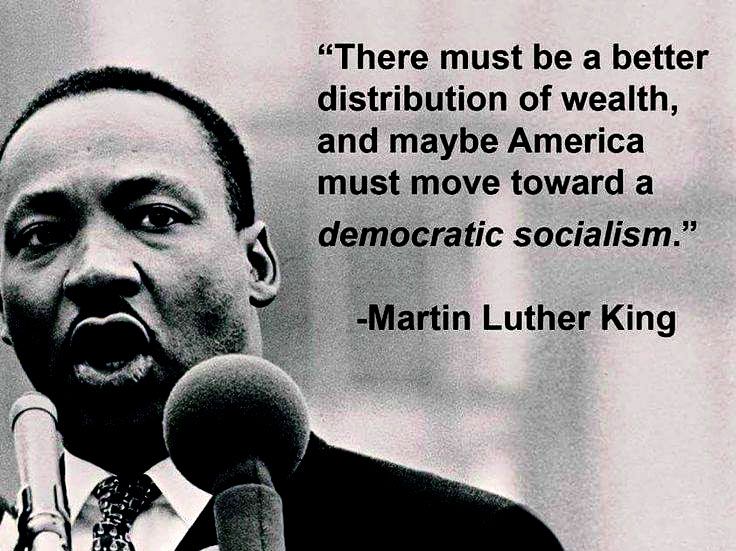
Leonhardt suggests the gap between rich and poor is a function of an unequal distribution of political power.
Leonhard believes improvement is coming from a resurgent union movement and an evolving recognition by both conservatives and liberals of the consequence of inequitable tax treatment that favors the rich.
There is some evidence to support Leonhardt’s belief in a power shift with the recent union actions in automobile, teacher. and nursing services strikes that increased their income. Minimum wages have risen in 22 states that have affected an estimated 10 million workers. The highest are in California ($16), Massachusetts ($15.75), and Washington ($15.50).
However, one is inclined to be skeptical about income gap reduction with Trump’s Presidency that further reduced taxes on the rich and Biden’s reluctance to act on tax inequality.
Leonhardt receives a Pulitzer Prize for Commentary, the Gerald Loeb Award for excellence in reporting on business, finance, and the economy, a New York Time Book Review Editors’ Choice award, and The Atlantic’s Ten Best Books of the Year for the most notable and influential book of the year. These are nice academic rewards but whether Leonhardt’s arguments are anything more than a finger in a dike, near a breaking point, is yet to be revealed.
Contrary to Leonhardt’s optimism, whether the American power structure continues to shift toward a more equitable treatment of the poor remains to be seen. The continued popularity of Trump among conservatives is disheartening and suggests otherwise.
“Girl Decoded, A Scientist’s Quest to Reclaim our Humanity by Bringing Emotional Intelligence to Technology”
By: Rana el Kallouby with Carol Colman
Narrated by: Rana el Kallouby
Rana el Kallouby (Author, Egyptian-American computer scientist and entrepreneur, founder and former CEO of Affectiva, Executive Fellow at Harvard Business School.)
Rana el Kallouby offers an autobiographical story of her personal journey from Egypt to America and her evolution from scientist to CEO of a facial recognition tech company. Though Kallouby’s story is personal, her experience shows what determination and commitment is required to start a tech company and grow it into something more than an idea. Of course, the underlying story is about American assimilation.
Egyptian women protesting inequality.
Growing up in Egypt in the 20th century, Kallouby experiences an upper middle-class life with a father who taught tech coding and a mother who works as a computer programmer for a bank. These were years of upheaval in Egypt and the Middle East for both men and women. Many educated Egyptian’s hired themselves out to work in other countries that needed technological help in business and finance. Women in the workplace in Egypt were less common than in the U.S. Kallouby’s mother chose to be both a housewife and a working mother who inspired her daughter to be more than a barer of children, homemaker, and companion to a husband.
Part of Kallouby’s early education is in Kuwait while her father works for the government.
She and her parents are there when Iraq invades Kuwait and when Gaddafi sets fire to the Kuwait oil fields when his invading army is ejected by American forces. Kallouby’s family returns to Egypt where Rana continues her education at the American University of Cairo. She earns a BA and Master of Science degree, and is subsequently admitted to Cambridge to pursue a Ph.D.
The tech experience of Kallouby’s parents lead her to an interest in coding.
That interest evolves into an idea about modern communication and its reflection in face behavior. The growing popularity of the internet diminishes personal contact that gives emotional context through facial expression. Kallouby begins spending a great deal of time coding facial expressions with the idea of creating recognition software to give more clarity to human communication.
Hosni Mubarak (1928-2020, Fourth President of Egypt.)
As a young Egyptian woman and as a devout Muslim, Kallouby chooses to marry a fellow Muslim who has his own tech business in Cairo. They buy a house and eventually have two children, a boy and a girl. As she commutes between Boston and Cairo, President Hosni Mubarek resigns under political pressure fomented by the Muslim Brotherhood. Mohammed Morsi is elected in 2012 as the new leader of Egypt. Morsi becomes Egypt’s President because of his religious background and support by the Muslim Brotherhood. Because of Morsi’s inexperience as a government leader and its troubled economy, Egypt’s military re-takes control of the government under Abdel Fattah el-Sisi in 2014. Though little is said by Kallouby about these events, her life’s journey continues.
Kallouby becomes obsessed with the idea of coding facial expressions.
That single-minded focus leads to further education in England and the U.S. After receiving a master’s degree, Kallouby chooses to seek a PhD at Cambridge with facial recognition as her thesis. Because of her chosen thesis, Kallouby’s education and drive lead her to an MIT lab in Boston.
This begins Kallouby’s Americanization which carries good and bad consequences.
Kallouby’s single-minded focus is two-edged. As a devout Muslim, she marries a fellow Muslim in Egypt. The person she marries is in the tech industry. He manages his own business in Egypt.
Kallouby’s travels between Egypt, England, and the U.S. create a growing disaffection in their marriage.
Though they manage to have two children, the strain of separation leads to divorce. The good that comes from Kallouby’s focus and ambition is evidenced by her success in being a co-founder of Affectiva. She did not do it alone and was aided by Dr. Rosalind Picard (the other founder), both of which were researchers at the MIT Media Lab. The bad is the personal price Kallouby pays in a divorce from her Egyptian husband and the hardship of being a single mother with two children.
Kallouby’s journey illustrates the great value of immigration to America.
Immigration comes with a personal price, but America is blessed by those who have the will and drive to make a better life for themselves and others. Kallouby’s story shows how religion, nationality, and personal ambition add to America’s prosperity. Kallouby became an Egyptian American with a foot in each country. Both Egypt and America are better for it.
CEOs and their Boards need to compensate workers equitably.
Blog: awalkingdelight Website: chetyarbrough.blog
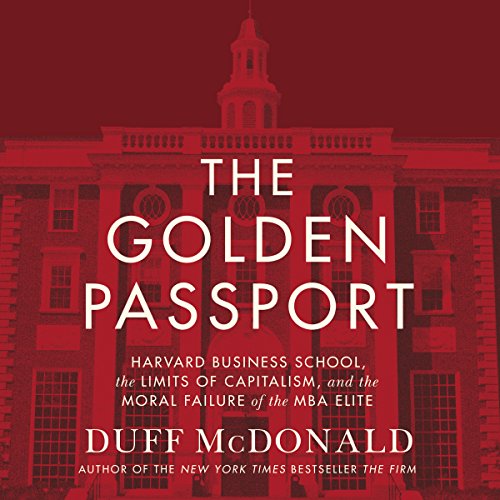
“The Golden Passport: Harvard Business School, the Limits of Capitalism, and the Moral Failure of the MBA Elite”
By: Duff McDonald
Narrated by: George Newbern
Duff McDonald (Author, Canadian American, University of Pennsylvania graduate in Finance.)
“The Golden Passport” explains how Duff McDonald believes America got to today’s state of income inequality. McDonald argues that inequality is largely created by one education system, Harvard Business School, founded in 1908. According to a team of academics that publishes “Academic Influence”, HBS produces most of the Fortune 500 companies’ CEOs. With an estimated 70,000 HBS alumni, there is some merit to McDonald’s argument, but the fundamental cause is not education but human nature.
The extent of HBS’s impact on business practices certainly has influence on business leaders and teachers around the world. This is a similar argument made by William Deresiewicz in “Excellent Sheep” about America’s political leaders and administrators who were educated in exclusive ivy league universities.
Both authors suggest Ivy league universities are turning out management automatons that tend to think inside the same box, i.e., a mind-set that perpetuates income and power as the primary motivations of those who manage the business economy. Both authors argue Ivy league’ graduates permeate the management structure of the largest businesses and most powerful political offices in the world. The graduates of the Ivy league have common backgrounds and education with predictable answers for thought and action that have accelerated and reinforced income inequality in America.
Ayn Rand (1905-1982, Russian-born American writer and philosopher associated with capitalist’ self-interest. Though not educated at Harvard, Rand is considered a philosophical precursor to a belief that one should have liberty of thought and action, i.e., the libertarian view of society.)
Though HBS may be a promoter and reinforcer of income inequality, it is only an influencer of what makes humans acquisitive. The majority, if not all humans, are self-interested. Though self-interest varies among individuals, wealth is power–particularly in capitalist countries. The more money one has the more freedom and independence accompanies their lives.
McDonald’s point is that the HBS’s business model focuses on profitability as the only measure of business success. Because of that focus, business executives myopically view workers as a cost rather than source of company profitability. By reducing worker costs, executives are rewarded with uncapped compensation policies.
Business decisions are always made without knowledge of all information needed to direct an organization’s actions.
The case study method of education, pioneered by the Harvard Business School, focuses on profitability as the primary, if not singular, goal of a business enterprise. Efficiency becomes the mantra of business management which discounts, often ignores, workers’ compensation within corporations. By focusing on profitability, there is a point of diminishing return because of its impact on workers’ motivation. Pressing for higher productivity and reducing labor costs have diminishing rates of return that are not taken into account by CEOs interest in cost cutting. CEOs are incentivized to choose efficiency over worker welfare and productivity.
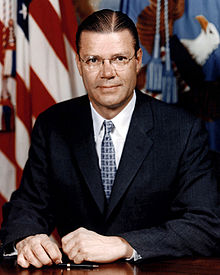
Robert McNamara (U.S. Secy. of Defense in the Kennedy administration.)
The real-world example McDonald uses to make his point is the war in Vietnam and the role of U.S. Secretary of Defense, Robert McNamara. McNamara is a Harvard graduate that by any measure was a brilliant student. He outclassed most of his business class students in his ability to bolster arguments with recalled information that most would have to look-up to use as part of their policy decisions.
Henry Ford (1863-1947, American industrialist and business magnet who founded Ford Motor Company.)
McNamara accepted the Controller’s job at Ford Motor Company when Henry Ford’s son took over the company. His education at Harvard led him to focus on efficiency as a primary tool for improving the business performance of Ford. His drive for efficiency is based on reducing costs of labor and material while increasing automobile production.
McNamara developed what became known as the “Whiz Kids” of management that carried out his drive for efficiency to increase corporate profits.
By the measure of profitability, the “Whiz Kids” were extraordinarily successful. The drive for efficiency increased corporate officer salaries because of corporate profits. What is not taken into consideration is that it disproportionately depressed worker compensation increases. The long-term worker’ effects were not part of the “Whiz Kids” concern; in part because those effects are difficult to measure. There are many reasons why Ford’s profits fell after McNamara left the company, but McDonald implies an underlying cause is Ford’s penchant to address worker income as only an efficiency measure. Ford loss of profit rises in the early 1970s and reaches $2.3 billion in 1991.
McNamara became Ford’s General Manager in 1949 and served as President in 1960. He left Ford in 1961 to become President Kennedy’s Secretary of Defense.
McDonald writes that McNamara’s experience at Ford led him to believe statistical analysis is the only basis upon which success may be measured. That focus discounted human intensity of belief in the political cause of the Vietcong. American superiority on the battlefield could not defeat Vietcong political intensity. McDonald’s point is that a CEO who looks at employees as only cost centers rather than humans with a social underpinning will eventually cause business failure.
The difficulty is in measuring worker social impact on performance. A CEO is unable to make rational decisions about employee compensation without better understanding of workers’ needs. With CEO emphasis on corporate profits, the inclination is to either to ignore or minimize workers’ compensation when making business decisions. The end result is to widen the compensation gap between CEO pay and most employees of the company. McDonald argues the 1970s became the beginning of a pig feeding for corporate CEOs that has only accelerated with further influence by HBS’ education changes.
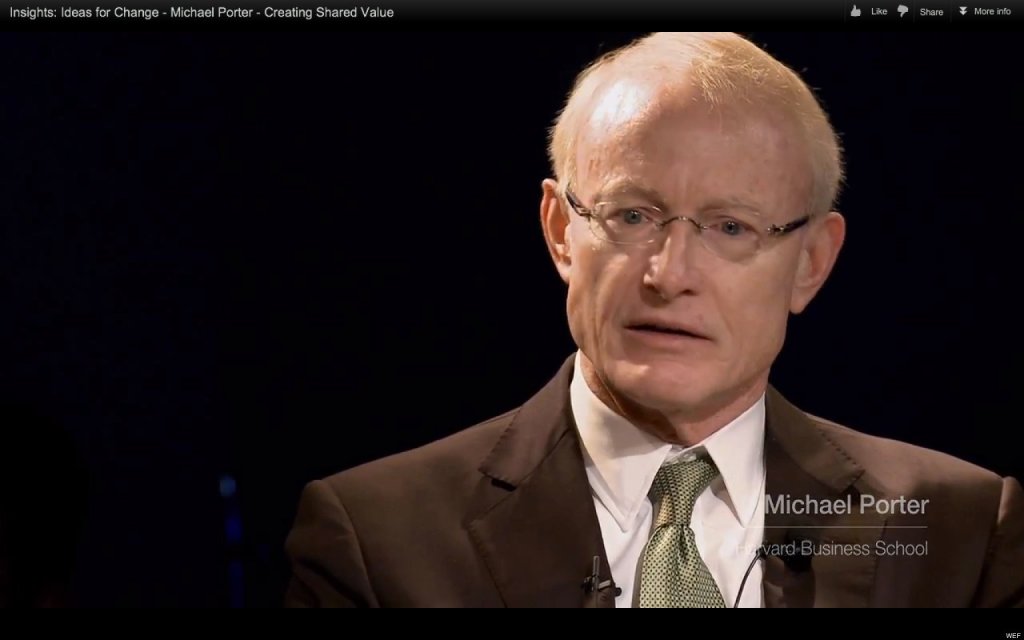
McDonald explains how business education at Harvard created a self-perpetuating engine for CEO salary acceleration with HBS Directors like Michael Porter who created the Five Forces Framework. The Five Forces Framework is a statistical analysis of the competitive environment of specific industries. By using that analysis, business mergers and divestiture decisions could be made based on profitability.
Michael Porter (Born in 1947–appointed Bishop William Lawrence University Professor at Harvard in 2000. Considered the strategy guru at Harvard that led to mergers and acquisitions around the world.)
The net effect certainly increased business profits but minimized employee enrichment while multiplying CEO compensation.
The Five Forces Framework led to a spate of mergers that continued to accelerate CEO compensation without commensurate salary increases or, in some cases, continued employment of workers.
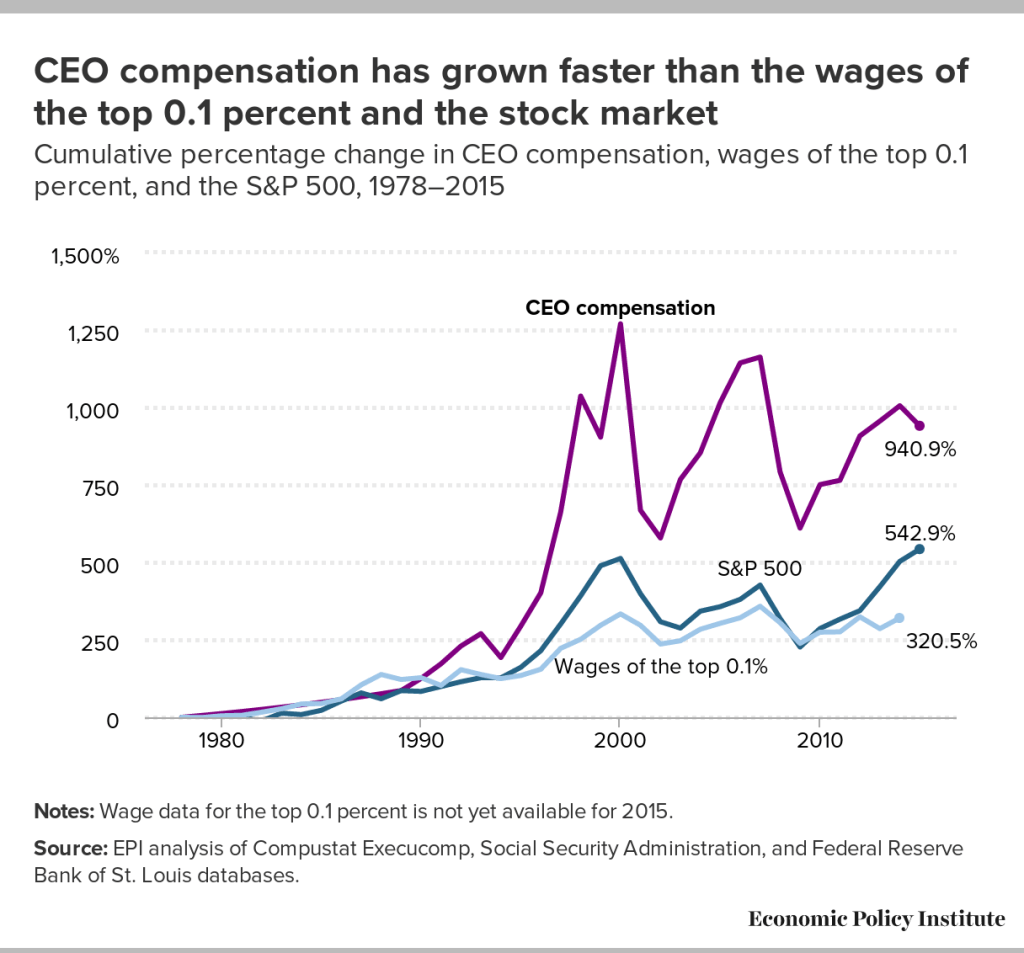
Before beginning “The Golden Passport”, one might think the unconscionable incomes of CEOs of large corporations is a moral, not pecuniary, observation. However, CEO’s pay in relation to salaries of working men and women is not about morality. It is about money, worker employment, and the work contribution a motivated worker offers to business. There are many variables to the profitability of a corporation with a CEO’s contribution being management judgement, time, and skill. The argument based on morality ignores the truth that one person’s role as CEO cannot be justified when it is 300 to 400 times the annual salary of a worker (an estimate noted by Statistica, a global analytics software package).
How can any human being be worth 30 to 40 million dollars a year–even if he/she is expected to work every hour of a 24-hour day as a CEO? McDonald suggests HBS’ educated CEOs press for short term profitability because it offers outsize rewards for their performance. Workers are laid off when mergers occur and they never receive compensation increases equal to bonuses paid CEOs.
McDonald goes on to give many examples of the evolution of HSB curriculum for students. The emphasis remains based on statistical analysis of profitability because it is an easily measurable criterion. Corporate performance improvement, whether it is improved profit or an industry’s ability to stay in business, CEOs and their Boards need to compensate workers equitably.
Scott Galloway (Author, Professor of Marketing at NYU Stem School of Business, founder of several businesses.)
Scott Galloway is a professor of Marketing at NYU’s business school. He uses his experience and education to explain what happened in America during the Covid19 crises and what it revealed about 21st century capitalism. Galloway briefly writes of his boyhood raised by a divorced mother who profoundly influences his life.
Galloway is a self-professed introvert who is both an entrepreneur and business consultant who believes there is a need for government to revise its relationship with business.
Galloway notes the great power of capitalism is based on freedom to innovate and compete in the world of business. Business produces product and service for the public in return for the cost of doing business and the hope for profit. Galloway’s primary focus is on technology companies that grew from an entrepreneur’s idea to marketplace behemoths. Galloway’s education and experience suggest American government needs to redirect publicly held businesses to change their corporate focus from protecting stockholders to protecting workers.
Galloway argues covid19 accelerated restructuring of the business world.
Business has evolved from face-to-face transaction to internet ordering and delivery. Retail and services industries were gob-smacked by loss of customers who changed their social and purchasing habits because of the contact threat from exposure to the Corona virus that killed over 1,000,000 Americans.
Storied companies like J.C. Penney filed for bankruptcy because they could not adjust to changed social and business environment caused by Covid19. The world is still adjusting to the consequences of the pandemic.
The commercial real estate industry is undoubtedly the next crises for the economy. Having an office or a business away from home became less important with the advent of technology. The internet reduces the requirement of human presence in a central location.
Businesses traditionally driven by touch and feel relationships were made less safe by covid19. With the internet of things and people, it became more convenient for customers to buy product on the internet and work from home. As the threat of covid19 diminished, service industries revived, particularly restaurant and entertainment industries, but on-site retail sales continued to struggle. Exceptions are box stores that offer lower prices or retailers that have mastered the art of internet sales and delivery.
Galloway goes on to note the gap between rich and poor that diminishes human value while increasing wealth of stockholders at the expense of workers.
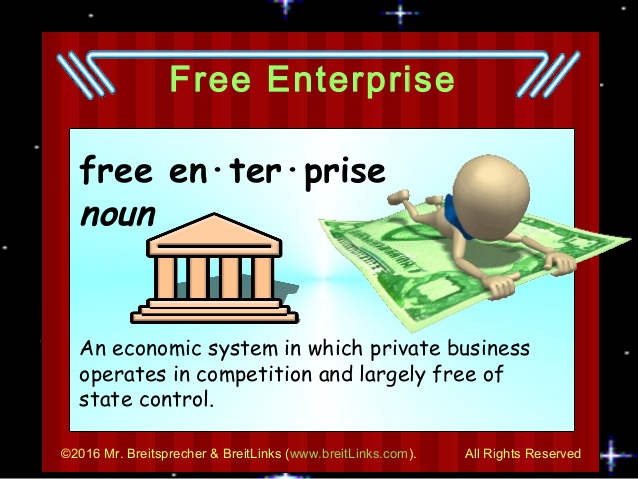
The median annual income of white families in America in 2019 was $188,200, Black families $24,100 and Hispanic families $36,100. Galloway suggests this unconscionable gap is caused by the failure of government to protect workers rather than stockholders as the business environment changed. Galloway suggests inept regulation by government politicians of the free enterprise economy accelerated the gap between rich and poor.
The election process is unfairly weighted away from public interest toward special interests that contribute huge amounts of money to get people elected that are beholden to their financial supporters.
Government lobbyists paid by energy producers, internet scions, automobile manufacturers, and banks were bailed out with government protection of stockholders with little help for workers who became unemployed.
Covid19 benefited tech companies that have changed the face of business commerce in America. Galloway addresses the technological revolution that was accelerated by covid19. Their stock value accelerated at a faster rate than businesses of the industrial revolution. The tech revolution’s change in commerce was equivalent, if not greater than the agricultural and industrial revolutions of the past. The rate of change for business has been greater and more accelerated by covid19.
Amazon, Google, Facebook, Microsoft, and to a lesser extent, Tesla, Netflix, and Twitter (at least prior to Elon Musk’s acquisition) hugely benefited from social isolation caused by covid19.
Galloway optimistically suggests the high cost of education can be reduced by technology. (Maybe, but one wonders about the effectiveness of home schooling during the pandemic. Students fell behind during the pandemic.)
Galloway’s two highlighted potentials of the technology revolution that are not fully realized are education and business. Galloway argues remote learning will improve, and the cost of education will become more competitive and available to the general public. Businesses will become better managed and responsive to the needs of society as better government regulation of the tech age is realized.
The fundamental point made by Galloway is that government needs to change its focus to protection of workers rather than stockholders to realign the gap between rich and poor in the world.
Re-education classes for the unemployed.
Stockholders deserve their fate whether they win or lose the value of their investments, but workers are the driver of business success. Without protection of workers, the American economy will decline, and the influence of democratic capitalism will be diminished. Galloway infers free enterprise in a capitalist society will not regulate itself, but it will improve with prudent government regulation that serves workers first.
Galloway suggests the benefits of socialism will be best served by prudent government regulation of capitalism. Competition and innovation remain the blood and bone of improved economic equality, but workers are undervalued cells of that business foundation.
Galloway acknowledges the benefits of socialism but insists capitalism is the avenue for realization of the best socialism can offer a nation’s citizens. The conjunction of the pandemic and growth of technology have reduced social contact and created harmful media networks that distort truth, attack cultural difference, and exacerbate division and social conflict.
Business competition and innovation create winners and losers but if the field of play is level, society benefits. Moving fast and breaking things is the mantra of the tech world. It is up to government to regulate business to level the playing field. Galloway argues protection of workers, eliminating money’s influence on elections, and allowing stockholders to lose their investment when businesses fail are keys to improving American capitalism.
Scaling People (Tactics for Management and Company Building
By: Claire Hughes Johnson
Narrated by: Claire Hughes Johnson
Claire Hughes Johnson (Author, former chief operating officer of Stripe, lecturer on management of companies, former technology and operations manager.)
In “Scaling People”, Claire Hughes Johnson offers an insightful and actionable skill-set for both creators and managers of eleemosynary, government, and business organizations. She explains how large and small organizations can become more effective in executing their plans for development.
Johnson suggests every successful organization must have a clear statement of mission. “Mission” statements are the beginning of an entrepreneur’s creation of a company, a non-profits’ purpose, or a government’s departmental objective.
Every effective manager within an organization begins with a clear understanding of mission. Small and large organizations become successful when managers understand their organizations’ mission. The only difference is an entrepreneur’s mission is to prosper and grow a business, a minister’s mission is to ameliorate sin and grow a congregation, a charities mission is to grow and do good for others, and a government agency is to provide public service and grow as needed for those who cannot help themselves.
Johnson explains a manager’s success begins with self-understanding.
Johnson notes the ancient saying inscribed on the Oracle of Delphi in ancient Greece, “know thyself”. Knowing oneself is being aware of one’s nature and limitations. Johnson infers every good manager is a leader because, by definition, managers and leaders lead people.
Johnson works in the high growth industry of technology but her book applies to all organizations whether staid and maintenance driven or growth oriented.
When addressing growth companies, Johnson explains high performers fall into two categories. She classifies the first as “pushers” and the second as “pullers”.
Both are valuable employees but Johnson notes pushers want more money and power while pullers are subject to burn-out. Though their reasons are different, both may leave the organization. The potential cure Johnson suggests is a biannual review, designed in different ways, to motivate them to stay. The pushers should be counseled on what they can do within the company that trains them to take on more responsibility in return for more pay and power. Johnson’s counsel to pullers is to acknowledge their contribution and offer a new challenge that benefits the company and their skill without taxing their life/work balance. Johnson notes this does not always work but it directly confronts, and tries to serve the needs of employees and the organization.
Once a mission is understood by a manger, organizational missions are accomplished with the help of others.
A large part of Johnson’s book is how to make organization’ managers effective leaders of their respective management teams. Johnson explains teams are organized to achieve goals to meet an organization’s mission as a sin quo non of success. Johnson’s book about organizational management is based on her challenging experience as a manager for Google and as the Chief Operating Officer for a successful tech company called Stripe.
Johnson addresses work horses of organizations that at times are low performance employees. Johnson argues their biannual reviews require recognition of measured performance deficiencies with constructive conversation about how they can improve. Johnson suggests it is important to recognize their longevity as employees and their cultural value as longer-term employees. However, if performance does not improve by the next review, a performance plan is written that offers what may be a final opportunity for a low performance employee. If that fails, the employee may be discharged. (Second chances are in the best interest of organizations because of the investment they make in hiring and training employees, let alone continued employment for the worker.)
“Scaling people…”, is about measuring yourself as a manager and others that are a part of a companies’ team. The first step is scaling yourself and your own strengths and weaknesses. That is Johnson’s insight to her own organizational effectiveness. Good managers and leaders build on their strengths. That is why Johnson explains how important it is to know yourself. To Johnson “knowing yourself” is the source of an effective manager’s productivity. By knowing yourself, one can overcome personal weaknesses with people who have complementary skills. The key to success is in team building that achieves an organization’s defined mission.
The hard part of Johnson’s insight is in having self understanding. It is made harder by a willingness to reveal it to others. In that willingness, team cohesion is formed. Team members experience self-understanding’s value by fulfilling an organization’s mission.
Only with self-realization, does one focus on mission with the energy and will needed for organizational success. Achieving an organization’s defined mission requires team work.
A manager/leader needs to focus on strengths and weaknesses of teams in the same way he/she understands their own strengths and weaknesses.
Johnson notes self-understanding is only a beginning. “Scaling people…” requires measurement of performance against goal. Teams have to be monitored, measured, and adjusted to more effectively achieve the organization’s defined mission. Johnson offers a number of tools that can be used to monitor, measure, and adjust a team’s effectiveness.
“Scaling people…” is a great addition to the literature of organizational management. “Scaling people…” is an excellent tool for forward thinking organizations interested in growing and improving their performance.
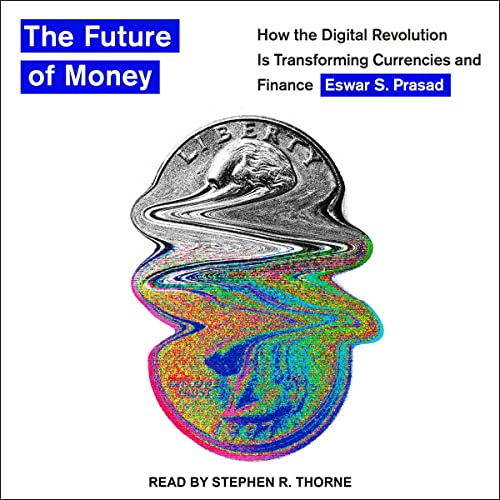
The Future of Money (How the Digital Revolution is Transforming Currencies and Finance.)
By: Eswar S. Prasad
Narrated by: Stephen R. Thorne
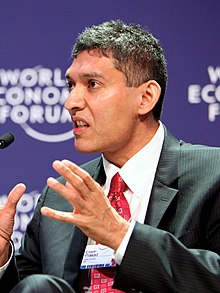
Eswar Prasad (Author, Economist.)
“The Future of Money” offers a short history and long explanation of the strengths and weaknesses of filthy lucre.
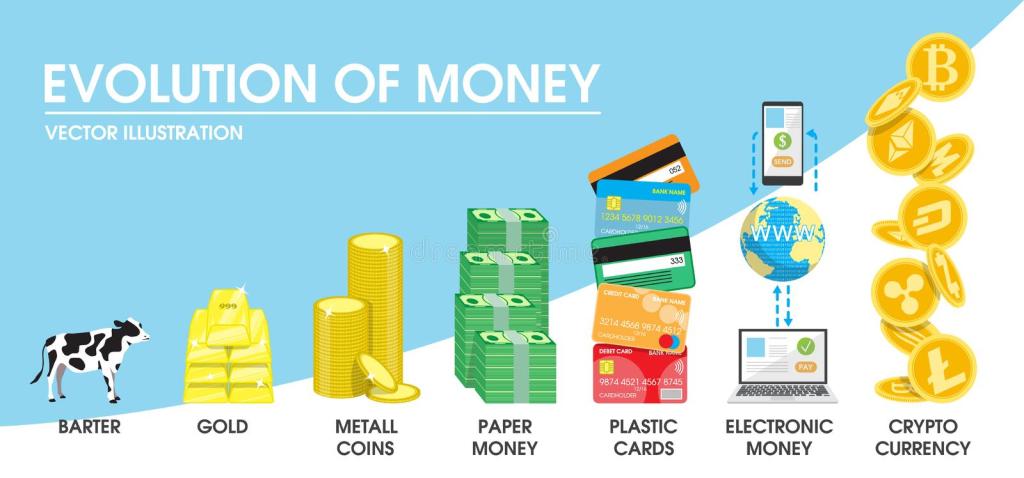
Prasad begins with the often-told story of how money began as a precious metal transforming to paper for easier exchange between seller and purchaser. The value of money has always been malleable. Its value changed in early times based on authoritarian rule and later in ways Prasad’s book explains as an evolutionary trust of money.
Genghis Khan is at one end of the spectrum where currency value is based on the value set by the ruler. If one disagrees with money’s mandated value, you are executed. Later the value of money is supported by full faith and credit of respective governments, inferring execution is less likely.
In modern times, value of money is turning to technology. Still, in every case, Prasad notes money’s value is based on trust.
Eswar Prasad explains money’s transformation from coin to paper to digital exchange. Prasad shows digital money is less tactilely filthy, but its form and value is as impactful as ever. In the remainder of Prasad’s long book, reader/listeners find how difficult it is to provide foundational legitimacy for digital currencies.
A number of chapters of Prasad’s book reveals the many financial transaction rails (electronic payment methods) that have been created with the widening use of the internet.
A cashless society began with credit cards and has proliferated to where “coin of the realm” is not accepted by some vendors. Prasad explains transaction fees on credit cards have led to alternative payment rails to reduce costs to both vendors and buyers.
As of 2021, the most commonly used alternative methods of payment are PayPal, Apple Pay, Google Pay, Bizum, WeChat, and Alipay. The number of users of these payment rails is increasing because of credit card’ fees.
Two with the most customers, WeChat and Alipay have over a billion users each.
Today, particularly after the FTX fiasco, digital money’s value has lost trust. All forms of value in money are subject to human fallibility. The fallibility of any form of money is in humankind’s nature which is subject to ignorance, greed, and power.
An attempt is made to mitigate greed and power with bitcoin. One suspects ignorance of digital currency remains for most of the public. Anyone can access the bitcoin platform. Theoretically no one can identify a singular person’s account without that person’s personal access code that can only be entered from the owner’s computer device. However, there remain fundamental reasons for one to be skeptical of a bitcoin owner’s security. Trust continues to be a concern for cryptocracy’s utility and value.
Aside from business ineptitude, having one’s own key to a bitcoin entity is no guarantee of security, even if any entry from another computer cannot use the key? What keeps a hacker from capturing a user’s code in blockchain and cloning a bitcoin computer to use the key to steal bitcoin value?
Theft of passwords and private keys is hackable if information is kept anywhere in a computer file. This is not to mention the capability of social engineering by smooth-talking hackers.
FTX is in court today. Value of bitcoin assets has fallen to the point of FTX’s possible bankruptcy. It is unclear if the FTX collapse is from weakness of bitcoin transparency or its founder’s ineptitude. In any case, there is a precipitous loss of trust in bitcoin value.
How is bitcoin blockchain security significantly different in today’s tech-savvy world? One argument is that its control is decentralized rather than centralized. So what? Decentralized control carries its own set of risks.
The reality is bitcoin’ blockchain use and creation is part of what has led to the FTX mess. The so-called strength of not having centralized regulation of digital currency is shown to be a weakness. The pitch is that bitcoin is designed and intended not to require government regulation because of the mystical belief that regulation magically appears because of user transparency. Blockchain security does not appear to be any more trustworthy than a paper dollar in a tech-savvy world.
Another issue raised by Prasad is value instability of bitcoin.
Crypto currency is being tested by different governments around the world. These governments are trying to widen crypto currencies trust and value through greater diversification of support from nation-state’ assets. The idea may reduce instability, but there remains a question of oversight. Yes, oversight–that dreaded function labeled government regulation. User transparency is not enough as is proven by the failure of FTX.
Prasad tackles the complexity of inflation and the difficulty of controlling its negative impact on public welfare and economic health. Inflation often leads to a cycle of impoverishment that hits those who are poorest the most.
When inflation occurs, the cost of living (particularly food and shelter) is disproportionally lost by the poor. What is called helicoptering of money to families below a certain income level mitigated the worst consequence of unemployment during Covid in the United States. Covid’s impact and the decision to helicopter money caused a cycle of inflation in America, but it also reduced hardship and stabilized the economy.
Prasad notes inflation is being mitigated by Federal Reserve’s tightening of monetary policy by raising interest rates. The risk of that action is that those at the lowest end of the income market may lose their jobs because of industry layoffs. Prasad explains rising interest rates reduce business investment which can trigger a downward spiral in the economy.
It seems no coincidence that homelessness has become a national problem in America at the time of monetary policy disruption. Some argue change in monetary policy and Covid recovery have nothing to do with homelessness. Some argue citizens have just lost their motivation to work. Believing it is a loss of motivation seems ridiculous when one looks at conditions in which the homeless live. Whatever the cause, America is the wealthiest nation in the world and can reduce homelessness by acting responsibly.
Though not addressed by Prasad, homelessness is a national problem that should be funded by the national government at a local level so cities can adequately attack its multiple causes.
Prasad notes helicopter funding is only one arrow in monetary policies government quiver. Digital currency has made some people rich, but its control needs to be regulated to serve the needs of society more broadly.
One idea Prasad explains is the idea of a central bank digital currency (aka CBDC), presently being studied by the Federal Government.
Bitcoin, under the supervision of government, is a contradiction of the original inventor’s intent. However, the idea of blockchain, technology, and bitcoin opens a door to improving economic conditions of the poor around the world. The potential for CBDC, in concert with today’s access to internet payment rails, is a growing 21st century economic opportunity. It is not because of the idea of CBDC alone, but CBDC in concert with the internet and mobile phones could change the course of economic history. The evidence Prasad points to is Africa and the creation of a mobile phone service that offers the poor a way to pay bills without a checking account and collect income for product created for sale.
Prasad explains how people in the lowest economic classes have gained access to money for pay and income by using features of mobile phones.
Prasad explains the many experiments with digital currency are changing the world’s economy. Prasad notes the general concern is the amount of influence and regulation a government digital currency might have on its country of origin. On the one hand it offers opportunity for economic improvement. On the other, it creates a vehicle for an intrusive invasion of privacy. Anything entered into a computer potentially becomes public knowledge.
Further, Prasad notes the American dollar is already the most influential currency in the world. The idea of an American controlled digital currency is threatening to many countries, both in western and eastern blocs.
One who reads Prasad’s book is likely to conclude America will eventually create a digital currency. FTX shows digital currency cannot regulate itself without oversight. Whether America will remain the big dog in currency influence depends on an unknown future. No government’s digital currency has been successful as of this date.
China’s Great Wall of Debt (Shadow Banks, Ghost Cities, Massive Loans, and the End of the Chinese Miracle.)
By: Dinny McMahon
Narrated by: Jaimie Jackson
Dinny McMahon (Author, former reporter for the Wall Street Journal, Dow Jones Newswires, and former fellow of the Woodrow Wilson International Center for Scholars.)
Dinny McMahon lived in China for ten years before writing “China’s Great Wall of Debt”. He is neither the first nor undoubtedly the last chronicler of modern China’s future.
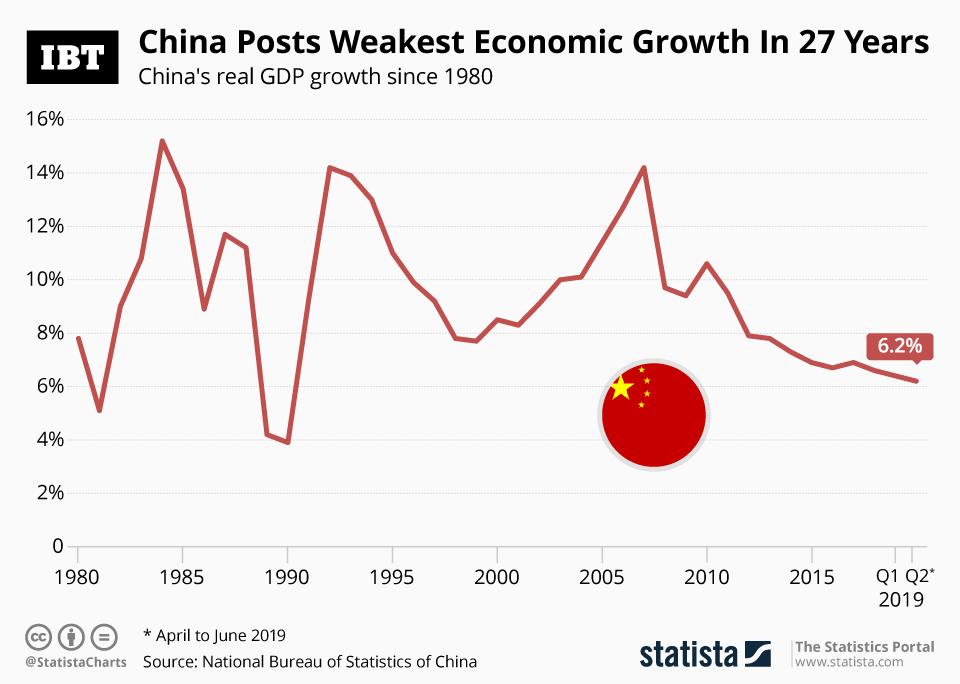
Taking his observation of China’s remarkable advance in the last 27 years, McMahon joins others who argue China is at the precipice of a cyclical economic trough.
Visiting China for the first time, one is amazed at the modern look of Beijing. Its bullet trains, wide boulevards, and streetscapes remind one of model cities like other storied capitols of the world.
On the other hand, outlying suburbs, and cities fit the description of McMahon’s “Ghost Cities” with block-to-block, mid-rise apartment buildings, no tenants, and slap-dash HVAC wall-units.
Wealth is a function of the have and have-nots in China. This is a familiar refrain to many who believe it equally describes America’s economy.
McMahon explains how the last twenty years of economic growth in China is a function of real-estate monetization that has reached a mortgage nadir, teetering on the edge of collapse. McMahon notes the difference between America’s real estate booms and busts and China’s is that it has taken America two hundred years to reach its present prosperity while China has done it in less than 3o years. He implies that time difference has benefited America by giving it more tools than China for dealing with economic inequality.
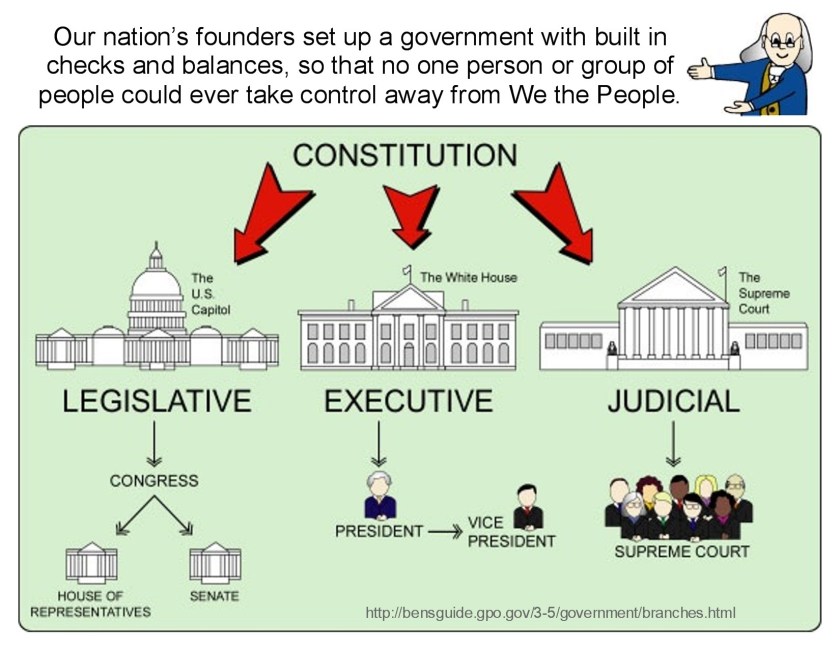
Adding to McMahon’s note about the time difference is the political difference between America and China. America’s political system is tested by checks and balances, both by party and governmental organization.
China has a singular party with one leader who has few checks and balances, with a singularly authoritarian governmental organization.
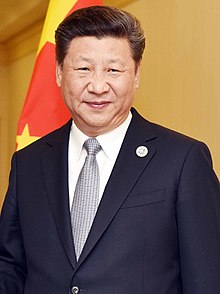
When leadership changes in America, political and economic policies are only incrementally adjusted. In leadership change in China, political and economic policies may be dramatically altered or even abandoned. That truth is evident in China’s transition from Chiang Kai-shek to Mao to Deng Xiaoping, to Xi Jinping.
McMahon’s fundamental point is China’s rapid economic growth is founded on a financial structure dependent on real estate financed by the state and a poorly governed semi-private banking system that artificially inflates China’s assets.
McMahon notes there was pent-up demand for private real estate ownership when all land was owned by the government. That pent-up demand is the source of China’s rapid economic growth. However, in the current market, McMahon suggests real value in that real estate is diminished by a public that is not wealthy enough to afford it. A kind of Ponzi scheme is growing with consumers that are buying land without real collateral but with a ghost banking system that is condoned, if not supported, by the state.
McMahon is not alone in suggesting China may be headed for trouble. Whether shadow banks, ghost cities, and massive loans will be the end of the Chinese Miracle seems less important than what a Chinese economic collapse would mean to the rest of the world.
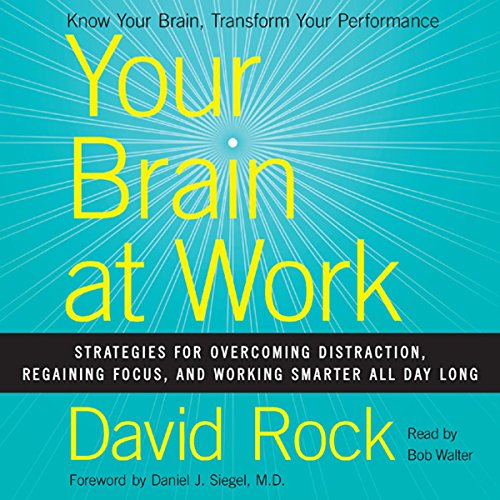
David Rock (Author, business consultant, received a doctorate in the Neuroscience of Leadership from Middlesex University in the UK)
“Your Brain at Work” was originally released 2009 and revised in 2020. This review is based on the 2009 edition. David Rock is a business-management consultant and co-founder of an institute called NeuroLeadership Institute. Rock brings together neuroscientists and leadership experts to reveal works of the human brain that improve business management skills.
MAPPING THE BRAIN Rock suggests the mind is an imprecise memory machine that can be trained to improve thought and action of managers.
What Rock suggests is that human neurological activity is at the heart of effective business management. The expressed objective of Rock’s recommendations is to produce more effective and efficient businesses. His method for explaining this process is a case study of a husband and wife who represent two kinds of managers. One is a self-employed, and cybernetic systems designer. The other is a mid-level manager, recently promoted to manage a business division.
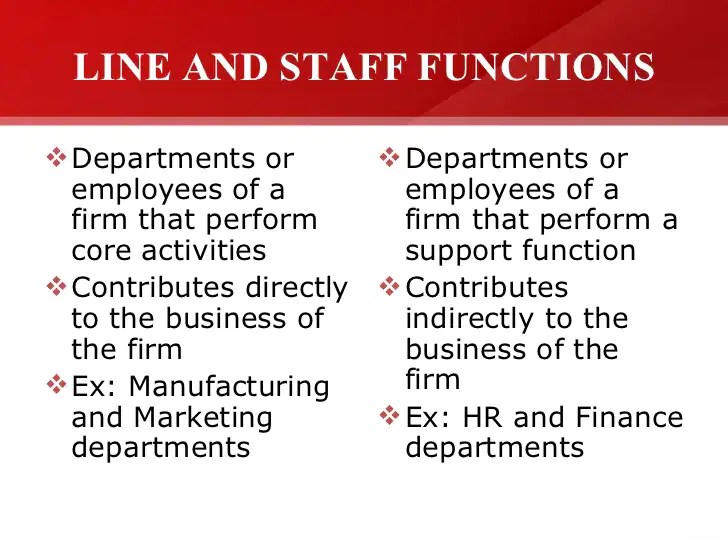
The first manager is a solely-owned business entrepreneur. The second is a division manager within a larger business. The first is a line manager. The second is a staff manager.
Rock shows there are crossovers in their management skills but their goals are different. Though Rock does not mention it, the first person’s job is zero-sum with profit as a measure of success. The second manager is within a larger organization where effectiveness and efficiency, rather than profit, are measures of success. Both are intent on being good managers but profits are of incidental importance to a staff manager. Both managers desire positive results. Rock suggests both can train their minds to use similar management methods to achieve their different business objectives.
Rock argues that both managers must better understand how their minds work to mitigate bad business decisions.
There are an estimated 100 million cortical columns in the neo-cortex that transmit information to different parts of the brain through neurons in each column.
The example Rock gives for the entrepreneur is in the sales pitch and planning for automating billing and sales for 200 stores. The entrepreneur is given an opportunity to bid a job that requires cybernetic and management skill. The entrepreneur has done similar jobs but none quite as large as this one.
In a first meeting with the customer, the entrepreneur is not mindfully prepared.
When the request for bid is received, the entrepreneur underestimates the complexity of the proposal. The entrepreneur rushes to prepare a proposal after procrastinating for 4 days with only 30 minutes left to complete a proposal before meeting with the buyers. In the rush, the entrepreneur runs into printer problems, typos, and miscellaneous minor problems that conflict with mindfulness required to complete and present the proposal.
Rock goes into the mechanics of thought to explain how stressors distort self-awareness and make one lose sight of reasoned performance.
The entrepreneur is nearly late for the meeting which is another stressor that affects the sales presentation. When the customer asks if a deadline can be met, the entrepreneur hesitates because of the stressors accompanying lack of mindful preparation. The entrepreneur’s thoughts are momentarily derailed because of an inability to recall a former memory, a similar client experience that had a tight deadline that the entrepreneur met.
The entrepreneur’s thoughts and actions did not come from quiet self-understanding but from fear of losing a sale. Rock introduces the idea of a mind’s “director” that tells one to relax and remember relevant experiences that give confidence to sellers and measured acceptance by buyers. Rock emphasizes the importance of mind preparation before arriving at an important meeting. He goes on to explain how to train one’s mind to be calm to thoughtfully review what is laying dormant in one’s recollections. A good manager should practice mindfulness.
A similar story is created for the newly promoted staff manager. Many people in this newly formed division were fellow workers of this newly promoted manager.
The promoted manager has ideas based on personal knowledge of some of the employees about who should get particular jobs to make the new project a success. With little self-reflection, the promoted manager assigns a job to one of the employees without preparing everyone for their new roles.
Rock suggests first meetings should be designed to allow people to reacquaint themselves with each other in a new management arrangement. He suggests letting the flow of reacquaintance influence job assignment for productivity of the team.
Though the promoted manager may have made a good decision based on previous experience with someone who is now a subordinate, the decision creates unnecessary conflict between aspirational division employees.
Rock argues that the mind’s “director” can be trained to interrupt bad decisions through contemplation of prior experience, and a period of mindfulness can lead a team of people to become more comfortable with their roles in the company’s management change.
Rock goes on to explain the importance of social connection and how status needs to become a constant presence in a manager’s mind when steering a team toward a corporate goal.
The author uses the stories of two managers showing how failure to recognize the role of social contact and status can threaten success.
Much of what Rock explains is summarized by the ancient phrase “know thy measure” (more colloquially known as “know thyself”). Regardless of one’s status in a company or in life, a better understanding of oneself is at the core of human success and failure. Rock’s point is that successful managers develop their inner “director” with mindfulness (“Your Brain at Work”) as a guide to what the author argues is a predetermined future.
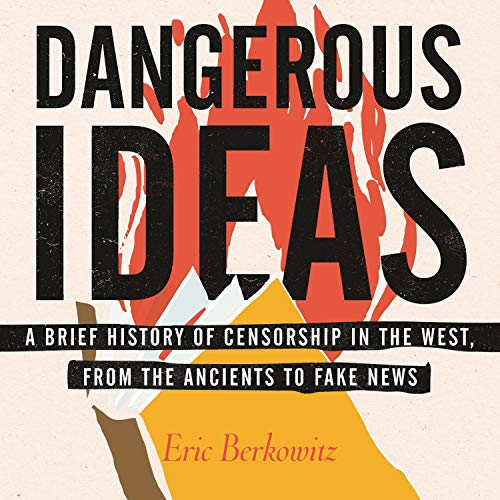
Dangerous Ideas (A Brief History of Censorship in the West, from the Ancients to Fake News
By: Eric Berkowitz
Narrated by: Tim Campbell
Eric Berkowitz (Author, human rights lawyer and journalist
Eric Berkowitz recounts the history of free speech and censorship. His history infers censorship is a misdirected waste of time. Berkowitz argues freedom of speech is unstoppable. Even in the most repressive governments in history, citizens have exercised freedom of speech.
Berkowitz recounts many who chose to exercise free speech that were exiled, tortured, dismembered, maimed, or murdered. However, these free speech martyrs insist on having their say. That seems Trump’s justification for suing Facebook and Twitter.
Pundits suggest Trump has no chance of winning his suit against Facebook and Twitter–Berkowitz’s presumed response would be “who cares?”
The fundamental point made many times in Berkowitz’s history is that censorship does not work because there is always someone who is willing pay any price to say what they think must be said. Berkowitz offers many historical examples of why free speech is a confusing and difficult problem.
Free speech can spread both truth and lie.
One of Berkowitz’s answers to the conundrum of free speech is that more freedom allows each listener to choose what they wish to believe. Problems arise when freedom of speech offers lies as truth and misleads the public.
White supremacism lies and Covid19 falsehoods have historically destroyed lives.
In every country of the world, free speech is unstoppable because it is controlled by the few, not the many.
Listening to Berkowitz’s history vivifies a trip to China in 2019. A guide, presumably at some risk to himself, took our small group into a private room to remind us of China’s response to the idea of free speech in Tiananmen Square .
Our guide reminded us of one protester who moved in front of a Chinese tank whenever it tried to change directions. The guide explained the “tank man” (who was never identified by name) was arrested, and never heard from again.
At the direction of President Deng Xiaoping, 300,000 troops were mobilized to stop a demonstration by Chinese students. China’s soldiers fired on college students and friends who were demonstrating their belief in free speech. An unknown number of Chinese citizens (some say hundreds, others say thousands) were murdered at the direction of government leaders. Our 2o19 Chinese guide was exercising his right of free speech by reminding us of what happened on June 4th, 1989.
Government is the first seat of control for free speech. However, that first seat is diminished by singular economic interests, political interests groups, and fringe propagandists.
The rise of newspapers, radio, and television focused and expanded the principle of free speech. Economic interests influence these early platforms but with a more limited threat and benefit to society.
Facebook, Twitter, YouTube, and the blogosphere have widened the principle of free speech and significantly increased potential public threat and benefit.
In the age of newspapers, radio, and television, government controls were explicitly legislated but in the internet age control is hidden in platform algorithms. Government may still have the first seat of control, but media moguls have usurped legislated government censorship.
Berkowitz offers no answers. He only reveals the complexity of freedom of speech. He suggests freedom of speech is an essential ingredient of a just society. However, at the heart of free speech is economic interest. Free speech is secretly used to distort truth and sometimes incite violence.
Whether it is a newspaper reporter told to revise an article that criticizes corporate advertisers or a discloser of government secrets there is societal threat. Even more pernicious is the Amazon, Facebook, or Twitter executive who orders a coder to increase customer clicks for corporations that pay more for advertising. And then there are the media trolls who distort the truth, lie, or incite violence to increase click count with no regard to consequence.
Freedom of speech is “…a riddle wrapped in an enigma” (a Winston Churchill quote about Stalinist Russia). Freedom of speech is a two-edged sword, a tool for truth building leaders and liars. Truth building offers peace; lies offer Russian Ukrainian wars.
Merchants of Truth (The Business of News and the Fight for Facts)
By: Jill Abramson
Narrated by January LaVoy
Jill Abramson (American author and journalist, first female executive editor of the NYT serving from 2011-2014.)
Jill Abramson describes a “near death” experience for print media in “Merchants of Truth”. She begins with the rise of BuzzFeed and Vice, with a newspaper reporter’s view of YouTube, and a vignette about Jackass. Then, she zeroes in on the “New York Times” and “Washington Post” and how their news coverage has changed. Abramson explores the principles of the new “Merchants of Truth”.
It is disappointing to see “click bate” from Apple, Amazon, YouTube, and Facebook competing with news about local, and worldwide events that mean something.
To some, Abramson’s brief history of BuzzFeed and Vice is a cringe worthy exploration of how vapid we are and how easily we are distracted by titillating, often idiotic, and sometimes false facts. However, Abramson shows that BuzzFeed and Vice make a contribution to news gathering that appeals to a wide audience, particularly a younger audience.
The criticism Abramson launches against BuzzFeed, and particularly Vice, is that both slip into Gonzo (exaggerated and fictionalized) reporting. The public is titillated but not accurately informed.
BuzzFeed and Vice are becoming bigger players in the media news business. The key to their success is public attention but advertising revenue is its vehicle for growth. Pleasing advertisers encroaches on the objectivity of news.
BuzzFeed and Vice have reduced the barrier between advertising and news. That barrier breach is exhibited by Abramson’s story of The New York Times apology to China, and the Washington Post’s turn to the metrics of popular news coverage.
Abramson pulls no punches in her judgement of The New York Times’ bow to economic necessity in kowtowing to China when a reporter’s story is critical of Chinese suppression. She recounts Arthur Ochs Sulzberger’s letter apologizing to President Xi for a reporter’s story about Chinese government repression. Abramson implies the apology is for potential loss of revenue.
Arthur Ochs Sulzberger Jr. (Publisher of The New York Times.)
The implication is advertising revenue influences NYT’s and Washington Post’s reporting in the same way as clicks on Apple, Amazon, Facebook, YouTube, BuzzFeed and Vice. The concern is in the bending and blending of news to attract wider audiences for advertisers who have little concern about the accuracy of news that impacts society.
On the other hand, Abramson suggests Sulzberger as a publisher of “All the News Fit to Print” may have been more concerned about losing a foreign outpost for the paper’s news reporters. One suspects, it is both concern about loss of a news site and bending to the demands of a political and revenue producing hegemon. There has always been a tacit concern about advertising revenue and news reporting in the media. One might recall “60 Minutes” initial rejection of an expose on smoking. They eventually aired the episode, but fear of loss from a major advertiser was in play.
Vice reporting of a trip to North Korea with Rodman (the former Bull’s basketball player) is one of several examples of click bate reporting. It offers titillation but hides the brutality of a murderous government regime.
As a fossil (oldster), one might read the New York Times, Wall Street Journal, a local paper, the Economist, and Foreign Affairs. The reason for variety is perspective. Each covers most aspects of news (culture, business, local and international).
Abramson explains reputable media outlets have checks and balances. They try to insure objectivity and accuracy in their reporting. The checks and balances sometimes fail as they did with the NYT’s Jason Blair. However, BuzzFeed, Vice, YouTube, Facebook, and other newcomers are just beginning to establish checks and balances.
Jayson Blair (Former journalist with The New York Times, fired for fabrication and plagiarism.).
New media argues all societal beliefs should have equal expression. That is a distortion of America’s freedom of speech. Americans have regulated freedom, just as they have regulated free speech. Freedom Of Speech is to DoNoHarmToOthers.
Another failure Abramson notes is the paucity of critical reporting by the New York Times and Washington Post of WMD in Iraq. Checks and balances did not work in either paper because of investigative failure.
All news media fight for facts. However, for many reasons, the facts chosen create spin.
With the addition of BuzzFeed, Vice, and YouTube the inherent bias of chosen facts is accelerated and amplified by emotion. Abramson implies spin is not the intent of reputable media like the New York Times and the Washington Post. One might disagree because all facts are not included in every report that is posted. All news reporting has some level of distortion.
Every merchant might report facts, but a listener/reader comes away with subtly, and sometimes, widely different understandings of the same story. It is not that facts are necessarily untrue, but choice of facts and the addition of emotion infects the story.
Additionally, there is inbred bias in the mind of listeners and readers of the news. Those listed as liberals, conservatives, or libertarians bring their personal beliefs into everything they read, hear, and say.
The difference between traditional news sources, and BuzzFeed or Vice, is elicited emotion. There is less fight for facts with BuzzFeed and Vice. Their fight is for attention whether the facts are correct or not.
Abramson shows how BuzzFeed and Vice, and similar “news” gatherers are willing to manufacture facts to get attention. BuzzFeed measures public expression and interest. BuzzFeed tailors’ articles to magnify whatever is popular. BuzzFeed’s and Vice’s objective is to get the reader to click their feed. It has less to do with a fight for facts than what Big Data tells these new “Merchants of Truth” is the public’s interest.
Videos, like Jackass that play on YouTube, fit into the titillation genre. However, as a merchant of truth, YouTube’s platform generates often useful information. Its platform offers do-it-yourself help, from people who demonstrate how they did it themselves.
YouTube also offers educational programming on current events, history, and science. As a “Merchant of Truth”, it is not fighting for facts. It, like BuzzFeed and Vice, is looking for clicks to increase advertising revenue.
BuzzFeed and Vice fight for attention, not facts. They make money for clicks whether facts are right or wrong. Advertisers are interested because attention drives sales.
Like BuzzFeed, it resists control of content to increase popularity under the cloak of freedom of speech. Both BuzzFeed and Facebook are struggling to keep hate out of their content without acting as Big Brother monitors of vitriol. Neither are focused on a fight for facts or truthful news. Both seek user clicks to give interest to vendors that will pay to advertise.
Facebook is a ubiquitous forum meant to connect society. In actuality, it appears Facebook is a forum that often reinforces and magnifies difference in society.
The New York Times, Wall Street Journal, Washington Post, The Economist, and Foreign Affairs have video and online feeds. Most offer those feeds to subscribers. Some, like Foreign Affairs want an additional fee for the online service. The degree of adoption of emotion by traditional media varies, but it creeps into all “Merchants of Truth”. All media serves what big data shows the public wants.
Abramson shows that national TV and newspaper coverage of the news have adopted some of the characteristics of BuzzFeed, Vice, and YouTube to improve their income, and economic viability.
Somewhat more ominously, Abramson explains how traditional media is adopting measurement metrics that tell publishers how many clicks or engagements reporters get from their writing. If news reports do not achieve a certain level of interest, the reporter’s continued employment and/or compensation becomes a topic for discussion. News is in danger of being measured by popularity, not substance.
Getting back to Abramson’s personal experience at The New York Times, she acknowledges not having much management experience when she became the Executive Editor of the paper. She notes former employers never offered management graduate courses for her to broaden her education. Undoubtedly, she was an excellent employee that got things done.
Abramson devotes a part of her book to air grievances about an “old boys club” in the news business. Other writers, as well as Abramson, have reported a double standard for women in the media industry. Women are viewed differently when they exhibit the same aggressiveness that men show as managers.
Abramson acknowledges she does not listen as carefully as she should when confronted with opposition. That is a characteristic of both men and women who have come up through the ranks of an organization. They are superstars. They get things done and are promoted to become managers.
In well managed companies, mentor-ships or management development programs are offered rising stars. They offer employees an opportunity to see the difference between doing things yourself to having things done through others, a skill set that can be taught.
Women and men rise in organizations to become managers by getting things done. Abramson notes that aggressiveness is judged differently in women. Women are called pushy while men are called forceful and effective.
Becoming a manager is a difficult transition because it involves ceding control that is the hallmark of an employee’s success as a doer of things. A manager needs to trust others to do the things that need to be done. One suspects it is more difficult for women to develop trust in others because of generations of unequal treatment. Whether a man or woman, when an employee becomes valuable as a person who gets things done, it is difficult to give up one’s control to others.
Being a manager requires trust in employees that may not do their jobs exactly the way a new manager (a former “doer of things”) believes they should be done. This is where skill-set adjustment is needed.
If an employee fails at a task, a new manager needs to help the employee overcome the failure. If the employee continues to fail, he/she will eventually be fired. If the employee succeeds, he/she goes on to the next task. Abramson’s dismissal may have been as much a function of unequal treatment as inadequate training. Her analytic and reporting skill is proven by her history and her analysis of media news in “Merchants of Truth”.
In a fight for facts, what a consumer can take from Abramson’s analysis is how important it is to read and listen to more than one “Merchant of Truth”. Finding truth is what Americans of conscience seek.
Freedom of speech cannot be an excuse for unvetted news.
Much of what Abramson’s personal experience is at The New York Times is reinforced by her analysis of the evolution of the Washington Post. This century has not been kind to traditional news media. It is in a state of transition. Some of us hope it evolves, and is not relegated to the trash bin of history.
The media for this generation is changing. What one hopes is that the best of each is eventually adopted. Every news source must be measured against truth. Determining truth is made up of true facts that no singular news outlet is capable of compiling.
“All the news that is fit to print” is an apt logo for the New York Times but it is misleading. History is continually revised because new facts are discovered, and the perspective of society changes. Americans need to be diligent in seeking the truth. The truth does not lie in one source.






































































 REVIEWS AND VIEWS OF LIFE