ROYALTY

Much may be learned in Adam Zamoyski’s biography of Napoleon Bonaparte but too much detail makes it a slog for non-historians.

Books of Interest
 Website: chetyarbrough.blog

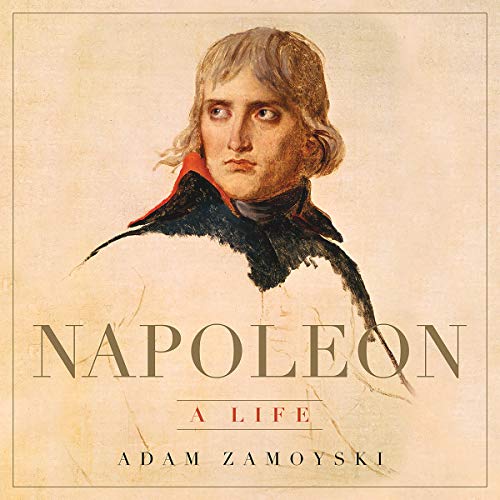
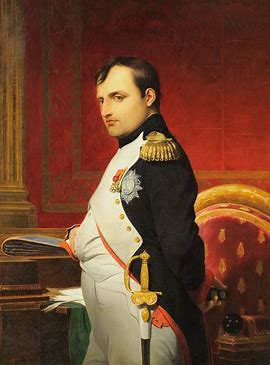
Napoleon (A Life)

By: Adam Zamoyski

Narrated By: Leighton Pugh

Adam Zamoyski (Author, British historian, descendant of Polish nobility.)

Adam Zamoyski overwhelms reader/listeners with Napoleon’s military campaign details which tempt amateur history buffs to put his book aside. Yes, there was the French revolution but understanding the role of Napoleon’s many military campaigns is too complex for an amateur’s understanding of France’s history. Napoleon’s relationship with famous movers and shakers of his time are important, but Zamoyski’s military campaign details are too much. Napoleon’s break with Paoli and Corsica’s ambivalent relationship with France is interesting but Paoli is a largely unknown person to the general public. International relations between France, Great Britain, Poland, Germany, Prussia, and Russia are left to history buff’s inadequate knowledge of history.

In a number of ways, Zamoyski’s biography of Napoleon is disappointing. It is a definitive biography of a legend, but Zamoyski’s history of Napoleon’s life is too complex for a lay audience.

To a historian, Zamoyski’s book is undoubtedly important but to an amateur it is too detailed. For a dilatant of history, the best one gets from the author is that Napoleon was a tactical genius, a great leader who oddly eschews domestic or war-related violence, while becoming among the greatest conquerors of nations in history. After his many campaigns, he turns his genius into a micro-manager of household concerns, international relations, and France’s disorganized governance. Without a military campaign, his tactical brilliance is wasted on vendettas, extra-marital liaisons, and personal expenditures. On the other hand, Napoleon creates a French financial system that supports a massive miliary force with over 60% of its national budget while reorganizing its government’ inefficiencies.

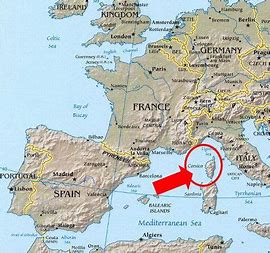
Napoleon descends from a royal family that endeavors to confirm its paternal and landed interests in Corsica. Not clearly coming from royalty is an obsession that follows Napoleon throughout his life. Since, 1769, Corsica is recognized as a region of France, but it is geographically closer to Italy with a rich history of Italian influence.

There is much in Zamoyski’s biography that one learns about Napoleon Bonapart. The young Napoleon is noted as well-educated self-confident, shy-with-women’ person who has interest and understanding of mathematics and a genius for military tactical plans and maneuvers. Napoleon eventually overcomes his shyness with women but only after becoming a leader of men. His extramarital affairs are noted throughout Zamoyski’s book.

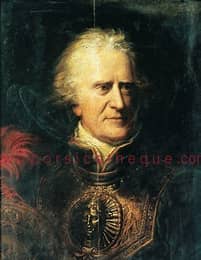
At the age of 9, Zamoyski notes Napoleon is sent to a military academy at Brienne-le-Chateau, and later to the Ecole Milita ire in Paris. In his younger years, Napoleon is characterized as a Corsican patriot who admired Paoli, a leader of Corsican independence from France. However, he chooses to follow France and eventually breaks with Paoli and the history of Corsica. Paoli never gives much attention or respect to Napoleon despite his effort to endear himself.

Pasquale Paoli (1725-1807, Corsican patriot, statesman, and military leader who flees to London after failing to rid Corsica of French rule.)

Bonaparte first develops a relationship with the Robespierre brothers (Maximilien and Augustin) in 1793. Great Britain and Spain were allied with French rebels in southern France and Bonaparte met the brothers in opposition to Royalist rebels. Bonaparte’s tactical brilliance routs southern France rebels and forces the Anglo-Spanish fleet to depart. This became the beginning of Napoleon’s rise to prominence in the French military. He is 24 years of age.

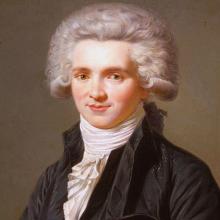
Maximilien Robespierre, a friend of Napoleon. (1758-1794, leader of the Jacobin republican movement in France, is condemned and beheaded on July 28, 1794,)

The Robespierre’ brothers, of which Maximilien is the best known, are associated with the Jacobins, an extreme egalitarian group that fomented a French revolution in 1793-94. Maximillian Robespierre instituted the Reign of Terror with mass executions for which he is eventually guillotined in 1794. With the seeds of rebellion planted by the Jacobins, the French Revolution occurs in 1789 through 1799. Napoleon distances himself from the brothers and the Jacobin movement in 1794. He became a “blue-blooded” Frenchman and abandoned his Corsican roots.

Charles Maurice Camille de Talleyrand-Périgord (1754-1938, French clergyman, statesman, and leading diplomat. Died at age 84.)

Another interesting relationship noted by the author is between Napoleon and Charle Maurice de Talleyrand-Perigord, more commonly known as Talleyrand. Talleyrand and Napoleon had a close relationship between 1799 and 1807. Talleyrand acts as France’s Foreign Minister negotiating many treaties that increased Napoleon’s power in both France and Europe. However, Talleyrand becomes critical of Napoleon’s aggressive expansionist policies. He is eventually removed from his ministerial position in 1807.

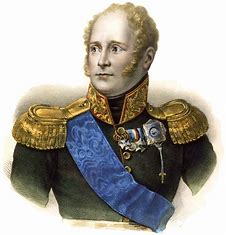
Czar Alexander I (1777-1825)

In 1805, Czar Alexander joins Russia with Austria in the battles of Austerlitz against Napoleon. However, he switches sides to join Napoleon after Napoleon’s success in Austerlitz. He switches sides again to defeat Napoleon with the British at Waterloo in 1815.

The author notes Talleyrand speaks to Czar Alexander about his concern over Napoleon’s ambition and is alleged to have said he would collude with the Czar to defeat Napoleon. Talleyrand by any measure is a traitor to Napoleon, if not his country. Not surprisingly, Talleyrand (though he remains in Napoleon’s government) had a role in the Bourbon restoration in France after Napoleon’s abdication in 1814.

The diminutive Napoleon next to Czar Alexander I.

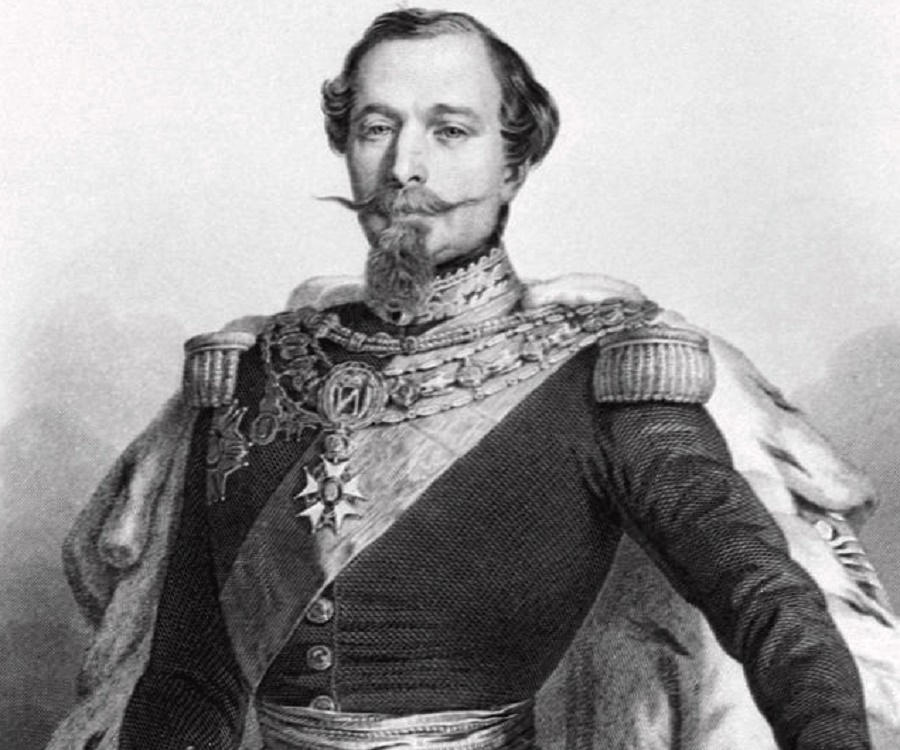
One might argue Napoleon did not restore a traditional monarchy but created the First French Empire in 1804. However, this Empire led to the return of the Bourbon monarchy in 1814. Louis-Napoleon Bonaparte, Napoleon’s nephew, became Emperor Napoleon III in 1852, and remained so, until his defeat in the Prussian War of 1870. France did not truly become a Republic until 1870.

Considering the origin of the Bonaparte family, it comes as little surprise that Napoleon decides to return France to monarchy by another name by becoming an emperor.

Louis-Napoleon Bonaparte (1808-1873, initially became the first president of France in 1848 but became its second Emperor in 1852. He was deposed in 1870.)

Despite Napoleon’s predilection for royalty, Zamoyski notes numerous improvements made by Napoleon’s new role in the governance of France. He established the Napoleonic Code that provided a government framework designed to ensure equal treatment by law, protection of property rights, and individual freedom. He centralized government functions within departments to streamline governance. He instituted educational reforms by establishing secondary schools to train future government employees and military officers. He established a banking system to stabilize the economy. Though Napoleon detained the Pope for interfering with French governance, he liberalized control of church appointments by allowing the state some control.

One comes away from Zamoyski’s Napoleon biography with a deep appreciation of a legend in his time and for all time. As a tactical genius, Napoleon sometimes failed to look beyond an immediate problem, but when it came to understanding what is needed to manage a huge organization, Zamoyski shows Napoleon to be a visionary.

As is well known, Napoleon is defeated at the Battle of Waterloo in 1815. Zamoyski notes Napoleon is exiled to Elba where he escapes and is then interned on Saint Helena where he dies in exile from what is believed to be stomach cancer. He died at the age of 51. Napoleon’s confinement at Saint Helena is a sad end to an incredibly brilliant life.

Much knowledge is provided by Adam Zamoyski’s biography of Napoleon Bonaparte, but too much detail about specific battles makes the book much too long for non-historians.

FRANTZ FANON

Frantz Fanon decried colonization and racism to promote individual dignity and family reconnection in his psychiatric practice

Books of Interest
 Website: chetyarbrough.blog

The Rebel’s Clinic” The Revolutionary Lives of Frantz Fanon

By: Adam Shatz

Narrated By: Terrence Kidd

Adam Shatz (Author, editor, professor at Bard College)

Adam Shatz introduces Frantz Fanon to listeners. Fanon was a Black Frenchman, born in the colony of Martinique, an island in the Lesser Antilles of the West Indies. Fanon may be classified in many ways but first and foremost one understands he would want to be known as a Frenchman, i.e., a Black individual of French heritage.

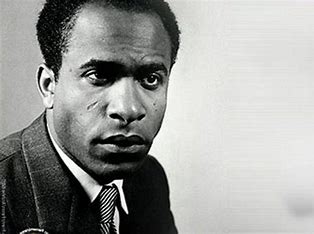
Frantz Fanon (1925-1961, graduated from the University of Lyon in France.)

Shatz tells the story of Fanon’s life. Fanon is educated as a psychiatrist who was influenced by Aimé Césaire, a leader of a movement titled Négritude. Négritude was a protest against French colonial rule and assimilation in the early to mid-twentieth century. Fanon lives life by asserting himself as a Black Frenchman with a sense of Black cultural pride.

After an affair with Michele Weyer in college, a daughter is born. The daughter becomes Mirelle Fanon Mendes-France.

Mirelle Fanon Mendes-France (Born in 1948 to Michele Weyer and Frantz Fanon.)

Fanon later marries Marie-Josephe Duble in 1952. Duble was an intellectual, a journalist, and liberation fighter who died in 1989. Fanon and Duble have a son named Olivier who is thought to be engaged with his father’s legacy. Weyer’s and Fanon’s daughter is a scholar and member of the Frantz Fanon Foundation who also works with a United Nations Working Group on African Descent.

Fanon marries a Marie-Josephe Duble. Duble, aka Josie, married Fanon in 1952.

Shatz explains how much more Fanon was than a psychiatrist. Some suggest Fanon was a Marxist because of his anti-colonial beliefs but Fanon’s philosophy extended far beyond Marxist belief in society as an economic class struggle. Fanon was equally concerned about sexism, racism, and colonialism. He embraced a form of humanism. Fannon believed in self-identification as an acculturation process. He considered himself a Black Frenchman, born on a French colonialist island in the West Indies. His life experience as a minority in a colonial country led him to become a practicing psychiatrist in Algeria.

In the 1950s, Algeria was largely populated by Muslim Arabs with a minority of European nationalities.

Arabs in Algeria were poorly treated at a hospital Fanon joined in 1953. He gradually improved their treatment by opening doors to their ethnic identify. Algeria began a fight for independence in 1954. The movement was for social democracy within an Islamic framework that would offer equal citizenship for all citizens of the country. Fanon did not align himself with any religion in what became a violent conflict between French colonization and those who identified themselves as Algerian.

Fanon conflated imperialism and colonialism with racism by institutionalizing control over another based on cultural and/or racial bias.

Shatz shows who Fanon became in the way he treated his patients in Algeria. Fanon argued mentally troubled patients needed to be reconnected to their families and community rather than institutionalized.

Fanon’s focus was on the psychological impact of human torture and the tit for tat revenge of French occupiers and the Algerian resistance.

Fanon was sympathetic to the Arab desire for freedom and independence for citizens of a country searching for its own identity. Shatz shows Fanon abhorred colonization and its social restrictions. Shatz infers he equally abhorred the revolution’s leaders and followers who tortured and murdered non-combatants, including children. What happened in Algeria reminds one of today’s daily slaughter of children and non-combatants in Ukraine and Gaza.

Algeria became an independent nation in 1962 with its own government, culture, and identity. Its ethnic and cultural identity remains the same today as then. It is considered a Muslim country with a majority being Sunni Muslims whose practices play a prominent role in their daily life.

Frantz Fanon dies at the age of 36 from leukemia in 1961, 7 years after the Algerian uprising.

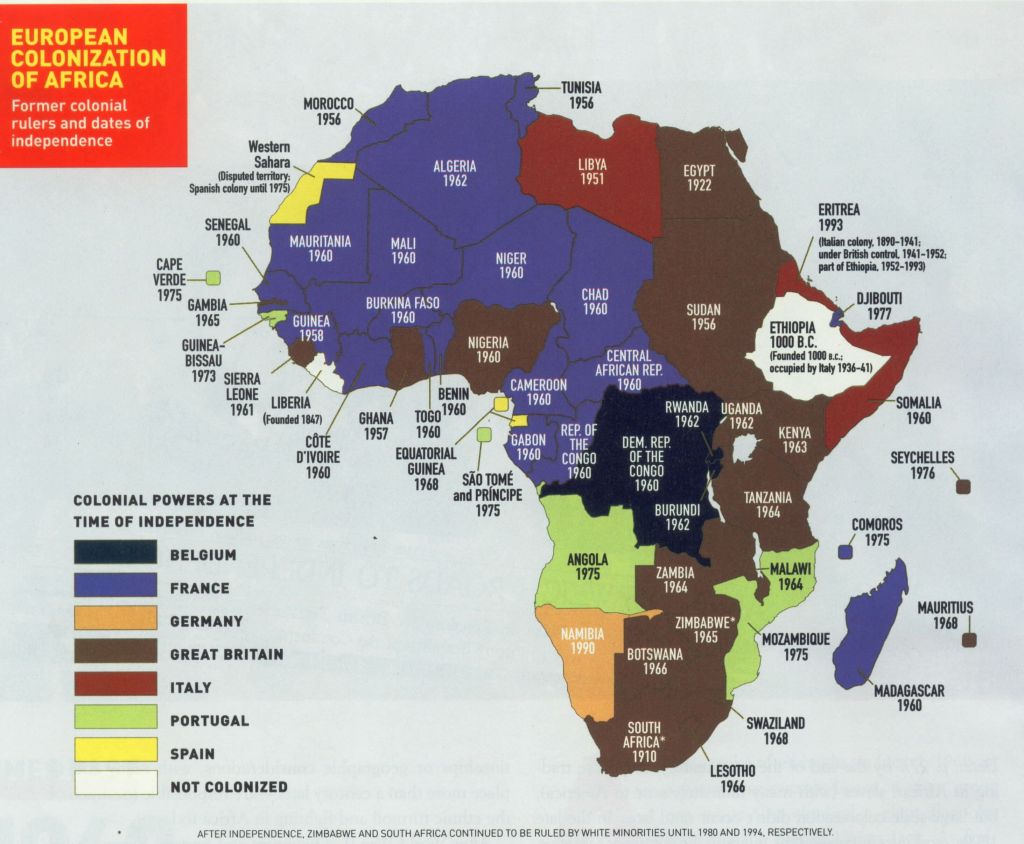
An interesting point in the biography of Fanon is that he recognizes himself as Black in a country that does not commonly describe themselves as people of color but as Algerian Arabs, Berbers, or Europeans. Fanon grows to believe he is Algerian but identifies himself as Black. Black is a broader category of race that makes his story applicable to a wider world but magnifies real-world discrimination based on the color of one’s skin rather than the truth of equal humanness. Of course, as the author notes, the color of skin in Africa is predominantly black and became a frontier for colonization between 1884 and the 1960s.

AFRICA BECAME THE FRONTIER FOR COLONIZATION BETWEEN 1884 AND THE 1960s.

Shatz infers Fanon fought the good fight. He decried colonization and racism to promote individual dignity and family reconnection in his psychiatric practice. He wrote about and aided people who were different, underserved, and underrepresented. He wrote two books about his life experience to explain why colonialization and racism were culturally wrong and socially destructive. “Black Skin, White Masks” was published in 1952, and “The Wretched of the Earth” in 1961.

LIFE’S DEMONS

A sad ending to a remarkable human being.

Books of Interest
 Website: chetyarbrough.blog

“Robin” 

By: Dave Itzkoff

Narrated By: Fred Berman

Dave Itzkoff (Author, American journalist, former culture reporter for the NYT.)

Dave Itzkoff produces an insightful and well written biography of Robin Williams. Robin Williams was a spectacular actor and comedic genius who brightened the lives of many while hiding a personal insecurity and a self-critical demon.

The author’s story is an audiobook delight because of its author and narrator. The narrator, Fred Berman, offers a reminder of Robin Williams incredible ability to entertain an audience with human observations and ethnic expressions that make one laugh.

Berman is not Robin, but he is enough of a mimic to help listeners understand the ways in which Robin was a genius. Itzkoff completes that categorization by explaining how Robin could read a script in one sitting and recite it verbatim at a next day’ rehearsal.

Williams became friends with famous future actors at Julliard.

Williams was admitted to Julliard as a promising actor. Julliard is noted for rigorous training, and imaginative daring. Julliard was an introduction to performance opportunities in New York city. However, his undisciplined character cost him the opportunity of graduating. Nevertheless, association with Julliard paid dividends in later years because of its reputation. One close friend was Christopher Reeves of Superman fame who, as is well known, became paralyzed later in life from a horse-riding accident. Reeves died in 2004, ten years before William’s suicide.

Williams was a father of two boys and a girl, born from two marriages. His first marriage ended after ten years with one child born in 1983, Zachary Williams. His second marriage to Marsha Garces lasts for two decades with the birth of a girl and boy, Zelda and Cody. Itzkoff implies both marriages end because of Robin’s self-critical demon. Robin lets the demon loose with insobriety. Drugs and alcohol magnify his fears and distort his relationship with others. Both marriages failed as alcohol and drugs entered, left, and reentered his life.

What was surprising to some who read this biography, were the number of movies Robin Williams worked in either as a lead or supporting actor.

Williams was in over 70 films, some of which became block busters. Some were duds but others received high acclaim. Among the most memorable were “Good Morning, Vietnam”, “Dead Poets Society”, “Awakenings”, “Mrs. Doubtfire” “Good Will Hunting”, and “Aladdin”. Some were bombs at the box office while these six had some negative reviews but blockbuster revenues. Williams received an Oscar for best supporting actor in “Good Will Hunting”.

Some think of Williams as a stand-up comic that reminds one of Jonathan Winters, a close friend of Robin’s.

Others remember the television show “Mork and Mindy” where Robin played a space alien coming to earth. The versatility of Williams is revelatory in Itzkoff’s biography. Itzkoff notes the many friends Williams had and how generous he was with his time and support of others. When Cristopher Reeve’s accident happened, the support offered by Williams is touchingly explained by Itzkoff.

Throughout the biography, a listener becomes aware of the destructive impact of drugs and alcohol on William’s life.

In his first marriage, William’s growing fame gave him access to all the cocaine he wanted. He comes to a realization that his addiction was out of control when John Belushi, his friend, dies in an overdose on the same night they were together. This was 1982. In 1988, his first wife, Valerie Velardi divorced him. In 1989, Williams married Marsha Garces.

Robin Williams’ demon does not disappear but becomes quiet in his mind as he becomes sober.

Williams life with Marsha broke him away from drugs and alcohol for several years. Williams and Marsha succeeded in having a daughter and son together. Marsha managed to get him away from the life of drugs and alcohol. The demon in Williams’ mind returned in the last years of his marriage to Marsha when he returned to drugs and alcohol. Williams hanged himself in 2014. He and his wife, Marsha were divorced. Sometime after his second divorce, Williams was married a third time.

A few months before his suicide, Williams was misdiagnosed with Parkinson’s disease.

It was found in autopsy that Williams had Lewy body dementia, a debilitating brain disease that is symptomatically similar to Parkinson’s. Williams’ demon was Lewy body dementia, a brain disorder that causes depression, anxiety, and paranoia. Clinically, LBD is caused by abnormal proteins. One wonders whether those abnormal proteins were always in Williams’ body. Were they always there or stimulated by his addictions? In any case, it was a sad ending to a remarkable human being.

NUCLEAR RISK & REWARD

The two edges of nuclear physics that may save or destroy the world is still with us. The best humanity can hope for is balance between human nature and science.

Blog: awalkingdelight

Books of Interest
 Website: chetyarbrough.blog

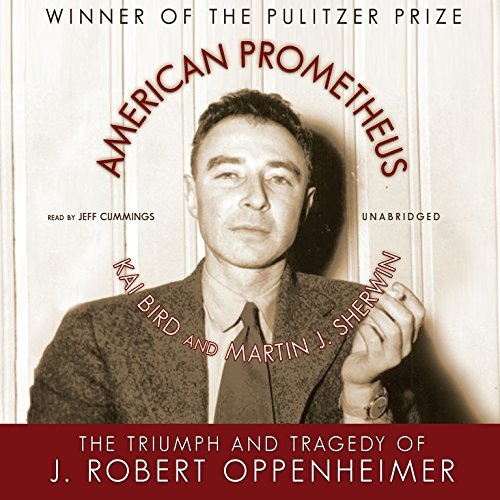
“American Prometheus” The Triumph and Tragedy of J. Robert Oppenheimer

By: Kai Bird and Martin J. Sherwin

Narrated by: Jeff Cummings

Kai Bird and Martin Sherwin tell the story of America’s “god of fire”. Like the myth of Prometheus who reveals Olympian gods’ knowledge of fire, J. Robert Oppenheimer reveals physicists’ secrets of nuclear fission that give atomic power to humanity. Their history tells listeners of the risk entailed in research and production of nuclear bombs.

J. Robert Oppenheimer (1904-1967, Died at the age of 62.)

Bird and Sherwin offer an intimate and revealing story of J. Robert Oppenheimer that reveals his genius, his human frailty, his growth as a project manager, and the abysmal way American government treated his historic achievements.

Every student of history knows of atomic powers potential to destroy.

Though Bird’s and Sherwin’s history is more about Oppenheimer’s life than his discoveries, it seems prudent to note Oppenheimer discovered the Born-Oppenheimer molecular wave functions about how electrons and positrons work. Oppenheimer also worked with fellow physicist William Phillips on the Oppenheimer-Phillips process in nuclear fusion with work on what is called quantum tunneling. Though Oppenheimer was nominated for a Nobel Prize three times, he never won. Phillips and Steven Chu receive the Nobel in 1997.

The great controversy surrounding Oppenheimer is his association with communism. Bird and Sherwin clearly acknowledge the association but convincingly argue Oppenheimer was an American patriot who contributed to communist social welfare programs without being a card-carrying member of the CP.

“American Promethius” illustrates Oppenheimer’s growth as a consummate manager of a complex organization that could successfully develop a weapon of mass destruction, an atomic bomb that can end war. However, as history shows, the atom bomb may end a world war, but nuclear bombs become a threat to human existence by any nation that acquires the same technology.

Los Alamos National Laboratory entrance located a short distance NW of Santa Fe, NM

The first atomic bomb exploded on July 16, 1945 in Alamogordo, New Mexico.

The authors show Oppenheimer’s understanding of an atom bomb’s threat by quoting the Bhagavad Gita. “Now I am become Death, the destroyer of worlds.” Oppenheimer refuses to continue research on Edward Teller’s plan to create a fusion bomb of even greater destructive potential. Teller succeeds in creating that bomb. Oppenheimer recognizes any small or large nation that gains fusion bomb technology increases a threat to humanity.

The second atomic bomb test at Bikini Atoll was a fusion bomb released on July 25, 1946. The Marshall Islands, where Bikini is located, is suing the U.S. for what it calls a violation of the Nuclear Non-Proliferation Treaty.

Edward Teller was a leading physicist who worked on the Los Alamos project. Teller’s difficult interpersonal relations and volatile personality made him an important influencer, and defamer of Oppenheimer. Oppenheimer refuses to continue research on a fusion bomb because of its destructive potential and its potential influence in an arms race.

Edward Teller (1908-2003) Hungarian American, theoretical physicist who was the principal inventor of the hydrogen bomb based on the principle of fusion. It’s destructive potential from heat and light are substantially greater than the two nuclear bombs dropped on Japan.)

Teller and an American German physicist, Hans Bethe a team leader, come to lager heads when Bethe agrees with Oppenheimer’s’ focus on a fission rather than fusion bomb. Teller fell out with his team leader, as well as Oppenheimer, over the disagreement.

Hans Bethe (1906-2005, received a Nobel Prize in 1967 for the theory of stellar nucleosynthesis.)

The arrival of Niels Bohr (1885-1962) at Los Alamos in 1943 raises a fundamental concern about creation of a weapon of mass destruction. Bohr’s concern is a nation’s failure to share nuclear physics technology about the bomb with allied forces, particularly Russia, to avoid an international arms race.

Bohr believes scientific cooperation would reduce the probability of an arms race. Bohr’s view seems idealistic in light of today’s history, but the idea is adopted by Oppenheimer. Nuclear weapons have become widely coveted by weaker economic nations of the world because of their political systems failure to improve the lives of their citizens.

Human nature is not overcome by technological sharing because of differences in fundamental religious and political beliefs.

Pursuit of the bomb is just another tool to accelerate national leaders’ political or religious beliefs. Niels Bohr’s noble idea and Oppenheimer’s acknowledgement of the value of sharing science is victim to national leaders’ beliefs and human nature.

A nation like North Korea covets the bomb because it gives them the ability to punch (negotiate or fight) above their weight. A nation like Iran is led by a religious leader who only views the modern world in light of a beneficent afterlife.

Katherine Oppenheimer. Robert’s wife (1910-1972, German American biologist, botanist, and member of the Communist Party.)

A disturbing note about Oppenheimer is his marriage to his wife, Katherine “Kitty” Puening whom he married in 1940. Kitty became pregnant before they married. They had two children, a boy and girl. This is Kitty’s fourth marriage. Neither parent seems to show much interest in their children. Kitty is shown to be a free spirit, beautiful and charming who generally supports Oppenheimer in his job at Los Alamos. One wonders how their children were affected by their parents’ neglect. Their daughter committed suicide in 1977. The boy still lives in New Mexico and makes a living as a carpenter.

In 1947, Oppenheimer is recruited by Princeton to head a new organization that is called the Institute for Advanced Study. Because of frequent trips to Washington D.C. and the attraction of running a broad organization for the study of science and humanities, Oppenheimer chooses to take the position. His team management experience at Los Alamos and his broad interest in the humanities make Oppenheimer a perfect match for the position. With millions of dollars set aside for the Institute, Oppenheimer attracts the best and brightest science and humanities luminaries from around the world. Einstein, Kurt Godel, John von Neumann, George Kennan, T.S. Eliot, and too many more to mention, were recruited by Oppenheimer. Some were at the height of their professions and became Nobel Prize winners.

The last chapters of “American Prometheus” address the investigation of Oppenheimer’s communist associations during the McCarthy era.

His greatest initial concern was for his brother, Frank, who had joined the communist party. However, the wide range of the investigation and the zealous pursuit of Lewis Strauss, a former shoe salesman who chaired the Atomic Energy Commission (AEC), results in Oppenheimer’s security clearance being stripped. His reputation is unfairly diminished by overzealous politicians and investigators ranging from the FBI director to the AEC chairman.

One leaves this history with a feeling of shame about how Oppenheimer is treated by some and over-praised by others. No human being is without faults, regardless of their intelligence and ability. Oppenheimer was an American patriot who served America with what it needed in the circumstances of his time.

J. Robert Oppenheimer (center) receives the 1963 Enrico Fermi Award from President Lyndon B. Johnson at a White House ceremony on December 2, 1963, as then AEC chairman Glenn Seaborg (left) looks on. (Photo: DOE). He died at age 62 in 1967.

The two edges of nuclear physics that may save or destroy the world is still with us. The best humanity can hope for is balance between human nature and science.

SCHIZOPHRENIA

Being one of “The Best Minds” is of little help in coping with schizophrenia’s symptoms.

Blog: awalkingdelight

Books of Interest
 Website: chetyarbrough.blog

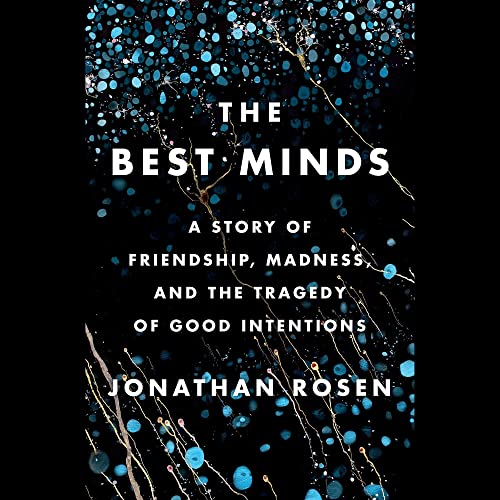
“The Best Minds” A Story of Friendship, Madness, and the Tragedy of Good Intentions

By: Jonathan Rosen

Narrated by: Jonathan Rosen

Jonathan Rosen (Author, Yale graduate–Accepted but dropped out of a PhD English program at Berkeley.)

Jonathan Rosen tells the story of his boyhood and adult friendship with Michael, a boy of his age who excels academically and professionally as a young graduate of Yale. Michael has a mental breakdown in his early twenties. He is diagnosed as schizophrenic. Rosen compares his years of adolescence with Michael’s.

Rosen’s stricken friend excels in every academic and business pursuit he undertakes before his slip into schizophrenia. In reflecting on the boy’s relationship, Rosen explains his perception of himself is as a grade school and high school plodder who prefers literature to math and the sciences. In contrast, Rosen suggests Michael’s academic qualities give him the ability to read, understand, and recite literary and science subjects with the ease of a savant. Michael reads everything with speed and understanding while Rosen labors over his studies.

The irony of Rosen’s perception of himself is that despite their differences, both he and Michael are accepted at Yale.

Rosen becomes an editor of the University’ newspaper, and later, a published author. Michael aspires to the editorship of the Yale paper, tries to become a published author, but is unsuccessful. Before graduation, Michael is recruited by a prestigious publicly held investment firm and seems on his way to great wealth and success. Instead, Rosen explains Michael leaves the investment company and begins to lose his way in life. Michael slips into a schizophrenic state that diminishes his eidetic memory and gives him a combination of debilitating psychological symptoms. At the height of Michael’s illness, he threatens his mother with a knife. With the persuasion of his father, Michael agrees to admit himself to a psychological ward which finally diagnosis his schizophrenia.

Michael, Rosen’s brilliant childhood friend, is admitted to a psychiatric ward for treatment designed to isolate and medicate its patients into a fog of confusion that is designed to lessen paranoid depression.

Rosen’s long introduction of himself and Michael seems prelude to an explanation of the ineptitude of the American psychiatric industry. Michael’s journey is an indictment of the American system of treatment for mental dysfunction. Michael is eventually discharged but is placed in a group home with other patients suffering from mental dysfunction. They share bedrooms with medications designed to isolate and offer palliative care that deadens their psychological symptoms.

Michael continues his treatment with the aid of minimal income from a government disability program that helps pay for his accommodation and psychoanalytic therapy.

He is directed to reengage life by his therapist with work as a clerk at a Macy’s Department Store. Michael’s father is incensed by the therapist’s diminishment of his son’s accomplishments and begins a campaign to have Yale reengage his son in pursuit of a law degree. With the help of Yale’s faculty, Michael is readmitted to the University.

Ironically, the Yale faculty and students become a caring haven that helps Michael cope with his medical condition.

However, Yale’s help is only palliative, not curative. Michael remains schizophrenic, only ameliorated by drugs and the calming influence of Yale students and faculty. His paranoia continues and becomes more severe when his father dies.

Schizophrenia affects only 1% of the population but has a higher risk of contraction from first degree relatives. (Michael’s grandmother was diagnosed with the disease.)

Michael seems on a road toward managed recovery with a detailed intellectual explanation of what schizophrenia is to him and how it creates delusional images that threaten his existence. His intellectual ability to explain his illness to the public attracts book publishers and the film industry to offer him over a million dollars for a book and film about his life. As this financial windfall becomes real, Michael and his fiancé plan to marry.

On June 17, 1998 Michael B. Laudor stabs his pregnant fiancé, Caroline Costello.

In a schizophrenic episode, Michael grabs his fiancé from behind, stabs her several times, and cuts her throat. Michael leaves her to die on their kitchen floor. Rosen notes that Michael quit taking his medication. He lost control in an episode of paranoia that viewed his fiancé as a maleficent alien presence. It seems a recurrence of what happened with his mother when he was thankfully convinced by his father to voluntarily commit himself to a hospital ward.

What becomes increasingly clear in Rosen’s biographical story is that there is no cure for schizophrenia.

Schizophrenic treatment is a life-long process that requires medication and a support system from caring caregivers, both professional and familial. Being one of “The Best Minds” is of little help in coping with schizophrenia’s symptoms. It requires lifelong assistance because it affects a person’s thinking, emotions, and interactions with the world.

Michael is charged with second-degree murder but is found not guilty by reason of mental defect. He is eventually committed to the Mid-Hudson Forensic Psychotherapy Center in New Hampton, New York in which he remains as of 2023.

(This is a terrible and tragic story. Rosen’s detailed research shows Caroline Costello was a good person, willing to help others, intending to adopt her husband’s faith, and trying to care for Michael in his struggle with an incurable brain dysfunction.)

NORTH KOREAN LEADERSHIP

Like the longevity of Putin, and Assad, Kim Jung-Un is as likely to stay in power as long as the people who protect him are living better lives than the majority of their country’s citizens.

Blog: awalkingdelight

Books of Interest
 Website: chetyarbrough.blog

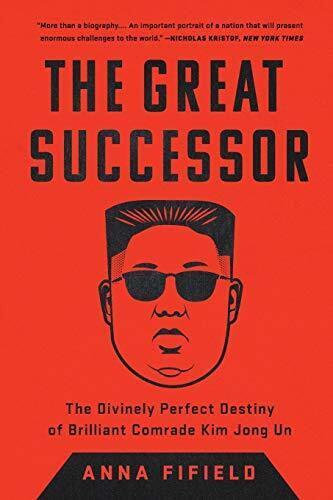
“The Great Successor”

“The Divinely Perfect Destiny of Brilliant Comrade Kim Jung Un”

By: Anna Fifield

Anna Fifield (Author, Asia-Pacific editor at The Washington Post.)

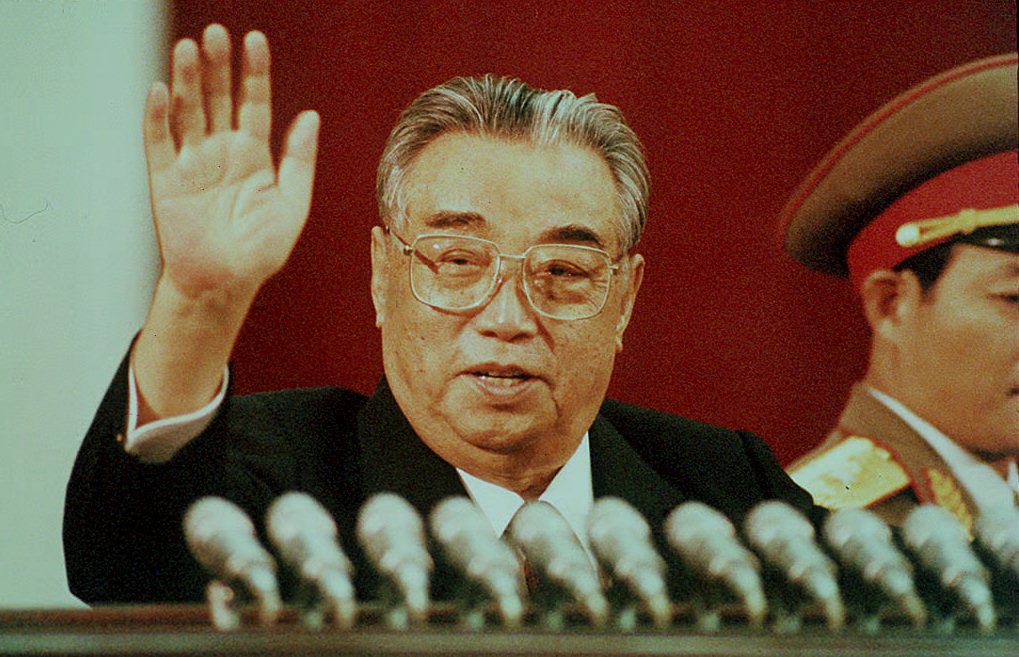
PYONGYANG, NORTH KOREA: This file picture dated 15 April 1992 shows North Korean President Kim Il-Sung waving during the celebration marking his 80th birthday at Kim Il-Sung stadium in Pyongyang. The Chinese government announced last week it would not send “anyone” to attend Il-Sung’s 92nd anniversary in response to North Korea’s refusal of international nuclear inspections. (Photo credit should read JIJI PRESS/AFP/Getty Images)

Anna Fifield offers a cloudy picture of today’s authoritarian leader of North Korea in “The Great Successor”. The reclusive and secretive nature of North Korea’s leadership makes Fifield’s analysis of Kim Jung-Un somewhat compromised. Her analysis is based on interviews of estranged North Korean’ exiles, other book writers, and news reporters about a regime that is notoriously opaque.

Despite the potential bias of secondhand information, Fifield shows a leader who exercises despotic control over 26 million people.

Kim Jung-Un (Supreme leader of North Korea.)

Fifield argues that North Korea’s government control is based on a cadre of carefully screened and highly benefited sycophants that obey Kim Jung-Un’s orders. At the age of 28 or 29, on December 17, 2011, Kim Jong-Un became the leader of North Korea after the death of his father, Kim Jong-il.

Kim’s most definitive action after appointment is to discredit his uncle, Jang Song-thaek who had government power and great influence in North Korea’s relationship with China and other sympathetic countries.

Fifield suggests Kim Jong-Un’s youth required assertiveness for him to show leadership legitimacy. The 67-year-old, Jang Song-thaek is accused by Kim of attempting to overthrow the state. He is executed on December 11, 2013, two years after Kim’s ascension. Fifield argues this action by Kim sent a message to his government employees and the public that he is in charge of North Korea.

Though the North Korean economy is nearer third world standards, the underground economy helps the poor raise their standard of living.

Fifield notes two critical factors that aid Kim Jong-Un’s control of North Korea. One is the fear created by his governments control of surveillance and propaganda. The other is his tolerance for an underground capitalist movement that bribes public officials while providing citizens added income.

Kim Jong-Un’s successful drive for a nuclear bomb gave him a position in the world of nuclear threat that tempers any nation-state’ action against his regime.

Fifield infers Kim Jong-Un is smart, his actions calculated, and his control of the country formidable. A primary example of Kim’s calculation is the story Fifield tells of his negotiation with President Trump. Kim manages to be the first leader of North Korea to meet with a President of the United States. Trump complimented Kim as a “strong guy”, a “great negotiator” and that he had a “very good relationship with him”. Fifield explains Kim’s success with the nuclear bomb program encouraged him to redirect his focus to modernizing the country and its economy.

Kim praised President Trump while leaving the idea of nuclear disarmament as a possible negotiable issue in return for American help with the economy. Fifield suggests Kim has no intention of abandoning his nuclear bomb program.

Fifield suggests Kim’s focus became the economy with an increased incentive to normalize relations with America. (In 2023, Kim’s failure to improve relations seems to have reignited his nuclear bomb ambitions with more testing and further rocket delivery tests.)

Very little was known about Kim Jung-Un before his ascendence to leadership. He received his early education in North Korea and Switzerland. He was strongly supported by his mother who promoted him to the then leader of North Korea, Kim il Sung, who wanted continuation of the Sung dynasty, the Mount Paektu bloodline, of which Kin Jun-Un represents.

Kim Jung-Un has two sisters, one half-brother, and one brother. The younger brother, born in 1981, Kim Jong-chul (on the lower right), lives a low-profile life in Pyongyang with no interest in government. The half-brother, Kim Jon-nam, was assassinated in Malaysia in 2017. The older sister, Kim Sul-song (upper left) is a worker in the propaganda department that supports Kim Jong-Un and his leadership but has more recently been sidelined. A sister who is younger than Kim Jung-Un is characterized as a publicity diplomat. She appears accommodating within the limits of Kim Jun-Un’s influence and control.

Fifield’s book is interesting but not particularly enlightening. Kim Jung-Un may be on the world stage for a long time. The Ukraine invasion by Russia, along with China’s support gives North Korea added weight in world affairs. Like the longevity of Putin, and Assad, Kim Jung-Un is as likely to stay in power as long as the people who protect him are living better lives than the majority of their country’s citizens.

POWER OF BELIEF

The power of belief in science or religion both leads and misleads humanity. Humans may not forgive but they often forget.

Blog: awalkingdelight
 Website: chetyarbrough.blog

The Hiding Place

By: Corrie ten Boom, Elizabeth Sherrill, John Sherrill

Narrated by: Wanda McCaddon

This is the life story of Corrie ten Boom and her experience in WWII. It is an autobiography written with the help of the Sherrills who have written or co-authored over 30 books translated into more than 40 languages. Though Ms. ten Boom and the Sherrills have passed, “The Hiding Place” is a paean to religious belief that has sustained civilization.

The belief eulogized in “The Hiding Place” is Christian, but it could be any faith. Whether Islamism, Hinduism, Buddhism, Shintoism, Sikhism, Judaism, Taoism, Confucianism, Caodaism, humanism, naturalism, “…ism” is belief in something greater than oneself.

Corrie ten Boom’s biography illustrates the opposing forces of a human need for belief in something greater than oneself. As noted by other authors, the civilizations that exist today would never have grown without belief in an “…ism” greater than the individual, family, or tribe. Corrie ten Boom is a believer in the Christian Bible and its Word. That belief drew her and her family to protect Jews from the Nazi occupation of the Netherlands.

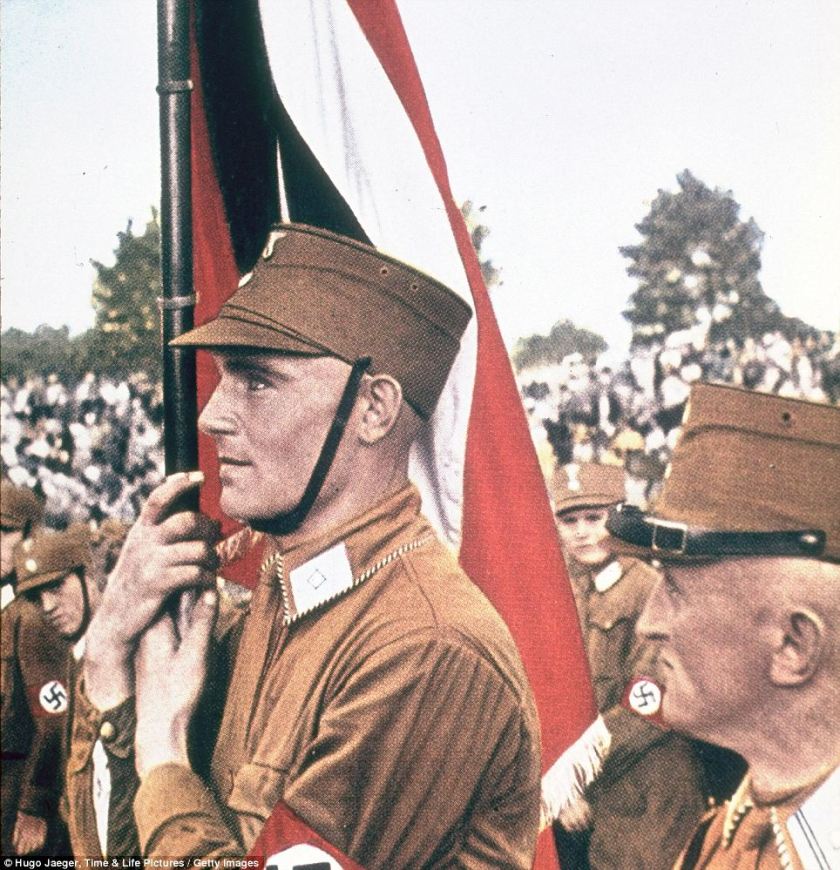
The rise of Nazism in Germany was a political ideology, secular in its origin, and loosely based on belief in science.

Science is a systematic method of gaining knowledge about nature, its causes and consequence. Like every belief system, science is based on human cognition which can lead or mislead humanity. Neither science nor religion have omniscient or omnipresent insight to the nature of the universe because of the human mind’s limitations and interpretations of facts and events. Religion, like science, can lead and mislead civilization because of human limitation and interpretation.

Thankfully, Corrie ten Boom’s family’s belief in the Bible led them to aid Jews when they were persecuted by the false science of German Naziism.

The relevance of “The Hiding Place” resonates today in the conflict between Palestinians and Jews in Israel and Palestine. One can see a conflict between religion and science in the tragedy that is unfolding in Gaza. Both Hamas and the Jews use their religious beliefs and the science of war to kill each other. As in all war, there is no winner. The death of 6,000,000 Jews in WWII and the slaughter of Jews at the festival in Israel are horrid and unforgivable, but can they or should they be used as justification for the horror of what is happening in Gaza?

She follows her religious belief to do what she could to save her Catholic family and Netherland’s Jews from Nazi’s societal and science ignorance. What forgiveness there is in Corrie ten Boom’s book is only in the acceptance of the Word in her Bible. The power of belief in science or religion both leads and misleads humanity. Humans may not forgive but they often forget.

LYRICS & MUSIC

As Orson Welles noted: “We’re born alone, we live alone, we die alone. Only through our love and friendship can we create the illusion for the moment that we’re not alone.” The tragedy of that observation is that Welles infers love and friendship are only an ephemeral illusion.

Audio-book Review
By Chet Yarbrough

Blog: awalkingdelight
 Website: chetyarbrough.blog

Something Wonderful (Rodgers and Hammerstein’s Broadway Revolution)

By: Todd S. Purdum

Narrated by: Todd Purdum

Todd Purdum (Author, former New York Times Journalist, writer for Politico.)

“Something Wonderful” is a refreshing break from recent book reviews about war. Todd Purdum writes and narrates an informative biography of two Broadway legends, Richard Rogers and Oscar Hammerstein and their contribution to New York theatre. Purdum explains their music, comedy, and drama changed the rules of Broadway musicals.

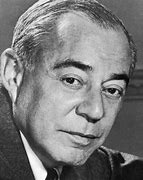
Richard Rogers (L) and Oscar Hammerstein (R).

Coincidentally, Rogers’ and Hammerstein’s partnership is in the early years of America’s entry into WWII. Their first collaboration was “Green Grow the Lilacs” which was originally a 1931 one act play, rewritten by Rogers and Hammerstein. It became their first successful collaboration known as “Oklahoma”.

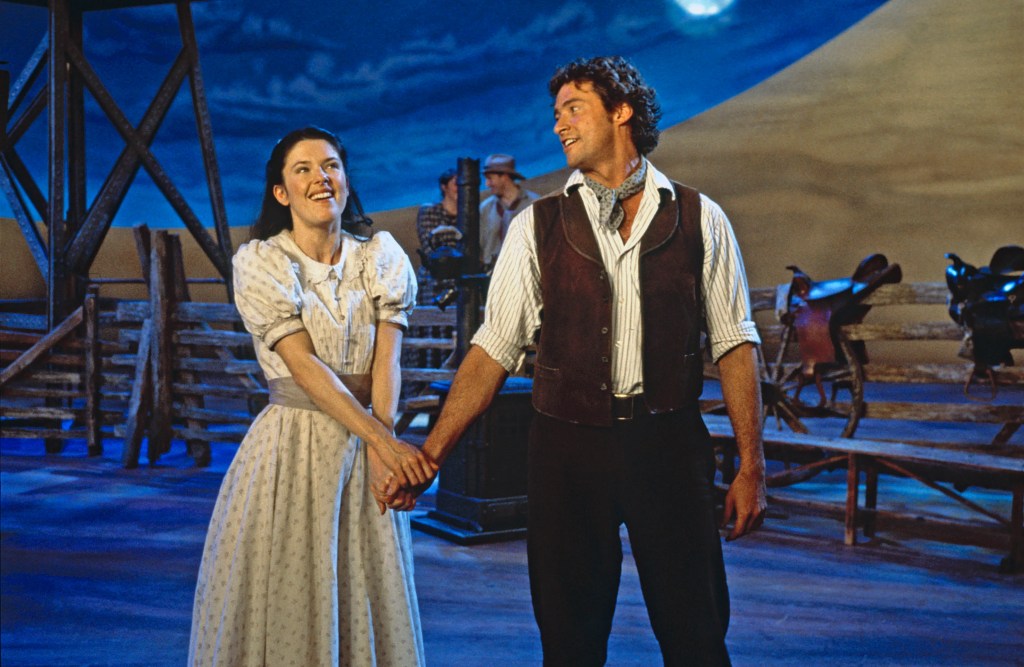
Audiences of today probably remember the movie version starring Gordon MacRae, and Shirley Jones.

However, in the St James Theatre in New York, it ran for five years with 2,212 performances culminating in a Pulitzer Prize in 1944. Not bad, for Rogers’ and Hammerstein’s first collaboration. It was the beginning of a long and storied career for these artists. Purdum notes Hammerstein would write the poetic words (the lyrics) of a song that would be put to music by the genius of Richard Rogers. Purdum explains, though they worked independently, they collaborated in a magical way that changed and broadened the appeal of musicals. The magic came from their work as two independent thinkers within their lanes of expertise. Hammerstein would write the lyrics and Rogers would create the music to fit the words.

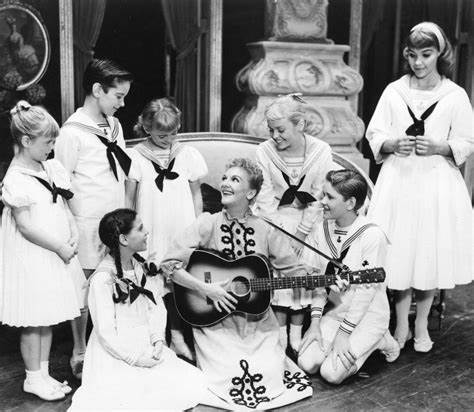
The two embarked on a series of hits from 1942 to 1960 with famous works like “Carousel”, “South Pacific”, “The King and I”, and “The Sound of Music”, all of which became successful and entertaining movies for a public that could not afford live productions on “The Great White Way” (the Theater District between 41st and 53rd street in New York). Those of a certain age remember great songs like “If I Loved You”, “Some Enchanted Evening”, “Getting to Know You”, and “My Favorite Things”.

Purdum explains how Rogers and Hammerstein broke many records by changing the rules of musicals. They created memorable melodies by experimenting with different musical styles and performers from opera to folk to jazz. They integrated plot and character to create entertaining, sometimes controversial social commentary, ranging from the comic to dramatic to tragic stories of life.

Rogers and Hammerstein won 34 Tony Awards, 15 Academy Awards, two Pulitzer Prizes, and two Grammy Awards.

After their great run on Broadway, Roger’s and Hammerstein’s attentions turn to the movies and the early beginnings of television. Their theatre productions become films that reach a much wider audience. However, translations from stage to film had a host of drawbacks ranging from casting to censorship that affected audiences’ reactions to what were great and successful Broadway musicals.

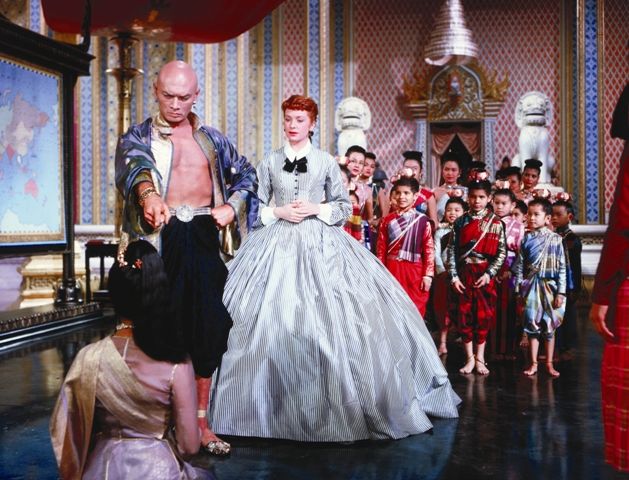
As a movie, who can forget “The King and I” and the brilliant performances of Yul Brenner and Deborah Kerr?

Nearing the end of Purdum’s fine story, these scions of entertainment are nearing the end of their productivity. In 1957, they produced Cinderella for television. An estimated 107 million viewers watched Julie Andrews play the part of Cinderella. The only other Broadway collaboration of note was “Flower Drum Song” that was well received but a commercial flop.

Oscar Hammerstein died in 1960 at the age of 65. The cause of death was stomach cancer.

Purdum notes Rogers’ alcoholism, womanizing and often-suffered bouts of depression greatly affected his last years. In 1957 he was hospitalized. He recovered and lived for another 22 years. He died in 1979 after what was called a long (undisclosed) illness.

After Hammerstein’s death, Purdum notes Rodgers could not reproduce the lyrical success of Hammerstein’s poetic alliteration.

Rodgers greatest success after the death of Hammerstein seems to have been oversight of the movie production of “The Sound of Music”.

The sad thing revealed by Purdum is that Rogers and Hammerstein never seemed to develop a close personal relationship. Each lived in their own worlds and only met in their musical collaborations, not as friends but as ambitious business associates. Purdum wrote of Rogers’ comment about regretting never really getting to know Hammerstein.

As Orson Welles noted: “We’re born alone, we live alone, we die alone. Only through our love and friendship can we create the illusion for the moment that we’re not alone.” The tragedy of that observation is that Welles infers love and friendship are only an ephemeral illusion.

SEPARATE NOT EQUAL

Reflecting on “Blood Brothers”, a listener understands America is a long way from the ideal of equality. Being equal does not mean everyone can be the greatest heavy-weight boxer in the world. Equality means every citizen can choose to be the best version of themselves without being repressed by the society in which they live.

Audio-book Review
By Chet Yarbrough

Blog: awalkingdelight
 Website: chetyarbrough.blog

Blood Brothers (The Fatal Friendship Between Muhammad Ali and Malcolm X)

By: Randy Roberts Johnny Smith

Narrated by: David Drummond

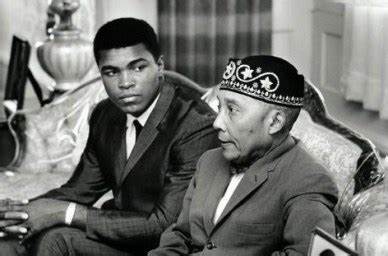
Randy Roberts and Johnny Smith offer a nuanced and well-written view of Muhammed Ali, his fame, his skill as a heavy weight boxing champion, and figure head for the Nation of Islam (NOI). The author’s juxtapose Ali and Malcolm X as “Blood Brothers” who shed light on the unquestionable value and horrendous harm religious belief can impose on society.

Roberts and Smith show human nature is an unconquerable beast that both leads and misleads humanity. The maturity and personal growth of Muhammed Ali and Malcolm X is revealed in “Blood Brothers”. They both become members of NOI, an American faction of Islam, that preaches Black America can only be equal through separation from non-black people. Elijah Muhammed, a self-proclaimed Messenger of Allah, creates a fellowship of Black Muslims (NOI) who insist on a Black American nation, independent of American governance. Elijah Muhammed insists–in order to become democratically free and equal to non-Black American citizens, an independent Black American nation must be formed.

What Roberts’ and Smith’s history shows is NOI’s flaw is in belief that separate can ever be equal based on race, religion, or color.

Though self-worth and pride can be immeasurably enhanced by exclusionary race, religion, or difference what is missed is the truth of human nature. Human nature is riven with self-interest based on money, power, and/or prestige. Elijah Muhammed and other leaders of religion are human. Religious leader’s self-interest drains the life out of Divinities force. In one sense, NOI offers a sense of pride and equality for Black Americans but in another, it creates further discrimination and inequality with separation and distinction from others.

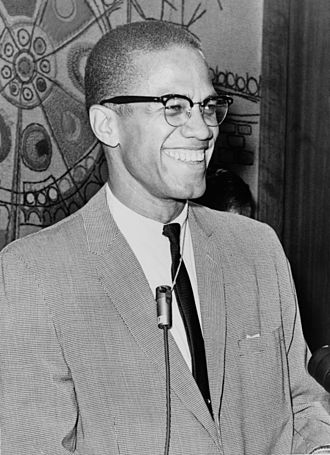
Roberts’ and Smith’s story of Malcolm X, and to a lesser extent, Muhammed Ali’s friendship, show how religion can bring people together, but also tear them apart. Malcolm X evolves from an intelligent street punk to an insightful leader of the Muslim religion. Malcolm becomes a favorite of NOI until he challenges its leader (Elijah Muhammed) for abandoning what he believes is a fundamental tenant of the faith, marriage chastity. Malcolm X exposes extra-marital affairs of Elijah Muhammed as evidence of the leader’s fall from faith. As his disaffection grows, Malcolm X begins to believe separate cannot be equal and that NOI’s belief in separation of the races is a violation of a faith that says Allah or God created all humankind.

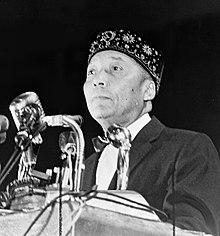
Elijah Muhammad (Leader of NOI 1934-1975, Born in 1897 as Elijah Robert Poole, Died at age 77 in 1975.)

Malcolm X is a teacher of Ali before his break with the leader of NOI. Malcolm X appeals to Ali’s innate ability as a fighter and doggerel actor for truth and justice. Ali is put in the position of following Malcolm’s differences with Elijah Muhammed or staying within the Nation of Islam. The authors infer Ali looks at Elijah Muhammed as the father he wishes he had while Malcolm X as a brother who has been led astray.

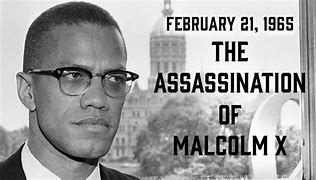
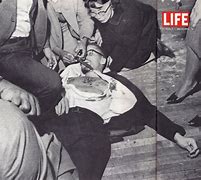
To the authors, the assassination of Malcolm X by NOI’s followers is inferred by Ali to be a threat to his life if he forsakes NOI’ beliefs. When Elijah Muhammed dies, some years after Malcolm’s assassination, Ali revises his view of NOI and leans more toward the teachings of his former friend, Malcolm X. Ali moderates NOI’s anti-white sentiment.

Reflecting on “Blood Brothers”, a listener understands America is a long way from the ideal of equality. Being equal does not mean everyone can be the greatest heavy-weight boxer in the world. Equality means every citizen can choose to be the best version of themselves without being repressed by the society in which they live.

IS GOD DEAD

One presumes Nietzsche’s philosophy is either right or wrong, but its insightful truth lies in the horrors of history and the consequence of forsaking God and human tradition.

Audio-book Review
 By Chet Yarbrough

Blog: awalkingdelight)
 Website: chetyarbrough.blog

I Am Dynamite! A Life of Nietzsche

By: Sue Prideaux

Narrated by: Nicholas Guy Smith

Sue Prideaux (Anglo-Norwegian author, also wrote “Edvard Munch: Behind the Scream”)

Friedrich Nietzsche’s life and philosophy is dissected by Sue Prideaux in “I Am Dynamite!”.

Friedrich Nietzsche (1844-1900, died at age 55.)

As inferred by Prideaux’s title, Nietzsche blows up a number of traditional religious and secular beliefs while battling physical and mental disorders in a complicated and contradictory life.

Nietzsche’s life is one of physical illness that seems to teeter on the edge of madness. In addition to his father’s history of early death from a brain ailment at 35, Nietzsche’s health is challenged by dysentery and diphtheria in 1870 when he is 26.

Nietzche’s last 11 years of life were spent in German and Swiss asylums or in his mother’s and sister’s care in Naumburg.

Some suggest he died from what is called dormant tertiary syphilis at 55 in Weimer Germany, less than 30 miles from Naumburg. Nearing the end of Prideaux’s biography, in Chapter 21, Nietzche’s plunge into madness is completed. One cannot help but think Nietzche’s philosophy and writing is hugely impacted by his ability to cope with recurrent illnesses.

  • The Birth of Tragedy (1871)
  • Early Greek philosophy & other essays (1872)
  • On the Future of our Educational Institutions(1873)
  • Thoughts Out of Season(1874)
  • Human, All Too Human(1875)
  • The case of Wagner-Nietzsche, Contra Wagner, Selected aphorisms(1876)
  • The Dawn of Day(1881)
  • The Joyful Wisdom(1882)
  • Thus Spoke Zarathustra(1883)
  • Beyond Good and Evil(1883)
  • The Genealogy of Morals(1884)
  • The Will to Power(1885)
  • Twilight of the Idols/The Anti-Christ (1886)
  • Ecce Homo(1888)
  • The Antichrist(1895)

By Prideaux’s account, Nietzsche is an excellent pianist.

She notes his school mates gather around Nietzsche at the piano, particularly during violent weather events, because of his exuberance and creativity in playing well-known classical, as well as his own, music compositions. In his early life, Nietzsche becomes a close friend of German composer, Richard Wagner.

Nietzsche denies both religion and Socratic rationalism (a method of systematic doubt in pursuit of truth) by arguing individuals have a right to determine life’s value and meaning, without resort to religion or tradition.

Nietzsche believes too many false assumptions come from Socratic rationalism. In Socratic rationalism, Nietzsche is saying societal religion and tradition distort the pursuit of truth. To Nietzsche, human beings are on their own. That is the major philosophical point of his philosophy. His famous aphorism is “God is dead”. Morality and the reality of life is a function of man, not God, history, or tradition.

While seemingly destined for a religious life, born to a Lutheran pastor and teacher, Frederich Nietzsche chooses atheism and particular beliefs that offend his family.

Nietzsche believes conscience humans can become Supermen or Superwomen, surrounded by followers, if they have superior ability to choose that role in life. Some argue history reinforces that truth with the rise of leaders like Augustus in Rome, Jesus in Bethlehem, Genghis Kahn in Asia, Hitler in Germany, and other male leaders in history. Early in Nietzsche’s life he might have included women, like Cleopatra in Egypt, but as he aged his view of women changes. (History shows Nietzsche is ambivalent about women as “Super”, which remains a prejudice to this day.)

“Super” does not mean either being right or wrong. A “Superhuman” overcomes worldly influences by recognizing they are their own master.

Super” is meant to connote one who goes beyond God or societies’ good and evil to create value through a Super’s leadership and action in accordance with his/her beliefs. Obviously, the ugliness of this view is in its consequence to human resistors to the “Super” human that chooses a path contrary to the best interests of society or the individual.

Soren Kierkegaard (1813-1855, existentialist philosopher died at age 42.)

If, as Nietzche infers, humans are on their own, Kierkegaard’s “fear and trembling” is not before God.

To Nietzche,”fear and trembling” is before the Superman, one who rises above the pettiness of self-interest to rule in the best interests of all. To Nietzsche, the human being is alone. One may either take a path to follow the Superman or become their own Superman.

Prideaux offers a comprehensive picture of a man on a mission. His mission is to disabuse human belief in a Supreme Being or societal tradition to solely rely on one’s own consciousness because that is all there is to life.

Nietzsche is shown by Prideaux to be opposed to antisemitism by breaking his close relationship with his sister and the famous composer, Richard Wagner, who was among the most famous antisemites of that era.

The ugly consequence of Nietzsche’s belief in the “Superhuman” is exemplified by his sister (Therese Elisabeth Alexandra Nietzsche, born in 1846, died in 1935 at age 89) who distorts her brother’s philosophy and endorses antisemitism and Adolph Hitler.

Prideaux’s biography offers details of Nietzsche’s life that allow reader/listeners to make up their own mind about Nietzschean philosophy. Prideaux shows Nietzschean philosophy is indeed “…Dynamite!”.

Nietzsche’s last decade of life is a journey into madness.

Though lovingly cared for by his mother, he is victimized by his sister who controls and distorts his contribution to philosophy. One presumes Nietzsche’s philosophy is either right or wrong, but its insightful truth lies in the horrors of history and the consequence of forsaking God and human tradition.