Elon Musk: Tesla, SpaceX, and the Quest for a Fantastic Future
Written by: Ashlee Vance
Narrated by: Fred Sanders
ASHLEE VANCE (AUTHOR, JOURNALIST)
Ashlee Vance writes about launching dragons in a biography of Elon Musk. Like the mythical fire breathing beast that destroys civilizations, Musk’s fire-breathing ambition levels two of the most powerful organizations in the world; e.g. the auto industry and government bureaucracy.
TESLA AND SOLAR CITY (ELON MUSK)
Tesla Motors is the first automobile manufacturer to receive a unanimous vote as the best car of the year. SpaceX is the first private rocket manufacturer to successfully transport satellites and cargo into space. The principal behind these extraordinary feats is Elon Musk, a combination of the fictional Tony Stark and a real Thomas Edison. Not since the 1920s has anyone successfully launched a new automobile manufacturer. Never in history has a private company launched rockets into space to service the international space station.
TESLA’S SpaceX RE-LAUNCH ROCKET
Vance shows that Musk has an optimistic vision of the future of America and the world. His willingness to risk everything for alternative energy sources, and reduction of carbon-based energy consumption are astounding in the recurrent era of capitalist greed. Musk’s focus is on transition from traditional industrial methods of production to technological innovation. His methodology is a combination of traditional cost-based negotiation, vertical business integration, and hard work. The methods are not new but Musk’s extraordinary intelligence and his personal commitment are reminiscent of great inventor/innovators in history.
ELON MUSK ROLLS THE DICE AGAIN BY PURCHASING SOLAR CITY, THE LARGEST SOLAR CONVERSION COMPANY IN THE U.S.
Vance clearly illustrates that Musk is not perfect but his story will eventually, if not now, be recorded as historically important. Musk exposes the lie of Trump’s vilification of immigrants. Musk is born as a South African who comes to America through Canada. He becomes an American job producer and manufacturer when both are sorely needed to revivify the, largely mythical, American dream. Musk gives America hope.
Musk faces many obstacles in his life; just as all humans do. One advantage for Musk is in being white; oh, and being blessed with a prodigious memory, extraordinary cognitive ability, and an immense drive to succeed. Musk relentlessly pursues what he believes in. Fortunately, Musk’s natural advantages work toward the best interests of humanity; i.e. a cleaner environment and exploration for colonization of other worlds.
Trump’s withdrawal from the Paris Climate Accords is reminiscent of ignorant industrial luddites. Innovators like Musk pursue an opportune future while Trump and others pursue the mythology of the past. Both Musk’s and Trump’s errors are human, but their consequences are hugely different. Vance’s biography of Musk shows releasing dragons can benefit society. Trump’s dragons are only likely to harm society. In history, Musk will be remembered fondly; Trump will be recalled sadly.
Treavor Noah knows what it is to be poor. Undoubtedly, Noah now knows what it is like to be rich. More importantly, it seems Noah has adopted his mother’s independence and, from his life experience, a superior perception of reality. “Born a Crime” is no joke.
Audio-book Review
By Chet Yarbrough
(Blog:awalkingdelight)
Website: chetyarbrough.com
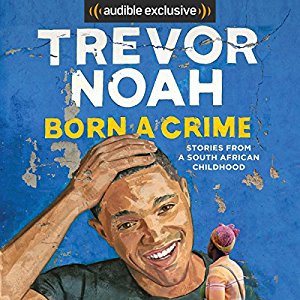
Born a Crime: Stories from a South African Childhood
Written by: Trevor Noah
Narrated by: Trevor Noah
TREVOR NOAH (AUTHOR AND HOST OF “THE DAILY SHOW”
Trevor Noah’s “Born a Crime” is no joke.
Remembering when Trevor Noah took over the “Daily Show”, thoughts of a South African replacing an American, places one in two minds. One mind thinks how could a person not born in America understand the politics and culture of a country satirized by a TV show? Another mind thinks the “Daily Show” will become more culturally relevant with a commentator that satirizes more than just American culture.
JON STEWART (COMEDIAN AND FORMER HOST OF “THE DAILY SHOW.)
The answer to the first mind’s question is answered by the second mind’s conclusion. Personally, it is sad to have witnessed the loss of Jon Stewart’s insightful American commentary. However, Noah offers a perspective that is equally insightful; admittedly cringe worthy at times, but more universal.
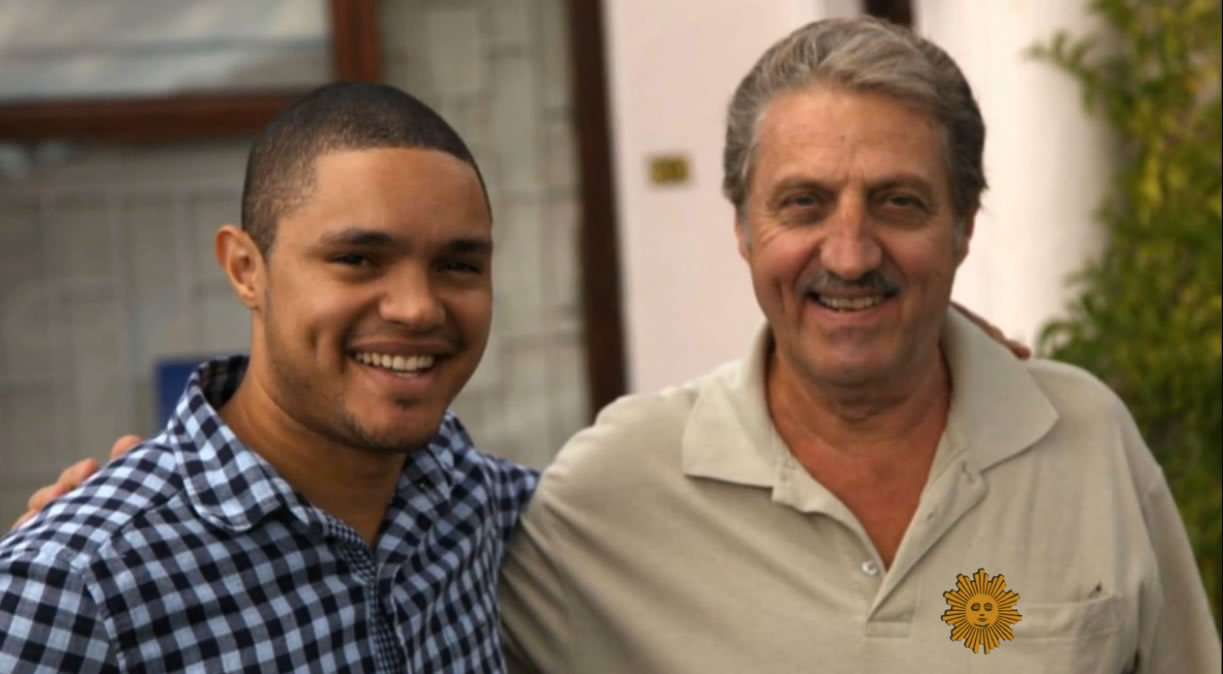
TREVOR NOAH AND HIS FATHER
“Born a Crime” is testament to Noah’s cultural diversity and universal insight.
When Noah is born, he is “Born a Crime” because South African Apartheid made mixed conjugal relations a criminal offence. Noah’s father is a white Swiss entrepreneur and his mother is a black South African. They choose to have a son, though they never marry. Noah’s mother names her son Trevor because the name gives him the distinction of being neither African black, nor white but a citizen of the world.
Noah is a challenging son. He shows himself to be a hyperactive, non-violent, trouble-maker in his youth. He is born into poverty but raised by a mother who believes in a moral code of unshakable faith. In his youth, Noah defies most of his mother’s inner direction and strict, sometimes physically punishing, discipline. Retrospectively, Noah acknowledges how much his mother loved him, and how her fortitude presumably made him mentally tough, independent, and irreverently objective.
Noah’s story is a tribute to his mother. She inspires a listener to understand the importance of family, respect, love, and faith.
As a youth, Noah steals, becomes a black-market maven, and juvenile delinquent.
His intelligence is used to organize a group of delinquents to make a living in a South African ghetto. He rationalizes his thievery as a game to outwit the local police and fellow miscreants in a dysfunctional culture born of the remnants of apartheid. He broadens rationalization of criminality by believing there is no harm; no foul for theft because of insurance company reimbursement of societies’ wealthy, the unfairness of Apartheid, and the reality of poverty and hunger.
Noah explains how black-markets develop and how it is difficult for poor people to escape its allure. It is the same circumstance that feeds drug cartels. Theft, like drugs, is a way of making a living in the ghetto. Both industries recruit the unemployed by offering jobs, potential wealth, and identity.
Noah notes that ghetto gangs are more in touch, supportive, and caring of the poor than the government. Gangs take care of their neighborhoods by being more involved, more considerate, and helpful when it comes to the needs of the poor. However, Noah fails to fully assess how the poor are victimized by gangs that prey on the same people they purportedly help. It is a blindness repeated in a vignette about a boy named Hitler.
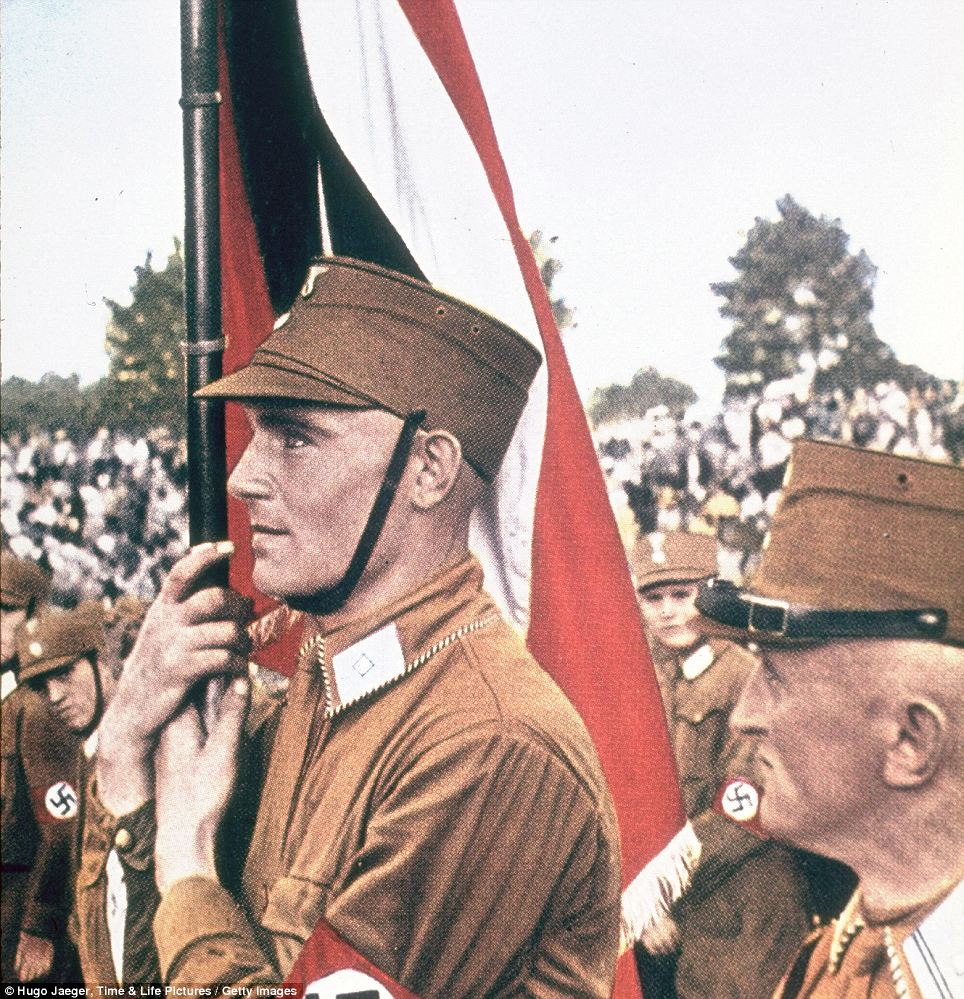
An example of a “cringe worthy” observation by Noah is his explanation of his lead dancer in one of his schemes to make money in the ghetto. His little group of non-violent delinquents are hired to provide entertainment at a Jewish school in South Africa. Noah is the disc jockey. His star dance performer is a young black African named Hitler.
Noah implies that he is ignorant of Hitler’s atrocities in WWII. This is somewhat incredulous considering Noah’s intelligence.
In any case, Noah’s music heightens the excitement of his audience and he calls on Hitler to dance to the music; with a dance that includes a Hitlerian salute. Naturally, the room goes silent.
Noah gets into an argument with the person who hired his group. Noah suggests his ignorance led to a misunderstanding. He writes that when one considers the millions of black people murdered through Apartheid and slavery, Hitler is just a name given to the dancer by his mother. Black genocide and slavery is an ugly “cringe-worthy” excuse to justify Hitler’s murderous antisemitism. Putting the Hitler vignette aside, Noah’s story is a condemnation of discrimination in all forms.
Noah returns to the subject of his mother’s life with an explanation of her marriage to a black South African (Abel Shingange) who Noah describes as unconventionally handsome with a penchant for violence. He marries Noah’s mother and they have two children together. Noah is in grade school. Their life as a family lasts for over 17 tumultuous years.
The story of Noah’s mother reflects on global discrimination against women. His stepfather is shown to have been raised in a patriarchal family that emphasizes the superiority of men over women.
Women, in Abel Shingange’s life, are expected to bear children, be silent, cook and clean house, be dependent on their husbands, and respect males in all circumstances of life. Noah’s stepfather insists on that relationship in his newly formed family.
Noah’s mother comes from a completely different perspective. She is an independent soul who chose to have a child “Born a Crime” and who believed the only God is God and not man. Noah’s stepfather interprets her opinion and attitude as disrespect for his role as husband.
Noah’s mother is shot three times by his stepfather. Noah’s stepfather fired a bullet in her buttocks, her leg, and the back of her head. The government, presumably run by men, decides that the needs of two boys who remain in the home need the support of their father. Ironically, Noah notes that his stepfather rarely supported the children or family, and drank the profits of his labor. His mother had been the primary financial support of the family.
Noah’s stepfather is walking the streets of South Africa as a free man today. Surprisingly, Noah’s mother is alive. Through a miracle of circumstance or God, the bullet to the back of her head missed her brain.
Noah knows what it is to be poor. Undoubtedly, Noah now knows what it is like to be rich. More importantly, it seems Noah has adopted his mother’s independence and, from his life experience, a superior perception of reality. “Born a Crime” is no joke.


 Trump’s withdrawal from the Paris Climate Accords is reminiscent of ignorant industrial luddites. Innovators like Musk pursue an opportune future while Trump and others pursue the mythology of the past. Both Musk’s and Trump’s errors are human, but their consequences are hugely different. Vance’s biography of Musk shows releasing dragons can benefit society. Trump’s dragons are only likely to harm society. In history, Musk will be remembered fondly; Trump will be recalled sadly.