Graduate Oregon State University and Northern Illinois University,
Former City Manager, Corporate Vice President, General Contractor, Non-Profit Project Manager, occasional free lance writer and photographer for the Las Vegas Review Journal.
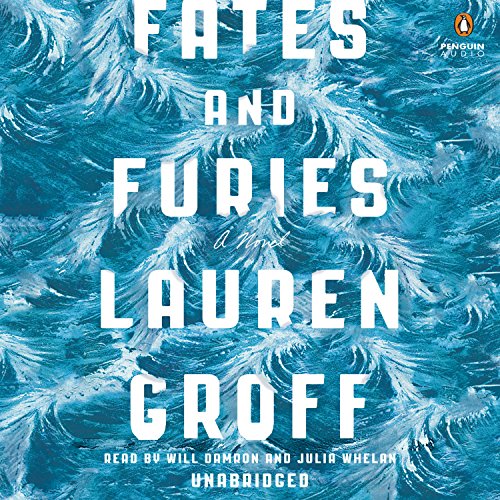
“Fates and Furies” shows how men are not from Mars, and women are not from Venus. Lauren Groff shows how “Adams Rib” is a joke played on women by men who have a false sense of gender superiority.
Groff artfully illustrates how men and women are equal. They are equal in every respect, but particularly Groff shows how they are equal in drive, ambition, ability, and fallibility.
Groff’s artistry is in the beauty and cogency of her writing. She tells the story of a husband and wife’s lives from cradle to adulthood.
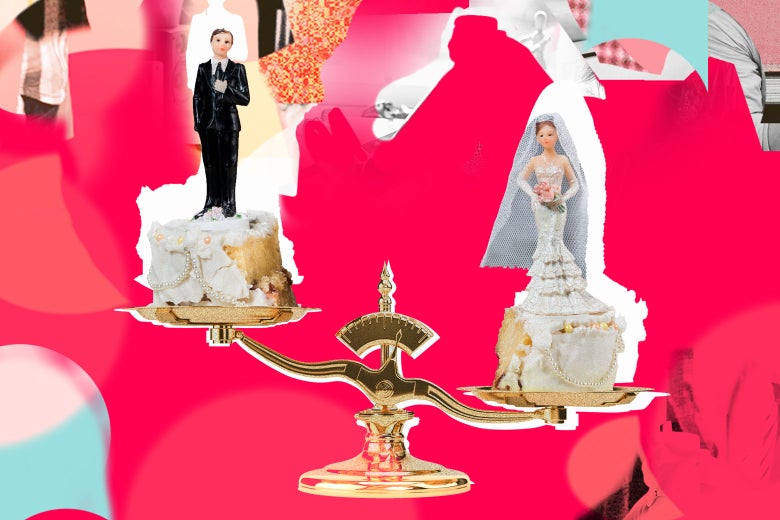
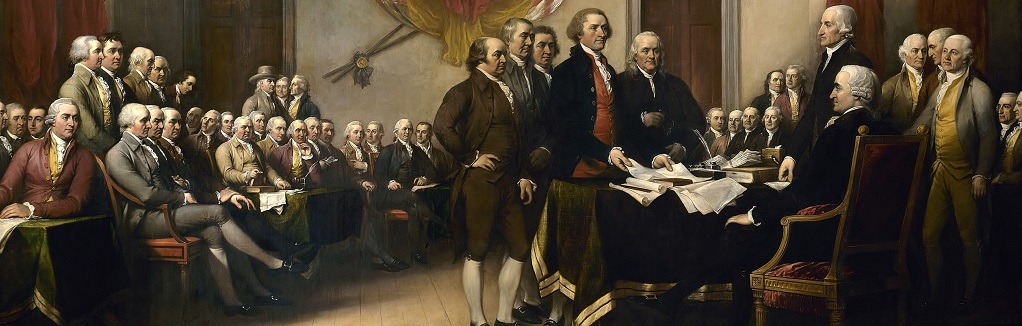
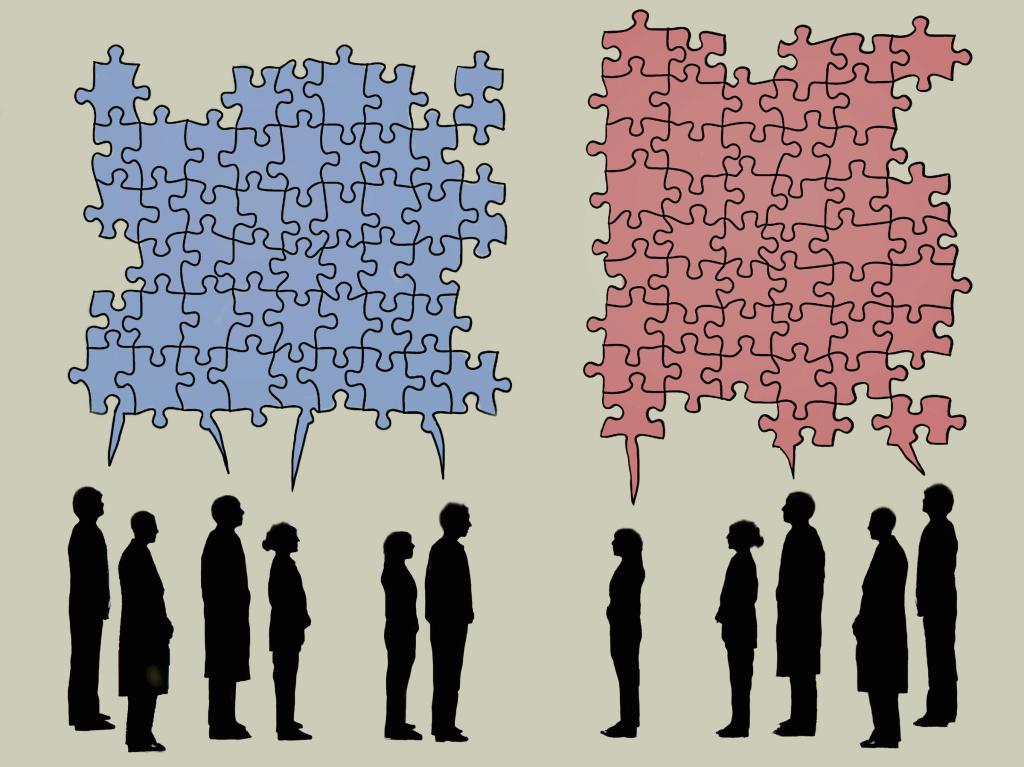
Groff shows how little difference there is between the sexes when new life is hatched but not borne by parents. (This is not to say parents are not important but parents and culture often fail children by training them to be unequal–for example–the picture of marriage shown above.) The first half of her book is told from a husband’s view of himself in the world; the second half is told from a wife’s view of herself in the world.
Every reader/listener will draw their own conclusion about Groff’s view of sexual equality. Her story may not be your story, but it will give every person pause, if not enlightenment.
Power plays a role in every human’s life. Gender is immaterial. Groff shows how a man and woman exercise power between each other and among family, friends, and acquaintances.
Groff focuses attention on one couple, a husband and wife, and their personal relationship. Groff reflects on each of their histories to explain, in part, how they became who they are.
The couple, and outsiders of the couple’s relationship, have little understanding of who they are or why they act as they do.
The beauty of Groff’s writing adds dimension to the truth that men and women are equal. Lancelot (aka Lotto) Satterwhite and Mathilde Yoder (Lotto’s wife) are creative geniuses. One might argue both have character flaws, as all humans do, but that is not the story.
Lotto is a narcissist who thinks the world revolves around him. Mathilde is a narcissist who lets Lotto think the world revolves around him. Both are trapped in their own delusions.
From delusion to reality, Groff shows how deep love can be, even between two narcissists.
Lotto and Mathilde merry, graduate from Vasser (a liberal arts college in New York) and begin their lives together. Lotto is a struggling actor and Mathilde works for an art gallery. In their early years of marriage, Mathilde works to make money they need to keep their household together. Groff changes that condition when Lotto abandons acting to become a playwright. In that change, Groff reveals more of Lotto’s life in flashbacks.
Lotto’s life experience leads him to fame and, to a degree, fortune. In Lotto’s telling-that success is different from the telling given by Mathilde in the second half of Groff’s book.
Lotto and Mathilde are very much alike, aside from gender. Both are abandoned by their parents. Both learn how to cope with life alone. Each draw on their experience as children to learn how to survive in a world driven by money, power, and prestige.
After Lotto’s death, Groff uses flash backs to explain Mathilde’s childhood. In that telling, Mathilde is shown to be an equal to Lotto. Lotto’s mother, who dislikes Mathilde, disowns Lotto from a family fortune. Lotto’s mother plans to rescind the disownment upon her death. As fate (luck) would have it, Lotto’s mother dies before Lotto’s passing. Mathilde inherits her husband’s estate.
The hardship of Lotto’s and Mathilde’s childhoods prepares them to use their gifts of intelligence and sex to survive.
Groff shows little difference in their drive, ambition, and ability to make their way in the world. None of that makes any difference with life’s luck (or, if you wish, fate). That is one of many points Groff makes in “Fates and Furies”. Life is a matter of fate (luck), and fury.
Groff shows how men and women are equal. They have different strengths but equal drive, ambition, ability, and fallibility.
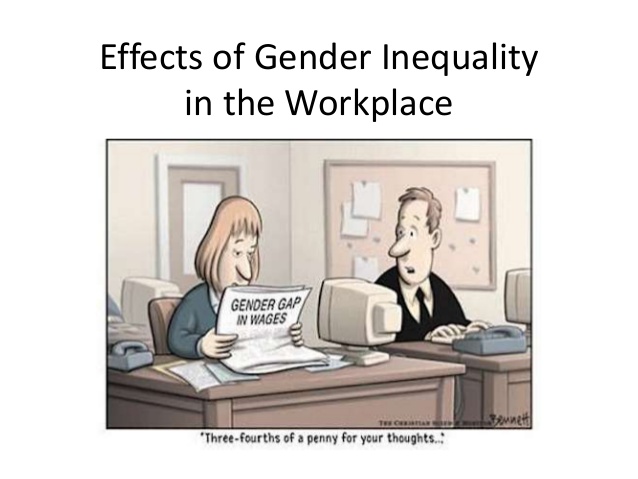
The missing ingredients in the modern world are equal pay for equal work, self-understanding, and public acceptance.
Democracy in Chains: The Deep History of the Radical Right’s Stealth Plan for America
By: Nancy MacLean
Narrated by Bernadette Dunne
Nancy MacLean (American author, historian, professor at Duke University)
Labeling people is mind numbing. Labeling of political and economic interests is a crime against reason. Democrat, Republican, conservative, liberal, libertarian, Tea Partier, right-wing, and left-wing are some of the most common political labels. In the light of reason, none of these labels make consistent sense.
In modern American politics, labels attach themselves to people like Nancy Pelosi, Mitch McConnell, Donald Trump, Joe Biden, and the Koch Brothers.
Nancy Pelosi (Speaker of the U.S. House of Representatives.)
Mitch McConell (Senate Majority Leader.)
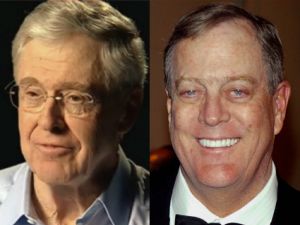
THE KOCH BROTHERS (KOCH INDUSTRIES CORPORATE LEADERS)
ADAM SMITH (1723-1790, AUTHOR OF -THE WEALTH OF NATIONS)
LUDWIG von MISES (1881-1973, THEORETICAL ECONOMIST OF THE AUSTRIAN SCHOOLD, INFLUENCED HAYEK AND FRIEDMAN)
JOHN MAYNARD KEYNES (1883-1946)
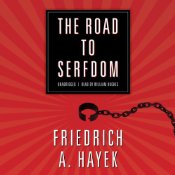
FRIEDRICH AUGUST von HAYEK (1899-1992)
JAMES BUCHANAN (American Economist, 1910-2013.)
Milton Freidman (1912-2006)
The only common characteristic of these representatives is that they are human’. Their labels only speak of partial truths about what they believe and what economic policies they support. Nancy MacLean uses most of these labels to make her case for “Democracy in Chains”.
Depending on one’s point of view, MacLean enlightens one side of her argument that, indeed, democracy is in chains. The chains of which she writes are manufactured, distributed, and applied by corporate America. MacLean identifies Noble Prize winner in Economics, James Buchanan, as the theorist that gave momentum to the Koch brothers’ political drive for unfettered free-enterprise.
Humans, even historians, are not omniscient. They are burdened with personal experiences that shape their beliefs and often compound their biases. Beliefs are not objective. They are right and wrong within the boundaries of facts and societal norms. Facts are facts, but norms are accepted behaviors that conform to a group, community, or culture.
An appeal Trump has to some Americans has to do with his consistency in denying the truth. Covid19 is a devastating killer but Trump gives comfort to many who want to believe his denial of reality. The same might be said about Trump’s global warming opinions. The science shows his chosen facts are wrong and America will pay for it in one way or another.
Trumpism is a disease of America’s own making but this too will pass. History will reflect how dangerous modern media is in promoting the worst qualities of the American electorate.
Societal norms change with time and human experience. Facts do not change but their interpretation is changed by new societal norms.
A prime example of facts that change, based on social norms, is the fact of world misogyny. “Me Too” has changed the meaning of the fact. Harvey Weinstein is now in prison and Jeffrey Epstein killed himself.
That part of the American Constitution’s preamble that says the purpose of government is to provide for “general welfare” of all, is at issue with political and economic labels.
MacLean creates an argument that sounds like a conspiracy theory, a cabal of rich benefactors and political zealots who collude to reinterpret the American Constitution.
The principals of this conspiracy are the Koch brothers based on a theory grounded on an interpretation of von Mises’ economics.
Ludwig von Mise’s economic theory is artfully resurrected by the economist James Buchanan, modified by Friedrich Hayek, and reinforced by Milton Friedman.
Buchanan’s fundamental argument is that free enterprise should be free. He argues that the profit motive outweighs the negative consequence of social inequity by offering equal opportunity.
In Buchanan’s opinion, the only purpose of government is to provide for the common defense of the country. Education should be financed by private ownership of schools. Buchanan argues government financing of social service interferes with the benefits of a free market.
Buchanan reinforces a Spencerian belief in a “survival of the fittest”, a beggar thy neighbor distortion of Darwinian evolution. MacLean suggests the Koch brothers adopt Buchanan’s economic theory and implement it through clandestine proselytizing of others, and financial support for candidates who will vote for maximal unregulated free enterprise.
Herbert Spencer (1820-1903) conflates Darwinian evolution with free enterprise.
MacLean points to the folly of Buchanan’s economic policy in his consultation with President Augusto Pinochet in Chile. Buchanan recommends creation of a constitution that establishes and enforces Buchanan’s free-enterprise theories that forbade trade unions and encourage privatized social security. Unlike America, Pinochet’s free-enterprise government had no checks and balances.
Augusto Pinochet (Junta leader, military Commander and Chief, and then President of Chile from 1974-1990, died in 2006.)
With military oversight and control, Pinochet’s government victimized its citizens in the guise of a government that supposedly embraced libertarian free-enterprise. In fact, Pinochet’s constitutional government enriched a small minority and victimized (both economically and physically) the majority of the Chilean population.
Ludwig von Mises, an economics professor of the Austrian school, is the teacher of Friedrich Hayek. MacLean reviews papers written by James Buchanan who endorses von Mises economic theory; without any acknowledgement of Hayek’s tempering of von Mises’ “no quarter” for the poor or disabled. Buchanan becomes a theorist who motivates the Koch brothers to spend millions of dollars to undermine Government regulation of free enterprise.
MacLean explains how the Koch brothers create a non-profit foundation to elect Senators and Representatives to undermine unionization, government support of public health, public education, social security, and other public services supported by government tax dollars. This cabal is formed in the 1960s, particularly after Johnson’s “Great Society” movement. The cabal is built on belief that health, education, and welfare are best served by free enterprise, not government programs.
MacLean notes how this cabal fights increased taxes on the rich to pay for public services that subsidized public health, education, and welfare. Buchanan identifies federal taxes as a form of confiscatory government action, tantamount to a tyranny of the majority over a rich minority.
The cabals’ argument is that private enterprise is the real engine of improved public health, education, and welfare for all Americans. Their supporting evidence is the rising wealth of the economy, and the general health of the American population.
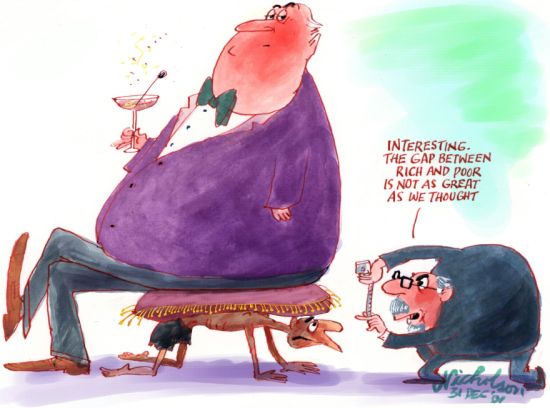
The “libertarian” Koch followers imply the gap between rich and poor is a motivation for climbing the ladder of American opportunity.
Though MacLean labels this cabal as Libertarian in motive, it hides behind a cloak of Republicanism. MacLean argues that Republicans who fight this secret organization either change their tune or lose their public office. Her evidence is Republicans who have lost their seat in Congress, like John Boehner, or switched their tune, like Orrin Hatch, who retired after 42 years as a Republican Senator from Utah.
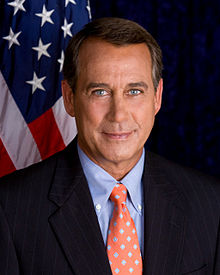
JOHN BOEHNER (FORMER SPEAKER OF THE HOUSE)
Orrin Hatch (Former U.S. Senator for Utah)
Putting aside labels, “Democracy in Chains” is simply about self-interest. Human nature is to seek one’s own interest whatever one’s political or economic label. Until self-interest becomes care for all Americans, there will be opposition to government tax dollars for public health, education, and welfare.
MacLean implies American Democracy is chained by the self-interest of the rich and industry lobbyists who feed the electoral process. The issue of government competence is deeply affected by dollars spent by corporations and the rich to elect sycophants.
The election process in America needs reform. Government competence in providing public welfare is distorted by lobbyists pursuing their own agenda.
Only competent government can deal with the complex causes of homelessness, a failing public education system, international conflict, pandemics, and environmental disasters.
When homelessness, poor education, crime, a pandemic, or physical disaster directly affects the self-interest of the many, even the …Radical Right…will turn to government for help.
An irony of MacLean’s labeling of the Koch cabal is Donald Trump’s election as the President of the United States.
Trump is his own label, neither Republican, conservative, libertarian, or liberal, but he is a product of the Koch brothers’ division of the Republican party.
Trump’s veto of Congress’s approval of a Defense bill and Covid19 relief reflect the temper tantrum of an eight year old.
Trump’s life may be spared by the experimental medicine he has been given. His response is “don’t be afraid” of Covid19. Whether he lives or dies, all people should be afraid.
Trump is a carnival barker trying to attract patrons to an entertainment venue. He has no particular philosophical underpinning. That may explain why he became the President of the United States. America has lost its way.
Toward the end of MacLean’s book, the libertarian attack on social security is shown as a penultimate example of the threat of ideas in the United States. The irony of that statement is that the U.S. is a monumental beneficiary of ideas in its Constitution.
MacLean explains how Buchanan recognizes how social security in the United States is an election killer for anyone who argues it should be privatized. Buchanan, and presumably the Kochs and their followers, devise a scheme to split the electorate that supports social security.
Co-opt those nearing retirement by making them exempt from any changes in the social security benefit.
Offer IRA’s as an attractive alternative to government subsidized social security.
Enlist the finance industry into a campaign for privatization of social security as a benefit to them for more private investment through their investment houses.
Emphasize the frail financial viability of social security for the younger generation by suggesting it will go bankrupt before they are eligible.
Explain the potential for increase in taxes on the rich to maintain social security when now their contribution is limited to the same payroll contribution as the poor and middle class.
If this divide and conquer scheme works, opposition to privatization of social security becomes less of a problem for “libertarians” who wish to be elected. The principle of divide and conquer exemplifies a nation founded on self-interest. To true believers-everyone needs to fend for themselves. Only the strong (the relatively rich, and/or clever) will survive in Buchanan’s world.
As Supreme Court’ Justice Oliver Wendell Holmes said, “Taxes are what we pay for a civilized society.” That may be liberal jargon, but private enterprise would have foundered, and society would have been less civil without checks and balances written into the Constitution. MacLean makes a strong case for reducing corporate influence in the American electoral process.
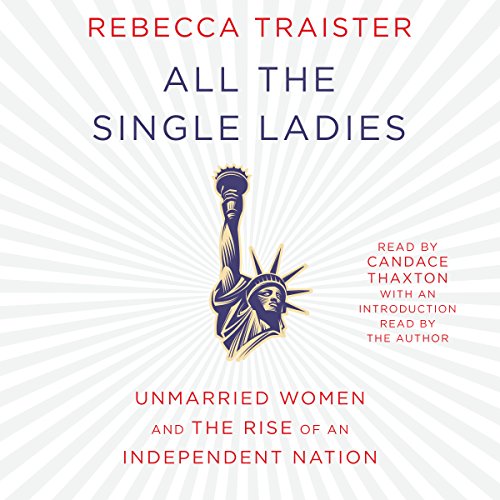
All the Single Ladies (Unmarried Women and the Rise of an Independent Nation)
By: Rebecca Traister
Narrated by Candace Thaxton, Rebecca Traister-introduction
Rebecca Traister (American author.)
In a broad context, “All the Single Ladies” is about freedom’s two edges. One edge lets people be themselves. The other edge makes people conform to societies’ rules.
Rebecca Traister begins by summarizing the history of unequal treatment of women. The truth rings loudest because of today’s “Me To” movement.
“Me Too” is a movement long delayed, and figuratively disfigured by a sharp edge of male’ power, domination, and social conformity.
Freedom is a function of power. No one is free. All nations have rules that limit freedom.
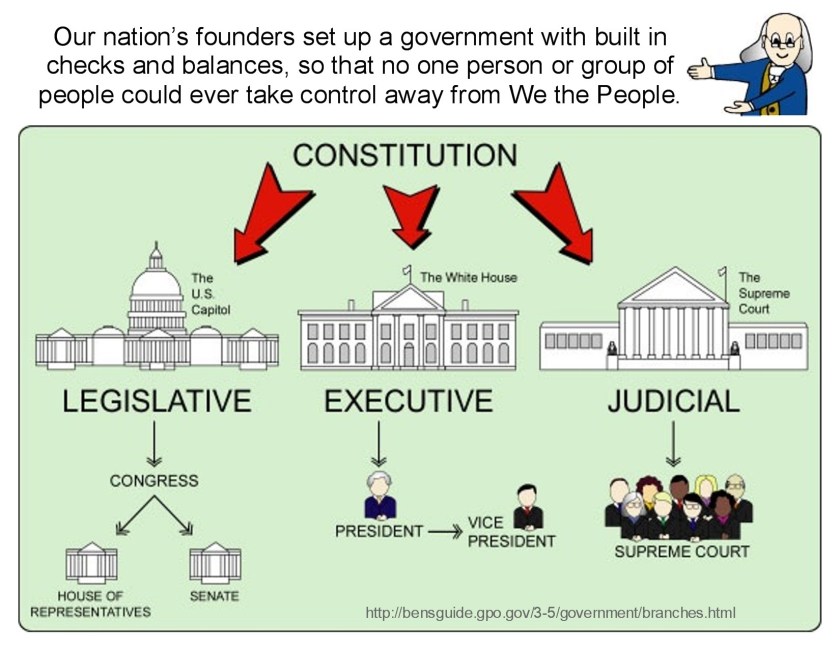
America’s founding fathers recognized freedom is defined by power. That is why government “checks and balances” were created.
The weakness of “checks and balances” is that they continue to be influenced by the power of human (principally male) rationalization.
Human beings do not see themselves as others see them. In that light, Traister notes one of Patrick Moynihan’s blind spots.
Daniel Patrick Moynihan (1927-2003, NY State Senator, author of The Negro Family: The Case for National Action.)
Moynihan affixed “The Negro Family” break-down as a cause of ghetto poverty. The cause of poverty is not single-parent homes. Poverty is a consequence of discrimination.
Singlemom homes are a choice for some mothers. Sometimes for reasons of independence, as explained by the women interviewed by Traister. But also because of a history of misogyny, and dysfunctional marriages or partnerships.
Too often it seems the choice of single-parent homes is because of abuse, loneliness, loss of emotional commitment, adultery, financial crises, or some other extrinsic cause.
Single-parent homes are not a cause of poverty. If women are employed and compensated at the same rate as men, they could afford child care for their children while they work. Like some low wage workers, women may have to take two jobs. (Of course, what’s new?–Working women have always had two jobs. Working at home and working at a job.)
The cause of poverty is systematic discrimination. Discrimination denies educational opportunity. Discrimination denies equal pay for equal work.
The rules of freedom are based on power, not science, not truth, but on human rationalization. Traister indicts male domination of the rules of freedom. She also notes societies’ discrimination based on race.
Discrimination against women may have begun with male domination when physical strength meant survival (not suggested or inferred by the author).
The growth of society, and the ascendance of religion, reinforced gender roles. Gender roles may have had some validity in the stone age, but they became rationalizations as humanity and society developed. Here is where Traister strikes at the heart of gender inequality.
Traister interviews many single women, some high achievers, others just making a living. What she finds is that some women choose to be single because of a lifestyle that offers freedom. It is the freedom of choice.
Freedom requires no cooperation from another to do whatever one wants, with the caveat of doing no harm to others.
With freedom, Traister is not saying single women choose to be anti-social. On the contrary, she argues single women are likely to be more socially connected than married women. In her interviews, Traister notes that single women are likely to have more social contact because they are not constrained by a life-partner’s interest or attention.
An irony of Traister’s observation about the consequence of marriage in “reducing social contacts” is that Traister chooses to marry. Her book is not meant to be anti-marriage, but to recognize the difference between single-hood and life partnership. Her unspoken belief is that both have equal potential for happiness and fulfillment. Her intent is to explain how happiness and fulfillment can be equally satisfied by single-hood.
Traister identifies a social construct that might be labeled “slammed relationships” that are not necessarily sexual but deeply, emotionally connected.
A great number of “…the Single Ladies” interviewed by Traister recount slammed relationships.
Though not suggested by Traister, a slammed relationship between men seems less likely because of the gravitational pull of “power”.
To many humans, the sexual act is pursuit of power over another, not emotional connection.
Real intimacy is not about a player’s control, or an actor’s act. A truly slammed relationship is not about power. A slammed relationship is about common interests and emotional connection.
Traister gives the example of a single lady in Boston that has a slammed relationship with another woman that chooses to move to California because of a job. Their emotional connection is so close that the woman who stays in Boston feels abandoned.
The Bostonian is told, by acquaintances of both people, that her friend will return and their slammed relationship will resume. But, as Thomas Wolfe wrote, “you can’t go home again”. Her friend does return from California. They renew their friendship, but they never reconnect at the same slammed friendship level.
Interestingly, the slammed relationships Traister writes about are between women, not men.
That raises the question of whether men can have slammed relationships, but that is not the subject of Traister’s book.
(From this reviewer’s perspective, most men are unlikely to develop slammed relationships. They have little reason to–because society has been dominated by men since the stone age. Men have power; most women do not. Men have little need for slammed relationships.)
Traister notes many of today’s women gravitate to singlehood because of its freedom. The freedom to stay or leave, to be alone, or to be with someone.
The freedom to choose has consequence. It has the potential of destroying the value of slammed relationships. Losing emotional connection is a criticism of society. One might conclude from Traister’s book, the world needs more “…Single Ladies”. “…Single Ladies” have the tools for slammed relationships.
Men can hugely benefit from women that take control of their lives. It is liberating for a driven man to be married to a driven woman because each takes responsibility for themselves.
Traister acknowledges; from her personal experience and interviews of single women, that there are consequences for choosing single-hood. All singles have vulnerabilities. They are vulnerable to loneliness.
Being single makes one vulnerable to accidents without help from someone living with them. People who are alone have less financial support when they become ill. However, all of these vulnerabilities are common to both sexes. The difference is women receive 73% of what a man gets for the same work. The difference is power of employment, advancement, and financial opportunity remain disproportionately in the hands of men.
Traister notes that loneliness can be equally present in marriage as in single-hood. Vulnerabilities are a consequence of living life whether with someone or no one. The difference is that today’s society has more men than women with power–power that aids or obstructs equality of opportunity for all.
Equality of opportunity is what every man and woman deserve. Life takes care of itself.
There is an increasing lack of empathy from world leaders because they are mostly men. Losing emotional connection is one of the reasons America is unable to eliminate homelessness. This book offers praise to “All the Single Ladies” of the world. Women seem better at emotional connection. It may be why America needs a woman for President.
As many know, the City of Las Vegas is different from the Las Vegas Strip. The City is the city. The Strip is outside the city but in the same county, connected by extensions of north/south streets.
ON THE LEFT IS THE FREMONT STREET EXPERIENCE. IT IS IN THE CITY OF LAS VEGAS. ON THE RIGHT IS LAS VEGAS BOULEVARD WHICH RUNS THE FULL LENGTH OF THE STRIP. BOTH DESTINATIONS ARE IN CLARK COUNTY.
During the pandemic, some take a walk through the city. With Covid19, some residents visit the park.
Like the Strip in Clark County, Fremont Street is deserted. (The distance from the Strip to Fremont Street is 5.4 miles.)
Fremont entrance on east side of the cityContainer Park restaurants and shops closed in the City.Closed night club in the city.Las Vegas Blvd. takes you to the Strip from the Fremont ExperienceThis is a zip line down FremontFremont is blocked off from pedestrians.
Not far from the City is Sammy Davis Jr. Park. Sammy Davis Jr. Park is 3.2 miles from Fremont Street.
Baseball parkTennis courtsPicnic TablesIn the distance is the Strat located on the stripPublic concert shell for live performances is seen behind the tree
Las Vegas is a destination city for the world. How long it will remain a capital of entertainment is solely based on belief in personal safety. Las Vegas is the capital of the gambling industry in America but few want to risk their lives on Covid19 in April of 2020.
This is the northern part of the Las Vegas strip between 9:00 am and 11:00 am in the morning. If you have been here, this is what it looks like without you.
Robert Greenberg (American composer, pianist, and musicologist.)
Robert Greenberg offers an introduction to the history of classical music and opera. Its appeal is to a wide audience of dilettantes that know a little but not a lot about anything. Greenberg argues classical music’ and opera’ composition is a creation of its time. (Undoubtedly true of all music and theatre.)
However, Greenberg supports his argument with a fascinating critique of classical composers and events of history that influence composers’ work. Greenberg argues that one can better understand classical “Music as a Mirror of History”.
In reflecting on the history of music, Greenberg offers his perception of the era in which music is composed. He makes wry comments about each era with the hindsight of an obviously well-read consumer of history. At the same time, Greenberg offers expert analysis of classical music and its composers. With snippets of each composer’s work, an Audiobook is a perfect venue for his presentation.
Edward VI (King of England 1547-1553, crowned at the age of nine.)
Mary I of England (Queen of England 1553-1558)
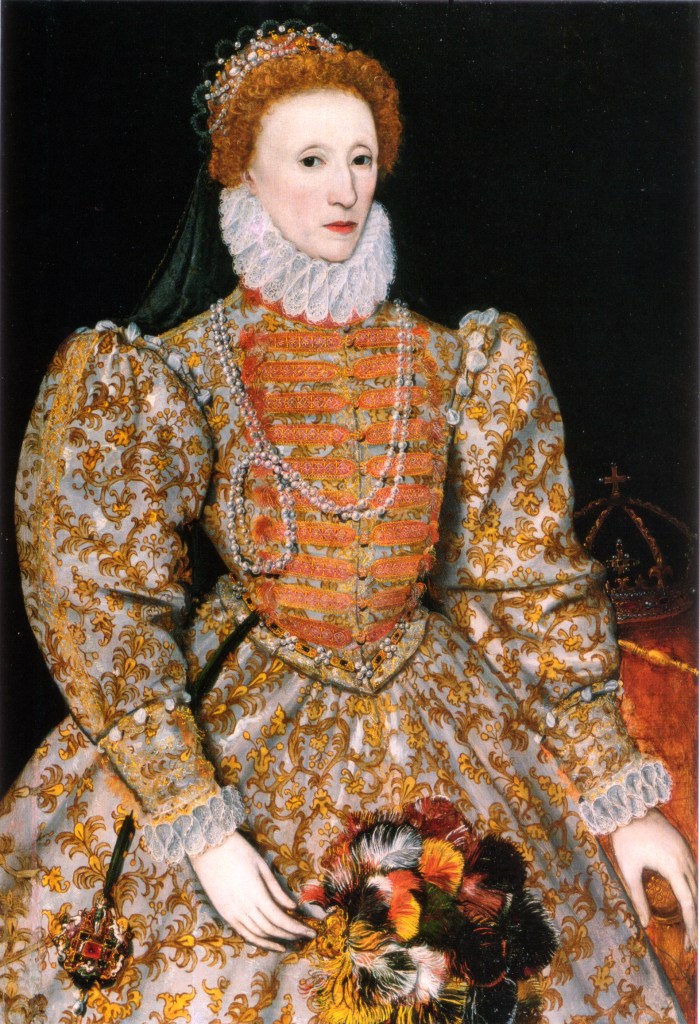
Queen Elizabeth I (r 1558-1603, daughter of King Henry VIII and Anne Boleyn.)
English religion wavered back and forth between Roman Catholicism’s control by the Pope and the Church of England’s control by the King of England. English King Henry the VIII demands control of Catholicism (particularly the church’s land assets and taxes collected on those assets).
After two failed royals (after King Henry VIII’s death), Elizabeth stabilizes England’s governance. She reigns from 1558-1603. Greenberg explains the many challenges facing Queen Elizabeth before she gains the throne.
Greenberg notes Queen Elizabeth’s reign is a perceived golden era, in spite of the squalor of 16th century London living.
Greenberg notes that Queen Elizabeth is the first English monarch, after two predecessors, to sustain Henry VIII’s Church of England. With Queen Elizabeth’s reign, the King, not the Pope, controls the role of Catholicism in England.
Greenberg begins by explaining how madrigals reflect the myths of nationalism. He defines a madrigal as a song for several voices, without instrumental accompaniment. Madrigals began in the 14th century in Italy but Greenberg introduces Thomas Morley, a composer in the 16th century.
Thomas Morley’s Piaine and Easie Introduction to Practicall Musicke (1557)
Morley is a 16th century composer. He composes a madrigal to Elizabeth I. As is typical of this form of music, it idealizes England’s suzerainty and Elizabeth’s reign as Queen of England.
Greenberg moves on to the 18th century. He introduces George Frideric Handel. Though Handel is German, he chooses to move to London, after successfully touring Italy. Greenberg notes Handel tells his Prussian patron (King Frederick I) that his sojourn to London is only temporary, but Handel’s intent is to stay.
George Frideric Handel (1685-1959)
King Frederick I of Prussia (1657-1713)
Handel persuades the King of Prussia to allow him to stay in England by dedicating the three suites of “The Water Music” to him.
Ironically, Handel becomes renowned in London for his “Water Music”, even though its dedicated to a foreign monarch. Greenberg offers a snippet of the 1717 “Water Music” which makes one interested in hearing more.
Handel composes the opera Rinaldo that makes him the toast of London in 1719. His most famous work is “Messiah”, an oratorio (an orchestra and voices production) composed in 1741. He becomes an English citizen in 1727, goes blind in 1751, and dies in London, in 1759.
Wolfgang Amadeus Mozart (1756-1791)
Moving on, Greenberg introduces Wolfgang Amadeus Mozart. As one may remember from the movie, Mozart is a phenom with an unusual predilection for risqué ideas. Greenberg notes this is the time of the rise of the Ottoman empire.
Turkish influence is widely adopted in the late 18th century. Mozart capitalizes on its popularity with the opera called “The Abduction from the Harem”. In spite of Mozart’s introduction of Turkish influence in music, Greenberg explains Mozart is fatally affected by the rise of the Ottoman empire because of its economic impact on Europe.
Mozart falls ill in Prague and dies in poverty in Vienna, at the age of 35. Greenberg suggests Mozart brings Turkish influence into opera’s mainstream with the Ottoman Empire’s expansion.
Greenberg reflects on the Napoleonic era and its affect on Haydn and Beethoven who were great composers of their time, and ours. Greenberg’s characterization of these composer’s view Napoleon with “ambivalence”.
Napoleon began his conquests with an image as liberator (from religious persecution, royalty, and social inequality), but when he crowned himself as Emperor, many felt betrayed. The betrayal was Napoleon’s pact with the Roman Catholic Church and his assumption of the throne as Emperor of France.
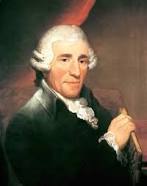
Joseph Haydn (1732-1809)
Ludwig van Beethoven (1770-1827)
Emperor Napoleon.
As Austrians, both Haydn and Beethoven reviled Napoleon’s royal ascension. Haydn composed “Mass in the Time of War” that memorialized Napoleon’s creation of a war machine that threatened Vienna.
Beethoven composed “Wellington’s Victory” in 1813 that became his most successful composition. Ironically, Greenberg suggests that “Wellington’s Victory” is one of Beethoven’s lesser musical achievements. He argues that Beethoven creates a bombastic rather than melodic tribute to the English general that defeated Napoleon at Waterloo.
This is only a small part of what Greenberg covers in this 24-lecture series. He analyzes Russian composers and their early disdain for European musical traditions. Greenberg observes Russia is shown to be a “…riddle wrapped in a mystery inside an enigma”, as referred to by Winston Churchill.
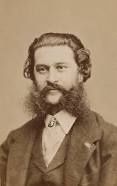
Johann Strauss I (1804-1849, created the Radetsky March, known for waltzes but better known as the father of Johann Strauss II.)
Johann Strauss II (1825-1899, composer of light music, particlarly dance music-waltzes,polkas, quadrilles, etc. and operettas.)
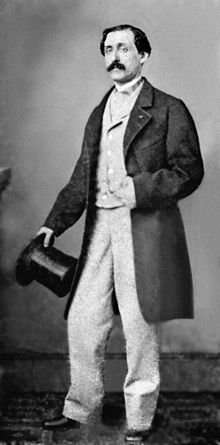
Louis Moreau Gottschalk (1829-1869, a child protegy that introduced slave music and the precursor to Jazz in America.)
Greenberg touches on the histories of the Straus family (a father and son who competed against each other), Brahms, Gottschalk (an American composer surprisingly unknown by many), Verdi, Wagner, Dvorak, Rimsky-Korsakov, Holst, Berg (who composed an opera reflecting on the madness of war), Shostakovich, Copland, Gorecki, and Crumb.
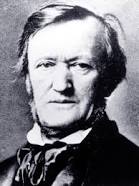
Wilhelm Richard Wagner (1813-1883, German composer, theatre director, polemicist, and conductor.)
Of interest is Greenberg’s analysis of Richard Wagner because of Wagner’s repugnant philosophy, but incredibly inventive and beautiful operas.
“The Ring of the Nibelung” reminds one of Tolkien’s “Lord of the Rings”. Greenberg explains “The Ring…” is a critique of 19th century European society and its self-interested pursuit of capitalist wealth. Greenberg infers the subject is ironic because Wagner pursues wealth as diligently as any European of that era. The repugnant part is the horrendous and false accusations made against people of the Jewish faith by Wagner and his acolytes (one of which becomes Adolph Hitler).
Of note is recognition of Rimsky-Korsakov as one of Opera’s greatest composers.
Greenberg notes that anti-European sentiment of earlier Russian composers is still present but Rimsky-Korsakov studies much of what is practiced by European composers. “The Golden Cockeral” is Rimsky-Korsakov’s last opera. It is based on a Pushkin’ poem but staged as a parody of the failure of Russian Royal’ leadership.
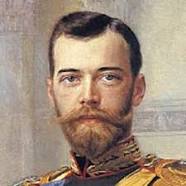
Tsar Nicholas II (1868-1918, assassinated by the Bolsheviks.)
To the Russian Tsar’s dismay, it is an opera that satirizes the autocracy of Russian imperialism and Russia’s inept war with Japan in 1904-05.
Greenberg shows Rimsky-Korsadov’s life as example of how current times mirror a composer’s work. Tsar Nicholas II is not pleased with “The Golden Cockeral”. Rimsky-Korsakov retires, but one wonders if his last opera is not a forewarning of 1917.
(Greenberg notes that Rimsky-Korsakov draws some of his operatic ideas from fairy tales).
One wonders what he could have composed if “Animal Farm” (published in 1945) had been written in his life time.
Greenberg finishes music’s mirror of history in the 1970s with a review of Gorecki and Crumb. This is an enlightening tour of classical music. It offers many reasons for modern audiences to attend symphony and opera performances.
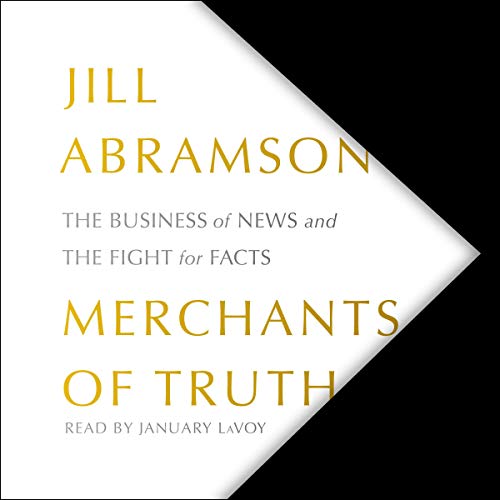
Merchants of Truth (The Business of News and the Fight for Facts)
By: Jill Abramson
Narrated by January LaVoy
Jill Abramson (American author and journalist, first female executive editor of the NYT serving from 2011-2014.)
Jill Abramson describes a “near death” experience for print media in “Merchants of Truth”. She begins with the rise of BuzzFeed and Vice, with a newspaper reporter’s view of YouTube, and a vignette about Jackass. Then, she zeroes in on the “New York Times” and “Washington Post” and how their news coverage has changed. Abramson explores the principles of the new “Merchants of Truth”.
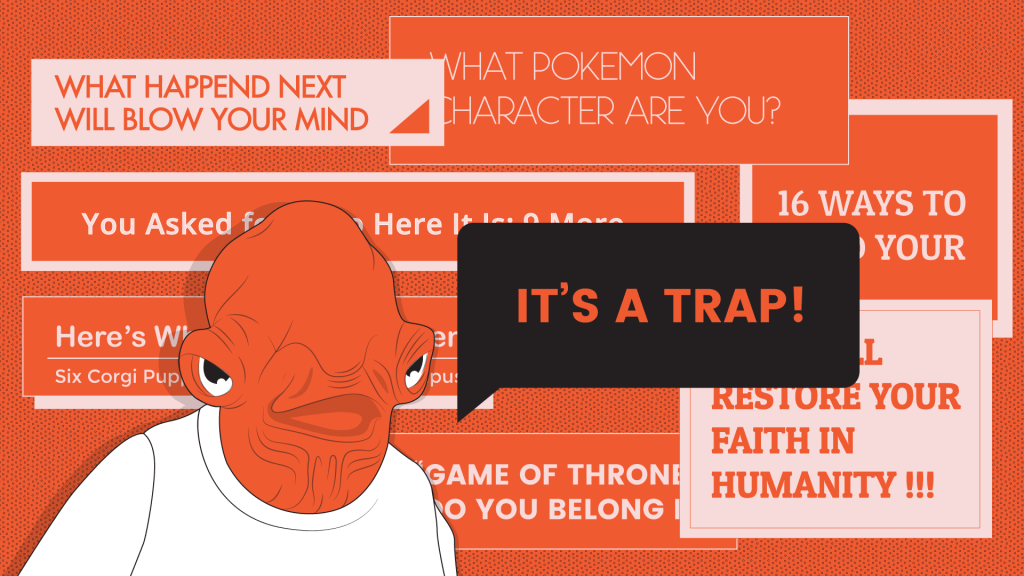
It is disappointing to see “click bate” from Apple, Amazon, YouTube, and Facebook competing with news about local, and worldwide events that mean something.
To some, Abramson’s brief history of BuzzFeed and Vice is a cringe worthy exploration of how vapid we are and how easily we are distracted by titillating, often idiotic, and sometimes false facts. However, Abramson shows that BuzzFeed and Vice make a contribution to news gathering that appeals to a wide audience, particularly a younger audience.
The criticism Abramson launches against BuzzFeed, and particularly Vice, is that both slip into Gonzo (exaggerated and fictionalized) reporting. The public is titillated but not accurately informed.
BuzzFeed and Vice are becoming bigger players in the media news business. The key to their success is public attention but advertising revenue is its vehicle for growth. Pleasing advertisers encroaches on the objectivity of news.
BuzzFeed and Vice have reduced the barrier between advertising and news. That barrier breach is exhibited by Abramson’s story of The New York Times apology to China, and the Washington Post’s turn to the metrics of popular news coverage.
Abramson pulls no punches in her judgement of The New York Times’ bow to economic necessity in kowtowing to China when a reporter’s story is critical of Chinese suppression. She recounts Arthur Ochs Sulzberger’s letter apologizing to President Xi for a reporter’s story about Chinese government repression. Abramson implies the apology is for potential loss of revenue.
Arthur Ochs Sulzberger Jr. (Publisher of The New York Times.)
The implication is advertising revenue influences NYT’s and Washington Post’s reporting in the same way as clicks on Apple, Amazon, Facebook, YouTube, BuzzFeed and Vice. The concern is in the bending and blending of news to attract wider audiences for advertisers who have little concern about the accuracy of news that impacts society.
On the other hand, Abramson suggests Sulzberger as a publisher of “All the News Fit to Print” may have been more concerned about losing a foreign outpost for the paper’s news reporters. One suspects, it is both concern about loss of a news site and bending to the demands of a political and revenue producing hegemon. There has always been a tacit concern about advertising revenue and news reporting in the media. One might recall “60 Minutes” initial rejection of an expose on smoking. They eventually aired the episode, but fear of loss from a major advertiser was in play.
Vice reporting of a trip to North Korea with Rodman (the former Bull’s basketball player) is one of several examples of click bate reporting. It offers titillation but hides the brutality of a murderous government regime.
As a fossil (oldster), one might read the New York Times, Wall Street Journal, a local paper, the Economist, and Foreign Affairs. The reason for variety is perspective. Each covers most aspects of news (culture, business, local and international).
Abramson explains reputable media outlets have checks and balances. They try to insure objectivity and accuracy in their reporting. The checks and balances sometimes fail as they did with the NYT’s Jason Blair. However, BuzzFeed, Vice, YouTube, Facebook, and other newcomers are just beginning to establish checks and balances.
Jayson Blair (Former journalist with The New York Times, fired for fabrication and plagiarism.).
New media argues all societal beliefs should have equal expression. That is a distortion of America’s freedom of speech. Americans have regulated freedom, just as they have regulated free speech. Freedom Of Speech is to DoNoHarmToOthers.
Another failure Abramson notes is the paucity of critical reporting by the New York Times and Washington Post of WMD in Iraq. Checks and balances did not work in either paper because of investigative failure.
All news media fight for facts. However, for many reasons, the facts chosen create spin.
With the addition of BuzzFeed, Vice, and YouTube the inherent bias of chosen facts is accelerated and amplified by emotion. Abramson implies spin is not the intent of reputable media like the New York Times and the Washington Post. One might disagree because all facts are not included in every report that is posted. All news reporting has some level of distortion.
Every merchant might report facts, but a listener/reader comes away with subtly, and sometimes, widely different understandings of the same story. It is not that facts are necessarily untrue, but choice of facts and the addition of emotion infects the story.
Additionally, there is inbred bias in the mind of listeners and readers of the news. Those listed as liberals, conservatives, or libertarians bring their personal beliefs into everything they read, hear, and say.
The difference between traditional news sources, and BuzzFeed or Vice, is elicited emotion. There is less fight for facts with BuzzFeed and Vice. Their fight is for attention whether the facts are correct or not.
Abramson shows how BuzzFeed and Vice, and similar “news” gatherers are willing to manufacture facts to get attention. BuzzFeed measures public expression and interest. BuzzFeed tailors’ articles to magnify whatever is popular. BuzzFeed’s and Vice’s objective is to get the reader to click their feed. It has less to do with a fight for facts than what Big Data tells these new “Merchants of Truth” is the public’s interest.
Videos, like Jackass that play on YouTube, fit into the titillation genre. However, as a merchant of truth, YouTube’s platform generates often useful information. Its platform offers do-it-yourself help, from people who demonstrate how they did it themselves.
YouTube also offers educational programming on current events, history, and science. As a “Merchant of Truth”, it is not fighting for facts. It, like BuzzFeed and Vice, is looking for clicks to increase advertising revenue.
BuzzFeed and Vice fight for attention, not facts. They make money for clicks whether facts are right or wrong. Advertisers are interested because attention drives sales.
Like BuzzFeed, it resists control of content to increase popularity under the cloak of freedom of speech. Both BuzzFeed and Facebook are struggling to keep hate out of their content without acting as Big Brother monitors of vitriol. Neither are focused on a fight for facts or truthful news. Both seek user clicks to give interest to vendors that will pay to advertise.
Facebook is a ubiquitous forum meant to connect society. In actuality, it appears Facebook is a forum that often reinforces and magnifies difference in society.
The New York Times, Wall Street Journal, Washington Post, The Economist, and Foreign Affairs have video and online feeds. Most offer those feeds to subscribers. Some, like Foreign Affairs want an additional fee for the online service. The degree of adoption of emotion by traditional media varies, but it creeps into all “Merchants of Truth”. All media serves what big data shows the public wants.
Abramson shows that national TV and newspaper coverage of the news have adopted some of the characteristics of BuzzFeed, Vice, and YouTube to improve their income, and economic viability.
Somewhat more ominously, Abramson explains how traditional media is adopting measurement metrics that tell publishers how many clicks or engagements reporters get from their writing. If news reports do not achieve a certain level of interest, the reporter’s continued employment and/or compensation becomes a topic for discussion. News is in danger of being measured by popularity, not substance.
Getting back to Abramson’s personal experience at The New York Times, she acknowledges not having much management experience when she became the Executive Editor of the paper. She notes former employers never offered management graduate courses for her to broaden her education. Undoubtedly, she was an excellent employee that got things done.
Abramson devotes a part of her book to air grievances about an “old boys club” in the news business. Other writers, as well as Abramson, have reported a double standard for women in the media industry. Women are viewed differently when they exhibit the same aggressiveness that men show as managers.
Abramson acknowledges she does not listen as carefully as she should when confronted with opposition. That is a characteristic of both men and women who have come up through the ranks of an organization. They are superstars. They get things done and are promoted to become managers.
In well managed companies, mentor-ships or management development programs are offered rising stars. They offer employees an opportunity to see the difference between doing things yourself to having things done through others, a skill set that can be taught.
Women and men rise in organizations to become managers by getting things done. Abramson notes that aggressiveness is judged differently in women. Women are called pushy while men are called forceful and effective.
Becoming a manager is a difficult transition because it involves ceding control that is the hallmark of an employee’s success as a doer of things. A manager needs to trust others to do the things that need to be done. One suspects it is more difficult for women to develop trust in others because of generations of unequal treatment. Whether a man or woman, when an employee becomes valuable as a person who gets things done, it is difficult to give up one’s control to others.
Being a manager requires trust in employees that may not do their jobs exactly the way a new manager (a former “doer of things”) believes they should be done. This is where skill-set adjustment is needed.
If an employee fails at a task, a new manager needs to help the employee overcome the failure. If the employee continues to fail, he/she will eventually be fired. If the employee succeeds, he/she goes on to the next task. Abramson’s dismissal may have been as much a function of unequal treatment as inadequate training. Her analytic and reporting skill is proven by her history and her analysis of media news in “Merchants of Truth”.
In a fight for facts, what a consumer can take from Abramson’s analysis is how important it is to read and listen to more than one “Merchant of Truth”. Finding truth is what Americans of conscience seek.
Freedom of speech cannot be an excuse for unvetted news.
Much of what Abramson’s personal experience is at The New York Times is reinforced by her analysis of the evolution of the Washington Post. This century has not been kind to traditional news media. It is in a state of transition. Some of us hope it evolves, and is not relegated to the trash bin of history.
The media for this generation is changing. What one hopes is that the best of each is eventually adopted. Every news source must be measured against truth. Determining truth is made up of true facts that no singular news outlet is capable of compiling.
“All the news that is fit to print” is an apt logo for the New York Times but it is misleading. History is continually revised because new facts are discovered, and the perspective of society changes. Americans need to be diligent in seeking the truth. The truth does not lie in one source.
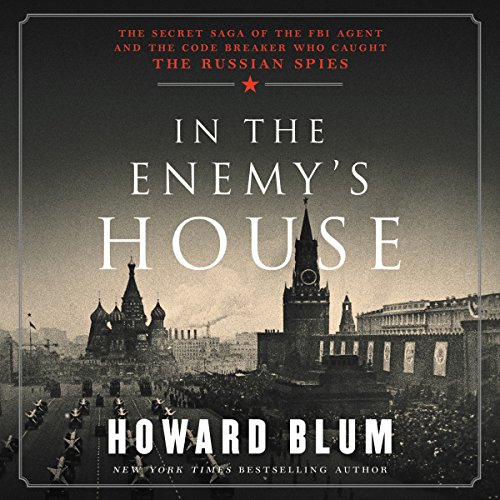
In the Enemy’s House (The Secret Saga of the FBI Agent and the Code Breaker Who Caught the Russian Spies
By: Howard Blum
Narrated by David Colacci
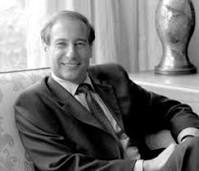
Howard Blum (American author and former reporter for NYT and The Village Voice)
Howard Blum offers some clarity and historical perspective on the infamous Rosenberg spy case. One might argue it is as much a revision of history as a clarification. Blum accesses historical files not available in the past to write this book.
These files explain how a Russian spy network was set up, who the agents were, why and how American collaborators were recruited, and the way information was transmitted.
Though the Rosenberg’s may be guilty of espionage, their motive appeared ideological, not economic. Blum raised the question whether the Rosenberg’s betrayal of America warranted execution.
“In the Enemy’s House” reveals some facts about the halcyon days of the FBI. A listener finds how FBI agents are chosen, the internecine conflicts that occur when investigations go awry, and how difficult it is to live an agent’s life.
FBI agents are chosen from the general public. Some may be highly educated, others less so, but all are patriotic, loyal, and committed to American ideals and pursuit of truth. They are subject to judgement errors in their personal lives, their suspect’s lives, and in their understanding of the truth. They, like all human beings, make mistakes.
Expertise in the field for FBI agents varies. The example is in the way suspects are followed, how long suspects are tracked, and how suspects are questioned. As in all life’s endeavors, some are better than others in doing their jobs.
The isolation of agents and the long hours of suspect’ investigations have an impact on personal lives. Like police work in general, stress is put on family relationships. In the era the author covers, being married makes a wife a potential liability because of inadvertent disclosure of classified information. Blum notes that Robert Lamphere, the principle agent in the story, is personally warned by Herbert Hoover about disclosure risks because of marriage’ intimacy.
Robert J. Lamphere (1918-2002, FBI Agent.)
Lamphere joined in 1941. In 1945, he is assigned to the Washington, DC office to investigate Soviet atomic espionage, particularly regarding the Manhattan Project. In 1947 he is assigned to supervise Soviet code breaking and is introduced to Meredith Gardner, who is considered by many to be a linguistic genius.
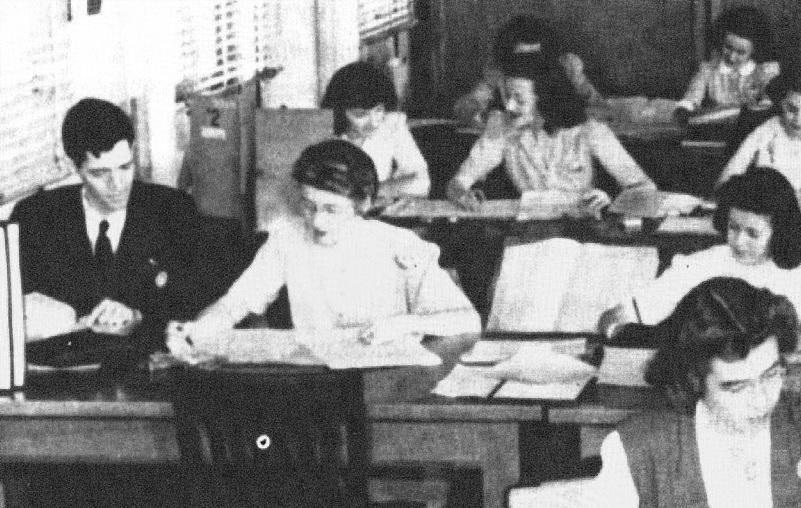
Meredith Gardner (working among mostly women in the cryptographic Arlington bldg) provides leads to the FBI that reveal two of the most famous names in communist espionage history, the Rosenberg’s, and Karl Fuchs. Gardner dies in 2002.
A looming issue in Blum’s history is the decision to execute the Rosenberg’s for spying for the Russians. Blum tells the story of an FBI investigation of Russian espionage, code name Venona. Russia’s spy network recruited western scientists and ideological converts who believed communism is the future.
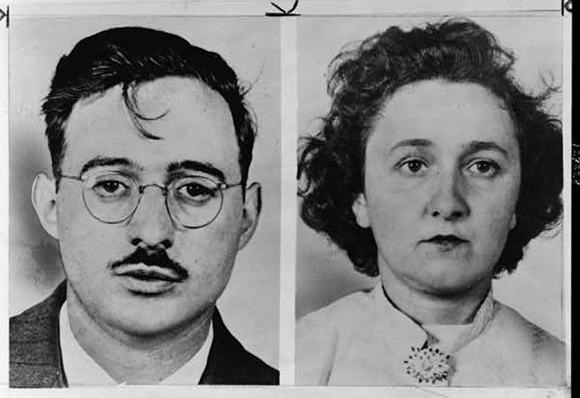
Blum describes “Operation Enormoz” as a Russian spy network that recruited Julius and Ethel Rosenberg, and Karl Fuchs to pass information about the nuclear bomb to agents of the U.S.S.R.
The judge in the Rosenberg case warranted execution for both Julius and Ethel Rosenberg. The judge reasoned, with the advent of the Korean war and communist China’s invasion of the northern peninsula, the Rosenberg’s gave license to Americans who might betray their country.
Irving Robert Kaufman (1910-1992–Presiding judge in the Ethel and Julius Rosenberg case.)
Blum infers, even if that judgement is correct, the facts revealed in his book suggest Ethel Rosenberg was not an active participate in her husband’s betrayal of America. Blum’s research shows deciphered encryption from Russian messages show Ethel Rosenberg did not participate in the spying activity of her husband.
An FBI agent and a brilliant linguist expose the Russian spy network in America by deciphering coded messages. The agent and linguist could not provide evidence that might have exonerated Mrs. Rosenberg because the Russians did not know their coded messages had been cracked. If the evidence the FBI agent had were revealed, America would have lost a critical source of intelligence.
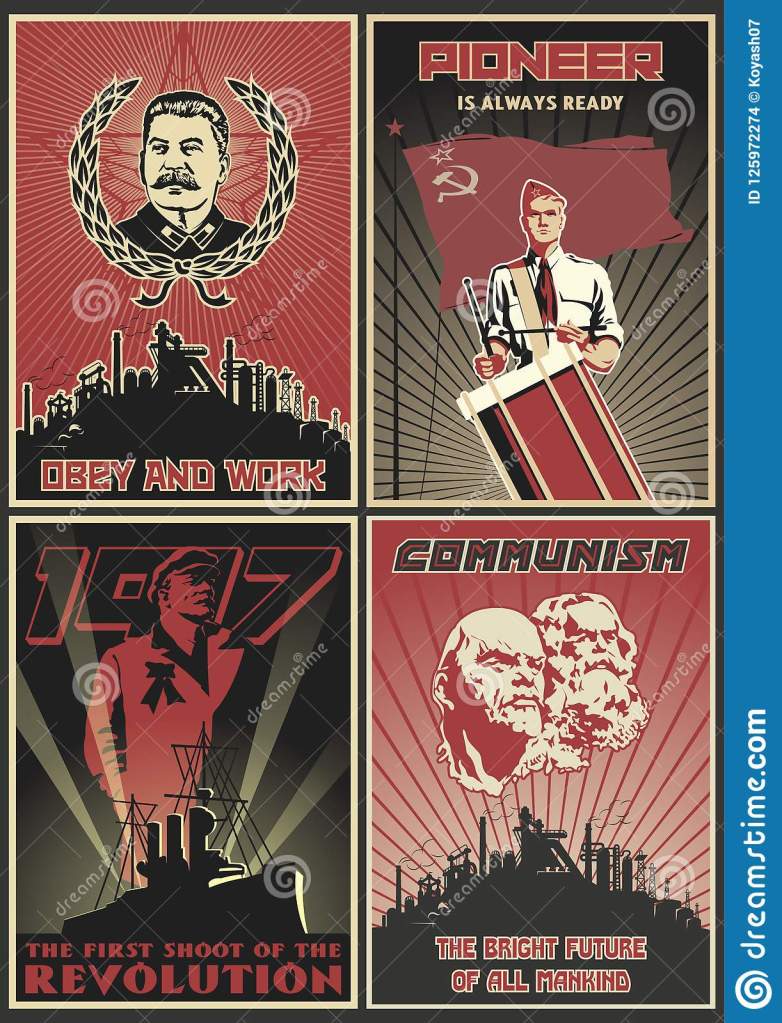
One of the greatest surprises in Blum’s book is that the spy network that led to Stalin’s atomic bomb has little to do with financial bribery. It had more to do with the success of communist propaganda.
In the internet age, Russia’s success in the 1940s suggests how dangerous Russian interference in American elections is in the 21st century.
Blum touches on growing communist hysteria gripping America after the war. As history books reveal, Stalin tries to thread a needle by entering an alliance with Germany to expand the Russian empire and avoid a ground war with Germany.
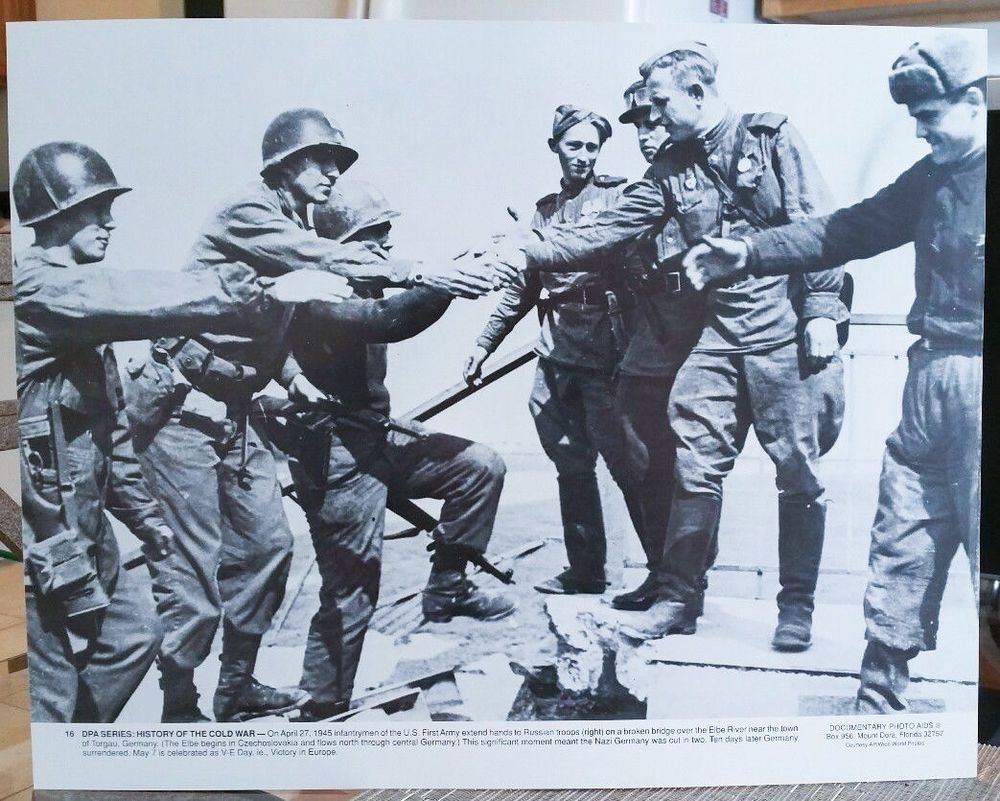
Stalin realizes his mistake in 1941 when Germany invades the U.S.S.R. Stalin is compelled to join the Allied Powers against Germany. Both Americans and Brits are suspicious of Stalin. However, Stalin’s change in sides becomes critical to the outcome of the war.
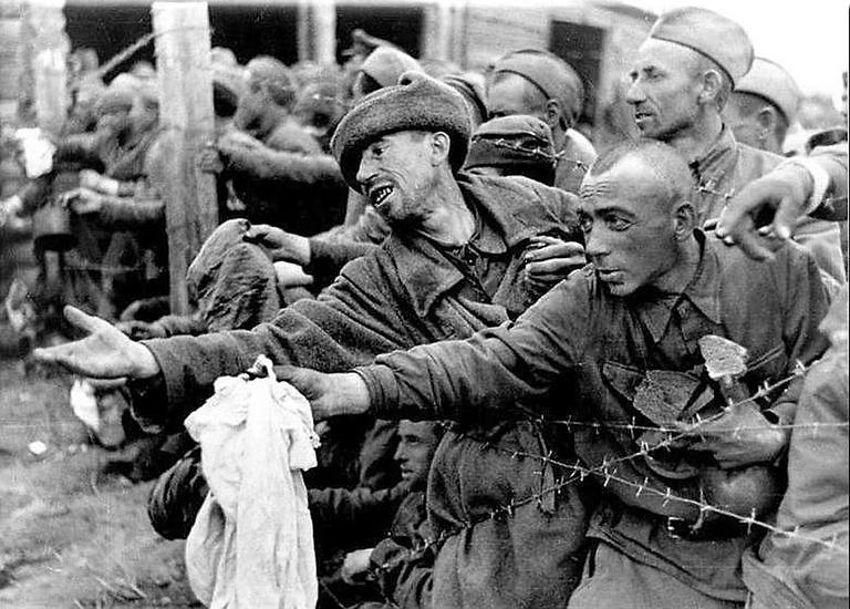
The Russian army is the only effective fighting force on the eastern front. Russia is estimated to have lost 16,825,000 civilians and soldiers in WWII. The WWII’ casualty estimate (both Allied and Axis powers) is 60,000,000. If these estimates are correct, over 20% of WWII casualties were U.S.S.R. soldiers and citizens.
By any measure, the eastern front and Russia’s fight with the Germans was critical to Allied success in WWII.
Some Americans were sympathetic to the ideological goals of Russian communism. The truth of Stalin’s Russian gulags and the KGB were generally unknown to many Americans before, during, and immediately after the war.
Some civilians were seduced by communist propaganda to become tools of a Russian spy network. Blum recounts the two most notorious Russian spy’ incidents. Blum tells the story of the discovery and prosecution of the Rosenberg’s and an British scientist named Karl Fuchs.
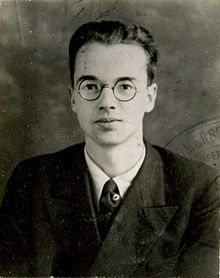
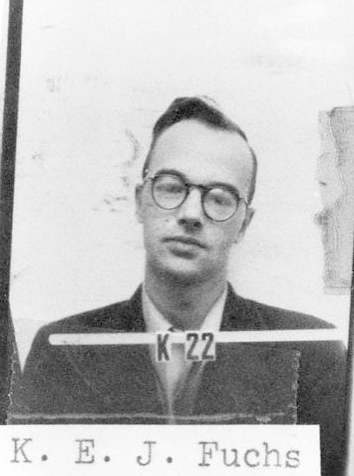
Klaus Fuchs (1911-1988, served nine years in prison for providing theoretical information on nuclear weapons to Russia in the 1940s.)
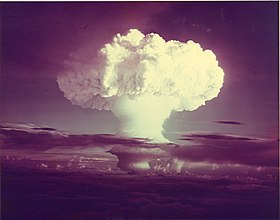
America’s realization of the Russian spy network’s existence became widely confirmed with Russia’s detonation of its first atomic bomb in 1949. This is during the McCarthy era when Russian spies were alleged to be under every bed and in every government agency.
Joseph McCarthy (Republican Wisconsin Senator who fanned the flames of communist infiltration in America).
President Truman initially did not believe the Russian’s had the scientific capability to create the bomb.
But the facts prove otherwise. In one sense Truman may have been right. Russia’s atomic bomb success does not strictly come from Russian scientists. Stalin creates a world wide spy network to steal other countries’ scientific work.
Daniel Patrick Moynihan (1927-2003, NY State Senator)
Blum notes that Patrick Moynihan said Russian scientists, with German expatriate help, would have discovered the bomb anyway.
The point is science is a universal pursuit. (After all, America used Wernher Von Braun to accelerate experiments in rocketry that led to America’s moon landing in 1969. This is the Von Braun who created Nazi Germany’s V-2 rocket program that terrorized London.)
What is surprising to America is a nuclear detonation by Russia, only four years after Hiroshima. Blum suggests Russia could not have done it in such a short time without stealing American and British scientist’s work. On the other hand, Blum infers Russia would eventually succeed in creating a nuclear bomb, without stolen scientific documents.
As most will recall, trade secrets have always been an issue in international trade. In the past, Japanese, South Koreans, and now Chinese are accused of stealing American trade secrets. Of course, weapons of mass destruction are a more serious threat, but the principle is the same.
All nations seek economic and social advantage, with science as a universal pursuit.
Klaus Fuchs (9 years in Prison)
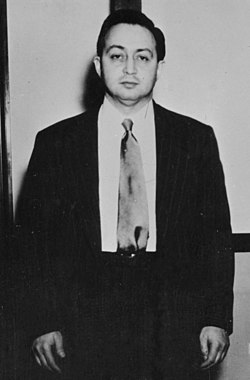
Morton Sobell (18 years in Prison)
Saville Sax (Served no time in Prison.)
Harry Gold (15 years in Prison)
David Greenglass (9.5 years in Prison)
“In the Enemy’s House”, there is a nagging feeling that execution of the Rosenberg’s was wrong. The inference is that if all the facts were known, the Rosenberg’s execution would have been commuted to a term in prison. Blum’s argument is not particularly compelling when taken out of the context of its time. However, considering no one else was executed for treason in the Venona investigation, the Rosenberg execution seems unjust.
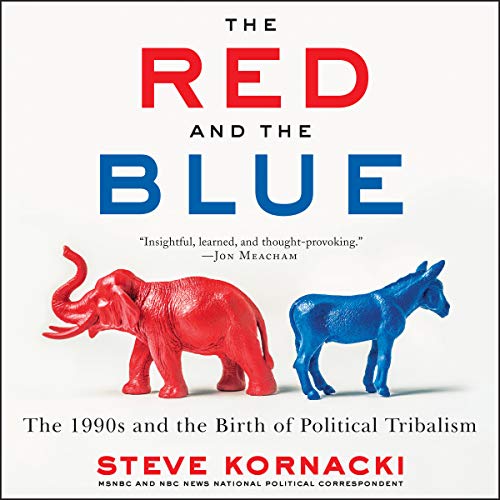
The Red and the Blue (The 1990s and the Birth of Political Tribalism)
By: Steve Kornacki
Narrated by Steve Kornacki, Ron Butler
Steve Kornacki (American political journalist and correspondent for NBC News.)
Steve Kornacki identifies the source of 21st century political tribalism in his book, “The Red and the Blue”.
Political tribalism is not new. Political tribalism shows itself many times in history. Tribalism is shown in the early days of political party formation, in the American Civil War, in the South’s reconstruction after the Civil War, and in the 1929 depression’s aftermath. Though Lindsay Graham has been wrong in pandering to Trump, he seems right to vote against trial of Trump in the Senate.
As reprehensible as Trump’s actions were on January 6, 2021, impeachment seems an inappropriate way of addressing political tribalism represented by misinformed and misled Trump supporters.
Granted, the twenty first century is not the eighteenth. The #internet and its wide open falsehoods unquestionably mislead the public. But, 70,000,000 Trump2020 Americans act on what they believe is truth. Most are not criminals. Trump will be punished by history and a state judicial system that will prove his guilt for crimes as an dishonest human being and business man.
In the late 18th century, it was the Federalist Party versus the Democratic-Republican Party. Alexander Hamilton’s tribe is the Federalist’ party. Thomas Jefferson’s tribe is the Democratic-Republican’ party. Hamilton’s tribe insists on a strong central government. Jefferson’s tribe insists on State’s rights.
Alexander Hamilton ((1st United States Secretary of the Treasury 1789-1795)
THOMAS JEFFERSON (1743-1825, 3RD PRESIDENT OF U.S., PAINTING OF IN 1786)
In the Civil War, the stage is set for the northern state’s political tribe (largely Republican) versus the southern state’s political tribe (largely Democrat). In some sense it is a continuation of the two tribes represented by Hamilton and Jefferson. The respective leaders of the northern and southern tribes are Abraham Lincoln and Jefferson Davis.
Abraham Lincoln (16th President of the United States 1861-1865.
Jefferson Davis (Missippi Senator & Representative and then president of the Confederate States during the Civil War)
During the Franklin Roosevelt years, the followers of Herbert Hoover headed the Republican tribe, rallying against Roosevelt’s National Industrial Recovery Act.
FRANKLIN D. ROOSEVELT (1882-1945, 32ND PRES. OF U.S.,1933-1945)
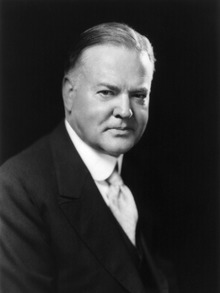
HERBERT HOOVER (31ST PRES. OF U.S. 1929-1933
The vituperative relationship between earlier political tribes was as vicious then as it is now. What Kornacki tells us in “The Red and the Blue” tribalism is revivified, if not reborn, in the 1980 s and is playing out in today’s America.
Of course, tribalism in America goes beyond political parties. Tribalism exists in the long history of American discrimination. Kornack touches on that reality with his recollection of Jessie Jackson’s 1984 and ’88 presidential campaigns.
Discrimination is a tribal conflict. It is not exclusively held by any political party but by a cultural divide.
Murder and isolation of Indians, and slavery are the most egregious examples of cultural tribalism in American history. That conflict is seen when a tribe with political power discriminates against another. Indians, blacks, Italians, Japanese, Hispanics, and Indians (not to mention various religions) have experienced tribal discrimination because of their weaker political power.
In America, the tradition of slavery began in mid-17th century. Indian discrimination dates to the American revolution and reaches a peak with President Andrew Jackson’s enforced “Trail of Tears”.
Donald Trump and Andrew Jackson are polarizing political figures that drink from the same trough. They reflect the tribalism of both Red and Blue political power brokers against minorities.
Trump’s attack is disingenuous chest thumping that is being supported by Republicans and sycophants hoping to receive some of the public contributions received by the Trump campaign to overturn the election.
Rafael Edward Cruz AKA Ted Cruz (Republican Senator from Texas)
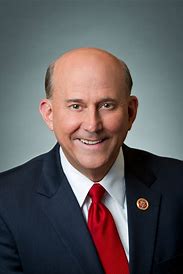
Louie Gohmert (Texas Republican U.S. House of Representatives.)
Rudy Giuliani and Sidney Powell (American attorneys for overturning the election of Biden)
Andrew Jackson is the Father of the spoils system in which the president uses his power and position to appoint civil servants.
Trump is a “spoils to the victor” and “loyalty above all else” President. Jackson, like Trump, appoints civil servants based on loyalty to the President, without necessary qualification. To Trump and Jackson, the goal is to win, and when they win, they expect all who report to them to be loyal to their President. Trump and Jackson consider themselves Kings in their roles as Presidents. Neither defer to Congress, or the Judiciary. They use their power and position to prove their “royalty”.
The 20th and 21st century exemplars of sexual tribalism are the behaviors of Clinton and Trump. Kornaki’s book reminds listeners of Paula Jones. Her story is no less reprehensible than Trump’s dalliance with Stormy Daniels when his wife is pregnant. Many men use power and position to disrespect women. Men’s reasons are many but the consequence reinforces the world’s history of gender inequality.
Paula Jones (Accuses Governor Clinton of infidelity and multi-year affair in the 80s.)
Stormy Daniels (Accuses President Trump of sexual dalliance while his wife is pregnant.)
What is striking about “The Red and the Blue” is its political spin. Living through the years of which Kornaki writes, one is struck by how much one forgets. From Kornaki’s reminder of Clinton’s caricature as “Slick Willie”–to his conclusion that Newt Gingrich is the source of 21st century tribalism–to Patrick Buchanan’s “make America Great Again” campaign—to Ross Perot’s “Bloomberg like” pitch for the presidency, Kornacki’s reminders are revelatory.
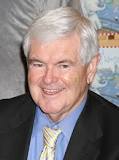
Newt Gingrich (American politician, served as the 50th Speaker of the U.S. House of Representatives from 1995-1999)
Patrick Buchanan (Former Assistant to Nixon, Ford, and Reagan, ran for President agaomst George H.W. Bushe’s second term.)
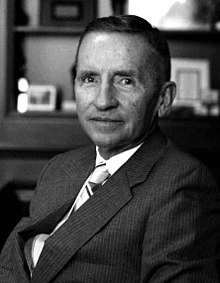
Ross Perot (Independent business man who runs as an independent for President of the U.S. against H.W. Bush and Clinton in 1992.)
Clinton seems heir to Franklin Roosevelt, while Trump seems heir to Andrew Jackson. (This is a personal observation; not Kornaki’s suggestion.) Clinton is a dissembler, like Roosevelt. Clinton and Roosevelt knew what they wanted and pursued it through manipulation of legislators, either by the clever use of words or through the power of office.
Bill Clinton (42nd President of the Untied States.)
Clinton understands politics and how to translate the will of Washington’s Red and Blue tribal leaders.
In contrast, Trump bulls his way through the Presidency. Trump bypasses, intimidates, or co-opts Washington’s Red and Blue leaders.
One realizes after listening to Kornaki’s book, Clinton is twin to Trump in respect to moral turpitude. However. Clinton is a cleverer and more effective President. Trump, like Perot, finds politics is not for sissies. History shows politics cannot be separated from governance. Neither Trump or Perot understand politics.
Richard Nixon (37th President of the United States 1969-1974)
Walter Mondale (Vice President of the United States 1977-1981, ran for President in 1984–defeated by Ronald Reagan.)
Michael Dukakis (65th and 67th Governor of Masschusetts 1975-1979, lost to H.W. Bush for his first term Presidency)
Jessie Jackson (American civil rights activist and politician-sought presidential nomination in 1984 and 1988.)
Patrick Buchanan (Former Assistant to Nixon, Ford, and Reagan, ran for President agaomst George H.W. Bushe’s second term.)
Kornaki reflects on Clinton’s rise to the presidency. Kornaki shows how politically astute Clinton is in dealing with the scrutiny of candidates for public office. Kornaki artfully illustrates the era by recalling the details of Reagan’s appeal and defeat of Mondale, the weakness of the Dukakis’s campaign, Jesse Jackson’s misreading of Clinton, Patrick Buchanan’s tribal speech at George H.W. Bushes second nomination, the Clinton “White Water” and Lewinski scandals, and other stories. Kornacki shows how the table is set for deep Red and Blue conflicts in the 21st century. Kornacki explains how and why Bill Clinton defeats George H.W. Bush and Bob Dole despite Clinton’s disingenuous dodge of military service, extramarital affairs, budget crises, and ultimate impeachment.
Clinton is considered by some to be the greatest politician of the 20th century. His intelligence, charisma, and ambition overcome personal sexual scandals, draft dodging accusations, Red and Blue tribal conflicts, and the tumultuous effects of minority discrimination. Despite all of his personal challenges, Clinton manages to become a two term President.
The national debt grew to over 1.4 trillion dollars during the Reagan years. After the election of George H.W. Bush, the deficit remained high which led Bush to raise taxes when he has said “read my lips-no new taxes”. That and Clinton’s political skill derailed Bush’s election for a second term. Some would argue America prospered under Clinton.
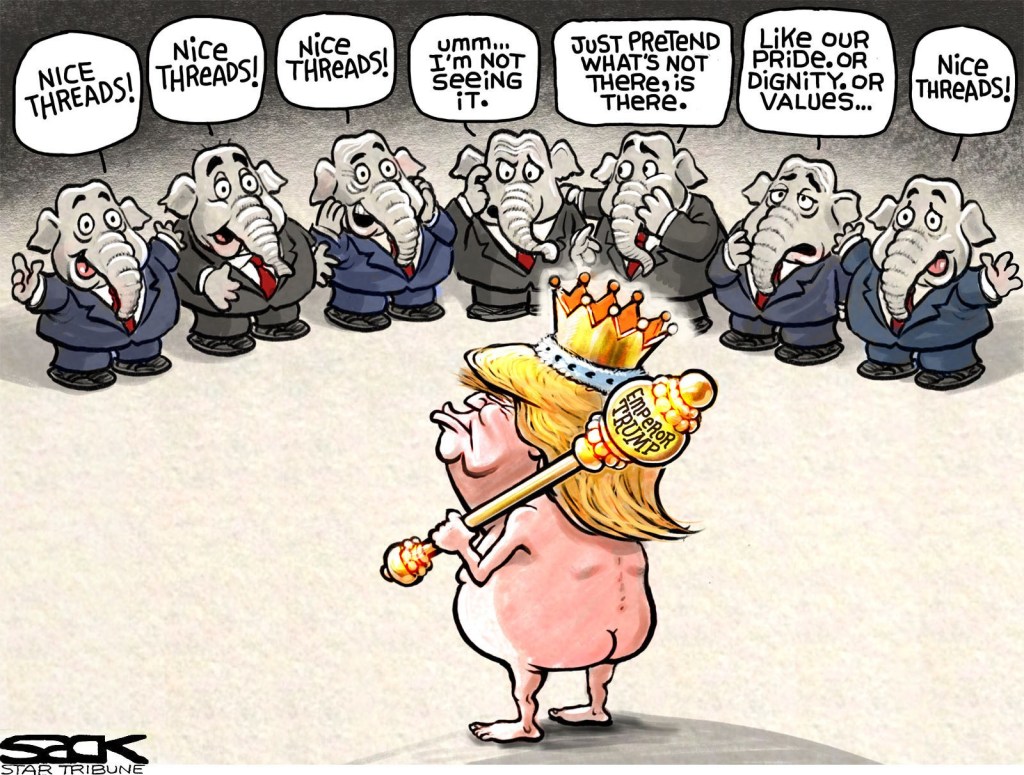
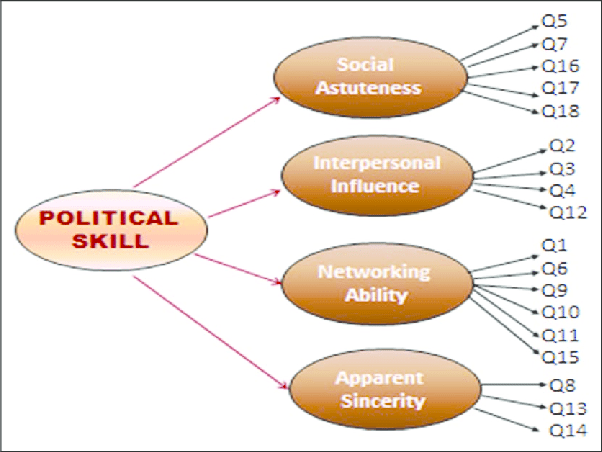
“The Red and the Blue” is not about the birth of tribalism. Trump shows himself to be an inept politician. The emperor has no clothes. To overcome tribalism, American leaders must have political skill.
In the foreseeable future, tribes will exist. Steve Kornacki shows America is a Red and Blue nation disrupted by political tribalism. It is its strength and its weakness. Politics is the art of getting things done despite tribal differences. What is needed in America is a leader who can bridge tribal differences.
Democrats believe Joe Biden is the person to bridge tribal differences. Republicans seem not to care and continue to support President Trump.
The only way forward is through politics (the activities associated with the governance of a country).
Lee Child (British Author of the Jack Reacher novels.)
Let Lee Child entertain you.
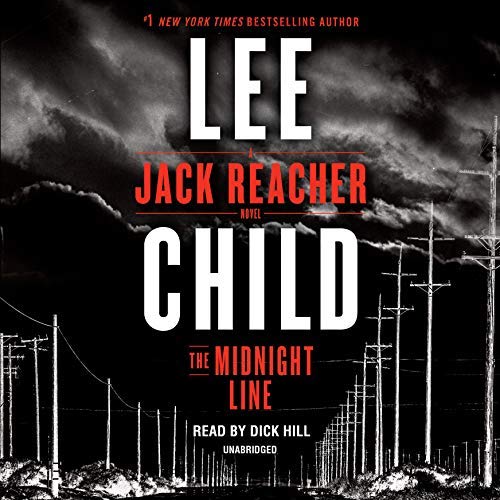
“The Midnight Line” is Child’s latest chapter of the Jack Reacher series. This is the first Lee Child novel for this reviewer. Reacher is put at risk by a drug dealer who tells a hit man to be on the lookout for “big foot” or the “hulk”.
Child suggests 6′ 4″ Lawrence Dallaglio (Retired English Rugby Player) is the image of who he thought of as Jack Reacher.
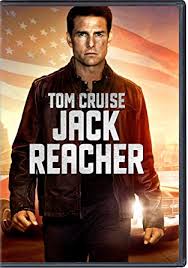
Having seen a Jack Reacher movie, one understands why many Reacher fans are disappointed with Tom Cruise’s billing. The diminutive 5′ 7″ Tom Cruise does not fit Child’s characterization, but Cruise became Reacher in a film from Child’s book, “One Shot”.
In two senses, Lee Child is a spartan writer. He writes short, clear, precise sentences, and creates a Herculean “spartan like” character. “The Midnight Line” is a guilty entertainment for mystery and action addicts.
Jack Reacher is a loner. Reacher is a combat veteran with an investigator’s curiosity. He is a West Point graduate who left the military after 11 years. He is a former major in the Military Police. He lives in the moment. He travels the roads of America without a suitcase and often without a ticket to ride. He hitchhikes. He wears one set of clothes until he needs a new set. He discards the old and buys new.
The story begins with a tiny ring that Reacher happens to see in a pawn shop. The ring is from a former cadet at West Point. From there, the listener hitches a ride with Reacher to South Dakota and Wyoming.
Reacher is a phenom. Not only because he is big but because he forgets nothing and sees everything. With remembering and seeing, he intuits what is going to happen next. Whether in a fight or personal crises, Reacher assesses details and sees the future.
Lee Child places Reacher in a story of addictive drug manufacturing, illegal distribution, and human destruction.
The author’s dialog is short and to the point. Reacher is almost supernatural but just believable enough that a listener identifies with his heroics. Child adds mystery to his characters. His terse sentences makes listeners want to know more.
“The Midnight Line” is partly about a missing person (a twin of a beautiful woman). The missing person is a former graduate of West Point that has pawned her ring. Reacher knows something is wrong because he knows how difficult and psychologically rewarding it is to graduate from West Point.
The missing person is involved in an interstate illegal drug trade for reasons that are not clear until the end of Child’s story. It’s a good guy, bad guy story with twists.
A listener learns something about the illicit drug business in the United States. How and why it works. Particularly how it feeds off a culture that insists all human pain must be medicinally treated. And, how an injured veteran of war, with a distinguished service record, can become an addict.
In the end, “The Midnight Line” is an entertainment. However, it also says something about addiction–its causes, its consequences, and the amoral businesses that serve it.