

Books of Interest
Website: chetyarbrough.blog
The Stalin Affair (The Impossible Alliance That Won the War)
By: Giles Milton
Narrated By: Giles Milton
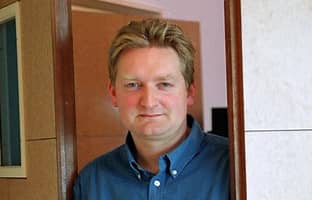
Giles Milton (Author, British writer and historian.)
Giles Milton offers a fascinating and well written account of the dynamics of the relationship between Churchill and Stalin with a brief analysis of Franklin Roosevelt that shows a difference of opinion about Stalin. There are some surprises in Milton’s history of the beginning and ending of WWII and the role of Joseph Stalin.
As is well known, Stalin and Hitler made a pact at the beginning of the war that made them allies with a plan to divide Europe between their two countries.

The pact falls apart when Hitler chooses to invade Russia on June 22, 1941. Germany made rapid progress and was nearing Moscow when winter struck, and Germany’s wheels of war were stuck in the mud. Stalin was psychologically paralyzed by Germany’s decision to turn against Russia. He hid in his dacha, his second home in the Russian countryside. A delegation of Russians went to the Stalin’s dacha and pleaded with him to direct the defense of Russia against Germany’s onslaught. Stalin is surprised that the delegation wanted him to return to the leadership of Russia in Milton’s telling of the story. One presumes that reluctance is because of Stalin’s mistake in believing Hitler could be a reliable ally in their mutual desire to expand their territories.

Milton’s history has a particular interest to me because of a planned personal visit to the Baltics next month.
In reading a book about the Baltics during WWII, there seems some confusion among the Baltic countries because their sovereignty is being usurped by Russia while the instigator of WWII is Germany. The guide on the trip suggests we read “between shades of gray”, a book written by Rusa Sepetys, a Lithuanian born American writer. Sepetys story is of Lithuania intellectuals being arrested by Stalin’s troops and carted off to Siberia. Brief mention of the Germans is mentioned but implies the Germans were not the enemy but an opposing force of the Russian attack on the Baltics. Having visited Finland last year, it is interesting to find the Finns allied themselves to Germany during WWII because of their fear of Russia’s aggression. Now, having read Sepetys novel of Russian aggression in early 1941, one begins to understand the complexity of which side of the war the Baltics chose to be on.

Ruta Sepetys (Lithuanian born American writer.)
It tells the story of Russia’s invasion of the Baltics soon after Hitler’s decision to attack Russia.
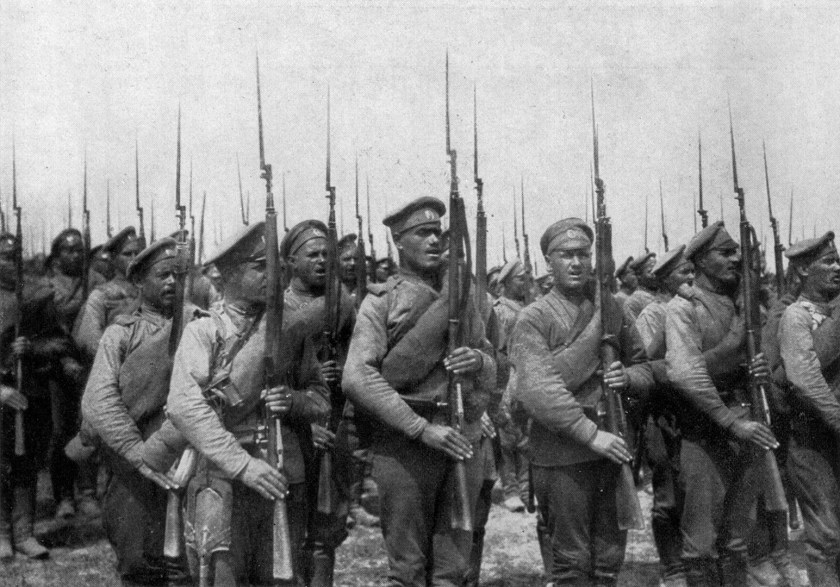
WWII in the Baltics is not Milton’s history, but Sepetys offers a footnote on its consequence in the Baltics.
Milton makes one feel they are in the room when decisions are made about the progress and ending of WWII. It is a fascinating story. Stalin is a villain in sheep’s clothing. His lust for power is unquenchable. Winston Chruchill is shown to be more aware of Stalin’s intent than Franklin Roosevelt. At Yalta, where the peace plan is agreed to and signed, Milton explains Roosevelt is feeble. The Yalta conference took place in February 1945. Roosevelt dies in April, two months later. Stalin’s ambition is the expansion of the U.S.S.R. and anything that gets in the way of that ambition is an obstacle to be overcome or removed.
Milton’s access to historical documents, reveals the many important roles of government leaders during WWII and after.
Of course, the most obviously impactful leaders are Churchill and Stalin, but the author notes the roles of lesser-known participants like Averell Harriman, Kathy Harriman, and Vyacheslav Molotov. There is also the role of Lavrentiy Beria, Stalin’s head of the NKVD (the Soviet secret police).
W. Averell Harriman (1891-1986, American politician, businessman, and diplomat.)
Averell Harriman, as the son of a wealthy railroad baron, becomes the founder of Brown Brothers Harriman & Co., an investment company. He became one of the richest men in America.
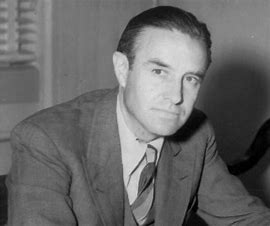
Harriman is asked by Roosevelt to become the America’s diplomatic contact with Great Britain to manage the Lend-Lease Program before America enters the war. As a personal envoy, he strengthens the alliance between Britain and America. Later he becomes Ambassador to the Soviet Union after Hitler’s betrayal of Stalin. Milton touches on the married Harriman’s attraction to women and his extramarital affairs. However, Harriman was revered by Churchill, and later Stalin, for the aid he coordinated for both countries during the war.
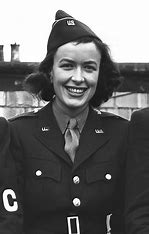
Kathleen Harriman (1917-2011, died at age 93.)
A lesser-known role is of Harriman’s daughter, Kathy Harriman. In the first years of contact between her father and Stalin, Ms. Harriman smooths America’s relationship with the Russian administration.
Ms. Harriman leaned to speak Russian and aided her father in his diplomatic contact with Soviet officials. She became a correspondent for the International News Service and Newsweek during her time in Russia. In 1944, Ms. Harriman exposes the mass murder of 22,000 Polish officers by the NKVD, at the order of Stalin. She plays a role in the Yalta Conference in assisting the American delegation with logistics and management.
Milton makes a listener feel like they are in the room at a dinner table with Stalin and Churchill when they exchange harsh words about the creation of a western front to aid the Russian army in the fight with German soldiers.

Stalin demeans the British army for their early failures in the war when they were outnumbered and outgunned by the Germans. Churchill is deeply offended by the disparagement and is on the verge of canceling a dinner with Stalin before leaving Russia. His anger is quelled by Harriman. Churchill changes his tone with the Russian leader and mends their relationship over cigars and alcohol. However, there is little doubt about their continued acrimony and Churchill’s unshaken belief in Stalin’s intent to expand his empire.

Milton offers the same “in the room” understanding of what happens at the Yalta Conference.
Germany is divided into four occupation zones which ended up being East and West Germany. The groundwork for the United Nations is formed with the aid of promoting international cooperation and prevention of future conflicts. A zone of influence is created between Eastern European Countries which were added to the U.S.S.R., to expand a buffer zone between Russia and the Western Powers. This iron curtain results in the cold war. The table is set at Yalta for the Nuremberg Trials of Nazi and Japanese leaders and for future reparations to rebuild Europe.
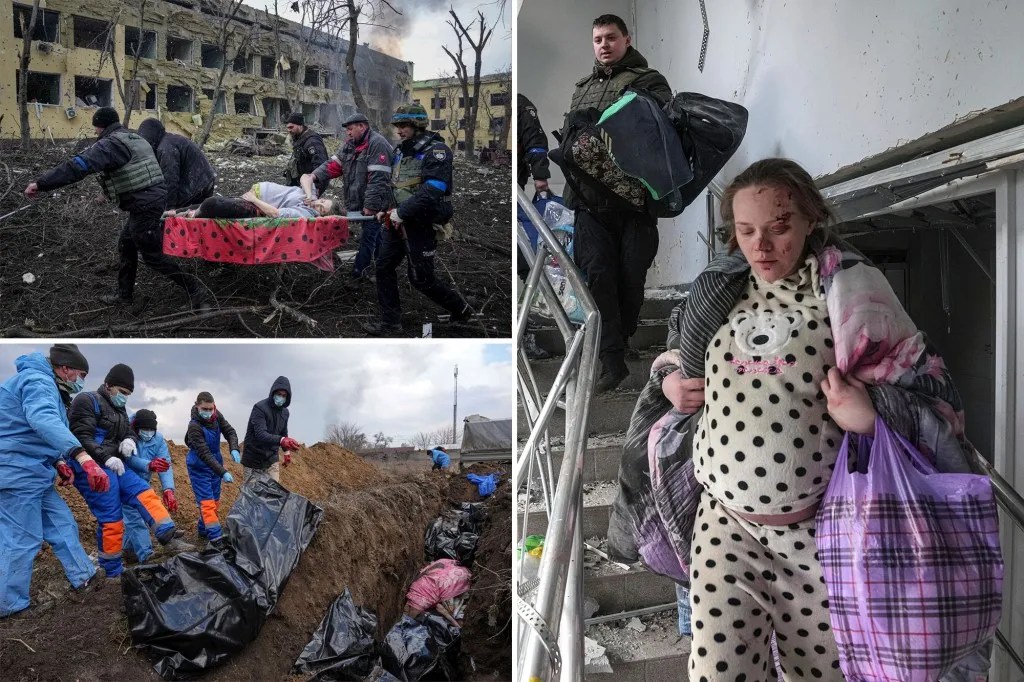

“The Stalin Affair” is an excellent reminder of WWII that makes one think about what is happening today with Russia in Ukraine and Israel in Gaza. How close is the world to its next world war? The character of today’s leaders seems as threatening as Stalin and as unpredictable as Churchill.
 REVIEWS AND VIEWS OF LIFE