SOCIETY

The broad theme of Flournoy’s story implies being an identifiable minority means navigating social discrimination, gender difference, and physical violence in America.

Books of Interest
 Website: chetyarbrough.blog

THE WILDERNESS (A Novel)

Author: Angela Flournoy

Narration by: Angela Flournoy & 2 more

Angela Flournoy (Author, American writer won the First Novelist Award for “The Turner House” in 2015 and was shortlisted for the National Book Award for fiction.)

As a white person, “The Wilderness” offers a glimpse of what it is like to be a Black American woman in the prime of her life in today’s America. Flournoy creates a story of five adult Black women in their twenties in the years from 2000 though 2022. She reflects on their irreverent and tumultuous lives that show how friendships grow and fall apart between young Black Americans who are underestimated and face societal inequality. The friendships of these five women are a kind of bulwark against the experience of living in America as a racial minority.

American life.

Everyone faces challenges living in America, but friendship seems less important to white Americans because they are a majority of the population with assumed privilege that depends less on friendship than on economic opportunity. White American economic opportunity is taken for granted. A white listener/reader’s interest may make Flournoy’s story less interesting because it is singularly based on a minority. One might make the mistake of returning Flournoy’s story, rather than sticking with it, because it is different from its reader/listener’s life. Flournoy offers a view of life seen through the eyes of a person who lives as a minority in a white majority.

Friendship of women.

Desiree’s, Danielle’s, Monique’s, Nakia’s, and January’s stories are of 5 twenty something, well educated, Black American women and their lives through 20 years of friendship. Their friendship is a bulwark against the harshness of American life. Friendship is characterized as it is, i.e. not as smooth and unchanging but on again, off again, and renewable based on common experiences of being Black in America. Flournoy shows how these five friends balance their ambitions and relationships in a society that often gets in the way of their drive for economic success and/or happiness. When faced with discrimination, their friendships becomes an island of consolation. This island is not necessarily peaceful because of their different lives and personal circumstances, but it is a refuge from American discrimination.

Added to American police discrimination toward minorities is gender violence which is a problem for both white and Black American women.

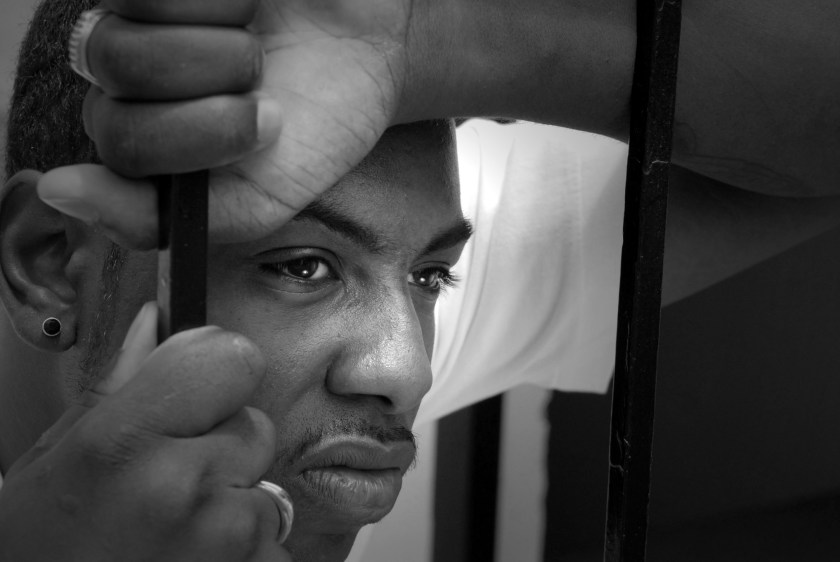
Violence is endemic in America, but racism and inequality underlie greater vulnerability for Black Americans. Too many assumptions are made by police who racially profile Black Americans without justification. That profiling leads to unjustified police brutality based on the color of one’s skin. Sexual relationships may seem “ok” to an outside observer, but Flournoy shows it sometimes hides the reality of physical or psychological abuse between mated partners. January’s story is an example of coercion, instability, and harm that can occur in an intimate relationship.
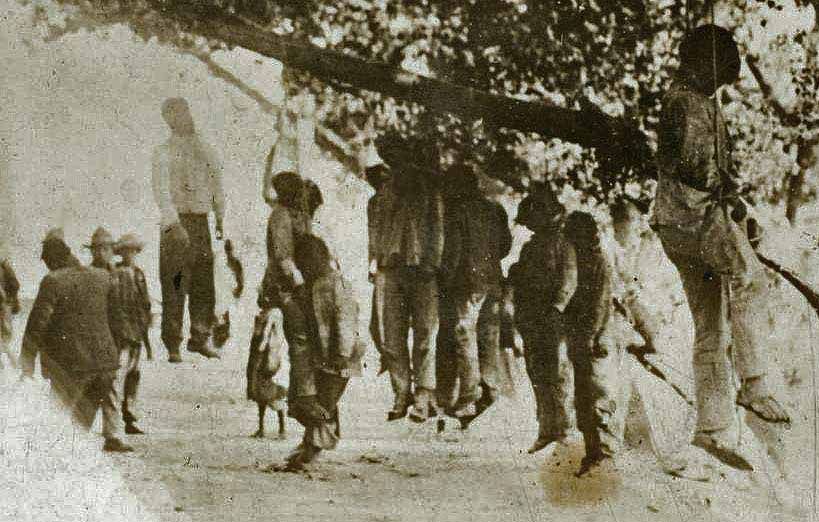
The depth and horror of discrimination in American history.

The broad theme of Flournoy’s story implies being an identifiable minority means navigating social discrimination, gender difference, and physical violence in America. Flournoy’s opinion is that friendship is the bulwark upon which Black women protect themselves. The reality of Flournoy’s story is that social discrimination, gender difference, and violence exist in every country of the world. The way people deal with discrimination, gender difference, and violence ranges from adaptation, reluctant acceptance, or revolt. Her point is important, but her story is too long.


SOCIAL BLINDNESS

Criminal imprisonment, gun control, and drug addiction solutions are elusive, just as America’s eradication of discrimination is, at best, only a work in progress.

Books of Interest
 Website: chetyarbrough.blog

Locking Up Our Own (Crime and Punishment in Black America) 

By: James Forman Jr.

Narrated By: Kevin R. Free

James Forman Jr. (Author, professor of law and education at Yale Law School)

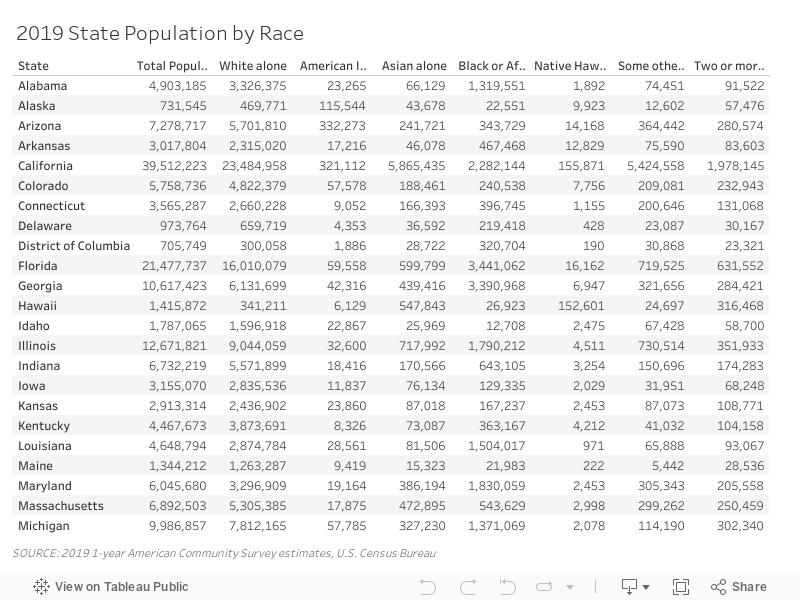
James Forman Jr. argues Washington D.C. is a multi-ethnic democratic example of what is wrong with the American penal system, gun control, and an addiction crisis. Forman offers an eye-opening recognition of America’s social blindness. The 2019 estimated population of Black residents in D.C. is approximately 44%. Forman suggests D.C. constitutes a representative sample of what has happened and is happening to Black Americans in “Locking Up Our Own”.

Forman addresses three social issues with Washington D.C.s’ effort to legislate against the consequences of crime associated with a Black population’s gun possession, and drug addiction. America’s history of Black discrimination is well documented. The issues of gun control and drug addiction are top-of-mind issues in all American communities. What makes Forman’s book interesting is his analysis of what he argues is a nascent conservative movement in Black American society.

Forman’s argument is based on statistics and the history of Black discrimination. The American incarceration rates for Black citizens are six times higher than for white citizens. Today’s statistics show 33% percent of the prison population is Black when it is only 12% of the U.S. adult population. White prisoners account for 30% of America’s prisoners but amount to 64% of the adult population.

The fundamental issue of Forman’s book is that more Black Americans are being imprisoned for crimes of addiction and theft than those committed by white Americans.

Forman uses Washington D.C. as evidence for a Black conservative movement because of its high percentage of Black residents. He notes D.C.’s effort to legislate gun control and regulate drug addiction are arguably more restrictive than other parts of the country. Firearms must be registered with the police department. A permit is required to purchase a firearm. Concealed weapons require a license. Assault weapons are banned. Magazine capacities are limited. Safe storage requirements are mandated. In the case of addiction, the “Office of National Drug Control Policy”, ONDCP is established in D.C. The program is instituted to provide funding to support communities heavily impacted by drug trafficking. A “Drug-Free Communities Program” offers grants to community coalitions to prevent youth substance abuse. The city expands Naloxone access to citizens to reverse opioid overdose.

Forman explains these policies are supported by D.C. residents in the face of national opposition to gun control. Forman notes the proactive drug control programs of D.C.

The obvious irony of D.C.’s policies is that they do not reflect what white America promotes but suggests Black America is likely more victimized by lax gun controls and drug regulation. White America needs to get on board.

Several chapters of Forman’s book explain the difficulties of integrating minorities into local police forces.

Police department managers opened their hiring practices to Blacks based on growing Black neighborhoods and belief that police services would be improved with officers who would be more racially and culturally suited to understand policing in minority neighborhoods. Forman recounts 1940s through the 1960s police force integration. He notes police department integration is fraught with discriminatory treatment of Black recruits.

Of course, the idea of crime in a Black neighborhood being better understood by Black officers is just another form of discrimination.

Crime is crime, whether in a minority neighborhood or not. Relegating Black police to Black neighborhoods only reinforces racial discrimination. Integrating the police only became another example of racial discrimination in America. Paring white and Black policemen on petrol became difficult. Getting white and Black policemen to work together becomes even more problematic when promotions are denied qualified Black officers. As with all organizations, police promotions were based on experience and standardized testing. What police departments would typically do is promote white officers over Black officers whether their experience rating or test scores were better or not.

The irony of white resistance to gun control and ineffective drug addiction policies has had an adverse impact on Black-on-Black crime.

The culture created in formally white police departments adversely condones harsh treatment of minorities. Black officers buy into a police department’s culture and begin discriminating against Black residents in the same way as white policemen.

The 2003 brutal beating and killing of Tyre Nichols by 5 Black Police Officers.

Drug addiction is the scourge of our time. Its causes range from the greed of drug company executives to poor policy decisions by the government to escapist and addictive desires of the public. Addictive drugs are the boon and bane of society. On the one hand, they reduce uncontrollable pain and anxiety; on the other they are often addictive, causing incapacity or death.

Discrimination can only be ameliorated with education, understanding, and governmental regulations that are consistent with the rights written in the American Constitution.

Criminal imprisonment, gun control, and drug addiction solutions are elusive, just as America’s eradication of discrimination is, at best, only a work in progress. Guns in the hands of American citizens are not guaranteed except as noted in the Constitution which infers “A well-regulated Militia…” is the only reason for “…people to keep and bear Arms…” How many more school children have to be killed by guns before the lie of American gun rights is dispelled.

The last chapters of Forman’s book address his experience as a public defender in Washington D.C. This is the weakest part of his story, but it points to the theme of an incarceration system in America that is broken. Prisons are not meant to reform criminals. They are overcrowded, violent, understaffed and, most damagingly, lack rehabilitative programs for re-education and vocational training that could reduce recidivism and return former prisoners to a socially productive society.

SOCIAL CHANGE

Social change for human equality is a long and arduous process. The election of 2025 will either be a step forward or backward.

Books of Interest
 Website: chetyarbrough.blog

Unexampled Courage” The blinding of Sgt Isaac Woodard and the Awakening of President Harry S. Truman and Judge J. Waties Waring

By: Richard Gergel

Narrated By: Tom Zingarelli

Richard Gergel (Author, American lawyer, assumed office 2010 as US District Court Judge for the District of South Carolina, graduate of Duke University School of Law in 1979.)

The Emancipation Proclamation was issued on January 1, 1863, as an executive order by Abraham Lincoln. It purportedly ended slavery, but it was only the beginning of a generational fight that is still being waged. “Unexampled Courage” is a history of a twentieth century turning point in the fight for equal treatment of Black Americans. The blinding of a Black veteran of WWII, Sergeant Isaac Woodard, in 1946 signified another major turning point for equal treatment of former American slaves. On July 26, 1948, President Harry Truman signed Executive Order 9981 which banned racial discrimination in the military. The blinding of Woodard by a white Sheriff in South Carolina and Harry Truman’s executive action are connected by Gergel’s history of Woodard’s horrid and brutal experience.

In 1946, a South Carolina police chief beat Sergeant Isaac Woodard’s head and used the butt of a Blackjack handle to gouge Woodard’s eye sockets.

Sergeant Woodard was beaten and blinded by a Batesburg, South Carolina police chief for drinking (and alleged disorderly conduct) on a Greyhound bus. Several white and Black soldiers were drinking and talking among themselves while returning from the service after the end of World War II. Woodard asked for a bathroom break from the bus driver and was refused. At a Batesburg, South Carolina bus stop, the driver left the bus to report Woodard to the police chief. The police chief attacked Woodard and beat him around his head and eyes with a leather Blackjack similar to the one shown above. Gergel reports Woodard’s eyes were directly poked and grinded by the butt of the police chief’s Blackjack before being thrown unconscious in a jail cell. The next morning, a local physician examined Woodard and he was taken to a veteran’s hospital, but any care provided was ineffectual. The assault on Woodard’s eyes is later determined to have caused an incurable blindness.

Orson Wells becomes aware of the horrid treatment of Woodard and chooses to broadcast the incident to American listeners. Orson had become famous for his 1938 “…War of the Worlds” radio broadcast.

When Wells broadcast the Woodard’ incident on public radio, he mistakenly identified the wrong South Carolina’ town in which the incident occurred. However, he continued investigating the incident and committed to correcting his error and identifying the police chief who battered Woodard to the point of blindness. The police chief and the town of Batesburg were correctly identified, and the wheels of justice slowly turned toward injustice, rather than justice.

Julius Waties Waring (1880-1968, U.S. District Court judge for the Eastern District of South Carolina.)

Though the police chief was tried for beating Woodard, he was acquitted by a South Carolina’ court. The story of Woodard’s blinding was prosecuted in the U.S. District court of Judge, J. Waites Waring. Waring was outraged by the inept prosecution by the federal prosecutors. After the acquittal, Waring began a movement in South Carolina for Black Americans’ equal rights. Waring’s outrage was supplemented by President Harry Truman who convened a commission on civil rights. After the report from the commission, Truman arranged a speech before the NAACP to reveal the findings of the commission and actions the Federal Government would take to address unequal treatment of Black Americans.

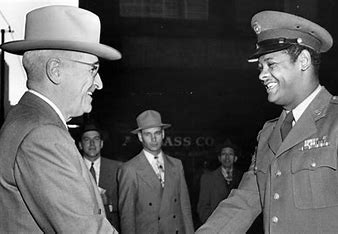
Harry S. Truman (1884-1972, 33rd President of the U.S.)

Truman is in the midst of a campaign to be re-elected as President of the United States in 1948. Gergel argues Truman decides to use his speech before the NAACP to announce his plan to fight for Negro equal rights, in part because of the blinded Woodard, but also because of many unjust southern murders and discriminatory actions against Black Americans.

Thomas E. Dewey (1902-1971, American lawyer and politician, 47th governor of New York 1943 to 1954.)

As most Americans know, President Truman was expected to lose to Thomas Dewey in his re-election campaign. A major reason for that belief was because of executive action to integrate the military and the opposition from southern voters who insisted on the inequality of Black Americans. From a coalition of labor, Blacks, Jews, mid-western farmers, and some number of southern states, Truman won re-election by a slim margin.

Gergel makes it clear that a fight for equal rights is not won and in fact was resisted by military leaders who tried to stop integration of the military after Truman’s executive action.

The military leaders fail to change Truman’s mind and military leaders finally took the required steps to integrate and assure a level of equality among white and Black Americans. Of course, equal treatment remains an issue in the military, as well as throughout America. Social change seems to conflict with genetic inheritance, compounded and multiplied by human ignorance.

Gergel shows social change for human equality is a long and arduous process.

The Civil War only dated the beginning of the American fight for equality. It has become a broader effort, including racial, gender, LGBTQ, marriage, civil, economic, natural, and political equality. One wonders if humans, let alone Americans, will ever get there. The election of 2025 will either be a step forward or backward.

KKK

American Democracy is a work in progress and remains at risk of failure.

Books of Interest
 Website: chetyarbrough.blog

“A Fever in the Heartland” 

By: Timothy Egan

Narrated By: Timothy Egan

Timothy Egan (American Author, journalist, former columnist for the New York Times, won the National Book Award, the Carnegie Medal, and a Pulitzer Prize for National Reporting.)

Timothy Egan’s “A Fever in the Heartland” is about the Ku Klux Klan and its growth in Indiana, the American Midwest, and Oregon in the early 1920s. Soon after the Civil War and death of Abraham Lincoln, a group of former Confederate veterans formed a social club in Pulaski, Tennessee.

The Ku Klux Klan grew into an underground movement that peaked in the 1920s with white American membership estimated at over 4 million.

Egan’s history is about the rise and fall of David Curtis “Steve” Stephenson who became the Grand Dragon of the Indiana Klan in 1923. Stephenson endorsed and promoted public hate toward immigrants and minorities. He became a proven liar who lied about his past and his actions as a leader. Egan’s history of Stephenson is an American political’ warning. Egan shows how character and honesty are as important in today’s politics as they were in the 1920s.

Egan’s choice of David Curtis Stephenson as a KKK’ leader illustrates how “A Fever in the Heartland” can grow to threaten American Democracy.

Stephenson is a man who smoothly lies his way to the top of a weak KKK’ chapter in Indiana by pandering to anti-immigration and anti-minority sentiments in the country. (The same sentiment seen in today’s America.) Stephenson became a rich man by recruiting the public into the KKK with a $10 fee for a white hooded garment ($4 for the garment, with $6 in his pocket) for membership to an exclusive group of American white men who would terrorize and murder non-whites, non-protestants, and immigrants. The KKK used secrecy to hide membership in this exclusive white American group.

The KKK hid their private reputations while (as an organization) publicly funding American celebrations and charities to feed its membership.

With membership dues and a persuasive personality, Stephenson (within 3 years) became a powerful and influential KKK’ leader. Stephenson convinced members of the KKK to become elected officials to gain control of government and public offices in Indiana. KKK’ members subsidized and promoted the election of like-minded white Americans. With control of government agencies, public services like the police and judiciary, the KKK controlled much of what happened in the State of Indiana. The wealth and influence of Indiana’s KKK planned a Presidential run in the late 1920s. The Indiana leader of the Republican Party was a member of the KKK and kowtowed to Stephenson as Grand Dragon of Indiana’s KKK.

Egan explains Stephenson was a persuasive carpetbagger who moved to Indiana from Texas while inferring he was an Indianan to become the Grand Dragon of Indiana’s KKK’ chapter.

Stephenson lied about his education and past but with success in increasing membership, he gained support of the National KKK’ organization. The truth of his background is that he abandoned his first wife and child when he left the lone star state. He was remarried to a second wife who leaves him. Stephenson beat his second wife who returned only to be beaten a second time when she attempted reconciliation. Egan noted Stephenson was a heavy drinker and abusive molester of women who worked for him. Stephenson was ultimately convicted of second-degree murder of Madge Oberholtzer, who was the creator and manager of a lending library.

Madge Oberholtzer (Stephenson is ultimately convicted of second-degree murder of Madge Oberholtzer for brutalization and rape.)

In the middle of the night, with the help of fellow Klansman, Madge Oberholtzer was kidnapped by Klansman working for Stephenson to take a train to Chicago. On the train, Stephenson rips Oberholtzer’ clothes off and rapes her. He used his teeth to bite her breast and parts of her body.

After being returned to Indianapolis, Overholtzer went to a drug store to buy bichloride of mercury, a slow acting poison. She chose to take the poison to end her life.

The taller man in this picture is Ephraim Inman, the defense attorney for Stephenson. He is standing next to Will Remy the prosecuting attorney, dubbed the “boy prosecutor” who successfully convicted Stephenson for 2nd degree murder.

Will Remy told the crowded courtroom that Stephenson “destroyed Madge’s body, tried to destroy her soul” and over the course of the trial tried to “befoul her character.” Overholtzer’s left breast and a bleeding right cheek were bitten by Stephenson when she was raped. Remy argues Stepheson’s teeth were a murder weapon. Attorney Asa Smith, a Overholtzer-family’ friend prepared a dying declaration for Madge Oberholzer that was placed into evidence.  Judge Sparks admitted the declaration and allowed Remy to read it to the jurors. (Sparks was not a Klansman.)

Stephenson considered himself, not only above the law, but as the law in Indiana. (That is a familiar refrain in the 21st century.) Stephenson was convicted for second degree murder. It was second degree murder because the cause of death was Madge Oberholzer’s decision to take her own life.

The Klan still exists in America.

James Alex Fields Jr. plowed into a crowd of demonstrators in Charlottsville, Va in 2017. He killed one of the protestors.

Fields admitted to being a member of the KKK. Though the Klan remained a political power in Indiana for some years after Stephenson’s trial and conviction, its Indiana’ power and influence was diminished. The national position of the Klan has declined in America as is believed in modern times, but it still exists.

Speaking about the white nationalist groups rallying against the removal of a Confederate statue, former President Trump said, “You had some very bad people in that group, but you also had people that were very fine people, on both sides.”

As Egan’s history of Grand Dragon Stephenson illustrates, American Democracy is a work in progress and remains at risk of failure. Honesty of elected officials and “there being no person or elected official above the law” remain important for America to remain a Democracy.

BELIEF IS NOT ENOUGH

“Believing” is not enough. The nature of humanity needs to change,

Books of Interest
 Website: chetyarbrough.blog

“Minor Feelings” (An Asian American Reckoning)

By: Cathy Park Hong

Lectures by: Cathy Park Hong

Cathy Park Hong (Author, writer, poet, and professor, graduate of Oberlin College with an MFA from Iowa Writers’ Workshop.)

“Minor Feelings” is a mild representation of a social malady that plagues humanity. Ethnic differences, social hierarchy, and political power create and embolden nation-state’ inequality. It seems in the history of the world, with the exception of most Asian and African countries, the white race rules society. This seems odd when only 16% of the world’s population is white.

Hong offers a memoir of her life in America. Born in Los Angeles, California, Hong notes experiencing discrimination between white Americans and Asians.

Hong acknowledges discrimination within, as well as outside, ethnic cultures by recounting her somewhat comic effort to seek help from a Korean therapist for a recurrent facial tic. The therapist said Hong should seek help from someone else without explaining why. Of course, one wonders if that classifies as discrimination or therapeutic professionalism.

Mosaic of children from around the world, including, Kayapo, Indian, Native American, Inuit, Balinese, Polynesian, Yanomamo, Cuban, Tsaatan, Moroccan, Mongolian, Karo, Malagasy, and Pakistani.

All humans have a tendency to generalize ethnic qualities based on human difference. Those differences can range from the obvious to the miniscule but have the common failing of not seeing the humanity of every human being. Hong notes how Asians are generalized by many ethnic groups, including Asians according to Hong, as industrious, intelligent, and hard working without recognizing the individual. Whether generalization about an ethnicity is true or not, the individual’s success or failure is diminished by generalization.

In what was called social studies in the 1960s, I remember our teacher asking if we were prejudiced. No one commented.

Then, the Social Studies teacher asked the class if any of the boys had asked an Asian girl if she had been asked to go to the prom with them. No one answered but I, for one, felt guilty about not even thinking of it. Though the teacher inappropriately asked the question, he demonstrated how America is as ignorant about Asian discrimination in the 1960s as Hong illustrates in “Minor Feelings”. (Parenthetically, the teacher’s question was even more inappropriate and hurtful because the Asian girl was in the class.)

The truth is every nation-state’ political structure, whether white, off-white, or black, discriminates against whomever is not part of the government in power. In China it is the Han, in Russia it is Aryan Russians, in India it is the Indo-Aryans, in Botswana it is the Tswana. Each of these ethnicity’s discriminate against minorities not in power.

This is not meant to diminish the truth of what Wong explains about her life experience. “Minor Feelings” is a difficult book to read or listen to because it offends many Americans who believe they look at every person as an individual. However, “believing” is not enough. The nature of humanity needs to change.