
Books of Interest
Website: chetyarbrough.blog
The God of Small Things
Author: Arundhati Roy
Narration by: Sneha Mathan
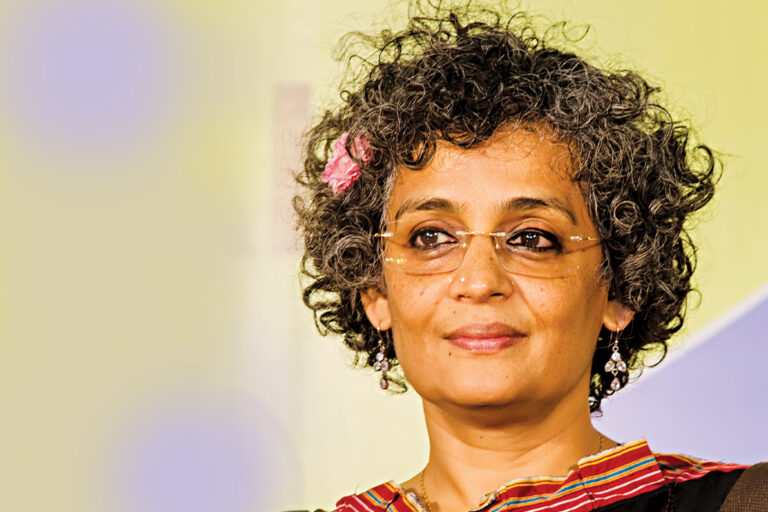
Arundhati Roy (Author, Booker Prize for Fiction awarded in 1997 for “The God of Small Things”.)
Arundhati Roy gained fame with “The God of Small Things” because of its originality. It is in the big and small things of colonialism and culture that expose the flaws of all societies. “The God of Small Things’ is a criticism of the world in which we live. Roy creates a fictional story that helps one understand the emotional, social, and political failings of India that are, in reality, repeated in societies throughout the world.
Rather than disrupting the caste system of India, Britain created an Anglophile elite that competed and supported Brahman aristocracy.

In some ways, British colonialism reshaped India’s culture. Britain’s colonization of India created a level of class superiority that hardens the administrative functions of India’s government. That hardening became an integral part of Indian culture. The English language became a symbol of superiority. Schools, courts, and government offices emulated British customs that copied systems of hierarchy, and labor control that continued after the British abandoned colonialist control of India. In visiting India, British influence is seen in country estates that travelers stay in when they ride trains from the north to the south.
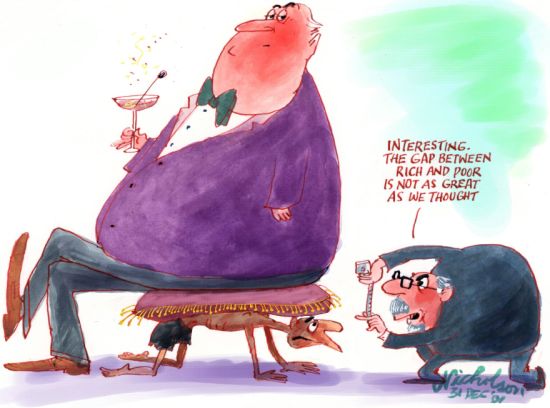
The more encompassing truth of Roy’s observations is that the flaws in India’s society exist in all societies.

Ammu, one of Roy’s main characters, is a Syrian Christian woman who marries a man from a lower caste. Her husband comes from the so-called “Untouchable” caste. He turns out to be a brutal abuser of his wife and is eventually divorced by Ammu, but she continues to suffer from discrimination for her religious belief and her breaking of the caste taboos of India.

Roy’s characters like Baby Kochamma, a young woman obsessed with English manners and Catholic respectability is mocked by others in her community. Having an Oxford education became a badge of status with Englishness at the top of the hierarchy of Indian culture. Roy’s novel is set in the 1960s. A moral code of sexual guilt, fear of sin, belief in purity, and policing of desire are exemplified by India’s women who are influenced by catholic proselytizing. In today’s India, the most endemic religion is Hinduism. Rules of marriage, the norms of purity, the stigma of divorce, and association of sin with female desire are tied to Hindu social beliefs. As a Catholic, Baby Kochamma has the additional burden of believing in a minority religion which exacerbates her isolation.
Caste system of India.
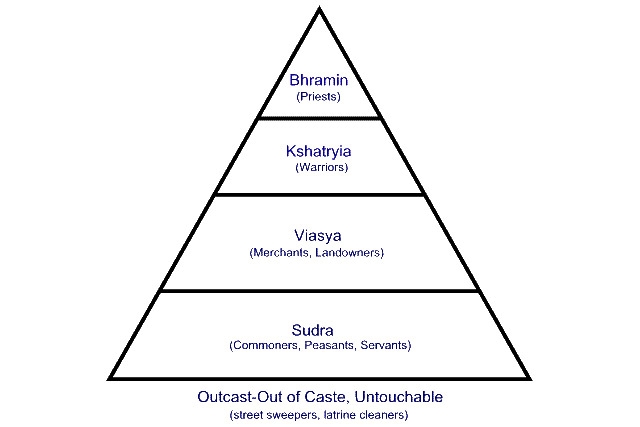
Caste system’s endurance in India is undoubtedly reinforced today by the Prime Minister of India, Narendra Modi and its President, Droupadi Murmu, who are Hindu adherents. Though Roy shows there is little theological hostility between Catholic and Hindu influences, there are inherent tensions between these two religions. Roy infers caste system is reinforced by Hindu beliefs while Catholicism is less concerned about caste than morality or guilt. The irony is that Catholicism rejects caste in theory while accepting it as a part of India’s culture. The two religions compete while reinforcing similar authoritarian beliefs on India’s citizens.

A point made by Roy is that societal, religious, and political dysfunction is not limited to India. Dysfunction exists in all nations.
When Roy’s character Ammu succumbs to the sexual desire of a male, she is criticized more for the caste difference than the sin of entering into an intimate relationship that ultimately falls apart with the abuse of her husband. The physical abuse compounds her violation of Hindu’ caste belief. The fact is that Ammu divorces her husband because he is an abusive alcoholic, not because of caste difference.
Roy shows India is a microcosm of the world, weighted down with sexism and discriminatory inequality that grows from ignorance, and societal dysfunction which often turns into human violence within and between societies and nations that can engulf the world.

“The God of Small Things” is a revealing and disturbing telling of the human condition.
 REVIEWS AND VIEWS OF LIFE