CHILDREN

Klune’s fantasy offers no clear answer to “the best way” to raise children, but he crystalizes how important they are to the future of the world.

Books of Interest
 Website: chetyarbrough.blog

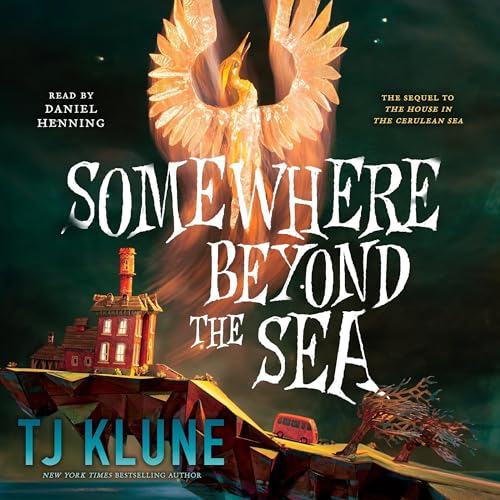
Somewhere Beyond the Sea (Cerulean Chronicles, Book 2) 

By: T.J. Klune

Narrated By: Daniel Henning

T.J. Klune (Author, winner of the 2021 Mythopoeic Awards)

“Somewhere Beyond the Sea” is a wild ride by an author with an extraordinary imagination. Some listener/readers will be inclined to reject Klune’s book because its flights of imagination obscure the author’s social criticism. This is a fantasy novel offering a message about mistakes parents and society make when raising children.

One might view “Somewhere Beyond the Sea” as a simple fantasy novel about extraordinary children cared for in orphanages.

However, every parent of a child will see themselves and the mistakes they may have made in raising their children. Though science explains much of who humans become is genetically determined, the influence of parents and acquaintances affect genetic predisposition. A child may mature to become a Jesus or Hitler without human understanding of why they became the best or worst of society.

Klune’s fantasy is about an orphanage populated with magical children that have powers beyond rational belief.

They are morphological creatures with powers capable of destroying or creating reality. Being free of parental guidance and raised in an orphanage, the maturity of these children is institutionally influenced. As is true in any orphanage, or any parental home, there are good and bad management practices. As either an orphanage manager or parent, one wonders if they are making the right decisions in the way they are influencing their children.

Klune obviously believes letting children become who they are, as long as they do no harm to themselves or others, is a life goal.

That seems a fine ideal, but parents and institutions are made of humans who are trapped by personal experiences of their own that influence how they raise their children. Some are disciplinaries, others are not. Some are physical punishers of bad behavior; others believe physical punishment only releases a parent’s anger and actually reinforces bad behavior. Despite bad parenting, some children grow to become great contributors to society, regardless of how they were raised, others become criminals of every type.

Does the way we raise our children make a difference in who they become?

There seems no disciplinary practice that guarantees the best outcome of a child raised by either institutions or parents. This is particularly concerning to parents of children who become unhappy and choose to pursue unhealthy relationships, become drug addicts, criminals, or suicide statistics. Parents become victims of guilt. They wonder how they might have been better managers of their children’s lives, thinking that could have made the difference.

Klune’s fantasy offers no clear answer to “the best way” to raise children, but he crystalizes how important they are to the future of the world.

LIFE’S CONSEQUENCES

Good and bad luck accompanies every life but what happens in the end comes from what we have done in the past.

Books of Interest
 Website: chetyarbrough.blog

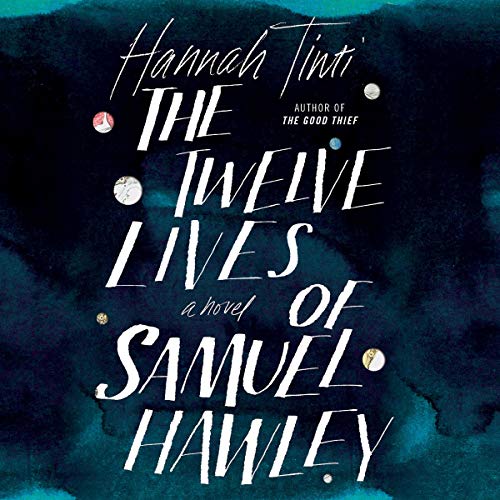
“The Twelve Lives of Samuel Hawley” (A Novel)

By: Hannah Tinti

Narrated by: Elizabeth Wiley

Hannah Tinti (American author, magazine editor, won the Alex Award for “The Good Thief”.)

Hannah Tinti writes a story about the life of a 21st century American outlaw, Samuel Hawley. He lives a peripatetic life as a robber, former convict, and part time collector for fellow criminals. When acting as a robber, he has few scruples about acting outside the boundaries of civil society. Hawley is a meticulous and practiced gun owner who wanders through America carrying the scars of bullets and a life of violence.

The woman he marries is alleged to have drowned in an accident but is believed by a grandmother to have been murdered by Hawley.

Hawley’s daughter, Loo, doubts the truth of her maternal grandmother’s claim but is faced with reports of her mother being an excellent swimmer, unlikely to be drowned as an accident.

Tinti leads the listener/reader to a conclusion about the drowning that on the one hand seems possible but on the other inconsistent with the complicated history of an American outlaw. Hawley’s moral center is at an extreme end of societal norms but within the boundary of truth and rightness. That truth and rightness suggests he could not have drowned his wife.

The dynamics of childhood are broken when either a father or mother are missing. Each parent contributes something to a child that is different when either are absent. Single parents become both bread winner and nurturer of a child when there is an absent parent. Hawley is a criminal who loves his daughter, idolizes his lost wife, and carries on with a life into which he was born. The peripatetic life of Hawley continues after the death of his wife. Now he is faced with raising a daughter on his own. They travel across the country, never truly becoming a part of one place or another.

The daughter becomes like her father in knowledge and love of guns and their use in America.

She emulates her father’s character by choosing to be in control of what she sees as a transactional world. It is the world her father has experienced and passes on to his daughter. Tinti shows Hawley deeply loves his daughter, grieves and idolizes his lost wife, but only views life as a societal transaction.

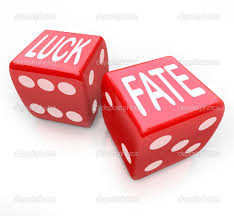
What we do in our lives have consequences. Good and bad luck accompanies every life but what happens in the end comes from what we have done in the past. Maybe life is just a transaction.

NOWHERE PLACE

Gareth Brown envisions the power of books and those who read or listen to them. Brown infers books are the source of the world’s joys and troubles.

Books of Interest
 Website: chetyarbrough.blog

“The Book of Doors” (A Novel)

By: Gareth Brown

Narrated by: Miranda Raison

Gareth Brown (Scottish author, his first published novel.)

Gareth Brown envisions the power of books and those who read or listen to them. Brown infers books are the source of the world’s joys and troubles. The heroine of his story is Cassie Andrews. She is introduced as an employee of a bookstore. The book begins with a conversation between her and a customer. The customer is old but treated with curtesy and interest by Cassie. They talk about books they have read and enjoyed. Their last conversation is about “The Count of Monte Christo” and their mutual appreciation of its story.

The old man slumps and dies in the bookstore after his conversation with Cassie. He leaves a book on a table near him. It is titled “The Book of Doors”. After the police arrive and the body is removed from the store, Cassie sees the book and picks it up.

“The Book of Doors” is a metaphor for the power of books to transport one’s mind to the past, present, and future–particularly when it is well written.

A note in the book is to Cassie telling her it is a gift to her. Gareth Brown’s imaginative story begins. Brown creates a story about a book that gives the power of time travel to the one who possesses it. Nearly as significant, Brown reports there are a series of books like “The Book of Doors” that have the power to control all the good and bad things that happen in the world.

As with all popular books classified as fantasy, Brown tells a story that has basis in truth. Reading books influences human thought and action in the world.

Brown takes a giant step beyond influence by suggesting books control human thought and action. He tells a story of a secret library with a series of books with titles like “The Book of Pain”, “The Book of Joy”, “The Book of Matter” and others that are the source of human experience. The owner of that library in Brown’s story is Drummond Fox, a Scottish aristocrat and librarian.

Cassie chooses to briefly escape the world because of what she thinks is the loss of her close friend. She travels to a “nowhere” place to think and do nothing.

The cleverly written adventures of Cassie in Brown’s story are the attraction of the book. However, there are unresolved puzzles in “The Book of Doors”, even though the adventures are thrilling. Cassie believes earlier travel to the “nowhere place” was the original source of the book’s creation. She thinks she may have been the source of their writing. As she decides to return to the world, she reasons she may have created the books in this “nowhere” reality.

Questions never answered are whether the books should be destroyed, how or why Cassie may have been the books’ creator, and whether Cassie is immortal or destined to die.

TRAVELING

Steve Hely’s travels give one a sense of adventure and camaraderie.

Books of Interest
 Website: chetyarbrough.blog

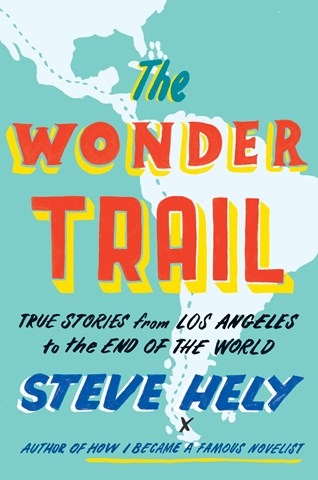
“The Wonder Trail”

By: Steve Hely

Narrated by: Steve Hely

Steve Hely (Author, screen writer, co-executive producer for the Veep tv series, also appeared as an actor on tv sitcoms like “The Office” and “30 Rock”.)

“The Wonder Trail” is an entertaining tale by a sitcom television writer who chooses to take a trip south. He travels through Mexico, the Panama Canal, and South America. He travels on the cheap to give the young an idea of what to do on a summer vacation. Hely’s writing profession is on display as he offers a “being there” experience and a laugh.

Traveling away from the U.S. should be in every young or old American’s experience. Those who visit other countries give perspective to life and how people are more alike than different.

“The Wonder Trail” shows human nature is the same, though the color of life is hued by the cultures in which we live. The desires of life or death are closely related, if not the same. As Hely travels, he recalls books he has read to give perspective and depth to the experiences of his journey. From Mexico, down through Chile and the southern tip of the Western Hemisphere, Hely tells of fellow travelers, the sites he visits, and the native citizens he meets. Every nation visited is accompanied by vignettes about its history. From the Mexican city of Oaxaca to Mayan ruins in Central America, to Patagonia, listeners are introduced to many of America’s southern border countries.

Hernan Cortes (1485-1547, died at the age of 61 or 62.)

Hely notes Hernan Cortes’s ruthless reputation for destroying temples of what was the Aztec capitol. Cortes became a ruthless symbol of conquest and European colonization.

Mexico City came from a city-state called Tenochtitlan which was a spec of land in the middle of a lake in 1325. Cortes, an infamous Spanish conquistador, razed Tenochtitlan to the ground in 1521 and created a Spanish colonial capital he named Mexico City.

Hely reflects on the lost language of the Aztecs and the many ruins buried beneath Mexico City’s thriving metropolis. Translators have deciphered some of the texts of the Aztecs that reveal the sophisticated pagan culture that was lost when Cortes colonized the country. Hely notes the Aztecs practiced human sacrifices to their gods.

Hely’s travels give one a sense of adventure and camaraderie. He notes how his favorite experiences are with other people, particularly Australian groups and some adventurous unattached women who choose to travel alone. Having traveled with an Aussie guide in Australia, I would agree with Hely’s suggestion that Aussies are among the best travelling companions.

Hely’s journey ends in Patagonia, a territory under the control of Argentina and Chile. Having personally traveled to Antarctica, the point of debarkation is Ushuaia, the capital of Tiera del Fuego in Patagonia. Ushuaia is not mentioned in Hely’s book, but it is a beautiful village/city on the southernmost port of the world. The Drake Passage to Antarctica is not for the faint of heart because of the rolling sea. It’s worth the voyage because of the grandeur of ice flows, whale watching, and penguin excursions.