INTELLIGENCE

After two or three chapters of Huston’s book, reader/listeners will likely complete it. The difficulty, as with all good advice, is following it.

Books of Interest
 Website: chetyarbrough.blog

SHARP (Simple Ways to Improve Your Life with Brain Science)

By: Therese Huston PhD

Narrated By:  Theresa Bakken
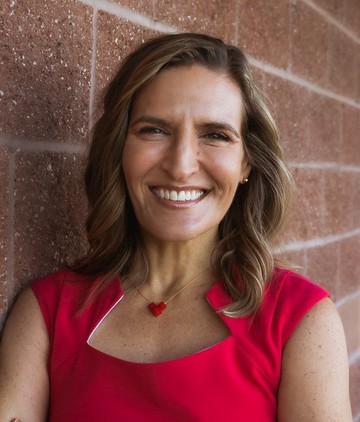
Therese Huston (Author, earned an MS and PhD in Cognitive Psychology from Carnegie Mellon University.)

Therese Huston is a well-known public speaker who has written a book that has appeal for those who wish to know what they can do to improve their memory and cognitive abilities. This is not a book some will be interested in either listening to or reading. Many presume they have a proscribed intelligence and memory largely determined by genetic inheritance. Huston infers there is some science-based truth in that opinion but that one’s memory, cognitive ability, and psychological health can be treated, if not improved, at any age.

Huston’s prescription for improved memory and cognitive ability requires effort.

Undoubtedly, we inherit much of our innate cognitive ability but whatever one’s genetic inheritance and age may be Huston argues cognition and memory can be improved. Huston discusses areas of the brain that are the base from which cognition and memory originate, are stored, and then called upon.
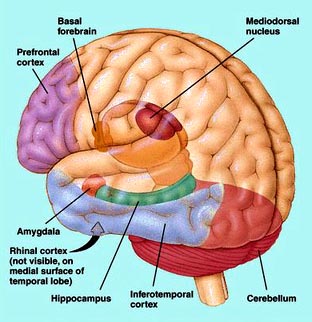
Huston notes the hippocampus, amygdala, prefrontal cortex, neocortex, cerebellum, and basal ganglia are key brain areas involved in cognition and memory.

The hippocampus is the primary location of memories, but the other five areas interact with one’s personal experiences in ways ranging from emotion, individual understanding, decision-making, reasoning, skill development, and formed habits. As we age, the way we process, store, and retrieve information deteriorates. We lose some memories, process information more slowly, and find it more difficult to process new information in the context of past experience.
What Huston explains is that exercise, visual, and tactical experience can improve memory and cognition at every age.

Staying active, experiencing the world in ways that stimulate the production of dopamine, and exercising effort to learn and do new things improves cognitive ability and memory. Dopamine is a neurotransmitter in the human body that regulates mood, focus and behavior. It is released by the body when it is stimulated by exercise, engaging experience, and learning new things. Huston offers advice on how one at any age can improve their mental health and care for themselves and others when they are troubled by various common and extraordinary events in life. Life’s events stimulate the release of dopamine which can illicit rage and bad behavior but also provide focus and beneficial behavior.

Huston suggests 14 generally simple ways of helping oneself and others cope with the stresses of life.

Many of her solutions are commonly understood, others less so. Not surprisingly, she notes exercise, proper nutrition, quality sleep, and deep breathing are important for maintenance and improvement of brain function and memory. Some more difficult and less understood aids to brain health and memory are 1) importance of social engagement, 2) learning new things from personal and other’s recorded experience, and 3) practicing ways of reducing the stresses of life in yourself and others you care about.

One who reads or listens to “Sharp” will recognize the value of Huston’s advice for improving memory and cognitive ability.

After two or three chapters, reader/listeners will likely complete her book. The difficulty, as with all good advice, is following it.

LEARNING

There are many brain discoveries and therapies to be discovered that will extend the ability of human beings beyond today’s capabilities. Those discoveries are like the discovery of fission. The science of brain plasticity has potential for either programing destruction or liberating the mind.

Books of Interest
 Website: chetyarbrough.blog

The Brain That Changes Itself: Personal Triumphs from the Frontiers of Brain Science

By: Norman Doidge, M.D.

Narrated By: Jim Bond

Norman Doidge (Author, Canadian psychiatrist, psychoanalyst, studied literary classics and philosophy at the University of Toronto.)

To an older person, there is a sense of disappointment and optimism from what Norman Doidge writes in “The Brain That Changes Itself”. The disappointment is the feeling of lost opportunity for some because of their ignorance of how the brain works. The optimism is that the past is passed while Doidge explains brain improvement is not completely lost with either age or injury. For older people, improving brain function is more difficult but not impossible. For the injured or medically challenged brain improvement is a dire necessity. For the young, improving brain function is at its best unless there are medical complications.

Doidge explains as one grows older or suffers from brain injury; the brain can be rewired to improve learning or restore bodily function.

.

Age slows the synaptic process of learning, but the brain is still receptive to synaptic improvement. Older brains simply have to work harder to compel new neuronal synaptic connections. With brain injury or disease, new connections must be made by different parts of the brain to restore the relationship between thought and action. A youthful brain is likely to improve faster than an older brain, but experimental studies show improvement is possible for both. Doidge explores brain plasticity in “The Brain That Changes Itself”.

Doidge explains medical or physical deterioration of brain function can be improved with repetitive effort.

What brain disfunction has in common is the ability to adapt to the circumstances of people’s lives. With the appropriate help of teacher, clinician, and self exercise, people can rewire their brain.

The difficulty is in societies willingness to invest in the professional needs of those who are affected by brain dysfunction. Treatment of the aged requires commitment to repetitive learning and relearning which can be done with personal commitment. It is not the same for those who lose motor control of their body from injury or medical conditions. The requirement Doidge and others have found for medical or physical brain injury is the training and availability of clinicians and physicians to provide the therapeutic treatment that will aid recovery. How many medical clinicians have been trained to aid brain-dysfunction’ patients to re-wire their brains to think, see, hear, or walk? How many patients can afford the treatment?

The potential of rewiring the brain extends to returning old brains to their childlike state of openness with drugs. It is a new frontier that illustrates how human brains are superior to A.I.

“The Brain That Changes Itself” reveals a lot about the science of re-wiring the brain. Re-wiring the brain for older people is possible with minimal assistance but it requires repetitive work. For the brain damaged, the need for neurologists, clinicians and other professionals are essential for treatment success. The difficulty is in balancing need with cost and the public’s ability to pay.

Brain plasticity can either aid or destroy society.

Doidge notes how North Korean children are taught from grade school through high school to see their leader as a god, not a fallible human being. The less formed minds of the young are more easily programed than adults. He shows brain plasticity is a new frontier in medicine that can be abused.

There are many brain discoveries and therapies to be discovered that will extend the ability of human beings beyond today’s capabilities. Those discoveries are like the discovery of fission. The science of brain plasticity has potential for either programing destruction or liberating the mind.

BRAIN SURGERY

Two points that offer the greatest value in Schwartz’s history of brain surgery is that those who survive become different human beings, sometimes disabled or cognitively impaired. The second–those who need a neurological operation should look for an empathetic doctor who limits his/her excision of brain matter to what science knows of its consequence.

Books of Interest
 Website: chetyarbrough.blog

Gray Matters (A Biography of Brain Surgery)

By: Theodore H. Schwartz

Narrated By: Sean Pratt

The largest part of Dr. Schwartz’s book is about the history of brain surgery. The first chapters address his education for brain surgery and the history of well-known Americans who died or might have survived from its practice. It addresses the consequences of brain trauma of modern times but leaves tumor and disease treatment for the remaining chapters. “Gray Matters” is about the 19th and 20th century history of brain surgery, how it evolved, and the pioneers who most influenced the author. Schwartz personalizes brain surgery by explaining how he treated what he estimates to be over 10,000 patients.

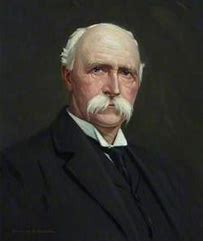
  • William Macewen (1848-1924) Scottish surgeon who pioneered neurosurgery,
  • Harvey Cushing (1869-1939) American neurosurgeon–father of modern neurosurgery,
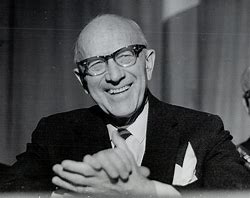
  • Wilder Penfield, (1891-1976) American-Canadian neurosurgeon–noted for mapping the brain,
  • Carl-Olof Nylén (1892-1978) Swedish otologist who pioneered microsurgery with a surgical microscope he designed,
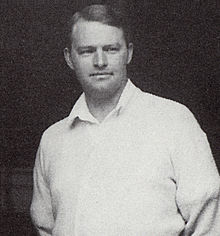
  • Wolfgang Draf (1940-2011) German otolaryngologist who pioneered Skull Base Surgery using sinuses as the avenue of entry to the brain.

Schwartz identifies Wiliam Macewen (upper left photo) as the pioneer of neurosurgery. He notes Harvey Cushing (upper right photo) is referred to as the “Father of Modern Neurosurgery”. Cushing was the first to employ X-rays to diagnose brain tumors and introduced the use of the elector-cautery device to minimize blood loss during surgery. Dr Wilder Penfield (middle left photo), a Canadian neurosurgeon pioneered brain mapping by stimulating the brain with mild electrical shocks. Brain mapping gave neurosurgeons a guide that let them know what areas of the brain would be affected when making decisions on diseased tissue removal. Microsurgery on the brain is pioneered by Carl Nylen (middle right photo) in the early 1900s. In modern times, Dr. Wolfgang Draf (bottom photo) began using a skull cap microsurgery device to remove brain tumors through nasal passage access. This less intrusive form of brain surgery is used and detailed by the author.

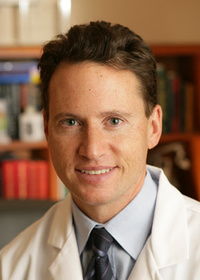
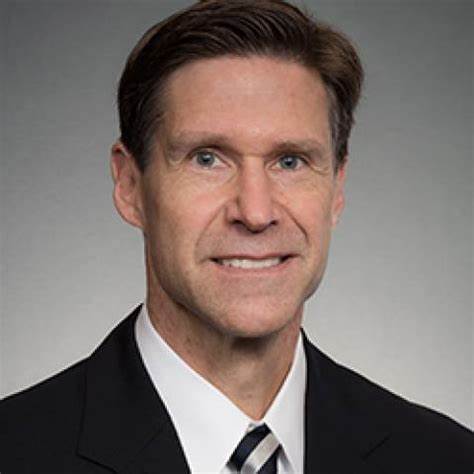
Dr. Kris S. Moe (Board certified surgeon at UW Medical Center, University of Washington Facial Plastics and Reconstructive Surgery.)

Schwartz explains one of his most important training experiences was in Seattle Washington with Dr. Kris S. Moe. Moe pioneered what is called transorbital neuroendoscopic surgery (TONES) that influenced the field of minimally invasive neurosurgery. Schwartz explains how Moe would test patients during an operation to identify areas of the brain being affected during treatment for tumor removal. Schwartz gave the example of a series of pictures shown on a monitor seen by the patient during surgery. The patient is asked to name the object in the picture as the surgeon is operating to determine whether the tumor being excised affects his/her ability to identify the image. In Schwartz first attendance at one of these surgeries, he accidentally spilled the pictures across the operating floor. Moe directed him to reassemble the pictures and went on with the surgery when they were reassembled. The embarrassed Schwartz admired Moe because he never brought the incident up after it happened and completed the operation without criticizing Schwartz.

Two points that offer the greatest value in Schwartz’s history of brain surgery is that those who survive become different human beings, sometimes disabled or cognitively impaired. The second–those who need a neurological operation should look for an empathetic doctor who limits his/her excision of brain matter to what science knows of its consequence.

MEMORY & INTELLIGENCE

Total recall does not make humans more intelligent or necessarily more informed about the world.

Books of Interest
 Website: chetyarbrough.blog

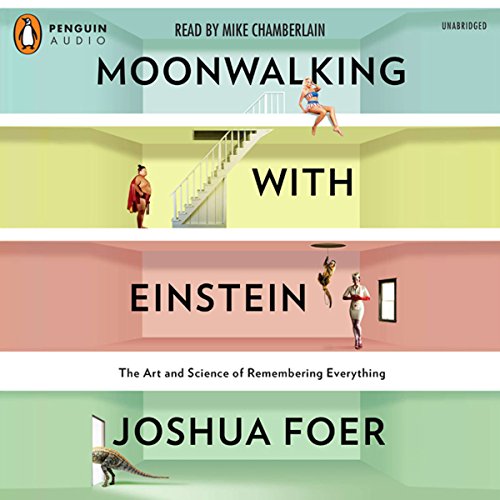
“Moon walking with Einstein: The Art and Science of Remembering Everything

By: Joshua Foer

Narrated by: Mike Chamberlain

Joshua Foer (Author, freelance journalist, 2006 USA Memory Champion.)

Joshua Foer offers an interesting explanation of human memory. Foer became the 2006 USA memory champion. Foer explains how he achieved that distinction. What is interesting and surprising about Foer’s achievement is that he argues extraordinary memory is a teachable skill.

Arthur Conan Doyle (1859-1930)

Fans will remember Sir Arthur Conan Doyles’ explanation of Sherlock Homes’ prodigious memory technique called the “mind palace”.

Foer explains the idea is not a fiction but an historically proven method for improving one’s memory through association. “Mind palace” is traced back to ancient Greece as a memory tool of the Greek poet Simonides of Ceos. The idea is to associate facts with familiar features of a house in which one has lived, or of which one has intimate knowledge. The idea of memory being associated with something is not revelatory to anyone who tries to remember someone’s name. Many people, particularly good salespeople, use association to remember a customer’s name. They might remember Fred as a “red” tie or Monica as a “harmonica” and so on.

Foer suggests nothing is forgotten but only stored in one’s mind.

The problem is recalling a mind’s recorded information. If one makes a point of associating a fact with something that is familiar, say like a space in your own house, it is more likely to be recallable. Foer notes experimental studies show human brains record memories of events but may be unable to consciously recall details. In “show and tell” experiments, humans show evidence of a recorded memory by expressing familiarity, if not specificity. (“MIT research explains how our brain helps us remember what we’ve seen, even as visual information shifts around within our visual system.” See MIT NEWS Feb. 8, 2021.)

Foer suggests the history of memory began naturally with tales told and re-told before writing became a way of record keeping.

Foer explains history shows that philosophers like Socrates rejected the idea of recording information as a way of revealing truth. To Socrates, truth comes from conversational exploration of nature as it is. Foer suggests society is fortunate that Plato and Archimedes partly disagreed and chose to provide a written record of Socrates thought.

A larger picture of Foer’s view of memory and recall implies a leveling of knowledge in the world.

From an oral tradition to the written word to radio to television to the internet of things to microchips in one’s brain–the recall of facts become more widely shared. The complication of improving “knowledge leveling” is in how recalled facts are assembled by the brain of the receiver.

Foer illustrates how much effort must be put into memorizing information if one wishes to excel as a technologically unplugged person who wishes to recall more facts. It requires concentrated effort to create a mnemonic device like rooms in a house to associate a series of facts or numbers that can be recalled. On the other hand, advances in technology could make that exercise moot.

In the near future, recollection from an implanted human chip could improve correlation of facts for thought and action.

This is not to diminish the accomplishments of the author in training his mind to recall facts better than others. In the near future, recalling and collating facts may be more efficiently managed by an A.I. microchip that complements human thought and action.

Having eidetic memory or technological total recall does not make humans more intelligent or necessarily more informed about the world. Recall of facts is only a means to an end that may as easily destroy as improve society.