
Books of Interest
Website: chetyarbrough.blog
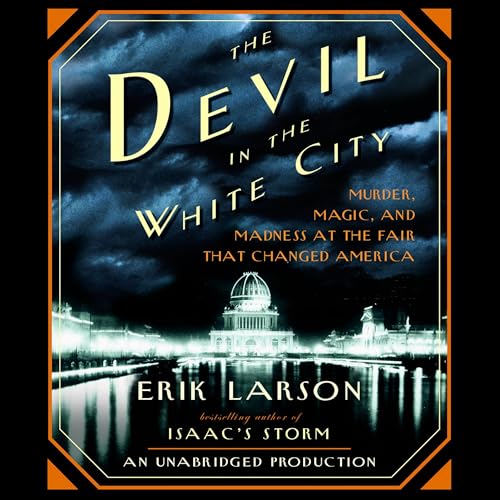
Devil in the White City (Murder, Magic, and Madness at the Fair That Changed America)
Author: Eric Larson
Narration by: Scott Brick
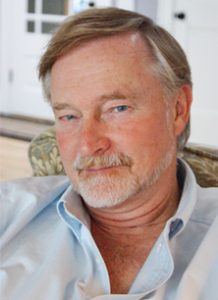
Eric Larson (Author, American journalist, graduate of University of Pennsylvania summa cum laude in 1976.)
Eric Larson’s “Devil in the White City” is a well written history of the famous Chicago World’s fair in 1893. Chicago became an international big city competitor with the creation of the World Columbian Exposition. At the same time, he writes of an evil human being born in America. Larson contrasts good and evil in middle America that reflects on the extremes of human nature that exist not only in America but everywhere in the world.
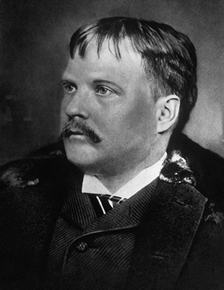
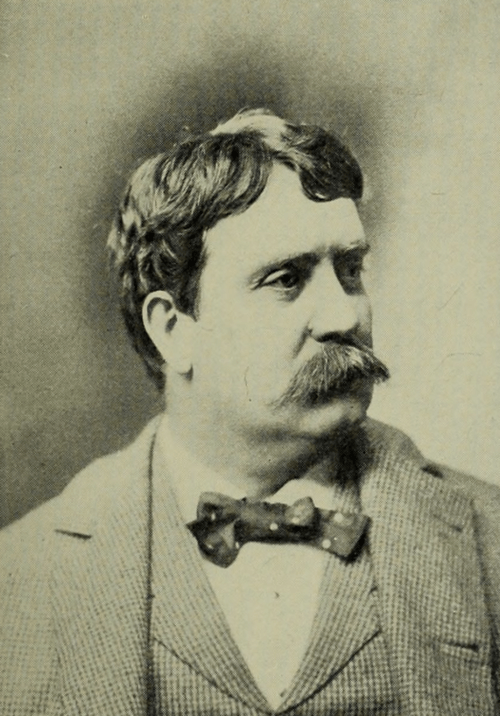
Daniel H. Burnham is a famous Chicago architect who is asked to be Director of Works for the World Columbian Exposition. His partner, John Wellborn Root, is the visionary who designs an original conceptual and aesthetic model of a neighborhood in a prosperous city. However, Root dies in 1891, two years before the beginning of construction. As the design concept takes form, Frederick Law Olmsted, the famous designer of Central Park in New York City, is recruited by Burnham to become a part of the development. These three designers create what Larson identifies as the “White City”, a tribute to the architectural appearance and fame of the eleventh World’s Fair, 7 miles from the second largest city in America, Chicago, Illinois.
Larson juxtaposes this remarkable Chicago accomplishment with the fraud, deception, and predation of H. H. Holmes (aka Herman Mudgett), a handsome, charismatic murderer who moves to Chicago to begin a career in the medical profession. The idealism and success of Chicago’s world fair is a prime example of American urbanization with people who move to the city from small town America.
H. H. Holmes aka Herman Webster Mudgett (1861-1896, is the “Devil in the White City”.)
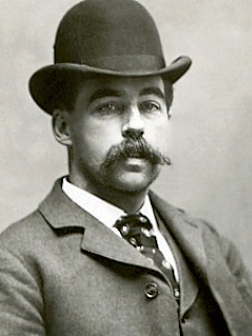
Holmes is a poster child for the dark side of urbanism. Urbanism is the congregation of people in self-perpetuating communities that grow with rising populations. Holmes move to the Chicago area leads to the murders of Benjamin Pitezel and his three children. Holmes urbane good looks and powers of persuasion set the table for a scheme to commit insurance fraud. Before their murder, Holmes conducts real estate boondoggles, pharmacy scams, forgery, bigamy, theft, and embezzlement. Though not legally proven, it is strongly suspected he killed five or more women for reasons ranging from theft to pure venality. Though living in an urban environment is not a cause of evil, it is a petri dish for human behavior that can be good or evil.

Education, like money, is only a tool of human beings, not a measure of human value.
Holmes early education is in Gilmanton, New Hampshire where he gains early interest in medicine and human anatomy. He enrolls at the University of Vermont in 1879 but leaves to enroll in the University of Michigan Medical School. He graduates from U of M with a medical degree in 1884. It is interesting to note that Holmes is formally educated just as the architects who gathered for the building designs of the 1893 Chicago world’s fair. Larson shows Holmes is motivated to exploit society in any way that only serves his self-interests. The world’s fair’ architects equally wish to serve their self-interest but within the boundaries of societal norms, i.e., not by bilking the public or murdering citizens.
Frederick Law Olmsted (1822-1903, American landscape architect, journalist, social critic, and public administrator.)
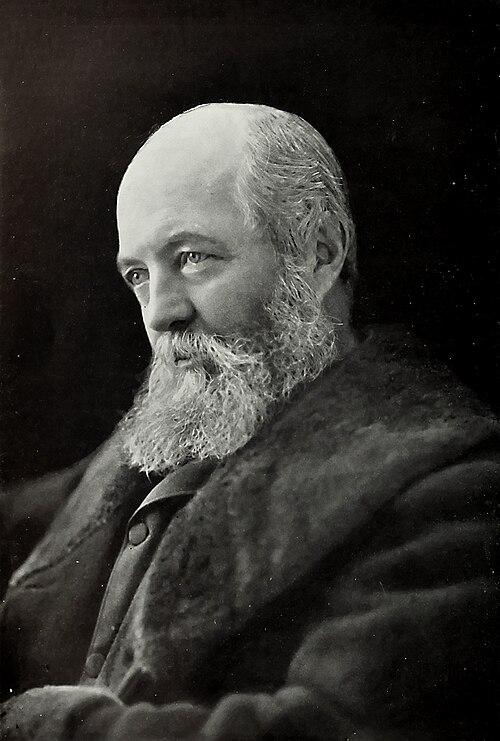
The three main characters in this story of American urbanization are Daniel Burnham, Frederick Olmstead, and H. H. Holmes. Burnham and Olmstead are exemplars of success that make a contribution to America while Holmes is a villain of self-interest and evil. All three symbols of the power, value, and risk of urbanization. Burnham and the older Olmstead represent the best in American life with their skills and ability as visionaries and managers who get things done through others that benefit society. Holmes represents the worst of human nature as a singularly self-interested fraudster and murderer who cares nothing about others.
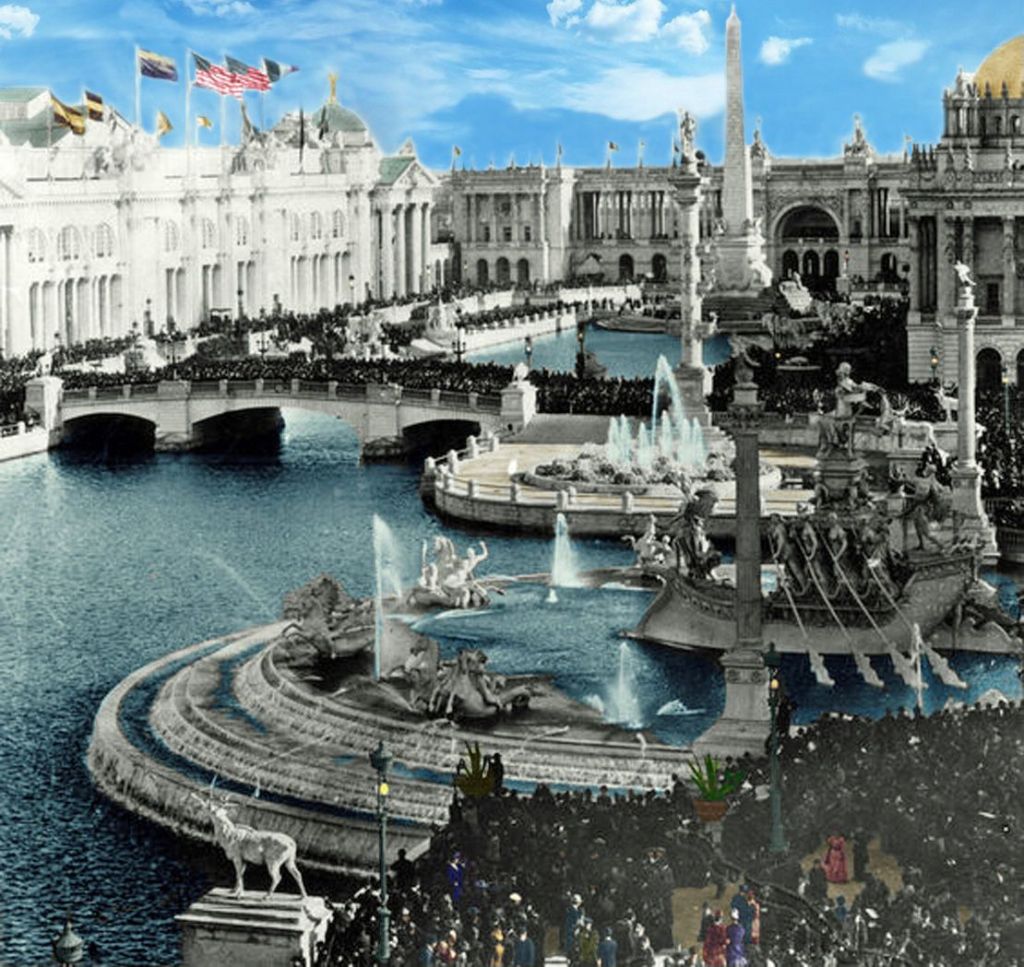
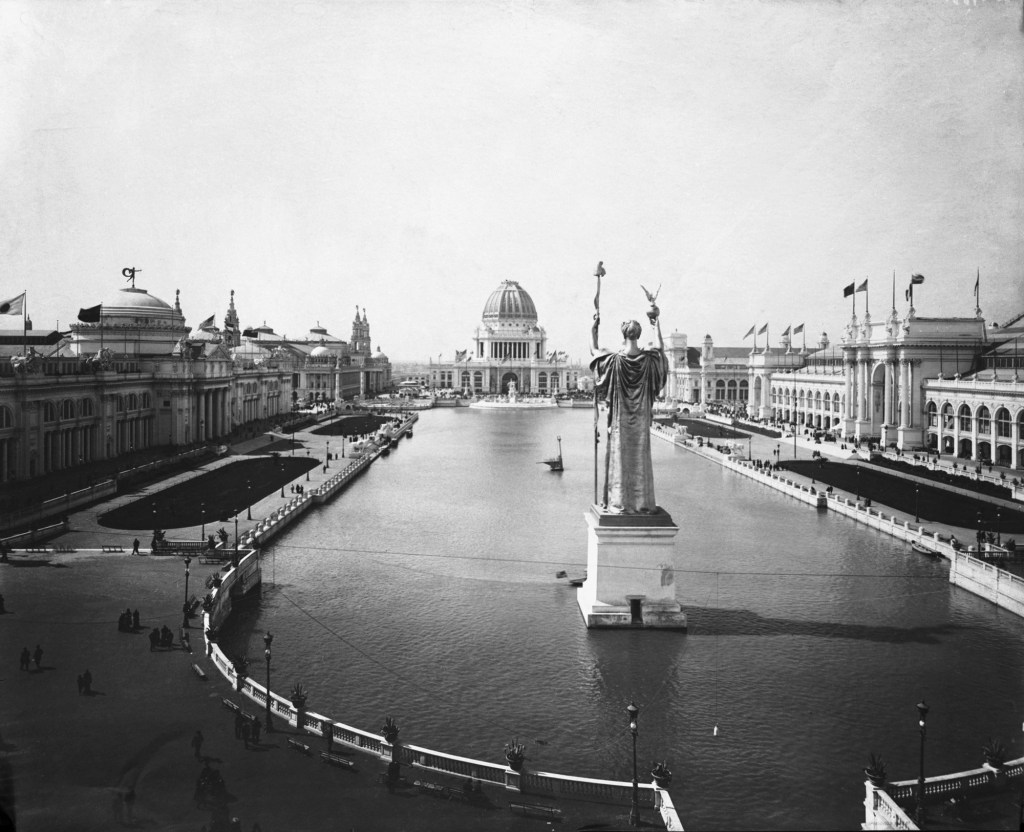
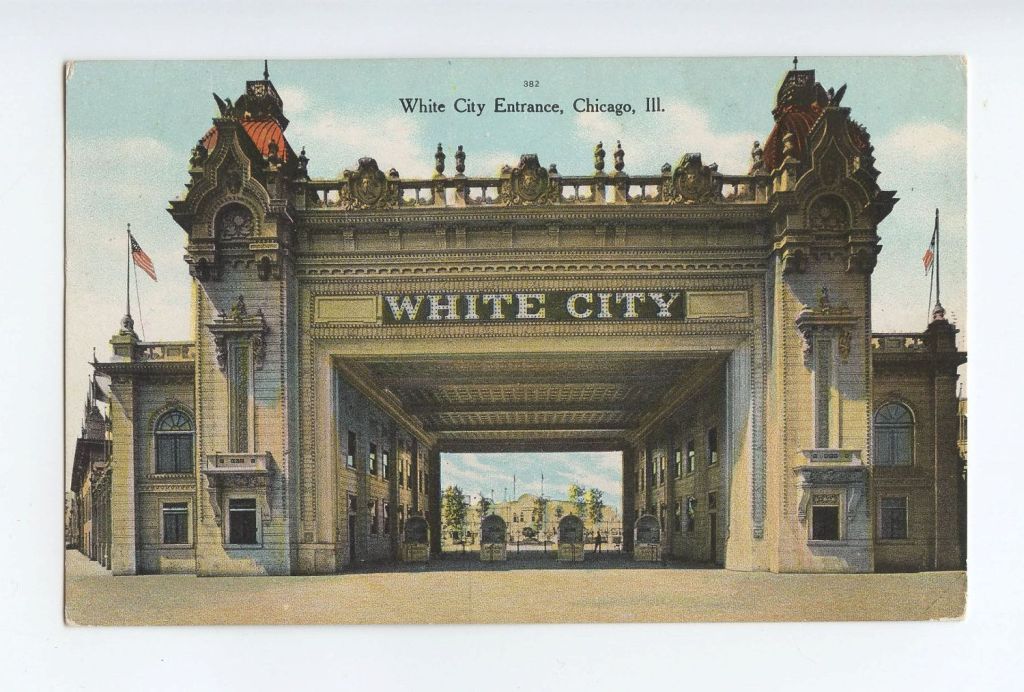
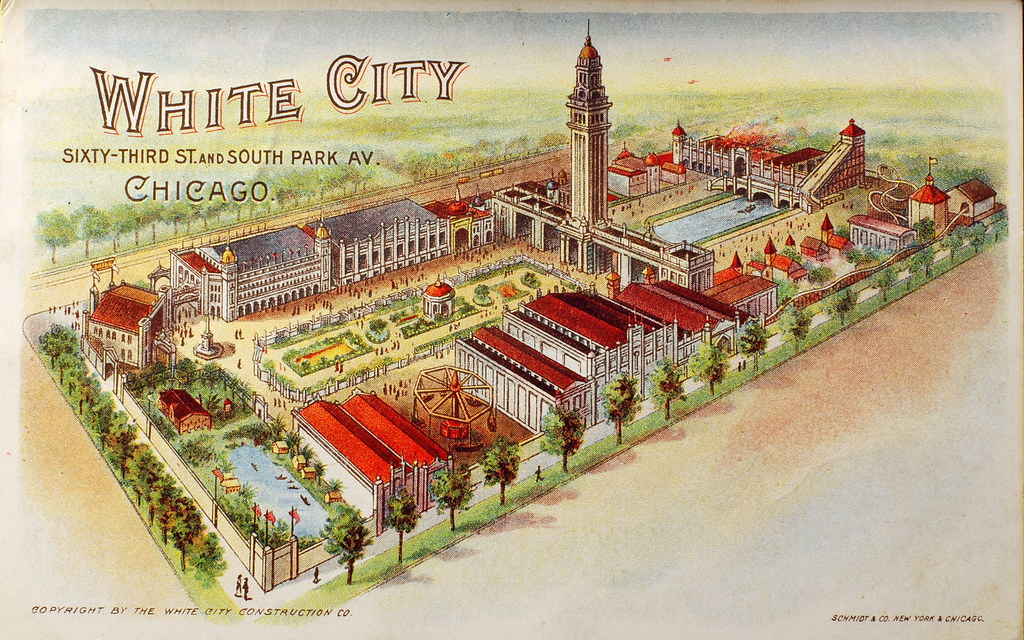
Six hundred acres of swampy, undeveloped land is turned into the Chicago World’s Fair in the 19th century. Fourteen major buildings, canals, and lagoons are built into a neoclassical “city”. The Chicago World’s Fair is 7 miles south of the downtown Chicago Loop. The site is called Jackson Park, bordered by Hyde Park and Woodlawn neighborhoods. Despite labor strikes, Chicago weather, political infighting, and the death of its visionary (John Root), Burnham manages the development of 200 low-rise (1 to 3 stories) buildings designed by famous east coast architects and the largest operating Ferris wheel in the world to complete the “…White City” in 26 months.

The City of Chicago today.
The point of Larson’s history of the Chicago World Fair is that urbanization is two edged. One edge improves societies’ economic, cultural, and technological values. The other amplifies inequality based on citizen’ power, wealth, race, gender, and ethnicity rather than innate human value. Contrasting the great accomplishments of Burnham, Root, and Olmstead with the evil of Holmes is an exemplar of human nature that can either benefit or destroy societies.
Holmes is convicted and sentenced to death. He is hung on May 7, 1896, at the age of 34. Burnham goes on to build his reputation with Union Station in Washington D.C., the Flatiron Building in New York, and what became the Museum of Science and Industry in “The White City” of Chicago. Burnham dies in 1912 at age 65. Olmsted dies in 1903 at age 81.

