A.I.’S Future

The question is–will humans or A.I. decide whether artificial intelligence is a tool or controller and regulator of society.

Books of Interest
 Website: chetyarbrough.blog

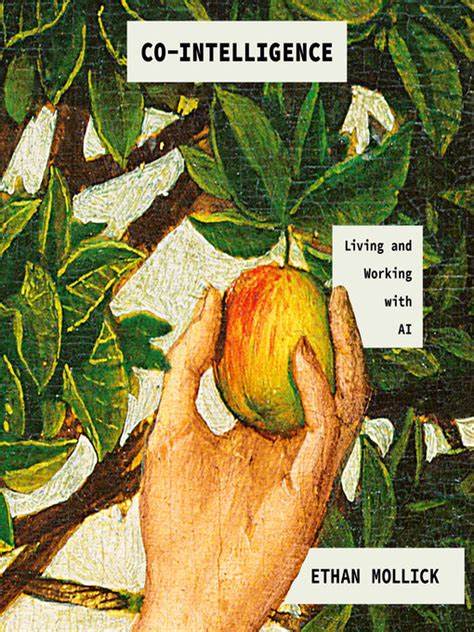
“Co-Intelligence” 

By: Ethan Mollick

Narrated by: Ethan Mollick

Ethan Mollick (Author, Associate Professor–University of Pennsylvania who teaches innovation and entrepreneurship. Mollick received a PhD and MBA from MIT.)

“Co-Intelligence” is an eye-opening introduction to an understanding of artificial intelligence, i.e., its benefits and risks. Ethan Mollick offers an easily understandable introduction to what seems a discovery equivalent to the age of enlightenment. The ramification of A.I. on the future of society is immense. That may seem hyperbolic, but the world dramatically changed with the enlightenment and subsequent industrial revolution in ways that remind one of what A.I. is beginning today.

Mollick explains how A.I. uses what is called an LLM (Large Language Model) to consume every written text in the world and use that information to create ideas and responses to human questions about yesterday, today, and tomorrow. Unlike the limitation of human memory, A.I. has the potential of recalling everything that has been documented by human beings since the beginning of written language. A.I. uses that information to formulate responses to human inquiry. The point is that A.I. has no conscience about what is right or wrong, true or false, moral or immoral.

A.I. can as easily fabricate a lie as a truth because it draws on what others have written or spoken.

Additionally, Mollick notes that A.I. is capable of reproducing a person’s speech and appearance so that it is nearly impossible to note the differences between the real and artificial representation. It becomes possible for the leader of any country to be artificially created to order their subordinates or tell the world they are going to invade or decimate another country by any means necessary.

Mollick argues there are four possible futures for Artificial Intelligence.
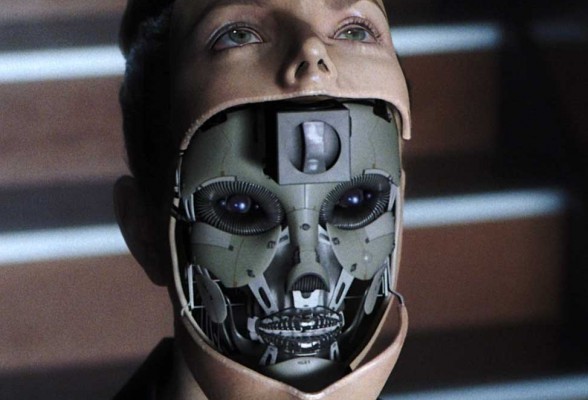
Presuming A.I. does not evolve beyond its present capability, it could still supercharge human productivity. On the other hand, A.I. might become a more sophisticated “deep fake” tool that misleads humanity. A.I. may evolve to believe only in itself and act to disrupt or eliminate human society. A fourth possibility is that A.I. will become a tool of human beings to improve societal decisions that benefit humanity. It may offer practical solutions for global warming, species preservation, interstellar travel and habitation.

A.I. is not an oracle of truth. It has the memory of society at its beck and call. With that capability, humans have the opportunity to avoid mistakes of the past and pursue unknown opportunities for the future. On the other hand, humans may become complacent and allow A.I. to develop itself without human regulation. The question is–will humans or A.I. decide whether artificial intelligence is a tool or controller and regulator of society.
DEATH ROW

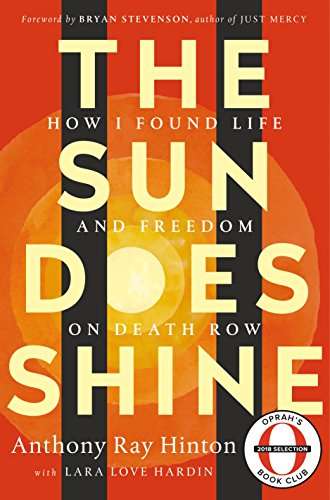
The question raised by “The Sun Does Shine”–is death row a necessary function of society? Anthony Ray Hinton’s life story challenges its efficacy.

Books of Interest
 Website: chetyarbrough.blog

“The Sun Does Shine“

By: Anthony Ray Hinton with Lara Love Hardin

Narrated by: Kevine R. Free

Anthony Ray Hinton’s life experience argues the death penalty for any crime should be abolished. Hinton states 1 in 10 people on death row have been wrongfully convicted. He spent 28 years on death row for crimes he could not have committed. His legal representation is poorly executed, in part, because he did not have enough money to pay for his defense.

Anthony Ray Hinton

Hinton’s 1 in 10 ratio of wrongful conviction is questioned but not denied by:

  1. The “Death Penalty Information Center”
  2. DNA evidence that has exonerated sentenced death row prisoners, and
  3. statistical studies that show 1 in 25 criminal defendants sentenced to death have been found innocent.

Hinton’s “The Sun Does Shine” tells of his conviction by an Alabama court for robbery and murder of two fast-food restaurant managers in Birmingham, Alabama.

Appointment of a defense attorney is required by law, but their compensation and the accused’s poverty deny an adequate defense. Hinton’s story shows how the State of Alabama’s law enforcement and judicial system manufactured false evidence to convict and put him on death row.

Hinton’s mother, childhood friend, and religious belief support him through his false imprisonment and pending death by electrocution. His electrocution is postponed because of repeated challenges, but he remains on death row for 28 years. Hinton’s imagination and good will sustain him through his ordeal. He imagines traveling the world, marrying and divorcing beautiful women, and meeting the Queen of England.

He remembers the blinking electric lights and smell of burning human flesh when each prisoner is electrocuted. He recalls the first woman to be electrocuted. He acknowledges many of the death-row’ prisoners committed horrible crimes but suggests they are victims of society because of their upbringing, and/or untreated or incurable mental dysfunctions. Hinton does not believe the guilty deserve execution for what he believes are societies’ failures.

It is the Executive Director of the Equal Justice Initiative, attorney Bryan Stevenson, who comes to Hinton’s aid and eventually gets his case before the U.S. Supreme Court in 2014. Stevenson works on Hinton’s case for over 20 years with numerous blocks thrown up by the Alabama legal system. The original judge in the case insists throughout his life that Hinton was guilty even though falsified evidence convicted him of the crime.

After release, Hinton becomes a world-wide celebrity, acquainted with famous people like President Obama, Queen Elizabeth II, Nelson Mandela, and Oprah Winfrey.

His book suggests he was entertained by some famous actors and billionaires who wished to have his story told to audiences that presumably might affect a change in the American judicial system.

The question raised by “The Sun Does Shine”–is death row a necessary function of society? Anthony Ray Hinton’s life story challenges its efficacy.

METAVERSE

The future of the Metaverse is unwritten. Ball’s book about the Metaverse is somewhat enlightening but not comforting.

Blog: awalkingdelight

Books of Interest
 Website: chetyarbrough.blog

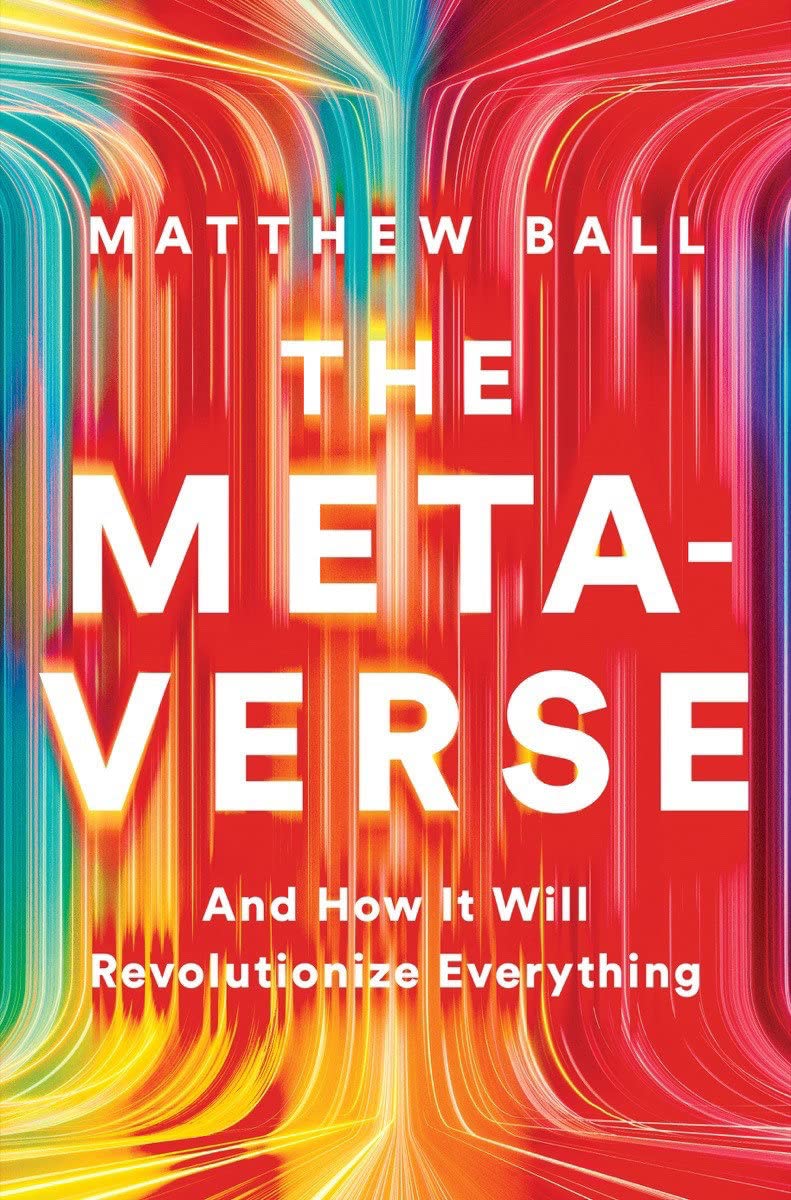
“The Metaverse” And How It Will Revolutionize Everything

By: Matthew Ball

Narrated by: Luis Moreno

Matthew Ball (Canadian Author, CEO of Epyllion an investment and consulting firm.)

As many tech people know, the word Metaverse originated in the 1992 science fiction novel “Snow Crash”. The idea of “The Metaverse” has influenced big tech businesses like Amazon, Google, Facebook, Microsoft, and smaller start-ups with the idea of linking the virtual and physical worlds into an extended, and some argue, a new world of reality. The reality is considered new because it is a view of converging perceptions of reality by combining the digital world with the natural world of things.

Ball explains gaming is the digital world’s laboratory for virtual reality.

Gamers create virtual universes with big tech adding real world experience to create a new, and different understanding of reality. The power and potential of this new understanding bends the future in ways that may be good or bad for society. The potential for good is illustrated by virtual training for everything from teaching pilots with flight simulators to a general contractor’s and land planner’s design for environmentally friendly cities. The bad is illustrated by the expanded potential for misleading and damaging society by distorting basic truths about human equality, fraternity, religion, and politics. Pundits and bad actors can use lies and partial truths to recruit and foment violence that influences the public to act against societal interests.

      LAS VEGAS, NV.

The potential of the Metaverse is partially realized when one experiences an event at the Las Vegas Sphere. The creator’s presentation of earth’s environment is an immersive (near 3-dimensional) experience that immerses an audience in a virtual world that reminds one of real-world travel. One envisions the potential for the Metaverse to give one a personal experience of life and world travel while sitting in the comfort of a theater chair. The Sphere’s experience overwhelms the senses. It demonstrates the educational power of a Metaverse experience.

The bad that can be generated by the Metaverse is the aberrant destructive potential for training and development of terrorists around the world.

The idea of the Metaverse can be used for training and solicitation of terrorists who can disrupt and harm society. On the other hand, the metaverse can be a persuasive, and positive influence for environmental recruitment and action, as inferred by the Las Vegas’ Sphere experience.

Ball notes the future of the Metaverse is as unknown as the future was for the internet when the Department of Defense first created ARPANET that allowed multiple computers to communicate on a single network.

The World Wide Web became a phenomenon that revolutionized the way society communicates, works, and lives. Ball notes the same can be said of the invention of the iPhone that magnified use of the internet. The power of the iPhone changed society in both good and bad ways. On the one hand, it put a world of information at our fingertips. On the other, it provided a vehicle to disrupt society through recruitment of bad, as well as good, societal influencers.

VIEWING THE METAVERSE

The future of the Metaverse is unwritten. Ball’s book about the Metaverse is somewhat enlightening but not comforting.