WINNERS AND LOSERS

Audio-book Review
By Chet Yarbrough

(Blog:awalkingdelight)
Website: chetyarbrough.com

Embracing Defeat
By John W. Dower

Narrated by Edward Lewis

JOHN W. DOWER (AMERICAN AUTHOR, HISTORIAN)

Victory is sweet; defeat is bitter.  Victory engenders responsibility for the defeated; defeat demands fealty to a victor. Fealty is not the goal of a victorious leader who seeks lasting peace.

Peace among nations has a price. John Dower’s reflection on WWII and Japan holds lessons for today’s American leadership and Putin’s folly.
John Dower, in “Embracing Defeat”, endeavors to picture Japan’s condition; i.e. the state of its economy and its people, after surrender in WWII. 

History’s complexity is difficult to capture in words.  Dower makes an effort to explain the context of post war Japan by showing Japanese attitude in media reports and literature of the time.  The irony of Dower’s effort is that media reports and literature are censored by Allied forces, particularly the United States. This is not unlike Vladimir Putin’s control of Russian media during the Ukraine invasion. Putin will undoubtedly use that control to soft petal a hopeful settlement, though unlikely palliative acceptance by Ukraine.

MICHINOMIYA HIROHITO (124TH EMPEROR OF JAPAN 1901-1989)
Dower covers the history of an American white wash of Hirohito’s war complicity and responsibility.  The American government uses Hirohito to make occupation and influence in Japan more acceptable to its population.  It became politically expedient to hide Hirohito’s true involvement in Japan’s war plans. 

Dower reports on post-war trials of Japanese military and government leaders; i.e. Dower writes about trial testimony of Japan’s WWII’ atrocities but his history shows that victor’ justice is not necessarily victim’ justice.

Hideki Tojo as hero and/or goat–tried and convicted; sentenced to a prison in which he dies. Tojo refuses to implicate the Emperor in his actions during the war.

In spite of (partly because of) American military occupation of Japan, financial aid is misdirected and food goods and material are stolen, a black market develops, gangs are formed, and corruption thrives. (Sounds like Iraq after America’s invasion.).  Prostitution became a way of making a living, and immoral behavior became semi-acceptable because of rising poverty.

NICOLAS MADURO (PRESIDENT OF VENEZUELA SINCE 2013)
A case in point today is the President of Venezuela, Nicolás Maduro. Are his actions a “crime against humanity” or is he fighting for his country’s independence?


Economic sanctions are as likely to punish the innocent as the guilty in countries that fight for their own identity. One’s interest is peaked by Japan’s experience after WWII because of the current Middle East muddle. 

Syria, Iraq, and Iran are challenged by domestic unrest and punitive actions by non-indigenous forces.  These three countries are particularly impacted by military and/or economic pressures from outsiders.  What is going to happen in those countries?  Are there any clues in the great change that occurred in Japan after WWII?

General MacArthur assumed the role of “Dear Leader”, treating the Japanese like 12-year-olds that were to be taught the ways of Democracy with a capital “D”.  This role by MacArthur in post war Japan is accepted by many Japanese because of centuries of Imperial control, exemplified by Emperor Hirohito.

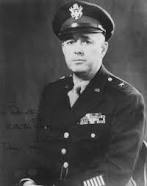
BONNER FELLERS (U.S. ARMY OFFICER, SERVED AS A MILTARY ATTACHE IN WWII)
Dower also suggests that a large part of General MacArthur’s success is due to Major Bonner Fellers, a Japanese scholar that predicted Japan’s war several years before the attack on Pearl Harbor.  Major Fellers’ respect and understanding of Japanese culture and his influence contributes much to the success of American policy in post war Japan. 

One may hope for a similar go-between if a settlement can be reached between Russia and Ukraine.

Fellers recognizes Japan’s people, with new found freedom, are inwardly driven toward a capitalist philosophy inherent in democracy.  The Japanese did not abandon their ideas of production, the ideas of small business cooperation to achieve common goals.  Those ideas made them a military behemoth in the 1920s.  They redirected that belief system toward domestically driven capitalism. Japan became a dominant 20th century economic power. Japan’s experience suggests that freedom will not be denied but how it exhibits is a mystery wrapped in nation’s histories, beliefs, and practices.

Are there equivalents of “Major Bonner Fellers” to guide America’s policy toward other countries like Venezuela the Middle East, and today’s Russia/Ukraine conflict?

America can help or hinder a peoples’ drive for freedom but where it leads in Venezuela, Iraq, Iran, or Ukraine must be their peoples’ decision.

Nature abhors a vacuum (Spinoza).  The centralized governments and economies of Venezuela, Syria, Iraq, Iran, and Ukraine will be occupied democratically, autocratically, or some combination thereof, when domestic tumult subsides. 

A peaceful settlement of the Russia/Ukraine war will be difficult. Outside countries cannot mandate lasting peace within other countries; let alone their own country. Sovereignty should be recognized as an inalienable right. It is not America’s or other countries’ job to pick winners and losers.

BLACK FACE

Audio-book Review
By Chet Yarbrough

(Blog:awalkingdelight)
Website: chetyarbrough.blog

Uncle Tom’s Cabin 


By Harriet Beecher Stowe

Narrated by Richard Allen

The meaning of words changes with the generations.  An “Uncle Tom” became a pejorative description of any oppressed minority that accepts slavery and maltreatment as a God given burden, a condition of natural life.  (See “Freedom and Equality”.)

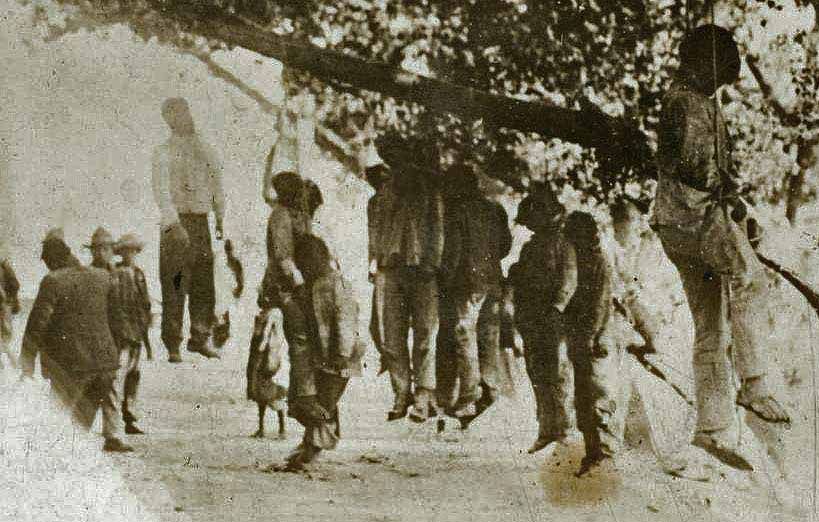
The rise of black face minstrels and college party jokers carry through to the 20th century. The “Uncle Tom…” in Harry Beecher’s book is no minstrel and no joke.

In the context of the 20th and 21st centuries Beecher’s book is taken out of context.

“Uncle Tom’s Cabin” is written in an era, brutally described by Frederick Douglas (see “Frederick Douglas”), when human beings are traded as futures commodities. Douglas, a great American black leader, who personally knew Stowe, praises her for writing this book.

In the 18th and 19th centuries, the slave trade lines the pockets of slave traders, plantation owners, and industrialists.  Black degradation is reinforced by laws of the land; i.e. slave owners could shackle, whip, sell, rape, and murder slaves with little censure and no penalty. In that context, Harriet Beecher Stowe’s “Uncle Tom…” is a Black Saint.

This is not only a book about slavery; i.e. it is a book about humankind and how abominably one ethnic group can treat another. It is a story told many times in history and in the present day.

The apocryphal story of Abraham Lincoln having said “So this is the little lady who started this great war” is undoubtedly un-true, but for the 1850’s, “Uncle Tom’s Cabin” is a revolutionary book used to fuel the abolitionist cause in America and around the world. 

The role of religion has a mixed history in the story of slavery.  Religion plays roles in advancing and abolishing slavery.  Religion serves as a refuge for slaves by preaching the gospel of forgiveness and an afterlife while many Catholic and protestant religions promote slavery as a biblical right of the white race.

The irony of religion’s followers is that it mollifies Black resistance for those who believe in a Divine Creator. At the same time, biblical writings are used by white supremacists to justify unequal treatment. 

Some religions rose above religion’s ugly endorsement of slavery; most did not.  Quakers in the 1850s fought slavery in the United States, as is shown in Stowe’s story. Some Quaker households became a refuge for runaway slaves.

At bottom, Stowe shows commerce and greed are pillars of slavery.  The farmers, businesses, and industrialists that strove to improve their bottom line directly or indirectly abetted slavery, just as the temptation of cheap labor in China and India seduce today’s American entrepreneurs and consumers. 
More broadly, one realizes human nature is good and evil.  Most members of society succumb to temptation in life.  No human is purely good or evil but a mixture. Human nature blurs the line between right and wrong because every human is tempted by money, power, and/or prestige.

“Uncle Tom’s Cabin” is as relevant today as it was in the 1850s.

NEVER AGAIN?


(Blog:awalkingdelight)
Website: chetyarbrough.blog

  Audio-book Review
By Chet Yarbrough


Last Train from Hiroshima


By Charles Pellegrino


Narrated by Arthur Morey

CHARLES R. PELLEGRINO (AUTHOR, AMERICAN WRITER)

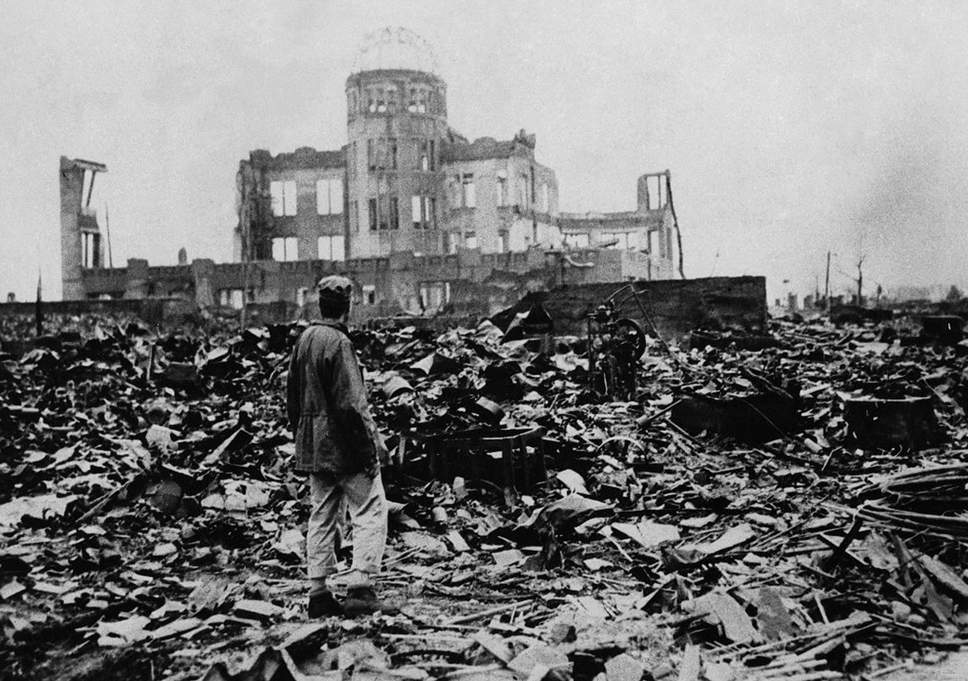
Putin’s Ukranian invasion raises the specter of nuclear war with the demented belief that it can be limited. Consider whether this history of nuclear cataclysm horrifies more than enlightens. “Last Train from Hiroshima” is not for the feint-hearted. It is a gruesome reminder of the horror of war.

Pellegrino has written a story of Hiroshima and Nagasaki’s bomb survivors.  Arthur Morey brings Pellegrino’s words to life. Pellegrino recounts survivor stories; i.e. what they saw, and what happened to them and their families in the aftermath of the world’s first use of a nuclear weapon.

Pellegrino is a wordsmith. He uses words that blow torch images on a listener’s mind.  His words capture the horror of nuclear war, the physical and mental effect of nuclear detonation on human beings.

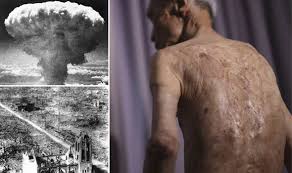
After Nagasaki’s bomb, a young girl walks out of a tubular bomb shelter and sees a shadowy figure that she presumes is an escaped zoo animal. It has rough, blackened, mottled skin, and is crawling on four limbs. It is a human being, exposed to the flash and burn (pikadon) of the bomb.

Pellegrino describes this crawling man as one of the “alligator people”, a classification that repeats it self on the skins of anyone that survives direct exposure to the bomb’s flash and burn.

He tells the story of a “tap dancer” running down a street in Hiroshima; tap, tap, tapping the hard surfaced street because he has no feet.

Pellegrino recounts the story of a father greeting his lost daughter by asking “…do you have feet” because a Japanese aphorism believed ghosts are recognized as apparitions with no feet.

The aftermath of Japan’s nuclear blasts left thousands of people with few apparent injuries.  They wander in a fog of confusion, like ants in long lines following each other, single file to nowhere. They were, as Pellegrino explains, the “ant walkers”.

Days later, the “ant walkers” are stricken with fever, vomiting, loss of appetite, and internal bleeding; some survive to go through the same symptoms weeks or months later; some become crippled for the remainder of their lives; some die after the first onset of sickness; some die years later from leukemia or other maladies traced back to those two fateful August days in 1945.

The survivor stories in Pellegrino’s book are so vivid that one wonders where real history ends and his imagination begins. Regardless of the veracity of Pellegrino’s survivor facts, his description of nuclear weapon damage and radioactive exposure is verified by later scientific experiments and accidents.

One is left with the thought and fear of future world conflagration.  After all, “Never again” has been said before.

AN INNER COMPASS

Audio-book Review
By Chet Yarbrough

(Blog:awalkingdelight)
Website: chetyarbrough.blog

Jane Eyre
By Charlotte Bronte
Narrated by Lucy Scott

CHARLOTTE BRONTE (ENGLISH NOVELIST AND POET, 1816-1855)

The story of “Jane Eyre” is an example of someone who relies on reason and moral certainty to believe and act on what is right, and to live decently. “Jane Eyre” replays the tautology of “life is not fair; i.e., it just is”.

In this era of “click bait” media, we can easily lose our way. The difference between a lie and truth is harder to recognize when bombarded by viral postings on the internet. We need to remind ourselves-there is no correlation between popularity and truth.

The author, Charlotte Bronte, captures life’s joy and hardship. The story emphasizes the importance of having a moral “inner compass” to guide one to choose between right and wrong. By making right choices, fulfillment comes from working through good and bad things in life.

Jane is an orphaned girl raised by an uncaring Aunt that feels burdened by her filial obligation. The orphaned girl directly confronts her Aunt’s resentment. To escape further confrontation and embarrassment, the Aunt boards Jane Eyre in an indigent’s school.

Jane Eyre is formally educated.  She becomes a teacher at the school. Later, she is hired by a wealthy landowner to tutor a young girl that is alleged to be the landowner’s illegitimate daughter. The wealthy landowner is revealed as a man with too many secrets who covets Jane Eyre’s mind and body. Jane Eyre, driven by her inner compass, flees to endure new hardship and temptation.

At the end, Jane Eyre returns to merry the wealthy landowner. She finds him blind, chastened, and older, but still in love with the Jane Eyre he had hired as his daughter’s tutor.

An ever present refrain in “Jane Eyre” is that all life decisions and actions have consequences. The many themes that run through Charlotte Bronte’s book are what make it a classic.

Every listener will identify with some part of Charlotte Bronte’s story. The audio version of “Jane Eyre” is a tribute to Charlotte Bronte’s story telling skill.

In the 21st century, an inner moral compass is needed to offset the blizzard of falsehood disseminated by a largely unregulated internet. Social media hides behind a distorted understanding of the meaning of free speech. Free speech in America has always been conditionally defined.

Peter Thiel (Trump supporter who believes fact checking of Facebook postings is an attack on the Constitutional Right of free speech.)

Unregulated free speech spreads hatred. People are seduced into believing truth is defined by social media’ clicks. Notoriety is as important as popularity or truth.

The next mass murder or school shooting lays at the doorstep of unregulated free speech.

CHINA

Audio-book Review
By Chet Yarbrough

(Blog:awalkingdelight)
Website: chetyarbrough.blog

When China Rules the World


By Martin Jacques

Narrated by Scott Peterson

MARTIN JACQUES (AUTHOR, BRITISH JOURNALIST)

Martin Jacques has written an interesting book about China’s rise as a world economic power.  His overview of the geo-political and Realpolitik relationships of the east and west are interesting; particularly in light of the Trump administration.

“When China Rules the World” has interesting details that inform but do not convince one that China will rule the world.  The provocative title drives the bus but it does not reach its destination. 

World control is a myth that causes wars and destroys the best and brightest, as well as the mean and maniacal. 

What is happening in China is remarkable.  China’s transition from Maoist communism to capitalist communism is a caterpillar turning into a butterfly; i.e. China has grown wings but it still lives in a world constrained by its environment.

Though President Xi is re-instituting some Maoist mistakes, China’s world wide investment in infrastructure is based on capitalist beliefs. Xi has an internationalist focus, just like that which made America great; at least, until Trump’s Presidency.

Chairman Mao’s cultural revolution and belief in enlarging collectivist ideology nearly destroys China’s path to prosperity

Xi is attempting to open new markets by financing infrastructure improvements in African, Middle Eastern, and Asian countries. He is creating customers for Chinese product.

Undoubtedly, Xi is also trying to seduce other nations into belief in Xi’s form of Communism. This is not unlike America’s intent to democratize the world.

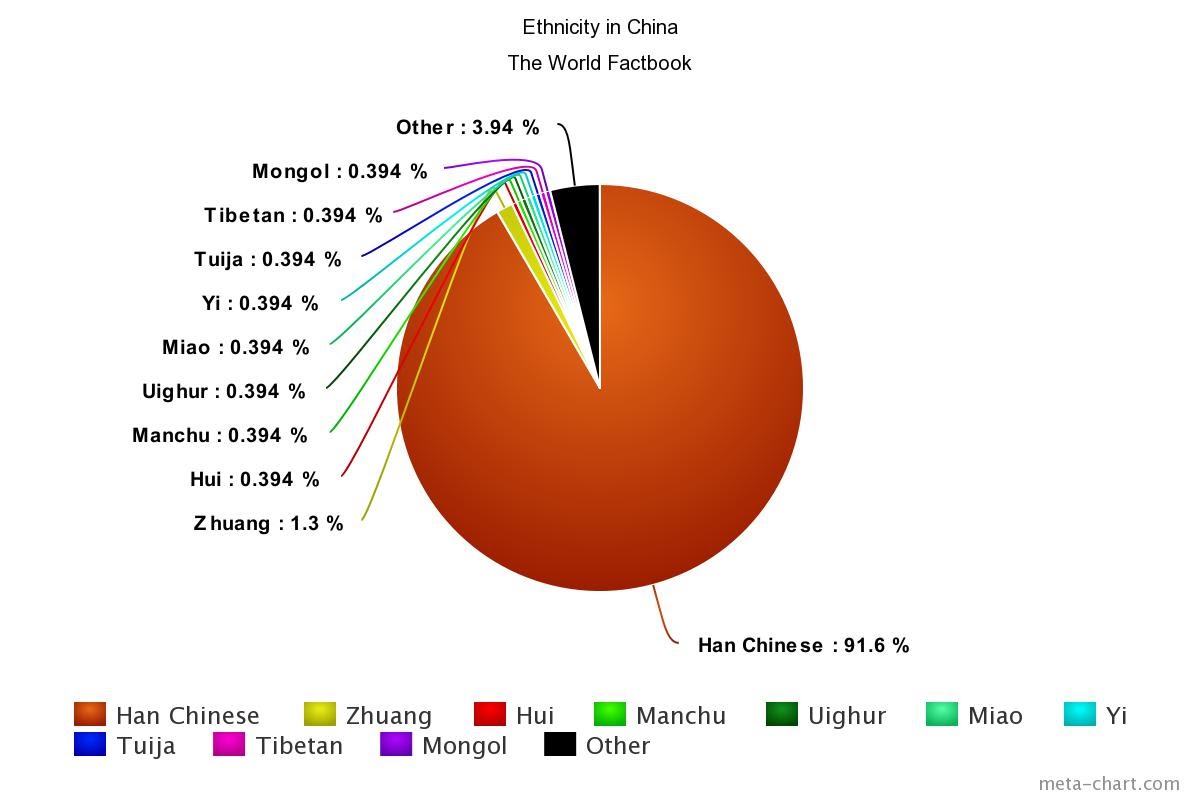
Jacques argues that a 90% Han Chinese cultural domination of 1/5th of the world’s population will change the nature of the 21st century.  In a limited sense, that is undoubtedly true.  However, regardless of the type of government rule, human nature is the same.

Money, power, and prestige, are the primary motivations of humankind. Whether one is Han Chinese, Tibetan, Uighur, Indian, Hispanic, Black, or any singular ethnic group, all humans seek control of money, power, and prestige. These innate drives are the speedometer, brakes, and steering wheels of nation-state’ leaders and followers. 

There are dominant factions in every culture that are not necessarily the majority of a culture’s population.  Jacques’ early comments suggest China’s 5000 year history reflects a cultural conformity greater than any other country in history while later he acknowledges that the predominant Han population is highly diverse in its beliefs.

Cultural conformity is not the relevant issue; i.e., dominant cultures, whether a majority or minority of an indigenous population, are the game changers of a nation’s history. 

Jacques argues that China’s cultural history of familial respect and veneration will have profound affects on the future of world economies.  Jacques has a valid point. However, the history of modernization suggests that the fabric of extended filial obligation will be ripped apart in China just as it has in every industrializing nation. 

China, just as all modernizing nation-states, will see deterioration of familial bonds.

Human nature is immutable.  As an agrarian culture moves to the city and parents are compelled to work for wages, family structure and filial commitment deteriorates.

Of course, capitalism is not the same in China as it is in the western hemisphere.  As Jacques reports, major capitalist businesses are state owned in China.  They compete in the world market but government support mitigates much of the free enterprise ideal of capitalist economies.  However, no nation-state operates as a free enterprise capitalist country; i.e. government has always played a role in capitalist nations.  Government subsidy of industrialization is a matter of degree.   

It may be that China will change the way industrialized countries compete but global economic domination is no longer possible in a tech savvy world that recognizes knowledge is power and natural resources are limited.

All the world knows how each culture in the world lives. With that knowledge, countries will gravitate to systems of government that serve its dominant culture best. Best is defined as what is most important to the dominant culture in the context of either money, power, or prestige.

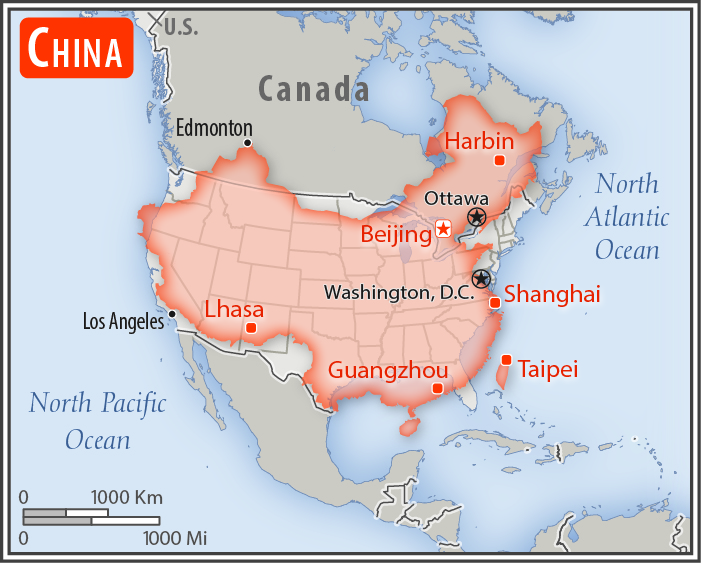
Long term, China is facing a tougher road to modernize because of population, environmental degradation, and dwindling natural resources, but their short term prospects look better than most other nations. 


New estimates from the U.S. Census Bureau put China in the lead with 1.34 billion residents, followed by India with 1.19 billion. The United States is a distant third with 311.1 million people.Jul 6, 2011

As Jacques points out, China’s savings rate is over 20%, with a GDP growth rate 3 times that of America.  The cost of dwindling natural resources is more affordable to China than most other modernizing countries.  However, all economies are closely tied to each other and a major failure in America or Europe will have great consequence for the world economy which will significantly affect China’s short term advantage. 

With a failure of a western countries economy, China’s drive toward modernization will be in danger. That danger is demonstrated today by America’s creation of a trade war with China.

Some argue this burgeoning trade war is hurting the Chinese economy more than the American economy. That may be true in the short term, but the efficacy of trade wars are questionable in the long term; particularly in our internet connected world.

Jacques’ book is worth its purchase price and a consumer’s time because he exposes some of the cultural biases of China that are not widely known.  His suggestion that discrimination is as prevalent in China as it is in the United States is reprehensible, and disgustingly familiar.  Globalization is real.  Human nature is immutable.  All mankind travels on the same space ship; i.e. our blue ball.  At the very least, China is proving that our environment is fragile and natural resources are finite.

PRISON REFORM

Audio-book Review
By Chet Yarbrough
(Blog:awalkingdelight)
Website: chetyarbrough.blog

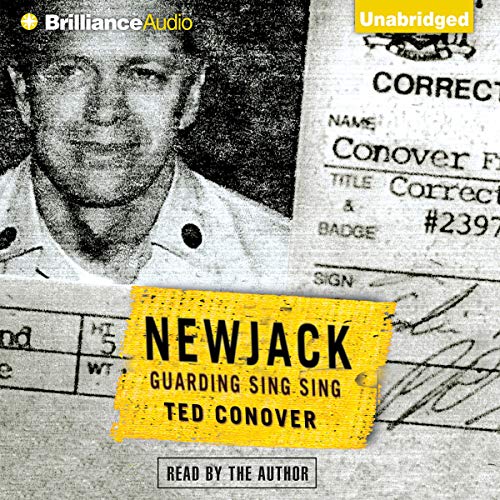
Newjack: Guarding Sing Sing


By Ted Conover
Narrated by Ted Conover

TED CONOVER (AUTHOR, JOURNALIST)

On December 18, 2018, Congress approved a prison reform bill which is signed by President Trump. In this bill, Congress takes a first step in turning prisons into institutions of reform rather than isolation and punishment. The bill’s purported intention is to return prisoners to productive society by 1) improving prisoner treatment, 2) treating the drug addicted, 3) monitoring those put on probation to reduce recidivism, and 4) improving pretrial services for the arrested.

Clanging prison doors and simmering discontent are evident in Ted Conover’s book but it is not a polemic for prison reform.

Conover surreptitiously becomes a Corrections Officer at a storied New York prison called Sing Sing (30 miles north of NYC).  He enters a seven week boot camp and four week “On-Job-Training” program to become a C.O. for one year, including his 11 week training period.

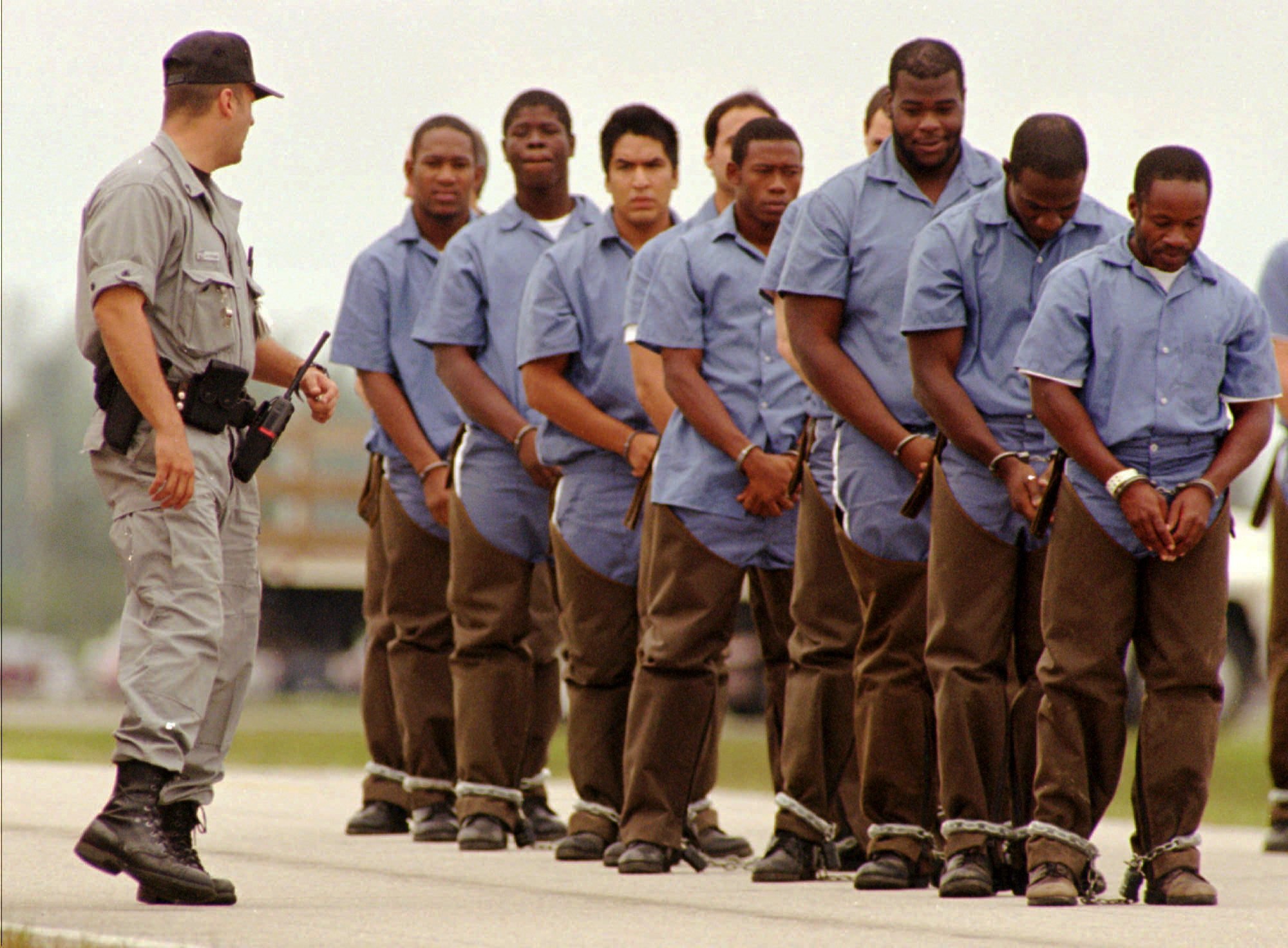
Conover exposes many dysfunctions that are inherent in a system that isolates human beings from society. The American prison systems’ principle function is to punish the convicted with confinement. Criminals are then released into society based on time served.  What Conover’s experience shows is that Corrections Officers are as likely to be changed by their roles as gate keepers as prisoners are by their confinement.   

Both C.O. and prisoner roles increase human frustration.  Corrections Officers, by training and experience, become martinets that focus on control of human nature, their own and the prisoners.  COs are directed to control their emotions regardless of verbal abuse they hear from internees.  Prisoners are treated like herd animals to be corralled, fed, and released at a master’s discretion.  

A Correction Officer enforces rules, written and unwritten, and prisoners break rules. Both factions vie for respect.  It becomes a “zero-sum” game with marginalized losers and short lived winners.  The losers are prisoners and the winners are COs.   

Rules become symbols of authority and control rather than guidelines for human reform.  Conover gives the example of a rule that says a Correction Officer, under no circumstance, is to assist a prisoner with his duties.  When a prisoner is told to carry a bundle of laundry that is too big for him to carry, the CO is not to assist him because it violates a code of conduct that might compromise security.  Offering help may engender friendship which may lead to collusion, corruption, and/or escape.  Cognitive dissonance causes some COs to question their humanity.  Outside of prison, man is encouraged to help his fellow man; inside prison, it is a sign of forbidden vulnerability.

Prisoners are being taught to believe that helping one’s fellow man is not a societal benefit. Prisons do not reform prisoners; i.e. prisons warehouse human beings and return most of them to society after time served.

MEN

Audio-book Review
By Chet Yarbrough

(Blog:awalkingdelight)
Website: chetyarbrough.blog

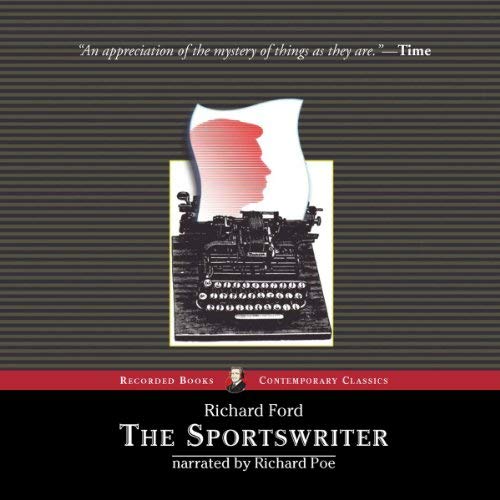
The Sports Writer
By Richard Ford
Narrated by Richard Poe

JOHN FORD (AMERICAN AUTHOR)

Selecting books from book lists like Random House’s Modern Library is not a full proof method for making good choices.  The decision to listen to Richard Ford's “The Sportswriter” came from one of those lists.  "The Sportswriter" deserves its place on the list because it offers societal insight.
The initial impression of "The Sportswriter" is that it is a story about wandering through life.  But as it progresses, the listener begins to realize that Richard Ford is writing about men and how some view life.
The main character is a guy's guy because he has the ability to charm women into thinking he is the man of their dreams.  He does not convince every woman of his commitment and interest but he manages to touch all the bases before he is called out.     
This is not a story that makes one proud to be a man but it offers insight to why the cliché "men are from Mars" has some truth. Ford's main character is a guy's guy named Frank Bascombe.  He is a traveling sports writer and a divorcée of his own making, a fool that fails to understand what is important in life.  After his marriage break up, he is cast adrift to find the next best thing which never turns into anything important.
Relationships for Bascombe become momentary escapes from real life, real life where good and bad things happen.  Real life for Bascombe is romance and break up without commitment.  What he does not understand is commitment helps humans work through the bad things in life to get to the next good.  Women seem to understand that better than men.  Women may wonder why men think seduction skill is the key to paradise.  Some would say it is 3000 years of genetic inheritance and experience.  Of course, that is a Martian's perception of reality.
The irony of a guy's guy skill to seduce is that it leads to a lonely and empty life. David Riesman characterized this phenomena as people becoming "other directed" rather than "inner directed"; i.e. looking to society to determine who you are; rather than looking within oneself. 
 
In Ford's story, “The Sportswriter”, Bascombe drifts through life from relationship to relationship to nowhere.  He never comes to grips with what is wrong with his life.  He drifts to Retirementville, Florida to think about the next best thing.  That is how the story ends.  It is a rather depressing exploration of how vacuous life can be.
This is a book that gives a concrete explanation of what some men are looking for in life.
When listening to The Sportswriter, you may find someone you know; hopefully not you.

NEWSPAPERS

Audio-book Review
By Chet Yarbrough

(Blog:awalkingdelight)
Website: chetyarbrough.blog

Written by Sarah Ellison

Narrated by Judith Brackley

(SARAH ELLISON-AUTHOR, REPORTER FOR “THE WASHINGTON POST”)

The word “War” in Sarah Ellison’s book title exaggerates the reality of change at the “Wall Street Journal”. Exaggeration aside, Sarah Ellison succinctly reports big changes in the newspaper.   Ellison writes a very straight forward and interesting account of the takeover of the “Wall Street Journal” by Rupert Murdoch and News Corporation.

(RUPERT MURDOCH, MEDIA MOGUL)

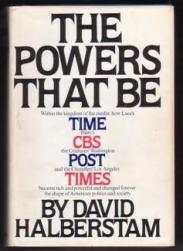
Ellison’s presentation does not have the depth and breadth of Halberstam’s “The Powers That Be” but it does provide insight to changes that are happening in the newspaper industry.

Murdoch is characterized by some as a devil but Ellison’s picture is not horned or tailed.  The “Wall Street Journal”, like every mass circulation newspaper in the nation, is in the same life boat. 

The internet and their communication speed have ripped holes in the “Chicago Tribune”, “Philadelphia Enquirer”, and “Los Angeles Times” sailing buoyancy.   Even the “Washington Post” and “New York Times” have taken on water.

Murdoch is not painted as a white knight, but Ellison’s reporting suggests rescuer is a more apt description than devil. The same might be said of Jeff Bezos’ acquisition of the “Washington Post”. Also, though the “New York Times” has not changed hands, it has suffered through years of weakened financial viability.

JEFF BEZOS (CEO AND PRINCIPAL OWNER OF AMAZON)

Nationally read newspapers are threatened by the instantaneous reporting of the internet but every national paper is adapting to changing modes of delivery.

The “Wall Street Journal” and other daily papers are leaner today because they are following market demand for shorter stories, but the “…Journal” and other national market papers have not abandoned investigative journalism.  Newspaper reporters plumb the inner workings of world crises. They reveal government malfeasance, and investigate corporate corruption. They remind the public that “freedom of the press” is fundamental to democracy. The depth of newspaper coverage is deeper and more comprehensive than rumor driven internet accounts.

The internet has democratized the news; i.e., individuals seek their own depth.  Some suggest newspapers like “USA Today”, have taken a step too far by reducing print to twitter feeds about the news. Their reporter and news feed cutbacks have caused a loss in value (stock price decline) that has encouraged a hostile takeover by MNG (an offer recently rejected by “…Today” ownership). The complication for print media is monetizing web based reporting without decimating print coverage. Those newspapers that cannot meld one to the other seem destined to fail.

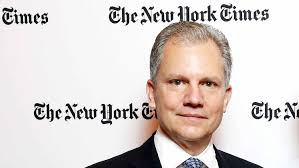
ARTHUR OCHS SULZBERGER JR. (PUBLISHER OF THE NEW YORK TIMES)

Murdoch and Sulzberger media conglomerates have specialization and editorial biases that serve their consumer cohorts.  Subscribers have the option of reading their papers on the internet when traveling away from home. Income from internet add sales supplement print advertising. Those publications that refine the utility of their websites are a boon to both newspaper publishers and consumers.

Those newspapers that focus on substantive truth, website improvement, and delimited editorial bias will serve themselves as well as the public.  Internet integration of print with internet reporting will sustain national newspapers’ future.  

Media longevity is a matter of change, i.e., newspapers did not disappear with the advent of radio and radio did not disappear with the advent of television; they adapted, they changed. Murdoch has taken a creditability dive with the Fox network news settlement, but the WSJ remains among the best source of business news in the world.

Newspaper readers who stand and wait will also be served.  Murdoch over paid for the “Wall Street Journal”; maybe for the wrong reasons, but with the right results.  Ellison implies the “…Journal” is serving its customers better now than before Murdoch’s takeover. The “New York Times” return to profitability suggests the same. The jury remains out on “USA Today”, Chicago Tribune, Los Angeles Times”, “Washington Post”, “Philadelphia Enquirer” and other nationally recognized papers. Change is universal, survival is ephemeral.

FORGOTTEN TOO SOON

2008 was just yesterday but today’s attack on government regulation is destined to create America’s next crises.

Audio-book Review

By Chet Yarbrough

(Blog:awalkingdelight)

Website: chetyarbrough.blog

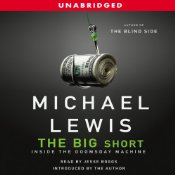
The Big Short                                                         &           No One Would Listen

By Michael Lewis                                                               By Harry Markopolos

Narrated by Jesse Boggs                            Narrated by Scott Brick & Others

There are lessons to be learned from Lewis’s and Markopolos’s books that are forgotten in the pending impeachment trial of President Trump.

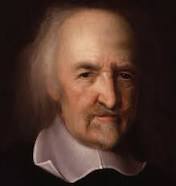
Both Adam Smith (the father of economics) and Thomas Hobbes (author of “The Leviathan”) argued self-interest is a universal human characteristic.

Self-interest led Trump to enlist the Justice Department to overthrow the election of President Biden. If that is not insurrection, one wonders what justifies any impeachment action.

Smith argued that capitalism takes the essence of human nature’s self-interest to advance civilization.  He noted-the advance of capitalism is not a smooth upward curve but an improving trend.  Smith was not saying that bad things do not happen in a capitalist society but they bend toward the good of society.

Hobbes would take issue with both of Smith’s assertions. Self-interest would not advance civilization unless it was regulated. Hobbes insisted on government control through “rule of law” to mitigate non-virtuous self-interest.

Hobbes feared unbridled self-interest in any form of government. Hobbes viewed human nature as brutish and unfair unless ruled by a Socratic philosopher king or, in a democracy, by tightly regulated and enforced “rule of law”.

The forensic reports of Michael Lewis and Harry Markopolos show what happens when efforts to regulate human nature are abandoned.  One concludes from their books that Thomas Hobbes’ “Leviathan” wrecks havoc on society when “rule of law” is either not present, or unenforced.

Inept management by Fannie Mae, and Freddie Mac offered mortgage insurance for grossly over-leveraged mortgages.  Companies like AIG removed investor risk by insuring banks against bad investments. 

All of these foolish actions coalesced to bankrupt companies and families around the world.  Individual lies, bungles, and missteps in the real estate industry created the worst recession since the 1929 stock market crash. 

While this real estate debacle was developing, Bernie Madoff built a 50 to 70 billion dollar empire by making fools of the U.S. Government, European royalty, world wide charities, and working families.  Madoff lied, cheated and stole billions of dollars from wealthy investors, charities, and mom and pop businesses with offers of bogus investment returns based on buying from Peter to pay Paul.  He paid dividends to earlier investors by taking money from newer investors.

As long as people believed in Madoff, or deluded themselves, his wheel of fortune continued to roll. As the real estate market collapsed, old investor money was recalled and new money became unavailable.  Madoff’s failure was inevitable.

Michael Lewis identifies seers that recognized “Quants” were packaging doomed mortgages into re-salable financial instruments called derivatives. These astute observers of the market, knew mortgage backed securities were at risk.

How could these things happen in a 21st century, democratically elected and governed society?   Hobbes would say “how could these things not happen”?


Madoff’s investment lies were exposed by Harry Markopolos in a “red flag” report to the Security Exchange Commission in the year 2000; way before the 2008 economic catastrophe.

The title of the book “No One Would Listen” tells the story.  This book is an indictment of democratic government in free society.  Markopolos’s story exposes an inept and failed SEC, an agency created by government to protect investors–when, in fact, it protected corporate interests. 

The irony is that Madoff did not get caught by the SEC. He confessed in 2009 because his Ponzi scheme fell apart. along with the collapse of the real estate industry.   

Lying is part of being a human being. That is a fundamental reason for government to have “rule of law”. It protects people from the abhorrent self-interest of the few from the many.

President Trump is impeached by the House of Representatives. It is the moral responsibility of the Senate to have a trial.

Hiding behind a loose interpretation of the rules of the Constitution is a disservice to the people. Guilt or innocence should be proven by the facts; not the parties of interest.

Regulation is not a perfect solution for control of bad actors in a free society.  However, no regulation is worse. 

NORTH KOREA

Audio-book Review
By Chet Yarbrough

(Blog:awalkingdelight)
Website: chetyarbrough.blog

Nothing to Envy

By Barbara Demick Narrated by Karen White

Everything to hide, everything to lose, and “Nothing to Envy” summarizes Barbara Demick’s book about North Korea.  That is the frightening prospect of North Korea’s policy regarding nuclear armament. 

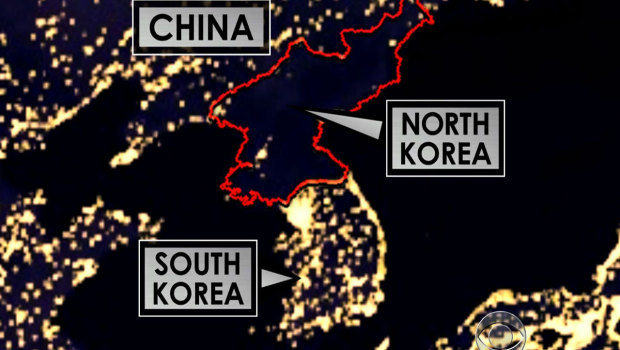
North Korea is dark because of a lack of infrastructure for power

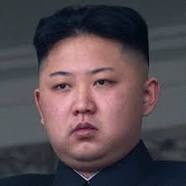
Kim Jong-un’s rule of North Korea is founded on fear.  Based on Demick’s characterization of the North Korean economy, Kim uses fear to control North Korean citizens.  Kim presumes the same will work for control of North Korea’s position in the world.  Trump deceives himself in believing he gets along better with meaner leaders.

President Trump understands the tool of fear but mistakenly believes Kim will change his behavior because of America’s superior wealth and power. 

Because fear is the only tool Kim possesses to stabilize North Korea’s government, North Korea will not abandon its quest for more nuclear weapons.

Demick pictures life in North Korea based on interviews and stories told by refugees and defectors.  There is an inherent bias in recollections of those who flee as opposed to those who stay.  These stories, though different in details, are too alike to be lies.  

Demick peels back the edge of a curtain that hides North Korea from the rest of the world. North Korean defector’s recollections are a re-telling of George Orwell’s fictional world of “1984”. North Korea is a reinvention of Joseph Stalin’s U.S.S.R.

Demick recounts the stories of Mrs. Song, Oak-hee, Mi-ran, and Jun-sang.  Demick paints a picture of a gray country, wracked by hunger and controlled by a dictator and his army.  Demick reveals a country that faces a grim future. 

Nuclear warheads in the hands of North Korea are a threat to Asia and the far east.

Demick gives fear and anxiety a face with Mrs. Song’s story of her life as a rabid believer, self-deceiver, and follower of the “Dear Leader”, Kim Jong-il (Kim Jong-un’s father). 

Mrs. Song and her children survive North Korea’s worst famine in history, but her husband dies.  Mrs. Song’s daughter Oak-hee tricks her mother into visiting China and then lures her to South Korea.  Oak-hee shows Mrs. Song that life in North Korea is a shadow of what life can be.

Demick’s second story is told by Jun-sang and Mi-ran, two other North Korean defectors.  Jun-sang and Mi-ran introduce romance into this gray world.  Their courtship in North Korea is sweetly pictured in clandestine walks on dark nights with sparkling bright stars in a lightless city.  Jun-sang is an engineering student at a prestigious North Korean school.  Mi-ran is the daughter of a naturalized North Korean farmer who lived in what became South Korea after the Korean War.

Jun-sang and Mi-ran talked of everything but what became the most important thing in their lives, the dishonesty of their government, the unfair treatment of its people, and their growing alienation.

 Both defected at different times because they were afraid to reveal to each other their true feelings about life in their home country.  Later, they meet in South Korea but as strangers that have grown into separate lives.

“Nothing to Envy” makes a listener believe North Korea’s government is destined to fail.  Time and incident will cause its collapse. 

President Trump only temporarily stopped displays of nuclear weaponization by North Korea. Obviously, Kim Jong-un is only acting in a play designed by Trump.  It appears Trump’s play, as much of his administration, is out of his control. 

Our President cannot say “you’re fired”.  Kim Jong-un needs fear to govern his country.  He believes fear is the only tool that will gain cooperation of the outside world.