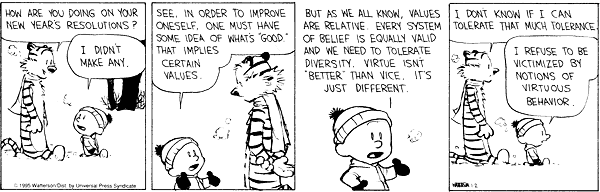
RATIONALIZATION

Book Review
By Chet Yarbrough

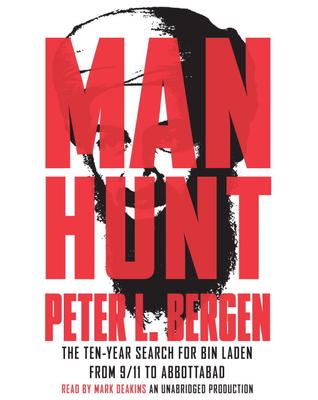
Manhunt: The Ten-Year Search for Bin Laden from 9/11 to Abbottabad
By Peter L. Bergen

Peter Bergen (British-American Journalist, Author, CNN Nation Security Analyst)

Written by Peter Bergen, Manhunt is a page turning thriller that tells America’s story of the search for and killing of Osama bin Laden, an acknowledged mass murderer.

The story of the search and killing of Osama bin Laden perversely satisfies human nature’s desire for revenge. 


Osama bin Laden (1957-2011, Saudi Arabian founder of the militant orgranization al-Qaeda.)

Osama bin Laden takes responsibility for 9/11/01 killing of nearly 3,000 innocents–one presumes bin Laden goes to his grave believing in his rationalization for terror and murder. 

Osama Bin Laden and his followers believe America manipulates and subverts Middle Eastern culture and religious belief. Bin Laden called Americans infidels who deserved death because they did not believe in the “truth” of Allah.  To most Muslims this is a distortion of the true meaning of Islamic faith and a false interpretation of the Koran.

Bin Laden’s son is alleged to have the same sentiment as his father. Hamza bin Laden is rumored to be the new leader of al-Qaeda with the same terrorist ambitions. America offers a $1,000,000 bounty for the capture of Hamza bin Laden. (Killed in 2019–alleged to have been a result of America’s counter intelligence operations in Pakistan and Afghanistan.)

Many, if not most, Muslims argue that Osama bin Laden misrepresented the Koran and its teaching about life and the hereafter. To many, the nature of the living is to be free to choose what one believes and to live in peace with your neighbors. 

Al Qaida’s rationalization for terrorism comes from an interpretation of the Koran that condones indiscriminate murder of others; including believers in the faith. This is appalling because it involves murder of innocents. How can a babe in arms be guilty?

Biblical literature of all major faiths, at different times, have notoriously rationalized murder of innocents. The God of Abraham is a vengeful God in the Old Testament. The Old Testament speaks of killing every man, woman, and child in ancient communities because of failure to follow the word of God. How can a child in the womb be guilty of not following the word of God?

American rationalization for drone use also murders innocents.  There is a calculated number given as an acceptable number of innocents to be killed in a drone attack on suspected terrorists.

Osama bin Laden manages to evade capture for over ten years after 9/11.  Bergen infers this long period of evasion is a result of distracted American military focus, poor American intelligence, and political ambivalence of Middle Eastern allies.

The key to tracking Osama bin Laden is Ibrahim Saeed Ahmed, aka Abu Ahmed al-Kuwaiti (the Kuwaiti).  Bergen explains that Ahmed is a trusted courier for Osama bin Laden.  Ahmed is summoned to a compound in Abbottabad, after having been away from al Qaida for nearly a year.  This summoning and extensive surveillance of the Abbottabad compound suggest a high ranking al Qaida leader is hiding in this northeastern Pakistani’ city of nearly 1.5 million people.

Ibrahim Saeed Ahmed (al-Qaeda member and courier that lead Navy Seals to Osama bin Laden in Pakistan.)

Osama bin Laden Pakistan compound in plain sight of the Pakistani military.

Bergen explains how American government leaders and military analysts monitor and eventually infiltrate the Abbottabad’ compound for actionable intelligence.  The focus of the team is to determine who the high ranking person is in the Pakistani compound.  Speculation grows to a 50% chance that the person is Osama bin Laden.

Location of the bin Laden compound in relation to the Pakistan Miltary Academy.

The highest government and military leaders of America wrestle with life and death decisions; often based on too few facts for guaranteed mission success. 

Bergen’s build up to the decision to send a team of Navy Seals into the compound rivals the best drama one can write about a secret military mission. 

Bergen illustrates the difference between being a manager and a leader.  The former keeps an organization running; the latter gives organization purpose. 

Just as one President chooses not to cross the border of Iraq in operation Desert Storm, a second chooses to invade Iraq, and a third chooses to illegally cross Pakistan’s border. Some argue America is right twice and wrong once. (The misleading representation of WMD in the invasion of Iraq was a mistake for which America and the world continues to pay.)

Right or wrong, American Presidents show themselves to be leaders. Even Trump leads in his own way. The concern is in where facts begin and rationalization ends.

Woodward exposes Trump’s intentional decision to mislead the public. The corona virus nears 200,000 American deaths with projections of up to 400,000.

By the end of Bergen’s story, a listener understands the complexity of the decisions made by American Presidents. On reflection, one realizes bin Laden, Mao, Stalin, and Hitler were also leaders. In that recognition, one realizes how important it is for nations’ political systems to choose their leaders carefully.


NIHILISM

Book Review
By Chet Yarbrough

The Winner Stands Alone


By Paulo Coelho

PAULO COELHO (BRAZILIAN AUTHOR, WRITER, LYRICIST)

Every life is a world.  Paulo Coelho’s The Winner Stands Alone magnifies the ephemeral nature of money, power, and fame.  After reading “The Winner…” one might conclude–in life, we stand alone; in death, we die alone.

However, Coelho suggests something different, i.e., we stand or die but are accompanied by either a good or bad angel.  It seems Coelho believes human existence is a fulfillment of destiny. Coelho implies there is no free will.
The Winner Stands Alone is a love-it or leave-it experience.  If it is a first exposure to Coelho, a reader will likely leave it.

Coelho also wrote “The Alchemist” which is a preordained destiny story but it is more hopeful in the sense that when one dreams, dreams can become reality. It speaks to the power of conviction, self-understanding, and never giving up.

“The Winner Stands Alone” is a dark tale, cleverly written about the world of glitz, glamour, fame, and fortune.  Set in Cannes during Festival, the vacuity of a nihilist’s life is stripped bare.

In “The Winner Stands Alone” Coelho cleverly reveals an evil protagonist’s nihilism.


Coelho’s “Winner…” is a nihilist who believes that existence has no objective meaning or intrinsic value. His belief inures to nothingness. 

Coelho’s main character, Igor, is a Russian millionaire.  Igor is a “Heisenberg-like” character with skills of a killer, passions of a romantic, and intelligence of a savant.  Igor lives by instinct, like a viper with a human brain.  He creates a demented plan to recover the love of his ex-wife. 

Igor’s plan is to destroy worlds (the lives of others) to demonstrate depth of love for a woman who has abandoned him.  Igor murders several of Cannes’ rich attendees and one poor shop girl with each victim losing their personal world of experience and existence. 

Igor sends IMs to his ex-wife at the end of each murder.  Each destroyed world punctuates Igor’s arrival and pending reunion with his lost love.  The reunion caps Coelho’s story.

NIHILISM : THE BELIEF THAT ONE LIFE, OR ANY LIFE IS MEANINGLESS.

“So last year 37,000 Americans died from the common Flu. It averages between 27,000 and 70,000 per year.

Trump’s nihilist view of life & the economy–Earlier this year, there were 3,428,462 confirmed cases of Corona Virus, with 137,613 American deaths. Today, over 1,000,000 Americans have died.

What is Vladimir Putin’s destiny? He and Donald Trump seem fellow travelers.

U.S. President Donald Trump and Russian President Vladimir Putin shake hands as they hold a joint news conference after their meeting in Helsinki, Finland, July 16, 2018. REUTERS/Leonhard Foeger

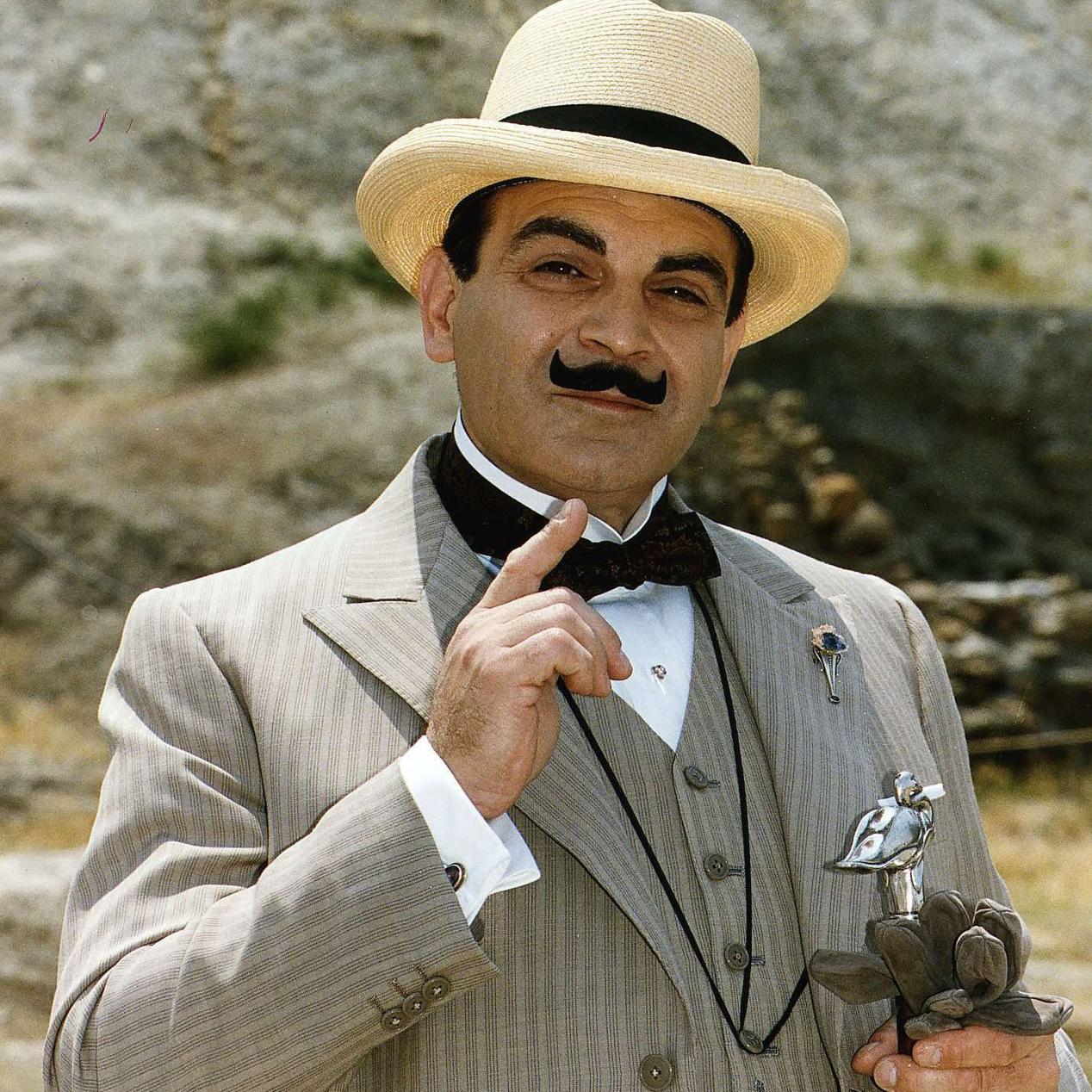
An aspiring Cannes’ police detective, like Hercule Peoirot, recognizes a serial murderer is at work before Igor’s reunion takes place.  The detective recounts former serial murderer cases to reveal common threads of intent.  Igor’s intent is seen by the detective as a message that, once delivered, will stop the serial killing at the Cannes’ festival.

What may keep a reader reading “The Winner Stands Alone” is the desire to know how the story will end.  Will Igor be caught?  Is human existence a fulfillment of destiny or life lived by instinct? Is there a difference?

NEVER FORGET

Audio-book Review

By Chet Yarbrough

chetyarbrough.blog

Comedy in a Minor Key

By Hans Keilson, Translated by Damion Searles

Narrated by James Clamp

HANS KEILSON (1909-2011, JEWISH GERMAN-DUTCH NOVELIST, POET, PSYCHOANALYST, AND CHILD PSYCHOLOGIST)

“The horror, the horror…” from Joseph Conrad’s Heart of Darkness creeps into your mind when listening to Hans Keilson’s story of a German Jew that is hidden by a young married couple in Nazi Germany.

Keilson is long gone and little remembered but this story places you in a small two story house, in an upstairs bedroom with the shades drawn, in a grim scene of anxiety and despair.   James Clamp has a perfectly accented voice for this tale of gloom because he does not over dramatize Keilson’s words but gives them a solemn and poignant believability.

The names of the three main characters of this novel are gone from your mind as soon as the last page is read but the truth of the story sticks with you.

The truth of what dehumanizing a creed, a race, or religion can lead to.  The idea recurs to you when you listen to books like The Coming of the Third Reich by Richard Evans recounting the systematic vilification and slaughter of 6,000,000 souls.

In listening to Keilson’s story there is the thought that history is a reflection of an eternal return. Vilification of human beings as the “other” rather than one of us repeats in every nation of the world. Today it is Ukrainians to Russia’s government, Uighurs to China’s government, Muslims to India’s government, Palestinians to Israel’s government, Americans to Iran’s government, immigrants to America’s and most of the world’s governments, and so on, and so on.

This is a story that shows how any society can devolve into a repressive, barbaric, totalitarian state but still bare witness to individual and small human conclaves of bravery, compassion, and humanity.

The comedy is in the irony of being raised in the same culture and knowing that what is happening is wrong and not being able to stop it.  The comedy is compounded with the realization that stopping evil, wrought by a totalitarian state, is dependent on individual action (a minor key in a major production).

You cannot help but empathize with the trauma that one must feel when choosing to fight what is wrong when it may mean the end of your life, not necessarily death, but the complete change of your circumstance of living. 

The married couple hiding a Jew makes a small mistake that forces them to leave their home; their job; their life, as they have been living it, to escape the consequence of their action.  It is an ironic little comedy because it turns out the minor mistake is purposely ignored by the German investigator; a character that resists the out of control culture that he is a part of. 

Except for the death of innocence, the story has a happy ending with the married couple returning to their home to begin again.  One wonders if beginning again means they will continue to be protectors of the innocent; to be human in a culture that slips into organized genocide, destruction, and hate.

This is a short book, more of a novella, but it tells a big story that resonates in our own history and the history of all humanity.

BEST OF TIMES

Audio-book Review
By Chet Yarbrough

(Blog:awalkingdelight)
Website: chetyarbrough.blog

Meditations
By Marcus Aurelius

Narrated by Duncan Steen

MARCUS AURELIEUS (121 AD-180 AD, EMPEROR OF ROME FROM 161-180)

Marcus Aurelius has been called the last of the five good emperors of Rome.  Edward Gibbon, the historian, went so far as to suggest that this is one of the best times in history for people to live.  (Maybe, but Gibbon might be a little biased based on being male and white.)

PLATO, ATHENIAN PHILOSOPHER ( 428/427 or 424/423 – 348/347 BC)
Marcus Aurelius embodies the concept of the Philosopher King.  Philosopher Kings are first described by Plato as the only totalitarian leader capable of ruling society.  They would rule capably because of their wisdom and knowledge of the Good.  “Meditations” suggests that Aurelius was the real deal.

In the modern world, Aurelius provides a bible for the leisure-class. However, one is not sure what the leisure class is in this era of doing rather than being.

Aurelius recognizes the ephemeral nature of life’s pleasures and chooses to write about and use Plato’s ideal forms to guide his rule.  

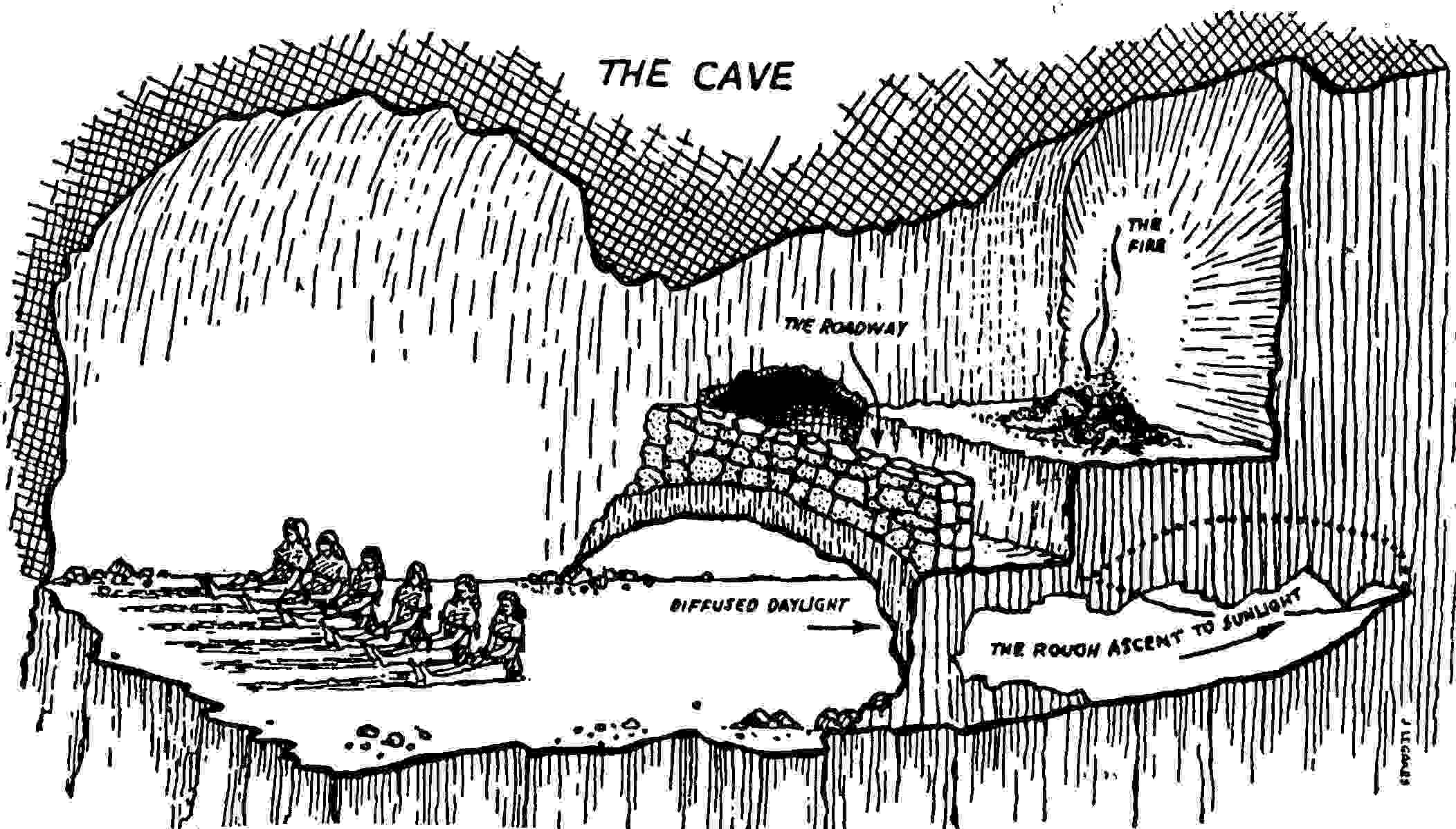
The ideal forms are Plato’s essences of life, measures of the Good that in most people’s minds are only shadows in a cave.  

Aurelius benefited from wealth and leisure by being in the lap of luxury while denying its seductive pleasures, His private education allowed him to study and understand the source of Plato’s shadows in the cave. 

In the post industrial world the likelihood of a 21st century Philosopher King is inconceivable but “Meditations” does offer a guide to today’s leisure class.  With time, education, and inclination, a human being can adopt Aurelius’ rules to live a life of joy and contentment. 

A life of joy and contentment runs contrary human nature’s proclivities, the pursuit of money, power, and prestige, but the leisure class may have enough of each to stop climbing life’s ladder to despair.

Aurelius lives in the post Christian era (121-180 AD) and writes with some confusion about belief in gods or God but seems to believe in pre-ordination and humankind’s necessary acceptance of a lot in life. 

Aurelius forsakes despair and honors acceptance of doing the best one can do in a short human life.  Aurelius does not seek money, power, or prestige but accepts responsibility and lets actions define his life.  He believes every person has a social responsibility and that to remove oneself from social interaction is a betrayal of living a good life.

There is wisdom in Marcus Aurelius’s “Meditations”.  If a listener is at a position in his or her life that allows meditation, this is a good place to start.

AMERICAN RIGHTS

Audio-book Review
By Chet Yarbrough

(Blog:awalkingdelight)
Website: chetyarbrough.blog

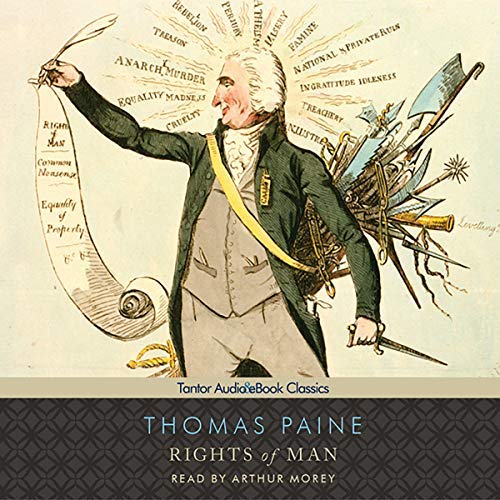
Rights of Man


By Thomas Paine

Narrated by Arthur Morey

Thomas Paine (Author 1737-1809)

It seems time today to read Thomas Paine’s “Rights of Man”.  Though his primary purpose is to refute Edmund Burke’s condemnation of the 1789 French revolution, his observations on British Aristocracy are the essence of today’s American “moneyocracy”.

Though President Trump is not the originator of American “moneyocracy”, he is its quintessential representative.

In spite of domestic mass murders by demented Americans, Trump and many of his followers insist on giving voice to the NRA’s belief in an American right to buy automatic weapons designed only to kill people.

Uvaldi, Texas elementary school shootings 5.24.22

It takes money to run a campaign for public office. Trump, like most politicians, panders to lobbyist’ and business’ interests that distort the American electoral process.

The appeal of Trump has to do with American’s desire to be left alone. Whether a misogynist, a gun toting individualist, a federal tax cheat, or an independent morally upright American, many believe that is their right. Trump exemplifies the right to be left alone.

Beginning with congress’s approval of tax reform, America’s ballooning deficit is a direct consequence of a mistaken belief that “a rising tide lifts all boats”. Contrary to the tired refrain “jobs, jobs, jobs” to make “America Great Again”, the current administration is setting the table for the world’s next economic crises.

The “Occupy Wall Street” demonstrations are an amorphous scream of disgust by an educated population that resents American “moneyocracy’s” control of the economy, elected representatives, the election system, and the “Rights of Man”.  “Moneyocracy” is an inheritable line of an American aristocracy.

Instead of 18th century Aristocratic control of British government, 21st century America substitutes the wealth of individuals and corporations (classified as individuals) to control American Democracy. This is not a partisan issue in America.

Every President, Republican or Democratic, has sided with corporate interests in this era of corporate largess. The world is in a state of economic upheaval that is fueled by technology. That economic upheaval is not adequately addressed by corporate America. The government continues to subsidize yesterday’s economy at the expense of middle and lower income citizens.

Management executives that are employees of corporate America take salaries 50 times or more than salaries of their average employee. 

The new controller of our economy, the primary interest group of elected representatives, and the master of the American election system is corporate America.

Wealth is the new hereditary right of succession. Corporate America is the thief and ruler of inherent “Rights of Man”.

Once individual compensation reaches beyond rationality, money becomes fuel to maintain America’s “Moneyocracy”, the new hereditary right of succession.

The controller of our economy and political representation is corporate America.

The primary interest group of elected representatives, the master of the American election system, and ultimately, the thief and ruler of inherent “Rights of Man” are corporations and the super-rich. Of course, the rich have always been in control of American government. However, now the rich are not just singular individuals. They are corporations classified as individuals.

The Supreme Court in “Citizens United v Federal Election Commission” in 2010 rules that corporations are persons with the right to support candidates for office with as much money as they want to influence government policy.

The Supreme Court’s unwise decision based on freedom of speech identifies corporations as persons. With that nose in Democracy’s tent, corporations could offer millions of dollars to election campaigns. What human being cannot be influenced by such largess? Excessive executive compensation perpetuates “moneyocracy”, but corporate influence is the cause of the loss of the “Rights of Man”.

Tax change is a smoke screen that obscures the real danger of American decline in the 21st century.  It is too blunt an instrument to bludgeon the rich. It smacks of false patriarchy and jingoist rhetoric. 

American history shows that Americans believe that hard work is the source of success but being American does not guarantee a free ride. Equal opportunity is where America fails.

Education, anti-discrimination legislation, and equality of opportunity have to be strengthened. Corporate America needs to step up. Corporations need to quit wasting money influencing legislators and invest in human rights.

Corporations need to subsidize education by re-training their employees to meet changes wrought by technology.

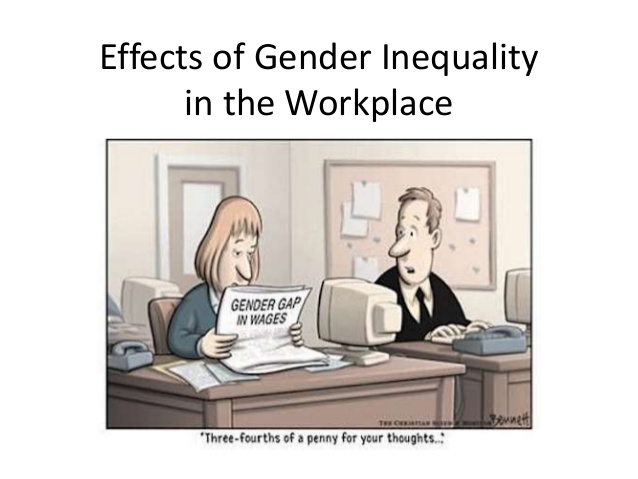
Corporations must insist on equal treatment of employees, by gender and/or ethnicity. The government needs to re-enforce equal opportunity for all.

America needs to return to the ideals of equal opportunity by allowing entrepreneurs to create wealth through human productivity.  Money is not an end but it has become an end that has no end; i.e. high salaries perpetuate themselves through an Aristocratic “moneyocracy”.  If one says they make a $1,000,000 a year they are saying they are better then someone who makes $10,000 or $100,000 a year.  Salaried compensation is perceived as human value. 

Denying salaries that exceed 50 times average employee compensation is not denying the creation of wealth.  Entrepreneurs that create productive companies that grow to multi-billion dollar enterprises have opportunity to become billionaires; not from salaries, but from building human productivity that creates wealth.

“Occupy Wall Street” is an unlikely precursor of another American Revolution; however, it may be a symptom of an American cancer that debilitates productive life without killing the patient.  “Occupying Wall Street” is not a hippie “sit in” but a plea for reform of American “moneycracy” just as Thomas Paine’s “Rights of Man” was a plea for reform of Aristocratic inheritance.

ADDENDUM: Does the “right to be left alone” extend to pandemics? The question is raised when it comes to a pandemic that has killed over 783,000 people in the United States as of November 15, 2021. (Statistics provided by “worldometer”, a reference website that provides real-time statistics. Considered the best free reference website by the American Library Association.)

RELATIVITY

Audio-book Review
By Chet Yarbrough

A Brief History of Time

By Stephen Hawking

(Blog:awalkingdelight)
Website: chetyarbrough.blog

Narrated by Michael Jackson

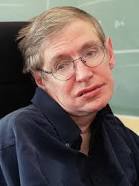
Stephen Hawking (English theoretical physicist, cosmologist, and author)

In Physics time, this is an old book because it dates before the year 2000.  However, it remains a fairly good layman’s overview of the state of physics.

This surprise bestseller is not easy to understand in spite of its brevity and avoidance of mathematics. Without additional reading, “A Brief History of Time” is less intelligible than more recent “physics for the laymen” books (see previous reviews).

Hawking describes the relativity of time, black holes, the big bang theory, God, and string theory (the most current research subject involving unified field theory).

An interesting and revealing observation in Hawking’s book is a comment about the lack of philosophical perspective in the field of Physics.  Hawking suggests that philosophers choose not to examine theories of physics because of the abstruse and specialized nature of the research that make it difficult for outsiders to understand.  There is some truth in that observation but one can read Will Durant’s 1929 edition of “The Mansions of Philosophy” or his revision (“The Pleasures of Philosophy”) in 1953 and see that Durant believed philosophy was in decline long before specialized research in physics.

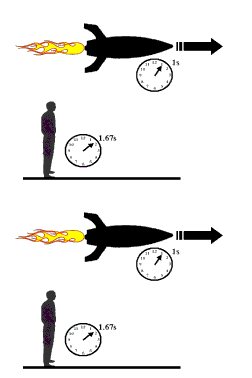
Hawking explains that time is not a constant measurement for all observers.  Time is relative.  Depending on one person’s speed of travel, his measurement of time is different from another person’s measurement of time if the other person is traveling at a different speed.  The theory suggests that time travel is possible if man can travel at speeds nearing the speed of light.

Black holes are high density, gravitational points in the universe that are so powerful that anything within their grasp (their event horizons) will be sucked into their maws, never to be seen again.  The belief is that black holes (though not actually black) come from imploding stars; i.e. stars that have lost their source of nuclear reaction that become so dense that their force of gravitation draws anything near them into their mass.

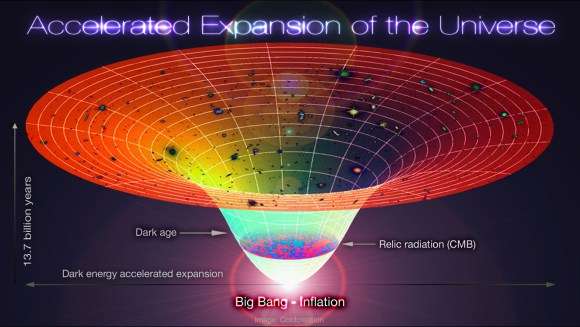
Hawking believes time began when our universe exploded from a single point in the cosmos.  Before the big bang, there was no concept of time.  Our universe is expanding from that singular event and will do one of three things.  It will continue to expand, it will expand to a point and than contract, or it will reach a point of stasis.

The question of the existence of God is raised and unresolved.

The quest for a unified field theory is a physics journey that began with Newton and progressed through Einstein and Dirac.  The search continues, passing to future generations.  Finding a unified field theory, in Hawking’s opinion, would be like reading the mind of God.

BEING AND NOTHINGNESS

Audio-book Review
By Chet Yarbrough

(Blog:awalkingdelight)
Website: chetyarbrough.blog

Major Pettigrew’s Last Stand

By Helen Simonson

Narrated by Peter Altschuler

Helen Simonson (English author)

“Major Pettigrew’s Last Stand” is Helen Simonson’s literary debut.  The book begins like a locomotive chugging up hill but ends as a journey well taken.

This is a love story. It is also a story about an age demographic inelegantly described as a “pig in the python”; i.e. baby boomers that are born after the end of WWII (between 1946 and 1964).  Major Pettigrew is a fictional father of a baby boomer. 

Pettigrew believes in an internalized moral code and endeavors to live by it.  Emulation comes from one who sees a person act with reasoned opinions based on lived life.  Denigration comes from “boomers” that see a person trapped in the past and unwilling to change with the times.

Though Major Pettigrew is a retired English military officer, widowed and living in a small town in England, he represents what human’s emulate and denigrate. 

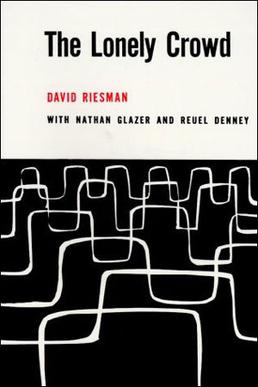
Pettigrew’s adult son is what David Reisman, in “The Lonely Crowd”, calls an “other directed” person that lives by a code based on perceived values of the day.  The code is highly malleable.  It is created by friends, family, business and societal influence.  The son’s conduct changes with his perception of other’s beliefs.  In contrast, the Major lives by an internalized code based on personal life experience. This difference creates conflict. 

One of Simonson’s examples of father/son conflict is in the sale of a matched set of antique guns.

The son wants to sell; the father does not.  The son acts from consciousness of societal norms that value things in dollars and cents.  The father acts from consciousness of what the guns mean to him in life experience.

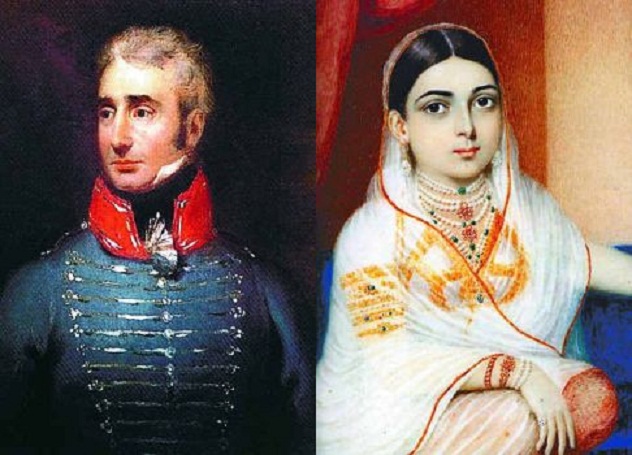
Simonson creates a love story that makes the same point.  Jasmina Ali comes into Major Pettigrew’s life.  She is a Pakistani widow at age 50, several years younger than the Major.  The son is shocked by his father’s dalliance with a non-English widow.  His son is more concerned about how the village views the relationship than how his father feels. 

Simonson elaborates on this view of love by showing the son engaged to a young American woman that idealizes the English countryside.  She envisions having an idyllic country refuge, away from the city, to emulate English aristocracy.  The American asks the son to co-purchase a cottage near his father.  Major Pettigrew sees that the purchase is based on an image of English nobles oblige; not the substance of a home.

The son compounds “boomer” generation “other directness”. He changes his mind based on what society may think of him. He distances himself from his American fiancé to court an English aristocrat. The aristocrat offers higher social and financial reputation.  Major Pettigrew is mystified by his son’s fickle change of heart.


The climax of this story is skewed toward an appreciation of the “inner directed” nature of Major Pettigrew.  Major Pettigrew acts with courage and conviction to save a life, though it costs one of his beloved personal possessions.  He also rescues his paramour from the refuse of English and Pakistani prejudice.  Pettigrew makes his “…Last Stand”.

In 1950, David Reisman writes in “The Lonely Crowd” that “other directness” is a symptom of a civilization’s incipient decline.

SKEPTIC

Audio-book Review
By Chet Yarbrough

(Blog:awalkingdelight)
Website: chetyarbrough.blog

The Believing Brain

By Michael Shermer

Narrated by Michael Shermer

Michael Shermer (Author, American science writer, editor of the magazine Skeptic.)

Michael Shermer is an academic psychologist, writer, myth buster, and faith breaker.  Shermer characterizes himself as a religious skeptic. His underlying skepticism about God is grounded in 1.) prayer’s failure to cure the incurable, 2.) the nature and history of recorded life, and 3.) scientific studies of brain function.

Shermer writes of personal prayers’ failure to heal a medically un-heal-able friend.  He recounts common sectarian stories that occur in the history of different religions in the world suggesting that stories of religious belief are genetically imprinted; i.e. a condition of human memes rather than proof of God. 

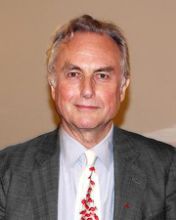
Sherman has company in that belief. Richard Dawkins wrote The Selfish Gene to make the same mimetic point.

Shermer reviews brain function studies that confirm neurological causes for “out of body experience”, “voices from the unseen”, alien abduction, white light cognition during near death experience, and other anecdotes that mythologize the existence of other beings, God , the devil, and/or an “after life”.

The Believing Brain characterizes belief in God as a genetically evolved faith-based myth.  Shermer cites science and history to deny God’s existence.  Shermer believes faith in God comes from a genetic predisposition of human beings to complete causal, mythological stories to explain unexplained phenomena. 

Aside from Shermer’s disbelief in God, his most substantive observations are the experimentally reproducible studies that clearly demonstrate man’s ability to invent stories, deny physical reality, and act in socially reprehensible ways. 

Shermer notes how such things as framing an idea distorts human cognition.  Scientific studies show that human cognition is proven to be biased by a person’s belief system.  Shermer cites B. F. Skinner’s operant conditioning and the famous Milgram obedience experiments to show how human perception, and more consequentially, behavior are manipulated by human instinct and contextual bias.

It is no wonder that “eyewitness” accounts of crime are being discounted as a source for conviction of presumed perpetrators.

The foundation of Shermer’s skepticism is what he calls “patternicity” and “agenticity”.  “Patternicity” is the human compulsion to see causal relationship in the physical world. 

“The Believing Brain” outlines a psychological inclination of human brains to manufacture causal patterns and agents (“agenticity”) to support predetermined beliefs. 

The irony of Shermer’s analysis of brain function is that “patternicity” is an essential tool of the scientific community. 

Without the use of “patternicity”, how would Bohr, Einstein, or Paul Dirac have advanced the world of physics?  These men believed something before science could prove them right.  They had faith in their own judgement when experiment could not prove their point.

Shermer notes that science is the key to knowledge.  Science requires experimentally reproducible results. When experimental results are not the same, knowledge escapes.  Experiment recently confirmed existence of the Higgs Boson 16 years after François Englert and Peter Higgs created the theory.

One must presume Shermer chooses to call himself a skeptic because—when asked if he believes in God, no experiment can be done to confirm or deny existence.

GENIUS

Audio-book Review
By Chet Yarbrough

(Blog:awalkingdelight)
Website: chetyarbrough.blog

Narrated by B.J. Harrison

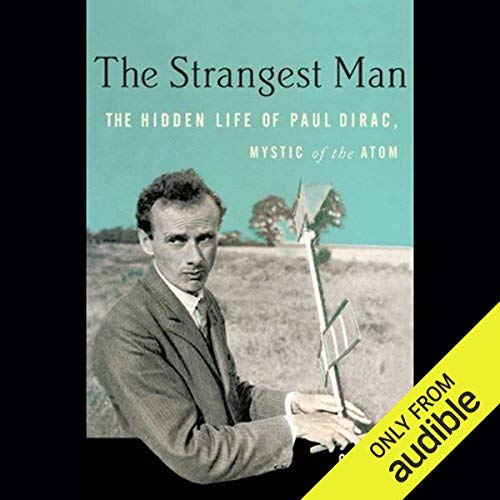
The Strangest Man: The Hidden Life of Paul Dirac

By Graham Farmelo

Graham Farmelo (Author, biographer, science writer, and an Adjunct Professor of Physics)

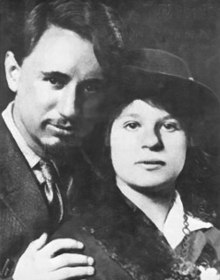
Paul Dirac (1902-1984, English theoretical physicist born in Bristol, UK)
After listening to Farmelo’s biography of Paul Dirac, one begins to understand why so few outside of Science know of this “brainiac”.  Paul Dirac’s history of communication is Spartan; i.e. rife with “yes” and “no” answers, long pauses, or abrupt departures, Dirac fails to become a household name like Einstein or Bohr.

Considered by some to be the second Einstein of Physics’, Paul Dirac is practically unknown to most of the non scientific community.  At the age of 31, Dirac shares the Nobel Prize with Erwin Schrodinger for discovery of new forms of atomic theory. 

In the span of Dirac’s life, he manages to astound the Physics community with his independent research, and taciturn analysis of quantum mechanics.

From Dirac’s top down theoretical formulation of quantum mechanics, he manages to reveal the spin of electrons and an early stage belief about string theory.  His formulations were solitary revelations born of a superior perception of reality that kept Dirac at the cutting edge of Physics well beyond his 30th year of life.

One of the revealing parts of Farmelo’s biography is Dirac’s remembrance of childhood and his parent’s treatment of him and his two siblings.  Dirac believes his father destroyed his children’s lives while Farmelo’s biography seems to show Charles Dirac deeply loved his two sons and daughter. 

Farmelo is not suggesting that Charles Dirac was a good father or husband but he is saying an offspring’s memory of what happens in their childhood is a distortion of reality. 

Charles Dirac may have been a martinet, though he did not strike his children.  He may have been a philanderer, but he remained with his wife until she died.  He may have been a cheap skate, but he left what he had to his wife when he died.  Ironically, Paul Dirac is genetically predisposed to be a genius but he seems to see a distorted truth of his childhood. 

The Chinese curse of “may you live in interesting times” is a hallmark of Paul Dirac’s life.  Born in 1902 Dirac lives through WWI, WWII, The Korean War, The 1950’s Red Scare, the reign of Joseph Stalin, Sputnik, the Cuban missile crisis, and Vietnam.  He dies in Tallahassee, Florida in 1984.  In the course of his life he met. competed with, and mostly surpassed the
crème de la crème of the Physics community.

Dirac’s life is a journey through 20th century history.  He falls for Russian communism as many intellectuals of the 1920s did.  He lives through and understands the potential of the atomic bomb and chooses not to participate in its creation.  He lives through Germany’s bombing of England, deplores German dehumanization of Jewish scientists, but accepts post war rationalizations of German scientists (e.g. Werner Heisenberg) who supported Hitler.  Dirac is denied a visa to immigrate to the United States in the 1950s because of McCarthyism.  He leaves Cambridge in the 1970s to become Florida State University’s most famous professor.

Though Dirac made monumental theoretical contributions in the field of Physics, he fails to acquire the same cosmological gravitas as Albert Einstein or Niels Bohr. It seems largely because of his lack of charisma. 

Farmelo’s biography shows Dirac as a human being working through life, burdened by perceptions of childhood, blessed with a superior perception of reality, and subject to the exigencies of living any life in this world; the difference being that Dirac was a genius among geniuses.

PHYSICS

Audio-book Review
By Chet Yarbrough

(Blog:awalkingdelight)
Website: chetyarbrough.com

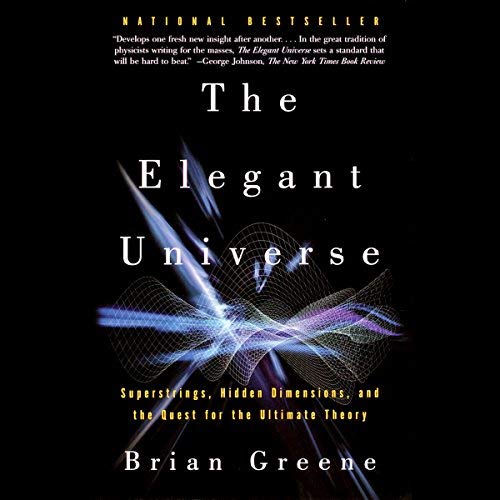
The Elegant Universe
By Brian Greene

Narrated by Erik Davies

Brian Greene (Author, American Theoretical Physicist)

Who cares about physics?

If the world is orderly and predictable, physics is the key to that orderliness and predictability; the key to our future. (Knowing what E = mc2 reminds us of the importance of understanding physics.)

A unified field theory has been the goal of physicist’s since Einstein’s break through discovery of the equivalence of mass and energy.  Brian Greene excites a listener’s appreciation of string theory and its potential for becoming the basis for a unified field theory.

Greene is a theoretical physicist that helps bridge the gap between sciences’ understanding of the universe and an uninformed public.  He links analogy with obscure conceptual physics. Many concepts addressed by Greene remain obscure (“Calabi-Yau manifolds” for example) despite his valiant effort to analogize his way to our understanding.  But, “The Elegant Universe” does open doors for a non-physicist’s understanding.  

Greene explores the theory that elemental particles are made up of strings that vibrate at different frequencies.  Those vibrations determine the elemental nature of particles that make up the world; one string can become different particles based on the frequency of its vibration.  These strings move through out the galaxy to make all we see and think we know of the universe. 


“The Elegant Universe” unfolds the concept of vibrating strings.  The concept, of course, is called “string theory”. With this theory, quantum mechanics becomes a verifiable structure for physics; something that Einstein could not accept in his life time.

Conceptually, strings make up all matter and energy and have characteristics that maintain and repair the fabric of space. String theory has the potential of explaining how the universe works.  Quantum mechanics, ideas of equivalence (energy and mass), duality, symmetry and super symmetry are explored by Greene in “The Elegant Universe”. 

The truth of string theory either obviates or combines the reality of space, time, and dimension.  However, the future of string theory rests on experimental observance and measurement.

Advances in string theory demand predictability and comprehensibility. The problem is that these “strings” are so small, they cannot be measured with current technology. Without measurement, the theory cannot be tested. Without tests, the theory can only be a theory.

Of course, that was true at the time of Einstein’s theory of the equivalence of energy and matter. Since Einstein’s discovery, atomic energy and atomic bombs have proven his theory’s validity. Not so, at least yet, for “string theory”.

There are significant objections to this avenue of research by fellow scientists like Richard Feynman (now deceased), and Lee Smolin. Smolin believes “String Theory” is blunting sciences’ effort to find a more plausible explanation of the nature of the universe.

Unraveling nature’s mysteries may or may not be accomplished with this exploration but string theory has the potential of being the greatest discovery since Newton’s theory of gravity and/or Einstein’s theory of relativity.