Dangerous Ideas (A Brief History of Censorship in the West, from the Ancients to Fake News
By: Eric Berkowitz
Narrated by: Tim Campbell
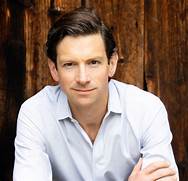
Eric Berkowitz (Author, human rights lawyer and journalist
Eric Berkowitz recounts the history of free speech and censorship. His history infers censorship is a misdirected waste of time. Berkowitz argues freedom of speech is unstoppable. Even in the most repressive governments in history, citizens have exercised freedom of speech.
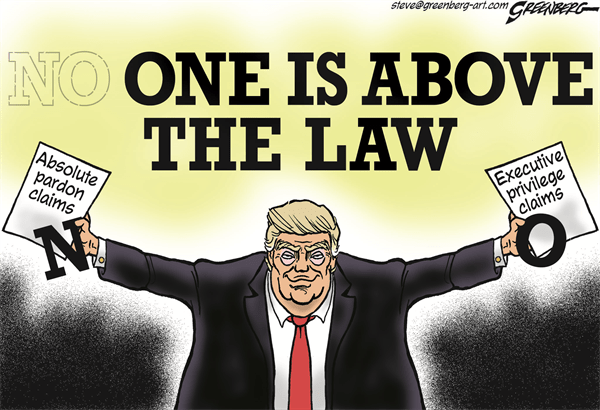
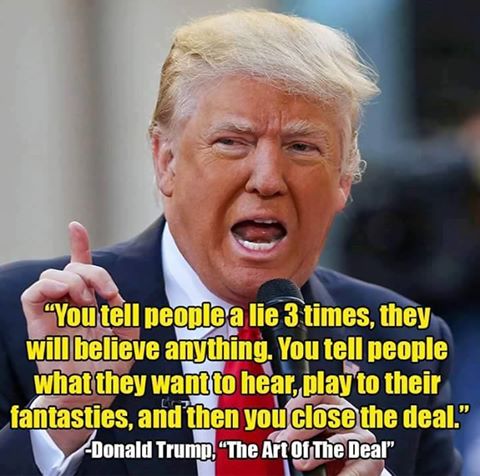
Berkowitz recounts many who chose to exercise free speech that were exiled, tortured, dismembered, maimed, or murdered. However, these free speech martyrs insist on having their say. That seems Trump’s justification for suing Facebook and Twitter.
Pundits suggest Trump has no chance of winning his suit against Facebook and Twitter–Berkowitz’s presumed response would be “who cares?”
The fundamental point made many times in Berkowitz’s history is that censorship does not work because there is always someone who is willing pay any price to say what they think must be said. Berkowitz offers many historical examples of why free speech is a confusing and difficult problem.
Free speech can spread both truth and lie.
One of Berkowitz’s answers to the conundrum of free speech is that more freedom allows each listener to choose what they wish to believe. Problems arise when freedom of speech offers lies as truth and misleads the public.
White supremacism lies and Covid19 falsehoods have historically destroyed lives.
In every country of the world, free speech is unstoppable because it is controlled by the few, not the many.
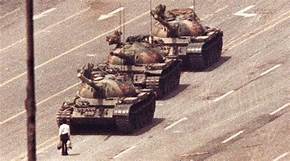
Listening to Berkowitz’s history vivifies a trip to China in 2019. A guide, presumably at some risk to himself, took our small group into a private room to remind us of China’s response to the idea of free speech in Tiananmen Square .
Our guide reminded us of one protester who moved in front of a Chinese tank whenever it tried to change directions. The guide explained the “tank man” (who was never identified by name) was arrested, and never heard from again.
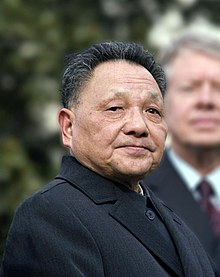
At the direction of President Deng Xiaoping, 300,000 troops were mobilized to stop a demonstration by Chinese students. China’s soldiers fired on college students and friends who were demonstrating their belief in free speech. An unknown number of Chinese citizens (some say hundreds, others say thousands) were murdered at the direction of government leaders. Our 2o19 Chinese guide was exercising his right of free speech by reminding us of what happened on June 4th, 1989.
Government is the first seat of control for free speech. However, that first seat is diminished by singular economic interests, political interests groups, and fringe propagandists.
The rise of newspapers, radio, and television focused and expanded the principle of free speech. Economic interests influence these early platforms but with a more limited threat and benefit to society.
Facebook, Twitter, YouTube, and the blogosphere have widened the principle of free speech and significantly increased potential public threat and benefit.
In the age of newspapers, radio, and television, government controls were explicitly legislated but in the internet age control is hidden in platform algorithms. Government may still have the first seat of control, but media moguls have usurped legislated government censorship.
Berkowitz offers no answers. He only reveals the complexity of freedom of speech. He suggests freedom of speech is an essential ingredient of a just society. However, at the heart of free speech is economic interest. Free speech is secretly used to distort truth and sometimes incite violence.
Whether it is a newspaper reporter told to revise an article that criticizes corporate advertisers or a discloser of government secrets there is societal threat. Even more pernicious is the Amazon, Facebook, or Twitter executive who orders a coder to increase customer clicks for corporations that pay more for advertising. And then there are the media trolls who distort the truth, lie, or incite violence to increase click count with no regard to consequence.
Freedom of speech is “…a riddle wrapped in an enigma” (a Winston Churchill quote about Stalinist Russia). Freedom of speech is a two-edged sword, a tool for truth building leaders and liars. Truth building offers peace; lies offer Russian Ukrainian wars.
By: John Ghazvinian (Executive Director of the Middle East Center
at the University of Pennsylvania.)
Narrated by: Fred Sanders
John Ghazvinian (Author, historian and former journalist with a Doctorate from Oxford University.)
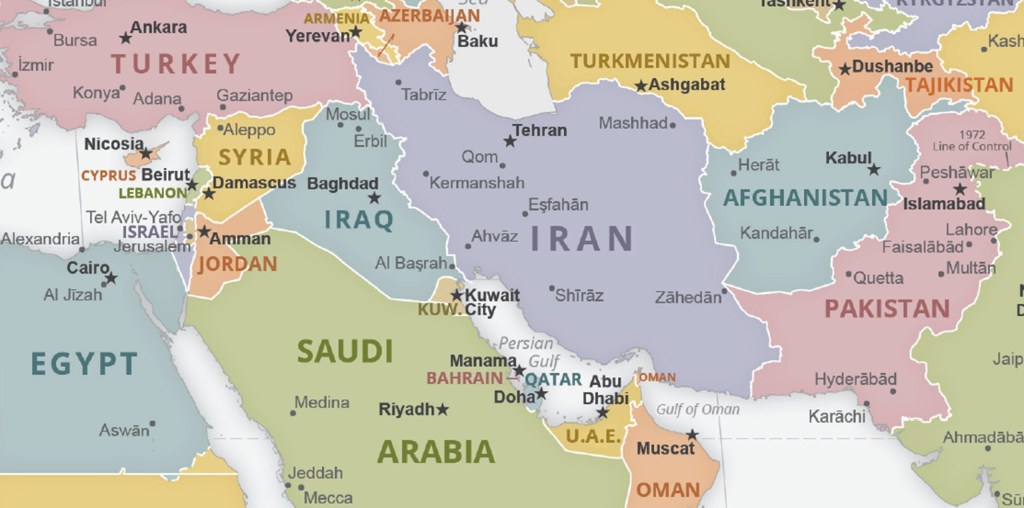
John Ghazvinian has written an important book to help one understand Iran and its relationship to America. It reminds one of how important respect for different cultures is for effective foreign policy. In the real politic of international relations, ignorance of nation-state’ cultures are a recipe for world conflagration.
Listening to Ghazvinian reminds one of how important well-informed diplomats and foreign service officers are for world peace.
As a diplomat, Kennan understood Russia because he spoke Russian and studied its history before offering a diplomatic opinion about how America should deal with the U.S.S.R. Kennan’s containment policy served America well despite Stalin’s horrendous treatment of the U.S.S.R.’s people.
Few, if any, American diplomats of importance before and after the 1979 revolution in Iran appear to have much understanding of Iranian language or its remarkable history. Ghazvinian notes the well-intentioned but inept handling by President Carter of the student takeover of the American embassy in Iran. He recounts the preening and then waffling treatment of Iran by every President of the United States before and after the 1979 revolution.
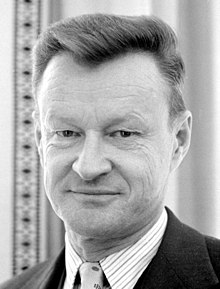
Zbigniew Brezezinski (U.S. National Security Advisor to President Carter 1977-1981.)
Ghazvinian recounts the hostility of the diplomat Zbigniew Brzezinski (President Carter’s National Security Advisor) toward Iran.
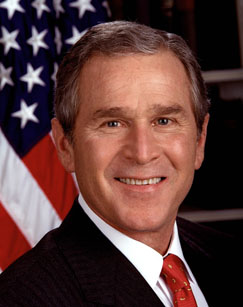
Recognizing 9/11 and its momentous impact on the American psyche, President George W. Bush’s administration exercises an obstinate, and Ghazvinian suggests, ignorant assessment of Iran, its history, nuclear ambition, and role in the Middle East. This second Bush administration is characterized as an abject diplomatic failure when it comes to dealing with the Islamic Republic of Iran.
George W. Bush (43rd President of the United States).
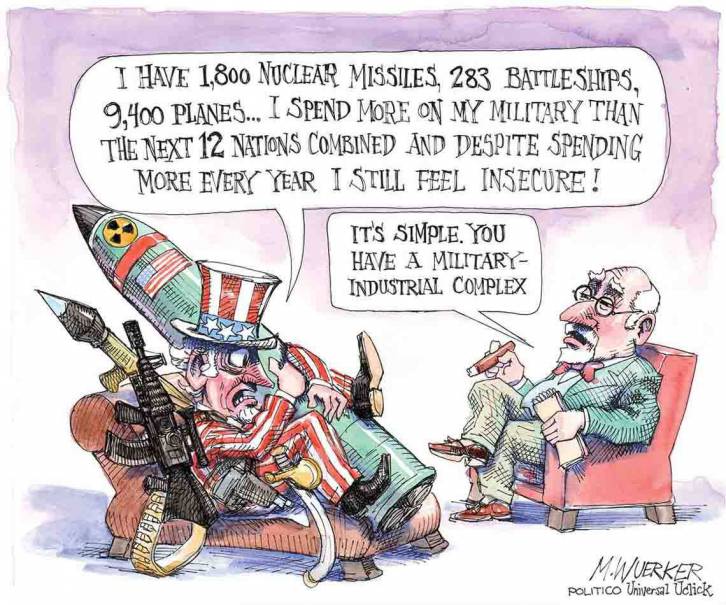
Ghazvinian’s book illustrates how America during the Shah years (prior to 1979) views Iran as a buffer against communism and an ATM cash machine for the American economy. Iran purchases billions of dollars of American weapons. American defense industry corporations reap huge rewards from business with Iran. Equally lucrative were American ancillary military training companies that were paid big money by an effete and highly privileged Iranian Shah.
The Shah of Iran is fascinated by American military hardware. In that infatuation, the Shah fails to serve the domestic needs of Iran’s citizens.
At direction of the Shah, vast oil resources are used to enrich the American economy rather than aid the social and economic growth of Iran’s citizens. America did not concern themselves with Iran’s people because it hugely benefited from Iran’s government purchases of military equipment.
Ghazavinian explains how American Presidents from Eisenhower to Kennedy, Johnson, Nixon, Ford, Carter, (and after the Iranian revolution)—Reagan, H.W. Bush, and Clinton fail America in its diplomatic relationship with Iran.
None of the American Presidents effectively manage either Iran’s threat or potential real-politic’ benefit to world peace and prosperity.
In the 20th century, Ghazavinian notes the closest any American President came to understanding Iran is H.W. Bush. However, American political opposition thwarts H.W.’s opportunity to mend broken trust.
In an overture to H.W., after the successful ejection of Hussein from Kuwait, the Islamic Republic’s President offers a peace proposal to America. Bush acknowledges the overture and wishes to capitalize on Iran’s written commitment to ameliorate Hezbollah opposition to the State of Israel and to reestablish diplomatic relations with America. However, Bush’s party leaders object, based on a belief that Iran is a terrorist state that cannot be trusted. Iran’s diplomatic opening is lost.
Ghazavinian notes Iran’s interest in improving diplomatic relations during H.W. Bush’s administration is partly related to America’s quick military defeat of Iraq.
Iran had fought the Iraqi army for over 20 years without defeating or removing Hussein. American forces removes Hussein and defeats his army in six weeks. The author infers fear of American invasion of Iran should not be overstated. However, Ghazavinian does imply America’s quick defeat of Iraq’s army sent a message to Iran. For the first time in history, Ghazavinian notes the Islamic Republic of Iran put its commitment to improve diplomatic ties with America in writing.
Even though America exacerbates Iran’s crisis, Ghazavinian suggests Iran is responsible for the situation in their own country. The author notes the last Shah of Iran fails to listen to his people. Iran’s wealth is spent on the latest American military equipment while most Iranians are poor, malnourished, and caught in a cycle of despair. Iran’s people are looking for a leader who will listen to their plight. They turn to an exiled religious leader.
Ruhollah Khomeini (1st Supreme Leader of Iran, 1979-1989)
The last Shah of Iran, Mohammad Reza Pahlavi, exiles Imam Ruhollah Khomeini to France where he becomes the voice of the people who have been ignored by their government.
Ghazavinian suggests Khomeini begins as a religious teacher but is seduced by the politics of government. The seduction comes from the student takeover of the American consulate in Iran. Khomeini initially views the takeover as inappropriate but begins to see the political value of American hostages in negotiating with America.
In Ghazavinian’s opinion, Khomeini abandons his religious teaching with the political decision to use American Embassy hostages as a lever for change. Prior to Khomeini’s political use of the Iranian student’s takeover, there was a separation between church and state. Now church and state became intertwined.
Mahmoud Ahmadinejad (President of Iran 2005-2013)
Ghazavinian notes the rise of Mahmoud Ahmadinejad. This former mayor of Tehran exemplifies the melding of church and state in Iran’s governance. Interestingly, Ghazavinian creates a revisionist (less negative) history of Ahmadinejad. He may be showing a more accurate picture of this populist, poorly educated, President, or he may be gilding a fundamentalist ignoramus.
Ahmadinejad is best known by Americans as the fool who said the holocaust is a myth. Ghazavinian argues Ahmadinejad’s words were mis-translated. In any case, Ahmadinejad, in contrast to former Iranian Presidents, listens to the Iranian under-class. He increases wages and initially improves the lives of many Iranians. Ghazavinian notes the cost of those improvements caused inflation, diminishing the economic good but not the intent of this new President.
Ghazavinian suggests Ahmadinejad compares to George W. Bush in some sense. Like W. Bush, Ahmadinejad is viewed like the guy next door. His jokey way of dealing with people is like W. Bush’s. On the other hand, unlike Ahmadinejad, W. Bush is well educated and wealthy.
Ahmadinejad seems more like Trump (though not a billionaire) than George W. Bush. Ahmadinejad, like Trump, taps into the real needs of an underclass ignored by government.
Many Iranians approve of Ahmadinejad’s effort to raise the social and economic conditions of Iran’s underclass. The same might be said of many Americans who supported Trump’s stated intent but unrealized goal.
A reset of American relations with Iran is attempted in the Obama administration but Ghazavinian argues Obama reverts to the diplomatic mistakes of past American administrations.
Politics interferes with Obama’s initial attempt to renew relations with Iran. Obama shows a disdain for Benjamin Netanyahu’s jingoistic opposition to any American effort to repair diplomatic ties with Iran. However, in an election year Obama is painted into a corner that delays any improvement in Iranian diplomacy. It will be interesting to see how President Biden deals with Iran.
Ghazavinian fails to paint a complete picture of modern Iran. There is little explanation of the covert activity of Iran in middle east destabilization. The element of religious fanaticism and proselytization among some of the Ayatollah’s followers is not fully examined. Ghazavinian uses his final chapter in a vituperative and somewhat justified assessment of Israel without fully explaining what Iran’s agenda is in the Middle East.
The valuable substance of Ghazavinian’s history is in the immense importance of understanding any country’s culture. Before making decisions about what, where, why, and how to diplomatically engage another country, one must have some cultural understanding of both allies and opponents. It does not mean real-politic will not be used to get one’s way but that there needs to be a respectful understanding of why there is opposition. In that understanding, there is the chance of finding common ground to arrive at a mutual, if not amicable, agreement. Without cultural respect and understanding, chaotic unpredictability is unleashed.
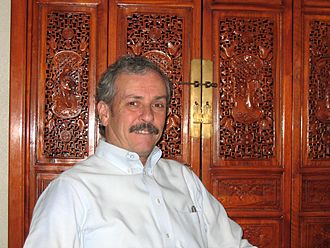
Kenneth J. Hammond (Professor of History at New Mexico State University)
“Dinner at the Center of the Earth” is a story of spies. It is a short novel illustrating the intransigent and complex conflict between Israelis and Palestinians.
Ariel Sharon (Prime minister of Israel and Israeli general 1928-2014)
The context is in the last years of Ariel Sharon’s life before, during, and after his death from an 8-year coma.
A spy for Israel is recruited by “The General” through a connection with an American Jewish mother who persuades her son to become a spy for the Israeli government. The son reports only to “The General”, without any direct connection with the State of Israel. The plan is liberally financed by Israel.
The recruit poses as a wealthy entrepreneur that brokers used computer equipment to foreign countries. With that cover, he infiltrates an Egyptian supporter of the Palestinian cause of repatriation. “The General’s” goal is to eliminate the Egyptian cell.
The infiltration is a success, but the price paid by the spy is in a bombing designed to destroy the leaders of the Egyptian cell.
In the detonation, the building collapses on an adjacent building occupied by an innocent family.
The leader of the cell is the brother of the person befriended by the recruit. When the bombing occurs, the “friend” of the recruit realizes he was set up. He contacts the spy and tells him what death he has brought to his family and to innocent children near the bombing.
Contrary to the rules of spy craft, the recruit acknowledges his role and asks for forgiveness in return for intelligence on Israel. The recruit betrays Israel. In finding the recruit’s betrayal, “The General” puts him in an isolation cell that no one knows about.
The recruit appeals to “The General” for his release, but “The General” has fallen into a coma. This is one thread of the story. With the death of “The General” there is no way out for the recruit. No one with any power knows of the recruit’s fate.
In the end, with the help of a gift from his guard, the recruit hangs himself. The guard knowingly supplies a belt with a gifted robe, a forbidden act by the guard. He knew the gift would give the recruit a choice.
The meat of the story is in how the recruit is caught. This is where the story becomes maudlin and unbelievable.
The counter spy that captures the recruit is too contrived. She is a beautiful waitress with unfathomable wealth. There are so many clues to her duplicity, only an idiot spy would not see what is happening.
In a non-sequitur reveal, a listener is introduced to a Palestinian peace maker. He is called the map maker because he suggests the creation of two states. The female Jewish spy who led to the capture of the recruit has a deep and committed relationship with this Palestinian.
This “waitress” and “peace maker” plan a dinner for two in an underground tunnel between Israel and Gaza. It is a “Dinner at the Center of the Earth”.
The “waitress” and “peace maker” seem to represent the only hope for comity between Israelis and Palestinians. The moral seems death of human innocents is what matters, not land.
If there is a saving grace to Hammond’s story, there are both Palestinians and Jews who wish for peace. Peace is only conceivable with a growing recognition that death of innocent children is too high a price to pay for land that only belongs to nature.
Kenneth J. Hammond (Professor of History at New Mexico State University.)
In some ways, America’s 300 hundred years is a microcosm of Kenneth Hammond’s informative lectures on China’s 5,000-year history. Not to carry this idea too far, America has no emperors and is a mere baby in the history of the world. However, social struggles of China and America have striking similarities.
The fabric of a nation’s society is woven by leaders and followers. Hammond recounts long stretches of China’s history that demonstrate social and political changes that predate and foretell America’s history. American presidents are unlikely to experience dynasty. However, there are similarities between American leaders and the reign of Chinese Emperors.
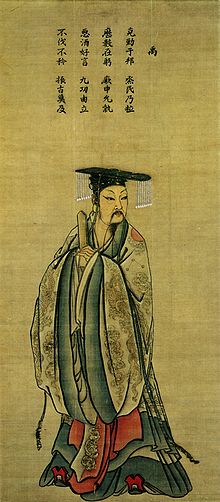
Yu the Great (2123 BC to 2025 BC–95 years of life.)
In 2070 BC, “Yu the Great” manages to organize China’s fragmented ethnic groups into a kingdom. Yu makes the first written record of an attempt to control nature. By introducing flood control, Yu improves the lives of millions of his followers in what becomes China’s Xia dynasty. This dynasty, with various emperors, lasts for over 400 years.
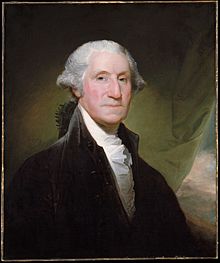
Yu is characterized as an “upright moral character”. Though the Xia dynasty is a hundreds years longer than the United States, Yu reminds one of George Washington’s brief role in America.
Both set the stage for all national leaders who have successes and failures in their journey through history. National leaders strive to form one nation from people of many different ethnicities and beliefs. Successful national leaders manage external and internal crises to unite disparate followers.
Hammond identifies 16 different China’ eras, from Yao to Mao. China’s leaders are not uniformly successful which can be equally said of Presidents of the United States. At times, leaders of nations are petty, greedy, self-righteous, and wrong but China became the most advanced, powerful, and rich country in the world at different times in their history.
Religion and society play parts in both China and America’s rise in the world.
Confucianism, Buddhism, Christianity, and Islam play parts in China’s successes, and failures. Hammond notes how Confucius belief reinforces importance of family in the success of nationhood. Buddhism, though imported from India, instills introspection, meditation, and abstinence into China’s leaders during tumultuous times. At times, Christianity and a burgeoning Islam threaten China’s future. Hammond recounts a claimed brother of Jesus who nearly overthrows a Chinese emperor but fails.
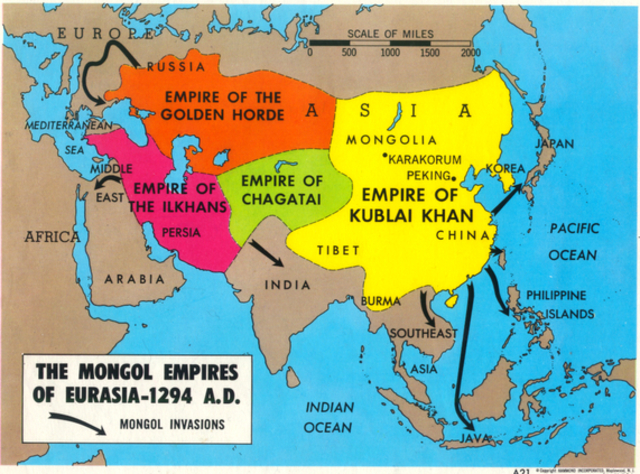
The Uyghurs, a largely Muslim Chinese minority, join Genghis Khan to establish the Mongol Empire. This empire rises at the end of the Song Dynasty that leads China for several generations. The Islamic faith is adopted by descendants of Genghis. It plays a role in China’s history. Fundamental religious and societal conflicts are equally evident in America’s short history.
Genghis Khan (Died August 18, 1227)
Kublai Khan (Died February 18, 1294.)
Chagatai Khan (Died in 1242)
In Hammond’s last lecture, he reviews China’s pragmatist movement. Deng Xiao Ping, in modern China, introduces capitalism into Maoist communism. Private property (though restricted by government limits) encourages accumulation of private wealth.
Entrepreneurial vigor is unleashed in China.
Hammond chooses not to mention Xi but conflicts between Maoist communism and Deng’s capitalist introduction are renewed. Xi reinforces the importance of the communist party at the expense of capitalism. One might argue Xi’s political moves are to combat the temptation of greed.
However, human nature ensures greed will play into communist party bureaucracy just as it does in capitalism. Capitalism and communism have a common failing—the desire for power which comes from entrepreneurial wealth as well as bureaucratic privilege.
One gathers from Hammond’s history of China that there remains no perfect form of governance. Every country’s leadership deals with the failings of human nature.
All these conflicts are evident in America’s 300 years—they are played out in China’s history. China has managed to remain a nation state for 5,000 years. Presumably, America can do the same.
There are no pat answers that can abate the rise and fall of China or America. Rome is no longer Rome, but Italy is still Italy. The same may be said of America if one uses China’s history as a guide.
In a bit of serendipity, “Project Hail Mary” reminds one of Jason Lanier’s memoir, “Dawn of the New Everything”. Lanier commented on a fascination with exhibiting himself as a crustacean in virtual reality. Andy Weir seems similarly captivated.
Andy Weir wrote the fictional novel “The Martian” about an astronaut being stranded on Mars. It became a block buster movie starring Matt Damon.
As an astronaut, Damon overcomes many things that might go wrong when exploring Mars. Weir vivifies and magnifies that danger by exploring the entire cosmos in “Project Hail Mary”.
Like the hero of “The Martian”, Weir creates a character who understands the science of space.
“Project Hail Mary” is the story of a brilliant Junior Highschool Science teacher who becomes a reluctant astronaut. This teacher overcomes many of the mental and physical challenges of space exploration. On his journey, he becomes the first human to contact an alien life.
A striking feature of Weir’s writing is the science he incorporates in his novels. As an only child, Weir is raised by a physicist father and electrical-engineer mother who may have had something to do with his interest in science.
Whatever Weir’s influences, “Project Hail Mary” is a tour de force of science and space travel for non-scientists. Whether Weir’s writing has scientific merit or not, “Project Hail Mary” is a great entertainment, narrated by Oliver Wyman, a master of the art of audio presentation.
Weir takes us on a journey to another solar system. Weir manages to suspend one’s imagination with a tale about a threat to earth on the scale of global warming. Ironically, global warming’s threat is subsumed by a greater threat–the growth of a fungus originating on Venus that absorbs the energy of the sun. Without that energy, Earth is doomed.
As has happened many times in history, a common threat creates friends of former enemies. Like the creation of a political alliance in WWII to defeat an enemy aggressor, a science alliance of independent countries is formed to defeat nature’s aggressor
In Wier’s story, a brilliant group of scientists from around the world assemble to assess the threat of a fungus that absorbs the energy of the sun.
A common threat demands singular, decisive, and coordinated action. Imminent threat requires focused leadership.
In Weir’s novel, that is Eva Straat. She is not the heroine of the story, but she is a leader. She is an historian who clearly understands the gravity of the threat—no energy from the sun, no life on earth.
Weir’s hero is Ryand Grace, a scientist who chooses to abandon science research to teach Science at a junior high school. Grace is a reluctant hero. He is commandeered by Eva Straat because of a science paper, written by Grace as a parting shot to the science community. The leading scientists of the day said no life exists without water. Grace’s science paper claims life on earth is not necessarily true for all life in the galaxy. Grace is convinced that water is not necessary for all forms of life. He quits the science community that vilifies him for his contrary opinion.
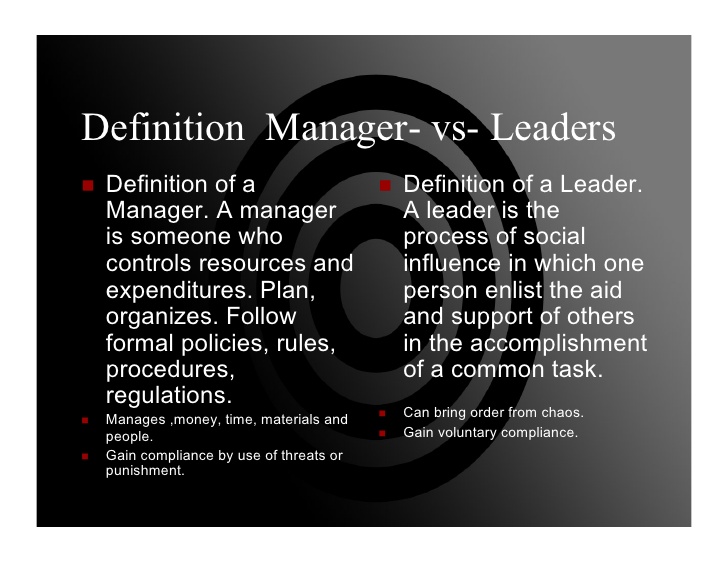
Teachers are great managers that know how to control resources, whether human or material. Grace is a quintessential manager.
Weir’s story credibly develops a belief that life might exist without water and oxygen interactions with the other elements of the periodic table. Grace eventually meets an alien he calls Rocky. Rocky is an alien from another solar system whose home planet is facing the same energy consuming fungus. This alien has no eyes but can see, no ears but can hear, no hydrogen or oxygen in his world, and looks like a crustacean with multiple appendages.
There are many story lines to follow in Wier’s imaginative novel. Some common threads are teaching moments. There is the thread of our world’s end if evolution is unable to keep pace with social and environmental change. There are the principles of friendship, hardship, scientific understanding, teacher and science contribution to society, crises response by the few, the one, and the many, willingness to sacrifice one’s life, and moral choice.
An overriding principle in “Project Hail Mary” is the story of evolution. Life’s adaptation is the soul of the story. Only through evolution does sentient life have a chance to survive.
Lanier’s memoir illustrates how refinement of virtual reality is as groundbreaking as Da Vinci’s understanding of light. History will not likely view Lanier as the Da Vinci of our era but there are interesting similarities.
Not to carry the comparison too far, Lanier magnifies the value of imagination without limiting its potential for both human good and evil.
Da Vinci designs weapons of war that purposely fed the ambitions of his era’s tyrants.
Lanier is one of the pioneers of facial recognition. Facial recognition is a tool that can be used by humanities’ tyrants as well as benefactors. In conjunction with digitizing the lives of everyone, facial recognition implies a “Brave New World” as eminently realizable.
A visit to China reinforces potential loss of privacy and human volition with the advance of a digitized and monitored population.
One comes away from Lanier’s memoir with an appreciation for his candor about life and his unshaken belief in the value of technology. He recognizes his personal imperfection while maintaining an optimistic view for the world’s rescue by AI as a tool rather than controller of human life. There is some comfort in his opinion, but a listener reserves judgement based on the life Lanier has led. He is undoubtedly a polymath but his memoir focuses more on pleasures than the reality of most people’s lives.
The principle of virtual reality lends itself to Lanier’s obsession with music and entertainment.
Lanier is a musician, among many other talents. He spends some of his time collecting and mastering abstruse musical instruments.
One comes away from “Dawn of the New Everything” with the feeling that VR has greater potential for distraction than humanity’s betterment. There is respite from this perception with Lanier’s explanation of how VR is used for education and training. It is a virtual tool for medical and science education.
On the other hand, VR is a tool for remote murder by a person guiding a drone.
B.F. Skinner, American psychologist, behaviorist, author, inventor, and social philosopher.
Lanier also notes that VR has the potential of making life conform to other’s interest.
The “Dawn of Everything” gives a clearer picture of what it was and is like to become a part of the Silicon Valley. He candidly recounts his rise as a tech mogul, failure, and gadfly.
Facebook and Twitter addiction are influencers with WMD potential.
Lanier’s memoir is at once enlightening and disheartening. He offers a virtual picture of modern life that is influencing, but not yet controlling. Lanier is optimistic. Many listeners will leave his memoir skeptical.
John Kaag (Author, Professor and Chair of Philosophy at the University of Massachusetts Lowell)
Like Mary-Louise Parker’s memoir “Dear Mr. You”, “Hiking with Nietzsche” is nearly returned by this listener. Both memoirs, as the word suggests, are personal.
However, Parker’s memoir is burdened by Parker’s self-absorption. “Dear Mr. You” reminds this listener of an actress who chose not to appear at the stage-door in New York after a forgettable stage performance. Parker is a good writer, but she needs a better subject.
“Hiking with Nietzsche” is not overly burdened by its writer’s self-absorption. Kaag offers some clarity to Nietzschean philosophical belief. However, clarity is only partially delivered. Some details revealed by Kaag of Nietzsche’s life are helpful.
Freidrich Nietzsche (1844-1900, German philosopher, poet, composer, cultural critic, and classical philologist)
Nietzsche’s father was a Lutheran minister. He died when Nietzsche was only five years old.
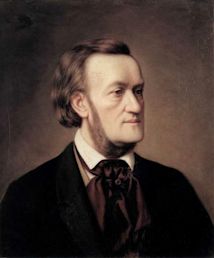
Wilhelm Wagner (1813-1883, German composer and conductor.)
As a young man, Kaag explains Nietzsche idolizes Wagner. Wagner becomes a father figure to Nietzsche.
However, Wagner treats Nietzsche as a servant, an underling, burdened by sexual identity and a modicum of insight to the nature of life. Nietzsche eventually breaks with Wagner, partly in recognition of Wagner’s anti-Semite sentiment, but also as a break from surrogate parental control. Like a child/parent relationship, Nietzsche continues to love Wagner but not as a great human being.
Where Kaag fails is–in inadequately correlating his family life with Nietzschean philosophy. Kaag notes that Nietzsche spent a great deal of time in the mountains that Kaag and his family are visiting. He retraces some of Nietzsche’s peripatetic life in Basel and its surroundings.
Kaag explains Nietzsche abandons belief in God and suggests humankind has killed the idea of a Supreme Being which leaves man in charge.
Nietzsche suggests humankind is on its own.
Kaag notes Nietzsche argues–We humans can become the ideal man, the master of his/her life. In that recognition, humans become potential supermen. Right conduct is determined by individuals overcoming themselves.
This oneself recognizes morality is based on action that supports life, encourages self-assertion, and has no guilt. Nietzsche suggests life should come from a “Let it Be” mentality that repeats itself. Kaag does not make these ideas any clearer in using his family life and his personal actions as a husband and father as exemplars of Nietzschean philosophy.
“Hiking with Nietzsche” is a disappointment but not a waste of time.
There is something to pursue in philosophy whether one agrees with Nietzsche or not. If “God is Dead” can man be moral? It seems doubtful based on world history. On the other hand, all species continue to evolve and adapt. Earth’s environment is no longer taken for granted. Are there supermen and women in our future?
Semour M. Hersh (Author, investigative journalist, Pulitzer Prize winner)
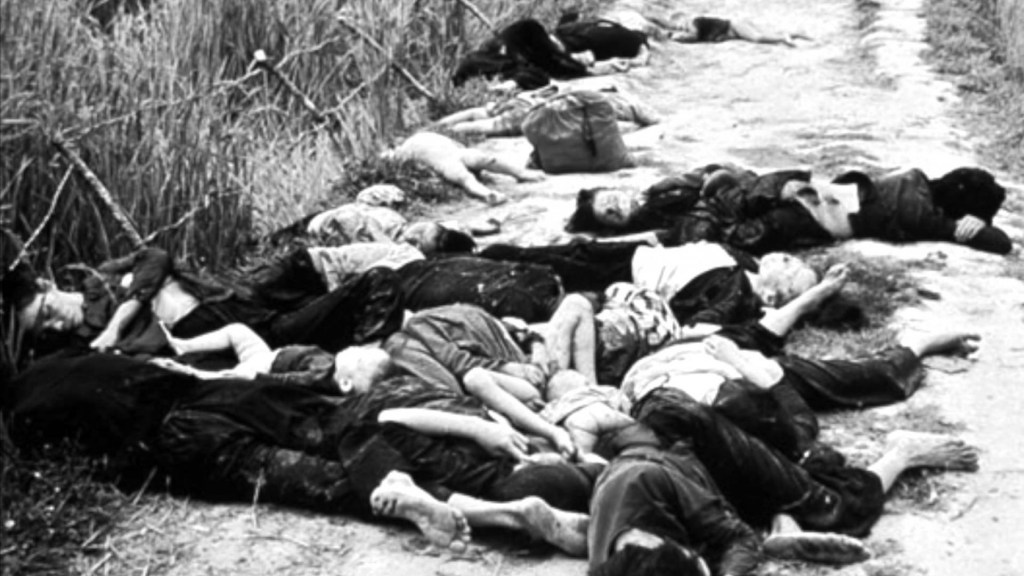
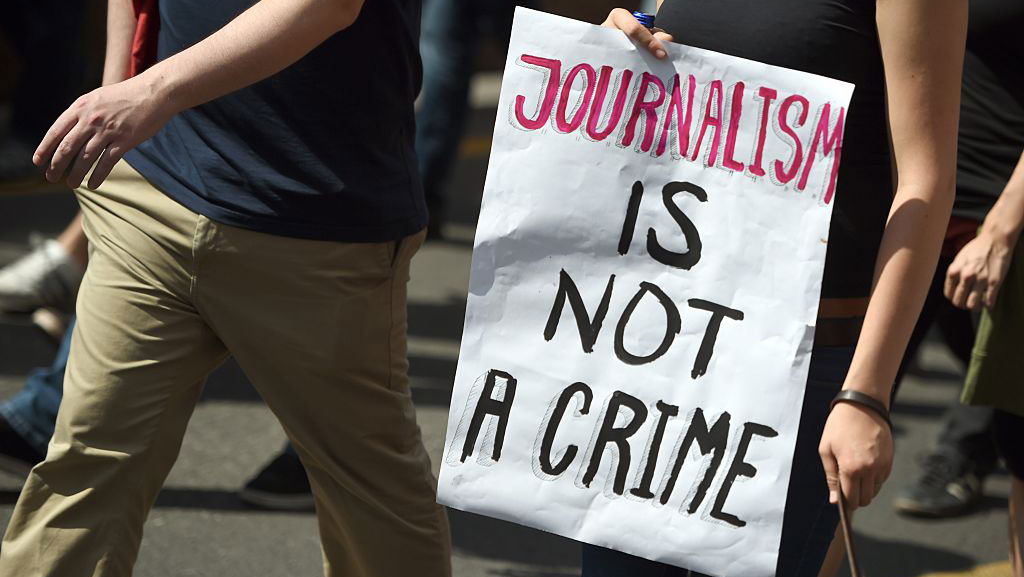
“Reporter” reveals why freedom of the press is both feared and revered. Seymour Hersh is an investigative reporter. After listening to “Reporter”, one realizes Hersh is among the best journalists of the 20th and 21st century. To many newspaper readers (embarrassingly including this reader) Hersh is not well known. Hersh’s reporting uncovered the My Lai massacre early in his career and followed that with revelations about the clandestine bombing of Cambodia, CIA exposure of domestic spying, and a still controversial contention that Obama lied to the American people about the Abbottabad raid that leads to the death of Osama bin Laden.
Hersh’s reporting uncovered the My Lai massacre early in his career.
The tenor of “Reporter” is personal to Hersh as one suspects all his reporting has been throughout his career. His tenacity in confirming facts before writing a story lets one know Hersh is relentless. When one is interviewed by Hersh, one suspects there is fear of being misunderstood or misquoted. “Reporter” alludes to that fear in anecdotes of his search for facts.
The NYT’s paper on 10.11.21 writes about a difference of opinion about how news should be covered.
Hersh shows no fear or favor but his pursuit of facts gives no value to reasons for misleading public perception of events. This is not criticism of the duties of an investigative reporter, but facts do not always speak for themselves.
One knows America’s government has mislead the public many times in its history. Whether that misleading is justified or not is not the concern of reporters like Seymour Hersh. To Hersh, all that matters is–facts speak for themselves. Therein lies the fear of freedom of the press.
The problem with thinking that facts speak for themselves is that all the facts revealed are never all the facts.
The many books that have been written about historic figures is ample evidence of the problem. With the principle of facts speak for themselves there would be no revisionist history. History is re-written in every generation. One wonders what the perception of Vladimir Putin will be after the events of his Ukranian war.
This is not to denigrate the great work reporters like Hersh provide to Americans. Without freedom of the press America would not be America.
Even though all the facts are never known, those that are known should be revealed in real time. How else can freedom be preserved? Hersh, like all good investigative reporters, is not always on the right side of history. Not because his facts are wrong, but that they fail to tell the whole story.
One presumes Russian historians will view Putin differently than western or Ukrainian historians. Hero or villain? –to most Ukrainians, one suspects the latter rather than the former. To Russia’s residents, Putin’s Ukrainian war may be either or both.
Every human being is trapped in their own world of experience and genetic predisposition. Facts are by nature pieced into our personal experience and predisposition. Facts do not change but they are influenced by one’s perception of reality.
Many consider Henry Kissinger to have been one of the most highly regarded Secretary of States in the 20th century. Hersh uncovers facts which suggest that is wrong. Hersh’s facts are compelling. They show Kissinger lies and distorts the truth.
Kissinger flatly denies spying on government employees while Hersh reveals facts that clearly show Kissinger lied. To Hersh, much of the secret opening of China to America happens as a result of an Arab go-between, not Kissinger’s diplomatic skill.
The covert bombing of Cambodia during the Vietnam war is a policy soundly supported, if not initiated, by Kissinger. Hersh’s facts speak for themselves, but one doubts they tell the whole story. The whole story is left to historians. Though it may seem a contradiction, investigative reporter’s revelations in real time are good for American government. Only with transparency, can government become better.
Secret American bombing of Cambodia.
A most interesting chapter of Hersh’s book is an episode to expose the bad deeds of Gulf and Western Oil in the 70s.
His investigation is toned down and effectively stopped by his employer’s lawyers because of fear of its repercussion. Hersh concludes it is imprudent to expose seamy activities of corporate America because of potential negative economic consequence to publishers. Hersh does not back off from private industry investigations but he only refers to one other effort to expose corporate shenanigans. “Reporter” primarily focuses on government employee and policy miss-directions and lies.
Though Hersh is a Democrat, he shows no favor. Hersh notes that facts show President Obama distorted the truth in the hunt and killing of Osama bin Landen.
Hersh dutifully reveals evidence that strongly suggests Pakistan cooperated in the plot to capture or kill bin Laden. Facts suggest bin Laden was not buried at sea but his bullet-ridden remains were dropped from a helicopter into the sea. Those may be the facts but do they explain the whole truth?
“Reporter” is a memoir of a great newsman who is justifiably proud of his contribution to freedom of the press. America needs driven reporters like Seymour Hersh even though print and media news can never reveal all the facts in real time.
There is good reason to both fear and revere freedom of the press. Fear comes from truthful as well as false reporting of facts. Freedom is dependent on good reporting by reputable reporters.
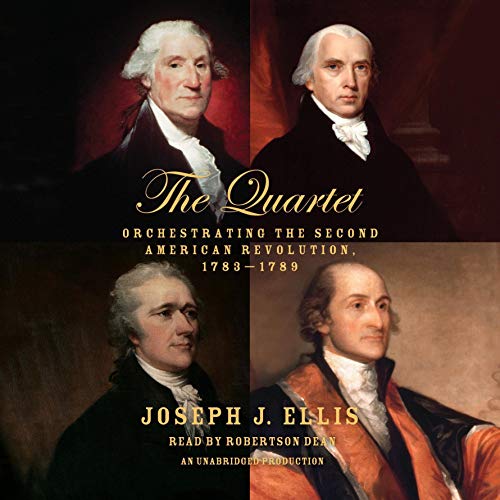
The Quartet (Orchestrating the Second American Revolution, 1783-1789)
By: Joseph J. Ellis
Narrated by Robertson Dean
Joseph J. Ellis (Author, American historian.)
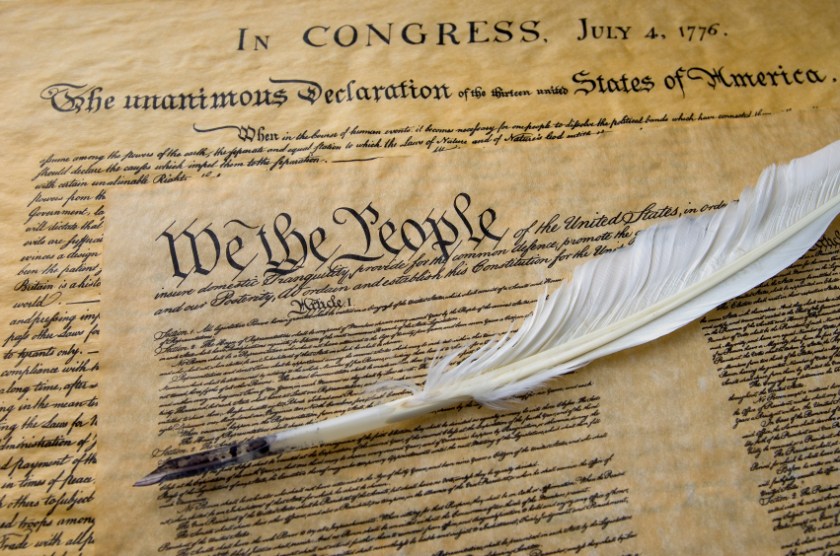
Joseph Ellis explains why creation of a Constitution constitutes America’s second revolution.
“The Quartet” is a well-reasoned history that touches on the 1765-1783 revolution and the subsequent adoption of an American Constitution. Ellis notes America’s fight for independence meant 13 individual colonies (not a nation-state) fought for freedom from government control by Great Britain. It was a revolution of many governments against one. Ellis notes most Americans in those early years identified with their own colonies, their own governments, and their singular independence.
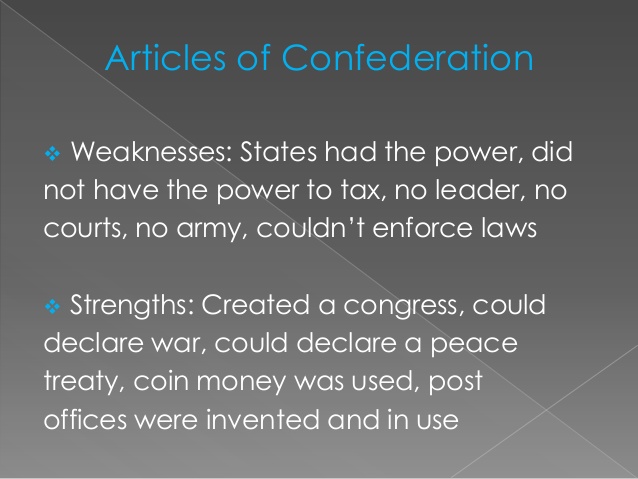
The revolutionary war exposes the weakness of the Articles of Confederation.
Though formed to prosecute an American uprising against the British, a confederation of disparate colonies often failed to provide either pay, food, or clothing to its soldiers who were fighting for their colony’s independence.
Adopting a Constitution in 1787-1788 creates a national identity and a singular nation-state. Ellis implies the adoption of a Constitution is a forcible overthrow of 13 governments. The American Constitution creates a nation-state that complements, and in many ways supersedes, the authority of 13 colonial governments. It addresses many of the weaknesses of the Articles of Confederation.
There is an element of hyperbole in naming the Constitutional convention a revolution but it certainly is a revolution in political ideas. Arms to overthrow colonial governments were not taken up by the framers of the Constitution. However, Ellis reasons the force of four men’s intellects foment what he calls a second revolution.
The Constitution not only consolidates 13 disparate colonial governments but offers a democratic nation-state that could grow and compete with every country of the world. Reification of the maligned ideals of democratic government by the American Constitution may well be classified as a revolution.
Ellis argues a “…Quartet” orchestrates a second American revolution. The preeminent member is George Washington. Two are less well known, John Jay and James Madison. The fourth, Alexander Hamilton is well known today, in part because of the New York rap musical, “Hamilton”. Hamilton is an important spoke in the wagon wheel of early American history.
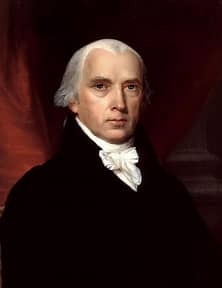
James Madison (4th President of the United States)
John Jay (1st Chief Justice of the United States)
American statesman, politician, legal scholar, military commander, lawyer, banker, and economist
George Washington
The diminutive James Madison is identified by Ellis as the primary motive power behind the creation of the Constitution. Ellis suggests, without Madison’s astute handling of arguments for union, the Constitution would have not been approved by the colonies.
Ellis notes that Madison would not have been successful without the support of Washington, Hamilton, and Jay. It is clear from Ellis’s history that Madison could not have won his arguments for union without the stature and influence of George Washington. Madison’s friendship with Thomas Jefferson and other revolutionaries enhanced his efforts. However, Ellis explains Madison’s intellect and studious preparation for debate carried the weight for public acceptance of the Constitution. Madison effectively argues for and designs a Constitution that preserves a level of State sovereignty with a powerful Federal government that becomes acceptable to the colonies.
A “…Quartet” forms a governing union of colonies to provide defense, health, education, and welfare for a singular nation.
One of many interesting facts Ellis reveals is how Madison, though short in stature, towered over great orators like Patrick Henry. Henry insisted on preservation of independence for the colonies.
Madison is shown as an intellect who is always fully prepared for debate. His ability to draw on historical fact sways enough of the public to see through the voluble and seductive speeches of great orators like Henry.
Ellis notes there is a fundamental difference between Jefferson’s and Madison’s view of the need for a federal government. Both believed in the importance of a federal government but Jefferson looked to a federal government as a light handed, nearly invisible form of influence on local States. Madison viewed federal government as a more dominant and influential force on State governance.
(Parenthetically, Ellis notes that Madison reverses course in his later years to become more in tune with Jefferson’s view. Both men were Virginians. Ellis speculates Madison’s change in belief is in his recognition of growing disadvantages southern states would have in a Federal government.)
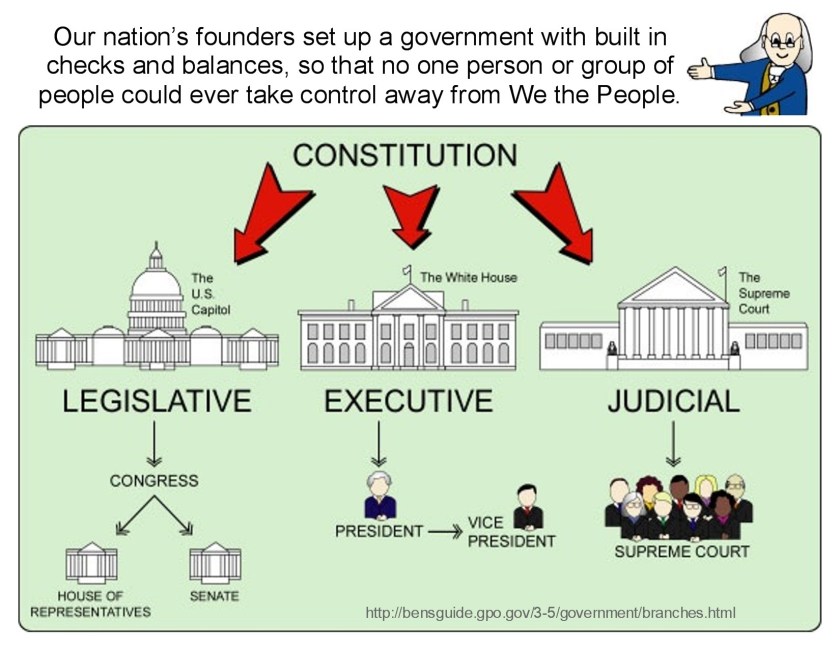
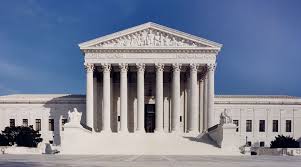
In drafting the Constitution, Ellis notes Madison understood the importance of compromise in dealing with State prerogative. The importance of having State representation and a mechanism for adjudicating disagreement were folded into a concept of Senate and House representation. Every State, regardless of population, would have two senators. However, the House would have representatives based on population. The Senate and House would have different responsibilities but each would have to compromise with the other in order to pass legislation. Though Madison may not have clearly appreciated the power of a Supreme Court, the idea of balance of power with three branches of Federal government garnered more support for union of the colonies.
The role of John Jay, except to historians, is not well known. Jay became the first Chief Justice of the United States.
Before that position, John Jay plays a vital role in forming American independence. He becomes the Secretary of Foreign Affairs under the Articles of Confederation and is a strong proponent of centralized government. He was chief negotiator of the Treaty of Paris, in which Britain recognizes American independence. As co-author of the Federalist Papers (along with Hamilton and Madison) he supported a strong Federal government.
A fundamental point that Ellis emphasizes in “The Quartet” is that the Constitution is proposed by its founders to be a living document. Ellis strongly objects to political leaders that are classified as “Originalists”. In Ellis’s story of the second revolution, the framers did not want to be identified as divinely inspired. They recognized they were Americans of their time, not of all time. They did not believe they were so forward thinking that the Constitution would not be changed by interpretations that fit circumstances of changing times.
Ellis view of America’s formation as a nation-state appears to defy the odds. It seems there was a 2nd American revolution.
The value of Dorey-Stein’s memoir is how a twenty something adult makes his/her way in America. What Dorey-Stein reflects is not just for women. It reveals much about every human’s ambition to make their way in the world.
“From the Corner of the Oval” is a subjective view of the power and prestige of an American President. The President’s power is limited, and his prestige is largely manufactured by the media. However, Dorey-Stein’s story of aides who serve an American President is a journey of extraordinary privilege.
What will draw some to Dorey-Stein’s book is curiosity about what it is like to be an aide in an American Presidential Administration. Some of that curiosity is satisfied. “From the Corner of the Oval” offers a view of Barack Obama from the perspective of a true believer.
The universality of Dorey-Stein’s memoir is a magnification of what it is to be in your twenties, on your way to a future. Opportunity is presented to all people of the world, but few grasp its temporal significance. Only in reflection is lived experience understood.
In the beginning of adulthood, when one is on their own, they choose to do one thing or another to satisfy their need for fulfillment. Fulfillment is a measure of three things—acquisition of money, power, and some measure of prestige. Each of these measures are quantitatively and qualitatively different for every person.
Some desire money more than power, power more than prestige, or prestige more than money. It is a circle of insatiable desire.
Dorey-Stein writes of her experience as a woman in her twenties. She has experienced employment, loss of employment, search for new employment, reemployment, the luck (both good and bad) of sex as a single person, and partner infidelity as a perpetrator and victim. Many people in their twenties encounter these experiences. Dorey-Stein works through these experiences in her well-written and interesting memoir.
The seemingly worst part of her experience is infidelity. One concludes good and bad experiences are overcome by her position as aide in a Presidential administration, some close confidential friends, physical health, and her supportive parents.
Fidelity is a nearly insuperable difficulty for Dorey-Stein, just as it is for many human beings.
Sex is a biological necessity for continuation of any species. From puberty to your twenties through death, sex is present in practice or thought. Dorey-Stein shows the consequence of power and prestige mixed with a natural desire for sexual relationship.
Many may be appalled by the role money, power, and position play in genuine affection and love, but that is life. Along the way, Dorey-Stein gives her reader/listeners a seat in the oval office, Air Force One, and a tour of the world at government expense.






















































 REVIEWS AND VIEWS OF LIFE