DRUG ADDICTION

Audio-book Review
By Chet Yarbrough

(Blog:awalkingdelight)
Website: chetyarbrough.blog

Cherry

By: Nico Walker

                                                    Narrated by : Jeremy Bobb

“Cherry” is classified by critics as a semi-autobiographical novel.  It is written by an Army veteran of the Iraq war. 

The author, Nico Walker, judiciously introduces his novel as a work of fiction.  However, his life history parallels much of what he writes.  He is a veteran of the Iraq war and is now serving 11 years in prison for bank robbery. 

“Cherry’s” main character is a veteran of Iraq.  He robs banks to feed a heroin addiction.  Nico Walker’s real life seems a version of these  experiences.  As some critics suggest, write what you know, but only if “what you know” is interesting.  Walker’s novel is certainly interesting.

He marries and divorces a beautiful woman who is also an addict. 

It is difficult for many Americans, particularly those of us who have lived long, to understand how a handsome young man can waste his life.  That seems the underlying story of Walker’s main character.

Walker’s main character experiments with drugs early in his life. 

Some Americans choose the military because they are making a life transition.  The transition may be to escape parental supervision.  Or enlistment may be related to mistakes in one’s life and a court order tells them to join the service or go to jail.  Some young men and women just can’t figure out how to make a living on their own.  Any one of these reasons might apply to Walker’s main character.

Walker’s character joins the Army because he doesn’t know what else to do.  His reasons are not clearly identified. 

Cherry is slang for a green soldier newly arrived in a combat zone.  

Like all new recruits, Walker’s main character takes a military aptitude test which steers him toward assignment as an Army medic.  After basic, he is sent to Iraq.  He gets a front row seat to the carnage of war.  On the one hand, it appears war carnage may have driven Walker’s main character to drug addiction.  On the other, this fictional character has experience with drugs before Iraq. 

The troubling part of “Cherry” is that it conflates atrocities of combat with drug addiction.  The main character in “Cherry” uses drugs before he goes to war.  One doubts a veteran who did not use drugs before war is either more or less likely to become an addict after war. 

The story of addiction is bigger than war. 

Putting atrocity of war aside, Walker offers a profile of a person hooked on drugs.  Anyone who reads or listens to Walker’s vision of human addiction will be appalled by the downward spiral of an addict’s life.  Life revolves around an addict’s next fix.  It makes no difference if one is good or evil if one is an addict. The only thing that matters to the addicted is the next euphoric high.

Wars are a broadly shared political atrocity; drug addiction is a singular personal tragedy that infects society.  Both may lead to the end of humanity.

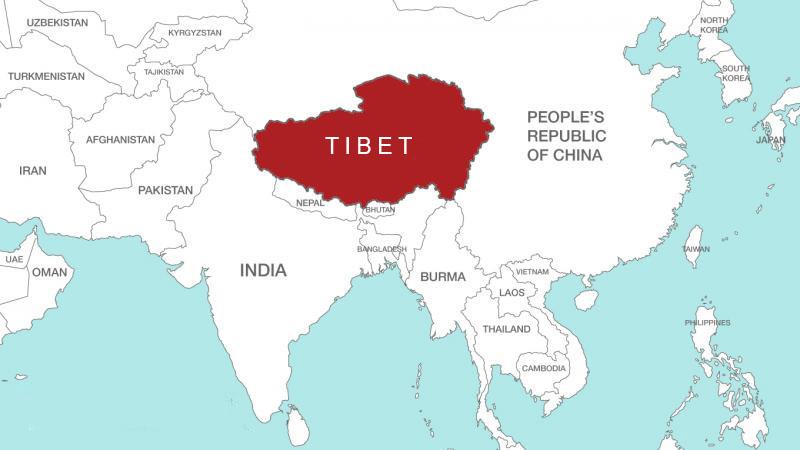
TIBET

Audio-book Review
By Chet Yarbrough

(Blog:awalkingdelight)
Website: chetyarbrough.blog

Eat the Buddha

By: Barbara Demick

                                       Narrated by : Cassandra Campbell

Barbara Demick gives listeners a picture of Tibet with a darkness that rivals the narrative she creates for North Korea in “Nothing to Envy”. 

“Eat the Buddha” is a reminder of China’s insistence on Tibet’s acceptance of Communist authority in the face of Buddhist and Tibetan ethnic and religious identity.  Like the Uyghurs in mainland China, Tibetans practice a religion that conflicts with Communist atheism.  Unlike Islamist Uyghurs, Buddhists eschew violence against oppressors.

Demick addresses self-immolation as an example of Tibetan protest which does not harm others but only one self. Well over 100 men and 28 women have set themselves aflame.

Self-immolation remains a form of protest that reaches the youth of Tibet in the suicide of Tsewang Norbu, a Tibetan pop star, who sets himself on fire in front of the Potala Palace on February 25th, 2022.

Tsewang Norbu (Tibetan pop star–self-immolation in front of the Potala Palace in Lhasa.)

Demick bases “Eat the Buddha” on living seven years in Beijing, with personal visits to Tibet. She interviews Tibetans and Chinese, including the Dalia Lama who is exiled in India. 

Demick interviews many who consider Buddhist teaching a positive and integral part of their lives and culture. 

Demick’s history of the treatment of Tibetan citizens under Maoist communism reminds one of America’s treatment of Indian tribes in America.  Mao tries to erase Tibet’s nomadic culture by murdering Tibetan leaders and excommunicating the Dali Llama. Mao’s object is to thwart the influence of Buddhist religious belief and indoctrinate Tibetan citizens into the ways of Communism.

Mao era attack of Buddhism during the Cultural Revolution.

Demick tells the story of Maoist cadre’s eviction and eventual murder of a regional Tibetan King and his wife during the cultural revolution.  The daughter of the former King is one of Demick’s many interviews.  The irony of this daughter’s experience with Chinese culture offers both positive and negative memories of her early life in Tibet.  She adapts to Chinese doctrine but eventually becomes an assistant to the exiled Dali Lama in India.  She cannot abandon her Tibetan cultural beliefs.

Tibetan demonstration in 2020.

Mao, and today’s Chinese leaders, believe any ethnic self-identification, other than Communist party doctrine, conflicts with the State. 

Like America’s treatment of Indians, China’s leaders use carrots and sticks to integrate Tibetans into Communist doctrine and Chinese culture. 

Rather than accepting culture difference, both America and China suppress their ethnic minorities.  However, the suppression is qualitatively different. The significant difference is that China sees minority ethnicity and religion as a direct threat to Communist ideals.  In contrast, American history implies ethnicity and religious difference are an evolutionary characteristic, bending toward freedom and equality.  That does not make American history less violent, but it suggests hope for something better than China’s expectation of ethnic and religious absorption by Communism.

Demick suggests Tibet is currently in the carrot stage of influence by the Chinese government.  Having personally traveled to Tibet in 2019, much of what Demick describes about the modernization of Lhasa, the capitol of Tibet, is obvious. 

The restoration of the Potala Palace by the Chinese government is astonishingly beautiful.  It is the burial place of past Dalai Lamas.  Though it is no longer a practicing Buddhist temple, it is a tacit acknowledgement by China of Tibetan culture.

The last chapters of Demick’s book acknowledge her extensive research. She notes Tibetans are better off now than they were during the Mao years.  However, she explains Tibetans do not have the same economic opportunity as the ethnic Chinese.  It is important to be Chinese and even more important to be a member of the Communist party. (Our guide in a trip to China and Tibet reinforces the value of being enrolled in the Communist party. Though he abjures the tragedy of Tiananmen Square, he has a slender hope to join the Communist Party because of the opportunity if would afford him and his family.)

Demick infers Tibetans face the same discrimination as American minorities (these pics are not of Tibetans but American Asians attacked by non-Asian Americans in 2021), and presumably the same discrimination felt by many women in the world.

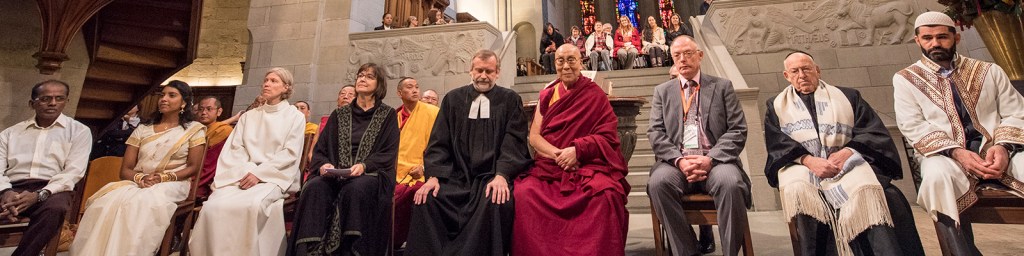
In Demick’s interviews of the Dalai Lama, she finds he is optimistic about Tibet’s future and survival as a Buddhist haven.  The Dalai Lama continues to negotiate with China’s leaders with hope of a return to Tibet.  (He was exiled in the 1950s by Mao’s government. That exile remains in place.)   His successor is to be chosen by the Gaden Phodrang Trust, an India-based group set up by the current Dalai Lama. However, the Chinese government says it will approve the Dalai Lama’s successor.  The Buddhist belief is that the Dalai Lama must be a reincarnation of former Dali Lamas.

GADEN PHODRANG FOUNDATION OF THE DALAI LAMA

Demick writes of a Padme Dalai Lama in Tibet with a marginal explanation of their importance in Buddhism. The Padme Dalai Lama plays an important role in selecting the next Dalai Lama. The Padme Dalai Lama is second in the hierarchy of primary Dalai Lamas. A Padme Dalai Lama is identified (chosen) by a current Dalai Lama. The 14th Dalai Lama chose a 6 year old boy but he was taken by the Chinese government after his selection. Demick explains the Chinese government chose to select the next Tibetan Padme Dalai Lama despite the 14th Dalai Lama’s choice. No one with certainty knows of the Padme Dalai’s fate.  Some suggest he is now a college graduate living an anonymous life. Theoretically, today there are two living Padme Dalai Lamas.

Today’s Dalai Lama is Tenzin Gyatso.  He is the 14th Dalai Lama. As of this writing, he is 86 years old.

Pictures of the 14th Dalai Lama are forbidden in China. Demick notes that a travel book in her carry on luggage is confiscated by a Chinese Airport inspector as she returns to the United States in 2o20. The confiscation is because the travel book had a picture of the Buddhist leader.

Demick draws an interesting picture of Tibet. It reveals both the truth and weakness of one historian’s view of China and Tibet. It is founded on the truth of what a number of Tibetans remember of the Mao’ years and the current relationship of China and Tibet. As is true of all books of history, China’s and Tibet’s past is not perfectly clear and the future, at best, becomes a cloudy past.

APPALLING SIMILARITY

Audio-book Review
By Chet Yarbrough

(Blog:awalkingdelight)
Website: chetyarbrough.blog

Vietnam (An Epic Tragedy, 1945-1975)

By: Max Hastings

                          Narrated by : Max Hastings, Peter Noble

Max Hastings (British author, journalist, editor, military historian.)

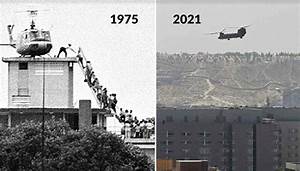
The parallel tragedies of Vietnam and Afghanistan are appallingly similar. 

There is no perfect government, whether authoritarian or democratic. Anyone who has traveled outside the United States understands how great it is to be American. Though American wealth and freedom cannot be taken for granted, it is not an exportable commodity. Failures in Vietnam, Iraq, and Afghanistan do not suggest America should become an isolationist country.  However, America must let independent nation-states manage themselves. 

Thomas Jefferson’s slaves.

America’s human rights are far from perfect. More importantly, they are not an exportable commodity.  Only through a country’s cultural acceptance can human rights be achieved by indigenous populations.

There is a difference between America’s role in WWI, WWII, the first Gulf War, and modern 20th and 21st century American military interventions. 

Military intervention is folly when it is for any other purpose than preserving nation-state borders. Vietnam is a pre-historic nation and Afghanistan has been a nation since 1880. Their cultures have been formed over hundreds of years of experience.

All nation-state cultures are flawed.  They are flawed in their own ways.  Enforcement of human rights is determined by the culture in which they exist.  Every country in the world violates human rights but human rights only change within existing cultures.  

Enforcement of human rights stops at geographic borders.  Political and financial influence are the only tools interventionists should use to influence a foreign nations’ adoption of human rights.

Despite Russia’s long history with Ukraine–military intervention in sovereign countries only leads to injury, death, destruction, and anarchy. Evidence for both Americans and Russians is in Vietnam and Afghanistan.

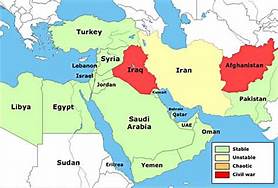
Those who argue that a foreign country harbors terrorist leaders is true but irrelevant. That the Taliban in Afghanistan harbored Al Qaeda is true but military invasion of a sovereign country does not make America or the world any safer.  Al Qaeda operated in many countries, not just Afghanistan.  Historians have shown Osama bin Laden proselytized for revolution and terrorism in African nations, Pakistan, and other middle eastern countries. 

To cite Afghanistan as the country that harbors terrorist cells is a red herring to justify interventionist beliefs.   Any number of countries are potential havens for terrorist cells.  Some would argue military intervention only increases terrorist potential in the world.

Max Hastings’ history records intimate personal stories of participants in America’s failure in Vietnam.  America’s fundamental mistake is the same mistake made in Iran, Iraq, and now Afghanistan.  Military intervention by a foreign power does not give indigenous citizens true experience of the interventionist’s culture.  Without cultural understanding on both sides of a military intervention, there is no prospect for peace. Further, it is unrealistic to believe a combatant will truly understand or care about another nation’s culture.

Heart rending accounts of America’s military intervention in Vietnam make one wonder how forgiveness could be given by either Vietnamese or Americans that served in the war. 

Hastings explains Vietnamese and Afghanis have no choice to join or resist a culture they do not know. Neither could they become citizens of America. They did not have the interventionist’s cultural experience, or a foreign country’s willingness to allow unregulated immigration. Interventionist countries are always outsiders to the indigenous.

Hastings notes invaded countries’ citizens know the culture in which they live, and that culture is something they understand and can choose to join or resist. 

Hastings recounts the tragic mistakes made by France in Vietnam and then shows similar mistakes made by America.  Hastings shows how France and America have different cultures and motivations for military intervention, but they are equal failures.  Like France’s and America’s failures in Vietnam, America repeats Russia’s failure in Afghanistan. 

Hastings explains how North Vietnam soldiers were more committed to winning the war than South Vietnamese soldiers. 

The North clearly understood what they were fighting for, the South knew only the idealism of America, a concept clouded by Vietnamese culture.  Vietnamese could resist or join a North Vietnam culture because they were part of that culture. In contrast, they could not join American culture because it was not a part of their experience. They had no choice while North Vietnamese had communist indoctrination and an ideal that fit within their cultural inheritance. Those Vietnamese who fought communism had little understanding of American culture and were not likely to be offered citizenship.

Tragically, what is happening in Afghanistan threatens women’s human rights.

It is a threat that may be better understood with America’s intervention, but Afghan women’s alternative is only to resist or join the culture they know and understand.  They can either resist or join the Taliban way of life.  They cannot join the American way of life because it is not a part of Afghanistan, and they do not have America’s cultural experience. 

Misogyny is a python that swallows its prey whole, crushes it, and smothers it to death. 

This is a cruel irony. Misogyny exists in America but not in the same way as Afghanistan.  The Taliban have won but it is a pyrrhic victory because human rights are universal, and resistance will grow.  It is a resistance that an interventionist outsider cannot join for the same reason the resister is unable to join the outsider.

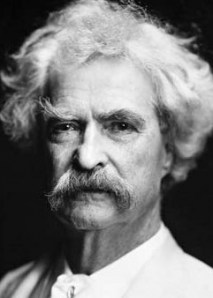
As Mark Twain said, if history does not repeat, it certainly rhymes.  Change can only come from within.  Military intervention only works when nation-state sovereignty is at stake.

George H. Bush, in the first Iraq war knew what is possible and correctly chose to stop America’s intervention in Iraq when Kuwaiti borders were secured.  His son ignored his father’s example and America failed in Iraq. 

Francis Fukuyama notes every society grows via its own cultural norms which suggests sovereignty should be inviolable. Only Iraqis, Iranians, and Afghanis can decide who they want to be.  America can only lead by example and offer political and financial support to resisters of tyranny in other nation-states. Hastings marks the limits of outsiders’ military intervention.  America can only lead by example and offer political and financial support to resisters of tyranny in other nation-states.  The sole exception is when nation-state borders are violated by foreign nations. Even then, other nations must come to agreement on the inviolability of borders for a military intervention to be justified.

LUMINARIES

It is clear in this biography that Einstein’s contribution to science is as immeasurable as aforementioned luminaries of politics, arts, and science. Einstein, and Newton stand as the elite of the elite in science. One hopes there are others in this century.

Audio-book Review
By Chet Yarbrough

(Blog:awalkingdelight)
Website: chetyarbrough.blog

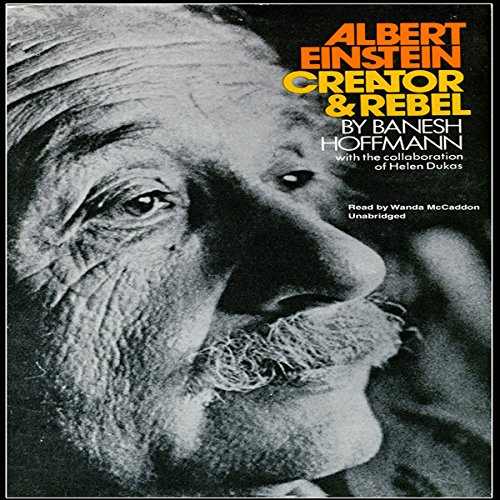
Albert Einstein, Creator and Rebel

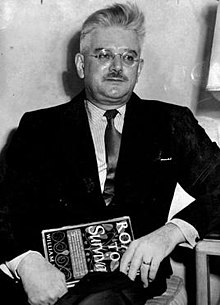
By Banesh Hoffmann, Helen Dukas

Narrated by : Wanda McCaddon

CO-AUTHORS OF “ALBERT EINSTEIN, CREATOR AND REBEL”

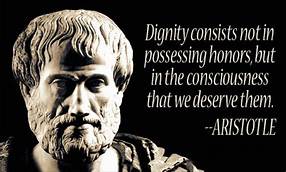
The impact of extraordinary human beings is partly the result of chosen facts–there repetition, and future generations’ revisions of history.  The best known are men, undoubtedly due to misogyny that reaches back to the earliest writings of history.  Whether because of misogyny or other reason, mostly men have had the greatest influence on the course of politics, arts, and science. None more than Aristotle, Jesus Christ, Leonardo da Vinci, Isaac Newton and Albert Einstein.

Banesh Hoffman and Helen Dukas reveal why Einstein is among a select group of extraordinary human beings.  Presumably, Hoffman (because he is a physicist) offers explanation of Einstein’s contribution to the world of science.  However, in an equally revealing light (because Dukas is secretary to Einstein), one presumes she offers understanding of Einstein’s personal correspondence and innate humanity.  To we who are not scientists, Dukas is the star of the book.  Whether searching for understanding of E=mc2 or Einstein’s humanity, this book is worth reading and re-reading.

Newton versus quantum mechanics.

Einstein did not overturn the physics of Isaac Newton, just as he did not deny the validity of quantum mechanics. 

Einstein added to Newton’s understanding of physics by confirming belief in quantum mechanics with the caveat that quantum mechanics does not reveal everything about physics of the universe.  Einstein argues to his last days–their remains an unrevealed fundamental truth about physics. He believes physics will explain why things exist and why manifestation of things is predictable.  Like the inviolate speed of light, Einstein insists there is a physics law that gives predictability rather than probabilistic answers for ways of the world.

Baruch Spinoza (1632-1677, Dutch philosopher of the Enlightenment, biblical critic.)

Einstein believes in God but it is the God of Spinoza. Einstein believes God is not a corporeal being but a principle.

To Spinoza, God is everything in nature.  Religions look at Einstein and Spinoza as heretics, and as some argue, atheists.  However, Einstein suggests “God does not play with dice”. He is saying there is a fundamental cause for everything in the world.  That fundamental cause is God. However, that God is nature which, like energy and mass, has equivalence. Einstein believes there is an unknown fundamental law that explains life’s predictable existence which will prove God is real because, in his view, nature is real and predictable.

Einstein clearly identifies himself as a Jew but in the sense of ethnic association, not religion.  Part of Einstein’s self-identity comes from his disgust with Germany and its systemic murder of Jews in the holocaust. 

Dukas reveals Einstein’s sponsorship of Jews who wish to escape Nazi Germany.  She notes that Israel asks Einstein to serve as President of Israel.  He is deeply honored but chooses not to accept because his life experience is as a scientist, not a politician.

Dukas explains Einstein has an implacable belief in scientific predictability and an unstoppable drive for proof.  Both authors make it clear that Einstein’s greatest discoveries come in his early twenties. He doggedly pursues intuitive truth, even when faced with experiments that fail to support his beliefs.  Einstein does not become discouraged. He casts failed experiment and mathematical calculation aside and re-doubles his effort to confirm his intuitive beliefs.

Einstein did not initially realize the potential of E=mc2 as a weapon because he thought too much energy would be required to create nuclear fission that would change mass into energy. 

With the discovery of neutrons by Otto Hahn and Fritz Strassmann in 1938, Einstein realizes there is destructive potential in his discovery of mass and energy equivalence.  Neutrons used to bombard particular fundamental atoms demonstrate transmutation of mass into energy.   That transmutation unleashes a cataclysmic force.

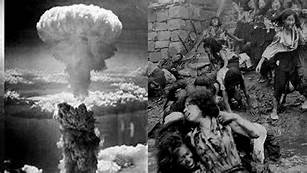
Einstein is shown to be an avid pacifist, but atrocities perpetrated by Germany in WWII leads him to recommend early efforts of America to create a nuclear bomb.  However, he is appalled by the bombs use in Japan.

The thought among Allied forces is that Germany would develop a nuclear bomb before Allied forces could end the war.  There is the suggestion by some that Germany’s last-ditch effort at the Battle of the Bulge was a desperate attempt to delay defeat to have time to develop a nuclear bomb.

It is clear in this biography that Einstein’s contribution to science is as immeasurable as aforementioned luminaries of politics, arts, and science.  Einstein, and Newton stand as the elite of the elite in science.  One hopes there are others in this century.

CROATIAN SERBIAN ATROCITY

Audio-book Review
By Chet Yarbrough

(Blog:awalkingdelight)
Website: chetyarbrough.blog

Girl at War – A Novel

By Sara Novic

Narrated by : Julia Whelan

Sara Novic (American author, translator,and professor of creative writing at Stockton University.)

Sara Novic writes of war in Croatia that is tentatively settled by the dismantling of Yugoslavia in the early 1990s.  Yugoslavia’s splits into 6 ethnic territories–Bosnia/Herzegovina, Croatia, Macedonia, Montenegro, Slovenia, and Serbia.

In a personal 22-day visit to five of the six countries, a Croatian guide tells our small group of travelers that he does not offer a trip to Serbia.  (Our trip was in October 2o17. The guides’ name is not given for obvious reasons.)  He explains his father was killed by Serbian soldiers in the Croatian war.

A little history gives perspective to our guide’s and Novic’s story.  After WWII, Yugoslavia is set up as a federation of six republics to be ruled by one leader, Josip Broz Tito. 

Josip Broz Tito (Yugoslavian ruler 1953-1980, died in May of 1980.)

Though Tito is considered a dictator, under his rule the six ethnic republics experience a period of strong economic growth and relative political stability. 

In having dinner with a family in Bosnia/Herzegovina, a grandmother says she misses Tito’s government.  She felt life was better with Tito as leader of the six territories.

Mass grave in Croatia in 1991.

Novic’s story is of a 10-year-old girl who loses her mother and father when stopped at a Serbian check point in the early 1990s.  The Serbian army gathers a group of Croatians, lines them up in a circle around a pit, and shoots them one by one. 

Serbian soldiers murder every adult and child, each of which fall into their grave.  The father tells his 10-year-old daughter to hold his hand and fall into the pit when he is the next to be shot.  She plays dead as the Serbs complete their circle of horror.  She escapes the pit before bulldozers cover the dead and dying.

Croatian Defense Force fighting in the Croatian War of Independence.

The orphaned girl runs from the scene.  She finds refuge among a group of resisters.  She is recruited by fellow Croatians who have gathered to fight for independence of their country. 

She becomes a soldier for a short time before finding her way back to her abandoned home.  With the help of her godfather’s family, she is illegally aided by a UN representative who smuggles her to America.  She is adopted by an American family, goes to college, and eventually returns to Croatia.

On return to Croatia, she renews acquaintances and finds the place where she had taken refuge after her parent’s murder.  The mass grave is near where she had found refuge ten years earlier. 

This is not our guide’s story, but his story reinforces Novic’s picture of Serbia’s and Croatia’s conflict.  Our guide explains how the United Nations helped Croatia survive the 1991-1995 war.  Interestingly, the guide denigrated America’s role in the war.  In his opinion, America stood on the sidelines when Serbs were perpetrating mass killings.

Novic’s story is well written.  It clearly reinforces our guide’s perception of what happened in Croatia.  The concerning part of the story is its analogous relationship to America’s intervention in Vietnam, Iraq, and Afghanistan.  What happened in the Serbia-Croatian conflict is being replayed in the Russia-Ukraine war today.

The troubling issue with all international conflicts is where the line is to be drawn between being “helpful Hannah’s” and exemplars of good and responsible behavior. Today, NATO’s Western Alliance is struggling with the line to be drawn in Ukraine.

WHERE R U FROM

Audio-book Review
By Chet Yarbrough

(Blog:awalkingdelight)
Website: chetyarbrough.blog

The Committed

By Viet Thanh Nguyen

Narrated by : Francois Chau

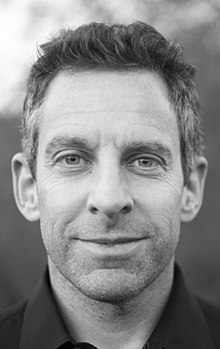
Viet Thanh Nguyen (American author, 2016 winner of Pulitzer prize for fiction.)

“The Committed” carries forward the life of three Vietnamese blood brothers introduced in “The Sympathizer”, Viet Thanh Nguyen’s earlier novel.  Nguyen’s story begins during America’s Vietnam war. 

In the beginning of “The Committed”, the main character, Vo Danh, arrives in Paris with his blood brother Bon.  Their first night’s stay is with a  communist sympathizer who is Vo Dahn’s aunt.  Bon is incensed by the aunt’s support of communism. Bon’s job as a Vietnamese counterspy in America was to murder communist sympathizers.  Bon wishes to leave immediately, but Vo Danh calms him down and they stay the night. However, Vo Danh continues to visit his aunt and for a time lives with her. 

The main character of “The Committed” believes all social beliefs one commits oneself to are corrupted by human nature.  To Vo Danh, his aunt is just who she is committed to be, without being either good or bad.

Vo Danh and Bon leave the next morning to find jobs at a Vietnamese restaurant near the Eiffel tower.  The restaurant is owned by a mobster.  They are hired and choose to rent a room from the mobster.  Bon mostly leaves Nguyen’s story until the last chapters of the book.  He chooses to keep a low profile as a restaurant employee. 

Vo Dahn takes an entirely different path. Vo Dahn becomes a customer procurer and seller for the mobster’s drug business.

Vo Danh’s experience in a Vietnam re-education camp taught him to believe in nothing.  That teaching came from his third blood brother who is commandant of the camp during the Vietnam war. 

This third blood brother is a communist sympathizer in name only.  Before becoming  camp commandant, this third blood brother is badly disfigured by an American napalm attack. He realizes Democracy’s liberation of Vietnam from communism is a meaningless chimera.  In that realization, he re-educates Vo Danh to understand communism, authoritarianism, and democracy are fictions. 

Re-education camps are a euphemism for detention and torture.

Committed beliefs about government mean nothing.  One’s first thought is that the third brother is simply a nihilist.  Vo Dahn understands something different.  In sum, the commandant teaches Vo Dahn that commitment to any ideological belief is a trap.  Even in accepting his blood brother’s re-education, Vo Dahn recalls the love of his mother.  He believes the selfless love of his mother saves him from being a nihilist.

Vo Dahn does not consider himself a nihilist but agrees that believing in nothing liberates humanity. 

In Paris, Vo Danh chooses to become a mobster who sells drugs for a percentage of profits.  He lives life as he chooses.  He expresses no personal scruple about sale or personal use of drugs or alcohol.  He has no fear of the drug supplying restaurant owner, arrest as a legal consequence, or possible attack by competing mobsters.  Vo Danh lives an amoral life informed by the love of his deceased mother.  His life experience and studied philosophical beliefs lead him to believe in nothing as a way of living in an unprincipled world.  His actions in the world are formed by the mother who loved him and a father (who is a priest) that abandoned him.

What is troubling about Nguyen’s story is that love and care is often missing or mutually misunderstood between a mother and her children.  One might accept Nguyen’s story for those children who are truly loved and cared for by their mothers.  However, if mothers are to be on a pedestal, what about the affect of mothers who do not truly love or care for their children.  Are uncaring mothers responsible for children who become mass murderers, dictators, mobsters, and other societal miscreants?

Nguyen’s story has a strong point of view, but it diminishes the complexity of a child’s growth to adulthood.  Interaction between mothers, fathers, and their offspring are interpreted though the minds of their children. 

One is reminded of fictional and news worthy stories of children who are raised in perfect families who become serial killers.

A recurring truism in Nguyen’s story is that all humans are created equal.  When one is asked where they are from, the only correct answer is “I am from my mother”.  Nothing else matters. Color, national origin, religious belief, or sexual orientation do not determine the value of a human being. Nguyen is a great writer with a point of view worthy of many philosophers of this and past ages.

E=mc2

Audio-book Review
By Chet Yarbrough

(Blog:awalkingdelight)
Website: chetyarbrough.blog

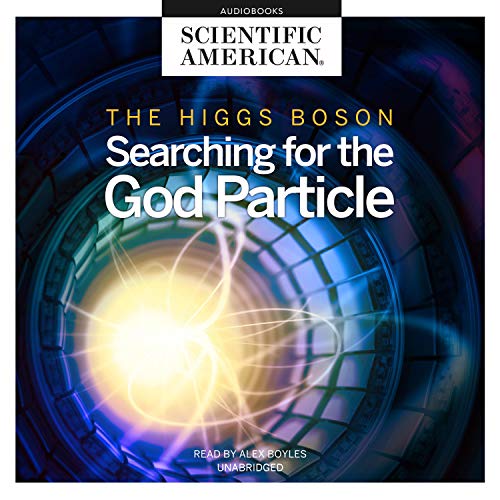
Black Holes: Going to Extremes

Articles Published in Scientific American

Narrated by Alex Boyles

“Black Holes” is a brief compilation of 21st century “Scientific American” articles narrated in Audiobooks by Alex Boyles.  At the least, these articles stimulate interest in finding out more about the history of black holes. 

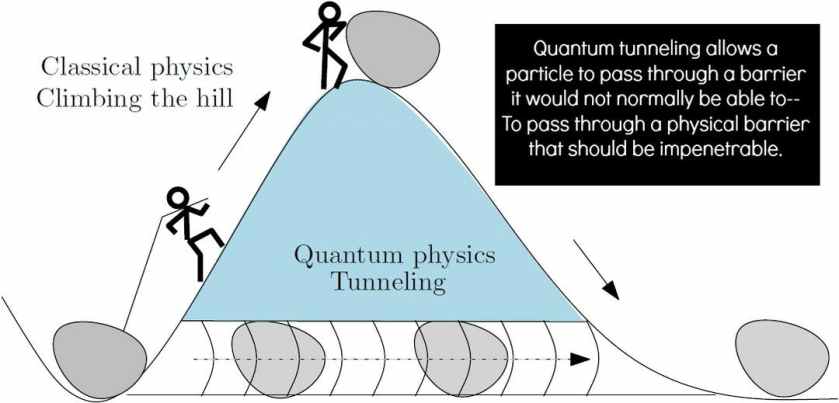
When were they discovered?  Why is their discovery important?  Why do they seem to contradict the experimentally proven theory of Quantum Mechanics?  Why should we care?

Karl Schwarzschild (1873-1916, German physicist, astronomer, and mathematician.)

The idea of black holes dates to research done by scientists in the early 20th century.  The first black hole is discovered by Karl Schwarzschild.  Schwarzschild was the director of the Astrophysical Observatory in Potsdam, Germany. 

In correspondence, Schwarzschild confirms Einstein’s mathematical theory of gravity as a form of matter that reinforces the famous equation E=mc2. 

John Wheeler (1911-2008, American theoretical physicist.)

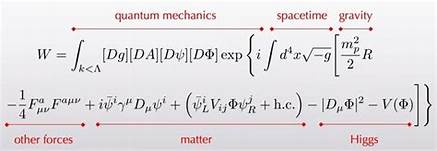
Much later in the century, fellow physicist John Wheeler explains “Space-time tells matter how to move; matter tells space-time how to curve”.

The elemental particles of gravity are not clearly understood because they are too small for current scientific observation.  Black holes are evidence of gravity, but the evidence seems to conflict with experimentally proven theories of quantum mechanics.

The discovery of black holes is important because it may hold the secrets of gravity.  Gravity makes planets and objects within and on planets attract and repel.  Einstein explains how gravity distorts the fabric of the universe.

Einstein’s equation indicates that energy and mass are equivalent and therefor never lost.

Black holes absorb all things that fall within their gravitational field at their “event horizon”.

However, astronomical observation shows that black holes seem to disappear without any information, residual mass. or energy remaining. This defies the current theory of quantum mechanics and seemingly Einstein’s belief that mass and energy are equivalent and never lost.

Why should we care?  Quantum mechanics is a theory that defies certainty.  However, Einstein believed God did not play with dice.  He believed a future discovery will give humankind an all-encompassing understanding of nature, just as Einstein’s “energy and mass equivalence” offers a limited theory of nature.  Black hole existence and disappearance may hold the answer to an all-encompassing fundamental law of nature that explains everything about everything.

Maybe Einstein’s E=mc2 is confirmed (not denied) by the existence of black holes.  Maybe, black holes do not violate the equivalence of energy and mass even though information appears to be lost when a black hole disappears. 

Could all black holes in a universe act as though they are connected at a distance?  Maybe energy and mass equivalence is not lost but spookily transmitted to other black holes.  Einstein may yet be confirmed. Maybe there is a missed fundamental law of physics that offers a Newtonian order to the universe.

WORDS THAT UNMAKE US

Audio-book Review
By Chet Yarbrough

(Blog:awalkingdelight)
Website: chetyarbrough.blog

The Words That Made Us: America’s Constitutional Conversation, 1760-1840

By Akhil Reed Amar

Narrated by Fajer Al-Kaisi

Akhil Reed Amar (Author, Professor of Law and Political Science at Yale University.)

“The Words That Made Us” spins history in ways that may offend some historians.  Akhil Amar reveals interesting historical facts that arguably diminish the reputations of Thomas Jefferson, John Adams, and James Madison.  On the other hand, Amar bolsters the legends of Benjamin Franklin, George Washington, and Alexander Hamilton.  Along the way, Amar offers praise for lesser-known visionaries like John Jay, Edmund Randolph, John Marshall, and Joseph Story.

Thomas Jefferson and James Madison are characterized as unrepentant slave holders who form a close friendship that reinforces the human stain of American slavery.  Both are characterized as apologists for slavery who purport to write and support equality while politically endorsing and promoting American expansion of the slave trade. 

Amar’s greatest praise is for Washington.  Washington is noted to have been a steady influence on the drafting of the American Constitution. His experience in the revolutionary war exposed the inadequacy of the Articles of Confederation. Washington clearly understood the importance of a national government for a proper defense of the colonies. His reputation and actions taken during the revolution were well known to the framers of the Constitution. Without having to take a public stance, Washington exemplified what had to be done to correct the weaknesses of the Articles of Confederation.

Though Washington is a slave holder and acted as most colonists of his time, he emancipates his slaves upon his death.  However, Amar notes Washington, in his time, pursued his fugitive slaves and sold them when they were captured.

Amar’s peon to Franklin is for his belief in science, experiment, and enlightenment.  Franklin consistently promotes American independence from England in Parliament, in France, in local American meetings, and in every public forum he attends in his era.  

Franklin had a point. The test of the Supreme Court on Roe V. Wade is about words used to provide abortion rights to women. Is the Supreme Court’s decision before–the truth or an error? Is abortion a political or human rights issue?

Though initially a slave buyer and holder, Franklin quits the slave trade and becomes part of the American conscience that abhorred slavery’s inhumanity.  Amar’s research reveals Franklin’s last essay, one month before death, satirically attacking slavery and unequal treatment of non-white Americans.  Amar implies Franklin’s advanced age is the only circumstance that prevented him from being more influential in the implementation of the American Constitution.

Washington is the Cincinnatus of American history.  He eschews power in the interest of a Democratic nation-state. 

Washington is characterized by Amar as a wise surrogate father for many, particularly the brilliant Alexander Hamilton who is too volatile to act as a prudent manager of public affairs.  Washington brings  out the best in those who offer ideas that promote and build the colonies into one Nation.

Duel between Hamilton and Burr from which Hamilton dies.

Amar channels and re-enforces Hannah Arendt’s analysis of revolution.  Amar argues the American revolution’s success is based on careful preparation of American colonists.  Long before Amar’s book about “…Words…”, Arendt explains in “On Revolution” that lack of citizen preparation is why France’s revolution fails and America’s succeeds.  Amar’s research clearly reinforces Arendt’s observations.

Arendt argues there is no preparation for French citizens to become a Republic that rejects monarchy.  As a result, France experiences anarchy, heedless bloodshed, and democratic failure after their 1789 revolution. 

In contrast to the French revolution, citizens of the American colonies are psychologically and politically prepared for a nation-state Constitution before its writing, adoption, and implementation.  

Colonial Americans listen to and debate many reasons for creating the Constitution that places man-made laws above the nature of man.  Proliferation of pamphleteers, newspapers, and town hall meetings prepare both literate and illiterate colonists for revolution.  Blood is shed in America before, during, and after the 1776 revolution but Amar explains how and why 13 independent colonies agree to become a nation-state in 1789.  In Amar’s opinion, it is the result of “ The Words That Made Us”, and the men who spoke, wrote, and lived them.

Amar suggests accomplishments of Jefferson, Adams, and Madison are diminished for different reasons.  Jefferson and Madison are slave holding Virginians who distort the truth of their words about equal rights for all Americans.  Amar suggests Jefferson lies about his personal life and exaggerates his role as the sole source of the written Declaration of Independence.  Jefferson had little to do with the final adoption of words in the American Constitution while becoming a strong advocate for States’ rights at the expense of national unity and emancipation.

Madison is acknowledged as a diligent advocate and negotiator in the creation of the American Constitution. 

However, Amar notes Madison’s change of heart about states rights as he ascends to political office as the 4th President of the United States.  Amar suggests Madison’s change of heart is related to his fellow Virginian’s (Jefferson’s) concern about abandonment of equal representation in Congress based on the 3/5s’ clause that allows slaves to be counted for congressional apportionment. 

Amar vilifies John Adams for long absences from America in his role as Ambassador to France, the Netherlands, and England.  Amar argues Adams’ discussions about the course of events in America relies on the classics of the Greek polis more than the opinion of colonists of the current day.  

Amar suggests Adams’ loss of touch with colonists’ opinion distorts his judgment.  Amar notes Adams’ proclivity for self-aggrandizement in his role as a revolutionary.  As the 2nd President of the United States, Adams’ ego leads him to the Alien and Sedition Act that jails and fines Americans for criticizing his Presidency.  Amar notes that Adams fails to get a second term, in part because of his over weaning ego but also because of secret political machinations of his professed friend, Thomas Jefferson.

To Amar, appointment of John Marshall as Chief Justice of the Supreme Court redeems much of Adams’ reputation.  Amar explains even Adams expresses a belief that the best thing he did as President was to appoint Marshall. 

Marshall establishes the Supreme Court as a powerful third branch of the federal government.  By the same token, Amar infers appointment of Story to the Supreme Court by Madison somewhat redeems Madison’s reputation as 4th President of the United States.  

In contrast to Adams, Madison is elected for a second term.  However, Amar suggests Madison is too beholding to Jefferson to be an independent thinker and actor.  Amar believes Madison’s selection of Story for the Supreme Court gave balance to the Court.   Story is not anti-Jefferson but believes states rights do not abrogate Constitutional rights or condone singular State secession.

Though Story is not Madison’s first choice and not a favorite of Jefferson, he is selected because of his youth and perspicacity.  Amar suggests Madison’s friendship with Jefferson nearly makes the federal government an instrument of Jeffersonian politics.  Justice Story tempers the state’s rights movement attributed to Jefferson’s influence.

Facts of history may be immutable but new facts seem to change history with every new historian’s research.  One is left with a feeling of unease about truth.  “The Words That Made Us” are also words that unmake us.

RESPONSIBILITY

Audio-book Review
By Chet Yarbrough

(Blog:awalkingdelight)
Website: chetyarbrough.blog

One by One

By Ruth Ware

Imogen Church

Ruth Ware (aka Ruth Warburton, Author, British psychological crime thriller writer.)

“One by One” is a maudlin psychological thriller that makes a mockery of responsibility.  John Green’s “The Fault in Our Stars” creates characters that truly illustrate things beyond human control. 

In contrast Ruth Ware’s characters are out of control of things within their control.  Both novels have two main characters.  Ware’s main characters are Erin and Liz.

Erin is a chalet hostess.  Liz is a guest.  A media tech company organizes a corporate meeting for stockholders to decide on a private buy-out offer.  Most shares are owned by two principles. A small percentage is owned by Liz.  The 2 biggest stock owners disagree about the sale.  The founder wants to stay private to sell shares in a public offering sometime in the future.  The partner who wants to sell now needs the 2% shareholder to agree to the current offer for the sale to close.  The proposed buyout will make Liz a millionaire even though she holds only 2% of the shares.  The sell-now partner has a verbal agreement from Liz to agree to the sale.  The selling partner is murdered or missing before a final vote is taken by the shareholders.

If a crime has been committed, Ware outlines motives for who the killer might be from a plethora of characters.  That is part of the problem with her story. There are a too many vaguely defined characters. 

It is not only the number of characters, but also the annoying mechanism of first-person narration of the two main characters.  As an audiobook, it is often difficult to know who is talking.  There is only one narrator who shows no voice inflection when the character changes. Is Erin or Liz talking?

Further, characters are not well defined in Ware’s mystery.  Ware is obviously an experienced writer. She foreshadows the murder of the “selling partner” who wares a red coat when the group decides to go skiing before the final shareholder’ vote. 

The obvious choice of murderer is the founder of the company who does not want to sell.  However, a reader/listener of mysteries knows it is unlikely that the most obvious perpetrator is the culprit.

The search for clues revolves around motives of Ware’s characters.  The disclosed motives are unremarkable.  The principal motive is found to be people who fail to take responsibility for those things within their control.  The annoying refrain is “it’s not my fault”.

Some may find Ware’s novel a worthy mystery.  To this listener, the characters are paper dolls in lives controlled entirely by circumstance.

AIMLESSNESS

Audio-book Review
By Chet Yarbrough

(Blog:awalkingdelight)
Website: chetyarbrough.blog

In the Distance

By Hernan Diaz

Narrated by Peter Berkrot

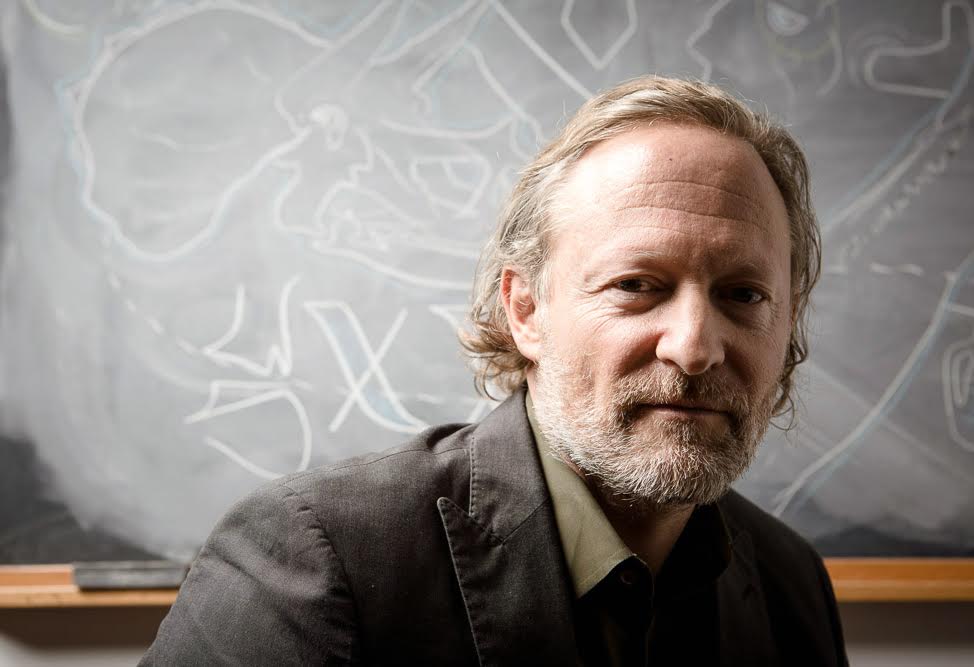
Hernan Diaz (Author)

“In the Distance” can be viewed from different perspectives.  It is a story of emigration, isolation, survival, self-identity, human nature, extortion, and distortion.  The author, Hernan Diaz, is nominated for a Pulitzer Prize, but fails to win.  Diaz’s writing is unquestionably evocative and compelling but there is an aimlessness in the story that diminishes its appeal. 

Emigrating to America in the mid-nineteenth century, Diaz’s main character is accidently separated from his brother and arrives in California rather than New York, presumably between 1849 and 1855 (the gold rush).

The story begins when a tall and muscular Swedish immigrant swims out of frigid water to astonished travelers on an ice bound ship, sailing in Alaskan waters.  The Swede’s name is Hakan Soderstrom who is known by some as a legend named Hawk.  Hawk tells his life story to the astounded travelers.

Hawk is the younger of the two brothers who emigrated to America.  His older brother is alleged to have gotten separated in their departure, He lands in New York while Hawk lands in California.  Hawk depends on his older brother for guidance and decides to journey cross country to be reunited. 

One can imagine how isolated an immigrant would be without anyone who can understand or help a young emigrant boy who only speaks a foreign language.  Survival is dependent on finding one’s way in a wilderness of language and culture.

Diaz pictures gold rush days in California as a land of violence, greed, and survival. 

Hawk adapts to his environment and creates a self-identity based on what he must do to survive.  Hawk becomes acquainted with a family led by a miner who is looking for gold.  The husband finds gold but is extorted by a gang of town thugs.  The thugs abduct Hawk who becomes attracted by the woman who leads the gang.  Hawk is growing into a man of extraordinary size and strength.  He is corralled by the gang leader who uses Hawk as a sex slave.  She sees Hawk’s future potential as an enforcer for the gang.  Hawk has other ideas. He escapes captivity and heads east with the hope of finding his older brother. 

As the story unwinds, Hawk grows to be a giant of a man.  He never stops growing physically (a condition known as giantism today) and matures with an understanding of the natural world.

Hawk’s understanding of nature comes from an acquaintance, a naturalist who is searching for evidence of the origin of human life.  This naturalist befriends Hawk and teaches him many things about human life.

The naturalist is a nature-born physician (ahead of his time) who understands the importance of sterilizing medical instruments used to treat wounds and how poultices may be used to heal infections.  Hawk gains understanding of many medical treatments, but more importantly, recognizes the sanctity of human life from the practices of the naturalist.  The naturalist dies and once again Hawk is isolated and on his own.

Heading east, Hawk learns how to survive in nature.  He makes a great lion-head cloak from the skins of animals that he kills for food. 

Hawk survives severe weather conditions by creating shelters from whatever nature has to offer. 

His shelter reminds this listerner of an underground shelter photographed in Turkey in 2o19– carved in earth by ancient Christians to protect themselves.

Hawk eventually returns to society by joining a group of settlers traveling cross country.  The settlers are beholding to a flimflam leader that promises land when they arrive at their destination.  This leader recruits Hawk as an enforcer without Hawk fully understanding why. Hawks giant size is what the leader needs to keep the settler’s in line. 

The settlers and their leader are attacked by white renegades who disguise themselves as Indians.  They attack a young girl to which Hawk is drawn.  Hawk reacts by murdering the white renegades.   The renegades are rebels from an unspecified religion, implied to be excommunicated Mormons.  The re-telling of the massacre is distorted by public reports of the incident.  Hawk becomes a legend who kills brothers of the church and innocent women and children.  A price is put on Hawk’s head for a crime he did not commit.

Hawk’s actions become a widely known story that becomes distorted with its re-telling.

Hawk is eventually captured by brethren of the church.  He is tortured and mutilated but he survives with the help of a male brethren who believes Hawk is innocent.  They become close friends, maybe lovers, but other brethren of the church eventually find them, and Hawk’s friend is killed.  The legend of Hawk continues but after the loss of his friend, he returns to years of isolation.  He grows older and bigger but, through self-isolation, avoids capture.

Hawk is finally found by several rebellious uniformed soldiers who try to recruit him as their leader.  They reason Hawk could strike fear into anyone they choose to rob because of his legend and immense size.  Hawk sneaks away from the miscreants by preparing a dinner laced with a narcotic.

The story’s ending is all that is left.  It ends where it begins. “In the Distance” offers some interest to a listener. However, to this listener, Diaz’s tale is more interesting because of its prose than its content.