Living with the Devil ( A Meditation on Good and Evil)
By: Stephen Batchelor
Narrated by: Stephen Batchelor
Stephen Batchelor (Author, Scottish Buddhist, teacher.)
Stephen Batchelor offers a view of religion and reality in an attempt to move beyond the “let it be” implication of a meditative life. Batchelor places Buddhism in the context of most religions’ beliefs. He explains Buddhism personifies the devil as a master of seven dimensions of heaven.
The devil assigns one of the seven heaven’ disciples to inspire sin in human life. That disciple is Mara who is directed by the devil to seduce Siddhartha, the founder of Buddhism. Mara assumes the visage of a woman but fails to distract Siddhartha from “the way” and, like Christ in Christian belief, Siddhartha becomes a symbol and guide for humanity.
Image of Mara who takes the image of a woman to seduce Gautama Buddha, (Siddhartha).
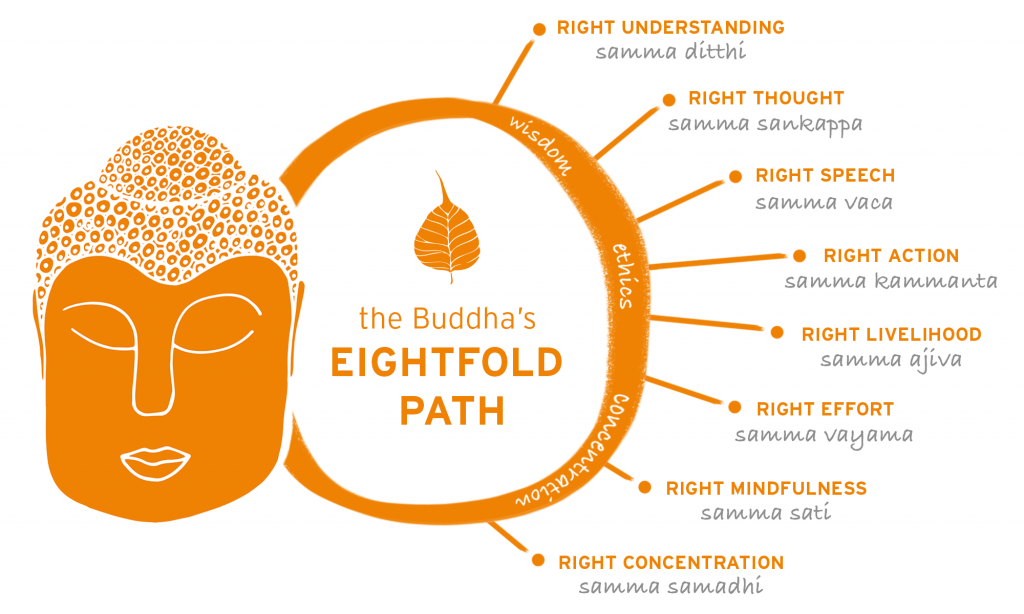
Batchelor explains Buddhism is the door to “the way” which recognizes the devil as a part of life’s yin and yang. Hardship and death are part of life. Those seeking eternal life delude themselves. It is not possible to have life without death. It is not possible to have “the way”, a path without evil because evil defines good by being its opposite. This leads to a “let it be” mentality of those who meditate on “the way”. Batchelor is not condoning the evil of violence, destruction, or death but explains its role in defining “the way”. Therein lies a criticism by some.
Buddhist guidance is described as “the way” by Batchelor.
One presumes, it is the same “way” referred to in the adventures of Disney Studio’s “The Mandalorian”.
Batchelor describes the path that most of humanity takes is deflected in the same way as a human walking with one leg shorter than another. The path of humanity is circular which suggests why history seems to repeat itself. (To paraphrase Mark Twain–history may not repeat itself, but it certainly rhymes.)
One who is not a Buddhist is not comforted by Batchelor’s explanation of “the way” or his acknowledged acceptance of living with the devil. Batchelor, like Buddha, Jesus Christ, and a Divinity, may be correct in their knowledge about human life but it does not give one comfort. It proffers fear that violence and destruction is to be tolerated by humanity because it is a part of living life as a human being.
Batchelor implies homelessness, despair, and human degradation are incurable and acceptable because the devil’s work helps define “the way”.
Accepting Buddhism seems to encourage meditation at the expense of human effort to give succor to those in need. All religions and societies should be focused on social and economic equality for all. Accepting less is failure. “The devil made me do it” is a cop out.
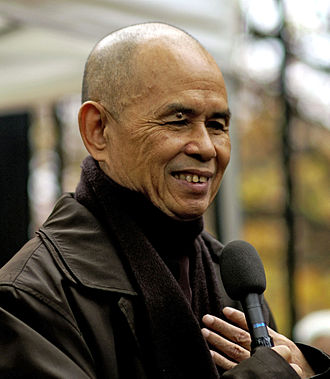
Thích Nhất Hạnh (Author, Buddhist Monk, Zen Master, Political Activist.)
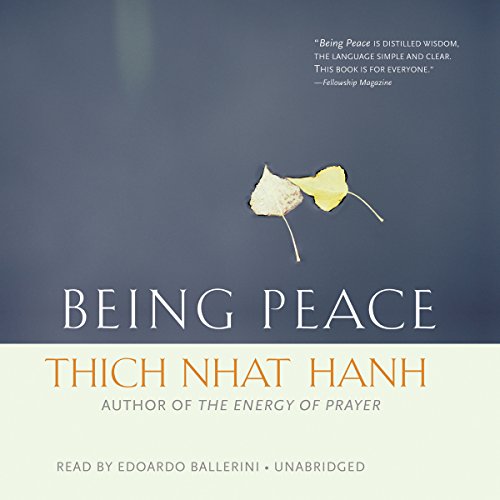
“Being Peace” is a layman’s introduction to Buddhist belief. Thích Nhất Hạnh offers a “let it be” philosophy of life while being a political activist. Hanh’s philosophy of peace comes through meditation. Hanh finds through meditation human life is found to be neither good nor bad.

There is no evil in Hanh’s world. In one sense that reminds one of Christian’s belief in “turning the other cheek”. The difference is that Christian’s believe there is evil in the world, and it must be punished.
Hanh tells a story of a Sudanese pirate that rapes a girl-child and throws her into the sea to drown. Hanh suggests he could have become a Sudanese sea pirate by having experienced Sudanese poverty and depredation. Hanh’s view is that the circumstances of life and environment create miscreants, rapists, and murderers.
Contrary to belief in evil and punishment for moral transgression, Hanh finds empathy for those who pillage, torture, murder, and rape.
Hanh’s solution is to accept Buddhist belief in peace through meditation. In accepting life as it is, evil doers disappear. This is certainly an oversimplification of Hanh’s teaching.
Hanh notes world leaders squander world resources that could be used to create and sustain peace for all people in the world. He decries wasted dollars for military defense. His argument is predicated on abundance that is unevenly distributed.
Hanh lives through the French and American atrocities in Vietnam.
Hanh undoubtedly observed the senseless murder of innocents by both western powers and communists.
Ironically, until more recently, Hanh was banned from Vietnam because of the crowds he attracted to his teaching. Fear of competition from someone independent of the government frightens communist bureaucrats. Hahn is now allowed in Vietnam, but his forums are restricted to small groups of believers.
Money, power, and prestige seduce the poor, middle class, and rich, whether in a democracy or autocracy. There are few exceptions–maybe only Buddhist meditators, and Socratic philosophers–not the general public.
Hanh’s book is insightful but inadequate when measured against the innate nature of humankind. On a personal level, one can accept the value of meditation in seeing things as they are and how they should be. However, on a global level, it is difficult to imagine broad acceptance of meditation.
Narrated by Sir Derek Jacobi, Kenneth Cranham, Roger Allam, Brendan Coyle, Miriam Margolyes, Time Mcinnerny, Jamie Glover, Emily Bruni, Jenna Coleman, Joshua James, Hugh Skinner
Charles Dickens, Author.
Dickens appeal in the 21st century is magnified by economic change.
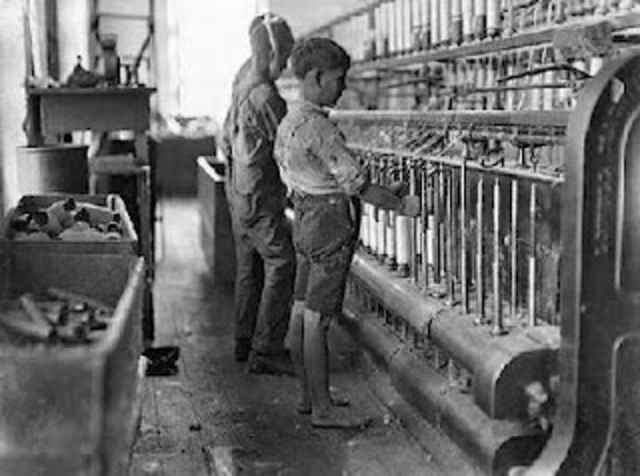
The industrial revolution, like the tech revolution, put people out of work. In Dickens’ time, Great Britain’s and the world’s industrial growth demanded change.
Today’s tech revolution demands the same. The change required is different in one sense and the same in another.
The industrial revolution occurred in a time of scarcity while the tech revolution takes place in a time of abundance. Both revolutions require training for new kinds of jobs.
Smog plagued Great Britain as it grew in the18th century.
(This is smog in today’s Beijing.)
Dickens is born in 1812 and dies in 1870. He witnesses and writes of the squalor that existed in London during his adult years. “A Christmas Carol” is one of many stories he wrote that reflects on the human cost of economic change.
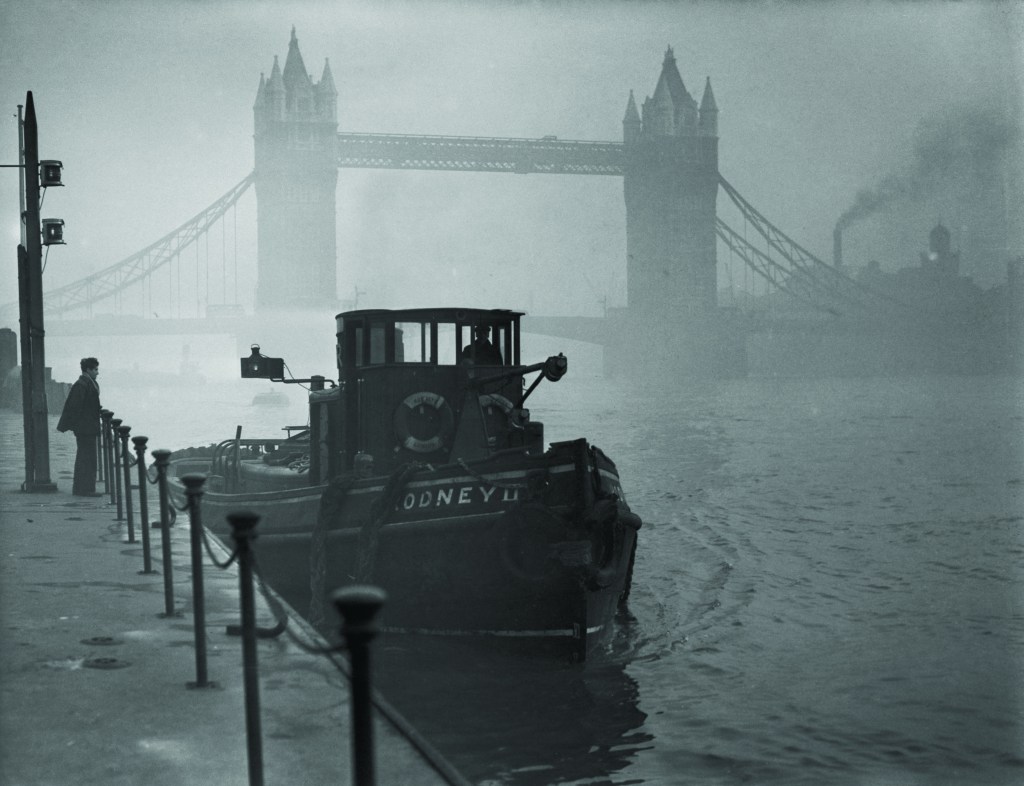
London fog 1952
In 1952, the streets of London were enveloped in a fog caused by coal used for domestic heat and industrial production.
An incident of London fog in the 20th century is comparable, on a local scale, to the world’s pollution crises today. An estimated 4,000 people were said to have died, with 100,000 made ill because of unusual windless conditions in that year.
Today, air pollution is compounded by global warming.
“A Christmas Carol” is a reminder of the damage world leaders can do by ignoring the plight of those who are most directly impacted by economic change. Too many American leaders are acting like Ebenezer Scrooge and Jacob Marley by ignoring the Bob Cratchit s and Tiny Tim s of the world.
For those who may not remember, Scrooge and Marley were capitalists who believe all that matters in life is personal wealth. Marley comes back as a ghost to offer Scrooge a picture of past, present, and future Christmases, based on how he lives the remainder of his life.
Todays’ political leaders are in Jacob Marley’s ghostly presence with a chance to change the future for the Crachits, Tiny Tims, and wage earners of the world. The world needs leaders who are not blinded by the allure of money, power, and prestige at the expense of the jobless, homeless, and disenfranchised.
Barry M. Prizant, Phd. (Author, adjunt professor at Brown University, authority on autism disorders.)
Many are familiar with the existence of a neurodevelopment disorder called autism. In a 2015 “Global Burden of Disease Study”, it is estimated that 1-2 people per 1,000 may be diagnosed with an autism spectrum disorder.
Prizant notes it affects more males than females and has a wide range of exhibited symptoms.
“Uniquely Human” is an excellent introduction to autism. Prizant explains how symptoms are manifested, and how parents, teachers, and the public can help those within and outside the autistic spectrum.
Autism is believed to be caused by a combination of genetic and environmental factors. Faulty synaptic connections in an autistic person’s brain affects their way of thinking and acting.
Prizant notes the importance of listening to a person on the autistic spectrum and asking questions to understand their thought and action.
Prizant becomes an investigator by asking parents, teachers, and acquaintances of their experience with a particular autistic person. By questioning, Prizant can find why an autistic person acts or reacts in a particular way.
Prizant explains that a person on the spectrum is no different than any human being. An autistic person is thinking and acting based on facts they perceive and how they interpret those facts.
If something is thought of as a threat, all people act in similar ways. The principal difference is that one on the autistic spectrum may be interpreting information differently and reacting in accordance with their unique perception.
When one realizes how information is being interpreted by someone on the spectrum, it is possible to work on reactions that seem wrong for the circumstances. Prizant goes through several examples. Being fearful of a boat ride, a particular corner of a street, or meeting strangers may make one who is on the spectrum act out. With understanding of an autistic’s perception, one can desensitize and change behavior through explanation, environment change, or avoidance.
In the case of the boat ride for the autistic child, Prizant suggests explaining the safety measures to be taken, adding a comfort toy on the trip, and showing that many friends will be on the boat. In the case of a scary corner, Prizant discovers that a white building at the corner reminds the autistic person of a trip to the doctor when he was ill and in pain. Explaining to the frightened child that all white buildings are not the same abates fear of the corner. With more careful understanding of an autistic person’s perception, the object of fear can be addressed directly. Being afraid of strangers is true of many people whether on the spectrum or not. Knowing there is fear means one can address that fear by gradually introducing friends that do not have to be feared.
The difficult realization in Prizant’s book is that there are so many commonly understood social conventions assumed by people that are not comprehended by those on the autistic spectrum. Social conventions are often poorly defined or not taught.
Social conventions like not saying what you think when it embarrasses a person in front of other people comes from experience, not teaching. This is just one example of how difficult it is for an autistic person to cope with life because societal norms are not precisely defined. Those not on the spectrum, take societal norms for granted based on their experience. Prizant notes a person on the autistic spectrum experiences life differently. They may be completely unaware of social conventions.
Prizant offers tools for understanding and working with all human beings, not just those on the autistic spectrum. Whether one is autistic or not, it is important to listen, investigate, and understand why people think and act the way they do. It might be because that person is on the autism spectrum. That does not mean those who are not on the spectrum may also interpret facts in a way that is inconsistent with most people’s understanding.
Understanding human beings can only come from listening and questioning what a person thinks and why they act the way they do. Easy to say, but time consuming and unlikely to be done in this increasingly fast-paced world.
“A History of Wine in Ten Glasses” is a journey around the world of wine.
Paul Wagner is a wine instructor at (where else?) Napa Valley College.
There are several revelations about wine for us amateur wine drinkers. Thomas Jefferson tried and failed to create a good wine in his home state of Virginia.
Jefferson’s failure is related to a grapevine disease in Virginia’ soils that attacked the roots of plants he brought with him from his diplomatic mission in France. The root disease is discovered after Jefferson’s death. Once the disease is diagnosed and treated, Wagner notes Virginia began producing some fine wines.
Wagner dates the production of wine back to 6000 BC in what is now known as Georgia. Some would dispute that and suggest China had a rice and grape mixed fermented wine in 7000 BC. Others suggest Iran may have been the origin of the first wines on the the Persian Gulf. In any case, wine has been with us for centuries.
Wagner argues the Roman Empire is the primary disseminator of the art of wine making.
Rome’s conquest of countries surrounding the Mediterranean spread wine making throughout the known world, sometime between 27 BC and 476 AD. Even today, the greatest wine volume comes from Italy with France and Spain, the second and third biggest producers
More than ten glasses are identified by Wagner, but the primary libations are from Italy, France, Spain, U.S., Australia, Greece, South Africa, Chile, Argentina, and Germany. However, Wagner takes side trips to smaller countries like Portugal and New Zealand.
Having traveled to some of these countries, his assessment of their wines seems spot on. Interestingly, his assessment of Chile’s inexpensive Malbec is a favorite of mine. In Italy, the selection of wine at dinner seems the simplest of all decisions. Rarely is red wine in Italy served that is too bitter or too sweet. Retsina in Greece is a horrible drink but adding water makes all the difference. Retsina remains an acquired taste but with water it becomes palatable. Traveling to Argentina and New Zealand confirms Wagner’s assessment of the quality of their wines.
The idea of adding water to wine is a surprise but Wagner notes added water was often the habit of early wine drinkers. (Of course, watered wine is common in religious ceremony.)
Wagner also notes that a pinch of salt can smooth the acidic taste of an inexpensive wine. Potassium chloride, not salt, is what is recommended by some wine connoisseurs.
German wine Labeling system.
A surprising note by Wagner is that German and New Zealand wines are tightly controlled by a labeling system to assure the quality of their wine.
Wagner reports on Germany’s and New Zealand’s precise label certification. One suspects precise wine labeling is a characteristic of the precisionist culture of Germany. However, New Zealand’s labeling is a result of some Marlborough wines that were contaminated by runoff from lumber harvesting activities in 2005. Both countries labeling assures the quality of their wines. Undoubtedly, there is a concomitant cost for the right label.
Wagner lives in Napa Valley and, not surprisingly, suggests many of the best wines in the world come from Napa Valley’ vineyards. Blind wine testing in Paris confirms his opinion. What he says is true about many Napa Valley wines, but prices of those great tasting wines are often higher than many can afford.
“A History of Wine in Ten Glasses” is a nice introduction to the vagaries and mysteries of wine selection. For we amateurs wine selection remains hit and miss because it is only our personal taste and affordability that matters.
As a first exposure to Chang-Rae Lee, “My Year Abroad” is disappointing. Lee is an accomplished novelist with many awards, but this latest book is long, and in too many places, ponderous.
In some sense “My Year Abroad” is a stereotypical story of an Asian immigrant capturing the American dream by working hard. It outlines the life of a person who is industrious and intelligent who works in a restaurant while earning a college degree in chemistry. Somehow, this immigrant’s success becomes tainted in using his education to delude himself and others to believe in immortality. The idea of a chemical formula to extends one’s life seems to trigger a greed that destroys rather than preserves lives.
Lee’s fictional story reminds one of Elizabeth Holms and her belief in the blood test technology of Theranos. The only question being–does motive come from self-delusion or greed?
Lee shows an industrious young man who games the American immigration system to stay in New Jersey past the date of his limited visa. A large part of his story reflects on the success of an immigrant who flimflams fellow investors into a scheme to sell an elixir to cure death. This is not the first time an American has bilked the public which is why Lee’s story loses its way.
Lee puts aside, rather than explains, the poorly managed and unfair American immigration system that shuts out an important part of America’s prosperity.
What keeps one interested in Lee’s story is Tiller, a young boy who gets caught up in the elixir fraud. Tiller enters the story by helping a mother and her son in a chance meeting at the airport. The mother has been put in a witness protection program. She testifies to the illegal activity of her husband who is pursued by the American government. This introduces the threat of discovery by her husband’s associates who might kill her.
Her savior is Tiller who comes from a broken family. His mother left her family early in Tiller’s life. He does not know what happened to her. Tiller misses her presence.
Tiller has a telephone relationship with his father who is a professor who supports him while he works in a restaurant as a dishwasher while going to college. Tiller is a teenager, nearing 20, when he meets the witness protection mother and her son. They begin a troubled life together. The trouble is multifaceted based on age differences, guilt of the mother for having ratted on her husband, and a son bereft of a father, showing behavioral problems.
To some reader/listeners this is a lot to accept as credible. Lee manages to keep the story together with the endearing qualities of Tiller. Tiller deals with life as it happens. He is industrious and has an inner compass that guides him through whatever circumstances life presents. One admires Tiller’s grasp of the circumstances of the mother and her son. Tiller makes their lives better. One grows to care about Tiller, the troubled mother, and the son who needs help in coping with life.
Paul Kildea (Author, Austrailian conductor, Artistic Director of Musica Vivia Australia.)
Paul Kildea is a multifaceted talent who has written an interesting biography of Frederic Chopin and a lesser-known Polish musician, Wanda Landowska, who revivified Chopin’s music.
Frederic Francois Chopin (1810-1849, Composer and virtuoso pianist.)
Whether one knows anything of music or history, Kildea expertly entertains listener/readers with “Chopin’s Piano”.
Chopin is noted as a Romanticist composer considered among the most creative of all time. For that reason, the sound of Chopin’s work has changed with the times.
There are several ironies in Kildea’s history of Chopin. Chopin is shown to have been pleased by being considered French though he was Polish. Chopin is characterized as anti-Semitic though at times financially supported by Jews and resurrected by a world-renowned harpsichordist, Wanda Landowska, a proud and nationalist Pole who escaped Nazi persecution and extermination. Landowska, a woman of the Jewish faith, flees Paris when Germany invades France.
Wanda Landowska in front of the Bauza piano owned by Chopin.
One of her treasured pianos is the Bauza piano used by Chopin to create his greatest masterpieces, the Preludes.
George Sand (1804-1876, French novelist and 10 year companion of Chopin)
Kildea reflects on Chopin’s diminutive physique and self-effacing nature. Chopin never marries but has a ten-year relationship with George Sand, a divorced woman with a broadly libertine reputation.
One wonders what Sand’s influence is on Chopin’s creativity. What Kildea explains is that Sand admires Chopin’s dedication to music and supports Chopin through his frail health during the most productive period of his life. However, at the end of their ten year relationship, Sand leaves because the burden of their relationship is either too much or she just chooses to return to a life of independence.
The thread of Kildea’s history is the Bauza piano’s location in the 21st century. It’s whereabouts remains unknown.
This piano was used by Chopin between 1838-39 when living with George Sand in Majorca. A striking point in Kildea’s story is that the Bauza piano is a crudely formed instrument carved from local softwood. Its innards are made of felt, pig iron, and copper but its cultural importance is extraordinary and its provenance unquestioned. It disappeared when confiscated by Nazi Germany when they ransacked Landowska’s home in Paris.
Wanda Landowska in 1953.
The last half of Kildea’s story is about the trials and achievements of Wanda Landowska. In reflecting on Landowska’s rise to fame, the Bauza piano is a symbol of Chopin’s creative genius.
This flawed instrument is used to create compositions that are endlessly translated by pianoforte (soft and loud sound) from the use of harpsicords to modern Steinways. Landowska, and many pianists of the 19th through the 21st century are listed by Kildea, showing the brilliance and variety of Chopin’s compositions. Only a musical conductor turned author like Kildea could explain this to the public. “Chopin’s Piano” is a small opening to a big world.
Zachary Carter has written an interesting biography of John Maynard Keynes.
Carter details Keynes’ personal life with an interpretation of Keynesian economics. This is a a history of a man of many parts that explains Keynes economic beliefs and their evolution and interpretation by later economists.
Though Carter is not an economist, his characterization of Keynesian economics has meaning for the world’s recovery from Covid19. Government action in this century would be highly benefited by Keynes’ post WWI and WWII economic policy recommendations.
Carter notes Keynesian economics, though more widely adopted by liberals, springs from the conservative and moral philosophical beliefs of Edmund Burke, an Irish Statesman who lived from 1729-1797.
Burke’s conservative credentials reject the rights of American colonies to claim independence from Britain. Burke abhors the French revolution and French citizens belief that they have a moral right to overthrow a monarchy. In contrast to this conservative view of the world, Burke plays a leading role in arguments against executive authority of a King and rejects support of the slave trade when it is a lucrative source of income for Britain. Though clearly a conservative thinker, Burke joins a liberal group of leading intellectuals and artists in the 18th century, led by Samuel Johnson.
Carter notes Keynes identifies with Burke’s conservative belief in a government that serves the best interest of the people, whether authoritarian or democratic. Keynes never abandons Burke’s conservative belief in national government’s right to rule within the confines of human morality, a morality that relies on betterment of all economic classes of the state.
Interestingly, Carter notes Keynes, like Burke, joins leading intellectuals and artists known as the Bloomsbury Group that formed in the early 1900s.
The 10 core members were Clive and Venessa Bell, E.M. Forster, Roger Fry, Duncan Grant, John Maynard Keynes, Desmond MacCarthy, Lytton Strachey, and Leonard and Virginia Woolf.
The first half of Carter’s book addresses Keynes’ rise to fame. Keynes is called upon by the British government during WWI for advice on how to finance the war against Germany. Keynes role becomes more pronounced with war reparations negotiation after the Kaiser’s defeat in WWI.
Keynes works with J. P. Morgan and the banking industry in the United States to finance much of the Allies needs during and after WWI.
Carter explains Keynes tries to ameliorate the demands of the Allied powers for reparations from the defeated Central Powers. Keynes tries but is unable to gain the cooperation of America as the only country capable of backing such an unreasonable reparation from the war’s estimated cost.
Carter illustrates how the seeds for WWII are sown by Allied powers that unreasonably expect WWI’s defeated nations to pay for all financial costs of a war that Britain, France, and its allies had won. That cost is many times the annual GDP of the Central Powers which were already bankrupted by war.
Keynes is shown by Carter to be an astute economic and political theorist that understood the tenor of his time and the price needed to pay for peace. However, Keynes’ prescient understanding of post WWI economies fails to persuade political leaders in Britain, France, and America to pay that price. The stage is set for the rise of Nazi Germany by the economic intransigence of WWI’s Allied Powers.
The surprising perspective given by Carter’s biography is that Keynes’ economic theory is grounded in the conservatism of Edmund Burke. Today’s view of Keynes is that faltering economies can spend their way out of depression by deficit spending, a highly liberal political and economic theory. What Carter explains is that Keynes argues economic policy should be designed to benefit the general welfare of the public. Keynes looked at economic policy impacts on all classes of citizens when developing his economic theory. If the private sector creates jobs and the general public’s economic health is improving, government that governs least is considered best by Keynes.
However, Keynes argues-when the welfare of the public is harmed, the government must act to regulate unfair practices of the private sector that diminishes the economic health of the public, particularly the poor.
The world economy is in crises because of the effects of Covid19. The private sector is not responding to the consequence of the Covid19′ crises just as it did not adequately respond to the depression in 1929.
Johns Hopkins Resource Center reports that worldwide–there are 4,901,012 citizens dead from Covid19 as of October 2021.
The economic consequence of those deaths and fear of further death feed an economic storm that continues to wreck havoc on nation-state economies.
Carter’s history of Keynes illustrates why Biden’s plan for reinvestment in America is important. The government stepped in with employment programs like WPA that began a recovery for America after the 1929 crash. One may argue that is where America is today. It is not just the aftereffects of Covid19. The world’s recovery depends on a transition from an industrial to a technological economy. The private sector is not investing enough in that transition. Partly because of industries resistance to change, but also because of their inability to privately finance the transition.
Carter notes Keynes insists on free trade and suggests restraint of trade unduly raises prices for commodities for those least likely able to pay.
Tariffs only weaken private sector innovation and reduce the general public’s welfare.
Keynes is channeling Adam Smith (1723-1790) in his belief about free trade.
Carter infers Keynesian theory would allow government to help private industry innovation when harmed by foreign producers that can produce product at a lower cost. To Keynes, government help should not be in the form of tariffs but in investment in change by the industry that is affected. An example is in government investment in transition to work on the environment or service industry at an employee level of investment and training.
Carter notes that Keynes insists that government investment be limited to those areas that are not being addressed by the private sector. The obvious example is public works investments by the government in roads, bridges, water, and sewer services.
Carter explains Keynes argues that when the private sector is benefiting the public through their actions, no government programs should compete. However, when the public is not being served by the private sector in areas of human need, Keynes argues government should intervene. Homelessness is a case in point. How can the richest nation in the world ignore the plight of homelessness?
When the public is not being served by the private sector in areas of human need, Keynes argues government should intervene. Homelessness is a case in point.
The last chapters of Carter’s book reflect on Keynes efforts at Bretton Woods to create an economic system to insure world economic stability. Keynes is mostly unsuccessful in his idea of creating an international banking system that would be a safety valve for nation-state economic crises. With a brief evaluation of economists that distort Keynes ideas in the late twentieth century, Carter completes his history of the price of peace.
Carter concludes with the thought that this is a dark time for Democracy.
He offers a brief evaluation of modern Democratic and Republican Presidents that suggest neither clearly understood Keynesian economics. Carter decries the mismanagement of the economy by Kennedy, Clinton, the Bushes, and Obama because they fail to see the impact of their policies on human inequality.
Keynes fundamental belief is that all governments must evaluate the affect of their administrations on the poor and middle class because they are the engines of prosperity.
It is an investment that would lessen inequality and raise the standard of living for millions of Americans. It is a government policy grounded in Keynesian economics that addresses the fundamental purpose of lifting all boats in a storm driven economy.
President Biden’s 3.5 trillion dollar investment in American Democracies’ future offers some hope.
Carter reminds listener/readers of the history of the 20th century in this excellent biography of Keynes. Carter’s biography reminds one of Keynes’ contributions to economics in the way of Newton’s contributions to physics. Both were geniuses. Both were ahead of their time and laid the groundwork for fundamental understanding of their disciplines.
For a short time in 2017-18, “The Handmaid’s Tale” mesmerized TV viewers. A 4th and final season is planned by Hulu in 2020. An interesting speculation in “The Handmaid’s Tale” is–what would happen if misogyny grew rather than diminished in society? Margaret Atwood suggests misogyny will create a dystopian future.
Atwood’s view of misogyny’s existence in the world is fulsome and complex. She implies misogyny is perpetuated and reinforced by both sexes. Both women and men ally themselves in repression of sexual equality.
Margaret Atwood creates a story about a conspiracy of women to repress equality by exclusively relegating women to propagation and covert management of humanity. Males are correctly accused and guilty of denying women’s equal rights, but Atwood illustrates both sexes are complicit in suppression and enforcement of sexual inequality.
Many men and women hide behind the veil of religion and secular authority to exploit unequal treatment of the sexes.
Atwood’s story implies men may rule the world but only under the influence and guidance of women. Males are sperm providers. Males possess rights to rule the world, but they delude themselves in thinking they are in control. The relationship between the sexes makes women not only the vessel of creation but the covert controller of society. Only the female form can create human life. In most western religions, only women were given knowledge of good and evil in the garden of Eden.
Love is not necessary and is a negative force in Atwood’s dystopian vision of the future.
Atwood implies men’s weakness is in their ignorance, desire for intimacy, failure to control nature, and a wish to see themselves as more than sperm bearers. The strength of women is in their knowledge of good and evil and how to use it to have some level of control over nature.
Neither sex can control nature, but knowledge gives women a sharper edge for splitting the difference between good and evil. What Atwood implies is that women’s superior knowledge of good and evil may lead to her described dystopian world.
The best antidote for a future unlike that shown in “The Handmaid’s Tale” is the Socratic importance of “knowing thyself”. All human beings are created equal. “Knowing thyself” is the beginning of wisdom. Neither men or women are superior beings.
Joseph M. Marshall is a native American Indian of the Lakota tribe. He argues that humanity must balance economic growth with nature to preserve cultural, particularly American Indian, identity. The foundation of the argument is his life in a Lakota family and a felt loss of cultural identity. His recollection is that his family’s life ambition is balancing the Lakota way of life with the natural world.
Marshall creates an argument based on a false dichotomy.
The world has never been a static place. One cannot dispute balancing change with nature is critical to survival of humans on earth. However cultural evolution is an integral part of that balance.
Marshall notes his family modified their culture to adjust from hunter/gatherer life to a farming life.
He decries the destruction of his native culture by non-native explorers who, without question, deceived, evicted, and murdered Indians for what foreign settlers believed was a new frontier to conquer and exploit.
But that is not the theme of Marshall’s book. His belief is that ethnic cultures should be retained by emphasizing balance of nature to maintain the environment in a fragile world.
What is disturbing about the emphasis on balance of nature is the discounting of science that saved many homos sapiens from disease, starvation, and death.
With discovery of the causes of disease, ways for cure, and methods for increasing food production, people’s lives and standards of living were improved.
Marshall recalls an idyllic history of his Lakota family that lived in the wilderness by adjusting their lives to the exigencies of nature. On a larger scale of life, rebalancing lives of humans with earth’s environment is a never-ending process. New scientific, political, and social discoveries require cultural adaptation.
Cultural evolution is a consequence of human nature and manufactured law. Human nature is formed at birth and evolves based on life experience that modifies the psychology of being, human desires, and behavioral traits. Manufactured law is a social construct based on either authoritarian, socialist, or democratic political ideals and institutions.
Knowledge gained through science offers the opportunity to rebalance the relationship between humanity and nature.
Cultural evolution is a part of that rebalancing. Cultures collide and reform. Cultures are compelled to adapt. Over the life of the universe, one presumes earthlings will have one culture, and other worlds will have their own distinctive cultures.
This is not to minimize the monumental loss of identity to the Lakota or any other culture.
The history of indigenous Indian cultural decimation in America is heart breaking in the same way that all human beings have not been treated as equals.
Marshall’s wish for cultural permanence is an unreasonable expectation. Human nature is a brutal and often unfair quality of being human. Adaptation by cultures follows Darwin’s path of evolution. The animal kingdom adapts to its changing environment, or cultures and species die.