C.I.A.

Audio-book Review
           By Chet Yarbrough

(Blog:awalkingdelight)
 Website: chetyarbrough.blog

A Great Place to Have a War (America in Laos and the Birth of a Military CIA

By: Joshua Kurlantzick

           Narrated by: Tim Campbell

Joshua Kurlantzick (Author, senior fellow for Southeast Asia at the Council on Foreign Relations)

“A Great Place to Have a War” reflects a turning point in the operations of the CIA in the 1950s. Joshua Kurlantzick’s story implies the CIA’ role became something more than originally intended.

The CIA is founded in 1947. Its primary duty was to collect, evaluate, and disseminate intelligence affecting national security.

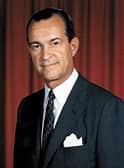
Richard Helms (Former Director of the CIA from 1966-1973.)

The former director of the CIA, Richard Helms is quoted as saying Laos“… was a major operation for the Agency….It took manpower; it took specially qualified manpower; it was dangerous; it was difficult.” He contends the CIA did “a superb job”. Helms is referring to the CIA’s covert activity in Laos during the early days of the Vietnam war. Joshua Kurlantzick’s book, “A Great Place to Have a War” suggests Helm’s view of “a superb job” is a self-serving lie that is far from the truth.

The center of this story is about the Hmong people who live in Laos. One of the great leaders of the Hmong in the 1950s is Vang Pao.

He served as a military leader in Laos from 1940 to 1975. He became a Major general and is shown to be a great leader of the Hmong resistance to a communist takeover of Laos. The CIA aids Vang Pao in the creation of a “secret army” to resist North Vietnam’s incursion in Laos.

James William Lair (CIA Officer serving in Laos.)

William Lair aka Bill Lair, a paramilitary officer of the CIA is an Ambassador to Thailand and is moved to Laos to provide CIA support for Vang Pao’s effort to expel communist invaders from Laos.

Lair (to the right of the helmeted soldier) is a tool of the CIA to create a secret army of Hmong fighters to resist communist takeover of the country.


With the help of CIA covert paramilitary operatives like the infamous Tony Poe (aka Anthony Poshepny), the Hmong army is trained in military tactics.

Poe is infamous in that he instituted collection of Vietnamese ears to confirm kills of enemy combatants. He allegedly sent a bag of ears to his superior officers in the CIA. Poe is respected and feared by many Hmong soldiers for his training and brutal killings. Poe’s “take no prisoners” mentality is adopted by Hmong fighters.

The author offers a detailed history of CIA operatives that manage operational support of the Hmong in Laos.

The fundamental point made by Kurlantzick is that (after Laos) the CIA is no longer just a collector of intelligence but an active participant in American covert military actions in foreign countries.

What makes this story discomfiting is the belief that America’s creation of secret armies to change the course of events in foreign countries is an honorable act.

Ho Chi Minh (1890-1969 Communist leader of North Vietnam.)

The Hmong bravely served their country’s independence, but they fail to stop Ho Chi Minh’s army. Laos fell to the communists.

Adding to that failure, America turned its back on many Hmong defenders that were murdered by the communists after the defeat. As history shows, America repeats that ignominious evacuation of nationalist combatants in Vietnam and Afghanistan. Only Vang Pao, his immediate family and a few of his closest soldiers were evacuated.

Helms expressed pride about what the CIA accomplished in Laos. The author suggests Helms felt the CIA learned how to create a secret army in foreign territories that could accomplish American objectives. If that is true, one wonders how the murder of indigenous countrymen and failure to accomplish American objectives is something to be proud of.

In the last chapters of “A Great Place to Have a War”, the author recounts the lives of major players in the Laotian secret war. Vang Pao tells his fellow expatriates that he will return to Laos and take control of the government. Vang Pao offers positions in an imaginary Laotian government in return for money from Hmong that have settled in America.

Vang Pao was clearly a patriot in his years as a leader in Laos but in his American life, he becomes a con man that betrays his fellow countrymen. He acts like a gangster, a “Godfather”, by extorting contributions from Laotians that settled in America.

Vang Pao never intended to overthrow the Laotian government from his exile. He neither had the support or money needed to foment a new revolution. His objective seems simply to be able to maintain his lifestyle in the United States.

Bill Lair quits the CIA and becomes a cross country truck driver to make a living. He never advances in the CIA because he is not accepted by the changing leaders of the “Company”.

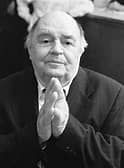
Anthony Poshepny (aka Tony Poe)

The infamous Tony Poe receives a second star from the CIA. His skill as a trainer of secret army soldiers of other countries is considered a useful tool to the CIA (despite his craziness) according to the author.  Tony Poe retires and receives a pension from the CIA and dies in obscurity.
This is a disheartening story. Its credibility is supported by information from investigative reporters and illegally acquired information from informants like Edward Snowden. Kurlantzick notes Snowden found the secret CIA budget ballooned to be more than the State Department’s budget.

A CIA officer disputes this book in a formal rebuttal. The rebuttal is revealed in a December 2014 Senate hearing. One can look it up, but the rebuttal is less convincing than the book.

The lesson one may draw from this story is that America’s State Department needs to be recognized as more important than the CIA in improving international relations. The State Department needs to have Ambassadors that know the language of the countries they are assigned. Ambassadors should have an intimate understanding of their assigned country’s cultures.

The CIA is not a path for peace. Its role should be restricted to collection of data. The CIA should not interfere with other nation’s policies and politics. Its role should be to inform the American government of foreign government information not available from public media or normal diplomatic channels.

This is not to say the CIA is not an important organization. It should be adequately funded to gather intelligence information. Its role should not be to create secret armies, murder foreign nationals, or foment rebellion. Actions taken by the American government should only be taken with review by elected officials, particularly for any clandestine actions against foreign nationals or governments.

It should be clear that any foreign actions taken are the fault of elected officials, not secret organizations. All Americans are responsible for what their elected officials decide. Transparency of government policy and action is required in any country that professes belief in freedom.

AGEISM

Audio-book Review
           By Chet Yarbrough

(Blog:awalkingdelight)
 Website: chetyarbrough.blog

The Hearing Trumpet

By: Leonora Carrington

Narrated by: Siân Phillips

Leonora Carrington (Author, artist born in England, lived in Mexico, 1917-2011, died at the age of 94.)

“The Hearing Trumpet” is said to have been written in the 1950s or early 60s. The author, Leonora Carrington, is believed to be in her late 50s when the book is written. Her age is relevant because the book is about old age and how those who make it to old age are treated in the modern world.

Though this is a highly regarded novel, to this reviewer the beginning is remarkable, the end is meh (uninspiring). The heroine of the story is Marian Leatherby. She is 94, a ripe old age, when one’s family members waiver between love and burden when thinking about their aged parents.

The character of Marian Leatherby is developed as a remarkable woman that is smart, and humorous but is troubled by loss of hearing. A neighbor who one presumes is similarly elderly buys a gift for Marian. The gift is “The Hearing Trumpet”.

Antique Ear Trumpet

Now that Marian has “The Hearing Trumpet” she can hear much better and understands her perilous living arrangement. She prepares for her children’s plan to move her into an assisted living facility for the aged.

Her son seems reluctant, but the daughter-in-law is insistent because of Marian’s bizarre behavior when they have guests. Marian rarely communicates with her children and often interrupts her family’s social lives because of her hearing loss.

Because of Marian’s hearing, she communicates and understands little about the son and daughter-in-law with whom she lives

The move happens within days of Marian’s realization of her son and daughter-in-law’s plan. Many who have reached a certain age, know of similar family decisions.

An aged parent responds in different ways. Some choose to die by making the move and refusing to adapt to a new way of living. Others choose to adapt. Marian is carted off to a monastery like facility.

The story is fascinating up to this point. It loses its appeal for this listener in a surrealistic story of Marian’s new living arrangement.

The head of the facility is an overweight manager with a semi-religious, zealot-like view of his role. Marian becomes an observer in her first weeks at the facility.

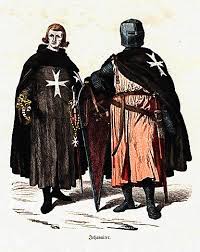
After some time, Marian accepts the behavior of her fellow wards and begins a surrealistic journey into a myth about the Knights of Malta (a religious military order under its own Papal, Roman Catholic charter).

This is semi-interesting to some because the Knights of Malta are an order of religious soldiers who are alleged by some to have murdered the famous artist, Caravaggio. That is not the surreal story of the author, but interestingly Lenora Carrington is an artist in real life.

Some suggest “The Hearing Trumpet” has a happy ending because Marian has escaped the reality of old age into a personal fantasy of the world while dealing with the reality of her failing physical condition.

One presumes Carrington’s story is full of symbolism, but it hides the fundamental importance of aging and how fearful one is to become old, ignored, and essentially discarded by society. Maybe fantasy is all that is left to the aged. Carrington lives into her 90s. One wonders how she adjusted to her infirmities. 

PROGRAMMED OR NOT

Audio-book Review
           By Chet Yarbrough

(Blog:awalkingdelight)
 Website: chetyarbrough.blog

Livewired (The Inside Story of the Ever-Changing Brain

By: David Eagleman

Narrated by: David Eagleman

David Eagleman (Author, neuroscientist at the Baylor College of Medicine.)

A bright future is outlined for humanity by David Eagleman in “Livewired”. His vision has to do with what is presently known of the brain and its interactions with the world. Eagleman believes what we know of the world from the physics of Newton, Einstein, and Bohr today will enhance human brain capabilities tomorrow.

Eagleman details what is known about the brain. He explains the remarkable capabilities of the brain to adapt to its environment. The neuronal activity of the brain interprets the environment in which the body exists.

The body responds to change by sending signals from the environment to the brain. The brain interprets those signals with synaptic transfer of information for thought and action.

Eagleman explains the creation of language in children begins with babbling which is testing their relationship with others and the world. The sensations they receive from verbal and physical contact are connecting their brain function to the world. The brain changes with contact from people and things in the environment.

World experience changes the brain. Change is widely dispersed by neuronal activity in the brain. Thought and action are not located in one place but in many parts of the brain. Those many parts allow memory of experience to be stored, sometimes forgotten, but capable of resurfacing in one’s thoughts or actions.

On the one hand Eagleman is saying the world is what we see. On the other, he notes the world is an interpretation of reality by the brain. Eagleman explains a brain interprets the world of events. The brain is not a recorder. It is a recreator of events.

The significance of that recreation is in unperceived facts of an event. Additionally, Eagleman notes-if an event continually repeats itself, the brain can hide the event because of the constancy of its existence. An example would be a constant machine noise at a factory or the smell of offal at a pig farm. The mind initially notes the noise or smell but if a person is exposed for long periods of time to the same event, the noise or smell disappears.

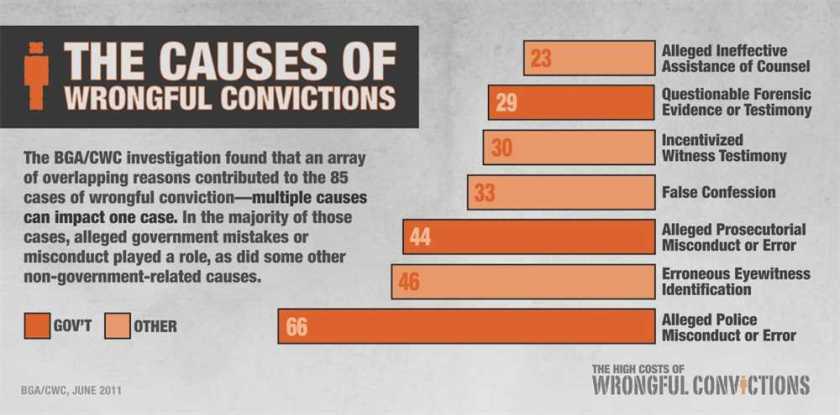
The fascinating consequence of Eagleman’s observation of brain function is the truth of events may be quite different from reality. This reminds one of the discoveries of Quantum reality which is probabilistic rather than definitive. What we see may not be what is real. The real-world impact of event recreation by the mind is the threat of misidentification of a person accused of a crime.

The brain can distort reality to create a story and a memory that are not true.

The malleability of the brain has been addressed by many in stories of stroke victims, epileptic sufferers, and handicapped people who overcome sightlessness, seizures, and hearing loss. Eagleman notes young people are quicker and more capable of adapting to these difficulties because they are not as limited by past learned experience.

Eagleman explains older sufferers have learned how to deal with life based on previous experience. That experience is a mixed blessing because it impedes new learning. The ramification is that new discoveries about the world are and will be from the young, much more often than the old. 

Eagleman goes on to explain brain input and malleability extend to all parts of the body.

The skin, the eye, the tongue can be used as a source of stimulation to aid the brain in sending signals to malfunctioning appendages. This realization has led to ways of helping patients with palsy to stabilize their condition, for patients to recover from strokes, for the handicapped to walk with a prosthesis, and for epileptics to manage their seizures.

The optimism engendered by Eagleman is explained in one of the last chapters, titled “The Wolf and the Mars Rover”. He recounts the failure of the Mars Rover because of a malfunctioning wheel that ends its productive life. The Rover is unable to decide what to do to overcome a wheel that would not work. In contrast, a wolf will chew its leg off when in a trap because its brain tells she/he will die if not released. The Rover has pre-determined limits to action. The wolf changes behavior based on brain malleability, and unforeseen environmental circumstance.

Eagleman reinforces Rovelli’s argument that information will reveal all there is to know about the quantum world, and the nature of reality. To Eagleman, that information will come from the malleability of the human brain. Despite Eagleman’s optimism, there are skeptics.

Time and Infinity

Audio-book Review
           By Chet Yarbrough

(Blog:awalkingdelight)
 Website: chetyarbrough.blog

Reality Is Not What It Seems: The Journey to Quantum Gravity

By: Carlo Rovelli, Translated by Simon Carnell and Erica Segre

Narrated by: Roy McMillan

Carlo Rovelli (Writer, Italian theoretical physicist specializing in quantum gravity and loop quantum gravity theories.)

Carlo Rovelli is an optimist. He suggests reality “…Is Not What It Seems” but will be revealed by scientific inquiry. It will not be revealed by time because time does not exist. Reality does not lie in infinity but in the revelations of physics research and fundamental laws discovered by scientists from future information.

Rovelli argues information holds the key to unlock the door to reality. That seems simplistic but Rovelli implies the advent of the information age in conjunction with technology multiplies the creation of information. He argues more information is the sine non qua of reality.

Rovelli argues the gathering of zeros and ones and their correlation, confirmed by repeatable experiment, will explain what is presently unknown about the fundamental laws of physics.

The focus of physics today is on understanding quantum gravity and melding quantum physics with Newton’s and Einstein’s understanding of the forces and elemental particles of nature.  Rovelli believes the answer lies with loop quantum gravity theory. Others believe the answer is string theory.

The difference is that Rovelli believes gravity is not a force like vibrating strings but a feature of spacetime based on packets of granular space that travel within a Planck length. It has its own atomic structure. This granular space is made of a woven fabric of loops that create a spin network that creates a foam that constitutes gravity.

Whether strings or loops, Paul Dirac believed all fundamental particles of physics have been discovered and physics’ science must correlate that information with the mysteries of dark matter and energy to explain gravity’s role in the cosmos. Though one may have read this in a biography of Paul Dirac, Dirac is considered the heir and equal of Einstein.

What makes Rovelli’s book interesting is his optimism. It is an optimism grounded in his experience as a physicist. (Parenthetically, that makes it a mixed blessing to a dilatant of the subject.) Parts of Rovelli’s book are difficult to follow. However, the history of physics pioneers that are less well know to the public are revelatory.

Matvei Petrovich Bronstein (1906-1938, Executed by Stalin, Soviet theoretical physicist, a pioneer of quantum gravity.)

Matvei Perovich Bronstein is executed by Stalin.  Rovelli notes Bronstein’s brilliance as a physicist is revealed in his theory of quantum gravity.  He was executed because he protested the Stalinist interpretation of Leninism.

Rovelli helps one understand why time does not exist and that creation of infinity as an answer to an unknown physics anomaly is wrong. To Rovelli, the idea of infinity just means one does not know the answer.

Ludwig Boltzmann (1844-1906, Austrian physicist and philosopher, developed statistical mechanics, defined entropy.).

Rovelli notes time, as Einstein proves, is relative. Rovelli suggests time is just the function of heat entropy as discovered by Ludwig Boltzmann in the second law of thermodynamics.

Time might be defined as a rock that hits the ground. It creates heat that dissipates by transferring its heat energy to the ground. Time is like a marker for heat that dissipates. To Rovelli, infinity is simply an unanswered question in physics that will be answered with more information.

Rovelli gives another peek at the complexity of the science of physics. He writes with as much clarity as the subject will allow for a non-scientist.

PHYSICS REALITY

Audio-book Review
           By Chet Yarbrough

(Blog:awalkingdelight)
 Website: chetyarbrough.blog

Fundamentals: Ten Keys to Reality

By: Frank Wilczek

Narrated by: Sean Patrick Hopkins, Frank Wilczek

To know, is to know that you know nothing. That is the meaning of true knowledge. Socrates (469 BC-399 BC)

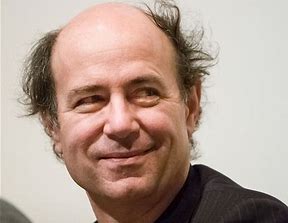
Frank Wilczek (Author, American theoretical physicist, mathematician and Nobel laureate.)

After listening to “Fundamentals”, one recognizes how Socrates’ quote is an apt description of this listener’s knowledge of reality. Frank Wilczek does a good job of explaining the nearly incomprehensible science of physics. 

Wilczek’s ten keys are labels of the known fundamental particles of physics.

  1. Electron
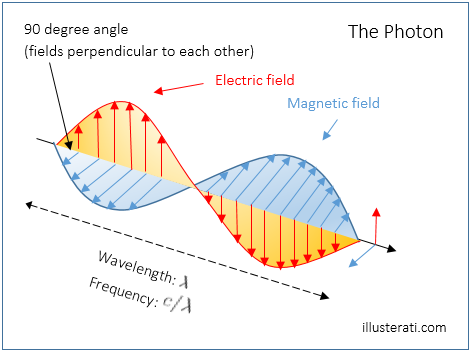
  2. Photon
  3. u quark
  4. d quark
  5. 3 kinds of neutrinos
  6. W boson
  7. Z boson
  8. Higgs particle

After a first listen, the choice of this review is to ignore proffered definitions by offering interesting and partially understood explanations of Wilczek’s keys to reality.  Wilczek explains the science of physics. 

Wilczek argues Physics reveals the truth of reality.

Wilczek suggests a scientist who understands and uses the known ten fundamental particles of physics can create whatever reality there is or may be.  However, that reality is a probabilistic future based on the experimentally proven “uncertainty principle”.  The quanta (the particles of physics) cannot be fixed by position and momentum to insure specific outcomes.  Reality is what it becomes, not what a scientist or anyone else designs by using the particles of physics.

At the level of atomism, reality is a matter of probability, not certainty.

Wilczek explains the science of physics revolves around mass, charge, and spin. Mass is revealed in Einstein’s equation of E=MC2 where energy, as well as an elephant or chair we sit on, is a form of mass and unreleased energy.  Charge is defined by the concept of negative or positive, and spin is either an up or down motion for particular fundamental particles.

Wilczek adds explanation of Einstein’s discovery of the bending of space from the force of gravity. 

Wilczek delves into the creation of the universe, the recognition of dark matter and energy and its use as a weak force that makes up 75% of the elementary particles of nature, though neither dark energy or mass has yet been seen by anyone.

Wilczek recounts the history of physics from ancient times of Democritus to Newton’s experiment and theory of force, to Einstein’s theories of light, mass, and energy, to Bohr’s spectrographic analysis of atoms, to the 21st centuries discovery of Higgs-Bosun.

Wilczek’s last chapter notes the value of complementarity in physics. Though Einstein insists there is a “theory of everything” that explains we live in a cause-and-effect’ world, he is unable to refute Bohr’s experimental proof of quantum physics.

At the level of atomism, probability rather than certainty is reality. Wilczek does not mean an elephant on a rampage will not destroy everything in its path but that atoms that make the elephant do function probabilistically. Reality is both probabilistic and deterministic. That is complementarity.

This is a book to be listened to more than once, particularly for one who is ignorant of higher mathematics and physics. The author’s story is not bogged down by explanations of those essential subjects that relate to understanding reality.

SCIENCE LEADERS

Audio-book Review
           By Chet Yarbrough

(Blog:awalkingdelight)
 Website: chetyarbrough.blog

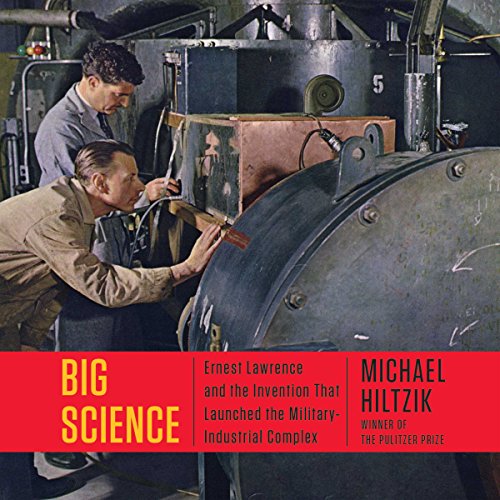
Big Science (Ernest Lawrence and the Invention that Launched the Military-Industrial Complex)

By: Michael Hiltzik

Narrated by: Bob Saouer

Michael A. Hiltzik (Author, American Journalist.)

Interesting details are revealed about the discovery of fission and the advent of the nuclear age in Michael Hiltzik’s history of “Big Science”. Hiltzik shows “Big Science” is expensive and involves large teams of scientists led by people like Ernest Lawrence.

Ernest Lawrence (Scientist,1901-1958) Lawrence died at 57 years of age.

Lawrence was born and raised in Canton, South Dakota, a rural community of less than 3,000 residents.  Lawrence pioneered American nuclear science and won the Nobel Prize in Physics in 1939 for invention of the cyclotron.

Lawrence’s invention led to the creation of the atom bomb, and later the Large Hadron Collider.

LHC MAP SHOWING CERN SITE

Lawrence’s indefatigable energy, persuasiveness, personability, and equanimity gave him the ability to raise huge sums of money to assemble the largest group of physicists, engineers, and experimentalists of the twentieth century.

Lawrence touched the lives of M. Stanley Livingston, J. Robert Oppenheimer, Arthur Compton, James Conant, Niels Bohr, Marie Curie, Ernest Rutherford, Enrico Fermi, Edward Teller, Vannevar Bush, and many others.

Hiltzik notes Lawrence is much more than an experimental physicist. Picture shows early version of Lawrence’s early cyclotron.

Ernest’s ability to organize a team of scientists and engineers to create the first cyclotron coalesced with Lawrence’s personality.  The cyclotron paves the way to a more precise understanding of the atom. His ability to tap into the resources and ambitions of young scientists and engineers, to convince government agencies, and private donors to contribute money for experiment creates a framework for “Big Science”.

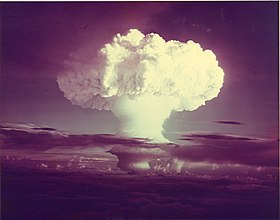
Lawrence’s early cyclotron experiments pave the way for splitting the atom which ultimately leads to atomic blasts at Nagasaki and Hiroshima.

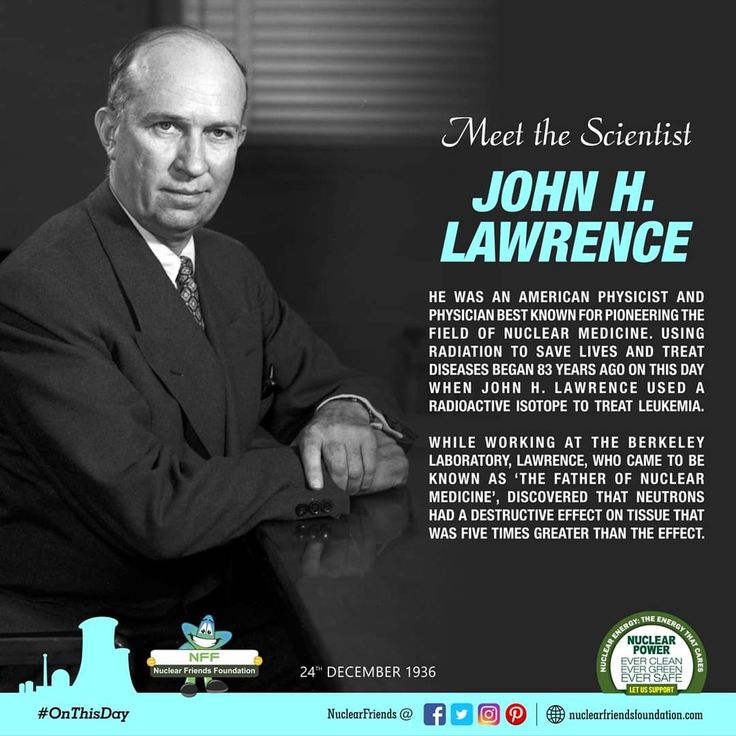
Ernest’s younger brother, John Lawrence, became a physician. 

Ernest Lawrence worked on radioactivity with his brother as a treatment for cancer.

Impetus for the unimaginable expansion of “Big Science” is magnified by WWII.  Because of the atom bomb’s horrific consequence, the fame of J. Robert Oppenheimer, and the infamous Edward Teller, become known to the world. Hiltzik explains the key role that Lawrence plays in getting Oppenheimer appointed as the science manager for the Manhattan Project (the project name for America’s rush to create the atom bomb).  Edward Teller is an early member of the team but is found to be a disruptive team player.  Teller is an outlying and brilliant theoretician with an acerbic personality, who breaks as often as he makes friendships with fellow physicists, including Ernest Lawrence.

Leslie Groves (1896-1970, General in charge of the Manhattan Project.)

The creation of the Manhattan Project required the appointment of a military supervisor.

An interesting note by Hiltzik is the relationship between General Leslie Groves and Lawrence. Lawrence, soon after meeting Groves, realizes who is in charge. Any roadblocks for funding or personnel disappear with the appointment of Groves. The two great managers complement each other and grow to respect each other’s roles in the Manhattan Project.

Hiltzik takes listeners into the aftermath of “Big Science” after the war.  Once Russia demonstrates their arrival in the nuclear bomb era, the danger of nuclear war and atomic bomb testing comes to the forefront of research. 

During the Eisenhower government years, a main concern is with the military/industrial complex and competition for nuclear superiority in the face of potential world cataclysm. 

Hiltzik addresses the dismantling of J. Oppenheimer’s reputation by Eisenhower’s appointment of Lewis Strauss as chairman of the U.S. Atomic Energy Commission (AEC). Strauss creates a government investigation of Oppenheimer and his early political life.  Strauss comes off as an unfair judge of Oppenheimer’s contribution to America in Hiltzik’s telling of the investigation.  One is reminded this is in the beginning years of McCarthyism.

Oppenheimer briefly joined the communist party but left it early in his career. Despite Oppenheimer’s great contribution to the creation of the atom bomb, Strauss manages to tarnish the brilliant scientist’s reputation.  Ernest Lawrence did not come to Oppenheimer’s defense.  The two scientists had different political beliefs.  Hiltzik implies Lawrence’s mid-western upbringing conflicted with Oppenheimer’s cosmopolitan life.  Both scientists respected their roles as scientists but differed in their politics.  

Lewis Strauss (Former U.S. Secy. of Commerce & Chair of the U.S. Atomic Energy Commission)

Hiltzik’s driving theme is the importance of “Big Science” and America’s waning support after WWII. Hiltzik’s primary example is America’s failure to lead in creating a super cyclotron like that which was built by the European Organization for Nuclear Research (CERN).  America participated in the cost but chose not to be the lead in its creation. Of particular note today is the need for investment and leadership in environment and energy.

Though many American physicists work at CERN, research at the Large Hadron is managed by 23 member states with each state having a vote.  Members make capital contributions and pay operating expenses while making all operational decisions.  America has no vote.  Japan, Russia, and America are observers (Russia was suspended on March 8, 2022).

Since WWII, one might argue America has played catch-up in “Big Science”.  Sputnik was a wake-up call that led to America’s moon mission which arguably is the last American push for “Big Science.

After listening to Hiltzik’s book, one may ask oneself–where is the Ernest Lawrence of the 21st century that is leading a team of young scientists in “Big Science”?  Ideas are out there but America’s investment seems destined to be limited by capitalist incentives, not “Big Science” experimentation.

PARENTING

Audio-book Review
           By Chet Yarbrough

(Blog:awalkingdelight)
 Website: chetyarbrough.blog

Little Fires Everywhere

By: Celeste Ng

Narrated by: Jennifer Lim

Celeste Ng (American Author, Received Guggenheim Fellowhip in 2020.)

“Little Fires Everywhere” is a work of fiction addressing American wealth and poverty, freedom, abortion, discrimination, family relationship, academic education, and parenting.  The author, Celeste Ng, artfully creates two families.  The first family has wealth.  The second lives on the edge of poverty.  Both have well educated children who make big and little mistakes borne from their genetic inheritance and environment.  

The two mothers are the primary decision makers.  The mother of the wealthy family (Elena Richardson) is a reporter and college graduate. The mother of the poor family (Mia Warren) is a waitress, house cleaner, and formally educated artist who quit college. The wealthy mother has four children, two boys and two girls.  The artist mother has one daughter.  These families come together in the same exclusive neighborhood. The wealthy mother decides to offer half a duplex for rental to a mother and her daughter.  The duplex is on the same property as the single-family home in which the Richardson’s live.

Parenting

Elena Richardson contrasts with Mia Warren in most ways.  Both went to college but one graduated while the other dropped out.  Both are dominate influencers in their social interactions, but Elena is bullying while Mia is reasoning.

The Richardson boys are near the age of Mia Warren’s young daughter.  All the children are in their teenage years. 

The children in this story reflect the strengths and weaknesses of their parents.  Both family’s children are headstrong, but the Richardson family’s children rely on their economic stability in making choices about life.  The Warren family relies on their independent lifestyle and pragmatic view of the world to make choices about life.

Freedom is never absolute.

The Richardson’s freedom is constrained by rule-of-law, wealth, and social position. The Warren’s freedom is constrained by rule-of-law, poverty, and moral conscience. Abortion is a moral and social crime to Elena Richardson. Abortion is a woman’s right and moral choice to Mia Warren.  Discrimination is academic to Elena and her social circle. It is personal to Mia. The Richardson family relationships are autocratic and secretive. The Warren family relationship is democratic and selectively open, limited by the maturity of Mia’s daughter. Education to the Richardson family is important to improve one’s social position. Education to the Warren family is to broaden one’s understanding of life.

Parenting is shown to be the most difficult task of every family. whether wealthy or poor. The lifestyle of the Richardson family creates “Little Fires Everywhere”. The Warren family lifestyle implies a fire retardant. The author tells a story that reveals how difficult it is to be parent of societies’ future.

ALBANIAN FREEDOM

       Audio-book Review
           By Chet Yarbrough

(Blog:awalkingdelight)
 Website: chetyarbrough.blog

Free (A Child and a Country at the End of History)

By: Lea Ypi

Narrated by: Rachel Babbage, Lea Ypi

Lea Ypi (Author, Professor of Political Theory at the London School of Economics.)

Eleven months after the Berlin Wall came down, the historian Francis Fukuyama called it a symbol of the “end of history”.

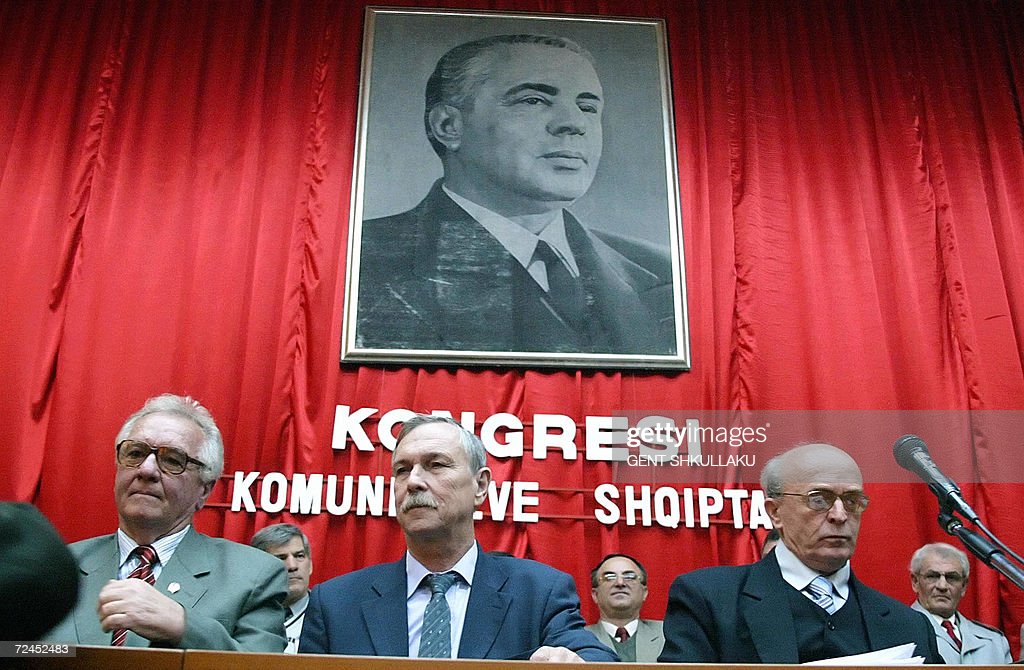
As a citizen of Albania, the fall of the Berlin Wall shows Lea Ypi what the “end of history” meant to her.

Albania became an independent country in 1912, after the defeat of the Ottomans in the Balkan Wars. Lea Ypi is a descendant of royalty in what was known in the 19th century as the Ypi dynasty.

Ypi Dynasty (Ruled Egypt for 150 Years.)

“Free” is partly a story Lea Ypi’s realization of her family’s history. More fundamentally, her story is of the inner conflict of Albanian experience with monarchy, socialism, communism, and democracy. Ypi artfully reflects that conflict in the history of her immediate family. She grows up in a well-educated, multilingual family that extolls the virtue of the French revolution, socialism, and democracy while expressing ambivalence about each. None are fans of communism but waiver between authoritarianism and democracy. Both parents, a grandmother, and their daughter (the author) critique capitalism as a form of exploitation, particularly of the poor.

Ypi explores the history of Albania that transitions from monarchy to socialism to communism to democracy. Each transition shows a country in search of itself. As a monarchy, its self-identified King fails to sustain independence. Albania falls under the control of Mussolini’s fascism. As a socialist, and later communist, country–long waits-in-line for consumer goods belies much of Albanian citizen’s belief in “common good”. As socialism evolves into communism, discontent leads to revolution in 1989/1990.

The insight Ypi offers to Albanian history is that democracy is no panacea. Having political representation in governance does not eliminate human nature’s failings.

Citizens popularly elected as representatives of the people is no guarantee of peace or prosperity. The lure of money, power, and prestige can corrupt democracy just as it does any form of government, whether autocratic or democratic.

In 2009 Albania joined NATO. In June of 2014 it became a candidate for the European Union. In a brief visit to Albania in 2017, we met local Albanians, had lunch on a private farm, and traveled through the country on a private tour. What came as a surprise is the industriousness and growing modernization of the country. To an outsider, Albania is prospering as a democracy. Ypi offers a guarded appreciation of democracy but implies concern over excesses of capitalism in democracy.

One presumes that skepticism comes from her memories of a socialist desire for common good. Democratic capitalism is no guarantee of common good as evidenced by the growing gap between rich and poor. Her story of her father’s rise as an industrial manager exemplifies her concern. Ownership orders her father to cut overhead by eliminating workers. Her father resists because he knows those workers have families to feed and lives to live. In contrast, her mother suggests people who are lazy or who do not work hard at their jobs, deserve their lot in life.

Ypi’s book should be read/listened to before traveling to Albania. Ypi offers insight to how children of her generation feel about government. The author is an entertaining writer worth one’s time whether planning a visit to Albania or not.

MEDIA TRANSPARENCY

Audio-book Review
           By Chet Yarbrough

(Blog:awalkingdelight)
 Website: chetyarbrough.blog

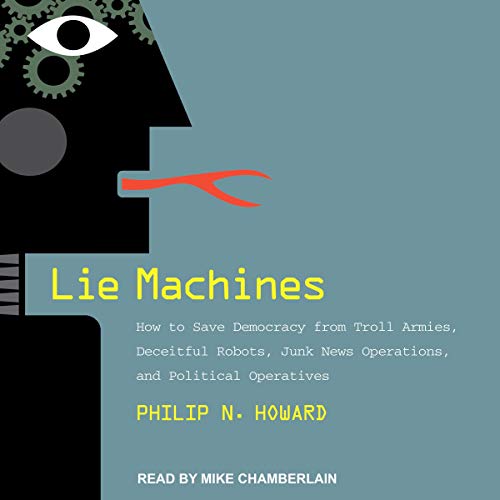
Lie Machines (How to Save Democracy from Troll Armies, Deceitful Robots, Junk News Operations, and Political Operatives.)

By: Philip N. Howard

Narrated by: Mike Chamberlain

Phillip N. Howard (Author, professor at University of Oxford.)

The subtitle of Phillip Howard’s book is hyperbolic. Howard offers a glimmer of hope to the public on “How to Save Democracy from Troll Armies…”  He does define the problem, but the solution is elusive.

Howard identifies interest-group’ tools used by lie machines to mislead the public. Howard shows how “Junk News”, some of which are outright lies, have consequences.

Freedom is an essential tenant of Democracy. One does not doubt Howard’s exposé on Democracy’s threat from “…Troll Armies, Deceitful Robots, Junk News Operations, and Political Operatives.”  

There is the Brexit campaign that lied about thousands of pounds saved per month which Great Britain could use for healthcare. That lie is debunked by most English economists.  There is the Pizza company child pornography hoax during Hillary Clinton’s campaign for President. It is clearly identified as a hoax that had no basis in fact.  Howard’s point is that lies have consequences. However, the exact consequence is often not precisely quantifiable. Did voters change the course of history by believing these lies?  Was the Brexit decision and Hillary Clinton’s loss of the presidency caused by lie machines?  Those are fair questions, but they have no definitive answer.

Is it criminal to advertise Prevagen as a memory improvement product when there is little science to prove the claim?  Is that different than an interest groups’ lie about how many pounds Great Britain will save with Brexit? Consumers decide for themselves whether a lie is a lie or just an interest groups’ bias. 

Balancing democratic freedom of speech against what Howard fairly identifies as “junk news” is impractical in the internet age.

As Howard notes, more private information is available to interest groups in the 21st century than ever before.  Government, commercial, and private interest groups are willing to pay privately held companies to gather and collate that personal information. Their ability to distort truth is enhanced by algorithms that accumulate that private information to tell others more about what we believe than what most know or understand about ourselves.   

Media moguls, like product advertisers, are selling belief with detailed information about who we are, what we buy, who we buy from, and intimate details of our lives freely given on public platforms like Facebook, Twitter, and Google. 

On 4/25/22 we are advised that twitter is being purchased by Elon Musk. Musk idealistically presumes all should have a right to express their opinion. There is truth and lie in that idealism. Truth is the selective statement of facts by major news feeds like the NYT and WSJ. Lie is the statements of muckrakers like Alex Jones.

As Supreme Court Justice Stewart’s once said about pornography, “I know it When I see it”. Freedom of speech can only be regulated by the same yard stick.  A lie is a lie and those who believe in democracy can only rely on themselves for knowing a lie when they see it.

Alex Jones and conspiracy on the Sandy Hook School killings.

Howard’s examination of “Lie Machines” reveals a great deal about how lies become the basis for conspiracy theories that mislead the public.

The best one can say about Howard’s great reveal is that every citizen in any society needs to be skeptical. Ironically, Howard implies skepticism compounds the problem of “Lie Machines” by making one believe nothing.  One must ask oneself—are there special interests promoting this “fact”, is this fact a lie, should I act based on a lie. 

Howard’s solution is to require transparency from the “internet of things”.

He argues any public internet platform should be legally required to reveal the source of their information and that no information should be collected unless authorized by the provider. There is some merit in Howard’s solution. The concern is that there must be supervision of that requirement.  Who is the supervisor?  If it is government, what are the rules of enforcement?  Democracy requires checks and balances. 

Whether one is part of the government, a business, or a private citizen, all are subject to the faults of human nature.  Can a bureaucracy be created with the required checks and balances that mitigate human nature’s desire for money, power, and prestige?

America is a government of laws and has prospered in part because of checks and balances that ameliorate the worst consequences of human nature. Is regulation of the internet by government better than self-regulation?  Who regulates government?

Some argue, the voter regulates government by elections.  This is the same voter that elected Abraham Lincoln and Donald Trump, one of which deserves high praise; the other something much less.

Revealing “Lie Machines” is the best of what Howard has to offer.  The solution revolves around transparency but the mechanism for enforcement beyond individual skepticism and “buyer beware” attitude seem invasively dangerous.

WORLD PEACE

           Audio-book Review
           By Chet Yarbrough

(Blog:awalkingdelight)
 Website: chetyarbrough.blog

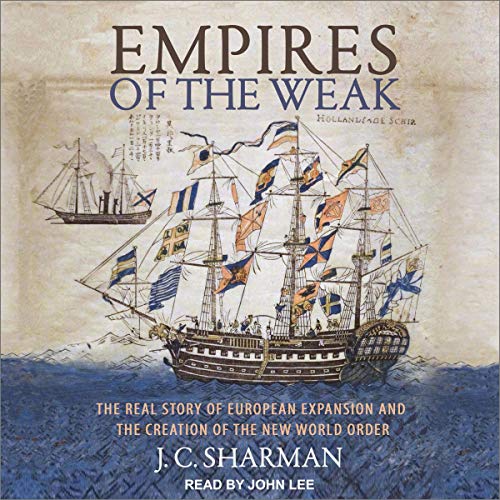
Empires of the Weak (The Real Story of European Expansion and the Creation of the World)

By: J. C. Sharman

Narrated by: John Lee

Jason Sharman (Author, Professor of Politics and International Studies at Cambridge, PhD from University of Illinois.)

Professor J. C. Sharman offers an interesting interpretation of history.  He argues one country’s domination of another in “Empires of the Weak” is widely misrepresented by historians.

Sharman argues domination of other nation-states is incorrectly believed to be the result of technical and military superiority.  Sharman suggests force of arms and technology were only a part of their success.  Their failures often came from not understanding the cultures of the countries they tried to colonize. 

Sharman notes many historians argue early European nations had better weapons and superior military training than countries which they invaded and colonized.  

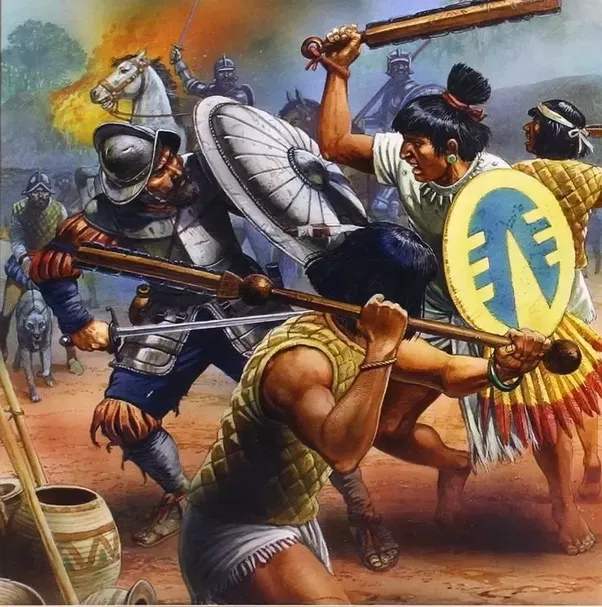
Sharman argues socio-cultural and economic interests were more determinate factors than either technical or military superiority.  He notes Aztec domination by Spain as an example.  He explains a minor military force manages to erase Aztec governance by co-opting indigenous discontented natives and rewarding those who would fight to destroy current leadership and support their colonizers and ultimate benefactors.

The resonating truth of Sharman’s observation in modern times is shown by America’s experience in Korea, Vietnam, Iraq, and Afghanistan. 

Battles can be won but wars lost. Most battles were won with American technology and force of arms but, with the qualified exception of a negotiated compromise at the 38th parallel in Korea, America’s singular wars were lost.  France’s Indochina and Russia’s Afghanistan prove the same.

Vladmir Putin is on the verge of affirming Sharman’s argument.  Putin invades Ukraine with an experienced and well-equipped army, with superior weapons of mass destruction.  However, Russia is losing the war. 

Socio-cultural difference make domination by one country of another difficult, if not impossible.  Putin presumes Ukraine has a Russian culture when in fact it shows itself to be its own cultural nation.  Putin will fail because he ignores cultural difference and fails to co-opt discontented indigenous leaders.

One might wonder how Stalin managed to create the U.S.S.R. from disparate cultures and countries.  One suspects it is not entirely because of Stalinist repression.  Stalin eliminated leaders within Russia’s satellite countries while co-opting existing discontented natives. 

New indigenous leaders of these countries understood their citizens but were beholding to Stalin for having supported their ascension.  Putin may have been able to do the same with more patience and understanding of Ukrainian culture.  His misstep will have future consequence, both for himself, Russia, and the world.

The idea of their always being a clear cause for every effect is false. 

Precise “cause and effect” is proven untrue in quantum physics and seems equally untrue in world leadership.  Leadership success is always a matter of probability, but it must be probability based on cultural understanding.

Sharman’s limited analysis holds great promise for historians and leaders of the world.  Historians can offer more focus on socio-economic conditions of respective countries when determining causes of regime change. Leaders of acquisitive countries might think twice about military intervention or invasion. Leaders may become more selective in choosing ambassadors for other countries.

The threat of the future is that cultural understanding might be achieved in Orwell’s “1984” which implies China is an odds-on favorite as a world hegemon. 

This is a warning to Hong Kong and a threat to Taiwan.  Cultural understanding is a key to world peace.

A point made in this week’s “Economist” is that rising economic Hedgemons like China suggest Russia’s invasion of Ukraine is nothing new because there are no universal rights. President Xi recounts the atrocities of the world that shows man’s inhumanity to man is based on perceived national self-interests, not universal rights.