Fugelsang preaches to the choir in writing about Trump’s ignorant Immigration policy. It is not a matter of being or not being Christian but a matter of having a pragmatic and compassionate immigration policy that serves the needs of America’s future.
Books of Interest Website: chetyarbrough.blog
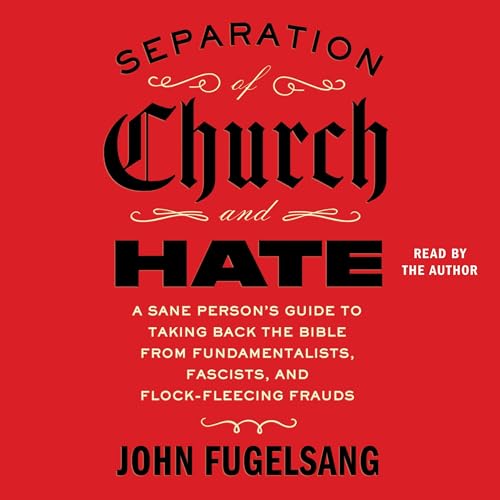
Separation Church and Hate (A Sane Person’s Guide to Taking Back the Bible from Fundamentalists, Fascists, and Flock-Fleecing Frauds)
Author: John Fugelsang
Narration by: John Fugelsang
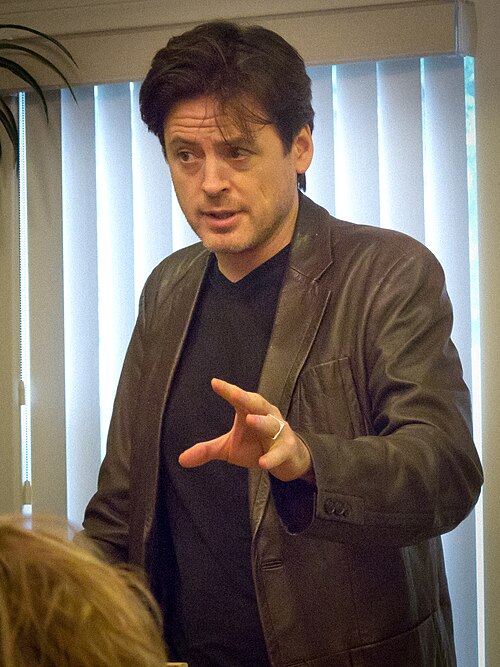
John Fugelsang (Author, American actor, comedian, television host, political commentator.)
John Fugelsang argues President Trump’s immigration policies are unjust, hypocritic, and unchristian. Fugelsang, as the son of a mother and father who have deep religious backgrounds, appears to have carefully read the Bible. In his Christian’ beliefs about humanity, Fugelsang argues Trump distorts Christian teaching, has no compassion for immigrants, and pursues an immoral immigration policy that exemplifies a false relationship between “…Church and Hate”.
Good government, not religion, is what is needed to solve America’s immigration problem.
As one who is not raised with any particular religious beliefs, much of what Fugelsang argues makes sense. The gestapo tactics of the Trump administration are appalling. Whether one is a Christian or not, the terrorism created by Trump’s policy of home, school, and street attacks on people who may or may not be immigrants is un-American and, according to Fuigelsang, contrary to the teachings of Jesus. Where Fugelsang is off the mark in his criticism is in attacking presumed motives of the President as opposed to the substantive reasons for managing illegal immigration. Trump’s methodology is cruel and unjust. The point of being Christian is superfluous. Fugelsang’s knowledge of the Bible is exemplary but who cares? It is not whether one is following Christian beliefs but whether one with power is acting with compassion and good judgement in addressing what is wrong with America’s immigration policy.
America needs immigration reform.
It is easy to agree with much of what Fugelsang has to say but it is not addressing the complexity of the problem of immigrants’ desire to have a better life. Trump is making the same mistakes past Presidents have made with native Americans. Rather than addressing the reasonable needs of human beings, past American Presidents made deals for Indian land, broke promises, murdered native populations and rejected inherent human rights. Trump is doing the same with today’s immigrants.
The starting point for correcting the problem of illegal immigration is in the creation of a fair, compassionate, and workable immigration policy.
Money is being wasted on gestapo-like actions by our government that terrorizes the public with armed ICE officers who continue to send the wrong message to the world about American democracy. We are not a police state. We are the nation that said, “Give me your tired, your poor, your huddled masses yearning to breathe free”.
Trying to turn back time is a waste of American revenue and manpower.
Trump, Congress, and the Judiciary need to back-off from a show of power. Our government needs to get to work on practical solutions that help American gain control of immigration. A show of power will not solve illegal immigration. It is only Trump’s theatrical way of making it look like he is doing something about illegal immigration. What he is doing is making America look like Hitler’s Germany. This is not America or what it stands for.
Fugelsang may be right from a Christian’s perspective about Trump’s lack of Christian belief but that is the easy part. The hard part is creating a compassionate solution by the American government for immigrants that have entered the country illegally. America needs an immigration policy that works for the future. Immigrants made America. American power and prosperity will decline without the help of immigrants. Modernization and a falling birth rate in America will reduce available labor for its future.
Fugelsang preaches to the choir in writing about Trump’s ignorant Immigration policy. It is not a matter of being or not being Christian but a matter of having a pragmatic and compassionate immigration policy that serves the needs of America’s future.
One chooses how they live life, but death is nature’s or God’s choice, a thing beyond human’ control.
Books of Interest Website: chetyarbrough.blog
“The Theater of War” What Ancient Greek Tragedies Can Teach Us Today
By: Bryan Doerries
Narrated By: Adam Driver
Bryan Doerries (Author, Artistic Director of Theater of War Productions, an evangelist for classical literature and its relevance to today’s lives.)
The title and book cover of “The Theater of War” is as puzzling as Bryan Doerries’ beginning vignette of his personal life. Doerries graduates from Kenyon College where he majors in the classics. He goes on to earn a Master of Fine Arts in Directing from the University of California. “The Theater of War” recounts Doerries’ journey to become cofounder, artistic director, and historian for creation of a theatrical teaching tool about life and death. The trigger for his understanding comes from the last days of his personal relationship with Laura Rothenberg who dies at 22 from cystic fibrosis. Her death is the introduction to why “The Theater of War” is created.
Doerries and Phyllis Kaufman are co-founders of “The Theater of War” Productions. Ms. Kaufman was the producing director from 2009 to 2016. She died at the age of 92 in 2023 but was instrumental in organizing production events, coordinating actors, and ensuring practical aspects of theatrical presentations.
“The Theater of War” is about the living and how to deal with permanent disability or death. Death comes in many forms from different causes but as the Latin expression says “Memento mori”, “Remember you must die” because death is a part of every life. Doerries explains how famous Greek tragedies were, and still are, teaching tools for those who have life and death influence over others. What “The Theater of War” creates are acted reproductions of classic Greek tragedies for living life when you or someone you know is permanently disabled or killed.
With the help of actors like Adam Driver (who narrates the book), the great tragedies of Sophocles and Aeschylus are presented to military, penal, and nursing audiences across America.
Combat veterans, prisoners, and terminally ill patients face extreme conditions of life. Combat may end in death or future disability. Prison life is about loss of control of oneself and being under the control of others. Terminal illness is also about loss of control of oneself when one is diagnosed as destined for death.
The suicide of Ajax as depicted on an ancient vase in the British museum in London.
Sophocle’s tragedy, “AJax”, offers the truth of psychological trauma and moral injury from battle. In despair, Ajax kills himself because he feels deeply humiliated by the gods for not being given the armor of Achilles who is killed in the Trojan war. Achilles’ armor was given to Odysseus rather than him.
Sophocle’s “Philoctetes” explains the pain and personal isolation that comes from the physical and emotional damage from war. Today, it is diagnosed as PTSD.
Sophocles “Antigone” deals with civil disobedience, justice, and conflict between personal and state ethics. These conflicts are reflected in mobs of unruly citizens demonstrating against what they perceive is wrong.
Aeschylus’s “Prometheus Bound” reflects on the unfairness of a penal system that infringes on human rights.
The recited dramas offer cathartic release and potential change to those who are personally affected by their situational experience. That is the purpose of the presentations. Doerries creates theatrical readings of these classics before military, penal, and nursing personnel.
The presentations lead to questions and answers about the truth of societal disagreement, death’s inevitability, and how to live with their consequences.
Some military generals and prison guards are offended by the implications of their mistakes, but the plays recitals provide a forum for discussion that offer potential for improved human understanding and societal decisions and action.
The Greeks understood dying is part of life. One chooses how they live life, but death is nature’s or God’s choice, a thing beyond human’ control.
As Orson Welles noted: “We’re born alone, we live alone, we die alone. Only through our love and friendship can we create the illusion for the moment that we’re not alone.” The tragedy of that observation is that Welles infers love and friendship are only an ephemeral illusion.
Audio-book Review By Chet Yarbrough
Blog: awalkingdelight Website: chetyarbrough.blog
Something Wonderful (Rodgers and Hammerstein’s Broadway Revolution)
By: Todd S. Purdum
Narrated by: Todd Purdum
Todd Purdum (Author, former New York Times Journalist, writer for Politico.)
“Something Wonderful” is a refreshing break from recent book reviews about war. Todd Purdum writes and narrates an informative biography of two Broadway legends, Richard Rogers and Oscar Hammerstein and their contribution to New York theatre. Purdum explains their music, comedy, and drama changed the rules of Broadway musicals.
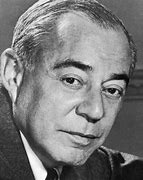
Richard Rogers (L) and Oscar Hammerstein (R).
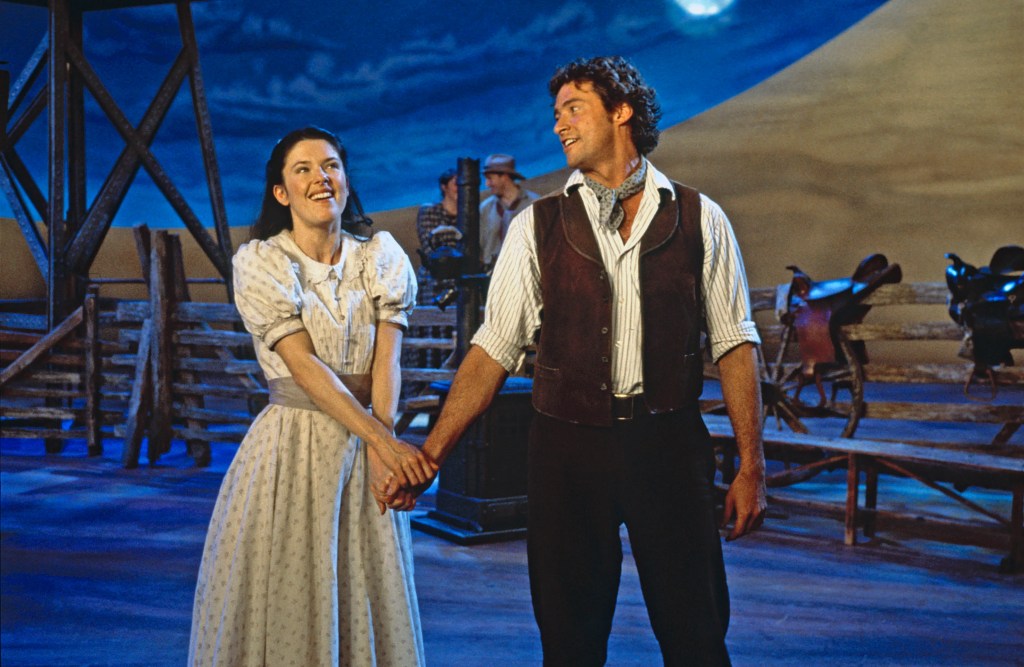
Coincidentally, Rogers’ and Hammerstein’s partnership is in the early years of America’s entry into WWII. Their first collaboration was “Green Grow the Lilacs” which was originally a 1931 one act play, rewritten by Rogers and Hammerstein. It became their first successful collaboration known as “Oklahoma”.
Audiences of today probably remember the movie version starring Gordon MacRae, and Shirley Jones.
However, in the St James Theatre in New York, it ran for five years with 2,212 performances culminating in a Pulitzer Prize in 1944. Not bad, for Rogers’ and Hammerstein’s first collaboration. It was the beginning of a long and storied career for these artists. Purdum notes Hammerstein would write the poetic words (the lyrics) of a song that would be put to music by the genius of Richard Rogers. Purdum explains, though they worked independently, they collaborated in a magical way that changed and broadened the appeal of musicals. The magic came from their work as two independent thinkers within their lanes of expertise. Hammerstein would write the lyrics and Rogers would create the music to fit the words.
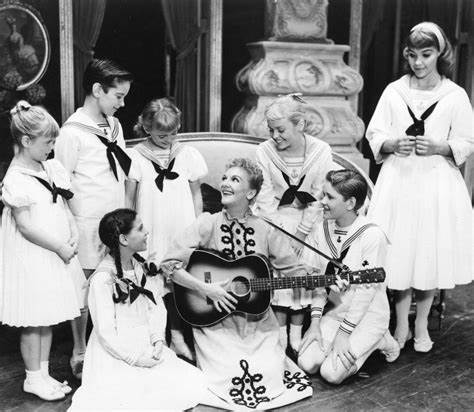
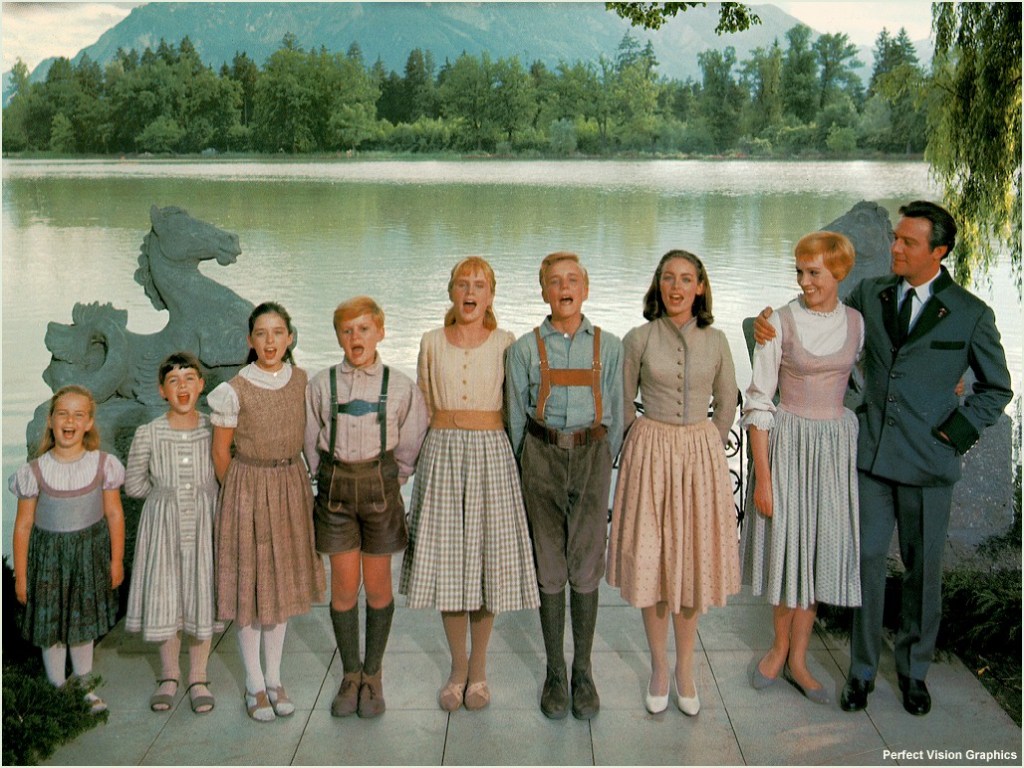
The two embarked on a series of hits from 1942 to 1960 with famous works like “Carousel”, “South Pacific”, “The King and I”, and “The Sound of Music”, all of which became successful and entertaining movies for a public that could not afford live productions on “The Great White Way” (the Theater District between 41st and 53rd street in New York). Those of a certain age remember great songs like “If I Loved You”, “Some Enchanted Evening”, “Getting to Know You”, and “My Favorite Things”.
Purdum explains how Rogers and Hammerstein broke many records by changing the rules of musicals. They created memorable melodies by experimenting with different musical styles and performers from opera to folk to jazz. They integrated plot and character to create entertaining, sometimes controversial social commentary, ranging from the comic to dramatic to tragic stories of life.
Rogers and Hammerstein won 34 Tony Awards, 15 Academy Awards, two Pulitzer Prizes, and two Grammy Awards.
After their great run on Broadway, Roger’s and Hammerstein’s attentions turn to the movies and the early beginnings of television. Their theatre productions become films that reach a much wider audience. However, translations from stage to film had a host of drawbacks ranging from casting to censorship that affected audiences’ reactions to what were great and successful Broadway musicals.
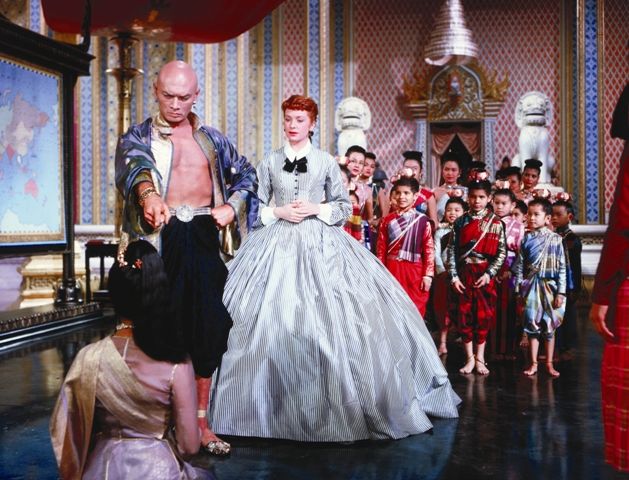
As a movie, who can forget “The King and I” and the brilliant performances of Yul Brenner and Deborah Kerr?
Nearing the end of Purdum’s fine story, these scions of entertainment are nearing the end of their productivity. In 1957, they produced Cinderella for television. An estimated 107 million viewers watched Julie Andrews play the part of Cinderella. The only other Broadway collaboration of note was “Flower Drum Song” that was well received but a commercial flop.
Oscar Hammerstein died in 1960 at the age of 65. The cause of death was stomach cancer.
Purdum notes Rogers’ alcoholism, womanizing and often-suffered bouts of depression greatly affected his last years. In 1957 he was hospitalized. He recovered and lived for another 22 years. He died in 1979 after what was called a long (undisclosed) illness.
After Hammerstein’s death, Purdum notes Rodgers could not reproduce the lyrical success of Hammerstein’s poetic alliteration.
Rodgers greatest success after the death of Hammerstein seems to have been oversight of the movie production of “The Sound of Music”.
The sad thing revealed by Purdum is that Rogers and Hammerstein never seemed to develop a close personal relationship. Each lived in their own worlds and only met in their musical collaborations, not as friends but as ambitious business associates. Purdum wrote of Rogers’ comment about regretting never really getting to know Hammerstein.
As Orson Welles noted: “We’re born alone, we live alone, we die alone. Only through our love and friendship can we create the illusion for the moment that we’re not alone.” The tragedy of that observation is that Welles infers love and friendship are only an ephemeral illusion.
Robert Greenberg (American composer, pianist, and musicologist.)
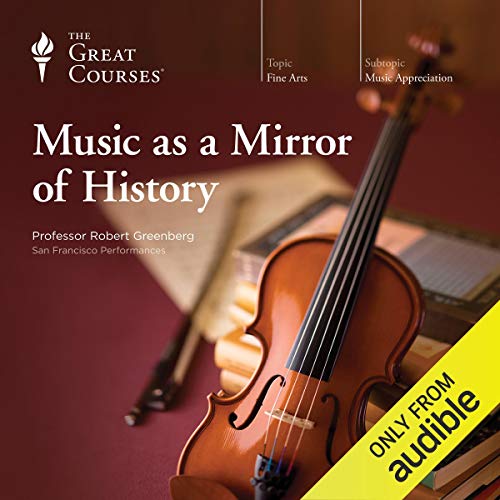
Robert Greenberg offers an introduction to the history of classical music and opera. Its appeal is to a wide audience of dilettantes that know a little but not a lot about anything. Greenberg argues classical music’ and opera’ composition is a creation of its time. (Undoubtedly true of all music and theatre.)
However, Greenberg supports his argument with a fascinating critique of classical composers and events of history that influence composers’ work. Greenberg argues that one can better understand classical “Music as a Mirror of History”.
In reflecting on the history of music, Greenberg offers his perception of the era in which music is composed. He makes wry comments about each era with the hindsight of an obviously well-read consumer of history. At the same time, Greenberg offers expert analysis of classical music and its composers. With snippets of each composer’s work, an Audiobook is a perfect venue for his presentation.
Edward VI (King of England 1547-1553, crowned at the age of nine.)
Mary I of England (Queen of England 1553-1558)
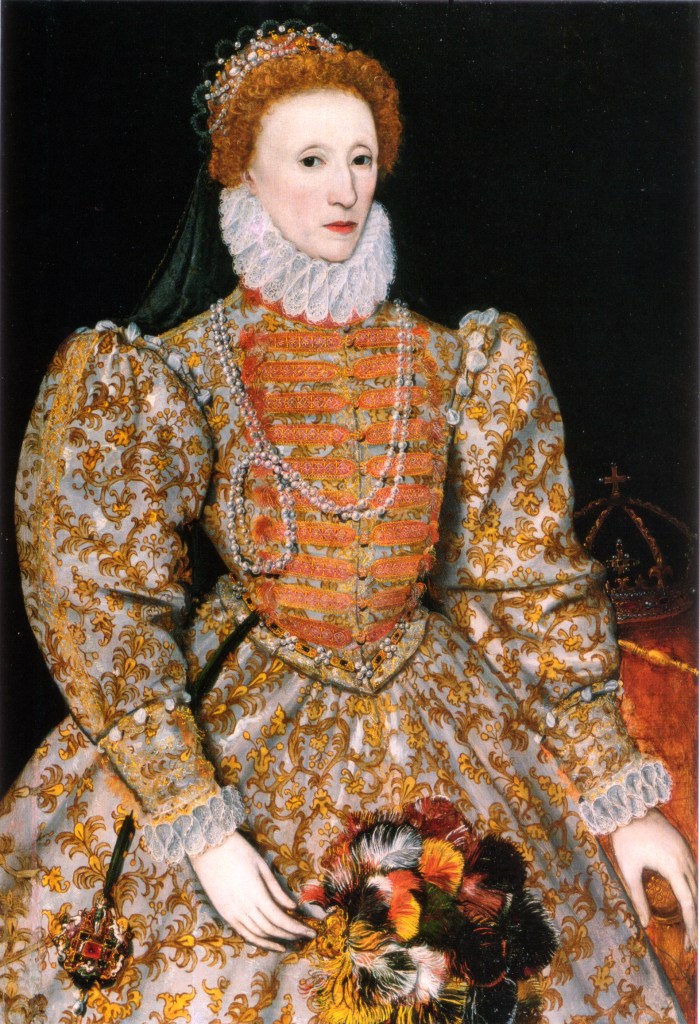
Queen Elizabeth I (r 1558-1603, daughter of King Henry VIII and Anne Boleyn.)
English religion wavered back and forth between Roman Catholicism’s control by the Pope and the Church of England’s control by the King of England. English King Henry the VIII demands control of Catholicism (particularly the church’s land assets and taxes collected on those assets).
After two failed royals (after King Henry VIII’s death), Elizabeth stabilizes England’s governance. She reigns from 1558-1603. Greenberg explains the many challenges facing Queen Elizabeth before she gains the throne.
Greenberg notes Queen Elizabeth’s reign is a perceived golden era, in spite of the squalor of 16th century London living.
Greenberg notes that Queen Elizabeth is the first English monarch, after two predecessors, to sustain Henry VIII’s Church of England. With Queen Elizabeth’s reign, the King, not the Pope, controls the role of Catholicism in England.
Greenberg begins by explaining how madrigals reflect the myths of nationalism. He defines a madrigal as a song for several voices, without instrumental accompaniment. Madrigals began in the 14th century in Italy but Greenberg introduces Thomas Morley, a composer in the 16th century.
Thomas Morley’s Piaine and Easie Introduction to Practicall Musicke (1557)
Morley is a 16th century composer. He composes a madrigal to Elizabeth I. As is typical of this form of music, it idealizes England’s suzerainty and Elizabeth’s reign as Queen of England.
Greenberg moves on to the 18th century. He introduces George Frideric Handel. Though Handel is German, he chooses to move to London, after successfully touring Italy. Greenberg notes Handel tells his Prussian patron (King Frederick I) that his sojourn to London is only temporary, but Handel’s intent is to stay.
George Frideric Handel (1685-1959)
King Frederick I of Prussia (1657-1713)
Handel persuades the King of Prussia to allow him to stay in England by dedicating the three suites of “The Water Music” to him.
Ironically, Handel becomes renowned in London for his “Water Music”, even though its dedicated to a foreign monarch. Greenberg offers a snippet of the 1717 “Water Music” which makes one interested in hearing more.
Handel composes the opera Rinaldo that makes him the toast of London in 1719. His most famous work is “Messiah”, an oratorio (an orchestra and voices production) composed in 1741. He becomes an English citizen in 1727, goes blind in 1751, and dies in London, in 1759.
Wolfgang Amadeus Mozart (1756-1791)
Moving on, Greenberg introduces Wolfgang Amadeus Mozart. As one may remember from the movie, Mozart is a phenom with an unusual predilection for risqué ideas. Greenberg notes this is the time of the rise of the Ottoman empire.
Turkish influence is widely adopted in the late 18th century. Mozart capitalizes on its popularity with the opera called “The Abduction from the Harem”. In spite of Mozart’s introduction of Turkish influence in music, Greenberg explains Mozart is fatally affected by the rise of the Ottoman empire because of its economic impact on Europe.
Mozart falls ill in Prague and dies in poverty in Vienna, at the age of 35. Greenberg suggests Mozart brings Turkish influence into opera’s mainstream with the Ottoman Empire’s expansion.
Greenberg reflects on the Napoleonic era and its affect on Haydn and Beethoven who were great composers of their time, and ours. Greenberg’s characterization of these composer’s view Napoleon with “ambivalence”.
Napoleon began his conquests with an image as liberator (from religious persecution, royalty, and social inequality), but when he crowned himself as Emperor, many felt betrayed. The betrayal was Napoleon’s pact with the Roman Catholic Church and his assumption of the throne as Emperor of France.
Joseph Haydn (1732-1809)
Ludwig van Beethoven (1770-1827)
Emperor Napoleon.
As Austrians, both Haydn and Beethoven reviled Napoleon’s royal ascension. Haydn composed “Mass in the Time of War” that memorialized Napoleon’s creation of a war machine that threatened Vienna.
Beethoven composed “Wellington’s Victory” in 1813 that became his most successful composition. Ironically, Greenberg suggests that “Wellington’s Victory” is one of Beethoven’s lesser musical achievements. He argues that Beethoven creates a bombastic rather than melodic tribute to the English general that defeated Napoleon at Waterloo.
This is only a small part of what Greenberg covers in this 24-lecture series. He analyzes Russian composers and their early disdain for European musical traditions. Greenberg observes Russia is shown to be a “…riddle wrapped in a mystery inside an enigma”, as referred to by Winston Churchill.
Johann Strauss I (1804-1849, created the Radetsky March, known for waltzes but better known as the father of Johann Strauss II.)
Johann Strauss II (1825-1899, composer of light music, particlarly dance music-waltzes,polkas, quadrilles, etc. and operettas.)
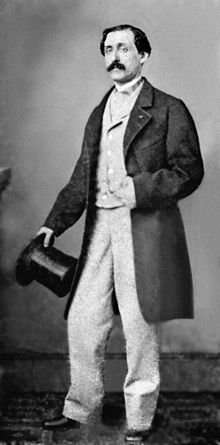
Louis Moreau Gottschalk (1829-1869, a child protegy that introduced slave music and the precursor to Jazz in America.)
Greenberg touches on the histories of the Straus family (a father and son who competed against each other), Brahms, Gottschalk (an American composer surprisingly unknown by many), Verdi, Wagner, Dvorak, Rimsky-Korsakov, Holst, Berg (who composed an opera reflecting on the madness of war), Shostakovich, Copland, Gorecki, and Crumb.
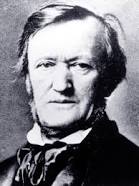
Wilhelm Richard Wagner (1813-1883, German composer, theatre director, polemicist, and conductor.)
Of interest is Greenberg’s analysis of Richard Wagner because of Wagner’s repugnant philosophy, but incredibly inventive and beautiful operas.
“The Ring of the Nibelung” reminds one of Tolkien’s “Lord of the Rings”. Greenberg explains “The Ring…” is a critique of 19th century European society and its self-interested pursuit of capitalist wealth. Greenberg infers the subject is ironic because Wagner pursues wealth as diligently as any European of that era. The repugnant part is the horrendous and false accusations made against people of the Jewish faith by Wagner and his acolytes (one of which becomes Adolph Hitler).
Of note is recognition of Rimsky-Korsakov as one of Opera’s greatest composers.
Greenberg notes that anti-European sentiment of earlier Russian composers is still present but Rimsky-Korsakov studies much of what is practiced by European composers. “The Golden Cockeral” is Rimsky-Korsakov’s last opera. It is based on a Pushkin’ poem but staged as a parody of the failure of Russian Royal’ leadership.
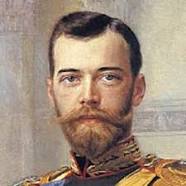
Tsar Nicholas II (1868-1918, assassinated by the Bolsheviks.)
To the Russian Tsar’s dismay, it is an opera that satirizes the autocracy of Russian imperialism and Russia’s inept war with Japan in 1904-05.
Greenberg shows Rimsky-Korsadov’s life as example of how current times mirror a composer’s work. Tsar Nicholas II is not pleased with “The Golden Cockeral”. Rimsky-Korsakov retires, but one wonders if his last opera is not a forewarning of 1917.
(Greenberg notes that Rimsky-Korsakov draws some of his operatic ideas from fairy tales).
One wonders what he could have composed if “Animal Farm” (published in 1945) had been written in his life time.
Greenberg finishes music’s mirror of history in the 1970s with a review of Gorecki and Crumb. This is an enlightening tour of classical music. It offers many reasons for modern audiences to attend symphony and opera performances.
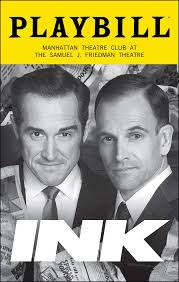
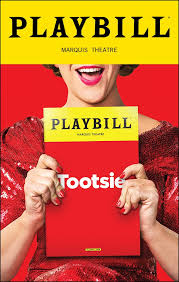
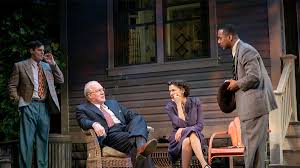
In our last visit to New York, we attended four plays–“Network”, “Ink, “Tootsie”, and “All My Sons”. All were excellent Tony Award candidates. All four had something in common. Each exposed moral turpitude; three on a corporate level, and one on a personal level.*
“Network” addresses corporate media and its overarching effect on the public’s understanding of the truth. “Ink” is about corporate media and how sensationalism and circulation are a volatile mixture that distorts reality. “Tootsie” is about the personal consequence of lying. And “All My Sons” is about a CEO’s responsibility to the public.
Ayn Rand’s mistaken thought that “Virtue of Selfishness” is a social and economic good is eviscerated by these four plays. These four plays splendidly demonstrate “…Selfishness” is personally, socially, and economically harmful.
The truth of these plays reflects on the risk of selfishness that exhibits itself in corporate greed.
A book titled “Skunk Works” is a paean to “boys with toys” and something less endearing about corporate America. Ben Rich, one of the collaborative authors, is an engineer that worked for Kelly Johnson at Lockheed.
Kelly Johnson headed Lockheed’s famous design team that created the U-2 spy plane, and the famous Black Bird in the 1960’s. Being an engineer, Rich had a detailed understanding of the facts in plane design, but facts are dead things without a good story.
Ben Rich (American Engineer and Director of Lockheed’s Skunk Works, born in 1925, died in 1995.)
Leo Janos is a writer who turns Rich’s facts into tales of Buck Roger’s daring-do. On the other hand, it is a tale of corporate immorality.
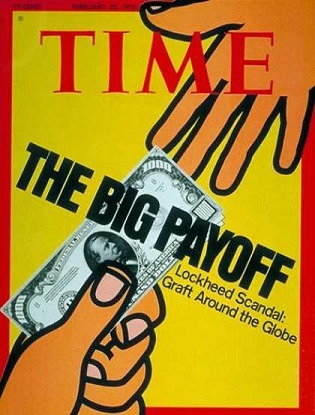
Ironically, Lockheed became the talk of the century in the 1970’s; not for their incredible design work, but for bribery.
Italy, West Germany, Japan, Netherlands, and Saudi Arabia are paid $22 million dollars to buy airplanes designed by Lockheed. That American law violation leads to the resignation of the Lockheed board.
“Skunk Works” is an entertaining and enlightening history of military weaponry. It illustrates the difference between a scientific research company and an industrial production company. Different skills are needed for managers of research than managers of production.**
The play “All My Sons” is about a CEO that produces engines for WWII military combat planes in the 1940s. The assembly manager calls his CEO to explain there is a crack in the blocks of twenty (or more) of the engines they manufacture.
The decision is made by the CEO to weld the cracks to make them look complete and unblemished. The planes with those cracked blocks fail, and 21 pilots are killed.
The company is sued. The managing partner who made the call to the CEO is sent to prison because the CEO denies ever having told the process manager to conceal the defect. The truth is revealed many years later. The CEO rationalizes his action based on a selfish belief that he and his family’s life were more important than his process partner’s sentence to prison, or the pilot’s lost lives.
In “Skunk Works”, the inefficiency of government is exposed. On the one hand, inefficiency offers more time for deliberative decision; on the other, it impedes productivity and increases cost. This is the argument made by Boeing during the design of the 737 Max. Government oversight is largely replaced by Boeing engineers.
Finally, the story opens military competition among nations that leaves only hope that the destructive power of nations borne by self-interest will not destroy life on earth.
The last chapters of Rich’s story argue that government bureaucracy gets in the way of military innovation. Rich and his collaborating author argue there is too much oversight and too many regulations that increase costs and discourage innovative change.
Where does self-interest end and public safety begin? What should government do in today’s Covid19 pandemic? When should businesses re-open?
What happens when profit becomes more important than honesty or morality. Two Boeing planes, their pilots and passengers are dead as a result of inadequate oversight and what, at best, might be called self-interest.
Dennis Muilenburg (American engineer, CEO of The Boeing Co. during the design of the 737 Max.)
Boeing 737 Max Malaysia Crash on March 11, 2019 kills 157 people.
The defense industry, like all human enterprises, has its Bernie Madoff’s (the stockbroker maven who stole investment funds) and Angelo Mozillo’s (the ex-Coutrywide CEO who paid a fine for his questionable mortgage lending practices).
Oversight and regulation are essential to
all forms of society because of the nature of humankind. “Network” has the famous line “I’m as mad as hell, and I’m not going
to take this anymore!”
Yes, you will be mad. and yes, we do take it again and again.
*It always comes down to a personal level, but the consequence is magnified by corporate immorality.
**Science and engineer managers rely on worker autonomy. Process managers rely on set rules for assembly line workers that manufacture complex products. It is science and engineering knowledge, more than rules of production, that determine product. But, assembly experience, more than science and engineering knowledge, completes product.




























 REVIEWS AND VIEWS OF LIFE
