Audio-book Review By Chet Yarbrough (Blog:awalkingdelight) Website: chetyarbrough.blog
The Age of Entanglement By Louisa Gilder
Narrated by Walter Dixon
LOUISA GILDER (AMERICAN AUTHOR) Louisa Gilder, in her first published book, offers a layman’s look at the science of quantum entanglement.
In the mind of a three-year-old, string can become tangled. String theory and The Age of Entanglement must have a relationship, right?
Physics is presently a mathematician’s art as
much as science, particularly with the advent of quantum theory. As a
non-mathematician, science’s pursuit of physics is fascinating because it
tickles imagination. It offers insight to the mystery of how we got here, who
we are, and where we are going.
Physics, pre- and post- Einstein, is a pursuit for the keys to the universe. Einstein’s “E=MC Squared” is a turning point. It focuses attention on unified field theory, the thought that there is a single formula that explains everything about everything.
Physics progresses from particles to waves to strings in its effort to unravel the key to the door of beginnings and endings. “The Age of Entanglement” brings a listener to 2006 without explaining how string theory relates to entanglement when they seem to have some important relationship. Gilder chooses not to include string theory (postulated in 1986 by Green and Schwarz) in her exploration of entanglement.
Nobel Prize winners in physics 2022.
Aside from that gripe, this is an enjoyable exploration of the world of physics; its theorists and experimentalists. The exploration is made better by the quality of Walter Dixon’s narration. Gilder cleverly delves into correspondence between physics legends–Einstein, Bohr, and later, John Bell and his contemporaries.
JOHN STEWART BELL (ENGLISH PHYSICIST 1928-1990) Even though Bell is not Einstein’s and Bohr’s contemporary, Bell is a critical change agent in the on-going argument begun by Einstein and Bohr about Quantum Theory. Bell changes quantum theory argument from a question of “if” to a question of “how” Quantum Theory is a valid construct of Physics.
Gilder reveals the humanness of the scientific
community. She exposes the frustration and joy of discovery among
scientists that think about the unknown and experiment with the unseen. The Age
of Entanglement reveals the tensions that are created by strong beliefs and the
utter devastation and human depression caused when beliefs are refuted by
reproducible experiment.
Along the way Gilder offers a definition of entanglement; i.e. the idea that one minute quanta of existence affects other faraway elements of existence.
Mind and Cosmos: Why the Materialist Neo-Darwinian Conception of Nature is Almost Certainly False
By: Thomas Nagel
Narrated by: Brian Troxell
THOMAS NAGEL (AMERICAN AUTHOR, PROFESSOR NEW YORK UNIVERSITY)
Thomas Nagel believes Darwin’s theory of natural selection is wrong. Nagel suggests natural selection fails to encompass the concept of mind. Even though Nagel acknowledges biology and physics have made great strides in understanding the nature of life, he suggests the mind should be a starting point for a theory of everything. Nagel infers that science research is bogged down by a mechanistic view of nature. Nagel suggests science must discover the origin of consciousness to find the Holy Grail; i.e. an all-encompassing theory of nature.
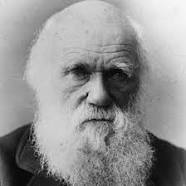
CHARLES DARWIN (1809-1882) FOUNDER OF THE THEORY OF THE ORIGIN OF SPECIES.
Nagel does not believe Darwinian evolution can explain consciousness. Nagel offers a sliver of hope to believers in God as the Creator but, as an atheist, he suggests there is a teleological (an account of a given thing’s end or purpose) explanation for consciousness that is yet to be discovered. In that discovery, he believes there will be a theory of everything that encompasses the true nature of life.
Nagel acknowledges God may be the answer but places that idea near the level of space aliens leaving seeds of life on earth. He argues that discovery of the origin of consciousness through science will be the key to open the door to a theory of everything. Like Einstein and Newton, Nagel believes humans live in a world of cause and effect. But, like Newtonian’ physics failure to encompass the universe’s laws of motion, and Einstein’s belief that God does not play with dice, Nagel believes Darwin’s concept of natural selection is, at best, incomplete. (Both Newton and Einstein failed to incorporate laws of quantum mechanics in their respective theories of nature.)
SIR ISAAC NEWTON (1642-1727)
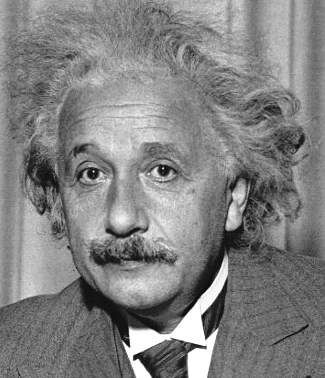
ALBERT EINSTEIN (1879-1955)
Without agreeing or disagreeing with Nagel’s idea, it seems propitious for the United States to fund and begin their decade-long effort to examine the human brain. A giant step forward was taken by President Obama but Trump’s anti-science mentality suggests Nagel’s idea will not be explored during Trump’s administration.
OBAMA BRAIN INITIATIVE IN 2014 ($300 MILLION DOLLAR FOR NEUROLOGICAL R&D–Trump’s anti-science mentality suggests Nagel’s idea will not be explored during Trump’s administration.)
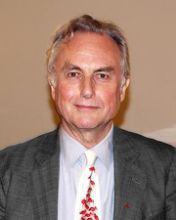
RICHARD DAWKINS (ENGLISH ETHOLOGIST AND BIOLOGIST INFERS A GENE MAY BE THE SOURCE OF CONSCIOUSNESS)
Though nearer term objectives are to understand Alzheimer’s and Parkinson’s diseases, the longer term result may be to discover the origin of consciousness. Contrary to Nagel’s contention that natural selection cannot explain consciousness, brain research may reveal consciousness rises from the same source of mysterious elemental and repetitive combinations of an immortal gene that Darwin dimly understood. Brain research offers an avenue for extension or refutation of Darwin’s theory of natural selection.
Mind and Cosmos is a tribute to Nagel’s “outside the box” philosophical’ thought. Like some who say string theory is a blind alley for a theory of everything, natural selection may be a mistaken road to the origin of life.
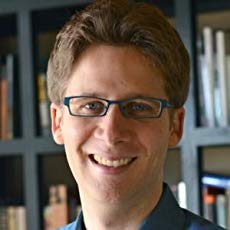
BRIAN CHRISTIAN (CO-AUTHOR, WRITER OF NONFICTION, SCIENCE, PHILOSOPHY)
TOM GRIFFITHS (CO-AUTHOR, PROFESSOR OF PSYCHOLOGY AND COGNITIVE SCIENCE UC BERKLEY)
“A Hitchhiker’s Guide to the Galaxy” explains that the ultimate answer to the meaning of life is 42; however, Brian Christian and Tom Griffiths tell us it is 37 in “Algorithms to Live By”.
Griffiths and Christian argue that if you want to have an optimum answer to a complex question, it will take 37% of an allotted amount of time to study the known and unknown details of a question to come up with an optimum answer. Keep in mind, this is not a perfect answer but a probabilistic optimum answer; i.e. an answer based on what is known and unknown.
CHRISTIAN AND GRIFFITHS INFER THE COMPLEXITY OF LIFE MAKES ANSWERS TO LIFE’S MEANING LIMITED.
Christian and Griffiths outline what they argue is an explanation of human decision-making. The implication of their conclusion suggests AI is unlikely to improve human cognition because it only adds information to complex human questions.
If you sit at a poker table for three hours, the first hour should be used to gather information about your competition. You will never know everything you need to know to win a hand of poker. But, you will improve your chances of winning by taking slightly more than 1/3rd of your time gathering information about the way your competitors play. This is a simplistic way of looking at Christian’ and Griffiths’ explanation of human decision-making.
The authors identify the discoverer of this algorithm as Merrill Flood, an American mathematician who, with Melvin Dresher, came up with the Prisoner’s dilemma, a model of cooperation and conflict.
MERRILL FLOOD (SOCIAL PSYCHOLOGIST FOR RAND IN 1950, ALONG WITH MERRILL FLOOD FRAMED THE PRISONER’S DILEMMA GAME THEORY)
MELVIN DRESHER (POLISH BORN AMERICAN MATHEMATICIAN, INVENTED
THEORETICAL MODEL OF COOPERATION AND CONFLICT.)
Everyone loses in “The Prisoner’s Dilemma”. Christian and Griffiiths note the game can be changed by one variable. The example given is the introduction of a Mafia leader that says anyone who rats on another will be murdered. The introduction of this new variable changes the probability of either robber ratting on the other.
The Prisoner’s Dilemma” is the story of two robbers that are placed in separate cells, interrogated independently, and offered a shorter sentence if one rats on the other. The prosecutor does not have enough evidence for conviction without one ratting on the other. If both robbers rat on each other, they will serve the same sentence. If only one rats on the other, he/she gets a shorter sentence. If neither robber rats on the other, the robbers are convicted on a lesser charge.
The 37% factor offers truth but fails to give much comfort to one seeking knowledge about life. It reminds one of the funny idea suggested by “The Hitchhiker’s Guide to the Galaxy” with the number 42. The authors suggest 37% is considerably better than knowing nothing but they imply the complexity of life makes outcomes entirely probabilistic. One presumes–the more you know, the better your decisions will be. Christian and Griffith disagree with that presumption. They suggest too much information skews the probability of truth.
CHRISTIAN AND GRIFFITH INFER ARTIFICIAL INTELLIGENCE WILL OFFER NO BETTER DECISION MAKING CAPABILITY THAN HUMANS.
With computers and the internet, one would think truth would be easier to find. Christian and Griffith suggest computers only offer added complexity; not truth. They argue computers are only tools for revealing complexity.
Christian and Griffith suggest 37% is the best one can do in getting to the truth. The authors suggest there is a point of diminishing return with more information; i.e. too many accumulated facts distort the truth and take one farther away from a 37% probability. A recent example is statistical sampling concluding Hillary Clinton would be the next President of the United States.
A 37% BOUNDARY FOR ANSWERS TO THE MEANING OF LIFE
There is much more in Christian and Griffiths exploration of algorithms, but it is disheartening to think human search for truth is constrained by a 37% information boundary. A logical extension of their argument is that artificial intelligence is as likely to mislead humanity as human intelligence. The authors argue–the nature of AI only increases information for answers to complex questions. By adding too much information, more facts are known with less chance of knowing the truth.
This is an enlightening exploration of the world of algorithms and computer science. On the one hand, it suggests human intuition is highly valuable; on the other, the authors explain it is unwise to rely on instinct alone. Christian and Griffiths explain life decisions, even with complex computer driven algorithms are less; not more likely to be correct.
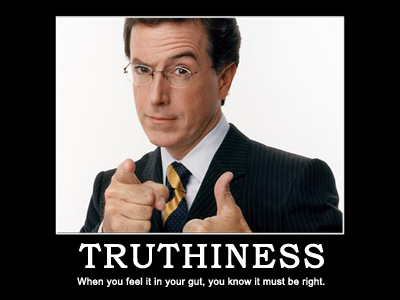
Some useful tools for life’s management are explained but there is a ring of truthiness in Griffiths’ and Christian’s conclusions. Of course, at best, this review shows only a 37% chance of being true.
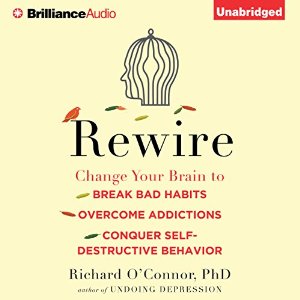
Rewire: Change Your Brain to Break Bad Habits, Overcome Addictions, Conquer Self-destructive Behavior
Written by: Richard O’Connor, PhD
Narrated by: Fred Stella
DR. RICHARD O’CONNOR (AUTHOR, CLINICAL THERAPIST)
In 1971, Brickman and Campbell coined the term Hedonic Treadmill to explain that people have a baseline level of happiness, regardless of what occurs in their lives. That definition infers winning the lottery, or being diagnosed with cancer have opposite happiness quotients–one joyfully positive; the other horrendously negative. The Hedonic Treadmill theory suggests happiness will return to a baseline level of individual happiness when the initial joy or sorrow subsides.
Toward the end of Richard O’Connor’s book, “Rewire”, the term Hedonic Treadmill is used to infer that America’s materialist predilection is like a psychological cul-de-sac; i.e. a mental trap with only one exit. O’Connor explains, in a different way, that the cul-de-sac is created by life experience that imprints memories that become automatic responses to current events.
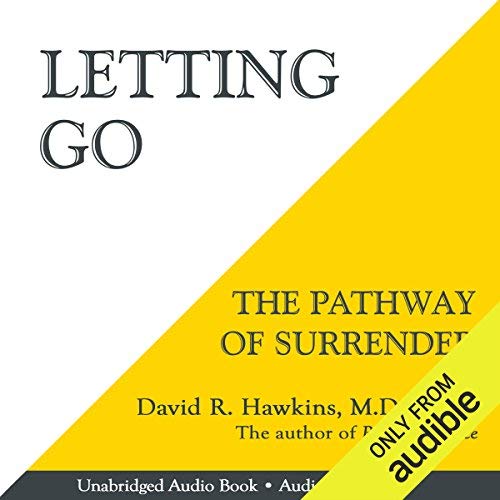
O’Connor argues that rational behavior is unconsciously modified by subconscious imprinting from early life experience. The only exit from the cul-de-sac is to leave the way you came, recall how and why you entered, and teach your brain not to take that turn again. This reminds one of David Hawkins expressed belief in “Letting Go”.
More fundamentally, O’Connor infers American society is more materialistic today; and, as a consequence, Americans are more mentally unbalanced than in the past because happiness from material acquisition is a road to nowhere, a Hedonic Treadmill.
O’Connor argues that Americans are more mentally unbalanced than in the past because happiness from material acquisition is a road to nowhere, a Hedonic Treadmill.
Rewire offers a great deal of information about causes and cures for individual mental dysfunction in America. A reader or listener may disagree with O’Connor’s causal analysis but his examples of psychological dysfunction can be seen in one’s self and in others. What makes “Rewire” interesting is O’Connor’s suggested cures, based on thirty years of experience as a therapist.
What makes “Rewire” interesting is O’Connor’s suggested cures, based on thirty years of experience as a therapist. O’Connor endorses the belief that the brain’s functions can be rewired at any age with repetitive practice.
O’Connor endorses the belief that the brain’s functions can be rewired at any age with repetitive practice. As an example, he explains the utility of the 12 step program designed by Alcoholics Anonymous for addicts to avoid being trapped in a mental cul-de-sac. The AA steps are 1) Admit powerlessness, 2) find hope, 3) surrender, 4) take inventory, 5) share your inventory, 6) become ready, 7) ask God, 8) make a list of amends, 9) make amends, 10) continue your inventory, 11) pray and meditate, and finally, 12) help others.
Though AA presumably requires a Supreme Being in their 12 step process, the point of the treatment is to train one’s mind to act differently when confronted with influences that make a person turn into a cul-de-sac rather than back to an individuated baseline happiness.
Though AA presumably requires a Supreme Being in their 12 step process, the point of the treatment is to train one’s mind to act differently when confronted with influences that make a person turn into a cul-de-sac rather than back to an individuated baseline happiness.
O’Connor suggests drugs are sometimes used incorrectly and become part of the patient’s problem.
O’Connor suggests drugs may be used to treat mental illnesses like depression for immediate results but that underlying causes need to be revealed to change longer-term aberrant psychological behavior.
O’Connor notes that drugs are sometimes used incorrectly and become part of the patient’s problem. With knowledge of triggering events for depression or addiction, behavior can be retrained to make the mind react differently.
O’Connor cautions the reader/listener to understand that negative triggers may be ingrained over years and will not disappear without repetitive behavioral training that avoids or consciously assesses negative emotional triggers. The key to success is enough behavioral repetition to make curative responses to triggers for depression, or aberrant behavior, automatic.
O’Connor argues the key to success in rewiring the brain is enough behavioral repetition to make curative responses to triggers for depression, or aberrant behavior, automatic.
O’Connor offers several mental exercises to change how the mind works. Rewire is an insightful book but one wonders if O’Connor is not on the Hedonic Treadmill he criticizes. After all, one presumes the book is only selling to people who can afford it, and read it. Rewire seems unlikely to help all who are on the real American treadmill–those who cannot afford the book, pay a therapist, or practice its contemplative methodology.
AUTHOR–David R. Hawkins died in 2012. He was 85 years old.
David R. Hawkins died in 2012. He was 85 years old. At turns, Hawkins transitioned from agnosticism to atheism to belief in God. This progression seems correlated with education and experience but ends in philosophical belief. In each transition, Hawkins uses his intellect to form a philosophy that has appeal to many in search of life’s meaning.
At times, Hawkins seems beyond reason but each step he takes offers insight to how one may live a more fulfilling life. Hawkins might be broadly characterized as a mystic. Even so, he was a formally educated, practicing physician, and psychiatrist.
Mysticism lies in Hawkins belief in human dualism, a belief dating back to Plato and adopted by many later philosophers.
Hawkins dualism is belief in a distinct separation between mind and body. More precisely for Hawkins, it is a separation between mind and brain.
The power of this cosmic mind can cure all the maladies of humankind, both physical and mental. Hawkins implies this cosmic mind can cure physical disease manifested in the body. If you cannot see; if you cannot hear; if you cannot feel, your condition can be cured by a force of will that engages the cosmic mind.
Hawkins becomes a mystic when he posits belief in a cosmic mind shared by all humanity.
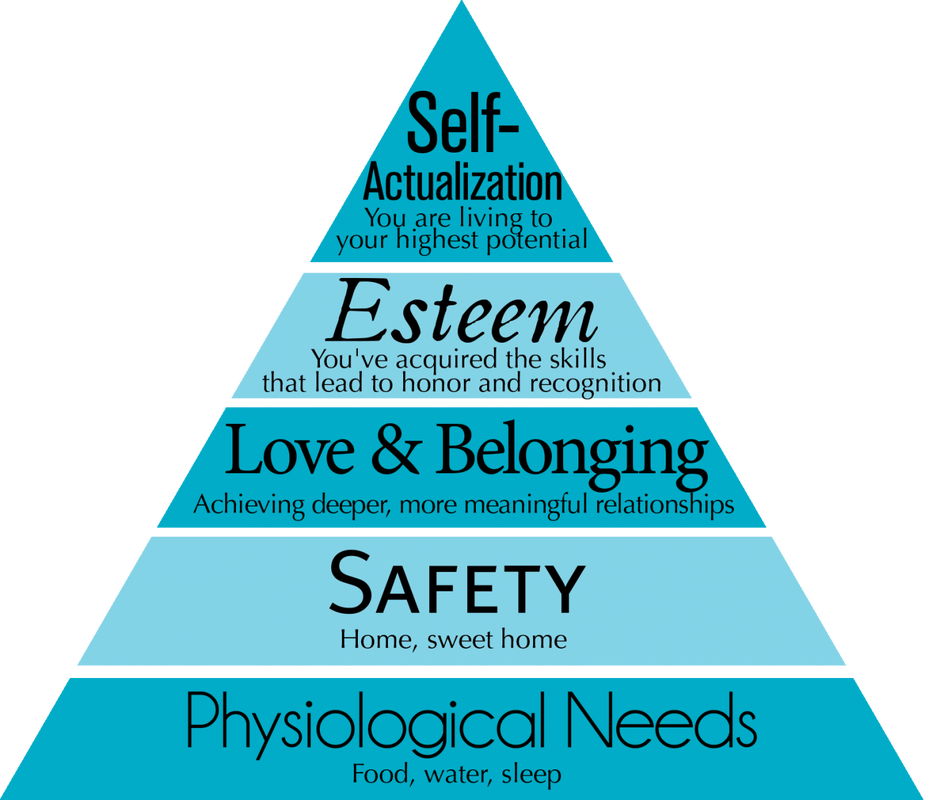
This is a point at which Hawkins loses some believers. However, before one gets to a point of rejection, Hawkins offers wise counsel on how to live life and approach a level of what Abraham Maslow labeled self-actualization.
Abraham Maslow’s self-actualization.
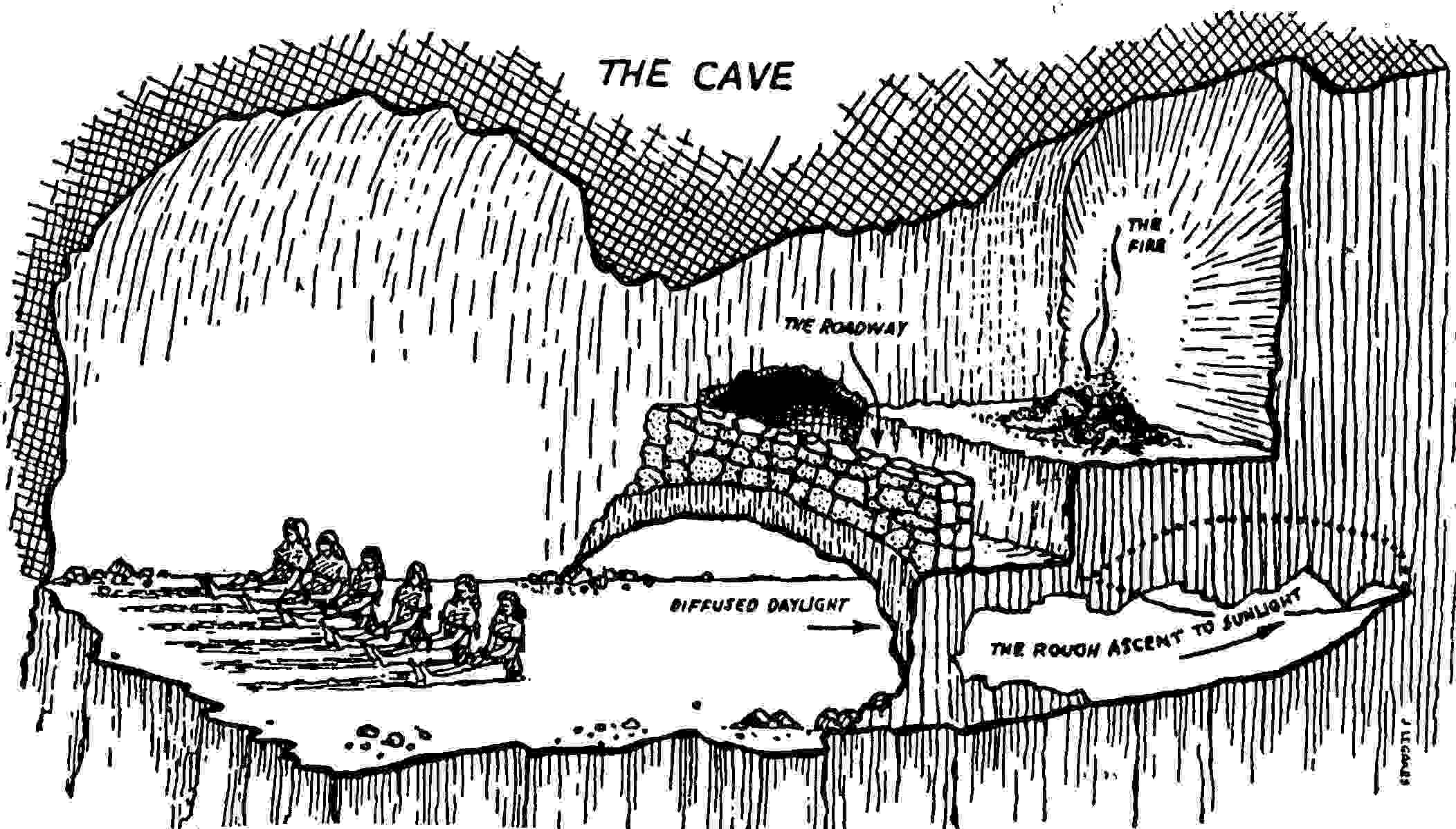
The mind gets trapped in Plato’s cave and only sees shadows of reality. Reality is obscured by what the human mind tells them. The mind’s interpretation of life’s events distorts reality. A child remembers a father’s or mother’s rebuke as an eternal judgement when the reality may have been to protect a child from harm. The shadow is created and remains with the child for the rest of his/her life.
PLATO’S CAVE (Hawkins argues that everything that happens in one’s life is because of the mind’s interpretation of the world.)
To escape the trap of Plato’s cave, Hawkins explains one must use their senses to accept the mind’s perception of reality and continually let it go until its negative power disappears.
An example would be one who gets angry over some event or action and accepts the anger; looks at it, accepts it, uses the mind to understand why there is anger, where it is coming from, and then letting it go. In the process, one finds anger has no meaning other than what one’s mind gave it.
With continual use of this process, Hawkins believes individual minds tap into a cosmic mind that shows the world as it really is; not simply as shadows on a cave wall.
There is wisdom in Hawkins’ perception of life and how one can more constructively deal with its vicissitudes. In this time of Covid 19, “Letting Go” is wise counsel for those troubled by emotional and/or physical trauma. However, the principle of a cosmic mind takes a leap of faith.
This Changes Everything: Capitalism vs. the Climate
Written by: Naomi Klein
Narration by: Ellen Archer
NAOMI KLEIN (CANADIAN AUTHOR, SOCIAL ACTIVIST, FILMAKER)
A change of book titles comes to mind in reviewing Naomi Klein’s book, “This Changes Everything”. A first thought is a title like “Beat the Drum.” On second thought, it is the question “Who Gets to Decide?” Ninety seven percent of “…actively publishing climate scientists” say climate warming trends are likely due to human activity.
Deniers think current weather phenomena are a natural aberration that will be corrected by time. Others are apathetically fatalistic and call global warming a myth. But almost universally, science is saying climate warming is real.
Deniers think current weather phenomena are a natural aberration that will be corrected by time. But almost universally, science is saying climate warming is real.
A “Beat the Drum” title is meant to convey appreciation of Naomi Klein’s studied effort to awaken the general public to the truth of global warming. (She is not a scientist but a writer, researcher, and social activist.) However, the title “Who Gets to Decide?” is meant to convey a monumental weakness in Klein’s spun presentation on solutions for the problems of global warming.
Klein’s argument that global warming is a consequence of capitalism is false. Global warming is a consequence of human nature.
Klein’s argument that global warming is a consequence of capitalism is false. Global warming is a consequence of human nature. To date, democratic capitalism is the only economic form of government that offers a degree of freedom for all Peoples subject to rule of law. Democratic capitalism unleashes the power of human nature, both good and bad. Until some better form of governance is created, the best chance for a global warming solution is captialism. History shows freedom, subject to rule of law, is essential to a deliberative process that will provide best-case solutions to seemingly unsolvable problems.
Capitalism is not the proximate cause of global warming. It is the failure of the E.P.A., the President, and congressional legislators to do their job.
Global warming solutions lie in politics and science; not one or the other, but both.
Global warming solutions lie in politics and science; not one or the other, but both.
Einstein and fellow scientists prove that energy and mass are always equal. That scientific proof leads to Nagasaki and Hiroshima’s atom bombs just as 97% of the scientific community’s proof leads to earth’s climate bomb.
Great Britain, France, Russia, and Germany were worn down by WWII. American democratic capitalism makes the decision to end the war by using the atomic bomb. One may argue that this decision is morally reprehensible but it ended a war that would have continued without definitive action based on the deliberative process of a democratic capitalist country. The same may be said for a pragmatic solution for global warming.
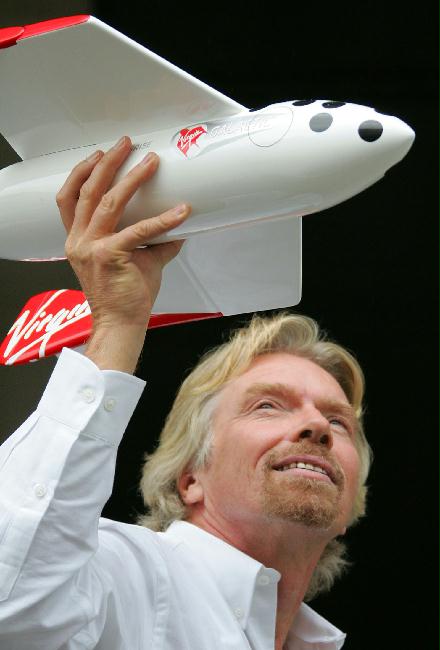
The world is suffering from a global warming war. Eventually, that suffering will create a political consensus for something to be done to combat its consequence. Evidence of something being done is everywhere. By beating the drum Klein is creating sense of urgency about global warming. What is misleading and spun by Klein is discounting of rich entrepreneurs, like Gates, Bloomberg, Branson, and Buffett, who are taking self-interested steps to curb global warming. Yes, they are self-interested steps but self-interest is not inherently bad. Self-interest is in the fight to abate global warming.
Klein suggests that Branson expands his airline to make more money at the cost of further pollution.
Klein suggests Branson expands his airline to make more money at the cost of further pollution. (In truth Branson did sell his airline in 2016.) Branson is a pariah to Klein because of his self-interest in vertically integrating research for alternative fuels for plane travel.
Klein explains Branson is only spending two to four hundred million dollars for research on alternate fuels while having pledged three billion dollars over ten years. One wonders, how many rich have spent one million dollars, let alone two to four hundred, on alternate fuels. Klein infers Branson is all show and no go by reaping publicity benefit while raping the global environment. Whatever Branson’s motive may be, two to four hundred million dollars for a less polluting fuel is better than doing nothing.
Klein vilifies Buffett for buying railroads because they are transporting coal. Klein offers no suggestion that railroads are a more energy-efficient than some other forms of material transportation. Klein infers Buffett made the railroad investment out of self-interest. He probably did but that is not proof of a lack of concern about global warming. Klein infers Buffett’s investment decisions should be dictated by whom? Who gets to decide?
Klein vilifies Buffett for buying railroads because they are transporting coal. Klein offers no suggestion that railroads are a more energy-efficient than some other forms of material transportation.
Because people like Klein are beating the drum, the largest coal producer in the world has lost 95 percent of its stock value. The investing public finds that the industry misleads investors on its liability as a climate polluter. This is democratic capitalism in action.
Self-interest, good and bad, is the nature of human beings. Klein and others need to continue to “Beat the Drum” but decisions on what is to be done will be from a political consensus and action from leaders of the world and the scientific community. It is not what Klein says so much as how she says it. Money, power, and prestige are human nature’s motivations. It will be a matter of competing self-interests that reach a consensus on the preservation of life.
Klein and others should continue to raise awareness and sense of urgency, but it is self-delusion to think human nature will change within the time frame of this world’s declining environment.
In a free society, all realize they have “skin in the game”. Those governments that validate individual freedom offer the best hope for a global warming solution. The answer to the question of “Who gets to decide?” is best left in the hands of nation-states that validate individual freedom. America is one that holds the hope for a solution to global warming, in spite of its democratic capitalist leaning and today’s inept Executive and Legislative branch leadership.
Audio-book Review By Chet Yarbrough (Blog:awalkingdelight) Website: chetyarbrough.blog
A Primate’s Memoir: A Neuroscientist’s Unconventional Life Among the Baboons
Written by: Robert M. Sapolsky
Narration by: Mike Chamberlain
ROBERT SAPOLSKY (AMERICAN NEURO-ENDOCRINOLGIST, PROFESSOR OF BIOLOGY, NEUROSCIENCE, AND NEUROSURGERY AT STANFORD UNIVERSITY)
Robert Sapolsky’s “A Primates Memoir” is a masochist’s guide to Africa. (Our 2017 trip to Africa was luxurious in comparison.) Sapolsky’s trip is what you would expect from a biological anthropologist who sojourns to Africa in the early 80s. Sapolsky lives in a tent while studying baboons.
Our stay in Africa is luxurious in comparison to Sapolsky’s in the 1980s.
At the age of 12, Sapolsky appears to know what he wants from life. In his middle-school years, he begins studying Swahili, the primary language of Southeast Africa.
Sapolsky’s career is aimed at understanding Southeast Africa. Sapolsky’s 1984 PhD. thesis is titled “The Neuro-endocrinology of Stress and Aging”. Presumably, his trip to Africa became the basis for his academic thesis. Sapolsky’s experience in Africa is recounted in “A Primate’s Memoir”.
Animal preserve in Southeast Africa
While studying Baboons, Sapolsky is exposed to the worst of African society. His memoir of those years touches on the aftermath of Africa’s colonization, Africa’s ubiquitous diseases, its governments’ instability, and its abundant and frequently poached wildlife.
SOUTHEAST AFRICA
Robert Mugabe (Former President of Zimbabwe)
JACOB ZUMA (FORMER PRESIDENT OF SOUTH AFRICA)
Though some of what Sapolsky writes has changed, today’s news shows characters like Robert Mugabe, and Jacob Zuma, who are accused of victimizing the poor to enrich themselves.
Some African, and other nation-state leaders around the world, are corrupt. Many Southeastern African bureaucrats, foreign business moguls, indigenous apartheid promoters, and wildlife exploiters still walk, drive, and bump down streets and dirt trails of this spectacular continent.
Self-interest often conflicts with general economic growth and stability. Today’s Southeast Africa is great for tourism (one of the three biggest industries) but the poor remain poor, the rich richer, and the middle class nearly non-existent.
Today’s Southeast Africa is great for tourism (one of the three biggest industries) but the poor remain poor, the rich richer, and the middle class nearly non-existent.
Sapolsky returns to Africa after marrying. He squires his science and marriage partner to revisit a baboon troop he was studying in the 1980s. At the same time, he touches on the cultural norms of a society that seems little changed from his early years in Africa.
Sapolsky recounts the melding of a tragi-comic story of an African who is mauled by a Hyena. In telling the story, he reveals the stoic acceptance of life as it is. However, each time the story of the mauling is told by different people, it changes. The change comes from a blend of truth and fiction that conforms to the tellers’ view of themselves. The essence of the story is that an African man sleeping in a tent is mauled by a Hyena looking for food.
Re-telling of an African story changes with each narration–The change comes from a blend of truth and fiction that conforms to the tellers’ view of themselves..
When the story is told by Masai warriors hired by a company to protect its employees, the victim is saved when the Hyena is speared by the Masai warrior’s courage. When the story is told by the victim, it is a company cook who bashes the Hyena that runs away. When the story is told by a newspaper reporter, the Masai warriors were drunk and not doing their job; the cook bashed the Hyena, and the victim survived. When the story is told by the cook, the victim’s yell brings the cook to the tent; the cook grabs a rock, bashes the Hyena, and the Hyena flees. Finally, when the story is told by the company employer, the victim is not an employee, the Mesai warriors did spear the Hyena, and the employer had no responsibility for the victim.
A cultural interpretation is inferred by these many versions of the same story. Some humans indulge in alcohol to escape reality. Most humans wish to protect an idealized version of their existence. News coverage is sometimes a mix of truth and fiction to make stories more interesting than accurate.
Life is happenstance with each human dealing with its consequence as an end or beginning that either defines, or extends their understanding of life. Truth is in the eye of the beholder. Some people are willing to risk their lives for others. Private companies focus on maximizing profit and minimizing responsibility. Life is not an either/or proposition despite Kierkegaard’s philosophy. Humans are good and bad; no one is totally one or the other–not even America’s morally corrupt and ethically challenged leader.
Sapolsky shows that baboon families, like all families, are born, mature, and die within a framework of psychological and physical challenges imbued by culture. All lives face challenge but culture can ameliorate or magnify the intensity and consequence of the challenge.
The overlay of Sapolsky’s memoir is the research and reported evolution of a baboon family in Southeast Africa. He shows that baboon families, like all families, are born, mature, and die within a framework of psychological and physical challenges imbued by culture. All lives face challenge but culture can ameliorate or magnify the intensity and consequence of the challenge.
Sapolsky gives the example of Kenyan “crazy” people who are hospitalized, treated, and fed to deal with their life circumstance. In America, it seems “crazy” people are left to the street. The inference is that Kenyan “crazy” people live a less stressful life than American “crazy” people. This is a positive view of Kenyan culture but there are ample negative views in Sapolsky’s memoir. Rampant poverty, malnutrition, and abysmal medical treatment are Sapolsky’s recollected examples.
Sapolsky’s memoir shows he clearly lives an unconventional life, but it seems a life of purpose. What more is there?
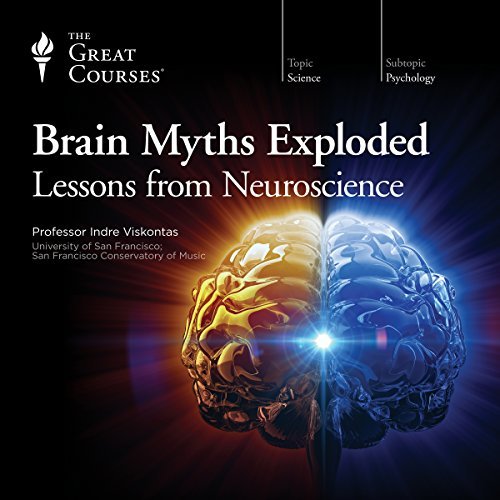
(AUTHOR) Indre Viskontas is an Adjunct Professor of Psychology at the University of San Francisco. With a PhD in Cognitive Neuroscience, Viskontas has done research on neuro-degenerative diseases.
Indre Viskontas covers a broad area of knowledge and experience. She offers many counter intuitive insights to human behavior and the brain in several recorded lectures. She explains neuronal and behavioral functions of the brain.
Viskontas explains how and why the brain, though highly complex, and insightful, can be judgmentally weak, misleading, and health adverse. A human brain can provide extraordinary insight to the nature of things and events while maintaining the body’s autonomic system. On the other hand, that same brain can create appalling misinformation about things and events, distort the truth, and cause autonomic failures.
From regions of the brain to basic parts of neurons, Viskontas dissects what is known and unknown about brain function. She ties brain anatomy to our limited knowledge of consciousness and human behavior.
Viskontas is one of many myth breakers. She notes, the brain has adapted to its environment, but some functions are inefficient, misdirected, and self-destructive. Brain evolution is a lucky draw informed by circumstances.
The brain is not perfect. She notes that the brain is a part of an evolutionary cycle. Every cycle of life has the chance of improving or destroying some aspect of the brain’s design. So far, the brain has adequately adapted to its environment, but some functions are inefficient, misdirected, and self-destructive. Brain evolution is a matter of luck and circumstance.
Giant dinosaurs adapted in their generation, but most dinosaur species died because their physical evolution could not keep pace with environmental change. Viskontas notes the human species follows the same evolutionary path.
Luck comes from adaptation to an evolutionary change. Circumstance comes from the environment that compels change. Only time will tell whether environmental change becomes too great for human adaptation.
Viskontas shows the perfect brain is a myth because evolution is an arbitrary and imperfect process. Evolution can produce human gene improvements or replicate destructive gene changes.
Viskontas notes current measurement of intelligence slightly correlates with brain size. But, size matters little.
She notes that Einstein’s brain is found to be average in size. However, it is noted to have some differences; i.e. like the number of glia cells (chemical “information transmission” cells) which were more numerous in Einstein than the average brain. Also, Einstein’s brain had more interconnection between brain segments than the average brain. Bigger is not necessarily better.
Viskontas suggests chemical imbalance as a singular explanation for psychosis is misleading.
The many connections between brain segments suggest chemical imbalance is an oversimplification of psychiatric dysfunction. Viskontas acknowledges the success of drugs to mitigate aberrant behavior but she notes that neurotransmitters affected by a chemical imbalance are only one part of a healthy functioning brain. Chemicals in the brain are always in flux. Drug therapy is a scatter shot solution rather than precise treatment for negative psychological symptoms.
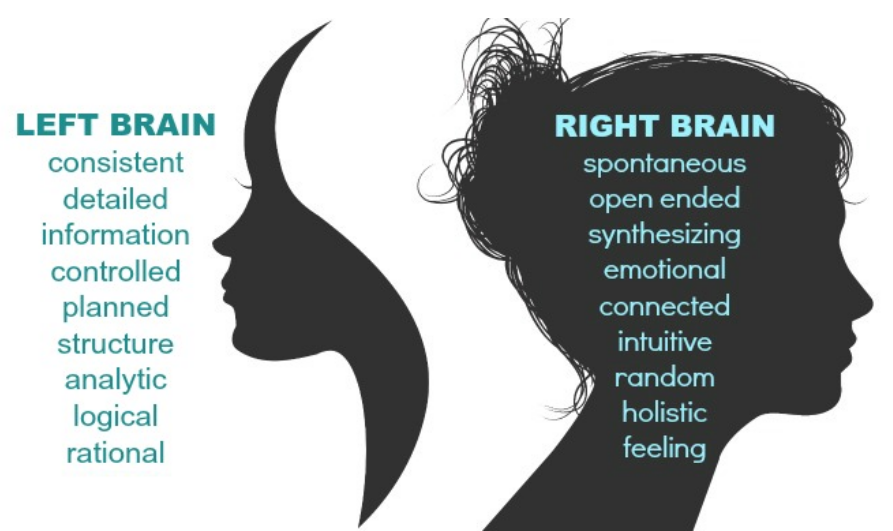
Another often-believed myth is that people who are left-brained are logical; while people who are right-brained are creative.
Viskontas shows that both sides of the brain are activated when creativity or logic are drawn upon. The interconnections and malleability of brain hemispheres suggest logic and creativity come from both hemispheres and can (to a degree) come from one, if the other is damaged.
Viskontas notes that men’s and women’s brains are different.
However, Viskontas concludes similarities far outweigh differences. She notes double-blind experiments that show women have better memories than men when emotion is involved. The region of the brain called the amygdala is larger for men than women. Viskontas suggests the different sizes may account for differences in sexual behavior.
Parenthetically, she notes there is a medication bias in treatment for men and women because most experiments use men as the subject of investigation for drug trials. Women are underrepresented in clinical trials.
Viskontas and other writers have exploded myths of accurate human memory.
Human brains are not movie projectors. Human brains recall memories as stories; not discrete facts. Memories are recreations of what one has experienced (both in the distant past, near past, and present). Facts are often added, and stories are embellished when memories are recalled. The accuracy of memories is highly influenced by an individual’s past and present experience.
Viskontas goes on to explain that life experience creates conscious and sub-conscious bias. When past experience is added to the memory of an event, the brain recalls memory for continuity, more than truth; i.e., facts change, and incidents are misrepresented, or misunderstood. Recalled events are biased by experience.
We have five senses, but they focus on details that meld into a story that makes logical sense to the person recalling a memory.
Viskontas notes that our senses mislead us because we do not see everything. Like historians, we only report the facts we choose to include. There are always more facts about historical events than can be reported by the most diligent historians. Some facts are left out that change the accuracy of history. That is why Ulysses Grant is an incompetent President to some and a great President to others.
Viskontas sites experiments that show neurons continue to grow throughout one’s life if they stay engaged with society and work on learning new things. Those over 50 need to get out of their cars and walk to the store or the local coffee shop whenever possible or practical. Stand more; sit less.
Then there is the myth of old age and neuronal decay that begins after 50. Viskontas sites experiments that show neurons continue to grow throughout one’s life if they stay engaged with society and work on learning new things. An important caveat is that neuronal growth is improved with exercise. So those over 50 need to get out of their cars and walk to the store or the local coffee shop whenever possible or practical. Stand more; sit less.
There are more brain myths exploded by Viskontas, but a final example is the myth that we use only 10% of our brain. All parts of our brain are interconnected. Not all parts are necessarily engaged at once, but interconnections suggests 100% of our brain is used at one time or another.
Viskontas’s knowledge and experience suggest memory holds some truth but not all the truth.
Sean Carroll is a theoretical cosmologist and senior research associate in the Department of Physics at the California Institute of Technology. “The Particle at the End of the Universe”, published in 2012 is focused on the story of Higgs-boson, the widely and incorrectly termed “god particle”. Higgs-bosun is discovered at CERN with the Large Hadron Collider’ experiments done between 2011 and 2013.
The LHC enables scientists to experiment with particle physics at the most minute level in the world; at least, presently possible. The LHC offers a mechanism for proving physics’ theories with experimentation formerly un-available to science. The wonder of the machine is its ability to identify the remains of particles never seen before. It offers the opportunity to see skeletal remains of the elemental particles of life. One presumes many physics theories will be experimentally proven true or false by the LHC. More consequentially, the identification of a Higgs-boson like particle opens a whole new area of science research and theory.
Carroll notes that the LHC is the largest machine in the world with a 17 mile circular tunnel built underground, below several Swiss towns. It was built by the European Organization for Nuclear Research. The LHC is a super cooled vacuum in a tunnel–designed to accelerate protons at near the speed of light for collisions that will reveal the remains of sub-atomic particles. The acceleration is achieved by using giant magnets that accelerate protons trapped in the tunnel. The LHC is in pursuit of the minutest elemental particles of the universe. They are presumably undiscovered because the total energy of known particles does not match the calculated energy of a specific field.
LHC MAP SHOWING CERN SITE–When listeners finish “The Particle at the End of the Universe, they will understand why Higgs-boson is a magnificent discovery and the LHC is worth its nine-billion-dollar expenditure.
Carroll’s explanations of physics and the momentous importance of Higgs-boson are clear and understandable. Early on, one finds Carroll explaining that particle physics is a misleading category of scientific research. Carroll notes that Higgs-boson is not a particle. It is a field. Further, Carroll notes–all that humankind perceives in the world is made of fields, not particles.
With the advent of experimentally proven quantum mechanics, particle physics is transformed into field physics because of uncertainty. Every particle known to science is on the move. In order for one to view a particle—a proton, neutron, electron, etc., it must be frozen in time, which is not its natural state. Every particle exists within a field, a field in which particles are always in motion; always in one place or another.
Among many insights offered by Carroll, is the fundamental categorization of elemental particles. All particles are broken into two categories. One category is Fermion. The second is Boson. Fermions are elemental particles that are composed of matter.
Bosons are elemental particles that are force fields like magnetism.
Electrons, neutrinos, and quarks are fermions, the matter of the universe. Photons, gluons, W bosons, and Z bosons are forces acting on fermions within fields. These elemental particles are massless. All of these particles would remain massless without the Higgs-boson mechanism (field). The Higgs-boson field creates mass out of massless particles.
A useful analogy reported by Carroll explains how a Higgs-boson field creates mass. Imagine two people walking through a room filled with equally dispersed people. The people-filled’ room is the Higgs-boson field. The two people walking through the room are added massless elemental particles. However, one of the two people is famous. The crowd congregates around the famous person to create a mass of people while the less famous person passes through the room (the field) unnoticed.
Carroll explains the experimental proofs of quantum mechanics are the reason Higgs-boson, or something like it, must exist. That is why its discovery was so important. Higgs-boson is the field in which known particles of the universe gain mass. Higgs-bosun is the famous person that walks into the people-filled’ room. Without Higgs-boson or something that works like Higgs-boson, life (matter and energy) would not exist.
Carroll offers other insights—about symmetry, super-symmetry, and breaking symmetry. He touches on dark matter and string theory. All subjects are interestingly presented.
In general, Carroll crystallizes the importance of theoretical and experimental science.
LARGE HADRON COLLIDER
When listeners finish “The Particle at the End of the Universe, they will understand why Higgs-boson is a magnificent discovery and the LHC is worth its nine-billion-dollar expenditure.
Physics for Future Presidents: The Science Behind the Headlines
By Richard A. Muller
Narrated by Peter Larkin
RICHARD A. MULLER (PROFESSOR OF PHYSICS @ UNIVERSITY OF CALIFORNIA, BERKELEY)
“Physics for Future Presidents” suggests understanding of practical physics is critical for future Presidents. Richard Muller’s argument is that Presidents need to know some physics to comprehend the utility of everything from energy, to manned space flight, to satellite surveillance, to terrorist use of nuclear bombs. Muller is not arguing that future Presidents need to understand the science of physics but the practical limitations of manned space flight, carbon-based energy, satellite intelligence, and weapons of mass destruction (WMD).
Muller begins his book with the modern world’s effort to understand and contain terrorism. Muller’s book seems apropos based on President Trump’s effort to limit science research, discount CIA and FBI intelligence, and denuclearize North Korea.
President Trump’s effort to limit science research, discount CIA and FBI intelligence, and denuclearize North Korea.
Muller explores the possibility of a terrorist organization building a nuclear bomb and detonating it in the middle of an American City. He looks at the possibility from three perspectives. One, difficulty in acquiring fissionable material; two, difficulty of building a nuclear device and three, difficulty in delivering a weapon of mass destruction to a desired location.
Surprisingly, Miller suggests a greater danger is terrorist attack by private planes, loaded with highly flammable fuel. Or, for a terrorist organization to use chemical and biological agents that directly or indirectly infect population centers.
Surprisingly, Miller suggests a greater danger is terrorist attack by private planes, loaded with highly flammable fuel. Or, for a terrorist organization to use chemical and/or biological agents that directly or indirectly infect population centers.
Muller reasons a future terrorist attack (with 1000s killed) will be like 9/11, but with a private plane filled with fuel (not a nuclear bomb) flown into a major entertainment event.
Miller believes practical physics will determine the next world terrorist attack. Miller argues that the simplest plan will have the greatest impact. (Of course, there is also the implied psychology of terrorism.) Muller reasons a future terrorist attack (with 1000s killed) will be like 9/11, but with a private plane filled with fuel (not a nuclear bomb) flown into a major entertainment event.
There are a number of counter-intuitive insights in “Physics for Future Presidents”. Muller believes manned space flight is a waste of money. He argues that most of the greatest innovations in science have come from unmanned space flight. Weather satellites, spy satellites, entertainment satellites, global positioning satellites, drones, exploration of planets and the solar system have all come from unmanned space flight. Muller believes there is a time for manned space flight but not now. It is too dangerous and produces little new-science. He implies America should primarily invest in unmanned space flight.
CURIOSITY–FIRST -SELFIE- IN 2015 ON MARS (Muller believes there is a time for manned space flight but not now. It is too dangerous and produces little new-science. He implies America should primarily invest in unmanned space flight.)
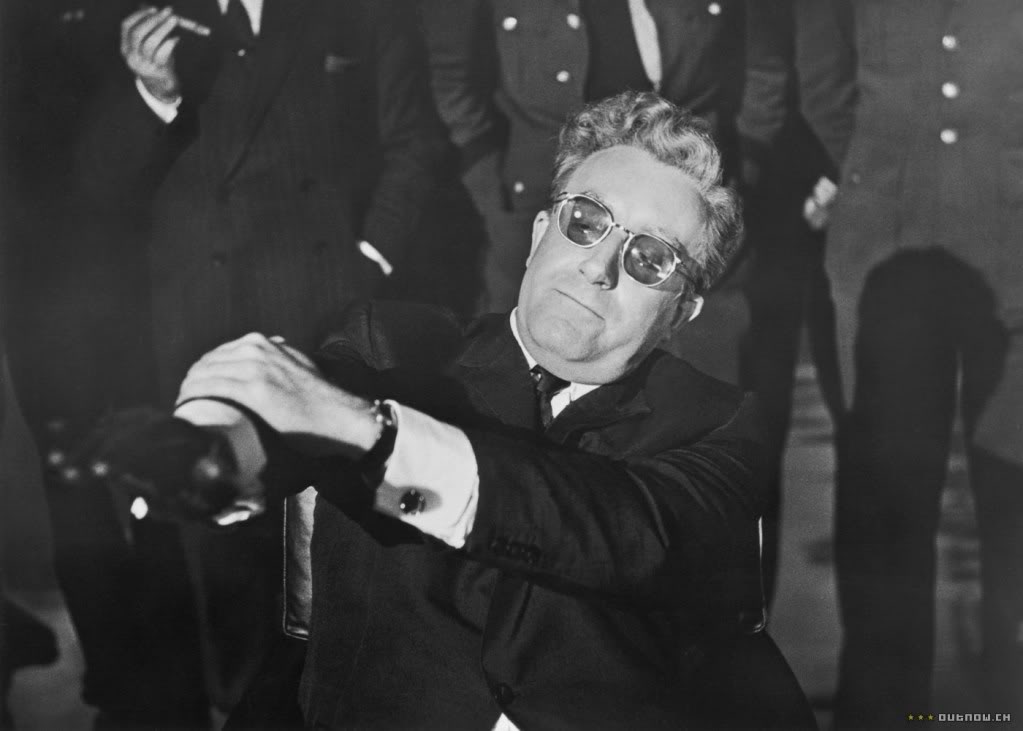
Dr. Strangelove- Richard Muller, at times, seems to stand at the side of fictional character Dr. Strangelove.(Movie titled “How I Learned to Stop Worrying and Love the Bomb)
Richard Muller, at times, seems to stand at the side of fictional character Dr. Strangelove. He describes historical information about radiation poisoning from nuclear bombs and accidents. Muller notes that statistical deaths from war (the Nagasaki and Hiroshima bombing), Three Mile Island, and Chernobyl show that deaths from nuclear radiation is small in comparison to terrorist events initiated by simple, practical, and conventional physics.
Muller argues that nuclear power can be used as a fail-safe source of energy by using the latest technology for nuclear power plants. The latest technology (actually first used in the 1960s by Germany) is a pebble bed reactor (PBR). It is considered safe because it does not rely on water cooling of the nuclear core in the event of an accident.
PEBBLE BED REACTOR IN WEST GERMANY – Muller argues that nuclear power can be used as a fail-safe source of energy by using the latest technology for nuclear power plants. The latest technology (actually first used in the 1960s by Germany) is a pebble bed reactor (PBR). It is considered safe because it does not rely on water cooling of the nuclear core in the event of an accident.
YUCCA MOUNTAIN NUCLEAR WASTE DEPOSITORY NEAR LAS VEGAS, NEVADA (Richard Muller believes Yucca Mountain is an adequately safe repository for nuclear waste that should be reopened.)
This is unlikely to be a popular book in Las Vegas, Nevada. Among other controversial subjects, Richard Muller believes Yucca Mountain is an adequately safe repository for nuclear waste that should be reopened. His argument largely rests on the science of probability. Muller infers that natural radiation in Colorado is as toxic as the probability of radiation leaks from stored nuclear waste at Yucca Mountain.
Muller argues that revision of nuclear construction standards in the United States would make construction of pebble bed reactors less expensive than conventional American nuclear facilities. The added benefit is a safer energy source that reduces the need for carbon based energy supplies that increase global warming. A large part of Muller’s argument for the use of more nuclear power is based on the generally accepted scientific belief that global warming exists and is most likely caused by human activity.
A large part of Muller’s argument for the use of more nuclear power is based on the generally accepted scientific belief that global warming exists and is most likely caused by human activity.
Muller spends a great deal of time explaining that global warming is not a 100% certainty but, in probability terms, is highly likely and largely related to carbon-based energy use. He notes that use of carbon-based energy is likely to increase with China and India’s continued economic growth. Muller creates a sense of urgency in creating other sources of energy. He strongly urges increasing motor vehicle mileage requirements but questions the viability of battery operated vehicles. Muller believes the costs of battery replacement will drive consumers back to carbon-based energy models.
ELON MUSK ROLLS THE DICE AGAIN BY PURCHASING SOLAR CITY, THE LARGEST SOLAR CONVERSION COMPANY IN THE U.S.–Muller sees potential in solar and wind energy production but believes conservation will do more short-term good than any new source of energy.
Muller sees potential in solar and wind energy production but believes conservation will do more short-term good than any new source of energy. He clearly sees that the cost of energy is the primary driver of technological innovation. As long as oil and coal are less expensive than other sources of energy, they will remain the primary source of power. With that realization, Muller insists on technological innovation in conservation because it motivates the consumer to become a part of the energy-crises’. Consumer’ participation is guaranteed by savings received from use of more energy-efficient devices.
The key to the world’s future is energy. Muller believes the short-term solution is conservation. He believes long-term solution revolves around nuclear fission and fusion. Fusion is a longer term prospect but offers an infinite source of energy. Fission is shown to work now, with probabilities of failure that can be improved upon.
This circles back to the critical importance of storing nuclear waste. Muller notes that the fragmented system of nuclear storage in the United States is a bigger risk to the environment than having it located in a limited number of specifically designed storage locations. Yucca Mountain fits Muller’s criteria for safe storage of nuclear waste. He acknowledges that nuclear accidents may occur but the probability of an accident at Yucca Mountain is less than the probability of accident at other relatively unsecured and fragmented sites.
The physics that Muller insists Presidents must understand is that scientific proof is a matter of probability; not absolute certainty. Muller warns Presidents to not be misled by cherry-picking fact finders that have objectives that are not related to practical physics. Even if there is no certainty in science, knowing probabilities offer a basis for informed decision.












































 A useful analogy reported by Carroll explains how a Higgs-boson field creates mass. Imagine two people walking through a room filled with equally dispersed people. The people-filled’ room is the Higgs-boson field. The two people walking through the room are added massless elemental particles. However, one of the two people is famous. The crowd congregates around the famous person to create a mass of people while the less famous person passes through the room (the field) unnoticed.