BIG QUESTIONS

Audio-book Review
By Chet Yarbrough

(Blog:awalkingdelight)
Website: chetyarbrough.blog

Brief Answers to the Big Questions


By Stephen Hawking, Eddie Redmayne-foreword, Lucy Hawking-afterword

Narrated by Ben Whishaw

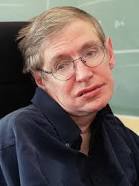
Stephen Hawking (English theoretical physicist, cosmologist, and author)

“Big Answers to Big Questions” is Stephen Hawking’s last book. It is posthumously compiled by others.

Though many books have been written by Hawking, none are as popular as “A Brief History of Time”.  However, this compilation of Hawking’s thoughts deserves equal, if not greater, popularity.  It is simpler to understand and addresses a wider range of subjects that puzzle human beings.

“Brief Answers…” does not definitively answer the questions that are raised.  It does offer a perspective from a person that is one of the great minds of modern science.

Karl Popper’s dictum is that “He who decides one day that scientific statements do not call for any further test…retires from the game.” By that criteria, Hawking’s “Brief answers…” can only be right or wrong.  Even Einstein’s theories are still being tested. 

What is the origin of life? 

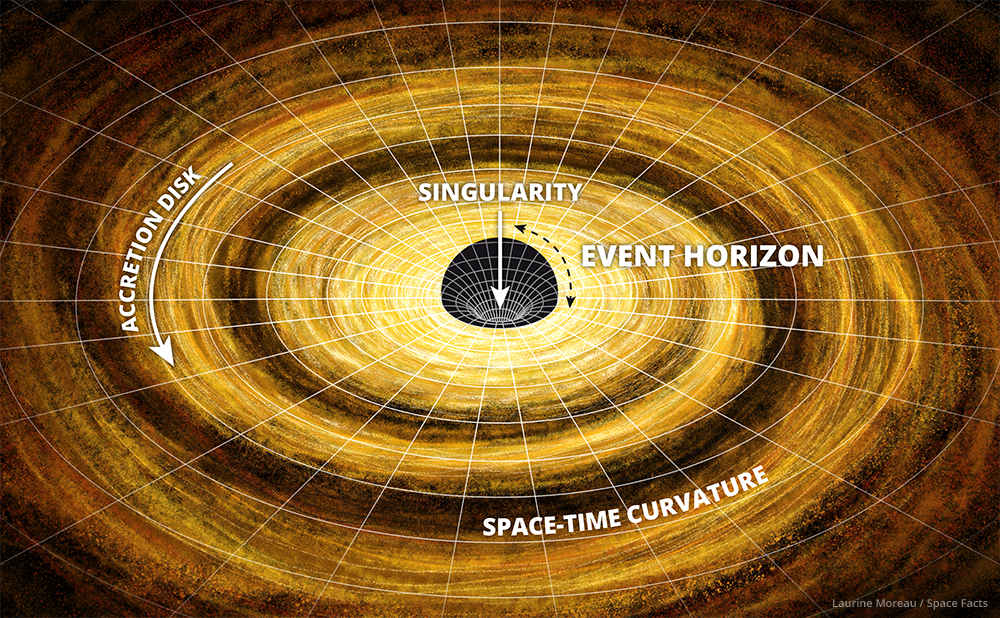
Hawking’s answer is the “Big Bang”.  The origin of life begins with the “Big Bang”, a somewhat pejorative term that describes a black hole.  This black mass is formed from a consolidation of gaseous and fragmented material that compresses to a point smaller than a pea.

Is there an explanation for something being created from nothing? 

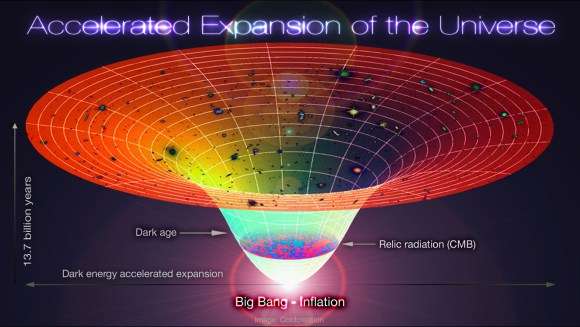
Hawking’s answer is related to the theory of the “big bang”.  Time did not exist before the big-bang.  The arrow of time is created by the instantaneous expansion of our universe’s compressed black hole.  Hawking argues before time there is nothing.  The creation of this world came from the physics of compression and its consequence; i.e. inflation, the instantaneous expansion of a black hole.

From that tiny spot in the cosmos, Hawking argues a universe is born. This minute point of compression is postulated by Hawking to expand instantaneously (termed cosmic inflation). 

In accordance with Einstein’s law of physics, mass and energy are equivalent and cannot be destroyed.  Instantaneous inflation is a changed form of energy and mass with space being its primary constituent.  That instantaneous expansion of a black hole made the universe.  This universe is made of many galaxies (estimated to be between 200 billion and 2 trillion); of which we are only one, called the Milky Way.   

From the big bang, the elements of life are formed. Hawking explains chemical interactions from the explosion lead to the first carbon-based life’ forms.  That combination of chemicals evolves into plants, animals, fungi, protists, archaea, and bacteria. 

Is the only explanation for the existence of earth an omniscient and omnipresent God?

The “big bang” is Hawking’s answer; without insisting that there is no God.  Hawking’s argument is founded on science that offers a plausible alternative explanation.

What are the greatest threats to life on earth?  Hawking notes four.  One, nuclear war; two, global warming; three over-population, and four—an asteroid collision with earth.

Not surprising to some, Hawking suggests the first two are accelerated by the election of Donald Trump.  The third and fourth are another matter.

Does life exist on other planets? 

Hawking believes it is probable.  However, he believes it unlikely to be humanoid.  He suggests the evolution of humankind is a confluence of serendipitous circumstances that are unlikely to be repeated. 

How will human beings survive on a world with diminishing resources?

Hawking believes human survival depends on habitation of other planets.
He argues that the same thing that motivated Columbus to find a new continent motivates humankind to journey into space.

Through a combination of curiosity (born partly of greed for wealth and power in my opinion) and necessity, explorers expanded their domains.  Hawking suggests the same holds true today.

Will humankind visit other solar systems? 

Hawking explains the limitations and problems of space travel and habitation.  The distances involved in finding a planet like earth are currently too great.

Planets in other solar systems are not reachable with the energy limitations of current propulsion technology.  Long distance space travel is not insurmountable, but presently it is beyond the capability of experimental science. 

Hawking argues that funding for space travel research needs to be increased.  Planets and moons in our solar system will require elaborate survival systems to deal with a lack of water, harsh climate, and unbreathable air. However, planets like Mars offer some refuge based on technological innovation.

Will a law of nature that explains everything about everything be discovered? 

Hawking believes someone will find a theory that combines quantum theory with the special theory of relativity.  The present state of science suggests “God does play dice”, contrary Albert Einstein’s belief.  What remains unknown is how the theory of a causal world can be the same as a probabilistic world.  Hawking believes the melding of quantum theory and Einstein’s theory will be the answer to the puzzle of existence.

Is Artificial Intelligence a danger to humankind? 

Hawking argues that A.I. is potentially dangerous, but also a possible boon to humankind.  He believes A.I. will exceed the capability of human reasoning.  Hawking argues human beings must responsibly limit actions taken by A.I. that might be detrimental to humankind.

With the advance of genetic engineering (like Crispr), Hawking argues the human genome will be modified.  That modification may involve A.I. in ways that enhance human capability.  On the other hand, it may destroy human consciousness (whatever that is). 

Hawking explains a dire prediction for A.I. is its potential to improve itself at the expense of humans.

Despite the four possible causes for human extinction, Hawking believes the more likely cause of human extinction will be an asteroid collision with earth.  Humans, like the dinosaurs, will die in a bang, rather than a whimper.

There are other interesting thoughts from Hawking but a final question is–what discovery, in Hawking’s opinion, would be the most valuable to the world?  What discovery would hold the most promise?

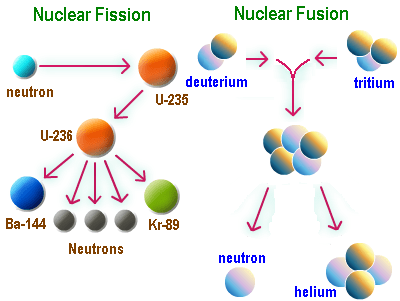
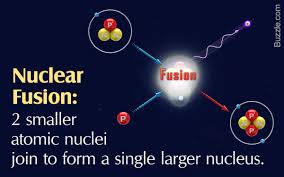
Hawking suggests the world’s energy and environmental problems can be addressed by one discovery.  The discovery of a method for creating energy from nuclear fusion.  Such a discovery would diminish degradation of our environment and improve the odds for interstellar travel.

RELATIVITY

Audio-book Review
By Chet Yarbrough

A Brief History of Time

By Stephen Hawking

(Blog:awalkingdelight)
Website: chetyarbrough.blog

Narrated by Michael Jackson

Stephen Hawking (English theoretical physicist, cosmologist, and author)

In Physics time, this is an old book because it dates before the year 2000.  However, it remains a fairly good layman’s overview of the state of physics.

This surprise bestseller is not easy to understand in spite of its brevity and avoidance of mathematics. Without additional reading, “A Brief History of Time” is less intelligible than more recent “physics for the laymen” books (see previous reviews).

Hawking describes the relativity of time, black holes, the big bang theory, God, and string theory (the most current research subject involving unified field theory).

An interesting and revealing observation in Hawking’s book is a comment about the lack of philosophical perspective in the field of Physics.  Hawking suggests that philosophers choose not to examine theories of physics because of the abstruse and specialized nature of the research that make it difficult for outsiders to understand.  There is some truth in that observation but one can read Will Durant’s 1929 edition of “The Mansions of Philosophy” or his revision (“The Pleasures of Philosophy”) in 1953 and see that Durant believed philosophy was in decline long before specialized research in physics.

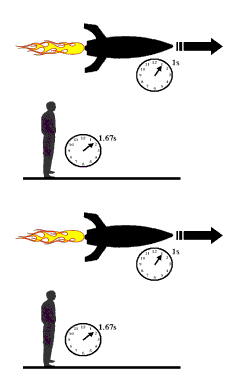
Hawking explains that time is not a constant measurement for all observers.  Time is relative.  Depending on one person’s speed of travel, his measurement of time is different from another person’s measurement of time if the other person is traveling at a different speed.  The theory suggests that time travel is possible if man can travel at speeds nearing the speed of light.

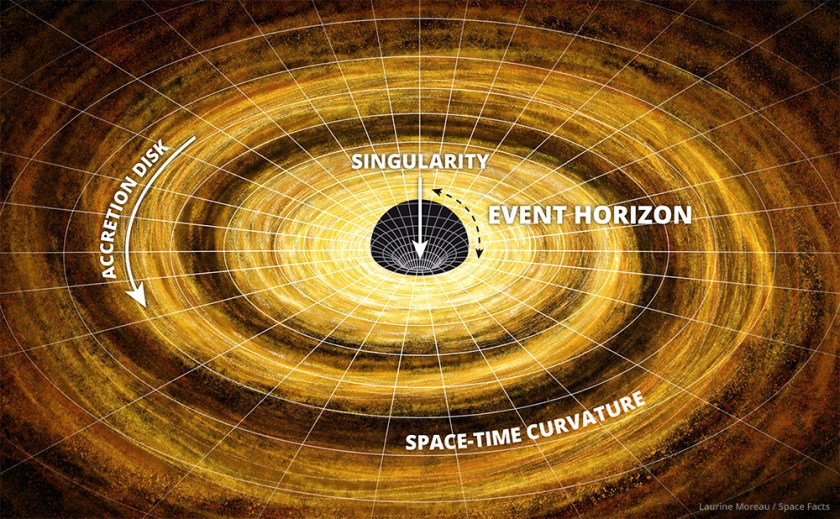
Black holes are high density, gravitational points in the universe that are so powerful that anything within their grasp (their event horizons) will be sucked into their maws, never to be seen again.  The belief is that black holes (though not actually black) come from imploding stars; i.e. stars that have lost their source of nuclear reaction that become so dense that their force of gravitation draws anything near them into their mass.

Hawking believes time began when our universe exploded from a single point in the cosmos.  Before the big bang, there was no concept of time.  Our universe is expanding from that singular event and will do one of three things.  It will continue to expand, it will expand to a point and than contract, or it will reach a point of stasis.

The question of the existence of God is raised and unresolved.

The quest for a unified field theory is a physics journey that began with Newton and progressed through Einstein and Dirac.  The search continues, passing to future generations.  Finding a unified field theory, in Hawking’s opinion, would be like reading the mind of God.

SKEPTIC

Audio-book Review
By Chet Yarbrough

(Blog:awalkingdelight)
Website: chetyarbrough.blog

The Believing Brain

By Michael Shermer

Narrated by Michael Shermer

Michael Shermer (Author, American science writer, editor of the magazine Skeptic.)

Michael Shermer is an academic psychologist, writer, myth buster, and faith breaker.  Shermer characterizes himself as a religious skeptic. His underlying skepticism about God is grounded in 1.) prayer’s failure to cure the incurable, 2.) the nature and history of recorded life, and 3.) scientific studies of brain function.

Shermer writes of personal prayers’ failure to heal a medically un-heal-able friend.  He recounts common sectarian stories that occur in the history of different religions in the world suggesting that stories of religious belief are genetically imprinted; i.e. a condition of human memes rather than proof of God. 

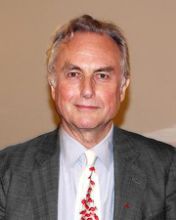
Sherman has company in that belief. Richard Dawkins wrote The Selfish Gene to make the same mimetic point.

Shermer reviews brain function studies that confirm neurological causes for “out of body experience”, “voices from the unseen”, alien abduction, white light cognition during near death experience, and other anecdotes that mythologize the existence of other beings, God , the devil, and/or an “after life”.

The Believing Brain characterizes belief in God as a genetically evolved faith-based myth.  Shermer cites science and history to deny God’s existence.  Shermer believes faith in God comes from a genetic predisposition of human beings to complete causal, mythological stories to explain unexplained phenomena. 

Aside from Shermer’s disbelief in God, his most substantive observations are the experimentally reproducible studies that clearly demonstrate man’s ability to invent stories, deny physical reality, and act in socially reprehensible ways. 

Shermer notes how such things as framing an idea distorts human cognition.  Scientific studies show that human cognition is proven to be biased by a person’s belief system.  Shermer cites B. F. Skinner’s operant conditioning and the famous Milgram obedience experiments to show how human perception, and more consequentially, behavior are manipulated by human instinct and contextual bias.

It is no wonder that “eyewitness” accounts of crime are being discounted as a source for conviction of presumed perpetrators.

The foundation of Shermer’s skepticism is what he calls “patternicity” and “agenticity”.  “Patternicity” is the human compulsion to see causal relationship in the physical world. 

“The Believing Brain” outlines a psychological inclination of human brains to manufacture causal patterns and agents (“agenticity”) to support predetermined beliefs. 

The irony of Shermer’s analysis of brain function is that “patternicity” is an essential tool of the scientific community. 

Without the use of “patternicity”, how would Bohr, Einstein, or Paul Dirac have advanced the world of physics?  These men believed something before science could prove them right.  They had faith in their own judgement when experiment could not prove their point.

Shermer notes that science is the key to knowledge.  Science requires experimentally reproducible results. When experimental results are not the same, knowledge escapes.  Experiment recently confirmed existence of the Higgs Boson 16 years after François Englert and Peter Higgs created the theory.

One must presume Shermer chooses to call himself a skeptic because—when asked if he believes in God, no experiment can be done to confirm or deny existence.

PHYSICS

Audio-book Review
By Chet Yarbrough

(Blog:awalkingdelight)
Website: chetyarbrough.com

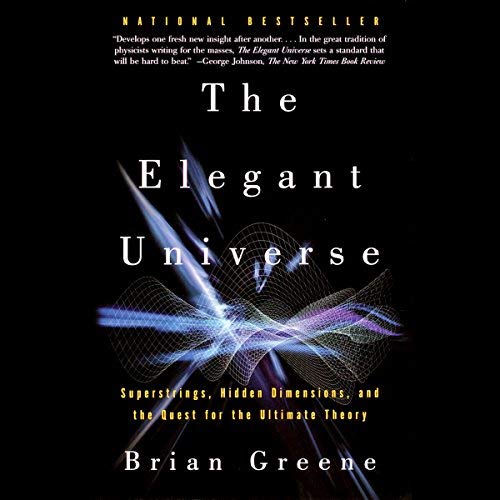
The Elegant Universe
By Brian Greene

Narrated by Erik Davies

Brian Greene (Author, American Theoretical Physicist)

Who cares about physics?

If the world is orderly and predictable, physics is the key to that orderliness and predictability; the key to our future. (Knowing what E = mc2 reminds us of the importance of understanding physics.)

A unified field theory has been the goal of physicist’s since Einstein’s break through discovery of the equivalence of mass and energy.  Brian Greene excites a listener’s appreciation of string theory and its potential for becoming the basis for a unified field theory.

Greene is a theoretical physicist that helps bridge the gap between sciences’ understanding of the universe and an uninformed public.  He links analogy with obscure conceptual physics. Many concepts addressed by Greene remain obscure (“Calabi-Yau manifolds” for example) despite his valiant effort to analogize his way to our understanding.  But, “The Elegant Universe” does open doors for a non-physicist’s understanding.  

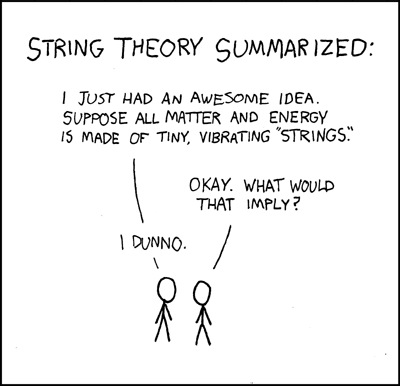
Greene explores the theory that elemental particles are made up of strings that vibrate at different frequencies.  Those vibrations determine the elemental nature of particles that make up the world; one string can become different particles based on the frequency of its vibration.  These strings move through out the galaxy to make all we see and think we know of the universe. 


“The Elegant Universe” unfolds the concept of vibrating strings.  The concept, of course, is called “string theory”. With this theory, quantum mechanics becomes a verifiable structure for physics; something that Einstein could not accept in his life time.

Conceptually, strings make up all matter and energy and have characteristics that maintain and repair the fabric of space. String theory has the potential of explaining how the universe works.  Quantum mechanics, ideas of equivalence (energy and mass), duality, symmetry and super symmetry are explored by Greene in “The Elegant Universe”. 

The truth of string theory either obviates or combines the reality of space, time, and dimension.  However, the future of string theory rests on experimental observance and measurement.

Advances in string theory demand predictability and comprehensibility. The problem is that these “strings” are so small, they cannot be measured with current technology. Without measurement, the theory cannot be tested. Without tests, the theory can only be a theory.

Of course, that was true at the time of Einstein’s theory of the equivalence of energy and matter. Since Einstein’s discovery, atomic energy and atomic bombs have proven his theory’s validity. Not so, at least yet, for “string theory”.

There are significant objections to this avenue of research by fellow scientists like Richard Feynman (now deceased), and Lee Smolin. Smolin believes “String Theory” is blunting sciences’ effort to find a more plausible explanation of the nature of the universe.

Unraveling nature’s mysteries may or may not be accomplished with this exploration but string theory has the potential of being the greatest discovery since Newton’s theory of gravity and/or Einstein’s theory of relativity.   

ENTANGLEMENT

 Audio-book Review
By Chet Yarbrough
(Blog:awalkingdelight)
Website: chetyarbrough.blog

The Age of Entanglement
By Louisa Gilder


Narrated by Walter Dixon

LOUISA GILDER (AMERICAN AUTHOR)
Louisa Gilder, in her first published book, offers a layman’s look at the science of quantum entanglement.

In the mind of a three-year-old, string can become tangled. String theory and The Age of Entanglement must have a relationship, right?

Physics is presently a mathematician’s art as much as science, particularly with the advent of quantum theory. As a non-mathematician, science’s pursuit of physics is fascinating because it tickles imagination. It offers insight to the mystery of how we got here, who we are, and where we are going.

Physics, pre- and post- Einstein, is a pursuit for the keys to the universe. Einstein’s “E=MC Squared” is a turning point. It focuses attention on unified field theory, the thought that there is a single formula that explains everything about everything.

Physics progresses from particles to waves to strings in its effort to unravel the key to the door of beginnings and endings. “The Age of Entanglement” brings a listener to 2006 without explaining how string theory relates to entanglement when they seem to have some important relationship. Gilder chooses not to include string theory (postulated in 1986 by Green and Schwarz) in her exploration of entanglement.

Nobel Prize winners in physics 2022.

Aside from that gripe, this is an enjoyable exploration of the world of physics; its theorists and experimentalists. The exploration is made better by the quality of Walter Dixon’s narration. Gilder cleverly delves into correspondence between physics legends–Einstein, Bohr, and later, John Bell and his contemporaries.

JOHN STEWART BELL (ENGLISH PHYSICIST 1928-1990) Even though Bell is not Einstein’s and Bohr’s contemporary, Bell is a critical change agent in the on-going argument begun by Einstein and Bohr about Quantum Theory. Bell changes quantum theory argument from a question of “if” to a question of “how” Quantum Theory is a valid construct of Physics.

Gilder reveals the humanness of the scientific community. She exposes the frustration and joy of discovery among scientists that think about the unknown and experiment with the unseen. The Age of Entanglement reveals the tensions that are created by strong beliefs and the utter devastation and human depression caused when beliefs are refuted by reproducible experiment.

Along the way Gilder offers a definition of entanglement; i.e. the idea that one minute quanta of existence affects other faraway elements of existence.

THE QUEST TO DEFINE QUANTUM ENTANGLEMENT

CONSCIOUSNESS

Audio-book Review
By Chet Yarbrough

(Blog:awalkingdelight)
Website: chetyarbrough.blog

Mind and Cosmos: Why the Materialist Neo-Darwinian Conception of Nature is Almost Certainly False

mind and cosmos

By: Thomas Nagel 

Narrated by: Brian Troxell

THOMAS NAGEL (AMERICAN AUTHOR, PROFESSOR NEW YORK UNIVERSITY)

Thomas Nagel believes Darwin’s theory of natural selection is wrong.  Nagel suggests natural selection fails to encompass the concept of mind.  Even though Nagel acknowledges biology and physics have made great strides in understanding the nature of life, he suggests the mind should be a starting point for a theory of everything.  Nagel infers that science research is bogged down by a mechanistic view of nature.  Nagel suggests science must discover the origin of consciousness to find the Holy Grail; i.e. an all-encompassing theory of nature.

CHARLES DARWIN (1809-1882)
CHARLES DARWIN (1809-1882) FOUNDER OF THE THEORY OF THE ORIGIN OF SPECIES.

Nagel does not believe Darwinian evolution can explain consciousness.  Nagel offers a sliver of hope to believers in God as the Creator but, as an atheist, he suggests there is a teleological (an account of a given thing’s end or purpose) explanation for consciousness that is yet to be discovered.  In that discovery, he believes there will be a theory of everything that encompasses the true nature of life.

Nagel acknowledges God may be the answer but places that idea near the level of space aliens leaving seeds of life on earth.  He argues that discovery of the origin of consciousness through science will be the key to open the door to a theory of everything.  Like Einstein and Newton, Nagel believes humans live in a world of cause and effect.  But, like Newtonian’ physics failure to encompass the universe’s laws of motion, and Einstein’s belief that God does not play with dice, Nagel believes Darwin’s concept of natural selection is, at best, incomplete.  (Both Newton and Einstein failed to incorporate laws of quantum mechanics in their respective theories of nature.)consciousness

SIR ISAAC NEWTON (1642-1727)

ALBERT EINSTEIN (1879-1955)


Without agreeing or disagreeing with Nagel’s idea, it seems propitious for the United States to fund and begin their decade-long effort to examine the human brain.  A giant step forward was taken by President Obama but Trump’s anti-science mentality suggests Nagel’s idea will not be explored during Trump’s administration.

OBAMA BRAIN INITITIVE IN 2014 ($300 MILLION DOLLAR FOR R&D ON NEUROLOGICAL FUNCTION)
OBAMA BRAIN INITIATIVE IN 2014 ($300 MILLION DOLLAR FOR NEUROLOGICAL R&D–Trump’s anti-science mentality suggests Nagel’s idea will not be explored during Trump’s administration.)

RICHARD DAWKINS (ENGLISH ETHOLOGIST AND EVOLUIONARY BIOLOGIST WHO INFERS A GENE MAY BE THE SOURCE OF CONSCIOUSNESS)
RICHARD DAWKINS (ENGLISH ETHOLOGIST AND BIOLOGIST INFERS A GENE MAY BE THE SOURCE OF CONSCIOUSNESS)

Though nearer term objectives are to understand Alzheimer’s and Parkinson’s diseases, the longer term result may be to discover the origin of consciousness.  Contrary to Nagel’s contention that natural selection cannot explain consciousness, brain research may reveal consciousness rises from the same source of mysterious elemental and repetitive combinations of an immortal gene that Darwin dimly understood. Brain research offers an avenue for extension or refutation of Darwin’s theory of natural selection.

Mind and Cosmos is a tribute to Nagel’s “outside the box” philosophical’ thought.  Like some who say string theory is a blind alley for a theory of everything, natural selection may be a mistaken road to the origin of life.

 

42 or 37?

Audio-book Review
By Chet Yarbrough

(Blog:awalkingdelight)
Website: chetyarbrough.blog

Written by: Brian Christian, Tom Griffiths

Narrated by: Brian Christian

BRIAN CHRISTIAN (CO-AUTHOR, WRITER OF NONFICTION, SCIENCE, PHILOSOPHY)

BRIAN CHRISTIAN (CO-AUTHOR, WRITER OF NONFICTION, SCIENCE, PHILOSOPHY)

TOM GRIFFITHS (CO-AUTHOR, PROFESSOR OF PSYCHOLOGY AND COGNITIVE SCIENCE UC BERKLEY)

TOM GRIFFITHS (CO-AUTHOR, PROFESSOR OF PSYCHOLOGY AND COGNITIVE SCIENCE UC BERKLEY)

“A Hitchhiker’s Guide to the Galaxy” explains that the ultimate answer to the meaning of life is 42; however, Brian Christian and Tom Griffiths tell us it is 37 in “Algorithms to Live By”.

Griffiths and Christian argue that if you want to have an optimum answer to a complex question, it will take 37% of an allotted amount of time to study the known and unknown details of a question to come up with an optimum answer.  Keep in mind, this is not a perfect answer but a probabilistic optimum answer; i.e. an answer based on what is known and unknown.

PROBABILITY

CHRISTIAN AND GRIFFITHS INFER THE COMPLEXITY OF LIFE MAKES ANSWERS TO LIFE’S MEANING LIMITED.

Christian and Griffiths outline what they argue is an explanation of human decision-making.  The implication of their conclusion suggests AI is unlikely to improve human cognition because it only adds information to complex human questions.

If you sit at a poker table for three hours, the first hour should be used to gather information about your competition.  You will never know everything you need to know to win a hand of poker.  But, you will improve your chances of winning by taking slightly more than 1/3rd of your time gathering information about the way your competitors play.  This is a simplistic way of looking at Christian’ and Griffiths’ explanation of human decision-making.

The authors identify the discoverer of this algorithm as Merrill Flood, an American mathematician who, with Melvin Dresher, came up with the Prisoner’s dilemma, a model of cooperation and conflict.

MERRILL FLOOD (SOCIAL PSYCHOLOGIST FOR RAND IN 1950, ALONG WITH MERRILL FLOOD FRAMED THE PRISONER’S DILEMMA GAME THEORY)

MERRILL FLOOD (SOCIAL PSYCHOLOGIST FOR RAND IN 1950, ALONG WITH MERRILL FLOOD FRAMED THE PRISONER'S DELEMMA GAME THEORY)
MELVIN DRESHER (POLISH BORN AMERICAN MATHEMATICIAN, INVENTED TYHEORETICAL MODEL OF COPOPERATION AND CONFLICT)

MELVIN DRESHER (POLISH BORN AMERICAN MATHEMATICIAN, INVENTED THEORETICAL MODEL OF COOPERATION AND CONFLICT.)

Everyone loses in “The Prisoner’s Dilemma”. Christian and Griffiiths note the game can be changed by one variable.  The example given is the introduction of a Mafia leader that says anyone who rats on another will be murdered.  The introduction of this new variable changes the probability of either robber ratting on the other.

The Prisoner’s Dilemma” is the story of two robbers that are placed in separate cells, interrogated independently, and offered a shorter sentence if one rats on the other.  The prosecutor does not have enough evidence for conviction without one ratting on the other. If both robbers rat on each other, they will serve the same sentence.  If only one rats on the other, he/she gets a shorter sentence.  If neither robber rats on the other, the robbers are convicted on a lesser charge.

The 37% factor offers truth but fails to give much comfort to one seeking knowledge about life.  It reminds one of the funny idea suggested by “The Hitchhiker’s Guide to the Galaxy” with the number 42.  The authors suggest 37% is considerably better than knowing nothing but they imply the complexity of life makes outcomes entirely probabilistic.  One presumes–the more you know, the better your decisions will be. Christian and Griffith disagree with that presumption.  They suggest too much information skews the probability of truth.

COMPUTERS AND MOBILE PHONES

CHRISTIAN AND GRIFFITH INFER ARTIFICIAL INTELLIGENCE WILL OFFER NO BETTER DECISION MAKING CAPABILITY THAN HUMANS.

With computers and the internet, one would think truth would be easier to find.  Christian and Griffith suggest computers only offer added complexity; not truth.  They argue computers are only tools for revealing complexity.

Christian and Griffith suggest 37% is the best one can do in getting to the truth.  The authors suggest there is a point of diminishing return with more information; i.e. too many accumulated facts distort the truth and take one farther away from a 37% probability. A recent example is statistical sampling concluding Hillary Clinton would be the next President of the United States.

A 37% BOUNDARY FOR ANSWERS TO THE MEANING OF LIFE

THIRTY SEVEN

There is much more in Christian and Griffiths exploration of algorithms, but it is disheartening to think human search for truth is constrained by a 37% information boundary. A logical extension of their argument is that artificial intelligence is as likely to mislead humanity as human intelligence. The authors argue–the nature of AI only increases information for answers to complex questions.  By adding too much information, more facts are known with less chance of knowing the truth.

This is an enlightening exploration of the world of algorithms and computer science.  On the one hand, it suggests human intuition is highly valuable; on the other, the authors explain it is unwise to rely on instinct alone.  Christian and Griffiths explain life decisions, even with complex computer driven algorithms are less; not more likely to be correct.

TRUTHINESS

Some useful tools for life’s management are explained but there is a ring of truthiness in Griffiths’ and Christian’s conclusions.  Of course, at best, this review shows only a 37% chance of being true.

REWIRING THE BRAIN

Audio-book Review
By Chet Yarbrough

(Blog:awalkingdelight)
Website: chetyarbrough.blog

Rewire: Change Your Brain to Break Bad Habits, Overcome Addictions, Conquer Self-destructive Behavior

rewire

Written by: Richard O’Connor, PhD

Narrated by: Fred Stella

DR. RICHARD O'CONNOR (AUTHOR, CLINICAL THERAPIST)
DR. RICHARD O’CONNOR (AUTHOR, CLINICAL THERAPIST)

In 1971, Brickman and Campbell coined the term Hedonic Treadmill to explain that people have a baseline level of happiness, regardless of what occurs in their lives.  That definition infers winning the lottery, or being diagnosed with cancer have opposite happiness quotients–one joyfully positive; the other horrendously negative.  The Hedonic Treadmill theory suggests happiness will return to a baseline level of individual happiness when the initial joy or sorrow subsides.

Toward the end of Richard O’Connor’s book, “Rewire”, the term Hedonic Treadmill is used to infer that America’s materialist predilection is like a psychological cul-de-sac; i.e. a mental trap with only one exit. O’Connor explains, in a different way, that the cul-de-sac is created by life experience that imprints memories that become automatic responses to current events.

DAVID R. HAWKINS (1927-2012, DIED AT AGE 85, AUTHOR, PHILOSOPHER, MD, PSYCHIATRIST)
This reminds one of David Hawkins expressed belief in “Letting Go”. 

O’Connor argues that rational behavior is unconsciously modified by subconscious imprinting from early life experience. The only exit from the cul-de-sac is to leave the way you came, recall how and why you entered, and teach your brain not to take that turn again.  This reminds one of David Hawkins expressed belief in “Letting Go”.

More fundamentally, O’Connor infers American society is more materialistic today; and, as a consequence, Americans are more mentally unbalanced than in the past because happiness from material acquisition is a road to nowhere, a Hedonic Treadmill.

HEDONIC TREADMILL
O’Connor argues that Americans are more mentally unbalanced than in the past because happiness from material acquisition is a road to nowhere, a Hedonic Treadmill.

Rewire offers a great deal of information about causes and cures for individual mental dysfunction in America.  A reader or listener may disagree with O’Connor’s causal analysis but his examples of psychological dysfunction can be seen in one’s self and in others.  What makes “Rewire” interesting is O’Connor’s suggested cures, based on thirty years of experience as a therapist.

MAPPING THE BRAIN
What makes “Rewire” interesting is O’Connor’s suggested cures, based on thirty years of experience as a therapist. O’Connor endorses the belief that the brain’s functions can be rewired at any age with repetitive practice. 

O’Connor endorses the belief that the brain’s functions can be rewired at any age with repetitive practice.  As an example, he explains the utility of the 12 step program designed by Alcoholics Anonymous for addicts to avoid being trapped in a mental cul-de-sac.  The AA steps are 1) Admit powerlessness, 2) find hope, 3) surrender, 4) take inventory, 5) share your inventory, 6) become ready, 7) ask God, 8) make a list of amends, 9) make amends, 10) continue your inventory, 11) pray and meditate, and finally, 12) help others.

Though AA presumably requires a Supreme Being in their 12 step process, the point of the treatment is to train one’s mind to act differently when confronted with influences that make a person turn into a cul-de-sac rather than back to an individuated baseline happiness.

AA
Though AA presumably requires a Supreme Being in their 12 step process, the point of the treatment is to train one’s mind to act differently when confronted with influences that make a person turn into a cul-de-sac rather than back to an individuated baseline happiness. 

drug use in war
O’Connor suggests drugs are sometimes used incorrectly and become part of the patient’s problem. 

O’Connor suggests drugs may be used to treat mental illnesses like depression for immediate results but that underlying causes need to be revealed to change longer-term aberrant psychological behavior.

O’Connor notes that drugs are sometimes used incorrectly and become part of the patient’s problem.  With knowledge of triggering events for depression or addiction, behavior can be retrained to make the mind react differently.

O’Connor cautions the reader/listener to understand that negative triggers may be ingrained over years and will not disappear without repetitive behavioral training that avoids or consciously assesses negative emotional triggers.  The key to success is enough behavioral repetition to make curative responses to triggers for depression, or aberrant behavior, automatic.

BEHAVIORAL REPETITION
O’Connor argues the key to success in rewiring the brain is enough behavioral repetition to make curative responses to triggers for depression, or aberrant behavior, automatic.

O’Connor offers several mental exercises to change how the mind works.  Rewire is an insightful book but one wonders if O’Connor is not on the Hedonic Treadmill he criticizes.  After all, one presumes the book is only selling to people who can afford it, and read it.  Rewire seems unlikely to help all who are on the real American treadmill–those who cannot afford the book, pay a therapist, or practice its contemplative methodology.

COSMIC MIND

Audio-book Review
By Chet Yarbrough

(Blog:awalkingdelight)
Website: chetyarbrough.blog

Letting Go

Written by: David R. Hawkins

Narration by:  Peter Lownds

DAVID R. HAWKINS (1927-2012, DIED AT AGE 85, AUTHOR, PHILOSOPHER, MD, PSYCHIATRIST)

AUTHOR–David R. Hawkins died in 2012.  He was 85 years old.

David R. Hawkins died in 2012.  He was 85 years old.    At turns, Hawkins transitioned from agnosticism to atheism to belief in God.  This progression seems correlated with education and experience but ends in philosophical belief.  In each transition, Hawkins uses his intellect to form a philosophy that has appeal to many in search of life’s meaning. 

At times, Hawkins seems beyond reason but each step he takes offers insight to how one may live a more fulfilling life. Hawkins might be broadly characterized as a mystic.  Even so, he was a formally educated, practicing physician, and psychiatrist.

Mysticism lies in Hawkins belief in human dualism, a belief dating back to Plato and adopted by many later philosophers. 

PLATO'S BELIEF IN DUALITY-BODY AND SOUL

Hawkins dualism is belief in a distinct separation between mind and body.  More precisely for Hawkins, it is a separation between mind and brain.

The power of this cosmic mind can cure all the maladies of humankind, both physical and mental.  Hawkins implies this cosmic mind can cure physical disease manifested in the body.  If you cannot see; if you cannot hear; if you cannot feel, your condition can be cured by a force of will that engages the cosmic mind.

COSMIC MIND BELIEF

Hawkins becomes a mystic when he posits belief in a cosmic mind shared by all humanity. 

This is a point at which Hawkins loses some believers.  However, before one gets to a point of rejection, Hawkins offers wise counsel on how to live life and approach a level of what Abraham Maslow labeled self-actualization.

SELF-ACTUALIZATION

Abraham Maslow’s self-actualization.

The mind gets trapped in Plato’s cave and only sees shadows of reality.  Reality is obscured by what the human mind tells them.  The mind’s interpretation of life’s events distorts reality.  A child remembers a father’s or mother’s rebuke as an eternal judgement when the reality may have been to protect a child from harm.  The shadow is created and remains with the child for the rest of his/her life.
PLATO'S CAVE

PLATO’S CAVE (Hawkins argues that everything that happens in one’s life is because of the mind’s interpretation of the world.)

LETTING GO GRAPHIC

To escape the trap of Plato’s cave, Hawkins explains one must use their senses to accept the mind’s perception of reality and continually let it go until its negative power disappears.

An example would be one who gets angry over some event or action and accepts the anger; looks at it, accepts it, uses the mind to understand why there is anger, where it is coming from, and then letting it go.  In the process, one finds anger has no meaning other than what one’s mind gave it.

With continual use of this process, Hawkins believes individual minds tap into a cosmic mind that shows the world as it really is; not simply as shadows on a cave wall. 

There is wisdom in Hawkins’ perception of life and how one can more constructively deal with its vicissitudes. In this time of Covid 19, “Letting Go” is wise counsel for those troubled by emotional and/or physical trauma.  However, the principle of a cosmic mind takes a leap of faith.

CLIMATE CHANGE

Audio-book Review
By Chet Yarbrough

(Blog:awalkingdelight)
Website: chetyarbrough.blog

This Changes Everything: Capitalism vs. the Climate

This Changes Everythiing

Written by: Naomi Klein

Narration by:  Ellen Archer

NAOMI KLEIN (CANADIAN AUTHOR, SOCIAL ACTIVIST, FILMAKER)

A change of book titles comes to mind in reviewing Naomi Klein’s book, “This Changes Everything”.  A first thought is a title like “Beat the Drum.”   On second thought, it is the question “Who Gets to Decide?”  Ninety seven percent of “…actively publishing climate scientists” say climate warming trends are likely due to human activity.

TRUMP AND CLIMATE CHANGE

Deniers think current weather phenomena are a natural aberration that will be corrected by time.  Others are apathetically fatalistic and call global warming a myth.  But almost universally, science is saying climate warming is real.

GLOBAL WARMING
Deniers think current weather phenomena are a natural aberration that will be corrected by time. But almost universally, science is saying climate warming is real.

A “Beat the Drum” title is meant to convey appreciation of Naomi Klein’s studied effort to awaken the general public to the truth of global warming.  (She is not a scientist but a writer, researcher, and social activist.)  However, the title “Who Gets to Decide?” is meant to convey a monumental weakness in Klein’s spun presentation on solutions for the problems of global warming.

CAPITALISM-COMMUNISM
Klein’s argument that global warming is a consequence of capitalism is false.  Global warming is a consequence of human nature.

Klein’s argument that global warming is a consequence of capitalism is false.  Global warming is a consequence of human nature.  To date, democratic capitalism is the only economic form of government that offers a degree of freedom for all Peoples subject to rule of law.  Democratic capitalism unleashes the power of human nature, both good and bad.  Until some better form of governance is created, the best chance for a global warming solution is captialism.  History shows freedom, subject to rule of law, is essential to a deliberative process that will provide best-case solutions to seemingly unsolvable problems.

GOVERNMENT
Capitalism is not the proximate cause of global warming.  It is the failure of the E.P.A., the President, and congressional legislators to do their job.

POLITICS AND SCIENCE
Global warming solutions lie in politics and science; not one or the other, but both.

Global warming solutions lie in politics and science; not one or the other, but both.

Einstein and fellow scientists prove that energy and mass are always equal.  That scientific proof leads to Nagasaki and Hiroshima’s atom bombs just as 97% of the scientific community’s proof leads to earth’s climate bomb.

Great Britain, France, Russia, and Germany were worn down by WWII.  American democratic capitalism makes the decision to end the war by using the atomic bomb.  One may argue that this decision is morally reprehensible but it ended a war that would have continued without definitive action based on the deliberative process of a democratic capitalist country. The same may be said for a pragmatic solution for global warming.

The world is suffering from a global warming war.  Eventually, that suffering will create a political consensus for something to be done to combat its consequence.  Evidence of something being done is everywhere.  By beating the drum Klein is creating sense of urgency about global warming.  What is misleading and spun by Klein is discounting of rich entrepreneurs, like Gates, Bloomberg, Branson, and Buffett, who are taking self-interested steps to curb global warming.  Yes, they are self-interested steps but self-interest is not inherently bad.  Self-interest is in the fight to abate global warming.

RICHARD BRANSON
Klein suggests that Branson expands his airline to make more money at the cost of further pollution.

Klein suggests Branson expands his airline to make more money at the cost of further pollution.  (In truth Branson did sell his airline in 2016.)  Branson is a pariah to Klein because of his self-interest in vertically integrating research for alternative fuels for plane travel.

Klein explains Branson is only spending two to four hundred million dollars for research on alternate fuels while having pledged three billion dollars over ten years.  One wonders, how many rich have spent one million dollars, let alone two to four hundred, on alternate fuels.  Klein infers Branson is all show and no go by reaping publicity benefit while raping the global environment.  Whatever Branson’s motive may be, two to four hundred million dollars for a less polluting fuel is better than doing nothing.

Klein vilifies Buffett for buying railroads because they are transporting coal.  Klein offers no suggestion that railroads are a more energy-efficient than some other forms of material transportation.  Klein infers Buffett made the railroad investment out of self-interest.  He probably did but that is not proof of a lack of concern about global warming.   Klein infers Buffett’s investment decisions should be dictated by whom?  Who gets to decide?

WARREN BUFFETT (NET WORTH 75.2 BIILLION DOLLARS)
Klein vilifies Buffett for buying railroads because they are transporting coal.  Klein offers no suggestion that railroads are a more energy-efficient than some other forms of material transportation.

Because people like Klein are beating the drum, the largest coal producer in the world has lost 95 percent of its stock value.  The investing public finds that the industry misleads investors on its liability as a climate polluter.  This is democratic capitalism in action.

Self-interest, good and bad, is the nature of human beings.  Klein and others need to continue to “Beat the Drum” but decisions on what is to be done will be from a political consensus and action from leaders of the world and the scientific community.  It is not what Klein says so much as how she says it.  Money, power, and prestige are human nature’s motivations.  It will be a matter of competing self-interests that reach a consensus on the preservation of life.

Klein and others should continue to raise awareness and sense of urgency, but it is self-delusion to think human nature will change within the time frame of this world’s declining environment.

In a free society, all realize they have “skin in the game”.  Those governments that validate individual freedom offer the best hope for a global warming solution.  The answer to the question of “Who gets to decide?” is best left in the hands of nation-states that validate individual freedom.  America is one that holds the hope for a solution to global warming, in spite of its democratic capitalist leaning and today’s inept Executive and Legislative branch leadership.