KNOWLEDGE

Audio-book Review
By Chet Yarbrough

(Blog:awalkingdelight)
Website: chetyarbrough.blog

Philosophy of Science

By: Professor Jeffrey L. Kasser

Narrated by Professor Kasser Lecture Series

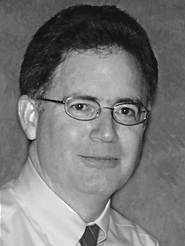
DR. JEFFREY L. KASSER (ASSISTANT PROFESSOR OF PHILOSOPHY AT COLORADO STATE UNIVERSITY)

DR. JEFFREY L. KASSER (ASSISTANT PROFESSOR OF PHILOSOPHY AT COLORADO STATE UNIVERSITY)

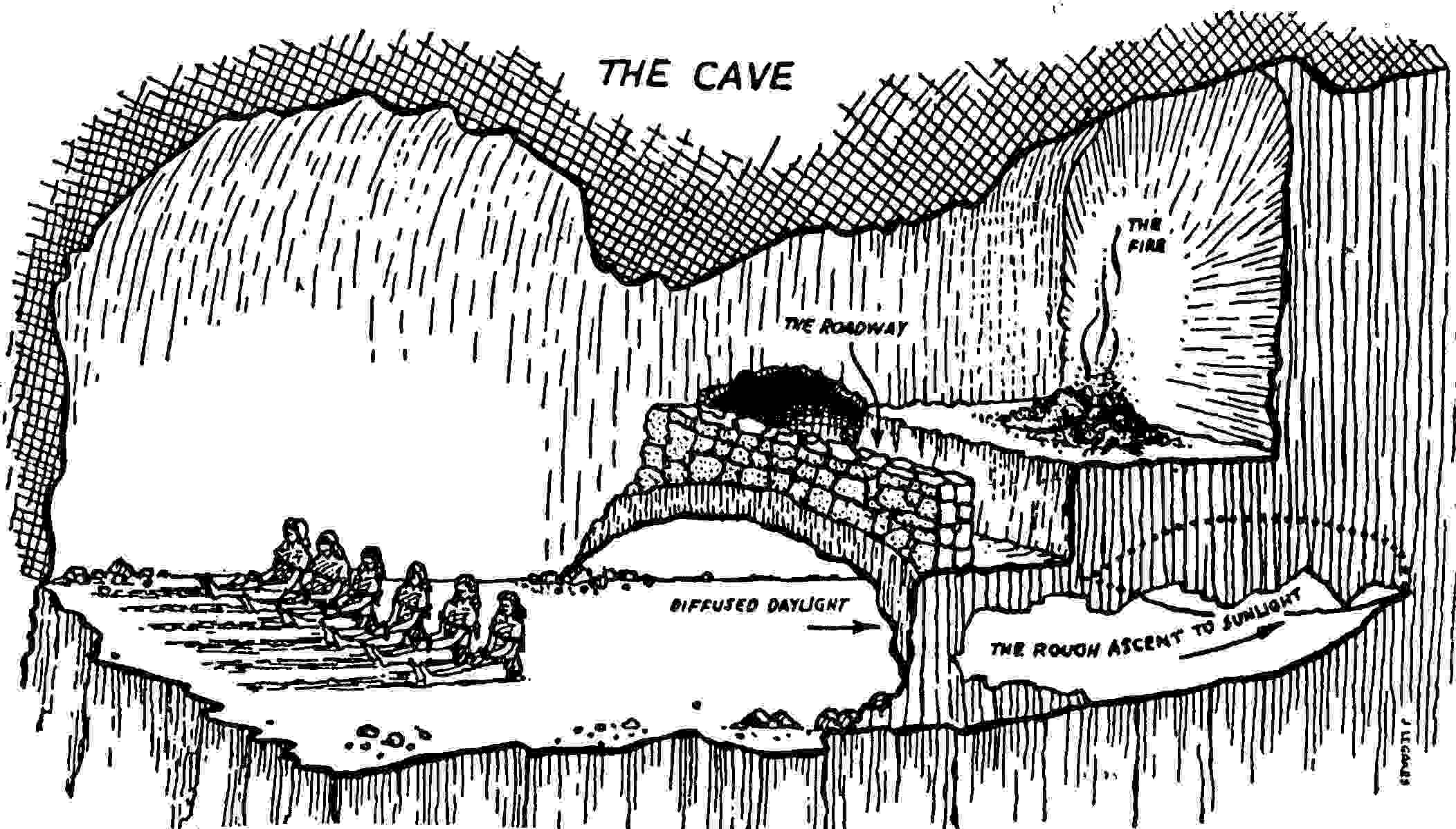
This is a tough audiobook to adequately summarize.  Dr. Jeffrey Kasser offers evidence for the value and advance of human knowledge through philosophy and science.  Kasser explains that philosophy is the beginning of what becomes a scientific world view.  Kasser attempts to drag skeptics out of Socrates’ cave with a “36 lecture” series titled “The Philosophy of Science”.

Kasser recounts the history of science from a world controlled by fickle gods to a world of cause and effect.  Then, in the early twentieth century, Kasser notes that science reveals a world of probability.  Kasser reports on views of science changed by philosophers like Karl Popper, Paul Feyerabend, and Bas van Frassen.

KARL POPPER (1902-1994)

KARL POPPER (1902-1994) Popper suggests science cannot be proven but only falsified.  His point is that only infinite experimentation can prove the truth of a scientific theory.

Infinity, by definition, is boundless; therefore, science offers limited truth in so far as no one can reach an infinite number of experiments to prove a theory.

PAUL FEYERABEND (1924-1994)

PAUL FEYERABEND (1924-1994)

Feyerabend argues that scientific method is a constraint rather than exploratory tool of science. To Feyerabend, when science begins with hypothesis, research is restricted and experimentation becomes biased by pre-conceived or experienced perception.

Bas van Fraasen (Philosopher)

Bas van Fraassen suggests that, at best, science can only reveal approximate truth about the physical world.  His view lends itself to quantum physics where cause and effect become probabilistic rather than definitive.

These three philosophers, as well as several others noted by Kasser, steer science to a category of understanding called logical positivism.  Logical positivism is argued to be the primary focus of what is called good science.  Logical positivism suggests that science must be based on direct experience and logic; within limitations like those argued by Popper, Feyerabend, Frassen, and others.

However, Kassen suggests even logical positivism is challenged by the realization that acts of analysis, particularly measurement of results, distort reality.

Distortion comes from the act of measurement and the bias of human cognition.  In other words, experiments done by different scientists with the same results remain only qualified scientific truths.  Experimentation, even accompanied by logic, becomes suspect.  Observational measurement and human perception are critically important to science but, by nature, both measurement and perception taint objective truth.

Kasser explains the truth of science lays in experiment designed to disprove hypothesis.  Logic generates hypothesis.  Hypothesis is tested for falsity through experiment.  Experiment requires measurement.  Science experiment is influenced by measurement and human perception which raises doubt about results of tested hypothesis.

SIR ISAAC NEWTON (1642-1727)

SIR ISAAC NEWTON (1642-1727) Kasser notes that Newton’s laws infer a cause-and-effect world

Newton’s laws work in the macro world.  We no longer believe rocks fall to the ground because they live there.  Newton’s laws of motion suggest that a bowling ball and a basketball will fall at the same rate of speed, even though their mass is different.  This is experimentally and logically provable.  If a rock, bowling ball, or basketball are picked up and dropped, they will fall to the ground.  If they are in a vacuum, they will fall to the ground at the same rate of speed.

In the micro world, components of atoms that combine to form what we see as bowling balls and basketballs cohere to each other in a way that does not conform to Newton’s laws.  The components of atoms operate in accordance with quantum mechanics which shows that elements of atoms in bowling balls and basketballs do not follow Newton’s laws of motion.  The orbital planes of atomic elements like quarks and leptons appear and disappear; i.e. they do not follow a predictable pattern of action.  

PROBABILITY

Cause and effect in the macro world is replaced by probability in the micro world.

None of this is to suggest that Newton’s laws are false or that quantum mechanics are anything more than an expansion of Newton’s laws.  However, at this stage of scientific discovery, the two laws are not compatible even though both laws are experimentally confirm-able.  Attempts have been made to unify these laws.  String theory is the present day most studied hypothesis but it fails the criteria of null hypothesis because of today’s instrumental and cognitive limitations.

Philosophy and science are integral to the advance of human civilization.  We are still looking at shadows of reality but Kasser infers philosophy and science are the best hope for Socrates’ spelunkers.

NUCLEAR POWER

Audio-book Review
By Chet Yarbrough

(Blog:awalkingdelight)
Website: chetyarbrough.blog

Atomic Accidents: A History of Nuclear Meltdowns and DisastersAtomic Accidents

By James Mahaffey

Narrated by: Tom Weiner

Listening to Atomic Accidents, the first thing that comes to mind is point-of-view, second the author’s qualification, and third writing skill.  Mahaffey’s book is historically fascinating, and enlightening.  And happily, Mahaffey writes well.

DR. JAMES MAHAFFEY (AUTHOR)

Doctor James Mahaffey’s professional career is founded on the nuclear industry.  Educated at the Georgia Institute of Technology, Mahaffey holds a bachelor’s degree in physics, a master’s in science, and doctoral in nuclear engineering.

Mahaffey is well versed in the science, engineering, and mechanics of nuclear energy.  Because of education, one presumes Mahaffey is a proponent of the nuclear power industry.  After dissection of several atomic accidents, a listener becomes unsure of Mahaffey’s point of view.  By the end, his point of view is clear.  

nagasaki bombing aftermath
The best known nukes, Big Boy and Little Boy, were dropped on Hiroshima and Nagasaki at the end of WWII.

America has dropped and lost nuclear bombs around the world.  The best known nukes, Big Boy and Little Boy, were dropped on Hiroshima and Nagasaki at the end of WWII.

Less known bomb drops were in peace time.  Nukes were accidentally released on remote military bases, in sparsely populated residential areas, and in the sea.  Some of those dropped in the sea remain unrecoverable.  None of the peace time bombs exploded.

America chose to keep nuclear secrets from Great Britain after WWII because of concern over nuclear bomb proliferation.  Because of America’s secrecy and  lack of cooperation, Mahaffey  suggests design mistakes were made.

In reviewing the history of nuclear energy, Mahaffey notes English scientists and engineers designed graphite nuclear power plants that were inherently dangerous.  Graphite catches fire at high temperatures and is notoriously hard to extinguish.  However, graphite nuclear plants became widely copied throughout the world.

Mahaffey’s stories of nuclear mishaps range from dumb to dumber; i.e. from wind fans that feed graphite nuclear plant fires to technicians that ignore rules of reactor management.  Nuclear accidents seem inevitable and insurmountable.

CHERNOBYL NUCLEAR REACTOR (e.g. A FAMOUS GRAPHITE REACTOR ACCIDENT.)
CHERNOBYL NUCLEAR REACTOR ( Chernobyl is an example of a major graphite nuclear reactor failure.)

Mahaffey explains that the former U.S.S.R. ignored environment in their nuclear bombs race with America.  They dumped plutonium in Russian waters and blew up a graphite nuclear plant that killed Russian workers in a steam explosion.  The explosion contaminated miles of Russian homeland with radioactive fallout.

CHERNOBYL REACTOR DAMAGE

Later, the U.S.S.R. mismanaged Chernobyl’s nuclear facilities and created a nuclear meltdown that reportedly killed over 60 people from radiation and left an area of Russia uninhabitable for generations to come.

FRANCIS GARY POWERS (1929-1977, CAPTAIN IN THE US AIR FORCE, SHOT DOWN OVER RUSSIA IN 1960 AND HELD PRISONER FOR 2 YEARS)
FRANCIS GARY POWERS (1929-1977)

Mahaffey tells the story of the American, Gary Powers, the pilot shot down by the Russians in the 1950s.  Powers is taking aerial pictures of plutonium manufacturing facilities in the U.S.S.R.  Eisenhower is compelled to lie and then apologize to Russia for the clandestine operation.  Mahaffey makes the story interesting by revealing the monumental effort made by the U.S.S.R. to shoot down Powers’ airplane and reassemble plane parts to prove Powers was spying.

FRANCIS GARY POWERS (DIES IN HELECOPTER CRASH WORKING AS KNBC WEATHER PILOT)
FRANCIS GARY POWERS (DIES IN A 1977 HELECOPTER CRASH WORKING AS KNBC WEATHER PILOT)

In the end, Mahaffey discounts the many nuclear accidents and incidents he examines.  His conclusion is that nuclear power can be made probabilistically safe.  Mahaffey argues for the design of nuclear energy facilities that are small and simple to operate.  He suggests that small nuclear power plants be designed and manufactured for specific industrial facilities. 

Rolls Royce is entering the nuclear facilities market in Great Britain.  Small nuclear plants could meet industrial energy demands while limiting environmental carbon emission from other sources of energy Rolls Royce Small Nuclear Plant Production

With small nuclear energy plants, the potential for catastrophic Chernobyl-like’ events would not happen.  The massive underwater earthquake and tsunami would not have decimated Japan’s nuclear energy capability if the power plants had not been so massive and concentrated on the coast.

Mahaffey implies proper design and training for small, simple nuclear energy facilities will mitigate the world energy crises.  Mahaffey infers nuclear accidents are unavoidable, but human and environmental damage is minimized with smaller nuclear energy plants.

Rolls-Royce recently (in November 2021) announced they are getting into the small nuclear reactor business.

Mahaffey explains that radiation is a naturally occurring phenomenon.  He argues that shutting down nuclear waste disposal facilities like Yucca Mountain in Nevada are a mistake.  Many in Las Vegas oppose President Trump’s resurrection of the Yucca Mountain waste site.

Mahaffey’s point of view is that nuclear power accidents will happen but their consequences can be minimized with smaller plants and better planning for treatment of victims when accidents occur.  He believes nuclear energy benefits far out weigh their risks.

The 2020 Presidential election is over.  President Biden’s campaign speaks to America’s gradual transition from fossil fuels to wind, water, and solar power.  That transition is a potential source for thousands of new American jobs.  Mahaffey persuasively argues there should be a place for nuclear energy in that transition.

GOD’S EXISTENCE

Audio-book Review
By Chet Yarbrough

(Blog:awalkingdelight)
Website: chetyarbrough.blog

36 Arguments for the Existence of God36 Arguments for the Existence of God
By Rebecca Newberger Goldstein
Narrated by Stephen Pinker, Rebecca Newberger Goldstein, Oliver Wyman

REBECCA NEWBERGER GOLDSTEIN

Rebecca Goldstein writes like Stephen Pinker on steroids.  (Coincidentally,  Goldstein is married to Pinker.)  Goldstein’s novel is not the story one expects from its title because “36 Arguments for the Existence of God” is about denial; not affirmation of existence.

STEVEN PINKER (Cognitive psychologist, linguist, and author)
STEVEN PINKER (Cognitive psychologist, linguist, and author who wrote “How the Mind Works”, “The Blank Slate”, “Angels of Our Better Nature”, etc.)

A more apt title for Goldstein’s book might be “The Science of Human Nature Denies the Existence of God”.

Goldstein has done a masterful job of creating “fear and trembling” in believers.  This is “fear and trembling” in the opposite sense of Soren Kierkegaard’s meaning. Kierkegaard’s meaning awakens believers in God.  Kierkegaard, an author, theologian, and philosopher, argues one should fear and tremble at the truth of God’s existence.

SOREN KIERKEGAARD (1813-1855, DANISH PHILOSOPHER, AUTHOR, THEOLOGIAN)
SOREN KIERKEGAARD 1813-1855 (Kierkegaard, an author, theologian, and philosopher, argues one should fear or tremble at the truth of God’s existence.)

On one level this is a story about a man named Cass Seltzer and his personal (sometimes romantic) relationships.

On a second level it is about human ethnocentrism. Characters, including Cass Seltzer, see through myopic eyes based on who they have become and what peer group they belong to.

On a third level “36 Arguments…” is about human nature and cultural memes (Richard Dawkins defines a cultural meme as an inherited learned behavior).

On multiple levels, Goldstein’s writing is about the elephant in the room; i.e. mankind’s belief in a Supreme Being.

The story of Cass Seltzer’s life is absorbing.  The women he loves are monumentally independent, fantastically alluring, and maddeningly self-centered (as self-centered as Cass Seltzer).  Each character believes what they believe with conviction that directs their lives.

The introduction of Felix Fidley exemplifies tribal ethnocentrism and conviction; i.e. a believer who says one way is the only way.

RELIGIOUS BELIEF
Goldstein’s introduction of Felix Fidley in her novel exemplifies tribal ethnocentrism and conviction; i.e. a believer who says one way is the only way.

Ms. Goldstein cleverly introduces the town of New Walden.  Its isolated belief system reflects the heritability of good and bad genetic markers and memes that trap people in worshipful repetition.  One might categorize it as a cult or, more politely, a commune.

Finally, Goldstein creates a straw man debate about God,  The debate is conducted in the next to last chapter.  It pits Cass Seltzer against a purportedly renowned debater. Seltzer beats his debate opponent.  Believers in God lose.  In the last chapter, 36 arguments for belief in God are stated and refuted.

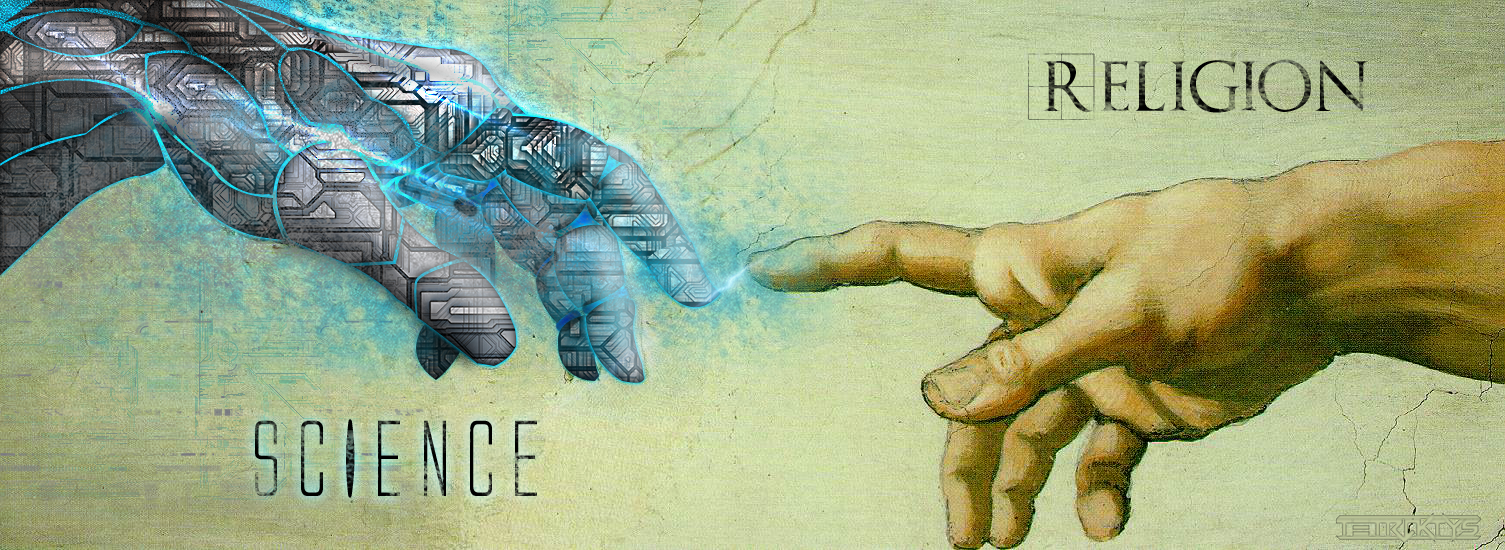
SCIENCE AND RELIGION
One doubts Goldstein will change the world with her book but its rational arguments are a big add to the non-believing world’s arguments for a scientific theory of the world that explains everything about everything.

One doubts Goldstein will change the world with her book but its rational arguments are a big add to the non-believing world’s arguments for a scientific theory of the world that explains everything about everything.

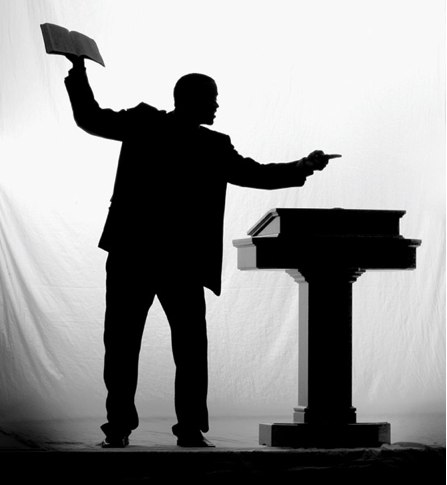
PREACHER PREACHING
Faith is always a refuge but is it enough?

If you are a believer, “36 Arguments…” is a clear explanation of your battleground; it reveals the manifesto, strategy, and tactics of a non-believer.  Faith is always a refuge but is it enough?

“36 Arguments for the Existence of God” is a fascinating piece of literature.

COSMOLOGY

Audio-book Review
By Chet Yarbrough

(Blog:awalkingdelight)
Website: chetyarbrough.blog

Death by Black HoleDEATH BY BLACKS HOLE
By Neil deGrasse Tyson

Narrated by Don Graham

NEIL deGRASSE TYSON (AMERICAN ASTROPHYSICIST, AUTHOR, SCIENCE COMMUNICATOR.)

Neil deGrasse Tyson has become a famous translator of the science of cosmology for the layman because of appearances on Nova, and comedy programs like “The Daily Show”, “The Colbert Report”, and “Real Time with Bill Maher”.

“Death by Black Hole” is an exploration of the universe; i.e. how it was formed, where life comes from, whether life exists on other planets or in other universes, how the world might end, what a black hole in space is, and what would happen to the human body entering a black hole.

Tyson explores the molecular basis of creation.  He notes how ethnocentric concepts of life have evolved from a belief in man as the center of the universe to man as a grain of sand in the desert; randomly placed by the “big bang” of creation.

Tyson describes man as a concretion of star dust molded by a molecular carbon based combination of atoms, super heated, cooled, and evolved over eons of cosmological time.  He suggests that all planets may have forms of life.  His evidence is the existence of extremophiles in earth environments.  An extremophile is a living organism that survives in environments in which no human being could live.

THERMOPHILE ENVIRONMENT IN THE HOT SPRINGS OF YELLOWSTONE
ENVIRONMENT IN THE HOT SPRINGS OF YELLOWSTONE (Tyson writes of thermophiles, a type of extremophile that thrives in temperatures of 113 to 252 degrees Fahrenheit. )

Tyson writes of thermophiles, a type of extremophile that thrives in temperatures of 113 to 252 degrees Fahrenheit.

Tyson explores current understanding of an expanding universe, how it is measured through spectrographic analysis, and how expansion of the universe is accelerating.

He notes that the end of times for man may come from death of the sun, the turning of this universe’s white star to a red star to a black hole.  Tyson notes that another possibility is that accelerating expansion of earth’s universe will cause a gradual cooling of the planet that will only allow extremophiles to survive.

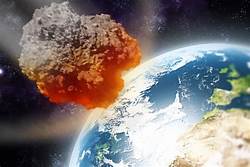
Tyson suggests the most likely cosmological cause of the human race’s end is collision with an asteroid.   Of course, the end that concerns us is humankind.  Like Dyson’s explanation of the likely cause of dinosaur’s demise, human existence would disappear from the cataclysmic effects of a sunless planet hidden, cooled, and smothered by the debris of collision.

ASTEROID COLLISION WITH EARTH
Tyson suggests the most likely cosmological cause of the human race’s end is collision with an asteroid.

ET (FICTIONAL EXTRA TERRESTRIAL)
Tyson laughs at the idea of a movies creation of other life forms as distorted caricatures of human beings (like ET).

Tyson speculates about contact with extraterrestrials by noting that the general media fails to base concepts of other life forms on 20th and 21st century science.  Tyson laughs at the idea of a movies creation of other life forms as distorted caricatures of human beings (like ET).

Tyson explains that SETI (Search for Extraterrestrial Intelligence) is a long shot to hear a transmission from space as a first sign of contact.  He wonders if other intelligent life is listening rather than transmitting so that everyone is listening and no one is transmitting.  On the other hand, Tyson recounts sciences’ effort to send a radio transmission to a star cluster that will reach its destination a 1000 years from now.  Ironically, the high concentration of stars in that system, makes that particular star cluster a bad focal point for intelligible reception.  Extraterrestrial radio wave contact seems unlikely, based on these first attempts.

SETI (LISTENING FOR ANYBODY OUT THERE)
SETI (LISTENING FOR ANYBODY OUT THERE–Tyson explains that SETI (Search for Extraterrestrial Intelligence) is a long shot to hear a transmission from space as a first sign of contact )

EFFECTS OF HUMAN DESCENT INTO A BLACK HOLE

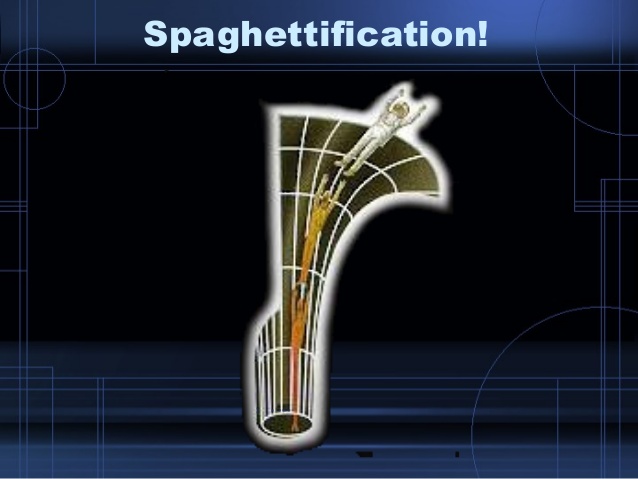
As to the effects of a human body entering into a black hole.  Tyson explains the human body would be stretched and contorted.  Time and space are dissolved as you approach the event horizon.  Before you reach the event horizon, your body is atomized. 

Tyson explores the history of cosmology beginning with scientists like Newton, Galileo, Copernicus, Einstein, Durac, Hubble, and many other names known and unknown by the general public.  “Death by Black Hole” is interesting but not fascinating.  A number of videos on “you tube” summarize Tyson’s commentary.

WONDER OF THE WORLD

Audio-book Review
By Chet Yarbrough

(Blog:awalkingdelight)
Website: chetyarbrough.com

Knocking on Heaven’s Doorknocking on heaven's door
By Lisa Randall

Narrated by Carrington MacDuffie

LISA RANDALL (AMERICAN THEORETICAL PHYSICIST)

Lisa Randall believes the Large Hadron Collider (LHC) is one of the wonders of the world; competing with the pyramids of Egypt in its colossal achievement. Located near the border of France and Switzerland, it is the largest construction project ever built.

“Knocking on Heaven’s Door” is the story of the Collider’s creation, inner workings, and scientific objectives.  Along the way, Randall explores physics, sciences conflict with religion, the process of scientific research, and somewhat ineptly, the near economic collapse of the financial world in 2007.

LHC MAP SHOWING CERN SITE
“Knocking on Heaven’s Door” inspires one to visit the site, near Geneva, Switzerland.  Randall’s description is of a 17 mile tunnel that is the coldest and largest vacuum on earth, capable of hurtling particles near the speed of light to collide neutrons that are meant to separate into constituent parts.

Randall’s information about LHC inspires one to visit the site, near Geneva, Switzerland.  Her description is of a 17 mile tunnel that is the coldest and largest vacuum on earth, capable of hurtling particles near the speed of light to collide neutrons that are meant to separate into constituent parts.   The idea of such a creation challenges one’s understanding; its reality is remarkable.  How is it possible to control a neutron?  What is the point of causing neutron collisions?  Why should anyone care about particles of matter that cannot be seen?

Randall, as a physicist, does a fairly good job of answering those questions for a non-scientist.  Neutrons are a chosen accelerator particle because they are divisible.  Neutron control is exercised by magnets around an elliptical tunnel that contain accelerating neutrons within a super cooled vacuum that pushes and pulls neutrons to keep them in line.

Neutrons are particles made up of smaller elements, scientifically confirmed through repeated experiments.  The makeup of a neutron was found by forcing collisions between neutrons that broke into separate elements.  However, not all parts of a neutron have been experimentally identified.  Einstein’s balance between energy and mass multiplied by the speed of light squared shows an imbalance between known elements of a neutron and a neutron’s mass/energy equivalence.  The imbalance may be the Higgs-boson particle.

This is where the picture gets a little fuzzy for the dim-witted (meaning this reviewer).  The Higgs-boson particle is sometimes called the God particle.  It is surmised to be the glue or medium of mass in the universe; i.e. the key to dark matter and energy that make up 75% of the known universe.

The consequence of finding Higgs-boson is unknown which is the bête noire of pure science.  Scientists seek to know for the sake of knowledge; not necessarily for its practical consequence.  Is it important?  Was Einstein’s pure science important?  Hiroshima and Nagasaki answer that query.

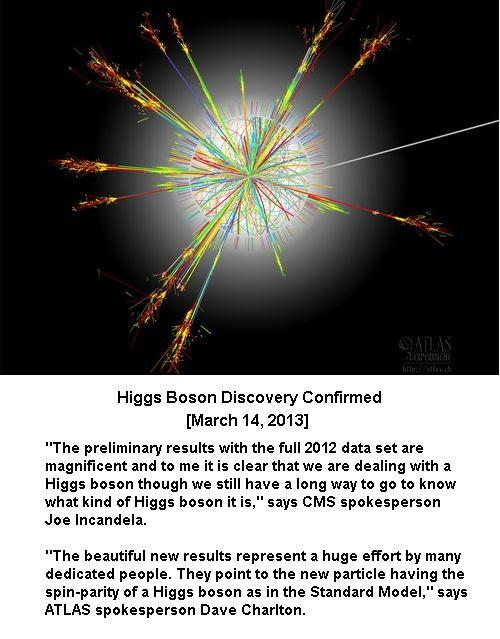
As is well-known, Higgs-boson has been discovered.HIGGS-BOSON DISCOVERY

A quibble one may have with Randall’s book is that she digresses into derivative finance to suggest that more scientific analysis would obviate the kind of financial disaster that occurred in 2007.  She suggests that proper analysis of the risk of derivatives would have stopped the madness.  The naivete of that argument is that there were only a few that saw the collapse coming.  Scientific analysis only convinces some.  The history of politics, ignorance, and power are shown to have more influence than science or rational thinking.

TRUMP AND CLIMATE CHANGE
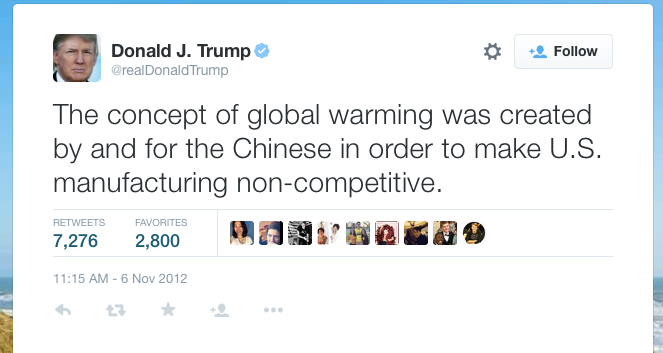
The President of the United States believes he is acting rationally by ignoring science and deregulating industries believed to be huge contributors to global warming.

How different is expert analysis from the scientific community on global warming.  Scientific analysis misses part of what makes human’s human; i.e. minds can know something and still act irrationally; not to mention, rationality is often in the mind of the beholder.  The President of the United States believes he is acting rationally by ignoring science and deregulating industries believed to be huge contributors to global warming.  Randal admits as much in writing about beauty and truth and clearly notes that they are not necessarily equivalent because of human subjectivity.

Randall convinces one of the formidableness of LHC and the potential of its contribution to science.  America may have missed a chance to be a leader rather than follower of one of the great contributions to science, the Large Hadron Collider.

KNOWING NOTHING

Audio-book Review
By Chet Yarbrough

(Blog:awalkingdelight)
Website: chetyarbrough.blog

Thinking Fast and Slowthinking fast and slow

By Daniel Kahneman

Narrated by Patrick Egan

DANIEL KAHNEMAN
Author, Daniel Kahneman, is a renowned psychologist and noble laureate.

There are certain knowns that are known and certain knowns that are unknown.  Well, I know I know nothing and Kahneman seems to prove it.  Every chapter of Kahneman’s book suggests something one finds hard to believe is true.

Daniel Kahneman is a renowned psychologist and Nobel laureate.  He is an American citizen that served in the Israeli military and used his education, research, and experience to write “Thinking Fast and Slow”.  His observations explore many aspects of human decision-making.

How one runs their business or lives their life is framed by how they think.  Kahneman explores two fundamental ways of thinking that reveal human strengths and weaknesses.  “Thinking Fast…” is intuitive and easy.  It is prejudiced by personal life experience and education.  It is activated through an evolved instinct that forms the basis for snap decisions.  In contrast, “…Thinking Slow” is a deliberative, calculating, and mind-numbing way of making rational decisions.  Kahneman calls these mental functions System 1 and System 2 respectively.

THINKING SLOW
“…Thinking Slow” is undoubtedly prejudiced by Kahneman’s scientific interpretation of “human thought and action”’ but judgment of his observations is the responsibility of the reader or listener; so, caveat emptor.

“…Thinking Slow” is undoubtedly prejudiced by Kahneman’s scientific interpretation of “human thought and action”’ but judgment of his observations is the responsibility of the reader or listener; so, caveat emptor.

The more common decision-making tendency of the brain is to use System 1 rather than System 2 when making decisions because it is easier and because, as Kahneman notes, behavioral studies and brain imaging show human brains are lazy (not inclined to use System 2’ thinking because it is more laborious than System 1).

System 1 often leads humans to make incorrect intuitive decisions.  System 2 potentially improves probability of making better, or at least more rational, decisions.  However, System 1 is important to life and death decisions that require instantaneous action.  System 2 requires one to consider options before settling on an action.  A current example is the dilemma of choice in regard to social media.  Fighting hardly seems logical based on the direction of technology.  Flight seems equally illogical for the same reason.

FIGHT, FLIGHT, LIGHT
System 1 is important to life and death decisions that require instantaneous action.  System 2 requires one to consider options before settling on an action.

FIREMAN NARROWLY ESACAPES FLOOR COLLAPSE
FIREMAN NARROWLY ESCAPES FLOOR COLLAPSE  ( Using System 1 thinking the fire commander tells his team to get out of a burning house because his mind subconsciously gathers experiential information telling him the floor is about to collapse.)

Kahneman gives a more concrete example with an experienced fire commander.  Using System 1 thinking the fire commander tells his team to get out of a burning house because his mind subconsciously gathers experiential information telling him the floor is about to collapse.  The fire commander’s system 1 thinking saved his team’s lives.

Kahneman contrasts the value of System 2 thinking by exploring System 1’s habit of unconsciously bench-marking manufactured product pricing to seduce consumers to buy at higher prices; i.e. if a product is priced high, System 1 thinking is willing to pay a higher price.

Attention
The “halo” effect caused by System 1’ thinking gives too much weight to a one time “good” interview evaluation of an employee candidate.

Another observation is that employee interviews are often detrimental to the selection of the best job candidate.  Kahneman describes the “halo” effect caused by System 1’ thinking that gives too much weight to a one time “good” interview evaluation of an employee candidate.  To protect from the “halo” effect, Kahneman suggests that interview questions be structured and an employment process be standardized to give more objective criteria for choosing the best employment candidate.  In other words, design an employee selection process based on clearly defined job requirements that are equally measured and fairly weighted for each candidate.  Employer hiring solely based on a candidate’s interview is not a good determinant of employee performance.

This brief review is a single drip of sweat in a twenty hour work out.  Kahneman undoubtedly exaggerates the import of some scientific studies but his writing engages System 2 thinking.  A System 2 person will want to listen to “Thinking Fast and Slow” more than once.

MENTAL DETERIORATION

Audio-book Review
By Chet Yarbrough
(Blog:awalkingdelight)
Website: chetyarbrough.blog

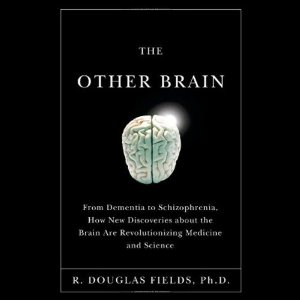
The Other Brainthe other brain
By R. Douglas Fields        Narrated by Victor Bevine

As we grow older, our physical and mental abilities deteriorate. Knowing that decline is the nature of life, the older one becomes, the more grasping one is for new ideas that mitigate life’s inevitable degradation.

R. DOUGLAS FIELDS (AUTHOR PhD IN NEUROSCIENCE)
R. DOUGLAS FIELDS (AUTHOR Ph.D. IN NEUROSCIENCE)

“The Other Brain”, written by Dr. Douglas Fields (a department head at the National Institute of Health and adjunct Professor of Neuroscience at the University of Maryland) is an expert in the field of cognitive science, i.e., the exploration of how minds work.

DR. THOMAS HARVEY
DR. THOMAS HARVEY (the pathologist that stole Einstein’s brain and kept it for some twenty years before telling anyone he had it.)

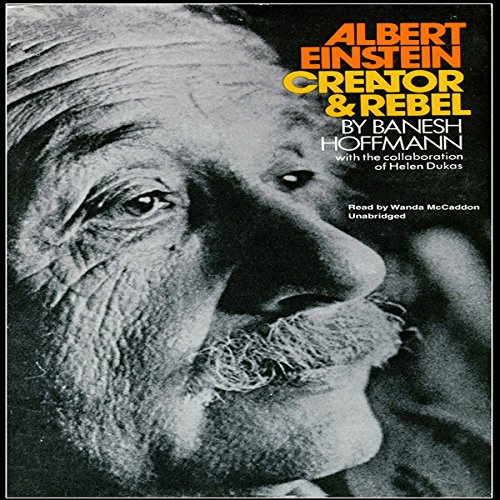
Fields begins with a story of when he is a ten-year old boy requesting a brain to dissect to see how it works. He moves on to tell the story of the pathologist that stole Einstein’s brain and kept it for some twenty years before telling anyone he had it. Einstein’s brain is eventually analyzed to see if there was a physical difference in Einstein’s brain that allowed him to see what others could not.

albert einstein, creator and rebel

With this opening, Fields begins an exploration of the brain and how it functions. What he reveals is that Einstein’s brain was different but not because it was any bigger nor had more neurons but that it had more glia cells than the average brain. Until glia cell discoveries were made, the consensus of scientists was that neurological function was singularly based on an electrical impulse, i.e., an impulse transmitted to the brain through neurons via axons and dendrites to command thought and action.

With careful examination of glia cells, scientists found that there is what Fields calls a “second brain”. Glia cells are different from neurons. They do not use the axons and dendrites that transmit electrical pulses to compel performance. Glia cells use a chemical interaction within and between glia that create stimulus and response.  The significance of the discovery of glia cells as a chemical alternative to electrical impulse suggests motor and mental function may be improved by other means.

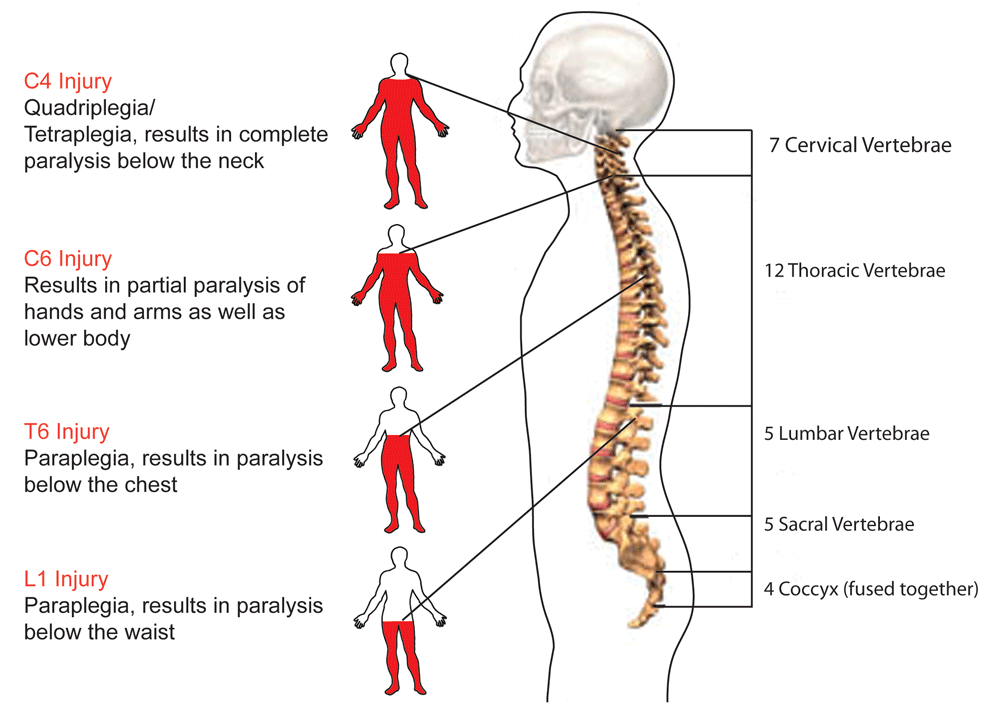
SPINAL CORD INJURY
This discovery OF GLIA cells potentially offers alternative ways of treating spinal cord injuries and mental in-capacities caused by diseases that interfere with the neuronal circuits of the brain.

This discovery means that the study of a “second brain” may offer alternative ways of treating spinal cord injuries and mental in-capacities caused by diseases that interfere with the neuronal circuits of the brain. Further, it may offer treatment alternatives for patients suffering from dementia or Alzheimer’s, a growing and feared neurological dysfunction.

Fields explores several glia related cells and their positive and negative functions in the neurological system. It is not a panacea for cure of neurologically impaired patients or aging brains because experiments show glia cells are both curative and destructive in their effect on the neurological system. However, a second brain does open a new field of opportunity for cure. Maybe young brains can be re-booted and old brains rehabilitated.

Dementia gives no comfort to one who is older and have a fear of Alzheimer’s and its consequence for others. Others, who are left to care for the stricken.

PARADIGM SHIFT

Audio-book Review
By Chet Yarbrough

(Blog:awalkingdelight)
Website: chetyarbrough.blog

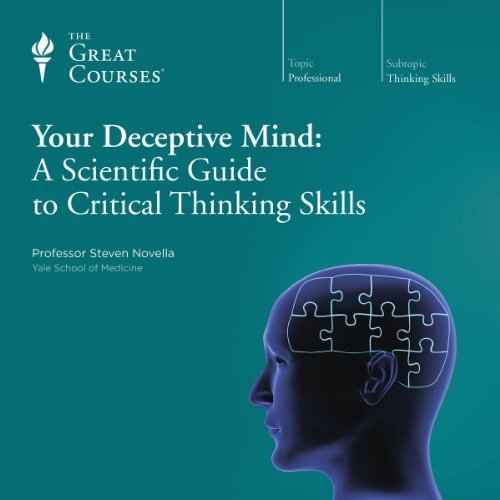
Your Deceptive Mind: A Scientific Guide to Critical Thinking Skills

Recorded by:  Professor Steven Novella

Produced by:  The Great Courses

STEVEN NOVELLA (AMERICAN CLINICAL NEUROLOGIST, ASST. PROFESSOR AT YALE UNIVERSITY SCHOOL OF MEDICINE)

STEVEN NOVELLA (AMERICAN CLINICAL NEUROLOGIST, ASST. PROFESSOR AT YALE UNIVERSITY SCHOOL OF MEDICINE)

“Your Deceptive Mind” offers lessons for two paradigm shifts occurring in America today.  One is gun control; the other is sex discrimination.  Professor Steven Novella’s lessons apply to other important issues, but none seem to have the same political momentum for change.

Novella begins by inferring we all deceive ourselves.  Novella explains it is caused by the nature of human consciousness. Novella argues that human brains are designed to make coherent sense of remembered experience; not to necessarily recount accurate details of events.   We often add facts and change details to improve coherence of our memories.  

Memory does not work like a film clip.  It is not caste on celluloid that can be replayed as a memory.  Memory is re-invented by reconstruction of facts to fit a story that makes sense to the person who remembers.

AR-15 (Type of semi-automatic rifle used in Florida High School shooting.)

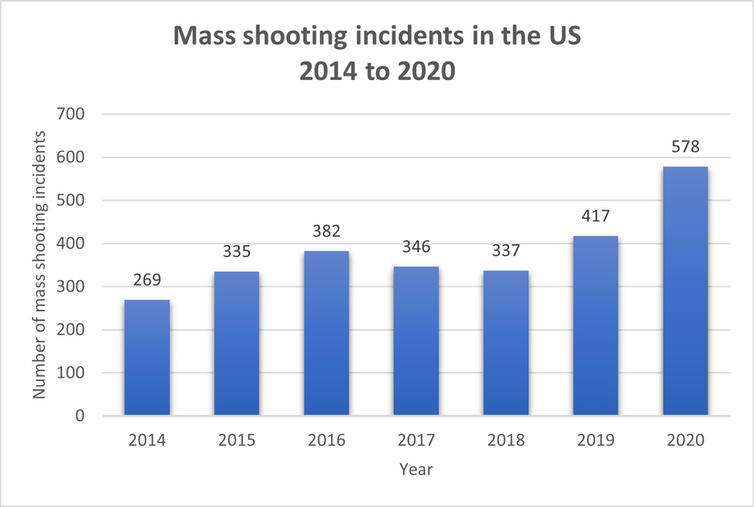
As of April 15, 2021 there have been 148 people murdered and 485 injured in mass shootings. The most recent is at the Indianapolis FedEx facility that killed eight people. One is reminded of William Butler Yeats:

Turning and turning in the widening gyre   
The falcon cannot hear the falconer;
Things fall apart; the centre cannot hold;
Mere anarchy is loosed upon the world,
The blood-dimmed tide is loosed, and everywhere   
The ceremony of innocence is drowned;
The best lack all conviction, while the worst   
Are full of passionate intensity.

The 17-people murdered in a Florida high school in 2018 raises the issue of gun control in America one more time.  Americans see this incident from three views.  One, from the perspective of people who heard it on the news; two from the perspective of people who responded to the event; and three from the perspective of victims.  Based on Novella’s assessment of critical thinking, all three views distort reality.

FLORIDA HIGH SCHOOL SHOOTING

The 17-people murdered in a Florida high school 2018 raised the issue of gun control in America one more time.

JOHN F. KENNEDY ASSASSINATION

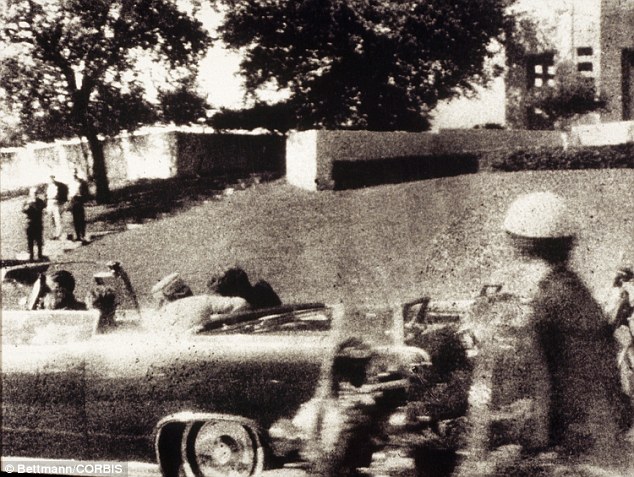
JOHN F. KENNEDY ASSASSINATION – Memory does not work like a film clip.  It is not caste on celluloid that can be replayed as a memory.  Memory is re-invented by reconstruction of facts to fit a story that makes sense to the person who remembers.

Novella tells a story of a woman accompanying the John F. Kennedy trip to Dallas, Texas.  Soon after Kennedy’s death, she explains that she did not see anything that happened.  As the years pass, she recalls seeing smoke from a grassy knoll near the shooting.  Novella explains that each time she tells the story more details are revealed.  No evidence is ever found to suggest a shot is fired from anywhere but the Dallas, Texas book-depository.  What she is doing is creating facts to improve the coherence of a memory.

Facts of Florida’s murders and other gun-related incidents are remembered differently.  All who heard of, responded to, or are victimized by guns tell different stories.  There is no singular consensus on what caused it to happen, who is responsible, or what can be done.  Facts seem not to matter.  In Florida, seventeen human beings are dead.  One person killed them.  One automatic weapon is used by a troubled high school student who used a gun designed ONLY to kill people.

Victims of the school shooting ask why America cannot protect their children.  A flood of responses is given but each person at the school is influenced by a subjective recollection of events.  In many cases, facts are ignored because they do not fit the narrative of the person telling his/her story.  It has little to do with facts; i.e. except as those facts fit the re-created memory of a horrific event. Like the woman seeing smoke coming from a grassy knoll, some facts just fit a reconstructed story; not the truth.

Critical thinking skills mean addressing facts, using those facts to create a constructive analysis, a plan of action, and implementation.  Seventeen people are dead in Florida from one shooter.  They are dead at the hand of a troubled teen.  The weapon used is only designed to kill people.  Everything else is irrelevant.  Those are the facts.  That is the truth.  What is needed now is constructive analysis, a plan of action, and implementation.

The same can be said of sex discrimination.  An example is the King’s law that particularly applies to women who speak insolently.  They are to have their mouths scoured with salt; i.e. a law applying only to women slaves.  Of course, the law begs the question of why women are slaves.

VIOLENCE AGAINST WOMEN

Novella’s argument that every memory is a subjective recollection may mean testimony of women who are abused and/or discriminated against are misreading the facts of their recollection.  However, many facts are independent of recollection. 

There is overwhelming evidence; i.e. fact-based films, recordings, physical examination records, and statistical studies that show women are abused and discriminated against all over the world.  Those are the facts.  That is the truth.  What is needed is constructive analysis, a plan of action, and implementation.

Gun control and women’s rights: Has America reached the tipping point for acting on critical thinking?  Have we finally reached the threshold for a paradigm shift in gun control and women’s rights?  Doubtful.

OTHER WORLDS

Audio-book Review
By Chet Yarbrough

(Blog:awalkingdelight)
Website: chetyarbrough.blog

Beyond: Our Future in SpaceBeyond, Our Future in Space

Written by: Chris Impey

Narration by:  Julie McKay

CHRIS IMPEY (BRITISH ASTRONOMER, EDUCATOR, AND AUTHOR)

After listening to Chris David Impey’s book, “Beyond: Our Future in Space”, traveling to other worlds seems distant and unachievable.  Impey cleverly begins his story about space travel as though the first human to permanently leave earth is born in the 21st century.  That novelistic beginning is revisited twice, but the true subject of “Beyond: Our Future in Space” is the physics, astronomy, and observational cosmology of the present day.

One presumes Impey’s purpose is to encourage the possibility of reaching the stars but, by the end of the audiobook, little optimism is left to the listener.  The daunting task of overcoming gravity, surviving an inhospitable environment, and leaving the only home humans have ever known, warrants some pessimism.  Some minor relief from pessimism is offered with world history’s comparison of human migration across the continents.  Impey implies history’s adventurers on earth have something in common with adventurers in space.

SPACE SHIP EARTH FROM THE MOON
One presumes Impey’s purpose is to encourage the possibility of reaching the stars but, by the end of the audio book, little optimism is left to the listener.

The GeneThe literal common characteristic of adventurers is a gene called DRD4.  Impey suggests DRD4 alleles have evolved in 39 population groups that have historically migrated over long distances.  These population cohorts are loosely classified as risk takers but, with a 7R variant of this gene, they have a higher incidence of attention deficit hyperactivity disorder (ADHD), schizophrenia, bipolar disorder, and addictive behavior.  This observation seems unlikely to inspire confidence in “…Our Future in Space.”

The next difficulty of space exploration noted by Impey is escaping gravity.  Current science shows fuel propellant is 80% of the weight of a rocket launch.  Without a more efficient source of propulsion, sending thousands of people on earth to another planet is a pipe dream.Escape VelocityImpey notes that science is exploring alternatives like sail power, nuclear fission, radiation collection systems, and the physics of teleportation, via spooky action at a distance, but the evidence of success is either solely theoretical or miniscule.

Political will for space exploration has dwindled since the 1960s.  American government financing has dropped from nearly 4.5% to well below 1% of the Federal Budget.NASA's Share of the Federal Budget

Elon Musk's Space Exploration (Launching a Tesla into space.)
Elon Musk’s Space Exploration (Launching a Tesla into space.)

NASA has nearly been dismantled.  Most research and development is being done by one-off entrepreneurs like Elon Musk, Burt Rutan, and Robert Bigelow.  Part of the reason for the loss of political support is its cost.  Current science shows it costs more than $1,000 per kilogram for human and/or cargo delivery to the space station.

It is encouraging that reusable launch vehicles have potential for reducing that cost but space tourism seems a long way off.  Until humans experience space flight, it seems unlikely a Columbus or Matt Damon is waiting in the wings to set sail for Mars.

Elon Musk's Successful Return of Rockets Launched into Space
Elon Musk’s Successful Return of Rockets Launched into Space. It is encouraging that reusable launch vehicles have potential for reducing that cost but space tourism seems a long way off.

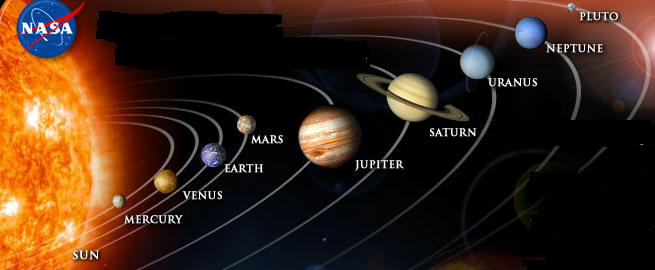
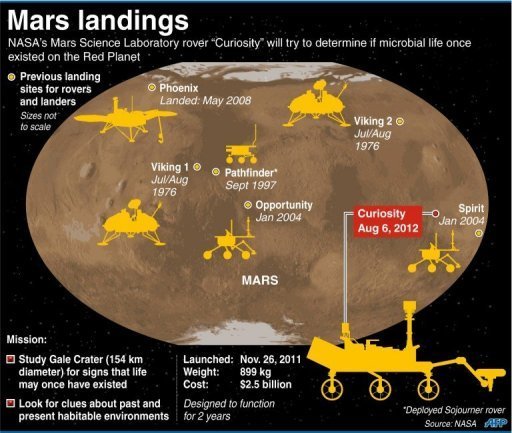
Impey makes the case for habitable planets in the cosmos based on current robotic, radio signal, and telescope explorations.  He argues there is growing evidence of many planets orbiting stars outside earth’s solar system.  From year 2000, the number of exoplanets (those orbiting stars) increased by more than 775 planets.

CURIOSITY
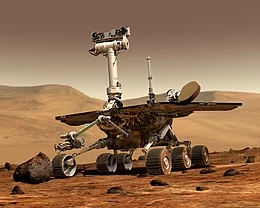
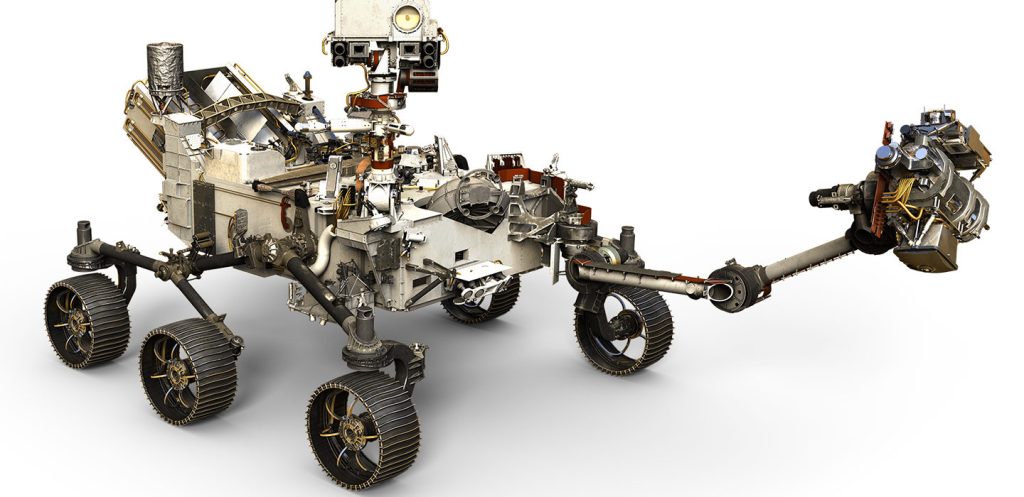
CURIOSITY-Impey makes the case for habitable planets in the cosmos based on current robotic, radio signal, and telescope explorations.

Impey goes on to explain space voyage and exoplanet living’s physiological effect on any human that chooses to leave earth.  There is the detrimental effect of radiation, extreme temperature, lack of water, lack of oxygen, and reduced gravity.  All of these space voyage and planetary differences discourage optimism about “…Our Future in Space”.
SPACE WALK
Quote from astronaut Andrew Feustel– “I don’t think we’ve solved the radiation problem yet and that’s really a function of how fast we can get there. So the faster we can there, the less radiation exposure we have. At the moment it would take a year but we need it to be three months there and three months back.”

However, Impey soldiers on.  He revisits the novelistic idea of the first space explorers by noting extensive sociological training, refinement of suspended animation, and psychological profiling to create ideal space voyager teams.  Impey notes that several animals have been put in a state of suspended animation and revived; i.e. implying that humans could be put in the same state of suspension for long space voyages.

NANO-ROBOTICS SPACE EXPLORATION
NANO-ROBOTICS SPACE EXPLORATION As a fall back to the difficulty of human space travel, Impey suggests an alternative to human exploration of exoplanets.  He writes about advances in nanorobotics; i.e. miniscule components that can function as human substitutes for exploration of exoplanets. 

As a fall back, Impey suggests an alternative to human exploration of exoplanets.  He writes about advances in nanorobotics; i.e. miniscule components that can function as human substitutes for exploration of exoplanets.  The reduced size of nanorobotics decreases payload weights and increase the speed and distance that can be traveled for space exploration.  This still leaves propulsion for great distances an issue but it mitigates human risk.  The presumption is, with more information about exoplanets, political will for space exploration will increase.  With better funding, the science to support human beings “…Future in Space” will be expanded.

RAY KURZWEIL (AUTHOR,SCIENTIST,INVENTOR,DIRECTOR OF ENGINEERING AT GOOGLE)

Finally, Impey touches on Kurzweil’s singularity and the advance of Artificial Intelligence, where computers equal and/or exceed the capabilities of human beings.  In Kurzweil’s world, either AI will explore other planets on its own, and/or AI will meld into the human race to mitigate all the negative consequences of space travel.

Who would have thought that human beings would set sail for a new world when many thought sailing from land meant you would fall off the edge of earth?  Maybe that is where space exploration is today.  Impey’s fictional character arrives at an exoplanet with her team at the end of “Beyond: Our Future in Space”.  Now that is optimism.

SPACE AND TIME

Audio-book Review
By Chet Yarbrough

(Blog:awalkingdelight)
Website: chetyarbrough.blog

Spooky Action at a Distance (The Phenomenon That Reimagines Space and Time and What It Means for Black Holes, the Big Bang, and the Theory of Everything)

Written by: George Musser

Narration by:  William Hughes

GEORGE MUSSER (AUTHOR, CONTRIBUTING EDITOR SCIENTIFIC AMERICAN)

“Spooky Action at a Distance” (also called entanglement) collapses the theory of space just as Einstein’s theory of relativity collapsed time.  George Musser argues that experimental evidence suggests neither space nor time have form or matter in an Aristotelian sense.

Aristotle explains the nature of things by suggesting an object perceived by the senses has form and matter.  By Aristotle’s definition, both space and time are perceived by the senses; therefore, they have form and matter.

Einstein’s theory (experimentally confirmed) shows that time is relative which denies precise form or matter.  Time changes based on an observer’s relative location, and the speed of observer and observed.

JOHN STEWART BELL (1928-1990)
JOHN STEWART BELL (1928-1990) John Stewart Bell and David Bohm note how elemental particles, separated by wide distances, can be manipulated to mimic or oppose each other’s spin.

SIR ISAAC NEWTON (1642-1727)
SIR ISAAC NEWTON (1642-1727) With Newton, all action is presumed to be based on locality with gravitation of the earth causing an apple to fall to the ground

Musser notes that with the advent of quantum theory, in Einstein’s view, the same holds true for space because of the experimental proof of “Spooky Action at a Distance”.  John Stewart Bell and David Bohm note how elemental particles, separated by wide distances, can be manipulated to mimic or oppose each other’s spin.  It is as though there is no space between two particles because the action occurs simultaneously: in other words, faster than the speed of light.  The ramification of this “Spooky Action at a Distance” is that space has no inherent meaning.  Both space and time are a fiction created by the senses.

DAVID BOHM (1917-1992, AMERICAN PHYSICIST)
DAVID BOHM (1917-1992, AMERICAN PHYSICIST) With Bell and Bohm, the apple still falls to the ground but it may have nothing to do with gravity but because of an unseen phenomenon; i.e. something that is non-local and unrelated to Newtonian locality’s cause and effect (maybe dark energy or dark matter that connects everything to everything).

Musser broadly explains this phenomenon as the difference between locality and non-locality in the cause-and-effect relationship of existence.  With Newton, all action is presumed to be based on locality with gravitation of the earth causing an apple to fall to the ground.  With Bell and Bohm, the apple still falls to the ground but it may have nothing to do with gravity but because of an unseen phenomenon; i.e. something that is non-local and unrelated to Newtonian locality’s cause and effect (maybe dark energy or dark matter that connects everything to everything).“Spooky Action at a Distance” calls into question the need of space or proximity.  It also raises questions about the speed of light as a limitation in the area of cause and effect; i.e. if “Spooky Action at a Distance” reflects instantaneous change; then cause and effect have no speed limitations. Parenthetically, the idea of inflation at the big bang is replaced by principle of spooky action.

Black holes are also re-imagined with the principle of “Spooky Action at a Distance”.  Maybe black holes are the source of new galaxies being formed in other universes.  It may be that this is still a cause-and-effect universe but a theory of everything escapes us at the moment because of its undiscovered nature.

LEE SMOLIN (AMERICAN PHYSICIST, GRADUATE OF HAMPSHIRE COLLEGE AND HARVARD UNIVERSITY)
LEE SMOLIN (AMERICAN PHYSICIST, GRADUATE OF HAMPSHIRE COLLEGE AND HARVARD UNIVERSITY) Smolin suggested too much research and investment is committed to string theory at the expense of other “theory of everything” ideas.

One of many things that are interesting in Musser’s book is that Einstein may have been ahead of Niels Bohr in appreciating Quantum Theory even though the idea set Einstein on edge.  There is hope for an undiscovered truth that will bring the nature of things into a theory of everything that is more predictable than the probabilities of quantum mechanics.  This may still be a “cause and effect” universe.  Maybe Smollin is right, and too much research and investment is committed to string theory at the expense of other “theory of everything” ideas.

Musser’s story reminds one of research done on Einstein’s brain.  The size and number of dendrites and synapses of Einstein’s brain were found to be the same as in normal human brains. However, every human has glia cells in their brain that have a function that does not comport with normal electrical connections but still transmit information to the autonomic and cognitive functions of the brain.  Neuroscientists found that the glia cell-count in Einstein’s brain is higher than the average for most human beings.  The glia cells were found to be the source of a different mind/body connection that transmitted information in a different way.  One wonders, is that why Einstein could see what others could not?  Re-imagining is what Musser infers is needed in today’s physics’ departments.