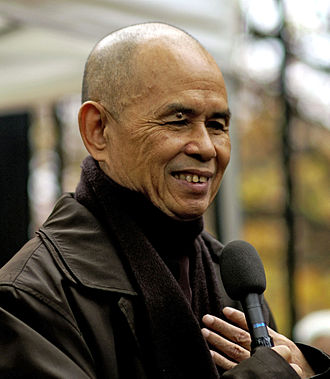
Thích Nhất Hạnh (Author, Buddhist Monk, Zen Master, Political Activist.)
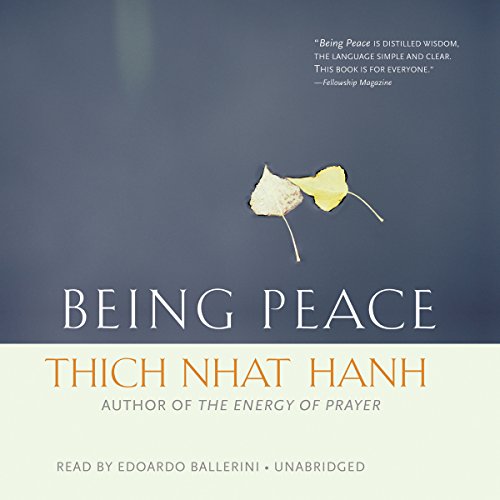
“Being Peace” is a layman’s introduction to Buddhist belief. Thích Nhất Hạnh offers a “let it be” philosophy of life while being a political activist. Hanh’s philosophy of peace comes through meditation. Hanh finds through meditation human life is found to be neither good nor bad.
There is no evil in Hanh’s world. In one sense that reminds one of Christian’s belief in “turning the other cheek”. The difference is that Christian’s believe there is evil in the world, and it must be punished.
Hanh tells a story of a Sudanese pirate that rapes a girl-child and throws her into the sea to drown. Hanh suggests he could have become a Sudanese sea pirate by having experienced Sudanese poverty and depredation. Hanh’s view is that the circumstances of life and environment create miscreants, rapists, and murderers.
Contrary to belief in evil and punishment for moral transgression, Hanh finds empathy for those who pillage, torture, murder, and rape.
Hanh’s solution is to accept Buddhist belief in peace through meditation. In accepting life as it is, evil doers disappear. This is certainly an oversimplification of Hanh’s teaching.
Hanh notes world leaders squander world resources that could be used to create and sustain peace for all people in the world. He decries wasted dollars for military defense. His argument is predicated on abundance that is unevenly distributed.
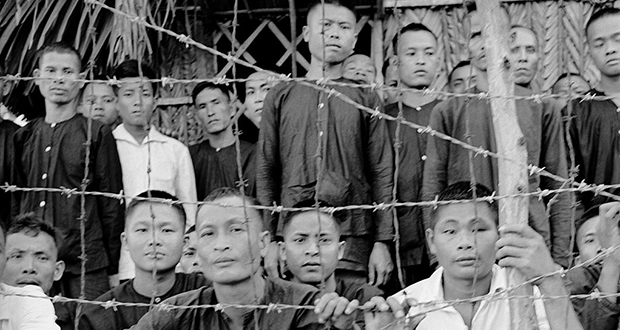
Hanh lives through the French and American atrocities in Vietnam.
Hanh undoubtedly observed the senseless murder of innocents by both western powers and communists.
Ironically, until more recently, Hanh was banned from Vietnam because of the crowds he attracted to his teaching. Fear of competition from someone independent of the government frightens communist bureaucrats. Hahn is now allowed in Vietnam, but his forums are restricted to small groups of believers.
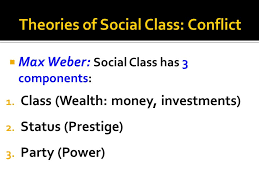
Money, power, and prestige seduce the poor, middle class, and rich, whether in a democracy or autocracy. There are few exceptions–maybe only Buddhist meditators, and Socratic philosophers–not the general public.
Hanh’s book is insightful but inadequate when measured against the innate nature of humankind. On a personal level, one can accept the value of meditation in seeing things as they are and how they should be. However, on a global level, it is difficult to imagine broad acceptance of meditation.
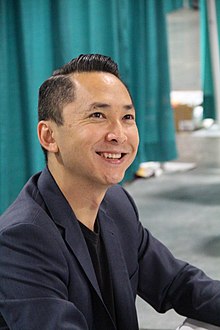
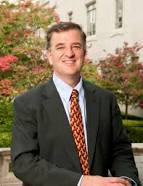
Viet Thanh Nguyen (American author, 2016 winner of Pulitzer prize for fiction.)
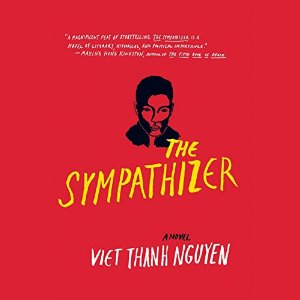
“The Committed” carries forward the life of three Vietnamese blood brothers introduced in “The Sympathizer”, Viet Thanh Nguyen’s earlier novel. Nguyen’s story begins during America’s Vietnam war.
In the beginning of “The Committed”, the main character, Vo Danh, arrives in Paris with his blood brother Bon. Their first night’s stay is with a communist sympathizer who is Vo Dahn’s aunt. Bon is incensed by the aunt’s support of communism. Bon’s job as a Vietnamese counterspy in America was to murder communist sympathizers. Bon wishes to leave immediately, but Vo Danh calms him down and they stay the night. However, Vo Danh continues to visit his aunt and for a time lives with her.
The main character of “The Committed” believes all social beliefs one commits oneself to are corrupted by human nature. To Vo Danh, his aunt is just who she is committed to be, without being either good or bad.
Vo Danh and Bon leave the next morning to find jobs at a Vietnamese restaurant near the Eiffel tower. The restaurant is owned by a mobster. They are hired and choose to rent a room from the mobster. Bon mostly leaves Nguyen’s story until the last chapters of the book. He chooses to keep a low profile as a restaurant employee.
Vo Dahn takes an entirely different path. Vo Dahn becomes a customer procurer and seller for the mobster’s drug business.
Vo Danh’s experience in a Vietnam re-education camp taught him to believe in nothing. That teaching came from his third blood brother who is commandant of the camp during the Vietnam war.
This third blood brother is a communist sympathizer in name only. Before becoming camp commandant, this third blood brother is badly disfigured by an American napalm attack. He realizes Democracy’s liberation of Vietnam from communism is a meaningless chimera. In that realization, he re-educates Vo Danh to understand communism, authoritarianism, and democracy are fictions.
Re-education camps are a euphemism for detention and torture.
Committed beliefs about government mean nothing. One’s first thought is that the third brother is simply a nihilist. Vo Dahn understands something different. In sum, the commandant teaches Vo Dahn that commitment to any ideological belief is a trap. Even in accepting his blood brother’s re-education, Vo Dahn recalls the love of his mother. He believes the selfless love of his mother saves him from being a nihilist.
Vo Dahn does not consider himself a nihilist but agrees that believing in nothing liberates humanity.
In Paris, Vo Danh chooses to become a mobster who sells drugs for a percentage of profits. He lives life as he chooses. He expresses no personal scruple about sale or personal use of drugs or alcohol. He has no fear of the drug supplying restaurant owner, arrest as a legal consequence, or possible attack by competing mobsters. Vo Danh lives an amoral life informed by the love of his deceased mother. His life experience and studied philosophical beliefs lead him to believe in nothing as a way of living in an unprincipled world. His actions in the world are formed by the mother who loved him and a father (who is a priest) that abandoned him.
What is troubling about Nguyen’s story is that love and care is often missing or mutually misunderstood between a mother and her children. One might accept Nguyen’s story for those children who are truly loved and cared for by their mothers. However, if mothers are to be on a pedestal, what about the affect of mothers who do not truly love or care for their children. Are uncaring mothers responsible for children who become mass murderers, dictators, mobsters, and other societal miscreants?
Nguyen’s story has a strong point of view, but it diminishes the complexity of a child’s growth to adulthood. Interaction between mothers, fathers, and their offspring are interpreted though the minds of their children.
One is reminded of fictional and news worthy stories of children who are raised in perfect families who become serial killers.
A recurring truism in Nguyen’s story is that all humans are created equal. When one is asked where they are from, the only correct answer is “I am from my mother”. Nothing else matters. Color, national origin, religious belief, or sexual orientation do not determine the value of a human being. Nguyen is a great writer with a point of view worthy of many philosophers of this and past ages.
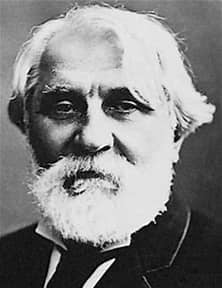
Ivan Turgenev (1818 to 1883–Russian novelist,poet, and playwright.)
Understanding the culture of other countries is aided by reading histories and literary classics. Like Tolstoy and Dostoevsky, Ivan Turgenev paints a picture of Russian culture in the mid-1800s.
Russia in 1850
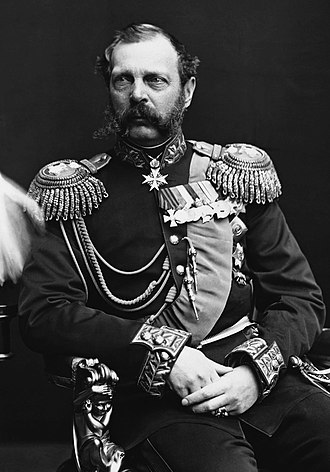
In “Fathers and Sons” it is the age of Alexander II, the Russian Tsar who began his reign in 1855. He presided over emancipation of serfs in 1861.
Tsar Alexander II (1818-1881)
The Tsar’s intention is to liberate serfs from aristocratic servitude. In respect for the Tsar, some Russian farmers offer their farmland to serfs in return for rent or a percentage of profits from the sale of produce
There is great turmoil during this time in Russia.
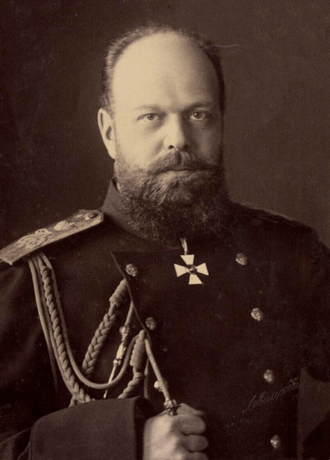
Tsar Alexander III (1845-1894)
It is eventually quelled by Alexander III (1881-1894) who represses and reverses Alexander II’s political and social liberalization. Turgenev dies soon after Alexander III’s ascension. In “Fathers and Sons” one can see the seeds for Alexander III’s reaction to Alexander II’s liberalization.
The principal character in “Fathers and Sons” is Yevgeny Vassillievitch Bazarov. He is a young doctor who sees the world through science.
Bazarov does not believe in God and sees morality as a fiction induced by society. He is a nihilist. He purports to believe life is meaningless.
In this Russian era, serfdom created an uneducated underclass that feeds Bazarov’s beliefs. Serfs had no place in society. They were indentured to an aristocracy that used them as slaves to cultivate land holdings.
Alexander II creates change which would allow serfs to own land, work for themselves, and break their cycle of poverty. However, serfs as well as the aristocracy are unprepared. Farmers who try to free their serfs find their farmland turns fallow. The reasons for loss of productivity are complex but such a sudden change in opportunity is either not properly capitalized or resistance by aristocrats who scotch Alexander II’s liberation.
Bazarov sees serf liberation as evidence of the meaninglessness of life. Bazarov and a fellow traveler, both sons of farmers, return to their family farms after finishing their education. The fellow traveler is Arkady who idolizes Bazarov. Arkady’s father’s farm is shown to be deteriorating when the two travelers visit. Bazarov observes the indolence of former serfs who work the land. At the same time Bazarov notes the entrenched aristocratic prejudices of Arkady’s uncle who has come to live at the farm. This uncle is an immaculately dressed and groomed middle aged man who is well known in aristocratic circles.
Bazarov’s suggests Alexander II’s reform only reinforces the meaninglessness of life. To Bazarov, human nature is immutable, God does not exist, and art is an affectation. He places this argument at the feet of Basarov’s uncle. Arkady agrees with Basarov and recognizes him as a mentor and superior intellect. Both the uncle and Arkady’s father are offended by Basarov’s comments. The uncle is appalled by Basarov’s nihilism.
Turgenev introduces a doppelganger of Basarov in a wealthy young widow named Anna Odinsova. Odinsova is attracted to Bazarov’s views based on her life experience. She sees life as equally meaningless. The irony is that Basarov falls in love with Odinsova. Loving someone contradicts meaninglessness in life. Odinsova does not love Basarov but admires his intellect. Basarov’s professed love betrays his nihilist beliefs.
Turgenev accelerates his argument against nihilism by having Arkady fall in love with the sister of Odinsova. This sister has the moral strength of Odinsova but accepts Arkady’s love, and marries him. They settle on Arkady’s father’s farm. Arkady, with the help of his new wife, make his father’s farm prosperous. Arkady’s father changes his role at the farm and is eventually able to retire. Nihilism has no place in Arkady’s life. Life has meaning to Arkady.
Turgenev leaves his audience with the belief that Odinsova will overcome her belief in nihilism. She marries a prosperous and dynamic Russian businessman. Turgenev suggests she may grow to love this businessman and abandon her mistaken view of life. This is a Turgenev’ finishing nail in nihilism’s coffin.
Turgenev’s warning to humanity is that God, morality, and love makes life worth living, while ignominious death is left to nihilists.
Basarov dies from Typhoid, never to realize the wasted life he has led. His death leaves his mother and father to grieve over Basarov’s great potential and lost opportunity.
Lanier’s memoir illustrates how refinement of virtual reality is as groundbreaking as Da Vinci’s understanding of light. History will not likely view Lanier as the Da Vinci of our era but there are interesting similarities.
Not to carry the comparison too far, Lanier magnifies the value of imagination without limiting its potential for both human good and evil.
Da Vinci designs weapons of war that purposely fed the ambitions of his era’s tyrants.
Lanier is one of the pioneers of facial recognition. Facial recognition is a tool that can be used by humanities’ tyrants as well as benefactors. In conjunction with digitizing the lives of everyone, facial recognition implies a “Brave New World” as eminently realizable.
A visit to China reinforces potential loss of privacy and human volition with the advance of a digitized and monitored population.
One comes away from Lanier’s memoir with an appreciation for his candor about life and his unshaken belief in the value of technology. He recognizes his personal imperfection while maintaining an optimistic view for the world’s rescue by AI as a tool rather than controller of human life. There is some comfort in his opinion, but a listener reserves judgement based on the life Lanier has led. He is undoubtedly a polymath but his memoir focuses more on pleasures than the reality of most people’s lives.
The principle of virtual reality lends itself to Lanier’s obsession with music and entertainment.
Lanier is a musician, among many other talents. He spends some of his time collecting and mastering abstruse musical instruments.
One comes away from “Dawn of the New Everything” with the feeling that VR has greater potential for distraction than humanity’s betterment. There is respite from this perception with Lanier’s explanation of how VR is used for education and training. It is a virtual tool for medical and science education.
On the other hand, VR is a tool for remote murder by a person guiding a drone.
B.F. Skinner, American psychologist, behaviorist, author, inventor, and social philosopher.
Lanier also notes that VR has the potential of making life conform to other’s interest.
The “Dawn of Everything” gives a clearer picture of what it was and is like to become a part of the Silicon Valley. He candidly recounts his rise as a tech mogul, failure, and gadfly.
Facebook and Twitter addiction are influencers with WMD potential.
Lanier’s memoir is at once enlightening and disheartening. He offers a virtual picture of modern life that is influencing, but not yet controlling. Lanier is optimistic. Many listeners will leave his memoir skeptical.
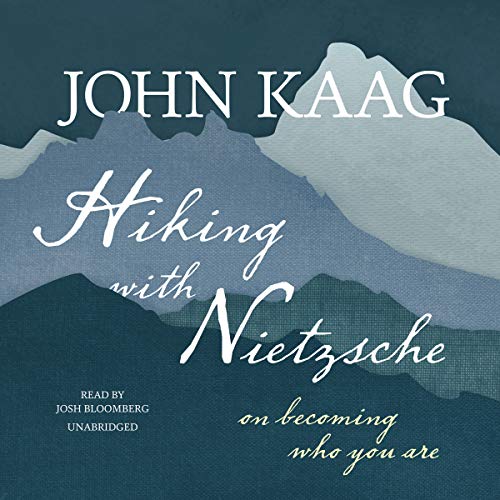
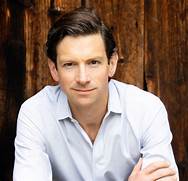
John Kaag (Author, Professor and Chair of Philosophy at the University of Massachusetts Lowell)
Like Mary-Louise Parker’s memoir “Dear Mr. You”, “Hiking with Nietzsche” is nearly returned by this listener. Both memoirs, as the word suggests, are personal.
However, Parker’s memoir is burdened by Parker’s self-absorption. “Dear Mr. You” reminds this listener of an actress who chose not to appear at the stage-door in New York after a forgettable stage performance. Parker is a good writer, but she needs a better subject.
“Hiking with Nietzsche” is not overly burdened by its writer’s self-absorption. Kaag offers some clarity to Nietzschean philosophical belief. However, clarity is only partially delivered. Some details revealed by Kaag of Nietzsche’s life are helpful.
Freidrich Nietzsche (1844-1900, German philosopher, poet, composer, cultural critic, and classical philologist)
Nietzsche’s father was a Lutheran minister. He died when Nietzsche was only five years old.
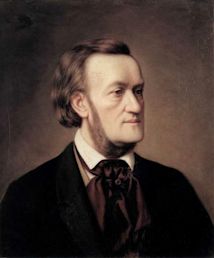
Wilhelm Wagner (1813-1883, German composer and conductor.)
As a young man, Kaag explains Nietzsche idolizes Wagner. Wagner becomes a father figure to Nietzsche.
However, Wagner treats Nietzsche as a servant, an underling, burdened by sexual identity and a modicum of insight to the nature of life. Nietzsche eventually breaks with Wagner, partly in recognition of Wagner’s anti-Semite sentiment, but also as a break from surrogate parental control. Like a child/parent relationship, Nietzsche continues to love Wagner but not as a great human being.
Where Kaag fails is–in inadequately correlating his family life with Nietzschean philosophy. Kaag notes that Nietzsche spent a great deal of time in the mountains that Kaag and his family are visiting. He retraces some of Nietzsche’s peripatetic life in Basel and its surroundings.
Kaag explains Nietzsche abandons belief in God and suggests humankind has killed the idea of a Supreme Being which leaves man in charge.
Nietzsche suggests humankind is on its own.
Kaag notes Nietzsche argues–We humans can become the ideal man, the master of his/her life. In that recognition, humans become potential supermen. Right conduct is determined by individuals overcoming themselves.
This oneself recognizes morality is based on action that supports life, encourages self-assertion, and has no guilt. Nietzsche suggests life should come from a “Let it Be” mentality that repeats itself. Kaag does not make these ideas any clearer in using his family life and his personal actions as a husband and father as exemplars of Nietzschean philosophy.
“Hiking with Nietzsche” is a disappointment but not a waste of time.
There is something to pursue in philosophy whether one agrees with Nietzsche or not. If “God is Dead” can man be moral? It seems doubtful based on world history. On the other hand, all species continue to evolve and adapt. Earth’s environment is no longer taken for granted. Are there supermen and women in our future?
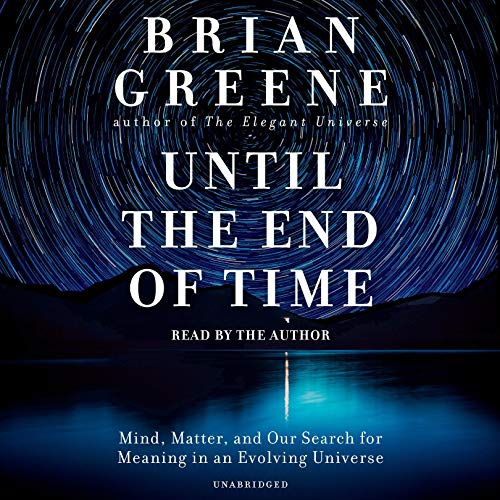
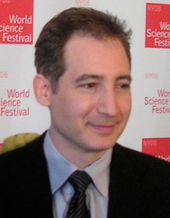
There is a great deal to unpack in Brian Greene’s “Until the End of Time”. As is true of many of Greene’s scientific observations, much of his self-effacing intelligence and science-based opinion is lost in the ignorance of his listeners, not to mention this listener. However, where Greene’s beliefs intersect with one’s limited knowledge, his theory of the ending of time and life is immensely rewarding and enlightening.
Greene does not argue there is no God. However, he suggests modern science shows there is no reason for God to exist to create life.
To Greene, there is more verifiable proof of life in science than verifiable proof of God in either science or religion.
In Greene’s thought, God and religion may have a great deal to do with sustaining human life, but in ways more sociological than religious. Weather one is a believer, atheist, or agnostic makes no difference to Greene. He carefully constructs an explanation of how science shows life may have come into existence, why stories of life may explain belief in God, and why humans are fundamentally different from other forms of life. The fundamental point of “…the End of Time” has to do with human mortality. Human mortality lies at the core of Greene’s view of time and life.
Greene suggests the laws of physics founded by luminaries like Newton, Einstein, Heisenberg, Bohr, and Erwin Schrodinger offer evidence for the basis for life on earth, with or without God. Greene explains the principle of thermodynamics, the fundamental science of energy that creates and sustains life.
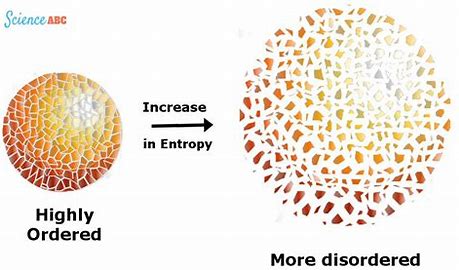
Greene explains–the physics of energy (thermodynamics) ensures eventual death. All life is pre-determined by the fundamental law of entropy. The fate of time and life began with a bang. This singular event disbursed tightly organized atomistic particles into a continually less organized space.
Greene notes that all forms of life are subject to entropy, a gradual decline from order to disorder. Greene argues that entropy acts at an atomistic level to determine the fate of all living things. Greene suggest laws of quantum mechanics determine the course of life for all “living” things.
To Greene, humankind is free to make choices. However, he argues humankind does not have free will. The physics of science show that all living things cannot choose to live forever. Humans can choose how to live, what to think, who to love, who to hate but they cannot choose one Nano second longer than what is dictated by the fundamental law of entropy.
Greene notes the science of Darwinian evolution and genetic inheritance is a relevant reinforcement of his argument for the inevitable extinction of life. The entropy accompanying human habitation is evident in pollution of the air we breath and the water we drink. (Though Greene does not address advances in genetic inheritance through gene manipulation, genetic manipulation does not negate Greene’s overriding concept of entropy.)
Just as earth’s environment slowly degrades, genetic inheritance as a process will eventually lead to extinction. Humans, just as dinosaur’s, sabre tooth tigers, and Dodo birds will disappear. All life adapts to change until the speed of environmental change becomes greater than the speed of evolutionary adaptation.
Greene agues humankind’s recognition of mortality shapes lives as consequentially as evolution. The significance of Greene’s argument is that religion is founded on acknowledgement of eventual death. Knowing that one cannot live forever, creates the desire for something beyond death. Greene elaborates by arguing that human lack of control over natural events compels creation of stories about a Supreme Being. *
The big picture in “Until the End of Time” is that the world and life is heading for an end. Based on the science of physics, there is an “…End of Time” for humankind, based on the immutable and experimentally proven laws of thermodynamics. Entropy is evident in the science of quantum mechanics (the physical properties of nature at the scale of atoms and subatomic particles), and the science of a continually expanding universe.
What does this mean to us? Humans still make their own choices on how to live, love, and hate in their lifetimes. The singer, Bobby McFerrin, suggests “Don’t Worry Be Happy”. Others suggest the meaning of life is to live in the moment. Brian Greene suggests it is up to you. Our lives and death may be pre-determined, but we have freedom to choose how we live, love, and work.
In re-thinking Greene’s belief in the physics of entropy, one wonders about the concept of energy never being destroyed. Einstein’s formula of E=MC2 implies our corporal bodies may die but atoms transmogrify. What does that suggest about the entropy of human life?
* Greene acknowledges the slim possibility of Devine existence but considers it much less probable based on the discipline of science and the existence of entropy. Greene does not discount the comfort religion offers humankind, including the rituals that help one cope with life and the passing of loved ones.
Ward Farnsworth (Author, Dean of the University of Texas School of Law)
No one is a stoic. At best, Ward Farnsworth argues one can only be a “practicing” stoic.
Who among us is a stoic? Who is free from passion, and unmoved by joy or grief? Possibly a psychopath. Who can supersede natural laws? No one. To live as a sentient being entails passion, joy, grief, and experience of things beyond our control.
Only a computer can be passionless, relentlessly reasonable, and programmed to acknowledge things beyond its control. In theory, a computer may be programmed to be a stoic. Farnsworth explains–a human will only be able to “practice” stoicism. Farnsworth notes no human is preternaturally capable of being a stoic.
The question is why would anyone want to practice stoicism? Farnsworth infers the practice of stoicism offers potential for living a good and fulfilling life.
Farnsworth explains one becomes a “practicing” stoic in the realization that death comes to all human beings.
However in being a practicing stoic, Farnsworth notes–humans can only strive to be morally good. Why does a stoic strive to be morally good? Farnsworth explains in being morally good, one gains peace of mind. Peace of mind offers happiness or what the classical Greeks called eudaimonia. In a practicing stoic’s view of living, it matters not whether one is rich or poor.
Here is where capitalists gag, the homeless scowl, and the poor spit. Having peace of mind is easier when one is rich. As Farnsworth notes, one might agree but he notes many who are rich are not happy.
One asks oneself, how happy can the homeless and abject poor be? Farnsworth suggests the rich never think they are rich enough. Fair enough, but the rain, cold, and desert sun have little affect on the rich.
Farnsworth explains the stoic argues “what we think” is key, whether rich or poor. The practicing stoic believes wealth, poverty, and life are ephemeral. Farnsworth implies knowledge of life’s temporality sets one free. Free to what? Reject the cold or heat of the sun when you are homeless? It is difficult to see how the homeless and poor can achieve peace of mind by changing “what they think” about the cold and heat or a hard bench in the park.
Farnsworth’s rejoinder might be that a practicing stoic would only be concerned about what they can control, not what they cannot.
That seems disingenuous because weather is an example of a life circumstance that is out of one’s control. Nature detrimentally affects the homeless and poor, regardless of how they think about it.
There is also the question of free will. Humans choose a path when opportunity knocks. Some choose to take opportunity; others pass. The stoic answers yes, we choose but the result is either/or–happiness or trial (e.g. Soren Kierkegaard’s philosophy).
One either seeks happiness or trial based on their choice. Farnsworth explains the stoic returns to the goal of happiness based on thinking and acting morally. If all humans were practicing stoics, one might argue there would be no homelessness or poverty. World history shows no culture exhibits that characteristic. It begs the question of “thinking differently” offering “peace of mind” when it is zero or one hundred ten degrees outside.
Does recognition of ephemerality achieve happiness? Farnsworth says not in and of itself because recognizing ephemerality of life and circumstance requires moral thought and action.
Reality is that thought and action require a minimal level of human economic security. Economic security is talked about by governments but rarely implemented.
Farnsworth notes many contradictions in the history of stoicism. He notes how a leading proponent of stoicism, Seneca the Younger, is incredibly rich when stoics abjure wealth. Seneca consulted Nero who was one of the most corrupt leaders of Rome. Seneca talked the talk of a classical practicing stoic, but did he live it? How can Seneca be an exemplar of stoicism when he counseled a brutal dictator, owned slaves, and lived in luxury?
Farnsworth suggests the history of Seneca is too unclear to offer an answer. Seneca may have been a moderating influence on Nero. He may have counseled Nero to act morally without success. He may have used his wealth to benefit society. This is not a very defensible argument, but it is consistent with a belief that one can, at best, only be a practicing Stoic.
Farnsworth offers a good understanding of the history of stoicism and the stoic philosophy in “The Practicing Stoic” but it seems more attuned to those who have than those who have-not. Interestingly, Farnsworth teaches law which gives some understanding of how and why a lawyer should represent the guilty as well as the innocent. It is a matter of practicing stoicism.
The best one may gather from Farnworth’s history of the stoics is that those who-have may realize how important it is to be more helpful to those who have-not. When homelessness and poverty are eliminated, a stoic philosophy offers great appeal.
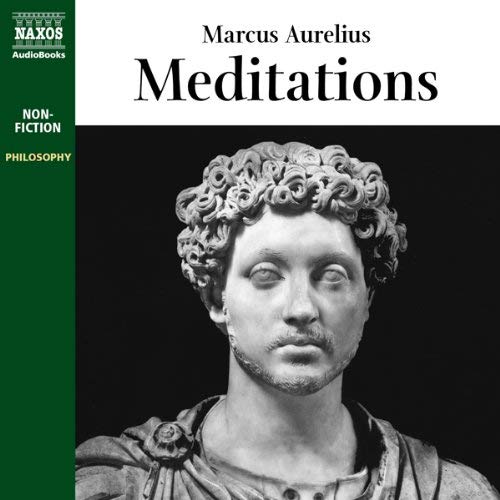
MARCUS AURELIEUS (121 AD-180 AD, EMPEROR OF ROME FROM 161-180)
Marcus Aurelius has been called the last of the five good emperors of Rome. Edward Gibbon, the historian, went so far as to suggest that this is one of the best times in history for people to live. (Maybe, but Gibbon might be a little biased based on being male and white.)
PLATO, ATHENIAN PHILOSOPHER ( 428/427 or 424/423 – 348/347 BC) Marcus Aurelius embodies the concept of the Philosopher King. Philosopher Kings are first described by Plato as the only totalitarian leader capable of ruling society. They would rule capably because of their wisdom and knowledge of the Good. “Meditations” suggests that Aurelius was the real deal.
In the modern world, Aurelius provides a bible for the leisure-class. However, one is not sure what the leisure class is in this era of doing rather than being.
Aurelius recognizes the ephemeral nature of life’s pleasures and chooses to write about and use Plato’s ideal forms to guide his rule.
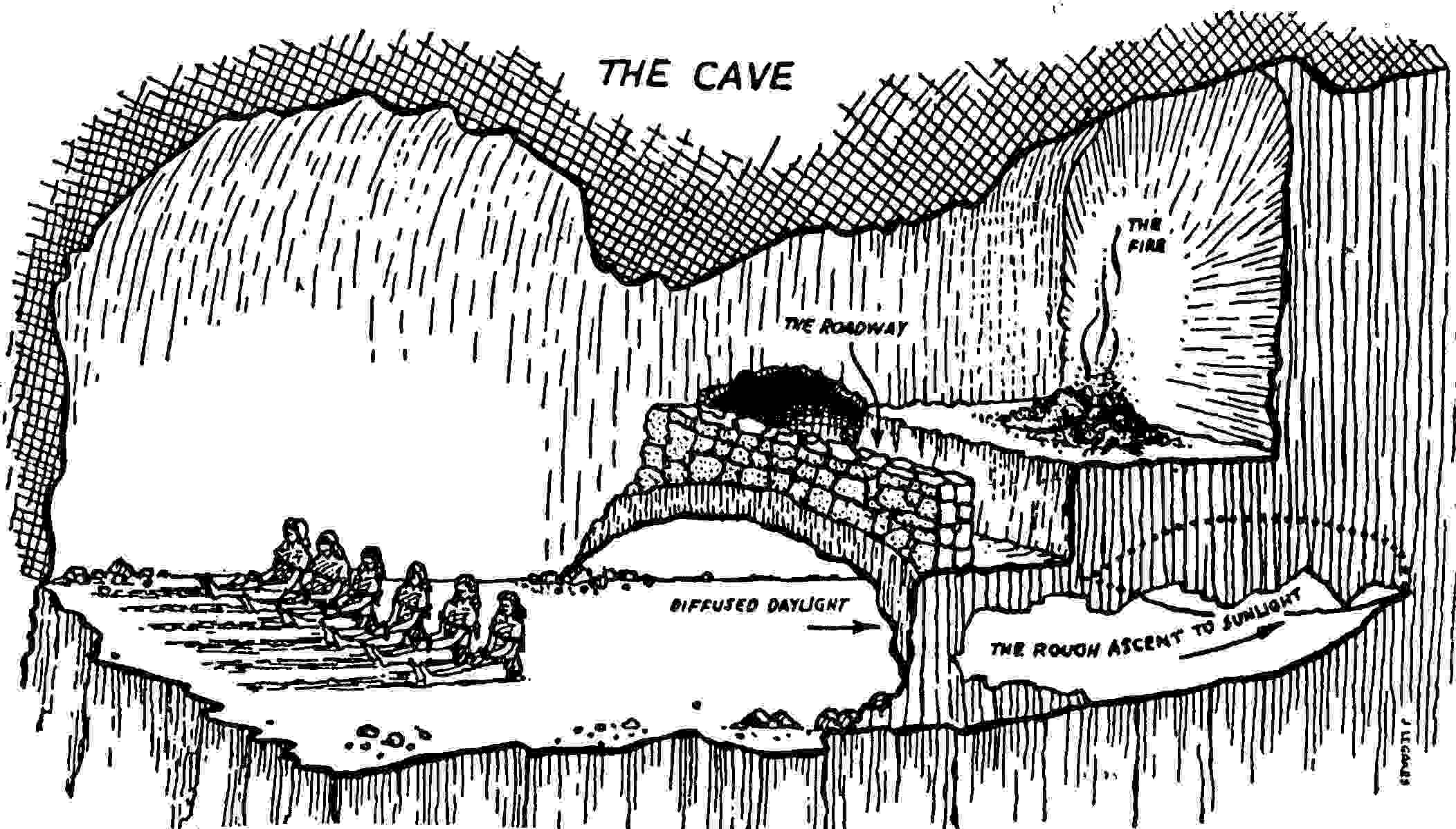
The ideal forms are Plato’s essences of life, measures of the Good that in most people’s minds are only shadows in a cave.
Aurelius benefited from wealth and leisure by being in the lap of luxury while denying its seductive pleasures, His private education allowed him to study and understand the source of Plato’s shadows in the cave.
In the post industrial world the likelihood of a 21st century Philosopher King is inconceivable but “Meditations” does offer a guide to today’s leisure class. With time, education, and inclination, a human being can adopt Aurelius’ rules to live a life of joy and contentment.
A life of joy and contentment runs contrary human nature’s proclivities, the pursuit of money, power, and prestige, but the leisure class may have enough of each to stop climbing life’s ladder to despair.
Aurelius lives in the post Christian era (121-180 AD) and writes with some confusion about belief in gods or God but seems to believe in pre-ordination and humankind’s necessary acceptance of a lot in life.
Aurelius forsakes despair and honors acceptance of doing the best one can do in a short human life. Aurelius does not seek money, power, or prestige but accepts responsibility and lets actions define his life. He believes every person has a social responsibility and that to remove oneself from social interaction is a betrayal of living a good life.
There is wisdom in Marcus Aurelius’s “Meditations”. If a listener is at a position in his or her life that allows meditation, this is a good place to start.
AUTHOR–David R. Hawkins died in 2012. He was 85 years old.
David R. Hawkins died in 2012. He was 85 years old. At turns, Hawkins transitioned from agnosticism to atheism to belief in God. This progression seems correlated with education and experience but ends in philosophical belief. In each transition, Hawkins uses his intellect to form a philosophy that has appeal to many in search of life’s meaning.
At times, Hawkins seems beyond reason but each step he takes offers insight to how one may live a more fulfilling life. Hawkins might be broadly characterized as a mystic. Even so, he was a formally educated, practicing physician, and psychiatrist.
Mysticism lies in Hawkins belief in human dualism, a belief dating back to Plato and adopted by many later philosophers.
Hawkins dualism is belief in a distinct separation between mind and body. More precisely for Hawkins, it is a separation between mind and brain.
The power of this cosmic mind can cure all the maladies of humankind, both physical and mental. Hawkins implies this cosmic mind can cure physical disease manifested in the body. If you cannot see; if you cannot hear; if you cannot feel, your condition can be cured by a force of will that engages the cosmic mind.
Hawkins becomes a mystic when he posits belief in a cosmic mind shared by all humanity.
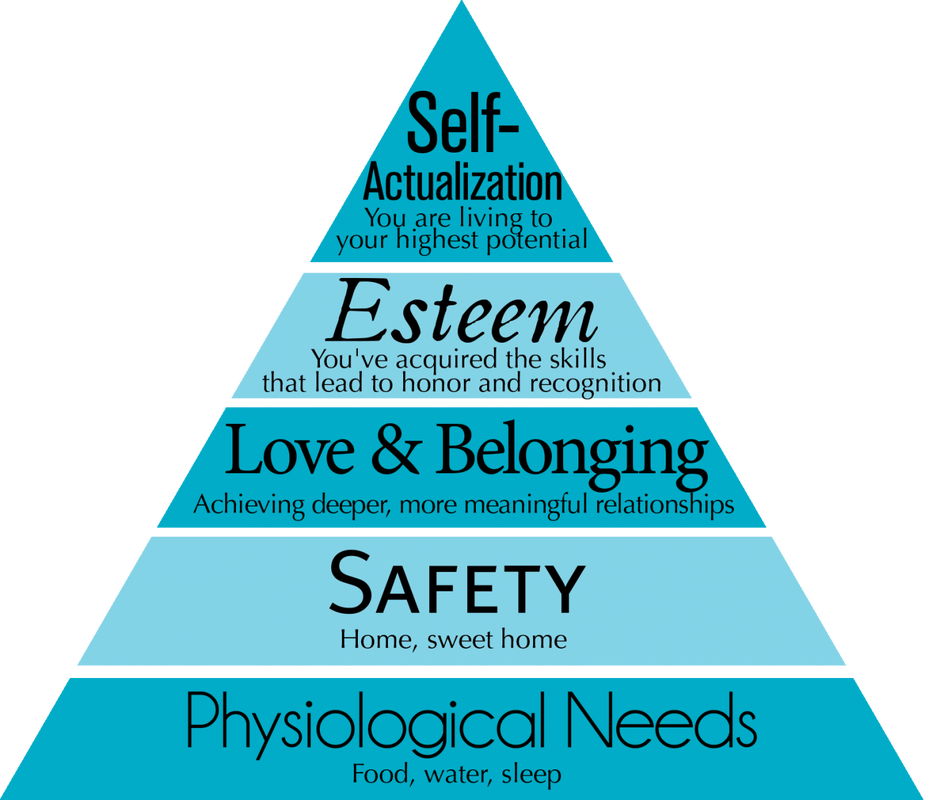
This is a point at which Hawkins loses some believers. However, before one gets to a point of rejection, Hawkins offers wise counsel on how to live life and approach a level of what Abraham Maslow labeled self-actualization.
Abraham Maslow’s self-actualization.
The mind gets trapped in Plato’s cave and only sees shadows of reality. Reality is obscured by what the human mind tells them. The mind’s interpretation of life’s events distorts reality. A child remembers a father’s or mother’s rebuke as an eternal judgement when the reality may have been to protect a child from harm. The shadow is created and remains with the child for the rest of his/her life.
PLATO’S CAVE (Hawkins argues that everything that happens in one’s life is because of the mind’s interpretation of the world.)
To escape the trap of Plato’s cave, Hawkins explains one must use their senses to accept the mind’s perception of reality and continually let it go until its negative power disappears.
An example would be one who gets angry over some event or action and accepts the anger; looks at it, accepts it, uses the mind to understand why there is anger, where it is coming from, and then letting it go. In the process, one finds anger has no meaning other than what one’s mind gave it.
With continual use of this process, Hawkins believes individual minds tap into a cosmic mind that shows the world as it really is; not simply as shadows on a cave wall.
There is wisdom in Hawkins’ perception of life and how one can more constructively deal with its vicissitudes. In this time of Covid 19, “Letting Go” is wise counsel for those troubled by emotional and/or physical trauma. However, the principle of a cosmic mind takes a leap of faith.
Robert Wright is saying human beings are only replicating machines; without God; without free will, and dependent upon the arbitrariness of natural selection.
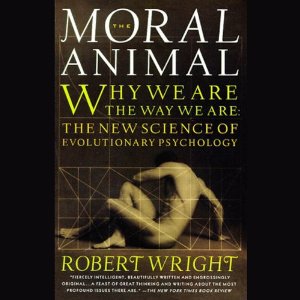
The Moral Animal: Why We Are the Way We Are: The New Science of Evolutionary Psychology
By: Robert Wright
Narrated by Greg Thornton
ROBERT WRIGHT (AUTHOR, JOURNALIST)
Robert Wright emboldens Darwin’s theory of evolution in “The Moral Animal”. Wright argues that Darwin infers evolution is biological, an all-inclusive generative theory. Not only is humankind evolving physically through natural selection, it is evolving psychologically.
Wright suggests every human action in life is determined by evolution.
The import of that conclusion is that all life is pre-determined at birth by evolution. Humans, like all others in the animal kingdom have no free will. Life is physically and morally pre-determined by evolution. Unlike Richard Dawkins, Wright wastes no time creating the idea of memes (inherited social customs) as a determinant of behavior. Wright suggests every human action in life is determined by evolution. In other words, Wright is saying “the devil did not make you do it”, and God is only a false construct of human evolution.
Wright argues that all life is based on arbitrary evolutionary changes in reproduction. Physical (genetic) and psychological (motive) changes that reinforce survival are pre-determined controllers of human behavior. Wright’s experimental evidence for physical evolution is research on human remains. His evidence for psychological evolution is advance in biological science.
The discovery of endorphin, serotonin, enzyme, and other chemical interactions that effect human behavior are markers for evolutionary change in human psychological influence and control.
Biological research shows that chemical interactions in the human body effect psychological behavior, just as genetics effect physical being.
Physical and psychological correlation with evolution changes one’s view of civilization and its discontents. It is not only suggests the death of God’s omniscience and control, but the death of free choice. Humans are born programmed; programmed to be good and evil. Humans kill, cheat, lie, and steal. At the same time, humans build cities, create art, love others, and sacrifice their lives for something greater than themselves.
Without God; without free choice, where is morality, where is good will, where is value in living? Wright suggests morality evolves into normative ethics, an ethics of pleasure as long as pleasure’s pursuit does not harm others. Wright’s idea is that humans level their moral behavior using a “tit for tat” penalty/reward system designed by evolution. A precursor of this philosophy is inferred by Epicurus in 4th century BC but evolves into utilitarianism in the 19th century.
Without God; without free choice, where is morality, where is good will, where is value in living? Wright suggests morality evolves into normative ethics, an ethics of pleasure as long as pleasure’s pursuit does not harm others.
Wright argues that humankind historically demonstrated sympathy, empathy, compassion, conscience, guilt remorse, and justice. Whether evolutionary or God-given, these moral beliefs are historically exhibited by civilization.
Civilization benefits from these feelings. Wright argues that penalties for violating rules of doing no harm to others are a part of a “tit for tat” evolutionary psychology that sustains civilization. Whether this idea reflects God, evolution, or free-choice; “tit for tat” offers a morally grounded philosophy that has pragmatic and utilitarian value. It helps humans feel better or worse, depending on their side of the “tit for tat”.
Wright suggests Freud was on to something in the idea of id, ego, and superego. Wright endorses Freud’s suggestion of homo sapient need for social interaction and the libidinous nature of humanity. However, Wright believes Freud took the idea too far when suggesting humans have a death instinct or Oedipus complex. Neither a death instinct nor Oedipus complex makes sense in an evolutionary world where replication of life is the essence of being.
English ethologist, evolutionary biologist and author.
In summary, like Richard Dawkins, Wright is saying human beings are only replicating machines; without God; without free will, and dependent upon the arbitrariness of natural selection.