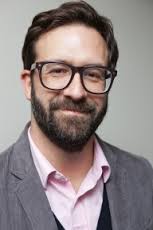
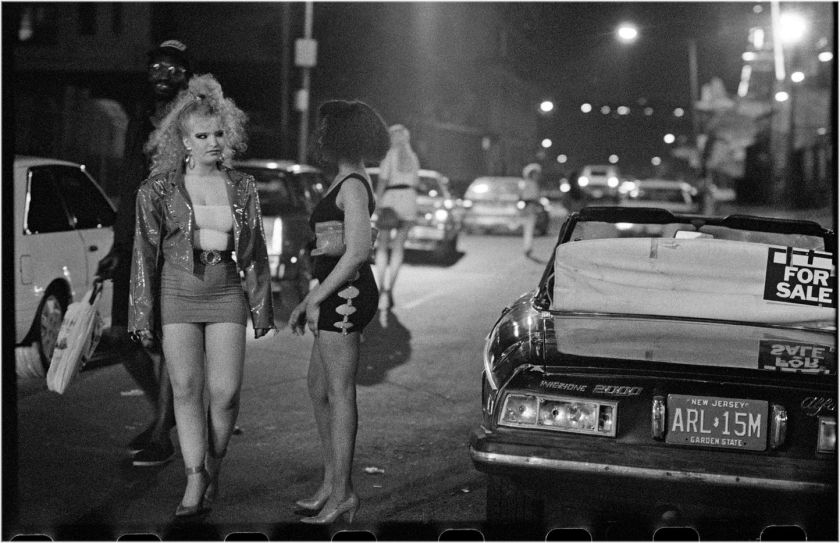
WOMEN

Audio-book Review
By Chet Yarbrough

(Blog:awalkingdelight)
Website: chetyarbrough.blog

Those Who Leave and Those Who Stay

Written by: Elena Ferrante

Narration by:  Hillary Huber

ELENA FERRANTE (A writer who chose to be anonymous until she was revealed by the press to be the author of the Elena Greco/Lila trilogy.)

“Those Who Leave and Those Who Stay” reflects on the difference between women “doing” and women “thinking”.

“Those Who Leave and Those Who Stay” is the last book of four by an author known by the pseudonym Elena Ferrante.  It is a book about Italy in the 1960s and 70s.  As in the United States, this is a time of social upheaval.  Student revolution and class warfare headline Italian media. 

In Italy, neo-fascists and communist parties compete for Parliamentary seats at opposite ends of the political spectrum.  A neo-fascist’ party presses to capitalize on economic prosperity of the 50s while communist sympathizers rail against economic disparity between owners and workers.

Ferrante’s story is about a young female author, Elena Greco, who has written a book about coming of age in this era of Italian upheaval.  To men, Elena reveals insight to an erotic chasm between the sexes.  To women, she offers insight to inequality of the sexes. 

WOMEN AND THE LADDER TO SUCCESS

Elena reveals how life is a struggle for all women; i.e. those who escape poverty, as well as those who remain mired in it.

Sadly, Ferrante ends her book in bewilderment.  Her hero, Elena Greco, appears to surrender to a world tainted by male domination.  To add to that bewilderment, her counter-culture maven named Lila, succumbs to the sterile belief that self-interest is all that matters in life.

The author reflects on how formal and street-wise education in Italy impacts social change.  Elena Greco, Ferrante’s protagonist, is a lower class Italian that rises to fame and fortune by being the first in her family to graduate from college.  She is a writer.  She is a thinker.  Her first book is published to wide acclaim for its depiction of a girl growing into a woman.  She is struggling to find her way through middle life by writing a second book.  She has a tumultuous relationship with her mother who secretly admires her daughter’s accomplishment and ability.  She becomes engaged and marries a rising college professor but grows to resent his intellectual beliefs and dominating self-interest.

WOMEN ON THERE OWN

WOMEN ON THEIR OWN (Ferrante creates a less conventional character named Lila.)

Lila, who comes from the same neighborhood as Elena but escapes poverty by marrying a relatively successful merchant, whom she later divorces.  The divorce can be explained in different ways and for different reasons but the immediate consequence is Lila’s return to poverty.  She did not pursue a formal education but is educated by the street.  She is a doer.  She is tough, insightful, and independent.

Lila has two children, a daughter who stays with her former husband, and another, a boy, that she is pregnant with when she divorces.  She, like Elena, has a tumultuous relationship with her mother.  The relationship appears irreconcilable because her mother believes her a whore who left a husband that gave her security and extended family respectability. 

Women in the Workforce

To survive, Lila breaks with her extended family, goes to work in a sausage factory, and lives with a male friend to reduce living expenses.  Partly out of necessity, Lila leaves her boy with neighbors when working but also resents the un-shared burden of motherhood.

Elena and Lila are friends from childhood but their paths to adulthood diverge.  As adults, their lives periodically intersect to crystallize differences between revolutionaries that think, and revolutionaries that do.

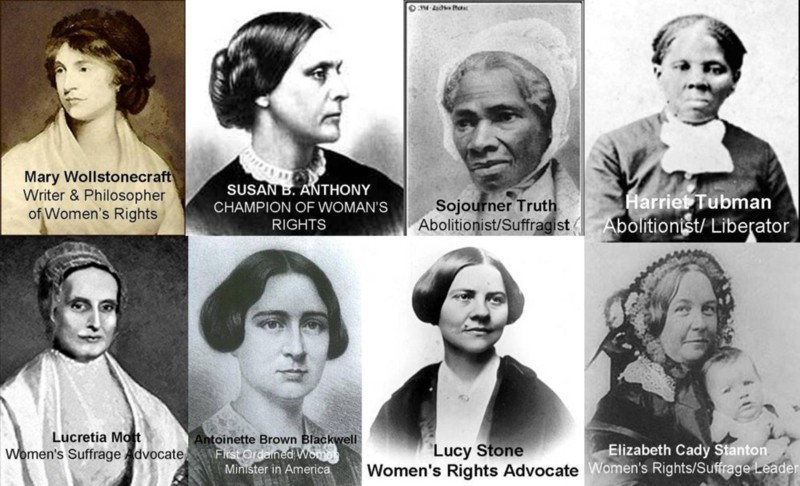
FAMOUS WOMEN IN HISTORY

Lila is a pioneer; a woman ahead of her time, “a doer”.

Elena becomes part of the intelligentsia–those who think, while Lila is street educated–those who do.  In their journey through life, one sees Elena using her intelligence to parse the difference between love, sex, success, and failure.  With knowledge as a thinker, Elena pursues independence.

In Lila, one sees an equal intelligence that deals daily with being a woman, a worker, and mother in a man’s world; doing what is necessary to win independence.  Lila sees potential in the technology industry and capitalizes on its growth.  She eventually starts her own company. 

Both heroines seem to break free to become independent human beings.  Elena achieves freedom as a consequence of thinking; while Lila achieves freedom as a consequence of doing.  Both bear the consequence of their independence.

In the end, a listener becomes bewildered by Elena’s view of freedom because it seems constrained by how a man views women rather than how women view themselves.  It seems, to a believer in equality of the sexes, that Elena Ferrante abandons her “female independence and equality” theme.

Ferrante’s main character–Elena Greco, in her second book, ironically writes about man’s creation of woman; i.e. an odd assessment for one who wrote a first book that infers women are independent and equal to men.

women are the sun

In the beginning, Ferrante shows women are the sun, around which men revolve. In Ferrante’s second and last book of the trilogy, a cloud appears between the sun and its planets. Independence and equality become something else.

TO A HAMMER, EVERYTHING IS A NAIL

Audio-book Review
By Chet Yarbrough

(Blog:awalkingdelight)
Website: chetyarbrough.blog

The Emperor of All Maladies, A Biography of Cancer

By Siddhartha Mukherjee

Narrated by Fred Sanders

SIDDHARTHA MUKHERJEE (AUTHOR, PHYSICIAN)

Dr. Siddhartha Mukherjee examines the history of cancer in “The Emperor of All Maladies”.

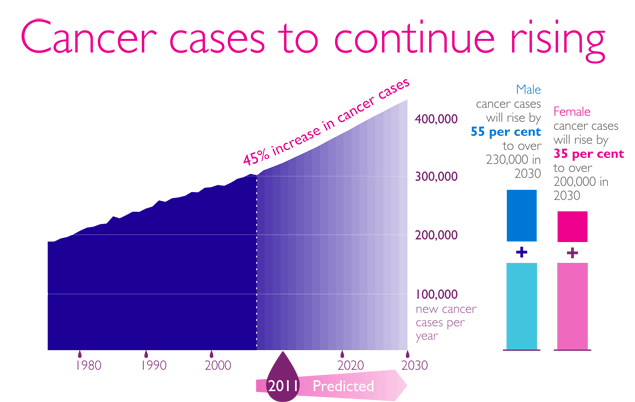
cancer death rates rising

The Centers for Disease Control and Prevention reports heart disease and cancer are the two leading medical causes of death.

At first glance, one thinks–so what?  We are living longer, and everyone dies of something.  However, Mukherjee notes a study showing cancer deaths are rising: i.e. they decrease in one age group only to be offset by increase in another.  The net effect is a rising number of cancer cases.

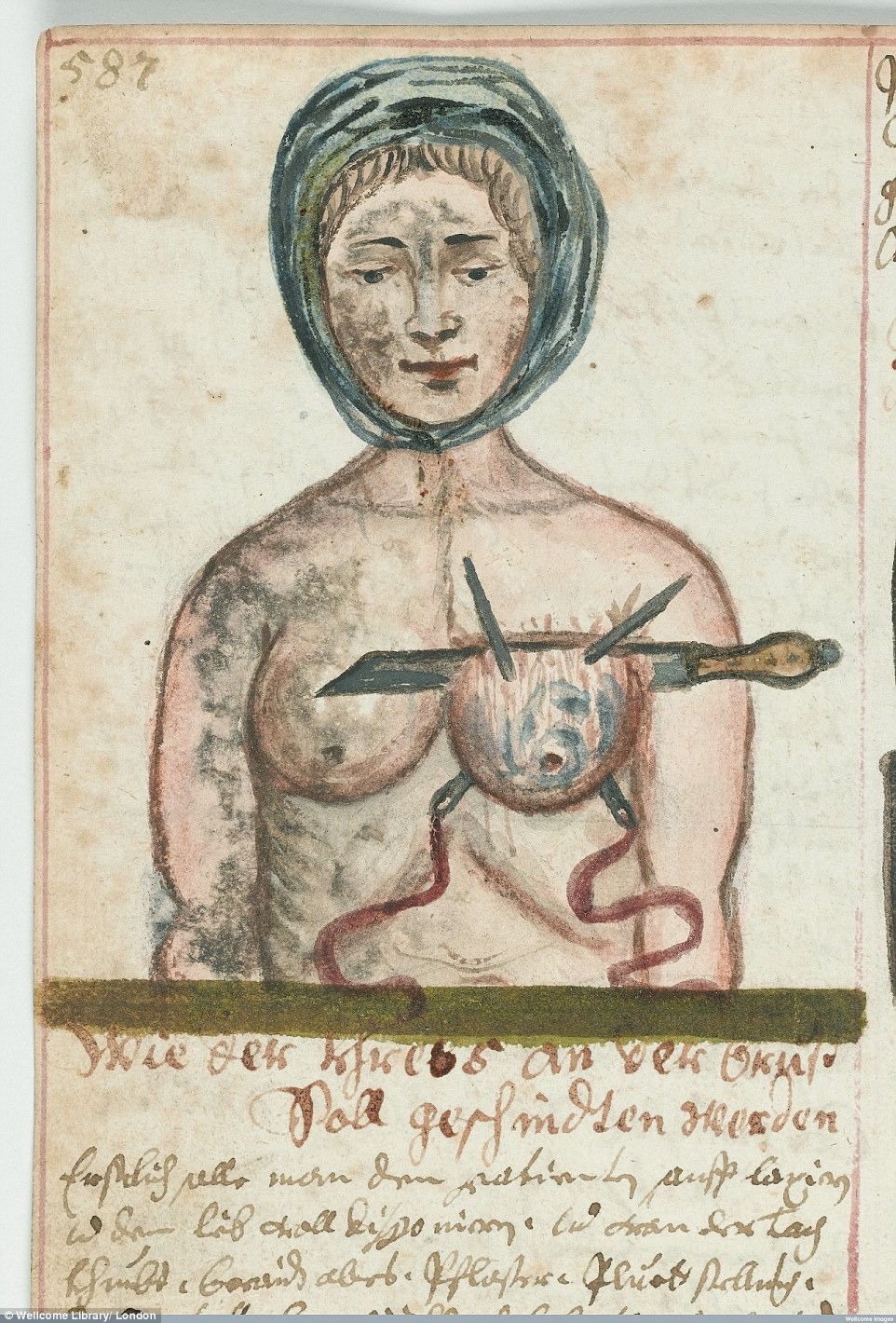
RADICAL MASTECTOMY IN THE 19TH CENTURY

In researching the history of cancer, Mukherjee exposes the arrogance of medical specialization.  Mukherjee shows early attempts to cure cancer were led by surgeons who removed cancerous growth.

Cancer, like the threat of a pandemic, induces fear and panic. Both maladies are unpredictable in the face of a human desire for predictability, health, and well-being. There is no certainty in either diagnosis. All a human can do is persevere. And so it is today with Covid19, the most horrific pandemic since the 1918 flu epidemic.

“The Emperor of All Maladies” reminds one of the saying—”To a hammer, everything is a nail”. 

Cancer, like Covid-19, is a slippery killer.  Thinking Covid-19 is the flu is as misleading as a singular solution for cancer.

COVID-19 affects different people in different ways. Infected people have had a wide range of symptoms reported – from mild symptoms to severe illness.

Symptoms that may appear 2-14 days after exposure to the virus:

  • FeverCough
  • Shortness of breath or difficulty breathing
  • Chills
  • Repeated shaking with chills
  • Muscle pain
  • Headache
  • Sore throat
  • New loss of taste or smell

The world scrambles for a vaccine to treat COVID-19. Fear drives people to desperation.

The public needs to discipline itself when offered an alleged medical treatment without verifiable proof of efficacy by medical science.

Mukerjee recounts the missteps made by medical professionals in their search for a cure to cancer.

The hammer, in the early days of cancer treatment, is a scalpel wielded by surgeons who cut deeper and deeper into the body until the patient is physically disabled, in limited remission, or laboring toward death.  The surgeon believes he has removed the cancer only to find it returns in weeks or months later.

Surgery works but the scalpel is a hammer that only works when cancer is localized and non-systemic.

Radiation Effects

The next specialty is radiation.  Here the physician replaces the scalpel with focused radiation; another hammer. Radiation cannot kill systemic cancer without killing or diminishing a patient’s health.

CANCER AND CHEMOTHERAPY

Next up is the internal medicine specialist, the oncologist.  This specialty argues that cancer can best be treated with designer drugs to specifically attack or starve cancer cells.  The problem is medicines that kill cancer cells are generally toxic; i.e. they kill both good and bad cells.

The final specialization is immunotherapy which ranges from bone marrow  and blood antigen enhancement to bone marrow transplantation. The purpose of immunotherapy is to make the body more resistant to cancer cell growth.

Though each specialization advances cancer remission, specialists lauded their own treatments and ignored each other’s accomplishments. 

CANCER AND MULTIFACETED TREATMENT

Specialists were historically proprietary about their treatments.  Some went so far as to distort their results with false clinical studies.  They felt their treatment was the best way of attacking “The Emperor of All Maladies”.

Specialists exclusively pursue their singular research, treatment, and reporting until a few physicians argued all disciplines should be enlisted to cure cancer.

CANCER AND EVOLUTION

The cure begins with physician attention and empathy for the patient.  Mukherjee infers cancer therapy is not for physician self-congratulation.  Hubris is a failing in physicians; just as it is in all human endeavors.  Cancer is an eternal war.  It changes with the environment and life’s evolutionary laws.

Mukherjee’s history explains how the chain of discovery for a cancer cure can be broken at different levels. 

There is physician self-delusion about how effective their treatment is for cancer.  There is the integrity of research studies and how they are conducted.  There is industry and government support of industrial waste production that is proven to be carcinogenic.

The door is opened to interdisciplinary research by philanthropists who created foundations to clinically study causes and cures for cancer.  Mukherjee addresses the continuing need for funding to expand cancer research.  He is not Pollyannaish about the need.  He acknowledges cancer research is not going to be like America’s race to the moon in the 1960s.  There is no definitive goal. The goal is not fixed like a mission to Mars.  Cancer’s etiology evolves.  It is unlikely for there to be a single-bullet solution that will cure cancer. 

Mukherjee expands on the difficulty in curing cancer because of capitalist resistance to scientific research, and discovery. 

MARLBORO MAN

Mukherjee recalls the battle with the cigarette industry when research clearly shows a correlation between cancer and smoking.  The cigarette industry lies to the public about their own studies correlating lung cancer with smoking.

Cigarette industry lobbyists influence legislation that delays concerted action by the government to curb the addictive characteristics of smoking.  Money talks, cancer proliferates.  (This reminds one of the gun lobby and their insistence that guns designed only to kill people are a right that should not be infringed upon.  Though gun use may not be addictive, there is a distinct correlation between the number of deaths in one incident and the proliferation of fully automatic weapons designed only to kill people.)

Mukherjee also recounts the incidence of cancer in England for chimney sweeps that inhaled carbon and asbestos from cleaning chimneys.  Today’s confrontations are carbon, other cariogenic, and environmental contaminants created by industry.

The National Institute of Health reports an estimated 1,735,350 new cancers will be diagnosed in the United States in 2018.  Of that number, 609,650 will die.  Worldwide, NIH reports 14.1 million new cases were identified in 2012.  8.2 million died.  The only killer more prolific than cancer is heart disease, and only by a small margin (In 2009, the CDC reports 610,000 people die every year from heart disease.)

PHYSICIAN HEAL THYSELF

Mukherjee implies all physicians need to step back, abandon their professional bias, and pursue treatments that are based on scientific research, symptoms, and reports of their patients.

Physicians need to listen, do no harm, and when necessary, offer palliative treatment—until, hopefully, a lasting cure is found. When the world is struck by a deadly virus, urgency is admittedly a gamble. Searching for a cure comes from science. When multitudes are dying, no-risk cures are unlikely to be discovered. Those who choose not to be vaccinated are risking more than their own lives when a pandemic strikes.

U.S. HEALTH CARE

Medical research and experimentation is costly. 

Mukherjee’s history shows the weakness and strength of capitalism and human nature in supporting what humanity needs to defeat cancer.  His history should be required reading; particularly for physicians, and researchers, but also for the general public.

CHILD ABUSE

Audio-book Review
By Chet Yarbrough

(Blog:awalkingdelight)
Website: chetyarbrough.blog

A Little Life: A Novel

A Little Life

Written by: Hanya Yanagihara

Narration by:  Oliver Wyman

HANYA YANAGIHARA (AUTHOR,WRITER,JOURNALIST)
HANYA YANAGIHARA (AUTHOR, WRITER, JOURNALIST)

“A Little Life” is about the difference between coping and overcoming.  Hanya Yanagihara writes of a boy growing to manhood.  Though the story is about a boy, it is a universal and gender-less story about child abuse.

Yanagihara draws one into a story like John Irving lures one into “A Prayer for Owen Meany”.  One feels captured in a quicksand of feeling and thought about an enigmatic character.   Yanagihara creates Jude, an extraordinarily handsome and intelligent man who secretly mutilates unseen parts of his body.  The story drags a listener’s thoughts into a dark place.  Why is this extraordinary person cutting himself with razor blades?  The reader turns a page; the listener listens to the next paragraph; needing to know the answer.  Yanagihara slowly develops a backstory that explains something about human nature and why one chooses to punish themselves.

Jude is an abused child, raised in an orphanage run by priests.  At 8 years of age, Jude is pimped out by a pedophile, a felon who parades as a priest.  His name is Father Luke. This false man-of-God kidnaps Jude and pimps him out as a prostitute while making him believe he loves him and protects him from harm.

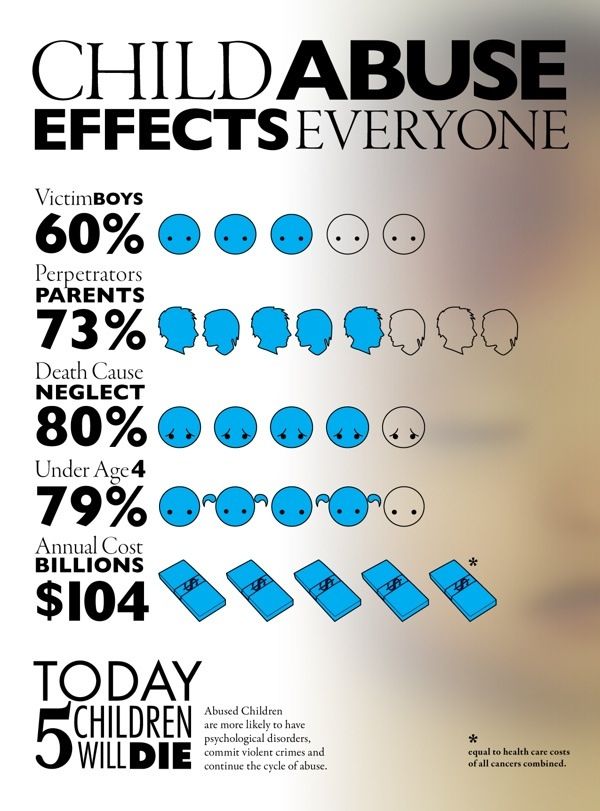
CHILD ABUSE STATISTICS
Yanagihara’s story drags a listener’s thoughts into a dark place.  Why is this extraordinary person cutting himself with razor blades?

Yanagihara’s horrific story is revealed in flashbacks as Jude grows into a successful career as a lawyer.  One begins to feel this is a story about many lost boys and girls abused by adults.  It is an abuse founded on betrayal of purported guardians’ trust, and exploitative adult motives.  But Yanagihara offers more.

Most children suffer from remembrance of things past.  Every life copes with intentional, unintentional, true, and false hurts from childhood.  Yanagihara fictionalizes a person’s life story to show how extreme those hurts can be.  She offers slender hope that someone will cast a line that will rescue them from their sinking despair.  The slenderness of hope is inferred by the extra-ordinariness of her main character.

A criticism of “A Little Life” is that the story is too long.  It offers revelation but its insight is too long in the making.  A most over-used phrase in “A Little Life” is “I am sorry”, a refrain that becomes cloying by the end of the story.

COPING WITH LIFE
Yanagihara suggests there is a chasm between coping and overcoming life’s hardships.

Yanagihara suggests there is a chasm between coping and overcoming life’s hardships.  Yanagihara infers most of life is coping with hardship rather than overcoming real or imagined hurt.  Friends, lovers, psychiatrists, and physicians can help one cope with real and imagined hurts; but true overcoming lies in the mind of the traumatized.

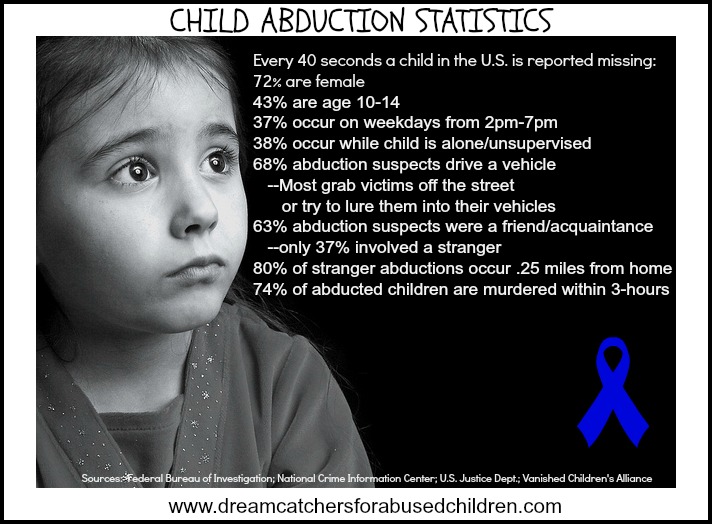
What Yanagihara makes blindingly clear is the ugly truth of pedophilia and how sex-trafficking scars children for life.  This is a story that needs to be told and understood, but not in so many words.  For that criticism of the author, “I am sorry”. CHILD ABDUCTION

NATIONALIZED MEDICINE

Audio-book Review
By Chet Yarbrough

(Blog:awalkingdelight)
Website: chetyarbrough.blog

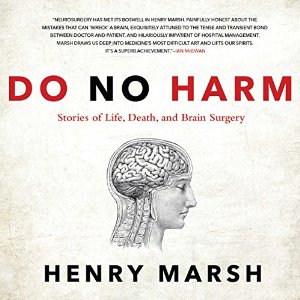
Do No Harm: Stories of Life, Death, and Brain Surgery

Written by: Henry Marsh

Narration by:  Jim Barclay

HENRY MARSH (BRITISH NEUROSURGEON AND AUTHOR)

HENRY MARSH (BRITISH NEUROSURGEON AND AUTHOR)

An interesting insight offered by Henry Marsh’s memoir, “Do No Harm”, is a contrast between American and British Medicine.  Marsh’s candor about his life and profession surprise his audience and endear his curmudgeonly personality.  The surprise is in Marsh’s profound empathy and personal conflicts over neurosurgical decisions.

Marsh’s endearment comes from explicit “f-word” rants about incompetence, technology, and bureaucracy.  In addition to his rants, Marsh endears himself to an audience by explaining the distinction between a physician’s self-confidence and hubris.  Marsh suggests physicians need understanding and competence; not undue preciousness, and pride-full medical knowledge.  Jim Barclay’s narration perfectly suits the tone of Marsh’s memoir.

Caduces

Marsh is able to enter into medicine with little pre-medical education in the sciences.

Either by dint of a formidable intellect or a quirk of the British education system (maybe both), Marsh takes all his science courses after deciding to become a doctor.  One doubts an American medical school would have considered his application in the 1960 s.

Marsh graduates and begins his career in medicine under the guidance of experienced physicians.  As he acquires experience, he chooses to specialize in neurosurgical medicine under the supervision of a Consulting Neurological Physician.  The Consultant (a neurology physician trainee’s guide) works within the English national health care system as a qualified physician who supervises aspiring neurological physicians.  This consultant chooses cases for trainees; under varying levels of supervision.

Though a neurological procedure may be done by a trainee, the consulting physician is responsible.  This appears to be similar to internships in the United States.  However, an interesting difference is in the insurance for interns.

MEDICAL INTERNSHIP

MEDICAL INTERNSHIPS- English hospitals carry a trust to protect physicians from mistakes made in treating patients.

The UK’s physician-group self-insurance may be a distinction without a difference but, as in all medical insurance systems, mistakes do occur, and patients are harmed. The difference between physician-group self-insurance and American physician’ private insurance raises the specter of limited settlement for egregious mistakes.  On the other hand, it suggests British physicians are more likely to be more forthcoming on mistakes that are made.

Marsh completes his trainee experience and decides to become a Consulting Neurological Physician in the national health care system.  Marsh interestingly reveals several mistakes he and his trainees make during his years of consultancy.  In revealing those mistakes, a listener pauses to think about risks of patients who depend on English’ or American’ medical services.  Marsh’s stories of mistakes reflect on medical training, family apologies, and personal anguish over patient’ quality-of-life and death issues. 

MEDICAL MALPRACTICE IN THE UNITED STATES

Marsh explains, at best a Consultant Surgeon expects to learn from surgical mistakes to avoid repetition. 

The worst, for Marsh, is the apologies to families for the mistakes that are made.  In contrast to Marsh’s way of addressing mistakes, American physicians seem more likely to avoid family apologies; while hiding behind legal and insurance company shields.

MEDICAL TREATMENT-WAITING FOR TREATMENT IN ENGLAND

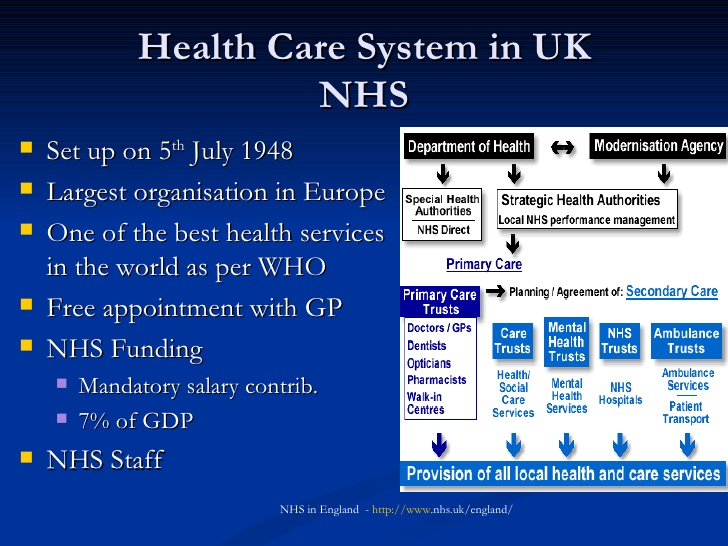
A more subtle message in Marsh’s book is the failure of the English National Health Service to provide adequate care for the general population; e.g. its long lines of patients who wait for attention when rapidly growing tumors are destroying a patient’s neurological system. 

Doctor/patient ratios in 2016 were 2.6/1,000 people in America. In 2018, the doctor/patient ratio was 2.8/1,000 in the United Kingdom. This raises the question of how long would Americans have to wait in line with a national health care system? Some argue physician assistants could be trained to take care of less serious medical issues. That would spread the burden of patient treatment.

Marsh complains of inadequate bed availability for patients that need operations.  Financing for the National Health Service is inadequate for the number of patients that need help. This seems a likely consequence of an American national health care system.

Marsh notes that he carries private health insurance to supplement his family’s medical needs.  At the same time, he infers private hospital services tend to gouge patients for their medical service; in part, from charges for unnecessary tests and superfluous operations. 

Marsh attacks the bureaucratic nature of the National Health Service that hires hospital administrators who are directed to reduce costs; regardless of patient’ load or patient’ need.  Technological improvements for England’s National Health Service are delayed because of lack of financing, poor administration, and inadequate training. These are maladies that will plague a national health care system in the United States.

U. K. HEATH CARE SYSTEM

Marsh leavens his criticism of England’s national health care by writing of his experience in the former U.S.S.R. (specifically Ukraine) where problems are monumentally greater. 

In the end, America’s effort to improve national health care is tallied in one’s mind against the current English picture painted by Marsh.  For medical patients, the English system seems riskier than the American system.  Doctors in England seem more insulated from medical mistakes.  If doctors are more insulated, they may take more risks; i.e. risks that can lead to patient’ disablement or death.  The American system, if one can afford the service, seems more conservative and less likely to take risks.

It seems England’s national health care offers a level of societal comfort because there is hope for affordable treatment.  On the other hand, Marsh clearly shows how government bollixes National Health Care with inadequate funding and a bumbling administrative system.  Some would say this is why the U. S. should not nationalize health care.

Marsh notes England’s private system has not met the needs of citizens who can afford additional service.  The private system suffers from human nature’s folly; i.e. the lure of wealth at the expense of fairly priced or truly needed medical treatment.

U.S. HEALTH CARE

Marsh suggests the private system suffers from human nature’s folly; i.e. the lure of wealth at the expense of fairly priced or truly needed medical treatment.

Is medical health service a human right or privilege?  One draws their own conclusion about British and American Medicine.  Marsh shows the monumental problems of affordable health care in England. 

A listener of “Do No Harm” infers problems of the British system for medical care will challenge America’s desire for universal health care. Dr. Marsh’s answer seems to revolve around empathy for all human beings; i.e. regardless of whether a country has a nationalized or private health care system.

MASOCHIST’S GUIDE TO AFRICA

Audio-book Review
By Chet Yarbrough
(Blog:awalkingdelight)
Website: chetyarbrough.blog

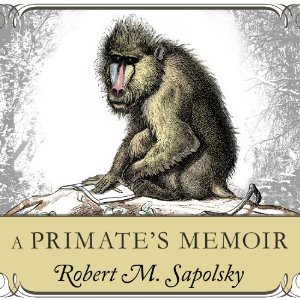
A Primate’s Memoir: A Neuroscientist’s Unconventional Life Among the Baboons

A PRIMATE'S MEMOIR

3 star symbol
Written by: Robert M. Sapolsky

Narration by: Mike Chamberlain

ROBERT SAPOLSKY (AMERICAN NEUROENDOCRINOLGIST, PROFESSOR OF BIOLOGY, NEUROSCIENCE, AND NEUROSURGERY AT STANFORD UNIVERSITY)
ROBERT SAPOLSKY (AMERICAN NEURO-ENDOCRINOLGIST, PROFESSOR OF BIOLOGY, NEUROSCIENCE, AND NEUROSURGERY AT STANFORD UNIVERSITY)

Robert Sapolsky’s “A Primates Memoir” is a masochist’s guide to Africa. (Our 2017 trip to Africa was luxurious in comparison.)  Sapolsky’s trip is what you would expect from a biological anthropologist who sojourns to Africa in the early 80s.  Sapolsky lives in a tent while studying baboons.

AFRICA JULY 2017_7695.JPG
Our stay in Africa is luxurious in comparison to Sapolsky’s in the 1980s.

At the age of 12, Sapolsky appears to know what he wants from life. In his middle-school years, he begins studying Swahili, the primary language of Southeast Africa.

Sapolsky’s career is aimed at understanding Southeast Africa.  Sapolsky’s 1984 PhD. thesis is titled “The Neuro-endocrinology of Stress and Aging”. Presumably, his trip to Africa became the basis for his academic thesis. Sapolsky’s experience in Africa is recounted in “A Primate’s Memoir”.

AFRICA JULY 2017_8101.JPG
Animal preserve in Southeast Africa

While studying Baboons, Sapolsky is exposed to the worst of African society. His memoir of those years touches on the aftermath of Africa’s colonization, Africa’s ubiquitous diseases, its governments’ instability, and its abundant and frequently poached wildlife.

SOUTHEAST AFRICA
SOUTHEAST AFRICA

Robert Mugabe (President of Zimbabwe)
Robert Mugabe (Former President of Zimbabwe)

JACOB ZUMA (FORMER PRESIDENT OF SOUTH AFRICA)

Though some of what Sapolsky writes has  changed, today’s news shows characters like Robert Mugabe, and Jacob Zuma, who are accused of victimizing the poor to enrich themselves.

Some African, and other nation-state leaders around the world, are corrupt.  Many Southeastern African bureaucrats, foreign business moguls, indigenous apartheid promoters, and wildlife exploiters still walk, drive, and bump down streets and dirt trails of this spectacular continent.

Self-interest often conflicts with general economic growth and stability.  Today’s Southeast Africa is great for tourism (one of the three biggest industries) but the poor remain poor, the rich richer, and the middle class nearly non-existent.

AFRICA JULY 2017_7219.JPG
Today’s Southeast Africa is great for tourism (one of the three biggest industries) but the poor remain poor, the rich richer, and the middle class nearly non-existent.

Sapolsky returns to Africa after marrying. He squires his science and marriage partner to revisit a baboon troop he was studying in the 1980s. At the same time, he touches on the cultural norms of a society that seems little changed from his early years in Africa.

Sapolsky recounts the melding of a tragi-comic story of an African who is mauled by a Hyena. In telling the story, he reveals the stoic acceptance of life as it is. However, each time the story of the mauling is told by different people, it changes. The change comes from a blend of truth and fiction that conforms to the tellers’ view of themselves. The essence of the story is that an African man sleeping in a tent is mauled by a Hyena looking for food.

CHANGING STORY
Re-telling of an African story changes with each narration–The change comes from a blend of truth and fiction that conforms to the tellers’ view of themselves..

When the story is told by Masai warriors hired by a company to protect its employees, the victim is saved when the Hyena is speared by the Masai warrior’s courage. When the story is told by the victim, it is a company cook who bashes the Hyena that runs away. When the story is told by a newspaper reporter, the Masai warriors were drunk and not doing their job; the cook bashed the Hyena, and the victim survived. When the story is told by the cook, the victim’s yell brings the cook to the tent; the cook grabs a rock, bashes the Hyena, and the Hyena flees. Finally, when the story is told by the company employer, the victim is not an employee, the Mesai warriors did spear the Hyena, and the employer had no responsibility for the victim.

A cultural interpretation is inferred by these many versions of the same story. Some humans indulge in alcohol to escape reality. Most humans wish to protect an idealized version of their existence. News coverage is sometimes a mix of truth and fiction to make stories more interesting than accurate.

Life is happenstance with each human dealing with its consequence as an end or beginning that either defines, or extends their understanding of life. Truth is in the eye of the beholder. Some people are willing to risk their lives for others. Private companies focus on maximizing profit and minimizing responsibility.  Life is not an either/or proposition despite Kierkegaard’s philosophy.  Humans are good and bad; no one is totally one or the other–not even America’s morally corrupt and ethically challenged leader.

BABOONS
Sapolsky shows that baboon families, like all families, are born, mature, and die within a framework of psychological and physical challenges imbued by culture. All lives face challenge but culture can ameliorate or magnify the intensity and consequence of the challenge.

The overlay of Sapolsky’s memoir is the research and reported evolution of a baboon family in Southeast Africa. He shows that baboon families, like all families, are born, mature, and die within a framework of psychological and physical challenges imbued by culture. All lives face challenge but culture can ameliorate or magnify the intensity and consequence of the challenge.

Sapolsky gives the example of Kenyan “crazy” people who are hospitalized, treated, and fed to deal with their life circumstance. In America, it seems “crazy” people are left to the street. The inference is that Kenyan “crazy” people live a less stressful life than American “crazy” people. This is a positive view of Kenyan culture but there are ample negative views in Sapolsky’s memoir. Rampant poverty, malnutrition, and abysmal medical treatment are Sapolsky’s recollected examples.

Sapolsky’s memoir shows he clearly lives an unconventional life, but it seems a life of purpose. What more is there?


American

Audio-book Review
By Chet Yarbrough

(Blog:awalkingdelight)
Website: chetyarbrough.blog

The True American: Murder and Mercy in Texas

Written by: Anand Giridharadas

Narration by:  Anand Giridharadas

More mass shootings this weekend. Twenty innocents murdered in El Paso and nine in Toledo.

Who are we?  What have we become? A deplorable habit of humans is to classify others as either one of us or one of them.

“The True American” is a news reporter’s story of two Texas murders and a wounding.  The victims are people living and working in 21st century America.  By birth, the three victims are Bangladeshi, Indian, and Pakistani. “The True American” is the story of murder and mayhem that tests Texas’s death penalty.  The facts of the story expose human nature’s habit of “us and them” categorization.

The Texas’ murders could have been anywhere in America. Anand Giridharadas’ book is about “us and them” choices people make every day.

There is a causal link in America’s mass shootings that goes beyond the gun lobby and AK-47s.  Many of these horrific events are motivated by the isolation from Covid19 and “us and them “categories” that make one person different from another.

There is a causal link in America’s mass shootings that goes beyond the gun lobby and AK-47s.  The isolation caused by Covid19 raises social tension. Both guns and Covid19 link Americans to unnecessary death.

Yesterday’s examples of “us and them” in America are shootings in El Paso, Texas and Toledo, Ohio. Other examples of “us and them” mentality are our President’s categorization of illegal Mexican’ immigrants as murderers and rapists, a white man’s slaughter of nine Americans because they are Black, a Muslims’ murder of five soldiers because they are American, and the 2019 Poway synagogue shooting in Califorinia. Then there are this week’s murders of innocents at a parade in Waukasha, Wisconsin.

RAISUDDIN RAIS BHUIYAN (BANGLADESHI AMERICAN-TECHNOLOGY PROFESSIONAL IN DALLAS, TX.)

The focus of Giridharadas’ book is the maiming of Raisuddin “Rais” Bhuiyan. Bhuiyan is an aspiring American émigré from India, who is shot in the face by Mark Anthony Stroman.

Stroman murders two and maims Rais Bhuiyan, because he sees himself as a part of “us” (Americans) and his victims a part of “them” (Arab terrorists).  Ironically, none of the three victims are Middle Eastern.

MARK ANTHONY STROMAN

Like our President’s slander of Mexicans, a white man’s slaughter of Blacks, a Muslim’s murder of soldiers in 2015, and the 2019 murder in a Jewish synagogue, Stroman believes anyone that looks or acts like “them” is not worthy of “us”.

Bhuiyan’s life is worthless to Stroman because he is avenging destruction of the World Trade Center in New York.  To Stroman, Bhuiyan and two un-related Asians are terrorists because of the color of their skin.  Ironically, both Stroman and Bhuiyan, in the beginning of this true story, think in “us and them” terms.  By the end of Giridharadas’ book, Stroman and Bhuiyan realize there is only “we”.

Bhuiyan and Stroman are polar opposites in many ways but the same in some ways.  Bhuiyan is raised in a loving family in India.  Stroman is raised by an uncaring mother and stepfather.  Bhuiyan is strongly supported by his family to get a good education.  Stroman is ignored or abused by his family and drops out of middle school.  Bhuiyan excels in a private India’ school and becomes an elite citizen of Bangladesh’s government Air Force. Stroman is a “lost boy”; in and out of jail, and largely educated by government penal institutions.  Bhuiyan decides to immigrate to America.  Stroman knocks around Dallas, Texas, slipping in and out of jobs and jails.

social isolation

However, Bhuiyan and Stroman are alike in their social isolation.  Bhuiyan arrives in America without friends or family.  Stroman breaks ties with family and makes few friends.  Stroman isolates himself from society with drugs that make him belligerent.  Stroman is prone to relationships with fellow societal misfits. Bhuiyan isolates himself from society by the circumstance of being a stranger in a strange land.  Bhuiyan moves from New York to Dallas because a fellow Asian immigrant offers him a job.  Stroman is a “…True American”.   Bhuiyan is an aspiring “…True American”.

Bhuiyan’s early associations in America are with fellow Bangladeshis with the goal of finding employment.  Stroman’s associations are with outliers of American society with the same goal of finding employment.  Bhuiyan’s effort to find jobs is difficult because of his recent immigration and ethnic isolation.  Stroman’s effort to find lawful jobs is difficult because of his prison record, drug use, and volatile temper.

Stroman is convicted for one of his two Dallas’ murders and sentenced to death.  After ten years of appeal, Stroman’s execution is imminent.  Bhuiyan, in that ten years, continues his journey to become a “…True American.”  In the course of their troubled lives, Bhuiyan and Stroman grow to understand each other’s humanity.

Stroman re-imagined his life as his execution date approaches.  On the face of Stroman’s written and video confessions, Stroman either manipulates the media or has truly recognized the error of his ways. 

Stroman may have grown to understand, humanity is not a matter of “us and them” but a complicated mix of good and evil in every human being.  Ironically, Stroman’s and Bhuiyan’s journey is through religious belief, one as a Muslim; the other as a Christian.

Stroman is executed by lethal injection on July 20, 2011.

INSTITUTIONAL FAILURE

Audio-book Review
By Chet Yarbrough

(Blog:awalkingdelight)
Website: chetyarbrough.blog

Fourth of July Creek: A Novel

By Smith Henderson

Narrated by MacLeod Andrews, Jenna Lamia

SMITH HENDERSON

SMITH HENDERSON (Author, Screenwriter)

On a scale of 1 to 10, with 1 the least trustworthy, a random audience survey marks trust in government as 1. Therein lies the fear of government intervention in the ideals of capitalism. It strikes at the heart of today’s public concern over economic stimulus, the environment, voting rights, equality of opportunity, police reform, and freedom.

Smith Henderson’s Fourth of July Creek is about broken lives and institutional failure.  After two chapters, a listener wonders, “Is this America”?  Henderson vivifies a part of America conditioned by high divorce rates, sexual exploitation, substance abuse, and institutional apathy.

In Henderson’s story Pete Snow is a divorced, alcoholic social worker.  Snow works in child welfare services, covering a large area of Montana. Snow makes a point of saying he is not a cop whenever he is investigating a home with children that are suspected of being neglected. 

Snow is a character that sees the worst side of human nature; i.e. like a cop, Snow is exposed to a world of human’ degradation that fills and empties his life.

Though Snow is careful to distance himself from police, he is mired in the same dark side of humanity. 

Henderson’s point is human apathy grows in some social service jobs because government lacks oversight and public accountability.  The public feels the job is getting done because there is an institution to serve the need. Henderson’s story implies the public is apathetic. The public becomes apathetic because government has a department to do the job. The public might trust but does not verify. (Even more likely, the public is consumed by their own needs and wants and ignores social services that do not directly affect them.)

DONALD TRUMP (REPUBLICAN NOMINEE FOR PRESIDENT OF THE U.S. 2016)

Fourth of July Creek infers that Presidents make no difference when it comes to broken lives of abandoned and abused children.  However, Trump has shown (often in a negative light) that Presidents do make a difference.

Over 400 immigrant children remain separated from their families because of Trump’s enforcement of a flawed immigration policy.

Henderson’s story shows that child welfare services, like many public service jobs, attract employees with good intention who succumb to apathy and routine.  The job becomes a paycheck rather than a calling.  It is not that an employee is necessarily bad or incompetent but public service goals are often not humanly achievable within strict use of institutional rules.  Institutional rules are made by people who often only preserve institutions.  The institution survives whether or not it solves human problems.

The story begins with the case of a single mother, a teenage son, and a pre-school daughter.  The mother and son are brawling with each other.  A cop is at the scene when Snow arrives.  Snow is a case worker for the family.  The mother is a drug addict.  She cannot manage her son for reasons greater than her drug habit.  The solution is to remove the son from the family to live with a relative but the relative does not want the boy. 

Children in Jail

Snow finds a foster family that takes the boy but the boy ultimately runs away after the foster family decides he is too ungovernable.

The boy is caught.  He is placed in something like a reform school.  He is institutionalized.  The boy is abandoned.

In the boy’s mind, Snow betrayed him.  Snow is remorseful but has no realistic alternative.  He cannot find the boy’s mother.  She has moved on.  Even if she had not moved on, Snow finds that the boy’s mother had sexualized her relationship with the son and could not be any part of the boy’s life.  Divorce, sexuality, substance abuse, and institutionalized apathy swallow this American boy’s life.

This sexually abused son is only a small part of Henderson’s story.  The main story revolves around family dysfunction in America.  Child abuse is bred by single parent families, sexual exploitation, substance abuse, and ineffectual public service institutions.  Several families, including Snow’s own family, are battered by divorce, sexual depredation, drug and alcohol abuse, and unavailable or ineffectual public services.

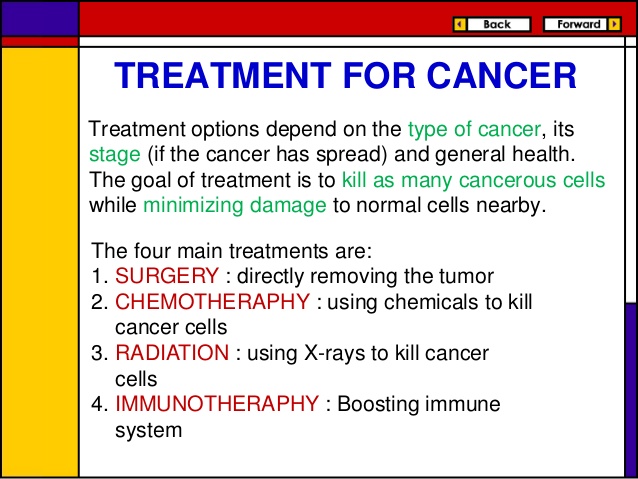
CHILD ABUSE STATISTICS

A deranged woman is married to a man who loves her deeply.  The husband is unable to comprehend or deal with her psychosis.  The husband enables his wife by isolating her and their family in the wilderness.  The children are raised like animals in the forest.  A myth about the family is created by the Bureau of Alcohol, Tobacco, Firearms and Explosives, the FBI, and DEA.  The ATF begins a covert operation to investigate the family.  In the course of the investigation, the husband is betrayed by an undercover ATF agent and becomes a conspiracy-of-government’ believer.

RUBY RIDGE (RANDY WEAVER, SURVIVOR)

RUBY RIDGE (RANDY WEAVER, SURVIVOR)

Snow comes across one of the husband’s sons and begins a case file on the family.  Snow becomes a friend of the son and eventually the husband.  This journey to friendship and understanding reveals a part of Henderson’s theme about American extremism and how it germinates and grows.

Henderson frames a story that captures American government failure.  The book can be listened to as a cautionary tale, a call to action, or just a well written tale of travail.  It is no wonder that government trust is at such a low ebb. The events of January 6, 2021 are a reflection of loss of trust in American government.

At the very least, one comes away with the feeling of how lucky they are to have NOT lived the life of one of Henderson’s characters.  MacLeod Andrews’ and Jenna Lamia’s narration add to the drama of Henderson’s expertly written fiction.

In spite of Henderson’s heart breaking story, America remains among the best places in the world to live. In retrospect, only a small number of U.S. Presidents have managed to restore trust in government. In 2021, a new President has an opportunity to restore that trust.

WORLD RULE

Tech geeks are trending toward rule of the world but humans remain too complicated and diverse for this generation of code makers and breakers to dominate the world.

Audio-book Review

By Chet Yarbrough

(Blog:awalkingdelight)

Website: chetyarbrough.blog

Automate This: How Algorithms Came to Rule Our World

By Christopher Steiner

Narrated by Walter Dixon

CHRISTOPHER STEINER (AUTHOR,NEWSPAPER-MAGAZINE WRITER)

With the subtitle—”How Algorithms Came to Rule Our World”, Christopher Steiner’s Automate This is hyperbolic. Tech geeks are trending toward rule of the world but humans remain too complicated and diverse for this generation of code makers and breakers to dominate the world.

Social and political science have not reached a state of measurement and predictable outcome that reaches Karl Popper’s criteria for science. Popper’s requirement for empirical falsification is not achievable with social and political algorithms because falsification has little relevance.  Social and political analysis, even with the use of algorithms, is not science.

MIDDLE EAST MAP
Taking Steiner’s word that a Quant predicted some of the Middle East conflicts is not enough evidence to suggest algorithms rule the world.

(Steiner notes that Mubarak’s ouster and Arab Spring were predicted in advance by a Quant.) Steiner also explains how algorithms are used for personality qualification of astronauts. The idea is to profile astronauts to mitigate conflicts between humans in confined quarters during space travel. The profile is to predict potential conflicts and wash out any astronaut candidate that might mutiny during a long voyage.

PROFILING
Profiling is not new.  It is a technique used by branches of the military, and by many governments, and corporations.  Certainly, it is more comprehensively done today with computers but a high degree of error remains.

 Steiner’s anecdotes of chess players, astronaut conflicts, and poker game predictions using algorithms suggests promise, but algorithm use remains a far cry from ruling the world.

ONLINE PRIVACY
Steiner’s history of algorithm growth is a cautionary tale. At one extreme, there is a vision of a brave new world where privacy is impossible and human manipulation inevitable.  At the other extreme, is Ray Kurzweil’s singularity where genetically enhanced humans gain algorithmic capability through a meld of humans and robots.

Steiner offers examples of algorithms that have enhanced good and bad behavior in humans. Algorithms have improved customer service for aggrieved consumers by customizing responses for defective products and services. When an automated voice receives a customer’s complaint, an algorithm analyzes the nature (words and demeanor) of the customer’s aggravation and forwards a customer’s call to a person that can help resolve the complaint.

QUANTS
QUANTS–COMPUTER TECHNICIANS WHO CREATED MORTGAGE BACKED DERIVATIVES. With the advent of computer technology, the added assets in derivative instruments became so complex that individual human judgement of value is clouded.

The 2007-2008 financial crash is caused by financial derivatives designed by Quants using algorithms that multiplied the effect of human greed; i.e. millions of people were financially destroyed by unregulated financial securities, created by financial analyst’ algorithms.

AUTOMATION
Of particular interest is Steiner’s explanation of algorithm impact on jobs. Like the industrial revolution, the world’s work force will dramatically change with continued automation.

 More product production will be automated through algorithms that manipulate machines to do the work formerly done by humans. Steiner believes primary growth industries will be ruled by technology. No jobs will be unaffected by algorithms.

Steiner notes that even medical services for common colds and routine visits will be served by algorithmic analysis and drug prescription services. Code hackers will be offered great job opportunities. Call centers will become bigger employers but even those jobs will be increasingly handled by algorithms that minimize employee involvement.

AMERICAN MANUFACTURING JOBS
MANUFACTURING JOBS WILL CHANGE

A conclusion one may draw from Steiner’s book is that middle managers of call centers, sales people for algorithmic products, teachers, personal service providers, and organization executives will be in demand but many traditional labor positions will disappear.

Steiner’s book is a recruitment tool for today’s and tomorrow’s code hackers. That is where new jobs will be created. Steiner suggests that young and future populations should plan to acquire basic math skills, learn code, and plan for a future of automation and exploration.

PRACTICAL PHYSICS

Audio-book Review
By Chet Yarbrough

(Blog:awalkingdelight)
Website: chetyarbrough.blog

Physics for Future Presidents: The Science Behind the Headlines

PHYSICS FOR FUTURE PRESIDENTS

4 Star Symbol

By Richard A. Muller

Narrated by Peter Larkin

RICHARD A. MULLER (PROFESSOR OF PHYSICS @ UNIVERSITY OF CALIFNIA, BERKELEY)
RICHARD A. MULLER (PROFESSOR OF PHYSICS @ UNIVERSITY OF CALIFORNIA, BERKELEY)

“Physics for Future Presidents” suggests understanding of practical physics is critical for future Presidents.  Richard Muller’s argument is that Presidents need to know some physics to comprehend the utility of everything from energy, to manned space flight, to satellite surveillance, to terrorist use of nuclear bombs.  Muller is not arguing that future Presidents need to understand the science of physics but the practical limitations of manned space flight, carbon-based energy, satellite intelligence, and weapons of mass destruction (WMD).

Muller begins his book with the modern world’s effort to understand and contain terrorism.  Muller’s book seems apropos based on President Trump’s effort to limit science research, discount CIA and FBI intelligence, and denuclearize North Korea.

TRUMP AND KIM MEETING
President Trump’s effort to limit science research, discount CIA and FBI intelligence, and denuclearize North Korea.

Muller explores the possibility of a terrorist organization building a nuclear bomb and detonating it in the middle of an American City.  He looks at the possibility from three perspectives.  One, difficulty in acquiring fissionable material; two, difficulty of building a nuclear device and three, difficulty in delivering a weapon of mass destruction to a desired location.

Surprisingly, Miller suggests a greater danger is terrorist attack by private planes, loaded with highly flammable fuel.  Or, for a terrorist organization to use chemical and biological agents that directly or indirectly infect population centers.

CHEMICAL ATTACKS
Surprisingly, Miller suggests a greater danger is terrorist attack by private planes, loaded with highly flammable fuel.  Or, for a terrorist organization to use chemical and/or biological agents that directly or indirectly infect population centers.

9.11.01TRADE CENTER ATTACK
Muller reasons a future terrorist attack (with 1000s killed) will be like 9/11, but with a private plane filled with fuel (not a nuclear bomb) flown into a major entertainment event.

Miller believes practical physics will determine the next world terrorist attack.  Miller argues that the simplest plan will have the greatest impact.  (Of course, there is also the implied psychology of terrorism.)  Muller reasons a future terrorist attack (with 1000s killed) will be like 9/11, but with a private plane filled with fuel (not a nuclear bomb) flown into a major entertainment event.

There are a number of counter-intuitive insights in “Physics for Future Presidents”.  Muller believes manned space flight is a waste of money.  He argues that most of the greatest innovations in science have come from unmanned space flight.  Weather satellites, spy satellites, entertainment satellites, global positioning satellites, drones, exploration of planets and the solar system have all come from unmanned space flight.  Muller believes there is a time for manned space flight but not now.  It is too dangerous and produces little new-science.  He implies America should primarily invest in unmanned space flight.

CURIOSITY--FIRST -SELFIE- IN 2015 ON MARS
CURIOSITY–FIRST -SELFIE- IN 2015 ON MARS (Muller believes there is a time for manned space flight but not now.  It is too dangerous and produces little new-science.  He implies America should primarily invest in unmanned space flight.)

DR. STRANGLOVE
Dr. Strangelove- Richard Muller, at times, seems to stand at the side of fictional character Dr. Strangelove.(Movie titled “How I Learned to Stop Worrying and Love the Bomb)

Richard Muller, at times, seems to stand at the side of fictional character Dr. Strangelove.  He describes historical information about radiation poisoning from nuclear bombs and accidents.  Muller notes that statistical deaths from war (the Nagasaki and Hiroshima bombing), Three Mile Island, and Chernobyl show that deaths from nuclear radiation is small in comparison to terrorist events initiated by simple, practical, and conventional physics.

Muller argues that nuclear power can be used as a fail-safe source of energy by using the latest technology for nuclear power plants.  The latest technology (actually first used in the 1960s by Germany) is a pebble bed reactor (PBR).  It is considered safe because it does not rely on water cooling of the nuclear core in the event of an accident.

PEBBLE BED REACTOR IN WEST GERMANY
PEBBLE BED REACTOR IN WEST GERMANY – Muller argues that nuclear power can be used as a fail-safe source of energy by using the latest technology for nuclear power plants.  The latest technology (actually first used in the 1960s by Germany) is a pebble bed reactor (PBR).  It is considered safe because it does not rely on water cooling of the nuclear core in the event of an accident.

YUCCA MOUNTAIN NUCLEAR WASTE DEPOSITORY NEAR LAS VEGAS, NEVADA
YUCCA MOUNTAIN NUCLEAR WASTE DEPOSITORY NEAR LAS VEGAS, NEVADA (Richard Muller believes Yucca Mountain is an adequately safe repository for nuclear waste that should be reopened.)

This is unlikely to be a popular book in Las Vegas, Nevada. Among other controversial subjects, Richard Muller believes Yucca Mountain is an adequately safe repository for nuclear waste that should be reopened.  His argument largely rests on the science of probability.  Muller infers that natural radiation in Colorado is as toxic as the probability of radiation leaks from stored nuclear waste at Yucca Mountain.

Muller argues that revision of nuclear construction standards in the United States would make construction of pebble bed reactors less expensive than conventional American nuclear facilities.  The added benefit is a safer energy source that reduces the need for carbon based energy supplies that increase global warming.  A large part of Muller’s argument for the use of more nuclear power is based on the generally accepted scientific belief that global warming exists and is most likely caused by human activity.
GLOBAL WARMING
A large part of Muller’s argument for the use of more nuclear power is based on the generally accepted scientific belief that global warming exists and is most likely caused by human activity.

Muller spends a great deal of time explaining that global warming is not a 100% certainty but, in probability terms, is highly likely and largely related to carbon-based energy use.  He notes that use of carbon-based energy is likely to increase with China and India’s continued economic growth.  Muller creates a sense of urgency in creating other sources of energy.  He strongly urges increasing motor vehicle mileage requirements but questions the viability of battery operated vehicles.  Muller believes the costs of battery replacement will drive consumers back to carbon-based energy models.

ELON MUSK ROLLS THE DICE AGAIN BY PURCHASING SOLAR CITY, THE LARGEST SOLAR CONVERSION COMPANY IN THE U.S.
ELON MUSK ROLLS THE DICE AGAIN BY PURCHASING SOLAR CITY, THE LARGEST SOLAR CONVERSION COMPANY IN THE U.S.–Muller sees potential in solar and wind energy production but believes conservation will do more short-term good than any new source of energy.

Muller sees potential in solar and wind energy production but believes conservation will do more short-term good than any new source of energy.  He clearly sees that the cost of energy is the primary driver of technological innovation.  As long as oil and coal are less expensive than other sources of energy, they will remain the primary source of power.  With that realization, Muller insists on technological innovation in conservation because it motivates the consumer to become a part of the energy-crises’.  Consumer’ participation is guaranteed by savings received from use of more energy-efficient devices.

The key to the world’s future is energy.  Muller believes the short-term solution is conservation.  He believes long-term solution revolves around nuclear fission and fusion.  Fusion is a longer term prospect but offers an infinite source of energy.  Fission is shown to work now, with probabilities of failure that can be improved upon.

This circles back to the critical importance of storing nuclear waste.  Muller notes that the fragmented system of nuclear storage in the United States is a bigger risk to the environment than having it located in a limited number of specifically designed storage locations.  Yucca Mountain fits Muller’s criteria for safe storage of nuclear waste.  He acknowledges that nuclear accidents may occur but the probability of an accident at Yucca Mountain is less than the probability of accident at other relatively unsecured and fragmented sites.

PROBABILITYThe physics that Muller insists Presidents must understand is that scientific proof is a matter of probability; not absolute certainty.  Muller warns Presidents to not be misled by cherry-picking fact finders that have objectives that are not related to practical physics.  Even if there is no certainty in science, knowing probabilities offer a basis for informed decision.


TODAY’S LUDDITES

Audio-book Review
By Chet Yarbrough

(Blog:awalkingdelight)
Website: chetyarbrough.blog

The Glass Cage-Automation and Us

By: Nicholas Carr

Narrated by: Jeff Cummings

NICHOLAS G. CARR (AMERICAN WRITER-FORMER EDITOR OF HARVARD BUISNESS REVIEW)

NICHOLAS G. CARR (AMERICAN WRITER-FORMER EDITOR OF HARVARD BUSINESS REVIEW)

The Glass Cage, written by Harvard alumnus Nicholas Carr, ironically places him in the shoes of an uneducated English textile artisan of the 19th century, known as a Luddite.

Luddites protested against the industrial revolution because machines were replacing jobs formerly done by laborers.  Just as the Luddites fomented arguments against mechanization, Carr argues automation creates unemployment and diminishes craftsmanship.

WORKMEN TAKE OUT THEIR ANGER ON MACHINES DURING THE INDUSTRIAL REVOLUTION. (Just as the Luddites fomented arguments against mechanization, Carr argues automation creates unemployment and diminishes craftsmanship.)

Workmen take out their anger on the machines

Carr carries the Luddite argument a step further by inferring a mind’s full potential may only be achieved through a conjunction of mental and physical labor.  Carr posits the loss of physical ability to make and do things diminishes civilization by making humans too dependent on automation.

There is no question that employment was lost in the industrial revolution; just as it is in the automation age, but jobs have been and will continue to be created as the world adjusts to this new stage of productivity.

INDUSTRIAL REVOLUTION

Unquestionably, the advent of automation is traumatic but elimination of repetitive industrial labor by automation is as much a benefit to civilization as the industrial revolution was to low wage workers spinning textile.

The Covid19 pandemic of 2020 will accelerate world’ transition to automation. Though this book is written earlier than the pandemic’s economic consequence, corporations are reevaluating the necessity for office buildings to conduct their business. More and more employees will work from home.

Employment adjustment is traumatic.  The trauma of this age is that work with one’s hands is being replaced by work with one’s brain.  The education of the world needs to catch up with socio-economic change; just as labor did in the 20th century.  To suggest humans do not learn when they cannot fly a plane, build a house, or construct an automobile with their own hands is a specious argument. 

Houses and cars have not been built by one person since humans lived in caves and iron horses replaced carriage horses.  Houses and cars were built by teams of people who worked with their hands but only on specific tasks.  Those teams of people were managed by knowledge workers.

ASSEMBLY LINE WORK

Service and education for society are the keys to the transition from industrialization to automation.

QUANTS

Automation of tasks reduces the mind numbing, low pay work of laborers.  Automation turns manual labor into the development and education of people who design hardware and software to execute tasks that result in more safely flown planes, new houses, new cars, new refrigerators, so on and so on.

Carr suggests that airplane pilots should be given more control over automated planes they fly despite the facts he quotes that clearly show plane crashes kill fewer people today than ever in history.  They are bigger, faster, and more complicated to fly.  The argument that pilots need to learn how to fly a jumbo jet when automation fails is like telling a farmer to pull out his scythe to harvest the wheat because the thresher quit working.

Carr’s argument is that pilots have forgotten how to fly because automation replaced their skill set.  To state the obvious, planes are not what they were 100 or even 10 years ago.

WRIGHT UNPOWERED AIRCRAFT

One might argue that Boeing’s 737 Max mistakes are evidence that Carr is correct in suggesting planes have become too complicated, but it ignores the reality of mistakes have always being made by humans. Humans are preternaturally motivated by self-interest.

Boeing’s leaders made mistakes in not fully analyzing and disclosing risks of 737 changes, and in not adequately training airline pilots on the safety features of the plane.

Carr raises a morality argument for not saving life when an automated machine makes a decision rather than a human being.  One can suggest an example of how an automated machine is more likely to make the right decision than a human.

For example, presume a driver-less car is programmed to save its occupant when an injured bicyclist is laying in the street around a blind curve. A fast moving automated car with a family inside, with mountain cliffs on both sides of the road, will drive over the bicyclist without conscience.  The bicyclist is dead but the car passengers are alive.   If the car is driven by a person, both the cyclist and the family are likely dead. 

THINKING SLOW
Carr’s argument is that humans need to make their own intuitive decisions.  As pointed out by Daniel Kahneman in “Thinking Fast and Slow”, the primary “think fast” mode in humans is intuition, which is often wrong.

Without doubt, many automation errors (e.g., the 737 Max) have been and will be made in the future, but to suggest automation is not good for society is as false as the Luddites arguments about industrialization.

This period of the world’s adjustment is horrendously disruptive.  It is personal to every parent or person that cannot feed, clothe, and house their family or themselves because they have no job.

Decrying the advance of automation is not the answer.  Making the right political decisions about how to help people make job transitions is what will advance civilization.