WAR’S HARD PART

Audio-book Review
By Chet Yarbrough

(Blog:awalkingdelight)
Website: chetyarbrough.blog

Fives and Twenty-Fives Fives and Twenty-Fives

Written by: Michael Pitre

Narration by:  Kevin T. Collins, Nick Sullivan, Jay Snyder, Fajer Al-Kaisi

MICHAEL PITRE (AUTHOR, FORMER MARINE)

The simple part of any war is having friends and enemies; the hard part is in knowing the difference.  “Fives and Twenty Fives” shows the simplicity and complexity of all wars.  Any veteran of the American military knows that part of basic training is building a team of soldiers to form a comradeship as strong as civilian friendship.  However, the difference between civilian and military friendship is the underlying command and control requirements of military organizations.

The author of “Fives and Twenty Fives” is an ex-Marine.  His novel is about friendship; i.e. more fundamentally about friendship on both sides of a war.

IRAQ INVASION
The author of “Fives and Twenty Fives” is an ex-Marine.  His novel is about friendship; i.e. more fundamentally about friendship on both sides of a war.
IRAQ INTERPRETERS
Unlike the American Civil War, the war in Iraq requires language interpreters.  Most interpreters are in-country natives and have not gone through conventional military basic training.

The theater of war in Michael Pitre’s novel is Iraq.  Unlike the American Civil War, the war in Iraq requires language interpreters.  Most interpreters are in-country natives and have not gone through conventional military basic training.  Command and control is learned by most of these interpreters “on the fly”.  Friendship is earned by experience rather than training.  Pitre introduces Dodge, the Iraqi interpreter, for a Marine team led by Lieutenant Donovan.

Dodge introduces an underlying theme of “Fives and Twenty Fives” in a conversation with Lieutenant Donovan.  Dodge explains that he has no friends because when one chooses friends, the choice entails responsibility and accountability.  Dodge is a Sunni, the religious faction associated with Saddam Hussein.  He speaks fluent English and studies Huckleberry Finn, a book he carries with him everywhere, to better understand American culture.  There are several allusions to the story of Huckleberry Finn that reinforce the theme of friendship; i.e. its implied responsibility and accountability.
US INTERPRETER IN IRAQ DENIED AMERICAN GREEN CARD
During his nearly four years as a translator for U.S. forces in Iraq, Saman Kareem Ahmad was known for bravery and hard work.  However, like one of Pitre’s  main characters, “Dodge”, Ahmad is denied an American green card at the end of the war.
COMPASSION ON THE BATTLEFIED IN IRAQ
COMPASSION ON THE BATTLEFIELD IN IRAQ – It is not exactly clear but Dodge seems to have chosen, by circumstance of war, to support freedom by making friends with a platoon medic that is singularly focused on saving lives.

Dodge’s father led the Agricultural Ministry of Saddam Hussein.  His father became a leader of the resistance to America’s invasion of Iraq.  Dodge loves his father but chooses to stay at an Iraqi university rather than follow him into the resistance.  It is not exactly clear but Dodge seems to have chosen, by circumstance of war, to support freedom by making friends with a platoon medic that is singularly focused on saving lives.

drug use in war
When a platoon soldier is ambushed, Dodge’s medic-friend is restrained by Lieutenant Donovan because he believes the soldier is dead.  After the incident, the medic turns to drug addiction to escape the reality of his friend’s death.

When a platoon soldier is ambushed, Dodge’s medic-friend is restrained by Lieutenant Donovan because he believes the soldier is dead.  After the incident, the medic turns to drug addiction to escape the reality of his friend’s death.  The medic is brought up on charges when the Lieutenant reports him for suspected drug use.  He receives a general discharge which affects his future civilian life.  The Lieutenant chooses not to be the medic’s friend in that arrest incident but meets the medic after the war with a different perspective; maybe not as friends, but as fellow human beings intimately affected by war.

ZINE EL ABIDINE BEN ALI (2ND PRESIDENT OF TUNESIA SENTENCED FOR MONEY LAUNDERING AND DRUG TRAFFICING)
ZINE EL ABIDINE BEN ALI (2ND PRESIDENT OF TUNISIA SENTENCED FOR MONEY LAUNDERING AND DRUG TRAFFICKING) Later in Pitre’s story, a reader listener finds Dodge chooses to become a part of a resistance to the repressive regime of Ben Ali in Tunisia.

Later in the story, a reader listener finds Dodge chooses to become a part of a resistance to the repressive regime of Ben Ali in Tunisia.  Dodge becomes friends with the resistance movement that needs his English-speaking voice to tell the world of Ben Ali’s repression.  Dodge is not a Tunisian but recognizes the human drive to resist oppression, and the need to be part of something greater than oneself.  Dodge chooses to be a friend of the oppressed.

Michael Pitre compels a listener to look at mistakes made by America in Iraq.  It may have been morally right to remove Saddam Hussein.  However, the decision to deny participation by Hussein’s army officers and Hussein’ administrative personnel in government transition was an error of epic consequence.

Vetted Hussein army officers and administrative personnel, with monitored performance measures, might have avoided Iraq’s spiral into chaos.  One considers the value of interpreters like Dodge who are from families that worked in the corrupt Hussein administration.  Dodge appears to have an inner moral compass that could have helped America in its intent to provide a pacific transition from totalitarianism to peace in Iraq.

There are good and bad people in every government.  Undoubtedly, there were some Iraqi Army leaders and Hussein administrators that could have become friends rather than enemies of fellow Iraqis and American’ invaders.   If America’s leaders had been more discriminating and understanding, ISIL may have never risen.  The simple part of any war is having friends and enemies; the hard part is in knowing the difference.

Post script: Now America is leaving Afghanistan.  One hopes those Afghani’s that served NATO and America’s involvement in Afghanistan will not be treated as forgotten friends.  Since Vietnam,  one doubts history will either justify or vindicate American military intervention in other countries.

AI VS. HUMAN INTELLIGENCE

Audio-book Review
By Chet Yarbrough

(Blog:awalkingdelight)
Website: chetyarbrough.blog

The Island of Knowledge: The Limits of Science and the Search for Meaning 

THE ISLAND OF KNOWLEDGE

Written by: Marcelo Gleiser 

Narration by:  William Neenan

MARCELO GLEISER (BRAZILIAN PHYSICIST AND ASTRONOMER, PHYSICS AND ASTRONOMY PROFESSOR AT DARTMOUTH)

MARCELO GLEISER (AUTHOR, BRAZILIAN PHYSICIST AND ASTRONOMER, PHYSICS AND ASTRONOMY PROFESSOR AT DARTMOUTH)

Marcelo Gleiser believes an A.I. singularity predicted by Ray Kurzweil is a myth of science that will be stranded on “The Island of Knowledge”.  His point is that the nature of science, human cognition, and quantum physics make computers incapable of superseding or equaling human intelligence.  The horizon of the unknown will always be present for human beings, even with computational advances.  Gleiser implies that the computer will only be a tool of humankind to explore the unknown.

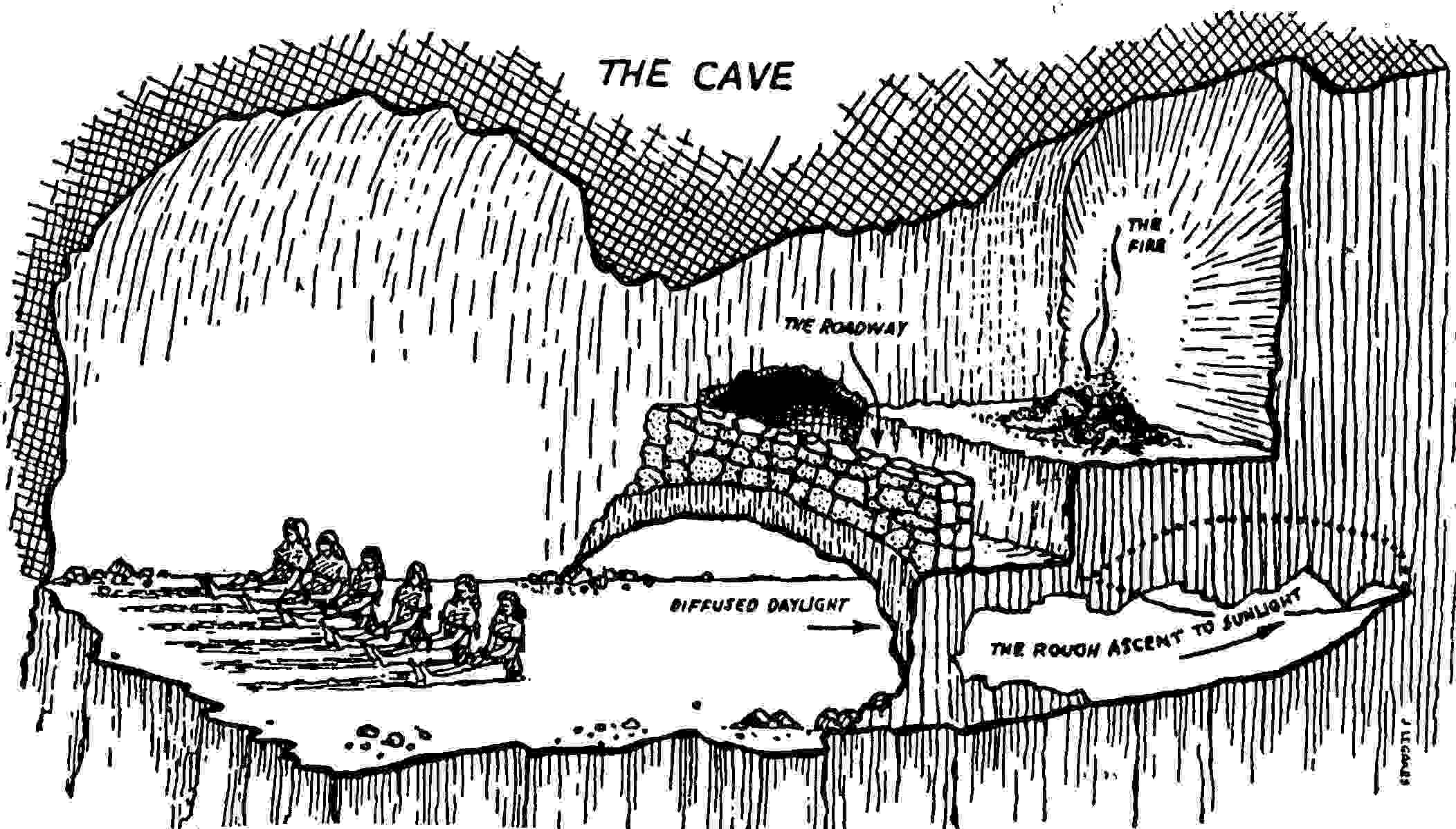
Gleiser notes the nature of science is to explain natural phenomena. Sciences’ explanations create an island of knowledge that is like Plato’s Socratic cave; i.e. a cave for humanity that only reveals shadows of reality.

PLATO'S CAVE

PLATO’S CAVE (Gleiser suggests Sciences’ explanations create an island of knowledge that is like Plato’s Socratic cave; i.e. a cave for humanity that only reveals shadows of reality.

Human beings cannot leave the cave because every scientific discovery only leads to another question about shadows that represent the real thing.  Gleiser prepares one for that conclusion by recounting the history of great scientists like Isaac Newton, James Maxwell, Max Planck, Earnest Rutherford, Albert Einstein, Edwin Schrodinger, Werner Heisenberg, Paul Dirac, and others.  Each of these scientists contributes to “The Island of Knowledge” but each raises more questions about phenomena that remain shadows of nature’s reality.

Gleiser acknowledges that Newton and Einstein sharpen shadowy outlines of nature’s reality but each fails to discover absolute truth.  Newton misses the fundamental truth of time.  Einstein misses the truth of quantum physics.  Newton’s time is relative and Einstein’s presumed certainties are probabilities.

history

Gleiser argues that human cognition is limited by “The Island of Knowledge” because cognition is influenced by the mind’s senses.    For example, history is reported with facts that are selected by the historian.  The facts may be accurate but not all facts of the past are reported and thereby history becomes a shadow of the truth.

In science, experiments do not prove truth; i.e. experiments only eliminate false positives, leaving only another experiment to disprove another presumed truth.  Experiments theoretically get one closer to a truth but the truth remains a shadow because the new truth has to be explored by further experiment.  As Karl Popper notes: “In so far as a scientific statement speaks about reality, it must be falsifiable; and in so far as it is not falsifiable, it does not speak about reality.”

KARL POPPER (1902-1994)

KARL POPPER (1902-1994) Popper suggests there are no verifiable truths; only probabilities.  If so, A.I. (at least) has the potential for improving the odds of factual truth.

THE HOLY GRAIL

Gleiser implies the idea of a Turing Computer that can know the origin of life is as specious as belief in the myth of the Holy Grail.  Gleiser explains that artificial intelligence will never supersede or equal human intelligence because natural phenomena are found to be probabilistic and not defined by yes and no, or ones and zeros.  Artificial Intelligence is a misnomer.

ARTIFICIAL INTELLIGENCE

Finally, Gleiser suggests artificial intelligence will never supersede or equal human intelligence because natural phenomena are found to be probabilistic and not defined by yes and no, or ones and zeros.  Artificial Intelligence is a misnomer in Gleiser’s opinion.

AI is a man-made construct, subject to “The Island of Knowledge” created by human beings.  Gleiser argues there are serious dangers in expansion of AI because it reduces complexity to yes and no answers.  One wonders if Gleiser takes into consideration experiments being conducted with quantum computing.  These experiments are meant to create a neural network that emulates human consciousness but with improved probabilistic calculations.

Gleiser’s implication is that a computer that programs itself becomes a Frankenstein; not a sentient being.  He argues that A.I. creations are likely to disrupt, if not destroy, human life.  He believes A.I. will always be based on shadows of unverifiable truths.

Gleiser implies the idea of a Turing Computer that can know the origin of life is as specious as belief in the myth of the Holy Grail.  He may be right.  Although, Popper suggests there are no verifiable truths; only probabilities.  The Holy Grail is a myth because nothing can ever be absolutly proven.  If so, A.I. seems to have the potential of improving the odds of factual truth.

Gleiser touches on the mysteries of “spooky action at a distance” which challenges Einstein’s dictum that nothing exceeds the speed of light. Gleiser recounts experiments that prove “spooky action at a distance” are real.  

Experiments with “spooky action at a distance” open a new field of inquiry.  This and “string theory” are examples of challenges to belief that human beings will ever have a theory of everything.  A.I. seems a credible tool for further experimentation. whether it is a “Frankenstein” or not. 

Gleiser believes “The Island of Knowledge” is as close as humanity will ever get to a theory of everything and it will always be a shadow of nature’s truth.  Karl Popper would agree.  Gleiser is saying pursuit of truth is important but precise truth is unattainable.  He argues that a final truth will never be found because discoveries of science will only lead to more questions, more experiments, and better tools of measurement. Nature’s truth will always be beyond human understanding; i.e. at best, nature’s truth will only be shadows of reality with sharper outlines.  Humanity may not be capable of escaping the cave to discover the truth of life.

Gleiser is quick to point out that his concept of the human island of knowledge is not meant to discourage scientific exploration.  He believes human beings have an innate desire to understand nature.  Life experience suggests wanting to understand nature is true of all cultures because humanity desires immortality. 

Humans want to think of themselves as the center of the universe; as false as that may be.

OTHER gods

Audio-book Review
By Chet Yarbrough

(Blog:awalkingdelight)
Website: chetyarbrough.blog

The Attention Merchantsthe attention merchants

By Tim Wu

Narrated by Marc Cashman

TIM WU (AUTHOR, PROFESSOR OF LAW AT COLUMBIA )

Not since “The Powers That Be” (published in 1979) has there been a better history of the media industry.  Tim Wu is heir to David Halberstam.  First there were newspapers, then radio, then television, and now the world-wide web.  Wu offers a modern vision of media’s impact on society in “The Attention Merchants”.

Gone are many of the famed “…Attention Merchants” like Bill Bernbach, Neil French, and David Ogilvy.   They were the early influencers; i.e. the copy writers, and agents that created consumer advertising for Sulzberger, Chandler, Hutchins, Paley, and Luce.  They worked for founders of some of the most influential newspaper, radio, television and magazine outlets of the 19th and 20th centuries. They were the “gods” of a newly formed consumer society. Consumers read, watched, and listened to pitches for everything from votes to vitamins to the latest model Cadillac.  Wu shows pitches remain the same, but methods have changed.

DAVID HALBERSTAM'S SEMINAL WORK ON THE MEDIA INDUSTRY (PUBLISHED 1979)
DAVID HALBERSTAM’S SEMINAL WORK ON THE MEDIA INDUSTRY (PUBLISHED 1979)  Gone are many of the famed “…Attention Merchants” like Bill Bernbach, Neil French, and David Ogilvy.  They were the “gods” of a newly formed consumer society. Consumers read, watched, and listened to pitches for everything from votes to vitamins to the latest model Cadillac.

Today’s social, political, and economic consumers are recorded, manipulated, spindled, and controlled by “other gods”.  Modern “…Attention Merchants” are internet entrepreneurs like Amazon’s Jeff Bezos, Google’s Larry Page & Sergey Brin, Microsoft’s Bill Gates & today’s CEO Satya Nadella, Apple’s (now deceased) CEO, Steve Jobs & today’s CEO Tim Cook, Facebook’s Mark Zuckerberg, and Netflix’s Reed Hastings. Television, newspapers, radio, and magazines still capture our attention but not like past “…Attention Merchants”.  Old media are still with us, but computer screens and mobile phones have joined the mix.  Wu shows how the public’s decisions have become less volitional, more manipulated, and addictive as www. sites came into being and technology matured.

INTERNET LOGO
Old media is still with us, but computer screens and mobile phones have joined the mix.  Wu shows how the public’s decisions have become less volitional, more manipulated, and addictive when www. came into being and technology matured.

MARLBORO MAN
Neither smoking or “free” access to information is without harm or cost.  The Marlborough man is dead, and “free” internet information is not free.

Wu recounts how advertising became a critical part of early media’s power, influence, and profit.  Just as advertisers promoted false benefits of smoking in the 20th, internet advertisers promote false benefits of free access to information and entertainment in the 21st century.  Neither smoking or “free” access to information is without harm or cost.  The Marlborough man is dead, and “free” internet information is not free.  “Fake news” has always been in the “…Attention Merchant’s” tool box but Wu shows that a new dimension is created with the rise of “free” information technology.

The internet not only informs the public, i.e., it distracts society, distorts facts, and reveals intimate details of personal lives. Internet users become products, rather than just consumers. Information gathered on consumers is provided to government and sold to private enterprise.

More ominous than media distortion by capitalist manipulators is government-controlled media that distorts truth to justify the Ukraine war.
ukraine bombing

Personal information is used by governments, and private sector businesses to achieve their own purposes.  Power and control become centered on organizations rather than individuals.  Data mining is a new industry. Decisions are less determined by personal being and private belief.  Today, decisions are shaped by a society “under the influence” of government, and private sector’s “…Attention Merchants”.

data mining
Personal information is used by governments, and private sector businesses to achieve their own purposes.  Power and control become centered on organizations rather than individuals.  Data mining is a new industry.

facebook
In this Facebook age, there are few secrets about what one likes and what one is willing to pay for product.

Wu notes how today’s “…Attention Merchants” are different.  Advertisers have always tried to influence individuals.  Advertisers have always told lies or distorted truth to get buyers to buy and believe.  Wu explains the difference.  Now personal information is acquired with confused consent by users of the internet. In this Facebook age, there are few secrets about what one likes and what one is willing to pay for product.

Customers are no longer just consumers.  Wu notes customers have become products.  Customers are sold to the highest bidder without customer awareness or compensation.  Today’s “…Attention Merchants” argue that sales pitches are customized to what the customer wants.  Businesses rationalize access as the customer’s compensation.  Government rationalizes access as a way of staying in touch and understanding the public.  Wu implies both arguments are willful misrepresentations.

consumer's mind
Consumers have less control over their decisions because “…Attention Merchants” use intimate personal information to seduce conscious and unconscious motivation.

There is a cost to voters and consumers because personal information is being sold without pay for product that enriches “…Attention Merchants”, private enterprise, and government.  The product delivered is the personal information that reveals who we are, what we think, what we desire, and what we are willing to pay.  Consumers have less control over their decisions because “…Attention Merchants” use intimate personal information to seduce conscious and unconscious motivation.

The sinister aspect of Wu’s explanation is that “…Attention Merchants” now have tools that exaggerate the impact of “fake news”.  By knowing intimate beliefs of consumers, “…Attention Merchants” are able to create algorithms that funnel “fake news” that feeds what consumer’s may either accurately or inaccurately believe.  Prejudices and discrimination are reinforced.  The worst characteristics of political populism are reinforced.  “The Attention Merchants” expand control of individual thought so that the course of democratic elections, government policies, or business successes can be unduly influenced by false or misleading information.

wikipedia
The positive aspect of the internet is shown by sites created without advertising input; e.g. Wikipedia and some blogosphere creations abjure advertising as a source of compensation.

Wu notes there are glimmers of hope with a growing recognition of the impact of the internet. The internet broadens human understanding of the world. The positive aspect of the internet is shown by sites created without advertising input; e.g. Wikipedia and some blogosphere creations abjure advertising as a source of compensation.

Exposure of blind spots in acquisition of personal data are currently being exposed in congressional hearings with Facebook CEO, Mark Zuckerberg.  At the same time, Russian interference in American elections is being more seriously investigated.

As Marie Currie is to have said— “Nothing in life is to be feared.  It is only to be understood.  Now is the time to understand more, so that we may fear less.”  Of course, one might remember, she died from the radiation she received from her discoveries.  (Ironically, Marie Currie’s death was found not to be from radiation exposure.  In autopsy, her body radiation levels were within normal range.)

A HACKING OBSESSION

Audio-book Review
By Chet Yarbrough

(Blog:awalkingdelight)
Website: chetyarbrough.blog

Ghost in the Wiresghost in the machine

By Kevin Mitnick, William Simon

Narrated by Ray Porter

KEVIN MITNICK (AUTHOR, IT CONSULTANT, FORMER HACKER)
KEVIN MITNICK (Author, Computer Information Consultant, Former Hacker)—John Waters is supposed to have said, “Without obsession, life is nothing”.  Kevin Mitnick, in the span of 20 years, was convicted four times for computer hacking (exploiting computer system weaknesses).

John Waters is supposed to have said, “Without obsession, life is nothing”.  Kevin Mitnick, in the span of 20 years, was convicted four times for computer hacking (exploiting computer system weaknesses).

Mitnick’s assisted autobiography infers that hacking became Mitnick’s obsession.

“Ghost in the Wires” is a semi-believable story of an extraordinary white-collar criminal that alleges he never financially benefited from spying on people and stealing proprietary software programs from dozens of major corporations and government agencies.  His modus operandi was the lie (euphemistically called social engineering) a telephone, and a computer; all of which he used to hack.

TELEPHONE
Mitnick would “socially engineer” (lie to) company employees.  The employee would release proprietary information without understanding what they were doing.  Mitnick then used that information to steal software or spy on corporate activities.

Mitnick is a quintessential conman.  When he chose an objective like stealing credit information from TRW or making uncharged calls on PacBell’s communication system, he would telephone the “targeted” company.  Mitnick would tell the soon-to-be-victimized; he was a company employee and needed access to their software systems to correct a problem at a branch office.

He would “socially engineer” (lie to) company contacts, who would trustingly release proprietary information.  The contact would release proprietary information without understanding what they were doing.  Mitnick then used that information to steal software or spy on corporate activities. , and allegedly, not use that information to benefit himself.  Mitnick generally criticizes Americans for being too trusting.

Mitnick obsessively researched his target.  He would learn the lingo of the corporation, identify a real employee, assume his identity, and then begin his telephone con with a person that would have access to proprietary information.  Mitnick argues that he was thrilled by the chase and the acquisition of unauthorized information.  He would store the stolen information on remote computer systems that he either hacked into or purchased as rented space.  Mitnick said he never used the information to benefit himself but only pursued it for the joy of hacking.  Really?

human research
Mitnick obsessively researched his target.  He would learn the lingo of the corporation, identify a real employee that he would become, and then begin his telephone con with a person that would have access to proprietary information.

information thief
Mitnick is obviously smart and articulate but wants a listener to believe he lived on $28,000 per year for 2 out of 10 years of life, moved cross-country at least 4 times in 8 years, lost $11,000 cash, borrowed $5,000, went to college, and never lived on the street.

Mitnick is a good storyteller but there are glaring weaknesses in his story.  Mitnick is obviously smart and articulate but wants a listener to believe he lived on $28,000 per year for 2 out of 10 years of life, moved cross-country at least 4 times in 8 years, lost $11,000 cash, borrowed $5,000, went to college, and never lived on the street.  One wonders how he lived and traveled on such a meager income, duping the world and not taking a cent of illegal gotten gains.

Mitnick seems incredibly gullible to believe one of his fellow hackers was not working for the FBI; long before he found corroborating evidence.  Mitnick seems always surprised by the betrayal of his “friends” but keeps going back to the well of friendship.  Is this personal naiveté or social engineering of those who read or listen to his story?

Finally, the competence of the FBI seems exaggerated when Mitnick is caught by a simple search done by Shimomura, a security consultant, when he found that Mitnick was somewhere in Raleigh, North Carolina.  Shimomura simply screened all telephone communication in Mitnick’s area.  Shimomura pinpointed addresses of anyone on the phone for more than 30 minutes at one time.  Mitnick was the only person that fit that criterion.

HACKING
The advent of the internet suggests hackers of the world are capable of doing considerably more damage today than when Mitnick practiced his obsession, e.g., Russian interference with the American election process.

Mitnick’s story makes one uncomfortable on two levels. One, Mitnick reveals tools used by criminals and others who can invade our privacy. And two, one wonders if he/she is being socially engineered by a consummate liar. After all, Mitnick escaped prosecution for 15 years.

The advent of the internet suggests hackers of the world are capable of doing considerably more damage today than when Mitnick practiced his obsession, i.e., Russian interference with the American election process being a prime example.

STEVE WOZNIAK
STEVE WOZNIAK

In the forward to Mitnick’s book, he is praised for his affability by Steve Wozniak (former founder of Apple). One would believe the praise is in part because of Wozniak’s belief in open system software but also because of Mitnick’s software coding expertise and suspect affability.

In Mitnick’s afterword, it appears Mitnick’s life as a criminal made him both famous and financially secure.  One wonders, how much more Mitnick could have accomplished without breaking the law.  After all, Waters implies life is something if you are obsessive.  Without doubt, Mitnick is that.

DECRIMINALIZATION

Audio-book Review
By Chet Yarbrough

(Blog:awalkingdelight)
Website: chetyarbrough.blog

flowers in the blood

Flowers in the Blood: The Story of Opium

By: Jeff Goldberg, Dean Latimer, William Burroughs (Introduction

Narrated by Stephen McLaughlin

JEFF GOLDBERG (AMERICAN JOURNALIST, STAFF WRITER FOR THE ATLANTIC)
JEFF GOLDBERG (AMERICAN JOURNALIST, STAFF WRITER FOR THE ATLANTIC, & POLITICAL PUNDIT)

Published in 1981, “Flowers in the Blood” argues for decriminalization of opiates.  The idea remains controversial in 2018, and 2022.  Written by Jeff Goldberg and Dean Latimer, a listener feels misdirected by historical information.

DEAN LATIMER (WRITER FOR THE EVO, AKA EAST VILLAGE OTHER-WENT ON TO EDIT HIGH TIMES)

The feeling of misdirection is reinforced by a languid, seemingly opiated, performance of the narrator, Stephen McLaughlin. It is not that one is seduced by Goldberg and Latimer’s writing, but a listener feels cornered in a room of opium eaters.  Goldberg and Latimer reveal how opium is extracted from a flower to offer a tranquil escape from life’s stresses, with a tantalizing peek at world clarity.  Opiate extraction seems simple; the consequence of use, not.

OPIUM POPPY
Goldberg and Latimer reveal how opium is extracted from a flower to offer a tranquil escape from life’s stresses, with a tantalizing peek at world clarity.  Opiate extraction seems simple; the consequence of use, not.
brave new world
Goldberg and Latimer argue that opiates enhance natural neurotransmitters, like endorphins, to reduce stress and depression caused by living life.  This argument reminds one of a “Brave New World” where every stress in life is characterized as negative.

Goldberg and Latimer argue that opiates enhance natural neurotransmitters, like endorphins, to reduce stress and depression caused by living life.  This argument reminds one of a “Brave New World” where every stress in life is characterized as negative.

Goldberg and Latimer note that refinement of opium into morphine and heroin increases its addictive power.  They extol the pleasure of opiates while cataloging its history of addiction.  Goldberg and Latimer reflect on opium’s effect in altering cerebral states of being.  Their argument seems counter intuitive.

They note its use by artists ranging from Charles Dickens to Elizabeth Barrett Browning.  They infer opiates enhance artist’s abilities.  They realistically identify opiates’ medical benefit, while exposing its potential for addiction.  Goldberg and Latimer suggest opiates enhance artistic sensibility, and temper sociopathic homicidal acts. They begin an argument for legalizing opiates.

OPIATE LEGALIZATION
Goldberg and Latimer extol the pleasure of opiates while cataloging its history of addiction.  Their argument is counter intuitive. They begin a defense for legalizing opiates.

Goldberg and Latimer argue that there are three options.  One, continue jailing narcotic purveyors and users.  Two, legalize opiates and let the free market determine use.  Three, decriminalize opiates and offer treatment to those who become addicted.

Their argument is for number three; they suggest number one (the American standard) is ineffective, and number two would be a disaster in the making.  Goldberg and Latimer argue that America should legalize and regulate opiates and treat those who become addicted.

DRUG TREATMENT AND COUNCILING
America regulates alcohol and tobacco, both proven addictions.  Alcohol and tobacco are regulated by the market, with education on their harmful effects and government taxation to increase prices that affects consumption.  Goldberg and Latimer argue that America should legalize and regulate opiates and treat those who become addicted.

America regulates alcohol and tobacco, both proven addictions.  Alcohol and tobacco are regulated by the market, with education on their harmful effects and government taxation to increase prices that affects consumption.  These regulations have had some success, but people still have the right to drink and smoke to excess.

The option of opiate legalization is troubling because it infers substituting inner-direction of human beings for other-direction by government.  It increases the potential of a “Brave New World” where human choice is no longer individual but collective.

DRUG USERS
Goldberg and Latimer point out that punishing the addicted with prison is a mistake.  Those who succumb to addiction need help; not punishment.

Goldberg and Latimer point out that punishing the addicted with prison is a mistake.  Those who succumb to addiction need help; not punishment.  One can readily accept that argument but opiate regulation by the government is a step too far.  This may be a distinction without a difference but Alcohol and cigarettes are still a private sector choice with government intervention (principally tax increases and education) based on political input.

PHILIP SEYMOUR HOFFMAN (1967-2014)
The loss of Seymour Hoffman in February 2014 was a tragic loss.  Hoffman dies at the age of 46, John Belushi at 33, Kurt Cobain at 27, Billie Holiday at 44, River Phoenix at 23; all from opiate overdoses.  If opiates were legalized, would these artists have been saved—who knows?

The loss of Seymour Hoffman in February 2014 comes to mind.  Hoffman dies at the age of 46, John Belushi at 33, Kurt Cobain at 27, Billie Holiday at 44, River Phoenix at 23; all from opiate overdoses.  If opiates were legalized, would these artists have been saved—who knows?  They chose addiction to escape the insecurity and stress of life.  Their choice is their choice.  Insecurity and stress are facts in every human’s life.  America’s failure is related to treatment, not government control of human choice.

WAR ON DRUGS
With treatment programs, the government will make the objective of addicting users a waste of manufacturer’s and seller’s time.  It may not eliminate illegal drug activity but it will make it less financially viable.

America needs to continue their fight against illegal opiate manufacturers and sellers.  Threat of punishment is not the key but reduction in profitability will drive illegal manufactures out of the market.  With treatment programs, the government will make the objective of addicting users a waste of manufacturer’s and seller’s time.  It may not eliminate illegal drug activity but it will make it less financially viable.  Addiction treatment programs and substance abuse’ education are legitimate roles for state governments.  Opiates should be subject to the same laws that presently govern drug research and development.

Unfortunately, “Flowers in the Blood” fails to nuance legalization of opiates.  It leans more toward influencing uneducated poor, educated middle class, and idle rich to experiment with addictive drugs.  Goldman and Latimer are on the right track with regulation and treatment of addiction, but their book encourages drug experimentation in a culture that needs no encouragement.  Stress is a part of life and being drugged into obliviousness diminishes humanity.

NUCLEAR POWER

Audio-book Review
By Chet Yarbrough

(Blog:awalkingdelight)
Website: chetyarbrough.blog

Atomic Accidents: A History of Nuclear Meltdowns and DisastersAtomic Accidents

By James Mahaffey

Narrated by: Tom Weiner

Listening to Atomic Accidents, the first thing that comes to mind is point-of-view, second the author’s qualification, and third writing skill.  Mahaffey’s book is historically fascinating, and enlightening.  And happily, Mahaffey writes well.

DR. JAMES MAHAFFEY (AUTHOR)

Doctor James Mahaffey’s professional career is founded on the nuclear industry.  Educated at the Georgia Institute of Technology, Mahaffey holds a bachelor’s degree in physics, a master’s in science, and doctoral in nuclear engineering.

Mahaffey is well versed in the science, engineering, and mechanics of nuclear energy.  Because of education, one presumes Mahaffey is a proponent of the nuclear power industry.  After dissection of several atomic accidents, a listener becomes unsure of Mahaffey’s point of view.  By the end, his point of view is clear.  

nagasaki bombing aftermath
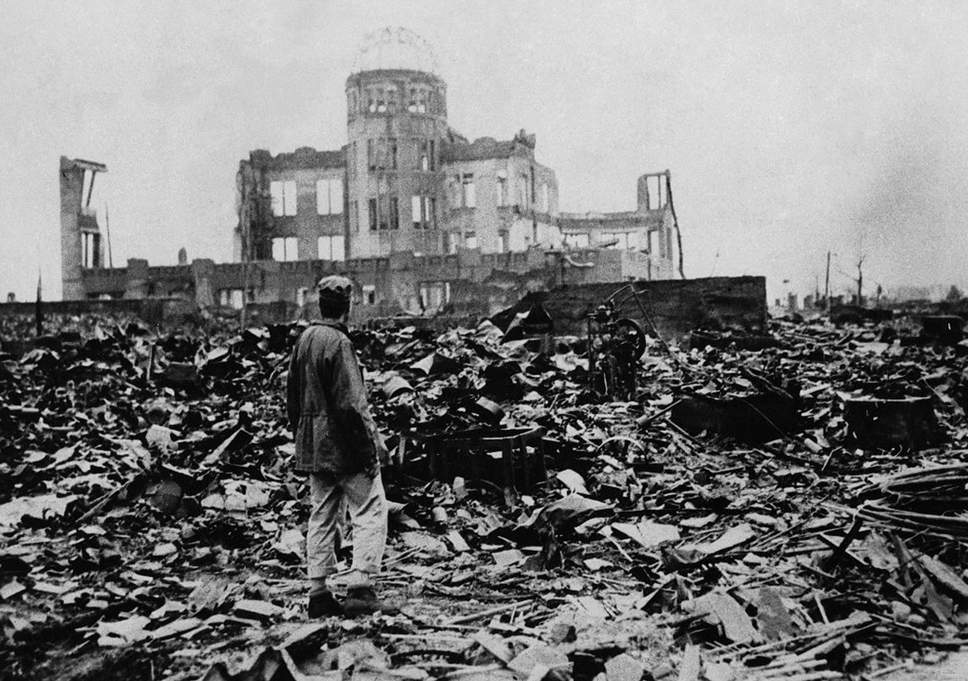
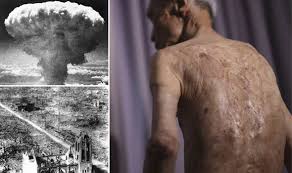
The best known nukes, Big Boy and Little Boy, were dropped on Hiroshima and Nagasaki at the end of WWII.

America has dropped and lost nuclear bombs around the world.  The best known nukes, Big Boy and Little Boy, were dropped on Hiroshima and Nagasaki at the end of WWII.

Less known bomb drops were in peace time.  Nukes were accidentally released on remote military bases, in sparsely populated residential areas, and in the sea.  Some of those dropped in the sea remain unrecoverable.  None of the peace time bombs exploded.

America chose to keep nuclear secrets from Great Britain after WWII because of concern over nuclear bomb proliferation.  Because of America’s secrecy and  lack of cooperation, Mahaffey  suggests design mistakes were made.

In reviewing the history of nuclear energy, Mahaffey notes English scientists and engineers designed graphite nuclear power plants that were inherently dangerous.  Graphite catches fire at high temperatures and is notoriously hard to extinguish.  However, graphite nuclear plants became widely copied throughout the world.

Mahaffey’s stories of nuclear mishaps range from dumb to dumber; i.e. from wind fans that feed graphite nuclear plant fires to technicians that ignore rules of reactor management.  Nuclear accidents seem inevitable and insurmountable.

CHERNOBYL NUCLEAR REACTOR (e.g. A FAMOUS GRAPHITE REACTOR ACCIDENT.)
CHERNOBYL NUCLEAR REACTOR ( Chernobyl is an example of a major graphite nuclear reactor failure.)

Mahaffey explains that the former U.S.S.R. ignored environment in their nuclear bombs race with America.  They dumped plutonium in Russian waters and blew up a graphite nuclear plant that killed Russian workers in a steam explosion.  The explosion contaminated miles of Russian homeland with radioactive fallout.

CHERNOBYL REACTOR DAMAGE

Later, the U.S.S.R. mismanaged Chernobyl’s nuclear facilities and created a nuclear meltdown that reportedly killed over 60 people from radiation and left an area of Russia uninhabitable for generations to come.

FRANCIS GARY POWERS (1929-1977, CAPTAIN IN THE US AIR FORCE, SHOT DOWN OVER RUSSIA IN 1960 AND HELD PRISONER FOR 2 YEARS)
FRANCIS GARY POWERS (1929-1977)

Mahaffey tells the story of the American, Gary Powers, the pilot shot down by the Russians in the 1950s.  Powers is taking aerial pictures of plutonium manufacturing facilities in the U.S.S.R.  Eisenhower is compelled to lie and then apologize to Russia for the clandestine operation.  Mahaffey makes the story interesting by revealing the monumental effort made by the U.S.S.R. to shoot down Powers’ airplane and reassemble plane parts to prove Powers was spying.

FRANCIS GARY POWERS (DIES IN HELECOPTER CRASH WORKING AS KNBC WEATHER PILOT)
FRANCIS GARY POWERS (DIES IN A 1977 HELECOPTER CRASH WORKING AS KNBC WEATHER PILOT)

In the end, Mahaffey discounts the many nuclear accidents and incidents he examines.  His conclusion is that nuclear power can be made probabilistically safe.  Mahaffey argues for the design of nuclear energy facilities that are small and simple to operate.  He suggests that small nuclear power plants be designed and manufactured for specific industrial facilities. 

Rolls Royce is entering the nuclear facilities market in Great Britain.  Small nuclear plants could meet industrial energy demands while limiting environmental carbon emission from other sources of energy Rolls Royce Small Nuclear Plant Production

With small nuclear energy plants, the potential for catastrophic Chernobyl-like’ events would not happen.  The massive underwater earthquake and tsunami would not have decimated Japan’s nuclear energy capability if the power plants had not been so massive and concentrated on the coast.

Mahaffey implies proper design and training for small, simple nuclear energy facilities will mitigate the world energy crises.  Mahaffey infers nuclear accidents are unavoidable, but human and environmental damage is minimized with smaller nuclear energy plants.

Rolls-Royce recently (in November 2021) announced they are getting into the small nuclear reactor business.

Mahaffey explains that radiation is a naturally occurring phenomenon.  He argues that shutting down nuclear waste disposal facilities like Yucca Mountain in Nevada are a mistake.  Many in Las Vegas oppose President Trump’s resurrection of the Yucca Mountain waste site.

Mahaffey’s point of view is that nuclear power accidents will happen but their consequences can be minimized with smaller plants and better planning for treatment of victims when accidents occur.  He believes nuclear energy benefits far out weigh their risks.

The 2020 Presidential election is over.  President Biden’s campaign speaks to America’s gradual transition from fossil fuels to wind, water, and solar power.  That transition is a potential source for thousands of new American jobs.  Mahaffey persuasively argues there should be a place for nuclear energy in that transition.

UNWINDING EXTREMES

Audio-book Review
By Chet Yarbrough

(Blog:awalkingdelight)
Website: chetyarbrough.blog

The Unwinding: An Inner History of the New America

By George Packer

Narrated by Robert Fass

GEORGE PACKER (AUTHOR)

GEORGE PACKER (AUTHOR) George Parker drives a stake into America’s heart in “The Unwinding”.

George Parker drives a stake into America’s heart in “The Unwinding”.  One listening to “The Unwinding” comes away in anger, fear, and frustration—whether a Republican, Democrat, Tea Partyer, or Libertarian.

Whether a believer in unfettered free enterprise or limited government, Packer offers stories that show America is a troubled land of opportunity. It has become a land of greed; not of the free but of the shackled—a risk noted by Thomas Hobbes in the “Leviathan”.

America is changing Presidents in 2021. Will anything change? Joe Biden represents a history of government organization and regulation. Donald Trump represents destruction of government organization and regulation. It seems a choice between compromise and anarchy.

The shackles come from society’s failure to protect individuals from the tyranny of special interests.  One side argues–free enterprise is shackled by too much government; the other side argues–not enough government protects the general public.

America’s initial response to the coronaviris illustrates how far America has fallen. “Dollars and cents” government supplanted “common sense” government in President Trump’s initial preparation for the covid 19 pandemic.

Parker’s stories of people with great wealth, like Sam Walton, or poverty, like Tammy Thomas, or escape from poverty, like Jay-Z and Oprah Winfrey, or invention, like Peter Thiel, Max Levchin, and Elon Musk, or political success, like Colin Powell and Barack Obama, or entrepreneurial ambition, like Dean Price, or political ambition like Jeff Connaguhton–all seem failures, either in morals or self-fulfillment.

Sam Walton becomes one of the wealthiest people in the world by creating a marketing behemoth that offers low consumer prices but drives small business entrepreneurs out of business. Walton offers great prices by buying in bulk and selling in volume with lower margins, partly produced by low wage workers.  On the one hand it is a bargain for the consumer; on the other hand it destroys competition and reduces family incomes.

AMERICAN MANUFACTURING JOBS

AMERICAN MANUFACTURING JOBS (Many lose their jobs when companies are purchased by conglomerates that dismantle the business, out-source product development, and reduce employment by offering buyouts to higher paid long-term employees–all to provide profits to investors.)

Tammy Thomas, born and raised in Youngstown, Ohio, worked in one industry for the majority of her life.  She lost her job when the company she worked for was purchased by a conglomerate that dismantled the business, out-sourced product development, and reduced employment by offering buyouts to higher paid long-term employees–all to provide profits to conglomerate’ investors.

JAY-Z

JAY-Z (BUSINESS MOGUL, ENTERTAINER)

Jay-Z and Oprah Winfrey overcame poverty and the degradation of living in squalid slums by capitalizing on their unique abilities and life stories, stories that reflect on the huge disparity between rich and poor. Born into poverty; they unquestionably achieved success for themselves, but left behind a population with poorer and poorer prospects of escape.

OPRAH WINFREY (AMERICAN MEDIA MOGUL)

OPRAH WINFREY (AMERICAN MEDIA MOGUL) 

Peter Thiel and Max Levchin capitalize on the tech boom.  Peter Thiel becomes a billionaire through entrepreneurial skill.  However, the consequence of market collapse from financial derivatives affects even Thiel’s wealth. Thiel remains in the privileged 1% but Parker infers Thiel turns his attention to dismantling American government with greater reliance on free enterprise.

Senator Jeff Connaughton experiences both sides of America’s schizophrenia. Connaughton began as a political operative, left government to become a millionaire lobbyist, and returned to government when the derivative crises reduced his net worth.

JEFF CONNAUGHGTON (US SENATOR, FORMER LOBBYIST, FORMER WHITE HOUSE LAWYER, AND SENATE AIDE FOR JOE BIDEN BEFORE 2009)

(US SENATOR, FORMER LOBBYIST, FORMER WHITE HOUSE LAWYER, AND SENATE AIDE FOR JOE BIDEN BEFORE 2009)

Connaughton’s reaction to the financial crisis differs from Theil’s, in part because of the monumental wealth difference, but also because of their different journeys to wealth. They equally revile the influence of money in government but Connaughton believes government regulation can be effective while Theil, a Libertarian, believes government regulation is the bane of democratic society.

Parker tells the story of Dean Price. Price, a young Republican turned Libertarian (though he voted for Obama) believes America is the land of opportunity.  He struggles, works hard, achieves success, fails, starts over, seems on the road to recovery, and fails again. Price buys into the American Dream by reading Napoleon Hill’s book “Think and Grow Rich”.  He believes–if he can dream it, it can happen.

DEAN PRICE (HALF OWNER OF RED BIRCH ENERGY)

DEAN PRICE (HALF OWNER OF RED BIRCH ENERGY)

Life choices get into Price’s way. His financial problems mount to the point of losing his ownership interest in Red Birch Energy.  Price files for bankruptcy and is faced with starting over.

Price experiences rising gasoline prices and buys into the bio fuel movement of the 21st century.  He starts a company called Red Birch Energy after selling a small fast food chain that he began from nothing. As a part of his original start-up, Price built a fuel discount truck stop on his family farm with one of his restaurants as an anchor.   He takes on partners for engineering and additional financing for bio fuel equipment and farmed canola grain for the production of bio fuel. With rising oil prices, turmoil in the Middle East, and Obama’s election, it appears Price is on the road to great success.

Price takes advantage of his partners by not fully explaining his conflicts of interest in using bio fuels in his own truck stop to stave off collapse of his personal business.  His financial problems mount to the point of losing his ownership interest in Red Birch Energy.  Price files for bankruptcy and is faced with starting over.

COLIN POWELL (AMERICAN STATESMAN-RETIRED FOUR-STAR GENERAL)

COLIN POWELL (AMERICAN STATESMAN-RETIRED FOUR-STAR GENERAL) Powell became the poster child of black Republicans, only to have his reputation destroyed by endorsement of false reports about WMD that compelled the United States to invade Iraq.

Obama’s reputation for change appears a lie as much as a truth.  Government decisions to let bank’ decision-makers escape prosecution galls every American damaged by the financial crises of 2007-2008.  Obama’s unwinding of the financial crises ultimately succeeded but greed remains an alloyed characteristic of American democracy.

PRESIDENT BARACK OBAMA

President Barack Obama (2009-2017)

Price brings his stories together in the “tea party” and “occupy wall street” movements.  The growing distrust of government and burgeoning anti-government beliefs raises hackles and stokes fires of two political extremes. The “tea party” movement wants less government regulation. The “occupy wall street” demonstrators infer they want more government regulation.  The extremes are exhibited as Libertarian on one side and Marxist on the other.

OCCUPY WALL STREET PROTES

Libertarians like Theil want to minimize government intervention in the private sector, including government control of education.  “Occupy wall street” followers want government intervention, subsidization of education, and universal health coverage to equalize opportunity for lower and middle class Americans.

“Tea party” followers want less government while “occupy wall street” factions what more effective and protective government. 

TRUMP'S WALL 2

American democracy is the politics of extremes with each extreme using whatever means necessary to deny success of prudent legislation.  The consequence is a “do-nothing” congress and an ineffectual President.

The unwinding of the financial crises in the dot-com bubble of 2000-2001 and the 2007-08 subprime mortgage crises unfolds in the many stories told by Packer in this disturbing narrative.  (America’s early response to the coronavirus is similarly disturbing.)

Rand Paul (Kentucky Senator)

A professed Libertarian delays emergency funds to fight the Covid-19 pandemic by demanding an amendment. The amendment is widely understood to be be voted down, but will delay approval.

America is a nation of extremes with each extreme using whatever means necessary to thwart or delay prudent action.  The initial consequence of these extremes is a “do-nothing” congress and an ineffectual President. 

One is left with fear, anger, and frustration after completing “The Unwinding”.  The only consolation is in America’s history of (somehow) overcoming crises. America has been in crises before–in 1776, 1789, 1865, 1929, 1941, 1951, 1967-68, 2001, and 2008.  We will survive the 2020 pandemic.

A PHILOSOPHY OF LIFE

Audio-book Review
By Chet Yarbrough

(Blog:awalkingdelight)
Website: chetyarbrough.blog

The Complete Essays of Montaignethe complete essays of montaigne

By: Michel Eyquem de Montaigne, Donald M. Frame (translator)

Narrated by Christopher Lane

MICHEL DE MONTAIGNE (1533-1592)

Michel Eyquem de Montaigne, a sixteenth century philosopher and writer, wrote and re-wrote “Essays”, originally published in the 1580s.  Essay was a new form of writing.  Montaigne’s subject is the philosophy of life and death.

Montaigne writes his collection of essays while cloistered in a château in southwest France.  Donald Frame translates and compiles three volumes of Montaigne’ essays into one book–“The Complete Essays of Montaigne”, first published in 1957.

contemplation
Montaigne, born into a family of wealth, affords the luxury of time for personal reflection and contemplation.

Montaigne, born into a family of wealth, affords the luxury of time for personal reflection and contemplation.  Not surprisingly, Aristotle wrote that life depends upon awareness and the power of contemplation.  In one respect, this quiet life is a contradiction in Montaigne’s philosophy.  Montaigne reflects on history and ancient times to explain how life should be lived when his life seems a shadow of most people’s reality, the reality of a day-to-day fight for survival.  There is reader skepticism about the 1% life of Montaigne versus the 99% life of most people.

Montaigne, with great family wealth and a storied education, becomes a Mayor of Bordeaux.  He draws on a privileged life and recorded lives of great philosophers and leaders to create insight about lives of those that “do”, and have little time, or no time, to contemplate.

ELITISM
Montaigne is modest about his erudition but there is an elitist odor that clings to his self-effacing commentary.

Montaigne suggests the appeal of his essays lies in the middle of the human population.  Montaigne suggests the in-between are those who are not highly intelligent, who are abysmally ignorant; preferentially plebeian, and ordinary.  In other words, people of course nature and manner, like this critic.  In spite of this elitist leaning, the wisdom noted in Monsieur Montaigne’s essays is enlightening.

This is a one thousand page journey with something for everyone.  Montaigne suggests humans need to embrace life and eschew tragic interpretations of death.  Life and death are only stories of being.  Death is inevitable and should not be feared.  Death should be embraced like life; it is merely a final act, a denouement of life; well or poorly lived.  In Montaigne’s opinion there are justifications for ending one’s life volitionally but only for valued reason.

LIFE AND DEATH
Montaigne suggests humans need to embrace life and eschew tragic interpretations of death. Death should be embraced like life; it is merely a final act, a denouement of life; well or poorly lived.

euthanasia
The interpretation of justification and value are lines un-clearly drawn by Montaigne.

Montaigne suggests women may choose to kill themselves rather than be raped.  Men may choose to kill themselves and murder their families to avoid enslavement by an enemy.  The defeated may kill themselves if mortally ill or wounded.  To Montaigne, euthanasia is permissible at death’s door.  Today, the lines are only slightly more clearly drawn and only in a few of the American States (like Washington, Oregon, Montana, Vermont, and California).

EPICURUS (341 BCE-270BCE).jpg died at age 72
EPICURUS (341 BCE-270BCE). Founder of one who believes living life is meant to be the pursuit of pleasure.

Montaigne is Epicurean in the sense that he believes living life is meant to be a pursuit of pleasure.  However, the pursuit of pleasure is not defined by money, power, or prestige.  Those pleasures are diminished by their attainment because they are insatiable human desires.

HUMAN NATURE HANDCUFFS
“Not-needed” things become human’ handcuffs. Life becomes an unending accumulation of things that fail to satiate desire.

When one makes more money than needed to sustain life, he/she buys more of what is not needed.  Those “not-needed” things become human’ handcuffs. Owners worry about losing things; worry about replacing things; worry about keeping up with neighbors. Life becomes an unending accumulation of things that fail to satiate desire.

Power never rests.  Power is always moving like an electron around a nucleus of followers.  Leaders are enslaved by followers.

Leaders worry about followers, worry about competition for position, worry about their place in history; they die alone just like every human being.  Power is an ephemeral pleasure that never rests in one place.

LEADERSHIP
Leaders with power are targets for support or destruction. Power is an ephemeral pleasure that never rests in one place.

Prestige comes from respect of fellow human beings.  It is outside the control of the seekers or the chosen; it is limited by the opinion of others; it changes like the direction of the wind or the habits of the culture within which one lives.

PRESIDENTS 4
Life is not an either/or proposition despite Kierkegaard’s philosophy. Humans are good and bad; no one is totally one or the other–not even America’s challenged leaders.

habit
Montaigne disdains habit because it contains un-grounded reason that distorts nature.

Montaigne attacks cultural shibboleths that are based on unfounded reason.  Because one says the earth is the center of the universe does not make it so but a universe of fiction may grow around a culture of mysticism that defies the natural state of being.  Montaigne insists on skepticism when confronted with culturally reinforced habit that is not bound by nature.

MirrorWhoAmIWoman
To Montaigne, pleasure lies in self-understanding; doing what one is best at; and letting go of life when it fails to improve self-understanding or keeps one from valuing existence.

Pleasure lies in self-understanding; doing what one is best at; and letting go of life when it fails to improve self-understanding or keeps one from valuing existence. Montaigne cites many ancient philosophers like Plato, Aristotle, Epicurus, and Lucretius that reinforce his arguments.

Plato drives the point of virtue as the human characteristic of doing what one is best at doing.  Montaigne notes that both Plato and Aristotle emphasize the importance of education for self-understanding.  Self-understanding inures to the benefit of humankind by revealing to each what they are best at and giving them tools (through education) to be the best they can be.  Montaigne insists on learning; not rote memorization, but clear understanding.  Montaigne argues that it is not reciting what someone has said but understanding what is meant by what is said.  This is a somewhat ironic statement in view of Montaigne’s voluminous quotes from dead philosophers.

EDUCATION
Montaigne infers education opens all doors to self-understanding and the pleasures of a good life and honorable death.

Montaigne reflects on his upbringing and his Father’s drive to educate his son by making Latin Montaigne’s first language, the language of scholarship in the 16th century.  Montaigne did not only live the life of a scholar.  He was elected mayor of Bordeaux before retiring to his cloistered existence as a writer of the “…Essays…”  Montaigne applauds his father for providing him an education and infers that every family is obligated to support education of their children.

Montaigne died from complications of tonsillitis at the age of 59.  Frame’s translation of Montaigne’s essays offers a philosophy of life in a horse-size pill.  It encourages the old but escapes the young because life happens too fast.

As George Bernard Shaw notes, youth is wasted on the young; probably because they are too busy for contemplation.  “The Complete Essays of Montaigne” is an insightful guide for the conduct of life and the acceptance of death.

SOVEREIGNTY

Audio-book Review
By Chet Yarbrough

(Blog:awalkingdelight)
Website: chetyarbrough.blog

The Origins of Political Order: From Prehuman Times to the French RevolutionTHE ORIGINS OF POLITICAL ORDER

Written by: Francis Fukuyama

Narrated by: Jonathan Davis

FRANCIS FUKUYAMA (AMERICAN POLITICAL SCIENTIST, POLITCAL ECONOMIST, AND AUTHOR)
FRANCIS FUKUYAMA (AMERICAN POLITICAL SCIENTIST, POLITICAL ECONOMIST, AND AUTHOR)

Francis Fukuyama’s analysis of state and government formation is both insightful and politically actionable.  In “The Origins of Political Order” and “Political Order and Political Decay” Fukuyama provides a basis for understanding politics and its contribution to society.

THOMAS HOBBES (1588-1679)
THOMAS HOBBES (1588-1679) Hobbes generally considered humankind to be both good and evil with a need for regulation of his/her evil instincts through government.

In previous book reviews, references have been made to Thomas Hobbes’ theory of the nature of man.  Hobbes generally considered humankind to be both good and evil with a need for regulation of his/her evil instincts through government.  He identifies government as “The Leviathan”.  Hobbes suggests “The condition of man…is a condition of war of everyone against everyone”.

PREHISTORIC HUMAN KIND
Fukuyama finds a singular and significant flaw in Hobbes’ observation.  From the beginning of time, humans associated with other humans to survive the brutish nature of life.  He suggests humans are by nature violent with that violence becoming ingrained as a societal meme to cope with the exigencies of life.  Fukuyama goes on to suggest violence and change are intertwined.

Fukuyama finds a singular and significant flaw in Hobbes’ observation.  Though Fukuyama may agree with Hobbes’ view of individual humans, he tempers it by noting humans have always been social beings.  From the beginning of time, humans associated with other humans to survive the brutish nature of life.  He suggests humans are by nature violent with that violence becoming ingrained as a societal meme to cope with the exigencies of life.  Fukuyama goes on to suggest violence and change are intertwined.

The significance of humans as societal creatures is that governments are formed by dominant tribes. Politics is the language of tribes negotiating with each other to preserve status.  However, Fukuyama notes that cultural norms are dramatically different in governments that evolve over time.  These cultural differences play out in the history of Russia, China, France, Great Britain, Italy, America, the countries of Africa, and the Middle East.

world map
Fukuyama notes cultural differences play out in the history of Russia, China, France, Great Britain, Italy, America, the countries of Africa, and the Middle East.

RELIGIOUS BELIEF
A counter-intuitive note by Fukuyama is that religion plays a significant role in civilizing, rationalizing, and establishing state governments.

A counter-intuitive note by Fukuyama is that religion plays a significant role in civilizing, rationalizing, and establishing state governments.  It is counter-intuitive because it seems in the present-day religion is tearing the world apart.  However, in the context of history, the size of tribes within countries hugely increases with the spread of religion.  Religion becomes a cultural phenomenon that ameliorates (but does not eliminate) violence among different tribes within wider territories that evolve into nation-states.

Fukuyama implies nation-state development is a living organism that evolves in the manner of natural selection identified by Darwin in the “Origin of Species”.  Characteristics of effective governments perpetuate themselves through adaptation to respective societal norms.  In other words, every society grows via its own cultural norms which suggests sovereignty should be inviolable.

Fukuyama is saying that American democracy, Chinese socialism, Russian federation, India democracy or any other system of government will be different because of their social history.  In other words, India may be classified as the world’s largest democracy but not as an American democracy because of its different societal norms.

WORLD WIDE WEB
Can the World Wide Web, the growth of science, and recognition of environmental interdependence overcome the nationalist stupidity of government leaders?

In one sense, the complexity of Fukuyama’s theory makes one less optimistic about the future of the world.  What can take the place of religion to meld societies into a common tribe?  Can the World Wide Web, the growth of science, and recognition of environmental interdependence overcome the nationalist stupidity of government leaders?

If Trump, Putin, al-Baghdadi, and Kim Jong-un represent the future, the answer is no.  On the other hand, one may argue survival of humans is dependent on experimentation by governments, enhanced by nation-state societal differences.

Just as one species evolves into an improved human, one species of government may evolve into an improved government (presuming humans survive an interregnum).

POLITICAL LOSERS/WINNERS

Audio-book Review
By Chet Yarbrough

(Blog:awalkingdelight)
Website: chetyarbrough.blog

On the Brink
By Henry M. Paulson, Jr.

Narrated by Dan Woren

HENRY PAULSON (U.S. SEC. OF THE TREASURY 2006-2009)

HENRY PAULSON (U.S. SEC. OF THE TREASURY 2006-2009) 

Crisis reveals human strength and weakness.  Perception is not reality, but Henry Paulson, the former Treasurer of the United States, names names and paints pictures of (mostly) men in the 2007/2008 financial crisis.  In his analysis, there are political losers and winners.

How will America’s response to the Covid-19 pandemic be recalled?

This close political race will have a winner and loser. With such a close political race, the loser will be America. Divisiveness and ideological difference will remain a major obstacle in formulating foreign and domestic policy. Covid 19 will run its course. The concern is in not having a pragmatic or politically articulate President who can lead America over the next four years.

GEORGE WALKER BUSH (43RD PRES. OF THE UNITED STATES)

GEORGE WALKER BUSH (43RD PRES. OF THE UNITED STATES) Paulson characterizes Bush as a pragmatist who acts on recommendations from people he trusts.

Paulson reveals himself as a Christian Scientist, a pragmatist, and enigmatically, a somewhat left-of-center, presumably Republican, liberal.  Paulson suggests a Republican left-of-center lean when writing about his mother and wife’s reluctance for him to take the Department of the Treasury position in the Bush administration.  (Paulson’s mother strongly supported Hillary Clinton for President.)

Interestingly, Paulson characterizes George Bush as an equally pragmatic, non-ideological decision maker.  Differences between the two are in the details; i.e. Paulson analyzes his own and other experts’ details and presents informed alternatives and recommendations while Bush acts on recommendations from people he trusts.

BEN BERNANKE (CHAIRMAN OF THE FEDERAL RESERVE 2006-2014)

BEN BERNANKE (CHAIRMAN OF THE FEDERAL RESERVE 2006-2014) Paulson characterizes Ben Bernanke as a brilliant financial advisor, participant, and ally in supporting and executing complex rescue plans for a financial system nearing default.

TIMOTHY GEITHNER (U.S. SECRETARY OF THE TREASURY (2009-2013)

TIMOTHY GEITHNER (U.S. SECRETARY OF THE TREASURY 2009-2013) Tim Geitner is shown as a team player that bridges the divide between political and administrative decision-making when plans are formed to rescue Fannie Mae, Freddy Mac, and AIG.

Rahm Emanuel is described as an effective political organization man who is able to get things done in a highly political environment.

Jaimie Dimon (CEO of JPMorgan Chase.)

Dimon is characterized as a rationale business man who is willing to take a risk for the benefit of more than his own aggrandizement.

John Thain seems a competent manager in crisis that makes the best of a terrible situation by moving rapidly to sell Merrill Lynch to B of A before total collapse.

SARAH PALIN (FORMER V.P. NOMINEE, FORMER GOVERNOR OF ALASKA)

Some crisis profiles shown by Paulson are less complementary.  Sarah Palin comes across as a decision maker driven by politics rather than pragmatic results.

John McCain (1936-2018, Former U.S. Senator for Arizona.)

John McCain seems to gravitate to Palin’s perception of reality by political posturing for election results rather than pragmatic solutions for the financial crisis.  Jim Bunning, the former baseball player and House of Representative’s Republican, is shown to be an ideologically driven populist extremist.

RICHARD FULD (FORMER CEO LEHMAN BROTHERS)

Richard Fuld seems arrogantly delusional about Lehman Brothers’ assets and an ineffective manager in crises.

Ken Lewis (Former CEO of Bank of America)

Lewis appears Machiavellian in grabbing what he thinks are the best and rejecting what he thinks are the worst financial risks in America’s near economic collapse.

Paulson reinforces perceptions of Barack Obama as a smart guy that grasps the big picture; ditto for Barney Frank, and Lindsey Graham but less so for Christopher Dodd.

BARACK OBAMA QUOTE

Paulson reinforces perceptions of Barack Obama as a smart guy that grasps the big picture; ditto for Barney Frank, and Lindsey Graham but less so for Christopher Dodd.

Paulson suggests that Republican Senator Shelby can drive his point and take control when pushed to act but ideological belief seems to constrain proactive action in the financial crises.  Senator Reid is shown to be a consummate, seasoned political manager in the Senate and Nancy Pelosi an equally dynamic oldster in the House of Representatives.

JOHN BOEHNER (FORMER SPEAKER OF THE HOUSE)

JOHN BOEHNER (FORMER SPEAKER OF THE HOUSE) Paulson suggests Boehner is unable to lead his Republican constituency and seems awkwardly suited for either a minority or majority Speaker of the House position.

In contrast, Representative Boehner is unable to lead his Republican constituency and seems awkwardly suited for either a minority or majority Speaker of the House position.

It seems today the decisions made by Bush, Paulson, Bernanke, Geitner, and Congress were correct.  After listening to Paulson’s book, one appreciates these civil servants hard work in doing the right thing.   Today is too soon to tell but Paulson gives outsiders a fascinating glimpse of people making a difference when a nation is in crisis.

CHECKS AND BALANCES

One wonders who the political losers and winners will be in today’s immigration, world trade, Covid-19 pandemic, and budget deficit crises.