RATIONALIZATION

Book Review
By Chet Yarbrough

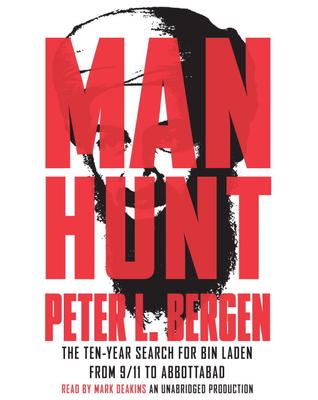
Manhunt: The Ten-Year Search for Bin Laden from 9/11 to Abbottabad
By Peter L. Bergen

Peter Bergen (British-American Journalist, Author, CNN Nation Security Analyst)

Written by Peter Bergen, Manhunt is a page turning thriller that tells America’s story of the search for and killing of Osama bin Laden, an acknowledged mass murderer.

The story of the search and killing of Osama bin Laden perversely satisfies human nature’s desire for revenge. 


Osama bin Laden (1957-2011, Saudi Arabian founder of the militant orgranization al-Qaeda.)

Osama bin Laden takes responsibility for 9/11/01 killing of nearly 3,000 innocents–one presumes bin Laden goes to his grave believing in his rationalization for terror and murder. 

Osama Bin Laden and his followers believe America manipulates and subverts Middle Eastern culture and religious belief. Bin Laden called Americans infidels who deserved death because they did not believe in the “truth” of Allah.  To most Muslims this is a distortion of the true meaning of Islamic faith and a false interpretation of the Koran.

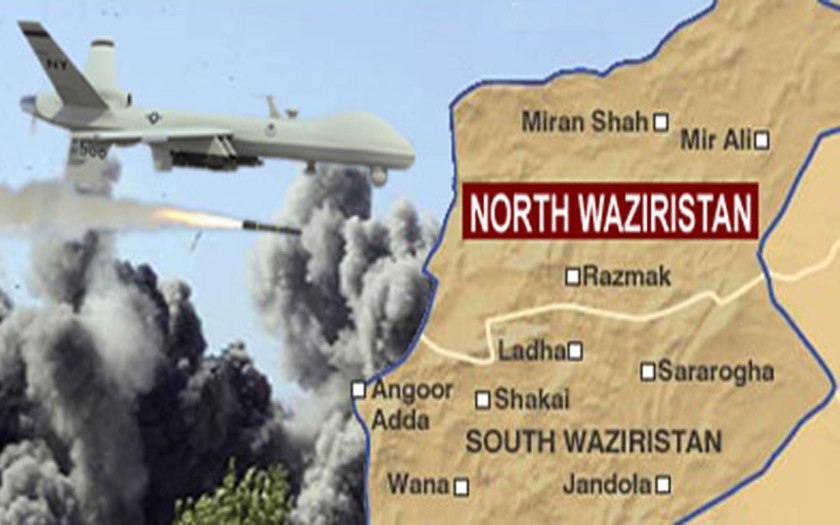
Bin Laden’s son is alleged to have the same sentiment as his father. Hamza bin Laden is rumored to be the new leader of al-Qaeda with the same terrorist ambitions. America offers a $1,000,000 bounty for the capture of Hamza bin Laden. (Killed in 2019–alleged to have been a result of America’s counter intelligence operations in Pakistan and Afghanistan.)

Many, if not most, Muslims argue that Osama bin Laden misrepresented the Koran and its teaching about life and the hereafter. To many, the nature of the living is to be free to choose what one believes and to live in peace with your neighbors. 

Al Qaida’s rationalization for terrorism comes from an interpretation of the Koran that condones indiscriminate murder of others; including believers in the faith. This is appalling because it involves murder of innocents. How can a babe in arms be guilty?

Biblical literature of all major faiths, at different times, have notoriously rationalized murder of innocents. The God of Abraham is a vengeful God in the Old Testament. The Old Testament speaks of killing every man, woman, and child in ancient communities because of failure to follow the word of God. How can a child in the womb be guilty of not following the word of God?

American rationalization for drone use also murders innocents.  There is a calculated number given as an acceptable number of innocents to be killed in a drone attack on suspected terrorists.

Osama bin Laden manages to evade capture for over ten years after 9/11.  Bergen infers this long period of evasion is a result of distracted American military focus, poor American intelligence, and political ambivalence of Middle Eastern allies.

The key to tracking Osama bin Laden is Ibrahim Saeed Ahmed, aka Abu Ahmed al-Kuwaiti (the Kuwaiti).  Bergen explains that Ahmed is a trusted courier for Osama bin Laden.  Ahmed is summoned to a compound in Abbottabad, after having been away from al Qaida for nearly a year.  This summoning and extensive surveillance of the Abbottabad compound suggest a high ranking al Qaida leader is hiding in this northeastern Pakistani’ city of nearly 1.5 million people.

Ibrahim Saeed Ahmed (al-Qaeda member and courier that lead Navy Seals to Osama bin Laden in Pakistan.)

Osama bin Laden Pakistan compound in plain sight of the Pakistani military.

Bergen explains how American government leaders and military analysts monitor and eventually infiltrate the Abbottabad’ compound for actionable intelligence.  The focus of the team is to determine who the high ranking person is in the Pakistani compound.  Speculation grows to a 50% chance that the person is Osama bin Laden.
Location of the bin Laden compound in relation to the Pakistan Miltary Academy.

The highest government and military leaders of America wrestle with life and death decisions; often based on too few facts for guaranteed mission success. 

Bergen’s build up to the decision to send a team of Navy Seals into the compound rivals the best drama one can write about a secret military mission. 

Bergen illustrates the difference between being a manager and a leader.  The former keeps an organization running; the latter gives organization purpose. 

Just as one President chooses not to cross the border of Iraq in operation Desert Storm, a second chooses to invade Iraq, and a third chooses to illegally cross Pakistan’s border. Some argue America is right twice and wrong once. (The misleading representation of WMD in the invasion of Iraq was a mistake for which America and the world continues to pay.)

Right or wrong, American Presidents show themselves to be leaders. Even Trump leads in his own way. The concern is in where facts begin and rationalization ends.

Woodward exposes Trump’s intentional decision to mislead the public. The corona virus nears 200,000 American deaths with projections of up to 400,000.

By the end of Bergen’s story, a listener understands the complexity of the decisions made by American Presidents. On reflection, one realizes bin Laden, Mao, Stalin, and Hitler were also leaders. In that recognition, one realizes how important it is for nations’ political systems to choose their leaders carefully.

NEVER FORGET

Audio-book Review

By Chet Yarbrough

chetyarbrough.blog

Comedy in a Minor Key

By Hans Keilson, Translated by Damion Searles

Narrated by James Clamp

HANS KEILSON (1909-2011, JEWISH GERMAN-DUTCH NOVELIST, POET, PSYCHOANALYST, AND CHILD PSYCHOLOGIST)

“The horror, the horror…” from Joseph Conrad’s Heart of Darkness creeps into your mind when listening to Hans Keilson’s story of a German Jew that is hidden by a young married couple in Nazi Germany.

Keilson is long gone and little remembered but this story places you in a small two story house, in an upstairs bedroom with the shades drawn, in a grim scene of anxiety and despair.   James Clamp has a perfectly accented voice for this tale of gloom because he does not over dramatize Keilson’s words but gives them a solemn and poignant believability.

The names of the three main characters of this novel are gone from your mind as soon as the last page is read but the truth of the story sticks with you.

The truth of what dehumanizing a creed, a race, or religion can lead to.  The idea recurs to you when you listen to books like The Coming of the Third Reich by Richard Evans recounting the systematic vilification and slaughter of 6,000,000 souls.

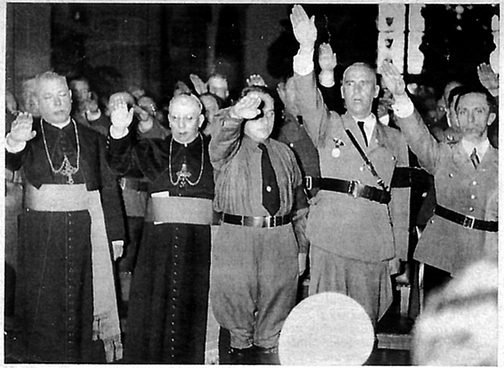
In listening to Keilson’s story there is the thought that history is a reflection of an eternal return. Vilification of human beings as the “other” rather than one of us repeats in every nation of the world. Today it is Ukrainians to Russia’s government, Uighurs to China’s government, Muslims to India’s government, Palestinians to Israel’s government, Americans to Iran’s government, immigrants to America’s and most of the world’s governments, and so on, and so on.

This is a story that shows how any society can devolve into a repressive, barbaric, totalitarian state but still bare witness to individual and small human conclaves of bravery, compassion, and humanity.

The comedy is in the irony of being raised in the same culture and knowing that what is happening is wrong and not being able to stop it.  The comedy is compounded with the realization that stopping evil, wrought by a totalitarian state, is dependent on individual action (a minor key in a major production).

You cannot help but empathize with the trauma that one must feel when choosing to fight what is wrong when it may mean the end of your life, not necessarily death, but the complete change of your circumstance of living. 

The married couple hiding a Jew makes a small mistake that forces them to leave their home; their job; their life, as they have been living it, to escape the consequence of their action.  It is an ironic little comedy because it turns out the minor mistake is purposely ignored by the German investigator; a character that resists the out of control culture that he is a part of. 

Except for the death of innocence, the story has a happy ending with the married couple returning to their home to begin again.  One wonders if beginning again means they will continue to be protectors of the innocent; to be human in a culture that slips into organized genocide, destruction, and hate.

This is a short book, more of a novella, but it tells a big story that resonates in our own history and the history of all humanity.

BEST OF TIMES

Audio-book Review
By Chet Yarbrough

(Blog:awalkingdelight)
Website: chetyarbrough.blog

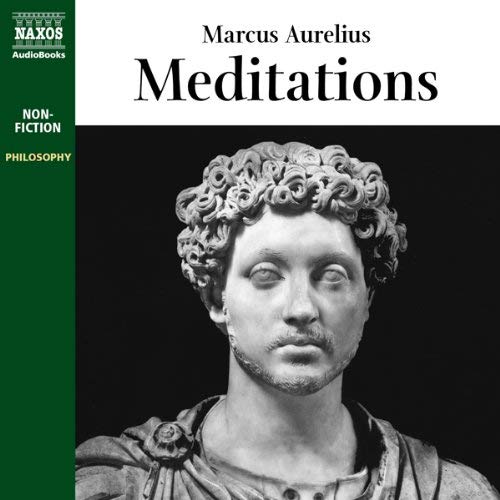
Meditations
By Marcus Aurelius

Narrated by Duncan Steen

MARCUS AURELIEUS (121 AD-180 AD, EMPEROR OF ROME FROM 161-180)

Marcus Aurelius has been called the last of the five good emperors of Rome.  Edward Gibbon, the historian, went so far as to suggest that this is one of the best times in history for people to live.  (Maybe, but Gibbon might be a little biased based on being male and white.)

PLATO, ATHENIAN PHILOSOPHER ( 428/427 or 424/423 – 348/347 BC)
Marcus Aurelius embodies the concept of the Philosopher King.  Philosopher Kings are first described by Plato as the only totalitarian leader capable of ruling society.  They would rule capably because of their wisdom and knowledge of the Good.  “Meditations” suggests that Aurelius was the real deal.

In the modern world, Aurelius provides a bible for the leisure-class. However, one is not sure what the leisure class is in this era of doing rather than being.

Aurelius recognizes the ephemeral nature of life’s pleasures and chooses to write about and use Plato’s ideal forms to guide his rule.  

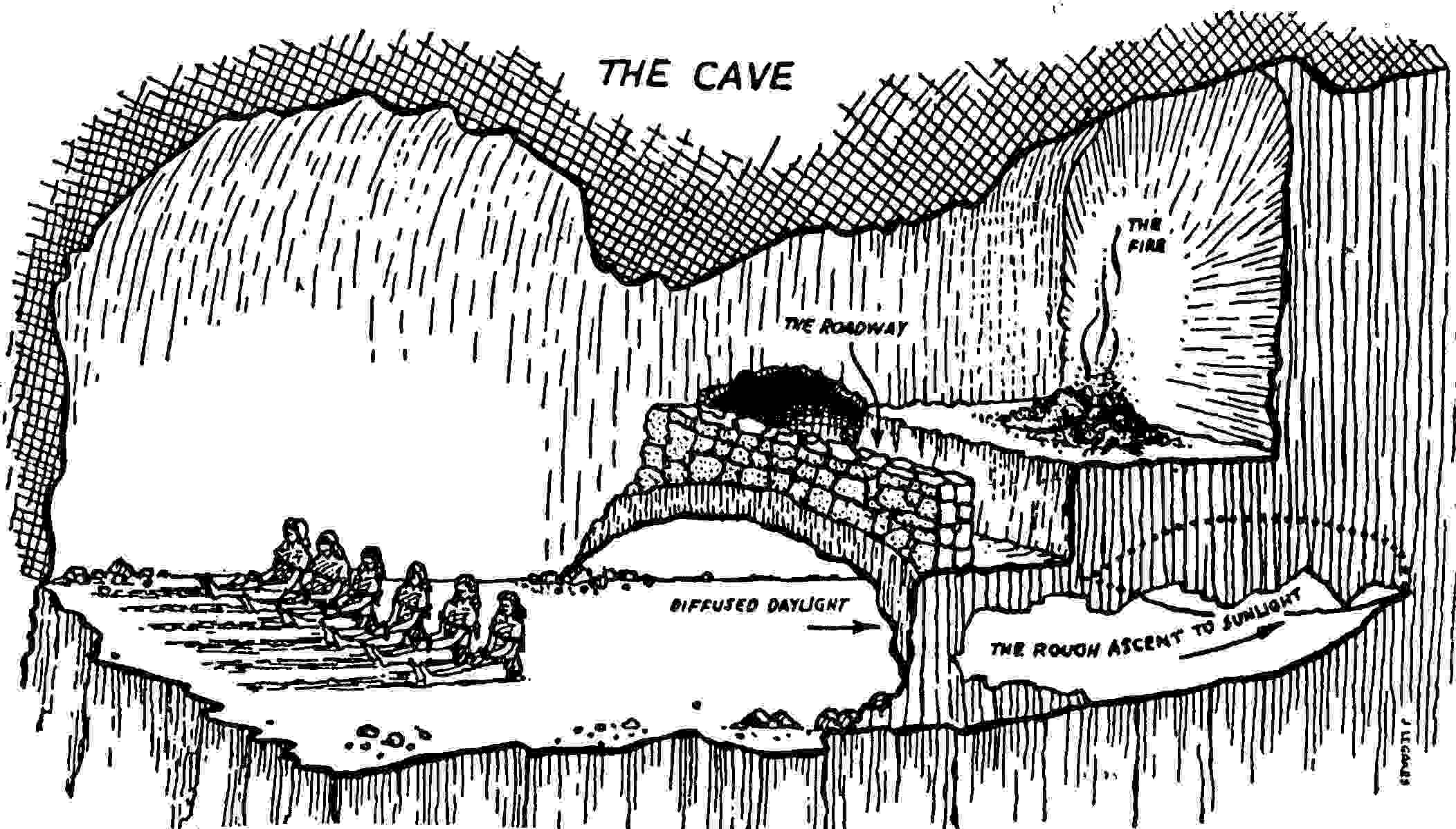
The ideal forms are Plato’s essences of life, measures of the Good that in most people’s minds are only shadows in a cave.  

Aurelius benefited from wealth and leisure by being in the lap of luxury while denying its seductive pleasures, His private education allowed him to study and understand the source of Plato’s shadows in the cave. 

In the post industrial world the likelihood of a 21st century Philosopher King is inconceivable but “Meditations” does offer a guide to today’s leisure class.  With time, education, and inclination, a human being can adopt Aurelius’ rules to live a life of joy and contentment. 

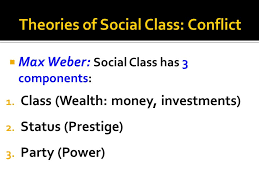
A life of joy and contentment runs contrary human nature’s proclivities, the pursuit of money, power, and prestige, but the leisure class may have enough of each to stop climbing life’s ladder to despair.

Aurelius lives in the post Christian era (121-180 AD) and writes with some confusion about belief in gods or God but seems to believe in pre-ordination and humankind’s necessary acceptance of a lot in life. 

Aurelius forsakes despair and honors acceptance of doing the best one can do in a short human life.  Aurelius does not seek money, power, or prestige but accepts responsibility and lets actions define his life.  He believes every person has a social responsibility and that to remove oneself from social interaction is a betrayal of living a good life.

There is wisdom in Marcus Aurelius’s “Meditations”.  If a listener is at a position in his or her life that allows meditation, this is a good place to start.

WINNERS AND LOSERS

Audio-book Review
By Chet Yarbrough

(Blog:awalkingdelight)
Website: chetyarbrough.com

Embracing Defeat
By John W. Dower

Narrated by Edward Lewis

JOHN W. DOWER (AMERICAN AUTHOR, HISTORIAN)

Victory is sweet; defeat is bitter.  Victory engenders responsibility for the defeated; defeat demands fealty to a victor. Fealty is not the goal of a victorious leader who seeks lasting peace.

Peace among nations has a price. John Dower’s reflection on WWII and Japan holds lessons for today’s American leadership and Putin’s folly.

John Dower, in “Embracing Defeat”, endeavors to picture Japan’s condition; i.e. the state of its economy and its people, after surrender in WWII. 

History’s complexity is difficult to capture in words.  Dower makes an effort to explain the context of post war Japan by showing Japanese attitude in media reports and literature of the time.  The irony of Dower’s effort is that media reports and literature are censored by Allied forces, particularly the United States. This is not unlike Vladimir Putin’s control of Russian media during the Ukraine invasion. Putin will undoubtedly use that control to soft petal a hopeful settlement, though unlikely palliative acceptance by Ukraine.

MICHINOMIYA HIROHITO (124TH EMPEROR OF JAPAN 1901-1989)
Dower covers the history of an American white wash of Hirohito’s war complicity and responsibility.  The American government uses Hirohito to make occupation and influence in Japan more acceptable to its population.  It became politically expedient to hide Hirohito’s true involvement in Japan’s war plans. 

Dower reports on post-war trials of Japanese military and government leaders; i.e. Dower writes about trial testimony of Japan’s WWII’ atrocities but his history shows that victor’ justice is not necessarily victim’ justice.

Hideki Tojo as hero and/or goat–tried and convicted; sentenced to a prison in which he dies. Tojo refuses to implicate the Emperor in his actions during the war.

In spite of (partly because of) American military occupation of Japan, financial aid is misdirected and food goods and material are stolen, a black market develops, gangs are formed, and corruption thrives. (Sounds like Iraq after America’s invasion.).  Prostitution became a way of making a living, and immoral behavior became semi-acceptable because of rising poverty.

NICOLAS MADURO (PRESIDENT OF VENEZUELA SINCE 2013)
A case in point today is the President of Venezuela, Nicolás Maduro. Are his actions a “crime against humanity” or is he fighting for his country’s independence?


Economic sanctions are as likely to punish the innocent as the guilty in countries that fight for their own identity. One’s interest is peaked by Japan’s experience after WWII because of the current Middle East muddle. 

Syria, Iraq, and Iran are challenged by domestic unrest and punitive actions by non-indigenous forces.  These three countries are particularly impacted by military and/or economic pressures from outsiders.  What is going to happen in those countries?  Are there any clues in the great change that occurred in Japan after WWII?

General MacArthur assumed the role of “Dear Leader”, treating the Japanese like 12-year-olds that were to be taught the ways of Democracy with a capital “D”.  This role by MacArthur in post war Japan is accepted by many Japanese because of centuries of Imperial control, exemplified by Emperor Hirohito.

BONNER FELLERS (U.S. ARMY OFFICER, SERVED AS A MILTARY ATTACHE IN WWII)
Dower also suggests that a large part of General MacArthur’s success is due to Major Bonner Fellers, a Japanese scholar that predicted Japan’s war several years before the attack on Pearl Harbor.  Major Fellers’ respect and understanding of Japanese culture and his influence contributes much to the success of American policy in post war Japan. 

One may hope for a similar go-between if a settlement can be reached between Russia and Ukraine.

Fellers recognizes Japan’s people, with new found freedom, are inwardly driven toward a capitalist philosophy inherent in democracy.  The Japanese did not abandon their ideas of production, the ideas of small business cooperation to achieve common goals.  Those ideas made them a military behemoth in the 1920s.  They redirected that belief system toward domestically driven capitalism. Japan became a dominant 20th century economic power. Japan’s experience suggests that freedom will not be denied but how it exhibits is a mystery wrapped in nation’s histories, beliefs, and practices.

Are there equivalents of “Major Bonner Fellers” to guide America’s policy toward other countries like Venezuela the Middle East, and today’s Russia/Ukraine conflict?

America can help or hinder a peoples’ drive for freedom but where it leads in Venezuela, Iraq, Iran, or Ukraine must be their peoples’ decision.

Nature abhors a vacuum (Spinoza).  The centralized governments and economies of Venezuela, Syria, Iraq, Iran, and Ukraine will be occupied democratically, autocratically, or some combination thereof, when domestic tumult subsides. 

A peaceful settlement of the Russia/Ukraine war will be difficult. Outside countries cannot mandate lasting peace within other countries; let alone their own country. Sovereignty should be recognized as an inalienable right. It is not America’s or other countries’ job to pick winners and losers.

BLACK FACE

Audio-book Review
By Chet Yarbrough

(Blog:awalkingdelight)
Website: chetyarbrough.blog

Uncle Tom’s Cabin 


By Harriet Beecher Stowe

Narrated by Richard Allen

The meaning of words changes with the generations.  An “Uncle Tom” became a pejorative description of any oppressed minority that accepts slavery and maltreatment as a God given burden, a condition of natural life.  (See “Freedom and Equality”.)

The rise of black face minstrels and college party jokers carry through to the 20th century. The “Uncle Tom…” in Harry Beecher’s book is no minstrel and no joke.

In the context of the 20th and 21st centuries Beecher’s book is taken out of context.

“Uncle Tom’s Cabin” is written in an era, brutally described by Frederick Douglas (see “Frederick Douglas”), when human beings are traded as futures commodities. Douglas, a great American black leader, who personally knew Stowe, praises her for writing this book.

In the 18th and 19th centuries, the slave trade lines the pockets of slave traders, plantation owners, and industrialists.  Black degradation is reinforced by laws of the land; i.e. slave owners could shackle, whip, sell, rape, and murder slaves with little censure and no penalty. In that context, Harriet Beecher Stowe’s “Uncle Tom…” is a Black Saint.

This is not only a book about slavery; i.e. it is a book about humankind and how abominably one ethnic group can treat another. It is a story told many times in history and in the present day.

The apocryphal story of Abraham Lincoln having said “So this is the little lady who started this great war” is undoubtedly un-true, but for the 1850’s, “Uncle Tom’s Cabin” is a revolutionary book used to fuel the abolitionist cause in America and around the world. 

The role of religion has a mixed history in the story of slavery.  Religion plays roles in advancing and abolishing slavery.  Religion serves as a refuge for slaves by preaching the gospel of forgiveness and an afterlife while many Catholic and protestant religions promote slavery as a biblical right of the white race.

The irony of religion’s followers is that it mollifies Black resistance for those who believe in a Divine Creator. At the same time, biblical writings are used by white supremacists to justify unequal treatment. 

Some religions rose above religion’s ugly endorsement of slavery; most did not.  Quakers in the 1850s fought slavery in the United States, as is shown in Stowe’s story. Some Quaker households became a refuge for runaway slaves.

At bottom, Stowe shows commerce and greed are pillars of slavery.  The farmers, businesses, and industrialists that strove to improve their bottom line directly or indirectly abetted slavery, just as the temptation of cheap labor in China and India seduce today’s American entrepreneurs and consumers. 

More broadly, one realizes human nature is good and evil.  Most members of society succumb to temptation in life.  No human is purely good or evil but a mixture. Human nature blurs the line between right and wrong because every human is tempted by money, power, and/or prestige.

“Uncle Tom’s Cabin” is as relevant today as it was in the 1850s.

NEVER AGAIN?


(Blog:awalkingdelight)
Website: chetyarbrough.blog

  Audio-book Review
By Chet Yarbrough


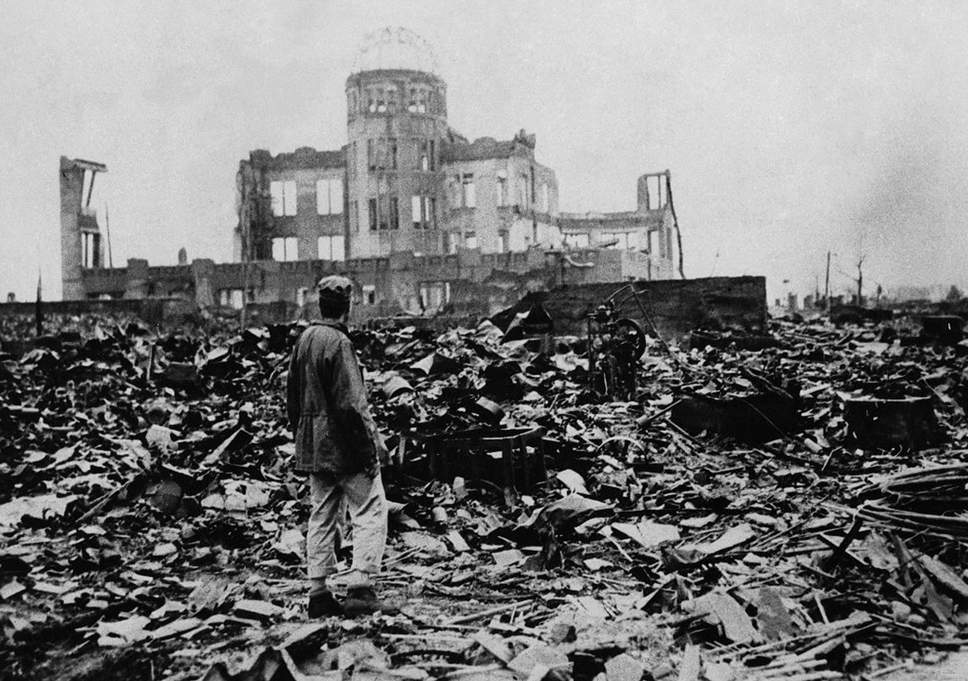
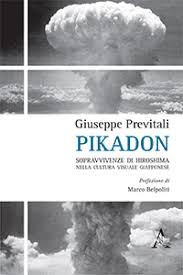
Last Train from Hiroshima


By Charles Pellegrino


Narrated by Arthur Morey

CHARLES R. PELLEGRINO (AUTHOR, AMERICAN WRITER)

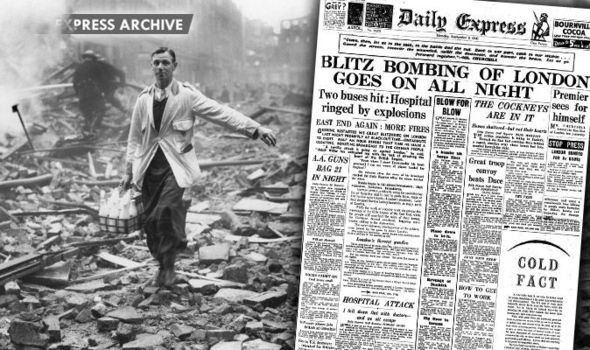
Putin’s Ukranian invasion raises the specter of nuclear war with the demented belief that it can be limited. Consider whether this history of nuclear cataclysm horrifies more than enlightens. “Last Train from Hiroshima” is not for the feint-hearted. It is a gruesome reminder of the horror of war.

Pellegrino has written a story of Hiroshima and Nagasaki’s bomb survivors.  Arthur Morey brings Pellegrino’s words to life. Pellegrino recounts survivor stories; i.e. what they saw, and what happened to them and their families in the aftermath of the world’s first use of a nuclear weapon.

Pellegrino is a wordsmith. He uses words that blow torch images on a listener’s mind.  His words capture the horror of nuclear war, the physical and mental effect of nuclear detonation on human beings.

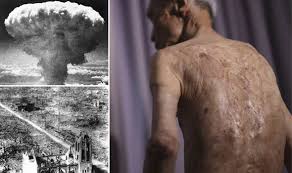
After Nagasaki’s bomb, a young girl walks out of a tubular bomb shelter and sees a shadowy figure that she presumes is an escaped zoo animal. It has rough, blackened, mottled skin, and is crawling on four limbs. It is a human being, exposed to the flash and burn (pikadon) of the bomb.

Pellegrino describes this crawling man as one of the “alligator people”, a classification that repeats it self on the skins of anyone that survives direct exposure to the bomb’s flash and burn.

He tells the story of a “tap dancer” running down a street in Hiroshima; tap, tap, tapping the hard surfaced street because he has no feet.

Pellegrino recounts the story of a father greeting his lost daughter by asking “…do you have feet” because a Japanese aphorism believed ghosts are recognized as apparitions with no feet.

The aftermath of Japan’s nuclear blasts left thousands of people with few apparent injuries.  They wander in a fog of confusion, like ants in long lines following each other, single file to nowhere. They were, as Pellegrino explains, the “ant walkers”.

Days later, the “ant walkers” are stricken with fever, vomiting, loss of appetite, and internal bleeding; some survive to go through the same symptoms weeks or months later; some become crippled for the remainder of their lives; some die after the first onset of sickness; some die years later from leukemia or other maladies traced back to those two fateful August days in 1945.

The survivor stories in Pellegrino’s book are so vivid that one wonders where real history ends and his imagination begins. Regardless of the veracity of Pellegrino’s survivor facts, his description of nuclear weapon damage and radioactive exposure is verified by later scientific experiments and accidents.

One is left with the thought and fear of future world conflagration.  After all, “Never again” has been said before.

CHINA

Audio-book Review
By Chet Yarbrough

(Blog:awalkingdelight)
Website: chetyarbrough.blog

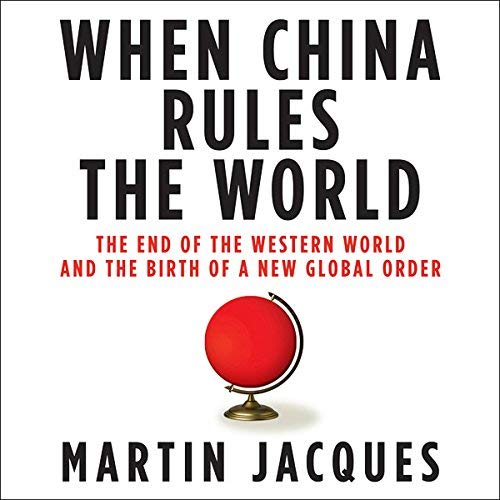
When China Rules the World


By Martin Jacques

Narrated by Scott Peterson

MARTIN JACQUES (AUTHOR, BRITISH JOURNALIST)

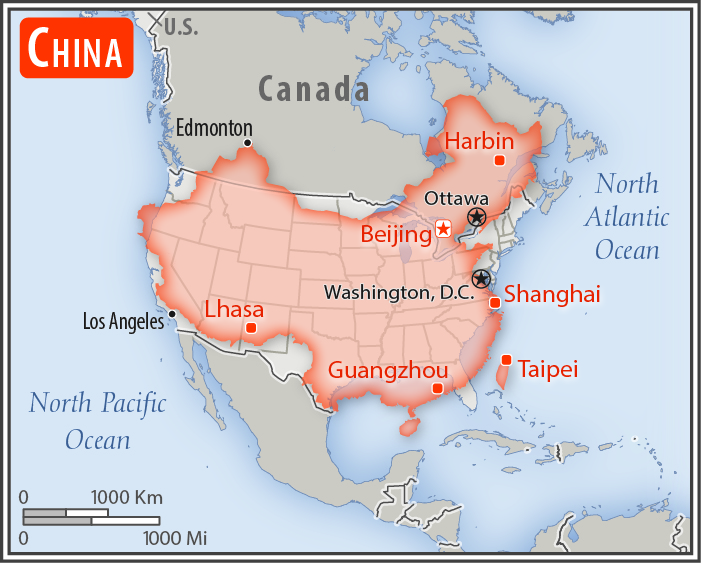
Martin Jacques has written an interesting book about China’s rise as a world economic power.  His overview of the geo-political and Realpolitik relationships of the east and west are interesting; particularly in light of the Trump administration.

“When China Rules the World” has interesting details that inform but do not convince one that China will rule the world.  The provocative title drives the bus but it does not reach its destination. 

World control is a myth that causes wars and destroys the best and brightest, as well as the mean and maniacal. 

What is happening in China is remarkable.  China’s transition from Maoist communism to capitalist communism is a caterpillar turning into a butterfly; i.e. China has grown wings but it still lives in a world constrained by its environment.

Though President Xi is re-instituting some Maoist mistakes, China’s world wide investment in infrastructure is based on capitalist beliefs. Xi has an internationalist focus, just like that which made America great; at least, until Trump’s Presidency.

Chairman Mao’s cultural revolution and belief in enlarging collectivist ideology nearly destroys China’s path to prosperity

Xi is attempting to open new markets by financing infrastructure improvements in African, Middle Eastern, and Asian countries. He is creating customers for Chinese product.

Undoubtedly, Xi is also trying to seduce other nations into belief in Xi’s form of Communism. This is not unlike America’s intent to democratize the world.

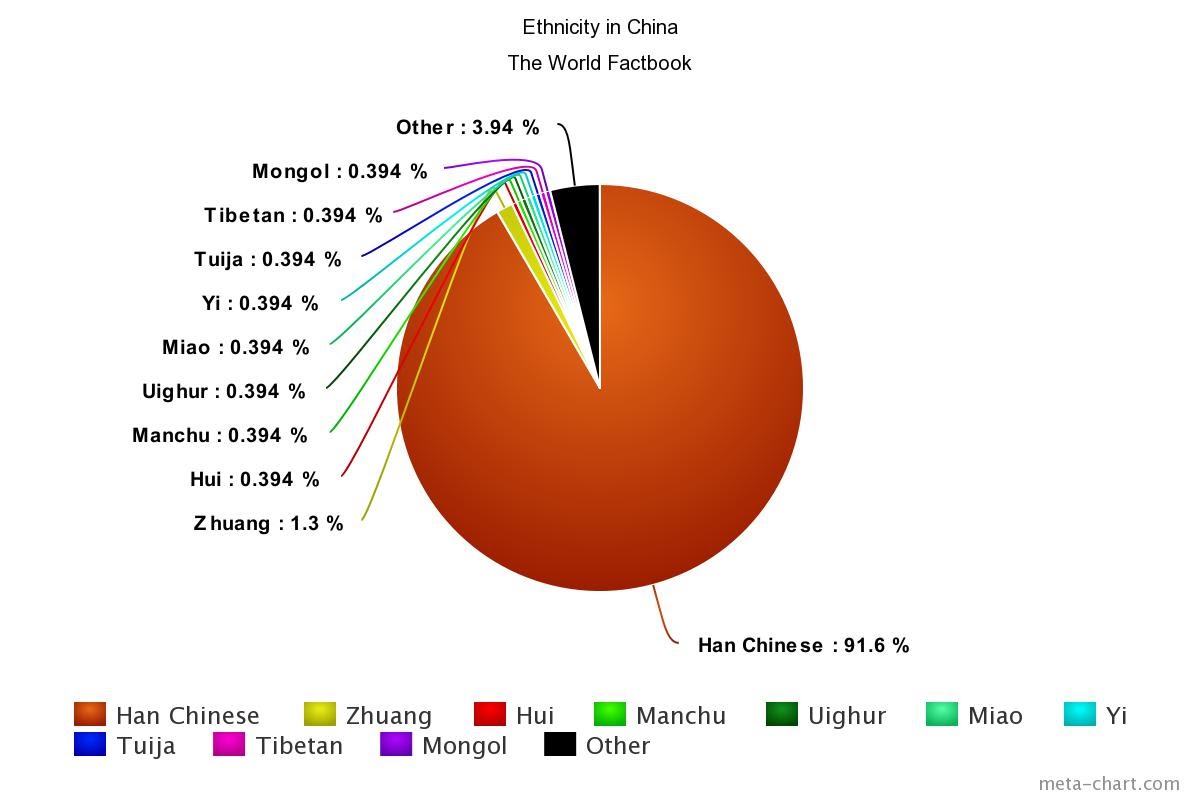
Jacques argues that a 90% Han Chinese cultural domination of 1/5th of the world’s population will change the nature of the 21st century.  In a limited sense, that is undoubtedly true.  However, regardless of the type of government rule, human nature is the same.

Money, power, and prestige, are the primary motivations of humankind. Whether one is Han Chinese, Tibetan, Uighur, Indian, Hispanic, Black, or any singular ethnic group, all humans seek control of money, power, and prestige. These innate drives are the speedometer, brakes, and steering wheels of nation-state’ leaders and followers. 

There are dominant factions in every culture that are not necessarily the majority of a culture’s population.  Jacques’ early comments suggest China’s 5000 year history reflects a cultural conformity greater than any other country in history while later he acknowledges that the predominant Han population is highly diverse in its beliefs.

Cultural conformity is not the relevant issue; i.e., dominant cultures, whether a majority or minority of an indigenous population, are the game changers of a nation’s history. 

Jacques argues that China’s cultural history of familial respect and veneration will have profound affects on the future of world economies.  Jacques has a valid point. However, the history of modernization suggests that the fabric of extended filial obligation will be ripped apart in China just as it has in every industrializing nation. 

China, just as all modernizing nation-states, will see deterioration of familial bonds.

Human nature is immutable.  As an agrarian culture moves to the city and parents are compelled to work for wages, family structure and filial commitment deteriorates.

Of course, capitalism is not the same in China as it is in the western hemisphere.  As Jacques reports, major capitalist businesses are state owned in China.  They compete in the world market but government support mitigates much of the free enterprise ideal of capitalist economies.  However, no nation-state operates as a free enterprise capitalist country; i.e. government has always played a role in capitalist nations.  Government subsidy of industrialization is a matter of degree.   

It may be that China will change the way industrialized countries compete but global economic domination is no longer possible in a tech savvy world that recognizes knowledge is power and natural resources are limited.

All the world knows how each culture in the world lives. With that knowledge, countries will gravitate to systems of government that serve its dominant culture best. Best is defined as what is most important to the dominant culture in the context of either money, power, or prestige.

Long term, China is facing a tougher road to modernize because of population, environmental degradation, and dwindling natural resources, but their short term prospects look better than most other nations. 


New estimates from the U.S. Census Bureau put China in the lead with 1.34 billion residents, followed by India with 1.19 billion. The United States is a distant third with 311.1 million people.Jul 6, 2011

As Jacques points out, China’s savings rate is over 20%, with a GDP growth rate 3 times that of America.  The cost of dwindling natural resources is more affordable to China than most other modernizing countries.  However, all economies are closely tied to each other and a major failure in America or Europe will have great consequence for the world economy which will significantly affect China’s short term advantage. 

With a failure of a western countries economy, China’s drive toward modernization will be in danger. That danger is demonstrated today by America’s creation of a trade war with China.

Some argue this burgeoning trade war is hurting the Chinese economy more than the American economy. That may be true in the short term, but the efficacy of trade wars are questionable in the long term; particularly in our internet connected world.

Jacques’ book is worth its purchase price and a consumer’s time because he exposes some of the cultural biases of China that are not widely known.  His suggestion that discrimination is as prevalent in China as it is in the United States is reprehensible, and disgustingly familiar.  Globalization is real.  Human nature is immutable.  All mankind travels on the same space ship; i.e. our blue ball.  At the very least, China is proving that our environment is fragile and natural resources are finite.

NORTH KOREA

Audio-book Review
By Chet Yarbrough

(Blog:awalkingdelight)
Website: chetyarbrough.blog

Nothing to Envy

By Barbara Demick Narrated by Karen White

Everything to hide, everything to lose, and “Nothing to Envy” summarizes Barbara Demick’s book about North Korea.  That is the frightening prospect of North Korea’s policy regarding nuclear armament. 

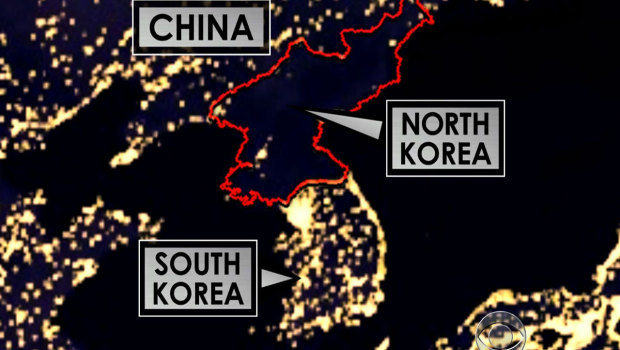
North Korea is dark because of a lack of infrastructure for power

Kim Jong-un’s rule of North Korea is founded on fear.  Based on Demick’s characterization of the North Korean economy, Kim uses fear to control North Korean citizens.  Kim presumes the same will work for control of North Korea’s position in the world.  Trump deceives himself in believing he gets along better with meaner leaders.

President Trump understands the tool of fear but mistakenly believes Kim will change his behavior because of America’s superior wealth and power. 

Because fear is the only tool Kim possesses to stabilize North Korea’s government, North Korea will not abandon its quest for more nuclear weapons.

Demick pictures life in North Korea based on interviews and stories told by refugees and defectors.  There is an inherent bias in recollections of those who flee as opposed to those who stay.  These stories, though different in details, are too alike to be lies.  

Demick peels back the edge of a curtain that hides North Korea from the rest of the world. North Korean defector’s recollections are a re-telling of George Orwell’s fictional world of “1984”. North Korea is a reinvention of Joseph Stalin’s U.S.S.R.

Demick recounts the stories of Mrs. Song, Oak-hee, Mi-ran, and Jun-sang.  Demick paints a picture of a gray country, wracked by hunger and controlled by a dictator and his army.  Demick reveals a country that faces a grim future. 

Nuclear warheads in the hands of North Korea are a threat to Asia and the far east.

Demick gives fear and anxiety a face with Mrs. Song’s story of her life as a rabid believer, self-deceiver, and follower of the “Dear Leader”, Kim Jong-il (Kim Jong-un’s father). 

Mrs. Song and her children survive North Korea’s worst famine in history, but her husband dies.  Mrs. Song’s daughter Oak-hee tricks her mother into visiting China and then lures her to South Korea.  Oak-hee shows Mrs. Song that life in North Korea is a shadow of what life can be.

Demick’s second story is told by Jun-sang and Mi-ran, two other North Korean defectors.  Jun-sang and Mi-ran introduce romance into this gray world.  Their courtship in North Korea is sweetly pictured in clandestine walks on dark nights with sparkling bright stars in a lightless city.  Jun-sang is an engineering student at a prestigious North Korean school.  Mi-ran is the daughter of a naturalized North Korean farmer who lived in what became South Korea after the Korean War.

Jun-sang and Mi-ran talked of everything but what became the most important thing in their lives, the dishonesty of their government, the unfair treatment of its people, and their growing alienation.

 Both defected at different times because they were afraid to reveal to each other their true feelings about life in their home country.  Later, they meet in South Korea but as strangers that have grown into separate lives.

“Nothing to Envy” makes a listener believe North Korea’s government is destined to fail.  Time and incident will cause its collapse. 

President Trump only temporarily stopped displays of nuclear weaponization by North Korea. Obviously, Kim Jong-un is only acting in a play designed by Trump.  It appears Trump’s play, as much of his administration, is out of his control. 

Our President cannot say “you’re fired”.  Kim Jong-un needs fear to govern his country.  He believes fear is the only tool that will gain cooperation of the outside world.

A MORE PERFECT UNION

Audio-book Review
By Chet Yarbrough

(Blog:awalkingdelight)
Website: chetyarbrough.blog

A People’s History of the United States

Written by: Howard Zinn

Narrated by:  Jeff Zinn

Howard Zinn (American Historian, Author) November 19, 2009. Photo By: Rob Kim/Everett Collection

The pitfall of history is subjectivity.  Howard Zinn offers a coda for history’s myopia.  Harry Truman is alleged to have said “There is nothing new in the world except the history you do not know”.  Zinn shows how little Americans know about America’s failure to create a “…more perfect union” (a name given to a speech delivered by Senator Barack Obama on March 18, 2008).

No American institution is untarnished by Zinn’s rumination.  Zinn challenges every aspect of American culture.  The malpractice of American businesses, politicians, and society are exposed by Zinn.  Neither Republicans, Democrats, or other party affiliates, escape responsibility for America’s abhorrent actions. 

Unadorned historical facts show Indians indiscriminately isolated and murdered, Blacks treated as property and hung, immigrants vilified for being different, wars being waged on the innocent, women being treated unequally, and greed being praised as virtue–all in the face of professed American freedom and equality.

Zinn implies all Presidents; including Lincoln, Roosevelt, Truman, Carter, Reagan, Clinton, the Bushes, and Obama buy into an economic principle that the business of America is business.  (He certainly could have included President Trump.) 

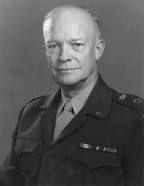
With few exceptions, Zinn argues every President tacitly or overtly supports corporate America.  The only Presidential exception Zinn notes is Eisenhower’s expressed concern about the military/industrial complex and its penchant for distorting American values.

Zinn recounts Andrew Jackson’s isolation and murder of Indians, Lincoln’s willingness to preserve the union at the cost of slavery, Andrew Johnson’s southern sympathies, Roosevelt’s incarceration of American Japanese, Harry Truman’s decision to nuke Nagasaki and Hiroshima, Carter’s support for Iran’s military dictatorship, Reagan’s expansion of the military/industrial complex, Clinton’s cuts in taxes and welfare, the Bushes’ wars, and Obama’s rescue of the banking industry. 

Zinn argues—both Republican and Democratic presidents endorse corporate control of America at the expense of citizen values written into the Constitution. 

From discrimination against minorities to unequal pay for women, America has failed to follow the ideals of the Constitution of the United States.

Zinn implies there is never a justification for war; presumably even in the case of WWII. 

Some Americans would agree that Vietnam, Korea, Iraq, Syria, and Afghanistan wars were and are a waste of human lives. 

This is a hard argument to dispute when seen in the context of a burgeoning gap between rich and poor, and man’s inhumanity to man.  One might argue as some historians do, sovereignty of a country is an inalienable right, even when it is ignored or used as an excuse for war.

Zinn argues there is no moral or ethical justification for political repression, murder, slavery, sexual or racial discrimination.  (That begs the question of a war’s justification in light of Nazi Germany’s intent to exterminate all Jews.)

But, Zinn argues the right of sovereign nations to choose their own government.  Genocide is a potential consequence of such a hard rule when a minority only has a right to resist and/or revolt. That is in the news today in regard to Myanmar and the Rohingya.

Suu Kyi Defends Myanmar from the accusation of genocide.

What nation (based on its own cultural belief) has the right to invade another country that chooses to victimize its own citizens.

Zinn is not suggesting countries should become isolationists. He argues that to the extent that humanitarian relief may be offered by an outside country, it should be offered.  Relief would not include transfer of weapons of war, but aid in goods and services meant to sustain life.  Outside military intervention in a sovereign country seems destined only to lead to more loss of innocent life.

Taking Zinn’s observations to heart suggests there is no justification for war or violence against our fellow man.  However, human nature is what it is.  Humans choose what they choose; often out of the instinctual desire for money, power, and prestige, rather than any common good.  Individual cultures are based on memes of the country in which they were born. 

Invasion of a sovereign country is a slippery slope that only leads to more death and destruction.  However, Zinn’s review of history seems to deny all reasons for war. There seem two modern exceptions to Zinn’s argument.

Nazi Concentration Camp WWII

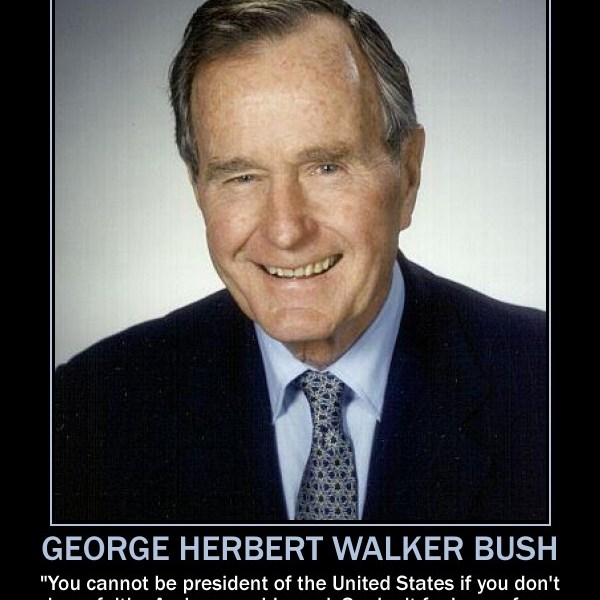
WWII and the way H. W. Bush handled the invasion of Kuwait.  These two exceptions are clearly related to one country’s violation of another’s sovereignty. In both cases, America’s Presidents enlisted cooperation from other countries, before taking any military action.

It is a dangerous world, but the danger is in human beings and their quest for personal gain; i.e. their greed for money, power, and prestige.  America needs to look at itself and its reliance on corporate excess.  The gap between rich and poor must be addressed in all nations; not the least of which, the United States.  Zinn reminds America of how flawed we are in “A People’s History of the United States”.

FREEDOM AND EQUALITY

Like Malcolm Little (aka Malcolm X), Martin Luther King, and Barrack Obama, Douglass faces down poverty and demonstrates the equality of all human beings.

Audio-book Review
By Chet Yarbrough
(Blog:awalkingdelight)
Website: chetyarbrough.blog

Fredrick Douglass

Narrated by: Prentice Onayemi

Written by: David W. Blight

DAVID BLIGHT (AUTHOR, PROFESSOR OF AMERICAN HISTORY)

DAVID BLIGHT (AUTHOR, PROFESSOR OF AMERICAN HISTORY)

David Blight offers a nuanced biography of Frederick Douglass, a great 19th century American leader. Blight shows Douglass to rival the intelligence and charisma of the best known 20th and 21st century black Americans. Like Malcolm Little (aka Malcolm X), Martin Luther King, and Barrack Obama, Douglass faces down poverty and demonstrates the equality of all human beings. Malcolm Little, King, and Obama never face the lash of slavery, but Blight shows how Douglass pushes aside physical and cultural cruelty to demand freedom and equality of all.

JOHN BROWN (AMERICAN ABOLITIONIST 1800-1859)

JOHN BROWN (AMERICAN ABOLITIONIST 1800-1859) Brown is neither lionized or vindicated by Blight but is shown as a turning point in Douglass’s life; a turning from moral suasion to action by people of color against slavery.

Ethan Hawke as John Brown.

Though shown to begin in peace, Blight shows how Douglass grows to understand peace will not come from words alone but must come from action. Douglass came to revere the anti-slavery violence of John Brown. Courageously, Douglass attacks the institution of slavery before, during, and after the American Civil War. Douglass becomes the conscience of white and black America.

ABRAHAM LINCOLN (1809-1865, 16TH PRESIDENT OF THE UNITED STATES. )

Blight explains how Douglass came to revere Abraham Lincoln; not in Lincoln’s beginnings, but in Lincoln’s life of struggle for the true meaning of the American Constitution.

After Lincoln’s assassination, Douglass is shown to decry President Johnson’s abandonment of reconstruction in the south. Douglass offers unstinting support for Ulysses Grant’s election because of his commitment to the abolitionist cause.

Blight shows Douglass, like all human beings, is imperfect. He has blind spots when speaking of freedom and equality. Douglass discounts America’s decimation of native Americans and denial of women’s rights by arguing neither compares to slavery, subjugation, and murder of blacks.

The irony of Douglass’s imperfect argument is in native Americans who are murdered and restricted to reservations that are indiscriminately encroached upon by free and enfranchised Americans.

TRAIL OF TEARS

Indian families are regularly isolated, displaced, and murdered at the whim of white men in power.

In women’s rights, Douglass discounts the same inequality trap that captures black Americans; i.e. the disenfranchisement trap. Women have no power. Women without power, just as any separated classification of humanity, are looked at as less equal by some measure. How many women are treated by men as property in the history of civilization? How many women are abused, and/or raped by men without consequence? How many women are unable to find work or are not paid the same wage for the same job? The bible is one of many records of discrimination faced by women.

FAMOUS WOMEN IN HISTORY

FAMOUS WOMEN IN HISTORY (History, as well as this pictorial, shows many women are as intellectually strong and mentally tough as men; e.g.  Cleopatra, Sojourner Truth, Indira Gandhi, Golda Meir, Benazir Bhutto, Malala Yousafzai, and others.)

Blight fairly describes Douglass’s blind spots while clearly identifying his remarkable insight and intelligence. Douglass’s many speaking engagements, published books, and newspaper articles graphically and forthrightly explain the plight of black Americans in the 19th century. Blight explains how Douglass manages to survive slavery, educate himself, forgive (but not forget) his oppressors, and become one of the greatest Americans of his time.

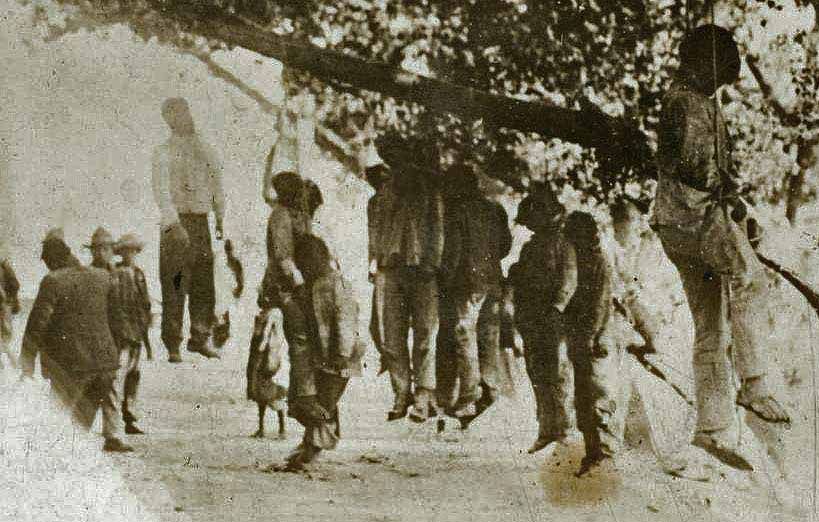
BLACK SLAVES LYNCHED IN AMERICA

SLAVES LYNCHED IN 19TH CENTURY AMERICA

It is sad to know so many of Douglass’s observations remain true in the 21st century. Much of white America still fears the rise of black freedom and equality. “All men are created equal…” is preached but remains un-practiced in today’s America.

RODNEY KING (APPEARANCE 3 DAYS AFTER BEATING 3.6.92--KING DIES IN JUNE 2012 @ 47 YEARS OF AGE)

RODNEY KING (APPEARANCE 3 DAYS AFTER CAR-CHASE BEATING 3.6.92–KING DIES IN JUNE 2012 @ 47 YEARS OF AGE

The lessons of history show that people are not to be feared; they are to be offered equal opportunity to become all they can be. By nature, human beings are equally free and capable of being incredibly good and disastrously evil. It is the purpose of government to protect the rights of each from the other when evil takes hold of the governed. A moral life requires equal treatment of all. That is the essence of what Blight is writing about in the story of Frederick Douglass’s life.