Narrated by Sir Derek Jacobi, Kenneth Cranham, Roger Allam, Brendan Coyle, Miriam Margolyes, Time Mcinnerny, Jamie Glover, Emily Bruni, Jenna Coleman, Joshua James, Hugh Skinner
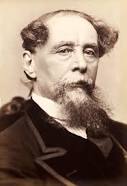
Charles Dickens, Author.
Dickens appeal in the 21st century is magnified by economic change.
The industrial revolution, like the tech revolution, put people out of work. In Dickens’ time, Great Britain’s and the world’s industrial growth demanded change.
Today’s tech revolution demands the same. The change required is different in one sense and the same in another.
The industrial revolution occurred in a time of scarcity while the tech revolution takes place in a time of abundance. Both revolutions require training for new kinds of jobs.
Smog plagued Great Britain as it grew in the18th century.
(This is smog in today’s Beijing.)
Dickens is born in 1812 and dies in 1870. He witnesses and writes of the squalor that existed in London during his adult years. “A Christmas Carol” is one of many stories he wrote that reflects on the human cost of economic change.
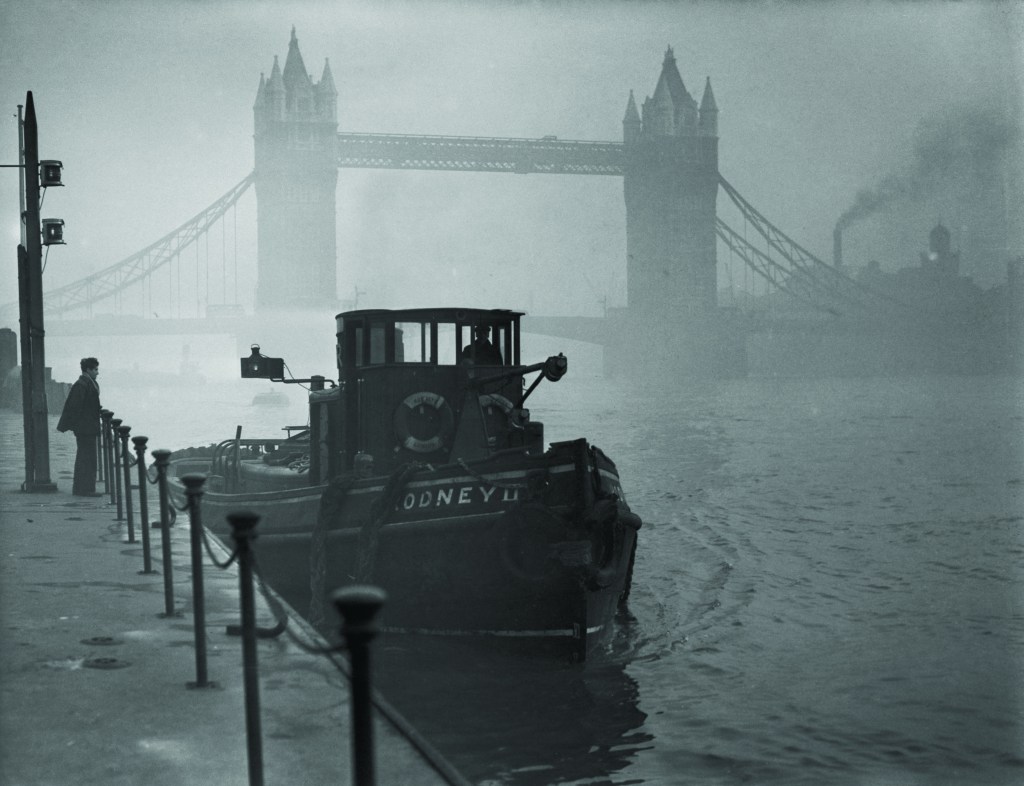
London fog 1952
In 1952, the streets of London were enveloped in a fog caused by coal used for domestic heat and industrial production.
An incident of London fog in the 20th century is comparable, on a local scale, to the world’s pollution crises today. An estimated 4,000 people were said to have died, with 100,000 made ill because of unusual windless conditions in that year.
Today, air pollution is compounded by global warming.
“A Christmas Carol” is a reminder of the damage world leaders can do by ignoring the plight of those who are most directly impacted by economic change. Too many American leaders are acting like Ebenezer Scrooge and Jacob Marley by ignoring the Bob Cratchit s and Tiny Tim s of the world.
For those who may not remember, Scrooge and Marley were capitalists who believe all that matters in life is personal wealth. Marley comes back as a ghost to offer Scrooge a picture of past, present, and future Christmases, based on how he lives the remainder of his life.
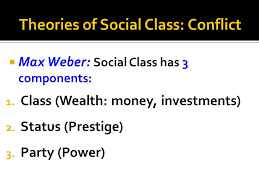
Todays’ political leaders are in Jacob Marley’s ghostly presence with a chance to change the future for the Crachits, Tiny Tims, and wage earners of the world. The world needs leaders who are not blinded by the allure of money, power, and prestige at the expense of the jobless, homeless, and disenfranchised.
Hannah Arendt (1906-1979, Author, Political Theorist, Phiosopher.)
Hannah Arendt’s “On Revolution” is a paean to religious belief. God’s relevance is at the heart of her detailed history of revolution.
Arendt is an ardent secularist. Arendt’s belief or non-belief in God has no relevance except as it relates to her understanding of revolution.
“On Revolution” compares the differences between ancient Greece and modern times. Arendt particularly contrasts America’s 1776 revolution with France’s 1789 revolution. She explains why one succeeded (within limits) and the other foundered. Her explanation offers insight to the failures of past, present, and future revolutions.
Humankind is endowed with the ability to reason. Use of reason may be distorted by false facts and mental limitation but thought and action conform to what one thinks they know and believe. Arendt notes social circumstance of the many, whether rich, poor, satiated, or hungry are proximate causes of revolution. Further, she notes success or failure of revolution is eminently impacted by a nation’s cultural history.
Arendt infers citizens become politically apathetic or active based on what they think they can control.
“On Revolution” explains how social discontent can lead citizens to rebel against their government. It might be because of a gap between rich and poor. It may be because of social or economic inequality. Revolution may come from factionalism where a particular group of citizens lack recognition. Arendt does not label all the reasons for revolution but human desire for money, power, prestige are proximate causes.
“On Revolution” explains how social discontent leads citizens to rebel against their government.
Arendt argues any success after a revolution depends on the institution of laws that supersede individual human desire. She amplifies the reasons for all revolutions’ success or failure. America’s short history as a colony with a remote King (burdened by parliament) contrasts with France’s history of a long line of King’s with divine right of rule. America is not burdened by a King who has God’s authority to rule.
Arendt suggests invoking God’s commandments (a superior being’s directions) allows human rule-of-law to be acceptable to America’s colonial citizens.
Arendt explains America makes arguments against rule by a King based on “taxation without representation” and the principal of citizen representation in government. In contrast, Arendt notes France’s history of a King’s divine right makes leadership acceptance from a mere citizen unacceptable.
The only philosophical backdrop for a French citizen’s authority is Rousseau’s philosophical belief in democracy, equality, liberty, and the common good of all citizens. This is not enough to convince France to accept man-made’ rule-of-law. There is no divine right given by God to a King or any French citizen. Arendt argues rejection of divine guidance is at the heart of France’s failure.
Arendt notes American revolutionaries emphasize the importance of families and citizen groups in cooperating and joining to reject rule by King George. Small groups of Americans congregate to create laws that supersede individual rights to accomplish their goal of independent sovereignty. This level of group cohesion is not cultivated in France. Arendt explains America is better prepared for revolution than France.
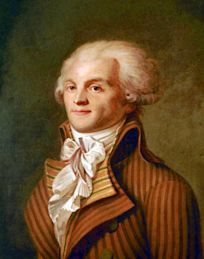
Maximilien Robespierre (1758-1794, French lawyer and statesman.)
Even if Robespierre wishes to, Arendt explains he is unable to institute laws that protect French citizens. Robespierre has no divine right. There is no foundation in France’s history for rule-of-law instituted by mere citizens. French history has little history of citizen cooperation and government opposition.
A fundamental point made by Arendt is that many revolutions appear to succeed because they capitalize on events that occur in the uncontrolled circumstances of revolution. It is not because of a belief in a cause fomented by a great leader but by an opportunist who takes advantage of events.
Arendt suggests success of Vladimir Lenin and the Bolsheviks in 1917 is not from forethought or planning but from a leader who let events determine how force could be used to take control of a country in turmoil.
Among her many observations Arendt offers a blueprint for a revolution’s success. Of course, success is not necessarily in the best interest of a country’s citizens. If citizen control is the only measure of success, Russia, China, North Korea, Pakistan, and Iran have had successful revolutions. Today’s example of revolution is Haiti. One wonders which route it will take in its revolution.
When impingement is great enough to increase economic disparity between rich and poor, the threat of revolution increases.
Arendt illustrates how America is nowhere near a perfect nation. Denying equal opportunity for all, disenfranchising citizens, and distrust of elected representatives are three concerns expressed in today’s media. Arendt notes the rising apathy of American voters. Arendt shows how God is as relevant today as when she wrote “On Revolution” in 1963.
Arendt explicitly warns America of its failure to maintain a role for citizens in government. She argues less time is committed to citizen involvement than existed at the time of the revolution. Arendt suggests direct citizen participation in American government is distorted by corporate and monied interests. Arendt argues growing lack of citizen participation works against American government stability, and longevity.
America’s history of Democracy has lasted for 3 hundred years. The Roman Empire lasted for over 14 hundred years. French monarchy lasted nearly the same number of years as the Roman Empire. The obvious question is how long will American Democracy last?
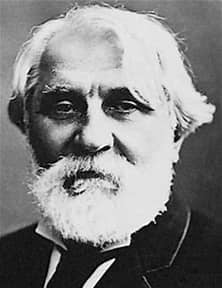
Ivan Turgenev (1818 to 1883–Russian novelist,poet, and playwright.)
Understanding the culture of other countries is aided by reading histories and literary classics. Like Tolstoy and Dostoevsky, Ivan Turgenev paints a picture of Russian culture in the mid-1800s.
Russia in 1850
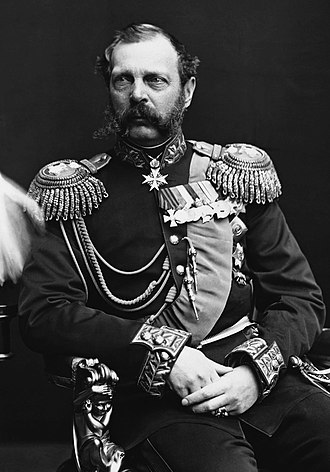
In “Fathers and Sons” it is the age of Alexander II, the Russian Tsar who began his reign in 1855. He presided over emancipation of serfs in 1861.
Tsar Alexander II (1818-1881)
The Tsar’s intention is to liberate serfs from aristocratic servitude. In respect for the Tsar, some Russian farmers offer their farmland to serfs in return for rent or a percentage of profits from the sale of produce
There is great turmoil during this time in Russia.
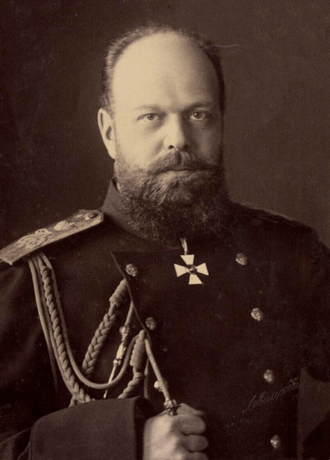
Tsar Alexander III (1845-1894)
It is eventually quelled by Alexander III (1881-1894) who represses and reverses Alexander II’s political and social liberalization. Turgenev dies soon after Alexander III’s ascension. In “Fathers and Sons” one can see the seeds for Alexander III’s reaction to Alexander II’s liberalization.
The principal character in “Fathers and Sons” is Yevgeny Vassillievitch Bazarov. He is a young doctor who sees the world through science.
Bazarov does not believe in God and sees morality as a fiction induced by society. He is a nihilist. He purports to believe life is meaningless.
In this Russian era, serfdom created an uneducated underclass that feeds Bazarov’s beliefs. Serfs had no place in society. They were indentured to an aristocracy that used them as slaves to cultivate land holdings.
Alexander II creates change which would allow serfs to own land, work for themselves, and break their cycle of poverty. However, serfs as well as the aristocracy are unprepared. Farmers who try to free their serfs find their farmland turns fallow. The reasons for loss of productivity are complex but such a sudden change in opportunity is either not properly capitalized or resistance by aristocrats who scotch Alexander II’s liberation.
Bazarov sees serf liberation as evidence of the meaninglessness of life. Bazarov and a fellow traveler, both sons of farmers, return to their family farms after finishing their education. The fellow traveler is Arkady who idolizes Bazarov. Arkady’s father’s farm is shown to be deteriorating when the two travelers visit. Bazarov observes the indolence of former serfs who work the land. At the same time Bazarov notes the entrenched aristocratic prejudices of Arkady’s uncle who has come to live at the farm. This uncle is an immaculately dressed and groomed middle aged man who is well known in aristocratic circles.
Bazarov’s suggests Alexander II’s reform only reinforces the meaninglessness of life. To Bazarov, human nature is immutable, God does not exist, and art is an affectation. He places this argument at the feet of Basarov’s uncle. Arkady agrees with Basarov and recognizes him as a mentor and superior intellect. Both the uncle and Arkady’s father are offended by Basarov’s comments. The uncle is appalled by Basarov’s nihilism.
Turgenev introduces a doppelganger of Basarov in a wealthy young widow named Anna Odinsova. Odinsova is attracted to Bazarov’s views based on her life experience. She sees life as equally meaningless. The irony is that Basarov falls in love with Odinsova. Loving someone contradicts meaninglessness in life. Odinsova does not love Basarov but admires his intellect. Basarov’s professed love betrays his nihilist beliefs.
Turgenev accelerates his argument against nihilism by having Arkady fall in love with the sister of Odinsova. This sister has the moral strength of Odinsova but accepts Arkady’s love, and marries him. They settle on Arkady’s father’s farm. Arkady, with the help of his new wife, make his father’s farm prosperous. Arkady’s father changes his role at the farm and is eventually able to retire. Nihilism has no place in Arkady’s life. Life has meaning to Arkady.
Turgenev leaves his audience with the belief that Odinsova will overcome her belief in nihilism. She marries a prosperous and dynamic Russian businessman. Turgenev suggests she may grow to love this businessman and abandon her mistaken view of life. This is a Turgenev’ finishing nail in nihilism’s coffin.
Turgenev’s warning to humanity is that God, morality, and love makes life worth living, while ignominious death is left to nihilists.
Basarov dies from Typhoid, never to realize the wasted life he has led. His death leaves his mother and father to grieve over Basarov’s great potential and lost opportunity.
Charles Dickens’ wrote many works picturing life during the industrial revolution. His books motivated more than writers to write. They are chronicles of social change.
Count Lev Nikolayevich Tolstory (1828-1910)
Tolstoy, a master of social insight, said that Dickens’ literature was a source of motivation for him.
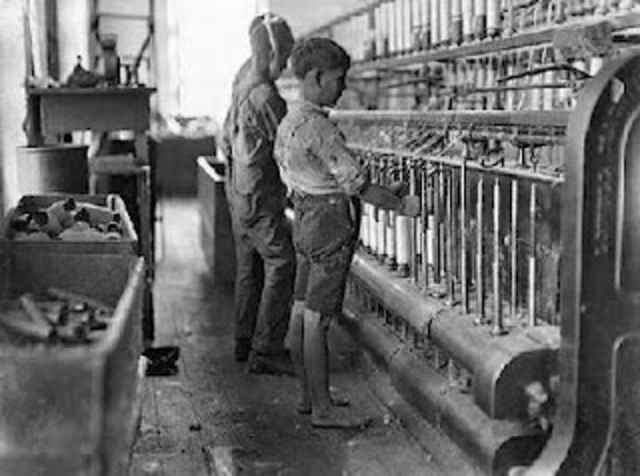
Dickens describes many of the negative consequences of the industrial revolution; particularly, child labor abuse and family-value deterioration. Dickens becomes a source of information for societal reform. His reflection on business profitability at any human cost tests the world.
The Covid19 pandemic is today’s test. World leaders struggle with opening their economies at the right time, in the right way, to avoid a return to rising death rates.
It seems America has failed.
All further information on this statistic can be found at Statista
“Dombey and Son” is a lesser known work of Dickens that pleases the senses and gladdens the heart. For anyone who has children, “Dombey and Son” teaches parenthood and touches on errors of parental commission and omission.
The consequence of hubris and greed in “Dombey and Son” are well told in this story of father/husband arrogance, and business manager misdeeds.
Like a Shakespearean play, Dickens writes about the difficulty of life with a dénouement of “Alls Well That Ends Well”. Dickens infers human cost must be weighed in determining value of any end. Human cost is the sine qua non of government leader’s decision on returning to economic prosperity after the Covid-19 pandemic.
The industrial revolution is in full swing in the 1800s with children working long hours for low wages.
In the mid 1800s, a patriarch and successful businessman, Paul Dombey, marries. A daughter is born to a father who pines for a son. Paul Dombey plans to call his growing company “Dombey and Son”. Fate chooses to provide a son but the boy loses his mother in child birth. The boy is sickly and destined to live a short life that never fulfills the desire of his father for a son to inherit the family business.
Paul Dombey only grieves for his son. He alienates and ignores his daughter, and marries again for appearance and convenience. Paul Dombey lacks empathy or understanding of others or himself.
Dombey’s loss of a son and his hubris get in the way of any
human compassion or love for others. He
is abandoned by his new wife. He accuses
his daughter of aiding the abandonment. Dombey
strikes his daughter and she runs away.
Through the connivance of his business manager, Dombey’s business is
bankrupted. Dombey spirals into a pit of
despair and self loathing.
The beauty of Dickens’ writing is in his character development. His skill is exhibited in multiple story lines that weave together to change the course of a story. Dickens juxtaposes pitiable despair with great joy.
When his daughter flees she begins a new life, presaged by an earlier encounter with an apprentice. The apprentice, after exile and ship wreck, becomes her husband.
The daughter, though neglected by her father, loves him deeply. She attempts to reconcile Paul Dombey with his second wife. Because of his second wife’s childhood miseries reconciliation is not possible, but Dickens suggests forgiveness is in Dombey’s future.
The relationship between father and daughter begins to
heal. Paul Dombey begins to understand himself;
i.e. he recognizes his failure as a father and husband and begins to rebuild
his life through his grandchildren.
The fracture of family values caused by yesterday’s industrialization is depicted in Dickens writing and well documented by sociologists and historians.
Looking back, after economic recovery from today’s pandemic, how will family values be recorded by tomorrow’s sociologists and historians?
America may have to live with the affects of Covid19, but lack of empathy from President Trump will be his legacy. It is a legacy memorialized by rising American deaths and millions of the less-privileged who will not receive any further help this year.
Fracturing of family values is exacerbated by today’s technological revolution. Adding a pandemic to technological change further reduces personal contact.
Dickens’ stories dramatize parental psychological abuse; an abuse that resonates with modern society. Much of the abuse is unintentionally caused by the demands of modernization, and human isolation.
The widening gap between rich and poor is harmful. The wealth gap reinforces human alienation. Less time is used to raise children because both parents work or are distracted by self-interest. Ironically, Covid-19 demands family re-connection, and empathy for others.
On one hand, Covid-19 compels families to reassess family values. On the other, 21st century technology continues to reduce physical contact. Some say the economy is in free fall today, but most have plans for tomorrow. It seems every good and bad historical event has unintended consequence. Hope is all that remains in Pandora’s box.
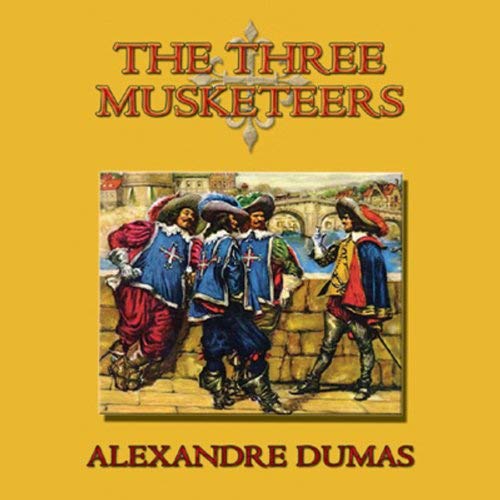
“The Three Musketeers” is a character driven story loaded with romantic heroes and riven with specters of evil. In the context of today’s “me to” movement, it is a female bashing and debasing tale wrapped in a male chauvinist delusion.
“The Three Musketeers” reinforces histories’ misshapen view of women’s rightful place as hero and/or villain.
In “The Three Musketeers” women are the cause of war, heart ache, and most maladies of humankind. In that view, Dumas joins the pantheon of writers that demean women.
On the other hand, Dumas creates a female character that is an equal to diabolical protagonists in other famous novels. There is no villain more devious, complicated, and scarily drawn than Milady de Winter.
Alexandre Dumas is one of France’s most well-known writers. At the risk of being identified as a fellow misogynist, “The Three Musketeers” is a fiction writer’s tour de force and a joy to listen to when narrated by a master story teller.
Meeting d’Artagnan for the first time and learning about Athos, Porthos, and Aramis, his three gallant and inseparable friends, is a guilty pleasure. There are no male heroes more brilliantly defined than Athos, Porthos, Aramis, and d’Artagnan.
Dumas writes the story of d’Artagnan, a 19 year old romantic that leaves his homeland with a letter of introduction to Monsieur de Treville, the Captain of the Musketeers. The hero, d’Artagnan is unknowingly pitched into the middle of a jealous rivalry between the French King’s Musketeers and Cardinal Richelieu’s competing cadre of French protectors.
Dumas cleverly interlaces facts of history with stories of Musketeer bravery, hi-jinks, and romance that reminds humans of their best and worst qualities.
Cardinal Richelieu (1585-1642).
England and France are on the verge of war in the early 1600s. The jealous rivalry of the King’s Musketeers and Cardinal Richelieu’s nationalists roil the relationship between the King of France and its Cardinal.
The Musketeers walk a fine line between their support of the King and Queen and Richelieu’s defense of the country.
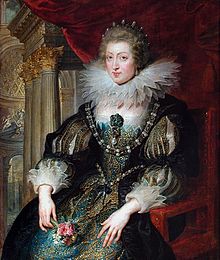
Queen Anne of Austria (1615-1643, Louis XIII’s wife).
Richelieu is painted as a powerful French nationalist and a venal schemer who lusts for Queen Anne.
Duke of Buckingham (1592-1628).
The dastardly Cardinal goes to great lengths to expose the Queen’s affection for the English Duke of Buckingham; partly to save France from England’s covetousness, but also (in Dumas’s fiction) to break the relationship between King and Queen.
Dumas suggests Richelieu’s plan is to soil the Queen’s reputation with an already jealous King.
King Louis XIII (1601-1643).
A principal cause for the war between England and France is purported to be the Duke of Buckingham’s immoral advances toward France’s Queen Anne and Queen Anne’s suspected cuckolding of King Louis the XIII.
Women are unceasingly characterized as fickle, conniving, gullible, or duplicitous.
Dumas describes d’Artagnan’s infatuation with the married Constance Bonacieux. It is not unlike Richelieu’s alleged lust for Queen Anne. Dumas adds d’Artagnan’s dalliance with Milady de Winter, a wily protagonist, and her sometimes associate Richelieu. Neither men nor women seem entirely chaste in Dumas’s tale, but women are characterized less gallantly.
Listening to Vance’s narration of “The Three Musketeers” is an addictive pleasure in spite of Dumas’s fickle characterization of women.
The words from Milady de Winter vividly portray human nature at its worst. Both the Cardinal’s, d’Artagnan’s, and Milady de Winter’s virtues leave much to be desired. Generally, women in “The Three Musketeers” are characterized as objects, more than equals to men. How much has changed since the 19th century?
Nevertheless, “The Three Musketeers” ending is thrilling and satisfying to many deluded misogynists among us.
A Portrait of the Artist as a Young Man By James Joyce
Narrated by John Lee
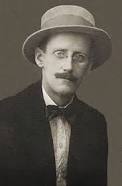
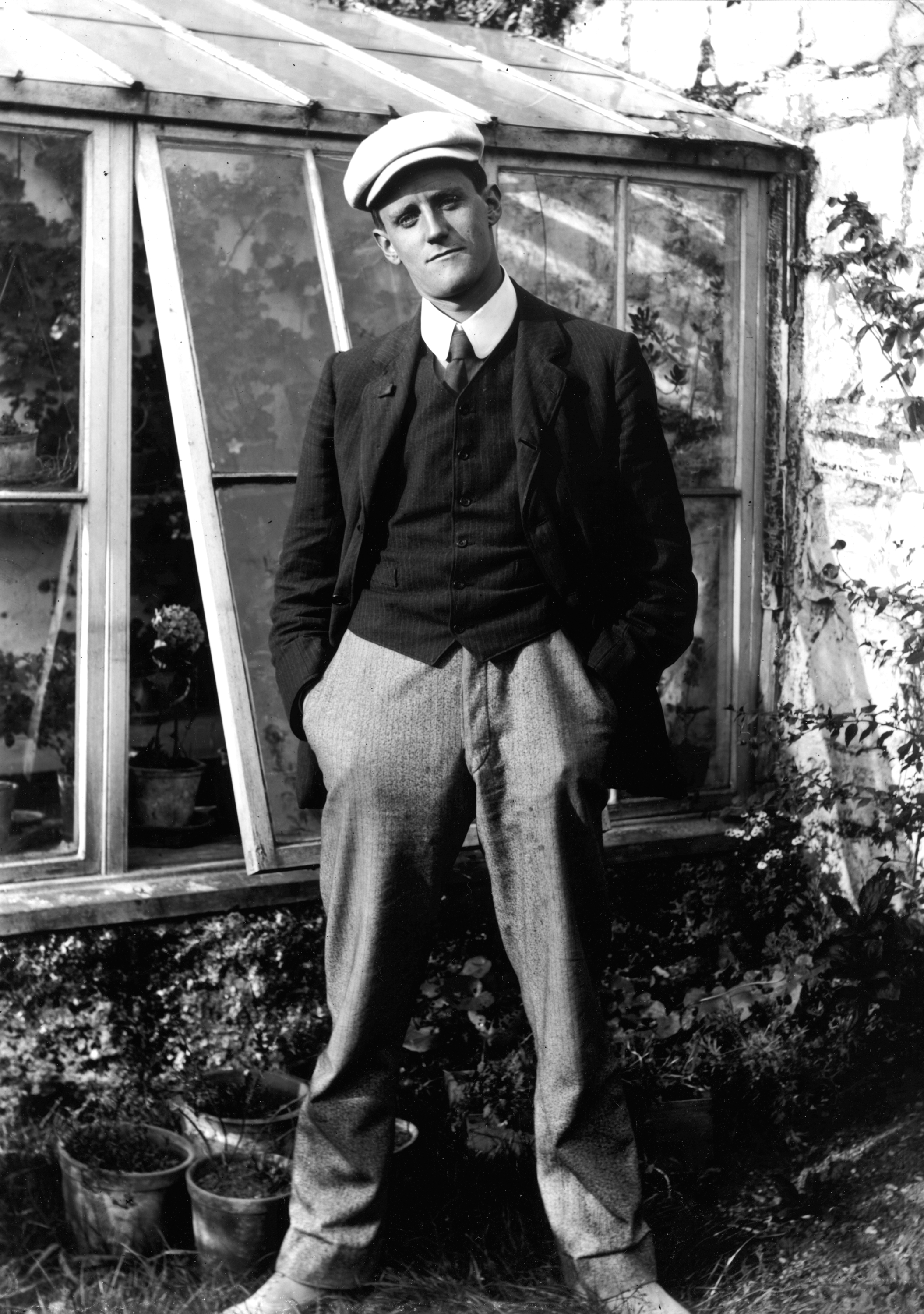
James Joyce (1882-1941, Irish novelist, poet, teacher, and literary critic.)
James Joyce gives us a picture of Catholic Ireland in the early 20th century. He describes an Irish home; i.e. riven with Catholic guilt and ambivalent beliefs about God and Ireland’s place in the Gaelic world.
Joyce’s main character, Stephen Dedalus, is born into an upper middle class Irish family that falls on hard times. Dedalus graduates from a Jesuit school and moves on to college but his life steers away from God and Ireland in his journey to manhood.
Stephen chooses his own path in life but like all humankind he carries the genetics of family and circumstance that compel life’s decisions. Like his father, Stephen is drawn to agnosticism, bordering on atheism, because of worldly pleasures and pains. The pleasures of sexual adventure and the pains of Irish conflict (about religion and statehood) drive Stephen’s escape from Catholicism and his father’s fall from grace.
The fragility of the Catholic Church is evident in James Joyce’s “…Portrait…” Dedalus is portrayed as a top of his class student that is coveted by the Church hierarchy that wants Stephen to become a Jesuit priest.
The strength and allure of the Church at that time is clearly evident in Joyce’s description of the Catholic Priesthood’s power to attract the best and the brightest of its brethren. However, Dedalus, after a day contemplating the Church’s offer, chooses to pursue a broader life.
Even though the Church offers a vocation of prominence and security, Stephen rejects it. The irony of the rejection is that Stephen’s Catholic guilt propels him away from a life of Catholicism. Stephen realizes that he cannot resist worldly temptation.
To Stephen, the mechanism of Catholic forgiveness of sins seems formulaic and inadequate for the purpose of cleansing one’s soul.
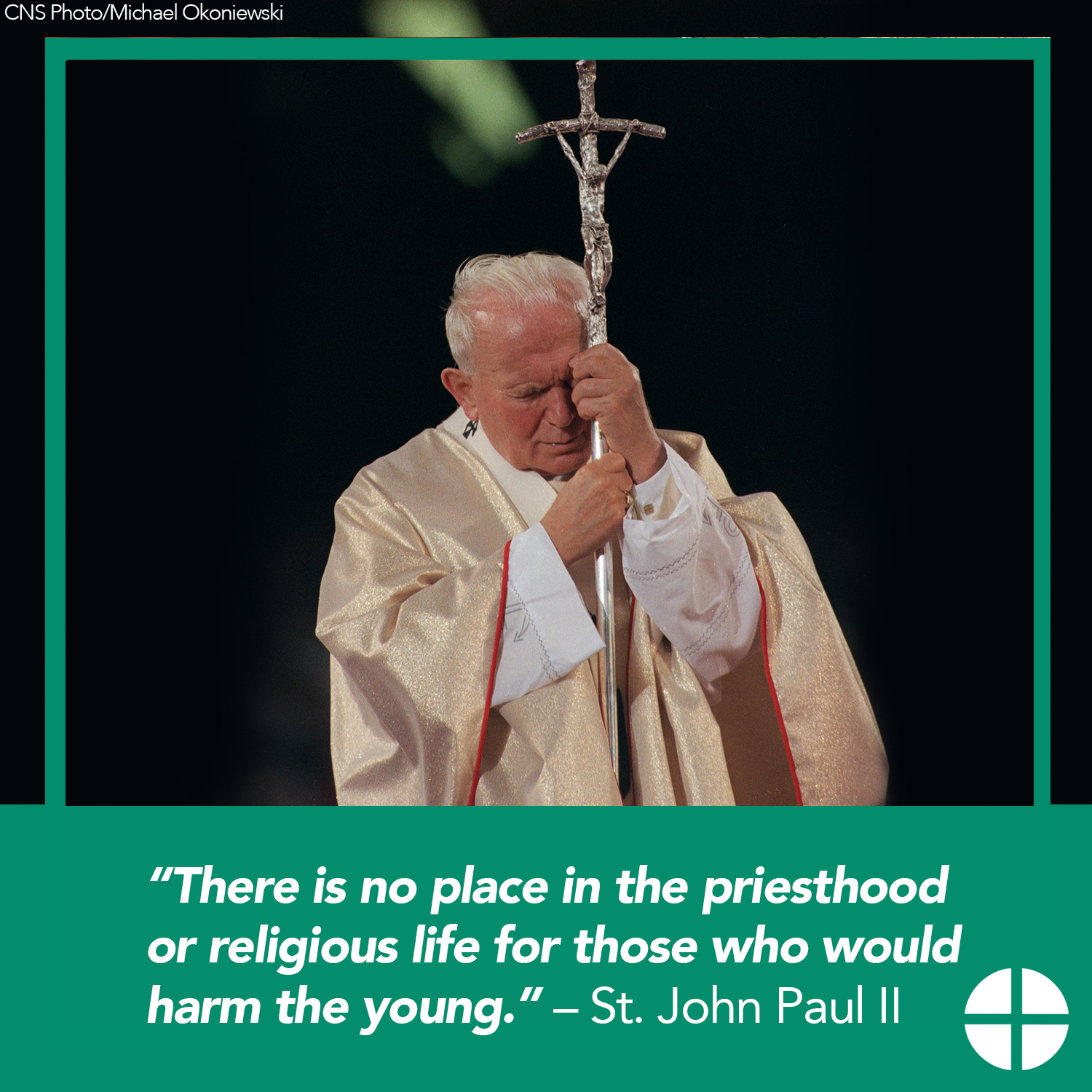
The prescience of Joyce’s insight is fully realized in today’s Catholic Priesthood and its failure to protect Catholicism’s children.
Theodore McCarrick (Former cardinal and bishop of the Catholic Church–disgraced after found to be a pedophile after being appointed by Jean Paul II, ignored by Benedict, and finally revealed by today’s Pope Francis.
And so,
Stephen Dedalus is cast adrift. He is a
teacher and poet; highly regarded by most of his peers and recognized by many
as an intellectual superior. He wishes
to escape Ireland;
to see the world. This is “A Portrait of
the Artist as a Young Man”.
At best,
one sees Stephen Dedalus as a burgeoning Humanist; at worst, a hedonistic life
traveler. A great read; well told by John Lee.
Alexandre Dumas is a French Charles Dickens and a writer of “Dostoyevsky light” stories. The narrator, John Lee. magnifies “The Count of Monte Cristo” characters with an exotic voice that markedly enhances Dumas’s story.
Charles Dickens (1812-1870, English Author and soicial critic.)
Like Charles Dickens, Dumas creates interesting characters. And, like Dostoevsky, he creates emotionally driven protagonists.
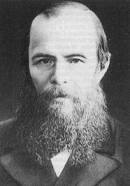
Fyodor Dostoevsky (1821-1881, Russian novelist, essayist, journalist, and philosopher.)
Dumas writes a story of revenge with twists of fate that have Dickens’ coincidences and “Dostoevsky-like” motivations.
The hero is Dante, the wrongfully accused, convicted, and secretly
incarcerated prisoner. The heroine is Mercedes, the love of Dante’s life that
mourns his disappearance on their wedding day.
Dante is unjustly imprisoned for being a Bonopartist based on inadvertent collusion by Danglars, Villifort, and Fernand. They all have different motives for jailing Dante.
The jealous and greedy merchant, Danglars wants to rid himself of Dante because he is a commercial rival. An ambitious, duplicitous, and sycophantic, politician, Villifort, wants to hide his family’s involvement with the Bonapartists. Fernand wants to remove Dante from his wedding to give himself an opportunity to marry Mercedes himself.
(Bonapartism is the political ideology of Napoleon Bonaparte. In government speak, it is a dictatorial executive with a weak and ineffectual legislative body, filled with sycophants.)
Luck and fate mix into Dante’s imprisonment. Dante escapes and becomes fabulously rich. Dante travels the world after his escape and searches for information about people in his life before imprisonment.
A cloak of mystery surrounds Dante as he appears in the lives of his friends and enemies. The cloak is removed at perfect moments in each episode. He endeavors to understand his friends and enemies strengths and weaknesses.
Dante rewards his friends and punishes his enemies. Plans for revenge and exposure of his enemies’ misdeeds are cleverly woven into the story. Each colluding villain is defeated by his own human weakness.
Danglars’ greed becomes his destruction. Villifort’s lies lead to madness. Fernand’s false accusation, and the loss of Mercedes’ love drive him to commit suicide.
The story is a tangled web of relationships, guilts, and crimes that are satisfyingly resolved by the end of the book. Overcoming life’s adversity and justice’s triumph are the appeal of “The Count of Monte Christo”.
Who among Dumas’s three villains in “The Count of Monte Cristo” reminds one of America’s Bonapartist President?
Twenty years before Sigmund Freud’s “…Psychopathology of Every Day Life”, Fyodor Dostoevsky penetrates man’s subconscious to reveal unnamed frames of mind that influence human behavior.
Sigmund Freud was an Austrian neurologist and the founder of psychoanalysis (1856-1939)
All of Dostoevsky’s writing probes the human mind allowing listener/readers to hear unspoken thought and vicariously experience the consequence of singular deliberation.
Human aggression, compassion, love, and hate possess “The Brothers Karamazov”. The origins of these feelings are nakedly exposed in the murder of “The Brothers…” hedonistic father.
One of four brothers is suspected to be a murderer. The oldest brother is a student intellectual,
a middle brother is an effusive pleasure seeker, and the youngest is a pious
seminarian. A lurking illegitimate
fourth son (aged somewhere between the oldest and youngest) adds to
Dostoevsky’s tale of parricide.
The irony of isolated thought and deliberation is that it can lead to genius or horrendous crime. The first might be a Paul Dirac or Volodymyr Zelensky; the second a Ted Bundy or Vladimir Putin.
Theodore Robert Bundy was an American serial killer, kidnapper, rapist, burglar, and necrophiliac (1946-1989) Electrocuted–1989 in a Florida prison.
“The Brothers Karamazov” introduces Ivan Karamazov, an intellectual agnostic. Ivan’s agnosticism and misanthropy contrasts with his younger brother, Alyosha. Alyosha is a character reminiscent of an earlier Dostoevsky’ work (“The Idiot”) who exemplified man’s goodness in a life lived in contemplation and moderation.
“The Brother’s Karamazov” illustrates life’s contrasts with Alyosha, a saintly hero and Ivan, a deluded manipulator of human events. Both live lives of contemplation but one chooses to become a monk; the other an intellectual misfit.
God, free will, lust, innocence, guilt, and responsibility play out in thoughts and actions of the four brothers. If free will exists, where does it begin and end? Are we free? Are we driven by human nature or by God’s plan to become who we are; and to do what we do?
If you teach someone to hate as Ivan teaches Smerdyakov, his illegitimate brother, are you innocent of actions taken by those whom you teach? Does a teacher have any guilt; any responsibility for bad actions of the student?
As an intellectual, Ivan explains he does not believe in God. And later, he denies any responsibility for his father’s murder. His beliefs lead him to despair when he realizes Smerdyakov is the murderer.
Ivan eventually takes moral responsibility for his father’s death. At the end, Ivan seems on the verge of reassessing his belief in God; i.e. an assessment dear to Dostoevsky’s life and a subject espied in all his work.
The question of free will is challenged by the history of the Karamazov family. Every characteristic of the brothers is reminiscent of a part of their father’s strengths and weaknesses.
All of the brothers in varying degrees are molded into who they are by their paternal father and their Holy Father. The evidence of their Holy Father’s role is exhibited by the guilt ridden consciences of everyone but Smerdyakov. Finally, with Ivan’s final acceptance of responsibility for his father’s murder, Dostoevsky concludes an argument against free will.
Fyodor Dostoevsky brilliantly expands the value of literature with his insight into the relationship between thought, instinct, and action. Ivan’s broader intellect, and Smerdyrkov’s lesser intellect informs their actions. Instinct informs Mitya’s action. Religious belief informs Alyosha’s action.
The characters in Dostoevsky’s imagination are incarnations of religious belief. In “…Brothers Karamazov” each character’s life is prescriptive. Life is either designed by genetic inheritance or fulfillment of God’s plan. One suspects Dostoevsky believes the second more than the first.
Narrated by Paul Michael Garcia (this version not available at Audible)
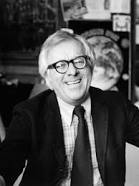
Ray Bradbury (1920-2012, American Author and screenwriter)
Flights of imagination sparkle and spin in this updated 1950s classic by Ray Bradbury, “The Illustrated Man” and its accompanying short stories.
Bradbury writes stories that remind one of late night re-runs of Rod Serling’s “Twilight Zone”. (Serling died in 1975.) Every episode sparkles with stars and planets, habitable by man but riddled with fear, death, and destruction.
Bradbury grasps human nature and turns it against itself by writing stories that illustrate man’s selfishness, insecurity, wantonness, and aggression.
Tattoos come alive on rippling skin to act out a series of plays about mankind’s future. Everyone fears the illustrated man because his tattoos expose the worst in man.
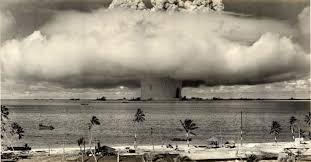
Bradbury writes a story showing nuclear cataclysm will end life on earth. Traveling to other planets changes mankind’s environment but man’s nature remains the same.
These are not happy stories but they are great flights of imagination. Bradbury tells a story of human exile and deprivation that heightens human selfishness.
When personal reward is dangled in front of exiled and deprived human beings, the dangled reward is stolen by one to keep it from the many. In the end the reward is destroyed by the selfishness of each against the other.
As the psychologist Erich Fromm notes: Greed is a bottomless pit which exhausts the person in an endless effort to satisfy the need without ever reaching satisfaction.
Insecurity and envy are devouring beasts in the story of a planet blessed by an appearance of a Visitor (presumably Jesus) just before a rocket ship lands on the planet that has been visited.
The ship’s captain disbelieves it has happened. The captain who lives here is living in paradise. He is driven to track down this Visitor rather than settle in the secure surroundings of a blessed world. The captain is left to wander the universe, never to arrive in time to actually see the Visitor.
Wantonness is illustrated by the husband that is unhappily married. He duplicates himself. His duplicate takes his place beside his wife so so the real husband can buy a ticket to Rio to exercise his fantasy.
The duplicate is so perfect it becomes as human as the husband. When the wanton husband returns from Rio, the duplicate puts him in a box to die. The duplicate then buys a ticket for the wife to accompany him to Rio.
Human kind is aggressive. Humans conquer and destroy civilizations. Bradbury creates a world of the future invaded by humans. The humans destroy its civilization.
The remnants of the destroyed civilization prepare for a second visit from mankind. The remnants of the city devour the humans of the second visit and assume their bodies. These doppelgangers plan to return to earth to destroy those who had destroyed them.
Bradbury is a master story teller. Paul Michael Garcia’s narration is a tribute
to Bradbury’s skill.
The meaning of words changes with the generations. An “Uncle Tom” became a pejorative description of any oppressed minority that accepts slavery and maltreatment as a God given burden, a condition of natural life. (See “Freedom and Equality”.)
The rise of black face minstrels and college party jokers carry through to the 20th century. The “Uncle Tom…” in Harry Beecher’s book is no minstrel and no joke.
In the context of the 20th and 21st centuries Beecher’s book is taken out of context.
“Uncle Tom’s Cabin” is written in an era, brutally described by Frederick Douglas (see “Frederick Douglas”), when human beings are traded as futures commodities. Douglas, a great American black leader, who personally knew Stowe, praises her for writing this book.
In the 18th and 19th centuries, the slave trade lines the pockets of slave traders, plantation owners, and industrialists. Black degradation is reinforced by laws of the land; i.e. slave owners could shackle, whip, sell, rape, and murder slaves with little censure and no penalty. In that context, Harriet Beecher Stowe’s “Uncle Tom…” is a Black Saint.
This is not only a book about slavery; i.e. it is a book about humankind and how abominably one ethnic group can treat another. It is a story told many times in history and in the present day.
The apocryphal story of Abraham Lincoln having said “So this is the little lady who started this great war” is undoubtedly un-true, but for the 1850’s, “Uncle Tom’s Cabin” is a revolutionary book used to fuel the abolitionist cause in America and around the world.
The role of religion has a mixed history in the story of slavery. Religion plays roles in advancing and abolishing slavery. Religion serves as a refuge for slaves by preaching the gospel of forgiveness and an afterlife while many Catholic and protestant religions promote slavery as a biblical right of the white race.
The irony of religion’s followers is that it mollifies Black resistance for those who believe in a Divine Creator. At the same time, biblical writings are used by white supremacists to justify unequal treatment.
Some religions rose above religion’s ugly endorsement of slavery; most did not. Quakers in the 1850s fought slavery in the United States, as is shown in Stowe’s story. Some Quaker households became a refuge for runaway slaves.
At bottom, Stowe shows commerce and greed are pillars of slavery. The farmers, businesses, and industrialists that strove to improve their bottom line directly or indirectly abetted slavery, just as the temptation of cheap labor in China and India seduce today’s American entrepreneurs and consumers.
More broadly, one realizes human nature is good and evil. Most members of society succumb to temptation in life. No human is purely good or evil but a mixture. Human nature blurs the line between right and wrong because every human is tempted by money, power, and/or prestige.
“Uncle Tom’s Cabin” is as relevant today
as it was in the 1850s.



















































 REVIEWS AND VIEWS OF LIFE