REINCARNATION HUMOR

Mo Yan chooses to use reincarnation to bind China’s twentieth century history together. The choice of reincarnation adds humor but suggests something more than laughs.

Audio-book Review

By Chet Yarbrough

(Blog:awalkingdelight)

Website: chetyarbrough.blog

Life and Death are Wearing Me Out

By Mo Yan (Translated by Howard Goldblatt)

Narrated by Feodor Chin

HOWARD GOLDBLATT (TRANSLATOR OF MO YAN CLASSIC)

HOWARD GOLDBLATT (TRANSLATOR OF MO YAN CLASSIC)

Cultural understanding is missing from Howard Goldblatt’s translation of Mo Yan’s “Life and Death are Wearing Me Out”.  Mo Yan chooses to use reincarnation to bind China’s twentieth century history together. The choice of reincarnation adds humor but suggests something more than laughs. 

MO YAN

Author, Mo Yan

The story begins with a murdered man who comes back as a donkey, then as an ox, a pig, a dog, and finally as another man—funny, but is there rhyme or reason in the order?

China becomes communist in the 1940s under the leadership of Mao Zedong.  Communism seeks re-distribution of private land into cooperatives to benefit the many at the expense of the few.  Mo Yan’s story begins with China’s communist revolution and the unjust murder and confiscation of a landowner’s farm.

The murdered landowner is Ximen Nao.  After death, Ximen Nao falls into an imagined purgatory to, presumably, be cleansed of his sins.  Despite severe torture, Ximen Nao refuses purgatory’s judgment of his sin.  In consequence, or happenstance, he is reincarnated as a donkey.  The twist in his reincarnation is that he remembers his former life.  Returning to life as a donkey, he meets former employees, a wife, two mistresses, and his children.

DONKEY

During the Communist revolution, Ximen Nao is murdered.  After death, Ximen Nao falls into an imagined purgatory to, presumably, be cleansed of his sins.  Despite severe torture, Ximen Nao refuses purgatory’s judgment of his sin.  In consequence, or happenstance, he is reincarnated as a donkey.

Ximen Nao, as a donkey, returns to his homeland and finds that his former employee has married one of his mistresses and is farming 6 acres of his confiscated land.  Ximen Nao, the reincarnated donkey, gains a grudging respect for his former employee because the employee steadfastly resists public ownership (being part of the communist co-op) of property and insists on being an independent farmer.  (Communist China’s law allows a farmer to be independent of a cooperative if they choose to work the land themselves.)

The former employee and his new wife become emotionally attached to the donkey because they believe it is a reincarnation of an important person in their lives.  (Later, Ximen Nao’s wife consciously acknowledges that the donkey is a reincarnation of her husband.) The independent farmer and his wife cherish the donkey’s existence and its aid in farming the land.  Several incidents involving the donkey reflect on life in China during Mao Zedong’s reign.

Mo Yan straddles acceptance and rejection of communism and China’s current form of capitalism.  His story skewers both political systems.  In Mo Yan’s story, communism and its belief in public ownership are defeated by human nature’s drive for independence.  The independent farmer lives through Mao’s Cultural Revolution and witnesses the return of a capitalist form of property ownership.  Mo Yan denigrates communism’s intrusion in family affairs and how it turns son against father, brother against brother, and compels women to choose between family and a communist’ collective way of life.

CAPITALISM-COMMUNISM

Mo Yan straddles acceptance and rejection of communism and China’s current form of capitalism.  His story skewers both political systems.

Capitalism and its belief in unfettered freedom are also ridiculed. Mo Yan characterizes capitalism in a story about the lives of spoiled youth.  Youth that live off their family’s wealth; living for adventure; denigrating love, productive work, and respect for tradition and family. 

PROFLIGACY

Mo Yan shows how singular pursuit of wealth corrupts morality; how leisure becomes more important than caring for others or working for human improvement.

Is there some significance in the order of Ximen Nao’s reincarnations?  Ximen Nao is first reincarnated as a donkey, then as an ox, then as a pig, then as a dog, and finally as another man.  It is a clever way of observing history through the prism of different animal’s lives.  It also makes one wonder about humankind’s ethnocentricity and failure to respect all living things.

Most importantly –It makes one wonder where these two Presidents are taking their countries.

Finding the right balance in life is an overriding theme in Mo Yan’s story.  As the inscription on the temple of Apollo at Delphi suggests, “Nothing in excess”; Aristotle, Benjamin Franklin, Mark Twain and many others have suggested moderation in all things. Mo Yan suggests that both Chinese communism and capitalism fail to offer the right balance in life.

SUDAN’S RELEVANCE

Audio-book Review
By Chet Yarbrough

(Blog:awalkingdelight)
Website: chetyarbrough.blog

What Is the What

By: Dave Eggers

Narrated by Dion Graham

As Ronald Reagan famously said in his successful campaign against Jimmy Carter, “There you go again”.

Dave Eggers writes another book about a tragic human event. However, Eggers avoids character controversy like that which followed “Zeitoun”, a story about the Katrina disaster.

Eggers classifies “What Is the What” as a novel, without any claim to source-vetted facts or the integrity of its primary character.

SUDAN IN THE WORLD

SUDAN IN THE WORLD 

“What Is the What” is about Sudan and its 20th century genocidal history. This is a story of the complex religious, ethnic, and moral conflict that exists in Sudan and in all nations peopled by extremes of wealth and poverty.

“What Is the What” is a tautology exemplified by a story of one who has something, knows it, and another that has nothing, and knows not why. 

Valentino Achak Deng, the hero of Eggar’s story, tells of his father. Achak’s father explains the story of “What is the What”.

God offers man a choice of cows or something called the What.  God asks, “Do you want the cows or the What? 

But, man asks, “What is the What”?  God says, “The What is for you to decide.” 

Achak’s father explains that with cows a man has something; he learns how to care for something; becomes a good caretaker of a life-sustaining something, but a man who has no cows has nothing, learns nothing about caring; and only becomes a taker of other’s something.

By mixing truth with fiction, Eggers cleverly reveals the story of Sudan’s “lost boys”, refugees from the murderous regime of President Al-Bashir in Sudan.  At every turn, Achak is faced with hard choices. 

Omar Al-Bashir is deposed in April 2019 after almost 30 years in power.

Omar Al-Bashir, a Muslim Sudanese military leader who becomes President, releases dogs of war by condoning the rape and pillage of indigenous Sudanese by Muslim extremists.  It is partly a religious war of Muslims against Christians but, more fundamentally, it is about greed.

Greed is engendered by oil reserves found in southern Sudan in 1978.  Bashir strikes a match that ignites a guerrilla war.  Eggers reveals the consequence of that war in the story of Achak, one of thousands of lost boys that fled Sudan when their parents were robbed, raped, and murdered.  Bashir’s intent was to rid Sudan of an ethnic minority that held lands in southern Sudan.

Eggers cleverly begins his story with Achak being robbed in Atlanta, Georgia.  But, this is America; not Sudan.

Robbers knock on Achak’s door with a request to use his telephone.  Achak is pistol whipped, tied, and trapped in his apartment while his and his roommate’s goods are stolen.

There is much to be taken from the apartment.  The robbers leave a young boy to guard Achak while they leave to get a larger vehicle to remove the stolen goods.

SUDAN'S LOST BOYS

Achak identifies with the young boy.  Achak recalls his life in Sudan and his escape to America; i.e.the  land of the free; the land of opportunity.  Achak sees the young boy as himself, victimized by life’s circumstances, hardened by poverty, and mired in the “What” (the takers of other’s something).

Eggers continues to juxtapose the consequence of poverty and powerlessness in Atlanta with Achak’s experience in Sudan. Achak’s roommate returns to the apartment to find Achak tied and gagged in an emptied apartment.  He releases Achak.

They call the police to report the robbery and assault.  An officer arrives to investigate.  The police officer listens, takes brief notes, offers no hope for the victims, and leaves; i.e., just another case of poor people being victimized by poor people.

The episode reminds one of the Sudanese government’s abandonment of the “lost boys”.  They are citizens governed by leaders who look to rule-of-law for the rich, and powerful; not the  poor and powerless.  They are leaders of the “what” (takers of other’s something); rather than leaders of all citizens.

Crowded emergency room waiting area.

Achak has been injured in the robbery.  He goes to a hospital emergency room for help.  Achak waits for nine hours to be seen by a radiologist.  He presumes it is because he has no insurance but it is really because he has no power. 

He has enough money to pay for treatment but without insurance, this emergency room puts Achak on a “when we can get around to it” list.  The doctor who can read the radiology film is not due for another three hours; presumably when his regular work day begins.  Achak waits for eleven hours and finally decides to leave.  It is 3:00 am and he has to be at work at 5:30 am.

As Achak waits for the doctor he remembers his experience in Sudan.  When the Muslim extremists first attack his village, many boys of his village, and surrounding villages are orphaned.  These orphans have nowhere to go.  By plan or circumstance the lost boys are assembled by a leader who has the outward-appearing objective of protecting the children.  The reality of the “what” (takers of other’s something) raises its head when the children are recruited by this leader for the “red army” of South Sudan (aka SPLA or Sudan People’s Liberation Army).

SUDAN'S BOY ARMY

The reality of the “what” (takers of other’s something) raises its head when Sudanese children are recruited by this leader for the “red army” of South Sudan (aka SPLA or Sudan People’s Liberation Army).

SUDAN'S 700 MILE WALK

These are boys of 8, 9, 10, 11 years of age.  This army-of-recruits begins a march from South Sudan to Ethiopia, a journey of over 700 miles, gathering more orphans as they travel across Sudan.  Along the way, they become food for lions, and crocodiles; they are reviled as outsiders by frightened villagers and, unbeknownst to Achak and many of the boys—they are meant to become seeds of a revolution to overthrow Al-Bashir’s repressive government.  These children are to be educated and trained in Ethiopia to fight for the independence of South Sudan.  They are led by leaders of the “what” (takers of other’s something).

The lost boys are victims of believers in the “what”.  Achak and other Sudanese’ refugees walk, run, and swim a river to arrive in Kenya, hundreds of miles south of Ethiopia.  Some Sudanese were shot by Ethiopians; some were eaten by crocodiles; some died from disease and starvation.

KENYA'S REFUGEE CAMP

Then, in 1991, Ethiopia’s government changes.  The lost boys, a part of an estimated 20,000 Sudanese’ refugees, are forcibly ejected by the new government.

The Sudanese’ refugees arrive in Kakuma, Kenya.  Achak says Kakuma is a Swahili word for “nowhere”.  In 1992, it becomes home to an estimated 138,000 refugees who fled from several different warring African nations.  The SPLA remains a part of the refugee camp but their recruiting activity is mitigated in this new environment.  The camp is somewhat better organized but meals are limited to one per day with disease and wild animals as ever-present dangers.  Education classes are supported by Kenya, Japan, and the United Nations to help refugees manage themselves and escape their past.

Achak survives these ordeals and reflects on his unhappiness in Atlanta, Georgia.  Achak clearly acknowledges how much better living in America is than living in Africa. However, Achak makes the wry suggestion that Sudanese settlement in America changed his countrymen from abusers to killers of their women.

He suggests Sudanese killing of their women is because of freedom.  He explains freedom exercised by women in America is missing in Sudan.  In Sudan, Sudanese women would not think of doing something contrary to wishes of their husbands.  Achak infers Sudanese women adapt to freedom while Sudanese men feel emasculated.  The emasculation leads to deadly force in Sudanese families; a deadly force that includes murder of wives or girlfriends and suicide by male companions.

AMERICAN DREAM

Eggers successfully and artistically reveals the tragedy of Sudan.  Cultural and religious conflict in the world and American freedom are called into question.  The cultural belief of parts of the Middle East, Africa, and America drive Achak from nation to nation.  Achak, despite misgivings, appears to love America.  But, American democracy is no utopia. Achak realizes no system of government is perfect.  His ambition is to educate himself and his home country.  Achak realizes education is the key to a life well lived.

What is the What?  Ironically, it is more than cows; it is education that combats cultural ignorance and celebrates freedom and equal opportunity for all.

Eggers story implies America needs to re-think its policy on immigration.  We are a nation of immigrants.  Achak’s story highlights what is wrong with America and other parts of the world.  But it also shows the “what” (“the ‘what’ that is for you to decide”) can be made better because it is more than cows.

LOS ANGELES REDUX

Audio-book Review
By Chet Yarbrough

(Blog:awalkingdelight)
Website: chetyarbrough.blog

All Involved: A Novel

Written by: Ryan Gattis

Narrated by:  Anthony Rey Perez, Marisol Ramirez, Jim Cooper, Adam Lazarre-White, James Chen

RYAN GATTIS (AUTHOR)

RYAN GATTIS (AUTHOR)

Ryan Gattis’s novel, “All Involved”, tells of the Los Angeles riots in 1992.  It illustrates a cause for broken trust between minorities and the police.  It is the story of public safety departments struggling with criminality, poverty, addiction, and discrimination.

STACEY KOON (L.A. POLICE SERGEANT)

STACEY KOON (L.A. POLICE SERGEANT)

Four Los Angeles Police officers inflict a beat-down on Rodney King while arresting him after a high-speed chase.  Sergeant Stacey Koon, the commanding officer at the scene is said to have tazed King twice. 

Koon argues the tazing is effective but suggests King is “dusted”; i.e. meaning hyped by PCP.   The four involved officers are white.  Rodney King is black.  King is handcuffed and dragged to the side of the road to wait for an ambulance.  There is no clearer example of how difficult it is–to be Black in America.

Officer Koon’s drug use comment is resurrected by officer Derek Chauvin in the restraint of George Floyd in 2020. Is drug use justification for beating or killing a human being?

RODNEY KING (APPEARANCE 3 DAYS AFTER BEATING 3.6.92--KING DIES IN JUNE 2012 @ 47 YEARS OF AGE)

RODNEY KING (APPEARANCE 3 DAYS AFTER BEATING 3.6.92–KING DIES IN JUNE 2012 @ 47 YEARS OF AGE) There is no clearer example of how difficult it is to be Black in America.

All four officers are indicted for “excessive force”.  After acquittal by the State, six days of rioting begin.  It is April 29, 1992.  In the end, four police officers, Stacey Koon, and Officer Laurence Powell are convicted by a Federal court.  Each serves two years in prison.  Theodore Briseno and Timothy Wind, the other accused, are acquitted.  Gattis does not dwell on the King’ beat down but infers it is the primer for society’s explosion in South Central Los Angeles.

KOON, BRISENO, WIND, & POWELL

In the end, four police officers, Stacey Koon, and Officer Laurence Powell are convicted by a Federal court.  Each serves two years in prison.  Theodore Briseno and Timothy Wind, the other accused, are acquitted.

RODNEY KING RIOT - SOUTH CENTRAL LOS ANGELES

Gattis’s novel looks at L.A’s riots through the eyes of minority communities living in the poorest parts of South Central Los Angeles.  His story begins with the brutal murder of an innocent Latino by a Latin gang.  The murder occurs just after the State’s acquittal of the four officers.  Gattis infers the murder occurs because it could be disguised by the Angeleno’ riots.

The murder introduces a cast of characters that will scare most reader/listeners.  Sadly, Gattis’s book will also energize gun-toting vigilantes, reinforce socioeconomic prejudices, and encourage right-wing pundits to argue socialism is ruining America.  Fundamentally, Gattis’s novel exhibits the appalling consequence of America’s neglect of the poor.

CHARLOTTESVILLE, VA

One may argue there is no justification for rioting in America but current events and past history suggest otherwise.  From the days of the American Revolution to the murder of a 32-year-old woman in Charlottesville, North Carolina by James Fields Jr. in 2017, rule-of-law has been violated by both moral and miscreant Americans.

Every riot is justified and vilified in measures equal to the power and prestige of prevailing interests.  Victims of riots range from rule-of-law enforcement agencies to all socioeconomic levels of American society.  However, the powerless, disrespected, and poor are recycled as perennial victims in every riot.

Those who protect the general public suffer at the time of riot but, as peace is restored, the poor return to a life of quiet desperation and crime that is largely contained and hidden from public view.

GANGS IN SOUTH CENTRAL LOS ANGELES

GANGS IN SOUTH CENTRAL LOS ANGELES (Money, power, and prestige are important to all human beings.  However, the ways of making money in poor communities are often illegal because, like Willie Sutton said about banks–robbing, murder for hire, extortion, and drug trafficking are where the money is.  Gangs proliferate in poor communities.)

Human self-interest is at the heart of what is good and bad in societies based on rule of law.  The rich and middle class are served by rule of law while the poor are often left to fend for themselves.  What Gattis shows in his story is that citizen’ self-interest in poor communities is the same as the general public’ but it takes a different form.

Money, power, and prestige are important to all human beings.  However, the ways of making money in poor communities are often illegal because, like Willie Sutton said about banks–robbing, murder for hire, extortion, prostitution, and drug trafficking are where the money is.  Gangs proliferate in poor communities.  They have their own rule of law because the general public’s rule of law does not equally protect the poor.

If the poor cannot find a job, they sell their bodies or their loyalty.  Turning tricks for money buys food, clothing, and housing–the necessities of life.   Being a gang member or leader becomes the primary ladder for success of the poor.

The stress of being poor is a cycle of illegal selling and buying.  With the use of one’s body or drugs, the poor escape the mind-numbing reality of being poor in America; i.e. at least until they run out of money, are murdered, or die from the pestilences of life.  American police and fire departments treat the poor less equally because the problems of the poor are increasingly unmanageable.

prostitution

The stress of being poor is a cycle of illegal selling and buying.  With the sale of one’s body or the trafficking of drugs, the poor are employed in ways that satisfy the human desire for money, power, and prestige.

Gattis’s novel posits a solution.  He suggests an American gang of corrections officers to threaten poor community gang leaders with murder and mayhem if they choose to persist in their murderous control of poor communities.  One has to ask oneself–how can vigilantism cure the problem?  The victims of this mentality are decent police and fire department operations that have sworn to protect life and property in the jurisdictions of all citizens of the United States.

pogo

Police and fire departments are caught in the middle of a war that cannot be won.

The solution for America does not lie in public safety departments being drawn down to the level of gangs but to raise gangs to the level of good citizens by genuinely educating and providing equal opportunity for all.

The map for poverty’s elimination is a destination at the end of a long road.  The road to a police state, a gang-like sanction of government enforcers, is a short cut to Democratic’ Armageddon.  Gattis tells a story that exposes poverty’s sharp edges and democracy’s vulnerabilities.

BROKEN TRUST

Audio-book Review
By Chet Yarbrough

(Blog:awalkingdelight)
Website: chetyarbrough.blog

Ghettoside: A True Story of Murder in America

Written by: Jill Leovy

Narration by:  Rebecca Lowman

JILL LEOVY (AUTHOR)

JILL LEOVY (AUTHOR)

Broken families, broken hearts, but most of all, broken trust are described in Jill Leovy’s book, “Ghettoside”.

Leovy’s “true story”, somewhat surprisingly, deals mostly with the relationship between Black communities and local law enforcement in an area known as South Central Los Angeles. The surprise in the story is that the 2000 census shows 87.2% of the population of South Central Los Angeles is Latino–only 10.1% is Black; the remainder white, Asian, or other.

SOUTH CENTRAL LOS ANGELES (51 SQUARE MILES, 25 NEIGHBORHOODS)

SOUTH CENTRAL LOS ANGELES (51 SQUARE MILES, 25 NEIGHBORHOODS)

The 2000 census shows of 49,728 people live on 2.55 square miles of land, made up of nine communities.  One presumes Leovy chooses the relationship between Blacks and the police because it fits the particular facts of her story.

Food distribution as a result of Covid19 and unemployment.

It seems fair to suggest broken families, hearts, and trust are equally true for Latin South Central Los Angeles families because poverty and gang violence are common denominators of its residents.

EXTREMES OF AMERICAN GOVERNANCE

Though Leovy’s story is not about poverty, “Ghettoside” (a coined word for ethnic groups killing themselves) is partly related to poorly regulated capitalism; just as genocide is partly related to totalitarianism.  The poor in American cities have few legal means of escape.

Exploring Exotic Hong Kong

“Ghettoside” appears most obviously in modern cities because of population concentration.  The poor have few available living-wage jobs.  The poor congregate in run down inner-city neighborhoods because that is all they can afford.

Decent education is a cost without immediate benefit; i.e. robbery, extortion, prostitution, and other illegal activities provide gainful employment, put food on the table, and pay the rent.  On-job-training is provided by street gang activities.

Violence provides “street-cred” and gang affiliation provides power.  Money, power, and prestige, the hallmarks of capitalism, are as coveted by the poor as the middle class and rich.

GANGS IN SOUTH CENTRAL LOS ANGELES

GANGS IN SOUTH CENTRAL LOS ANGELES  (A son rejects the gang culture but, like all teenagers, craves his own identity.  He ignores gang-culture rules of living in South Central.  Standing on a corner, with a hat that is the wrong color, he is shot in the head by another teenager that presumes gang affiliation.)

This story about South Central is primarily told from the perspective of the police department.  Leovy tells the “true story” of a black South Central Los Angeles’ cop who works and lives in a South Central L.A.’ community.  He is an exception to the rule of most South Central policemen because he lives in the neighborhood he polices.  He is an excellent homicide detective, who works hard to solve crimes in a city he loves.  He raises a family that exemplifies the American dream.  He comes from a lower middle class family, marries a Costa Rican wife while in the marines, and returns to South Central to become a cop.  They raise three children; two younger children went to college while the oldest struggled in school.  With extra effort, the oldest finishes high school.  He is not interested in college but is a conscientious, hardworking young man; much like his father.  The oldest son rejects the gang culture but, like all teenagers, craves his own identity.  He ignores gang-culture rules of living in South Central.  Standing on a corner, with a hat that is the wrong color, he is shot in the head by another teenager that presumes gang affiliation.

LAPD IN SOUTH CENTRAL LOS ANGELES

LAPD IN SOUTH CENTRAL LOS ANGELES (Leovy explores police department reaction to inner-city homicide to reveal how good cops are overwhelmed by a culture that victimizes itself.)

Leovy explores police department reaction to inner-city homicide to reveal how good cops are overwhelmed by a culture that victimizes itself.  As the story unfolds, the police officers’ oldest son dies.  The investigation is turned over to a different department that initially fails to solve the crime; not because of lack of effort but because of a bureaucratic way of conducting the investigation.  The officer in charge is a meticulous detective but the record of his investigation shows he repeatedly knocks on doors of possible witnesses without actually making contact.  The effort is duly noted in the “murder book” but no new evidence is found.  A new officer is assigned to the case that is equally organized but pursues witnesses until he finds them.  A record of attempted contacts is not acceptable to this detective.

POLICE INTERROGATION

Leovy provides detail of the new officer’s interrogation of a suspect that rivals the skill of the investigator of Raskolnikov in Dostoyevsky’s classic fictional story of “Crime and Punishment”.

The interrogation description is a pleasure to listen to and a high commendation by Leovy for the investigating detective.  The case is solved but one is left with the feeling that justice is not done.  A young man, a teenager, is dead.  The killer is also a teenager.  When asked why he murdered the police officer’s son, he said he shot him with his eyes closed; he only did it because the officer’s son looked like he belonged to a rival gang, and, after all, he is Black, so who cares?

Leovy systematically reveals how difficult it is for a good police officer to keep up with the murder rate in South Central L.A.  Everything from budget cuts, to bureaucratic “cover your ass” investigation, to a culture that feeds on itself, makes a good policeman’s job un-doable.

POLICE MURDER INVESTIGATION

Leovy explains how Black families believe they do not matter to the police because murders do not get solved.

Police officers are faced with mistrust that makes solving murders less important than bureaucratic record keeping that shows they are working

no exit

“Ghettoside” is a picture of hell; i.e. a picture of broken families, broken hearts, and broken trust.

When trust between citizens and police is broken, witnesses will not cooperate because they fear reprisal from the accused. 

Ineffective police bureaucracy is compounded by officers that are not part of the community for which they are responsible.  The irony of that observation is made obvious in Leovy’s story of a good officer who lives in the community and has a son murdered for being part of the community.

Being a cop in South Central L.A. looks like the hell described in Sartre’s play, “No Exit”.  It is a play where three dead characters are locked in a room with no exit.  In Leovy’s story, there are the police, the citizens, and the perpetrators.  Sartre is saying “hell is other people” because each is perpetually viewed by the other as the worst part of themselves. 

AKIN TO PROUST

Knausgaard’s precise descriptions of a lived life reminds listeners of how much men have in common, whether Norwegian, American, or other.

Audio-book Review
By Chet Yarbrough

(Blog:awalkingdelight)
Website: chetyarbrough.com

My Struggle, Book 1

Written by: Karl Ove Knausgaard

Narration by:  Edoardo Ballerini

KARL OVE KNAUSGARD (NORWEGIAN AUTHOR)

KARL OVE KNAUSGARD (NORWEGIAN AUTHOR)

Karl Knausgaard’s “My Struggle, Book 1” is akin to Proust’s oeuvre about life and coming of age.  This comparison is somewhat apt but Knausgaard’s journey is visceral and personal while Proust’s is intellectual and universal.  A listener feels like they are peeking into Knausgaard’s personal diary; while Proust’s “Remembrance of Things Past” is an intellectual exercise.

Swan's Way

With Knausgaard, a listener feels stuck in a web, without exit; with Proust, one feels stuck but sees a way out. 

Even the name of Knausgaard’s book, “My Struggle”, has an emotional feel and personal meaning.  In contrast, Proust’s first book is called “Swann’s Way” which infers a more abstract and recollected universal insight.

Marcel Proust (French novelist, criitc and essayist, 1872-1922)

This is not a criticism of Knausgaard’s or Proust’s writing.  Knausgaard and Proust are like spiders that weave words into webs that capture listener’s consciousness. 

Knausgaard struggles with his freedom.  On the one hand, he likes the independence; on the other, he misses the stability associated with family.  He becomes accustomed to being alone.  He covets being alone, even among friends.  

Knausgaard craves the oblivion of alcohol. 

Acquiring alcohol becomes a challenge that is met by having others buy it for him and eventually using his 6’ 2” height to fool corner store owners into selling him beer.

Knausgaard seeks companionship to compensate for unstructured independence but shies away from intimacy. 

He struggles with growing interest in sex.  He has his first ejaculation in an unconsummated bedroom experience with a girl schoolmate.  He is sixteen years old.

At fifteen, Knausgaard is struggling with his need for independence. 

Knausgaard reveres both his mother and father.  He deeply loves both but is ambivalent and somewhat fearful of his father. Knausgaard’s need is served by a mother and father that become separated, first as a result of work, but in the end by divorce.  Knausgaard begins to effectively live alone when his mother and father separate.

The way Knausgaard views life waivers between the radical left and outright anarchism. 

He is financially supported by his father but his father allows Knausgaard to live largely by himself.  When parental divorce becomes a fait accompli, Knausgaard emotionally cleaves to his mother while revising views of his father.

“My Struggle, Book 1” is an excellent memoir of boyhood.  It is filled with experiences that remind adult men of what it is like to grow-up in modern times.  Some embrace the “Sturm und Drang” of life while others close themselves off and become observers rather than participants.  Knausgaard is an observer.

Knausgaard begins to see his father as an individual; as a vulnerable human being, capable of crying and subject to the same weaknesses of all men.    He is married twice.  He is driven by desire for success with relationships in life as a means to an end rather than ends to a mean.

Knausgaard is less observant of his mother’s humanness because he measures his life against his father’s actions and reactions.  In consequence, his understanding and relationship with women is degraded.

Knausgaard’s depiction of his father’s death in the squalor of Knausgaard’s grandmother’s home shocks the senses.  It reflects a truth about neglect of the poor, physically or mentally challenged, and the elderly in cultures based on self-interest.

Children who grow into relatively healthy adults believe they are immortal; i.e. “boys grown to men” believe achieving economic security, psychological health, and physical well-being is part of every life’s struggle. Knausgaard infers that when life’s struggle slaps people down, the recovered forget the un-recovered.

Knausgaard suggests those who succeed in a self-interest’ culture believe failure to overcome life’s struggle is the their own fault. One cannot escape the feeling that this is a leading cause of homelessness in one of the richest nations in the world.

Knausgaard tells of his father’s descent into alcoholism, and his grandmother’s mental collapse.  Both are ignored by Knausgaard and his brother until confronted by his father’s death in their demented grandmother’s pee and shit-stained house.

There is a homeopathic comfort in hearing Knausgaard’s vignettes of life because they remind one of life as a boy growing into a man.  There are no revelations in Knausgaard’s journey to adulthood.  However, there are interesting and informative recollections. 

Knausgaard’s precise descriptions of a lived life reminds listeners of how much men have in common, whether Norwegian, American, or other.  It reminds us that we are human, imperfect, and ephemeral.

WOMEN

Audio-book Review
By Chet Yarbrough

(Blog:awalkingdelight)
Website: chetyarbrough.blog

Those Who Leave and Those Who Stay

Written by: Elena Ferrante

Narration by:  Hillary Huber

ELENA FERRANTE (A writer who chose to be anonymous until she was revealed by the press to be the author of the Elena Greco/Lila trilogy.)

“Those Who Leave and Those Who Stay” reflects on the difference between women “doing” and women “thinking”.

“Those Who Leave and Those Who Stay” is the last book of four by an author known by the pseudonym Elena Ferrante.  It is a book about Italy in the 1960s and 70s.  As in the United States, this is a time of social upheaval.  Student revolution and class warfare headline Italian media. 

In Italy, neo-fascists and communist parties compete for Parliamentary seats at opposite ends of the political spectrum.  A neo-fascist’ party presses to capitalize on economic prosperity of the 50s while communist sympathizers rail against economic disparity between owners and workers.

Ferrante’s story is about a young female author, Elena Greco, who has written a book about coming of age in this era of Italian upheaval.  To men, Elena reveals insight to an erotic chasm between the sexes.  To women, she offers insight to inequality of the sexes. 

WOMEN AND THE LADDER TO SUCCESS

Elena reveals how life is a struggle for all women; i.e. those who escape poverty, as well as those who remain mired in it.

Sadly, Ferrante ends her book in bewilderment.  Her hero, Elena Greco, appears to surrender to a world tainted by male domination.  To add to that bewilderment, her counter-culture maven named Lila, succumbs to the sterile belief that self-interest is all that matters in life.

The author reflects on how formal and street-wise education in Italy impacts social change.  Elena Greco, Ferrante’s protagonist, is a lower class Italian that rises to fame and fortune by being the first in her family to graduate from college.  She is a writer.  She is a thinker.  Her first book is published to wide acclaim for its depiction of a girl growing into a woman.  She is struggling to find her way through middle life by writing a second book.  She has a tumultuous relationship with her mother who secretly admires her daughter’s accomplishment and ability.  She becomes engaged and marries a rising college professor but grows to resent his intellectual beliefs and dominating self-interest.

WOMEN ON THERE OWN

WOMEN ON THEIR OWN (Ferrante creates a less conventional character named Lila.)

Lila, who comes from the same neighborhood as Elena but escapes poverty by marrying a relatively successful merchant, whom she later divorces.  The divorce can be explained in different ways and for different reasons but the immediate consequence is Lila’s return to poverty.  She did not pursue a formal education but is educated by the street.  She is a doer.  She is tough, insightful, and independent.

Lila has two children, a daughter who stays with her former husband, and another, a boy, that she is pregnant with when she divorces.  She, like Elena, has a tumultuous relationship with her mother.  The relationship appears irreconcilable because her mother believes her a whore who left a husband that gave her security and extended family respectability. 

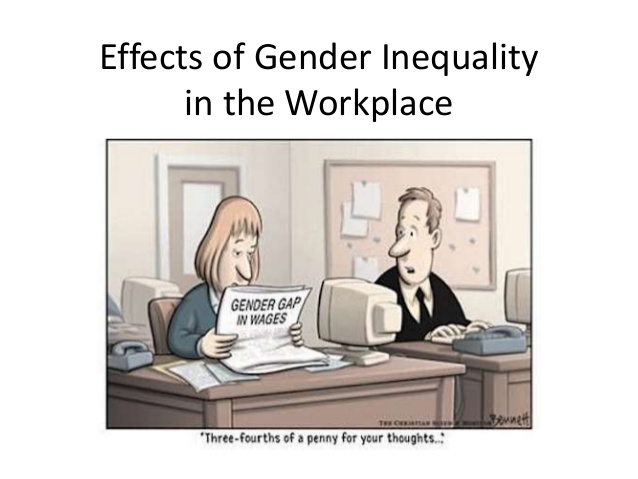
Women in the Workforce

To survive, Lila breaks with her extended family, goes to work in a sausage factory, and lives with a male friend to reduce living expenses.  Partly out of necessity, Lila leaves her boy with neighbors when working but also resents the un-shared burden of motherhood.

Elena and Lila are friends from childhood but their paths to adulthood diverge.  As adults, their lives periodically intersect to crystallize differences between revolutionaries that think, and revolutionaries that do.

FAMOUS WOMEN IN HISTORY

Lila is a pioneer; a woman ahead of her time, “a doer”.

Elena becomes part of the intelligentsia–those who think, while Lila is street educated–those who do.  In their journey through life, one sees Elena using her intelligence to parse the difference between love, sex, success, and failure.  With knowledge as a thinker, Elena pursues independence.

In Lila, one sees an equal intelligence that deals daily with being a woman, a worker, and mother in a man’s world; doing what is necessary to win independence.  Lila sees potential in the technology industry and capitalizes on its growth.  She eventually starts her own company. 

Both heroines seem to break free to become independent human beings.  Elena achieves freedom as a consequence of thinking; while Lila achieves freedom as a consequence of doing.  Both bear the consequence of their independence.

In the end, a listener becomes bewildered by Elena’s view of freedom because it seems constrained by how a man views women rather than how women view themselves.  It seems, to a believer in equality of the sexes, that Elena Ferrante abandons her “female independence and equality” theme.

Ferrante’s main character–Elena Greco, in her second book, ironically writes about man’s creation of woman; i.e. an odd assessment for one who wrote a first book that infers women are independent and equal to men.

women are the sun

In the beginning, Ferrante shows women are the sun, around which men revolve. In Ferrante’s second and last book of the trilogy, a cloud appears between the sun and its planets. Independence and equality become something else.

ORGANIZED RELIGION

Audio-book Review
By Chet Yarbrough

(Blog:awalkingdelight)
Website: chetyarbrough.blog

The Pope and Mussolini: The Secret History of Pius XI and the Rise of Fascism in Europe

Written by: David I. Kertzer

Narration by:  Stefan Rudnicki

DAVID KERTZER (AUTHOR, ANTHROPOLIGIST, PAUL DUPEE UNIVERSITY PROFESSOR, HISTORIAN SPECIALIZING IN ITALIAN STUDIES)

DAVID KERTZER (AUTHOR, ANTHROPOLIGIST, PAUL DUPEE UNIVERSITY PROFESSOR, HISTORIAN SPECIALIZING IN ITALIAN STUDIES)

David Kertzer reminds society that organized religion is only human.  Religions are subject to the goodness and sins of human nature.  Whether one believes in a Supreme Being or not, actions of organized religion are freighted with human error.

Kertzer is only one of many who have exposed the perfidy of organized religion.  His target, in “The Pope and Mussolini, is the Roman Catholic Church.

Cardinal Ratti becomes Pope Pius XI during the ascension of European Fascism and Nazism in the 1920s and 30s.  Ratti is characterized as a pedantic, conservative, and sometimes bellicose Christian believer in the Roman Catholic Church.  As a religious pedant rather than trailblazer, Pope Pius XI focuses on returning Roman Catholicism to a former time of independence and influence.  No price appears too high; Pope Pius XI’s purchase price paves the way for state Fascism (total control of government and society) in Italy.

POPE PIUS XI (1857-1939)

POPE PIUS XI (1857-1939) Cardinal Ratti becomes Pope Pius XI.  Ratti is characterized as a pedantic, conservative, and sometimes bellicose Christian believer in the Roman Catholic Church.

Kertzer recounts early 19th century history of the Roman Catholic Church.  The secular government of Italy confiscates Church lands. That taking decimated Catholic wealth, restricted Popes to the Vatican grounds, and reduced Papal control of the Holy See.  More significantly, it reduced the church’s power to influence believers.  After 1860 and until the Lateran Treaty negotiated between Mussolini and Pope Pius XI, the Church is treated as a part of the state of Italy, subject to secular rule.

Pope Pius XI agrees to support the government of Benito Mussolini in 1929 in return for the creation of an independent Papal State in Rome.  Mussolini agrees to pay the church approximately $100 million for formally confiscated church land.  Pope Pius XI acquires for himself and future Popes the right of independent rule, religious interpretation, and Catholic dictation.  In return Mussolini gains the support of the Roman Catholic Church, the dissolution of Catholic political parties, and a title as II Duce, “The Leader” of Italy.   At the stroke of a pen, Mussolini becomes a hero of Italian Catholics (over 90% of the population) and the totalitarian leader of Italy.

BENITO MUSSOLINI (1883-1945, PRIME MINISTER OF ITALY 1922-1943, LEADER OF NATIONAL FASCIST PARTY)

BENITO MUSSOLINI (1883-1945, PRIME MINISTER OF ITALY 1922-1943, LEADER OF NATIONAL FASCIST PARTY)

Kertzer notes there are common goals for Mussolini and Pius XI in the Lateran treaty which separates church from state.  Both covet power.  Both dislike the idea of a Catholic party interfering with religious or state matters.  Both desire elimination of factional interference in government and religion; i.e. Mussolini’s Fascist control of government and the Pope’s control of Church doctrine.

Seeking sovereign independence of the Holy Sea. Pius XI becomes head of state of the smallest state in the world.  $100 million is paid to the church for confiscated land since 1860.

Pius XI is the first Pope to broadcast on radio in the early 1920s.  With the Lateran Treaty of 1929, the Papal State is created; after 58 years of refusal to become part of Italy.  Prisoners in the Vatican before 1929, the Lateran Treaty required elimination of the Catholic Italian Popular Party, a political organization.

DAVID KERTZER “THE RELATIONSHIP OF BENITO MUSSOLINI AND POPE PIUS XI (1922-1939):

An unintended consequence was to reinforce Fascism in Italy.  With the ascension of Pope Pius the XII, the Nazi government is solidified.  The trade-off for the Roman Catholic church  is an increase in international influence.   At the same time, pagan worship of fascism by Church youth groups diminishes the church’s moral stature. 

POPE PIUS XII (1876-1958, FORMERLY CARDINAL PACELLI)

POPE PIUS XII (1876-1958, FORMERLY CARDINAL PACELLI)
Pope Pius XI refuses to excommunicate Hitler, Mussolini gravitates to Nazism, and Pius XII ignores Nazi atrocity.

The Lateran treaty is a slippery slope for both Nazi Germany and the Roman Catholic Church.  Mussolini and Pius XI are blinded by hubris and false piety.

BENITO MUSSOLINI HANGING BY HIS HEALS NEXT TO HIS MISTRESS

Mussolini is shot by his countrymen, hung by his heals for destroying people’s freedom, and losing a war that compromised and betrayed his county.  Pius XI compromises his morals and paves the way for Pius XII, a closet Christian anti-Semite, who becomes a Hitler’ stooge by tacitly endorsing the immorality of belief in ethnic purity.

The closing years of Pius XI’s reign is marked by a closer association with democracies as the Western nations and the Vatican found both were threatened by totalitarian regimes and ideologies of Hitler, Mussolini, and Stalin.  However, with Pius XI’s death and ascension of Pope Pius XII, distinction between totalitarianism and democracy diminishes.

Pope Pius XII—Hitler’s Pope.  FORMER CARDINAL PACELLI Hitler and the roman catholic church: <iframe width=”854″ height=”510″ src=”https://www.youtube.com/embed/2x_MdS88qr8&#8243; frameborder=”0″ allowfullscreen>

***IRONIC SPEECH  POPE PIUS XII SPEAKING ENGLISH TO TROOPS WHO LIBERATED ROME:

Kertzer offers insight to what really happened in Italy in the 1920s, 30s, and early 40s but the story resonates with all organized religions.  Jewish isolation of Palestinians, ISIL’s attempt to resurrect the Caliphate, Muslim repression of Kurds, Taliban Muslim cruelty in Afghanistan, Chinese suppression of Uighurs, and Protestant proselytizing around the world are cut from the same flawed fabric; i.e. the flawed fabric of human interpretation of humanly manufactured texts and religions. 

RELIGIOUS BELIEF

In the name of God, organized religion’s killings continue.  If there is a God, he/she is not evil; i.e. only humans are evil.

BESTSELLER

Audio-book Review
By Chet Yarbrough

(Blog:awalkingdelight)
Website: chetyarbrough.blog

Great American Bestsellers: The Books That Shaped America

Great American Bestsellers

5 Star

Published by: The Great Courses

Lectures by:  Professor Peter Conn

PETER CONN (AUTHOR, VARTAN GREGORIAN EMERITUS PROFESSOR OF ENGLISH, PROFESSOR OF EDUCATION AT THE UNIVERSITY OF PENNSYLVANIA)

Professor Peter Conn prefaces his lectures on “Great American Bestsellers” by noting a bestseller’ label is not necessarily a measure of good or great writing but of popular consumption.

Historically, bestseller has meant high purchase volume for a book; usually, higher than expected.  In the modern age, a bestseller label is often degraded by publishers; i.e. it is used as a marketing ploy rather than a measure of sales volume.

However, by more accurate measure of popular consumption, Conn argues bestsellers shape American culture, either by reinforcing or changing the direction of cultural norms. The books Conn identifies are American bestsellers because they fulfill two criteria.  One, the books Conn selects and reviews are widely purchased.  Two, Conn’s bestseller’ selections arguably reflect or shape American’ belief.

Most books Conn selects are well-known today.  A few, like “The Bay Psalm Book”, “Ragged Dick”, and (at least to me) “The House of Mirth”, are obscure.  Some of Conn’s selections have been reviewed by me in the past; e. g. Thomas Paine’s “Common Sense”, Harriet Beecher Stowe’s “Uncle Tom’s Cabin”, Upton Sinclair’s “The Jungle”, Pearl Buck’s “The Good Earth”,  John Steinbeck’s “The Grapes of Wrath”, Richard Wright’s “Native Son”, and Joseph Heller’s “Catch-22”,  Each of these books profoundly shape my view of America; partly from personal experience, but mostly from an author’s ability to paint pictures of others’ lives.

RIGHTS OF MAN
THOMAS PAINE’S – RIGHTS OF MAN

These lectures are informative.  Thomas Paine’s “Rights of Man” is as relevant today as it was in the nineteenth century.  It became a best seller because it reflected rising discontent with the direction of government.  Todays’ political demonstrations offer similar resentment about elected representatives and an election system (now corrupted by money) that Paine railed against when writing about the rights of man.

uncle tom's cabin
HARRIET BEECHER STOWE’S – UNCLE TOM’S CABIN

“Uncle Tom’s Cabin” is another bestseller that moves modern readers with as much force as it did in the 1850s.  Conn recounts the apocryphal (likely untrue) story of Abraham Lincoln’s welcome for Stowe to the White House—“So this is the little lady who started the great war”.

It is interesting to find that Mark Twain’s “The Adventures of Huckleberry Finn” is criticized for what might be called “Black Samboing”.  The last half of the book reflects a characterization of Huck’s companion, Jim, a runaway slave who compels Finn to choose between what is morally or legally right.  The last half of the adventure makes Jim look like “Black Sambo”; i.e. one who shucks and grins rather than seeks freedom and the right to be treated as a human being.  Twain seems to covet laughter at the expense of truth.

Mark Twain (Samuel Clemens 1835-1910)
It is interesting to find that Mark Twain’s “The Adventures of Huckleberry Finn” is criticized for what might be called “Black Samboing”.

Conn identifies why Twain is a puzzle that confounds critics’ understanding.  On the one hand, Twain is a man ahead of his time; on another he is a huckster seducing his audience with stereotypical and offensive characterizations of the poor and uneducated.  Twain is an acquired taste; i.e. bitter like beer or coffee that either dulls or sharpens one’s senses.

Native Son
Professor Conn tells of Richard Wrights’ hard life and its lessons in “Native Son”.  It is a story of what being Black in America means.

“Native Son”, the first bestseller by an African-American, is a compelling and brutal picture of the consequences of discrimination.  Conn tells of Richard Wrights’ hard life and its lessons in “Native Son”.  It is a story of what being Black in America means.  Many consequences of Wrights’ hard life are still being played out today.

In 24 lectures, Conn surveys many of yesterdays’ bestsellers; some of which have outlived their relevance but many that continue to speak “…volumes about the nation’s cultural climate” (a partial quotation from the publicist of the series).

TO A HAMMER, EVERYTHING IS A NAIL

Audio-book Review
By Chet Yarbrough

(Blog:awalkingdelight)
Website: chetyarbrough.blog

The Emperor of All Maladies, A Biography of Cancer

By Siddhartha Mukherjee

Narrated by Fred Sanders

SIDDHARTHA MUKHERJEE (AUTHOR, PHYSICIAN)

Dr. Siddhartha Mukherjee examines the history of cancer in “The Emperor of All Maladies”.

cancer death rates rising

The Centers for Disease Control and Prevention reports heart disease and cancer are the two leading medical causes of death.

At first glance, one thinks–so what?  We are living longer, and everyone dies of something.  However, Mukherjee notes a study showing cancer deaths are rising: i.e. they decrease in one age group only to be offset by increase in another.  The net effect is a rising number of cancer cases.

RADICAL MASTECTOMY IN THE 19TH CENTURY

In researching the history of cancer, Mukherjee exposes the arrogance of medical specialization.  Mukherjee shows early attempts to cure cancer were led by surgeons who removed cancerous growth.

Cancer, like the threat of a pandemic, induces fear and panic. Both maladies are unpredictable in the face of a human desire for predictability, health, and well-being. There is no certainty in either diagnosis. All a human can do is persevere. And so it is today with Covid19, the most horrific pandemic since the 1918 flu epidemic.

“The Emperor of All Maladies” reminds one of the saying—”To a hammer, everything is a nail”. 

Cancer, like Covid-19, is a slippery killer.  Thinking Covid-19 is the flu is as misleading as a singular solution for cancer.

COVID-19 affects different people in different ways. Infected people have had a wide range of symptoms reported – from mild symptoms to severe illness.

Symptoms that may appear 2-14 days after exposure to the virus:

  • FeverCough
  • Shortness of breath or difficulty breathing
  • Chills
  • Repeated shaking with chills
  • Muscle pain
  • Headache
  • Sore throat
  • New loss of taste or smell

The world scrambles for a vaccine to treat COVID-19. Fear drives people to desperation.

The public needs to discipline itself when offered an alleged medical treatment without verifiable proof of efficacy by medical science.

Mukerjee recounts the missteps made by medical professionals in their search for a cure to cancer.

The hammer, in the early days of cancer treatment, is a scalpel wielded by surgeons who cut deeper and deeper into the body until the patient is physically disabled, in limited remission, or laboring toward death.  The surgeon believes he has removed the cancer only to find it returns in weeks or months later.

Surgery works but the scalpel is a hammer that only works when cancer is localized and non-systemic.

Radiation Effects

The next specialty is radiation.  Here the physician replaces the scalpel with focused radiation; another hammer. Radiation cannot kill systemic cancer without killing or diminishing a patient’s health.

CANCER AND CHEMOTHERAPY

Next up is the internal medicine specialist, the oncologist.  This specialty argues that cancer can best be treated with designer drugs to specifically attack or starve cancer cells.  The problem is medicines that kill cancer cells are generally toxic; i.e. they kill both good and bad cells.

The final specialization is immunotherapy which ranges from bone marrow  and blood antigen enhancement to bone marrow transplantation. The purpose of immunotherapy is to make the body more resistant to cancer cell growth.

Though each specialization advances cancer remission, specialists lauded their own treatments and ignored each other’s accomplishments. 

CANCER AND MULTIFACETED TREATMENT

Specialists were historically proprietary about their treatments.  Some went so far as to distort their results with false clinical studies.  They felt their treatment was the best way of attacking “The Emperor of All Maladies”.

Specialists exclusively pursue their singular research, treatment, and reporting until a few physicians argued all disciplines should be enlisted to cure cancer.

CANCER AND EVOLUTION

The cure begins with physician attention and empathy for the patient.  Mukherjee infers cancer therapy is not for physician self-congratulation.  Hubris is a failing in physicians; just as it is in all human endeavors.  Cancer is an eternal war.  It changes with the environment and life’s evolutionary laws.

Mukherjee’s history explains how the chain of discovery for a cancer cure can be broken at different levels. 

There is physician self-delusion about how effective their treatment is for cancer.  There is the integrity of research studies and how they are conducted.  There is industry and government support of industrial waste production that is proven to be carcinogenic.

The door is opened to interdisciplinary research by philanthropists who created foundations to clinically study causes and cures for cancer.  Mukherjee addresses the continuing need for funding to expand cancer research.  He is not Pollyannaish about the need.  He acknowledges cancer research is not going to be like America’s race to the moon in the 1960s.  There is no definitive goal. The goal is not fixed like a mission to Mars.  Cancer’s etiology evolves.  It is unlikely for there to be a single-bullet solution that will cure cancer. 

Mukherjee expands on the difficulty in curing cancer because of capitalist resistance to scientific research, and discovery. 

MARLBORO MAN

Mukherjee recalls the battle with the cigarette industry when research clearly shows a correlation between cancer and smoking.  The cigarette industry lies to the public about their own studies correlating lung cancer with smoking.

Cigarette industry lobbyists influence legislation that delays concerted action by the government to curb the addictive characteristics of smoking.  Money talks, cancer proliferates.  (This reminds one of the gun lobby and their insistence that guns designed only to kill people are a right that should not be infringed upon.  Though gun use may not be addictive, there is a distinct correlation between the number of deaths in one incident and the proliferation of fully automatic weapons designed only to kill people.)

Mukherjee also recounts the incidence of cancer in England for chimney sweeps that inhaled carbon and asbestos from cleaning chimneys.  Today’s confrontations are carbon, other cariogenic, and environmental contaminants created by industry.

The National Institute of Health reports an estimated 1,735,350 new cancers will be diagnosed in the United States in 2018.  Of that number, 609,650 will die.  Worldwide, NIH reports 14.1 million new cases were identified in 2012.  8.2 million died.  The only killer more prolific than cancer is heart disease, and only by a small margin (In 2009, the CDC reports 610,000 people die every year from heart disease.)

PHYSICIAN HEAL THYSELF

Mukherjee implies all physicians need to step back, abandon their professional bias, and pursue treatments that are based on scientific research, symptoms, and reports of their patients.

Physicians need to listen, do no harm, and when necessary, offer palliative treatment—until, hopefully, a lasting cure is found. When the world is struck by a deadly virus, urgency is admittedly a gamble. Searching for a cure comes from science. When multitudes are dying, no-risk cures are unlikely to be discovered. Those who choose not to be vaccinated are risking more than their own lives when a pandemic strikes.

U.S. HEALTH CARE

Medical research and experimentation is costly. 

Mukherjee’s history shows the weakness and strength of capitalism and human nature in supporting what humanity needs to defeat cancer.  His history should be required reading; particularly for physicians, and researchers, but also for the general public.

MORALITY

Audio-book Review
By Chet Yarbrough

(Blog:awalkingdelight)
Website: chetyarbrough.blog

The Modern Scholar: Ethics: A History of Moral Thought

By: Peter Kreeft

Lectures by Kreeft

PETER KREEFT (PROFESSOR OF PHILOSOPHY AT BOSTON COLLEGE AND THE KING'S COLLEGE)

PETER KREEFT (PROFESSOR OF PHILOSOPHY AT BOSTON COLLEGE AND THE KING’S COLLEGE)

Professor Kreeft, in The Modern Scholar’ lectures, offers stories of interesting philosophers and what they think they know about moral thought.  “Ethics: A History of Moral Thought” is a whirlwind tour of how philosophers define ethics.  It begins in antiquity and continues through tomorrow.

What one hears in these lectures may be accepted and practiced in life tomorrow or never; if never, one is seemingly confirming belief in free choice, but not much more.  As a warning to the curious, the tour is circular.  The tour ends as it begins.

Socrates (469-470 BC-339 BC-estimated age 71)

Socrates (469-470 BC-339 BC-estimated age 71)

Wisdom is characterized by Socrates as—“I Know Something That I Know Nothing”.  Kreeft recounts Socrates’ story of being told by Apollo’s Oracle that he is the wisest man on earth.

Socrates does not believe what he is told by Apollo’s Oracle.  He proceeds to prove the Oracle’s error by asking questions of wise men in his day.  In the process of questioning, Socrates finds no one can convincingly answer the questions he asks. 

Socrates concludes the Oracle is right.  He is the wisest man in the world because he knows that he knows nothing.  Others say they know, explain what they know; believe they know, but show (from Socrates’ questions) they know nothing.

Kreeft moves on from the ancients to Aquinas (1225-1274), Machiavelli (1469-1527), Hobbes (1588-1679), Locke (1632-1704), Rousseau (1712-1778), and Sartre (1905-1980) to reveal the truth of Socrates’ aphorism.  Each of these philosophers open new doors of explanation to human ethics but each door leads to empty rooms.

THOMAS AQUINAS (ITALIAN DOMINICAN FRIAR & PHILOSOPHER-THEOLOGIAN 1225-1274)

Aquinas acknowledges happiness as a goal in life. To Aquinas, happiness is defined by union with God, the Father of divine virtue.

The cardinal virtues are prudence, temperance, courage, and justice.  Aquinas believes, to the degree humankind follows the cardinal virtues, he/she finds happiness. The logical extension of this philosophy is that there is no chance of happiness without union with God, a God defined by its believers–a Christian, a Buddhist, a Muslim, who?

NICCOLO MACHIAVELLI (1469-1527)

NICCOLO MACHIAVELLI (1469-1527)

Kreeft explains that Machiavelli removes the idea of virtue and ethics from the concept of happiness and suggests the exercise of power is the source of happiness.

Machiavelli views mankind as innately evil with happiness as reward from the pragmatic use of power; power gathered by any means necessary.  Machiavelli argues that being feared is more important than being loved.  “Might makes right” in Machiavelli’s observation of the world; virtue is superfluous in the face of force.  The logical extension of this philosophy is tyranny of the many by the few.

THOMAS HOBBES (1588-1679)

THOMAS HOBBES (1588-1679)

Kreeft notes that Hobbes believes, like Machiavelli, mankind is innately evil.  However, Hobbes suggests societies form into communities to mitigate human’ evil through the creation of laws exercised by a great Leviathan, a powerful monster.

The logical extension of Hobbes belief is big government that proscribes laws to mitigate mankind’s inherent evil.

John Locke (English philosopher 1632-1704)

In contrast to Hobbes, Kreeft explains John Locke’s argues that mankind is basically good and freedom-to-compete in a marketplace for goods and property will result in a balanced community of interests.

The logical consequence of Locke’s philosophy is smaller government but only theoretical happiness because competition generates win/lose consequences that amplify community’ inequity.

Jean-Jacques Rousseau (1712-1778)

Next, Krefft’s analysis of Rousseau opens a door to the French Revolution with the idea of “The Social Contract”.  Rousseau believes in the innate goodness of man and argues for the rights of assembly and representative government to establish standards for the common good.  The consequence of that belief is mobocracy in the “Great Terror” of the French Revolution.

In more modern times, the rise of Sartre’s philosophy brings ethics into the 20th century.  Krefft describes Sartre’s philosophy as relativist.  Sartre is an atheist.  He argues that the world is indifferent to all life forms.  People are free but their freedom comes with responsibility.  Without God, all things are permissible but the individual bares the consequence of his/her action.  Sartre believes everything is defined by relationship to an “other”.

JEAN-PAUL SARTRE (1905-1980)

JEAN-PAUL SARTRE (1905-1980)

Sartre suggests human beings live in a state of oppression.  What he means is people choose to emulate others rather than be themselves.  They are oppressed by working to stay up with the Joneses rather than fulfilling there own desires.


David Riesman (1909-2002), a sociologist, wrote a book titled “The Lonely Crowd” that exemplifies Sartre’s concept of oppression.  Sartre suggests we can break that bond by recognizing the oppression and choosing independent self-actualization or authenticity.

This is an existentialist philosophy that demands knowledge and understanding of oneself. 

Soren Kierkegaard (1813-1855)

Oddly, existentialism began with a religious philosopher, Soren Kierkegaard. Sartre is known as an atheist. Every person is his/her own god.  Ethics are situation-ally determined with individual’ acceptance of responsibility; every person is an island.

A logical extension of this ethical belief is that societies breed iniquity and distort truth and leave every person on their own path to happiness.

From Krefft’s lectures, one begins to believe human beings are good and bad by nature.  Aside from “Knowing One’s Self” and “Knowing that I Know Nothing”, there is no philosophy that adequately defines virtue or ethics that would predict any kind of Utopian future. 

If happiness is the goal of life, its attainment by an individual or a society remains a mystery.

Nearing the end of Krefft’s lectures, he addresses attempts of science to define morality and ethics.  Krefft acknowledges observation’ analysis dates back to Machiavelli and his views of history but the scientific movement gains momentum with David Hume (1711-1776), Immanuel Kant (1724-1804), and John Stewart Mill (1806-1873).  It seems none of these “users of the scientific method” shed much light on the subject.

REINCARNATION

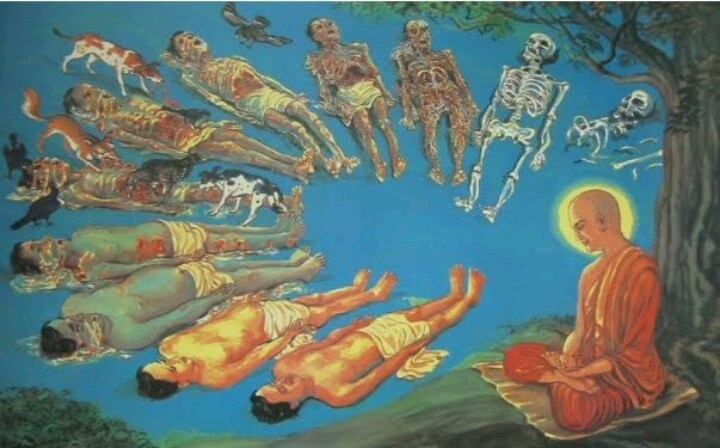
Finally, Krefft lightly covers eastern philosophy’s approach to morality and ethics.  One fundamental difference between western and eastern beliefs is eastern belief in reincarnation versus western belief in a one way ride.  A second fundamental difference is the belief in eastern’ culture that human beings are both good and bad while western’ culture believes humans try to be good but are seduced into being bad. 

Krefft suggests an eastern religion may pass a dying person on the sidewalk because he/she fears interference with reincarnation.  In contrast, a westerner might pass a dying person to not be involved, or with a belief that a dying person’s problem is not my problem.

PASSIVE VS. ACTIVE

Krefft also notes that eastern philosophy is by nature a “let be” view of life with a concerted effort to leave worldly concerns to their own destiny. 

Western philosophy is more proactively involved in defining and practicing, or failing to practice, morality and ethics.

KNOW THYSELF

By the end of Professor Krefft’s lectures, a listener returns to Socrates suggestion; i.e. “Know thyself” because “The un-examined life is not worth living”. 

What you believe is what you believe, but Krefft seems to suggest we should always seek to understand why.