Graduate Oregon State University and Northern Illinois University,
Former City Manager, Corporate Vice President, General Contractor, Non-Profit Project Manager, occasional free lance writer and photographer for the Las Vegas Review Journal.
Narrated by Cassandra Campbell, Adenrele Ojo, Hilliary Huber, Ramiz Monsef, Kate Reading, R.C. Bray
Joan Silber (Author, winner of the 2017 National Book Critics Circle Award in Fiction and the Pen/Faulkner Award for Fiction for her book “Improvement”.)
“Improvement” is a compilation of characters in the formative years of their early adult lives.
The primary character is Reyna who lives in Harlem, New York. It is a story of her life and the lives of several who are in that age group. All characters in the novel are directly or indirectly connected to Reyna. None are “movers and shakers” of the world, but each represent what life is like for many young adults in the 21st century.
Reyna is a single mother with a young son named Oliver, and a boyfriend who is not the son’s father.
The boyfriend, Boyd, is serving time in prison for drug possession. Her attachment to Boyd comes from personal attraction but is cemented by Boyd’s attention to her son. The four-year-old idolizes Boyd.
Boyd also lives in Harlem. Reyna is white. Boyd is black. They are both living on the edge of poverty. Reyna is a secretary at a veterinary clinic.
Cigarette Smuggling in New York
After being released from prison, Boyd and friends decide to become smugglers by buying cigarettes in Virginia and selling them in New York.
The cigarette tax difference between States goes into the pockets of smugglers. If caught, they are fined and put in jail. This illegal activity, either directly or indirectly, sets events in motion that affect all the characters in Silber’s story.
Reyna is called upon to drive the smuggler’s transport truck when their regular driver is unavailable.
Reyna initially agrees but at the last moment decides she cannot make the trip because of her responsibility as a parent. She fears being arrested and having her son taken from her. Claude, one of the smugglers, says he will drive even though he has little experience driving, and no experience driving a truck. Claude also has no driver’s license.
On the trip to Virginia, the truck is t-boned by a commercial truck driver. Claude is killed, others are permanently injured.
The result of the accident is to reveal more information about everyone in the accident and people who are affected by the death of Claude. Claude had found a girlfriend in Virginia. She knows nothing of the accident and wonders why Claude has not contacted her. Claude’s sister is heartbroken by his death.
Claude’s girlfriend meets someone else to replace her affection for Claude. Reyna feels guilty for Claude’s death. Boyd breaks up with Reyna. Reyna’s son misses Boyd. The commercial driver becomes deeply in debt to repair his truck. The consequence of the accident reaches into the details of many lives. Claude’s sister leaves Harlem with money she unknowingly received from Reyna who feels guilty for Claude’s death. Claude’s sister starts her own business in Philadelphia.
One draws conclusions about life from Silber’s story. Seemingly unrelated events have consequences beyond one’s knowledge.
This is a story of people at the bottom of America’s economic ladder but what is true for the poor is true for all humanity. Everyone’s life is affected by what happens to others.
Empathy will not cure the ills of society, but knowledge of life’s interconnection offers hope for life’s “Improvement”. Silber shows how all human actions have consequence. One cannot predict the consequence of one’s actions, but Silber implies moral actions offer a chance for human “Improvement”.
David Auerbach (Author, software engineer, writer for various publications.)
David Auerbach wishes not to be categorized. However, Auerbach is an author, ivy league graduate, computer geek, software coder, gamer, philosopher, and more. The point is categorization does not explain the real Auerbach. Auerbach offers a wide-ranging conception of what is real and not real in the world.
Auerbach criticizes categorization because it is fictive. His example is the wrong-headed categorization of sexuality. What social or cultural value can come from such categorization? Auerbach notes at one point Facebook insists users identify their sexual predilection from a list of hundreds of categories.
Auerbach pursues the concept of what is real in “Bitwise”. He fails to clearly define real but identifies what real is not. Real is not simply what the mind’s eye beholds and it is not the mathematics of reproducible experiment. There is a concreteness to real in Auerbach’s belief. However, real remains a mystery because it is to be revealed in a future not yet written.
To Auerbach, real lies somewhere within the triptych of human’ thought, mind, and language.
Auerbach’s philosophical argument for real is partly supported by the evolution of scientific understanding of the world. Newton discovered a partial truth about the physics of moving bodies. Einstein expanded Newton’s partial truth with a more comprehensive understanding of space and time. Einstein’s truth is changing with the discovery of quantum mechanics. All of these discoveries came from the interplay of human’ thought, mind, and language. This triptych gives concreteness to what is real.
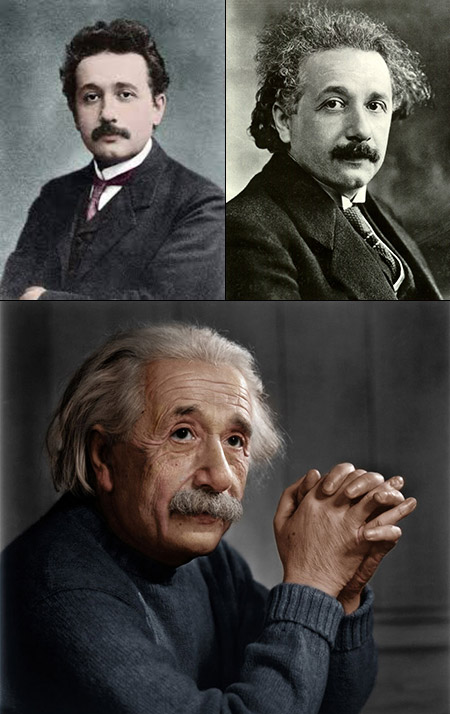
SIR ISAAC NEWTON (1642-1727)ALBERT EINSTEIN (1879-1955)
Auerbach questions the advance of software algorithms as a method for finding truth about what is real. An algorithm is only a tool of human’ thought, mind, and language. Auerbach infers there may be a time when a computer becomes more human with the ability to define reality but not until they are more than algorithmic machines. That, of course, raises many more questions.
An algorithm is a set of calculations meant to define reality or conduct problem solving operations when in fact they neither define reality nor solve anything.
A revelation one has from Auerbach’s “Bitwise” is that gamers have become important to a younger generation because algorithms offer insight to the concreteness of existence. One can experiment with life’s outcomes without consequence in the real world.
Auerbach gives the example of a gamers use of a nuclear war game to show how world diplomacy decisions lead to world conflagration. Early versions are refined but remain blunt predictive instruments that only mimic human’ thought, mind, and language.
In his early career, Auerbach’s software experience comes from working with Microsoft. He suggests the stewardship of Balmer diminished Microsoft’s innovative history. Auerbach leaves Microsoft to join Google. He finds Google to be a more cutting-edge software developer by recognizing the value of data gathering and mining.
“Bitwise” is a clarion call to the public. Big Brother is here. It has the face of Google and the power of a nation-state.
The near future is dependent on software coding. The long future is dependent on human’ thought, mind, and language.
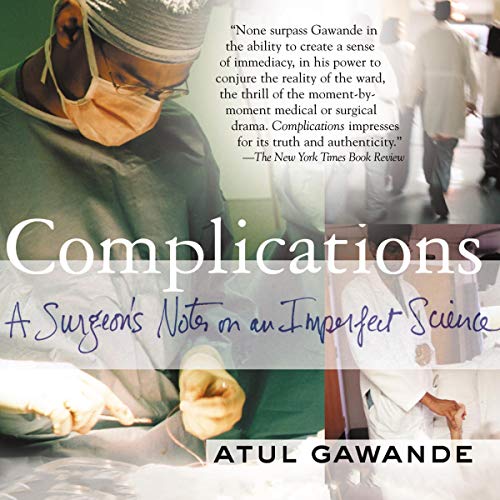
Several years ago, “Being Mortal” was reviewed with appreciation of what the author had to say about a doctor’s responsibility for improving the quality of life for the elderly and terminally ill. Atul Gawande reinforces the double meaning of “Being Mortal” in his “Complications…Notes on the Imperfect Science”.
Gawande explains doctors are not superhuman beings. They are well-educated mortals that practice medicine with the intent of making the right decisions through attentive communication with patients.
Knowledge from teachers and practitioners is helpful but it is through practice on patients that doctors become proficient for those needing help. Gawande’s reflective words “practice on patients” are frightening to one who’s life is threatened by injury or disease.
Gawande notes decisions are not based on omniscience but on a doctor’s education and experience.
Gawande offers notes on the imperfect science of medicine. He explains why even the most conscientious physicians, let alone bad practitioners, make mistakes. To become a skilled physician, as with any skill, requires practice. The monumental difference is medical practice directly affects human lives. Other professional practices are indirect.
The compounding difficulty of the science of medicine is that even the most experienced physicians make mistakes. It may be because of missed diagnosis or motivations inherent in human nature (the drive for wealth, power, or prestige) but it is always at the expense of a patient.
Gawande reflects on the intuitive nature of medicine by telling the story of the fire captain that tells fellow fire fighters to leave a building when he senses the building is going to collapse (an anecdote also told in “Thinking Fast and Slow”). An experienced doctor often must rely on the same sense and can be perfectly right or catastrophically wrong.
Gawande tells the story of a young woman who is diagnosed with cellulitis in a leg that is swollen and inflamed. The attending physician asks Gawande to look at the patient to confirm the diagnosis.
Gawande questions the patient about how she might have acquired the infection. He suspects it may be from a rare flesh-eating virus even though all the symptoms are consistent with cellulitis which can be easily treated with antibiotics. Gawande suggests a biopsy and the diagnosis is changed. It is found to be to the rare flesh-eating virus. It is Gawande’s intuition that leads to treatment that successfully saves the young woman’s life.
A medical patient listening to Gawande appreciates his candor but fears the truth of human fallibility of a profession one relies upon.
Most realize all humans make mistakes. What is disconcerting is the lack of disclosure by many physicians and the doubt raised by Gawande in some doctor’s veracity in seeking what is best for their patients.
Gawande explains some organizational methods used to minimize mistakes and modify future medical practices. However, public disclosure of those mistakes (particularly regarding specific doctors and hospitals) is largely undisclosed.
Gawande is challenging his profession to do better. To that, the public should be grateful.
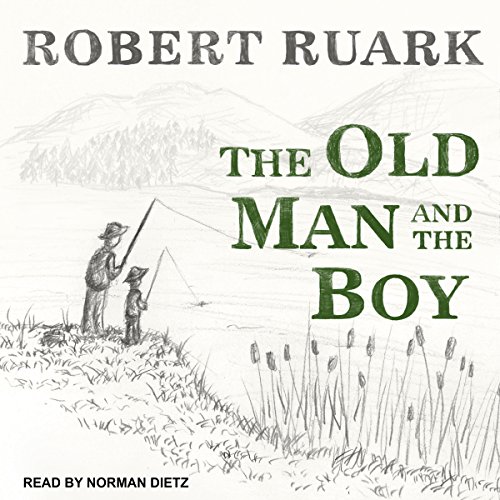
One is in at least two minds in listening to “The Old Man and the Boy”. On the one hand, a listener is fascinated and learns a great deal about hunting and fishing. On the other, one sees how a young intelligent boy is influenced in good and bad ways by people he knows and the environment in which he lives.
“The Old Man and the Boy” is serialized for “Field and Stream” in 1953.
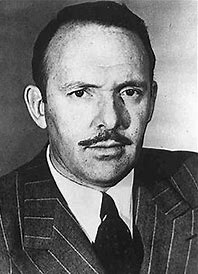
The author, Robert Ruark, is a North Carolinian. “The Old Man and the Boy” is a memoir of his youth. As an adult, he is characterized on the internet as a hard drinking outdoorsman who travels the world, writes books, and publishes articles in magazines like “Field and Stream” and “Playboy”.
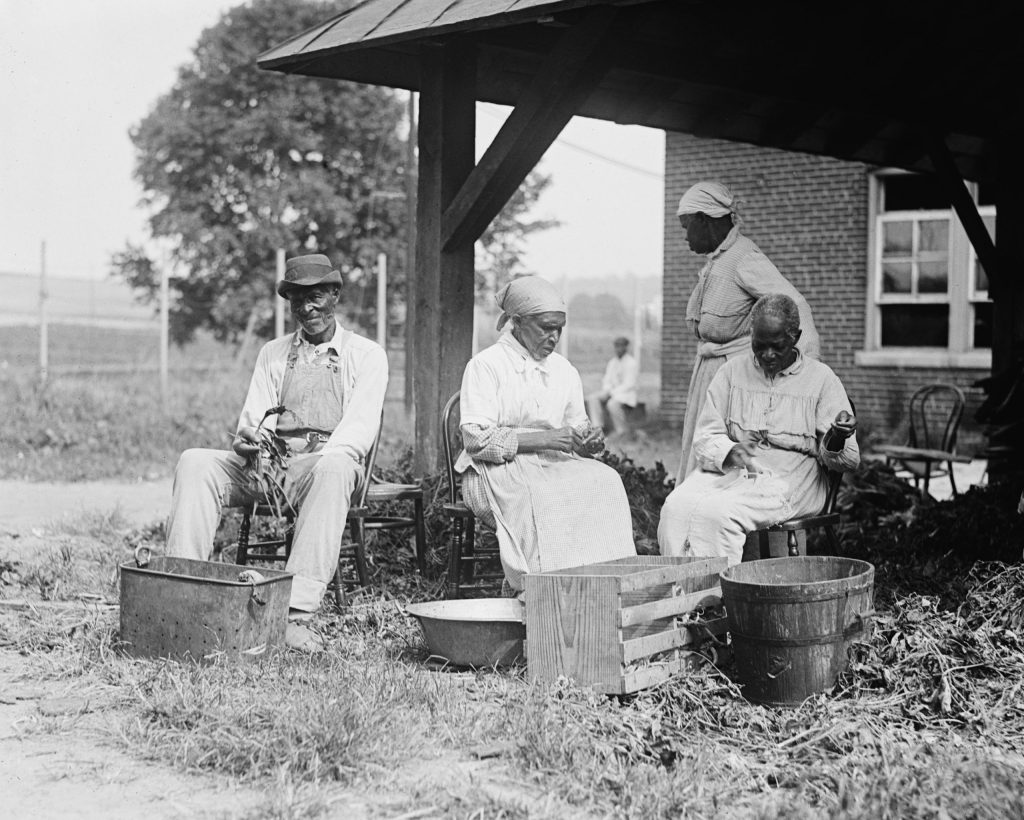
Scenes and experiences recall the author’s life in rural North Carolina before the depression. This is a time when the word Negro is used to describe Black Americans.
Ruark’s brief notes about Black families reflect a paternalism and assumed inferiority of the “colored race”.
The “Old Man…” in Ruark’s story is his grandfather. The author shows how impactful grandparents can be in a young person’s life.
The grandfather teaches the boy about the ethics of hunting.
Along the way, he introduces the boy to life by teaching him the fundamentals of hunting and education provided by books and experience. Some lessons are farsighted, some shortsighted.
Preservation of the ecosystem is explained to the boy in different ways.
The grandfather explains why it is important limit one’s catch of fish or animals killed. Hunting should be for no more than what can be eaten or needed for species maintenance.
Ruark tells a funny story of an untrainable goat that suggests some animals cannot be domestically trained. Dogs are eminently trainable; horses and some goats are not, in the grandfather’s opinion.
The grandfather characterizes women as homemakers with little understanding of what constitutes education and work versus idleness. The grandfather offers a dim view of women with poor justification for male idleness.
The boy is introduced to liquor by his mentor. His insightful grandfather takes a nip or two or three after, never before, a day’s hunting or fishing.
The boy makes friends with a local coast guard captain. The boy tags along on Coast Guard’ rum runner captures and is introduced to both the danger and occasional imbibing by Coast Guard’ shipmates of gains from rum-runner’ interdictions. Coincidentally, Ruark dies from cirrhosis of the liver at age 49, mostly attributed to alcoholism.
This is an entertaining, period piece story. It offers insights to hunting and fishing to anyone who has done or wishes to truly experience the great outdoors. It is a book of its time that reflects a reality of what it was like to live in rural North Carolina in the 1920s.
Notes on a Foreign Country (An American Abroad in a Post-American World)
By: Suzy Hansen
Narrated by Kirsten Potter
Suzy Hansen (Author, journalist.)
In her thirties, Suzy Hansen chooses to relocate to Turkey, in part because of a writing assignment but also as a life changing experience.
Hansen’s view of the world is disappointing in that it represents a population cohort positioned to inherit America’s future. Hansen reports facts with a journalist’s interpretation of other’s perception of American foreign policy without history’s context.
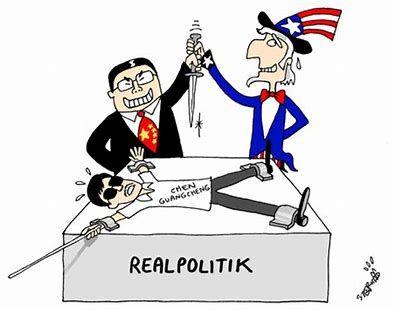
To an older generation, Hansen’s facts denigrate the realpolitik of life in the presence of its time.
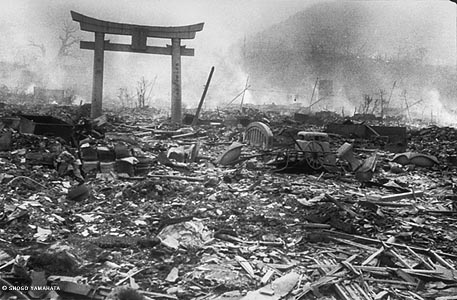
In many respects, Hansen’s view of America’s moral failure is spot on, but no country is without sin. Without intending to deny the ugly consequence of President Truman’s decision to drop the bomb, or America’s intent to widen its sphere of influence, Hansen ignores some important facts.
America’s experience in WWII left little doubt to most Americans that the Japanese would fight to the end, even in defeat. Over 41,000 Americans were killed and 145,000 injured in Pacific conflicts. Japanese culture demanded fealty to an emperor to the point of suicide in the face of defeat.
As horrendous as the bombing of Hiroshima and Nagasaki were, it ended war with Japan in less than a week. How many more would have died in a continuing battle? This does not diminish the horror of nuclear war, but its reality defied 20th century’s imagination.
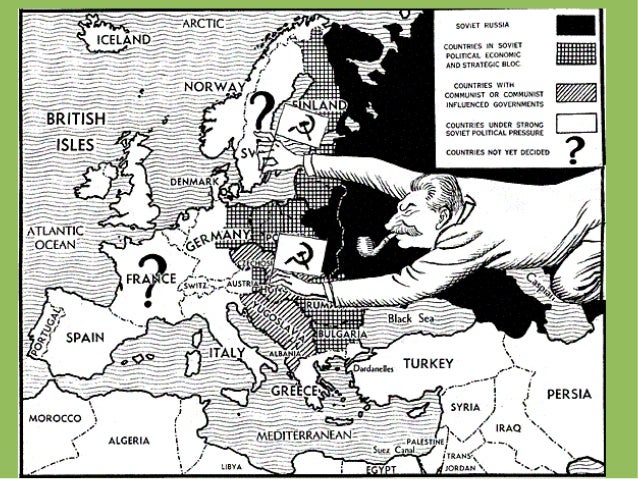
After the war, Japan, Greece, and Turkey, let alone Europe, were in dire straits. The Truman Doctrine and Marshall Plans were created to rebuild much of what was destroyed in the war. There is no question American capitalism profited by its investment in these countries. However, no other country had the untapped wealth that capitalism created in America. What nation could take on reconstruction without American capitalist success?
America did take advantage of its wealth by imposing democratic ideals on foreign countries. However, mistakes Hansen notes in her book are more a function of cultural ignorance and capitalist fervor than evil intent.
Hansen fails to mention the power grab by Stalinist Russia as a major factor in creating an American counter force to Stalinist acquisitiveness. The Truman Doctrine and Marshall Plan created a shield against Stalinism.
America continues to make mistakes in other countries for many of the same capitalist reasons they did after the war. America supports some of the most immoral autocrats of the world because they control their countries. American support of despots is based on America’s perceived self-interest. As with any foreign country’s foreign policy decisions, self-interest can be a mistake recognized only in history. One must acknowledge “self-interest” pervades all human beings, let alone independent nations.
Only with more investment in understanding other cultures, in the way that George Kennan understood the U.S.S.R., can good foreign policies be formulated.
The reality is–many mistakes are based on cultural ignorance.
Hansen presumes America is in decline. America is not in decline, but other countries are advancing, and America is becoming an equal, not a hegemon. The lesson America must re-learn is the importance of sovereignty and culture difference. There should be no more Vietnam, Iraq, or Afghanistan invasions. This is not to argue isolationism which seems implied by Hansen’s stories. America must use its financial strength to influence other nations to become better stewards of their citizens, whether through democratic ideals or their chosen form of governance.
Hansen ignores many facts to make her case for America’s failures. It is difficult to listen to “Notes on a Foreign Country” because it only reports on mistakes, not America’s example as a free Republic.
David Kyle Johnson (Lecturer, Associate Professor of Philosophy at King’s College in Pennsylvania)
David Johnson’s first thirty lectures revolve around proof of God, the definition of reason, knowledge, truth, and the existence of free will. Those lectures, though logically consistent, are a slog and may cause listeners to stop listening. However, the last six chapters of Johnson’s lectures are rewarding summaries of government philosophy and the meaning of life.
Johnson questions several arguments about God’s existence by revealing their logic and evidentiary failings. Johnson defines reason, truth, knowledge, and testimony as falsifiable evidence for God’s existence. He challenges arguments about the existence of soul, and what it means to be free. He explains the significance of mind and body, good and evil, and personal identity. Along the way, he defines good and evil with various side trips showing how we “ought” rather than “how” we really live. Johnson’s attacks many, if not all, substantive philosophical arguments for the existence of God. His noted weaknesses of many philosophical beliefs about God, truth, and knowledge are mind numbing.
The first two thirds of Johnson’s philosophical analysis conclude God’s existence is an unverifiable truth, solely dependent on the chimera of faith.
In contrast, Johnson’s summary of government philosophy and the meaning of life are both entertaining, and informative.
There is a good deal of bias in this review because of personal interest. The first thirty chapters may be of more interest to some, but his analysis of the history of economic and political theory remind one of how great it is to be steeped in western culture.
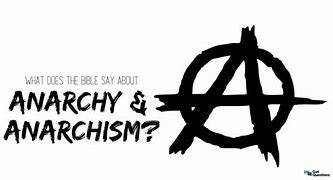
Lecture 31 one asks—Should Government Exist? Johnson suggests the alternative for government is anarchy. He offers three categories of anarchy, i.e., theoretical, serious, and violent. All three question governments’ moral authority.
From an American perspective, the only substantive concern is with the category of serious anarchy. Serious anarchy is Johnson’s category of what is known as Libertarianism in the United States.
Rand Paul, US Senator from Kentucky
The most famous American Libertarians are Ron Paul, Rand Paul, Thomas Sowell, the Koch brothers, Steve Forbes, and Peter Thiel. Essentially, they believe government should be restricted to defense of the country with citizens responsible for their own actions. The only law should be moral law because government-imposed law restricts personal autonomy. There should be no government regulation that infringes on personal autonomy in social, or economic policy.
Lecture 32 asks—What Justifies a Government? Johnson recalls luminaries like Thomas Hobbes, John Locke, and Jean-Jacques Rousseau.
John LockeJean Jaques Rousseau
Hobbes viewed citizens as naturally power hungry and that government is necessary to protect citizens from being harmed by acquisitive neighbors. Locke suggests citizens enter a social contract with a government when they choose to become members of a nation-state and by contract will not be allowed to infringe on a neighbor’s freedom of choce, liberty, or pursuit of happiness. In the case of Locke, laws are passed to protect citizens by a government Republic that represents the will of the people who vote for them. Rousseau agrees with Locke but insists on direct democracy to establish any laws meant to protect citizens. Each of these men influence the founding fathers in writing an American constitution.
Lecture 33 asks—How Big Should Government Be? Johnson summarizes the economic philosophies of Adam Smith, Karl Marx, and John Maynard Keynes who shape much of what American government has become.
JOHN MAYNARD KEYNES (1883-1946)
The economy of America is largely based on Adam Smith’s “Wealth of Nations”. Though many know of Adam Smith, few seem to have closely read “Wealth of Nations” to clearly understand what he said about economic growth. There have been many interpretations of “the invisible hand” that range from an extreme that suggests self-interest is all that matters in an economy to price-controlling when competition is driving businesses into bankruptcy. Neither extreme represents Smith’s belief in “the invisible hand”. Neither self-interest nor competition is all that matters for an economy to grow. Smith tempers self-interest by arguing it cannot be adhered to at the expense of the common good. Smith endorses competition when it lowers prices for the public. However, Smith notes monopolies created from aggressive acquisition of competitors restricts competition and infringes on the common good.
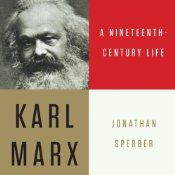
Karl Marx addresses the threat of capitalism making slaves of workers who are undercompensated for their labor that only benefits entrepreneurs who own businesses without fairly compensating their employees.
History has shown the weakness of Marx’s argument. Labor organizes to increase compensation for labor. More than labor costs determine value. There is the willing buyer and seller that determine the cost of any business’s survival. Marx ignores too many other variables when valuing labor without addressing risk to entrepreneurs, the cost of doing business, and the inherent inventiveness of capitalist self-interest.
John Maynard Keynes is a preeminent economic theorist who recognizes the weaknesses of capitalism. Capitalism engenders economic crashes, panics, recessions, and depressions.
Johnson notes Keynesian economic theory ameliorates those threats by deficit spending when “the invisible hand” fails the common good. Johnson suggests Keynes offers a middle ground between Smith and Marx. The inevitable problem is knowing where the line is to be drawn between government overreach and an “invisible hand” which benefits the common good.
The next two lectures address the limits of liberty and societal fairness. America is among the richest countries in the world, but homelessness seems to grow with each passing year. Having traveled some, it appears America is doing a poorer job of dealing with poverty and homelessness than more autocratic countries like China. One picks China as a contrast because it has a population of 1.4 billion versus 320 million in America. The wealth of American citizens far outweighs the wealth of Chinese citizens. U.S. per-capita income is estimated to be 5.78 times higher than China’s.
One sees no homeless people sleeping in parks or on the sidewalks of major cities like Beijing, Hong Kong, or Guangzhou in China. America is not doing a very good job of drawing the line between government outreach and the impact of capitalist self-interest when it comes to homelessness. This is not to argue limits to liberty in China are either better or worse than America’s ineptitude. However, managing homelessness is a distinct societal unfairness in America. This is a national problem that needs to be addressed by American government policy based on the welfare of its citizens.
At the end of Johnson’s lectures, one is reminded of Plato’s fictional writing about the Oracle of Delphi identifying Socrates as the wisest of Greeks.
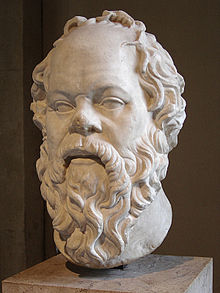
Socrates (Greek Philosopher, 470 BC to 399 BC.)
Plato writes that Socrates disbelieves the Oracle. He questions scholars of his time to find they know no more than him. However, he concludes “xero katie pou den xero tipota” or “I know something that I know nothing”.
The final chapter of Johnson’s lectures is “What is the Meaning of Life”.
There is no definitive answer. Maybe, it is the number 42, the nonsensical conclusion of the Bible noting “The Duration of Suffering”. (It is also Douglas Adams ironic answer in “The Hitchhiker’s Guide to the Galaxy”.)
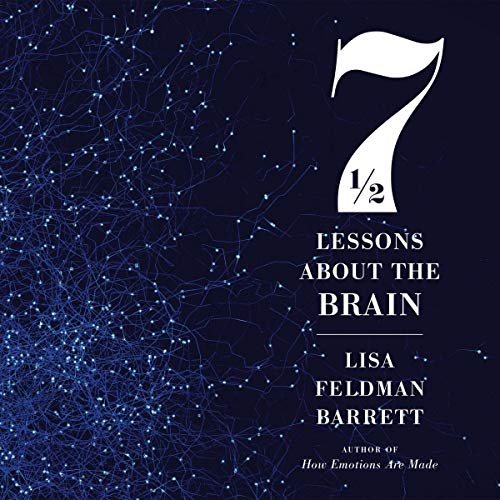
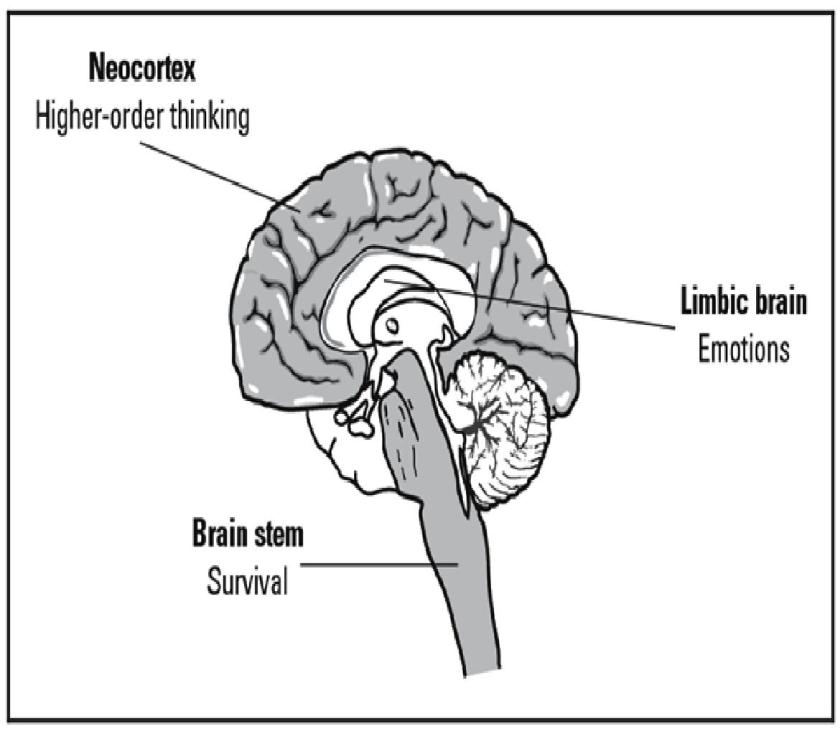
Barrett suggests experiment confirms the brain is a singular organ, functioning as a network that controls human thought and action based on experience and memory.
Barrett argues the brain is not for thinking but for survival.
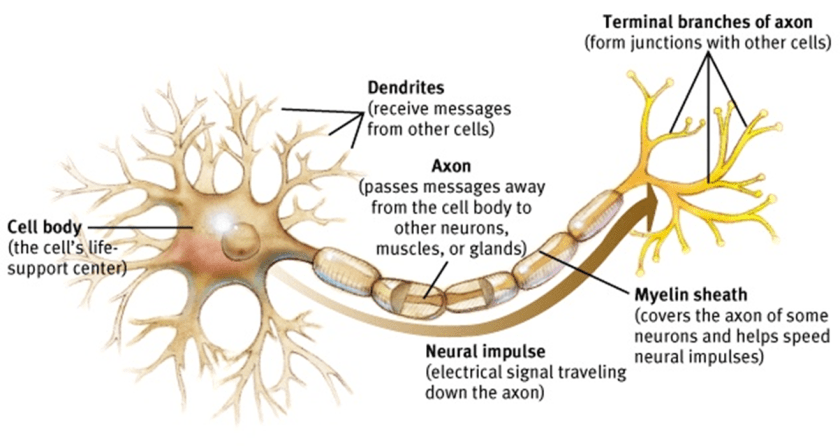
Barrett’s interpretation of Darwinian evolution suggests brains evolve based on random events. A human brain evolves into a network of axons and dendrites that are not segregated but coordinated to preserve human existence.
However, Barrett notes that non-use or lack of firing by a neuron will render it dormant. Key to maintenance of neuronal activity is repetitive firing. (Parenthetically, Barrett notes solitary confinement is cruel and unusual punishment for that reason.) Firing multiplies the bushy ends of the neuron (the dendrites) which can become lifelong connections for thought and action. Barrett suggests the early years of childhood should be filled with opportunities to learn through different experiences. She believes exposure to different languages at an early age makes later life language-learning easier.
Barrett explains–through environmental influences human brains wire themselves to the world. Each wired connection comes from repeated events that substantiate the principle of neurons firing together to become wired together. If neurons are not stimulated, they become dormant. Barrett argues brain plasticity is based on neuronal activity which suggests different areas of a brain can be retrained to repair some functions of a damaged brain.
Barrett explains human brain’ function evolves over much longer periods of time than other mammals.
Barrett notes neuronal activity evolves in humans over the first twenty or more years of their lives. This longer period of evolution allows more flexibility in neuronal activity than is inherent for other species of the animal kingdom.
The mixed benefit of a longer period of neuronal evolution is evidenced by a calf, giraffe, or deer that can walk soon after birth while a human takes two to three years.
The benefit of longer neuronal evolution is a human child’s time to increase and improve neuronal connections based on wider experience. Though humans may not learn to walk as quickly as a baby Giraffe, they learn more from the changing environment in which they live.
Barrett goes on to argue that words spoken by one person to another modify brain function based on one’s experience and memory. This reinforces realization that words do matter. When one is constantly criticized or ridiculed, the impact of words on human behavior is highly consequential. Barrett explains occasional criticism has little effect on neuronal activity, but repetitive criticism can significantly impact the way a brain’s neurons wire together with permanent effects on human behavior.
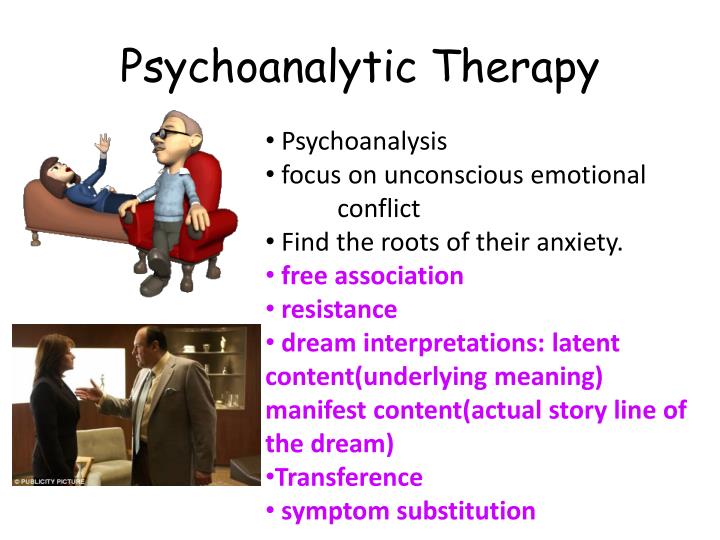
This gives credence to psychotherapeutic treatment to discover why humans act as they do. Psychotherapy offers a mechanism for changing one’s behavior. This harks back to Barrett’s notes about brain plasticity.
Barrett believes every human being has a “body budget”. That budget is added to or subtracted from by neuronal activity that is grounded in human relationship. Barrett argues humans are social creatures. Barrett infers relationships have great consequence on how humankind views and lives in the world. She argues human relations can either add or subtract from one’s body budget.
The question becomes–what relational qualities add or subtract to one’s body budget? Barrett infers love and empathy add while hate and apathy subtract from the body budget. Becoming the best of who we are seems up to us.
The Club (Johnson, Boswell, and the Friends Who Shaped an Age)
By: Leo Damrosch
Narrated by Simon Vance
Leo Damrosch (American author and professor of Literature at Harvard)
“The Club” is more of a biography of James Boswell than “…the Friends Who Shaped an Age”.
James Boswell (1740-1795, died at 54, Lawyer, diarist, biographer.).
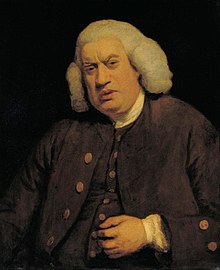
Though many pages reflect on Samuel Johnson (best known for the “Dictionary of The English Language”), the primary source of information on Johnson, as well as “…the Friends…”, appears to come from Boswell’s diary and notes.
Samuel Johnson (1709-1784, died at age 75, Author, poet, playwright, moralist, editor, and lexicographer.)
An irony of Damrosch’s story is that Boswell neither has the intellectual depth nor historical significance of Johnson or many of the “…Friends who shaped an Age”. What Leo Damrosch explains is Boswell is a great mime for the opinions and voices of Johnson and Friends. Damrosch suggests Boswell is the first biographer to capture natural dialog with detailed features of friends and acquaintances.
In some ways, Boswell is like a court jester, eliciting laughter and opinion in a court of higher-ranking superiors.
Damrosch is not denigrating Boswell’s contribution to historical information but shows Boswell as a bon vivant, rather than an intellectual. “The Club” is an association of writers, artists, and thinkers formed in a London tavern in the 1760s. Damrosch notes that the club is formed by Joshua Reynolds, a noted portrait artist. In addition to Reynolds, the original members are Samuel Johnson, Oliver Goldsmith, Edmund Burke, John Hawkins, Topham Beauclerk, Anthony Chamier, Bennet Langton, and Christopher Nugent. To become a member of the club, one is elected by existing members.
Sir Joshua Reynold’s Club
Boswell, Edward Gibbon, and Adam Smith become members in the 1770s. From an American perspective, the names of Reynolds, Johnson, Burke, Gibbon, and Smith are the best known. Many will recognize Reynolds for portrait paintings of famous people of that time. Reynold’s portraits are in galleries today. Damrosch notes the portraits represent the best of what a person looks like with creative enhancements of the subject’s best features. Burke is famous for vilification of the French Revolution and his conservative views of government. Gibbon is famous for his “…History of the Decline and Fall of the Roman Empire”, and Johnson for his dictionary.
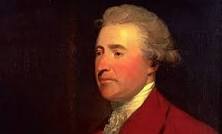
Joshua Reynolds (1723-1792, died age 68, Portrait Artist.)Samuel Johnson (1709-1784, died at age 75, Author, poet, playwright, moralist, editor, and lexicographer.)Edmund Burke (1729-1797, Irish statesman)Edward Gibbon (1737-1794, died age 56, Author.).Adam Smith (1723-1790, died age 67, Economist, Author.)
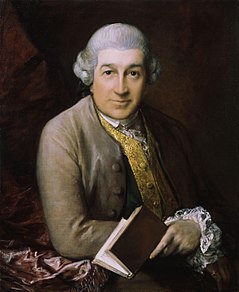
Contrary to what Damrosch notes, it does not appear David Garrick, a famous Shakespearean actor and producer, was in that club but had his own tavern club called the Garrick Club. Garrick had been a pupil of Samuel Johnson. Damrosch may have identified Garrick as a member of “The Club” because of his association with Johnson.
David Garrick (1717-1779, died age 62, English actor, playwright, theater manager, and producer.)
Boswell is characterized by Damrosch as an excellent conversationalist because of an ability to listen and ask questions that have interest for those whom he questions. However, at times, Damrosch notes Johnson becomes irritated with Boswell’s questions because of their vacuous value. The example given is Boswell’s question to Johnson about why Apples are round while Pears grow with narrow shoulders and wide hips.
Boswell’s question to Johnson-why are Apples round while Pears grow with narrow shoulders and wide hips?
Damrosch shows Boswell comes from a wealthy, aristocratic family. He is the eldest son, in line to receive the wealth of his family when his father dies. Boswell moves to London to become an attorney but fails to learn his profession well enough to be financially or reputationally successful. He meets Johnson whom he admires, and through association, Boswell manages to meet the movers and shakers of his day. Boswell becomes a diarist that records his life and the lives of people he meets. His writing makes him famous, largely because of his association with Samuel Johnson and his remarkable ability to reproduce the natural conversation of “…Friends Who Shaped an Age”.
Boswell, from Damrosch’s description, is a hedonist. He lives for pleasure from conversation with luminaries, drinking to excess, and dalliance with women of the street and lovers whom he seduces.
Boswell is characterized as a pursuer of women who have an interest in sexual encounters for pay or pleasure. Boswell’s lifestyle leads to periodic treatment for crabs and other sexually transmitted diseases.
Damrosch notes that Boswell marries but continues his profligate behavior. Boswell professes love and remorse to his wife, who knows of his dalliances. She bares his behavior and accepts his remorse. His wife dies of consumption with seeming disregard by Boswell’s self-absorption.
Margaret Boswell (1738-1789. died at age 51.)
Boswell inherits his father’s wealth but squanders it and fails as a barrister. Nearing the end of his life, he produces the best biography of Samuel Johnson ever written. It becomes a best seller in his time and is still read by some today. Damrosch notes Boswell’s contribution to biography is in making his subjects human by including detailed descriptions of their appearance, and emotive qualities.
More detailed information about the lives of Edmund Burke, Edward Gibbon, and Adam Smith would have made “The Club” more interesting to this reviewer but any who have listened to other narratives by Simon Vance will be pleased by Damrosch’s story. At the least, a struggling writer may be encouraged to keep a diary of life’s events to become a better author.
William Taubman (Author, Political Science professor at Amherst College, received 2004 Pulitzer Prize for Biography of Krushchev.)
The length of William Taubman’s audiobook requires a Gorbachev II review. The first review addresses Gorbachev’s personal life. The second reflects on Gorbachev’s political life. Gorbachev’s life is suffused with great accomplishment and tragic failure.
Georgy Malenkov replaces Joseph Stalin after his death in 1953. Malenkov is believed to be a reformist who plans to reduce military spending and Stalinist suppression.
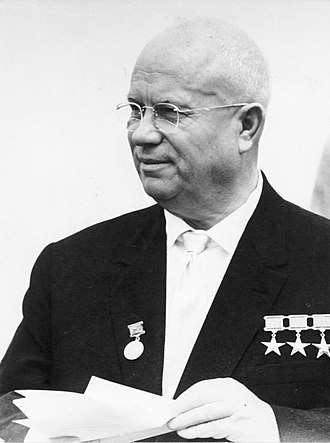
However, within weeks, Malenkov is pushed aside by Nikita Khrushchev who takes supreme power within two years of Stalin’s death. Surprisingly, Khrushchev becomes something of a reformist himself.
Nikita Khrushchev (1894-1971, First Secy. of the Communist Party 1953-1964)
Stalin’s autocratic, paranoid leadership is semi-privately exposed by Khrushchev in a speech to the Central Committee of the Communist Party. Khruschev’s vilification of Stalinist suppression, imprisonment, and murder eventually become known to the world.
The overriding concern of Russian leaders is to maintain suzerainty over Baltic nations and satellite territories in the face of ethnic and economic diversity. Taubman notes older Russian leaders tend toward autocratic dictate to maintain political control. The younger and more politically astute lean toward confederation of adjacent soviet republics and East Berlin with the U.S.S.R. as an umbrella organization. Gorbachev is in the “politically astute” group.
Mikhail Gorbachev rises to chairman of the Communist Party and eventual President of the U.S.S.R., with the expressed intent of democratizing the Baltics, Russia, and East Berlin into a democratic socialist block. However, ethnic, and cultural differences, accompanied by general economic failure, defeat Gorbachev’s unionist objective.
There is no question of Gorbachev’s success in democratizing U.S.S.R.’ citizens.
However, in that democratization, the drive for independence becomes paramount to the satellite countries. German reunification, and the breakaway of Baltic nations from the U.S.S.R. is inevitable. Freedom, based on ethnic and cultural identity, surmount all efforts by Gorbachev to reinstate U.S.S.R. suzerainty. Only by force could the U.S.S.R. prevail over state and territorial independence. Taubman notes force is not within Gorbachev’s nature as a leader.
Once socialist democracy is dangled before the electorate, the die is cast. Gorbachev’s governance could not provide enough economic stability to justify confederation. That is his tragic failure.
Gorbachev’s immense success is liberating millions of former U.S.S.R. citizens. With liberation, former citizens of the U.S.S.R. return to govern as citizens of their own countries. This at a time of Reagan’s conservative government in the United States, and European distrust of U.S.S.R. militarization. Taubman shows Gorbachev becomes an international hero based on his personality and persuasive power. He is greeted as the great liberator of the twentieth century even though his primary objective is to retain those countries seeking freedom within the U.S.S.R.
Gorbachev raised the bar for nuclear disarmament by cultivating American and European participation in the reduction of nuclear weapons.
Taubman explains Gorbachev is a tragic hero because momentum-of-change is halted by a cult of personality, compounded by economic insecurity. Gorbachev is replaced by acting President, Alexander Rutskoy, after the 1993 constitutional crises. Rutskoy is replaced by a second acting President, Viktor Chernomyrdin. Boris Yeltsin succeeds Chernomyrdin as President in an overlapping term.
The Russian economy falters in its transition from communism to democratic socialism. Russian history of “rule-of-one” reasserts itself with the rise of an incompetent President (Boris Yeltsin) and an autocratic but effective leader, Vladimir Putin. However, Putin’s autocratic effectiveness is in question with the invasion of Ukraine.
Taubman suggests and infers Gorbachev’s success, and world history in general, are two steps forward with one step backward. Based on historical precedent of “one-man-rule” (dating back to czarist Russia) Taubman’s inference seems spot-on.
Boris Yeltsin (1931-2007, President of Russia 1990-1999.)Vladmir Putin (Becomes President of Russia after Yeltsin with possible lifetime tenure.
Gorbachev flipped a switch that released the power of democracy but failed to provide adequate economic infrastructure to assure U.S.S.R. survival. Taubman optimistically infers economic infrastructure of eastern bloc countries will improve overtime, even with autocratic leadership by people like Vladimir Putin.
The growth of democracy has always been messy, but it moves forward in the face of temporary setbacks. Spheres of influence will always be in play. It seems a matter of time for another Gorbachev to make two more steps forward with a repeat of the next leader’s “one-step-backward”. It appears in 2022, Putin makes that “one-step-backward” with the invasion of Ukraine. Taubman reminds readers of America’s trial in the civil war. Slavery is abolished but institutional racism remains a work in progress. The risk is that the world destroys itself before freedom and economic security become real for all.
William Taubman (Author, Political Science professor at Amherst College, received 2004 Pulitzer Prize for Biography of Krushchev.)
Having reviewed the first two books of the planned Stalin trilogy by Stephen Kotkin, it seems wise to review William Taubman’s “Gorbachev”. Kotkin’s analysis suggests Stalin was a pragmatic autocrat who systematically eliminated potential adversaries who might challenge his leadership. In contrast, Taubman’s Gorbachev is characterized as a democratic rather than autocratic leader. This is not to say Gorbachev is less strong willed than an autocrat, but Taubman suggests he chooses to listen to both equals and subordinates before deciding and acting. Kotkin shows Stalin keeps his own counsel before deciding and acts as his paranoid behavior demands. Gorbachev is a politician, not a dictator.
Mikhail Gorbachev (Pres. of the Soviet Union 1990-1991, General Secy. of the Communist Party of the Soviet Union 1985l-1991.)
Through force of intellect, ambition, and persuasion Gorbachev tries and fails to reify Leninist socialism. Gorbachev’s ambition is to turn an increasingly dysfunctional Russian autocracy to democratic socialism. Democratic socialism would theoretically provide Russian citizens a voice in control of their fate.
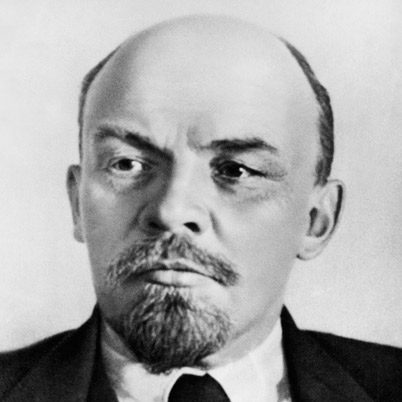
Taubman notes Gorbachev is a student of Lenin’s writing. Gorbachev argues for change in Russia to what Lenin called democratic socialism. Gorbachev’s belief is that the 1917 revolution is more than a rebellion against monarchy
Gorbachev is not alone in believing Stalin abandoned Leninist idealism by instituting a government of the one in control of the many. Many historians note Lenin did not want Stalin to succeed him as the leader of the revolution.
Kotkin suggests Lenin views Stalin as a soldier who enforces discipline but fails to understand the importance of creating a platform for power to the people.
The sad consequence of Stalinist history is that it reinforces kleptocracy, “a society or system ruled by people who use their power to steal their country’s resources”.
Taubman shows Gorbachev understood Stalinism from personal life experience. Taubman explains how Gorbachev comes from humble surroundings in a farming village in Russia. Gorbachev sees firsthand how the idea of collective farming decreases, rather than increases productivity. The bureaucratization of collective farming has the same impact in communist Russia as it did in communist China. Leaders in charge of collective farms distort production quotas to make themselves look good to superiors. The result is either lower productivity, or worse, the famines of 1920s and 30s in Russia and the 1950s in China. (This is not to say famines do not occur in democracies, but the cause of famine is not bureaucratic lying but nature, or something beyond human control.)
Gorbachev loved his father and adored his grandfather. Both parents were great influences on Gorbachev’s belief in hard work and education. Gorbachev’s mother is the disciplinarian in the family. She rules the young Gorbachev with a belt until he is old enough to say, “no more”. “Tough love” from Gorbachev’s mother, in Taubman’s telling, instills respect for women. Taubman suggests Gorbachev’s choice of a wife is based on belief in equal partnership to help him achieve life’s evolving goals.
Taubman suggests Raisa, Gorbachev’s wife, is an equal partner in his decisions in life and in governing the Soviet Union.
A reader/listener is only halfway through the book at this point. The last half of this 32-hour narration deals with Gorbachev’s failure as the eighth and final leader of the Soviet Union.



























































 REVIEWS AND VIEWS OF LIFE